




Speech at the Opening of the First Belarusian-Russian Economic Forum
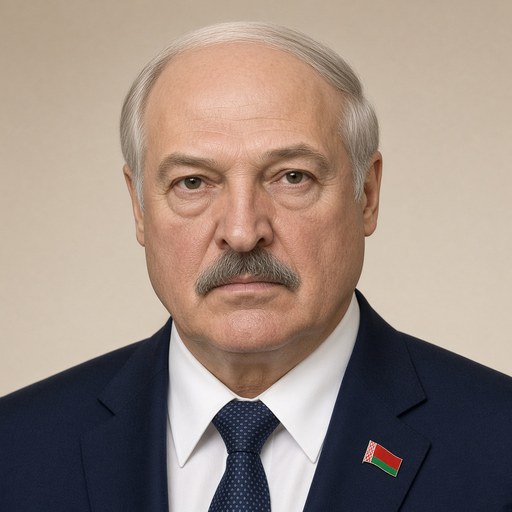
 Alexander Lukashenko · President of Belarus
- Context
- Lukashenko addressed delegates at the First Belarusian-Russian Economic Forum in Minsk on June 9, 2005, promoting deeper Belarus-Russia economic and political integration.
- Main themes
- Belarus-Russia Union State, economic integration, Belarusian economic model, socially oriented market economy, bilateral cooperation, privatization policy, state ownership, welfare of citizens, intergovernmental relations, business and trade exchange, political union, socio-economic development
- Duration
- ~16 min
- Words
- 1,950
- Sentences
- 104
- Readability
- 41
- Grade
- 12.1
- Syntax
- 2.91
- Vocabulary
- 2.22
Translated from Russian
The broad sphere of national life a sentence belongs to. Every sentence has an Arena, so it is the denominator the other indices are read against.
Other104 sentences in 50 paragraphs
Dear forum participants! Dear guests! Dear friends!
I am sincerely pleased, on behalf of the Belarusian people, to welcome you to the capital of our country — the hero city of Minsk.
I find it deeply symbolic that such a large-scale intergovernmental event is being held in Belarus. Our people are firmly committed to the ideas of friendship and brotherhood and are interested in the development and strengthening of the Union State.
In this hall, prominent state and public figures, heads of subjects of the Russian Federation and Belarusian regions, representatives of the business community, entrepreneurs, and scholars from both countries have gathered.
In my opinion, the special value of the forum lies in the fact that it connects practical politics and creative thought. And what is extremely important — we expect from you a detailed analysis of the processes occurring in our countries and around the world, and on this basis — constructive proposals for creating an effective economy that ensures a high standard of living for Belarusians and Russians.
I have no doubt that the Russian National Exhibition will arouse great interest among our people, where products from about two hundred enterprises from many regions of Russia will be presented. It is important that the products produced under joint programs will constitute a separate exhibition titled "The Union State in the Interests of the Peoples."
I hope that during the exhibition, business people will exchange experiences, agreements on cooperation will be signed, and contracts will be concluded.
In short, we have much to see, much to study, and much to discuss.
Dear comrades!
After 1991, each of the former Soviet republics has been following its own path of political and socio-economic development.
The Belarusian people have chosen not a collapse-destructive, but a creative-evolutionary path of economic and societal development, an economic model that implies the formation of a socially oriented multi-structured market economy with equal functioning of state and other forms of ownership.
We did not thoughtlessly destroy industry and large-scale agriculture, nor did we allow a hasty, indiscriminate privatization, as people say. The main task is to attract investors to the real sector of the economy who are interested in technical re-equipment and increasing the competitiveness of privatized enterprises.
The state has established control over key sectors of the economy that are most directly related to people. This is a guarantee that the principle of social justice in society will be ensured.
Some people maliciously claim that we have excessively harsh power. I must say, it is not harsh, but strong, based on the trust of the overwhelming majority of the nation. We have not allowed criminal elements to come to power. We implement policies in the interests of the people. We promised this to our people. And this is what we are doing and will continue to do.
The effectiveness of this policy is confirmed by practice, primarily by the rates of socio-economic development.
At the same time, I do not absolutize the Belarusian economic model. I just want to emphasize that we need to study each other's experiences, take the best, and use it in our common interests. And this forum can and should contribute to this important task.
Dear forum participants!
The signing of the Treaty on the Creation of the Union State and the Action Program for the implementation of its provisions on December 8, 1999, marked the transition of Belarus and Russia to a new level of relations.
I want to emphasize that the economic integration of Belarus and Russia is not only and not so much the result of the positions and actions of the presidents and governments, but an objective process of unification of two peoples. And if they wish to live in a united state, then sooner or later this will happen.
Over the past years, significant work has been done to bring the economies of our countries closer together and to strengthen political and cultural ties. A legal framework has been created, including intergovernmental and interstate agreements. It allows for cooperation in virtually all areas.
And today, even in Russia, no one criticizes the Belarusian economy and says (remember, this was just recently, literally five, maybe even three years ago) that the Belarusian model is "absolutely unfit" and "completely incompatible" with the Russian economy. It turns out that they found a way to combine them. I will speak about the results.
However, our citizens assess the effectiveness of the decisions made in the Union State by the main criterion: is their daily life improving? Therefore, creating conditions that ensure the increase of the welfare of the Belarusian and Russian peoples is a fundamental task. And I know that the Union Council of Ministers will mainly dedicate its meeting to solving these tasks. The efforts of our states should be directed towards their implementation.
A powerful foundation for the implementation of the integration project is economic relations. It is they that are placed at the forefront of cooperation.
And the real fruits of the development of allied relations are already evident.
If before the integration processes the annual trade turnover between the two countries was less than 5 billion US dollars, then in 2004 (last year) it amounted to almost 18 billion dollars. These "incompatible" economies produced such a result. There are no other examples of interstate relations in world practice where such a high result has been achieved in such a short period of time.
Currently, more than 8,000 of the largest Belarusian and Russian enterprises are connected by mutual supplies of products. Often, such supplies are multilateral and cooperative in nature. For example, the Minsk Automobile Plant receives more than half of the components for car production from Russia, thereby creating jobs in the Russian Federation, and over 60 percent of the finished products from Minsk are sold in Russian regions.
Only by using production cooperation can we make our products competitive and effectively protect our markets from the influx of goods from third countries, often of far from the best quality.
Here we must look even broader. Essentially, the issues of cooperation within the framework of union building are directly related to creating equal conditions for economic activity and fairly resolving issues within the framework of competition. By following this path, we can achieve success.
The interdependence and complementarity of our economies dictate the need to maintain a collective, capacious market, develop modern infrastructure, and conduct a coordinated foreign economic policy.
I especially want to note the aspects of regional cooperation. The Republic of Belarus conducts foreign trade relations with 80 out of 89 regions of the Russian Federation. The legal framework for Belarusian-Russian cooperation at the regional level includes more than 170 agreements, treaties, and protocols on trade-economic, scientific-technical, and cultural construction.
The Republic of Belarus has the closest trade and economic ties with Moscow, St. Petersburg, Tyumen, Moscow, Smolensk, and other regions, which account for about 70 percent of the Belarusian-Russian trade turnover.
Economic cooperation between Belarusian and Russian cities, regions, and enterprises is successfully developing. I am convinced that it can serve as an important accelerator of integration at the state level.
Practice shows that direct contacts with the heads of Russian regions contribute to the expansion of regional cooperation.
Thus, during multiple meetings with the Mayor of Moscow, Yuri Mikhailovich Luzhkov, we agreed to build our work on the basis of a comprehensive cooperation program, which has been developed. For this purpose, we have established a mechanism called the Council for Business Cooperation, which analyzes current issues and develops specific ways to solve them.
What do we have as a result? I mean Moscow. The trade turnover between Belarus and Moscow increased from 3.5 billion dollars in 2002 to 6.5 billion dollars in 2004. The increase was more than one billion dollars per year.
The same approach to developing cooperation is planned with the Nizhny Novgorod region. We are establishing close cooperative ties with it. For example, our Ministry of Industry has already signed a relevant document with the Gorky Automobile Plant. Serious cooperation projects are planned to be discussed with the new governor, our good friend Valery Pavlinovich Shantsev.
Following the recent visit of the Governor of the Kaliningrad region, Vladimir Grigoryevich Egorov, we agreed to consolidate efforts to improve and utilize the port complex of the region in the interests of Belarus and Russia. I hope that this project will receive serious support within the framework of union programs.
For your information, we transship almost 20 million tons of cargo through the ports of Latvia, Lithuania, and partly Ukraine. Almost one-third of the state budget of neighboring Lithuania is formed from the transshipment of our cargo. This is a huge resource that we can and must use for the benefit of our peoples and, first of all, to raise and bring the Kaliningrad region to the appropriate level. All this can be done.
And there are many examples of such cooperation. During the forum, no less large-scale projects are to be discussed with the heads of Russian regions who have come to Minsk.
Dear forum participants!
Today, it is already clear to everyone that our integration has taken place, that it is developing and has good prospects. The Union of Belarus and Russia has not only firmly entered the fate of two fraternal peoples, forever inscribed in their recent history, but has also become a geopolitical reality that influences the course of the historical process.
In the post-Soviet space, over the past fifteen years, a number of territorial intergovernmental formations have been created, characterized by different compositions, goals, and speeds of integration processes.
But at the forefront, at the vanguard of these processes is our Union. The center of attraction and an example of free and equal cooperation of sovereign states has been and remains our association, our Union. It is precisely the Belarusian-Russian integration processes that have developed the most, reached a qualitatively new level, and acquired a dynamic character.
And the main thing, as it seems to us, is that Belarus and Russia, conducting coordinated foreign policy actions, do not limit themselves only to issues of bilateral cooperation. We find joint solutions to key problems of world politics.
The positive and dynamic nature of relations in various areas of the economy and politics has allowed us to reach a fundamentally new level of cooperation. Today, the efforts of Belarus and Russia are directed towards developing an optimal and effective model of interaction within the framework of the Union State, adopting the Constitution of the Union, which will determine the next stage of our interaction, its state structure, legal system, and, undoubtedly, create conditions for even greater rapprochement of the two peoples.
At the same time, the work on uniting independent states, which has no analogs in history, cannot be simple. We must patiently overcome what divides us and cherish what brings us closer and unites us. Without compromising the sovereignty of either side, unified legal, economic, and organizational systems are being developed, which will become the foundation of the future Union State.
In conclusion, I want to emphasize once again that the ultimate criteria for the effectiveness of the integration of our states are achieving sustainable economic growth and improving the living conditions of our peoples. The path to this is the rational use of combined potentials and resource capabilities, structural restructuring of national economies, and increasing their efficiency and competitiveness.
Dear friends!
I wish you fruitful work. I sincerely hope that the participants of the First Belarusian-Russian Economic Forum will develop substantial recommendations for making informed and balanced decisions. This will give even greater dynamism to the deepening of our integration processes.
Thank you for your attention.
The original Russian. The tags above are read on the English translation's sentences.
Уважаемые участники форума! Уважаемые гости! Дорогие друзья!
Искренне рад от имени белорусского народа приветствовать вас в столице нашей страны — городе–герое Минске.
Считаю глубоко символичным, что такое крупномасштабное межгосударственное мероприятие проводится в Беларуси. Наш народ твёрдо привержен идеям дружбы и братства и заинтересован в развитии и укреплении Союзного государства.
В этом зале собрались видные государственные и общественные деятели, главы субъектов Российской Федерации и белорусских регионов, представители деловых кругов, хозяйственники и учёные двух стран.
На мой взгляд, особая ценность форума в том, что он соединяет практическую политику и творческую мысль. А что чрезвычайно важно — мы ждём от вас детального анализа процессов, происходящих в наших странах и во всём мире и на этой основе — конструктивных предложений по созданию эффективной экономики, обеспечивающей высокий уровень жизни белорусов и россиян.
Не сомневаюсь, большой интерес у наших людей вызовет Российская национальная выставка, где будут представлены товары около двухсот предприятий из многих регионов России. Важно, что продукция, производимая в рамках совместных программ, составит отдельную экспозицию «Союзное государство в интересах народов».
Надеюсь, в ходе выставки деловые люди обменяются опытом, будут подписаны соглашения о сотрудничестве и заключены контракты.
Словом, нам есть что смотреть, есть что изучать и обсуждать.
Уважаемые товарищи!
После 1991 года каждая из бывших советских республик идёт своим путём политического и социально–экономического развития.
Белорусский народ избрал не обвально–разрушительный, а созидательно–эволюционный путь развития экономики и всего общества, такую экономическую модель, которая предполагает формирование социально ориентированной многоукладной рыночной экономики с равноправным функционированием государственной и других форм собственности.
Мы не стали бездумно разрушать индустрию и крупнотоварное сельское хозяйство, не допустили огульной, чохом, как в народе говорят, приватизации. Главная задача — привлечь в реальный сектор экономики инвесторов, заинтересованных в техническом перевооружении и повышении конкурентоспособности приватизируемых предприятий.
Государство установило контроль над ключевыми секторами экономики, имеющими самое непосредственное отношение к человеку. Он является гарантией, что принцип социальной справедливости в обществе будет обеспечен.
Кое–кто злословит, что у нас чрезмерно жёсткая власть. Должен сказать, не жёсткая, а сильная, опирающаяся на доверие подавляющего большинства нации. Мы не допустили к власти криминальные элементы. Осуществляем политику в интересах народа. Мы это обещали нашему народу. И это мы делаем, и делать будем.
Эффективность этой политики подтверждает практика, прежде всего темпы социально–экономического развития.
В то же время я не абсолютизирую белорусскую экономическую модель. Только хочу подчеркнуть, что надо изучать опыт друг друга, брать лучшее, использовать его в общих интересах. И данный форум может и должен внести свою лепту в это важное дело.
Уважаемые участники форума!
Подписание 8 декабря 1999 года Договора о создании Союзного государства и Программы действий по реализации его положений ознаменовало выход Беларуси и России на новый уровень отношений.
Хочу подчеркнуть, что экономическая интеграция Беларуси и России — это не только и не столько результат позиции и действий президентов и правительств, а объективный процесс единения двух народов. И если они желают жить в едином государстве, то рано или поздно это произойдёт.
За прошедшие годы проделана значительная работа по сближению экономик наших стран, укреплению политических и культурных связей. Создана нормативно–правовая база, включающая межгосударственные и межправительственные договоры. Она позволяет сотрудничать практически по всем направлениям.
И сегодня, уже даже в России, никто не критикует белорусскую экономику и не говорит (помните, это было совсем недавно, буквально пять, может даже три года тому назад), что белорусская модель — «абсолютно негодна» и она «вообще несовместима» с российской экономикой. Оказывается, нашли возможность, совместили. О результате я скажу.
Однако наши сограждане оценивают результативность принимаемых в Союзном государстве решений по главному критерию: улучшается ли их повседневная жизнь? Поэтому создание условий, обеспечивающих повышение благосостояния белорусского и российского народов, — основополагающая задача. И я знаю, что Союзный Совмин свое заседание в основном посвятит решению этих задач. На их реализацию должны быть направлены усилия наших государств.
Мощным фундаментом реализации интеграционного проекта являются экономические отношения. Именно они поставлены во главу угла сотрудничества.
И реальные плоды развития союзнических отношений уже очевидны.
Если до интеграционных процессов годовой товарооборот между двумя странами составлял менее 5 миллиардов долларов США, то в 2004 году (в прошлом) он составил почти 18 миллиардов долларов. Это «несовместимые» экономики дали такой результат. Других таких примеров межгосударственных взаимоотношений, когда за столь короткий промежуток времени получен такой высокий результат, в мировой практике нет.
В настоящее время более 8 тысяч крупнейших белорусских и российских предприятий связаны взаимными поставками продукции. Зачастую такие поставки носят многосторонний, кооперационный характер. К примеру, Минский автомобильный завод более половины комплектующих для производства автомобилей получает из России, тем самым создает рабочие места в Российской Федерации, и свыше 60 процентов уже готовой продукции из Минска продаёт в российские регионы.
Только используя производственную кооперацию, мы сможем сделать конкурентоспособной продукцию, эффективно защитить свои рынки от экспансии товаров из третьих стран, часто далеко не лучшего качества.
Здесь мы должны смотреть ещё шире. По большому счёту вопросы кооперации в рамках союзного строительства напрямую связаны с созданием равных условий хозяйствования, справедливым решением вопроса в рамках конкуренции. Идя по этому пути, мы можем достичь успеха.
Взаимозависимость и взаимодополняемость наших экономик диктуют необходимость сохранения совокупного, ёмкого рынка, развития современной инфраструктуры, проведения согласованной внешнеэкономической политики.
Особо хочу отметить аспекты регионального сотрудничества. Республика Беларусь осуществляет внешнеторговые отношения с 80 из 89 регионов Российской Федерации. Договорно–правовая база белорусско–российского сотрудничества на региональном уровне включает более 170 договоров, соглашений и протоколов о торгово–экономическом, научно–техническом и культурном строительстве.
Наиболее тесные торгово–экономические связи Республика Беларусь имеет с Москвой, Санкт–Петербургом, Тюменской, Московской и Смоленской и другими областями, на долю которых приходится около 70 процентов белорусско–российского товарооборота.
Успешно развивается экономическое сотрудничество белорусских и российских городов, регионов и предприятий. Убеждён, что именно оно может явиться важным ускорителем интеграции на уровне государств.
Практика показывает, что расширению регионального сотрудничества способствуют непосредственные контакты с главами российских регионов.
Так, в ходе неоднократных встреч с мэром Москвы Юрием Михайловичем Лужковым мы договорились строить работу на основе комплексной программы сотрудничества, и она выработана. С этой целью вышли на такой механизм, как Совет делового сотрудничества, который анализирует актуальные вопросы и вырабатывает конкретные пути их решения.
Что мы имеем в итоге? Я имею в виду Москву. Товарооборот между Беларусью и Москвой с 3,5 миллиарда долларов в 2002 году возрос до 6,5 миллиарда долларов в 2004 году. Прирост составлял более одного миллиарда долларов в год.
Такой же подход к развитию сотрудничества намечен с Нижегородской областью. С ней мы выходим на тесные кооперационные связи. Так, нашим Министерством промышленности с Горьковским автомобильным заводом уже подписан соответствующий документ. Серьёзные проекты сотрудничества намерены обсудить с новым губернатором, нашим добрым другом Валерием Павлиновичем Шанцевым.
По итогам недавнего визита губернатора Калининградской области Владимира Григорьевича Егорова мы договорились консолидировать усилия по совершенствованию и использованию портового комплекса области в интересах Беларуси и России. Надеюсь, что данный проект получит серьёзную поддержку в рамках союзных программ.
Для вашего сведения, мы через порты Латвии, Литвы и отчасти Украины переваливаем почти 20 миллионов тонн грузов. Почти одна треть государственного бюджета соседней Литвы формируется за счет перевалки наших грузов. Это огромный ресурс, который мы можем и должны использовать на благо наших народов и, прежде всего, для того чтобы поднять и подтянуть к соответствующему уровню Калининградскую область. Это все можно сделать.
И примеров такого сотрудничества немало. Во время форума не менее масштабные проекты предстоит обсудить с главами российских регионов, прибывшими в Минск.
Уважаемые участники форума!
Сегодня уже всем очевидно, что наша интеграция состоялась, что она развивается и имеет хорошие перспективы. Союз Беларуси и России не только прочно вошёл в судьбу двух братских народов, навсегда вписан в их новейшую историю, но и стал геополитической реальностью, оказывающей влияние на ход исторического процесса.
На постсоветском пространстве за последние полтора десятка лет создан ряд территориальных межгосударственных образований, которые характеризуются различным составом, целями и скоростью интеграционных процессов.
Но во главе, в авангарде этих процессов идет наш Союз. Центром притяжения и примером свободного и равноправного сотрудничества суверенных держав было и остаётся именно наше объединение, наш Союз. Именно белорусско–российские интеграционные процессы получили наибольшее развитие, достигли качественно нового уровня и приобрели динамичный характер.
И главное, как нам представляется, состоит в том, что Беларусь и Россия, проводя согласованные внешнеполитические действия, не ограничиваются только вопросами двустороннего сотрудничества. Мы находим совместные решения ключевых проблем мировой политики.
Позитивный и динамичный характер отношений в различных областях экономики и политики позволил выйти на принципиально новый уровень сотрудничества. Сегодня усилия Беларуси и России направлены на выработку оптимальной и эффективной модели взаимодействия в рамках Союзного государства, принятие Конституции Союза, которая определит очередной этап нашего взаимодействия, его государственное устройство, правовую систему и, безусловно, создаст условия для ещё большего сближения двух народов.
Вместе с тем работа по объединению независимых государств, не имеющая аналогов в истории, не может быть простой. Приходится терпеливо преодолевать то, что нас разделяет, и беречь то, что нас сближает и объединяет. Не поступаясь суверенитетом ни одной, ни другой стороны, вырабатываются унифицированные правовая, экономическая, организационная системы, которые станут основой будущего Союзного государства.
В заключение ещё раз хочу подчеркнуть, что конечными критериями результативности интеграции наших государств являются достижение устойчивого роста экономик и улучшение условий жизни наших народов. Путь к этому — рациональное использование объединённых потенциалов и ресурсных возможностей, структурная перестройка национальных экономик, повышение их эффективности и конкурентоспособности.
Дорогие друзья!
Желаю вам плодотворной работы. Я искренне надеюсь, что участники Первого Белорусско–Российского экономического форума выработают весомые рекомендации для принятия обоснованных и взвешенных решений. А это придаст ещё больший динамизм углублению наших интеграционных процессов.
Благодарю за внимание.