




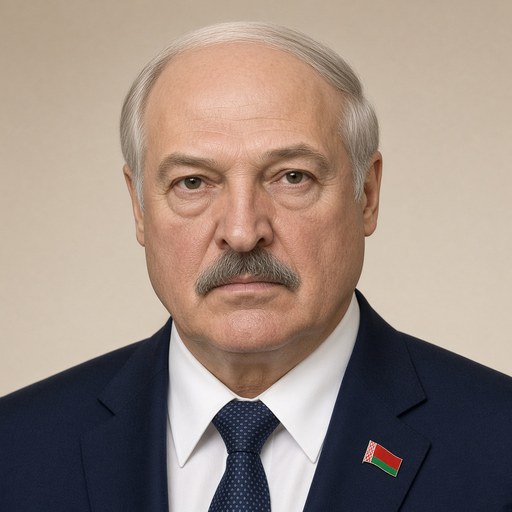
Speech by the President of the Republic of Belarus A.G. Lukashenko at the solemn assembly dedicated to the 60th anniversary of the liberation of the Republic of Belarus from the German-fascist invaders and Independence Day of the Republic of Belarus (Republic Day)
 Alexander Lukashenko · President of Belarus
- Context
- Lukashenko addressed a solemn assembly in Minsk on July 3, 2004, marking the 60th anniversary of Belarus's liberation from Nazi occupation and Independence Day.
- Main themes
- 60th anniversary of Belarus liberation, World War II memory and heroism, Nazi occupation and genocide, Independence Day of Belarus, Soviet unity and anti-fascist struggle, veterans and war sacrifice, Belarusian national identity, resistance movement, Brest Fortress heroism, rejection of historical revisionism
- Duration
- ~26 min
- Words
- 3,128
- Sentences
- 212
- Readability
- 55
- Grade
- 9.3
- Syntax
- 2.75
- Vocabulary
- 2.26
Translated from Russian
The broad sphere of national life a sentence belongs to. Every sentence has an Arena, so it is the denominator the other indices are read against.
Other212 sentences in 114 paragraphs
Dear friends!
Today marks 60 years since the liberation of Belarusian land from the German fascist invaders.
This sacred holiday for the Belarusian people is celebrated together with us by our friends around the world.
Yesterday, at the Mound of Glory and in Khatyn, representatives of all the peoples of the former Soviet Union, representatives of the Resistance movement, and the presidents of fraternal Russia and fraternal Ukraine paid tribute to the heroism and sacrifices of the Belarusian people.
Today, in this hall, are those who liberated our land, the officers and soldiers of the Great Patriotic War — Belarusians, Russians, Armenians, Kazakhs, Ukrainians. Just as 60 years ago, they are together: shoulder to shoulder.
With us are participants in the battles for Belarus from European countries: pilots of the "Normandy-Neman" squadron, Resistance fighters, diplomats, representatives of the anti-Hitler coalition states.
At that time, we had a common enemy, and the liberation of Belarus brought closer the hour of liberation for all of Europe from the fascist yoke.
We are grateful to all who came, overcoming illness and disease, and perhaps even the resistance of those in power.
They did not come only to Minsk.
During these days, the holiday is in every Belarusian hut and village. In every settlement and city. And everywhere there are guests.
This event is truly great.
No one has the right to forget what happened on our land six decades ago.
White Russia, fated to be located at the crossroads of powerful geopolitical forces, has repeatedly been subjected to invasions and devastation.
But the Nazi occupation was a phenomenon of a special kind: the German fascists aimed to exterminate the Belarusian people. In the "cleansed" living space, Berlin planned to leave alive only a quarter of us, Belarusians. As slaves.
In three years of occupation, the Nazis methodically destroyed our people with cynical precision. They shot and burned alive not only those who took up arms but also children, women, and the elderly. One in three residents of our republic died or was wounded.
Sixty years ago, our land was liberated from the Nazi yoke, from the threat of the imminent destruction of the Belarusian people!
And this day, July 3, we honor as Independence Day.
Not everyone knows and remembers that during the times of nationalist dominance, the main state holiday for Belarusians was another day, associated with the collapse of the Soviet Union.
Thus, the ideological descendants of fascist collaborators equated Nazi Germany and the Soviet Union.
The Union in which the Belarusian people preserved and developed to the level of a prosperous nation.
They wanted Belarusians to accept this lie, this greatest injustice.
Thank God, the participants of the battles are alive in Belarus. Those who remember the Hitlerite genocide.
Relying on your authority in society, dear veterans, we defended justice — at all times, the main holiday of the Belarusian people will be the day of liberation from fascist occupation.
Independence Day! The day of our state.
Dear comrades!
The path to freedom was long and difficult.
From the first days of the Nazis' entry onto Belarusian soil, they felt the difference between the parades in the capitals of surrendered European states and the Great Patriotic War of the Soviet people.
The whole world knows of the heroism of the garrison of the Brest Fortress. Its defenders held out for about a month against forces ten times larger than their own. They died but did not surrender. It is no coincidence that the citadel over the Bug was awarded the title of "Hero Fortress."
The Soviet border guards covered themselves with undying glory. They perished but did not retreat. Forever their heroism will be remembered by the monument we erected to the border guards in this anniversary year in Grodno.
Fierce battles unfolded in the Grodno area and near Minsk. The fighters and commanders of the Red Army held a prolonged defense near Borisov and Polotsk, Vitebsk and Gomel.
Mogilev resisted the enemy for twenty-three days. The red banners flew over the tallest buildings in the city until the very end. Much was seen by the writer-soldier Konstantin Simonov during the war. But he bequeathed to scatter his ashes over the Mogilev, famous for its fierce battles, Buynichsk field, where Soviet warriors stood to the death.
Unfortunately, fate does not always justly reward heroism. Not all of its heroes were able to be properly honored by the Soviet state. Not all cities received the awards they deserved. Such is life.
The Nazis did manage to capture our land. But they could not achieve the main thing — to subjugate our people.
One can only admire the fact that, despite the might of the German war machine, terror, and mass killings, our people never lost faith in victory for a moment, did not lower their hands, did not submit.
In the hell of occupation, our people did not lose their dignity. Risking their lives, thousands of Belarusians saved others. Jews, whom the Nazis exterminated mercilessly and indiscriminately. They saved them out of the call of their souls, as people of high moral character.
Resistance to the enemy was nationwide. In Belarus, more than 370,000 partisans fought. More than 400,000 people made up the reserve of the people's avengers. Entire families and villages went into the forest army.
By the end of 1943, about 60 percent of Belarus's territory was under partisan control. More than 20 free partisan zones — strongholds of resistance — were created here.
More than 1.3 million natives of our republic fought on the fronts of the Great Patriotic War.
The complete liberation of Belarus was brought about by the strategic operation "Bagration." It began earlier than planned — at the request of the allies. They did not have such experience of stubborn and exhausting battles, and they feared the concentration of German forces on their fronts.
The operation demonstrated the irresistible power of the Soviet Army and the strategic thinking of its command. It was crowned with complete success.
By the 60th anniversary of liberation, we have restored monuments in our state. Evidence of this is the Mound of Glory, the Brest Fortress, Khatyn. Throughout Belarus, from villages to the capital, military monuments and obelisks of glory have been put in proper order. We have eight and a half thousand of them.
With the efforts of both adults and youth, mostly not for money but out of a call of the heart, we have revived our sanctuaries.
Thus, we honor and will honor the memory of the fallen!
Thus, we pay tribute to the heroism of the older generation.
But we do this even more for the younger generations.
The heroism of our people, of the veterans present in this hall and beyond, is the moral backbone that allows us, our children, and our grandchildren to stand proudly and with dignity.
We know, feel, and believe that we, whose fathers and grandfathers crushed the most powerful and sophisticated machine of destruction, are capable of reaching the highest peaks.
We do not accept advice to forget about the war. They say, more than half a century has passed, why stir up the past, we should think about our daily bread. This is suggested from abroad. This is what the domestic political opposition says.
By cutting us off from our historical roots, they want to deprive the people of a heroic past and a confident future. They want to take away our Great Victory.
The contribution of the Soviet people to the victory over fascism is downplayed and silenced for many reasons.
The first and most tragic is that we no longer have that great power that raised the Banner of Victory over the Reichstag. It cannot stand up for the truth, sober up, and put in place those who feel like today's masters of the world.
Another reason is that in the Second World War, each nation has its own history.
But our people have nothing to hide or correct.
We have always been honest people, faithful friends, and reliable allies.
If all Europeans had fought the Nazis as the Soviet people did, the war would not have been so long and hard. Especially for us.
It was towards the end of the war, when it became clear that the Soviet people were finishing off the Nazi beast, that an unusually large number of people wanted to enlist in the ranks of anti-fascists. But in 1941, in a military alliance with Nazi Germany, which attacked our land, there were, unfortunately, ten European states.
It is clear that their descendants do not want to remember this.
Yes, honest people in the lightning-fast conquered Europe (which means there was such resistance) did not reconcile with Nazism. Each in their own way, to the best of their abilities, primarily the strength of spirit, resisted.
We know and honor the heroes of the Resistance, including in Germany itself. We have great respect for the heroism and sacrifices made on the altar of our common Victory by the allies — Great Britain, the United States of America, and France.
But we cannot forget that it was not only the German fascist invaders who exterminated our people, but also their accomplices of various nationalities. Including the Baltic SS men, who burned Belarusian villages and cities. And today, already part of the European Union, the most democratic, they — veterans of the SS — hold their parades and remember their "combat past."
And their children and grandchildren are again eager to dictate what order should be in Belarus.
They go so far as to say that they are tired of stability in our country.
We cannot accept the arrogance of European officials, who, together with a handful of well-fed opposition members, are trying to punish Belarus for its stubbornness.
These people, knowing the contribution of Belarusians to the Victory over fascism, knowing about our Chernobyl disaster, are seriously concerned with how to make things worse for us. To slow down our development, limit our international contacts, impose sanctions.
They cannot reconcile themselves to the fact that Belarus is not rushing headlong into the European queue. That it does not betray its Slavic brothers, its friends. That it arranges its home according to its own understanding.
They have a desire to bring Belarus to obedience. They are only looking for pretexts for this.
The fates of people do not interest them. They have their own, large geopolitical interests, where a person and his rights are a tool of politics.
I want to warn you — Belarus is capable of standing up for itself and defending itself, no matter how sophisticated the tools of interference in our internal affairs may be.
Especially regarding our neighborhood with NATO.
Under soothing peaceful speeches, three out of five neighboring states have become members of this military-political bloc. Unfortunately, our fraternal Ukraine has also declared its strategic goal of joining NATO. As they say, to the free — freedom.
Everyone chooses their own fate.
But it is completely unacceptable that on the territory of our neighbors who have joined NATO, work is steadily underway to deploy military infrastructure. And its intelligence component has been functioning for several years now.
We are again called to calmness and told that all this is not against us.
But against whom?
In this regard, I want to once again say with all certainty: Belarus is a state that can stand up for itself. We inherited from the great Soviet Union the strongest and most combat-ready military units and formations. The commanders of the Red Banner Belarusian Military District of different years present in this hall will confirm this.
Since then, the number of the Armed Forces has decreased, but the quality of the personnel has improved. The level of combat readiness and armament is now much higher than in Soviet times. The combat task of inflicting unacceptable damage on the aggressor, should such a situation arise, will be fulfilled by Belarusian soldiers and officers. This is confirmed by the exercises conducted annually. They are close to combat conditions.
Dear veterans, you can be proud of the high fighting spirit and training of your children and grandchildren.
I deliberately dedicated such a place in my brief speech to this issue. I do not want you to reproach me that I did not warn the people about what is happening today on the other side of our borders in the event of some complication of the situation — although you can be calm, today we do not see these complications and, God willing, we will not see them, but if suddenly — I want you to know that we will do everything to ensure that our people, as before, live peacefully and calmly. But I emphasize once again, we — the heirs of the great feat of the Soviet people — cannot walk with our heads down and pretend that everything is quiet and calm. We should not be preparing for any war. We should be preparing to raise our economy, improve the Armed Forces, and always be ready here, in the West, to defend our Fatherland.
In this hall and on this day, it is appropriate to repeat what I said a few days ago in Brest. We have preserved and safeguarded the Belarusian-Russian brotherhood in arms. The Soviet Union, unfortunately, is no more, but our soldiers, Belarusians and Russians, together defend the peaceful life of our people, ensure the security of our states.
Dear comrades!
In troubled times, Belarus was rightly called a partisan republic.
In peaceful times, Belarus is a republic of creators, a republic of builders.
The habit of hard and quality work is in our blood. We inherited this from those who restored a completely destroyed and plundered country in an incredibly short time.
The occupiers destroyed more than half of Belarus's national wealth. The damage caused to the national economy exceeded the budget of the republic in 1940 by 35-40 times.
The creative energy of Victory gave the Belarusian people tremendous strength. By the beginning of the 1950s, our domestic industry had reached pre-war levels. In just one five-year plan.
Immediately after the war, giant machine engineering enterprises began to be built: the Minsk Automobile Plant and the Minsk Tractor Plant. In the first post-war decades, large enterprises of heavy and light industry were created.
The entire Soviet Union helped Belarus establish modern production. The teams, where highly qualified specialists from Russia, Ukraine, and other republics worked alongside Belarusians, laid a powerful foundation for domestic industry.
Tens, hundreds of thousands of workers, specialists, and scientists who came from Russia and other Soviet republics fell in love with our country and stayed here to live. They, their children, and grandchildren are an integral part of our Belarusian people.
Fate has tested us once again during our generation's lifetime. I mean not Chernobyl. Today, the conversation is not about this terrible tragedy. Although, if it were not for the Chernobyl disaster, Belarus would be living quite differently today. I am talking about a catastrophe, not a technological one (there, chance is largely to blame), but a geopolitical one: the destruction of the Soviet Union.
There was much to be confused about, to give up: the "assembly shop" of the Union (as Belarus was called) found itself cut off from the other components of the unified Soviet national economy. You remember those times. They were not long ago. People, millions of people found themselves without work, without a piece of bread.
Moreover, in the sister republics, "privatization" of the economy began immediately. I will not go into detail about this — you all know it.
The rollback of the economy was almost like during the Great Patriotic War. By 1995, the decline in production in most sectors of the national economy reached 30–40–50 percent compared to the level of 1990.
But the people endured even during this time. They endured with the same fervor and spirit with which they fought and rebuilt the country in the post-war period.
By the year 2000, industrial production had reached the pre-crisis level of 1990. Note, also in just 5 years. During this period, the annual growth rates of production output were 7–9 percent. This year we are achieving a ten percent growth in the total gross domestic product, in our entire Belarusian economy.
We did not abandon our culture, science, and education to survive on their own, nor did we hand them over to the greedy hands of foreign masters. Our country finds its own means to support its talents.
We have put our cities and villages in order. You see the wonderful condition of the hero city of Minsk — one of the most beautiful cities in Europe. Such cleanliness and order exist not only in the capital but throughout the republic. And this is just the beginning.
As our greatest achievement, we consider the peace and harmony that prevail in Belarusian society.
On our land, representatives of more than a hundred nationalities and ethnicities, 26 religious denominations live together as one family. All of them are full-fledged citizens of Belarus. They enjoy the same rights as Belarusians. We will never allow the division of the residents of our country into natives and migrants, into citizens and non-citizens. I was pleased, I was proud of our entire society, of our people, when I saw the leaders of the two main denominations — Orthodox and Catholic — in Khatyn. I was truly prouder than ever that these wise people, understanding the problems between them, come together at our shrines in these important times for the nation.
Dear veterans!
We owe our peaceful life to you, who defended the country in the wartime turmoil and restored it in the post-war years.
And I wholeheartedly congratulate you on this holiday on behalf of the entire Belarusian people.
Live long.
Be healthy and vigorous.
Remain an example of patriotism, courage, and strength of spirit for the youth, for all of us.
I am confident that we will march together again in unity on Victory Day.
The care you felt in preparation for the anniversary will be constant. No one will be forgotten or left without attention and our daily care. Even in remote and small villages. This is our filial and civic duty.
Dear foreign participants in the liberation of Belarus!
Accept our sincere gratitude for all that you have done.
For carrying through the decades the feeling of combat brotherhood and love for the Belarusian land.
Dear friends!
I warmly and sincerely congratulate all of you on the 60th anniversary of the liberation of the Republic of Belarus from the German-fascist invaders.
Happy Independence Day!
I wish you happiness, health, and prosperity.
Live in peace and harmony!
The original Russian. The tags above are read on the English translation's sentences.
Дорогие друзья!
Исполняется 60 лет со дня освобождения белорусской земли от немецко–фашистских захватчиков.
Этот святой для белорусского народа праздник отмечают вместе с нами наши друзья во всем мире.
Вчера на Кургане Славы и в Хатыни дань уважения подвигу и жертвам белорусского народа отдали представители всех народов бывшего Советского Союза, представители движения Сопротивления, президенты братской России и братской Украины.
Сегодня в этом зале те, кто освобождал нашу землю, офицеры и солдаты Великой Отечественной — белорусы, россияне, армяне, казахи, украинцы. Как и 60 лет назад они вместе: плечом к плечу.
С нами участники боев за Беларусь из европейских государств: летчики эскадрильи "Нормандия–Неман", бойцы Сопротивления, дипломаты, представители государств антигитлеровской коалиции.
Тогда у нас был общий враг, и освобождение Беларуси приближало час освобождения всей Европы от фашистского ига.
Мы признательны всем, кто приехал, преодолев и недуг, и болезни, а может, и сопротивление власть предержащих.
Приехали не только в Минск.
В эти дни праздник в каждой белорусской хаце і вёсцы. В каждом посёлке и городе. И везде гости.
Событие это, действительно, великое.
Никто не вправе забывать о том, что произошло на нашей земле шесть десятилетий назад.
Белая Русь, судьбой расположенная на рубеже мощных геополитических сил, не раз подвергалась нашествиям и опустошениям.
Но гитлеровская оккупация была явлением особого рода: немецкие фашисты ставили цель истребить белорусский народ. На ”очищенном“ таким образом жизненном пространстве Берлин планировал оставить в живых только четвертую часть нас, белорусов. В качестве рабов.
За три года оккупации гитлеровцы с циничной методичностью уничтожали наших людей. Расстреливали, сжигали заживо не только тех, кто брал в руки оружие, но и детей, женщин и стариков. Погиб и умер от ран каждый третий житель нашей республики.
60 лет назад наша земля освободилась от нацистского гнета, от угрозы неминуемого уничтожения белорусского народа!
И этот день, 3 июля, мы чтим как День Независимости.
Не все знают и помнят, что во времена засилья националистов главным державным праздником белорусов был другой день, связанный с развалом Советского Союза.
Таким образом, идейные потомки фашистских пособников ставили в один ряд нацистскую Германию и Советский Союз.
Союз, в котором белорусский народ сохранился и развился до уровня процветающей нации.
Хотели, чтобы белорусы приняли эту ложь, эту величайшую несправедливость.
Слава Богу, живы в Беларуси участники боев. Те, кто помнит гитлеровский геноцид.
Опираясь на ваш, уважаемые ветераны, авторитет в обществе, мы отстояли справедливость — во все времена главным праздником белорусского народа будет день освобождения от фашистской оккупации.
День Независимости! День нашего государства.
Уважаемые товарищи!
Путь к свободе был долог и труден.
С первых дней вступления на белорусскую землю нацисты почувствовали разницу между парадным прохождением по столицам сдавшихся европейских государств и Великой Отечественной войной советского народа.
Весь мир знает о подвиге гарнизона Брестской крепости. Ее защитники около месяца противостояли в десять раз большим силам противника. Умирали, но не сдавались. Недаром цитадели над Бугом присвоено звание "Крепость–герой".
Неувядаемой славой покрыли себя советские пограничники. Они погибли, но не отступили. Вечно об их подвиге будет напоминать памятник, который мы воздвигли героям–пограничникам в этом юбилейном году в Гродно.
Жестокие бои развернулись в районе Гродно и под Минском. Бойцы и командиры Красной Армии держали длительную оборону под Борисовом и Полоцком, Витебском и Гомелем.
Двадцать три дня противостоял врагу Могилев. Красные знамена до последнего реяли над самыми высокими зданиями города. Многое за годы войны видел писатель–фронтовик Константин Симонов. Но завещал развеять свой прах над могилевским, знаменитым ожесточенными боями Буйничским полем, где советские воины стояли насмерть.
К сожалению, судьба не всегда справедливо воздаёт за подвиги. Не всех своих героев смогло достойно отметить советское государство. Не все города получили награды, которых заслуживали. Такова жизнь.
Гитлеровцам все–таки удалось захватить нашу землю. Но они не смогли сделать главного — покорить наш народ.
Можно только восхищаться тем, что, несмотря на всю мощь немецкой военной машины, на террор и массовые убийства, наш народ ни на мгновение не терял веру в победу, не опустил руки, не покорился.
В условиях оккупационного ада наши люди не теряли своего достоинства. Рискуя жизнью, тысячи белорусов спасали других. Евреев, которых нацисты уничтожали беспощадно и поголовно. Спасали по велению души, как люди высоких нравственных качеств.
Сопротивление врагу было всенародным. В Беларуси сражалось более 370 тысяч партизан. Более 400 тысяч человек составляли резерв народных мстителей. В лесную армию уходили целыми семьями и деревнями.
К концу 1943 года под контролем партизан находилось около 60 процентов территории Беларуси. Тут было создано более 20 свободных от захватчиков партизанских зон - опорных пунктов борьбы.
На фронтах Великой Отечественной воевали свыше одного миллиона трехсот тысяч уроженцев нашей республики.
Полное освобождение Беларуси принесла стратегическая операция ”Багратион“. Начали её раньше, чем было запланировано — по просьбе союзников. У них не было такого опыта упорных и изнурительных боев, и они опасались концентрации гитлеровских сил на своих фронтах.
Операция показала неодолимую мощь Советской Армии и стратегическое мышление её командования. Она увенчалась полным успехом.
К 60–летию освобождения мы заново восстановили памятники в нашем государстве. Свидетельством тому — Курган Славы, Брестская крепость, Хатынь. По всей Беларуси, начиная с деревень и заканчивая столицей, приведены в должный порядок воинские памятники, обелиски славы. Их у нас восемь с половиной тысяч.
Всем миром, руками и взрослых, и молодежи, в основном не за деньги, а по зову сердца мы оживили наши святыни.
Так мы чтим и будем чтить память погибших!
Так мы воздаём должное подвигу старшего поколения.
Но ещё больше мы это делаем для поколений молодых.
Героизм нашего народа, ветеранов, находящихся в этом зале и за его пределами, — это тот моральный стержень, который позволяет держаться гордо, с достоинством и нам, и нашим детям, и нашим внукам.
Мы знаем, чувствуем, верим, что нам, чьи отцы и деды сокрушили самую мощную и изощренную машину уничтожения, под силу самые высокие вершины.
Мы не приемлем советов забыть о войне. Мол, прошло более полувека, зачем ворошить старое, надо думать о хлебе насущном. Так подсказывают из–за рубежа. Так говорит внутриполитическая оппозиция.
Отрезая нас от исторических корней, они хотят лишить народ героического прошлого и уверенного будущего. Хотят отнять у нас Великую победу.
Вклад советского народа в победу над фашизмом приуменьшается и замалчивается по очень многим причинам.
Первая и самая трагическая — у нас нет той великой державы, водрузившей над Рейхстагом Знамя Победы. Она не может–де постоять за правду, отрезвить и поставить на место тех, кто чувствует себя сегодняшними хозяевами мира.
Еще одна причина — во Второй мировой войне у каждого народа своя история.
Но у нашего народа нет ничего такого, что надо было бы скрывать, поправлять.
Мы всегда были людьми честными, верными друзьями и надежными союзниками.
Если бы все европейцы бились с нацистами, как советские люди, то война не была бы такой долгой и тяжелой. Тем более для нас.
Это к концу войны, когда стало ясно, что советский народ добивает нацистского зверя, желающих записаться в список антифашистов стало непривычно много. А в 41–м в военном союзе с гитлеровской Германией, напавшей на нашу землю, к сожалению, находилось десять европейских государств.
Понятно, что их потомкам не хочется вспоминать об этом.
Да, честные люди в молниеносно завоеванной гитлеровцами Европе (значит, такое было сопротивление) не примирились с нацизмом. Кто как мог, в меру своих сил, прежде всего силы духа, сопротивлялся.
Мы знаем и чтим героев Сопротивления, в том числе и в самой Германии. С огромным уважением мы относимся к подвигу и жертвам, принесенным на алтарь общей Победы союзниками — Великобританией, соединенными Штатами Америки и Францией.
Но мы не можем забыть того, что уничтожали наших людей не только немецко–фашистские захватчики, но и их приспешники разных национальностей. В том числе и прибалтийские эсэсовцы, сжигавшие белорусские деревни и города. И сегодня, находясь уже в составе Евросоюза, самого демократического, они — ветераны СС — проводят свои парады и вспоминают свое ”боевое прошлое“.
А их дети и внуки опять не прочь продиктовать, какой должен быть порядок в Беларуси.
Они договариваются до того, что им надоела стабильность в нашей стране.
Принять высокомерие европейских чиновников, пытающихся в компании с горсткой прикормленных оппозиционеров, проучить Беларусь за строптивость, мы не можем.
Эти люди, зная вклад белорусов в Победу над фашизмом, зная про нашу чернобыльскую беду, серьезно озабочены тем, как бы сделать нам хуже. Затормозить наше развитие, ограничить наши международные контакты, ввести санкции.
Они не могут примириться с тем, что Беларусь не бежит, сломя голову, в общеевропейскую очередь. Не предаёт братьев–славян, своих друзей. По своему разумению обустраивает свой дом.
Желание привести Беларусь к послушанию у них есть. Ищут для этого только предлоги.
Судьбы людей их не интересуют. У них свои, большие геополитические интересы, где человек и его права — это инструмент политики.
Хочу предупредить — Беларусь в состоянии за себя постоять и себя защитить, какими бы изощренными ни были инструменты вмешательства в наши внутренние дела.
Особо о нашем соседстве с НАТО.
Под успокоительные мирные речи три из пяти пограничных с нами государств стали членами этого военно–политического блока. Объявила, к сожалению, своей стратегической целью членство в НАТО и наша братская Украина. Как говорится, вольному — воля.
Каждый сам выбирает свою судьбу.
Но совершенно неприемлемо то, что на территории наших соседей, вступивших в НАТО, неуклонно идет работа по развертыванию военной инфрастуктуры. А разведывательный ее компонент уже во всю функционирует. И не первый год.
Нас опять призывают к спокойствию и говорят, что всё это не против нас.
А против кого?
В этой связи хочу еще раз со всей определенностью сказать: Беларусь — государство, которое может за себя постоять. Мы унаследовали от великого Советского Союза самые сильные и боеспособные воинские части и соединения. В этом зале командующие Краснознамённым Белорусским военным округом разных лет — они это подтвердят.
С той поры численность Вооруженных Сил сократилась, но качественный состав стал лучше. Уровень боеспособности, вооруженности сейчас намного выше, чем в советское время. Боевую задачу нанесения неприемлемого ущерба агрессору, случись такое, белорусские солдаты и офицеры выполнят. Это подтверждают учения, проводимые ежегодно. Приближенные к боевой обстановке.
Дорогие ветераны, вы можете гордиться высоким боевым духом и выучкой своих детей и внуков.
Я осознанно посвятил в своем кратком выступлении этому вопросу такое место. Я не хочу, чтобы в случае какого–то осложнения обстановки — хотя вы можете быть спокойны, сегодня мы не видим этих осложнений и, дай Бог, не увидим, но если вдруг — чтобы вы меня не упрекнули, что я не предупредил народ о происходящем сегодня по ту сторону наших границ. Мы будем делать все, чтобы наш народ, как и прежде, жил мирно и спокойно. Но еще раз подчеркиваю, мы — наследники великого подвига Советского народа не можем ходить, понурив голову, и делать вид, что все тихо и спокойно. Мы не должны настраиваться на какую–то войну. Мы должны настраиваться на то, чтобы поднимать нашу экономику, совершенствовать Вооруженные Силы и всегда быть готовыми здесь, на Западе, защитить наше Отечество.
В этом зале и в этот день будет уместно повторить то, что несколько дней назад мною было сказано в Бресте. Мы сохранили, уберегли белорусско–русское братство по оружию. Советского союза, к сожалению, нет, но наши солдаты, белорусы и россияне, вместе защищают мирную жизнь наших людей, обеспечивают безопасность наших государств.
Уважаемые товарищи!
В лихую годину Беларусь справедливо называли республикой–партизанкой.
В мирное время Беларусь — республика–созидатель, республика–строитель.
Привычка к напряженной и качественной работе — у нас в крови. Мы унаследовали это от тех, кто за невиданно короткие сроки восстановил полностью разрушенную и ограбленную страну.
Оккупантами было уничтожено более половины национального богатства Беларуси. Ущерб, причинённый народному хозяйству, в 35–40 раз превышал бюджет республики 1940–го года.
Созидательная энергия Победы придала белорусскому народу величайшие силы. Уже к началу 1950–х годов прошлого века отечественная промышленность достигла довоенного уровня. За одну пятилетку.
Сразу после окончания войны начали возводиться машиностроительные гиганты: Минский автомобильный и Минский тракторный заводы. В первые послевоенные десятилетия были созданы крупные предприятия тяжелой и легкой промышленности.
Наладить современное производство Беларуси помогал весь Советский Союз. Коллективы, где вместе с белорусами работали высококвалифицированные специалисты из России, Украины, других республик, заложили мощный фундамент отечественной индустрии.
Десятки, сотни тысяч рабочих, специалистов, ученых, приехавших из России, других советских республик, полюбили нашу страну и остались здесь жить. Они, их дети и внуки — неотъемлемая часть нашего белорусского народа.
Судьба уже при жизни нашего поколения еще раз испытала нас. Я имею в виду не Чернобыль. Сегодня разговор не об этой страшной трагедии. Хотя, если бы не чернобыльская беда, Беларусь сегодня жила бы совсем по–другому. Я говорю о катастрофе, не техногенной (там во многом виноват случай), а о геополитической: о разрушении Советского Союза.
Было от чего растеряться, опустить руки: ”сборочный цех“ Союза (так называли Беларусь) оказался отрезанным от остальных составляющих единого советского народнохозяйственного организма. Вы помните эти времена. Они были совсем недавно. Люди, миллионы людей оказались без работы, без куска хлеба.
К тому же, в республиках–сёстрах немедленно началась ”прихватизация“ экономики. Не буду рассказывать об этом подробно — вы все это знаете.
Откат экономики был почти как во времена Великой Отечественной. К 1995 году прошлого века падение производства в большинстве отраслей народного хозяйства составило 30–40–50 процентов к уровню 1990 года.
Но народ выстоял и в это время. Выстоял на том запале и настрое, с которым воевал и восстанавливал страну в послевоенный период.
Уже в 2000 году промышленное производство достигло докризисного 1990 года. Заметьте, тоже за 5 лет. В этот период годовые темпы прироста выпуска продукции составляли 7–9 процентов. В нынешнем году мы выходим на десятипроцентный прирост всего валового внутреннего продукта, всей нашей белорусской экономики.
Свою культуру, науку, образование мы не бросили на самовыживание, не отдали в загребущие руки зарубежных хозяев. Наша страна сама находит средства для поддержки своих талантов.
Мы привели в порядок города и села. Вы видите, в каком прекрасном состоянии город–герой Минск — один из красивейших городов Европы. Такая же чистота и порядок не только в столице, но и по всей республике. И это только начало.
В качестве величайшего своего достижения мы рассматриваем царящие в белорусском обществе мир и согласие.
На нашей земле живут дружной семьёй представители более ста национальностей и народностей, 26 религиозных конфессий. Все они - полноправные граждане Беларуси. Пользуются равными с белорусами правами. Мы никогда не допустим разделения жителей нашей страны на коренных и мигрантов, на граждан и неграждан. Мне было приятно, я гордился за всё наше общество, за наших людей, когда увидел в Хатыни руководителей двух главных конфессий — православной и католической. Я действительно был как никогда горд, что эти умные люди, понимая, сколько между ними проблем, в эти важные для нации времена приходят вместе к нашим святыням.
Уважаемые ветераны!
Нашей мирной жизнью мы обязаны вам, защитившим страну в военное лихолетье и восстановившим её в послевоенные годы.
И я от всего сердца от имени всего белорусского народа поздравляю вас с праздником.
Живите долго.
Будьте здоровыми и бодрыми.
Оставайтесь для молодежи, для всех нас примером патриотизма, мужества и силы духа.
Уверен, что мы с вами еще не раз пройдём в едином строю в День Победы.
Та забота, которую вы ощутили при подготовке к юбилею, будет постоянной. Никто не будет забыт и оставлен без внимания и нашей повседневной заботы. Даже в отдаленных и небольших деревушках. Это наш сыновний и гражданский долг.
Уважаемые зарубежные участники освобождения Беларуси!
Примите искреннюю благодарность за всё сделанное вами.
За то, что через десятилетия вы пронесли чувство боевого братства и любви к белорусской земле.
Дорогие друзья!
Горячо и сердечно поздравляю всех вас с 60–й годовщиной освобождения Республики Беларусь от немецко–фашистских захватчиков.
С Днем Независимости!
Желаю счастья, здоровья и благополучия.
Живите в мире и согласии!