




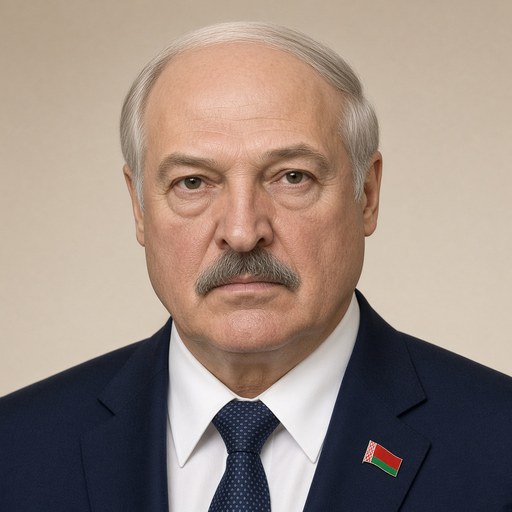
Speech by the President of the Republic of Belarus A.G. Lukashenko at the Republican Festival-Fair of Rural Workers "Dazhynki-2004"
 Alexander Lukashenko · President of Belarus
- Context
- Lukashenko addressed rural workers at the Dazhynki-2004 Republican Festival-Fair in Belarus on September 18, 2004, celebrating record grain harvest achievements.
- Main themes
- Agricultural achievements, grain harvest records, food security, rural workers recognition, agro-industrial investment, Belarusian farming modernization, state support for agriculture, land ownership debate, rural development policy, farm mechanization
- Duration
- ~27 min
- Words
- 3,229
- Sentences
- 211
- Readability
- 54
- Grade
- 9.4
- Syntax
- 2.77
- Vocabulary
- 2.29
Translated from Russian
The broad sphere of national life a sentence belongs to. Every sentence has an Arena, so it is the denominator the other indices are read against.
Other211 sentences in 110 paragraphs
Dear compatriots!
Once again, the country pays tribute to the selfless labor of the villagers in the bread fields.
This year will occupy a special place in the history of the agro-industrial complex of Belarus.
As a turning point. As the year when we achieved a tangible result from the implementation of a targeted, consistent course towards the comprehensive development of the agricultural sector and our village.
By giving it priority in the development of the national economy and social sphere, the leadership of the country constantly keeps its key directions in focus.
The main one is bread production. Because this is the foundation for ensuring the food security of the state and improving the living standards of the Belarusian people.
The amount of grain harvested is a basic indicator. It determines the possibilities of the economy as a whole, the development of animal husbandry, and the growth of food production.
That is the product that is in demand not only in the domestic market but also in external markets, beyond our country.
Year after year, we have increased investments in the agro-industrial complex.
Only this year, more than two trillion rubles have been directed here from all sources of funding. This is 600 billion rubles more than last year. Think about it, in just under a year, over a billion dollars!
The draft budget for the upcoming 2005 year envisages a significant increase in expenditures for the agro-industrial complex. In the consolidated budget, their share will be 15 percent (up from 9 percent this year).
The culture of agriculture and technological discipline has increased immeasurably. Science has worked well — excellent varieties have been created in the country in every respect.
Over the past 10 years, the material and technical base of agriculture has been practically completely updated.
Domestic combine manufacturing is gaining momentum.
Only this year, about one thousand combines of Belarusian production have been delivered to farms. Moreover, in many parameters, they already do not yield to the best foreign analogues. Today, combines for harvesting flax, beets, and other crops have been developed and are being put into serial production. Something we practically did not produce before.
We are also purchasing high-performance imported equipment. As a rule, with significant state support.
Now we have every right to say that we have mainly transitioned to modern intensive agricultural technologies. Therefore, we have sifted and harvested the crop in the shortest, optimal time.
Without unnecessary noise and uproar. As it should be in a well-functioning farm, where everyone — from the mechanic to the President — knows their place and knows what to do.
And the results are obvious.
One-fifth of farms received over 40 quintals of grain per hectare (in 2003, only 7 percent).
In 153 agricultural organizations, the yield exceeded 50 quintals. And four leading agricultural organizations in the country received an average of over 90 quintals per hectare. Amazing results!
These are the agricultural production cooperatives "Progress-Vertelishki" (Chairman — Vasily Afanasevich Revyako), "October-Grodno" (Chairman — Vitaly Ilyich Kremko), "Svisloch" of the Grodno region (Chairman — Vasily Nikolaevich Gustyr), and the agro-complex "Snov" of the Nesvizh region (Acting Chairman — Evgeny Vladimirovich Zdanovich).
Thus, they have proven that even in Belarusian conditions, in a zone of risky farming, it is possible to achieve consistently high yields. Even exceeding the indicators of highly developed countries in Europe and the world.
And this is the best response to our "conscious" and foreign critics and opponents, who stubbornly try to prove that Belarusian agriculture is in complete decline. That it can only be saved by transferring land into private ownership.
This refutes the claims of some "theorists from asphalt," among whom are leaders of considerable rank, that agriculture is a "black hole" where billions of state funds disappear without a trace. To these people, I want to remind once again what I recently said. One peasant, through their labor, producing bread, milk, meat, flax, and sugar beets, provides work for seven people in the cities.
Honor and praise to the best people, our heroic peasants, record-holders, masters of world-class harvests!
In the past year, the average yield across the country was over 33 quintals. The bread loaf of Belarus exceeded 7 million tons. The main and insurance seed funds have been filled. With the bread from the peasants' household plots, we approached the 8-million mark in the yield of our grains.
For the first time, the necessary amount of barley for the brewing industry has been harvested.
The needs of animal husbandry and poultry farming for feed grain have been met, reducing the need to purchase protein raw materials from abroad.
Today, we will produce as much sugar beet as we need for sugar production, ensuring this product for our population. This year, we will produce as much flax as is needed for all flax factories and our complexes to produce the necessary amount of fabrics and other flax products.
Just think: earlier we spent about half a billion dollars on purchasing sugar, flax products, and brewing barley, buying from abroad — in Germany, the Czech Republic, thus exporting the hard-earned currency. Now all this will remain with us, with our peasants. Thus, we are starting to work, producing the necessary products for ourselves, not for foreign "uncles," boosting their economy. Who would like it when we become more and more independent, and independence is, first of all, economic independence, when there is something to eat, when there is something to wear, when a person can look calmly into tomorrow? This is true independence, not just talk.
Thus, reliable food security for the country has been ensured. This is a great victory that we still have to realize together.
And, first of all, this victory belongs to those who directly grew and harvested the bread. This is the result of the intense, heroic work of our villagers, farm leaders. And also of those who actively helped them.
To all of you, on behalf of the Belarusian people, sincere, heartfelt gratitude. You have earned it like never before.
Dear friends!
This year, we celebrate "Dazhynki" in Volkovysk. A city that will celebrate its millennium next year.
But today it has clearly rejuvenated. One could say it is experiencing a second birth.
We see that Volkovysk has prepared well for the holiday.
A total of over 100 billion rubles has been allocated for the renovation of the district center and the preparation of this year's celebrations. And the hosts have skillfully managed these funds.
A large volume of work has been carried out to improve the territories and repair buildings. I have been informed that 175 major facilities have been involved — modernized, reconstructed, repaired, and newly built. Among them are the capital repairs of the House of Culture, the hotel, and the railway station. A new bus station has been built. The central square, where we are now, has been reconstructed.
Well done! But all this must be maintained in the same condition, all this must be preserved. Neither I nor any of the guests who came here will take this with us. This is an investment in our people, in the social sphere, in its development. Many will say that such money should have been divided down to the penny, given to the people, they would have drunk a bottle of beer or a shot of vodka, had a snack, and everyone would have been fine. Well, they drank, had a snack, but what about tomorrow? And to have a hangover, there would be nothing left. Therefore, what you and we have invested here, where we are, will be here today, tomorrow, and the day after tomorrow. And to have a place to relax during the holiday, you have created a wonderful environment. This should be worthy of the Belarusian people.
I am especially pleased to note that the Volkovysk district has made great strides in work on the bread field this year. The yield has increased by almost 13 quintals compared to last year. And it exceeded, think about it, 51 quintals per hectare. This is the fourth result in the region and the fifth in the republic. And I want to tell you directly, when I made the decision to hold the next holiday, I considered that we would come to a good district where hardworking people live. And for such people, it is worth spending this money.
I sincerely congratulate all workers of the agro-industrial complex, the leadership of the Volkovysk district on this great labor victory.
Dear comrades!
It is becoming a kind of tradition that our beautiful Grodno region (Chairman of the Regional Executive Committee — Vladimir Egorovich Savchenko) takes first place in yield.
This year, almost 45 quintals have been harvested from each hectare here. The yield of grain per ballic hectare of arable land amounted to 130 kilograms (106 for Belarus).
In nine out of sixteen districts of the region, the yield exceeded 40 quintals.
And in the Grodno and Berestovitsa districts, the harvest from one hectare exceeded 60 quintals (Chairmen of the District Executive Committees: Mikhail Viktorovich Kamarets and Yan Yanovich Vasilevsky).
In the Mosty, Volkovysk, and Karelian districts, the yield of grain was over 50 quintals per hectare (Chairmen of the District Executive Committees: Viktor Vasilyevich Kudyela, Mikhail Gennadyevich Saveliev, Ivan Mikhailovich Shmatko).
The Shchuchin district (Chairman of the District Executive Committee — Sergey Iosifovich Ushkevich) came close to this mark.
From other regions, the Nesvizh district of Minsk region (Chairman of the District Executive Committee — Fyodor Ivanovich Privalov) received over 50 quintals per hectare.
In terms of total grain harvest, Minsk region (Chairman of the Regional Executive Committee — Nikolai Fyodorovich Domashkevich) is in the lead. Here, almost 1 million 700 thousand tons of grain have been harvested.
More than one million tons have finally been harvested by the Grodno, Brest, and Mogilev regions. These are our new millionaires, and we congratulate them on this victory.
Good words and sincere gratitude are deserved by the leaders of the agricultural complex at all levels, local authorities, and management. No matter how much we talk, dear friends, about money, no matter how we emphasize the role of the President and the Government in all this, it is true, excuse my immodesty, but if it were not for you, the chairmen of the executive committees, the district executive committees, if it were not for the leaders of rural councils, if it were not for our wonderful leaders of collective farms, state farms, cooperatives, and farming collectives, if it were not for you, the peasants, mechanics, with your hardworking hands, we would never have gathered like this and celebrated these great days.
Only thanks to you, the selfless labor of the leaders at the district level, the leaders of farms, rural councils, and trade union leaders, who, finally, as it was before, stood by us, we are celebrating such a victory today.
You have carefully worked out the issues of organizational and ideological support. You have done everything possible to achieve a high yield. You have timely and qualitatively prepared for the harvest. You have created the necessary conditions for the productive work of combine operators, drivers, and grain drying personnel. Effective competition has emerged in agricultural organizations, districts, and regions.
In this year's harvest, almost 14 thousand combine crews participated. Of these, 1,011 harvested more than one thousand tons. And just recently, there were only a few dozen. 1,011 crews instead of a few dozen harvested a thousand tons of bread. Can you imagine, one combine, one person, and a thousand tons of bread.
The highest indicator is held by the crew of Gennady Mikhailovich Klimko from the cooperative "Negnevichi" of the Novogrudok district, who harvested 4,115 tons of grain on the "Class-Lexion 480" combine.
On the same combine, Georgy Mikhailovich Likhuta with his son Denis from the SPC "Gorodeya" of the Nesvizh district harvested 4,101 tons of grain.
Heroes! One mechanic harvested as much as two average collective farms.
All combine operators and drivers worked without regard to time. As much as the weather and time conditions allowed. They effectively used every fine minute.
The winner of the republican competition for feed harvesting was Mogilev region (Chairman of the Regional Executive Committee — Boris Vasilyevich Baturo). And this is a great victory for Mogilev peasants.
I congratulate you on this victory.
Dear harvest winners!
Your labor achievements are a bright page in the agricultural chronicle of the country.
On behalf of the entire Belarusian people, I once again express to you the highest appreciation and immense gratitude.
You all deserve it and will be duly rewarded. You will always be remembered by the people. You will always be respected people in our state. Some of you will go home in new cars.
There are many of you. The names of the best of the best will be announced during the award ceremony for the winners. The names of the other harvest heroes will be known to the country through the mass media.
I appeal to the leaders of the regions and districts: do everything possible, find a way to reward the best workers in a broader composition.
I instruct the Government and the Presidential Administration to submit proposals to me for awarding particularly distinguished leaders, specialists, mechanics, and peasants with state awards.
Dear participants of the "Dazhynki" holiday!
We cannot stop at what has been achieved in any case.
There are even more complex tasks ahead.
The main one is to bring the entire agricultural sector to a European and world level in the future.
On this basis, to bring the working and living conditions of villagers closer to those of city dwellers. To make life in the countryside attractive.
This will be directed by the Program for the Revival and Development of the Village for 2005-2010, developed at my request. It actually started this year.
The program covers almost the entire range of village problems. We plan to allocate about 60 trillion rubles for its implementation.
It is envisaged to strengthen the agricultural economy, to bring agricultural production to the principles of self-financing.
To approach the solution of this problem within the next 5 years, it is necessary to reach annual production of: 8 million tons of grain, 3.5 million tons of sugar beets, and 9 million tons of potatoes.
To achieve milk production of 6.5 million tons and 1 million 300 thousand tons of meat.
Undoubtedly, this is a very difficult and complex task. It will require considerable efforts from both the management apparatus and the labor collectives.
First and foremost, we need to significantly increase the fertility of the land. We aim to introduce at least 50 million tons of organic matter and 1.5 million tons of mineral fertilizers in active substance per year for these purposes.
We must fully restore the fund of irrigated lands.
We need to optimize the nomenclature and quantity of technical means in the machine and tractor fleet, primarily through our own agricultural engineering. First and foremost, tractors and combines.
We will reconstruct the equipment of livestock farms and processing enterprises on the basis of the latest technology.
In order to enhance the material incentives for workers based on their labor results, we will implement new progressive forms of organization and payment for this labor.
As a result of the implementation of other measures, it is necessary to reduce the specific costs of agricultural production. We must increase the competitiveness of agricultural products in both domestic and foreign markets. We aim to ensure the profitability of agricultural production at the level of 40 percent.
Based on strengthening the agrarian economy and increasing state support, we will ensure the development of the social sphere in rural areas.
We plan to expand preferential conditions for individual housing construction. We will fully gasify rural areas and ensure the stability of rural energy systems.
By 2010, we need to provide all populated areas with stationary or mobile telephone communication. We will build and reconstruct at least 17,000 kilometers of rural roads. We will bring social standards in education, healthcare, and cultural and domestic services closer to urban levels.
We will raise the standard of living for the rural population and enhance the prestige of rural life.
It is expected that the implementation of the measures in this program will allow us to revive the Belarusian countryside on a new basis. We will bring it closer to the average European level in terms of key social and production parameters.
Some may call our plans utopian. But I look to the future of the Belarusian countryside with optimism. We must do this, and we will do it.
The main component of future success is the already created potential of agricultural production and the hard work of the Belarusian peasantry.
I am convinced that Belarus will take its rightful place in the family of nations.
Dear comrades!
An important political event is upcoming in the country, and I cannot overlook it in my speech — the elections of deputies to our Parliament. The highest state body plays an important role in the development of the country. A deputy is a very high title and a great degree of responsibility.
I am confident that you will be able to distinguish a potential statesman from a false advocate for the people. The latter has nothing but empty ambitions and mercenary considerations.
On the same day as the parliamentary elections, as you know, there will also be a referendum. As I promised, I will not campaign for you on this matter.
I will only say: when you are consulting and deciding whether to go to the polling station, think about what will happen to the great work of uplifting and saving the countryside, which has already gained momentum.
Look at how beautiful the millennium-old Volkovysk has become! And we made it so, despite those who complain that "the country is in decline" and try to divert the country from the path of creation. Dozens, hundreds of cities and towns in our Belarus have also become more beautiful. Everything is being done solidly, thoroughly, for generations, for children and grandchildren.
Yes, this is achieved with great effort: ministers, lower-level officials, and ordinary workers are all struggling. It is hard. But if this drive and pressure from my side, this energy, this tension, were to cease — everything would wither and fall into disrepair, as it was in the early nineties. We cannot allow this. Enough of the exercises!
Dear friends!
I am very grateful to the workers of the agro-industrial complex — mechanics, specialists, leaders — for this year's harvest.
I would very much like this to be not our only record. I want it to be the foundation from which we will start and achieve even greater successes and victories in the field of grain production.
I am grateful to the workers of industrial enterprises, service organizations, trade, medical, and cultural institutions who contributed to this noble cause.
Thank you to everyone who contributed to ensuring the food security of our state.
Today, we can stand tall and say that we are not dependents; we provide for ourselves. And we fear no one today — neither from the west nor from the east.
Where there is bread, there is life in our country.
Thank you! I bow deeply to you, the victors.
The original Russian. The tags above are read on the English translation's sentences.
Дорогие соотечественники!
В очередной раз страна отдает дань глубочайшего уважения самоотверженному труду сельчан на хлебной ниве.
Нынешний год займёт особое место в истории агропромышленного комплекса Беларуси.
Как переломный год. Как год, когда мы получили ощутимый результат реализации целенаправленного, последовательного курса на всестороннее развитие аграрного сектора и нашего села.
Придав ему приоритетное значение в развитии национальной экономики и социальной сферы, руководство страны постоянно держит в поле зрения его ключевые направления.
Главное из них — производство хлеба. Потому что это — основа обеспечения продовольственной безопасности государства, повышения жизненного уровня белорусского народа.
Количество полученного зерна — базовый показатель. Он определяет возможности экономики в целом, развитие животноводства, роста производства продуктов питания.
Той продукции, которая востребована не только на внутреннем, но и на внешних рынках, за пределами нашей страны.
Из года в год мы наращивали вложения в агропромышленный комплекс.
Только в текущем году из всех источников финансирования сюда направлено более двух триллионов рублей. На 600 миллиардов рублей больше, чем в предыдущем. Вдумайтесь, только за неполный год больше миллиарда долларов!
В проекте бюджета на предстоящий 2005 год намечено существенное увеличение расходов на агропромышленный комплекс. В консолидированном бюджете доля их составит 15 процентов (вместо 9 процентов в этом году).
Неизмеримо возросла культура земледелия, технологическая дисциплина. Хорошо поработала наука — в стране созданы превосходные во всех отношениях сорта.
За последние 10 лет практически полностью обновлена материально–техническая база сельского хозяйства.
Набирает темпы отечественное комбайностроение.
Только в этом году в хозяйства поступило около одной тысячи комбайнов белорусского производства. Причем по многим параметрам они уже не уступают лучшим зарубежным аналогам. Сегодня разработаны и ставятся в серийное производство комбайны по уборке льна, свеклы и других культур. То, чего мы раньше практически не производили.
Закупаем также и высокопроизводительную импортную технику. Как правило, при большой поддержке государства.
Теперь мы имеем полное право сказать, что в сельскохозяйственном производстве вышли в основном на современные технологии интенсивного типа. Поэтому в кратчайшие, оптимальные сроки отсеялись и вовремя убрали урожай.
Без лишнего шума и гвалта. Так, как положено в хорошо отлаженном хозяйстве, где каждый — от механизатора до Президента — знает свое место и знает, что ему делать.
И результаты очевидны.
Одна пятая часть хозяйств получила свыше 40 центнеров зерна с гектара (в 2003 году — только 7 процентов).
В 153 сельхозорганизациях урожайность превысила 50 центнеров. А четыре ведущих сельхозорганизации страны получили в среднем свыше 90 центнеров с гектара. Потрясающие результаты!
Это сельскохозяйственные производственные кооперативы ”Прогресс–Вертелишки“ (председатель — Василий Афанасьевич Ревяко), "Октябрь–Гродно" (председатель — Виталий Ильич Кремко), ”Свислочь“ Гродненского района (председатель — Василий Николаевич Густырь), агрокомбинат ”Снов“ Несвижского района (исполняющий обязанности председателя — Евгений Владимирович Зданович).
Тем самым они доказали — и в белорусских условиях, в зоне рискованного земледелия, можно получать стабильно высокие урожаи. Даже превосходящие показатели высокоразвитых стран Европы и мира.
И это — лучший ответ нашим ”свядомым“ и зарубежным критиканам и оппонентам, которые упорно пытаются доказать, что сельское хозяйство Беларуси в полном упадке. Что спасёт его только передача земли в частную собственность.
Это опровержение утверждений некоторых ”теоретиков от асфальта“, причем среди них есть и руководители немалого ранга, о том, что сельское хозяйство — это де ”черная дыра“, где бесследно исчезают миллиарды государственных средств. Этим людям хочу еще раз напомнить то, что недавно говорил. Один крестьянин своим трудом, производя хлеб, молоко, мясо, лен, сахарную свеклу, в городах дает работу семи человекам.
Честь и хвала лучшим людям, нашим героическим крестьянам, рекордсменам, мастерам урожаев мирового уровня!
В истекшем году средняя урожайность по стране более 33 центнеров. Хлебный каравай Беларуси превысил 7 миллионов тонн. Засыпаны основной и страховой фонды семян. С хлебом крестьян на приусадебных участках мы подошли к 8–миллионому рубежу урожайности наших хлебов.
Впервые заготовлено необходимое количество ячменя для пивоваренной промышленности.
Удовлетворена потребность животноводства и птицеводства в фуражном зерне, уменьшится необходимость закупки за рубежом белкового сырья.
Мы сегодня произведем столько сахарной свеклы, сколько нам надо для производства сахара, обеспечения этим продуктом нашего населения. Мы в этом году произведем столько льна, сколько надо для всех льнозаводов и наших комбинатов для производства необходимого количества тканей и другой льноводческой продукции.
Вдумайтесь только: раньше мы тратили около полумиллиарда долларов на закупку сахара, льнопродукции и пивоваренного ячменя, покупали за границей — в Германии, Чехии, вывозя так трудно получаемую нами валюту. Сейчас это все останется у нас, у наших крестьян. Таким образом, мы начинаем работать, производя необходимую продукцию на себя, а не на зарубежных ”дядек“, поднимая их экономику. Кому же это будет нравиться, когда мы становимся все больше и больше независимыми, а независимость — это, прежде всего, экономическая независимость, когда есть что поесть, когда есть что одеть, когда человек может спокойно смотреть в завтрашний день. Это истинная независимость, а не болтовня.
Таким образом, обеспечена надежная продовольственная безопасность страны. Это величайшая победа, которую нам еще с вами предстоит осознать.
И, прежде всего это победа тех, кто непосредственно выращивал, убирал хлеб. Это — итог напряжённой, героической работы наших сельчан, руководителей хозяйств. А ещё тех, кто им активно помогал.
Вам всем от имени белорусского народа искренняя, сердечная благодарность. Вы её заслужили как никогда.
Дорогие друзья!
В этом году ”Дажынкі“ мы празднуем в Волковыске. Городе, который в следующем году будет отмечать свое тысячелетие.
Но сегодня он явно помолодел. Можно сказать, переживает второе рождение.
Мы видим, что Волковыск достойно подготовился к празднику.
Всего на обновление районного центра и подготовку нынешних торжеств было отпущено свыше 100 миллиардов рублей. И хозяева умело распорядились этими средствами.
Проведен большой объем работ по благоустройству территорий и ремонту зданий. Мне доложили, что было задействовано 175 крупных объектов — модернизированы, реконструированы, отремонтированы и построены заново. Среди них — капитально отремонтированные Дом культуры, гостиница, железнодорожный вокзал. Построена новая автостанция. Реконструирована центральная площадь, на которой мы сейчас находимся.
Молодцы! Но все это надо в таком же состоянии и поддерживать, все это надо сберечь. Ни я, никто из гостей, приехавших сюда, не заберет это с собой. Это вложение в наших людей, в социальную сферу, в ее развитие. Многие будут говорить, что вот такие деньги, надо было их поделить по копейке, по рублю раздать народу, выпили бы по бутылке пива или по рюмке водки, закусили и всем бы было хорошо. Ну, выпили, закусили, а что завтра? А похмелиться–то уже не на что было бы. Поэтому то, что вы и мы вложили сюда, где мы находимся, — это будет и сегодня, и завтра, и послезавтра. А для того, чтобы в праздник, в свободное время отдохнуть, место вы создали прекрасное. Это должно быть достойно белорусского народа.
Мне особенно приятно отметить, что Волковысский район в этом году здорово прибавил в работе на хлебной ниве. Почти на 13 центнеров по сравнению с прошлогодней возросла урожайность. И она превысила, вдумайтесь, 51 центнер с гектара. Это четвертый результат в области и пятый — в республике. И хочу вам прямо сказать, когда я принимал решение о проведении очередного праздника, учитывал, что мы приедем в хороший район, где живут трудолюбивые люди. И для таких людей не жалко этих денег.
Искренне поздравляю всех работников агропромышленного комплекса, руководство Волковысского района с великой трудовой победой.
Уважаемые товарищи!
Становится уже своеобразной традицией, что первое место по урожайности занимает наша прекрасная Гродненщина (председатель облисполкома — Владимир Егорович Савченко).
В этом году здесь с каждого гектара намолочено почти 45 центнеров. Выход зерна в расчете с одного балло–гектара пашни составил 130 килограммов (по Беларуси — 106).
В девяти районах области из шестнадцати урожайность превысила 40 центнеров.
А в Гродненском и Берестовицком районах намолоты с одного гектара превысили 60 центнеров (председатели райисполкомов: Михаил Викторович Камарец и Ян Янович Василевский).
В Мостовском, Волковысском, Кореличском районах урожайность зерновых составила более 50 центнеров с гектара (председатели райисполкомов: Виктор Васильевич Куделя, Михаил Геннадьевич Савельев, Иван Михайлович Шматко).
Вплотную к этому рубежу приблизился Щучинский район (председатель райисполкома — Сергей Иосифович Ушкевич).
Из других областей свыше 50 центнеров с гектара получил Несвижский район Минщины (председатель райисполкома — Федор Иванович Привалов).
По валовому сбору зерна впереди Минская область (председатель облисполкома — Николай Федорович Домашкевич). Здесь собрали почти 1 миллион 700 тысяч тонн зерна.
Более одного миллиона тонн наконец–то получено Гродненской, Брестской и Могилевской областями. Это новые наши миллионники, и мы их поздравляем с этой победой. (Аплодисменты).
Хороших слов, искренней благодарности заслуживают руководители аграрного комплекса всех уровней, местных органов власти и управления. Сколько б мы ни говорили, уважаемые друзья, о деньгах, как бы мы ни отмечали роль Президента, Правительства во всем этом, это так, извините за нескромность, но если бы не было вас, председателей исполкомов, райисполкомов, если бы не было руководителей сельских Советов, если бы не было наших прекрасных руководителей колхозов, совхозов, кооперативов, фермерских коллективов, если бы не было вас, крестьян, механизаторов, с вашими натруженными руками, мы никогда бы не собирались вот так и не праздновали эти великие дни.
Только благодаря вам, самоотверженному труду руководителей районного звена, руководителей хозяйств, сельских Советов, руководителей профсоюзных организаций, которые, наконец–то, как это было раньше, стали рядом с нами, мы празднуем сегодня такую победу.
Вы тщательно отработали вопросы организационного, идеологического обеспечения. Сделали все возможное для получения высокого урожая. Своевременно и качественно подготовились к страде. Вы создали необходимые условия для производительной работы комбайнеров, водителей, персонала зернотоков. Действенным стало соревнование в сельхозорганизациях, районах и областях.
В жатве текущего года принимали участие почти 14 тысяч комбайновых экипажей. Из них 1011 намолотили более одной тысячи тонн. А ведь еще совсем недавно их было несколько десятков. 1011 экипажей вместо нескольких десятков намолотили по тысяче тонн хлеба. Представляете, один комбайн, один человек и тысячу тонн хлеба.
Самый высокий показатель у экипажа Геннадия Михайловича Климко из кооператива ”Негневичи“ Новогрудского района, намолотившего на комбайне ”Класс–Лексион 480“ 4115 тонн зерна.
На таком же комбайне Георгий Михайлович Лихута со своим сыном Денисом из СПК ”Городея“ Несвижского района намолотили 4101 тонну зерна.
Герои! Один механизатор намолотил за два средних колхоза–совхоза.
Все комбайнеры и водители работали, не считаясь со временем. Столько, сколько позволяли погодные и временные условия. Эффективно использовали каждую погожую минуту.
Победителем республиканского соревнования по заготовке кормов стала Могилевщина (председатель облисполкома — Борис Васильевич Батура). И это большая победа могилевских крестьян.
Я вас поздравляю с этой победой.
Уважаемые победители жатвы!
Ваши трудовые свершения — яркая страница в аграрной летописи страны.
От имени всего белорусского народа еще раз выражаю вам высочайшую признательность и огромную благодарность.
Все вы заслужили её и будете достойно поощрены. Будете всегда в памяти народной. Вы будете всегда уважаемыми людьми в нашем государстве. Некоторые из вас уедут домой на новых автомобилях.
Вас много. Имена лучших из лучших будут названы при вручении призов победителям. Имена остальных героев жатвы страна узнает через средства массовой информации.
Я обращаюсь к руководителям областей и районов: сделайте всё возможное, найдите возможность поощрить лучших работников в более широком составе.
Поручаю Правительству и Администрации Президента внести мне предложения о награждении особо отличившихся руководителей, специалистов, механизаторов, крестьян государственными наградами.
Уважаемые участники праздника ”Дажынкі“!
Останавливаться на достигнутом мы ни в коем случае не можем.
Впереди ещё более сложные задачи.
Главная из них — в перспективе вывести всю аграрную отрасль на европейский, мировой уровень.
На этой основе приблизить условия труда и быта сельчан до уровня горожан. Сделать жизнь на селе привлекательной.
На это будет направлена разработанная по моему поручению Программа возрождения и развития села на 2005–2010 годы. Она, собственно, в этом году взяла свой старт.
Программа охватывает практически весь комплекс проблем деревни. На её реализацию мы намечаем выделить около 60 триллионов рублей.
Предусматривается укрепить аграрную экономику, вывести сельскохозяйственное производство на принципы самофинансирования.
Чтобы приблизиться к решению этой проблемы уже в ближайшие 5 лет, необходимо выйти на годовое производство: зерна — 8 миллионов тонн, сахарной свеклы и картофеля — 3,5 и 9 миллионов тонн.
Достичь производства молока — 6,5 миллиона тонн и 1 миллион 300 тысяч тонн мяса.
Бесспорно, это тяжелейшая и непростая задача. Потребуется немало усилий как управленческого аппарата, так и трудовых коллективов.
В первую очередь предстоит существенно повысить плодородие земли. Выйти в этих целях на внесение в год не менее 50 миллионов тонн органики и минеральных удобрений в размере полутора миллиона тонн в действующем веществе.
Полностью восстановить фонд мелиорированных земель.
Оптимизировать по номенклатуре и количеству технических средств машинно–тракторный парк, преимущественно за счет собственного сельскохозяйственного машиностроения. В первую очередь тракторов и комбайнов.
Реконструировать на новейшей технологической основе оборудование животноводческой фермы и предприятия перерабатывающей промышленности.
С целью усиления материального стимулирования работников за результаты труда внедрить новые прогрессивные формы организации и оплаты этого труда.
В результате реализации и других мероприятий необходимо снизить удельную затратность сельскохозяйственного производства. Повысить конкурентоспособность сельскохозяйственной продукции как на внутреннем, так и внешнем рынках. Обеспечить рентабельность сельхозпроизводства на уровне 40 процентов.
На основе укрепления аграрной экономики и увеличения государственной поддержки обеспечить развитие социальной сферы села.
Намечается обеспечить расширение льготных условий для индивидуального жилищного строительства. Полностью газифицировать сельскую местность, обеспечить стабильность работы сельских энергосистем.
К 2010 году необходимо обеспечить стационарной или мобильной телефонной связью все населенные пункты. Построить и реконструировать не менее 17 тысяч километров сельских дорог. Приблизить социальные стандарты в области образования, здравоохранения и культурно–бытового обслуживания населения к городским.
Повысить уровень благосостояния сельского населения и престижность сельского уклада жизни.
Предполагается, что реализация мероприятий этой программы позволит на новой основе возродить белорусское село. По основным социальным и производственным параметрам приблизить его к среднеевропейскому уровню.
Кто–то может назвать наши планы утопичными. Но я смотрю в завтрашний день белорусского села с оптимизмом. Мы это должны сделать, и мы это сделаем.
Главная составляющая будущего успеха — уже созданный потенциал аграрного производства и трудолюбие белорусского крестьянства.
Убежден — Беларусь займёт подобающее ей место в семье народов мира.
Уважаемые товарищи!
В стране предстоит важное политическое событие, и я его не могу обойти в своем выступлении, — выборы депутатов в наш Парламент. Высший государственный орган государства играет важную роль в развитии страны. Депутат — это очень высокое звание и высочайшая степень ответственности.
Уверен, что вы сможете отличить потенциального государственника от лжерадетеля за народ. У которого ничего, кроме пустых амбиций и меркантильных соображений, нет.
В один день с парламентскими выборами, как вы знаете, состоится и референдум. Как я и обещал, агитировать вас по этому поводу не буду.
Скажу только: когда вы будете советоваться, решать — идти ли на избирательный участок, думайте о том, что станет с той большой работой по подъему и спасению села, которая уже набрала обороты.
Посмотрите — каким красавцем стал тысячелетний Волковыск! И таким его сделали мы с вами, вопреки тем, которые ноют, что ”краіна ў заняпадзе“, и пытаются свернуть страну с пути созидания. Так же похорошели десятки, сотни городов и посёлков нашей Беларуси. Всё делается добротно, основательно, на поколения, для детей и внуков.
Да, это даётся большим трудом: стонут и министры, и начальники пониже, и простые работяги. Тяжело. Но не станет этого напора и давления с моей стороны, этой энергии, напряжения — всё зачахнет и придёт в запустение, как это было в начале девяностых. Мы этого допустить не можем. Хватит, наупражнялись!
Дорогие друзья!
Я очень благодарен работникам агропромышленного комплекса — механизаторам, специалистам, руководителям — за урожай этого года.
Я очень бы хотел, чтобы это стало не единственным нашим рекордом. Чтобы это стало той основой, с которой мы будем стартовать и добиваться еще больших успехов и побед на хлебной ниве.
Я признателен работникам промышленных предприятий, обслуживающих организаций, торговли, медицинских, культурных учреждений, внесших свою лепту в это благородное дело.
Спасибо всем, кто содействовал обеспечению продовольственной безопасности нашего государства.
Мы сегодня во весь рост можем спокойно стоять и говорить, что мы — не нахлебники, мы обеспечиваем себя сами. И бояться нам сегодня некого — ни с запада, ни с востока.
Будет хлеб — будет жизнь в нашей стране.
Спасибо! Я низко кланяюсь вам, победителям.