




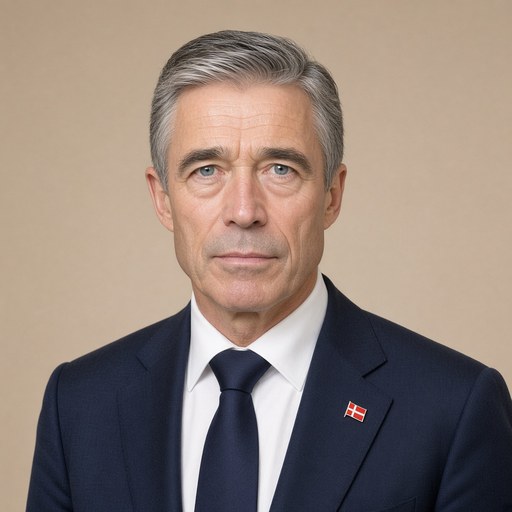
Prime Minister Anders Fogh Rasmussen's speech at Mindelunden, May 4, 2005.
 Anders Fogh Rasmussen · Prime Minister of Denmark
- Context
- Rasmussen addressed a commemoration at Mindelunden, Copenhagen, on May 4, 2005, marking the 60th anniversary of Denmark's liberation from Nazi occupation.
- Main themes
- Danish liberation anniversary, resistance fighters and sacrifice, Nazi occupation, honor and moral courage, complicity of Danish authorities, Jewish persecution and deportation, Bornholm's fate, concentration camp deaths, Danish war sailors, remembrance and gratitude
- Duration
- ~11 min
- Words
- 1,293
- Sentences
- 104
- Readability
- 66
- Grade
- 7.1
- Syntax
- 2.50
- Vocabulary
- 2.30
Translated from Danish
The broad sphere of national life a sentence belongs to. Every sentence has an Arena, so it is the denominator the other indices are read against.
Other104 sentences in 31 paragraphs
Your Majesty, ladies and gentlemen,
When the message of freedom rang out from the BBC in London on May 4, 1945, at 8:36 PM, the Danish people came together in a community, a celebration, and an enthusiasm that was the greatest and strongest Denmark experienced in the last century.
But the joy of liberation was for many also mixed with sorrow over the many who paid with their lives in the fight against the Nazis. And anger over the unimaginable crimes and suffering that the Nazis had inflicted on Europe.
In one place in Denmark, it may seem particularly difficult to celebrate liberation these days. For Bornholm, the war was not over. On May 7 and 8, 1945, Rønne and Nexø were struck by the horrors of war during a Soviet bombardment. 9 people died, and a large number of Bornholmers lost their homes. For Bornholm, the war did not finally end until April 5, 1946.
Here in Ryvangen, Danish freedom fighters were executed by the Germans. Here in Mindelunden lie the graves of many of those who lost their lives in the struggle against the occupying power.
I have not personally experienced the occupation and liberation. But I am deeply moved to stand among these graves. It is overwhelming to think of the many fates that hide behind the names on the gravestones. But behind each name stood a person who made a choice. Driven by a deep conviction of what is right and what is wrong.
Nazism was such an evil and thoroughly criminal ideology that it had to be fought against. But deep into the war, the Nazis were so strong that resistance could seem futile.
Fortunately, there were some who actively resisted. They did not ask what would be useful. But what was true. They did not content themselves with just looking after themselves. They acted. They gave their lives for our freedom.
The Danish people owe a great debt of gratitude to the freedom fighters. They saved Denmark's honor. And they secured the self-respect of the Danish people.
Danish resistance fighters were a mixed group. We see this clearly here in Mindelunden. There were all kinds of people – high and low, young rebels as well as good and solid citizens. Virtually all professions were represented.
Take, for example, ice master Hans Jørgen Henriksen from Aalborg, who at the age of 35 was executed at the shooting range here in Ryvangen.
There was also municipal teacher Sven Otto Nielsen. His story is at once deeply fascinating, moving, and tragic. After just a few months as the leader of a sabotage group, he was betrayed by an informer. In a firefight with the occupying troops, he had one of his legs shattered by gunfire. At the age of 36, he too was executed in Ryvangen. He could hardly stand when they shot him.
But people did not only die in Denmark. Police officers, resistance fighters, and many others died of exhaustion, disease, and hunger in concentration camps.
Captain Tage Fox Maule was also betrayed by an informer. He ended up in Shellhuset and Vestre Fængsel. Sick from the suffering he had endured, he was put on the last prisoner transport south. They were on the road for 12 days through Germany in a cattle car. A terrible journey. His comrades had to drag him through the gate to Dachau. Just inside the gate, he died of exhaustion and illness.
Danes sailed under great personal risk for the Allies. It is surprising how many – and how many did not survive. Not everyone was as lucky as sailor Alf Rasmussen. He survived being torpedoed three times in eight hours – presumably by the same submarine.
Some Danes chose to fight on the Allied side on land and in the air. One of the most famous was Anders Lassen. He fell, as is well known, when he single-handedly attacked a machine gun nest in Italy. Less known is that he actually started as a war sailor. Upon hearing of the German occupation, he, along with the other crew members, forced his ship ashore in South Africa. From there, he went to Great Britain and enlisted in the British special forces.
Here in Ryvangen, our thoughts should also go to the Danes who never returned home. Many did not even receive a gravestone. They died during transports. In concentration camps. Or went down with their ships.
It can be heavy to think about. Worse is that we today know that Danish authorities in some cases were complicit in deporting people to suffering and death in concentration camps. These were individuals who sought refuge here in the country from the Nazi persecution of the Jewish people. Danish authorities handed these people over to the Nazis.
Also, other innocent people were, with the active complicity of Danish authorities, left to an uncertain fate in the hands of the Nazi regime. These are shameful events. A stain on Denmark's otherwise good reputation in this context.
The memory of the darker sides of the occupation period unfortunately also belongs to the commemoration of the 60th anniversary of Liberation. I would therefore like – on this occasion and at this place – to express regret and apologize on behalf of the government and thus the Danish state for these actions.
An apology cannot change history. But it can serve to acknowledge historical mistakes. So that current and future generations hopefully avoid similar mistakes in the future.
Tonight, we must not forget that Denmark became free because millions of Allied soldiers fought against the Nazis. A visit to the war cemeteries in Normandy is a moving testament to the sacrifices that young Americans, Englishmen, Canadians – yes, young people from all over the world – made in the fight against Nazism and for freedom.
In Denmark, we will never forget the Allied airmen who supplied the Danish resistance movement with weapons and gave the Danish people hope. And we will never forget the British soldiers who came to Denmark as liberators on May 5, 1945.
British veterans and soldiers,
Thank you for taking time to be present here today. Denmark will never forget the sight of British soldiers crossing our borders, landing in our airfields, and docking in our harbors on the 5th of May. It was indeed a happy day.
Great Britain showed extraordinary stamina and resolve in the awful days in the summer of 1940.
The Nazi armies seemed invincible. Despite heavy losses and horrific bombardments of London and other British cities, you stood firm. In a situation that seemed hopeless, you managed to keep a flicker of hope burning in the occupied countries. In Denmark, too. We are eternally grateful that you did not give up. That you rejected all thought of a compromise with Hitler. That you kept on fighting.
Your Majesty, ladies and gentlemen,
Tonight we remember the freedom fighters who gave their lives so that we can live today in freedom, peace, and prosperity. Many of them were quite young. One of them was Kim Malthe-Bruun. Kim was executed by the Germans on April 6, 1945, along with three others. He was 21 years old at the time. In his farewell letter to his mother, he writes among other things: "I have walked a path that I do not regret. I have never failed what beat in my heart. And I now feel that I can see a connection. I am not old. I should not die, and yet it seems so natural to me, so straightforward."
We owe a great debt of gratitude to those who followed their hearts and fought for what they believed was right. Many of them paid the full and highest price.
May their memory be honored.
The original Danish. The tags above are read on the English translation's sentences.
Deres Majestæt, mine damer og herrer
Da frihedsbudskabet lød fra BBC i London den 4. maj 1945 kl. 20.36, samlede det danske folk sig i et fællesskab, en fest og en begejstring, som er det største og stærkeste, Danmark oplevede i det sidste århundrede.
Men glæden over befrielsen blev for mange også blandet med en sorg over de mange, som betalte med deres liv i kampen mod nazisterne. Og en vrede over de ufattelige forbrydelser og lidelser, som nazisterne havde udsat Europa for.
Et sted i Danmark kan det synes særlig svært at festligholde befrielsen i disse dage. For Bornholm var krigen ikke slut. 7. og 8. maj 1945 blev Rønne og Nexø ramt af krigens gru under et sovjetisk bombardement. 9 døde og et stort antal bornholmere mistede deres hjem. For Bornholm sluttede krigen først endeligt den 5. april 1946.
Her i Ryvangen blev danske frihedskæmpere henrettet af tyskerne. Her i Mindelunden ligger gravene for mange af dem, der måtte lade livet i kampen mod besættelsesmagten.
Jeg har ikke selv oplevet besættelsen og befrielsen. Men jeg bliver dybt bevæget over at stå mellem disse grave. Det er overvældende at tænke på de mange skæbner, der skjuler sig bag navnene på gravstenene. Men bag hvert navn stod et menneske, som traf et valg. Båret af en dyb overbevisning om, hvad der er rigtigt, og hvad der er forkert.
Nazismen var en så ond og gennemført forbryderisk ideologi, at den måtte bekæmpes. Men langt ind i krigen var nazisterne så stærke, at modstand kunne synes nytteløs.
Heldigvis var der nogle, som gjorde aktiv modstand. De spurgte ikke om, hvad der kunne nytte. Men om, hvad der var sandt. De nøjedes ikke med at hytte sig. De handlede. De gav deres liv for vores frihed.
Det danske folk skylder en stor tak til frihedskæmperne. De reddede Danmarks ære. Og de sikrede det danske folks selvrespekt.
Danske modstandsfolk var en blandet flok. Det ser vi tydeligt her i Mindelunden. Der var tale om alle slags mennesker – høj som lav, unge rebeller såvel som gode og solide borgere. Stort set alle professioner var repræsenterede.
Tag for eksempel ismester Hans Jørgen Henriksen fra Ålborg, som i en alder af 35 år blev henrettet på pistolbanen her i Ryvangen.
Der var også kommunelærer Sven Otto Nielsen. Hans historie er på samme tid dybt fascinerende, gribende og tragisk. Efter få måneder som leder af en sabotagegruppe, blev han angivet af en stikker. I ildkamp med besættelsestropper fik han knust sit ene ben af skud. 36 år gammel blev også han henrettet i Ryvangen. Han kunne dårligt stå, da de skød ham.
Men folk døde ikke kun i Danmark. Politifolk, modstandsfolk og mange andre døde af udmattelse, sygdom og sult i koncentrationslejrene.
Kaptajn Tage Fox Maule blev også angivet af en stikker. Han røg i Shellhuset og Vestre Fængsel. Syg af de lidelser, han havde været udsat for, blev han sat på den sidste fangetransport mod syd. 12 dage var de undervejs gennem Tyskland i en kreaturvogn. En forfærdelig tur. Hans kammerater måtte slæbe ham gennem porten til Dachau. Lige inden for porten døde han af udmattelse og sygdom.
Danskere sejlede under stor personlig risiko for de allierede. Det er overraskende, hvor mange – og hvor mange der ikke overlevede. Det var ikke alle, der var så heldige som matrosen Alf Rasmussen. Han overlevede at blive torpederet tre gange på otte timer – formentlig af den samme ubåd.
Nogle danskere valgte at kæmpe på allieret side på landjorden og i luften. En af de kendteste var Anders Lassen. Han faldt som bekendt, da han egenhændigt angreb en maskingeværrede i Italien. Mindre kendt er måske, at han faktisk startede som krigssejler. Ved nyheden om den tyske besættelse tvang han sammen med de øvrige ombordværende sit skib i land i Sydafrika. Herfra tog han til Storbritannien og meldte sig til de engelske specialstyrker.
Her i Ryvangen bør vores tanker derfor også gå til de danskere, som aldrig vendte hjem. Mange fik ikke engang en gravsten. De døde under transporter. I koncentrationslejre. Eller gik ned med deres skibe.
Det kan være tungt at tænke på. Værre er, at vi i dag ved, at danske myndigheder i nogle tilfælde var medvirkende til at udvise folk til lidelse og død i koncentrationslejrene. Det var personer, der søgte tilflugt her i landet fra de nazistiske forfølgelser af det jødiske folk. Danske myndigheder udleverede disse mennesker til nazisterne.
Også andre, uskyldige mennesker blev med danske myndigheders aktive medvirken overladt til en uvis skæbne i det nazistiske regimes hænder. Der er tale om skamfulde begivenheder. En plet på Danmarks i øvrigt gode omdømme i denne sammenhæng.
Erindringen om besættelsestidens skyggesider hører desværre også med til markeringen af 60-året for Befrielsen. Jeg vil derfor gerne - ved netop denne lejlighed og på dette sted – på regeringens og dermed den danske stats vegne beklage og undskylde disse handlinger.
En undskyldning kan ikke gøre historien om. Men den kan tjene til at erkende historiske fejltagelser. Så nuværende og kommende generationer forhåbentlig undgår lignende fejl i fremtiden.
I aften må vi ikke glemme, at Danmark blev frit, fordi millionvis af allierede soldater kæmpede mod nazisterne. Et besøg på krigskirkegårdene i Normandiet er et bevægende vidnesbyrd om de ofre, som unge amerikanere, englændere, canadiere – ja, unge fra hele verden – gav i kampen mod nazismen og for friheden.
I Danmark vil vi aldrig glemme de allierede flyvere, som forsynede den danske modstandsbevægelse med våben og gav det danske folk håb. Og vi vil aldrig glemme de britiske soldater, der kom til Danmark som befriere den 5. maj 1945.
British veterans and soldiers,
Thank you for taking time to be present here today.Denmark will never forget the sight of British soldiers crossing our borders, landing in our airfields and docking in our harbours on the 5
th
of May. It was indeed a happy day.
Great Britain showed extraordinary stamina and resolve in the awful days in the summer of 1940.
The Nazi armies seemed invincible. Despite heavy losses and horrific bombardments of London and other British cities, you stood firm. In a situation that seemed hopeless you managed to keep a flicker of hope burning in the occupied countries. In Denmark, too. We are eternally grateful that you did not give up. That you rejected all thought of a compromise with Hitler. That you kept on fighting.
Deres Majestæt, mine damer og herrer,
I aften mindes vi de frihedskæmpere, som gav deres liv for, at vi i dag kan leve i frihed, fred og fremgang. Mange af dem var ganske unge. Én af dem var Kim Malthe-Bruun. Kim blev henrettet af tyskerne den 6. april 1945 sammen med tre andre. Han var da 21 år. I afskedsbrevet til sin mor skriver han bl.a.: ”Jeg har vandret ad en vej, som jeg ikke har fortrudt. Jeg har aldrig svigtet, hvad der i mit hjerte slog. Og jeg synes nu, at jeg kan se en sammenhæng. Jeg er ikke gammel. Jeg burde ikke dø, og dog synes det mig så naturligt, så ligetil.”
Vi er en stor tak skyldig til de, der fulgte deres hjerte og kæmpede for, hvad de fandt rigtigt. Mange af dem betalte den fulde og højeste pris.
Æret være deres minde.