




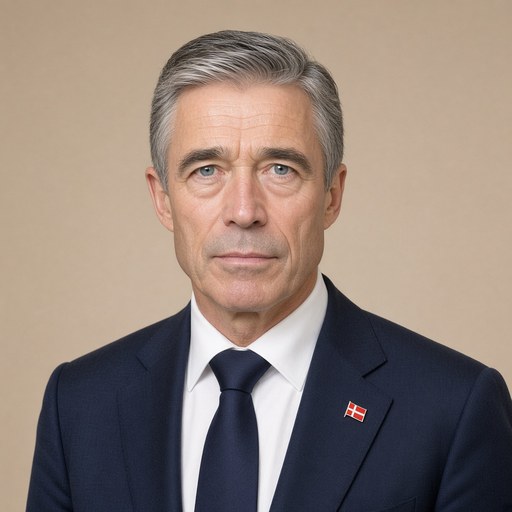
Prime Minister Anders Fogh Rasmussen's speech on the occasion of the 50th anniversary of the Copenhagen-Bonn declarations, March 29, 2005, Sønderborg Castle.
 Anders Fogh Rasmussen · Prime Minister of Denmark
- Context
- Rasmussen addressed German and Danish dignitaries at Sønderborg Castle on March 29, 2005, marking the 50th anniversary of the Copenhagen-Bonn declarations on minority rights.
- Main themes
- Copenhagen-Bonn declarations anniversary, minority rights, Danish-German relations, border region history, cultural exchange, reconciliation, European cooperation, Sønderborg Castle history, political leadership, shared cultural heritage
- Duration
- ~6 min
- Words
- 726
- Sentences
- 45
- Readability
- 55
- Grade
- 9.2
- Syntax
- 2.76
- Vocabulary
- 2.31
Translated from Danish
The broad sphere of national life a sentence belongs to. Every sentence has an Arena, so it is the denominator the other indices are read against.
Other45 sentences in 20 paragraphs
Mr. Chancellor, Madam Prime Minister, ladies and gentlemen.
Sønderborg Castle is a beautiful and historic place to celebrate the 50th anniversary of the Copenhagen-Bonn declarations.
The history of the castle is also the history of the border region. Sønderborg Castle was built by the Danish king, Valdemar the Great, around 1160 as a defense against Wendish attacks. Since then, the castle has served as both a royal prison, a hospital, and a German barracks.
All of this is now history. The conflicts of the border region have been put in a museum – where they belong.
The Copenhagen-Bonn declarations were signed 10 years after World War II. This is roughly the same temporal distance that we have today to the civil wars of the 1990s in the Balkans. We see how difficult it can be to deal with old enemies.
It is against this backdrop that we must recognize the foresight and leadership that Chancellor Konrad Adenauer and Prime Minister H.C. Hansen demonstrated in 1955.
In the declarations, Germany and Denmark acknowledge the rights of the Danish and German minorities. Particularly important was the statement that the confession of one's own nationality and culture is free, and that it must not be disputed or verified by the authorities.
The arrangement has been a great success.
The minorities on both sides of the border have since been able to freely preserve and develop their culture and use the language they wish.
And the minorities have simultaneously been loyal citizens. Good citizens in the states they have often inhabited for generations. In this way, the minorities have acted as a cultural bridge between our two countries. The border region has united us rather than divided us.
Declarations are only paper and empty words if there is a lack of will from governments and minorities to implement them. It is in the border region that the declarations must prove themselves in real life. It is largely the minorities and their active participation in cultural and political life that have made the Copenhagen-Bonn declarations a great success.
There has recently been a discussion about the role of the South Schleswig Voter Association in the Schleswig-Holstein state parliament. This has generated major headlines and concerned expressions in the Danish and German press. I will not comment further on the matter. But the strong emotions that this issue has aroused show the need to nurture relations in the border region. It is important that we do not allow discussions of this kind to affect our good and friendly relations.
Since 1955, both Germany and Europe have been united. Cooperation has replaced the power politics of earlier times. Germany is today not only Denmark's largest trading partner but also one of our central partners in the EU.
There has always been a fruitful exchange between our two cultures. Many artists have drawn inspiration from the other side of the border – most notably from the southern side.
Let me just mention the fairy tale poet H.C. Andersen - particularly relevant this year, the 200th anniversary of his birth - the philosopher Søren Kierkegaard, and the famous Danish sculptor Thorvaldsen.
The great German Romantic painters Caspar David Friedrich and Philip Otto Runge trained at the Danish Academy of Fine Arts. And we are proud that Berthold Brecht had political asylum in Denmark for a period.
What may be less known in Denmark is that one of the greatest European poets, Rainer Maria Rilke - whom I know, Mr. Chancellor, you particularly appreciate - visited Denmark in 1904. He learned Danish, which we Danes are always flattered by. He did so in order to read the Danish author J.P. Jacobsen. Rilke thus symbolizes the close cultural ties between Denmark and Germany. A shared European spirit.
Rilke wrote a novel with a young Danish nobleman in Paris as the main character. A central figure in the story is the grandfather, who has conversations with ghosts. The point is that one must have a clear relationship with the ghosts of the past in order to see the future clearly.
Konrad Adenauer and H.C. Hansen showed the courage to confront the ghosts of the past. Today, we can benefit from their clear vision of the future.
With these words, I would like to congratulate the minorities, Sønderjylland, the state of Schleswig-Holstein, and our good friend and neighbor, Germany.
The original Danish. The tags above are read on the English translation's sentences.
Hr. Forbundskansler, fru ministerpræsident, mine damer og herrer.
Sønderborg Slot er et smukt og historisk sted at fejre 50-året for København-Bonn erklæringerne.
Slottets historie er også grænselandets historie. Sønderborg Slot blev bygget af den danske konge, Valdemar den Store, omkring 1160 som værn mod vendiske angreb. Siden hen har slottet fungeret som både kongeligt fængsel, lazaret og tysk kaserne.
Alt dette er nu historie. Grænselandets konflikter er kommet på museum – hvor de hører hjemme.
København-Bonn erklæringerne blev underskrevet 10 år efter 2. verdenskrig. Det er nogenlunde samme tidsmæssige afstand, som vi i dag har til halvfemsernes borgerkrige på Balkan. Vi ser, hvor svært det kan være at forholde sig til gamle fjender.
Det er på den baggrund, vi må se det fremsyn og lederskab, som forbundskansler Konrad Adenauer og statsminister H.C. Hansen udviste i 1955.
I erklæringerne anerkender Tyskland og Danmark det danske og tyske mindretals rettigheder. Særlig vigtig var udsagnet om, at bekendelsen til egen nationalitet og kultur er fri, og at den ikke må bestrides eller efterprøves af myndighederne.
Ordningen har været en stor succes.
Mindretallene på begge sider af grænsen har siden frit kunnet bevare og udvikle deres kultur og bruge det sprog, de ønskede.
Og mindretallene har samtidig været loyale borgere. Gode borgere i de stater, som de ofte har beboet i generationer. Herved har mindretallene virket som en kulturel bro mellem vore to lande. Grænselandet har bundet os sammen frem for at skille os ad.
Erklæringer er kun papir og tomme ord, hvis der mangler vilje fra regeringer og mindretal til at føre dem ud i livet. Det er i grænselandet, at erklæringerne skal stå deres prøve i det virkelige liv. Det er i høj grad mindretallene og deres aktive deltagelse i det kulturelle og politiske liv, som har gjort København-Bonn-erklæringerne til en stor succes.
Der har for nylig været diskussion om Sydslesvigsk Vælgerforenings rolle i den slesvig-holstenske landdag. Det har i dansk og tysk presse fremkaldt store overskrifter og bekymrede miner. Jeg vil ikke kommentere sagen nærmere. Men de stærke følelser, som denne sag har vakt, viser behovet for at pleje relationerne i grænselandet. Det er vigtigt, at vi ikke lader diskussioner af den art påvirke vores gode og venskabelige forhold.
Siden 1955 er både Tyskland og Europa blevet forenet. Samarbejde har afløst tidligere tiders magtpolitik. Tyskland er i dag ikke blot Danmarks største handelspartner, men er også en af vore centrale partnere i EU.
Der har altid været en frugtbar udveksling mellem vore to kulturer. Mange kunstnere har hentet inspiration på den anden side af grænsen – vist nok mest på den sydlige side
Lad mig blot nævne eventyrdigteren H.C. Andersen - særligt aktuel i år, 200-året for hans fødsel -, filosoffen Søren Kirkegaard og den berømte danske skulptør Thorvaldsen.
De store tyske guldaldermalere Kasper David Friedrich og Philip Otto Runge uddannede sig på det danske Kunstakademi. Og vi er stolte af, at Berthold Brecht i en periode havde politisk asyl i Danmark.
Hvad, der måske er mindre kendt i Danmark, er, at en af de største europæiske digtere, Rainer Maria Rilke - som jeg ved, at de, hr. kansler, sætter særlig stor pris på - i 1904 besøgte Danmark. Han lærte sig dansk, hvilket vi danskere altid bliver smigret over. Det gjorde han for at kunne læse den danske forfatter J.P. Jacobsen. Rilke symboliserer dermed de nære kulturelle bånd mellem Danmark og Tyskland. En fælles europæisk ånd.
Rilke skrev en roman med en ung dansk adelsmand i Paris som hovedperson. En central person i historien er bedstefaderen, der fører samtaler med spøgelser. Pointen er, at man må have et afklaret forhold til fortidens spøgelser for at kunne se fremtiden klart.
Konrad Adenauer og H.C. Hansen viste modet til at konfrontere fortidens spøgelser. Vi kan i dag nyde godt af deres klare syn på fremtiden.
Med disse ord vil jeg ønske tillykke til mindretallene, til Sønderjylland, til landet Slesvig-Holsten og til vores gode ven og nabo, Tyskland.