




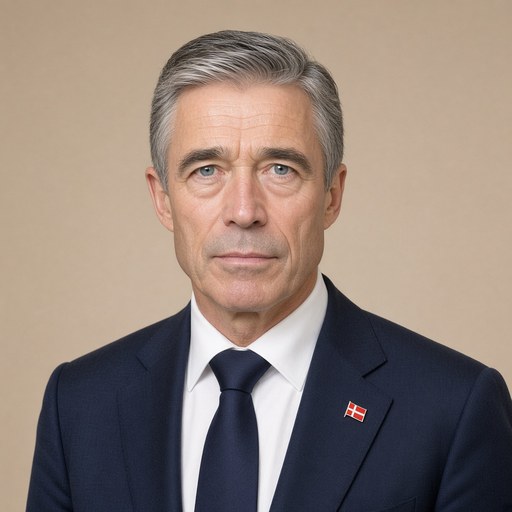
Prime Minister Anders Fogh Rasmussen's speech at the People's Meeting at Ejer Bavnehøj on Sunday, August 24, 2003.
 Anders Fogh Rasmussen · Prime Minister of Denmark
- Context
- Rasmussen addressed the annual People's Meeting at Ejer Bavnehøj on August 24, 2003, speaking on Danish identity and the Danish minority south of the German border.
- Main themes
- Danish-German border region minority rights, Danish national identity, Danish-German relations, Copenhagen-Bonn declarations, minority protection, cultural diversity, reunification of North Slesvig, Grundtvig's definition of Danishness, European minority rights, post-Cold War nationalism, Danish roots and openness
- Duration
- ~15 min
- Words
- 1,744
- Sentences
- 111
- Readability
- 52
- Grade
- 9.4
- Syntax
- 2.74
- Vocabulary
- 2.18
Translated from Danish
The broad sphere of national life a sentence belongs to. Every sentence has an Arena, so it is the denominator the other indices are read against.
Other111 sentences in 50 paragraphs
It is a pleasure for me to be here today – at one of the highest points in Denmark. It may not be the roof of the world, but the view over the Danish late summer landscape is hard to beat.
In the past, one would scout from this hill for possible threats lurking out there. If something "dangerous" was spotted, warnings were sent by lighting a fire.
Fortunately, it has been a long time since a warning fire has blazed here. Our view of Denmark and the world looks quite different than it did back then, and we handle problems in a different way. Ejer Bavnehøj is today a popular viewpoint, where we also remember the reunification of North Slesvig with the rest of Denmark.
Today, we celebrate what we have in common: Our roots - our connection to Denmark. No matter where we call home and where we have traveled in the world, we each have our personal connection to the Danish.
* * *
The annual folk meeting, organized by Skanderborg Municipality, DGI Horsens Region, and the Border Association, is yet another example of the close ties that exist between Denmark and the Danish minority south of the border. The meeting is also further testimony that you are a very visible minority.
We in Denmark are happy that there is a population living south of our national border that still feels connected to Denmark. We are proud that even here, 83 years after the referendum, there are still strong ties to Denmark. This is not a given after so many years – and in an international age.
But that has indeed been the case since 1920. Back then, the then Prime Minister Neergaard, on behalf of the Danish state, assured the Danish-minded people south of the new border that "You shall not be forgotten."
The Danish and German minorities on both sides of the border have proven to be remarkably resilient. The minorities help to build bridges between Danish and German in the border region and thus between Denmark and Germany.
In the Danish-German border region, there is a linguistic and cultural diversity. This diversity creates a unique pattern where people move around, come into contact, and influence each other. And it is my firm belief that the minorities on both sides of the border enhance our cultural richness.
Therefore, we must protect our minorities, give them freedom and opportunities for development. And we must respect that, as a result of historical border delineations, there are people who, for historical reasons, have a stronger connection to the neighboring country.
Recent history has shown what a lack of minority rights combined with intolerance, prejudice, and ignorance can lead to in terms of atrocities. When I say recent history, I am not talking about the time around World War II. No, I am talking about Europe 10 years ago!
With the end of the Cold War and the disappearance of the Iron Curtain, many European countries regained their freedom and independence, and a wave of nationalism swept through Europe. Not least the Balkans showed us what intolerance and national self-sufficiency can lead to in the most extreme consequences.
The peaceful development of coexistence in the Danish-German border region therefore has international significance. Not least in light of the developments we have witnessed in Europe since 1989.
Denmark and Germany ensured as early as 1955, with the Copenhagen-Bonn declarations, that the minorities on both sides of the border can preserve their identity and their linguistic and cultural uniqueness. This was long before there was anything called "The Framework Convention for the Protection of National Minorities and the Language Charter."
The Copenhagen-Bonn declarations regarding the rights of the two minorities have decisively paved the way for the peaceful development we have witnessed in the border region. And they have been an important prerequisite for the close Danish-German cooperation. Today, we can present a fine example in the Danish-German borderland that it is possible to find sustainable and peaceful solutions to national conflicts.
* * *
But what does it really mean to be Danish?
Yes, a people is held together by a common history, language, mentality, and shared customs. Our great poet Grundtvig defines nationality in the poem "Everything must now be folk-like":
To a people they all belong who count themselves among them has for the mother tongue an ear has for the fatherland a fire
I appreciate Grundtvig's inclusive description of Danishness. "To a people they all belong, who count themselves among them."
To cultivate the Danish and to be aware of the Danish root is not an expression of narrow-minded nationalism. Knowing one's roots does not contradict being open to others. On the contrary. For just as a tree with the best root system grows large and strong and unfolds in all its splendor, so too will a person with a strong root system have the surplus to unfold and open up to others.
In a time like ours, this is an important quality. International cooperation and globalization make the world at once much smaller and much larger. A small country like Denmark is entirely dependent on keeping its windows open to the rest of the world. We must not and cannot hide, either out of fear or self-sufficiency. We must unfold and open ourselves to the outside world.
Development cannot help but put Danishness under pressure. Yes, there are even some who fear that the Danish cannot survive in a world where we are bombarded daily with news and impressions from larger and foreign cultures.
I do not share this fear. On the contrary, I believe that we are facing a future where the awareness of our own roots, identity, and values will become stronger and stronger.
For the more we travel around the world, the more foreign cultures we encounter, the stronger globalization becomes, the greater the need for a rooting and an identity. The Danish minority south of the border has precisely taught us that national uniqueness is not threatened by meeting and interacting with others.
On the contrary.
* * *
This summer, we have witnessed a series of terrible acts committed by young second-generation immigrants. I have been shocked by reports of shootings, knife attacks, and other unprovoked acts of violence. We have heard that the young view the police and society as enemies.
Many immigrants are functioning well and are well integrated into Danish society. They do not benefit from the creation of divisions and tensions between Danes and immigrants due to the reckless behavior of young criminal immigrants.
We must take action against the terror we have seen from severely alienated young people who create fear and insecurity. We must not accept that young people can repeatedly commit crimes without facing significant consequences because they are below the criminal age. Young people lose respect for society when they experience that society is indifferent to their actions. We must not accept that young people walk around with knives in nightclubs and other public places.
Therefore, we must put an end to the lack of consequences.
It is as if there is a fundamental lack of respect and acceptance among some for what kind of society we live in. Just as Danes living abroad must adapt to the society they live in, so too must immigrants in Denmark do the same.
We do not demand that everyone be the same, or live in the same way, or have the same opinions. But we must be clear: The prerequisite for being integrated into Danish society is that each immigrant understands and accepts the fundamental values on which Danish society is built.
We must have a society with room for diversity, difference, and freedom for the individual. Everyone must have equal opportunities to partake in the growth and welfare of society. Everyone must have access to the labor market and public life – regardless of gender, skin color, and beliefs.
But Danish society is also built on some fundamental values that are not up for discussion: Democracy, tolerance, open-mindedness, responsibility, equality, and respect for others. These are some of the values that bind our society together.
When these fundamental values are attacked, we must react immediately and decisively. We must insist that not everything is equally good or equally valid. For if everything is equally valid, then it all ends up being irrelevant. We must not accept that children are sent on re-education trips abroad. Or that religious preachers undermine integration.
We must also say: If one wants to live in Denmark, one must compromise and adapt. Being integrated is the individual's responsibility. Just as the responsibility for committing crimes and other wrongdoings is. Each of us is responsible for our own life.
* * *
Let me conclude with a call to everyone in Denmark:
Let us together abolish the Law of Jante. Let us together develop a new fundamental attitude.
We must move away from the mindset that you must not believe that you are and can do something. We must shift to the mindset that each individual Dane believes more in themselves, is more aware of the values on which our society is built, and is prouder of what we can do in Denmark.
We do have a tendency in Denmark to cultivate an incredible inferiority complex. We sing Kaalund's "on the even, on the even – not in the sky blue."
Another well-known line, where we wholeheartedly cultivate the inferiority complex, goes: "We are not made for height and wind, to stay on the ground serves us best."
I am glad that our young people and children have not adopted these lines when they throw themselves into the Internet or into the world in general.
We must renew attitudes in Denmark. We must value our own nationality and express it.
We must dare to rise above "the even, on the even." And we must increasingly feel that we are made for height and wind.
Such a popular self-awareness and determination is a prerequisite for making a special Danish contribution to the world around us.
And we have much to offer. Over the summer, an American researcher once again placed Denmark at the very top in the world when it comes to progress, social development, and living conditions.
We must not hide. On the contrary. We must be visible. We must stand tall. Be active. We can achieve a lot if we want to and dare.
The original Danish. The tags above are read on the English translation's sentences.
Det er mig en glæde at være til stede her i dag – på et af de højeste punkter i Danmark. Nok er det ikke verdens tag, men udsigten over det danske sensommerland fås ikke meget bedre.
I sin tid spejdede man her fra højen efter mulige trusler, der lurede derude. Fik man øje på noget ”farligt”, sendte man varsler ved at tænde et bål.
Det er lykkeligvis længe siden, at et varselsbål har flammet her. Vort Danmarks- og verdensbillede ser noget anderledes ud end dengang, og vi håndterer problemerne på en anden måde. Ejer Bavnehøj er i dag et populært udsigtspunkt, hvor man også mindes Nordslesvigs genforening med det øvrige Danmark.
I dag markerer vi på festlig vis det, vi har til fælles: Vore rødder - vor tilknytning til Danmark. Uanset hvor vi har vort hjem og hvor vi har faret i verden, har vi hver vor personlige tilknytning til det danske.
* * *
Det årlige folkemøde, der er arrangeret af Skanderborg Kommune, DGI Horsensegnen og Grænseforeningen, er endnu et eksempel på de tætte bånd, der er mellem Danmark og det danske mindretal syd for grænsen. Mødet er også endnu et vidnesbyrd om, at I er et meget synligt mindretal.
Vi i Danmark er glade for, at der syd for vor landegrænse lever en befolkning, som fortsat føler sig knyttet til Danmark. Vi er stolte over, at der selv her 83 år efter folkeafstemningen, stadig er stærke bånd til Danmark. Det er ingen selvfølge efter så mange år – og i en international tidsalder.
Men sådan har det altså været siden 1920. Dengang den daværende statsminister Neergaard på den danske stats vegne gav de dansksindede syd for den nye grænse tilsagn om, at ”De skal ikke blive glemt”.
Det danske og det tyske mindretal på begge sider af grænsen har vist sig bemærkelsesværdigt livkraftigt. Mindretallene er med til at bygge bro mellem dansk og tysk i grænselandet og hermed mellem Danmark og Tyskland.
I den dansk-tyske grænseregion findes en sproglig og kulturel mangfoldighed. Denne mangfoldighed skaber et særegent mønster, hvor mennesker flytter rundt, kommer i kontakt og påvirker hinanden. Og det er min faste overbevisning, at mindretallene på begge sider af grænsen øger vores kulturelle rigdom.
Derfor skal vi værne om vore mindretal, give dem frihed og udviklingsmuligheder. Og vi skal respektere, at der som følge af historiens grænsedragninger findes mennesker, som af historiske årsager har en stærkere tilknytning til nabolandet.
Historien i nyere tid har vist, hvad manglende mindretalsrettigheder kombineret med intolerance, fordomme og uvidenhed kan føre til af grusomheder. Når jeg siger nyere tid, taler jeg ikke om tiden omkring 2. verdenskrig. Nej, jeg taler om Europa for 10 år siden!
Med den kolde krigs ophør og jerntæppets forsvinden genvandt mange europæiske lande deres frihed og selvstændighed, og der gik en bølge af nationalisme gennem Europa. Ikke mindst Balkan viste os, hvad intolerance og national selvstilstrækkelighed i den yderste konsekvens kan føre til.
Den fredelige udvikling i sameksistensen i den dansk-tyske grænseregion har derfor en international betydning. Ikke mindst i lyset af den udvikling, som vi har været vidne til i Europa i tiden efter 1989.
Danmark og Tyskland sikrede allerede i 1955 med København-Bonn-erklæringerne, at mindretallene på begge sider af grænsen kan bevare deres identitet og deres sproglige og kulturelle egenart. Dette var længe før, der var noget, der hed ” Konventionen om Nationale mindretal og Sprogpagten”.
Netop København-Bonn-erklæringerne om de to mindretals rettigheder har på afgørende vis banet vejen for den fredelige udvikling, som vi har været vidne til i grænselandet. Og har været en vigtig forudsætning for det tætte dansk-tyske samarbejde. Vi kan i dag i det dansk-tyske grænseland fremvise et fornemt eksempel på, at det er muligt at finde holdbare og fredelige løsninger på nationale konflikter.
* * *
Men hvad vil det egentlig sige at være dansk?
Ja, et folk holdes sammen af en fælles historie, sproget, mentaliteten og fælles skikke. Vor store digter Grundtvig definerer nationaliteten i digtet ”Folkeligt skal alt nu være”:
Til et folk de alle høre
som regne sig selv dertil
har for modersmålet øre
har for fædrelandet ild
Jeg synes godt om Grundtvigs rummelige beskrivelse af danskheden. ”Til et folk de alle høre, som regne sig selv dertil”.
At dyrke det danske og være sig den danske rod bevidst er ikke udtryk for snæversynet nationalisme. At kende sin rod står ikke i modsætning til at være åben over for andre. Tværtimod. For ligesom træet med det bedste rodnet vokser sig stort og stærkt og folder sig ud i al sin pragt, vil også mennesket med et stærkt rodnet have overskuddet til at folde sig ud og åbne sig for andre.
I en tid som vor er det en vigtig egenskab. Det internationale samarbejde og globaliseringen gør på en gang verden meget mindre og meget større. Et lille land som Danmark er helt afhængigt af at holde vinduerne åbne ud til resten af verden. Vi skal og kan ikke gemme os, hverken af frygt eller selvtilstrækkelighed. Vi skal folde os ud og åbne os over for omverdenen.
Udviklingen kan ikke undgå at sætte danskheden under pres. Ja, der er endda nogen, der frygter, at det danske ikke kan overleve i en verden, hvor vi dagligt bombarderes med nyheder og indtryk fra større og fremmede kulturer.
Jeg deler ikke denne frygt. Tværtimod tror jeg, at vi står over for en fremtid, hvor bevidstheden om vore egne rødder, identitet og værdier bliver stærkere og stærkere.
For jo mere vi farer omkring i verden, desto flere fremmede kulturer vi møder, jo stærkere globaliseringen bliver, desto større bliver behovet for et rodfæste og en identitet. Det danske mindretal syd for grænsen har jo netop lært os, at den nationale egenart ikke trues af mødet og samvirket med andre.
Tværtimod.
* * *
Vi har denne sommer oplevet en række frygtelige handlinger begået af unge andengenerations indvandrere. Jeg har været rystet over beretningerne om skyderier, knivoverfald og andre umotiverede voldshandlinger. Vi har hørt, at de unge betragter politiet og samfundet som fjender.
Mange indvandrere er velfungerende og velintegrerede i det danske samfund. De er ikke tjent med, at der skabes modsætninger og spændinger mellem danskere og indvandrere på grund af unge kriminelle indvandreres hensynsløse adfærd.
Vi skal sætte ind over for den terroriseren, vi har set fra stærkt forråede unge, der skaber angst og utryghed. Vi skal ikke acceptere, at de unge gang på gang kan begå kriminalitet, uden at det får mærkbare konsekvenser, fordi de er under den kriminelle lavalder. De unge mister respekten for samfundet, når de oplever, at samfundet er ligeglad med deres handlinger. Vi skal ikke acceptere, at de unge går rundt med knive på diskoteker og andre offentlige steder.
Derfor skal vi gøre op med konsekvensløsheden.
Det er som om, der blandt nogle mangler en helt grundlæggende respekt og accept af, hvad det er for et samfund, vi lever i. Ligesom danskere, der bor i udlandet, må tilpasse sig det samfund, de lever i, må også indvandrere i Danmark gøre det.
Vi forlange ikke, at alle skal være ens, eller leve på samme måde eller have de samme holdninger. Men vi er nødt til at sige lige ud: Forudsætningen for at blive integreret i det danske samfund er, at den enkelte indvandrer sætter sig ind i og accepterer de grundværdier, som det danske samfund bygger på.
Vi skal have et samfund med plads til mangfoldighed, forskellighed og frihed til den enkelte. Alle skal have lige muligheder for at få del i samfundets vækst og velfærd. Alle skal have adgang til arbejdsmarkedet og samfundslivet – uanset køn, hudfarve og overbevisning.
Men det danske samfund bygger samtidig på nogle grundlæggende værdier, som ikke er til diskussion: Demokrati, tolerance, frisind, ansvarlighed, ligeberettigelse, respekten for andre. Det er nogle af de værdier, der binder vort samfund sammen.
Når disse grundværdier bliver angrebet, skal vi reagere øjeblikkeligt og med konsekvens. Vi skal insistere på, at ikke alt er lige godt eller lige gyldigt. For så ender det hele med at være ligegyldigt. Vi skal ikke acceptere, at børn sendes på genopdragelsesrejser til udlandet. Eller at religiøse forkyndere modarbejder integrationen.
Vi må også sige: Hvis man vil bo i Danmark, må man gå på kompromis og tilpasse sig. At blive integreret er den enkeltes ansvar. Ligesom ansvaret for at begå kriminalitet og andre ugerninger er det. Vi har hver især ansvaret for vort eget liv.
* * *
Lad mig runde af med en opfordring til alle i Danmark:
Lad os i fællesskab ophæve Janteloven. Lad os i fællesskab udvikle en ny grundholdning.
Vi skal væk fra den indstilling, at du ikke må tro, at du er og kan noget. Vi skal over til den indstilling, at hver enkelt dansker tror mere på sig selv, er mere bevidst om de værdier, vort samfund bygger på, og mere stolt over det, vi kan i Danmark.
Vi har jo i Danmark en tendens til at dyrke et utroligt mindreværdskompleks. Vi synger Kaalunds ”på det jævne, på det jævne – ikke i det himmelblå”
En anden kendt strofe, hvor vi af hjertens lyst dyrker mindreværdskomplekset lyder: ”Vi er ikke skabte til højhed og blæst, ved jorden at blive det tjener os bedst.”
Jeg er glad for, at vore unge og børn ikke har taget disse strofer til sig, når de kaster sig ud på Internettet eller ud i verden generelt.
Vi skal forny holdningerne i Danmark. Vi skal værdsætte vor egen nationalitet og give udtryk for det.
Vi skal turde hæve os over ”det jævne, på det jævne”. Og vi skal i højere grad føle os skabte til højhed og blæst.
En sådan folkelig selvbevidsthed og målbevidsthed er en forudsætning for at yde et særligt dansk bidrag til verden omkring os.
Og vi har meget at byde på. Over sommeren har en amerikansk forsker endnu en gang placeret Danmark helt i top i verden, når handler om fremskridt, social udvikling og livsvilkår.
Vi skal ikke gemme os. Tværtimod. Vi skal være synlige. Vi skal ranke ryggen. Være aktive. Vi kan nå meget, hvis vi vil og tør.