




Speech at the Teatro Lirico, Milan
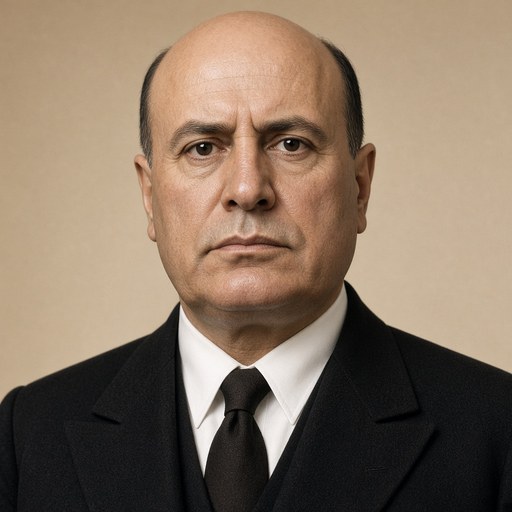
 Benito Mussolini · Head of State and Head of Government of the Italian Social Republic
- Context
- Mussolini addressed an audience of Milanese Fascists in Milan on 16 December 1944, defending the Italian Social Republic's record, blaming the monarchy and Badoglio for the 1943 surrender, and predicting Axis victory.
- Main themes
- Betrayal of the 8 September 1943 armistice, responsibility of the monarchy, Badoglio and the General Staffs, Italian Social Republic's contribution to the Axis war effort, reorganisation of the republic's armed forces and police, Republican Fascist Party and the Verona Manifesto, socialisation of the economy, Fascism as a single-party republic, European community of nations, German new weapons and Allied unconditional surrender, Anglo-Soviet rivalry and Allied divisions, Japanese resistance and the defence of the Po valley
- Duration
- ~48 min
- Words
- 5,794
- Sentences
- 219
- Readability
- 44
- Grade
- 13.6
- Syntax
- 3.31
- Vocabulary
- 2.35
Translated from Italian Source: it.wikisource.org ↗
The broad sphere of national life a sentence belongs to. Every sentence has an Arena, so it is the denominator the other indices are read against.
Other219 sentences in 87 paragraphs
Milan, 16 December 1944
Comrades, dear comrades of Milan!
I dispense with any preamble and go straight to the heart of the matter of my speech.
Sixteen months on from the terrible date of the unconditional surrender, imposed and accepted according to the democratic and criminal formula of Casablanca, our assessment of events puts these questions to us once again: Who betrayed? Who suffered and is still suffering the consequences of the betrayal? Let us be quite clear: this is not a judgement by way of historical revision, and still less, in any shape or form, a justification.
Some neutral newspaper has attempted this, but we reject it in the most categorical manner, both for its substance and, secondly, for the very source from which it comes. So who betrayed? The unconditional surrender announced on 8 September was willed by the monarchy, by the court circles, by the plutocratic currents of the Italian bourgeoisie, by certain clerical forces joined for the occasion with Masonic ones, and by the General Staffs, which no longer believed in victory and looked to Badoglio. As early as May, on 15 May to be precise, the ex-king noted in a diary of his, which recently came into our possession, that it was now necessary to "disengage" from the alliance with Germany. The one who ordered the surrender, without a shadow of a doubt, was the ex-king; the one who carried it out was Badoglio. But to arrive at 8 September, it was first necessary to carry out 25 July, that is, to bring about the coup d'état and the change of regime.
The justification for the surrender, namely that it was impossible to continue the war any longer, was refuted forty days later, on 13 October, by the declaration of war on Germany. That declaration was not merely symbolic, because from then on there began a collaboration, albeit one of rear lines and labour, between Badoglio's Italy and the Allies; while the fleet, built entirely by Fascism and handed over in full to the enemy, immediately went into operation alongside the enemy fleets. Not peace, then, but, through so-called co-belligerence, the continuation of the war; not peace, but the whole territory of the nation turned into an immense battlefield, which means into an immense field of ruins; not peace, but the planned participation of Italian ships and troops in the war against Japan.
It follows that the one who has suffered the consequences of the betrayal is above all the Italian people. It may be stated that the Italian people did not betray its German ally. Save for sporadic cases, the units of the Army disbanded without offering any resistance to the disarmament order issued by the German commands. Many units of that same Army stationed outside the metropolitan territory, and of the Air Force, immediately lined up alongside the German forces, and we are speaking of tens of thousands of men; all the formations of the Militia, except one battalion in Corsica, went over to the Germans down to the last man.
The so-called "P. 44" plan, which will be discussed at the forthcoming trial of the generals and which provided for the immediate reversal of the front, as the king and Badoglio had arranged in advance, was not applied in any way by the commanders. This is proved by the trial being brought in Bonomi's Italy against a group of generals who did not obey the orders contained in that plan. The commanders of the Armies deployed beyond the frontier did the same.
Nevertheless, if these commanders avoided the worst, that is, the ultimate infamy, which would have consisted in attacking from behind our allies of three years, their conduct from the national point of view was disastrous. Heeding the voice of conscience and honour, they ought to have gone over, with all their arms and baggage, to the side of the ally. They would have kept our territorial and political positions; our flag would not have been lowered in lands where so much Italian blood had been shed; the Armies would have kept their organic structure; the forced internment of hundreds of thousands of soldiers, and their great sufferings, above all moral ones, would have been avoided; the ally would not have been burdened with a load of new, unforeseen military tasks, with consequences that affected the whole strategic conduct of the war. These are specific responsibilities, above all towards the Italian people.
It must be acknowledged, however, that the betrayals of the summer of 1944 had even more shameful features. The Romanians, the Bulgarians and the Finns, after they too had ignominiously capitulated, one of them, the Bulgarian, without firing a single rifle shot, reversed the front within twenty-four hours and attacked the German units with all their mobilised forces, making their retreat difficult and bloody.
Here betrayal was perfected in the most repugnant sense of the word.
The Italian people, therefore, is the one that, by comparison, betrayed the least and suffered to a degree I do not hesitate to call superhuman. That is not all. It must be added that, while one part of the Italian people accepted the surrender out of thoughtlessness or weariness, another part immediately took its stand at Germany's side.
It will be time to tell the Italians, our German comrades and our Japanese comrades that the contribution made by Republican Italy to the common cause from September 1943 onwards, despite the temporary reduction of the Republic's territory, is far greater than is commonly believed.
For obvious reasons I cannot go into the figures that sum up Italy's overall contribution, from the economic sector to the military one. Our collaboration with the Reich in soldiers and workers is represented by this number: as of 30 September, no fewer than seven hundred and eighty-six thousand men. This figure is incontrovertible, because its source is German. To it must be added the former military internees, that is, several hundred thousand men brought into the German production process, and many more tens of thousands of Italians who were already in the Reich, having gone there from Italy in past years as free workers in the factories and the fields. In the face of this evidence, the Italians living in the territory of the Social Republic have the right, at last, to hold their heads high and to demand that their effort be fairly assessed, as befits comrades, by all the members of the Tripartite Pact.
Only yesterday came Eden's statements on the losses Great Britain has suffered in defending Greece. For three years Italy dealt the British very heavy blows and in turn bore enormous sacrifices of goods and blood. That is not all. In 1945 Italy's participation in the war will grow, through the progressive strengthening of our military organisations, entrusted to the sure faith and proven experience of that valiant soldier who answers to the name of Marshal of Italy Rodolfo Graziani.
In the tumultuous period of transition in the autumn and winter of 1943, more or less autonomous military bodies arose around men who, through their past and their charisma as leaders, were able to gather the first nuclei of fighters. There were individual enlistments. Enlistments of battalions, of regiments, of specialist corps. It was the old commanders sounding reveille. And it was an excellent initiative, above all morally. But modern warfare demands unity. We are moving towards unity.
I dare to believe that Italians of every opinion will be happy on the day when all the Armed Forces of the Republic are gathered into a single body and there is a single Police force, each organised into branches according to their functions, and both living intimately in the climate and the spirit of Fascism and of the Republic. For in a war such as the present one, which has taken on the character of a "political" war, apoliticism is a word empty of meaning and in any case outdated.
It is one thing to have "politics", that is, convinced and fanatical adherence to the idea for which one takes the field, and another thing to engage in political activity, which the soldier devoted to his duty and his orders does not even have time to pursue, since his politics must be preparation for combat and setting an example to his men in every circumstance of peace and war.
On 15 September the National Fascist Party became the Republican Fascist Party. There was no lack, at the time, of elements sick with opportunism, or perhaps in a state of mental confusion, who wondered whether it would not have been craftier to drop the word "Fascism" and place the emphasis exclusively on the word "Republic". I rejected that useless and cowardly suggestion then, as I would reject it today.
It would have been a mistake and an act of cowardice to lower our flag, consecrated by so much blood, and to smuggle in, so to speak, those ideas that today constitute the watchword in the battle of the continents. Being an expedient, it would have borne all the marks of one, and it would have discredited us in the eyes of our adversaries and, above all, in our own eyes.
By still and always calling ourselves Fascists, and devoting ourselves to the cause of Fascism, as we have done from 1919 to this day and will continue to do tomorrow, we have, after these events, given a new direction to our action, particularly in the political and social fields. In truth, rather than a new direction, it would be more accurate to say a return to our original positions. It is documented in history that Fascism was, until 1927, inclined towards republicanism, and the reasons why the insurrection of 1922 spared the monarchy have been explained.
From the social point of view, the programme of Republican Fascism is nothing but the logical continuation of the programme of 1919, and of the achievements of the splendid years that run from the Labour Charter to the conquest of the empire. Nature does not make leaps, and neither does the economy.
It was necessary to lay the foundations, with the trade-union laws and the corporative bodies, in order to take the further step of socialisation. From the very first meeting of the Council of Ministers, on 27 September 1943, I declared that "the Republic would be unitary in the political field and decentralised in the administrative one, and that it would have a very pronounced social content, such as to resolve the social question at least in its most glaring aspects, that is, such as to establish the place, the function and the responsibility of labour in a truly modern national society".
At that same meeting I made the first gesture aimed at achieving the widest possible national concord, announcing that the Government ruled out harsh measures against the elements of anti-Fascism.
In the month of October I drafted and revised what is known in Italian political history as the "Verona Manifesto", which set out, in a number of fairly precise points, the programme not so much of the Party as of the Republic. This happened exactly on 15 November, two months after the re-establishment of the Republican Fascist Party.
The manifesto of the national assembly of the Republican Fascist Party, after a salute to those who fell for the Fascist cause, and after reaffirming as a supreme requirement the continuation of the struggle alongside the powers of the Tripartite Pact and the reconstitution of the Armed Forces, set out its eighteen programmatic points.
Let us now look at what has been done, what has not been done and, above all, why it has not been done.
The manifesto began by demanding the convocation of the Constituent Assembly, and it also set out its composition so that, as was said, "the Constituent Assembly would be the synthesis of all the values of the nation".
Now, the Constituent Assembly has not been convened. This postulate has not been realised so far, and it may be said that it will be realised only when the war is over. I tell you with the utmost frankness that I found it superfluous to convene a Constituent Assembly when the territory of the Republic, given the course of military operations, could in no way be considered definitive. It seemed to me premature to create a genuine constitutional State, in the fullness of all its institutions, when there were no Armed Forces to support it. A State that has no Armed Forces at its disposal is anything but a State.
It was stated in the manifesto that no citizen may be detained for more than seven days without an order from the judicial authority. This has not always happened. The reasons lie in the multiplicity of police bodies, ours and allied, and in the action of the outlaws, which has made these problems slide onto the plane of civil war, with reprisals and counter-reprisals. Anti-Fascism has seized on certain episodes, laying the colours on thick and making the usual generalisations. I must declare in the most explicit manner that certain methods are deeply repugnant to me, even if they are isolated. The State, as such, cannot adopt methods that degrade it. For centuries people have spoken of the law of retaliation. Very well: it is a law, not a more or less personal act of arbitrary power.
Mazzini, the inflexible apostle of the republican idea, at the dawn of the Roman Republic in 1849, sent a commissioner to Ancona to teach the Jacobins that it was lawful to fight the papists, but not to kill them outside the law, or to "requisition", as one would say today, the silverware from their houses. Whoever does such things, especially if he should happen to hold a Party card, deserves a double condemnation.
No severity is excessive in such a case, if we want the Party, as we read in the "Verona Manifesto", to be truly "an order of fighters and believers, a body of absolute political purity, worthy of being the guardian of the revolutionary idea".
A lofty embodiment of this type of Fascist was our comrade Resega, whom I remember today, and whom we all remember with deep emotion, on the first anniversary of his death at the hands of the enemy.
Since, through the formation of the Black Brigades, the Party is becoming an "order of fighters", the Verona postulate has the character of a dogmatic and sacred commitment. In that same Article 5, by establishing that no Party card is required for any post or office, a solution was given to the problem that I shall call the collaboration of other elements on the plane of the Republic. In my telegram of 10 March, Year XXII, to the heads of the provinces, this formula was taken up again and set out more precisely. With that, any discussion of the problem of a plurality of parties appears entirely beside the point.
Historically, among the various forms in which the Republic, as a political institution, finds expression among different peoples, there are many republics of the totalitarian type, and thus with a single party. I shall not cite the most totalitarian of them, that of the Soviets, but I will mention one that enjoys the sympathies of the high bonzes of the democratic gospel: the Turkish Republic, which rests on a single party, the People's Party, and on a single youth organisation, that of the "People's Houses".
At a given moment in Italy's historical evolution, it may prove fruitful to have, alongside the single Party, which is responsible for the overall direction of the State, the presence of other groups which, as Article Three of the "Verona Manifesto" says, exercise the right of oversight and of responsible criticism over the acts of the public administration. Groups which, starting from a loyal, full and unreserved acceptance of the triad Italy, Republic, socialisation, would have the responsibility of examining the measures of the Government and of the local authorities, of overseeing the methods by which those measures are applied, and of overseeing the persons who hold public office and who must answer for their conduct to the citizen, in his capacity as soldier, worker and taxpayer.
The Verona assembly set out its foreign-policy postulates in point eight. It was solemnly declared that the essential aim of the Republic's foreign policy is "the unity, the independence and the territorial integrity of the fatherland within the maritime and Alpine boundaries marked out by nature, by the sacrifice of blood and by history".
As for territorial unity, knowing Sicily and our Sicilian brothers as I do, I refuse to take seriously the so-called separatist stirrings of despicable mercenaries of the enemy. Perhaps this separatism has another motive: perhaps our Sicilian brothers want to separate from Bonomi's Italy in order to be reunited with Republican Italy.
It is my deep conviction that, beyond all the struggles, and once the criminal phenomenon of the outlaws has been liquidated, the moral unity of the Italians of tomorrow will be infinitely stronger than that of yesterday, because it will be cemented by exceptional sufferings that have spared not a single family. And when, through moral unity, the soul of a people is saved, its territorial integrity and its political independence are saved too.
At this point a word must be said about Europe and the concept of it. I will not linger over asking what this Europe is, where it begins and where it ends from the geographical, historical, moral and economic points of view; nor will I ask whether an attempt at unification today would meet with greater success than earlier ones. That would take me too far. I will simply say that the creation of a European community is desirable and perhaps even possible, but I wish to state explicitly that we do not feel Italian because we are European; we feel European because we are Italian. The distinction is not subtle, but fundamental.
Just as the nation is the product of millions of families, each with a character of its own, even though they share the common national denominator, so every nation should enter the European community as a well-defined entity. Otherwise the community itself would founder in internationalism of the socialist brand, or vegetate in the vague and ambiguous cosmopolitanism of the Jewish and Masonic brand.
While some points of the Verona programme have been overtaken by the succession of military events, more concrete results have been achieved in the economic and social field.
Here the innovation is radical in character. Points eleven, twelve and thirteen are fundamental. Spelled out in the "preamble to the new economic structure of the nation", they have found their practical application in the law on socialisation. The interest this has aroused in the world has been truly great, and today everywhere, even in the Italy dominated and tortured by the Anglo-Americans, every political programme includes the postulate of socialisation.
The workers, rather sceptical at first, then understood its importance. Its actual implementation is under way. In other times its pace would have been faster. But the seed has been sown. Whatever happens, this seed is destined to sprout. It is the principle that inaugurates what, eight years ago, here in Milan, before five hundred thousand cheering people, I foretold as "the century of labour", in which the worker leaves the economic and moral condition of a wage-earner to take on that of a producer, directly interested in the development of the economy and in the well-being of the nation.
Fascist socialisation is the logical and rational solution. On the one hand it avoids the bureaucratisation of the economy through State totalitarianism; on the other, it overcomes the individualism of the liberal economy, which was an effective instrument of progress at the beginnings of the capitalist economy, but today must be considered no longer in step with the new "social" demands of national communities.
Through socialisation, the best elements drawn from the working classes will prove their worth. I am determined to continue in this direction.
I have entrusted two sectors to the working classes: local administration and food supply. These sectors, extremely important especially in present circumstances, are now entirely in the hands of the workers. They must show, and I hope they will show, their specific competence and their civic awareness.
As you can see, something has been done during these twelve months, amid incredible and growing difficulties, due to the objective circumstances of the war, to the muffled opposition of elements sold to the enemy, and to the moral apathy that events have produced in many strata of the people.
In these very latest times the situation has improved. The wait-and-see crowd, those, that is, who were waiting for the Anglo-Americans, are dwindling. What is happening in Bonomi's Italy has disappointed them. Everything the Anglo-Americans promised has turned out to be a wretched propaganda expedient.
I believe I am right in saying that the populations of the Po valley not only do not desire, but deplore, the arrival of the Anglo-Saxons, and want nothing to do with a government which, even with a Togliatti as vice-president, would bring back to the north the reactionary, plutocratic and dynastic forces, the last of these now openly protected by England.
How ridiculous are those republicans who do not want the Republic because it was proclaimed by Mussolini, and who might submit to the monarchy wanted by Churchill. This proves irrefutably that the monarchy of the House of Savoy serves the policy of Great Britain, not that of Italy!
There is no doubt that the fall of Rome is a culminating date in the history of the war. General Alexander himself declared that, on the eve of the landing in France, a victory linked to a great name was needed, and there is no name greater or more universal than Rome; that, in short, an encouraging atmosphere had to be created.
And indeed, the Anglo-Americans entered Rome on 5 June; the next day, the 6th, the first Allied units landed on the coast of Normandy, between the rivers Vire and Orne. The months that followed have been truly hard on all the fronts where the soldiers of the Reich were and are engaged.
Germany has called all its human reserves into the line, with the total mobilisation entrusted to Goebbels and with the creation of the "Volkssturm". Only a people like the German people, united as one around the Führer, could withstand such enormous pressure; only an Army like the National Socialist one could rapidly overcome the crisis of 20 July and go on fighting at all four points of the compass with exceptional tenacity and valour, as the enemy itself testifies.
There was a period when the capture of Paris and Brussels and the unconditional surrender of Romania, Finland and Bulgaria gave rise to such euphoria that, according to press reports, it was believed that by this coming Christmas the war would be practically over, with the triumphal entry of the Allies into Berlin.
In that period of euphoria the new German weapons, improperly called "secret", were belittled and derided. Many believed that, thanks to the use of these weapons, at a certain point the war would be over in an instant at the press of a button. Such belief in miracles is naive, when it is not malicious. These are not secret weapons but "new weapons", which, it goes without saying, are secret until they are used in combat. That these weapons exist, the English know from bitter experience; that the first will be followed by others, I can state with full knowledge of the facts; that they will be such as to restore the balance and subsequently put the initiative back in German hands is, within the limits of human foresight, almost certain, and not far off.
Nothing could be more understandable than impatience after five years of war, but these are devices in which science, technology, experience and the training of individuals and units must all advance together. What is certain is that the series of surprises is not over, and that thousands of German scientists are working day and night to increase Germany's war potential.
Meanwhile German resistance is growing ever stronger, and many illusions cultivated by enemy propaganda have collapsed. There is no crack in the morale of the German people, fully aware that what is at stake is its physical existence and its future as a race; no sign of revolt, nor even of unrest, among the millions upon millions of foreign workers, despite the insistent appeals and proclamations of the American generalissimo. And a most eloquent indication of the nation's spirit is the percentage of volunteers in the latest call-up, which amounts to almost the entire age group. Germany is able to hold out and to bring about the failure of the enemy's plans.
Minimising the loss of territories conquered and held at the price of blood is not an intelligent tactic. But the purpose of war is not the conquest or the retention of territory; it is the destruction of the enemy's forces, that is, their surrender and hence the cessation of hostilities.
Now, the German Armed Forces not only have not been destroyed, but are in a phase of growing development and power.
If we examine the situation from the political point of view, interesting events and states of mind have matured in this last period of 1944.
Without exaggerating, one may observe that the political situation today is not favourable to the Allies.
First of all, in America as in England, there are currents opposed to the demand for unconditional surrender. The Casablanca formula means the death of millions of young men, because it prolongs the war indefinitely; peoples like the Germans and the Japanese will never hand themselves over bound hand and foot to the enemy, who makes no secret of his plans for the total annihilation of the countries of the Tripartite Pact.
That is why Churchill has had to give his overheated countrymen a cold shower and to postpone the end of the conflict to the summer of 1945 for Europe and to 1947 for Japan.
One day a Soviet ambassador in Rome, Potemkin, said to me: "The first world war bolshevised Russia; the second will bolshevise Europe." This prophecy will not come true, but if it did, this responsibility too would fall first and foremost on Great Britain.
Politically, Albion is already defeated. The Russian armies are on the Vistula and the Danube, that is, in the middle of Europe. The Communist parties, that is, the parties acting in the pay and on the orders of Marshal Stalin, are partly in power in the countries of the West.
What "liberation" means in Belgium, in Italy, in Greece, today's news reports tell us. Poverty, despair, civil war. The "liberated" Greeks firing on their English "liberators" are nothing but the Russian Communists firing on the British Conservatives.
Faced with this panorama, British policy has rushed to take cover. First, by liquidating, drastically or bloodily, as in Athens, the partisan movements, which are the marching and fighting wing of the extreme left, that is, of Bolshevism; secondly, by backing the democratic forces, even the more advanced ones, provided they shy away from totalitarianism, which finds its supreme expression in Soviet Russia.
Churchill raised the anti-Communist banner in categorical terms in his last speech to the House of Commons, but this cannot please Stalin. Great Britain wants to reserve Western Europe as a sphere of influence for democracy, one that should under no circumstances be contaminated by Communism.
But this "rebellion" of Churchill's cannot go beyond a certain point, otherwise the great marshal of the Kremlin might take offence. Churchill wanted the sphere of influence reserved for democracy in Western Europe to be underpinned by a pact between France, England, Belgium, Holland and Norway, directed first against Germany and possibly, later, against Russia.
The Stalin–De Gaulle agreements have nipped this idea in the bud, an idea that had been put forward, on instructions from London, by the Belgian Spaak. The game has failed, and Churchill must, to put it the English way, eat his hat; and, thinking of the Russians' entry into the Mediterranean and of Russian pressure in Iran, he must ask himself whether the Casablanca policy has not truly been a bankrupt policy for "poor old England".
Squeezed by the two military colossi of the West and the East, by the insolent, insatiable cousins across the Ocean and by the inexhaustible Eurasians, Great Britain sees its imperial future, that is, its destiny, at stake and in danger. That "political" relations among the Allies are not of the best is shown by the laborious preparation of the new meeting of the three.
Let us now speak of Japan, distant and yet close. It is more than certain, it is dogma, that the empire of the Rising Sun will never yield and will fight on until victory. In recent months Japanese arms have been crowned with great successes. The units of the much-trumpeted landing on the island of Leyte, one of the many hundreds of islands that make up the Philippine archipelago, a landing made for purely electoral purposes, are, after two months, almost where they started.
What the will and the soul of Japan are is shown by the volunteers of death. Not dozens of them, but tens of thousands of young men whose orders are these: "Every aircraft an enemy ship." And they prove it. In the face of this superhumanly heroic resolve, one understands the attitude of certain American circles, which wonder whether it would not have been better for the Americans if Roosevelt had kept the promise he made to American mothers that no soldier would go and fight and die overseas. He lied, as is the custom of all democracies.
For us, Italians of the Republic, it is a source of pride to have at our side, as loyal and understanding comrades, the soldiers, sailors and airmen of the Tenno, who by their deeds command the admiration of the world.
Now I ask you: is the good seed of the Italians, of the healthy Italians, the best ones, who regard death for the fatherland as life eternal, extinct, then? Well, in the last war was there not an airman who, unable to bring down the enemy aeroplane with his guns, flung himself against it and fell together with it? Do you not remember this name? He was a humble sergeant: Dall'Oro.
In 1935, when England wanted to stifle us in our own sea and I took up its gauntlet (the crowd rises to its feet with a unanimous cry of exaltation: "Duce! Duce! Duce!") and sent no fewer than four hundred thousand legionaries past the ships of His Britannic Majesty anchored in the ports of the Mediterranean, death squadrons were formed then in Italy, in Rome. I must tell you, in truth, that the first name on the list was that of the commander of the air force. Well then, if tomorrow it were necessary to form these squadrons again, if it were necessary to show that the blood of the legionaries of Rome still flows in our veins, would my appeal to the nation perhaps fall on deaf ears? (The crowd replies: "No!").
We want to defend the Po valley tooth and nail; we want the Po valley to remain republican until the whole of Italy is republican. On the day the whole Po valley was contaminated by the enemy, the destiny of the entire nation would be compromised; but I feel, I see, that tomorrow an irresistible, armed form of organisation would arise that would make life practically impossible for the invaders. We would make of the whole Po valley a single Athens.
From what I have told you, it is plain that not only has the enemy coalition not won, but it will not win. The monstrous alliance between plutocracy and Bolshevism has been able to wage its barbaric war like the execution of an enormous crime, which has struck crowds of innocent people and destroyed what European civilisation had created in twenty centuries. But it will not succeed in annihilating with its darkness the eternal spirit that raised those monuments.
Our absolute faith in victory does not rest on subjective or sentimental grounds, but on positive and decisive elements. If we doubted our victory, we would have to doubt the existence of Him who governs the fortunes of men according to justice.
When we, as soldiers of the Republic, regain contact with the Italians beyond the Apennines, we shall have the pleasant surprise of finding more Fascism than we left behind. Disappointment, poverty and political and moral abjection are bursting out not only in the old phrase "we were better off", and so on, but in the revolt that, from Palermo to Catania, to Otranto, to Rome itself, is creeping through every part of "liberated" Italy.
The Italian people south of the Apennines has a heart full of burning nostalgia. Enemy oppression on the one hand and the bestial persecution of the Government on the other only feed the Fascist movement. The task of erasing its outward symbols was easy; that of suppressing its idea, impossible.
The six anti-Fascist parties are falling over themselves to proclaim that Fascism is dead, because they feel it is alive. Millions of Italians compare yesterday and today; yesterday, when the flag of the fatherland flew from the Alps to the Somali equator and the Italian people was one of the most respected peoples on earth.
There is no Italian whose heart does not leap in his breast on hearing an African name, the sound of a hymn that accompanied the legions from the Mediterranean to the Red Sea, or at the sight of a colonial helmet. There are millions of Italians who, from 1919 to 1939, lived through what may be called the epic of the fatherland. These Italians still exist; they still suffer and believe, and they are ready to close ranks and resume the march, in order to win back what was lost and what is today guarded, among the Libyan dunes and the Ethiopian ambas, by thousands upon thousands of the fallen, the flower of countless Italian families, which have not forgotten and cannot forget.
Already the first signs of recovery can be seen, here, above all in this Milan, forerunner and leader, which the enemy has savagely struck but has not bent in the slightest.
Comrades, dear comrades of Milan!
It is Milan that must give, and will give, the men, the weapons, the will and the signal for the resurgence!
The original Italian. The tags above are read on the English translation's sentences.
Milano, 16 dicembre 1944
Camerati, cari camerati milanesi!
Rinuncio ad ogni preambolo ed entro subito nel vivo della materia del mio discorso.
A sedici mesi di distanza dalla tremenda data della resa a discrezione imposta ed accettata secondo la democratica e criminale formula di Casablanca, la valutazione degli avvenimenti ci pone, ancora una volta, queste domande: Chi ha tradito? Chi ha subito e subisce le conseguenze del tradimento? Non si tratta, intendiamoci bene, di un giudizio in sede di revisione storica, e, meno che mai, in qualsiasi guisa, giustificativa.
È stato tentato da qualche foglio neutrale, ma noi lo respingiamo nella maniera più categorica e per la sostanza e in secondo luogo per la stessa fonte dalla quale proviene. Dunque chi ha tradito? La resa a discrezione annunciata l'8 settembre è stata voluta dalla monarchia, dai circoli di corte, dalle correnti plutocratiche della borghesia italiana, da talune forze clericali, congiunte per l'occasione a quelle massoniche, dagli Stati Maggiori, che non credevano più alla vittoria e facevano capo a Badoglio. Sino dal maggio, e precisamente il 15 maggio, l'ex-re nota in un suo diario, venuto recentemente in nostro possesso, che bisogna ormai «sganciarsi» dall'alleanza con la Germania. Ordinatore della resa, senza l'ombra di un dubbio, l'ex-re; esecutore Badoglio. Ma per arrivare all'8 settembre, bisognava effettuare il 25 luglio, cioè realizzare il colpo di Stato e il trapasso di regime.
La giustificazione della resa, e cioè la impossibilità di più oltre continuare la guerra, veniva smentita quaranta giorni dopo, il 13 ottobre, con la dichiarazione di guerra alla Germania, dichiarazione non soltanto simbolica, perché da allora comincia una collaborazione, sia pure di retrovie e di lavoro, fra l'Italia badogliana e gli Alleati; mentre la flotta, costruita tutta dal fascismo, passata al completo al nemico, operava immediatamente con le flotte nemiche. Non pace, dunque, ma, attraverso la cosiddetta cobelligeranza, prosecuzione della guerra; non pace, ma il territorio tutto della nazione convertito in un immenso campo di battaglia, il che significa in un immenso campo di rovine; non pace, ma prevista partecipazione di navi e truppe italiane alla guerra contro il Giappone.
Ne consegue che chi ha subito le conseguenze del tradimento è soprattutto il popolo italiano. Si può affermare che nei confronti dell'alleato germanico il popolo italiano non ha tradito. Salvo casi sporadici, i reparti dell'Esercito si sciolsero senza fare alcuna resistenza di fronte all'ordine di disarmo impartito dai comandi tedeschi. Molti reparti dello stesso Esercito, dislocati fuori del territorio metropolitano, e dell'Aviazione, si schierarono immediatamente a lato delle forze tedesche, e si tratta di decine di migliaia di uomini; tutte le formazioni della Milizia, meno un battaglione in Corsica, passarono sino all'ultimo uomo coi tedeschi.
Il piano cosiddetto «P. 44», del quale si parlerà nell'imminente processo dei generali e che prevedeva l'immediato rovesciamento del fronte come il re e Badoglio avevano preordinato, non trovò alcuna applicazione da parte dei comandanti e ciò è provato dal processo che nell'Italia di Bonomi viene intentato a un gruppo di generali che agli ordini contenuti in tale piano non obbedirono. Lo stesso fecero i comandanti delle Armate schierate oltre frontiera.
Tuttavia, se tali comandanti evitarono il peggio, cioè l'estrema infamia, che sarebbe consistita nell'attaccare a tergo gli alleati di tre anni, la loro condotta dal punto di vista nazionale è stata nefasta. Essi dovevano, ascoltando la voce della coscienza e dell'onore, schierarsi armi e bagaglio dalla parte dell'alleato: avrebbero mantenuto le nostre posizioni territoriali e politiche; la nostra bandiera non sarebbe stata ammainata in terre dove tanto sangue italiano era stato sparso; le Armate avrebbero conservato la loro organica costituzione; si sarebbe evitato l'internamento coatto di centinaia di migliaia di soldati e le loro grandi sofferenze di natura soprattutto morale; non si sarebbe imposto all'alleato un sovraccarico di nuovi, impreveduti compiti militari, con conseguenze che influenzavano tutta la condotta strategica della guerra. Queste sono responsabilità specifiche nei confronti, soprattutto, del popolo italiano.
Si deve tuttavia riconoscere che i tradimenti dell'estate 1944 ebbero aspetti ancora più obbrobriosi, poiché romeni, bulgari e finnici, dopo avere anch'essi ignominiosamente capitolato, e uno di essi, il bulgaro, senza avere sparato un solo colpo di fucile, hanno nelle ventiquattro ore rovesciato il fronte ed hanno attaccato con tutte le forze mobilitate le unità tedesche, rendendone difficile e sanguinosa la ritirata.
Qui il tradimento è stato perfezionato nella più ripugnante significazione del termine.
Il popolo italiano è, quindi, quello che, nel confronto, ha tradito in misura minore e sofferto in misura che non esito a dire sovrumana. Non basta. Bisogna aggiungere che mentre una parte del popolo italiano ha accettato, per incoscienza o stanchezza, la resa, un'altra parte si è immediatamente schierata a fianco della Germania.
Sarà tempo di dire agli italiani, ai camerati tedeschi e ai camerati giapponesi che l'apporto dato dall'Italia repubblicana alla causa comune dal settembre del 1943 in poi, malgrado la temporanea riduzione del territorio della Repubblica, è di gran lunga superiore a quanto comunemente si crede.
Non posso, per evidenti ragioni, scendere a dettagliare le cifre nelle quali si compendia l'apporto complessivo, dal settore economico a quello militare, dato dall'Italia. La nostra collaborazione col Reich in soldati e operai è rappresentata da questo numero: si tratta, alla data del 30 settembre, di ben settecentottantaseimila uomini. Tale dato è incontrovertibile perché di fonte germanica. Bisogna aggiungervi gli ex-internati militari: cioè parecchie centinaia di migliaia di uomini immessi nel processo produttivo tedesco, e molte altre decine di migliaia di italiani che già erano nel Reich, ove andarono negli anni scorsi dall'Italia come liberi lavoratori nelle officine e nei campi. Davanti a questa documentazione, gli italiani che vivono nel territorio della Repubblica Sociale hanno il diritto, finalmente, di alzare la fronte e di esigere che il loro sforzo sia equamente e cameratescamente valutato da tutti i componenti del Tripartito.
Sono di ieri le dichiarazioni di Eden sulle perdite che la Gran Bretagna ha subito per difendere la Grecia. Durante tre anni l'Italia ha inflitto colpi severissimi agli inglesi ed ha, a sua volta, sopportato sacrifici imponenti di beni e di sangue. Non basta. Nel 1945 la partecipazione dell'Italia alla guerra avrà maggiori sviluppi, attraverso il progressivo rafforzamento delle nostre organizzazioni militari, affidate alla sicura fede e alla provata esperienza di quel prode soldato che risponde al nome del maresciallo d'Italia Rodolfo Graziani.
Nel periodo tumultuoso di transizione dell'autunno e inverno 1943 sorsero complessi militari più o meno autonomi attorno a uomini che seppero, col loro passato e il loro fascino di animatori, raccogliere i primi nuclei di combattenti. Ci furono gli arruolamenti a carattere individuale. Arruolamenti di battaglioni, di reggimenti, di specialità Erano i vecchi comandanti che suonavano la diana. E fu ottima iniziativa, soprattutto morale. Ma la guerra moderna impone l'unità. Verso l'unità si cammina.
Oso credere che gli italiani di qualsiasi opinione saranno felici il giorno in cui tutte le Forze Armate della Repubblica saranno raccolte in un solo organismo e ci sarà una sola Polizia, l'uno e l'altra con articolazioni secondo le funzioni, entrambi intimamente viventi nel clima e nello spirito del fascismo e della Repubblica, poiché in una guerra come l'attuale, che ha assunto un carattere di guerra «politica», la politicità è una parola vuota di senso ed in ogni caso superata.
Un conto è la «politica», cioè l'adesione convinta e fanatica all'idea per cui si scende in campo, e un conto è un'attività politica, che il soldato ligio al suo dovere e alla consegna non ha nemmeno il tempo di esplicare, poiché la sua politica deve essere la preparazione al combattimento e l'esempio ai suoi gregari in ogni evento di pace e di guerra.
Il giorno 15 settembre il Partito Nazionale Fascista diventava il Partito Fascista Repubblicano. Non mancarono allora elementi malati di opportunismo o forse in stato di confusione mentale, che si domandarono se non sarebbe stato più furbesco eliminare la parola «fascismo», per mettere esclusivamente l'accento sulla parola «Repubblica». Respinsi allora, come respingerei oggi, questo suggerimento inutile e vile.
Sarebbe stato errore e viltà ammainare la nostra bandiera, consacrata da tanto sangue, e fare passare quasi di contrabbando quelle idee che costituiscono oggi la parola d'ordine nella battaglia dei continenti. Trattandosi di un espediente, ne avrebbe avuto i tratti e ci avrebbe squalificato di fronte agli avversari e soprattutto di fronte a noi stessi.
Chiamandoci ancora e sempre fascisti, e consacrandoci alla causa del fascismo, come dal 1919 ad oggi abbiamo fatto e continueremo anche domani a fare, abbiamo dopo gli avvenimenti impresso un nuovo indirizzo all'azione e nel campo particolarmente politico e in quello sociale. Veramente più che di un nuovo indirizzo, bisognerebbe con maggiore esattezza dire: ritorno alle posizioni originarie. È documentato nella storia che il fascismo fu sino al 1927 tendenzialmente repubblicano e sono stati illustrati i motivi per cui l'insurrezione del 1922 risparmiò la monarchia.
Dal punto di vista sociale, il programma del fascismo repubblicano non è che la logica continuazione del programma del 1919: delle realizzazioni degli anni splendidi che vanno dalla Carta del lavoro alla conquista dell'impero. La natura non fa dei salti, e nemmeno l'economia.
Bisognava porre le basi con le leggi sindacali e gli organismi corporativi per compiere il passo, ulteriore della socializzazione. Sin dalla prima seduta del Consiglio dei ministri del 27 settembre 1943 veniva da me dichiarato che «la Repubblica sarebbe stata unitaria nel campo politico e decentrata in quello amministrativo e che avrebbe avuto un pronunciatissimo contenuto sociale, tale da risolvere la questione sociale almeno nei suoi aspetti più stridenti, tale cioè da stabilire il posto, la funzione, la responsabilità del lavoro in una società nazionale veramente moderna».
In quella stessa seduta, io compii il primo gesto teso a realizzare la più vasta possibile concordia nazionale, annunciando che il Governo escludeva misure di rigore contro gli elementi dell'antifascismo.
Nel mese di ottobre fu da me elaborato e riveduto quello che nella storia politica italiana è il «manifesto di Verona», che fissava in alcuni punti abbastanza determinati il programma non tanto del Partito, quanto della Repubblica. Ciò accadeva esattamente il 15 novembre, due mesi dopo la ricostituzione del Partito Fascista Repubblicano.
Il manifesto dell'assemblea nazionale del Partito Fascista Repubblicano, dopo un saluto ai caduti per la causa fascista e riaffermando come esigenza suprema la continuazione della lotta a fianco delle potenze del Tripartito e la ricostituzione delle Forze Armate, fissava i suoi diciotto punti programmatici.
Vediamo ora ciò che è stato fatto, ciò che non è stato fatto e soprattutto perché non è stato fatto.
Il manifesto cominciava con l'esigere la convocazione della Costituente e ne fissava anche la composizione, in modo che, come si disse, «la Costituente fosse la sintesi di tutti i valori della nazione».
Ora la Costituente non è stata convocata. Questo postulato non è stato sin qui realizzato e si può dire che sarà realizzato soltanto a guerra conclusa. Vi dico con la massima schiettezza che ho trovato superfluo convocare una Costituente quando il territorio della Repubblica, dato lo sviluppo delle operazioni militari, non poteva in alcun modo considerarsi definitivo. Mi sembrava prematuro creare un vero e proprio Stato di diritto nella pienezza di tutti i suoi istituti, quando non c'erano Forze Armate che lo sostenessero. Uno Stato che non dispone di Forze Armate è tutto, fuorché uno Stato.
Fu detto nel manifesto che nessun cittadino può essere trattenuto oltre i sette giorni senza un ordine dell'Autorità giudiziaria. Ciò non è sempre accaduto. Le ragioni sono da ricercarsi nella pluralità degli organi di Polizia nostri e alleati e nell'azione dei fuori legge, che hanno fatto scivolare questi problemi sul piano della guerra civile a base di rappresaglie e contro-rappresaglie. Su taluni episodi si è scatenata la speculazione dell'antifascismo, calcando le tinte e facendo le solite generalizzazioni. Debbo dichiarare nel modo più esplicito che taluni metodi mi ripugnano profondamente, anche se episodici. Lo Stato, in quanto tale, non può adottare metodi che lo degradano. Da secoli si parla della legge del taglione. Ebbene, è una legge, non un arbitrio più o meno personale.
Mazzini, l'inflessibile apostolo dell'idea repubblicana, mandò agli albori della Repubblica romana nel 1849 un commissario ad Ancona per insegnare ai giacobini che era lecito combattere i papalini, ma non ucciderli extra-legge, o prelevare, come si direbbe oggi, le argenterie dalle loro case. Chiunque lo faccia, specie se per avventura avesse la tessera del Partito, merita doppia condanna.
Nessuna severità è in tal caso eccessiva, se si vuole che il Partito, come si legge nel «manifesto di Verona», sia veramente «un ordine di combattenti e di credenti, un organismo di assoluta purezza politica, degno di essere il custode dell'idea rivoluzionaria».
Alta personificazione di questo tipo di fascista fu il camerata Resega, che ricordo oggi e ricordiamo tutti con profonda emozione, nel primo anniversario della sua fine, dovuta a mano nemica.
Poiché attraverso la costituzione delle brigate nere il Partito sta diventando un «ordine di combattenti», il postulato di Verona ha il carattere di un impegno dogmatico e sacro. Nello stesso articolo 5, stabilendo che per nessun impiego o incarico viene richiesta la tessera del Partito, si dava soluzione al problema che chiamerò di collaborazione di altri elementi sul piano della Repubblica. Nel mio telegramma in data 10 marzo XXII ai capi delle provincie, tale formula veniva ripresa e meglio precisata. Con ciò ogni discussione sul problema della pluralità dei partiti appare del tutto inattuale.
In sede storica, nelle varie forme in cui la Repubblica come istituto politico trova presso i differenti popoli la sua estrinsecazione, vi sono molte repubbliche di tipo totalitario, quindi con un solo partito. Non citerò la più totalitaria di esse, quella dei sovieti, ma ricorderò una che gode le simpatie dei sommi bonzi del vangelo democratico: la Repubblica turca, che poggia su un solo partito, quello del popolo, e su una sola organizzazione giovanile, quella dei «focolari del popolo».
A un dato momento della evoluzione storica italiana può essere feconda di risultati, accanto al Partito unico e cioè responsabile della direzione globale dello Stato, la presenza di altri gruppi, che, come dice all'articolo tre il «manifesto di Verona», esercitino il diritto di controllo e di responsabile critica sugli atti della pubblica amministrazione. Gruppi che, partendo dall'accettazione leale, integrale e senza riserve del trinomio Italia, Repubblica, socializzazione, abbiano la responsabilità di esaminare i provvedimenti del Governo e degli enti locali, di controllare i metodi di applicazione dei provvedimenti stessi e le persone che sono investite di cariche pubbliche e che devono rispondere al cittadino, nella sua qualità di soldato-lavoratore contribuente, del loro operato.
L'assemblea di Verona fissava al numero otto i suoi postulati di politica estera. Veniva solennemente dichiarato che il fine essenziale della politica estera della Repubblica è «l'unità, l'indipendenza, l'integrità territoriale della patria nei termini marittimi e alpini segnati dalla natura, dal sacrificio di sangue e dalla storia».
Quanto all'unità territoriale, io mi rifiuto, conoscendo la Sicilia e i fratelli siciliani, di prendere sul serio i cosiddetti conati separatistici di spregevoli mercenari del nemico. Può darsi che questo separatismo abbia un altro motivo: che i fratelli siciliani vogliano separarsi dall'Italia di Bonomi per ricongiungersi con l'Italia repubblicana.
È mia profonda convinzione che, al di là di tutte le lotte e liquidato il criminoso fenomeno dei fuorilegge, l'unità morale degli italiani di domani sarà infinitamente più forte di quella di ieri, perché cementata da eccezionali sofferenze, che non hanno risparmiato una sola famiglia. E quando attraverso l'unità morale l'anima di un popolo è salva, è salva anche la sua integrità territoriale e la sua indipendenza politica.
A questo punto occorre dire una parola sull'Europa e relativo concetto. Non mi attardo a domandarmi che cosa è questa Europa, dove comincia e dove finisce dal punto di vista geografico, storico, morale, economico; né mi chiedo se oggi un tentativo di unificazione abbia migliore successo dei precedenti. Ciò mi porterebbe troppo lontano. Mi limito a dire che la costituzione di una comunità europea è auspicabile e forse anche possibile, ma tengo a dichiarare in forma esplicita che noi non ci sentiamo italiani in quanto europei, ma ci sentiamo europei in quanto italiani. La distinzione non è sottile, ma fondamentale.
Come la nazione è la risultante di milioni di famiglie che hanno una fisionomia propria, anche se posseggono il comune denominatore nazionale, così nella comunità europea ogni nazione dovrebbe entrare come un'entità ben definita, onde evitare che la comunità stessa naufraghi nell'internazionalismo di marca socialista o vegeti nel generico ed equivoco cosmopolitismo di marca giudaica e massonica.
Mentre taluni punti del programma di Verona sono stati scavalcati dalla successione degli eventi militari, realizzazioni più concrete sono state attuate nel campo economico-sociale.
Qui la innovazione ha aspetti radicali. I punti undici, dodici e tredici sono fondamentali. Precisati nella «premessa alla nuova struttura economica della nazione», essi hanno trovato nella legge sulla socializzazione la loro pratica applicazione. L'interesse suscitato nel mondo è stato veramente grande e oggi, dovunque, anche nell'Italia dominata e torturata dagli anglo-americani, ogni programma politico contiene il postulato della socializzazione.
Gli operai, dapprima alquanto scettici, ne hanno poi compreso l'importanza. La sua effettiva realizzazione è in corso. Il ritmo di ciò sarebbe stato più rapido in altri tempi. Ma il seme è gettato. Qualunque cosa accada, questo seme è destinato a germogliare. È il principio che inaugura quello che otto anni or sono, qui a Milano, di fronte a cinquecentomila persone acclamanti, vaticinai «secolo del lavoro», nel quale il lavoratore esce dalla condizione economico-morale di salariato per assumere quella di produttore, direttamente interessato agli sviluppi dell'economia e al benessere della nazione.
La socializzazione fascista è la soluzione logica e razionale che evita da un lato la burocratizzazione dell'economia attraverso il totalitarismo di Stato e supera l'individualismo dell'economia liberale, che fu un efficace strumento di progresso agli esordi dell'economia capitalistica, ma oggi è da considerarsi non più in fase con le nuove esigenze di carattere «sociale» delle comunità nazionali.
Attraverso la socializzazione i migliori elementi tratti dalle categorie lavoratrici faranno le loro prove. Io sono deciso a proseguire in questa direzione.
Due settori ho affidato alle categorie operaie: quello delle amministrazioni locali e quello alimentare. Tali settori, importantissimi specie nelle circostanze attuali, sono ormai completamente nelle mani degli operai. Essi devono mostrare, e spero mostreranno, la loro preparazione specifica e la loro coscienza civica.
Come vedete, qualche cosa si è fatto durante questi dodici mesi, in mezzo a difficoltà incredibili e crescenti, dovute alle circostanze obiettive della guerra e alla opposizione sorda degli elementi venduti al nemico e all'abulia morale che gli avvenimenti hanno provocato in molti strati del popolo.
In questi ultimissimi tempi la situazione è migliorata. Gli attendisti, coloro cioè che aspettavano gli anglo-americani, sono in diminuzione. Ciò che accade nell'Italia di Bonomi li ha delusi. Tutto ciò che gli anglo-americani promisero, si è appalesato un miserabile espediente propagandistico.
Credo di essere nel vero se affermo che le popolazioni della valle del Po non solo non desiderano, ma deprecano l'arrivo degli anglosassoni, e non vogliono saperne di un governo, che, pur avendo alla vicepresidenza un Togliatti, riporterebbe a nord le forze reazionarie, plutocratiche e dinastiche, queste ultime oramai palesemente protette dall'Inghilterra.
Quanto ridicoli quei repubblicani che non vogliono la Repubblica perché proclamata da Mussolini e potrebbero soggiacere alla monarchia voluta da Churchill. Il che dimostra in maniera irrefutabile che la monarchia dei Savoia serve la politica della Gran Bretagna, non quella dell'Italia!
Non c'è dubbio che la caduta di Roma è una data culminante nella storia della guerra. II generale Alexander stesso ha dichiarato che era necessaria alla vigilia dello sbarco in Francia una vittoria che fosse legata ad un grande nome, e non vi è nome più grande e universale di Roma; che fosse creata, quindi, una incoraggiante atmosfera.
Difatti, gli anglo-americani entrano in Roma il 5 giugno; all'indomani, 6, i primi reparti alleati sbarcano sulla costa di Normandia, tra i fiumi Vire e Orne. I mesi successivi sono stati veramente duri, su tutti i fronti dove i soldati del Reich erano e sono impegnati.
La Germania ha chiamato in linea tutte le riserve umane, con la mobilitazione totale affidata a Goebbels, e con la creazione della «Volkssturm». Solo un popolo come il germanico, schierato unanime attorno al Führer, poteva reggere a tale enorme pressione; solo un Esercito come quello nazionalsocialista poteva rapidamente superare la crisi del 20 luglio e continuare a battersi ai quattro punti cardinali con eccezionale tenacia e valore, secondo le stesse testimonianze del nemico.
Vi è stato un periodo in cui la conquista di Parigi e Bruxelles, la resa a discrezione della Romania, della Finlandia, della Bulgaria hanno dato motivo a un movimento euforico tale che, secondo corrispondenze giornalistiche, si riteneva che il prossimo Natale la guerra sarebbe stata praticamente finita, con l'entrata trionfale degli Alleati a Berlino.
Nel periodo di tale euforia venivano svalutate e dileggiate le nuove armi tedesche, impropriamente chiamate «segrete». Molti hanno creduto che grazie all'impiego di tali armi, a un certo punto, premendo un bottone, la guerra sarebbe finita di colpo. Questo miracolismo è ingenuo quando non sia doloso. Non si tratta di armi segrete, ma di «armi nuove», che, è lapalissiano il dirlo, sono segrete sino a quando non vengono impiegate in combattimento. Che tali armi esistano, lo sanno per amara constatazione gli inglesi; che le prime saranno seguite da altre, lo posso con cognizione di causa affermare; che esse siano tali da ristabilire l'equilibrio e successivamente la ripresa della iniziativa in mani germaniche, è nel limite delle umane previsioni quasi sicuro e anche non lontano.
Niente di più comprensibile delle impazienze, dopo cinque anni di guerra, ma si tratta di ordigni nei quali scienza, tecnica, esperienza, addestramento di singoli e di reparti devono procedere di conserva. Certo è che la serie delle sorprese non è finita; e che migliaia di scienziati germanici lavorano giorno e notte per aumentare il potenziale bellico della Germania.
Nel frattempo la resistenza tedesca diventa sempre più forte e molte illusioni coltivate dalla propaganda nemica sono cadute. Nessuna incrinatura nel morale del popolo tedesco, pienamente consapevole che è in gioco la sua esistenza fisica e il suo futuro come razza; nessun accenno di rivolta e nemmeno di agitazione fra i milioni e milioni di lavoratori stranieri, malgrado gli insistenti appelli e proclami del generalissimo americano. E indice eloquentissimo dello spirito della nazione è la percentuale dei volontari dell'ultima leva, che raggiunge la quasi totalità della classe. La Germania è in grado di resistere e di determinare il fallimento dei piani nemici.
Minimizzare la perdita di territori, conquistati e tenuti a prezzo di sangue, non è una tattica intelligente, ma lo scopo della guerra non è la conquista o la conservazione dei territori, bensì la distruzione delle forze nemiche, cioè la resa e quindi la cessazione delle ostilità.
Ora le Forze Armate tedesche non solo non sono distrutte, ma sono in una fase di crescente sviluppo e potenza.
Se si prende in esame la situazione dal punto di vista politico, sono maturati, in questo ultimo periodo del 1944, eventi e stati d'animo interessanti.
Pur non esagerando, si può osservare che la situazione politica non è oggi favorevole agli Alleati.
Prima di tutto in America, come in Inghilterra, vi sono correnti contrarie alla richiesta di resa a discrezione. La formula di Casablanca significa la morte di milioni di giovani, poiché prolunga indefinitamente la guerra; popoli come il tedesco e il giapponese non si consegneranno mai mani e piedi legati al nemico, il quale non nasconde i suoi piani di totale annientamento dei paesi del Tripartito.
Ecco perché Churchill ha dovuto sottoporre a doccia fredda i suoi connazionali surriscaldati e prorogare la fine del conflitto all'estate del 1945 per l'Europa e al 1947 per il Giappone.
Un giorno un ambasciatore sovietico a Roma, Potemkin, mi disse: «La prima guerra mondiale bolscevizzò la Russia, la seconda bolscevizzerà l'Europa». Questa profezia non si avvererà, ma se ciò accadesse, anche questa responsabilità ricadrebbe in primo luogo sulla Gran Bretagna.
Politicamente Albione è già sconfitta. Gli eserciti russi sono sulla Vistola e sul Danubio, cioè a metà dell'Europa. I partiti comunisti, cioè i partiti che agiscono al soldo e secondo gli ordini del maresciallo Stalin, sono parzialmente al potere nei paesi dell'occidente.
Che cosa significhi la «liberazione» nel Belgio, in Italia, in Grecia, lo dicono le cronache odierne. Miseria, disperazione, guerra civile. I «liberati»greci che sparano sui «liberatori» inglesi non sono che i comunisti russi che sparano sui conservatori britannici.
Davanti a questo panorama, la politica inglese è corsa ai ripari. In primo luogo, liquidando in maniera drastica o sanguinosa, come ad Atene, i movimenti partigiani, i quali sono l'ala marciante e combattente delle sinistre estreme, cioè del bolscevismo; in secondo luogo, appoggiando le forze democratiche, anche accentuate, ma rifuggenti dal totalitarismo, che trova la sua eccelsa espressione nella Russia dei sovieti.
Churchill ha inalberato il vessillo anticomunista in termini categorici nel suo ultimo discorso alla Camera dei Comuni, ma questo non può fare piacere a Stalin. La Gran Bretagna vuole riservarsi come zone d'influenza della democrazia l'Europa occidentale, che non dovrebbe essere contaminata, in alcun caso, dal comunismo.
Ma questa «fronda» di Churchill non può andare oltre ad un certo segno, altrimenti il grande maresciallo del Cremlino potrebbe adombrarsi. Churchill voleva che la zona d'influenza riservata alla democrazia nell'Occidente europeo fosse sussidiata da un patto tra Francia, Inghilterra, Belgio, Olanda, Norvegia, in funzione antitedesca prima, eventualmente in funzione antirussa poi.
Gli accordi Stalin-De Gaulle hanno soffocato nel germe questa idea, che era stata avanzata, su istruzioni di Londra, dal belga Spaak. Il gioco è fallito e Churchill deve, per dirla all'inglese, mangiarsi il cappello e, pensando all'entrata dei Russi nel Mediterraneo e alla pressione russa nell'Iran, deve domandarsi se la politica di Casablanca non sia stata veramente per la «vecchia povera Inghilterra» una politica fallimentare.
Premuta dai due colossi militari dell'Occidente e dell'Oriente, dagli insolenti insaziabili cugini di oltre Oceano e dagli inesauribili euroasiatici, la Gran Bretagna vede in gioco e in pericolo il suo avvenire imperiale; cioè il suo destino. Che i rapporti «politici» tra gli Alleati non siano dei migliori, lo dimostra la faticosa preparazione del nuovo convegno a tre.
Parliamo ora del lontano e vicino Giappone. Più che certo, è dogmatico che l'impero del Sole Levante non piegherà mai e si batterà sino alla vittoria. In questi ultimi mesi le armi nipponiche sono state coronate da grandi successi. Le unità dello strombazzatissimo sbarco nell'isola di Leyte, una delle molte centinaia di isole che formano l'arcipelago delle Filippine, sbarco fatto a semplice scopo elettorale, sono, dopo due mesi, quasi al punto di prima.
Che cosa sia la volontà e l'anima del Giappone è dimostrato dai volontari della morte. Non sono decine, sono decine di migliaia di giovani che hanno come consegna questa: «Ogni apparecchio una nave nemica». E lo provano. Davanti a questa sovrumanamente eroica decisione, si comprende l'atteggiamento di taluni circoli americani, che si domandano se non sarebbe stato meglio per gli statunitensi che Roosevelt avesse tenuto fede alla promessa da lui fatta alle madri americane che nessun soldato sarebbe andato a combattere e a morire oltremare. Egli ha mentito, come è nel costume di tutte le democrazie.
È per noi, italiani della Repubblica, motivo di orgoglio avere a fianco come camerati fedeli e comprensivi i soldati, i marinai, gli aviatori del Tenno, che colle loro gesta s'impongono all'ammirazione del mondo.
Ora io vi domando: la buona semente degli italiani, degli italiani sani, i migliori, che considerano la morte per la patria come l'eternità della vita, sarebbe dunque spenta? (La folla grida: «No! No!»). Ebbene, nella guerra scorsa non vi fu un aviatore che non riuscendo ad abbattere con le armi l'aeroplano nemico, vi si precipitò contro, cadendo insieme con lui? Non ricordate voi questo nome? Era un umile sergente: Dall'Oro.
Nel 1935, quando l'Inghilterra voleva soffocarci nel nostro mare e io raccolsi il suo guanto di sfida (la folla si leva in piedi con un grido unanime di esaltazione: «Duce! Duce! Duce!») e feci passare ben quattrocentomila legionari sotto le navi di Sua Maestà britannica, ancorate nei porti del Mediterraneo, allora si costituirono in Italia, a Roma, le squadriglie della morte. Vi devo dire, per la verità, che il primo della lista era il comandante delle forze aeree. Ebbene, se domani fosse necessario ricostituire queste squadriglie, se fosse necessario mostrare che nelle nostre vene circola ancora il sangue dei legionari di Roma, il mio appello alla nazione cadrebbe forse nel vuoto? (La folla risponde: «No!»).
Noi vogliamo difendere, con le unghie e coi denti, la valle del Po (grida: «Sì!»); noi vogliamo che la valle del Po resti repubblicana in attesa che tutta l'Italia sia repubblicana. (Grida entusiastiche: «Si! Tutta!»). Il giorno in cui tutta la valle del Po fosse contaminata dal nemico, il destino dell'intera nazione sarebbe compromesso; ma io sento, io vedo, che domani sorgerebbe una forma di organizzazione irresistibile ed armata, che renderebbe praticamente la vita impossibile agli invasori. Faremmo una sola Atene di tutta la valle del Po. (La folla prorompe in grida unanimi di consenso. Si grida: «Si! Sì!»).
Da quanto vi ho detto, balza evidente che non solo la coalizione nemica non ha vinto, ma che non vincerà. La mostruosa alleanza fra plutocrazia e bolscevismo ha potuto perpetrare la sua guerra barbarica come la esecuzione di un enorme delitto, che ha colpito folle di innocenti e distrutto ciò che la civiltà europea aveva creato in venti secoli. Ma non riuscirà ad annientare con la sua tenebra lo spirito eterno che tali monumenti innalzò.
La nostra fede assoluta nella vittoria non poggia su motivi di carattere soggettivo o sentimentale, ma su elementi positivi e determinanti. Se dubitassimo della nostra vittoria, dovremmo dubitare dell'esistenza di Colui che regola, secondo giustizia, le sorti degli uomini.
Quando noi come soldati della Repubblica riprenderemo contatto con gli italiani di oltre Appennino, avremo la grata sorpresa di trovare più fascismo di quanto ne abbiamo lasciato. La delusione, la miseria, l'abbiezione politica e morale esplode non solo nella vecchia frase «si stava meglio», con quel che segue, ma nella rivolta che da Palermo a Catania, a Otranto, a Roma stessa serpeggia in ogni parte dell'Italia «liberata».
Il popolo italiano al sud dell'Appennino ha l'animo pieno di cocenti nostalgie. L'oppressione nemica da una parte e la persecuzione bestiale del Governo dall'altra non fanno che dare alimento al movimento del fascismo. L'impresa di cancellarne i simboli esteriori fu facile; quella di sopprimerne l'idea, impossibile. (La folla grida: «Mai!»).
I sei partiti antifascisti si affannano a proclamare che il fascismo è morto, perché lo sentono vivo. Milioni di italiani confrontano ieri e oggi; ieri, quando la bandiera della patria sventolava dalle Alpi all'equatore somalo e l'italiano era uno dei popoli più rispettati della terra.
Non v'è italiano che non senta balzare il cuore nel petto nell'udire un nome africano, il suono di un inno che accompagnò le legioni dal Mediterraneo al Mar Rosso, alla vista di un casco coloniale. Sono milioni di italiani che dal 1919 al 1939 hanno vissuto quella che si può definire l'epopea della patria. Questi italiani esistono ancora, soffrono e credono ancora e sono disposti a serrare i ranghi per riprendere a marciare, onde riconquistare quanto fu perduto ed è oggi presidiato fra le dune libiche e le ambe etiopiche da migliaia e migliaia di caduti, il fiore di innumerevoli famiglie italiane, che non hanno dimenticato, né possono dimenticare.
Già si notano i segni annunciatori della ripresa, qui, soprattutto in questa Milano antesignana e condottiera, che il nemico ha selvaggiamente colpito, ma non ha minimamente piegato.
Camerati, cari camerati milanesi!
È Milano che deve dare e darà gli uomini, le armi, la volontà e il segnale della riscossa!