





- Context
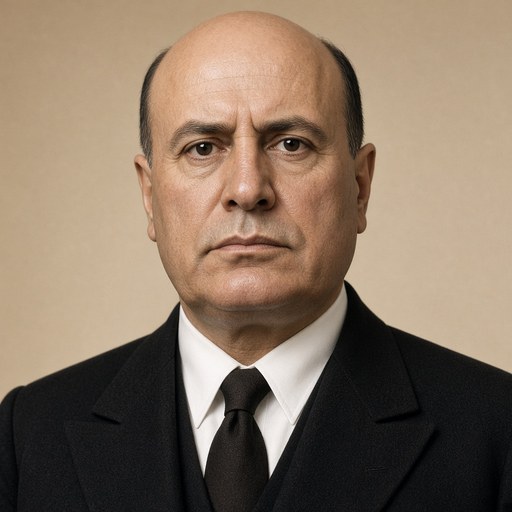
- Mussolini addressed the assembled squadristi of the Old Guard at the Foro Mussolini on March 26, 1939, during the twentieth anniversary celebrations of Fascism, setting out five principles including rearmament and claims against France.
- Main themes
- Twentieth anniversary of Fascism, squadristi of the first hour, Rome-Berlin Axis, fall of Czechoslovakia in Central Europe, Italian colonial claims on Tunis, Djibouti and the Suez Canal, French relations and the Spanish Civil War, Mediterranean and Adriatic as Italy's vital space, call for rearmament, hostility to the demo-plutocracies, permanent Fascist revolution, motto Believe! Obey! Fight!
- Duration
- ~14 min
- Words
- 1,712
- Sentences
- 73
- Readability
- 60
- Grade
- 10.4
- Syntax
- 3.37
- Vocabulary
- 2.48
Translated from Italian Source: it.wikisource.org ↗
The broad sphere of national life a sentence belongs to. Every sentence has an Arena, so it is the denominator the other indices are read against.
Other73 sentences in 42 paragraphs
TO THE OLD GUARD
On 23 March the new Chamber of Fasces and Corporations is inaugurated; on 26 March, at the Foro Mussolini, the assembly of the Old Guard takes place. These two historic events mark, like two milestones, the twentieth anniversary of Fascism; their echo spreads throughout the whole world. On 26 March, at the Foro Mussolini, the ranks of the squadristi are massed, to whom the Duce has granted a special badge; the most faithful and most daring men of the first hour, when to act meant to take risks, have hearts swelling with joy and pride for the reward granted and because they can relive, in the old formations, the hours of the distant eve: an atmosphere, therefore, of the highest tension; a magnificent gathering of the most genuine and generous Fascism. To these comrades of the very first hour the Duce addresses a speech that passes beyond the terraces of the stadium and goes out, as the word of Rome, across the world.
Comrades of the eve, faithful squadristi of the first hour and of every hour!
It is with deep emotion that, twenty years after the founding of the Italian Fasci of Combat, I address you while, looking you steadily in the eye, I see again so many days that we have lived through together, joyful, sad, stormy, dramatic, but always unforgettable.
On 23 March 1919 we raised the black flag of the Fascist Revolution, the forerunner of European renewal. Around this flag gathered your Squads, made up of veterans of the trenches and of the very young, all determined to march against spineless Governments and against dissolving Oriental theories in order to free the people from the baleful influence of the world of 1789.
Around this flag, thousands of comrades fell fighting as heroes, in the most Roman sense of the word, in the streets and squares of Italy, on the soil of Africa and of Spain, comrades whose memory is ever alive and present in our hearts.
It may be that there is someone around who has forgotten the very hard years of the eve (from the crowd comes the shout: "No one!"), but the men of the squads have not forgotten them, they cannot forget them. (From the crowd comes the shout: "Never!").
It may be that someone in the meantime has sat down, but the men of the squads are on their feet, ready to shoulder the musket, to jump onto the truck, as you did on the expeditions of former times.
The man of the squads tells the one who lingers behind the shutters that the Revolution is not over, but that, from the point of view of custom, of character, of social distances, it has only just begun.
I leave to others the task of drawing up a final account of our labour. In this first Twentieth Anniversary of Fascism, the account is gigantic. What we have done is destined to endure, and it will endure for centuries. Nor do I linger to compare what the Italy of 1919 was, disappointed, restless, disorderly, infected with Bolshevism like a nation not victorious but vanquished, with the Italy of 1939, compact, disciplined, creative, warlike, imperial.
But it would perhaps be worth recalling how many times the demo-plutocratic shop of triumphant falsehood, how many times it has announced to the now scattered flocks of its brutalised sheep the coming, the imminent, the absolutely certain ruin of Fascist Italy. Because she had bled herself white in Africa and even more in Spain and therefore urgently needed a loan, which naturally could only be British.
How true it is, how truly true it is that this Fascist Italy is still unknown, in the age of radio, like the farthest and most remote region of the earth.
What we have done is important, but for us what we shall do is more important. And we shall do it, because my will knows no obstacles and because your enthusiasm and your spirit of sacrifice are intact.
You are not my bodyguard; you are above all, and wish to be, the bodyguard of the Revolution and of the Fascist Regime.
Comrade Squadristi!
Your gathering, which is the culminating event of the celebration of the first Twentieth Anniversary of Fascism, takes place at a serious moment in European life. We are not and shall not be seized by what is now known as war psychosis, a mixture of hysteria and fear.
The course of our navigation is set and our principles are clear: you will listen to them with all the necessary attention and discretion.
First: However particularly detestable professional pacifists may be, and however much the word peace may by now be somewhat worn out by excessive use and ring as falsely as counterfeit coins, however well known it may be that we would consider perpetual peace a catastrophe for human civilisation, we consider that a long period of peace is necessary to safeguard European civilisation in its development. But, however much we may have been urged to do so, even recently, we shall take no initiative whatsoever before our sacrosanct rights have been recognised.
Second: The period of waltz turns, if there ever was one, is definitively closed. Merely to recall it is offensive to us and to all Italians.
Attempts to unhinge or to crack the Rome-Berlin Axis are puerile. The Axis is not merely a relationship between two States: it is the meeting of two Revolutions which declare themselves in clear antithesis to all the other conceptions of contemporary civilisation. Here lies the strength of the Axis and here lie the conditions of its endurance.
But, since in every nation there is always a share of superficial emotional people who sometimes send reason on holiday, I am here to declare to you in the most explicit manner that what has happened in Central Europe was fated to happen.
I declare to you that, if the great democracies weep bitterly over the premature and rather inglorious end of what was their dearest creature, this is an excellent reason not to join in their more or less decent tears.
I add that, if the problem is placed on the plane of morality, no one, I say no one, has the right to cast the first stone, as the ancient and modern history of Europe abundantly demonstrates.
I declare that when a people that had very many men and immense arsenals of weapons is incapable of a gesture, this shows that it is ripe, overripe for its destiny.
And finally I declare that, should the longed-for formation of a coalition against the authoritarian regimes come about, these regimes would take up the challenge and would move to defence and counter-attack at every point of the globe.
Third: In my speech at Genoa I spoke of a barricade that separated Italy from France. This barricade can be considered fairly well demolished and, in a few days, perhaps in a few hours, the magnificent infantry of National Spain will deliver the final blow, and that Madrid, where the Left expected the tomb of Fascism, will instead be the tomb of communism.
We do not ask for the judgement of the world, but we wish the world to be informed.
Well then: in the Italian note of 17 December 1938 Italy's problems with regard to France were clearly set out: problems of a colonial character. These problems have a name: they are called Tunis, Djibouti, the Suez Canal.
The French government is perfectly free to refuse even the simple discussion of these problems, as it has done so far through its all too repeated and perhaps all too categorical "nevers."
It will then have no cause to complain if the furrow that at present divides the two Countries becomes so deep that it will be an arduous, if not impossible, labour to fill it. However events may unfold, we wish that there be no more talk of brotherhood, of sisterhood, of cousinhood and other such bastard kinships, because relations between States are relations of force and these relations of force are the determining elements of their policy.
Fourth: Geographically, historically, politically, militarily the Mediterranean is a vital space (the multitude shouts: "It is ours!") for Italy and, when we say Mediterranean, we naturally include in it also that gulf which is called the Adriatic and in which Italy's interests are pre-eminent, but not exclusive, with regard to the Slavs, and it is for this reason that peace has reigned there for two years.
Fifth: Last, but fundamental and prerequisite: we must arm.
The watchword is this: more guns, more ships, more aeroplanes. At any cost (the multitude roars with a single voice: "Yes!"), by any means, even if we had to make a clean sweep of everything that is called civil life. When one is strong, one is dear to one's friends and feared by one's enemies.
Since the days of prehistory a cry has crossed the waves of the centuries and the succession of the generations: "Woe to the unarmed!"
Comrade squadristi!
The glorious black shirt in which we have fought and shall fight (the squadristi roar: "Yes! Yes!") is adorned, today, with a small badge of which you must be particularly proud: a badge of red colour, the colour of that blood which we are ready to shed, our own and others' (the squadristi roar again: "Yes! Yes!") when the interests of Italy and of Fascism are at stake.
This is your day, your great day. (From the enormous mass of squadristi comes the shout: "It is yours, Duce!").
With your courage, with your sacrifice, with your faith you have given a powerful push to the wheel of History. (The squadristi shout to the Duce: "It was you!").
Now I ask you: "Do you desire honours?" (The squadristi answer with a single voice: "No!"). Rewards? The comfortable life? (The squadristi answer each question with a most powerful: "No!")
Does the impossible exist for you? (The squadristi roar again, with a single voice, a resounding: "No!").
What are the three words that form our dogma? (the multitude chants the three words: "Believe! Obey! Fight!").
Well then, Comrades, in these three words lay, lies, and will lie the secret of every victory.
The original Italian. The tags above are read on the English translation's sentences.
ALLA VECCHIA GUARDIA
Il 23 marzo s’inaugura la nuova Camera dei Fasci e delle Corporazioni; il 26 marzo, al Foro Mussolini, si svolge il rapporto della Vecchia Guardia. Questi due avvenimenti storici segnano, come due pietre miliari, il ventennale del Fascismo; il loro eco si diffonde nel mondo intero. Il 26 marzo, al Foro Mussolini, sono concentrate le schiere degli squadristi, ai quali il Duce ha concesso uno speciale distintivo; gli uomini fedelissimi e audacissimi della prima ora, quando agire significava rischiare, hanno il cuore gonfio di gioia e d’orgoglio per il premio concesso e perché possono rivivere, nelle vecchie formazioni, le ore della lontana vigilia: clima, quindi, di altissima tensione; adunata magnifica del Fascismo più schietto e generoso. A questi camerati della primissima ora il Duce rivolge un discorso che valica gli spalti dello stadio e va, parola di Roma, per il mondo.
Camerati della vigilia, squadristi fedeli della prima e di tutte le ore!
È con emozione profonda che, a venti anni di distanza dalla fondazione dei Fasci Italiani di Combattimento, io vi dirigo la parola mentre, guardandovi fermamente negli occhi, io rivedo tante giornate che abbiamo vissute insieme, liete, tristi, tempestose, drammatiche, ma sempre indimenticabili.
Il 23 marzo del 1919 noi inalzammo la bandiera nera della Rivoluzione fascista, anticipatrice del rinnovamento europeo. Attorno a questa bandiera si raccolsero le vostre Squadre, formate da veterani delle trincee e da giovanissimi, decisi tutti a marciare contro Governi imbelli e contro teorie orientali dissolvitrici per liberare il popolo dal nefasto influsso del mondo ottantanovesco.
Attorno a questa bandiera caddero combattendo da eroi, nel significato più romano della parola, migliaia di camerati, nelle strade e nelle piazze d’Italia, in terra d’Africa e di Spagna, camerati di cui la memoria è sempre viva e presente nei nostri cuori.
Può darsi che ci sia in giro qualcuno che ha dimenticato gli anni durissimi della vigilia (dalla folla si grida: «Nessuno!»), ma gli uomini delle squadre non li hanno dimenticati, non li possono dimenticare. (Dalla folla si grida: «Mai!»).
Può darsi che qualcuno nel frattempo si sia posto a sedere, ma gli uomini delle squadre sono in piedi, pronti a imbracciare il moschetto, a saltare sul camion, come facevate nelle spedizioni di un tempo. (Si grida: «Sì! sì!»).
L’uomo delle squadre dice a colui che si attarda dietro le persiane che la Rivoluzione non è finita, ma, dal punto di vista del costume, del carattere, delle distanze sociali, è appena cominciata.
Io lascio ad altri il cómpito di stabilire un consuntivo della nostra fatica. In questo primo Ventennale del fascismo, il consuntivo è gigantesco. Quello che abbiamo fatto è destinato a rimanere e rimarrà nei secoli. Né mi attardo a raffrontare quello che era l’Italia del 1919 delusa, inquieta, disordinata, infettata di bolscevismo come una nazione non vittoriosa, ma vinta, e l’Italia del 1939 compatta, disciplinata, creatrice, guerriera, imperiale.
Ma varrebbe forse la pena di ricordare quante volte lo spaccio demoplutocratico della menzogna trionfante, quante volte ha annunciato ai greggi ormai dispersi delle sue pecore abbrutite la prossima, l’imminente, la certissima rovina dell’Italia fascista. Perché si era dissanguata in Africa e ancora di più in Ispagna ed aveva, quindi, urgente bisogno di un prestito, che naturalmente non poteva che essere britannico.
Come è vero, come è veramente vero che questa Italia fascista è ancora sconosciuta, nell’epoca delle radio, come la più lontana e remota regione della terra.
Quello che abbiamo fatto è importante, ma per noi è più importante quello che faremo. E lo faremo, perché la mia volontà non conosce ostacoli e perché il vostro entusiasmo ed il vostro spirito di sacrificio sono intatti.
Voi non siete la mia Guardia del corpo, voi siete soprattutto, e volete essere, la Guardia del corpo della Rivoluzione e del Regime Fascista.
Camerati Squadristi!
La vostra adunata, che è la manifestazione culminante della celebrazione del primo Ventennale del Fascismo, ha luogo in un momento serio della vita europea. Noi non ci facciamo e non ci faremo prendere da quella che ormai è conosciuta come la psicosi di guerra, miscuglio di isterismo e di paura.
La rotta della nostra navigazione è definita ed i nostri principî sono chiari: voi li ascolterete con tutta l’attenzione e la discrezione necessarie.
Primo: Per quanto i pacifisti di professione siano individui particolarmente detestabili e, per quanto la parola pace sia ormai un poco logorata dal soverchio uso e suoni equivocamente come le monete false, per quanto sia noto che noi considereremmo la pace perpetua come una catastrofe per la civiltà umana, noi consideriamo che sia necessario un lungo periodo di pace per salvaguardare nel suo sviluppo la civiltà europea. Ma, per quanto ancora di recente sollecitati, noi non prenderemo iniziativa alcuna, prima che i nostri sacrosanti diritti siano stati riconosciuti.
Secondo: Il periodo dei giri di valzer, se mai vi fu, è definitivamente chiuso. Il solo ricordarlo è offensivo per noi e per tutti gli Italiani.
I tentativi di scardinare o di incrinare l’asse Roma-Berlino sono puerili. L’Asse non è soltanto una relazione fra due Stati: è un incontro di due Rivoluzioni che si annunciano in netta antitesi con tutte le altre concezioni della civiltà contemporanea. Qui è la forza dell’Asse e qui sono le condizioni della sua durata.
Ma, poiché in ogni nazione c’è sempre un’aliquota di emotivi superficiali, che qualche volta mettono in vacanza la ragione, io sono qui a dichiararvi nella maniera più esplicita che quanto è accaduto nell’Europa Centrale doveva fatalmente accadere.
Vi dichiaro che, se le grandi democrazie piangono amaramente sulla fine prematura e alquanto inonorata di quella che fu la loro più cara creatura, questa è un’ottima ragione per non associarsi alle loro lacrime più o meno decenti.
Aggiungo che, se il problema viene messo sul piano della morale, nessuno, dico nessuno, ha il diritto di scagliare la prima pietra, come la storia antica e moderna di Europa abbondantemente dimostra.
Dichiaro che quando un popolo, che aveva moltissimi uomini e immensi arsenali di armi, non è capace di un gesto, ciò dimostra che esso è maturo, arcimaturo per il suo destino.
E infine dichiaro che, se avvenisse la vagheggiata costituzione di una coalizione contro i regimi autoritari, questi regimi raccoglierebbero la sfida e passerebbero alla difesa e al contrattacco su tutti i punti del globo.
Terzo: Nel mio discorso di Genova io parlai di una barricata che separava l’Italia dalla Francia. Questa barricata può considerarsi abbastanza demolita e, fra qualche giorno, forse fra qualche ora, le magnifiche fanterie della Spagna nazionale daranno l’ultimo colpo, e quella Madrid, dove le sinistre attendevano la tomba del Fascismo, sarà invece la tomba del comunismo.
Noi non chiediamo il giudizio del mondo, ma desideriamo che il mondo sia informato.
Orbene: nella nota italiana del 17 dicembre del 1938 erano chiaramente stabiliti i problemi italiani nei confronti della Francia: problemi di carattere coloniale. Questi problemi hanno un nome: si chiamano Tunisi, Gibuti, Canale di Suez.
Il governo francese è perfettamente libero di rifiutarsi anche alla semplice discussione di questi problemi, come ha fatto sin qui attraverso i suoi troppo reiterati e forse troppo categorici «giammai».
Non avrà, poi, a dolersi se il solco che divide attualmente i due Paesi diventerà così profondo che sarà fatica ardua se non impossibile colmarlo. Comunque si svolgano gli eventi, noi desideriamo che non si parli più di fratellanza, di sorellanza, di cuginanza e di altrettali parentele bastarde, poiché i rapporti tra gli Stati sono rapporti di forza e questi rapporti di forza sono gli elementi determinanti della loro politica.
Quarto: Geograficamente, storicamente, politicamente, militarmente il Mediterrraneo è uno spazio vitale (la moltitudine grida: «È nostro!») per l’Italia e, quando diciamo Mediterraneo, vi includiamo naturalmente anche quel golfo che si chiama Adriatico e nel quale gli interessi dell’Italia sono preminenti, ma non esclusivi, nei confronti degli Slavi, ed è per questo che da due anni vi regna la pace.
Quinto: Ultimo, ma fondamentale e pregiudiziale: bisogna armarsi.
La parola d’ordine è questa: più canoni, più navi, più aeroplani. A qualunque costo, (la moltitudine urla con una sola voce: «Sì!»), con qualunque mezzo, anchese si dovesse fare «tabula rasa» di tutto quello che si chiama la vita civile. Quando si è forti, si è cari agli amici e si è temuti dai nemici.
Dai giorni della preistoria un grido ha valivcato le onde dei secoli e la serie delle generazioni: «Guai agli inermi!»
Camerati squadristi!
La gloriosa camicia nera con la quale abbiamo combattuto e combatteremo (gli squadristi urlano: «Sì! Sì!») si adorna, oggi, di un piccolo distintivo del quale dovrete essere particolarmente orgogliosi: un distintivo colore rosso, colore di quel samgue che siamo disposti a versare, nostro e altrui (gli squadristi urlano ancora: «Sì! Sì!») quando siano in gioco gli interessi dell’Italia e del Fascismo.
Questa è la vostra giornata, la vostra grande giornata. (Dall’enorme massa degli squadristi si grida: «È la tua, Duce!»).
Col vostro coraggio, col vostro sacrificio, con la vostra fede avete dato un impulso potente alla ruota della Storia. (Gli squadristi gridano al Duce: «Sei stato tu!»).
Ora io vi domando: «Desiderate degli onori?» (Gli squadristi rispondono con una voce sola: «No!»). Delle ricompense? La vita comoda? (Gli squadristi rispondono, ad ogni domanda, con un potentissimo: «No!»)
Esiste per voi l’impossibile? (Gli squadristi urlano ancora, con una sola voce, un altissimo: «No!»).
Quali sono le tre parole che formano il nostro dogma? (la moltitudine scandisce le tre parole: «Credere! Obbedire! Combattere!»).
Ebbene Camerati, in queste tre parole fu, è, e sarà il segreto di ogni vittoria.