




Speech to the Leaders of Fascism on the 5th Anniversary of the Sanctions
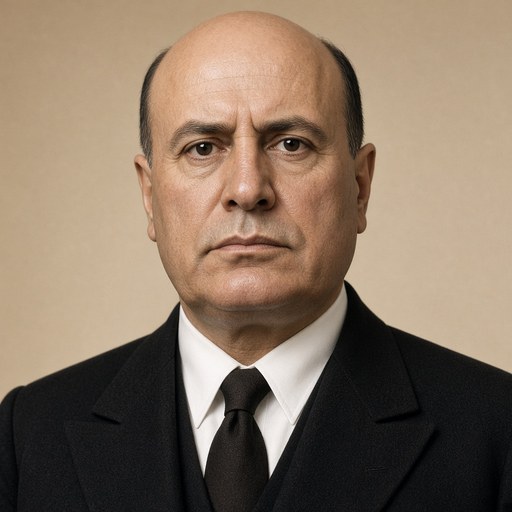
 Benito Mussolini · Prime Minister of Italy
- Context
- Mussolini addressed the provincial leaders of the Fascist Party in Rome on November 18, 1940, the fifth anniversary of the sanctions, vowing to break Greece, praising the Axis with Germany and urging the Party to intensify home-front activity.
- Main themes
- Fifth anniversary of the League of Nations sanctions against Italy, blame on Great Britain for the war, Italian military performance in Africa and Libya, invasion of Greece and the vow to break it, Axis alliance with Germany and the Tripartite Pact, Italian air and submarine participation against Britain, Italian claims against France, Taranto raid and truthfulness of war bulletins, Party duties on the home front, praise of the Italian people's discipline
- Duration
- ~24 min
- Words
- 2,829
- Sentences
- 119
- Readability
- 53
- Grade
- 11.8
- Syntax
- 2.98
- Vocabulary
- 2.30
Translated from Italian Source: it.wikisource.org ↗
The broad sphere of national life a sentence belongs to. Every sentence has an Arena, so it is the denominator the other indices are read against.
Other119 sentences in 69 paragraphs
SPEECH
TO THE LEADERS OF FASCISM
ON THE 5TH ANNIVERSARY OF THE SANCTIONS
18 NOVEMBER 1940 - XIX
Comrades!
You will understand that it is not by chance that I have chosen this day to summon the provincial leaders of the Party to Rome. It is a day of victory for Fascist Italy, of defeat for the League coalition of the 52 besieging States.
18 November 1935 stands out as a decisive date in the history of Europe. It is the first and last attempt at a large-scale assault launched by the old world, represented in its ferocious selfishness and its outdated ideologies by the League of Nations, against the new European forces, young and revolutionary, represented by Italy and Germany. From that day began the separation, the antithesis, the struggle which was destined, after the compromises of Munich, accepted by the democracies for the sole purpose of gaining time, to culminate in the war declared by France and Great Britain against Germany.
It must never be forgotten that the initiative for the war came from London, followed a few hours later by Paris.
I solemnly affirm, without fear of being contradicted, either today or ever, that the responsibility for the war falls exclusively on Great Britain.
Peace could have been preserved had Great Britain not, with the supine complicity of France, embarked, instead of on a constructive revision of the treaties, on a policy of encirclement pursued not in order to leave the thoroughly German city of Danzig to the Poles, but in order to strike down the reviving political and military power of Germany.
Peace could have been saved had England not rejected all the attempts at rapprochement made by Germany, which had gone so far as to sign a Naval Pact placing it in a position of clear and permanent inferiority.
Peace could have been saved even in the last hours of August 1939, had England, under pressure from the Polish Ambassador, who had gone to the Foreign Office at 11 p.m. on 1 September, not put forward, as its condition for joining the conference proposed by Italy, a condition that was absolutely unacceptable because humiliating, namely that the German troops, already on the march, should not only halt but withdraw to their starting lines.
What happened in the following months we have all lived through, and there is no need to recall it.
Never in the history of mankind was there seen a more colossal wave of mystifications and lies than the one unleashed by the government organs and publicists of Great Britain during the campaigns in Poland, Norway, Belgium and Holland, which ended in the defeat of the British army and of the French army, the latter a defeat without precedent for its immense proportions and its almost unthinkable speed.
If the practice of lying is the most suitable system for stupefying and hardening the spirit of a people, it can safely be said that the people of Great Britain have achieved an indisputable and unbeatable record.
France was reeling, but was still far from being on its knees, and no one in the world could foresee that the army celebrated as the strongest in Europe would melt like snow in the sun when, on 10 June, Italy entered the war to keep faith with the letter and the spirit of the alliance and to break at last the bars of her prison in her own sea.
Two weeks later came the armistice, and France abandoned the struggle, which she has since taken up again only sporadically, and only to defend herself against the treacherous attacks of her former ally, as at Oran and Dakar.
From 10 June to today, more than five months have passed of war seriously waged on distant and multiple fronts, on land, at sea, in the sky, in Europe and in Africa.
Allow me to address a greeting full of admiration to the Italians who at this moment have the privilege of bearing arms.
The army, on the Alpine front and on the African front, has shown that its mettle is what we wanted it to be: the defeat of the English in British Somaliland was total: as at Dunkirk, so at Berbera the English fled, and they took their revenge by reproaching us for having committed, in beating them, an irreparable strategic error.
The Armed Forces of the African Empire, an Empire which according to enemy forecasts was supposed to collapse, have everywhere taken the initiative, and the English attempts at internal subversion have pitifully failed.
In Libya too it was we who attacked, and the lightning occupation of Sidi el Barrani must be regarded not as a conclusion but as a prelude.
The acts of valour performed by Italian Army officers and soldiers on the land fronts are such as to make the Nation legitimately proud.
The officers and crews of the Navy carry out their duty silently and often heroically on the many seas and oceans — from the Indian to the Atlantic — where they are engaged. They obey strict orders, and hard blows have been dealt to the enemy Navy. It is the Navy that protects our Mediterranean and Adriatic lines of communication, so effectively that the enemy Navy has not succeeded in cutting them or even in disturbing them.
The Italian Air Force is always, and more than ever, equal to its task. It has dominated and dominates the skies. Its bombers reach the most distant targets, its fighters make life very hard for the enemy fighters. The men are truly men of our time: their hallmark is an intrepid calm.
As for the machines, four times as many come out of our factories each month as before the war: shortly, with the mass production of the new types, we shall perhaps be in the vanguard, and certainly on a par with the most modern machines of other countries.
But, after the Armed Forces, allow me to praise the discipline, the sense of duty, the imperturbable steadfastness of the Italian People.
They accept calmly the privations that follow from the state of war, privations still bearable, but which may later become more severe, and, guided by their age-old political intuition, they feel that this is a decisive war; it is like the third Punic war, which must end and will end with the annihilation of the modern Carthage: England.
A strong People like the Italian People does not fear the truth; it demands it.
That is why our war Bulletins are the record of the truth. We report the blows we deal and those we receive, the aircraft we shoot down and those the enemy shoots down, the days that go well and those that go little or not at all well. We publish monthly the losses in men and those in matériel. I would feel diminished before the People and before myself if I adopted any other method, such as covering up or sweetening reality, be it good or bad. To do so would be to miseducate and humiliate the People. I shall never do it.
I have already ordered in the most categorical manner the military commands at the front and the civil authorities in the provinces not to send to Rome, from where it must then be disseminated, any news that has not been rigorously and personally, I say personally, verified.
In this connection I wish to recall that cries of joy were raised in the House of Commons when Churchill was at last able to give a piece of good news, that concerning the action carried out in the port of Taranto by English torpedo bombers.
Three ships were indeed hit, but none of them was sunk and only one of them, as was announced by the Bulletin of our Armed Forces, was seriously damaged, and its recovery will take a long time. The other two will, in the unanimous opinion of the technicians, be promptly restored to their former efficiency.
It is false, I say false, that two other warships and two auxiliary ships were sunk or hit or in any way even slightly damaged.
A sign of a bad conscience, this inflating and multiplying by six of a success which we were the first to acknowledge.
Mr Churchill could, to complete the picture, have given his honourable members some indication of the fate that befell the "Liverpool" and the "Kent", and of that of the other large units recently torpedoed in the central Mediterranean or in the port of Alexandria by Italian submarines or aerial torpedoes.
Our entry into the war has shown that the Axis was not and is not an empty word. From June to today our collaboration with Germany has been truly comradely and total. We march side by side.
This union of two Peoples is becoming ever closer and extends to all fields of their military, economic, political and spiritual activity. The identity of views regarding the present and the future is complete.
My meetings with the Führer are nothing but the consecration of this complete fusion of our conceptions. When I meet the Führer I see in him not only the Leader who created greater Germany, the Commander of armies who has seen confirmed by victory his brilliant strategic conceptions, at times considered more reckless than bold, but also, and I would say above all, the inspirer of the National Socialist movement, the revolutionary who awakened the German People and made them the protagonist of a new conception of the world, closely akin to that of Italian Fascism.
The identity of views is the result of this revolutionary premise; it springs from the meeting of two Revolutions which are, both in the international field and in the social field, only at the beginning of their journey.
Everything concerning the developments of the Tripartite Pact, in the west or in the Danube Basin, is pursued by common agreement; likewise as regards the future position of France.
It is by now clear that the Axis does not want to make a peace of reprisal or of rancour, but it is also understood that certain claims must be satisfied.
These more than legitimate claims could have been a matter for discussion even before the war, had they not been opposed by the "Jamais", at once ridiculous and tragic. When there was talk of withdrawing them, it was by then too late. Italy had already, since May 1939, chosen her path. The die was cast.
But precisely because of their legitimacy, our claims must be met without compromises or provisional solutions, which we, from this moment, categorically reject.
Only after this complete clarification will it be possible, within the orbit of the new Europe as it will be created by the Axis, to open a new chapter in the history, so turbulent, of relations between Italy and France.
There is no need to confirm that, like the armistice, the peace too will be common, that is, it will be the peace of the Axis.
To consecrate the Italo-German brotherhood in arms, I asked for and obtained from the Führer direct participation in the battle against Great Britain with aircraft and submarines. I add at once that Germany had no need of our assistance. The valour of her fighters on land, at sea and in the air, her industrial power, her organisational and technical capacity, the output of her labour force are well-known factors. The production figures for aeroplanes and submarines reached by Germany are truly exceptional and constantly increasing. Nevertheless, I am grateful to the Führer for having accepted my offer: nothing more than blood shed in common, or sacrifice borne in common, makes relations between peoples solid and lasting, when they are inspired by absolute loyalty and by an identity of interests and ideals. I am sure that our airmen and our submariners will do honour to our flag.
After long patience we have torn the mask from a country guaranteed by Great Britain, an underhand enemy: Greece. It is a score that was waiting to be settled. One thing must be said, and it will perhaps not fail to surprise certain out-of-date Italian classicists: the Greeks hate Italy as no other people does. It is a hatred which at first sight appears inexplicable, but it is general, deep, incurable, in all classes, in the towns, in the villages, high and low, everywhere. Why is a mystery. Perhaps because Santorre Santarosa went from his native Piedmont to die naively and heroically for Greece at Sphacteria? Perhaps because the Garibaldian Antonio Fratti of Forlì repeated the same gesture of sublime naivety 70 years later, falling at Domokos? Questions. But the fact exists.
On this hatred, which may be called grotesque, Greek policy of recent years has been based; a policy of absolute complicity with Great Britain. Nor could it have been otherwise, given that the king is English, the political class English, the purse, in the figurative sense and the literal one, English.
This complicity, expressed in many ways which will in due course be irrefutably documented, was an act of continuous hostility against Italy.
From the papers found by the German General Staff in France, at Vitry la Charité, it emerges that as early as May Greece had offered the French and English all her air and naval bases.
An end had to be put to this situation. That is what was done on 28 October, when our troops crossed the Greek-Albanian border.
The harsh mountains of Epirus and their muddy valleys do not lend themselves to "lightning wars", as the incorrigibles who practise the comfortable strategy of pins on maps would have it. No act or word of mine, or of the Government, or of any other responsible party, ever led anyone to expect it.
I do not think it worth denying all the news put out by Greek propaganda and its English loudspeakers. That Alpine Division "Julia", which supposedly suffered enormous losses, which supposedly fled, which supposedly was pulverised by the Greeks, was visited by General Soddu, who, once the visit was over, telegraphed me as follows on 12 November: "Having gone this morning to visit Alpine Division "Julia", I must report to you, Duce, the magnificent impression I received of this superb unit, proud and steadfast more than ever in its granite Alpini."
Is there anyone among you, comrades, who remembers the unpublished Eboli speech, delivered in July 1935, before the Ethiopian war? I said that we would break the Negus's back.
Now, with the same absolute certainty, I repeat absolute, I tell you that we will break Greece's back. In two months or in twelve matters little. The war has only just begun.
We have men and means enough to annihilate all Greek resistance. English aid will not be able to prevent the accomplishment of this most firm resolve of ours, nor spare the Hellenes the catastrophe which they have wanted and shown that they deserve.
To think or to doubt anything different means not to know me. Once I have started, I do not let go until the end. I have already shown it and, whatever has happened, happens or may happen, I shall show it again.
The 372 Fallen, the 1081 wounded, the 650 missing in the first ten days of fighting on the Epirus front will be avenged.
Comrades!
In this truly solemn historic hour, which lines up the Continents, in conflict and in agreement, the Party — defender and continuer of the Revolution — must intensify to the utmost all forms of its activity.
At the outbreak of war a certain slowing of the Party's activities was related to the objective fact of the departure of all the leaders. Now no longer.
There is not and there will not be a general mobilisation. Two classes have been called up. Some thirty remain available. We have a million men under arms; we can call up, if necessary, another eight.
In these conditions, the Party must resume its function with unchanged, growing rigour, strenuously engaging in its battle on the home front, on the political, economic and spiritual plane, on the plane of style.
The Party must free itself and free the Nation from the remaining petty-bourgeois ballast, in the broadest sense that we give to this term; it must maintain and accentuate the climate of hard times; go, more and better than before, towards the People, safeguarding their moral health and their material existence.
A certain pacifism of a cerebral and universalist bent must be carefully watched and combated. It is out of step, at least as regards this age of iron and of cannons.
Nothing else exists or must exist apart from the supreme aim for which we are in arms. Germans and Italians together, we are a bloc of 150 million men, resolute and united and planted from Norway to Libya in the heart of Europe.
This bloc already holds victory in its fist.
Benito Mussolini
The original Italian. The tags above are read on the English translation's sentences.
DISCORSO
ALLE GERARCHIE DEL FASCISMO
NEL V° ANNIVERSARIO DELLE SANZIONI
18 NOVEMBRE 1940 - XIX
Camerati!
Voi comprenderete che non a caso ho scelto questa giornata per convocare a Roma le Gerarchie provinciali del Partito. È una giornata di vittoria per l’Italia fascista, di disfatta per la coalizione societaria dei 52 Stati assedianti.
Il 18 novembre del 1935 appare come una data decisiva nella storia d’Europa. È il primo e ultimo tentativo d’assalto in grande stile sferrato dal vecchio mondo, rappresentato nei suoi egoismi feroci e nelle sue ideologie superate dalla Società delle Nazioni, contro le nuove forze europee, giovani e rivoluzionarie, rappresentate dall’Italia e dalla Germania. Da quel giorno, ha inizio la separazione, l’antitesi, la lotta che doveva, dopo i compromessi di Monaco, accettati dalle democrazie al solo scopo di guadagnare tempo, sboccare nella guerra dichiarata dalla Francia e dalla Gran Bretagna contro la Germania.
Non bisogna mai dimenticare che l’iniziativa della guerra è partita da Londra, seguita con un intervallo di poche ore da Parigi.
Affermo solennemente e senza tema di essere smentito, nè oggi nè mai, che la responsabilità della guerra ricade esclusivamente sulla Gran Bretagna.
La pace poteva essere conservata, se la Gran Bretagna non avesse, con la supina complicità della Francia, iniziato, invece della costruttiva revisione dei trattati, una politica di accerchiamento fatta, non allo scopo di lasciare ai polacchi la tedeschissima Danzica, ma allo scopo di abbattere la rinascente potenza politica e militare della Germania.
La pace poteva essere salvata se l’Inghilterra non avesse rigettato tutti i tentativi di avvicinamento compiuti dalla Germania, la quale si era spinta a firmare un Patto Navale che le faceva una situazione di netta e permanente inferiorità.
La pace poteva essere salvata anche nelle ultime ore dell’agosto 1939, se l’Inghilterra, sotto la pressione dell’Ambasciatore polacco che si era recato al Foreing Office alle 23 del giorno 1° settembre, non avesse avanzato, per aderire alla conferenza proposta dall’Italia, una condizione assolutamente inaccettabile, perchè umiliante, e cioè che le truppe tedesche, già in marcia, non solo si fermassero, ma retrocedessero alle linee di partenza.
Quanto è accaduto nei mesi successivi noi tutti l’abbiamo vissuto ed è superfluo ricordarlo.
Mai si vide nella storia del genere umano più colossale ondata di mistificazioni e di menzogne come quella scatenata dagli organi governativi e pubblicisti della Gran Bretagna durante le campagne di Polonia, Norvegia, Belgio, Olanda, conclusesi con la disfatta dell’esercito britannico e di quello francese, disfatta, quest’ultima, senza precedenti per le sue immense proporzioni e per la sua quasi impensabile rapidità.
Se la pratica della menzogna è il sistema più idoneo per istupidire e rendere coriaceo lo spirito di un popolo, si può tranquillamente affermare che il popolo di Gran Bretagna ha raggiunto un indiscutibile e insuperabile primato.
La Francia barcollava, ma era ancora lungi dall’essere in ginocchio e nessuno al mondo poteva prevedere che l’esercito, celebrato come il più forte d’Europa, si sarebbe liquefatto come neve al sole quando, il 10 giugno, l’Italia entrò in guerra per tener fede alla lettera ed allo spirito dell’alleanza e per spezzare finalmente le sbarre della sua prigione nel suo mare.
Dopo due settimane era l’armistizio e la Francia abbandonava la lotta che ha ripreso saltuariamente in seguito, ma solo per difendersi dagli attacchi proditori della ex-alleata, come a Orano e a Dakar.
Dal 10 giugno a oggi sono passati oltre cinque mesi di guerra seriamente guerreggiata sui fronti lontani e multipli per terra, per mare, nel cielo, in Europa e in Africa.
Lasciate che io rivolga un saluto pieno di ammirazione agli italiani che hanno in questo momento il privilegio di impugnare le armi.
L’esercito, sul fronte alpino e su quello africano, ha dimostrato che la sua tempra è quale noi volevamo: la disfatta degli inglesi nella Somalia britannica è stata totale: come a Dunkerque, così a Berbera gli inglesi sono fuggiti e si sono vendicati rimproverandoci di aver commesso, battendoli, un irreparabile errore strategico.
Le Forze Armate dell’Impero africano, Impero che nelle previsioni nemiche doveva saltare, hanno preso dovunque l’iniziativa e i tentativi inglesi di sobillazione all’interno sono pietosamente falliti.
Anche nella Libia siamo stati noi ad attaccare e la fulminea occupazione di Sidi el Barrani deve essere considerata non una conclusione, ma una premessa.
Gli atti di valore compiuti da ufficiali e da soldati italiani dell’Esercito sui fonti terrestri sono tali da inorgoglire legittimamente la Nazione.
Gli ufficiali e gli equipaggi della Marina compiono silenziosamente e spesso eroicamente il loro dovere sui molti mari e oceani — dall’Indiano all’Atlantico — dove sono impegnati. Essi obbediscono a una severa consegna e duri colpi sono stati inflitti alla Marina nemica. È la Marina che tutela le nostre linee di comunicazione mediterranee e adriatiche, in modo così efficace che la Marina nemica non è riuscita ad interromperle e nemmeno a disturbarle.
L’Aviazione italiana è sempre e più di sempre all’altezza del suo compito. Essa ha dominato e domina i cieli. I suoi bombardieri attingono le mète più lontane, i suoi cacciatori rendono la vita assai dura alla caccia nemica. Gli uomini sono veramente quelli del nostro tempo: la loro caratteristica è una calma intrepida.
Quanto alle macchine, ne escono al mese dalle nostre officine quattro volte più che prima della guerra: tra poco, colla costruzione in massa dei nuovi tipi, saremo forse all’avanguardia, certamente alla pari colle macchine più moderne degli altri Paesi.
Ma, dopo le Forze Armate, lasciate che io elogi la disciplina, il senso del dovere, la imperturbabile fermezza del Popolo italiano.
Esso accetta con tranquillità le privazioni che conseguono allo stato di guerra, privazioni ancora tollerabili, ma che potranno diventare successivamente più gravi e, guidato dal suo intuito politico millenario, sente che questa è una guerra decisiva; è come la terza guerra punica, che deve concludersi e si concluderà con l’annientamento della Cartagine moderna: l’Inghilterra.
Un forte Popolo come l’Italiano non teme la verità, la esige.
Ecco perchè i nostri Bollettini di guerra sono la documentazione della verità. Noi segnaliamo i colpi che diamo e quelli che riceviamo, gli apparecchi che noi abbattiamo e quelli che il nemico abbatte, le giornate favorevoli e quelle che lo sono poco o niente. Pubblichiamo mensilmente le perdite degli uomini e quelle dei mezzi. Mi sentirei diminuito dinanzi al Popolo e dinanzi a me stesso se adottassi altro metodo, quale quello di coprire o addolcire la realtà, buona o cattiva che sia. Farlo equivarrebbe a diseducare e umiliare il Popolo. Non lo farò mai.
Ho già prescritto nella maniera più categorica ai comandi militari del fronte ed alle autorità civili della periferia di non mandare a Roma, da dove poi debbono essere diffuse, notizie che non siano state rigorosamente e personalmente, dico personalmente, controllate.
A questo proposito voglio ricordare che grida di gioia si sono levate alla Camera dei Comuni quando Churchill ha potuto dare finalmente una buona notizia, quella concernente l’azione compiuta nel porto di Taranto dagli aerosiluranti inglesi.
Effettivamente tre navi sono state colpite, ma nessuna di esse è stata affondata e solo una di esse, come fu annunciato dal Bollettino delle nostre Forze Armate, è stata seriamente danneggiata e il suo ricupero richiederà lungo tempo. Le altre due saranno, a parere unanime dei tecnici, sollecitamente ripristinate nella loro antica efficienza.
È falso, dico falso, che due altre navi da guerra e due navi ausiliarie siano state affondate o colpite o comunque anche leggermente danneggiate.
Segno di cattiva coscienza questo di ingigantire e moltiplicare per sei un successo che noi per primi abbiamo riconosciuto.
Il signor Churchill avrebbe potuto, per completare il quadro, dare ai suoi onorevoli qualche indicazione sulla sorte toccata al «Liverpool» e al «Kent», e su quella delle altre grandi unità silurate recentemente nel Mediterraneo centrale o nel porto di Alessandria da sottomarini o aerosiluri italiani.
La nostra entrata in guerra ha dimostrato che l’Asse non era e non è una vana parola. Dal giugno ad oggi la nostra collaborazione con la Germania è veramente cameratesca e totalitaria. Marciamo fianco a fianco.
Questa unione di due Popoli diventa sempre più intima e si estende a tutti i campi della loro attività militare, economica, politica, spirituale. L’identità di vedute per quanto riguarda il presente e il futuro è perfetta.
I miei incontri col Führer non sono che la consacrazione di questa completa fusione delle nostre concezioni. Quando io mi incontro col Führer non vedo soltanto in lui il Capo creatore della grande Germania, il Comandante di eserciti che ha visto confermate dalla vittoria le sue geniali concezioni strategiche, talora ritenute più che audaci temerarie, ma anche, e vorrei dire in particolar modo, il suscitatore del movimento nazionalsocialista, il rivoluzionario che ha risvegliato il Popolo tedesco, lo ha fatto protagonista di una nuova concezione del mondo, grandemente affine a quella del Fascismo italiano.
L’identità di vedute è il risultato di questa premessa rivoluzionaria, scaturisce dall’incontro di due Rivoluzioni che sono, e nel campo internazionale e in quello sociale, appena all’inizio del loro cammino.
Tutto quanto riguarda gli sviluppi del Patto tripartito, a occidente o nel Bacino Danubiano, è seguito di comune accordo; così per quanto riguarda la posizione avvenire della Francia.
È ormai chiaro che l’Asse non vuole fare una pace di rappresaglia o di rancori, ma è altresì inteso che talune rivendicazioni devono essere soddisfatte.
Tali rivendicazioni più che legittime, potevano essere oggetto di discussione anche prima della guerra, se non ci si fossero opposti i ridicoli e tragici, ad un tempo, Jamais. Quando si accennò a toglierli era ormai troppo tardi. L’Italia aveva già scelto, sin dal maggio 1939, la sua via. I dadi erano gettati.
Ma appunto per il loro carattere di legittimità, le nostre rivendicazioni dovranno essere accolte senza compromessi o soluzioni provvisorie, che noi, fin da questo momento, in maniera categorica, respingiamo.
Solo dopo questo totale chiarimento sarà possibile, nell’orbita della nuova Europa, quale sarà creata dall’Asse, di iniziare un nuovo capitolo nella storia, che fu così agitata, dei rapporti fra Italia e Francia.
È superfluo confermare che, come l’armistizio, così la pace sarà comune, cioè sarà la pace dell’Asse.
A consacrare la fraternità delle armi italo-germaniche ho chiesto e ottenuto dal Führer una diretta partecipazione alla battaglia contro la Gran Bretagna con velivoli e sottomarini. Aggiungo subito che la Germania non aveva bisogno del nostro concorso. Il valore dei suoi combattenti di terra, di mare, di cielo, la sua potenza industriale, la sua capacità organizzativa e tecnica, il rendimento della sua mano d’opera sono elementi ben noti. Le cifre di produzione di aeroplani e di sottomarini raggiunte dalla Germania sono veramente eccezionali ed in continuo progresso. Ciò nonostante, io sono grato al Führer di avere accettato la mia offerta: nulla più del sangue versato in comune, o del sacrificio in comune sopportato, rende solidi e duraturi i rapporti fra i popoli, quando siano animati da una lealtà assoluta e da una identità di interessi e di ideali. Sono sicuro che i nostri aviatori e i nostri sommergibilisti faranno onore alla nostra bandiera.
Dopo un lungo pazientare abbiamo strappato la maschera ad un Paese garantito dalla Gran Bretagna, un subdolo nemico, la Grecia. È un conto che attendeva di essere saldato. Una cosa va detta, e forse non mancherà di sorprendere taluni inattuali classicisti italiani: i greci odiano l’Italia come nessun altro popolo. È un odio che appare a prima vista inspiegabile, ma è generale, profondo, inguaribile, in tutte le classi, nelle città, nei villaggi, in alto, in basso, dovunque. Il perchè è un mistero. Forse perchè Santorre Santarosa andò dal natio Piemonte a morire ingenuamente ed eroicamente per la Grecia a Sfacteria? Forse perchè il garibaldino forlivese Antonio Fratti ripetè lo stesso gesto di sublime ingenuità 70 anni dopo cadendo a Domokos? Interrogativi. Ma il fatto esiste.
Su questo odio, che si può definire grottesco, si è basata la politica greca di questi ultimi anni; politica di assoluta complicità con la Gran Bretagna. Nè poteva essere diversamente, dato che il re è inglese, la classe politica inglese, la borsa, nel senso figurato e nel proprio, è inglese.
Questa complicità, estrinsecata in molti modi che a suo tempo saranno irrefutabilmente documentati, era un atto di ostilità continua contro l’Italia.
Dalle carte trovate dallo Stato Maggiore Germanico in Francia, a Vitry la Charité, risulta che sin dal maggio la Grecia aveva offerto ai franco-inglesi tutte le sue basi aeree e navali.
Bisognava por fine a questa situazione. È ciò che si è fatto il 28 ottobre, quando le nostre truppe hanno varcato il confine greco-albanese.
Le aspre montagne dell’Epiro e le loro valli fangose non si prestano a «guerre-lampo», come pretenderebbero gli incorreggibili che praticano la comoda strategia degli spilli sulle carte. Nessun atto o parola mia, o del Governo, e di nessun altro fattore responsabile l’ha fatto prevedere.
Non credo che valga la pena di smentire tutte le notizie diramate dalla propaganda greca e dai suoi altoparlanti inglesi. Quella Divisione Alpina «Julia» che avrebbe avuto perdite enormi, che sarebbe fuggita, che sarebbe stata polverizzata dai greci, è stata visitata dal generale Soddu, il quale, a visita ultimata, così mi ha telegrafato il 12 novembre: «Recatomi stamane visitare Divisione Alpina «Julia», devo segnalarvi, Duce, la magnifica impressione riportata di questa superba unità fiera e salda più che mai nei suoi granitici alpini».
C’è qualcuno tra di voi, o camerati, che ricorda l’inedito discorso di Eboli, pronunciato nel luglio del 1935, prima della guerra etiopica? Dissi che avremmo spezzato le reni al Negus.
Ora, con la stessa certezza assoluta, ripeto assoluta, vi dico che spezzeremo le reni alla Grecia. In due o in dodici mesi poco importa. La guerra è appena incominciata.
Noi abbiamo uomini e mezzi sufficienti per annientare ogni resistenza greca. L’aiuto inglese non potrà impedire il compimento di questo nostro fermissimo proponimento, nè evitare agli elleni la catastrofe che essi hanno voluto e dimostrato di meritare.
Pensare o dubitare qualche cosa di diverso significa non conoscermi. Una volta preso l’avvio, io non mollo più sino alla fine. L’ho già dimostrato e, qualunque cosa sia accaduta, accada, o possa accadere tornerò a dimostrarlo.
I 372 Caduti, i 1081 feriti, i 650 dispersi nei primi dieci giorni di combattimento sul fronte dell’Epiro saranno vendicati.
Camerati!
In quest’ora storica veramente solenne, che allinea, nel contrasto e nell’intesa, i Continenti, il Partito — difensore e continuatore della Rivoluzione — deve intensificare al massimo tutte le forme della sua attività.
Allo scoppio della guerra un certo rallentamento delle attività del Partito fu in relazione al fatto obiettivo della partenza di tutti i gerarchi. Ora non più.
Non c’è e non ci sarà una mobilitazione generale. Le classi richiamate sono due. Ce ne sono ancora disponibili una trentina. Abbiamo alle armi un milione di uomini; ne possiamo chiamare, in caso di necessità, altri otto.
In queste condizioni, il Partito deve riprendere la sua funzione con immutato crescente rigore, impegnando strenuamente la sua battaglia sul fronte interno, sul piano politico, economico, spirituale, sul piano dello stile.
Il Partito deve liberarsi e liberare la Nazione dalla superstite zavorra piccolo-borghese, nel senso più lato che noi diamo a questo termine; deve mantenere e accentuare il clima dei tempi duri; andare, più e meglio di prima, verso il Popolo, tutelandone la salute morale e l’esistenza materiale.
Certo pacifismo a sfondo cerebraloide e universalistico va attentamente vigilato e combattuto. È sfasato almeno per quanto riguarda questa epoca di ferro e di cannoni.
Nient’altro esiste e deve esistere all’infuori dello scopo supremo, per il quale siamo in armi. Fra germanici e italiani siamo un blocco di 150 milioni di uomini, risoluti e compatti e piantati dalla Norvegia alla Libia nel cuore dell’Europa.
Questo blocco ha già nel pugno la vittoria.
Benito Mussolini