




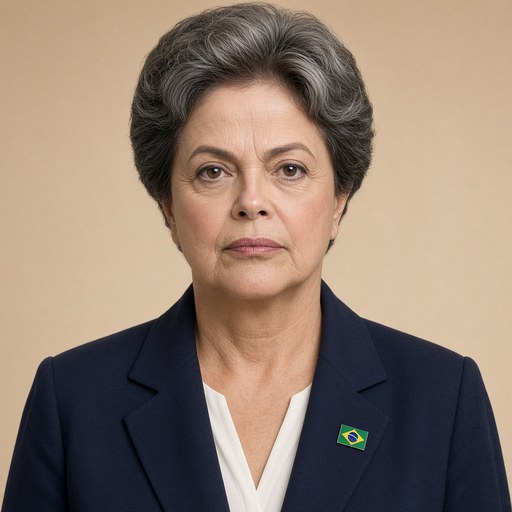
10-08-2013 - Speech by the President of the Republic, Dilma Rousseff, during the ceremony for the delivery of backhoe loaders to mayors of Rio Grande do Sul.
 Dilma Rousseff · President of Brazil
- Context
- Rousseff addressed mayors of Rio Grande do Sul in Porto Alegre on August 10, 2013, during a ceremony delivering construction equipment to small municipalities.
- Main themes
- Backhoe loader delivery to municipalities, federal-municipal relations, small municipalities policy, rural infrastructure, Minha Casa Minha Vida housing program, municipal financial transfers, national industry prioritization, rural road maintenance, administrative autonomy of municipalities
- Duration
- ~24 min
- Words
- 2,916
- Sentences
- 134
- Readability
- 49
- Grade
- 11.2
- Syntax
- 2.94
- Vocabulary
- 2.25
Translated from Portuguese
The broad sphere of national life a sentence belongs to. Every sentence has an Arena, so it is the denominator the other indices are read against.
Other134 sentences in 44 paragraphs
Good afternoon everyone.
I would like to start by greeting our governor, Tarso Genro,
I would also like to greet the mayor of Porto Alegre, José Fortunati,
I would like to extend a very special greeting to the president of Fiergs, Heitor Müller,
I would also like to greet Mr. Sérgio Munhoz, mayor of Eldorado do Sul, and through Sérgio, I greet all the mayors and all the mayors who today received the backhoe loaders here.
I would like to greet the Minister of State Pepe Vargas, of Agrarian Development; Aguinaldo Ribeiro, of Cities; Maria do Rosário, of the Human Rights Secretariat.
I greet Miguel Rossetto, former Minister of Agrarian Development and now president of Petrobras Biocombustíveis,
I would like to greet the federal deputies Dionísio Marcon, Fernando Marrone, Henrique Fontana, Marco Maia, Paulo Ferreira, Renato Molling, and Ronaldo Zulke.
I would like to greet the president of Fetag of Rio Grande do Sul, Elton Weber,
Greet the Secretary-General of Fetraf in Rio Grande do Sul, Tiago Klug,
Greet Romário Rossetto, coordinator of Via Campesina,
Greet the gentlemen journalists, the ladies journalists, the gentlemen photographers and cameramen,
Greet everyone who is here and honors us with their presence.
I come once again here, in Porto Alegre, to reinforce the federative ties between the federal government and the municipalities. These backhoe loaders for the smaller municipalities, by the way, those with up to 50,000 inhabitants, represent two movements. First, the importance of small municipalities, with up to 50,000 inhabitants in our country. They make up more than 90% of all municipalities. At the same time, they are spread throughout Brazil, especially in large stretches of territory in rural areas.
One mayor told me, at one of the backhoe loader launches, that in her municipality there were three thousand kilometers of rural roads. Three thousand kilometers of rural roads to be maintained is something challenging in any dimension we think of.
That is why we are talking about municipalities that are and represent deep Brazil, the Brazil that goes from Oiapoque to Chuí and from east to west. And the fact that the federal government seeks, in relation to small municipalities, the so-called municipalities with up to 50,000 inhabitants, to define specific policies for them, is the recognition that we need to have different policies for different situations.
This so-called kit, which includes a backhoe loader, a motor grader, and a dump truck, is also part of an initiative to increase the administrative autonomy of the municipality and ensure that it can directly intervene in the reality that surrounds it, in the economic and social reality, because through the rural roads not only does our production flow, but also the Samu passes, as Pepe said, if I am not mistaken, it passes... If he did not say it in this one, he said it in another, of the many we participated in together, but buses pass, the school buses, in short, people transit, who are what is most precious to all of us, president and mayors.
So, I consider this Program fundamental, just like Minha Casa, Minha Vida, because until then Minha Casa, Minha Vida had been approved with a different treatment for municipalities, it was small institutions that made the investment. We changed that and now – isn’t that right, Minister Aguinaldo? – municipalities with up to 50,000 inhabitants have the same conditions as large municipalities: they are served by Caixa Econômica and Banco do Brasil, and have the possibility of having a limit, like every municipality, to build their houses, which is also very important. Obviously, this is a distribution aimed at increasing the number of housing available to the smaller municipalities in our country.
In addition, I believe that another fundamental element – and I fully understand the situation of the municipalities, and that is why the federal government made a great effort - and we will transfer, then, R$ 1.5 billion now, by the end of the month, we are depending on the approval of Congress, but as soon as Congress approves, and I believe it will do so before the end of the month, we will immediately transfer R$ 1.5 billion, proportionally, in the same way that is done with the Municipal Participation Fund. And also, until April at the latest, we will transfer the remaining R$ 1.5 billion that we promised at the March of Mayors.
But today I wanted, since Pepe extended himself at length and very correctly, regarding the issue of backhoe loaders, motor graders, and what the purpose of this program is, he even highlighted something that I think is very important: that it is basically centered on the fact that we prioritize the national machinery and equipment supplying industry, since this is a public procurement program, and nothing is more just than in this public procurement program we also have the criterion of increasing employment as a correlated criterion to give, to have this structured demand for backhoe loaders, motor graders, and dump trucks.
But I wanted to talk to you, take the opportunity to talk to you about a program that I think is very important for municipalities, for states, and for the Union, which is the Mais Médicos Program. I have been to all the Marches, at all the Marches of Mayors, and there was a unanimous evaluation about a central problem in all the states of the Federation, which was the lack of doctors. I know perfectly well that it is not just the lack of doctors that explains the health problems in Brazil, but I am also sure that one of the most serious problems is the lack of doctors.
Brazil today is a country that has a coverage of 1.8 doctors per thousand inhabitants. This is a fact that cannot be questioned: it is 1.8 doctors per thousand inhabitants. If we look around, and the surroundings I mean is South America, we will see that Argentina has 3.2 doctors per thousand inhabitants, Uruguay has 3.7 doctors per thousand inhabitants. I am not comparing myself with any developed country, I am comparing myself with my neighbors.
If we look at European countries, Portugal and Spain, Portugal has 3.9 doctors and Spain has 4. Italy has 3.5, Germany 3.6, Australia has 3. Therefore, Brazil has 1.8 doctors per thousand inhabitants. In addition, these 1.8 doctors per thousand inhabitants are unequally distributed across the national territory: 700 Brazilian municipalities have no doctor at all. None; 1,900 Brazilian municipalities have less than one doctor per three thousand inhabitants. Therefore, we have a problem of access to doctors.
That is why the federal government decided to create the Mais Médicos Program in accordance, including, with the request of the mayors. Through this Program we have the following evaluation: we want to increase the number of doctors, improve distribution. To give you an idea, for example, Maranhão today has 0.58 doctors per thousand inhabitants; Pará has 0.77; Amazonas, 1.06, and so on. Cities, states, including those in the Southeast, also do not have a better situation. But even a state with a higher number of doctors has a very unequal distribution. Mayor Fortunati himself, speaking about it, said that here, here in Porto Alegre, Vila Tronco has no doctor, that, in addition, Bom Jesus had no doctor, and other neighborhoods he named.
It is something very similar in Brazil. What is observed in Brazil? You have a concentration of doctors in the main urban areas of the capitals, the most developed ones, so to speak; you do not have doctors in the peripheries of the large Brazilian cities; you do not have doctors in the same proportion in the interior. In the North and Northeast and in some regions of the country there are no doctors. Period.
In this sense, we also looked at another situation and saw that there were certain deficiencies in different specialties. For example, we today need pediatricians, there is a lack of pediatric doctors, and other specialties that I will not list here.
In addition, besides the distribution being unequal, Brazil also has a distribution of beds in the SUS that is not very adequate. The distribution is also quite unequal. So you have an unequal distribution of doctors, you have an unequal distribution of beds, and we are making a great effort to reach the recommendation of the World Health Organization, which says that there should be between two to three beds per thousand inhabitants. Ten states in Brazil are below this average.
So, this effort has a very clear purpose. I will even refer to a table that was published by the newspaper O Estado de São Paulo and not by the government, but it is a table that shows the following: that in the last five years, even considering all the unequal distribution, health equipment grew by 72.3%, medical establishments by 44.5%, hospital beds by 17.3%. Now, the number of doctors grew by only 13%.
So, what is seen is a dissonance between the growth of equipment and the number of available doctors. This motivated the government to create a program. This program was based on three axes: first, the Mais Médicos as an emergency measure; second, Mais Médicos in the medium and long term, which is basically training through residency and academic training at the undergraduate level; and a third level, considering, then, the first Mais Médicos and the second, academic training, a third level that is the expansion of the basic health network equipment, basically reforming and expanding existing basic health units, constructing some, and urgent care units. With this, we look at health in the medium term and in the very short term.
In the very short term, the government opened, as you all know, a public call, giving preference, priority, in all cases, to Brazilian doctors. When I refer to Brazilian doctors, I mean doctors trained in Brazil, because there are many Brazilian doctors trained abroad. The priority, then, is for doctors with diplomas from Brazil. These doctors would have priority, we would pay, the federal government pays municipalities R$ 10,000/month for each doctor. If he is going to be located in the Amazon, we pay, in addition, R$ 30,000 for expenses with his relocation to that region, in the Amazon. If he goes to the interior of the Northeast or the interior of the country, in a hard-to-reach area, we pay a cost assistance of R$ 20,000.
Well, in addition, what are we saying? If there are no doctors to fill these vacancies, we will fill them with foreign doctors. What are foreign doctors? They are doctors whose diploma is not from Brazil. To give you an idea, there is no, in the world, an attitude of prejudice against this fact. In England, 37% of the doctors who work there graduated abroad; in the United States, 25%; in Australia, 22%; in Canada, 17. In Brazil, it is 1.79%. What are we talking about? We do not want to compromise the jobs of doctors trained in Brazil, that is why they have priority. But if doctors do not appear to fulfill this role, we will fill the vacancies with doctors brought from abroad.
This means that this call will prioritize, as a workplace for these doctors, the peripheries of large cities, interior municipalities, regions of difficult access, especially in the North and Northeast. There will be a scholarship of R$ 10,000, as I said, with cost assistance. The duration is three years, after which he can take an exam and then earn a diploma equivalent to the Brazilian one and, therefore, work here. During this three-year period, he cannot work here wherever he wants, he can only work in those regions where there are shortages of doctors.
I believe this is very important. We opened the registrations, we will reopen them again, they will remain permanently open. In this one we opened, 3,511 municipalities registered, about 63% of the municipalities registered. Ninety-two percent of these municipalities, of these 3,511, are municipalities that we call priority municipalities, where there are no doctors, where there is less than one doctor per three thousand inhabitants. Ninety-two percent had one characteristic: they had already contracted the resources that the federal government made available for UPAs and UBS. Therefore, they had already accredited themselves to have adequate equipment for the doctor to work, 92%. In addition, 90% of them are in the National Program for Improving Access to Health and Quality of Health. A total of 15,460 vacancies were requested, these 3,411 [3,511] municipalities requested 15,460 vacancies. These 15,460 vacancies began to be filled by doctors, the Brazilian doctors.
At the beginning of the whole process, 18,450 doctors registered. Of these, seven thousand and a few had a problem with their CRM, the CRM was not fully filled out, and others had various problems. Some registered and, at the same time, were in residency programs, approximately 1,200. When asked “choose between the residency program and this scholarship,” 31 opted for the scholarship, for this Mais Médicos Program, the rest stayed in the residency program.
Therefore, adding and subtracting, around a thousand Brazilian doctors filled, met all the requirements, selected the municipality to which they will go. In the selection of the municipality to which they will go, excluding Manaus and Brasília, the rest all chose the coast. Thus, thus, we... The green part is the selection and the red part are the municipalities, the rest of Brazil. Thus, we will continue the selection process, after the selection of Brazilian doctors, trained here, we will move on to the selection of doctors with diplomas from abroad.
The criteria for doctors with foreign diplomas are: to have authorization to practice medicine in their country of origin; to possess knowledge of the Portuguese language; and to come from a country with more doctors per thousand inhabitants than Brazil, because we also cannot want to "unclothe" one saint to dress another; this is not a decent criterion for a civilized country like ours.
Therefore, we will welcome them, and they will undergo an orientation and evaluation for three weeks at Brazilian public universities, which will provide them with ongoing tutoring. This evaluation and supervision will be conducted by federal public universities, state public universities, or municipal public universities, as well as by state and municipal health departments, which will monitor and provide support. It is an authorization to practice medicine exclusively in primary care; therefore, these doctors do not perform surgeries, and they do not attend to specialties; they provide basic services and operate within the basic health network.
Well, regarding the basic health network, we have taken a series of measures and currently have R$ 7.4 billion in execution: Hospitals, with 818 projects, R$ 1.4 billion; 24-hour UPAs, with 877, R$ 1.4 billion; and 16,000 basic health units, representing R$ 2.4 billion. Additionally, we have allocated another R$ 7.5 billion for the sustainability of this Program, with more than 17,800 UBSs; in 24-hour UPA, the construction of an additional 225; 14 university hospitals maintained by the Ministry of Education, and some public-private partnerships.
It is important to signal the following: obviously, a very important part, despite the federal government fully monitoring these doctors, and despite the federal government structuring, including using all available equipment, the reception, arrival, and location of the doctors, much of this control will also fall to the mayors. It is obvious that this doctor must work from Monday to Friday and must adhere to a schedule. He cannot work one day... Because, many times, the mayor has complained to me: "It's great, I'm paying R$ 17,000, but the doctor commits to work the week and only shows up on Monday, sometimes shows up on Thursday, and so on." In this case, we will have to implement this control, because it means the need for us to ensure that this is a program that guarantees a level of service to the public health user, to the Brazilian citizen, compatible with what we are envisioning.
And obviously, this is a partnership program. We are clear that it makes no sense for municipalities to bear the cost. Why? Because if we said: "No, it's the municipality that pays," then one would pay X, another would pay Y, and a dispute and competition would begin. Therefore, we assume the payment, we guarantee the payment; these are foreign doctors, the federal government guarantees this payment, guarantees transportation, guarantees location. Now, you will be partners in ensuring together the quality of the service.
I lost this... or rather, I gained this time here speaking with you, because I believe this is a program that can make a difference in the short term. We need emergency and structural actions. The structural action will be our willingness to increase the training of Brazilian doctors in Brazil. We will increase 11,000 places in undergraduate programs and 12,000 places in residency programs.
In addition, legislation has passed in Congress that allows doctors, especially in the case of Armed Forces doctors, who were not permitted to practice privately outside the Armed Forces, to now do so.
So, we are making a great effort to address this, which is a very serious issue in Brazilian public service. If you look at a qualitative survey in Brazil, people will tell you: What is the main problem? Health. Within Health, what is the main problem? Medical care and humanity in care. I believe that is what we must guarantee.
Thank you very much to everyone.
The original Portuguese. The tags above are read on the English translation's sentences.
Boa tarde a todos.
Eu queria começar cumprimentando o nosso governador, Tarso Genro,
Queria cumprimentar também o prefeito de Porto Alegre, José Fortunati,
Queria dirigir um cumprimento muito especial ao presidente da Fiergs, Heitor Müller,
Queria cumprimentar também o senhor Sérgio Munhoz, prefeito de Eldorado do Sul, e por intermédio do Sérgio, eu cumprimento todas as prefeitas e todos os prefeitos que hoje receberam aqui as retroescavadeiras.
Queria cumprimentar o ministro de Estado Pepe Vargas, do Desenvolvimento Agrário; Aguinaldo Ribeiro, das Cidades; Maria do Rosário, da Secretaria dos Direitos Humanos.
Cumprimentar o Miguel Rossetto, ex-ministro do Desenvolvimento Agrário e hoje presidente da Petrobras Biocombustíveis,
Queria cumprimentar os deputados federais Dionísio Marcon, Fernando Marrone, Henrique Fontana, Marco Maia, Paulo Ferreira, Renato Molling e Ronaldo Zulke.
Queria cumprimentar o presidente da Fetag do Rio Grande do Sul, Elton Weber,
Cumprimentar o secretário-geral da Fetraf no Rio Grande do Sul, Tiago Klug,
Cumprimentar o Romário Rossetto, coordenador da Via Campesina,
Cumprimentar os senhores jornalistas, as senhoras jornalistas, os senhores fotógrafos e cinegrafistas,
Cumprimentar a todos que aqui comparecem e nos honram com a sua presença.
Eu venho mais uma vez aqui, em Porto Alegre, reforçar os laços federativos entre o governo federal e as prefeituras. Essas retroescavadeiras para os municípios menores, aliás, que têm até 50 mil habitantes de população, representam dois movimentos. Primeiro, a importância dos pequenos municípios, com até 50 mil habitantes no nosso país. Eles são mais de 90% de todos os municípios. Ao mesmo tempo, eles se espalham pelo Brasil, principalmente até em grandes extensões de territórios nas zonas rurais.
Uma prefeita disse para mim, num dos lançamentos de retroescavadeira, que no município dela tinha três mil quilômetros de estrada vicinal. Três mil quilômetros de estrada vicinal para ser mantido é algo desafiador em qualquer dimensão que a gente pensar.
Por isso, nós estamos falando de municípios que estão e representam o Brasil profundo, o Brasil que vai do Oiapoque ao Chuí e de leste a oeste. E o fato do governo federal procurar, em relação aos pequenos municípios, aos chamados municípios até 50 mil habitantes, procurado definir políticas específicas para eles, é o reconhecimento que nós temos que ter políticas diferentes para situações diferentes.
Esse chamado kit, que é uma retroescavadeira, uma motoniveladora e um caminhão-caçamba, ele faz parte também de uma iniciativa, no sentido de aumentar a autonomia administrativa do município e garantir que ele possa interferir diretamente na realidade que o cerca, na realidade econômica e na realidade social, porque pelas estradas vicinais não só escoa a nossa produção, mas passa também o Samu, como disse o Pepe, se eu não me engano, passa... Se ele não disse nessa, ele disse em outra, das muitas que nós participamos juntos, mas passam os ônibus, os ônibus do Caminho da Escola, enfim, transitam as pessoas, que são aquilo que é mais caro para todos nós, presidente e prefeitos.
Então, eu considero fundamental esse Programa, assim como o Minha Casa, Minha Vida, porque até então o Minha Casa, Minha Vida tinha sido aprovado com um tratamento diferente para os municípios, eram pequenas instituições que faziam o investimento. Nós alteramos isso e agora – não é, ministro Aguinaldo? – os municípios até 50 mil habitantes têm as mesmas condições dos municípios grandes: são atendidos pela Caixa Econômica e pelo Banco do Brasil, e têm a possibilidade de ter um limite, como todo município, para fazer suas casas, o que também é muito importante. Obviamente essa é uma distribuição que visa a aumentar a quantidade de moradias à disposição dos municípios menores do nosso país.
Além disso, eu acredito que um outro elemento fundamental – e eu entendo perfeitamente a situação dos municípios, e foi por isso que o governo federal fez um grande esforço - e nós vamos transferir, então, R$ 1,5 bilhão agora, até o final do mês, estamos dependendo da aprovação do Congresso, mas tão logo o Congresso aprove, e acredito que o faça até antes do final do mês, nós repassaremos imediatamente R$ 1,5 bilhão, proporcionalmente, da mesma forma que se faz com o Fundo de Participação dos Municípios. E também, até vai ser um pouco... dá um pouco mais quando você somar os dois, porque não tem um certo desconto. E também até o mês de abril, no máximo, nós iremos repassar o restante dos R$ 1,5 bilhão que nós prometemos na Marcha dos Prefeitos.
Mas hoje eu queria, uma vez que o Pepe se estendeu longamente e de forma muito correta, a respeito da questão das retroescavadeiras, das motoniveladoras, e qual é o sentido desse programa, inclusive salientou uma coisa que eu acho muito importante: que ele é basicamente centrado também no fato de que nós privilegiamos a indústria fornecedora de máquinas e equipamentos nacional, uma vez que se trata de um programa de compras públicas, e nada mais justo que nesse programa de compras públicas nós também tenhamos o critério do aumento do emprego como um critério correlato para que se dê, para que se tenha essa demanda estruturada por retroescavadeira, motoniveladora e caminhão-caçamba.
Mas eu queria falar para vocês, aproveitar e falar para vocês sobre um programa que eu acho muito importante para os municípios, para os estados e para a União, que é o Programa Mais Médicos. Eu estive em todas as Marchas, em todas as Marchas dos Prefeitos, e havia uma unânime, uma unânime avaliação sobre um problema central em todos os estados da Federação, que era a falta de médicos. Eu sei perfeitamente que não é só a falta de médicos que explica os problemas da saúde no Brasil, mas eu tenho também certeza que um dos problemas mais sérios é a falta de médicos.
O Brasil, hoje, é um país que tem uma cobertura de 1,8 médico por mil habitantes. Esse é um dado que não há como questionar: é 1,8 médico por mil habitantes. Se a gente olhar no entorno, e o entorno que eu digo é a América do Sul, nós veremos que a Argentina tem 3,2 médicos por mil habitantes, o Uruguai tem 3,7 médicos por mil habitantes. Eu não estou me comparando com nenhum país desenvolvido, eu estou me comparando com os meus vizinhos.
Se a gente for olhar os países europeus, Portugal e Espanha, Portugal tem 3,9 médicos e a Espanha tem 4. A Itália tem 3,5, a Alemanha 3,6, a Austrália tem 3. Portanto, o Brasil tem 1,8 médico por mil habitantes. Além disso, esses 1,8 médico por mil habitantes são distribuídos desigualmente pelo território nacional: 700 municípios brasileiros não têm nenhum médico. É nenhum; 1.900 municípios brasileiros têm menos de um médico por três mil habitantes. Portanto, nós temos um problema de acesso ao médico.
Daí porque o governo federal resolveu fazer o Programa Mais Médicos em consonância, inclusive, com o pleito dos senhores prefeitos. Por esse Programa nós temos a seguinte avaliação: nós queremos aumentar o número de médicos, melhorar a distribuição. Para vocês terem uma ideia, por exemplo, o Maranhão, o Maranhão, hoje, tem 0,58 médico por mil habitantes; Pará, tem 0,77; Amazonas, 1,06, e por aí vai. Cidades, estados, inclusive, do Sudeste, também não têm uma situação melhor. Mas mesmo um estado com maior número de médicos, ele tem uma distribuição muito desigual. O próprio prefeito Fortunati, falando a respeito, dizia que aqui, aqui em Porto Alegre, a Vila Tronco não tem médico, que, além disso, a Bom Jesus não tinha médico, e outras vilas que ele nomeava.
É algo muito similar no Brasil. O que se verifica no Brasil? Você tem uma concentração de médicos nas zonas urbanas principais das capitais, as mais desenvolvidas, digamos assim; você não tem médicos nas periferias das grandes cidades brasileiras; você não tem médicos na mesma proporção no interior. No Norte e no Nordeste e em algumas regiões do país não existe médico. Ponto.
Nesse sentido, nós olhamos também uma outra situação e vimos que tinham certas deficiências nas diferentes especialidades. Por exemplo, nós hoje precisamos de médicos pediatras, tem falta de médico pediatra, e outras especialidades que eu não vou ficar aqui citando.
Além disso, além da distribuição ser desigual, o Brasil também possui uma distribuição, também não muito adequada, de leitos no SUS. A distribuição também é bem desigual. Então você tem uma distribuição desigual de médicos, você tem uma distribuição desigual de leitos e nós estamos fazendo um grande esforço para chegar à recomendação da Organização Mundial de Saúde, que diz que tem que ter entre dois a três leitos por mil habitantes. Dez estados no Brasil estão abaixo dessa média.
Então, esse esforço tem um sentido muito claro. Eu vou, inclusive, me referir a uma tabela que foi divulgada pelo jornal O Estado de São Paulo e não pelo governo, mas é uma tabela que mostra o seguinte: que nos últimos cinco anos, mesmo considerando toda a distribuição desigual, os equipamentos de saúde cresceram 72,3%, os estabelecimentos médicos, 44,5%, os leitos hospitalares, 17,3%. Agora, os médicos cresceram apenas 13%.
Então, o que se vê é uma dessincronia entre o crescimento entre o crescimento dos equipamentos e do número de médicos disponíveis. Isso motivou o governo a fazer um programa. Este programa era um programa baseado em três eixos: primeiro, o Mais Médicos bem emergencial; segundo, Mais Médicos no médio prazo e no longo prazo, que é basicamente a formação através de residência e de formação acadêmica na graduação; e um terceiro nível, considerando, então, o primeiro Mais Médicos e o segundo, formação acadêmica, um terceiro nível que é a expansão dos equipamentos da rede básica da saúde, basicamente reforma e ampliação de unidades básicas de saúde existentes, construção de algumas, e unidades de pronto atendimento. Com isso, nós olhamos para a Saúde no médio prazo e no curtíssimo prazo.
No curtíssimo prazo o governo abriu, como todos vocês sabem, uma chamada pública, dando preferência, prioridade, em todos os casos, a médicos brasileiros. Quando eu chamo de médicos brasileiros são médicos formados no Brasil, porque tem muito médico brasileiro formado no exterior. A prioridade, então, é médico com diploma no Brasil. Esses médicos teriam prioridade, nós pagaríamos, o governo federal paga para os municípios R$ 10 mil/mês para cada médico. Se ele vai se localizar na Amazônia nós pagamos, além disso, R$ 30 mil para gastos com a sua recolocação naquela região, na Amazônia. Se ele vai para o interior do Nordeste ou interior do país, em zona de difícil acesso, nós pagamos uma ajuda de custo de R$ 20 mil.
Bom, além disso, o que nós estamos dizendo? Não havendo médicos para preencher essas vagas, nós a preencheremos com médicos estrangeiros. O que são médicos estrangeiros? São médicos cujo diploma não é do Brasil. Para vocês terem uma ideia, não há, no mundo, uma atitude de preconceito contra este fato. Na Inglaterra, 37% dos médicos que lá trabalham graduaram-se no exterior; nos Estados Unidos, 25%; na Austrália, 22%; no Canadá, 17. No Brasil é 1,79%. O que é que nós estamos falando? Nós não queremos comprometer empregos de médicos formados no Brasil, por isso é que eles têm prioridade. Mas não aparecendo médicos para cumprirem este papel, nós iremos preencher as vagas com médicos trazidos do exterior.
Isso significa que este edital, ele vai privilegiar, como local de trabalho para esses médicos, periferias de grandes cidades, municípios do interior, regiões de difícil acesso, em especial Norte e Nordeste. Será uma bolsa de R$ 10 mil, como eu disse, com ajuda de custo. A duração é de três anos, findo os quais ele pode se submeter a um concurso e aí ganhar um diploma, um diploma equivalente ao brasileiro e, portanto, atuar aqui dentro. Neste período de três anos, ele não pode atuar aqui dentro onde ele quiser, só pode atuar nessas regiões onde faltam médicos.
Eu acredito que isso é muito importante. Nós abrimos as inscrições, vamos reabri-las novamente, vai ficar permanentemente reaberta. Nessa que nós abrimos foram 3.511 municípios inscritos, cerca de 63% dos municípios se inscreveram. Noventa e dois por cento desses municípios, desses 3.511, são municípios que nós chamamos municípios prioritários, onde não tem médico, onde tem menos de um médico por três mil habitantes. Noventa e dois por cento tinha uma característica: eles já contrataram os recursos que o governo federal disponibilizou para UPAs e UBS. Portanto, eles já tinham se credenciado para ter equipamentos adequados para o médico poder trabalhar, 92%. Além disso, 90% deles estão no Programa Nacional de Melhoria do Acesso à Saúde e de Qualidade da Saúde. Foram solicitadas 15.460 vagas, esses 3.411 [3.511] municípios solicitaram 15.460 vagas. Essas 15.460 vagas, elas começaram a ser preenchidas pelos médicos, os médicos brasileiros.
No início de todo o processo, 18.450 médicos se inscreveram. Desses, sete mil e poucos tinham um problema no seu CRM, o CRM não era, não estava preenchido integralmente, e outros tinham vários problemas. Alguns se inscreveram e, ao mesmo tempo, estavam em programas de residência, 1.200 aproximadamente. Quando solicitados “opte por entre o programa de residência e essa bolsa”, 31 optaram pela bolsa, por esse Programa Mais Médicos, o resto ficou no programa de residência.
Portanto, somando e diminuindo, em torno de mil médicos brasileiros preencheram, cumpriram todos os requisitos, selecionaram o município para onde irão. Na seleção do município para onde irão, tirando Manaus e Brasília, o resto tudo escolheu o litoral. Assim sendo, assim sendo, nós... A parte verde é a seleção e a parte vermelha são os municípios, o resto do Brasil. Assim sendo, nós iremos continuar o processo de seleção, após a seleção dos médicos brasileiros, formados aqui, nós passaremos para a seleção dos médicos com diploma no exterior.
O critério para os médicos com diploma do exterior é: ter habilitação para o exercício da medicina no país de origem; possuir conhecimento da língua portuguesa e ser proveniente de um país com mais médicos por mil habitantes que o Brasil, porque também nós não podemos querer “desvestir” um santo para vestir o outro, não é um critério decente de um país civilizado como o nosso.
Assim sendo, nós vamos recebê-los e eles terão um acolhimento e uma avaliação por três semanas, em universidades públicas brasileiras, que farão a tutoria permanente deles. Essa avaliação e essa supervisão vão ser feitas por universidades federais públicas ou por universidades estaduais públicas, ou por universidades municipais públicas, também por secretarias estaduais e municipais de saúde, acompanharão e darão suporte. É uma autorização para exercer a medicina exclusivamente na atenção básica, portanto, esses médicos não fazem cirurgia, esses médicos não atendem especialidades, eles atendem serviço básico e rede básica de saúde.
Bom, no que se refere à rede básica de saúde, nós tomamos uma série de medidas e colocamos hoje, temos hoje em execução, R$ 7,4 bilhões em: Hospitais, são 818 obras, R$ 1,4 bilhão; UPAs 24 horas são 877, R$1,4 bilhão; e 16 mil unidades básicas de saúde, representando R$ 2,4 bilhões. E, além disso, nós colocamos ainda mais R$ 7,5 bilhões para a sustentação só desse Programa, em UBS mais 17.800 UBSs; em UPA 24 horas, a construção de mais 225; 14 hospitais universitários mantidos pelo MEC, e algumas parcerias público-privadas.
É importante sinalizar o seguinte: obviamente uma parte muito importante, em que pese o governo federal monitorar integralmente esses médicos, em que pese o governo federal estruturar, inclusive usando todos os equipamentos que dispõe, a recepção, a chegada e a localização dos médicos, muito desse controle também caberá aos senhores prefeitos. É óbvio que esse médico tem que trabalhar de segunda a sexta, e tem que cumprir horário. Ele não pode trabalhar um dia... Porque, muitas vezes, o prefeito se queixou para mim: “Está ótimo, eu estou pagando R$ 17 mil, só que o médico se compromete a trabalhar a semana e só aparece segunda, às vezes aparece quinta-feira, e tal”. Nesse caso, nós teremos que fazer esse controle, porque significa a necessidade de nós garantirmos e assegurarmos que seja um programa que garanta um nível de atendimento ao usuário da saúde pública, ao cidadão e à cidadã brasileira, compatível com o que nós estamos pensando.
E obviamente esse é um programa de parceria. Nós temos clareza que não tem cabimento os municípios arcarem com o custo. Por quê? Porque teria, se a gente falasse: “Não, é o município que paga”, aí um pagava X, outro pagava Y, já começava uma disputa e uma concorrência. Nós, então, assumimos o pagamento, asseguramos o pagamento, são médicos estrangeiros, o governo federal garante esse pagamento, garante o transporte, garante a localização. Agora, os senhores serão parceiros para nós garantirmos juntos a qualidade do serviço.
Eu perdi esse... ou ganhei, melhor dizendo, esse tempo aqui falando com os senhores, porque eu considero que esse é um programa que pode fazer a diferença no curto prazo. A gente precisa de ações emergenciais e estruturantes. A ação estruturante vai ser a nossa disposição em aumentar a formação de médicos brasileiros no Brasil. Nós aumentaremos 11 mil vagas na graduação e 12 mil vagas na residência.
Além disso, passou uma legislação no Congresso que permite que os médicos, principalmente, no caso, médicos das Forças Armadas, que não estavam, que não eram, não tinha permissão para exercer, de forma privada, fora das Forças Armadas, a sua atividade, agora ele pode exercer.
Então, nós estamos fazendo um grande esforço para lidar com essa, que é uma questão seriíssima do serviço público brasileiro. Você vai olhar uma pesquisa qualitativa no Brasil, as pessoas vão te dizer: Qual é o principal problema? Saúde. Dentro da Saúde, qual é o principal problema? Atendimento médico e humanidade no atendimento. Eu acho que é isso que nós temos que garantir.
Muito obrigada a todos.