




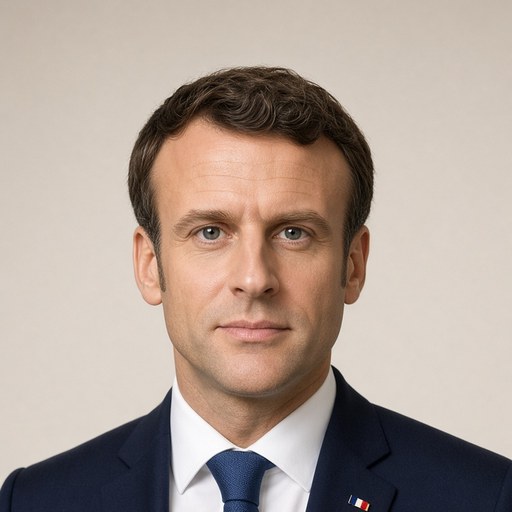
Closing of the round table on the future of European competitiveness.
 Emmanuel Macron · President of France
- Context
- Macron spoke at a round table on European competitiveness hosted at the Collège de France on 13 November 2024, following presentation of the Draghi report.
- Main themes
- European competitiveness, Draghi report, innovation gap with United States, private and public investment, over-regulation, strategic autonomy, market protection, domestic demand, Donald Trump election impact, EU-China trade tensions, tariff policy, European growth model
- Duration
- ~51 min
- Words
- 6,148
- Sentences
- 268
- Readability
- 50
- Grade
- 11.8
- Syntax
- 3.06
- Vocabulary
- 2.05
Translated from French
The broad sphere of national life a sentence belongs to. Every sentence has an Arena, so it is the denominator the other indices are read against.
Other268 sentences in 40 paragraphs
Philippe AGHION
The election of D. TRUMP could act as a stimulus and accelerate the implementation of the DRAGHI report, but some express concern that D. TRUMP will complicate matters by dividing Europeans. What do you think?
Emmanuel MACRON
Thank you very much. Thank you, Philippe. And thank you for the welcome at the Collège de France, and thank you to Mario DRAGHI for taking the time to come after having made this report in which I believe I can say we fully agree. And fundamentally, what is described in this report, what I truly believe, and what you have shown in the first part of this exchange, is that we have a growth model that, for nearly 30 years now, creates less wealth per capita than the United States of America. And the figures are there to show it, and it is a problem, because in addition, we have a much more generous social model and we are a continent that is aging, well. And so, if we leave it at that, we have a decoupling that has begun and will increase. There are several elements that justify this, but very clearly, there have been more innovations made on the American continent, well, in the United States of America, and this innovation has spread much more quickly throughout the rest of the economy than it has with us. This is still the main explanatory element of all this. And when we look, I believe that in recent years, we have rather made decisions in the right directions, but we have probably done so a bit too late; in any case, we are not doing it fast enough and still not at the right scale.
But if we look at Europe, to put it very simply, we are under-investing, both public and private, and especially in private investment in the differentiating research elements. We are over-regulating; we have rather increased this over-regulation compared to the Americans. We protect too little, and that is what we have been trying to push for 7 years with this agenda of strategic autonomy. But fundamentally, we have always behaved as if our market was a regulatory element, but we do not protect it. The Americans and the Chinese protect their market. And, lastly, we have sacrificed our domestic demand a lot. This is a debate that is perhaps less present in our European conversation, but we have, in fact, made macroeconomic policy trade-offs more generally that have favored export-driven models, whereas the Americans have much more protected their domestic market and its demand component.
Which means that for us, when exports stall, it is even harder. Does the election of Donald TRUMP correct one of these points? Can we think that, naturally, the United States of America will reconverge towards us on these different points that explain this differential? Quite the opposite. They will increase them, since there are rather directional points, what we know of what he has already done, what he said during the campaign, and the ideology that underpins his actions, it is rather that they will continue to invest massively. And the figures are there to show it, by the way: the position of American stock market capitalizations, the government's willingness, the pro-innovation policy. Secondly, he will not over-regulate. In any case, that is not on the agenda. And it is rather an administration that will deregulate; it has started, and the announcements from the last few hours seem to indicate that this is the case, in an agenda that is, by the way, totally uninhibited in connecting deregulation and business, by the way with governance rules that would not be possible for us, to put it mildly. Thirdly, will they protect less? No. And they will even enter, and this is everything that needs to be seen, into a tariff tension that will be greater.
Now, I am not dramatizing this; this approach is bipartisan. And I remind you that in recent years, the BIDEN administration had suspended the tariffs we had, but it had not canceled them. And if we take the Inflation Reduction Act, it is probably one of the most protectionist packages we have seen in recent decades for cleantech, and which was also very aggressive towards European value chains. And so we have an administration that will continue to protect the market very strongly, at the risk, by the way, of dismantling the value chains between Europeans and Americans. And one of the points that Mario mentioned implicitly, which is very important to me, is to know how we will be caught in the trade war with China. Because one of the things could be: tariffs for everyone. The other could be to force Europeans, fundamentally, to separate more quickly from the Chinese. And to say, we impose very high tariffs on China, but if you are more complacent, we will impose tariffs on you. And it is at that moment that there will be a risk of division among Europeans according to sectoral interests and the different countries. Some being very exposed to the Chinese market, saying: I am a bit afraid to exit this market too quickly, while others who will be more dependent on the American market will yield more quickly to the pressure that the American federal government can exert. But we are entering a very clearly tariff war universe. And I have already said this several times, but in my eyes, since the Inflation Reduction Act, I consider that the two major economies have decided to no longer respect the rules of the World Trade Organization. This is a fact, so we must not be naive.
So, in this context, for me, the American election does not change the deep observation made by the DRAGHI report, which I share, which I mentioned at the Sorbonne a few months ago, which is at the heart of what we have pushed in recent years with Thierry, the outgoing commission, and the ministers who are here and who have carried this agenda. Simply, it is a moment of acceleration, and I think that the longer we wait, the more, in fact, we will have impossible dilemmas to solve, because the gap continues to widen. And so, we have no choice but to be even more united, but to implement as quickly as possible major choices on the single market, on financing, on some industrial and innovation policies, and on a trade policy as we have started to do, as the Commission has started to do with electric vehicles.
Philippe AGHION
Shouldn't we also involve the United Kingdom, which is not part of the European Union but which we can sense a desire to get closer to us? Or should we remain at the level of the European Union?
Emmanuel MACRON
We always want to go faster, and we must go much faster, the risk being to underestimate the value of unity. First of all, what makes our Europe strong is its single market. And the single market is not just an alliance of consumers; it must now become the heart of an industrial policy. And if we do not value it that way, there is little chance that we will succeed. And that is what we have started to do in recent years. So I do not see any inevitability. Simply, if we divide, we lose that advantage. And the risk, if in the next 2 years we do not have concrete results, is that some countries may be tempted by singular adventures, indeed, with the United States of America. So, I think that the preference should go to collective action because that is what allows for effective action.
First of all, what do we need to do? We need to protect our market, as I said. This is not protectionism, but when we have economies like China that, for 10 years, have been over-subsidizing certain segments of their economy and reach a level, in many segments, of overcapacity, they are dumping their overcapacities onto our continent. If we do not protect our market, not to create distortions in relation to the WTO, but simply to restore rules of fair competition, we have no chance of having an industrial policy. And if we are not united, we have no chance of resisting an unfair tariff policy that could come from the United States. So, the defensive trade policy is done at the level of the single market. That is the first point.
Defensively, it is very important. And we are starting to take responsibility for this with the famous question of Chinese electric vehicles. But that is only the beginning. Because the real question, if we take electric vehicles, is the European content. It is not simply the vehicle itself. And there, we are going to enter a phase where, very quickly, we need to define what European content is, how we measure it, how we protect it. Otherwise, very quickly, within six months, our manufacturers will go source Chinese suppliers and will have circumvented the rules that we ourselves will have put in place. This is a real policy that is, by the way, very comparable to what the United States of America is doing with NAFTA and defining a regional content and, so to speak, protecting it. So, we need to have homogeneous rules with others, and they will be effective if they are made at the level of the single market, that is to say, the 27. Because if we do it with just a few, it will not work, since we operate on these services at 27.
The second element is the single market itself. One of the very well-described explanations in Mario's report for our insufficient competitiveness is that we have not fully realized this single market and that, fundamentally, we do not make it a true domestic market that allows a company that is created in Europe to immediately have a domestic market of 430 million consumers and not have to manage 27 rules. And so, we must enter an agenda that is at the same time an agenda of simplification, which is to say how we better integrate the major sectors on which we have decided to work together. And then, how we do not enter the logic of the single market in sectors that we had kept aside until now. I am thinking of two major sectors, namely energy and telecommunications. And by the way, this is probably one of the explanations for our current dysfunctions and lack of competitiveness, because we had kept energy separate from the single market, which means that we have very national models and we have very deficient interconnections, which is one of the reasons why we are paying too much for energy today, in any case, that we have a market that has largely malfunctioned. And when we look, we have today a telecommunications market that is not really integrated at the European level, which consequently has a much lower capacity to invest than in the United States of America.
And when you look at the innovation of the last 30 years, it has first been driven by the large Telcos, because simply, there were as many Telcos in the United States of America as there are in France. So, there is something that was not working. So, the single market is an important point because it restores the capacity to invest. In this context, one of the points we must address at 27, and if it does not work, can be done with a few, is the financial sector. And the union of capital markets is a key point. We will probably come back to this in the discussion, and I think it is one of the points on which we can advance very quickly. And if within 18 months we do not have results at 27, we can say that at that point, we will do what we call "enhanced cooperation" because we cannot delay this. There is a European aberration on this subject. We are the continent that saves the most, and we are the continent that invests... Well, if I take the three plates: China, the United States, us, we have the most savings and we are the ones who invest the least in innovation, risk, more broadly capital. This is an aberration that is linked to the fact that we do not have a true integrated capital market and especially that we have rules today that have become inadequate for this purpose.
After that, there is the whole industrial policy. We can go very quickly and innovate. We have done this in recent years with the famous Community Interest Projects, the PIEC, on which, on hydrogen, on batteries, we have had real European projects, on semiconductors, to name just a few, we have decided on major European projects, we are putting in money and we are going for it. And I believe that now, on quantum, on cleantech, on artificial intelligence, on major defense projects, it is this approach that we need to have. Now, regarding the British in this matter, everything that touches on the single market, I want to say, by nature, we cannot give it to them. Otherwise, welcome to the club. But we must be very careful not to give them free rider rights, because otherwise, the cost of leaving the European Union no longer exists, and we will find ourselves with series of Brexits. So, we need coherence. In terms of research, however, we can have more integrated policies; we just need clear elements of reciprocity. But here too, I think we need to go much stronger and much further. So, in prioritizing things, I still think there is a great incentive to be united, and therefore there is an agenda to be chanted with the European Commission, but this requires having a Council that gives much stricter orientations and timelines.
And two things, Mario spoke about qualified majority. I am also a great promoter of it. In truth, on all these subjects, we are already at a qualified majority. The real problem is that we have a bias that has existed for years, which is that of geographical return. Because as soon as there is a qualified majority that exists, all countries, and sometimes the largest ones, have shown this in recent years, they bring things back to the European Council, at the level of heads of state and government, to effectively revert to unanimity. So, we have, through our governance, killed the spirit of the treaties ourselves. What does not work on the major research projects, innovation, and industrial choices that you mentioned, which we continue to discuss with Mario, is that there will not be 27 champions and that there will not be, on the major choices we make, a geographical return in each country, I would even say in proportion to the share we contribute. And the real misunderstanding is there. And so, we must also accept to have an approach fundamentally of the best athlete, to make a poor translation of an Anglo-Saxon formula, or at least to assume that we say we want one or two champions in Europe, for example in quantum or in AI, for example on the issue of cyber. There is a European agency that selects perhaps 10 projects independently with the best academic experts, etc., and we assume that we may have a significant attrition rate and that there will be one champion who survives, who will be a very great European champion. And it may be in Poland, and that will not be a problem for France and Germany. But this approach does not exist today. Because today, as soon as we put money into one, including in a so-called federal or European project, we look at our geographical return. And so, in international competition, we kill our competitiveness. This is the whole difficulty we had with Ariane, to compare Ariane with SpaceX. We had a lot of lead. Simply, we make rockets, but it’s the same for missiles, etc., by passing components 6 to 10 times across borders to ensure that there are so many hours of work in Germany, so many in Spain, so many in France, so many in Italy, etc., when on the other side, you have someone who tells you, I disrupt all production models, and where it required very large factories in 4 different locations, I do it in a garage as we don’t even know how to produce cars. So, we need to succeed in adapting our governance and our deep political choices to this reality.
Philippe AGHION
I return to the capital markets, the report indicates that on average, the countries of the European Union do not manage to transform savings into innovative investment. The report mentions the Swedish model, can we draw inspiration from it? The report also proposes to relax the securitization of bank loans, are we not going to generate financial instability?
Emmanuel MACRON
No, just in two words on the capital market, Mario reiterated it, and to make it clear for everyone, our model of financing the economy of continental Europe is the exact opposite of that of Anglo-Saxon economies; that is to say, about 70%, indeed, of the financing of our economy goes through institutions, banks, and insurance, only 30% through capital markets. And so we were very dependent on these intermediaries who were the banks and insurance when, through products or directly, they went to the capital markets.
In contrast, the Anglo-Saxons are direct market players because there are pension funds, among others, that allow for these capitals to go directly to market operators. And so 70% of their economy goes through that. The financial crisis has a simple consequence. We came out of it with regulations to reduce risk. The double paradox of this regulation is that it has affected operators more than capital market players. So this regulation has mainly been a regulation of banks and insurance, the famous Basel and Solvency, and in fact, it has mainly been applied by Europeans, but not by others. And so, we come out of this crisis with Solvency II and Basel III, which over-regulate, at least, which has regulated and imposed more systemic risk, but which has placed many constraints on our bankers and insurers, and which has led us to push them out of the equity economy. And so, all our savings, which are, by structure, with us, in life insurance products, in banking products, in insurance products, are then allocated by the balance sheet of these market intermediaries, no longer at all on products that existed before, of Private Equity financing, of the market, etc., which allowed for innovation, to go into our companies and others. We have completely chased it away from that. It is massively going towards products that are rather bonds, that is to say, it buys our debt, and guess what, American debt. And so the paradox is that European savings, much more abundant than American savings, is used essentially to finance European and American debt, and as it is much less profitable, the figures of household enrichment given by Mario show it, well, it is diverted towards American market players because they are more profitable.
So, stupidity squared in our case. That is to say, we are using our savings poorly, we are letting it go to others, and moreover, it does not finance what is good for us. Because there has also been a form, it must be said, there is a cultural doubt, there is less sympathy towards what we call there, beautifully, capital markets, but which is the stock market, which is the markets, etc. And if tomorrow, in the public debate, Mario praised the Swedish model, I agree. Well, if I tell you, wonderful the Swedish model, that we find everything nice, that there are pension funds, it’s great, we will do it in France. Even I am cautious, so that’s not what I’m saying. But all this to say that it is one of the explanatory factors, and we are paying for it in the long term.
So what do we need to do? First, we may need to readjust things. And so, securitization is a bit silly, it’s a Shadokian affair. It’s like we prevented the actors themselves from investing their balance sheets in it, we create big pipes for them, it’s like in the Shadoks, big pipes that will circumvent the thing to be able to return to equity. So that’s the Shadokian pipe of securitization. That is to say, we say, since you no longer have the right to go into direct equity, we will create mechanisms that will still allow you to take this savings towards equity directly. So we can do that with 27. There have been initial consultations that have been made. It’s a good thing. Then, we need to simplify, we need to have market operators, and we have this strength in Europe, we have large operators, we need to develop them, we need to move towards the most unique operator possible to simplify things and have a common securitization platform. And then, I think we need, in the synchronization we must do with the Americans, to synchronize our regulations as well. We have a double synchronization to do if we want to be competitive compared to the Americans. We must try to push regulations that go too fast in certain areas and try to get back to the same scale. But we need to see if they decide and confirm that they will not apply prudential rules to their operators, to say: we give ourselves a little time, a little flexibility so that at least we can reinvest in equity. So those are the priority points. That’s why indeed, securitization is so important, it allows us to allocate this part. And then, there is the idea of moving towards a unique supervision system and everything that makes up a single capital market, that is to say, allowing the construction of market operators, a single capital market in Europe, which will allow us to take this savings and invest it productively in European risk, in European innovation, in startups, in medium-sized enterprises, and to finance this growth. Because why do we need this? When we take two steps back, we have financed much less. It is our private system that finances much less equity compared to what the Americans do. But the Draghi report, sorry to say it like that, Mario, in front of you, but which is consistent in this regard with all reports, says: “we have a financing need of about 800 billion euros per year.” And we can say: it’s half private, half public. It’s not completely absurd to do it. And fundamentally, these metrics are achievable if, indeed, we know how to mobilize our savings and invest it in equity, because we have more than enough to make 400 to 500 billion euros per year in equity investment in our economy, whether it’s innovation or the growth of our startups.
Philippe AGHION
When you spoke about the single market, you highlighted its importance, because one of the reasons that advocates for the single market is that it increases the rents of innovation, but there is another reason that it allows competition, which stimulates innovation. In the report, you emphasize the multiple local regulations that hinder the realization of a competitive single market, the report advocates for strengthening competition policy in Europe but at the same time an industrial policy through innovation. How to reconcile competition policy and industrial policy?
Emmanuel MACRON
I fully subscribe to what Mario just said, but fundamentally, what is our objective? We want to create the maximum wealth for the worker, the investor, and the consumer. This balance that a good competition policy seeks to achieve is articulated with an innovation policy and an industrial policy. But moreover, we have two terms that we want to add constraints to our equation. We want to decarbonize this economy, which is critical and must be added and taken into account. And we want to preserve our sovereignty, our European strategic autonomy. We want to reduce our dependencies, it must be integrated if we want to look at our other competition policies. What makes us know for several years now that our competition policy, which I believe is a solid element of the functioning of our Europe, must better integrate the evolution of relevant markets and major competitors. And so, technological evolutions sometimes change the relevant markets.
When we look at a particular market that is shaken by a usage innovation or a profound industrial innovation, there may be competitors that appear and are in a very monopolistic situation in other geographies. If we look at a relevant market based on old technologies, we will be mistaken. In any case, we will unnecessarily sanction a European industrial player. And when we see the capacity, indeed, that Chinese or American players have to become large, we can, in international competition, sometimes put brakes through our competition policies on the constitution of large European players.
So that’s the first point on which we can see that we need to adjust things. But this policy is only compatible if we go much faster on the integration of the single market. I will not repeat what I said earlier, Mario said it, that is to say, that every time, in fact, our single market is a common regulation, but in addition to the 27 existing regulations, we are very ineffective. And we do not have a true domestic single market and we do not have the capacity to go at the right speed. And so really, it’s an agenda fundamentally of simplification and homogenization. But it comes back to the same thing as what I said earlier by taking the example of innovation. It means rediscovering the very essence of the European project. It’s that we may not win everything at every stage, but the collective gain we will derive from such a policy is good for each of us. And at today’s scale of global competition, it’s key. And so indeed, that’s a key element, the more integrated single market, simplification, is the basis, if I may say so, of a good industrial policy that preserves our ability to be competitive in addition to a good definition of the relevant market. In addition to that, I would add that we indeed need to have a policy on a few sectors where we assume to have a policy of innovation and an industrial policy. What we have done on semiconductors, hydrogen, batteries, we need to do it probably on quantum, on clean tech, on health and defense. Health, we had done a bit post-Covid. But on these aspects, we know that we need common investment, the equivalent of our PIIEC.
But simply put, we need to do a lot, quickly, with the governance procedures I mentioned earlier, to have an effective innovation policy that allows us, in key sectors, to have the most disruptive projects that move forward, in connection, by the way, with innovation ecosystems, as Mario said. And then the last point, if we want an effective policy in this area, we need to be much more in our regulations, in our ability to provide horizons, market incentives, while being on technological neutrality. And I want to emphasize this point because I think it is one of the real dysfunctions in Europe, in particular, that we have had, always with the best intentions in the world, in recent years. We have made 3 or 4 regulations on hydrogen in recent years. Wonderful. We said, we are going to go all in. We created hydrogen PIIECs that worked. We said, we are going to make big projects, we are going to develop our own electrolyzers here, we are going to develop breakthrough innovation projects on different techniques. And then we made a bunch of directives to define. And since the underlying issue is your energy model, these directives were negotiated on the fragmentation of the energy market of the different nations. And so we created a hydrogen market that did not exist in Europe. But we said: we are not allowed to produce such percentages of hydrogen coming from nuclear at such times of the day or night, so much coming from… And so, we inherently built a hydrogen market that is totally fragmented and biased because we were prescriptive on the technological level. And I don’t care whether the electron that helps me perform electrolysis to produce green hydrogen comes from offshore wind in Denmark, solar in Spain, or nuclear in France. What I want is for it to be competitive decarbonized European hydrogen.
And well, that’s not how we proceed. And that is a real mistake. Because if we proceeded like that, we would be very competitive compared to the Americans or the Chinese because no one has our capacity to move as quickly. And so we need to be much more on technological neutrality. I could take the example of the car with roughly the same demonstration. And so we need to be on industrial policies that provide sectoral aid, that give much clearer market signals, but that are based on much more assumed technological neutrality.
Philippe AGHION
Regarding research, Antonin BERGEAUD, who is here, has written a paper on the role of LabEx in stimulating innovation in France, and his study shows that their impact has been very significant. Isn’t there a good lesson to be learned, by drawing inspiration from LabEx for a research and innovation policy that stimulates breakthrough innovation?
Emmanuel MACRON
I think that connects with what we were saying at the beginning, which is that the faster we can bridge the gap with the United States of America, the faster we will have a model of innovation and research that can be competitive, because we are currently paying in the differential for what we lost 20 years ago. And in truth, I will come back to fundamental research and breakthrough research later, but the difficulty we have, as Mario has reiterated the figures, when we look at research funding Europe-United States, the big differential is on the private side, because we have a sectoral specialization that has become distorted. And today, the main driver of private innovation and research funding in Europe is the automobile, as the report shows well, because we have this industrial core that has remained. And we are talking about a country that has rather deindustrialized more than its neighbors and therefore has even more sectoral biases and, as a result, has less private R&D. But where, on the American side, it is indeed the technology industries, because they have taken the train of technological transformation, that they had telcos that invested in breakthrough innovations, that they then took the train of the Internet, of these digital platforms that invest much more.
And so if today we do not take the train of innovation, we do not know how to create mid-sized players and champions in new technologies, we will continue to distort our productive fabric and have, on average, industrialists who innovate less or who will innovate in sectors that are less disruptive. I say this to point out that there is a generational effect, if I may say so, that makes it necessary, if it needed to be demonstrated, that we must go very quickly, very strongly, and perhaps in this area, to continue with the anglicisms, leapfrogging is possible. And so, if we move very quickly today on AI, on clean techs, on breakthrough industries, we can try to catch up on this delay. So, we have this private problem. Then, on the public side, there have been very good initiatives, and thank you for mentioning them here, and I also believe a lot in this approach through academic evaluation. But what works? It is when we decide, as you said, to have independent juries that concentrate resources, that follow results, and that evaluate and maintain that, and know how to close down the mechanisms that do not produce results. Well, we have a model on which we have made investments in recent years, I am talking about France, we have reinvested, but it is, I would say, a catch-up, because we had under-invested in public research, and I think we need to continue this work. For me, we are not done yet, and I say this here because we have been talking a lot for a while about innovation, technological research, all of this is only possible if the nation invests in fundamental research. And this is obviously not always finalized, it is not always on breakthrough points. I think we also need to acknowledge the context of public finances that exists everywhere in Europe, that we have here, but investment in fundamental research is one of the absolutely essential foundations to be able to have the rest and to do it with academic rules of independence. I also say this because if we compare ourselves to the United States of America, it is a point on which the French and European model is undoubtedly enviable. But continuing to have academic research that is funded, fundamental research that is duly funded, continuing, we must do it, preserving the rules of independence of this academic research, I believe, is an element not just of economic health, but of democracy. And at some point, the two go hand in hand. So that is a milestone.
Then, we indeed need to have duly evaluated programs on breakthrough research. And so there, the LabEx, there are different initiatives that have been taken in recent decades. And indeed, since 2007-2008, the IHU, what has been done with successive generations, but that does not come to substitute for the other in competition. And our universities, with our research organizations, often supported by these programs, have managed to create in recent years real clusters of teaching and research, and I read both intentionally, which I believe are truly a lever for our competitiveness and that we must continue to encourage. And then on this basis, we must indeed have the capacity to give the right signals and to encourage finalized, technological research, through this public-private link. On this, at the European level, Mario said it, I think that to move to the next stage, this is what the report proposes regarding the ERC, it is to have, at the European level, fully independent governance, much more massive resources, and to have the capacity to undertake projects at the European scale on rules that are strictly scientific and, as I said earlier, without looking at the geographical return, but simply looking at the excellence of the projects that are proposed and then accepting an evaluation over time. It is at this price that we will also be able to have truly innovative projects, breakthrough research that is funded at the European level.
And I wanted to thank Mario DRAGHI in particular for at least three reasons. The first is for having accepted to take on the responsibilities that were his in a delicate moment in the political and economic life of Italy and for having been a wonderful companion for France. The second is for having accepted to write this report when President VON DER LEYEN asked him. The third is for being now fully engaged in its implementation, since he was with us in Budapest a few days ago and he is kind enough to come here to the Collège de France. So really, Mario, a huge thank you for all of this and this contribution. And I will perhaps end on a somewhat optimistic note, because I would like us all to be aware, the report also says it, we need to act quickly, but we have the talents in Europe. We train them, they are here. We have savings, so we have capital. We have decarbonized energy that we are producing more and more, but between renewables and nuclear, we have this element, it is key. And we have a social and democratic model that is there, that holds, and that is much more demanding than in most regions of the world. If we know how to make the right decisions at the right time, that is to say now, without delay, with seriousness, speed, collective commitment, and if we know how to do it with 27, we normally have all the ingredients on the table. So there are all the reasons to be reasonably optimistic if we are clear-sighted, willing, and determined, which I believe we both are.
The original French. The tags above are read on the English translation's sentences.
Philippe AGHION
L’élection de D. TRUMP peut agir comme un stimulant et accélérer la mise en œuvre du rapport DRAGHI mais certains expriment la crainte que D. TRUMP complique les choses en divisant les européens, qu’en pensez-vous ?
Emmanuel MACRON
Merci beaucoup. Merci, Philippe. Et merci pour l'accueil fait au Collège de France et merci à Mario DRAGHI de prendre le temps de venir après avoir fait ce rapport dans lequel je crois pouvoir dire qu'on se retrouve pleinement. Et au fond, ce qui est décrit dans ce rapport, ce que je crois véritablement, et ce que vous avez montré dans le premier temps de cet échange, c'est qu'on a un modèle de croissance qui, depuis maintenant près de 30 ans, crée moins de richesse par tête que les États-Unis d'Amérique. Et les chiffres sont là et le montrent, et c'est un problème, parce qu'en plus, nous avons un modèle social beaucoup plus généreux et que nous sommes un continent qui vieillit, bon. Et donc, si on en reste là, on a un décrochage qui a commencé et qui va s'accroître. Il y a plusieurs éléments qui justifient cela, mais de manière très claire, il y a eu plus d'innovations faites sur le continent américain, enfin, aux États-Unis d'Amérique, et cette innovation s'est diffusée beaucoup plus rapidement dans le reste de l'économie que chez nous. C'est quand même le grand élément explicatif de tout cela. Et quand on regarde, je crois que ces dernières années, on a plutôt pris des décisions dans les bonnes directions, mais sans doute avons-nous fait un peu trop tard, en tout cas, on ne le fait pas assez vite et encore assez à la bonne échelle.
Mais si on regarde l'Europe, pour le dire de manière très simple, on sous-investit, public et privé, et surtout, en matière privée sur les éléments de recherche qui sont différenciants. On surrégule ; on a plutôt accru cette surrégulation par rapport aux Américains. On protège trop peu, et c'est ce qu'on essaie de pousser depuis 7 ans avec cet agenda d'autonomie stratégique. Mais au fond, on s'est toujours comportés comme si notre marché était un élément de régulation, mais on ne le protège pas. Les Américains et les Chinois protègent leur marché. Et, dernier point, on a beaucoup sacrifié notre demande intérieure. C'est un débat qui est peut-être moins présent dans notre conversation européenne, mais on a, en fait, fait des arbitrages de politiques macroéconomiques de manière plus générale qui ont favorisé des modèles tirés par l'export, là où les Américains ont beaucoup plus protégé leur marché intérieur et sa composante de demande.
Ce qui fait que nous, quand l'export s'enraye, c'est encore plus dur. Est-ce que l'élection de Donald TRUMP vient corriger un de ces points ? Est-ce qu'on peut penser que, de manière naturelle, les États-Unis d'Amérique vont reconverger vers nous sur ces différents points qui expliquent ce différentiel ? Tout le contraire. Ils vont les accroître, puisqu'il y a plutôt les points de direction, ce qu'on connaît de ce qu'il a déjà fait, ce qu'il a dit en campagne et l'idéologie qui sous-tend son action, c'est plutôt qu'ils vont continuer à investir massivement, Et les chiffres sont là pour le montrer d'ailleurs : la place des capitalisations boursières américaines, la volonté du Gouvernement, la politique pro-innovation. Deuxièmement, il ne va pas surréguler. En tout cas, ce n'est pas prévu au programme. Et c'est plutôt une administration qui va déréguler, elle a commencé, les annonces d'ailleurs des dernières heures semblent indiquer que c'est ça, dans un agenda d'ailleurs totalement désinhibé de connexion entre la dérégulation et le business, d'ailleurs avec des règles de gouvernance qui ne seraient pas possibles chez nous, pour le dire pudiquement. Troisièmement, est-ce qu'ils vont moins protéger ? Non. Et ils vont même rentrer, et ça c'est tout ce qu'il faut voir, dans une tension tarifaire qui sera supérieure.
Maintenant, je ne dramatise pas cela, c'est bipartisan cette approche. Et je rappelle que ces dernières années, l'administration BIDEN avait suspendu les tarifs que nous avions eus, mais elle ne les avait pas annulés. Et que si on prend l'Inflation Reduction Act, c'est sans doute un des paquets les plus protectionnistes qu'on ait connus ces dernières décennies pour les cleantechs, et qui était y compris très agressif à l'égard des chaînes de valeur européennes. Et donc on a une administration qui va continuer de protéger très fort le marché, au risque d'ailleurs de démanteler les chaînes de valeur entre les Européens et les Américains. Et l'un des points qu'évoquait Mario en creux, qui est pour moi très important, c'est de savoir aussi comment on va être pris dans la guerre commerciale avec la Chine. Parce que l'une des choses, ça peut être : tarif pour tout le monde. L'autre, ça peut être de forcer les Européens, au fond, à se séparer plus vite des Chinois. Et à dire, nous, on met des tarifs très forts sur la Chine, mais si vous, vous êtes plus complaisants, on vous mettra les tarifs. Et c'est à ce moment-là qu'il y aura un risque de division chez les Européens selon les intérêts sectoriels et des différents pays. Les uns étant très exposés au marché chinois, disant : ça me fait un peu peur de sortir trop vite de ce marché, les autres qui seront plus dépendants au marché américain céderont plus vite à la pression que le gouvernement fédéral américain pourra mettre. Mais on rentre dans un univers très clairement de guerre de tarifs. Et moi, je l'ai déjà dit à plusieurs reprises, mais à mes yeux, depuis l'Inflation Reduction Act, je considère que les deux grandes économies ont décidé de ne plus respecter les règles de l'Organisation mondiale du commerce. C'est un état de fait donc il ne faut pas qu'on soit naïfs.
Donc, dans ce contexte-là, pour moi, l'élection américaine ne vient pas changer le constat en profondeur qui est fait par le rapport DRAGHI, que je partage, que j'évoquais à la Sorbonne il y a quelques mois, qui est au cœur de ce qu'on a poussé ces dernières années avec Thierry, la commission sortante et les ministres qui sont là et qui ont porté cet agenda. Simplement, c'est un moment d'accélération, et je pense que plus on attend, plus, en fait, on aura des dilemmes impossibles à solutionner, parce que l'écart continue de se creuser. Et donc, nous n'avons d'autre choix que d'être encore plus unis, mais que de mettre en œuvre de la manière la plus rapide possible des grands choix sur le marché unique, sur les financements, sur quelques politiques industrielles et d'innovation, et sur une politique commerciale comme on a commencé de le faire, comme la Commission a commencé de le faire avec les véhicules électriques.
Philippe AGHION
Est-ce qu’on ne devrait pas également impliquer le Royaume-Uni qui ne fait pas partie de l’Union européenne mais dont on sent bien une volonté de se rapprocher de nous ? Ou devons-nous rester au niveau de l’Union européenne ?
Emmanuel MACRON
On veut toujours aller plus vite, et on doit aller beaucoup plus vite, le risque étant de sous-estimer la valeur de l'unité. D'abord, ce qui fait la force de notre Europe, c’est son marché unique. Et le marché unique, ce n'est pas qu'une alliance de consommateurs, ça doit devenir maintenant le cœur d'une politique industrielle. Et si on ne le valorise pas comme ça, il y a peu de chances qu'on réussisse. Et c'est ce qu'on a commencé à faire ces dernières années. Donc moi, je ne vois pas de fatalité. Simplement, si on se divise, on perd cet avantage-là. Et le risque, si dans les 2 ans qui viennent, on n'a pas des résultats concrets, c'est que certains pays soient tentés par des aventures singulières, en effet, avec les États-Unis d'Amérique. Donc, je pense que la préférence doit aller à l'action collective parce que c'est ça qui permet d'avoir une action efficace.
D'abord parce que qu'est-ce qu'il faut faire ? Il faut protéger notre marché, je le disais. Ce n'est pas du protectionnisme, mais quand on a des économies comme la Chine qui, depuis 10 ans, sur-subventionne certains segments de son économie et arrive à un niveau, dans beaucoup de segments de surcapacité, elle déverse sur notre continent ses surcapacités. Si on ne protège pas notre marché, pas pour faire des distorsions par rapport à l'OMC, mais simplement pour restaurer des règles de juste concurrence, on n'a aucune chance d'avoir une politique industrielle. Et si on n'est pas unis, on n'a aucune chance de résister à une politique tarifaire injuste qui viendrait des États-Unis. Donc, la politique commerciale défensive, elle se fait au niveau du marché unique. Ça, c'est le premier point.
En défensif, c'est très important. Et on commence à l'assumer avec cette fameuse question des véhicules électriques chinois. Mais ce n'est que le début. Parce que la vraie question, si on prend les véhicules électriques, c'est le contenu européen. Ce n'est pas simplement le véhicule lui-même. Et là, on va rentrer dans une phase où, très rapidement, il faut qu'on définisse quel est le contenu européen, comment on le mesure, comment on le protège. Sinon, très vite, d'ici six mois, nos constructeurs iront sourcer des équipementiers chinois et auront contourné les règles qu'on aura mises nous-mêmes. Ça, c'est une vraie politique qui est d'ailleurs très comparable à ce que les États-Unis d'Amérique font avec l'ALENA et définissent un contenu régional et, entre guillemets, ils le protègent. Donc, il faut qu'on ait des règles homogènes avec les autres et elles seront effectives si elles se font au niveau du marché unique, c'est-à-dire des 27. Parce que là, si on le fait à quelques-uns, ça ne marche pas, puisqu'on fonctionne sur ces services à 27.
Le deuxième élément, c'est le marché unique lui-même. C'est qu'une des explications très bien décrites dans le rapport de Mario, de notre insuffisante compétitivité, c'est qu'on n'a pas été au bout de ce marché unique et qu'au fond, on n'en fait pas un vrai marché domestique qui permet à une entreprise qui se crée en Europe d'avoir tout de suite un marché domestique de 430 millions de consommateurs et de ne pas avoir à gérer 27 règles. Et donc, on doit rentrer dans un agenda qui est en même temps un agenda de simplification, qui est de dire comment on intègre mieux les grands secteurs sur lesquels on a décidé de jouer ensemble. Et puis, comment on ne rentre pas dans la logique du marché unique sur des secteurs qu'on avait tenus à l'écart jusque-là. Je pense à deux grands secteurs, que sont l'énergie et les télécommunications. Et d'ailleurs, c'est sans doute l'une des explications de nos dysfonctionnements et manque de compétitivité actuelles, parce qu'on avait tenu l'énergie à part du marché unique, ce qui fait qu'on a des modèles très nationaux et on a des interconnexions très déficientes, ce qui est une des raisons du fait qu'on paye aujourd'hui l'énergie trop chère, en tout cas qu'on a un marché qui a largement dysfonctionné. Et quand on regarde, on a aujourd'hui un marché de télécommunication qui n'est pas vraiment intégré au niveau européen, du coup qui a une capacité à investir bien moins grande qu'aux États-Unis d'Amérique.
Et quand vous regardez l'innovation des 30 dernières années, elle a d'abord été impulsée par les grands Telcos, parce que simplement, il y avait autant de Telcos aux États-Unis d'Amérique qu'il y en a en France. Donc, il y a quelque chose qui ne marchait pas. Donc ça, le marché unique, c'est un point qui est important parce qu'il redonne de la capacité à investir. Dans ce contexte-là, l'un des points qu'on doit faire à 27 et qui, s'il ne marche pas, peut se faire à quelques-uns, c'est le secteur financier. Et l'union des marchés de capitaux est un point clé. On y reviendra sans doute dans la discussion et je pense que c'est un des points sur lesquels on peut avancer très vite. Et si à horizon de 18 mois, on n'a pas des résultats à 27, on peut dire qu'à ce moment-là, on fait ce qu'on appelle une « coopération renforcée » parce que ça, on ne peut pas retarder. Il y a une aberration européenne sur ce sujet. On est le continent qui épargne le plus et on est le continent qui investit... Enfin, si je prends les 3 plaques : Chine, États-Unis, nous, on a le plus d'épargne et on est ceux qui investissons le moins dans l'innovation, le risque, plus largement le capital. Ça, c'est une aberration qui est liée au fait qu'on n'a pas un vrai marché de capitaux intégré et surtout qu'on a des règles aujourd'hui qui sont devenues inadaptées pour ce faire.
Après, il y a toute la politique industrielle. On peut aller très vite et d'innovation. On l'a fait ces dernières années avec les fameux Projets d'Intérêts Communautaires, les PIEC, sur lesquels, sur l'hydrogène, sur les batteries, on a eu des vrais projets européens, sur les semi-conducteurs, pour n'en citer que quelques-uns, on a décidé des grands projets européens, on met de l'argent et on y va. Et ça, je crois que maintenant, sur le quantique, sur les cleantechs, sur l'intelligence artificielle, sur les grands projets de défense, c'est cette approche qu'il faut avoir. Alors après, les Britanniques, dans cette affaire, tout ce qui touche au marché unique, j'ai envie de dire, par nature, on ne peut pas le leur donner. Sinon, soyez le bienvenu au club. Mais il faut faire très attention à ne pas donner des droits de passager clandestin, parce que sinon, le coup de la sortie de l'Union européenne n'existe plus, et on va se retrouver avec des Brexits en série. Donc, il faut de la cohérence. En matière de recherche, par contre, on peut avoir des politiques plus intégrées, il faut simplement des éléments de réciprocité clairs. Mais là aussi, je pense qu'il faut aller beaucoup plus fort et beaucoup plus loin. Donc voilà, en hiérarchisant les choses, je pense quand même qu'il y a une grande incitation à être unis, et donc il y a un agenda à scander avec la Commission européenne, mais ça suppose d'avoir un Conseil qui donne des orientations, des calendriers beaucoup plus stricts.
Et deux choses, Mario parlait de la majorité qualifiée. Moi, je suis aussi un grand promoteur. En vrai, sur tous ces sujets, on est déjà la majorité qualifiée. Le vrai problème, c'est que nous avons un biais qui existe depuis des années, c'est celui du retour géographique. Parce que dès qu'il y a la majorité qualifiée et qui existe, tous les pays, et parfois les plus grands, l'ont montré ces dernières années, ils ramènent les choses au Conseil européen, au niveau des chefs d'État et de gouvernement, pour revenir de fait à l'unanimité. Donc, nous avons, par notre gouvernance, tué nous-mêmes l'esprit des traités. Ce qui ne fonctionne pas sur les grands projets de recherche, d'innovation et les choix industriels que vous avez évoqués, qu'on continue d'évoquer avec Mario, c'est qu'il n'y aura pas 27 champions et qu'il n'y aura pas, sur les grands choix qu'on fera, un retour géographique dans chaque pays, je dirais même à hauteur de la quote-part qu'on met. Et le vrai malentendu est là. Et donc, nous devons aussi accepter d'avoir une approche au fond du meilleur athlète, pour faire une mauvaise traduction d'une formule anglo-saxonne, ou en tout cas d'assumer qu'on dit qu'on veut un ou deux champions en européen, par exemple dans le quantique ou dans l'IA, par exemple sur la question du cyber. Il y a une agence européenne qui sélectionne peut-être 10 projets de manière indépendante avec les meilleurs experts académiques, etc., et on assume qu'on aura peut-être un taux d'attrition important et qu'il y aura un champion qui survivra, qui sera un très grand champion européen. Et il sera peut-être en Pologne, et ce ne sera pas grave pour la France et pour l'Allemagne. Mais cette approche-là, aujourd'hui, n'existe pas. Parce qu'aujourd'hui, dès que nous mettons de l'argent dans un, y compris dans un projet dit fédéral ou européen, nous regardons notre retour géographique. Et donc, dans la compétition internationale, nous tuons notre compétitivité. C'est toute la difficulté qu'on a eue avec Ariane, pour comparer Ariane avec SpaceX. On avait beaucoup d'avance. Simplement, nous, on fait des fusées, mais c'est pareil pour les missiles, etc., en faisant passer les composantes 6 à 10 fois les frontières pour être sûrs qu'il y a tant d'heures de travail en Allemagne, tant en Espagne, tant en France, tant en Italie, etc. quand de l'autre côté, vous avez quelqu'un qui vous dit, je disrupte tous les modèles de production, et là où il fallait des très grandes usines à 4 endroits différents, je le fais dans un garage comme on ne sait même pas produire des voitures. Donc, il faut réussir à adapter notre gouvernance et nos choix politiques profonds à cette réalité.
Philippe AGHION
Je reviens sur les marchés de capitaux, le rapport indique qu’en moyenne les pays de l’Union européenne n’arrivent pas à transformer l’épargne en investissement innovant. Le rapport mentionne le modèle suédois, peut-on s’en inspirer ? Le rapport propose aussi d’assouplir la titrisation des prêts bancaires, n’allons-nous pas générer de l’instabilité financière ?
Emmanuel MACRON
Non, juste en deux mots sur le marché de capitaux, Mario l'a redit, et pour que ce soit bien clair pour tout le monde, notre modèle de financement de l'économie de l'Europe continentale, c'est l'exact inverse de celui des économies anglo-saxonnes ; c'est-à-dire 70 % environ, en effet, du financement de notre économie va à travers des institutions, les banques et les assurances, 30 % seulement à travers les marchés de capitaux. Et donc on était très dépendants de ces intermédiaires qui étaient les banques et les assurances quand, par des produits ou directement, ils allaient sur les marchés de capitaux.
À l'inverse, les anglo-saxons sont des acteurs directs de marché parce qu'il y a les fonds de pension, entre autres, qui permettent d'avoir, justement, ces capitaux qui vont directement sur des opérateurs de marchés de capitaux. Et donc 70 % de leur économie passe par là. La crise financière a une conséquence simple. On en est sortis avec des régulations pour réduire le risque. Le double paradoxe de cette régulation, c'est qu'elle a plus touché les opérateurs que les acteurs des marchés de capitaux. Donc cette régulation a été surtout une régulation des banques et des assurances, les fameux Basel et Solvency, et qu'en fait, elle a surtout été appliquée par les Européens, mais pas par les autres. Et donc, nous sortons de cette crise avec Solvency II et Basel III, qui surrégulent, enfin, en tout cas, qui a régulé et qui a mis plus de risque systémique, mais qui a mis beaucoup de contraintes à nos banquiers et à nos assureurs, et qui a fait qu'on les a fait sortir de l'économie de fonds propres. Et donc, tout notre épargne, qui est, par structure, chez nous, dans des produits d'assurance-vie, dans des produits bancaires, dans des produits assurantiels, elle est ensuite allouée par le bilan de ses intermédiaires de marché, non plus du tout sur des produits qui existaient avant, de financement de Private Equity, de marché, etc., qui permettaient d'aller dans l'innovation, d'aller dans nos entreprises et autres. On l'a complètement chassée de ça. Elle va massivement vers des produits qui sont plutôt les obligations, c'est-à-dire elle achète notre dette, et devinez quoi, la dette américaine. Et donc le paradoxe, c'est que l'épargne européenne, bien plus abondante que l'épargne américaine, est utilisée à essentiellement financer de l'endettement européen et américain, et comme c'est beaucoup moins rentable, les chiffres d'enrichissement des ménages donnés par Mario le montrent, et bien, elle est divertie vers des acteurs de marché américains parce qu'ils sont plus profitables.
Donc, stupidité au carré de notre affaire. C'est-à-dire que notre épargne, on l'utilise mal, on la laisse partir vers d'autres, et en plus, elle ne finance pas ce qui est bon pour nous. Parce qu'il y a eu une forme aussi, il faut bien le dire, il y a un doute culturel, il y a une moins grande sympathie à l'égard de ce qu'on appelle là, nous joliment, marché de capitaux, mais qui est la bourse, qui est les marchés, etc. Et si demain, dans le débat public, Mario a fait l'éloge du modèle suédois, j'y souscris. Enfin, si je vous dis, formidable le modèle suédois, qu'on trouve tout sympathique, qu'il y a des fonds de pension, c'est super, on va le faire en France. Même moi, je suis prudent, donc ce n'est pas ce que je dis. Mais tout ça pour dire que c'est un des facteurs explicatifs, et on le paye sur le long terme.
Donc qu'est-ce qu'il nous faut faire ? D'abord, il faut peut-être réadapter les choses. Et donc, la titrisation, c'est un peu croquignole, c'est shadokien comme affaire. C'est comme on a empêché les acteurs eux-mêmes d'investir leur bilan dedans, on leur crée des grands tuyaux, c'est comme dans les shadoks, des grands tuyaux qui vont contourner la chose pour pouvoir revenir en fonds propres. Donc ça, c'est le tuyau shadokien de la titrisation. C'est-à-dire, on dit, comme vous n'avez plus le droit d'aller en fonds propres directs, on va créer des mécanismes qui vous permettront quand même d'aller emmener cette épargne vers les fonds propres avec direct. Donc ça, on peut le faire à 27. Il y a des premières consultations qui ont été faites. C'est une bonne chose. Ensuite, il faut qu'on simplifie, qu'il faut qu'on ait des opérateurs de marché, et on a là-dessus cette force en Europe, on a des grands opérateurs, il faut les développer, il faut aller vers l'opérateur le plus unique possible pour simplifier les choses et avoir une plateforme de titrisation aussi commune. Et ensuite, moi, je pense qu'il faut, dans la synchronisation qu'on doit faire avec les Américains, synchroniser aussi nos régulations. On a une double synchronisation à faire si on veut être compétitif par rapport aux Américains. C'est qu'on doit essayer de pousser les réglementations qui vont trop vite dans certains domaines et essayer de se remettre un peu à la même échelle. Mais il faut regarder s'ils décident et confirment qu'ils n'appliqueront pas les règles prudentielles sur leurs opérateurs, de se dire : on se donne un peu de temps, un peu de flexibilité pour qu'en tout cas, nous, on puisse réinvestir sur des fonds propres. Donc ça, c'est les points prioritaires. C'est pour ça qu'en effet, la titrisation est si importante, c'est qu'elle permet d'allouer cette partie. Et ensuite, il y a l'idée d'aller vers un système de supervision unique et tout ce qui compose un marché unique des capitaux, c'est-à-dire permettre de bâtir des opérateurs de marché, d'un marché des capitaux unique en Europe, ce qui va permettre de prendre justement cette épargne et de l'investir de manière productive dans le risque européen, dans l'innovation européenne, dans les startups, dans les entreprises de taille intermédiaire, et de financer cette croissance. Parce que pourquoi on a besoin de ça ? Quand on prend deux pas de recul, on a beaucoup moins financé. C'est notre système privé qui finance beaucoup moins les fonds propres en comparaison avec ce que font les Américains. Mais le rapport Draghi, pardon de le dire comme ça, Mario, devant toi, mais qui est conforme à cet égard avec tous les rapports, dit : « on a un besoin de financement d'environ 800 milliards d'euros par an. » Et on peut se dire : c'est moitié privé, moitié public. Ce n'est pas complètement aberrant de le faire. Et au fond, ces métriques sont atteignables si, justement, on sait mobiliser notre épargne et qu'on sait l'investir en fonds propres, parce qu'on a largement de quoi faire 400 à 500 milliards d'euros par an d'investissement en fonds propres dans notre économie, que ce soit l'innovation ou la croissance de nos startups.
Philippe AGHION
Quand vous avez parlé du marché unique, vous avez montré son importance, car l’une des raisons qui milite pour le marché unique c’est que ça augmente les rentes à l’innovation mais il y a une autre raison c’est que ça permet la concurrence, qui stimule l’innovation. Dans le rapport vous soulignez les multiples réglementations locales qui entravent la réalisation d’un marché unique concurrentiel, le rapport prône un renforcement de la politique de la concurrence en Europe mais en même temps une politique d’industrialisation par l’innovation. Comment réconcilier politique de concurrence et politique industrielle ?
Emmanuel MACRON
Je souscris à ce que Mario vient de dire pleinement, mais au fond, quel est notre objectif ? On veut créer le maximum de richesses pour le travailleur, l'investisseur et le consommateur. Cet équilibre que cherche en permanence à atteindre une bonne politique de concurrence qui s'articule avec une politique d'innovation et de politique industrielle. Mais en plus, on a deux termes qu'on veut rajouter de contraintes à notre équation. On veut décarboner cette économie, ce qui est critique et qu'il faut ajouter et prendre en compte. Et on veut préserver notre souveraineté, notre autonomie stratégique européenne. On veut réduire nos dépendances, il faut l'intégrer si on veut regarder nos politiques de concurrences autres. Ce qui fait qu'on sait depuis plusieurs années maintenant que notre politique de concurrence, qui est, je crois, un élément solide du fonctionnement de notre Europe, elle doit mieux intégrer l'évolution des marchés pertinents et des grands compétiteurs. Et donc, les évolutions technologiques changent parfois les marchés pertinents.
Quand on regarde tel ou tel marché qui est bousculé par une innovation d'usage ou une innovation industrielle profonde, il y a peut-être des compétiteurs qui apparaissent et qui sont en situation très monopolistique dans d'autres géographies. Si on regarde un marché pertinent sur la base de vieilles technologies, on va se tromper. En tout cas, on va sanctionner inutilement un acteur industriel européen. Et quand on voit la capacité, en effet, qu'ont les acteurs chinois ou américains à devenir gros, on peut, dans la compétition internationale, mettre des freins parfois par nos politiques de concurrence à la constitution de grands acteurs européens.
Donc ça, c'est le premier point sur lequel on voit bien qu'il faut ajuster les choses. Mais cette politique, elle n'est compatible que si on va beaucoup plus vite sur l'intégration du marché unique. Je ne vais pas répéter ce que je disais tout à l'heure, Mario l'a dit, c'est-à-dire qu'à chaque fois qu'en fait, notre marché unique, c'est une régulation commune, mais en plus des 27 régulations existantes, on est très peu efficace. Et on n'a pas un vrai marché unique domestique et on n'a pas la capacité à aller à la bonne vitesse. Et donc vraiment, c'est un agenda au fond de simplification et d'homogénéisation. Mais ça revient à la même chose que ce que je disais tout à l'heure en prenant l'exemple de l'innovation. Ça veut dire retrouver l'essence même du projet européen. C'est qu'on ne va peut-être pas tout gagner à chaque étape, mais le gain collectif qu'on tirera d'une telle politique est bon pour chacun d'entre nous. Et à l'échelle aujourd'hui de la compétition planétaire, c'est clé. Et donc en effet, ça c'est un élément clé, le marché unique plus intégré, la simplification, c'est la base, si je puis dire, d'une bonne politique industrielle qui préserve notre capacité à être concurrent en plus d'une bonne définition du marché pertinent. En plus de ça, j'ajouterai qu'il faut en effet avoir une politique sur quelques secteurs où on assume d'avoir une politique d'innovation et une politique industrielle. Ce qu'on a fait sur les semi-conducteurs, l'hydrogène, les batteries, il faut qu'on le fasse vraisemblablement sur le quantique, sur les clean tech, sur santé et défense. Santé, on l'avait un peu fait post-Covid. Mais sur ces volets-là, on sait qu'il faut de l'investissement commun, l'équivalent de nos PIIEC.
Mais simplement, il faut faire beaucoup, vite, avec les procédures de gouvernance que j'évoquais tout à l'heure, pour avoir une politique d'innovation efficace et qui permette, sur les secteurs clés, d'avoir des projets qui sont les plus disruptifs, qui avancent, en lien d'ailleurs avec des écosystèmes d'innovation, comme ça a été dit par Mario. Et puis le dernier point, si on veut une politique efficace en la matière, il faut qu'on soit beaucoup plus dans nos régulations, dans la capacité à donner des horizons, des incitations au marché, mais en étant sur la neutralité technologique. Et je voudrais insister sur ce point parce que je pense que c'est un des vrais dysfonctionnements européens, en particulier, qu'on a eus, toujours avec les meilleures volontés du monde, ces dernières années. On a fait 3 ou 4 régulations sur l'hydrogène ces dernières années. Formidable. On s'est dit, on va y aller à fond. On a fait des PIIEC hydrogène qui ont marché. On a dit, on va faire des grands projets, on va développer nos propres électrolyseurs chez nous, on va développer des projets d'innovation de rupture sur les différentes techniques. Et puis on a fait des tas de directives pour définir. Et comme le sous-jacent, c'est votre modèle énergétique, ces directives ont été négociées sur la fragmentation du marché énergétique des différentes nations. Et donc on a créé un marché de l'hydrogène qui n'existait pas européen. Mais on a dit : on n'a pas le droit de produire tant de pourcentages d'hydrogène venant du nucléaire à telle heure du jour ou de la nuit, tant venant de… Et donc, on a nativement construit un marché de l'hydrogène totalement fragmenté et biaisé parce qu'on a été prescriptif sur le plan de la technologie. Et moi, je me fiche de savoir que l'électron qui m'aide à faire l'électrolyse pour produire de l'hydrogène vert soit un électron qui est fait à base d'éoliens offshore au Danemark, de solaire en Espagne ou de nucléaire en France. Ce que je veux, c'est que ce soit de l'hydrogène européenne compétitive décarbonée.
Et bien, ce n’est pas comme ça qu'on procède. Et ça, c'est une vraie bêtise. Parce que si on procédait comme ça, on est très compétitifs par rapport aux Américains ou aux Chinois parce que personne n'a notre capacité à aller aussi vite. Et donc on doit être beaucoup plus sur de la neutralité technologique. Je pourrais prendre l'exemple de la voiture avec à peu près la même démonstration. Et donc on doit être sur des politiques industrielles qui font de l'aide sectorielle, qui donnent des signaux de marché beaucoup plus clairs, mais qui sont sur de la neutralité technologique beaucoup plus assumée.
Philippe AGHION
Sur la recherche, Antonin BERGEAUD qui est ici a écrit un papier sur le rôle des LabEx pour stimuler l’innovation en France, son étude montre que leur impact a été très important. Est-ce qu’il n’y a pas une bonne leçon à tirer, en s’inspirant des LabEx pour une politique de recherche et d’innovation qui stimule l’innovation de rupture ?
Emmanuel MACRON
Je pense que ça fait le lien avec ce qu'on se disait au début, c'est-à-dire que plus vite, on arrivera à raccrocher le décalage avec les États-Unis d'Amérique, plus vite, on aura un modèle aussi d'innovation et de recherche qui pourra être compétitif, parce qu'on paye aujourd'hui dans le différentiel ce qu'on a perdu il y a 20 ans. Et en vérité, je vais revenir après à la recherche fondamentale et la recherche de rupture, mais la difficulté qu'on a, Mario a redonné les chiffres, quand on regarde le financement de recherche Europe-États-Unis, le gros différentiel, il est sur la partie privée, parce qu'on a une spécialisation sectorielle qui s'est déformée. Et que, aujourd'hui, le grand driver du financement de l'innovation et de la recherche privée en Europe, c'est l'automobile, comme le rapport le montre bien, parce qu'on a ce cœur industriel qui est resté. Et nous, nous parlons d'un pays qui a plutôt plus désindustrialisé que les voisins et qui, donc, a encore plus de biais sectoriels et, du coup, a moins de R&D privé. Mais là où, côté américain, ce sont en effet les industries technologiques, parce qu'elles ont pris le train, justement, de la transformation technologique, qu'elles avaient des telcos qui ont investi dans les innovations de rupture, qu'elles ont pris ensuite le train de l'Internet, de ces plateformes numériques qui investissent beaucoup plus.
Et donc si aujourd'hui, on ne prend pas le train de l'innovation, on ne sait pas créer des acteurs de taille intermédiaire et des champions dans les nouvelles technologies, on va continuer à déformer en quelque sorte notre tissu productif et à avoir en moyenne des industriels qui innovent moins ou qui innoveront sur des secteurs qui sont moins en rupture. Je dis ça pour dire qu'il y a un effet de génération, si je puis dire, qui fait que, s'il y a besoin été de le démontrer, on doit aller très vite, très fort, et peut-être qu'en la matière, pour continuer les anglicismes, le leapfrogging est possible. Et donc, si on va très vite aujourd'hui sur de l'IA, sur des clean techs, sur des industries de rupture, on peut essayer de retrouver justement ce retard. Donc, nous, on a ce problème privé. Après, côté public, il y a eu de très bonnes initiatives, et merci de les citer ici, et moi, je crois beaucoup aussi à cette approche par l'évaluation académique. Mais qu'est-ce qui fonctionne ? C'est quand on décide, vous l'avez dit, d'avoir des jurys indépendants qui concentrent les moyens, qui suivent les résultats et qui évaluent et de conserver ça, et de savoir fermer les dispositifs qui, eux, ne produisent pas les résultats. Bon, nous, on a un modèle sur lequel on a fait ces dernières années, je parle de la France, on a réinvesti, mais c'est, je dirai, un rattrapage, parce qu'on avait sous-investi sur le plan de la recherche publique, et je pense qu'il faut continuer ce travail. Pour moi, on n'est pas au bout et je le dis ici parce qu'on parle beaucoup depuis tout à l'heure d'innovation, de recherche technologique, tout ça n'est possible que si la nation investit dans la recherche fondamentale. Et celle-ci n'est évidemment pas toujours finalisée, elle n'est pas toujours sur des points de rupture. Moi, je pense qu'il faut aussi se dire qu'on sait le contexte de finances publiques qui existe partout en Europe, que nous avons chez nous, mais l'investissement dans la recherche fondamentale, c'est une des bases absolument indispensables pour pouvoir avoir le reste et le faire avec des règles académiques d'indépendance. Je le dis aussi parce que si on se compare aux États-Unis d'Amérique, c'est un point sur lequel le modèle français et européen sont sans doute à envier. Mais continuer à avoir une recherche académique qui est financée, une recherche fondamentale qui est dûment financée, continuer, nous, à investir, et on doit le faire, préserver les règles de l'indépendance de cette recherche académique, ce n'est, je le crois, un élément, pas simplement de santé économique, mais démocratique. Et à un moment donné, les deux se tiennent. Donc ça, c'est un jalon.
Ensuite, il faut en effet avoir des programmes dûment évalués sur la recherche de ruptures. Et donc là, les LabEx, il y a différentes initiatives qui ont été prises ces dernières décennies. Et en effet, depuis 2007-2008, les IHU, ce qui a été fait avec les générations successives, mais ça ne vient pas se substituer à l'autre en concurrence. Et nos universités, avec nos organismes de recherche, souvent aidés par ces programmes, ont su créer ces dernières années des vrais clusters d'enseignement et de recherche et je lis volontairement les deux, qui sont, je crois, vraiment un levier de notre compétitivité et qu'il faut continuer à encourager. Et puis sur cette base, on doit avoir, en effet, la capacité à donner les bons signaux et à inciter à la recherche finalisée, technologique, par ce lien public-privé. Là-dessus, au niveau européen, Mario l'a dit, je pense que pour passer à une étape d'après, c'est ce que propose le rapport par rapport à l'ERC, c'est d'avoir, au niveau européen, une gouvernance pleinement indépendante, des moyens beaucoup plus massifs et d'avoir la capacité à assumer des projets à l'échelle européenne sur des règles qui sont strictement scientifiques et, comme je l'ai dit tout à l'heure, sans regarder le retour géographique, mais en regardant simplement l'excellence des projets qui sont proposés et en acceptant ensuite une évaluation dans la durée. C'est à ce prix qu'on pourra avoir véritablement aussi des projets très innovants, de la recherche de rupture qui soit financée à l'échelle européenne.
Et je voulais remercier tout particulièrement Mario DRAGHI pour au moins trois raisons. La première c'est d'avoir accepté de prendre les responsabilités qui ont été les siennes dans un moment délicat de la vie politique et économique de l'Italie et d'avoir été un formidable compagnon de route pour la France. La deuxième, c'est d'avoir accepté de faire ce rapport quand la présidente VON DER LEYEN lui a demandé. La troisième, c'est d'être maintenant au fond pleinement engagé dans sa mise en œuvre, puisqu'il était avec nous à Budapest il y a quelques jours et il nous fait l'amitié de venir ici au Collège de France. Et donc vraiment, Mario, un immense merci pour tout cela et cette contribution. Et moi, je vais peut-être finir sur une note quand même optimiste, parce que je voudrais qu'on ait tous conscience, le rapport le dit aussi, il faut agir vite, mais on a les talents en Europe. On les forme, ils sont là. On a de l'épargne, on a donc du capital. On a de l'énergie décarbonée qu'on produit de plus en plus, mais entre le renouvelable et le nucléaire, on a cet élément, il est clé. Et on a un modèle social et démocratique qui est là, qui tient et qui est beaucoup plus exigeant que dans la plupart des régions du monde. Si on sait prendre au bon moment, c'est-à-dire maintenant, sans tarder, les bonnes décisions avec la gravité, la rapidité, l'engagement collectif et qu'on sait le faire à 27, nous avons normalement tous les ingrédients sur la table. Donc il y a toutes les raisons d'être raisonnablement optimistes si nous sommes lucides, volontaires et déterminés, ce que, je crois, nous sommes l'un et l'autre.