




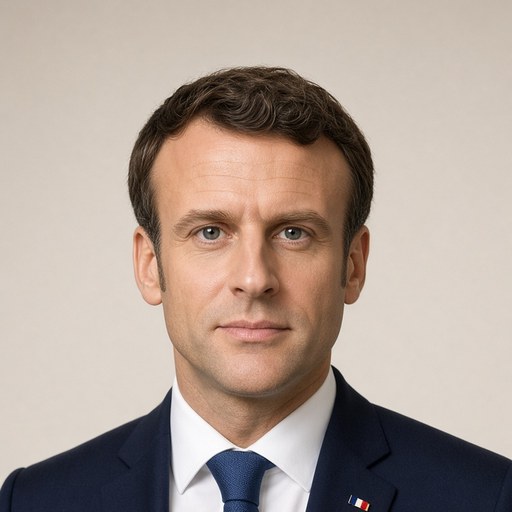
SPEECH BY THE PRESIDENT OF THE REPUBLIC ON THE OCCASION OF NEW YEAR'S WISHES TO HEALTH ACTORS.
 Emmanuel Macron · President of France
- Context
- Macron addressed healthcare professionals at the Sud Francilien Hospital Center on January 6, 2023, delivering New Year's wishes and outlining commitments to France's health system.
- Main themes
- Healthcare system reform, hospital resilience, cybersecurity attacks on hospitals, caregiver recognition and fatigue, post-Covid crisis management, public health solidarity, long-term health policy, New Year commitments to health workers
- Duration
- ~85 min
- Words
- 10,230
- Sentences
- 430
- Readability
- 53
- Grade
- 11.7
- Syntax
- 3.15
- Vocabulary
- 1.98
Translated from French
The broad sphere of national life a sentence belongs to. Every sentence has an Arena, so it is the denominator the other indices are read against.
Other430 sentences in 72 paragraphs
Ladies and gentlemen ministers,
Ladies and gentlemen parliamentarians,
Gentlemen prefects,
Mr. President of the Departmental Council,
Gentlemen mayors,
Mr. President of the Supervisory Board of the Sud Francilien Hospital Center,
Madam Director General of the Île-de-France Regional Health Agency,
Mr. Director of the Sud Francilien Hospital Center,
Madam President,
Ladies and gentlemen healthcare professionals,
Ladies and gentlemen in your ranks and capacities, I say, it’s a generic formula, otherwise I could spend half an hour naming everyone and I would end up offending someone I might forget.
Listen, I wanted to thank you for your welcome and for the exchanges I have had with several of you since this morning, and indeed, I wanted to be in a hospital center such as our country is fortunate to have at the beginning of this year, to address you directly, who, throughout the year, care for our fellow citizens. Every day and especially during this holiday season, when the Nation has been able to count on your dedication and professionalism.
After two years of Covid, after a series of epidemics that have accumulated in recent weeks, you continue to hold strong, and your efforts inspire the Nation's esteem. And on its behalf, I wanted to thank you this morning. And I wish, at the beginning of this year, to extend my most sincere wishes to you, to your families, to your loved ones, and to try, if I may say so, through you, to have wishes for our hospital, our health, and to try to say a few words about the prospects that together we can build.
In addressing you today, of course, I want to pay tribute to the commitment and exceptional professionalism that is yours and that of your colleagues everywhere, but I also had to mention, because here as in some hospitals in France, we have suffered a serious cyber attack, and you have held on, if I may say so, because it is not always clear to everyone; but in this hospital, the system was completely damaged. I want to not only thank the IT teams, of course, all the logistical support that made it happen, but all the caregivers. Because I know that everywhere, you had to resume manual work; you continued, in addition to everything else and the epidemics, with even more constraints to ensure care. And so I wanted to thank you here, to tell you that we are aware, of course, of these attacks that are multiplying, that we have begun to reinvest in our information systems to resist cyber attacks and that we will continue the work. This comes in addition to everything else. We sometimes talk too little about it in public debate. But as you have experienced it, if I may say so in your daily life, I wanted to say it here and also tell you that we will move forward on this issue as well.
So, if it were needed, Covid has shown that health is not simply a public policy among others, but that it somehow enables all the others. And you are on a daily basis the visible trace of what holds a Nation together, of this solidarity and of what allows everything else to happen. And so, in presenting my wishes to you at the beginning of the year 2023, beyond the personal wishes I have just expressed, I know roughly what we all wish for: to be able to respond to the concerns of many of our fellow citizens, to be received, treated in a timely manner, with quality care.
Concerns they sometimes have for their children or for their parents. And the concern, the anxiety, the fatigue that also exist among all caregivers. I had the opportunity to see several before the holidays and we exchanged again this morning. But I know the personal and collective exhaustion, the feeling sometimes of a loss of meaning that has settled in and the feeling, at the bottom, of moving from one crisis to another, and as we had just come out of Covid, to face crises again and never to emerge, in a way, from this endless day of crisis, with the idea that there is no perspective. And so I wish us collectively to respond to it.
And fundamentally, for me, addressing you today is to try — the diagnosis, I will return to it very quickly because we know it — to build short-term actions but also long-term together, to give a new impetus at the beginning of this year for our entire health system, and particularly our hospital, and to do it with, if I may say so, a lot of determination, trying to push things, sometimes the walls, and to go faster and stronger, but also with a lot of humility because I know with you that things do not change overnight and that sometimes some of the projects we will launch will take time, that they will require checkpoints, that perhaps we will make mistakes in the implementation of certain ones and that we will need to revisit them and adjust them together. And so, what I want to tell you today is not simply wishes but also a commitment over time to stand by your side.
You know the diagnosis perfectly. Would I dare to say that, in a speech I gave in 2018 at the Élysée to announce “My Health 2022,” everything was more or less laid out. I say this because it’s a way of saying that we had seen things; it’s a rather cruel way of saying also that, if the diagnosis was correct, the treatment was evidently, independent of Covid, probably not sufficient. But it’s important to keep this in mind because, at the bottom, the crisis we are experiencing, I mentioned it with Mr. Mayor earlier, is not simply a crisis of resources, because in fact we have already responded a lot on resources. And I say this to all the caregivers you are, it is multifactorial. It is actually much more complex than if it were simply a problem of money. Because we made the largest financial effort in the history of our health system at the time of Covid and in the aftermath of Covid. It’s much more complex than that; it’s a problem of organization of our system. It’s also a problem of the evolution of our society. We all live in a society that is moving, that is evolving, where preferences are not the same. And so we must be clear-eyed about this observation if we want to provide the right answers.
But the observation, despite everything, is there. For decades, we have trained fewer and fewer caregivers and we thought we would save money on the system and that it would gain in innovation, in efficiency, by training less. So we trained fewer caregivers, we have fewer caregivers available, we have restricted their number, sometimes also part of the equipment. We have also transformed the organization — I say this for the hospital — and the volume of their work with the 35-hour workweek. And I think that the 35-hour workweek has profoundly disrupted the hospital, which is, moreover, the last place where we have not deeply reformed the organization of working time, as we have done elsewhere in almost all other systems, whether public or private. Because we also have a governance that has become heavier, which has rigidified many procedures, because we have a city-hospital division that has settled in, which comes from very far, which is cultural, but which is there with insufficient cooperation, even if there are counterexamples because there are people who have managed to shake up habits. We mentioned this earlier with the president of the CPTS here.
On top of all this, because it turns out that caregivers and incoming caregivers do not want to have the same life as their elders. I say this very directly but also because society has changed. And in a society where teleworking has developed, where choices of life, of organization of personal and professional life are there, we can no longer ask doctors, nurses, nursing assistants, health managers, manipulators, stretcher-bearers, stretcher-bearers, that is to say you. Your life does not change. You will work like your parents, your grandparents in terms of work rhythm; it doesn’t work. And when we say that people leave the profession to change it, it is also the result of that. We experience this in the hospital, as we experience it, by the way, in private practice, in city medicine, we know well, or when, whether it is the city doctor or the country doctor retires, the one who succeeds him does not want to have the same rhythm, and we do not replace one for one.
In parallel to this evolution that I describe at a gallop, it turns out that we are a country that is aging, which is a chance. We talked about it, there is the elderly and we are a country that is trying to better take into account children as well. And so, fundamentally, we have more and more chronic diseases, we have more and more vulnerabilities that we want to take care of. And where our system had been historically designed for more acute and sporadic pathologies, in a way, the need has been for, fundamentally, more and more complex chronic diseases that we want to take better care of.
You also have, particularly in your territory, very precarious populations that arrive or are directed to your hospital with even more complexity. And we can see that this situation is what makes it untenable and fundamentally, the hospital. And in the hospital, the services that are exposed to what we call nicely unscheduled care are at the heart of the problem, because that is where everything has exploded for several years now. And despite what we have started to do, I will return to it, Covid has somehow, as you told me very well earlier, doctor, revealed this divergence that has settled over several decades. There you have it, that is the observation.
So once I have said that, the big problem is that the answer is not simply more resources. I will return once again to what we have already done because we do not train doctors in one or two years. And everything I have just said, we will take a decade to change it, in reality, in depth. And we will live in the coming years, at least your servant in the role that is his for sure, in a situation that will rather deteriorate in terms of medical supply, because in addition we have the demographics of our doctors, and it turns out that many of them are reaching an age that is rather that of heading towards retirement. And so, there is no miracle recipe that will say: in one fell swoop, we will create a wonderful health offer to respond to what we have, to the mistakes of the past or to the poor planning and to this changing society.
Our collective challenge is, in the short term, to free up doctors' time with patients, caregivers' time with patients, and therefore to completely rethink our collective organization. In the city, in the hospital, to think about it cooperatively and I insist on this. By also learning from what we collectively did during the Covid period. And I say it — the professor who spoke to me earlier said it very well — there is one thing, a treasure we had during the Covid period that made us hold on, that we must not lose during this period, it is the cooperation among all. And the solution to build the future lies in the cooperation between administrative and healthcare staff, between paramedical caregivers and between the city and the hospital. All those who want to build solutions by pitting one against the other will waste our time and, in a way, make the system even more ineffective.
It is through cooperation and the encouragement of cooperation and the fact that we build a complete team that we will succeed. And so our short-term objective is really to free up caregivers' time with our fellow citizens to move towards a perspective, because I want to give them long-term resources, which is what? Which is to have a medicine that prevents better. For the first time, you have a Minister of Prevention and Health. And that is essential because everything we prevent is obviously what we avoid treating later. And it is a profitable investment for the Nation and profitable for collective health. We need to have a system that prevents better. What we have started collectively to do in recent years with vaccination, screening, and diagnostics.
But we need to go much further, much stronger - to have a medicine that will be individualized, personalized, and that will become more predictive thanks to innovation and organization. That is the objective. And by breaking down barriers much more, improving prevention, health, and medicine will allow us to limit unnecessary procedures much more and to reduce avoidable mortality thanks to both prevention and the better organization of a whole care chain, as early as possible, by competent personnel recognizing their competence up to acute crises. That is our collective perspective. But in the short term, we can only hold it if, of course, we manage to withstand the shocks we are currently experiencing because the situation may be even more serious today.
So, in light of this observation that has been made — and what I am saying is the objective that is ours — we have already acted collectively. I say this because I want to repeat the figures here. We have invested 19 billion euros in our healthcare system with the Ségur, particularly in hospitals, for very good reasons, because it is to the hospital that all difficulties flow back, which is still the case and what you are experiencing. In three years, the budget that our Nation allocates to health has increased by 50 billion euros. And this considerable catch-up, and I emphasize catch-up, was necessary, and many have told me, everyone recognizes what has been done with the Ségur in terms of remuneration. There is also a significant catch-up effect of what had not been done previously. I am aware of that. That is why I am not saying that this is a final settlement.
In the same way, we have put an end to the decline that had been occurring for years in hospital tariffs. I claim this decline; how is it? Stabilization began in 2018 after years of decline. To tell you, I did not wait for Covid to see that there was a problem in hospitals. And then, thanks to the Ségur, we have revalued the staff beyond the investment I mentioned, with increases that have changed lives in many places, from 180 to 400 euros per month. There has never been such an investment from the Nation.
Simply, we need to be clear. Where it changes the life of, for example, a nurse, a nursing assistant, or a doctor in a provincial hospital where the cost of living is not extreme, where there was already some stability, it is much less true in large cities or in a region like ours, here today, where the cost of living, transportation constraints, and housing costs are such that, in fact, even with 180 euros more per month, it does not allow you to buy a home near where you work or to compensate for the additional expenses you have. And so, we have a real problem of attractiveness. This is particularly true for hospitals, despite the Ségur in large cities or regions where the cost of living is higher than in others. There you go.
And then, we have ended the numerus clausus in recent years. For 20 years, as I said, we have not trained enough caregivers, and we have put an end to it because I want to remind you of the figures. In recent years, we have lost about 6,000 general practitioners. We are now just under 100,000 general practitioners today. The problem is that we will have about 80,000 general practitioners in 2025 if all those who are due to retire leave. And we have, according to the figures from the National Health Insurance Fund, almost half of the doctors today who are over 60 years old. That is why you have probably seen that in the latest financial texts, we have taken a measure that facilitates and encourages the combination of work and retirement because fortunately, not everyone retires at the so-called age, and we want to facilitate and somehow make the combination of work and retirement more attractive because we will need to keep as many doctors as possible who are willing to do so, who would be of retirement age, to make it very incentivizing. I just say this, but despite the opening of the numerus clausus, what we have done in recent years, we will not see the results in the next 5 to 8 years. So we will have to work together on a strategy and therefore reorganize, break down silos, and succeed in freeing up medical time.
So, in a way, that is both the observation I wanted to make. To reiterate what we have done, the perspective we must move towards. But today, we must go much faster, much stronger, make radical decisions, but collectively, also play on collective intelligence and the freedom given to the field. I want to thank all those who spoke to me this morning because in addition to the activity, there are many very concrete ideas already implemented and a willingness to find, in a way, responses on the ground. We need to give you the means and possibilities.
So, the first objective for me at the beginning of this year, for us, is to somehow gain medical time. I told you that we are not going to invent or create doctors en masse. We will all try to better organize ourselves to, in a way, allow for more medical time for our compatriots in hospitals as well as in the community. In this regard, we will accelerate the recruitment of medical assistants for doctors. We currently have nearly 4,000 medical assistants who have already signed a contract, which is one of the real successes. For once, I was critical of myself regarding the "My Health 2022" strategy, which we launched in 2018. This is a real success of the policy launched since 2018. Everywhere we have organized this capacity to organize communities of caregivers in the territory, these famous CPTFs, we have succeeded in implementing medical assistants; it is a real effect. It frees up medical time, allowing for better organization.
So, I tell you, we have nearly 4,000; we must reach 10,000 by the end of next year, and that is feasible. I want us to generalize them. We will continue, and therefore, we will increase funding to do so, encourage more, and it allows us to relieve peripheral tasks from care. And what I want is for us to also apply it to hospitals where we will transfer administrative, logistical, and technical staff closer to the services to allow caregivers to focus on the core of their profession.
That is what Sandra, I believe, I do not want to mispronounce her name, was telling me earlier in pediatrics. Thanks to the hospital director and to Madame the president for what has been done in terms of support. We have given you this position, and that is what we need to generalize; it is exactly the same thing. What you have invented in your service is what we need to generalize everywhere because it allows nursing assistants, nurses not to perform administrative or logistical tasks and to have administrative jobs. However, we have many administrative jobs because we are always told: "you administer the system too much," which is quite true, but they are not always in the right place. They are sometimes too much at the heart of the hospital's administrative services. They are in our ARSs, which have done remarkable work throughout the period and still do, they are in central administration; we need to better reallocate our resources to sometimes place them closer to the field and in service to the caregiving teams, and that is what we will do collectively. I think that also gives meaning to everyone in the work we do; it allows very concretely to free up caregiver time and redeployments. Finding useful care time means, more specifically for hospitals, also strengthening the teams that are at the bedside of patients. So to achieve this, we will first give some breathing room to the teams through reinforcements of professionals and more paramedics.
Now, I will be very clear: we have started to significantly increase the number of places opened for nurses, plus 20% in 3 years, and with the regions, and I thank them for their commitment, we must go even further to train more. Because there, the training time allows for outcomes, but I will be quite clear because I have heard all your doubts. I give you figures with pride, saying we have done plus 20%, I am very proud of that. We were right; we opened positions. I listened to you this morning, and I listened to all those who work every day, and I thank them for their management; the problem is that we have far too many who drop out during training. We have about 30% of students who drop out during training, and we have about 10-15% who fail at the end of these trainings. This means that even when I tell you: we have done + 20%, great, we will continue; when we say we train 100, we open 100 trained positions, we actually have 55 who arrive on the ground, and then we also have the problem of some who redirect and say at the end of their studies: ultimately, I will not go, it’s too hard; and others will immediately do temporary work. So we will continue to open positions, but what do we need to do?
First, we need to think about the right orientation. For health, we need it urgently; we must improve the Parcoursup system, which is not optimal, which does not allow today to properly measure motivation.
The second thing is that we need to review the organization and functioning of our studies. There are many ideas; some have been given to me; it is a project that I am condensing and that we must finalize by summer. It is essential.
And third, we need to put in place a system that is more accountable upon graduation. And there, for everyone, we cannot have caregivers conforming, regardless of their qualifications, who immediately go into temporary work or replacements. It is not possible because otherwise, we will discourage everyone. We need to say that we should have, for X years, a time where we choose a position, a function, etc. This also goes along with the revaluation that we will continue to do, and it is a way to be collectively attractive. The desire for optimization, if I may say so, has also largely exceeded the initial idea, and we also have professionals who, as a result, have suffered, and that is what has created many departures from the hospital. In addition to this training, what I want to say is that we must also, in the short term, do everything to keep the staff who are there. This is the challenge of the coming months. And in this regard, I hope that by June, we can focus on a whole body of work that allows for more serenity and security for caregivers with patients. This means that we must work together on a better organization of working time.
What is not working in our hospital today? It is that, as I said, it is the last place where, legally, the 35-hour workweek still functions. It is a hyper rigidity. If I say this, many will jump on me saying, "But I do not work 35 hours; he is nice." That is entirely true. So the system only works through overtime that is allocated in a completely heterogeneous manner according to the services. This does not create good collaboration between services and has also created a lot of heterogeneity according to territories, specialties, and services because there are overtime hours that are really paid, there are overtime hours that are put on accounts that are not paid immediately, which create a lot of differences despite all the revaluations and the Ségur we have done, in terms of paid hours, in terms of the constraints required. So we will be clear; the system, we have over-constrained it. So we can say we will put more resources, etc., but on a system that is over-constrained and not working well, where, it must be said, we are also not collectively using the instrument that is the hospital well, are we using our operating rooms sufficiently well, the equipment that is collectively ours? The truth is no, because we have created too many constraints in the organization of working time, and therefore we have not optimized the time collectively either.
We need to give everyone visibility to say, "We are not stopgaps," and therefore we also want to have workload plans on which we provide visibility. This system needs to be completely overhauled, and I ask that it be done by June 1st so that with the small project team that will do this with the minister, we can rebuild a system that is objectively more coherent with the reality of your daily lives. Otherwise, I tell you, we will constantly be filling in crises on this subject, and we will constantly be making bonuses, revaluations, so we will always have systems where it is not sufficiently utilized, where there is a shortage of caregivers because we need to rethink the organization in the hospital, the organization of working time, the organization of workload plans. We need to do this more broadly, between what is done at home, in outpatient care, and in traditional hospitalization.
Next to that, and this is the second major point I wanted to focus on, we need to reorganize hospital care to regain a human scale. And I have been struck in recent years, before Covid, even more during Covid, and I would say that the period we are experiencing in the aftermath of Covid is even more worrying in this regard. There is a need for remuneration; we have started to address it, it is true that we are not done yet, but there is a need for recognition and meaning, and that is also why I am here before you this morning, because I am not naive, I hear you. What you are saying is, "We were applauded every evening at 8 PM when it was Covid, and then everyone forgot about us, and for us, it is sometimes even harder in certain departments than it was during Covid." Which is true. So how, beyond the recognition that I am here to testify to today, are we going to do this in the long term? By somehow restoring our collective organization to a human scale. I believe that beyond a system of recognition, this is what allows us to give meaning and a better collective organization. In the hospital, I believe I can say, under your control, that one of the springs of disenchantment is a team organization that, through rationality, has lost predictability and humanity. It is nobody's fault. It is the fault of many well-meaning people who wanted to save money, to better organize things, but at some point, the system became rigid. But the truth is that because of the organization of working time that I have already mentioned and an organization that we have massified around sometimes very heavy poles, but especially by having the same organization everywhere in the territory, we have sometimes discouraged. We have also created situations where we have, for the caregivers who remain, created impossible schedules where within one pole and from one department to another, you are told from one day to the next, "You have to do this shift, you have to come fill this need or that one." That is the reality. Many of our caregivers aspire to revisit their schedules, their time patterns, to find more time for patients, more time to train, more time as a team. And that is fortunate because it is exactly what we need to meet the challenges I mentioned. If we want to succeed in doing this, we must also allow more freedom of organization. I want every hospital to have engaged and finalized discussions with all teams, all social partners to adapt schedules and work organizations by June 1 at the latest, as I said, and to be able to do so at the service level as well. Each service must be able to seize this freedom to organize autonomously and responsibly with maximum freedom in the construction of schedules under the leadership of managers and heads of services. The service must become the organic and human unit to be able to organize things. Then, creating cooperations by poles, there are many models, and there are places where the poles work well because they are coherent, and there are places where it is a disaster. I tell you this as I have seen it. We must allow this possibility to reorganize things, but by June 1, we must have this dialogue done, and a real autonomy of teams for their organization because it is what will also allow us to say: Below a certain threshold, when we have a problem, we must make complete organizational decisions. We restore predictability to everyone, and that is key, and we restore humanity because people know each other, because they can organize things among themselves. More broadly, by June 1, public hospitals must find everywhere the scale of the service to make daily decisions in the heat of action, in the following days and nights, it is because we know each other that we support each other, that we can gain in efficiency. Then, if the poles are chosen and maintained, there must be a stronger freedom of organization. So, what is wonderful in our collective organization is when I said this: I want it to be done by June 1, I was first told: "It is totally impossible, we need a law text, and therefore it will never be ready by June 1." And then I was told: "In fact, the law text is already taken, but no one is aware of it." That is a reality. So we can already do it; the law has opened the possibility of organizing at the service level. I say it urbi et orbi, everyone must seize it to find these latitudes and especially that we can seize the organizational field that I have just opened on working time, the allocation of the corresponding remunerations, and that we collectively seize it. It is not rigidity; we have the right. We must regain this possibility to organize things in the most suitable way. In any case, it is open.
Regarding the management of our hospitals, I truly thank all the work that has been done and the remarkable work done both by the administrative team director and the medical team. I think we all experienced during Covid something that broke down barriers, and that is why I said: I do not believe at all in opposition. For a long time, it was said: It should not be the caregivers who run the hospital; it should be the administrators. Then we said the problems are the administrators who run them. It works when it is together. I wish, and we have several law texts carried by our parliamentarians that will allow us to go in this direction, that the minister leads a consultation that will allow us to specify the organizational modalities but that we can put at the head of our hospitals an administrative and medical tandem. A real tandem that, based on a project that is submitted, also gives a whole place back to the board of directors of our hospital, can build a project, that the best project is chosen, and that it is a tandem that is put in place. I think it is a good thing for everyone to work well together, hand in hand.
Finally, to restore the hospital to a human scale, we will change the funding for all public and private establishments. Indeed, health needs are evolving, and no one can bear that establishments engage in harmful competition. We know this well, and many debates are tense around this famous activity-based pricing. We had the debate, by the way, for pediatrics at the end of last year. And fundamentally, it is an exclusive logic in activity-based pricing that has created many dysfunctions in the system. First, because there is a part of the private or non-profit private system that cooperates wonderfully, and I thank them for that. And here, by the way, you have very good examples. There are also some establishments that do not cooperate at all; that is a reality. The remuneration model we have created only values the act and therefore, to a large extent, we know very well, it poorly takes into account unprogrammed care, it poorly takes into account the most complex activities, which will take time — pediatrics being a very good example, but there are others — and fundamentally, it harms the core activities that find themselves in public hospitals also because many others no longer want to do them. I will not tell you that we will gradually exit T2A. It happens that I already said this in November 2018, so I have a sense of both the ridiculous and the sense of responsibility. When systems have been established and we say we will change them gradually, it does not work. We must proceed differently. We must exit activity-based pricing as soon as the next Social Security financing bill to move towards a new funding model that we must rebuild based on in-depth work and a consultation that relies on remuneration based on public health objectives. What does that mean? It means that for public hospitals, private establishments, and healthcare professionals in the liberal sector, there must be a structuring part of the remuneration that is based on public health objectives that we negotiate at the territorial level. How do we take care of the population that is given to us? This creates more cooperation, and it is the reality of what territories experience.
Then, there must be effective remuneration for the missions carried out by each, taking into account the mission and its complexity, and finally, a part of remuneration for activity that is entirely legitimate and must continue. This project must absolutely be done because it is the one that will allow for greater cooperation between the public and private sectors, to better take into account the specialties that are the most complex, which are sometimes the poor relations, and above all to create more cooperation — you will see me coming — at the territorial level. That is exactly what we want to do. This new funding will concern both public and private establishments, but also the remuneration of cooperation between the city and the hospital to promote collective work in service of patients. The profound transformation of the organization in hospitals will do a lot, but it will not do everything, through these few texts. These are very structuring elements that I have just mentioned, but we will need to go further, and there too, manage it as closely as possible to the ground. Because I know, I mentioned it briefly earlier, but there is meaning, there is the organization of work, the meaning we give to this work, and the ability to have visibility on one's work plan and to do one's job well and to have this satisfaction, what you all ask for, but there are also the living conditions, and the living conditions can still be difficult, even very difficult for many of our caregivers who have heavy days, often atypical hours, and I mentioned it in living areas as we now say, where housing is expensive and where sometimes one has to live far from where one works at hours when public transport no longer exists. That is the reality. It is exactly what you are experiencing, and therefore on this, what we are going to launch as close to the ground as possible, and many hospital directors, mayors have already launched initiatives in this direction, and I know that it is underway at APHP. I know that you have launched it here too, but with the minister, the ministers, we will support you massively. It is a great initiative with local elected officials to define a shared action plan by next summer. What does that mean? It means redefining a dedicated housing stock because it does not work in social housing. I will say it right away; it is not true; it does not work. It does not work for very practical reasons. First, many social housing stocks in these areas are already saturated. It does not work because it is very hard to get people out of social housing, and we cannot attach it to the function; it is not made for that. But we need a dedicated housing stock for staff who need it, and so we need to help those in these areas where housing is very expensive. We also need to have, on issues as clear as support for travel, parking, etc., very concrete things. It is not the President of the Republic who will decide them, but there needs to be a support plan so that everywhere in the territories where there is a crying need, by next summer, we also have new solutions provided.
Finally, it is the question of careers, and whether it concerns hospital practitioners, nurses, nursing assistants, we have a subject of career evolution on which I wish that by the next PLFSS, we can see the points that remain to be addressed to fully retain those who are in fragile situations and there too, consolidate beyond what I have already said the attractiveness, because it is also in the management of careers, training, good remuneration after training, the recognition of these trainings in the responsibilities we give, that we will improve things. We have collectively made progress in recent years on IPAs; we talked about it earlier with one of you; we can go, we will go much further, but we must generalize and improve it across the different categories I mentioned.
Next, and this is the third area I wanted to address. We must redistribute efforts to ensure the permanence and universality of care. Essentially, what does this mean? It means we need to better break down the barriers between the city and the hospital, to address two major problems we all know: the issue of medical deserts on one side, and the issue of thrombosis, unplanned care in pediatric emergencies or elsewhere in recent weeks at the hospital, in areas that are very strained. This massive release of medical time in the system that I just mentioned must be accompanied by a better distribution of skills and a fairer allocation of responsibilities. And here too, it must be done in an extremely cooperative manner, respectful of everyone. I am counting on the commitment of each and every one, because continuity, quality, and permanence of care must be the concern of all. I know that many of our nurses, doctors, health personnel, and paramedics in private practice also care about this and want to participate. So, for the permanence of care in establishments, what everyone calls "emergencies," we will do several things. On one hand, within the hospital, we need to open discussions on the remuneration for night work and permanence. I will say it as long as we have not rebuilt things, the so-called emergency measures planned until March will be maintained. This is essential, because we cannot, at the moment when exhausted people are coming out of the peak of the crisis, say: we are going to disconnect you from what I believe are also measures of reparation for night work and weekend shifts. On the other hand, this is part of the entire overhaul of work organization in hospitals that I mentioned. We must value this, we must take it into account.
We must also have a real debate on the difficulty of these missions because they are not the same. And the great difficulty of these lies in the daily routine, in remuneration, in the organization of time, and in the consideration within the pension system for the categories of workers that you are.
Furthermore, I have asked the minister to initiate work immediately so that clinics and hospitals can participate with the same intensity in this fundamental mission. And as soon as an establishment is funded by public money, it must take its full share in the health needs of the territory and the continuity of care. As I said, this is already the case for many of them. We need to better encourage this cooperation and therefore have a remuneration system that better incentivizes, rewards, if I may say so, private and non-profit private establishments that participate in the continuity of care in a territory and is less generous with those who do not participate. That is how we must proceed.
For the permanence of care in the city, because everything is interconnected and many have told me in the services that are yours: when it is poorly ensured or no longer ensured, everything arrives at the hospital and thus, everything is interconnected. And it is not simply at the hospital that we need to allocate resources. We need to re-empower and encourage the permanence of care in the city. The French must easily find a doctor on call. Now, I know that there are many initiatives. I have seen them myself on the ground, in large cities, in rural areas, to move in this direction, and I really want to commend the commitment and dedication of many doctors and paramedics in this regard.
Our famous National Councils for Territorial Health Refoundation have allowed us to identify what is already working, which we will generalize quickly. With more resources and incentives. And we cannot have, I say this very clearly, on one side, doctors who exhaust themselves beyond reason to do weekend shifts, to take a patient during lunch hour, to do more and more, and who feel responsible, in a way, for a population at the scale of a territory and who do not want to limit themselves to their patient base. And to say that we will have exactly the same approach with them as with doctors who say "I can no longer take on a single patient" and who reorganize their time differently, which I totally respect, certainly, it is everyone's freedom. But there must be another choice of life, which is not necessarily in cooperation with the rest of the territory. And as a result, these professionals are no longer doing quite the same job with the same commitment. When we remain with a pricing system that is only fee-for-service, it is not the fairest.
And so we will better remunerate the doctors who ensure the permanence of care and those who take on new patients that we have defined. And so this is a demand from our fellow citizens, it is a real response both to the permanence of care in very strained areas and to medical deserts. And it is, I say, where we will concentrate the financial effort of the contractual negotiations that are set to conclude at the end of the first quarter. So yes, we will put more resources, we need to put them, we need to put them in the right place. We cannot revalue in the same way. Simply, we need to do things more intelligently, in accordance with what we are saying. So we need to better remunerate, in a way, those who will be willing to train young people and take interns with them, to take on new patients, to help during peak times when they exist, to participate in a healthcare offer in the territory. This is what we need to better support, better remunerate.
You see that this is very coherent with the generalization of our famous CPTS that we want to see developed. As we have provided them with medical assistants, it is on the professionals who are willing to organize in a territory with others and ensure the permanence of care that we will allocate more resources, it is fairer. And so we will do with them exactly as we will do with the hospital, that is to say, we are moving away from fee-for-service funding to mission-based funding, in terms of health responses for a population.
More broadly, we need to build a new pact with liberal medicine, a pact of rights and duties. We need our liberal medicine. I want to be clear, I believe in the importance of this model, in the strength of the French model, which has all the functions, all the choices of life and organization. But we must put an end to a divergence that has developed. It is not true everywhere and for everyone. But we need to better reward, better incentivize all those who want to work together. And so in each territory, it will be about building a form of collective solidarity.
For specialist doctors, it is about, for example, conducting advanced consultations in under-dense areas; for general practitioners, participating in the management of scheduled care, welcoming interns for training, as I mentioned. And so what we want to do, and this is where we will concentrate our needs, is that by the end of this year, every citizen should have access in their living area to a healthcare offer. So let’s call it a territorial network. We have had plenty of acronyms, plenty of names already in recent decades, I do not want to add to that. I want to be simple and understood. We need that when we live in a place, we can have someone as a reference. It is a doctor or someone who works with them in this network, who can be a paramedic, depending on the needs and what we have identified, who will be a specialist, who will be in the city or at the hospital. And so we want to create, at the scale of a territory, a health solution by encouraging health actors in a territory to cooperate with each other. So, you understand, in the funding of the hospital, the funding of the city, that is where we will allocate resources.
And the method is simple, it will be precisely our famous territorial CNRs that we will now systematize across all living areas. And these territorial CNRs are not meant to discuss; no, it will be to build a roadmap by the end of the year and to say how we organize ourselves. And this will lead either to new CPTS or to networks, between existing CPTS, hospitals, and others. And all health professionals will commit to a response in terms of care to ensure the continuity of care for all our compatriots and to say: here is what we need, the resources we need in order to contract on these resources. This is the best way to break down the barriers between city and hospital, but above all to also reward all those who are in this strategy of cooperation.
General practitioners must thus be able to focus on health and nothing but health in this context, and this is a bit the fourth axis that supports this third one. Indeed, our general practitioners are, for the French, the most familiar face of our healthcare system. And that is why I also want to enhance their role, first by helping them take on more patients with the remuneration we will put in place, with the multiplication of aids and, as I mentioned earlier, the widespread multiplication of the medical assistant system that we have created.
I also want us to continue to eliminate all unnecessary tasks, such as certain certificates, that we can develop tele-expertise, telemonitoring, which is a good thing. And in this regard, I say very clearly, the threshold of 20% for teleconsultations that has been set is not a good idea. It is the marriage of the desire to save money with the desire not to lose patients. But it is not as if there were problems with patient bases. The problem is that there are too many people who do not have doctors. So we need to free up this issue and then regulate the excesses. But we must not create prohibitions ab initio, which is always our tendency. We need to simplify things and enhance them. And then within the framework of the contractual negotiations that opened in November with health insurance, and according to the pact of rights and duties that I have described and which also applies, we will allocate resources.
We must therefore also evolve the skills of other health professionals to strengthen our capacity to care for our compatriots. In this territorial offer, these networks that we want to set up, these coalitions of health, so to speak, that we will build together this year, we will also involve all other paramedics, all other professions. We will thus more massively develop advanced practice nurses. We will inform the French about the possibilities available to them: such as going to an orthoptist starting in January for a renewal of glasses, a very simple and essential thing. This is now possible.
We will allow the French to consult other health professionals for prescription renewals for chronic diseases, for vaccinations, for screening, for therapeutic education that must be carried out by pharmacists, midwives, nurses. The delegation of tasks must be simplified, generalized, and there should be no conflicts between professions. If this is done at the level of a coalition or a network, it will encourage everyone to cooperate, and we will have paramedics who will be in contact with medical professionals. But it is essential that the training and skills of each are duly recognized so that everyone can focus on the tasks, the professions, the complexities for which they have been trained. Not on tasks that are sometimes a bit repetitive, simpler, which can be delegated to other paramedical professionals whose training we will also fully value.
This is what we must do; otherwise, we will not be able to solve the problem that is collectively ours. We already have experiences allowing pharmacists to welcome and direct certain benign everyday pathologies that are proving their worth, and we have several other paramedical professions that want to contribute. We must not waste time and generalize them. In this regard, the Minister of Health, with the parties involved, the most involved parliamentarians, must identify all these developments by March 1. We already have a lot of work underway that goes in this direction to be able to generalize and simplify them. Everyone must take their responsibilities, and I say this to all our compatriots as well. On this point, and I will conclude with this message of responsibility: it is essential, as you have seen, that everyone takes a greater part.
But our compatriots also have a role to play. And when we talk about health, the patient has a role in health, and this is at the heart of the logic of prevention, which is what we want to achieve through training. However, our system, by removing all barriers to access to care, which is a good thing and that we will maintain, has sometimes disempowered many of our compatriots. And in a way, since health no longer has a price for many of our compatriots, it no longer has value. And I say it, too much medical time is wasted due to excessive carelessness, with particularly missed appointments. To eliminate this waste of medical time, a collaboration will also be initiated with health insurance to hold patients accountable when an appointment or several are missed or when there are abusive recourse to unplanned care. We must put an end to a system where, in a way, we treat our health system as we do not treat anything else in our society. That is to say, we think that the right to access is absolute, endless, unlimited, that respect no longer applies because we never pay. This is not possible.
Finally, as I said, the primary care physician must be the entry point, but not the lock of our system. I indeed want us to clarify and simplify the organization on the ground. Why do we have today 6 million of our compatriots who do not have a primary care physician? For some of the younger ones, it is a choice. But the real difficulty in this figure is that we have 600,000 patients with chronic illnesses who do not have a primary care physician. And that is a real problem because it is a loss of opportunity, because many of them will be found later in more serious situations in your services. And this is collective. The Nation is not fulfilling its duty, it is not fair and it is not effective.
And so, the 600,000 patients with chronic illnesses will be offered a primary care physician before the end of the year. Or more precisely, I want these chronic patients to have access to what I would call a treating team, meaning that they can have access to these networks, these coalitions of actors that we will have identified and structured at the level of a territory and a team. And when there is not enough time from doctors, at least the doctors can delegate to paramedics, but we should not have people who have no access to anyone.
Today, what we have is that you have people in situations of chronic illnesses, who have long-term infections, who are in territories that do not have access to a doctor who, due to the rigidities of our system, cannot even have a prescription renewed by the nurse or the pharmacist. That is absurd and we have no right to do that. We must get out of this face-to-face situation. So we must say, there will always be referring doctors, generalists and specialists in these coalitions of territorial actors. It is up to them to organize themselves to find the time. If they are smart, they delegate the acts to paramedics, the acts that have the least value. And the logic is that many of our general practitioners should delegate two or three prescription renewals per year to the reference nurse, to the reference pharmacist, so that they only have regular appointments. And they will appreciate in dialogue with these paramedics how to find the right frequency. That is exactly what we want to build. That is what we must do. That is what some of you are already doing. It needs to be systematized because that is how we will free up real caregiver time in front of the patient.
But therefore, the objective I set for us is that these ground coalitions will have reference teams for our 600,000 compatriots who today have chronic conditions and just have no one in front of them. And we will thus be able to respond to their needs, guide them, support them. In the most serious cases, in the absence of a primary care physician, we will generalize — what we also launched in 2018 and which is, I must say, a real success thanks to your contributions — which is the access to care service. And so I wish that we can accelerate its generalization during this year.
Concretely, when one does not have a primary care physician or when that physician is not available, a patient who urgently seeks one must be able to call 15. And depending on their health status, they will be directed either to the emergency room or to a doctor identified by this service. Calls have greatly increased to these so-called SAS, these access to care services. We need to go further, make the system recognized by all French people, consolidate teams that answer and medically evaluate patients. The Minister knows this well since, in his previous functions, he contributed to thinking about it and implementing it. And so, we will thus have doctors who will welcome these patients using these so-called access to care services for unplanned consultations. And again, this will allow private practitioners and private structures to get involved and will help relieve hospitals of many unplanned care. This is how we managed to hold on last summer in many territories.
This also means that we must better compensate and that we will sustainably - let us be clear and honest with each other - continue to better compensate the professionals who play the game and participate in the co-management of unplanned care services. The SAS is the guarantee of an immediate and proportionate response and it will function all the better as we restore this universality, this revaluation of the continuity of outpatient care and the involvement of clinics as well as private practitioners.
There you go, I do not want to be longer on this day, but these are some of the key points I wanted to emphasize at the beginning of the year. So, I know this will change many habits. Several of the projects I have just described are massive projects that we have sometimes failed to carry out in recent years or that we have not wanted to carry out. As you have understood, and indeed, the financial texts voted at the end of last year have shown it. We continue to reinvest massively in our health and we will continue to do so. But we will continue to do so by profoundly changing the organization and habits. And this reform will also be articulated, and I will return to it during the semester, with other essential and twin reforms: that of the first 1,000 days of life for our children, because we have a huge job in terms of prevention and support for the youngest, on which we have also built many policies. But we must go much further and that of autonomy and the response to dependency and old age on which, again, in recent years, we have begun to provide many answers. In geriatrics in hospitals and for our nursing homes as well, but we must go much further and I have committed to home care offers and transition offers. And so, there too, we have a project that is partly medical, but which is also, if I may say, societal on which I will return. But all of this is interconnected.
In any case, you have understood that what I wanted to tell you this morning is that I will be alongside the hospital and all those who have, in recent years, particularly in recent months, helped it to hold on. We need you and so we will be with you. But more broadly, I will be alongside all those who care.
There are a few projects on which the President of the Republic, if I may say, has a particular vocation to get involved: ecology, education, health, I think, are a reasonable triptych because it is the triptych of the future of our children and a strong Nation. And if we do not invest as we should in humanity and everything that surrounds it, we can do whatever we want in other public policies. We will struggle to move forward. And so we must strongly break down barriers, simplify, better organize, enhance, and reconquer our territories. That is the meaning of what I have just told you and it is what I will return to your side today, but over time. There will be a dedicated team set up alongside the minister to carry out these projects and I know there will be the commitment of the minister and the delegated minister to do so.
But count on my personal commitment and regularly, I will come to your side to both continue to see what works and what does not work to ensure above all the implementation of what we agree on, but especially and above all to build the hospital and the health system that our country deserves and that our nation deeply desires.
Thank you all! And again, I renew my wishes for the year that is opening. Long live the Republic and long live France!
The original French. The tags above are read on the English translation's sentences.
Madame et Messieurs les ministres,
Mesdames et Messieurs les parlementaires,
Messieurs les préfets,
Monsieur le président du Conseil départemental,
Messieurs les maires,
Monsieur le président du Conseil de surveillance du Centre hospitalier Sud Francilien,
Madame la directrice générale de l’Agence régionale de santé Île-de-France,
Monsieur le directeur du Centre hospitalier Sud Francilien,
Madame la présidente,
Mesdames et Messieurs les personnels de santé,
Mesdames et Messieurs en vos grades et qualités, on dit, c’est une formule générique, sinon je peux faire une demi-heure avec tout le monde et j’arriverai à vexer quelqu’un que j’aurai oublié.
Écoutez, je voulais vous remercier pour votre accueil et pour les échanges que j’ai pu avoir avec plusieurs d’entre vous depuis ce matin, et en effet, je souhaitais être dans un centre hospitalier tel que notre pays a la chance d’en compter en ce début d’année, pour m’adresser directement à vous, qui, tout au long de l’année, soignez nos compatriotes. Chaque jour et en particulier pendant cette période de fêtes, où la Nation a pu compter sur votre dévouement et votre professionnalisme.
Après deux années de Covid, après une série d’épidémies qui se sont accumulées ces dernières semaines, vous continuez de tenir bon, et vous suscitez par vos efforts l’estime de la Nation. Et en son nom, je tenais ce matin à vous remercier. Et je souhaite, en ce début d’année, vous adresser tous mes vœux les plus sincères, à vous, à vos familles, à vos proches, et essayer, si je puis dire, par votre biais, d’avoir des vœux pour notre hôpital, notre santé, et d’essayer de dire quelques mots des perspectives qu’ensemble nous pouvons bâtir.
En m’adressant à vous aujourd’hui, évidemment, je veux rendre hommage à l’engagement et au professionnalisme exceptionnel qui est le vôtre et celui de vos confrères partout, mais je devais aussi avoir un mot, parce que, ici comme dans quelques hôpitaux de France, nous avons subi une grave attaque informatique, et vous avez tenu, si je puis dire, parce que ce n’est pas forcément toujours clair pour tout le monde ; mais dans cet hôpital, le système a été complètement endommagé. Je veux non seulement remercier les équipes évidemment informatiques, tous les soutiens logistiques qui l’ont fait, mais tous les soignants. Parce que je sais que partout, vous avez dû reprendre du travail manuel ; vous avez continué, en plus du reste et des épidémies, avec encore plus de contraintes à assurer les soins. Et donc je voulais ici vous en remercier, vous dire que nous sommes conscients, évidemment de ces attaques qui se multiplient, que nous avons commencé à réinvestir sur nos systèmes d'information la résistance aux attaques cyber et que nous allons continuer le travail. Cela vient en plus de tout le reste. On en parle parfois trop peu dans le débat public. Mais comme vous, vous l'avez vécu, si je puis dire dans votre quotidien, je tenais ici à le dire et vous dire aussi que nous avancerons sur ce sujet aussi.
Alors, si besoin était, le Covid a montré que la santé n'est pas simplement une politique publique parmi d'autres, mais qu'elle permet en quelque sorte toutes les autres. Et vous êtes au quotidien la trace visible de ce qui tient une Nation ensemble, de cette solidarité et de ce qui permet de faire tout le reste. Et donc, en vous présentant mes vœux en ce début d'année 2023, au-delà des vœux personnels que je viens de formuler, je sais à peu près ce que nous souhaitons tous : pouvoir répondre à l'inquiétude de beaucoup de nos compatriotes, d'être reçus, soignés dans les meilleurs délais, avec un soin de qualité.
Inquiétude qu'ils ont parfois pour leurs enfants ou pour leurs parents. Et l'inquiétude, l'angoisse, la fatigue qui existent aussi chez tous les soignants. J'ai eu l'occasion d'en voir plusieurs avant les fêtes et nous avons rééchangé ce matin. Mais je sais l'épuisement personnel et collectif, le sentiment parfois de perte de sens qui s'est installé et le sentiment au fond, de passer d'une crise à l'autre, et alors qu'on venait même de sortir du Covid, de réaffronter des crises à nouveau et de ne jamais sortir en quelque sorte de ce jour de crise sans fin, avec l’idée qu’il n’y a pas de perspective. Et donc je nous souhaite collectivement d’y répondre.
Et au fond, pour moi, m’adresser à vous aujourd’hui, c’est essayer — le diagnostic, je vais y revenir très rapidement parce qu’on le connaît — de bâtir des actions de court terme mais aussi de long terme ensemble, de donner une impulsion nouvelle dans ce début d’année pour l’ensemble de notre système de santé, et en particulier notre hôpital, et de le faire avec, si je puis dire, beaucoup de détermination, en essayant de pousser les choses, parfois les murs, et d’aller plus vite et plus fort, mais aussi beaucoup d’humilité parce que je sais avec vous que les choses ne bougent pas du jour au lendemain et que parfois certains des chantiers que nous allons lancer prendront du temps, qu’ils supposeront des points d’étape, que peut-être on va se tromper d’ailleurs sur la mise en œuvre de certains certainement et qu’il faudra y revenir et tous ensemble les ajuster. Et donc, que ce que je veux vous dire aujourd’hui, ce ne sont pas simplement des vœux mais c’est aussi l’engagement dans la durée de m’engager à votre côté.
Le diagnostic, vous le connaissez parfaitement. Oserais-je dire que, dans un discours que j'avais fait en 2018 à l'Élysée pour annoncer “Ma santé 2022”, tout était à peu près posé. Je dis ça parce que c’est un peu une manière de dire qu'on avait vu les choses ; c'est une manière assez cruelle de dire aussi que, si le diagnostic était juste, le traitement manifestement, indépendamment du Covid, n'était sans doute pas suffisant. Mais c'est important de l'avoir tous en tête parce que, au fond, la crise que nous vivons, je l'évoquais avec Monsieur le maire tout à l'heure, ce n’est pas simplement une crise de moyens, parce qu'en fait on a déjà beaucoup répondu sur les moyens. Et je le dis à tous les soignants que vous êtes, elle est multifactorielle. Elle est en fait beaucoup plus complexe que si c'était simplement un problème d'argent. Parce qu'on a fait le plus gros effort financier de notre histoire du système de santé au moment du Covid et en sortie de Covid. C'est beaucoup plus complexe que ça, c'est un problème d'organisation de notre système. C'est aussi un problème d'évolution de notre société. On vit tous dans une société qui bouge, qui évolue, où les préférences ne sont pas les mêmes. Et donc il faut être lucide sur ce constat si on veut apporter les bonnes réponses.
Mais le constat malgré tout est là. Pendant des décennies, on a formé de moins en moins de soignants et on a pensé qu'on ferait des économies sur le système et qu’il gagnerait en innovation, en efficacité, en formant moins. Donc on a formé moins de soignants, on a moins de soignants disponibles, on en a restreint le nombre, parfois aussi une partie des équipements. On a transformé aussi l'organisation, — je le dis pour l'hôpital—, et le volume de leur travail avec les 35 h. Et je pense que les 35 h ont profondément perturbé l'hôpital, qui est au demeurant le dernier endroit où on n'a pas profondément réformé l'organisation du temps de travail, comme on l’a fait par ailleurs dans à peu près tous les autres systèmes, qu'ils soient publics ou privés. Parce qu'on a aussi une gouvernance qui s'est alourdie, qui a rigidifié beaucoup de procédures, parce qu'on a un cloisonnement ville-hôpital qui s'est installé, qui vient de très loin, qui est culturel, mais qui est là avec insuffisamment de coopération, même si à chaque il y a des contre exemples parce qu'il y a des gens qui ont su bousculer les habitudes. On l'évoquait tout à l'heure avec le président de la CPTS ici.
En plus de tout ça, parce qu’il se trouve que les soignants et les soignants qui arrivent n’ont pas envie d’avoir la même vie que leurs aînés. Je le dis de manière très directe mais parce qu’aussi la société a changé. Et dans une société où le télétravail s’est développé, où les choix de vie, d’organisation de la vie personnelle et professionnelle est là, on ne peut plus demander à des médecins, des infirmiers et des infirmières, des aides-soignantes, des cadres de santé, des manips, brancardières, brancardiers, c’est-à-dire vous. Votre vie ne change pas. Vous allez faire comme vos parents, vos grands-parents en termes de rythme de travail, ça ne marche pas. Et quand on dit que des gens quittent le métier pour le changer, c'est aussi le résultat de cela. Ça, on le vit à l'hôpital, comme on le vit d'ailleurs dans le libéral, la médecine de ville, on le sait bien, ou quand, que ce soit le médecin de ville ou de campagne s'en va à la retraite, celui qui lui succède n'a pas envie d'avoir le même rythme, et on ne remplace pas un pour un.
En parallèle de cette évolution que je décris là à la cavalcade, il se trouve que nous sommes un pays qui vieillit, c'est une chance. On en parlait, il y a le grand âge et on est un pays qui essaie de mieux en mieux de prendre en compte aussi les enfants. Et donc, au fond, on a de plus en plus de maladies chroniques, on a de plus en plus de vulnérabilité qu'on veut prendre en charge. Et là où notre système avait été conçu historiquement pour des pathologies plus aiguës et ponctuelles, en quelque sorte, le besoin a été vers, au fond, de plus en plus de maladies chroniques complexes qu'on veut de mieux en mieux prendre en charge.
Vous avez aussi, en particulier sur votre territoire, des populations très précaires qui arrivent ou sont fléchées sur votre hôpital avec encore plus de complexité. Et on voit bien que cette situation, c'est ça qui rend la chose intenable et au fond, l'hôpital. Et dans l'hôpital, les services qui sont exposés à ce qu'on appelle joliment les soins non programmés est le cœur du cœur du problème, parce que c'est là que tout vient exploser depuis maintenant quelques années. Et malgré ce qu'on a commencé à faire, je vais y revenir, le Covid a en quelque sorte, vous me le disiez très bien d'ailleurs, tout à l'heure, docteur, révélé au fond cette divergence qui s'est installée pendant plusieurs décennies. Voilà, c'est ça le constat.
Alors une fois que j'ai dit ça, le grand problème, c'est que la réponse n'est pas simplement plus de moyens. Je vais revenir encore une fois sur ce qu'on a déjà fait parce qu’on ne forme pas des médecins en un an ou deux ans. Et tout ce que je viens de dire là, on va mettre une décennie à le changer, en vrai, en profondeur. Et on va vivre dans les années qui viennent, en tout cas, votre serviteur dans la fonction qui est la sienne à coup sûr, dans une situation qui va plutôt se dégrader en termes d'offre médicale, parce qu'en plus on a la démographie de nos médecins, et il se trouve que beaucoup d'entre eux arrivent dans un âge qui est plutôt celui d'aller vers la retraite. Et donc, il n'y a pas de recette miracle qui va dire : en un seul coup, on va vous créer une offre de santé formidable pour répondre à ce qu'on a, aux erreurs du passé ou à la mauvaise programmation et à cette société qui change.
Notre défi collectif, c'est à court terme, bah, de dégager du temps de médecins face aux patients, du temps de soignants face aux patients et donc de complètement repenser notre organisation collective. En ville, à l’hôpital, de la penser de manière coopérative et j’insiste là-dessus. En apprenant aussi ce qu’on a collectivement fait pendant la période Covid. Et je le dis — le professeur qui me parlait tout à l’heure le disait très bien — il y a une chose, un trésor qu’on a eu pendant la période Covid qui fait qu’on a tenu, qu’il ne faut pas perdre pendant cette période, c’est la coopération entre tous. Et la solution pour bâtir l’avenir, elle est dans la coopération entre personnels administratifs et soignants, entre soignants paramédicaux et entre la ville et l’hôpital. Tous ceux qui voudront bâtir des solutions en opposant les uns aux autres nous feront perdre du temps et en quelque sorte, rendront le système encore plus inefficace.
C'est par la coopération et l'incitation à la coopération et le fait qu'on bâtit une équipe complète, qu'on y arrivera. Et donc notre objectif de court terme, c'est vraiment de dégager du temps de soignant face à nos compatriotes pour aller vers une perspective, parce que je veux ici leur redonner de moyens à long terme, qui est quoi ? Qui est d'avoir une médecine qui prévient mieux. Pour la première fois, vous avez un ministre de la Prévention et de la Santé. Et ça, c'est indispensable parce que tout ce qu'on prévient, c'est évidemment ce qu'on évite de soigner ensuite. Et c'est un investissement rentable pour la Nation et rentable pour la santé collective. On a besoin d'avoir un système qui prévient mieux. Ce qu'on a commencé collectivement à faire depuis quelques années avec la vaccination, le dépistage et les diagnostics.
Mais il faut aller beaucoup plus loin, beaucoup plus fort - avoir une médecine qui va s’individualiser, se personnaliser et qui va devenir plus prédictive grâce à l'innovation et l'organisation. Ça, c'est l'objectif. Et en décloisonnant beaucoup plus, améliorer la prévention, la santé et médecine va nous permettre de limiter les actes inutiles beaucoup plus et de réduire la mortalité évitable grâce à la fois à la prévention et la meilleure organisation de toute une chaîne de soins, le plus tôt possible, par les personnels compétents reconnaissant leur compétence jusqu'aux crises aiguës. C'est ça notre perspective collective. Mais à court terme, on ne peut la tenir que si, évidemment, on arrive à résister aux chocs qu'on est en train de vivre parce que la situation, elle est peut-être encore plus grave aujourd'hui.
Alors, face à ce constat qui avait été fait — et ce que je suis en train de dire est l'objectif qui est le nôtre — on a déjà collectivement agi. Je le dis parce que je veux ici répéter les chiffres. On a investi 19 milliards d'euros dans notre système de santé avec le Ségur et en particulier sur l'hôpital, pour des très bonnes raisons, parce que c'est vers l'hôpital que refluent toutes les difficultés, ce qui est encore le cas et ce que vous vivez. En trois ans, le budget que notre Nation consacre à la santé a augmenté de 50 milliards d'euros. Et ce rattrapage considérable, et je dis bien un rattrapage, il était nécessaire, et beaucoup m'ont dit, tout le monde reconnaît ce qui a été fait avec le Ségur en termes de rémunération. Il y a aussi beaucoup un effet de rattrapage de ce qui n'avait pas été fait auparavant. J'en suis lucide. C'est pour ça que je ne suis pas en train de vous dire que c'est pour solde de tout compte.
De la même manière, on a mis fin à la baisse qui, pendant des années et des années, s'est opérée sur le tarif hospitalier. Cette baisse, je le revendique, elle est comment ? La stabilisation, elle commence en 2018 après des années de baisse. Pour vous dire, je n'ai pas attendu le Covid pour voir qu'il y avait un problème à l'hôpital. Et puis ensuite, nous avons grâce au Ségur, revalorisé les personnels au-delà de l’investissement que j’évoquais avec des revalorisations qui ont changé des vies dans beaucoup d’endroits, de 180 à 400 euros par mois. Il n’y avait jamais eu un tel investissement de la Nation.
Simplement, il faut être clair. Là où ça change la vie par exemple d'un infirmier, d'une infirmière, d’un aide-soignant, d’une aide-soignante ou d'un médecin dans un hôpital de province où le coût de la vie n'est pas extrême, où il avait déjà une stabilité, c'est beaucoup moins vrai dans les grandes villes où une région comme la nôtre, ici aujourd'hui, où le coût de la vie, les contraintes de transport, le coût de logement sont tels qu'en fait, même avec 180 euros de plus par mois, ce n'est pas ce qui vous permet d'acheter un logement à côté de l'endroit où vous travaillez ou de compenser les frais que vous avez à côté en plus. Et donc, on a un vrai problème d'attractivité. C’est tout particulièrement vrai pour l'hôpital, malgré le Ségur dans les grandes villes ou les régions où le coût de la vie est plus élevé que dans d'autres. Voilà.
Et puis, on a mis fin au numerus clausus dans ces années dernières. Depuis 20 ans, je le disais, on ne formait pas assez de soignants et on a mis fin parce que je veux ici rappeler les chiffres. On a perdu ces dernières années environ 6 000 médecins généralistes. On est à un peu moins de 100 000 médecins généralistes aujourd'hui. Le problème, c'est que nous aurons environ 80 000 médecins généralistes en 2025 si tous ceux qui doivent partir à la retraite partent. Et on a, selon les chiffres de la Caisse nationale d'Assurance maladie, presque la moitié des médecins aujourd'hui qui ont plus de 60 ans. C'est d'ailleurs pour ça que vous avez sans doute vu que dans les derniers textes financiers, on a pris une mesure qui facilite, favorise le cumul emploi/retraite parce qu’heureusement, tous ne prennent pas la retraite à l'âge dit et qu'on veut faciliter et en quelque sorte rendre plus attractif le cumul emploi/retraite parce qu'on va avoir besoin de garder le maximum de médecins qui sont prêts à le faire, qui seraient en âge de partir à la retraite pour que ce soit très incitatif. Je le dis juste, mais malgré l'ouverture du numerus clausus, ce qu'on a fait ces dernières années, on n'en verra pas le résultat dans les 5/8 ans qui viennent. Donc on va devoir œuvrer tous ensemble à une stratégie et donc réorganiser, décloisonner et réussir à libérer du temps médical.
Voilà en quelque sorte à la fois le constat que je voulais faire. Redire ce qu'on a fait, la perspective vers laquelle on doit aller. Mais donc aujourd'hui, on doit aller beaucoup plus vite, beaucoup plus fort, prendre des décisions radicales, mais collectivement, jouer aussi d'intelligence collective et de liberté donnée au terrain. Je veux remercier toutes celles et ceux qui m'ont parlé ce matin parce qu'en plus de l'activité, il y a plein d'idées très concrètes déjà mises en œuvre et de volonté de faire et de trouver en quelque sorte sur le terrain des réponses. Il faut vous en donner les moyens et les possibilités.
Alors, premier objectif pour moi en ce début d'année, pour nous, c'est d’en quelque sorte, gagner du temps médical. Je vous ai dit qu'on ne va pas inventer, créer des médecins massivement. On va tous ensemble essayer de mieux nous organiser pour, en quelque sorte, permettre d'avoir à l'hôpital comme en ville, plus de temps médical pour nos compatriotes. Nous allons à cet égard accélérer le recrutement des assistants médicaux pour les médecins. On a aujourd'hui près de 4 000 assistants médicaux qui ont déjà signé un contrat et ce qui est un des vrais succès. Pour le coup, j'étais critique avec moi-même sur la stratégie « ma Santé 2022 », ce qu'on a lancé en 2018. Ça, c'est un vrai succès de la politique lancée depuis 2018. Partout où on a organisé cette capacité à organiser sur le territoire des communautés de soignants, ces fameuses CPTF, on a réussi à mettre en place les assistants médicaux, c'est un vrai effet. Ça libère du temps médical, ça permet de s'organiser mieux.
Donc, je vous dis, on en a près de 4 000, on doit arriver à 10 000 d'ici la fin de l'année prochaine et ça, c'est faisable. Je souhaite qu'on les généralise. On va continuer et donc, on va accroître les financements pour le faire, inciter davantage et ça permet de délester des tâches périphériques aux soins. Et ce que je veux, c'est qu'on puisse aussi l'appliquer à l'hôpital où nous basculerons des personnels administratifs, logistiques, techniques, au plus près des services pour permettre aux soignants de se concentrer sur le cœur de leur métier.
C'est ce que Sandra, je crois, je ne veux pas écorcher son nom, me disait tout à l'heure en pédiatrie. Merci au directeur de l'hôpital et à Madame la présidente de ce qui a été fait de l'accompagnement. On vous a donné ce poste et c'est ça qu'il faut qu'on généralise, c'est exactement la même chose. Ce que vous avez inventé dans votre service, c’est ce qu'il faut qu'on généralise partout parce que ça permet aux aides-soignants, aides-soignantes, aux infirmiers, infirmières de ne pas faire des tâches qui sont administratives ou logistiques et d'avoir des emplois administratifs. Or, on a beaucoup d'emplois administratifs parce qu'on nous dit toujours : « vous administrez trop le système », c’est assez vrai mais ils ne sont pas toujours au bon endroit. Ils sont parfois trop au cœur des services administratifs de l'hôpital. Ils sont dans nos ARS qui ont fait un travail remarquable pendant toute la période et encore maintenant, ils sont dans l'administration centrale, il faut qu'on réalloue mieux nos moyens pour les mettre parfois au plus près du terrain et au service des équipes soignantes et c'est ça ce qu'on va faire collectivement. Je pense que cela redonne du sens aussi pour tout le monde dans le travail qu'on fait, cela permet très concrètement de dégager du temps de soignant et des redéploiements. Retrouver du temps utile de soins, ça veut dire plus spécifiquement pour l'hôpital aussi renforcer les équipes qui sont au chevet des patients. Alors pour y parvenir, nous allons tout d'abord redonner du souffle aux équipes par des renforts de professionnels et plus de paramédicaux.
Alors là, je vais être très clair : on a commencé à augmenter fortement les places ouvertes pour les infirmiers-infirmières, plus 20 % en 3 ans, et avec les régions, et je les remercie pour leur engagement, nous devrons aller encore plus loin pour en former davantage. Parce que là, le temps de formation permet de déboucher, mais je vais être assez clair parce que je vous ai entendu là tous ces doutes. Je vous donne des chiffres en bombant le torse, en disant, on a fait plus 20 %, je suis très fier de ça. On a eu raison, on a ouvert des postes. Je vous ai écouté ce matin puis j'ai écouté toutes celles et ceux qui œuvrent chaque jour et je les en remercie dans le pilotage, le problème, c'est qu'on en a beaucoup trop qui arrêtent en cours de formation. On a environ 30 % des élèves qui arrêtent en cours de formation et on en a environ 10-15 % qui échouent à la fin de ces formations. Ça veut dire que même quand je vous dis : on a fait + 20 %, super, on va continuer ; quand on dit on en forme 100, on ouvre 100 postes de formés, on en a en réalité 55 qui arrivent sur le terrain, et puis en plus, on a le problème de certains qui se réorientent et vont dire à la fin de leurs études : finalement, je ne vais pas y aller, c’est trop dur ; et d’autres vont faire tout de suite de l’intérim. Donc on va continuer d’ouvrir des postes, mais qu’est-ce qu’on doit faire ?
Un, on doit réfléchir à la bonne orientation. Pour la santé, on en a besoin de manière criante ; on doit améliorer le système Parcoursup qui n'est pas optimal, qui ne permet pas aujourd'hui de bien mesurer la motivation.
La deuxième chose, c'est qu'il faut qu'on revoie l'organisation et le fonctionnement de nos études. Il y a plein d'idées, certaines m’ont été données, c'est un chantier que je condense et qu'on doit finaliser d'ici à l'été. C'est indispensable.
Et la troisième, c'est qu'il faut qu'on mette aussi un système qui est plus responsabilisant en sortie d'études. Et là, pour tout le monde, on ne peut pas avoir des soignants conformes, quelles que soient leurs qualifications, et qui tout de suite partent en intérim ou en remplacement. Ce n'est pas possible parce que sinon on va décourager tout le monde. Il faut qu'on se dise qu’on doit pouvoir avoir pendant X années un temps où on choisit un poste, une fonction, etc. Cela va avec aussi la revalorisation qu'on va continuer de faire et c’est une manière d'être aussi collectivement attractifs. La volonté d'optimisation, si je puis dire, a aussi largement excédée l'idée de départ et on a aussi des professionnels qui, de ce fait, ont été en souffrance, et c'est ce qui a créé beaucoup de départs de l'hôpital. En plus de ces formations, ce que je veux dire, c'est qu'on doit aussi à court terme, tout faire pour garder les personnels qui sont là. Cela, c'est le défi des prochains mois. Et à cet égard, je souhaite que d'ici à juin, on puisse se concentrer sur tout un travail qui permet plus de sérénité, de sécurité des soignants auprès des malades. Ce qui veut dire qu'on doit ensemble travailler à une meilleure organisation du temps de travail.
Qu'est-ce qui ne marche pas dans notre hôpital, aujourd'hui ? C'est que, je le disais, ce qui est vrai, c'est le dernier endroit où, juridiquement, les 35 heures fonctionnent encore. C'est une hyper rigidité. Si je dis cela, il y a plein qui vont bondir sur moi en disant « mais moi, je ne travaille pas 35 heures, il est sympa lui ». C'est tout à fait vrai. Donc le système ne marche que par des heures supp qui sont allouées de manière complètement hétérogène selon les services. Cela ne crée pas une bonne collaboration entre les services et cela a créé aussi beaucoup d'hétérogénéité selon les territoires, les spécialités, les services parce qu'il y a des heures supp qui sont vraiment payées, il y a des heures supp qu'on met sur des comptes qui ne sont pas payées tout de suite, qui créent beaucoup de différences malgré toutes les revalorisations et le Ségur qu'on a fait, aux heures payées, à la contrainte demandée. Donc on va être clair, le système, on l'a surcontraint. Alors on peut dire qu’on va mettre plus de moyens, etc mais sur un système qui est surcontraint et qui ne marche pas bien, où aussi, il faut bien le dire, on n’utilise pas bien collectivement l'instrument qu'est l'hôpital, est-ce qu'on utilise suffisamment bien les blocs opératoires qui sont les nôtres, les équipements qui sont collectivement les nôtres ? La vérité est non, parce qu'on a créé trop de contraintes en organisation du temps de travail et donc on n'a pas non plus optimisé collectivement le temps.
Il faut redonner de la visibilité à tout le monde pour se dire “On n’est pas des bouche-trous” et donc on a envie aussi d’avoir des plans de charge sur lesquels on donne de la visibilité. Ce système, il faut le remettre à plat et je demande que ça soit fait d’ici au 1er juin pour qu’avec la petite équipe projet qui fera ça auprès du ministre, on puisse rebâtir un système qui est objectivement plus cohérent avec la réalité de votre quotidien. Sinon, on va, je vous le dis, en permanence sur ce sujet, combler les crises et en permanence, on fera des primes, des revalorisations, donc en permanence, on aura des systèmes où ce n’est pas suffisamment utilisé, où il manque tel ou tel soignant parce qu’on doit repenser l’organisation dans l’hôpital, l’organisation du temps de travail, l’organisation des plans de charge. On doit le faire d’ailleurs de manière plus large, entre ce qui est fait au domicile, en ambulatoire, en hospitalisation classique.
A côté de ça, et c’est le deuxième grand axe sur lequel je voulais concentrer mon propos, on doit réorganiser des soins à l’hôpital pour retrouver une échelle humaine. Et moi, je suis frappé depuis ces dernières années, avant le Covid, encore plus pendant le Covid, et je dirais pour moi que la période qu’on vit en sortie de Covid elle est encore plus inquiétante à cet égard. Il y a un besoin de rémunération, on a commencé à le combler, on n’est pas au bout, c’est vrai mais il y a un besoin de reconnaissance et de sens et c’est aussi pour cela que je suis devant vous ce matin parce que je ne suis pas dupe, je vous entends. Ce que vous dites, c’est “On nous a applaudis tous les soirs à 20 heures quand c'était le Covid, et après tout le monde nous a oubliés, et pour nous c'est presque plus dur parfois dans certains services que ça ne l'était pendant le Covid.” Ce qui est vrai. Alors comment, au-delà de la reconnaissance que moi je viens témoigner ici aujourd'hui, on va le faire dans la durée ? En remettant en quelque sorte notre organisation collective à l'échelle humaine. Je pense qu'au-delà d'un système de reconnaissance, c'est ce qui permet de donner du sens et une meilleure organisation collective. A l'hôpital, je crois pouvoir dire, sous votre contrôle, qu’un des ressorts du désenchantement c'est une organisation des équipes qui, à force de rationalité, a perdu en prévisibilité, en humanité. Ce n’est la faute de personne. C'est la faute de plein de bonnes volontés qui voulaient faire des économies, mieux organiser les choses or, à un moment, le système s'est crispé. Mais la vérité, c'est qu’à cause de l'organisation du temps de travail que j'ai déjà évoquée et d'une organisation qu'on a massifiée autour de pôles parfois très lourds, mais surtout en ayant une même organisation partout sur le territoire, on a parfois découragé. On a créé aussi des situations où on a, pour les soignants qui restent, créé des agendas impossibles où au sein d'un pôle et d'un service à l'autre on vous dit du jour au lendemain “Tu dois faire telle garde, tu dois venir combler tel besoin ou tel autre.” C'est ça la réalité. Beaucoup de nos soignants aspirent à revoir leur planning, leurs schémas horaires, à retrouver plus de temps pour les malades, plus de temps pour pouvoir se former, plus de temps en équipe. Et ça tombe bien parce que c'est exactement ce dont on a besoin pour répondre aux défis que j'évoquais. Si on veut réussir à faire ça, on doit aussi permettre plus de liberté d'organisation. Je veux qu’au plus tard d'ici le 1ᵉʳ juin, chaque hôpital ait engagé et finalisé les discussions avec toutes les équipes, l'ensemble des partenaires sociaux pour adapter les plannings et les organisations de travail, comme je le disais, et pouvoir aussi le faire au niveau du service. Chaque service doit pouvoir se saisir de cette liberté de s’organiser en autonomie et en responsabilité avec le maximum de liberté dans la construction des plannings sous la conduite des cadres, des chefs de services. Il faut que le service redevienne l'unité organique et humaine pour pouvoir organiser les choses. Après, créer des coopérations par pôles, il y a des tas de modèles et il y a des endroits où les pôles, ça marche bien parce qu'ils sont cohérents et il y a des endroits où c'est une catastrophe. Je vous le dis comme je l'ai vu. Il faut laisser cette possibilité de réorganiser les choses, mais que d'ici au 1ᵉʳ juin, on ait ce dialogue qui soit fait, et une vraie autonomie des équipes pour leur organisation parce que c'est ce qui permettra aussi de se dire : En dessous d'un certain seuil, quand on a un problème, il faut prendre des décisions d'organisation complète. On redonne de la prévisibilité à tout le monde et c’est clé, et on redonne de l'humanité parce que les gens se connaissent, parce qu'ils peuvent organiser des choses entre eux. Plus largement, d'ici le 1ᵉʳ juin, l'hôpital public doit trouver partout l'échelle du service pour prendre les décisions du quotidien dans le feu de l'action, dans la suite des jours et des nuits, c'est parce qu'on se connaît qu'on s'épaule, qu'on peut gagner en efficacité. Puis après, si les pôles sont choisis et qu’ils sont maintenus, il faut une liberté d'organisation plus forte. Alors, ce qui est formidable dans notre organisation collective, c'est quand j'ai dit ça :je veux que ce soit fait dès le 1er juin, on m’a d'abord dit : « C'est totalement impossible, il faut prendre un texte de loi, et donc ce ne sera jamais prêt le 1ᵉʳ juin ». Et puis après, on m'a dit : « En fait, le texte de loi est déjà pris, mais personne n'est au courant ». C'est une réalité. Donc on peut déjà le faire, la loi a ouvert la possibilité d'organiser au niveau du service. Je le dis urbi et orbi, il faut que tout le monde s'en saisisse pour pouvoir trouver ces latitudes et surtout qu'on puisse se saisir du champ organisationnel que je viens d'ouvrir sur le temps de travail, l'affectation des rémunérations qui vont avec et que, collectivement, on s’en saisisse. Ce n'est pas une rigidité, on a le droit. Il faut retrouver cette possibilité d'organiser les choses de la manière la plus adaptée. En tout cas, c'est ouvert.
En ce qui concerne la direction même de nos hôpitaux, et je remercie ici vraiment tout le travail qui a été fait et le travail remarquable qui a été fait à la fois par le directeur d'équipe administrative et l'équipe médicale. Je pense qu'on a tous vécu pendant le Covid une chose qui a levé les barrières et c'est pour ça que je disais : Moi, je ne crois pas du tout à l'opposition. Très longtemps, on a dit : Ça ne doit pas être les soignants qui dirigent l'hôpital, ça doit être les administratifs. Après, on a dit les problèmes, c’est les administratifs qui les dirigent. Cela fonctionne quand c'est ensemble. Moi, je souhaite, et on a plusieurs textes de loi portés par nos parlementaires qui permettront d'aller dans ce sens, que le ministre mène une concertation qui nous permettra de préciser les modalités organisationnelles mais qu'on puisse mettre à la tête de nos hôpitaux un tandem administratif et médical. Un vrai tandem qui, sur la base d'un projet qui est soumis, en redonnant toute une place aussi au conseil d'administration de notre hôpital, puisse bâtir un projet, que le meilleur projet soit choisi, et que ce soit un tandem qui soit mis en place. Je pense que c'est une bonne chose pour que tout le monde travaille bien ensemble, main dans la main.
Enfin, pour que l'hôpital soit remis à l'échelle humaine, nous changerons pour tous les établissements publics comme privés, le financement. En effet, les besoins de santé évoluent et personne ne peut plus supporter que des établissements se fassent une concurrence nuisible. On le sait bien et beaucoup des débats sont crispés autour de cette fameuse tarification à l'activité. On a eu le débat d’ailleurs pour la pédiatrie en fin d’année dernière. Et au fond, c'est une logique exclusive dans la tarification à l'acte qui a créé beaucoup de dysfonctionnements dans le système. D'abord parce qu’il y a une partie du système privé ou privé non lucratif qui coopère formidablement, et je les en remercie. Et ici d'ailleurs, vous avez de très bons exemples. Il y a aussi certains établissements qui ne coopèrent pas du tout, c'est une réalité. Le mode de rémunération qu'on a créé ne valorise que l'acte et donc à une extrême majorité, on le sait très bien, il prend mal en compte le soin non programmé, il prend mal en compte les activités les plus complexes, qui vont prendre du temps — la pédiatrie étant d'ailleurs un très bon exemple, mais il y en a d'autres — et au fond, il lèse le cœur des activités qui se retrouvent à l'hôpital public aussi parce que beaucoup d'autres ne veulent plus les faire. Je ne vais pas vous dire, on va sortir progressivement de la T2A. Il se trouve que ça, je l'ai déjà dit en novembre 2018, donc j'ai le sens à la fois du ridicule et de l'esprit de responsabilité. Quand des systèmes se sont installés et qu'on dit on va les changer progressivement, ça ne marche pas. Il faut qu'on procède différemment. On doit sortir de la tarification à l'activité dès le prochain projet de loi de financement de la Sécurité sociale, pour aller vers un nouveau financement qu'on doit rebâtir sur la base d'un travail en profondeur et d'une concertation qui repose sur une rémunération basée sur des objectifs de santé publique. Qu'est-ce que cela veut dire ? Ça veut dire que pour l'hôpital public, les établissements privés, les professionnels de santé dans le libéral, il faut qu'il y ait une part structurante de la rémunération qui repose sur des objectifs de santé publique qu’on négocie à l'échelle d'un territoire. Comment on prend en charge la population qui nous est donnée ? Ça crée plus de coopération et c'est la réalité de ce que vivent les territoires.
Ensuite, il doit y avoir une rémunération effective des missions réalisées par chacun, prise en charge de la mission et de sa complexité, et enfin une part de rémunération à l'activité qui est tout à fait légitime et qui doit continuer. Ce chantier, il faut absolument le faire, parce que c'est celui qui permettra de recréer davantage de coopération entre le public et le privé, de mieux prendre en compte les spécialités qui sont les plus complexes, qui sont parfois les parents pauvres et surtout de créer plus de coopération — vous allez me voir venir — à l'échelle des territoires. C'est exactement ce qu'on veut faire. Ce nouveau financement concernera tout à la fois les établissements publics et privés, mais aussi la rémunération de la coopération entre la ville et l'hôpital pour favoriser le travail collectif au service des patients. La transformation profonde de l'organisation à l'hôpital fera beaucoup, mais elle ne fera pas tout, à travers ces quelques textes. C’est des éléments très structurants que je viens d'évoquer mais il faudra aller au-delà et là aussi, le gérer au plus près du terrain. Parce que je le sais, là aussi, je l'ai évoqué rapidement tout à l'heure, mais il y a le sens, il y a l'organisation du travail, le sens qu’on donne à ce travail et la capacité d’avoir une visibilité sur son plan de travail et de bien faire son travail et d’avoir cette satisfaction, ce que vous demandez toutes et tous, mais il y aussi les conditions de vie et les conditions de vie peuvent encore être difficiles voire très difficiles pour nombre de nos soignants qui ont des journées lourdes, des horaires souvent atypiques et je le disais dans des bassins de vie comme on dit maintenant, où le logement est cher et où parfois on doit habiter loin de l’endroit où on travaille à des horaires où le transport en commun, ça n’existe plus. C’est ça la réalité. C'est exactement celle que vous vivez et donc là-dessus, ce que nous allons lancer au plus près du terrain et beaucoup de directrices, directeurs d'hôpitaux, de maires ont déjà lancé des initiatives en ce sens et je sais que c'est en cours à l'APHP. Je sais que vous l'avez lancé ici aussi, mais avec le ministre, les ministres, on va vous accompagner massivement. C'est une grande initiative avec les élus locaux pour définir d'ici l'été prochain un plan d'action partagé. Ça veut dire quoi ? Cela veut dire redéfinir un parc de logements dédiés, parce que ça ne marche pas dans le logement social. Je vais le dire tout de suite, ce n'est pas vrai, ça ne marche pas. Ça ne marche pas pour des raisons très pratico-pratiques. D'abord, beaucoup de parcs de logements sociaux dans ces endroits sont déjà saturés. Ça ne marche pas parce que c'est très dur de faire sortir les gens du logement social et on ne peut pas l'attacher à la fonction, ce n'est pas fait pour ça. Mais il faut un parc de logements dédiés pour les personnels qui en ont besoin et donc il faut qu'on aide justement celles et ceux dans ces zones où le logement est très cher. Il faut qu'on ait aussi, sur des sujets aussi clairs que l'accompagnement aux déplacements, les stationnements, etc, les choses très concrètes. Ce n'est pas le Président de la République qui va les décider, mais il faut qu'il y ait un plan d'accompagnement pour que partout sur les territoires où, c'est un besoin criant, d'ici l'été prochain, on ait là aussi des solutions nouvelles qui soient apportées.
Enfin, c'est la question des carrières et qu'il s'agisse des praticiens hospitaliers, des infirmiers, infirmières, des aides-soignants, on a un sujet d'évolution des carrières sur lequel je souhaite que d'ici au prochain PLFSS, on puisse voir les points qui restent à traiter pour pleinement garder celles et ceux qui sont dans des situations de fragilité et là aussi, consolider au-delà de ce que j'ai déjà dit l'attractivité, parce que c'est aussi dans la gestion des carrières, des formations, la bonne rémunération après les formations, la reconnaissance de ces formations dans les responsabilités qu'on donne, qu'on améliorera les choses. On a collectivement progressé ces dernières années sur les IPA, on en parlait tout à l'heure avec l'une d'entre vous, on peut aller, on va aller beaucoup plus loin, mais on doit généraliser et l'améliorer sur les différentes catégories que j'évoquais.
Ensuite, et c'est le troisième axe sur lequel je voulais revenir. On doit redistribuer les efforts pour assurer une permanence et une universalité des soins. Au fond, qu'est-ce que c'est ? C'est qu'on doit mieux décloisonner la ville et l'hôpital, pour répondre à deux grands problèmes qu'on connaît tous : celui des déserts médicaux d'un côté, celui de la thrombose, des soins non programmés aux urgences en pédiatrie ou autres ces dernières semaines à l'hôpital, dans les zones qui sont très tendues. Cette libération massive de temps médical dans le système que je viens d’évoquer doit s'accompagner d'une meilleure distribution des compétences et d'une répartition plus juste des obligations. Et là aussi, il faut le faire de manière extrêmement coopérative, respectueuse de tous et toutes. Moi, je compte sur l'engagement de chacune et chacun, parce que la continuité, la qualité, la permanence des soins, doit être l'affaire de tous et de toutes. Je sais que beaucoup de nos infirmiers, infirmières, médecins, personnels de santé, paramédicaux qui sont dans le libéral y tiennent aussi et veulent participer à cela. Alors pour la permanence des soins des établissements, ce que chacun appelle « les urgences », on va faire plusieurs choses. D'un côté, au sein de l'hôpital, il faut ouvrir le chantier sur la rémunération du travail de nuit et de la permanence. Je vais le dire tant que nous n'aurons pas rebâti les choses, les mesures dites d'urgence prévues jusqu'en mars seront maintenues. C'est indispensable, parce qu'on ne va pas au moment où les gens épuisés vont sortir du pic de la crise, se dire : on va vous débrancher ce qui est, je crois, là aussi des mesures de réparation pour le travail de nuit et les gardes de week-end. Par contre, ça s'inscrit dans tout le chantier de refonte de l'organisation du travail à l'hôpital que j'évoquais. Ça, on doit le valoriser, on doit le prendre en compte.
On doit aussi avoir un vrai débat sur la pénibilité de ces missions parce qu'elles ne sont pas les mêmes. Et la grande difficulté de celles-ci tient au quotidien, à la rémunération, de l'organisation du temps jusqu'à la prise en compte dans le système de retraite pour les catégories d’actifs que vous êtes.
D'autre part, j'ai demandé au ministre d'engager des travaux dès maintenant pour que les cliniques et les hôpitaux puissent participer avec la même intensité à cette mission fondamentale. Et dès lors qu'un établissement est financé par l'argent public, il doit prendre toute sa part dans les besoins de santé du territoire et la continuité des soins. Je le disais, c'est déjà le cas pour beaucoup d'entre eux. Il faut mieux inciter à cette coopération et donc, avoir un système de rémunération qui incite mieux, récompense mieux, si je puis dire, les établissements privés et privés non-lucratifs qui participent à la continuité des soins sur un territoire et est moins généreux avec ceux qui n'y participent pas. C'est comme ça qu'on doit marcher.
Pour la permanence des soins en ville, parce que tout se tient et beaucoup me l'ont dit dans les services qui sont les vôtres : quand elle est mal assurée ou plus assurée, tout arrive à l'hôpital et donc, tout se tient. Et ce n'est pas simplement à l'hôpital qu'il faut mettre les moyens. Il faut reresponsabiliser et inciter à avoir une permanence des soins en ville. Les Français doivent trouver facilement un médecin de garde. Alors, je sais qu'il existe beaucoup d'initiatives. J'ai pu les voir moi-même sur le terrain, dans les grandes villes, dans le rural, pour avancer dans ce sens et je veux saluer vraiment l'engagement, le dévouement de beaucoup de médecins, de paramédicaux en ce sens.
Nos fameux Conseils nationaux de la refondation territoriaux de la santé ont permis d'identifier ce qui marche déjà, qu'on va généraliser rapidement. Avec là aussi plus de moyens et des incitations. Et on ne peut pas avoir, je le dis très clairement d'un côté, des médecins qui s'épuisent au-delà du raisonnable pour faire des gardes le week-end, pour prendre un patient sur l'heure du déjeuner, pour faire toujours davantage et qui se sentent responsables en quelque sorte, d'une population à l'échelle d'un territoire et qui ne veulent pas se limiter à leur patientèle. Et de dire que l’on va avoir avec eux exactement la même approche qu'avec des médecins qui disent « moi je ne peux plus en prendre un seul » et réorganisent différemment leur temps, ce que je respecte totalement certainement, c’est la liberté de chacun. Mais il faut un autre choix de vie, qui n’est pas forcément en coopération avec le reste du territoire. Et du coup, ces professionnels ils ne font plus tout à fait non plus le même métier avec le même engagement. Quand on reste avec une tarification qui n’est qu’à l’acte, ce n’est pas ce qu’il y a de plus juste.
Et donc nous allons mieux rémunérer les médecins qui assurent la permanence des soins et ceux qui prennent en charge des nouveaux patients qu'on a définis. Et donc cela, c'est une exigence de nos concitoyens, c'est une vraie réponse à la fois à la permanence des soins dans les lieux très tendus et aux déserts médicaux. Et c'est, je le dis, là que nous allons concentrer l'effort financier des négociations conventionnelles qui ont vocation à s'achever à la fin du premier trimestre. Donc oui, on va mettre plus de moyens, il faut les mettre, il faut les mettre au bon endroit. On ne peut pas revaloriser de la même manière. Simplement, là, il faut faire les choses plus intelligemment, conformément à ce qu'on se dit. Donc il faut mieux rémunérer en quelque sorte celles et ceux qui vont être prêts à former des jeunes et prendre des internes auprès d'eux, à prendre de nouveaux patients, à aider au coup de chauffe quand il existe, à participer à une offre de soins sur le territoire. C'est cela qu'il faut mieux aider, mieux rémunérer.
Vous voyez que c'est très cohérent avec la généralisation de nos fameux CPTS que nous voulons voir se faire développer. Comme on leur a mis des assistants médicaux, c'est sur les professionnels qui sont prêts à s'organiser sur un territoire avec d'autres et assurer la permanence des soins qu'on va mettre plus de moyens, c'est plus juste. Et donc on va faire avec eux exactement comme on va faire avec l'hôpital, c'est-à-dire on sort d'un financement à l'acte pour être sur un financement à la mission, à la réponse en termes de santé pour une population.
Plus largement, il faut bâtir un nouveau pacte avec la médecine libérale, un pacte de droits et de devoirs. Nous avons besoin de notre médecine libérale. Moi, je veux être clair, je crois dans l'importance de ce modèle, dans la force du modèle français, qui a toutes les fonctions, tous les choix de vie et d'organisation. Mais on doit mettre fin à une divergence qui s'est installée. Elle n'est pas vraie d'ailleurs partout et pour tout le monde. Mais il faut mieux récompenser, mieux inciter toutes celles et ceux qui veulent travailler ensemble. Et donc dans chaque territoire, il va s'agir de construire une forme de solidarité collective.
Pour les médecins spécialistes, il s'agit par exemple de réaliser des consultations avancées dans les zones sous denses ; pour des généralistes, de participer à la prise en charge des soins programmés, d'accueillir des internes en stage, comme je le disais. Et donc ce qu'on veut faire, et c'est là-dessus que l'on concentrera les besoins, c'est d'ici à la fin de cette année, que chaque citoyen, puisse avoir accès dans son bassin de vie, à une offre de soins. Alors appelons ça un réseau territorial. On a eu plein d'acronymes, plein de noms déjà ces dernières décennies, je n'ai pas envie d'en rajouter. Je veux être simple et compris. On a besoin que quand on habite dans un endroit, on puisse avoir quelqu'un en référence. C'est un médecin ou quelqu'un qui travaille avec lui dans ce réseau, qui peut être un paramédical, selon les besoins et de ce qu'on a fléché, qui va être un spécialiste, qui va être à la ville ou à l'hôpital. Et donc on veut créer à l'échelle d'un territoire, en fait, une solution de santé en incitant les acteurs de santé sur un territoire à coopérer entre eux. Donc, vous l'avez compris, dans le financement de l'hôpital, le financement de la ville, c'est là-dessus qu’on va mettre les moyens.
Et la méthode, c’est simple, ça va être précisément nos fameux CNR territoriaux qu’on va maintenant systématiser sur l’ensemble des bassins de vie. Et ces CNR territoriaux, ça n’a pas vocation à discuter ; non, ça va être de bâtir d’ici à la fin de l’année une feuille de route et de se dire comment on s’organise. Et ça va déboucher soit sur des nouvelles CPTS soit sur des réseaux, entre des CPTS, des hôpitaux existants et autres. Et l’ensemble des professionnels de santé vont s’engager sur une réponse en termes de soins pour pouvoir assurer la continuité des soins pour tous nos compatriotes et se dire : voilà ce dont on a besoin, les moyens dont on a besoin afin de contractualiser sur ces moyens. C’est la meilleure façon de sortir du cloisonnement ville-hôpital, mais surtout de récompenser aussi toutes celles et ceux qui sont dans cette stratégie de coopération.
Les médecins généralistes doivent ainsi pouvoir se concentrer sur la santé et rien que sur la santé dans ce contexte, et c'est un peu le quatrième axe qui vient en soutien de ce troisième. En effet, nos médecins généralistes sont, pour les Français, le visage le plus familier de notre système de santé. Et c'est pourquoi aussi je veux qu'on revalorise leur rôle, d'abord en les aidant à prendre en charge davantage de patients avec la rémunération qu'on va mettre en place, avec la multiplication aussi des aides et, comme je le disais tout à l'heure, la multiplication aussi du système des assistants médicaux que nous avons créé, en les généralisant très largement.
Je veux aussi qu'on puisse continuer à supprimer toutes les tâches inutiles, comme certains certificats, qu'on puisse développer la télé-expertise, la télésurveillance, qui est une bonne chose. Et à cet égard, je le dis très clairement, le seuil de 20 % de téléconsultation qui a été mis n'est pas une bonne idée. C'est le mariage de la volonté de faire des économies avec la volonté de ne pas perdre de la patientèle. Mais ce n'est pas comme s'il y avait des problèmes sur les patientèles. Le problème, c'est qu'il y a trop de gens qui n'ont pas de médecins. Donc il faut libérer ce sujet puis réguler les excès. Mais il ne faut pas créer des interdictions ab initio, ce qui est toujours notre tendance. Il faut simplifier les choses et les valoriser. Et ensuite dans le cadre de la négociation conventionnelle qui s'est ouverte en novembre avec l'assurance maladie, et selon le pacte de droits et devoirs que j'ai décrit et qui vaut aussi, on mettra les moyens.
Nous devons donc faire évoluer également les compétences des autres professionnels de santé pour renforcer notre capacité à soigner nos compatriotes. Dans cette offre territoriale, ces réseaux qu'on veut mettre en place, ces coalitions en quelque sorte de santé, si je puis dire, sur le territoire qu'on va bâtir cette année ensemble, nous allons également associer tous les autres paramédicaux, toutes les autres professions. Nous développerons ainsi plus massivement les infirmiers-infirmières de pratique avancée. Nous ferons connaître aux Français les possibilités qui sont les leurs : comme celle d'aller chez un orthoptiste à partir de janvier pour un renouvellement de lunettes, chose très simple et indispensable. C'est maintenant possible.
Nous permettrons aux Français d'avoir recours à d'autres professionnels de santé pour des renouvellements d'ordonnance pour les maladies chroniques, pour la vaccination, pour le dépistage, pour l'éducation thérapeutique qui doivent pouvoir être réalisés par des pharmaciens, par des sages-femmes, par des infirmiers et des infirmières. La délégation d'actes doit être simplifiée, généralisée, et il ne faut pas qu'il y ait de conflits entre les professions. Si ça se fait à l'échelle d'une coalition ou d'un réseau, ça va inciter tout le monde à coopérer, et on aura des paramédicaux qui seront en lien avec des médicaux. Mais il faut que les formations et les compétences de chacun soient dûment reconnues pour que chacune et chacun se concentre sur les tâches, les métiers, la complexité pour laquelle il a été formé. Pas sur des tâches, parfois, un peu répétitives, plus simples, qui peuvent être déléguées à d'autres professionnels paramédicaux dont on valorisera aussi ainsi pleinement la formation.
C'est ça ce qu'on doit faire, sinon on n'arrivera pas à résoudre le problème qui est collectivement le nôtre. On a déjà des expériences permettant aux pharmaciens d'accueillir et d'orienter certaines pathologies bénignes du quotidien qui font leurs preuves, on a plusieurs autres professions paramédicales qui veulent contribuer. Nous ne devons pas perdre de temps et les généraliser. À cet égard, le ministre de la Santé, avec les parties concernées, les parlementaires les plus impliqués, devra identifier toutes ces évolutions d'ici au 1ᵉʳ mars. On a déjà beaucoup de travaux qui sont en cours et qui vont dans ce sens pour pouvoir les généraliser, les simplifier. Chacun doit prendre ses responsabilités, et je le dis aussi à tous nos compatriotes. Sur ce point, et j’achèverai par ce message de responsabilisation : il est indispensable, vous l’avez vu, que chacun prenne davantage de part.
Mais nos compatriotes ont aussi un rôle à jouer. Et quand on parle de la santé, le patient a un rôle dans la santé, et c'est le cœur de la logique de prévention, ce qu'on veut faire par la formation. Mais notre système, à force de lever toutes les barrières de l'accès aux soins, ce qui est une bonne chose et que nous garderons, a parfois déresponsabilisé beaucoup de nos compatriotes. Et en quelque sorte, comme la santé n'a plus de prix pour beaucoup de nos compatriotes, elle n’a plus de valeur. Et je le dis, trop de temps médical est gaspillé par un excès d'imprévoyance, de la désinvolture, avec en particulier des rendez-vous non honorés. Pour supprimer cette perte sèche de temps médical, là aussi, un travail sera engagé avec l'assurance maladie pour responsabiliser les patients lorsqu’un rendez-vous ou plusieurs ne sont pas honorés ou lorsqu'il y a des recours abusifs à des soins non programmés. On doit mettre fin à un système où, en quelque sorte, on fait avec notre système de santé ce qu'on ne fait avec rien d'autre dans la vie de notre société. C'est-à-dire qu'on pense que le droit de tirage est absolu, sans fin, illimité, que le respect n'a plus cours parce qu'on ne paye jamais. Ce n'est pas possible.
Enfin, je le disais, le médecin traitant doit être la porte d'entrée, mais pas le verrou de notre système. Je veux en effet que dans ce contexte, on puisse à la fois clarifier sur le territoire l'organisation et la simplifier. Pourquoi on a aujourd'hui 6 millions de nos compatriotes qui n'ont pas de médecin traitant ? Alors, pour les plus jeunes, pour certains, c'est un choix. Mais la vraie difficulté dans ce chiffre, c'est qu'on a 600 000 patients avec des maladies chroniques qui n'ont pas de médecin traitant. Et ça, c'est un vrai problème parce que c'est une perte de chance, parce que ce sont beaucoup d'entre eux que vous allez retrouver après dans des situations plus graves dans vos services. Et c'est collectivement. La Nation ne remplit pas son devoir, ça n'est pas juste et ça n'est pas efficace.
Et donc, les 600 000 patients avec une maladie chronique se verront proposer un médecin traitant avant la fin de l'année. Ou plus exactement, je veux que ces patients chroniques aient accès à ce que j'appellerais une équipe traitante, c’est-à-dire qu'ils puissent avoir sur ces réseaux, ces coalitions d’acteurs qu’on aura identifiées et structurées à l’échelle d’un territoire et d’une équipe. Et quand il n’y a pas suffisamment de temps de médecins, qu’au moins les médecins puissent déléguer à des paramédicaux, mais qu’on n’ait pas des gens qui n'aient accès à personne.
Aujourd’hui, ce qu’il y a, c’est que vous avez des gens en situation de maladies chroniques, qui ont des infections de longue durée, qui sont dans des territoires qui n’ont pas accès à un médecin qui du coup, compte tenu des rigidités de notre système, ne peuvent même pas se faire renouveler une ordonnance auprès de l'infirmier ou de l'infirmière ou auprès du pharmacien. Ça, c'est absurde et on n'a pas le droit de le faire. On doit sortir de ce face-à-face. Donc on doit dire, il y aura toujours des médecins référents, généralistes et spécialistes dans ces coalitions d'acteurs de territoires. C'est à eux de s'organiser pour trouver le temps. S'ils sont malins, ils délèguent les actes aux paramédicaux, les actes qui ont le moins de valeur. Et la logique, c'est que beaucoup de nos médecins généralistes devraient déléguer deux ou 3 renouvellements d'ordonnance par an à l'infirmier de référence, au pharmacien de référence pour n'avoir que des rendez-vous réguliers. Et ils apprécieront dans le dialogue avec ces paramédicaux, comment trouver la bonne fréquence. C'est exactement ça qu'on veut bâtir. C'est ça qu'on doit faire. C'est ça ce que certains d'entre vous font déjà. Il faut le systématiser parce que c'est comme ça qu'on dégagera du vrai temps de soignant face au patient.
Mais donc, l'objectif que je nous donne, c'est que ces coalitions de terrain, on aura des équipes de référence pour nos 600 000 compatriotes qui aujourd'hui ont des affections chroniques et n'ont juste personne en face d'eux. Et on pourra ainsi répondre à leurs besoins, les orienter, les accompagner. Dans les cas les plus graves, en absence de médecin traitant, nous allons généraliser — ce qu'on a là aussi lancé en 2018 et qui est, je dois le dire, un vrai succès grâce à votre contribution à tous — qui est le service d'accès aux soins. Et donc je souhaite qu'on puisse accélérer sa généralisation au cours de cette année.
Concrètement, quand on n'a pas de médecin traitant ou quand celui-ci n'est pas disponible, un patient qui, en cherche un avec urgence, doit pouvoir appeler le 15. Et en fonction de son état de santé, il sera orienté soit aux urgences, soit vers un médecin identifié par ce service. Les appels ont beaucoup augmenté vers, justement, ces fameux SAS, ces services d'accès aux soins. Il nous faut aller plus loin, faire reconnaître le dispositif à tous les Français, consolider des équipes qui décrochent et évaluent médicalement les patients. Monsieur le ministre le connaît bien puisque, dans ses fonctions antérieures, il a contribué à le penser, à le mettre en œuvre. Et donc, on aura ainsi des médecins qui accueilleront ces patients ayant recours à ces fameux services d'accès aux soins pour les consultations non programmées. Et là encore, ça va permettre à des libéraux, à des structures privées de s'engager et ça va permettre de décharger l'hôpital de nombreux soins non programmés. C'est comme ça dans beaucoup de territoires qu'on a réussi à tenir l'été dernier.
Ça veut dire aussi qu'on doit mieux rémunérer et qu'on va durablement - soyons lucides et honnêtes entre nous - continuer de mieux rémunérer les professionnels qui jouent le jeu et participent à la cogestion des services de soins non programmés. Le SAS, c'est la garantie d'une réponse immédiate et proportionnée et il fonctionnera d'autant mieux qu'on aura restauré cette universalité, cette revalorisation de la permanence des soins ambulatoires et l'implication des cliniques comme des médecins libéraux.
Voilà, je ne veux pas être plus long en ce jour, mais quelques-uns des axes sur lesquels je souhaitais insister en ce début d'année. Alors, je sais que ça va changer beaucoup d'habitudes. Plusieurs des chantiers que je viens de décrire, ce sont des chantiers massifs qu'on n'a pas su mener parfois ces dernières années ou qu'on n'a pas voulu mener. Comme vous l'avez compris et d'ailleurs, les textes financiers votés en fin d'année dernière l'ont montré. On continue de réinvestir massivement dans notre santé et nous allons continuer de le faire. Mais on va continuer de le faire en changeant profondément l'organisation et les habitudes. Et cette réforme, elle va aussi s'articuler et j'y reviendrai durant le semestre, sur d'autres réformes indispensables et jumelles : celle des 1 000 premiers jours de la vie pour nos enfants, parce qu'on a un travail énorme en termes de prévention et d'accompagnement des plus jeunes, sur lesquels on a bâti, là aussi, beaucoup de politiques. Mais on doit aller beaucoup plus loin et celle de l'autonomie et de la réponse à la dépendance et au grand âge sur lesquels, là aussi, ces dernières années, on a commencé à apporter beaucoup de réponses. Dans la gériatrie à l'hôpital et pour nos EHPAD également, mais on doit aller beaucoup plus loin et je me suis engagé sur des offres à domicile des offres de transition. Et donc, là aussi, on a un chantier qui est pour partie médical, mais qui est aussi, si je puis dire, sociétal sur lequel je reviendrai. Mais tout ça se tient.
En tout cas, vous l'avez compris, ce que je voulais vous dire ce matin, c'est que je serai dans la durée aux côtés de l'hôpital et de toutes celles et ceux qui ont, ces dernières années, en particulier ces derniers mois, aidé à ce qu'ils tiennent. Nous avons besoin de vous et donc, nous serons avec vous. Mais plus largement, je serai à côté de toutes celles et ceux qui soignent.
Il y a quelques chantiers sur lesquels le Président de la République, si je puis dire, a vocation à s'impliquer tout particulièrement : l'écologie, l'école, la santé, je pense, sont un triptyque raisonnable parce que c'est le triptyque de l'avenir de nos enfants et d'une Nation forte. Et si on n'investit pas comme il se doit sur l'humain et tout ce qui l'environne. On peut faire tout ce qu'on veut sur les autres politiques publiques. On aura du mal à avancer. Et donc nous devons fortement décloisonner, simplifier, mieux organiser, valoriser, reconquérir nos territoires. C'est le sens de ce que je viens de vous dire et c'est ce sur quoi aujourd'hui, mais dans la durée, je reviendrai à vos côtés. Il y a une équipe dédiée qui sera mise en place aux côtés du ministre pour mener ces chantiers et il y aura, je le sais, l'engagement du ministre et de la ministre déléguée pour ce faire.
Mais comptez sur mon engagement personnel et de manière régulière, je viendrai à vos côtés pour à la fois continuer de voir ce qui fonctionne et ne fonctionne pas pour m'assurer surtout de la mise en œuvre de ce qu'on se dit, mais surtout et avant tout pour qu'on bâtisse l'hôpital et le système de santé que notre pays mérite et dont notre nation a profondément envie.
Merci à toutes et tous ! Et à nouveau, je vous renouvelle mes vœux pour l'année qui s'ouvre. Vive la République et vive la France !