




Speech delivered at the Opening Session of the Pediatrics Congress Cuba/84, held at the "Karl Marx" Theater, in Havana, on
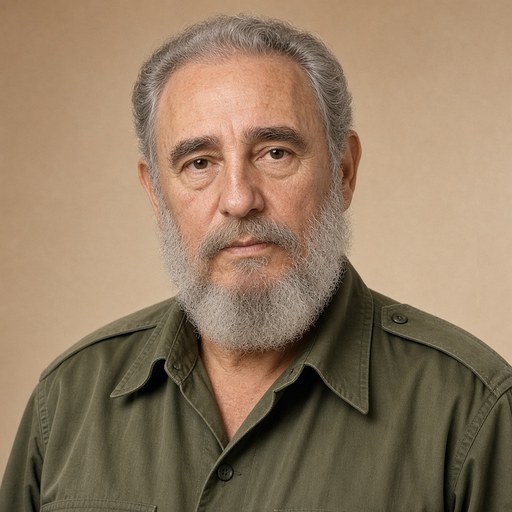
 Fidel Castro · President of Cuba
- Context
- Castro addressed delegates at the opening of the Pediatrics Congress Cuba/84, a joint Latin American, Pan American, and Cuban congress held in Havana in November 1984.
- Main themes
- Infant mortality reduction, pediatric healthcare achievements, Cuban Revolution health outcomes, child mortality statistics, diarrheal disease control, accident prevention in children, vaccination and disease eradication, Latin American health comparisons, public health education
- Duration
- ~83 min
- Words
- 9,973
- Sentences
- 372
- Readability
- 45
- Grade
- 13.4
- Syntax
- 3.22
- Vocabulary
- 2.08
Translated from Spanish
The broad sphere of national life a sentence belongs to. Every sentence has an Arena, so it is the denominator the other indices are read against.
Other372 sentences in 112 paragraphs
Dear delegates and guests:
It may have been more comfortable for me and also for the translators to bring a written speech; however, more than a formal speech, I prefer to talk with you, frankly and openly, about these health issues, which have always interested me greatly.
I believe that this Congress is a good opportunity to exchange knowledge, to modestly explain our experiences, and at the same time, to receive the valuable knowledge that you can provide. I want to explain what we have done, how we have done it, and what we intend to do in the field of health.
Since this event brings together three congresses — the VII Latin American, the XIV Pan American, and the XXI Cuban National — I will start, then, with the field of pediatrics. I will have to use, in this and other topics, some data.
The fundamental index regarding pediatric care is the infant mortality rate in the first year of life. We estimate that before the Revolution, we had more than 60 deaths for every 1,000 live births, if one can trust the statistics, because we have an example: in 1970, the Somoza government reported that the country had 45 child deaths for every 1,000 live births; however, immediately after the triumph of the Sandinista Revolution, in 1980, with well-done statistics and when pediatric assistance services had already begun in extensive areas of the population, it was found that the rate was over 100.
In the first 10 years, we had managed to reduce it; not much yet, really, we had reduced it to 46.7: that was in 1969. In 1973, we had already reduced it to less than 30, to 29.6, if I remember correctly. Finally, in 1983, through a downward process each year, we had managed to reduce it to 16.8. And this year of 1984, according to preliminary reports, up to the month of September, including September, we had managed to reduce it to 14.5. We will have to wait for the final data at the end of the year, but we think that we may possibly go below 16 this year. These data are rigorously accurate: any case of a child born alive, even if they have some malformation that condemns them irretrievably to death, is counted among the live births and among the deaths in the first year.
With these indices, our country placed itself in 1980, when we had gone below 20, among the first 25 countries in the world with the lowest infant mortality rate: currently, we are approaching the United States, which occupied number 16 with around 12 that year, although it is known that, in those statistics, those who die from Hispanic and African origin populations have a much higher rate.
By this single means, the effort made to reduce the infant mortality rate from over 60 to figures approaching 15, we estimate that in these 25 years, the lives of more than 100,000 children have been preserved.
In the ages between 1 and 4 years, the rate in 1969 had already been reduced to 1.8 per 1,000: currently, it is 0.8. Among the ages of 5 and 14, in 1969 it was already 0.5, in 1983 it was 0.4. It is no longer very easy to decrease these rates, although we consider it within certain possible limits: they are the normal rates in countries with a higher level of development.
For example, the five leading causes of death among 1 to 4-year-olds are, first, accidents, many of which occur in the home; second, malignant tumors; third, congenital anomalies; fourth, influenza and pneumonia; and fifth, meningitis infections. But among these five, accidents are responsible for one-third of the total deaths they cause.
In the ages between 5 and 14 years, the same main causes exist, but at those ages, accidents are responsible for more than 50% of the deaths caused by them, which demonstrates the importance of fighting against all the factors, and we do so, that cause accidents among children, and in which education — here Mr. Grant pointed out the importance of educating mothers, families — plays a very important role.
It has been a while since enteritis and diarrheal infections have not constituted the leading cause of death as they did before; they are not even among the top five causes.
In 1962, 4,157 children under 15 years old died from acute diarrheal diseases, for a rate of 57.3 per 100,000. By 1983, through progressive reduction, the number of deaths from this cause in these ages had been limited to only 385, for a rate of 3.9, a truly considerable reduction that clearly demonstrates what Mr. Grant stated here about the need to fight against that disease. It is truly impressive to hear that through this means, the lives of half a million children could be saved each year in Latin America. We estimate that through this means, in those 22 years I have referred to, between 1962 and 1984, we have preserved the lives of around 70,000 children under 15 years old. Adding up: more than 100,000 first, 70,000 later, etc.
Other diseases that had a worrying incidence on infant mortality were: poliomyelitis: in 1970 there were no cases; in 1983, of course, neither.
Diphtheria: one case in 1970, I refer to cases per 100,000, from 1971 it was eradicated; in 1983, zero. Tetanus: in 1970, nine cases; in 1983, zero. Whooping cough: 28 cases in 1970; 0.1 in 1983. Measles: 42 cases in 1970; 0.1 in 1983. Tuberculosis: five cases in 1970; in 1983, zero.
There are other indices that can illustrate the work, those that refer, for example, to problems of birth weight. Currently, the average weight is 3,181 grams. Cases below normal weight: in 1969 it was 11.7; currently, it is 8.5. Regarding malnutrition problems in children under one year old, considering weight in relation to height, it only reaches 4.6%. These are cases of mild malnutrition; cases of severe malnutrition are so exceptional that they do not count statistically. In children from 1 to 15 years, it is reduced to 0.7%. There have been no deaths in recent years due to malnutrition problems.
There are 2,320 doctors dedicated to health or pediatrics, not counting specialists, radiologists, pathologists, cardiologists, and many others who also work in the pediatric sector.
We have 27 specialized hospitals; there were three before. I believe this has been an important factor, apart from the fact that pediatric care is provided and there are pediatric services, of course, in maternity hospitals, in mother-child hospitals, in general hospitals, in polyclinics, in rural hospitals, etc.
It may be convenient for me to explain our experience in the case of the hemorrhagic dengue epidemic that took place in 1981. The epidemic was detected — of course, it was not known in our country, nor was there even experience — at the end of May 1981, in a sector of the City of Havana, near the airport. Within a few days, it had spread throughout the country; by June 16, cases were reported in all provinces. On July 13, it reached its highest incidence, with 11,721 cases reported that day. That sudden epidemic that arose in our country forced us to make an extraordinary effort from the very first moments: tens of millions of dollars were invested — I will speak in dollars, not pesos — because we had to spend convertible currency to acquire thousands of fumigation equipment, hundreds of tons of various chemical products to attack the adult populations of the vector mosquito and prevent reproduction. It was necessary to mobilize tens of thousands of people with the support of the entire population to detect the real or potential vector foci and eradicate them through all kinds of measures that included cleaning and sanitation of homes, industries, and social facilities. Emergency courses were prepared for thousands of workers who had to perform the fundamental tasks in that campaign: land, air, etc. were used: it was a truly desperate struggle against an epidemic that was gaining momentum, to the extent of exceeding 10,000 cases reported in a day. Special measures were also taken related to the treatment of the disease: what medications should be used and which could not be used, because they could worsen the problem.
Intensive care units were improvised in all hospitals, and at the end of the epidemic, it was decided to admit all cases, to isolate it completely, and by October 10, the last case was reported in the province of Santiago de Cuba.
Here we had known dengue serotype number one, which was already considered almost endemic in the Caribbean and was more benign, but not serotype two. As a result of that campaign, serotype one and two were eradicated; they have not reappeared in our country, and the population of vectors has been reduced to the lowest possible level, in some regions it has disappeared, and we maintain a constant struggle: since then, around 6,000 health workers are dedicated to that task. Our aspiration, as much as possible, would be to completely eradicate the vector, which is not so easy, because it not only inhabits cities, but has also been found in rocky mountains, in holes where there are small amounts of water, etc. But we are in a constant struggle against the vector, and we have reduced it to levels that are harmless.
The epidemic affected 344,203 reported people. More than 116,000 were admitted to hospitals. It was necessary to improvise hospitals, and many schools — as it coincided precisely with the vacation period — technical schools, sports schools, pre-university schools for boarding students, etc., were converted into hospitals. There were 9,128 severe and very severe cases in children, because it mainly affected children, or it was more harmful, more aggressive at that age; and 1,097 severe and very severe cases in adults. Our doctors and nurses made an enormous effort throughout the country in caring for the sick, which reduced mortality to 101 children and 57 adults, 158 people in total.
At the moment the epidemic occurred in our country, after investigating well, there was no focus of this serotype anywhere in the world. It presented itself in a truly very rare, very strange way. We came to the conviction that this epidemic had been deliberately introduced. And indeed, some time later, not many months ago, counter-revolutionary elements confessed that during those days they had been working on biological actions against Cuba. And we know perfectly well who sponsors, supports, and trains these counter-revolutionary elements in terrorism and that type of activity.
Previously, we had suffered strange plagues and epidemics in plantations and animals: plagues in sugarcane, plagues in tobacco; swine fever in pig herds, twice. Both times we managed to control and eradicate it; I believe we have been the only country in the entire area that has managed to eradicate that epidemic. Over time, elements that worked with the CIA also appeared, who confessed, perhaps thinking, even, that they had great historical merit, that they had been introducing those plagues into our country. But we had never suffered bacteriological actions that affected the population. This obliges us to make a very great effort here among ourselves: of organizational measures, of prevention, because we not only have natural phenomena, that there are diseases that spread naturally, but also the risks of the deliberate introduction of diseases into our country.
The response was to multiply our efforts for health. An interesting experience turned out to be the usefulness of intensive care units. At that time, we only had one intensive care unit in a pediatric hospital; it is not that children did not receive intensive care, in severe cases special attention was provided, but the intensive care unit as an institution with all the appropriate equipment in each pediatric hospital did not exist. A plan was developed to build this type of unit in all pediatric hospitals, with rigorously isolated cubicles within the unit for cases of contagious diseases. 93 doctors, more than 300 nurses, and many other technicians were trained. The equipment, all that was considered indispensable, some of it quite sophisticated and expensive, which also requires electronic engineers and other technicians, was acquired. 29 of these units are already in operation, some since that same year, because in the midst of the epidemic, the intensive care units began to be built emergently.
Those therapy rooms have provided an enormous service. Not all of them are finished; about three rooms are still lacking; some have been operating for two years and others for a year and a half, but in those intensive therapy rooms, 12,996 cases have already been attended to. The doctors and technical staff working in those rooms are very dedicated, because naturally, caring for a sick, seriously ill child greatly motivates health workers to strive harder, and they have managed, in those cases of accidents or very serious illnesses, to reduce mortality to 7.9%. There is no doubt that without that treatment, without those teams, without the experience of the staff working in those rooms, the percentage of deaths might have been 20%, 25%, or even 30%, because many times these are critical cases that can only be resolved with that special attention.
I want to say that we responded to the epidemic by multiplying our efforts in health, and only in this area of childhood, these intensive therapy rooms must have saved 15 to 20 times more lives than those lost during the epidemic. We have gained experience from that bitter tragedy. Moreover, the effort in the field of health for our entire population has been encouraged.
Closely related to child care is the issue concerning mothers. In this area, the indicators are also very positive. In 1962, for example, of every 100,000 live-born children, there were 118.2 maternal deaths. By 1983, this had been reduced to 32 deaths per 100,000 live-born children. There are provinces that have sometimes achieved the feat of going two or even three years without a single case of maternal death, and in all of them, they consider it a great honor how they reduce maternal deaths. When a case occurs after a prolonged period, it constitutes a kind of tragedy in the province. People take this activity very seriously, with a lot of responsibility, and that is why these indicators are of enormous importance to them.
Recently, we read in the newspaper that in the province of Matanzas, in the municipality of Ciénaga de Zapata —one of the poorest in the country in the past, an area with low and swampy land, where the mercenary invasion of Girón took place in 1961— this year there were zero child deaths in the first year.
That is to say, public health activities are not centralized; the central body sets the standards, the directives, administers some fundamental centers, such as research centers and highly specialized hospitals, but health services to the population are administratively decentralized, and each of the provinces and municipalities makes a special effort to not fall behind and to achieve the best results.
Another indicator: institutional childbirth. Before the Revolution, it was less than 20%; currently, 98.4% takes place in hospitals. I have sometimes asked what happens with that 1.6%, why it is not one hundred percent, and I am told: "Well, there are some who are born on the way," they are the fewest. This has greatly helped to reduce maternal and infant mortality. The average number of consultations per year for pregnant women is almost 12; they are attended to from the very first moment, and special attention is given to high-risk cases.
The indicators related to the weight that pregnant women should have are also very positive; around 89% of them are within the norms; those who gain weight during that period as they should are also within the norms, around 90%; those who are not are considered high-risk cases and receive special attention.
Those who have 11 grams per cent of hemoglobin in the third trimester of pregnancy also rise to 86.3%. All those indicators, all those details that can influence the results, are taken very seriously.
And speaking of consultations for pregnant women, I must mention that children also received an average of 14.8 consultations in their first year of life in 1983, and consultations for child care, that is, with healthy children, rose to an average of 8.5. The total number of doctors dedicated to these mothers and children is more than 4,000, many of them specialists, who have studied for several years as residents and have been adequately prepared for that activity.
What factors have influenced these results? I think this is important because the problem that health organizations, UNICEF, and other organizations have is that they already know perfectly well —as Mr. Grant said— how to combat a disease, the known techniques, the vaccines, even what he explained, the way to hydrate a child directly at home, orally; the problem is how to apply that. I, of course, will not meddle in political matters in this Congress, and I will not meddle because I really should not. But I want to say that it is essential, fundamental, that states and governments adequately address and prioritize public health. I will say no more.
I will list a series of factors, among others. First, I believe that the elevation of the general level of education of the entire population has helped us a lot. Twenty-five years ago, we had a 30% illiteracy rate, who knows what percentage of semi-illiterates, and today our workers are already reaching at least the ninth grade. That helps a lot; there is an association between the level of culture, education, and the chances of success of health programs. We have also benefited from the improvement in the nutritional level of the population, although, of course, we do not consume the 100 kilograms per year of meat from Argentina or Uruguay, countries that have immense herds, but food has improved, it is more balanced, and above all, gentlemen delegates, it is guaranteed for everyone. Every child is guaranteed a liter of milk daily until the age of seven; it is provided as a standard, received every day at home at a very modest price, and no one lacks the resources to acquire it.
The facilities where that milk is produced have potable water because Public Health —and rightly so, although this raises the costs of investments— strictly prohibits that a cow consume water that is not potable, so here aqueducts must be built not only for the population but also for dairies, for the animals. And in addition to that, all the milk is pasteurized, and hygiene standards must be carefully observed in all food products. There is no falsification of products, nor introduction of harmful foods, because there are strict standards that must be complied with, and they are complied with in everything related to the food industry.
The hygienic level of the country has also improved; almost all urban communities have aqueducts through which they receive potable water, and the main consumption centers have modern water treatment plants. Hundreds of thousands of homes have been built; unsanitary neighborhoods have been eradicated, and you will find that in the City of Havana and anywhere in Cuba, there are no beggars, no barefoot children, no panhandlers; you will see many children like those who performed here today, in school, in their uniforms; you will not see them begging. Sometimes they are barefoot, but it is because they want to be, right? because they are mischievous, not because they do not have shoes. This factor has helped us.
A decisive factor has been the participation of the people in the battle for health, the systematic participation of mass organizations in all tasks related to it. The Federation of Cuban Women, for example, has almost 60,000 delegations throughout the country, and in each of them, there is a health worker, a volunteer companion, the health brigadista with adequate training, who works with mothers, trying to teach them, educate them, who systematically cooperates in health plans, in issues related to cytological tests, which have been made massive for the early detection of cancer. Their work is extremely valuable. The work of the Federation of Cuban Women encompasses everything related to the mother, her health, and that of the children.
The Defense Committees, which number approximately 85,000, also actively participate in health tasks, such as activities related to blood donations. Half a million people voluntarily donate blood each year in the country. That movement has been growing; I remember when there were fewer than 100,000, and now we are approaching half a million. I also remember when the earthquake in Peru occurred. At that time, a call was made to the population to help the people of Peru, and in 10 days, 100,000 blood donations were made.
This gives an idea of the cultural level of the population, of their concern for health, of their solidarity feeling. This number of donations allows us not only to have fresh blood available for transfusions but also for the production of plasma and many other medications made from blood. It is a growing movement.
The unions have their health representatives in all factories, in all workplaces, who oversee hygiene issues and workplace accidents. The peasant associations also participate in health tasks. All mass organizations. That has helped a lot.
An important factor —and Mr. Grant mentioned it— is precisely the education of mothers, specific education on all these health issues, through mass media, consultations, health hearings, etc.
Another factor is the extension of medical services throughout the country, especially to rural areas, which was where the greatest number of tragedies and epidemics that devastated entire regions occurred in the past.
The rigorous and systematic vaccination and prevention program.
The training and technical improvement and the high moral and human quality of our pediatricians, obstetricians, and other workers who labor in this area of health.
Other measures, for example, all cases of acute diarrheal diseases and acute respiratory diseases are given priority and all necessary beds are available in hospitals to admit and care for them.
The appropriate pediatric and obstetric standards to organize the service, to guarantee the most correct diagnosis and treatment of diseases.
The modernization of services and techniques.
The maternal homes, another institution created to protect, above all, mothers who live in the countryside, in isolated places, where it can take hours to reach a doctor or hospital. There are 85 maternal homes, and there mothers stay in the last weeks of pregnancy, receive care, and are taught what to do afterward with the children if they are first-time mothers, etc.
I believe that systematic medical assistance to pregnant mothers, especially those at high risk, has helped a lot; the research conducted on infant mortality, obstetric risks, growth and development of the population, and others; the specific national programs dedicated to these objectives; maternal-infant care and the fight to reduce infant mortality; the special attention given to diabetic and asthmatic children, which includes recreational camps during the vacation period, where they are educated about their illness; asthmatic children are taught exercises, diabetic children are taught to detect their situation, their sugar level at a given moment, even to medicate themselves, inject themselves when necessary.
I believe that prioritizing attention to mothers and children in the stomatological sphere and some other factors yields positive results. One that seems very important to me is the institution of the accompanying mother.
I remember years ago when we were inaugurating a hospital in the center of the country, and the problem of mothers who admitted their children to the hospital was raised. They would then make endless lines, sometimes day and night. There were criteria that the mother was a layperson, that she knew nothing about medicine, and that, therefore, she could hinder the treatment that had to be given to the child, and there was, indeed, an inhumane separation. We came to the conclusion that we should use mothers as support for the work of doctors and nurses. We did it that way. The results have been excellent.
I remember when the dengue epidemic —that I mentioned— occurred, entire wards in hospitals, especially in the most severe cases, with children receiving intravenous fluids, needed constant monitoring, and all the mothers were there. By that time, a uniform had also been made for the accompanying mothers; they were given clothing, food, and other care, and they were there, constantly by the child's side. I wondered how we could have replaced the mothers in the midst of an epidemic like this, with thousands of hospitalized cases; it would have been impossible for all the nurses to manage.
The mother knows the child's problems, customs, and psychology; it is much more humane for her to be there helping, it is much more humane for the child who, naturally, is adapted to the mother. We have even taken this institution to the intensive care unit, where the technical level is even higher. And always, if you go to an intensive care room, you will also find the mother there. Have those mothers hindered medical care, the correct application of treatment, have they gone to give the child another medicine? I have not heard of a single case of that; on the contrary, they are an extraordinary help to the doctors and nurses. I believe that this factor must be taken into account.
Another factor that has contributed to the results has been the already mentioned intensive care units.
Finally —I do not intend to mention them all— it seems to us that the existence of school institutions, starting from the children's circles, has helped us. We have 835 children's circles —these are the places where working mothers take their children when they have no one to care for them at home. There they teach them, feed them, take care of them diligently, and provide medical attention; not all children under five are there, but there are around 100,000 who go every day to the circles. The rest of the children, between the ages of 5 and 14, are either in preschool, in primary school, or in secondary school, all enrolled in school. There are also special schools for children with difficulties. In short, almost the entire population —almost one fraction below 100— we can say that in practice the totality of children are enrolled in school, and that helps medical care programs.
Through these means, we have reached these indices. I understand that it is not possible to do the same in all situations. It is not that easy. I understand well that for many of you, in the environment in which you operate, no matter how much you want, it will not be easy to apply similar efforts; but we must think that, even in the worst conditions, much can still be done. We cannot wait for the social regime to change to try to save the lives of half a million children in Latin America each year, with relatively affordable procedures, as Grant mentioned, we cannot. We changed the social regime and that —I say this frankly— helps us a lot.
However, I believe that in the area of Third World countries much can still be done, it can be done, although with more difficulties. And it is not a matter of many resources, of many riches. Public health is not what costs us the most, in fact, education costs about three times more than public health. It all depends. And there are factors, measures that we have taken that have reduced costs, despite the fact that since the early years of the Revolution, doctors' salaries have been increased. Some resources are certainly needed. Well, how are we going to save that half a million Latin American children? I would say —and this is not a recipe, because unfortunately in theory many things are logical and clear, but in practice they turn out to be impossible— that with a little of what is squandered, with a little of the money that escapes —because I read this morning the explanation given by an American economics professor, who said that a third of the accumulated debt of 350 billion dollars in Latin America was due to capital flight. If that capital did not flee, something could be done; if so much money were not squandered on luxuries, something could be done. If being economically poor, we want to have the lifestyle of consumer societies, then little can be done, because resources will have to be invested in things that are worth much less than a human life. There is money, Mr. Grant, there is money! and I believe that you, Smith, Olinto, and the other health leaders can persuade those who have the responsibility. I am not going to persuade them, of course. No. They will not pay much attention to me, they may think I am going to subvert the order.
I will be honest, I have even been able to appreciate that some Latin American governments are making a greater effort in this field of health and education —some Latin American governments— even within this situation of economic crisis. Of course, when the crisis comes, the first thing the International Monetary Fund advises is to close schools, to lay off teachers, doctors, to close hospitals, to suspend social security aid, to close asylums, etc., etc.
That is what happens. You and we know it, even though we do not want to talk about politics here tonight.
In the area of health, which encompasses not only children and mothers but the entire population, we have guided ourselves, from the beginning, by a number of fundamental criteria: the first, to prioritize public health as one of the vital services for human society. Moreover, it is what the people appreciate the most. I cannot understand how politicians do not realize that the service the people appreciate the most is public health; it is number one everywhere. The second is education. These are two things that families, the people appreciate extraordinarily.
That is to say, we started by prioritizing public health services. Second, extending it throughout the country, creating, in that extension plan, rural medical services, from the early years of the Revolution. Third, the free provision of health services to the entire population, including the medications consumed in hospitals. This created the opportunity and possibility for the entire population to receive medical services. Since then, we have fought tirelessly for their quality.
Fourth, what I mentioned earlier when I explained the factors that influenced the current indices of child and maternal health: the participation of the masses in health programs.
Fifth, the concept of the importance of preventive medicine. Sixth, to develop in doctors and other health workers a high spirit of solidarity and a deep awareness of the social and human value of their activity.
As a result of our efforts, today we have 396 polyclinics, which form the fundamental network of primary assistance; before the Revolution, there was not a single one; the country had 97 hospitals, today it has 263; there was no rural hospital, today we have 54; from three pediatric hospitals, the number has risen to 27; there was no maternal home, today we have 85; there was no dental clinic, today we have 143. But not only medical services, dental services are provided free of charge to the population. Before there was one blood bank, now there are 24. There are also hygiene and epidemiology laboratories, numerous dental and orthopedic prosthesis laboratories, and a series of health units, which in total add up to more than 1,500.
Before there was one medical school located in the capital of the country, now there are 18 —each province has its medical school, some have two, and Havana has five, which provided all the possibility to train their doctors and specialists—; one dental school, now there are four; six middle-level nursing schools, today there are 64; four hospitals with teaching areas, today there are 99; before, 63% of doctors and 62% of beds were in the capital of the republic, now it is the other way around —without taking away a bed or a doctor from Havana, on the contrary, increasing them, but developing public health in the rest of the nation— more than 60% of doctors and hospital beds are in the interior of the country. It is a remarkable change, and I imagine that this problem of the concentration of doctors and beds in capitals affects many countries in the world.
The public health budget was, when the Revolution triumphed, 21 million pesos; in 40 years, since the mediated republic emerged, it had increased by only three and a half million in annual public health spending, between 1942 and 1958, it decreased by one million; today 668 million are invested and it grows every year. Before, three pesos and two cents were dedicated per capita —that was in theory, part was lost along the way— today 66 pesos and 80 cents are invested. And, really, it is not much, gentlemen, it is not much! I believe that human life is worth much more than 66 pesos and 80 cents annually. It is painful that in a world where 900 billion dollars are invested in weapons, millions of children die each year in the world because they do not have the five dollars that the vaccination plan mentioned by Mr. Grant costs.
As I explained, polio was eradicated in 1963, malaria in 1967, diphtheria in 1971; in that same year, neonatal tetanus disappeared. Many diseases that were a major problem have been resolved.
The cases of death from tetanus: in 1965 there were 509, in 1983 only 24. The cases of tuberculosis: in 1962 there were 1,402, in 1982 they had been reduced to 99, no child among them. Leprosy has been reduced to its minimum expression and is in the phase of extinction; there are means to combat it efficiently. Outbreaks of typhoid fever have not occurred in our country for a long time; a rigorous epidemiological control is maintained over this type of disease.
Now in our country, people die from the same causes as those in highly developed countries, despite the fact that we are not in that category of countries; it demonstrates what can be done, that it is not just a matter of riches, of abundance of resources, because we are far from being a highly developed country. By using resources rationally, making a great effort, we have achieved these results. The main diseases for which people die in our country, unfortunately —because there is always something to die from— are heart diseases, malignant tumors, circulatory problems, etc.
Now we have to combat the diseases of civilization: to combat sedentary lifestyles, obesity, all the factors that affect these diseases; to combat accidents, which become an important cause of death in general, not just for children. We are also entering the path of fighting against low-fiber diets. The developed and super-rich have discovered that by eating nothing but flour and animal protein and other fiberless foods, diseases are emerging that were hardly known at the beginning of the century.
We also work on the early detection of cancer, because it has been proven to be the best weapon available at this time in the fight against that disease.
We have practically fulfilled all the goals of the World Health Organization's program: "Health for All by the Year 2000".
The life expectancy in our country is currently 73.5 years, similar to that of the United States. 72.5% of those who die are 55 or older; 15% of the deceased are over 85 years old and, notably, 1% of those who die in our country are 100 years or older. We have improved. However, all scientists claim that the genetic potential of man is 120 years; there are some who live longer, some mountaineers, in some areas of Europe, over there in the Caucasus, live up to 140 years, but it is said that the genetic potential is 120 years. There is still a long way to go.
We have —I must say— made this effort, achieved these successes, these indices for our country, but we have not been selfish, we have not denied collaboration to other countries. Since 1963, the first medical brigade was sent to Algeria, just after it gained independence; since then, for more than 20 years we have collaborated with many countries. We have around 2,000 health workers, including approximately 1,200 doctors, 600 nurses, and numerous mid-level technicians, working in 25 developing countries, Third World countries. Thousands and thousands of Cuban doctors have fulfilled internationalist missions of that type. In our country, 766 doctors and dentists from Third World countries have graduated, and more than 1,800 scholarship students from 75 Third World countries are studying in the health area, as mid-level technicians, medical students, or postgraduate courses.
How did we achieve this? Well, it wasn't easy; the conditions were really difficult because at the triumph of the Revolution, there were around 6,300 doctors — I believe there were 6,286 doctors in Cuba — then the economic blockade began, the offers and promises to doctors to leave the country, and with that, the exodus of doctors. We were deprived of 3,000 doctors; 3,000 doctors emigrated — almost all to the United States, of course. It is hard, it is bitter, it is even strange; I mean, it is such an unusual fact; but we must point out that for more than 20 years there has been a blockade that strictly prohibits the export of a single medicine or a single medical device, or a single spare part for those devices to Cuba from the United States, which is the country with the greatest technological development in that area. That is to say, we have had to carry out this program in the midst of this blockade and start with half the doctors, because we did not prohibit anyone from leaving; we did not want any doctor who was not willing to serve their homeland and their people. We did the same with other professionals. We faced it, we accepted the challenge. About 3,000 doctors stayed, and they were the foundation and backbone of this work; they were the professors in the universities and in the hospitals.
I must say that we did not prohibit private medicine at all; a law was never made here prohibiting it; we worked with the new generations of doctors, with the students, from the first year of the Revolution. The conditions helped us since there was a great patriotic fervor, and we persuaded them; we managed to get them to commit — not by virtue of a law, but of their own accord — to renounce the practice of private medicine and dedicate all their time to public health. None of those 3,000 doctors were prohibited from continuing to practice private medicine; many decided to dedicate their time entirely to public health; some remained practicing private medicine, and I must tell you that there are still 53 doctors who practice private medicine, and if they are long-lived, if they fall into the category of the 1% who live over 100 years, it is possible that we will still have some private doctors in 40 or 50 years. No one bothers them; they work, they have all the respect, the consideration; that is to say, we did not make laws about that; we did political work, political measures, not coercive measures.
And so we had to start under those conditions; we accepted the challenge, I repeat, we began to develop the university faculties, to expand them, and today we have 20,545 doctors, and in the next 15 years we are going to graduate 50,000; I don’t know if that seems like a lot to you, it doesn’t seem like much to us, because we know what we are going to do with those doctors, what they are going to do, and what they mean. We intend to continue advancing because there is still much to be done in this field; we cannot settle for, much less, what has been done, and we have the elementary duty to continue fighting. Today we have other conditions; thousands of specialists, high-level doctors have been trained in recent years; there were 828 nurses in public health, a few more in private hospitals; today we have 35,000 nurses; there were 478 middle-level technicians; today we have 34,000, and in the schools of nursing and middle-level health technicians, we have 29,000 young people preparing. Moreover, we have created the University Faculty of Nursing Degree, and we aspire for our future nurses to have a university level; there are already 1,600 studying in that faculty, nurses who are also working. Previously, the level was ninth grade to enter nursing studies, and when the school delay disappeared, as they were very young at that grade, we began to fight to admit them already graduated from pre-university; many of those who enter nursing school do so already with pre-university level.
The faculties of medical sciences, in the course that began this year, reached an enrollment of 25,000 students, of which more than 21,000 are in medicine, 2,000 in stomatology, and 1,600 — as I said — in nursing degree.
We have established what we call the Medical Sciences Detachment, with contingents of young people selected each year based on their records and their proven vocation for medicine, very selected students from among the best students.
The first, second, and third years are integrated by that detachment that bears the glorious name of "Carlos J. Finlay", who was the discoverer of the famous Aedes aegypti, which transmitted yellow fever and also dengue, whose glory others have tried to obscure; but it is known, his scientific feat is rigorously proven. We are making an edition of Finlay's works so that all students have them. It is amazing how that important discovery came about. That detachment has its special regulations; the demands on them are greater than on any other university student because if the architect makes a mistake or the engineer, well, it is bad for them to make a mistake, but if the doctor makes a mistake, if they do not strictly fulfill their duty, it is tragic; therefore, the demands on medical students are great.
Commissions of university professors were sent to the seven countries with the most development in the field of medicine and to the best universities in those countries, and they collected information, bibliographies, programs, and all materials that we are using in the development of the new medical program to make it even better. The development programs for 36 clinical and surgical specialties are being elaborated; they will be ready by the end of this month, in order to promote the planned development of all essential specialties, which also include those that are "anemic," such as anesthesiology and others. A new specialty has been created, and within this, we must fight against the tendency for there to be many. One specialty, one idea that we have been developing in our country is a very important specialty, Comprehensive General Medicine. Because, until now, general doctors in our country were those who had not done further studies, those who had not studied any specialty.
We consider that general medicine must be a specialty: it requires more studies; the doctor must do a residency; a rigorous program has been developed, which requires broad knowledge of pediatrics, obstetrics, internal medicine, psychology, and public health. We already have a group of doctors doing the residency in that specialty. The trend is for all doctors to have the category of specialists, even general doctors, and, with that, the social consideration and proportional remuneration for their knowledge. Six years of medicine will not be enough; an additional three-year residency will have to be done. This doctor will play a very important role in primary medicine and in community medicine.
That is to say, in everything related to the training of medical personnel, we are carrying out an ambitious and rigorous program that, in my opinion, promises much better results in the future.
We are working on advanced techniques; for example, in prenatal genetics, to diagnose cases of open malformations of the central nervous system, to diagnose cases with Down syndrome and also sickle cell disease. I have mentioned three diseases, and I must say that in our country, approximately 250 children are born each year with open malformations of the central nervous system (neural tube defect), 220 with Down syndrome, and 100 with sickle cell disease, that is, almost 600 children. This is important not only because of the number and the tragedy that these cases mean for families but also for more than 150,000 mothers who give birth every year and would like to have the assurance that their child does not have one of those problems, and that any mother included in those cases can make the decision to terminate the pregnancy within the established period because the diagnosis is early. I do not want to enter into issues of religious dogma on this topic; this has nothing to do with religion, in my opinion; it has to do with the most elementary common sense and with human compassion because we have seen the tragedy that it means for any family.
There are genetic consultations. The couple is explained; the risk possibilities are analyzed based on family history, as in the case of Down syndrome due to the mother's age. All this can help avoid hundreds of tragedies, but it contributes to ensuring that all potential mothers have peace of mind, and that each one can be told: your child will be born healthy.
Now I have forgotten a medical term. The doctors could help me, as there are quite a few here. What is the name of that disease in newborns that, due to a protein, later degenerates into mental retardation? Ah! Phenylketonuria, I had forgotten. There is also a number of cases each year. This is very important because diagnosed early, it is perfectly resolvable. It is also included in the program. We are working on it; we have laboratories, and we are beginning to apply these prenatal genetics techniques.
We are also working in neurophysiology to detect hearing problems early, or anomalies in the central nervous system, or learning delays, or neuropsychiatric problems.
In other fields, in medicine in general, we are working on the use of the most modern techniques. We are creating nephrology units with modern hemodialysis equipment for children within certain age limits; because the famous intraperitoneal catheter — as I believe doctors call it — is too cruel and traumatic, those centers are being established. Six cardiovascular surgery centers are being developed, including one in the center of the island and another in the eastern region, and one for pediatric cardiovascular surgery in the capital. The staff is being trained; we will promote that activity as much as possible. We are using some techniques, such as computed tomography; it is being applied, and many cases are being resolved with it. We are acquiring, and soon we will have in our country, the first nuclear magnetic resonance equipment, which does not work with X-rays but with the rays emitted by the body, which achieves very clear images and sometimes those not obtainable by conventional radiography. From the resources we have, we set aside a minimum to acquire, learn about, and master new technologies. We intend to acquire a newly discovered scanner for the treatment of cardiovascular diseases, which is also said to even be able to predict a heart attack. If it is true that some medications are being developed that interrupt it, then the possibilities of reaching the potential of 120 years will increase.
Another piece of equipment that interested us a lot and we are acquiring — this also has a technical little word — is the equipment for extracorporeal lithotripsy. That means, gentlemen, and I myself have had to explain it to myself to understand it well — it is called that, it has no other name — a fairly sophisticated but very important piece of equipment that destroys, through ultrasound, kidney stones that cannot be expelled in any other way, and that give rise to traumatic operations worldwide. It is enough to say that around 3,000 of those operations are performed in our country every year. That equipment is relatively expensive; whenever a new piece of equipment appears, it is more expensive, but necessary and even economical if 3,000 operations of that type can be saved. There are people who need to be operated on with some frequency.
We try to gather all the information on the development of medications, of the equipment. Diagnostic ultrasound has quickly been extended throughout the country; 60 hospitals are using it; it detects some things that normal radiography cannot detect; even here many mothers know if the child is going to be a boy or a girl; there are no possible bets on that because in many cases, ultrasound defines it. It is very practical in medicine; it also saves plates, it is economical. We are trying to develop and apply all these new techniques. Fortunately, not all are produced in the United States; they are produced in Japan and in other countries, where we have been able to acquire them. Some, even, are not produced in the United States.
We are also developing the production of medical equipment; we are currently building two new factories for medical equipment.
The foreign currency that must be spent on any medical equipment, producing it in the country, constitutes 20% of what it costs to import it.
The same goes for medications, and one of the reasons we have been able to carry out this program at a low cost is because our spending in foreign currency is reduced. We produce many medications with national raw materials, or we import the raw materials and manufacture them; others that we cannot produce, or it is not convenient to produce due to the small quantity, we acquire from socialist areas or from Western countries, depending on the case. But it is very important, because the prices of transnational companies are unaffordable, that is the truth: an aspirin contains raw materials that cost a fraction of a cent and is sold for five cents, and the same goes for all medications. If we were to buy the medications we use in the global market, they would cost us around 150 million or 200 million dollars at a minimum each year, and we obtain the medications we need or the raw materials with one-fifth of the spending in convertible currencies, to which socialist supplies are added.
But these two problems for Third World countries are very important: the development of medical equipment production and the development of the pharmaceutical industry.
I believe that research is also important. The Ministry of Public Health has 13 research centers, including the Tropical Medicine center, whose new facilities have begun to be constructed and which gathers a large amount of experience regarding diseases in the Third World area, experience that demonstrates that practically all those diseases have a solution today.
Biological research has been promoted, and we have managed to produce white blood cell interferon in a relatively short time. Possibly no other place has conducted more research regarding the use of this product in the fight against viruses; it is the first antiviral weapon that medicine has, and it has been successfully tested.
When the dengue epidemic occurred, it was applied in desperate cases. But above all, the effects of its application were appreciated in a pioneer camp during vacation: a decision had to be made whether to suspend the vacations of tens of thousands of children and adolescents or not; we concluded that it was better for them to be there because they would receive better attention as soon as symptoms appeared, this product was applied, and there was no case that progressed to severe symptoms in any of the hundreds of affected children. It has been applied with truly radical effects in viral hepatitis, plantar warts, herpes zoster, and pharyngeal papillomatosis, which causes numerous operations in children and adults. And I will say something more, but with great caution so as not to raise optimism; even in some types of cancer, research is being conducted with certain results; only in some, unfortunately, not in all, apparently that disease will need to be addressed through very diverse avenues, because it is very varied and complex.
It is possible that we will soon be able to start producing interferon through genetic engineering. A new research center for genetic engineering and biotechnology is being built, which will be completed in a period of 20 months. It is of enormous importance because it will offer the possibility of producing and reducing the cost of many of these products such as interferon and insulin; as well as for the production of vaccines and other new medications. For agriculture, for food production, and even for industry, that area of research has great prospects, and, above all, due to its characteristic of not requiring large investments or large resources, but rather capable and tenacious people, human talent; if human talent is available, a lot can be done and achieved in that area.
There are also —and I want to talk about this as I am nearing the end— certain ideas that we are currently introducing and developing, which is that of the community doctor. Here it is also called the family doctor, but it is not what is traditionally known as a family doctor in the Western world. It is the family doctor because they are assigned a number of families, 120, 130, as a complement to the entire primary public health network. This doctor works there in the community, whether in a school, in a factory, or in any area where the population is found: they carry the health records of all the people, 500, 600, 650, and even more, they attend to all cases of diabetes, asthma, heart problems, of any kind, they follow up, visit patients, they are really a kind of guardian of the community's health.
Not long ago, the first doctors began to work with this concept, and the results are truly impressive —some of them are here, and I believe they will talk to you about this topic. This year we already have around 230 working in this activity, including mountainous areas, rural zones, urban areas, factories, and schools. The principle is that in the future, citizens will be attended not only by the network of polyclinics and the network of general and specialized hospitals, but also where they reside there will be a doctor, where they work there will be a doctor, where the children study there will be a doctor. These doctors will specialize, fundamentally, in Comprehensive General Medicine. Of the 65,000 doctors we will have in 15 years, that is, at the beginning of the year 2000, which is not far off, 25,000 will work in this activity. So we will have about 30,000 in the network, 25,000 in the community, we estimate 10,000 working abroad, and even then there will still be 10,000 missing to fulfill the purpose of giving every doctor, every seven years, a paid year off for study.
That is to say, we already have planned what 75,000 doctors will work on, we are training them. More than 5,000 selected students are already entering the Faculty of Medical Sciences each year. We have already been graduating 2,000 per year; next year we will start graduating 2,500; in 1988, 3,000; in 1991 we will be graduating 3,500 per year, and truly quality doctors.
Work is being done on everything related to the printing of textbooks, books for specialists, in all the editions that doctors need for their information, which is very necessary; when the users are numerous, there must be real information centers where they can obtain all the required information.
In summary, I must say that the experience of Cuba, the Cuban Revolution has made some contributions to the solution of health problems; in my opinion, I believe the most important are the following:
First, rural medical service, this is one of the contributions of the Revolution; second, the rigorous selection of medical personnel, I believe that nowhere else is medical personnel selected today with the rigor with which it is selected in our country; third, the extension of teaching to all hospitals in the country. This is a new idea; before, one, two, or three hospitals were chosen. We have discovered that when hospitals become teaching hospitals, care improves, and doctors prepare, study, and become professors, if not in all, in a significant group of subjects and specialties. We have extended it to municipal hospitals, and we will take it to rural hospitals. Fourth, the participation of the entire people in health tasks; fifth, I believe that the concept of Comprehensive General Medicine as a specialty will triumph; sixth, the programmed development of all specialties; and seventh, the community doctor. I believe these are seven aspects in which we consider our country has made a certain contribution to medicine. We have great confidence and are sure that the future will prove it.
We are gladly willing to share our experiences with Latin American doctors, with doctors from the hemisphere, all of them, including Canadians, North Americans, who are highly industrialized countries. There are some American doctors here, I believe 31 of them, we are very pleased to have them among us. The Canadians I believe will arrive a little later today. More than 1,000 pediatricians from numerous countries have arrived in our country on this occasion. This honors us and stimulates us greatly. Our successes, our modest achievements, we put at your disposal, and at the same time we aspire to receive from you your experiences and valuable knowledge.
We wish that in this Congress the ties are strengthened, and in a broad and generous way we all unite and help each other.
I believe that some of the things said here, by the leaders of international health organizations, are very encouraging. Very harsh truths have been said; I did not want to say them, but Grant said them, about what is happening, about those who die in this hemisphere he said something that is hard to forget, that the million children who die each year in Latin America, with the health indices that Cuba already has, could be reduced to 260,000. I myself am surprised by those figures. It moves us, it makes us feel the satisfaction that we have managed to reduce the death of hundreds of thousands of Cuban children, but I confess to you that it hurts us a lot to think that 740,000 children die in Latin America who could be saved. I believe there is no more eloquent word, seven hundred forty thousand lives lost due to irresponsibility, insensitivity, negligence, and ignorance!
I believe that those words from the Director of UNICEF measure the importance of the things that will be discussed and the work that will be carried out in this Congress.
I have spoken to you at length. Indeed, I may have taken a bit too much of your time. I hope that during these days of your stay in our country you have the opportunity to verify in practice what I have explained to you today.
Thank you very much.
The original Spanish. The tags above are read on the English translation's sentences.
Estimados delegados e invitados:
Tal vez habría sido más cómodo para mí y también para los traductores, traer un discurso escrito; pero, más que un discurso formal, prefiero conversar con ustedes, franca y abiertamente, sobre estos temas de la salud, que siempre me han interesado mucho.
Pienso que este Congreso es una buena oportunidad para intercambiar conocimientos, explicar nosotros modestamente nuestras experiencias y, a la vez, recibir los valiosos conocimientos que ustedes pueden aportar. Quiero explicar lo que hemos hecho, cómo lo hemos hecho, y qué nos proponemos hacer en el campo de la salud.
Por tratarse de un evento que reúne tres congresos —el VII Latinoamericano, el XIV panamericano y el XXI Nacional Cubano (APLAUSOS)—, voy a empezar, pues, por el campo de la pediatría. Tendré que usar, en este y otros temas, algunos datos.
El índice fundamental sobre la atención pediátrica es el nivel de mortalidad infantil en el primer año de vida. Nosotros calculamos que antes de la Revolución teníamos más de 60 fallecimientos por cada 1 000 niños nacidos vivos, si es que se puede confiar en las estadísticas, porque tenemos un ejemplo: en 1970, el Gobierno de Somoza informó que el país tenía 45 niños muertos por cada 1 000 nacidos vivos; sin embargo, inmediatamente después del triunfo de la Revolución Sandinista, en el año 1980, con estadísticas bien hechas y cuando ya había comenzado el servicio de asistencia pediátrica a extensas zonas de la población, se comprobó que el índice era de más de 100.
Nosotros en los primeros 10 años lo habíamos logrado reducir; no mucho todavía, realmente, lo habíamos reducido a 46,7: eso fue en el año 1969. En el año 1973, ya lo habíamos reducido a menos de 30, a 29,6, si mal no recuerdo. Por fin, en el año 1983, a través de un proceso descendente cada año, habíamos logrado reducirlo a 16,8. Y este año de 1984, según informes preliminares, hasta el mes de septiembre, incluido septiembre, habíamos logrado reducirlo a 14,5. Habrá que esperar a fin de año los datos finales, pero pensamos que posiblemente ya bajemos de 16 en el presente año. Estos datos son rigurosamente exactos: cualquier caso de niño que nace vivo, aunque tenga alguna malformación que lo condene irremisiblemente a la muerte, se cuenta entre los nacidos vivos y entre los fallecidos en el primer año.
Con estos índices, nuestro país se colocó en 1980, cuando habíamos bajado de 20, entre los primeros 25 países del mundo con más bajo índice de mortalidad infantil: actualmente nos vamos aproximando a Estados Unidos, que ocupaba el número 16 con alrededor de 12 ese año, aunque se sabe que, en esas estadísticas, los que mueren de las poblaciones de origen hispano y africano son un índice mucho más alto.
Por esta sola vía, el esfuerzo realizado en reducir el índice de mortalidad infantil, de más de 60, a cifras que se aproximan a 15, calculamos que en estos 25 años se ha preservado la vida de más de 100 000 niños (APLAUSOS).
En las edades entre 1 y 4 años, el índice en 1969 ya se había reducido a 1,8 por cada 1 000: en la actualidad es de 0,8. Entre las edades de 5 y 14, en 1969 era ya de 0,5, en 1983 de 0,4. Ya no resulta muy fácil disminuir estos índices, aunque lo consideramos dentro de ciertos límites posibles: son los índices normales en los países que tienen más nivel de desarrollo.
Por ejemplo, las cinco causas fundamentales de muerte entre 1 y 4 años son, en primer lugar, los accidentes, que muchos ocurren en el propio hogar; en segundo lugar, los tumores malignos; en tercer lugar, las anomalías congénitas; en cuarto lugar, influenza y neumonía; y, en quinto lugar, las infecciones meníngeas. Pero dentro de estas cinco, los accidentes son responsables de la tercera parte del total de los fallecimientos que las mismas ocasionan.
En las edades entre 5 y 14 años son las mismas principales causas, pero ya en esas edades los accidentes son responsables de más del 50% de las muertes ocasionadas por ellas, lo que demuestra la importancia de luchar contra todos los factores, y nosotros lo hacemos, que originan los accidentes de los niños, y en lo cual también la educación —aquí el señor Grant señalaba la importancia de educar a las madres, a las familias—juega un papel muy importante.
Hace rato ya que las enteritis y las infecciones diarreicas no constituyen la primera causa de muerte como ocurría antes, incluso no están siquiera entre las cinco primeras causas.
En el año 1962 murieron 4 157 niños menores de 15 años por enfermedades diarreicas agudas, para una tasa de 57,3 por cada 100 000. Ya en el año 1983, mediante reducción progresiva, se había logrado limitar el número de muertes por dicha causa en estas edades a solo 385, para una tasa de 3,9, una reducción realmente considerable y que demuestra claramente lo planteado aquí por el señor Grant sobre la necesidad de luchar contra esa enfermedad. Realmente impresiona escuchar que por esa vía podría salvarse la vida de medio millón de niños cada año en América Latina. Nosotros por este medio calculamos que en esos 22 años a los que me he referido, entre 1962 y 1984, hemos preservado la vida de alrededor de 70 000 niños menores de 15 años. Van sumando: más de 100 000 primero, 70 000 después, etcétera.
Otras enfermedades que tenían incidencia preocupante en la mortalidad infantil eran: la poliomielitis: en el año 1970 ya no hubo ningún caso; en 1983, por supuesto, tampoco.
Difteria: un caso en 1970, me refiero a casos por cada 100 000, a partir de 1971 fue erradicada; en 1983, cero. Tétanos: en el año 1970, nueve casos; en el año 1983, cero. Tos ferina: 28 casos en 1970; 0,1 en 1983. Sarampión: 42 casos en 1970; 0,1 en 1983. Tuberculosis: cinco casos en 1970; en 1983, cero.
Hay otros índices que pueden ilustrar el trabajo, los que se refieren, por ejemplo, a los problemas del peso al nacer. Actualmente el peso promedio es de 3 181 gramos. Casos por debajo del peso normal: en 1969 eran 11,7; en la actualidad, 8,5. En lo relacionado con los problemas de desnutrición en los niños menores de un año, considerando el peso con relación a la talla, solo alcanza un 4,6%. Se trata de casos con desnutrición leve; casos de desnutrición grave son tan excepcionales que no cuentan estadísticamente. En los niños de 1 a 15 años, se reduce al 0,7%. No se han producido fallecimientos en los últimos años por problemas de desnutrición.
Hay dedicados a la salud o a la pediatría, 2 320 médicos, sin contar especialistas, radiólogos, patólogos, cardiólogos y otros muchos que también trabajan en el sector de la pediatría.
Tenemos 27 hospitales especializados, antes había tres. Creo que esto ha sido un factor importante, aparte de que se presta atención pediátrica y hay servicios pediátricos, por supuesto, en los hospitales de maternidad, en los hospitales materno-infantiles, en los hospitales generales, en los policlínicos, en los hospitales rurales, etcétera.
Tal vez sería conveniente que explicara nuestra experiencia en el caso de la epidemia de dengue hemorrágico que tuvo lugar en 1981. La epidemia se detectó —por supuesto no se conocía en nuestro país, ni había siquiera experiencia— a fines de mayo de 1981, en un sector de la Ciudad de La Habana, en las proximidades del aeropuerto. A los pocos días se había extendido por todo el país, ya el 16 de junio se reportaron casos en todas las provincias. El 13 de julio llegó a su más alta incidencia, reportándose ese día 11 721 casos. Aquella epidemia súbita surgida en nuestro país, nos obligó a un esfuerzo extraordinario desde los primeros momentos: se invirtieron decenas de millones de dólares —voy a hablar de dólares, no de pesos—, porque tuvimos que gastar divisas convertibles para adquirir miles de equipos de fumigación, cientos de toneladas de productos químicos de diversa índole para atacar las poblaciones adultas del mosquito vector e impedir la reproducción. Fue necesario movilizar decenas de miles de personas con el apoyo de toda la población para detectar los focos de vectores reales o potenciales, y erradicarlos mediante todo tipo de medidas que incluían la limpieza y saneamiento de viviendas, industrias e instalaciones sociales. Se prepararon cursos emergentes para miles de trabajadores que debían desempeñar las tareas fundamentales en esa campaña: se utilizaron medios terrestres, aéreos, etcétera: era una lucha, realmente, desesperada contra una epidemia que adquiría ese auge, al extremo de sobrepasar los 10 000 casos reportados en un día. También se tomaron medidas especiales relacionadas con el tratamiento de la enfermedad: qué medicamentos debían usarse y cuáles no podían usarse, porque podían agravar el problema.
Se improvisaron salas de terapia intensiva en todos los hospitales y, al final de la epidemia, se decidió ingresar todos los casos, para aislarla totalmente, y ya el 10 de octubre se reportó en la provincia de Santiago de Cuba el último caso.
Aquí habíamos conocido el dengue serotipo número uno, que ya se consideraba casi endémico en el Caribe y era más benigno, pero no el serotipo dos. Con motivo de aquella campaña se erradicó el uno y el dos, no han vuelto a aparecer por nuestro país, y la población de vectores ha sido reducida al mínimo posible, en algunas regiones ha desaparecido, y mantenemos una constante lucha: desde entonces alrededor de 6 000 trabajadores de la salud viven consagrados a esa tarea. Nuestra aspiración, en lo posible, sería erradicar totalmente el vector, cosa no tan fácil, porque no solo habita en las ciudades, sino que, incluso, también se han encontrado en montañas rocosas, en agujeros donde hay pequeñas cantidades de agua, etcétera. Pero estamos en la lucha constante contra el vector, y lo hemos reducido a niveles que resulta inofensivo.
La epidemia afectó a 344 203 personas reportadas. Fueron ingresadas en los hospitales más de 116 000. Fue necesario improvisar hospitales y muchas escuelas —pues coincidió precisamente en el período de vacaciones—, escuelas técnicas, escuelas de deportes, escuelas preuniversitarias de alumnos internos, etcétera, se convirtieron en hospitales. Se reportaron 9 128 casos graves y muy graves en niños, porque afectó principalmente a los niños, o era más dañina, más agresiva en esa edad; y 1 097 casos graves y muy graves en adultos. Nuestros médicos y enfermeros hicieron un esfuerzo enorme en todo el país, en la atención de los enfermos, lo cual redujo la mortalidad a 101 niños y 57 adultos, 158 personas en total.
En el momento en que se produce esa epidemia en nuestro país, después investigamos bien, no existía foco de este serotipo en ningún lugar del mundo. Se presentó de una manera realmente muy rara, muy extraña. Nosotros llegamos a la convicción de que esa epidemia había sido introducida deliberadamente. Y, efectivamente, algún tiempo después, no hace muchos meses, elementos contrarrevolucionarios confesaron que por aquellos días habían estado trabajando en acciones biológicas contra Cuba. Y todos esos elementos contrarrevolucionarios, sabemos perfectamente bien quiénes los apadrinan, quiénes los apoyan, quiénes los entrenan en terrorismo y en ese tipo de actividades.
Antes habíamos sufrido plagas y epidemias extrañas en las plantaciones y en los animales: plagas en la caña, plagas en el tabaco; fiebre porcina en los rebaños de cerdos, dos veces. Las dos veces logramos controlarla y erradicarla, creo que hemos sido el único país en toda el área que ha logrado erradicar esa epidemia. En el curso del tiempo, también aparecieron elementos que trabajaban con la CIA, que confesaron, tal vez pensando, incluso, que tenían un gran mérito histórico, que habían estado introduciendo esas plagas en nuestro país. Pero nunca habíamos sufrido acciones bacteriológicas que afectaran a la población. Eso nos obliga a un esfuerzo muy grande aquí entre nosotros: de medidas de organización, de prevención, porque no solo tenemos los fenómenos naturales, que hay enfermedades que se propagan de manera natural, sino los riesgos de la introducción deliberada de enfermedades en nuestro país.
La respuesta fue multiplicar nuestros esfuerzos por la salud. Una experiencia interesante resultó ser la utilidad de las salas de terapia intensiva. Por aquel entonces solo contábamos con una sala de terapia intensiva en un hospital pediátrico; no es que los niños no tuvieran atenciones intensivas, en los casos de gravedad se prestaba una atención especial, pero no existía como institución la sala de terapia intensiva con todos los equipos adecuados en cada hospital pediátrico. Se elaboró un plan para construir este tipo de sala en todos los hospitales pediátricos, con cubículos rigurosamente aislados dentro de la propia sala para casos de enfermedades contagiosas. Se prepararon 93 médicos, más de 300 enfermeras y otros numerosos técnicos. Se adquirieron los equipos, todos los que se consideraron indispensables, algunos de ellos bastante sofisticados y costosos, que requieren también ingenieros electrónicos y otros técnicos. Ya están en funcionamiento 29 de esas salas, algunas desde aquel mismo año, porque en medio de la epidemia se empezaron a construir las salas de terapia intensiva emergentemente.
Esas salas de terapia han prestado un enorme servicio. Todas no están terminadas, faltan unas tres salas; algunas llevan dos años y tanto funcionando, otras año y medio, pero en esas salas de terapia intensiva ya han sido atendidos 12 996 casos. Los médicos y el personal técnico que trabajan en esas salas son muy consagrados, porque naturalmente la atención de un niño enfermo, grave, estimula mucho al trabajador de la salud a esforzarse, y han logrado, en esos casos de accidentes o enfermedades muy graves realmente, reducir a 7,9% la mortalidad. No hay dudas de que sin ese tratamiento, sin esos equipos, sin esa experiencia del personal que trabaja en esas salas, tal vez el porcentaje de fallecimientos habría sido del 20, del 25 ó el 30%, porque realmente se trata muchas veces de casos críticos que solo con esa especial atención se pueden resolver.
Quiero decir con esto que nosotros dimos una respuesta a la epidemia con la multiplicación del esfuerzo en la salud, y solo en esta esfera de la infancia, estas salas de terapia intensiva, deben haber salvado ya 15 ó 20 veces más vidas que las que se perdieron durante la epidemia. Hemos sacado experiencia de esa amarga tragedia. Pero además, se incentivó el esfuerzo en el campo de la salud de todo nuestro pueblo.
Muy relacionado con la atención del niño está lo relativo a las madres. También en esta área los índices son muy positivos. En el año 1962, por ejemplo, de cada 100 000 niños nacidos vivos, se produjeron 118,2 defunciones de madres. Ya en 1983 se ha reducido a 32 defunciones por cada 100 000 niños nacidos vivos. Hay provincias que a veces han logrado la proeza de mantenerse dos años y hasta tres años sin un solo caso de defunción materna, y en todas ellas, consideran como un gran honor la forma en que reducen las defunciones maternas. Cuando se les produce un caso, después de un prolongado período, constituye una especie de tragedia en la provincia. La gente toma muy en serio, con mucha responsabilidad esta actividad, y por eso para ellos estos índices tienen una enorme importancia.
Recientemente leímos en el periódico que en la provincia de Matanzas, en el municipio de la Ciénaga de Zapata —una de las más pobres del país en el pasado, área con terrenos bajos y pantanosos, allí donde se produjo precisamente la invasión mercenaria de Girón en el año 1961—, este año tenía cero defunción de niños en el primer año.
Es decir, las actividades de la salud pública no están centralizadas, el organismo central traza las normas, las directivas, administra algunos centros fundamentales, como los centros de investigación y hospitales altamente especializados, pero los servicios de salud a la población están descentralizados administrativamente, y cada una de las provincias y municipios se esfuerza, hace un esfuerzo especial para no quedar detrás y para obtener los mejores resultados.
Otro índice: el parto institucional. Antes de la Revolución era menos del 20%; actualmente el 98,4% se realiza en los hospitales. He preguntado a veces qué pasa con ese 1,6%, por qué no es el ciento por ciento, y me dicen: "Bueno, hay algunos que nacen en el camino", son los menos (RISAS Y APLAUSOS). Eso ha ayudado mucho a reducir la mortalidad materna y la mortalidad infantil. El número de consultas promedio al año por embarazadas es casi 12, se les atiende desde el primer momento, y atención especial reciben los casos de riesgo.
Los índices relacionados con el peso que debe tener la embarazada también son muy positivos, alrededor del 89% de ellas están dentro de las normas; las que aumentan de peso durante ese período lo que deben aumentar, están también dentro de las normas, alrededor del 90%; las que no están, se consideran casos de riesgo y reciben atención especial.
Las que tienen 11 gramos por ciento de hemoglobina al tercer trimestre del embarazo, también ascienden al 86,3%. Todos esos indicadores, todos esos detalles que pueden influir en los resultados, se toman muy en cuenta.
Y hablando de consultas por embarazada, debo mencionar que también los niños recibieron en el primer año de vida, un promedio de 14,8 consultas en 1983, y las consultas de puericultura, es decir, con niños sanos, se elevó a un promedio de 8,5. El número total de médicos dedicados a estas madres y niños es de más de 4 000, muchos de ellos especialistas, que han estudiado varios años como residentes y se han preparado adecuadamente para esa actividad.
¿Qué factores han influido en estos resultados? Creo que esto es importante, porque el problema que tienen los organismos de la salud, la UNICEF y los demás organismos, es que saben ya perfectamente —como decía el señor Grant— cómo se combate una enfermedad, las técnicas conocidas, las vacunas, hasta lo que él explicaba, la forma de hidratar directamente en la casa, por vía oral, a un niño, el problema es cómo se puede aplicar eso. Yo, naturalmente, no voy a inmiscuirme en cosas políticas en este Congreso, y no voy a inmiscuirme porque realmente no debo hacerlo (APLAUSOS). Pero quiero decir que es esencial, fundamental, que los Estados y los gobiernos se ocupen adecuadamente y prioricen la salud pública. Nada más voy a decir eso (APLAUSOS).
Voy a enumerar una serie de factores, entre otros. Primero, creo que nos ha ayudado mucho la elevación del nivel general de educación de toda la población. Teníamos hace 25 años un 30% de analfabetismo, quién sabe qué porcentaje de semianalfabetos, y hoy día nuestros trabajadores ya están alcanzando el noveno grado como mínimo. Eso ayuda mucho, hay una asociación entre nivel de cultura, de educación y posibilidades de éxitos de los programas de salud. Nos ha ayudado igualmente la elevación del nivel nutricional de la población, aunque, claro, no consumimos los 100 kilogramos al año de carne de Argentina o de Uruguay, países que tienen inmensos rebaños, pero la alimentación ha mejorado, es más balanceada, y sobre todo, señores delegados, está garantizada para todos (APLAUSOS). Cada niño tiene asegurado un litro de leche diario hasta los siete años, lo tiene de plantilla, lo recibe todos los días en su casa a precio muy módico y no le faltan a nadie los recursos para adquirirlo (APLAUSOS).
Las instalaciones donde se produce esa leche tienen agua potable, porque Salud Pública —y con razón, aunque con ello eleva los costos de las inversiones— prohíbe terminantemente que una vaca consuma agua que no sea potable (RISAS), luego aquí hay que hacer acueductos no solo para la población, sino también para las lecherías, para los animales (RISAS Y APLAUSOS). Y además de eso toda la leche se pasteriza, y las normas higiénicas tienen que ser observadas cuidadosamente en todos los productos alimenticios. Aquí no hay falsificación de productos, ni introducción de alimentos nocivos, porque hay normas rigurosas que tienen que ser cumplidas y se cumplen en todo lo relativo a la industria alimenticia.
También ha mejorado el nivel higiénico del país, casi todas las comunidades urbanas tienen acueductos por donde reciben agua potable, los principales centros de consumo disponen de modernas plantas potabilizadoras. Se han construido cientos de miles de viviendas; se han erradicado los barrios insalubres, y ustedes, en la Ciudad de La Habana y en cualquier parte de Cuba, encontrarán que no hay pordioseros, ni niños descalzos, ni limosneros; verán muchos niños como estos que actuaron hoy aquí, en la escuela, con sus uniformes, no los verán pidiendo limosnas. A veces están descalzos, pero es porque quieren, ¿no?, por traviesos (RISAS), no es porque no tengan zapatos. Este factor nos ha ayudado.
Factor decisivo ha sido la participación del pueblo en la batalla por la salud, la participación sistemática de las organizaciones de masas en todas las tareas de la misma. La Federación de Mujeres Cubanas, por ejemplo, tiene casi 60 000 delegaciones en todo el país y en cada una de ellas hay una trabajadora sanitaria, una compañera voluntaria, la brigadista sanitaria con una preparación adecuada, que trabaja con las madres, tratando de enseñarlas, educarlas, que coopera sistemáticamente en los planes de salud, en los problemas relacionados con las pruebas citológicas, que se han hecho masivas, para la detección precoz del cáncer. Su trabajo es sumamente valioso. Forma parte del trabajo de la Federación de Mujeres Cubanas todo lo que se refiere a la madre, a su salud y la de los niños.
Los Comités de Defensa, que son 85 000 aproximadamente, también participan activamente en las tareas de salud como, por ejemplo, las actividades relacionadas con las donaciones de sangre. Medio millón de personas donan voluntariamente sangre cada año en el país. Ese movimiento fue creciendo, recuerdo cuando eran menos de 100 000 y ya estamos por medio millón. Recuerdo también cuando el terremoto de Perú. En esa ocasión se hizo un llamamiento a la población para ayudar al pueblo de Perú, y en 10 días se hicieron 100 000 donaciones de sangre (APLAUSOS).
Esto da idea del nivel de cultura de la población, de su preocupación por la salud, de su sentimiento solidario. Este número de donaciones nos permite no solo la disposición de sangre fresca para transfusiones, sino también para la producción de plasma y de otros muchos medicamentos que se elaboran a base de sangre. Es un movimiento que crece.
Los sindicatos tienen sus responsables de salud en todas las fábricas, en todos los centros de trabajo, que velan por los problemas de la higiene y los accidentes del trabajo. Las asociaciones campesinas también participan en las tareas de salud. Todas las organizaciones de masas. Eso ha ayudado mucho.
Un factor importante —y lo mencionó el señor Grant— es precisamente la educación de las madres, la educación específica en todos estos problemas de salud, mediante los medios de divulgación masiva, consultas, audiencias sanitarias, etcétera.
Otro factor es la extensión de los servicios médicos a todo el país, y especialmente a las áreas rurales, que era donde se producía siempre el mayor número de tragedias y de epidemias que asolaban regiones enteras en el pasado.
El programa riguroso y sistemático de vacunación y prevención.
La formación y superación técnica y la elevada calidad moral y humana de nuestros pediatras, obstetras y demás trabajadores que laboran en esta área de la salud.
Otras medidas, por ejemplo, todos los casos de enfermedades diarreicas agudas y respiratorias agudas se atienden con prioridad y se dispone de todas las camas necesarias en los hospitales para ingresarlos y atenderlos.
Las normas adecuadas de pediatría y obstetricia para organizar el servicio, para garantizar el diagnóstico y el tratamiento más correcto de las enfermedades.
La modernización de los servicios y de las técnicas.
Los hogares maternos, otra institución que se creó para proteger, sobre todo, a las madres que viven en el campo, en lugares aislados, donde pueden tardar horas en llegar al médico, al hospital. Hay 85 hogares, y allí las madres están las últimas semanas del parto, reciben atención, se les enseña lo que deben hacer después con los niños si son primerizas, etcétera.
Creo que han ayudado mucho: la asistencia médica sistemática a las madres embarazadas y en especial, a las que tienen alto riesgo; las investigaciones realizadas sobre mortalidad infantil, sobre los riesgos obstétricos, sobre crecimiento y desarrollo de la población, y otras; los programas concretos de tipo nacional dedicados a estos objetivos; la atención materno-infantil y la lucha por la reducción de la mortalidad infantil; la atención especial que se brinda igualmente a los niños diabéticos y asmáticos, que incluye campamentos de recreación, en el período vacacional, donde se les educa sobre su enfermedad; a los asmáticos se les enseña ejercicios, a los diabéticos se les enseña a detectar la situación, el nivel de azúcar en un momento determinado, incluso a medicamentarse ellos mismos, inyectarse cuando es necesario.
Creo que rinden frutos positivos en los resultados obtenidos, la atención priorizada a las madres y a los niños en la esfera estomatológica y algunos otros factores. Uno que me parece muy importante es la institución de la madre acompañante.
Recuerdo hace años que estábamos inaugurando un hospital en el centro del país y se planteó el problema de las madres que ingresaban al hijo en el hospital. Luego hacían interminables colas, a veces de día y de noche. Existían los criterios de que la madre era profana, que no sabía nada de medicina y que, por tanto, podría estorbar allí, dificultar el tratamiento que había que darle al niño, y se producía, realmente, una separación inhumana. Nosotros llegamos a la conclusión de que debíamos utilizar a las madres como apoyo del trabajo de los médicos y las enfermeras. Lo hicimos así. Los resultados han sido excelentes.
Recuerdo cuando la epidemia del dengue —que mencionaba—, salas enteras en los hospitales, sobre todo en los casos más graves, los muchachos recibiendo sueros intravenosos, necesitaban una vigilancia constante, y allí estaban todas las madres. Ya para esa fecha se había hecho también un uniforme para las madres acompañantes, se les entregaba una ropa, se les daba la alimentación y demás atenciones, y estaban allí, constantemente al lado del niño. Yo me preguntaba cómo hubiéramos podido sustituir a las madres en medio de una epidemia como esta, con miles de casos hospitalizados, ¡no habrían alcanzado todas las enfermeras, habría sido imposible.
La madre conoce los problemas del niño, las costumbres, la psicología; es mucho más humano para ella estar allí ayudando, es mucho más humano para el niño que, naturalmente, está adaptado a la madre. Esta institución la hemos llevado, incluso, a la sala de terapia intensiva, donde el nivel técnico todavía es más alto. Y siempre, si ustedes van a una sala de terapia, encontrarán también a la madre. ¿Esas madres acaso han obstaculizado la atención médica, la aplicación correcta del tratamiento, le han ido a dar otra medicina al niño? No he oído hablar de un solo caso de esos, por el contrario, son de una ayuda extraordinaria a los médicos y a las enfermeras. Creo que ese factor hay que tomarlo en cuenta.
Otro factor que ha contribuido en los resultados, fueron las ya mencionadas salas de terapia intensiva.
Por último —no pretendo citarlos todos— nos parece que nos ha ayudado el hecho de las instituciones escolares, desde los círculos infantiles. Tenemos 835 círculos infantiles —son los lugares donde las madres trabajadoras llevan al niño cuando no tienen quien se los cuide en la casa. Allí los enseñan, los alimentan, los cuidan esmeradamente, y reciben atención médica; no están, desde luego, todos los niños menores de cinco años, pero hay alrededor de 100 000 que van todos los días a los círculos. El resto de los niños, entre las edades de 5 a 14 años o están en el prescolar, o están en la primaria, o están en la escuela secundaria, todos escolarizados. También existen las escuelas especiales donde van los niños con dificultades. En fin, toda la población, casi el ciento por ciento —siempre una fracción por debajo de 100—, un 99%, podemos decir que en la práctica la totalidad de los niños están escolarizados, y eso ayuda a los programas de atención médica.
Por esas vías hemos llegado a estos índices. Comprendo que no en todas las situaciones se puede hacer lo mismo. No es tan fácil. Entiendo bien que para muchos de ustedes, en el ambiente, en el medio en que se desenvuelven, por mucho que quieran no les será fácil aplicar esfuerzos similares; pero es que debemos pensar que, aun en las peores condiciones, mucho se puede hacer todavía. No podemos esperar que cambie el régimen social para tratar de salvar la vida cada año en América Latina, con procedimientos relativamente asequibles, de ese medio millón de niños de que hablaba Grant, no podemos. Nosotros cambiamos el régimen social y eso —lo digo también francamente— nos ayuda mucho (APLAUSOS).
Sin embargo, creo que en el área de los países del Tercer Mundo se puede hacer mucho todavía, puede hacerse, aunque con más dificultades. Y no es cuestión de muchos recursos, de muchas riquezas. La salud pública no es lo que más nos cuesta a nosotros, incluso, la educación cuesta aproximadamente tres veces más que la salud pública. Todo depende. Y hay factores, medidas que nosotros hemos tomado que han reducido los costos, a pesar de que desde los primeros años de la Revolución los salarios de los médicos fueron aumentados. Hacen falta, desde luego, algunos recursos. Bueno, ¿cómo se va a salvar ese medio millón de niños latinoamericanos? Yo diría —y esto no es una receta, porque desgraciadamente en teoría muchas cosas son lógicas y claras, pero en la práctica resultan imposibles— que con un poco de lo que se despilfarra, con un poco del dinero que se fuga —porque leí esta mañana la explicación que daba un profesor de economía norteamericano, que decía que una tercera parte de la deuda acumulada de 350 000 millones de dólares de América Latina obedeció a la fuga de capitales. Si no se fugara ese capital, algo se podría hacer; si no se despilfarrara tanto dinero en lujos, algo se podría hacer. Si siendo pobres económicamente, queremos tener el estilo de vida de las sociedades de consumo, entonces, poco se podrá hacer, porque habrá que invertir recursos en cosas que valen mucho menos que una vida humana. Dinero hay, señor Grant, ¡dinero hay!, y creo que usted, Smith, Olinto y los demás dirigentes de la salud pueden persuadir a los que tienen la responsabilidad. Yo no los voy a persuadir, desde luego. No. No me van a prestar mucha atención, tal vez crean que voy a subvertir el orden (APLAUSOS).
Voy a ser sincero, incluso, he podido apreciar que algunos gobiernos latinoamericanos están haciendo un mayor esfuerzo en este campo de la salud y de la educación —algunos gobiernos latinoamericanos—, aún dentro de esta situación de crisis económica. Claro, cuando viene la crisis lo primero que aconseja el Fondo Monetario Internacional es que cierren escuelas, que dejen cesantes a los maestros, a los médicos, que cierren hospitales, que suspendan los auxilios de seguridad social, que cierren asilos, etcétera, etcétera.
Eso es lo que pasa. Ustedes y nosotros lo sabemos, aunque no queremos hablar de política esta noche aquí (APLAUSOS).
En el área de la salud, que abarca no solo a los niños, a las madres, sino a toda la población, nosotros nos guiamos, desde el principio, por un número de criterios fundamentales: el primero, priorizar la salud pública como uno de los servicios vitales para la sociedad humana. Además, es lo que más aprecia el pueblo. Yo no me explico cómo los políticos no entienden que el servicio que más aprecia el pueblo es el de la salud pública; es el número uno en todas partes. El segundo, la educación. Son dos cosas que la familia, el pueblo aprecian extraordinariamente.
Es decir que nosotros empezamos por priorizar los servicios de la salud pública. Segundo, extenderlo a todo el país, creando, en ese plan de extensión, el servicio médico rural, desde los primeros años de la Revolución. Tercero, la prestación gratuita de los servicios de salud a todo el pueblo, incluyendo los medicamentos que se consumen en los hospitales. Eso creó la oportunidad y la posibilidad a toda la población de recibir los servicios médicos. Desde entonces hemos luchado incesantemente por su calidad.
Cuarto, lo que mencioné anteriormente cuando expliqué los factores que influyeron en los índices actuales de salud infantil y materna: la participación de las masas en los programas de salud.
Quinto, el concepto de la importancia de la medicina preventiva. Sexto, desarrollar en los médicos y demás trabajadores de la salud un elevado espíritu de solidaridad y una profunda conciencia del valor social y humano de su actividad.
Como resultado de nuestros esfuerzos, hoy contamos con 396 policlínicos, que forman la red fundamental de asistencia primaria, antes de la Revolución no existía uno solo; el país contaba con 97 hospitales, hoy dispone de 263; no existía ningún hospital rural, hoy tenemos 54; de tres hospitales pediátricos, la cifra se ha elevado a 27; no había ningún hogar materno, hoy tenemos 85; no había ninguna clínica estomatológica, hoy tenemos 143. Pero no solo servicios médicos, los servicios estomatológicos se prestan gratuitamente a la población. Antes había un banco de sangre, ahora hay 24. Están, además, los laboratorios de higiene y epidemiología, numerosos laboratorios de prótesis dental y ortopédica y una serie de unidades de salud, que en total suman más de 1 500.
Antes existía una facultad de medicina situada en la capital del país, ahora hay 18 —cada provincia tiene su facultad de medicina, algunas tienen dos y La Habana tiene cinco, que les proporcionó a todas la posibilidad de formar sus médicos y especialistas—; una facultad de estomatología, ahora hay cuatro; seis escuelas de nivel medio y enfermería, hoy hay 64; cuatro hospitales con áreas docentes, hoy hay 99; antes el 63% de los médicos y el 62% de las camas estaban en la capital de la república, ahora es al revés —sin quitarle una cama ni un médico a La Habana, al contrario, aumentándolos, pero desarrollando la salud pública en el resto de la nación—, más del 60% de los médicos y de las camas de asistencia están en el interior del país. Es un cambio notable, y me imagino que ese problema de la concentración de los médicos y de las camas en las capitales, afecta a muchos países del mundo.
El presupuesto de salud pública era, cuando triunfa la Revolución, 21 millones de pesos; en 40 años, desde que surgió la república mediatizada, había aumentado en solo tres millones y medio el gasto anual de salud pública, entre el año 1942 y el año 1958, disminuyó en un millón; hoy se invierten 668 millones y crece cada año. Antes se dedicaban tres pesos y dos centavos per cápita —eso era en teoría, una parte se perdía en el camino—, hoy se invierten 66 pesos 80 centavos. Y, realmente, no es mucho, ¡señores, no es mucho! Yo creo que la vida humana vale mucho más que 66 pesos 80 centavos anuales. Es doloroso que en un mundo donde se invierten 900 000 millones de dólares en armas, mueran cada año millones de niños en el mundo porque no tienen los cinco dólares que cuesta el plan de vacunación que mencionó el señor Grant.
Como expliqué, la poliomielitis se erradicó en 1963, el paludismo en 1967, la difteria en 1971; en ese mismo año desapareció el tétanos neonatal. Muchas enfermedades que eran un gran problema se fueron resolviendo.
Los casos de fallecimiento por tétanos: en 1965 fueron 509, en 1983 solamente 24. Los casos por tuberculosis: en 1962 fueron 1 402, en 1982 se habían reducido a 99, ningún niño entre ellos. La lepra está reducida a su mínima expresión y en fase de extinción, existen los medios de combatirla eficientemente. Brotes de fiebre tifoidea hace tiempo que no tienen lugar en nuestro país, se lleva un control epidemiológico riguroso sobre este tipo de enfermedades.
Ya en nuestro país la gente fallece por las mismas causas que fallecen en los países altamente desarrollados, a pesar de que nosotros no estamos en esa categoría de países; demuestra lo que puede hacerse, que no es solo una cuestión de riquezas, de abundancia de recursos, porque nosotros estamos lejos de constituir un país altamente desarrollado. Utilizando los recursos de una manera racional, haciendo un gran esfuerzo, hemos logrado estos resultados. Las enfermedades principales por las que fallecen en nuestro país desgraciadamente —porque siempre hay que morir de algo—, son las enfermedades cardíacas, tumores malignos, problemas circulatorios, etcétera.
Ya hoy tenemos que combatir contra las enfermedades de la civilización: combatir contra el sedentarismo, la obesidad, todos los factores que inciden en estas enfermedades; combatir contra los accidentes, que se vuelven una causa importante de muerte en general, no solo de los niños. Ya estamos también entrando en el camino de luchar contra las dietas de bajo contenido en fibras. Los desarrollados y los superricos han descubierto que, a base de comer nada más que harina y proteína de origen animal y otros alimentos sin fibras, se están presentando enfermedades que a principios de siglo ni se conocían prácticamente.
Trabajamos también en la detección precoz del cáncer, porque está probado que es el arma mejor de que se dispone en estos momentos en la lucha contra esa enfermedad.
Nosotros prácticamente hemos cumplido ya todas las metas del programa de la Organización Mundial de la Salud: "Salud para todos en el año 2000" (APLAUSOS).
La perspectiva de vida en nuestro país actualmente es de 73,5 años, similar ya a la de Estados Unidos. Un 72,5 de los que fallecen tienen 55 ó más años; un 15% de los fallecidos tienen más de 85 años y, algo notable, el 1% de los que fallecen en nuestro país tienen 100 o más años. Hemos mejorado. Sin embargo, afirman todos los científicos que el potencial genético del hombre es de 120 años; hay algunos que viven más, algunos montañeses, en algunas zonas de Europa, por allá por el Cáucaso, viven hasta 140 años, pero se dice que el potencial genético es de 120 años. Queda un largo trecho todavía por recorrer.
Nosotros hemos —debo decirlo— realizado este esfuerzo, alcanzado estos éxitos, estos índices para nuestro país, pero no hemos sido egoístas, no hemos negado la colaboración a otros países. Desde el año 1963 se envió la primera brigada médica a Argelia, recién alcanzada su independencia; desde entonces, durante más de 20 años hemos colaborado con muchos países. Tenemos alrededor de 2 000 trabajadores de la salud, incluidos 1 200 médicos aproximadamente, 600 enfermeras y numerosos técnicos medios, trabajando en 25 países en desarrollo, países del Tercer Mundo. Miles y miles de médicos cubanos han cumplido misiones internacionalistas de ese tipo. En nuestro país se han graduado 766 médicos y estomatólogos de países del Tercer Mundo, y realizan estudios en el área de la salud, como técnicos medios, estudiantes de medicina o cursos de posgrado más de 1 800 becarios procedentes de 75 países del Tercer Mundo (APLAUSOS).
¿Cómo logramos esto? Bueno, no fue fácil, las condiciones fueron realmente difíciles, porque al triunfo de la Revolución había alrededor de 6 300 médicos —creo que eran 6 286 médicos los que había en Cuba—; entonces comenzó el bloqueo económico, las ofertas y promesas a los médicos, para que abandonaran el país y con ello el éxodo de médicos. Nos privaron de 3 000 médicos, 3 000 médicos emigraron —casi todos a Estados Unidos, por supuesto. Es duro, es amargo, es, incluso, extraño, quiero decir, es un hecho tan insólito; pero debemos señalar que durante más de 20 años existe un bloqueo que prohíbe rigurosamente que se exporte una sola medicina o un solo equipo médico, o una sola pieza de repuesto para esos equipos a Cuba desde Estados Unidos, que es el país que tiene el mayor desarrollo tecnológico en esa área. Es decir que hemos tenido que realizar este programa en medio de este bloqueo y empezar con la mitad de los médicos, porque nosotros no le prohibimos a nadie que saliera, no deseábamos ningún médico que no estuviese dispuesto a servir a su patria y a su pueblo. Lo mismo hicimos con los demás profesionales. Nos enfrentamos, aceptamos el reto. Se quedaron alrededor de 3 000 médicos y ellos fueron la base y la espina dorsal de esta obra, fueron los profesores en las universidades y en los hospitales.
Debo decir que nosotros no prohibimos la medicina privada en absoluto, nunca se hizo una ley aquí prohibiéndola; nosotros trabajamos con las nuevas generaciones de médicos, con los estudiantes, desde el primer año de la Revolución. Las condiciones nos ayudaban puesto que había una gran efervescencia patriótica y los persuadimos, logramos que se comprometieran —no en virtud de una ley, sino de motu proprio— a renunciar al ejercicio de la medicina privada y entregaran todo el tiempo a la salud pública. No se prohibió a ninguno de aquellos 3 000 médicos que siguieran ejerciendo la medicina privada; muchos decidieron dedicarle el tiempo completo a la salud pública; alguna parte quedó ejerciendo la medicina privada, y debo decirles que hay 53 médicos todavía que ejercen la medicina privada, y si son longevos, si caen en la categoría del 1% que muere con más de 100 años, es posible que tengamos algunos médicos privados todavía dentro de 40 ó 50 años (APLAUSOS). Nadie los molesta, trabajan, tienen todo el respeto, la consideración; es decir, nosotros no hicimos leyes sobre eso, hicimos trabajo político, medidas políticas, no medidas coercitivas.
Y así tuvimos que empezar en esas condiciones; aceptamos el reto, repito, empezamos a desarrollar las facultades universitarias, a ampliarlas, y hoy tenemos 20 545 médicos, y en los próximos 15 años vamos a graduar 50 000 (APLAUSOS), no sé si les parece mucho a ustedes, a nosotros no nos parece mucho, porque sabemos lo que vamos a hacer con esos médicos, lo que van a hacer y lo que significan. Nosotros nos proponemos seguir avanzando, porque hay mucho que hacer todavía en este campo; no podemos conformarnos ni mucho menos con lo que se ha hecho, y tenemos el deber elemental de seguir luchando. Hoy tenemos otras condiciones, se han formado miles de especialistas, médicos de alto nivel en los últimos años; había 828 enfermeras en la salud pública, unas pocas más en hospitales privados, hoy tenemos 35 000 enfermeras; había 478 técnicos medios, hoy tenemos 34 000, y en las escuelas de enfermeras y técnicos medios de la salud tenemos 29 000 jóvenes preparándose. Es más, hemos creado la Facultad Universitaria de Licenciatura en Enfermería y aspiramos a que nuestras futuras enfermeras tengan nivel universitario; ya hay 1 600 estudiando en esa facultad, enfermeras que están también trabajando. Antes el nivel era de noveno grado para ingresar en los estudios de enfermería y cuando el retraso escolar desapareció, por ser en ese grado muy jóvenes, empezamos a luchar por ingresarlas ya graduadas de preuniversitario; muchas de las que ingresan en la escuela de enfermería lo hacen ya con nivel preuniversitario.
Las facultades de ciencias médicas, en el curso que se inició este año, alcanzaron una matrícula de 25 000 alumnos, de ellos más de 21 000 de medicina, 2 000 de estomatología y 1 600 —como dije— de licenciatura en enfermería.
Hemos constituido lo que llamamos el Destacamento de Ciencias Médicas, con contingentes de jóvenes seleccionados cada año por su expediente y por su vocación probada para la medicina, alumnos muy seleccionados de entre los mejores estudiantes.
Ya primero, segundo y tercer cursos están integrados por ese destacamento que lleva el nombre glorioso de "Carlos J. Finlay" (APLAUSOS), que fue el descubridor del famoso Aedes aegypti, que trasmitía la fiebre amarilla y también el dengue, cuya gloria han pretendido escamotear otros; pero se sabe, está probada rigurosamente su proeza científica. Estamos haciendo una edición de las obras de Finlay para que la tengan todos los estudiantes. Es asombroso cómo llegó aquel descubrimiento tan importante. Ese destacamento tiene su reglamento especial; la exigencia con ellos es más grande que con cualquier otro estudiante universitario, porque si el arquitecto se equivoca o el ingeniero, bueno, es malo que se equivoque, pero si se equivoca el médico, si no cumple estrictamente con su deber, es trágico; por ello las exigencias con los estudiantes de medicina son grandes.
Se enviaron comisiones de profesores universitarios a los siete países con más desarrollo en el campo de la medicina y a las mejores universidades de esos países, y recogieron información, bibliografía, programas y todo, materiales que estamos utilizando en la elaboración del nuevo programa de medicina para hacerlo todavía mejor. Se están elaborando los programas de desarrollo de 36 especialidades clínicas y quirúrgicas, estarán listos a fines de este mes, a fin de impulsar el desarrollo planificado de todas las especialidades esenciales, que incluyen también las que resultan "anémicas", como suelen ser anestesiología y otras. Se ha creado una nueva especialidad, y dentro de esto hay que luchar contra la tendencia a que sean muchas. Una especialidad, una idea que hemos estado desarrollando en nuestro país es una especialidad muy importante, la Medicina General Integral. Porque, hasta ahora, médicos generales en nuestro país eran los que no habían hecho más estudios, los que no habían estudiado ninguna especialidad.
Nosotros consideramos que la medicina general tiene que ser una especialidad: requiere más estudios, el médico debe hacer una residencia; se ha elaborado un programa riguroso, que exige conocimientos amplios de pediatría, de obstetricia, de medicina interna, de psicología y de sanidad. Ya tenemos un grupo de médicos haciendo la residencia en esa especialidad. La tendencia es a que todos los médicos tengan la categoría de especialistas, incluso los médicos generales, y, con ello, la consideración social y la remuneración proporcional de sus conocimientos. No bastarán los seis años de medicina, tendrá que hacerse una residencia de tres años adicionales. Este médico jugará un papel muy importante en la medicina primaria y en la medicina de la comunidad.
Es decir que en todo lo que se refiere a la formación del personal médico, estamos llevando a cabo un programa ambicioso y riguroso que, a mi juicio, promete muchos mejores resultados en el futuro.
Se trabaja en técnicas avanzadas; por ejemplo, en la genética prenatal, para diagnosticar casos de malformaciones abiertas del sistema nervioso central, para diagnosticar los casos con el síndrome de Down y también la sicklemia. He mencionado tres enfermedades, y debo decir que, en nuestro país, cada año nacen aproximadamente 250 niños con malformaciones abiertas del sistema nervioso central (defecto del tubo neural), 220 con el síndrome de Down y 100 con sicklemia, es decir, casi 600 niños. Esto es importante no solo por el número y por la tragedia que significa para las familias esos casos, sino para más de 150 000 madres que dan a luz todos los años y quisieran tener la seguridad de que su hijo no tiene uno de esos problemas, y que cualquier madre comprendida en esos casos, pueda tomar la decisión de interrumpir el embarazo en el período establecido, porque el diagnóstico es precoz (APLAUSOS). No quiero entrar en cuestiones de dogma religioso sobre este tema, esto no tiene nada que ver con la religión, a mi juicio; tiene que ver con el sentido común mas elemental y con la piedad humana, porque hemos visto la tragedia que significa para cualquier familia (APLAUSOS).
Están las consultas genéticas. A la pareja se le explica; se analizan las posibilidades de riesgo por antecedentes familiares, como en el caso de Down por la edad de la madre. Todo esto puede contribuir a evitar cientos de tragedias, pero contribuye a que todas las madres potenciales tengan tranquilidad, y a que se les pueda decir a cada una: su hijo nacerá saludable.
Ahora se me ha olvidado un término médico (RISAS). Los médicos pudieran ayudarme, ya que hay bastantes aquí. ¿Cómo se llama esa enfermedad de los recién nacidos, que a causa de una proteína degenera después en retraso mental? ¡Ah!, la fenilcetonuria, se me había olvidado. Hay igualmente un número de casos cada año. Eso es muy importante, porque diagnosticado a tiempo se resuelve perfectamente. También está incluida en el programa. Se está trabajando, tenemos laboratorios, se empiezan a aplicar estas técnicas de genética prenatal.
También se trabaja en neurofisiología, para detectar precozmente los problemas de la audición, o anomalías en el sistema nervioso central, o retardos en el aprendizaje, o problemas neuropsiquiátricos.
En otros campos, en la medicina en general, se trabaja en el empleo de las técnicas más modernas. Estamos creando unidades de nefrología con modernos equipos de hemodiálisis para niños dentro de ciertos límites de edades; por resultar demasiado cruel y traumatizante el famoso catéter intraperitonial —como creo que le llaman los médicos—, se están estableciendo esos centros. Se están desarrollando seis centros de cirugía cardiovascular, entre ellos uno en el centro de la isla y otro en la región oriental, y uno de cirugía cardiovascular para niños en la capital. Se está formando el personal, se va a impulsar todo lo posible esa actividad. Estamos usando algunas técnicas, como la tomografía computarizada; se está aplicando, y se están resolviendo con ella muchos casos. Estamos adquiriendo, y pronto tendremos en nuestro país, los primeros equipos de la resonancia magnética nuclear, que no trabaja con los rayos X, sino con los rayos que emite el organismo, que logra imágenes muy nítidas y a veces no obtenibles por radiografía convencional. De los recursos de que disponemos, separamos un mínimo para ir adquiriendo, conociendo y dominando nuevas tecnologías. Tenemos el propósito de adquirir un scanner recién descubierto, para el tratamiento de las enfermedades cardiovasculares, que también se dice que hasta puede llegar a predeterminar el ataque. Si es cierto que se están desarrollando algunos medicamentos que lo interrumpen, entonces aumentarán las posibilidades de alcanzar el potencial de los 120 años (RISAS).
Otro equipo que nos interesó mucho y estamos adquiriéndolo —este tiene una palabrita técnica también (RISAS)—, es el equipo para la litotricia extracorpórea. Eso quiere decir, señores, y yo mismo he tenido que explicármelo para entenderlo bien —se llama así, no tiene otro nombre (RISAS)—, un equipo bastante sofisticado, pero muy importante, que destruye, mediante ultrasonido, los cálculos renales que no pueden ser expulsados de otra forma, y que dan origen en todo el mundo a operaciones traumáticas. Baste decir que alrededor de 3 000 de esas operaciones se realizan en nuestro país todos los años. Ese equipo es relativamente costoso; siempre que aparece un equipo nuevo, es más costoso, pero necesario y hasta económico si se pueden ahorrar 3 000 operaciones de ese tipo. Hay personas a las que hay que estarlas operando con cierta frecuencia.
Nosotros tratamos de reunir toda la información del desarrollo de los medicamentos, de los equipos. El ultrasonido diagnóstico rápidamente lo hemos extendido por todo el país, 60 hospitales lo están usando; detecta algunas cosas que la radiografía normal no puede detectar; incluso, aquí muchas madres saben si el hijo va a ser varón o hembra, ya no hay apuestas posibles sobre eso (RISAS), porque en muchos casos por el ultrasonido se define. Es muy práctico en la medicina, además ahorra placas, es económico. Todas estas técnicas nuevas estamos tratando de desarrollarlas y aplicarlas. Afortunadamente no todas se producen en Estados Unidos (RISAS), se producen en Japón y en otros países, donde las hemos podido adquirir. Algunas, incluso, no se producen en Estados Unidos.
También estamos desarrollando la producción de equipos médicos, actualmente construimos dos nuevas fábricas de equipos médicos.
Las divisas que hay que gastar en un equipo médico cualquiera, produciéndolo en el país, constituyen el 20% de lo que cuesta importarlo.
Con los medicamentos pasa lo mismo, y una de las razones por las que nosotros hemos podido hacer este programa con poco costo es porque nuestro gasto en divisa es reducido. Nosotros producimos muchos medicamentos con materia prima nacional, o importamos la materia prima y la elaboramos; otros que no podemos, o no conviene producirlos por no ser voluminosa la cantidad, los adquirimos en área socialista o en países occidentales, según el caso. Pero es muy importante, porque los precios de las transnacionales son impagables, así, la verdad: una aspirina lleva materia prima que cuesta fracción de centavo y se vende a cinco centavos, y por el estilo todos los medicamentos. Si los medicamentos que usamos los fuéramos a comprar en el mercado mundial, nos costarían alrededor de 150 millones o 200 millones de dólares como mínimo cada año, y nosotros con la quinta parte de gasto en divisas convertibles obtenemos los medicamentos que necesitamos o las materias primas, a lo cual se añaden los suministros socialistas.
Pero estos dos problemas para los países del Tercer Mundo son muy importantes: el desarrollo de la producción de equipos médicos y el desarrollo de la industria farmacéutica.
Creo que son importantes también las investigaciones. El Ministerio de Salud Pública tiene 13 centros de investigaciones, entre ellos el de Medicina Tropical, cuyas nuevas instalaciones se han empezado a construir y que recoge una gran cantidad de experiencias acerca de las enfermedades en el área del Tercer Mundo, experiencia que demuestra que prácticamente todas esas enfermedades tienen solución hoy día.
Se han impulsado las investigaciones biológicas, hemos logrado producir el interferón de glóbulos blancos en tiempo relativamente breve. Posiblemente no se hayan hecho en ningún otro lugar más investigaciones en cuanto al uso de este producto en la lucha contra los virus, es la primera arma antiviral que tiene la medicina, se ha probado con éxito.
Cuando la epidemia del dengue se aplicó en casos desesperados. Pero sobre todo se pudo apreciar los efectos de su aplicación en un campamento de pioneros de vacaciones: había que tomar la decisión de suspender o no las vacaciones de decenas de miles de niños y adolescentes, llegamos a la conclusión de que era mejor que estuvieran allí porque iban a recibir mejor atención tan pronto aparecían los síntomas, se aplicaba este producto y no hubo ningún caso que llegara a evolucionar la enfermedad hasta síntomas de gravedad en ninguno de los cientos de niños afectados. Se ha aplicado con efectos realmente radicales en la hepatitis viral, en la verruga plantaria, herpes zoster, en la papilomatosis faríngea, que origina numerosas operaciones en niños y adultos. Y voy a decir algo más, pero con mucha prudencia para no despertar optimismo, incluso en algunos tipos de cáncer se está investigando con ciertos resultados; solo en algunos, desgraciadamente, no en todos, al parecer esa enfermedad necesitará ser abordada por muy diversas vías, porque es muy variada y compleja.
Es posible que pronto podamos empezar a producir el interferón por ingeniería genética. Se está construyendo un nuevo centro de investigación de ingeniería genética y biotecnología, que en un período de 20 meses estará terminado. Tiene una enorme importancia, porque va a ofrecer la posibilidad de producir y abaratar muchos de estos productos como interferón e insulina; así como para la producción de vacunas y otros nuevos medicamentos. Para la agricultura, para la producción de alimentos y hasta para la industria tiene una gran perspectiva esa área de la investigación, y, sobre todo, por su característica de no requerir grandes inversiones ni grandes recursos, sino personas capaces y tenaces, talento humano; si se dispone de talento humano, se puede trabajar mucho y se puede lograr mucho en esa área.
Hay también —y ya próximo a terminar quiero hablar de esto—ciertas ideas que estamos introduciendo actualmente y desarrollando, que es la del médico de la comunidad. Aquí se le llama también médico de familia, pero no es lo que tradicionalmente se conoce como médico de familia en el mundo occidental. Es el médico de familia porque se le asigna un número de familias, 120, 130, como complemento de toda la red primaria de salud pública. Este médico trabaja allí en la comunidad, bien sea en una escuela, bien sea en una fábrica, o en un área cualquiera donde se encuentra la población: lleva el expediente de salud de todas las personas, 500, 600, 650, e incluso más, todos los casos de diabetes, asma, problemas cardíacos, de cualquier índole los atiende, los sigue, visita a los pacientes, es una especie realmente de guardián de la salud de la comunidad.
Hace relativamente poco tiempo empezaron a trabajar los primeros médicos con este concepto y los resultados son realmente impresionantes —por aquí hay algunos de ellos y creo que les van a hablar de ese tema. Ya este año tenemos alrededor de 230 trabajando en esa actividad, incluye áreas de montañas, zonas rurales, zonas urbanas, fábricas, escuelas. El principio es que el ciudadano en el futuro estará atendido no solo por la red de policlínicos y la red de hospitales generales y especializados, sino que además allí donde reside tendrá un médico, allí donde trabaja tendrá un médico, allí donde estudian los muchachos tendrá un médico. Estos médicos se especializarán, fundamentalmente, en la Medicina General Integral. De los 65 000 médicos que tendremos dentro de 15 años, es decir, a principios del año 2000, no falta tanto, 25 000 trabajarán en esta actividad. De modo que tendremos unos 30 000 en la red, 25 000 en la comunidad, calculamos 10 000 trabajando en el exterior, y aun así faltarán 10 000 todavía para poder cumplir el propósito de darle a todo médico, cada siete años, un año libre retribuido para el estudio (APLAUSOS).
Es decir que ya nosotros tenemos previsto en qué van a trabajar 75 000 médicos, los estamos formando. Ya están ingresando más de 5 000 estudiantes seleccionados por años en la Facultad de Ciencias Médicas. Ya hemos estado graduando 2 000 por año; el año próximo empezaremos a graduar 2 500; en 1988, 3 000; en 1991 estaremos graduando 3 500 por año, y médicos realmente de calidad.
Se trabaja en todo lo relacionado con las impresiones de libros de texto, libros para especialistas, en todas las ediciones que necesitan los médicos, para su información, cosa muy necesaria; cuando son masivos los usuarios hay que tener verdaderos centros de información donde puedan obtener toda la información requerida.
Como resumen, debo decir que la experiencia de Cuba, la Revolución Cubana ha realizado algunos aportes a la solución de los problemas de la salud; a mi juicio, creo que los más importantes son los siguientes:
Primero, el servicio médico rural, este es uno de los aportes de la Revolución; segundo, la selección rigurosa del personal médico, creo que en ninguna parte se escoge hoy día el personal para la medicina con el rigor con que se escoge en nuestro país; tercero, la extensión de la docencia a todos los hospitales del país. Esta es una nueva idea, antes se escogía uno, dos, tres hospitales. Hemos descubierto que cuando los hospitales se hacen docentes, la asistencia mejora y los médicos se preparan, estudian y se convierten en profesores, si no en todas, en un importante grupo de materias y especialidades. Nosotros la hemos extendido hasta los hospitales municipales, y la vamos a llevar hasta los hospitales rurales. Cuarto, la participación de todo el pueblo en las tareas de la salud; quinto, creo que el concepto de la Medicina General Integral como una especialidad va a triunfar; sexto, el desarrollo programado de todas las especialidades y, séptimo, el médico de la comunidad. Creo que son siete aspectos en los que consideramos que nuestro país ha hecho cierto aporte a la medicina. Tenemos una gran confianza y estamos seguros de que el futuro lo comprobará.
Nosotros gustosamente estamos dispuestos a compartir nuestras experiencias con los médicos latinoamericanos, con los médicos del hemisferio, todos, incluso canadienses, norteamericanos, que son países altamente industrializados. Hay algunos médicos norteamericanos aquí, creo que 31 de ellos, nos es muy grato tenerlos entre nosotros. Los canadienses creo que llegarán hoy un poco más tarde. Más de 1 000 médicos pediatras procedentes de numerosos países han arribado en esta ocasión a nuestro país. Esto nos honra y nos estimula mucho. Nuestros éxitos, nuestros modestos logros los ponemos a disposición de ustedes, y a la vez aspiramos a recibir de ustedes sus experiencias y valiosos conocimientos.
Deseamos que en este Congreso se estrechen los vínculos, y de manera amplia y generosa nos unamos y nos ayudemos todos.
Creo que algunas de las cosas que se dijeron aquí, por los dirigentes de las organizaciones internacionales de la salud, son muy alentadoras. Se han dicho verdades muy duras, yo no las quería decir, pero Grant las dijo (RISAS), sobre lo que pasa, sobre los que mueren en este hemisferio dijo algo que es difícil olvidar, que el millón de niños que mueren cada año en América Latina, con los índices de salud que ya tiene Cuba, se pudieran reducir a 260 000. Yo mismo me sorprendo de esos datos. Nos conmueve, nos hace sentir la satisfacción de que hayamos logrado reducir la muerte de cientos de miles de niños cubanos, pero les confieso que nos duele mucho pensar que mueren 740 000 niños en América Latina que pudieran salvarse. Creo que no hay palabra más elocuente, ¡setecientas cuarenta mil vidas que se pierden por irresponsabilidad, por insensibilidad, por negligencia y por ignorancia!
Creo que esas palabras del Director de la UNICEF dan la medida de la importancia de las cosas que se van a discutir y del trabajo que se va a realizar en este Congreso.
Les he hablado con amplitud. Incluso, tal vez he abusado un poco de ustedes. Espero que en estos días de estancia en nuestro país tengan la oportunidad de comprobar en los hechos lo que hoy les he explicado.
Muchas gracias.
(OVACION)