




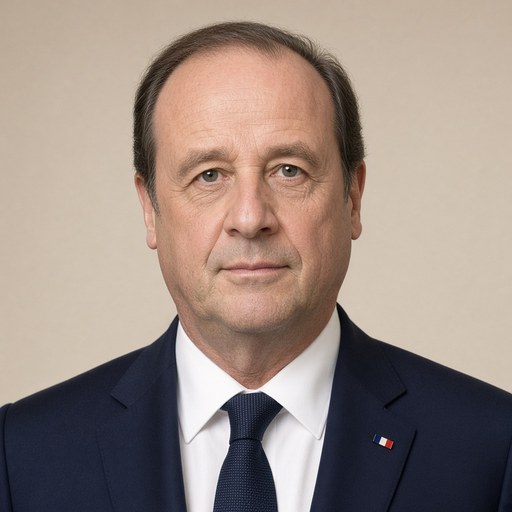
Statement by Mr. François Hollande, President of the Republic, on health insurance reforms, in Nantes on June 12, 2015.
 François Hollande · President of France
- Context
- Hollande addressed the Congress of the French Mutuality in Nantes on June 12, 2015, to assess health insurance reforms and reaffirm solidarity values.
- Main themes
- Complementary health insurance generalization, social protection reform, mutual insurance organizations, solidarity and social cohesion, healthcare system adaptation, health coverage access, Social Security principles, reform vs. status quo, savings and resource mobilization, justice between generations and territories
- Duration
- ~43 min
- Words
- 5,150
- Sentences
- 238
- Readability
- 46
- Grade
- 12.0
- Syntax
- 3.05
- Vocabulary
- 2.15
Translated from French
The broad sphere of national life a sentence belongs to. Every sentence has an Arena, so it is the denominator the other indices are read against.
Other238 sentences in 66 paragraphs
Mr. President of the French Mutuality, I thank you for inviting me to speak here in Nantes, before your Congress. I am pleased to see Jean-Marc AYRAULT again, Prime Minister for two years, who has greatly supported the developments I presented to you at your previous congress.
I greet the minister who has already addressed the congress participants, the mayor of Nantes, who welcomes us to her metropolis, and the parliamentarians and elected officials who go well beyond the department, as several of them follow health and social protection issues, both in the National Assembly and in the Senate.
It is true that this is the second time I am addressing you on the occasion of the congress of the French Mutuality. The first time was in Nice, three years ago in 2012, when I announced the generalization of complementary health insurance. I return before you to evaluate its implementation, regarding the commitments I made; but I am also here before you, on the occasion of your congress, to remind you of the strength of the values that mutuality embodies, which are all the more imperative in the context our country is experiencing.
In the face of withdrawal into oneself, the individualization of behaviors, distrust, and fear, we must more than ever affirm the principles of cohesion, justice, and solidarity, those very principles that you have long inscribed in your organizations.
Solidarity means giving everyone the means to be protected against the uncertainties of life, particularly illness. It also means guaranteeing access for all to the best care, regardless of income, age, or place in the territory. This was the ideal of the first mutuals when they were established at the end of the 19th century. It is still yours.
It was also the ideal held by the founders of Social Security, and you were right, Mr. President, not to dissociate mutuals from Social Security. "It was the grand design to continue in peacetime the solidarity built in wartime," to quote Pierre LAROQUE. This ideal is still yours, and this commitment is still ours.
Some would like to cast doubt on the relevance of this project by claiming that we can no longer afford it, that social protection has become a burden in economic competition, and that insurance mechanisms should ultimately take precedence. Others urge us not to change anything, standing firm against any evolution at the risk of calling into question the model they intend, surely in good faith, to protect. I remind you here: reform is the condition for progress, and the status quo is the certainty of regression.
This applies to our labor law, and I spoke yesterday at the International Labour Conference in Geneva to affirm that there are, in our country, foundations that must be preserved - foundations of rights, foundations of guarantees - but at the same time, we must also make the necessary adaptations in response to new challenges. This applies to our economic organization, to social dialogue, and it is the meaning of the bills currently being debated in Parliament.
But it also applies to the health system, which must adapt to innovations, scientific progress, new modes of care, the needs of patients, and the new aspirations of health professionals. We must each time show that we are faithful to principles and that we are capable of translating them according to realities.
Our duty, and mine, is to do everything possible to ensure that social protection in France remains one of the best in the world; indeed, that is what we proclaim! We should also verify this, given the infringements that may have occurred in recent years. We must ensure that our health system, which is undeniably among the best in the world, can always be there as a safety net for the French. And we must therefore allow it to integrate all innovations and progress, while ensuring that no one is excluded for financial reasons.
The condition, if we want to achieve this, is to make the necessary savings to mobilize resources so that our healthcare system is the most effective where it is most needed. And to do so with justice, between generations, between social categories, between individuals, between territories. This is the direction of the policy that the government has been pursuing for three years.
I have noted your words, Mr. President, regarding this policy. They are not very different from those expressed by many of our fellow citizens: hope is needed, and there is hope; concerns are often legitimate; impatience - that is the one I will focus on in my response.
It is true that reforms take time, too much time. Not because there is a form of resistance - that can happen! - or bad faith, but because, as I often say, our procedures are no longer adapted to the demand for speed and the urgencies of a society, especially when it comes to emerging from a crisis, providing responses to painful social situations, or offering support to the economy.
Waiting six months, eight months, sometimes longer, for a law to be passed, having this patience, and here, I say this before the parliamentarians, to hear amendments or proposals, sometimes to integrate them, to discuss them, one reading, two readings, three readings, a rewrite, and then to have a vote, sometimes a challenge before the Constitutional Council - this has become the rule, and in the meantime, yes, I measure the impatience, because when a reform is proclaimed, the generalization of complementary health insurance, I will return to this, but I could take other subjects, and the time it takes for it to actually apply, too much time passes.
And it is true that if we had a practice in France - you mentioned it, it exists in many of our neighbors - where social partners engage, sign, and ultimately declare what the general interest is, without necessarily having to go through the law, or then later, as a form of ratification, yes, that would go faster! Yes, that would put pressure on the actors who are meant to intervene - actors like Social Security, mutuals, complementary health insurance when it comes to health, but also businesses and employees. It is also true in the field of labor!
In France, it even took a law on social dialogue! Normally, this should have been the responsibility of the social partners. Who better than them can decide what negotiation and dialogue should be in a society like ours, and in companies? Yet it was necessary to resort to the law again. Sometimes, at the moment of signing, there is a kind of retention, a reserve. This is not the one you indicated. You yourself said that the Mutuality was ready to go further and take its responsibilities. So I understand this impatience. And at the same time, these are the rules of our democratic life, and I respect them; because what characterizes the action we have been taking for three years is respect for social partners. That is what we have done, particularly when it came to the interprofessional agreement that modified the rules of complementary coverage.
This is how we have also acted to implement the Competitiveness and Employment Tax Credit, and then the Responsibility Pact - to ensure that it is the partners who can accompany. In the area that interests you more, health, we have always wanted to negotiate and listen to the different stakeholders.
Today we must act in the name of solidarity. That is what we have done for three years.
With the minister, we have always refused to make patients pay for the recovery of our social accounts.
Because for too long, governments had competed in imagination, and there are always some when it comes to making significant cuts in patients' rights - governments had competed in imagination to make patients contribute: flat-rate contributions, ever-expanding deductibles, lowering reimbursement rates for medications, co-payments for heavy procedures in hospitals.
But since 2012, another path has been favored: that of better spending. Better spending to continue to reimburse well; better spending to avoid increasing levies; better spending to better respond to patients' needs; better spending to integrate medical progress. In this regard, while I have pointed out the delays, I want to highlight the speed with which the new medication capable of curing hepatitis C was introduced, despite its cost. Because it was a duty; because it was an obligation; and we preferred, yes, it was an additional burden, to integrate it into the accounts rather than deprive many patients of these innovations.
And I want to return to what the trend of health insurance expenditures was. Until the end of the 2000s, it was an increase of about 4% per year. Today, it is nearly 2%, and I want to commend the efforts of all, particularly yours, and those of health professionals, because without them we would not have achieved this controlled progression. This result deserves to be acknowledged.
Similarly, I want to point out that from 2006 to 2012, the share of healthcare spending covered by mandatory health insurance fell below 75%. This means that the burden had been shifted to complementary insurance, and failing that, to patients. Sometimes, by the way, on both. For the past three years, the share of mandatory health insurance has risen again, which has allowed for a reduction in out-of-pocket expenses and improved the purchasing power of the French.
Does this mean that the patient should have no responsibility in controlling expenditure? I do not think so. The patient must also be respected as a citizen, and he must be involved in prevention actions, in the treatment of his illness, in adhering to prescriptions. And all the information that can be provided to him - this is also the logic of the care pathway - the entire organization of the health system must lead to this responsibility. But I also say it clearly: the financial obstacle cannot be the answer to the patient's responsibility. That is why third-party payment is not irresponsibility! Third-party payment is one more step towards the simplification we all demand; but also towards an additional guarantee of equal access to health for all.
I know that, like any reform, and the third-party payment reform is no exception, it is approved in principle, but contested in its modalities. Sometimes, by contesting the modalities, one can also try to undermine the principle. But I believe that once again, pragmatism is the condition for success. We will proceed in stages, starting with the most modest, that is to say, the beneficiaries of complementary health assistance; this will be done as early as next month, on July 1, 2015; then from July 1, 2016, third-party payment will be extended to patients who are covered 100% by mandatory health insurance. Finally, it will be generalized at the end of 2017, and I have no doubt - I know that you will contribute - that technical solutions will be found by then. Because if there is no technical solution, there can be no solution at all.
It is always in the name of solidarity that I also wanted to generalize complementary health insurance. Nearly a quarter of medical expenses remains the responsibility of patients. But this average figure poorly indicates reality. It is true that this proportion rises to more than half for dental care, optics, prosthetics, and it is the complementary organizations, including mutuals, that cover the largest part of this. This means, Mr. President, you were right that the reimbursement rates displayed by mandatory health insurance have no significance for this type of care, since it is the complementary insurance that makes the bulk of the effort.
The generalization of complementary insurance or mutual insurance is necessarily part of the desire for access to care for all. But it is not enough to proclaim the generalization of complementary health insurance; it must also provide good guarantees at the lowest cost. This is the ambition I outlined in Nice three years ago.
We have not lost time. In 2013, the government of Jean-Marc AYRAULT, as part of the plan to combat poverty, raised the income ceilings for the complementary CMU and for complementary health assistance, affecting 550,000 people. This extension was made possible by the taxation of the employer's contribution to collective contracts. At the same time, the basket of care covered by the complementary CMU and by complementary health assistance was expanded, and for these patients, deductibles were eliminated, excess fees were prohibited, and fixed rates were established for glasses, hearing aids, and dental care.
The complementary health aid, which you pointed out was poorly known and underutilized, has seen its implementation conditions simplified and reformed. At the end of last year, a national call for tenders was launched, which allowed for the selection of eligible contracts and put them in competition; this was not easy, including for the mutual sector, I know, which enabled more than 1.2 million social insured individuals to see their rates decrease by 15 to 40% and to obtain, for some, better coverage. One example: for an elderly person living alone, the tariff relief can reach 300 euros, and it is in addition to the 10% increase in the amount of aid for complementary health decided in 2014 for those over 60.
Again, it is not enough to have complementary coverage; the guarantees must be serious. This is the purpose of the solidarity and responsible contract. You have kindly acknowledged the commitments that have been made and kept: the content has been enriched, ceilings have been set to prevent harmful price inflation for all, and the tax treatment has been differentiated, not sufficiently compared to other contracts.
Then, in 2013, an agreement was reached between the social partners. This agreement led to legislative translation. What was the intention of the social partners? It was to generalize complementary health in companies, that is to say, to ensure that a certain number of employees in small or medium-sized enterprises, who were not covered by anything, could be covered, about 500,000, and that others, the most numerous, who were covered by an individual contract, could have a collective contract offering them better guarantees. From this point of view, the social partners played their role. And they allowed for progress, progress for these employees. Moreover, companies contribute 50% of the costs. This means that a number of employees who had individual contracts will now enter the collective contract and will have better rights. This can disrupt the system. And that is what you told us, Mr. President. Because whenever there can be progress, there is also a downside.
I want to acknowledge the ongoing evolution, because the negotiation movement continues with 23 branch agreements concluded between the social partners, and a recently signed agreement in the temporary work sector that will allow 700,000 employees to benefit from collective coverage starting January 1, with seven months of free maintenance of rights in case of unemployment. In most cases, the negotiated guarantees go beyond the minimum care basket.
At one point, mutuals, and this moment is probably not over, were concerned about this transformation; but they wanted to be well represented in the process; and I think you have made every effort—I want to acknowledge them—so that the share of collective contracts in your activity could increase. You have become one of the main players in collective contracts.
But I return to the problem you raised, Mr. President. The improvement of employee coverage cannot come at the expense of the situation of young people, the unemployed, precarious workers, disabled individuals, and especially retirees.
I hear your concern, and it is surely shared regarding the increased segmentation of contracts and the risk of rising costs for the elderly; because when an employee retires, not only does he suffer a loss of income compared to what his salary was during his working life, but he must also pay a contribution, that of his former employer, and face an additional increase in his overall premium. We can fear that increased competition in corporate contracts will lead to a heavier pricing burden based on age, and it is this vicious circle that you want, that we want, to prevent.
You provided figures; they are accurate. If nothing is done, retirees, at least some of them, may see their guarantees and the cost of those guarantees multiplied by three. I therefore want the generalization of complementary health to be effective for retirees by 2017 and that they can retain their guarantees with the same premium level at the time of their retirement. Subsequently, the evolution of these rates must adhere to objective criteria based on age. What needs to be addressed is the time of exit from the active system in relation to the retirement age and the retirement period.
How to achieve this? There are two possible paths. The first is to adapt the 1989 ÉVIN law, which has nothing to do with the one currently being discussed regarding the exit from group contracts, since this concern had already been raised. This law establishes a general principle, as is often the case, but its application modalities have remained vague.
If we take this path, that is to say, to adapt the law so that the exit from group contracts is improved, the costs will necessarily be distributed among all insured individuals and companies.
The other path is to rely on responsible contracts by targeting fiscal and social aids more effectively to strengthen intergenerational solidarity. The solution could be the differentiation of the tax on contracts in favor of the more responsible ones. This is the solution you have in mind. As soon as the coverage of retirees is planned, there would be a fiscal differentiation in favor of these contracts.
Both paths must be explored, one as much as the other, so that generalization is effective for all French people in a logic of continuity of protection for retirees.
The consequence is that we will need to evaluate state aid. You recalled the figures: nearly 4 billion. This evaluation was provided for by the 2013 law. It must be carried out as soon as possible, that is to say, by the end of the year. When this evaluation is done, all conclusions will be drawn to achieve the result I have set.
Because the generalization of complementary health is not the generalization of the law of the market; it is the generalization of solidarity towards all French people so that the market is left aside, in certain aspects, especially for the elderly. Mutuals are indeed setting an example since the price differentiation between 60 and 75 years is two times less strong than in the insurance sector. This is also the reason why three-quarters of retirees subscribe to mutuals. You yourselves have made the effort, and it would be legitimate for it to be supported by the redistribution of aids.
Complementary health is not a product like any other, and this applies to all French people. Competition is there, it exists, and it can lead—I mentioned it—to advantages, benefits for the insured. But competition should not be used to select good risks, to multiply increasingly discriminatory and costly commercial practices. I therefore ask the minister to closely monitor practices and to prevent all abuses.
That is what I wanted to clarify here, before your congress, about complementary health. But I also wanted to emphasize the role that is yours in modernizing the health system.
The challenge is indeed to work, not simply to reimburse what you do in addition to health insurance. The challenge is to be able to take your full part in the reform, in the evolution of the health system with mandatory health insurance.
Mutuals are not just payers, a role to which some would like to reduce them. The general interest therefore calls for you to be entrusted with a place in the regulation of the care system, not separately, not as separate actors, but with mandatory health insurance. There are not two reimbursement systems in our country; there is one social security system with different organizations: mandatory protection and complementary protection.
Thus, in the agreements with health professions, the role of mutuals is particularly useful, especially to limit excessive pricing practices. We have demonstrated this, you have demonstrated this, notably with the access to care contract. We have achieved a reduction in the average level of excess fees. Of course, you will say that this is not enough, but at least it is already less than before; because we all have this tendency to never judge what has been done but what remains to be done, to never compliment the past—I do not ask you to do so today—but to ensure that there can be new advances. And that is the essence of democracy; it is the very principle of collective action. What has been obtained is no longer to be claimed, but what has not been obtained is unbearable.
I still want to share this reflection. It is addressed, moreover, beyond you, to many political or social actors. If we never say what we have managed to wrest, to conquer, to obtain, to advance, why would the French trust trade unions, professional representatives, mutualists, political actors? If nothing has ultimately been obtained through negotiation, through good pressure, or through a good congress—what you are doing—then why come? Why gather? Why contribute? Why meet in organizations, dedicating time—sometimes precious time for family life—to collective action, sometimes to the great surprise of our own families or those who know us? It is because we have, deep down, faith, an ideal in what we can achieve as progress for our country or for the categories we represent. In this case, all the French people.
So we must acknowledge what has been done. Moreover, this is what we continually produce through all celebrations and commemorations. What is their utility? Not simply to look back with melancholy, nostalgia, at our history, but to tell ourselves that it has been a battle, it has been a struggle, it has been a resistance at a certain moment, it has been a conquest, and that what was possible yesterday is still possible today. We are told: "It is much more difficult because there is globalization, there is competition, there is Europe, we no longer have the means to act." But do we think it was easier 100 years ago, before there were two wars? Or was it easier at Liberation when the country had to be rebuilt? It is true that there was a period with particularly impressive growth rates and progress. But there have not been many more than in periods when the economic situation was less flamboyant. Because not all progress costs; there are also progress that changes life, simplifies it, and allows us to have more strength in common.
This is also what I wanted to talk to you about so that we can move forward in the regulation of the health system, together.
We have a first illustration, as I said, regarding relations with health professions. But you have also, you mutuals, introduced innovations in certain contracting practices, and you wanted these practices to be authorized for you because there was still a paradox: insurances could have more freedom than mutuals to evolve a number of behaviors. I committed in Nice to ensure that these practices could be opened to you regarding the care for which you reimburse a majority share. It was not without difficulty. It is done, and I encourage all mutuals to use these instruments.
Another means of being able to influence collective decisions is the development of third-party payment. The objective, I said, is to achieve a simple and effective organization that is not an administrative burden for professionals but a lever for modernization in the relationship between care providers and funders. It is indeed together, complementary and mandatory health insurance, that you will define this mechanism.
In the same way, it is essential that you can, always together, act for prevention—especially regarding medication consumption, where we have, there, records that are not to our credit. Evolutions are essential to rationalize care, to promote adherence to prescriptions, to lift distrust towards generics. It is only in France that one thinks that with a generic one is less well treated than with a more expensive medication, with an old tendency to say that if it costs more, it must be more effective. Nothing should ever be free, but there is no reason for it to cost more than its cost. We must also act together.
From this point of view, the opening of health data provided for in the bill presented by Marisol Touraine will further broaden the prospects for cooperation and collaboration. We will be able to better analyze health expenditures, measure the impact of innovations while ensuring respect for medical confidentiality. Our health system, as you have rightly said, Mr. President, does not focus enough on prevention and therapeutic education for patients, which exacerbates social inequalities.
We must change the system: what you have called predictive medicine, the care pathway, the individualization this time in the best sense of therapeutic choices, you must also be fully involved. I know that Health Insurance already allocates significant budgets to remuneration linked to public health objectives, so that professionals are involved in prevention. You, mutuals, have expertise in many areas, particularly in all your centers and establishments and in the services you already provide.
The challenge now is to bring together the forces of health insurance, mutuals, associations, and local authorities so that we can define prevention policies and implement care pathways. The health bill also aims to ensure, beyond the requirement for excellence and quality, proximity, by rationalizing the supply of care through territorial professional health communities and hospital groupings. The mutuality has anticipated, as often, what the State would propose because it has long been successful in reconciling excellence and proximity. It is you who have been able, in your establishments, to bring together the health and medico-social sectors. It is you who have been able to imagine new places where several health professions can come together to ensure the efficiency of the care system. It is you who have been able to support vulnerable, elderly, and disabled individuals, by removing the barriers between health and medico-social care or between city and hospital. It is you who have been able, particularly in psychiatry, to think about new forms of care. So, yes, you must be fully involved, associated with the reform of our health system, its evolution through personalized medicine, through new techniques, through everything we can do to treat the most serious illnesses.
There you have it, Ladies and Gentlemen, this is what I wanted to tell you so that you can be convinced that what you represent, mutuality, will be fully considered by public authorities.
But you asked me a question, you said to me: "We are evolving in a changing context. We are facing new challenges both in organization, in the services we must offer, in the funding we must gather. The challenges are not only medical but also economic, and we want an adaptation of our rules so that we can always be mutualists, with the means to maintain our place and strengthen it."
Yes, mutuality must preserve its specificity while continuing its modernization; it must be capable of managing services adapted to the needs of its members, mutualizing health costs in solidarity, and having democratic and transparent governance. You want a reform of the mutuality code. I confirm, after what the minister told you, that this code will be modernized, particularly regarding your governance and the status of leaders. A larger place will thus be made for representatives of employees and businesses at a time when collective contracts will become predominant. The status of the mutualist elected official will be integrated under good conditions so that the guarantees of competence of leaders are compatible with European prudential standards. This project is open and will result in a bill that will be submitted at the beginning of 2016.
The mutuality code of the 21st century will therefore be aligned with these issues and with the reform of the social and solidarity economy, which the government of Jean-Marc Ayrault successfully carried out. You are part of it. You have, even in this social and solidarity economy, a specificity; it will be recognized through the reform of the mutuality code.
Ladies and Gentlemen, Mr. President,
We will indeed celebrate the 70th anniversary of Social Security. In a way, it is also yours. It was the ideal of justice pursued by the resistors. It was also a hope that the workers of our country held deep in their hearts. It was a will that might have seemed almost utopian: to be able to emancipate individuals from the fatality of circumstances, from the determinisms of birth or fortune, by granting them the most precious of rights, the right to health.
Mutuality has responded to this obligation and has been respectful of this ideal. Mutuality has become indispensable. It is a constitutive element of our social protection system alongside mandatory insurance. The easy way would be to shift the burdens that Social Security can no longer bear onto mutuals. The illusion, which may exist in some minds, would be to imagine that Social Security could alone cover all risks. And well, no. It is the originality of our system that ultimately makes its radiance and effectiveness.
So mutuality must have the necessary resources; these are those of the French, through their premiums and contributions, specific rules I just mentioned, and appropriate tax treatment; this is what I mentioned for complementary insurance. You must be assured that your rules will also be considered by the European authorities as compatible with the activity that is yours, and I stand as a guarantor of that.
Mutuality is not just reimbursements, benefits, services, or establishments. Mutuality is a state of mind, a commitment, a militancy, a passion—a passion in the service of social utility. That is why mutuality is indissolubly linked to the Republic. It gives it its social dimension and its citizen participation.
We need the spirit of mutuality more than ever. For what is at stake for our country? Remaining united, being able to live together, excluding no one, subjecting all to common rules, thinking that we belong to the same country with the same hopes, fostering in our compatriots a spirit of responsibility and citizenship, telling them that not everything can come simply from the State, that much depends on their own intervention, on collective action, that they must have confidence in the future and that, if they come together, they will be stronger. So I tell you, mutuality is an example today, in the Republic. Thank you.
The original French. The tags above are read on the English translation's sentences.
Monsieur le Président de la Mutualité française, je vous remercie de m'inviter à m'exprimer, ici à Nantes, devant votre Congrès. Je retrouve avec plaisir Jean-Marc AYRAULT, Premier ministre pendant deux ans, et qui a largement accompagné les évolutions que j'avais présentées devant vous lors de votre précédent congrès.
Je salue la ministre qui s'est déjà elle-même adressée aux congressistes, la maire de Nantes, qui nous accueille dans sa métropole, et les parlementaires et élus qui vont bien au-delà du département puisque plusieurs d'entre eux suivent les questions de santé et de protection sociale, aussi bien à l'Assemblée nationale qu'au Sénat.
C'est vrai, c'est la deuxième fois que je m'adresse à vous, à l'occasion du congrès de la Mutualité française. La première, c'était à Nice, il y a trois ans en 2012, et j'avais annoncé la généralisation de la complémentaire santé. Je reviens donc devant vous pour en faire l'évaluation, quant à sa mise en uvre, quant aux engagements que j'avais pris £ mais je suis là aussi devant vous, à l'occasion de votre congrès, pour rappeler la force des valeurs que porte la mutualité, qui sont d'autant plus impérieuses dans le contexte que connaît notre pays.
Face au repli sur soi, à l'individualisation des comportements, à la défiance, à la peur, nous devons plus que jamais affirmer les principes de cohésion, de justice et de solidarité, ceux-là mêmes que vous avez inscrits depuis longtemps dans vos organisations.
La solidarité, c'est de donner à chacun les moyens d'être protégés contre les aléas de la vie, et notamment la maladie. C'est aussi de garantir l'accès de tous aux meilleurs soins, quel que soit son revenu, son âge, sa place sur le territoire. C'était l'idéal des premières mutuelles, quand elles se sont constituées, à la fin du XIXème siècle. C'est toujours le vôtre.
C'était aussi l'idéal que portaient les fondateurs de la Sécurité sociale, et vous avez eu raison, monsieur le Président, de ne pas dissocier les mutuelles de la Sécurité sociale. « C'était le grand dessein de poursuivre en temps de paix la solidarité construite en temps de guerre », pour reprendre les mots de Pierre LAROQUE. Cet idéal, c'est toujours le vôtre, et cet engagement est toujours le nôtre.
Certains voudraient faire douter de la pertinence de ce projet en prétextant que nous n'en aurions plus les moyens, que la protection sociale serait devenue un boulet dans la compétition économique et que les mécanismes assurantiels devraient en définitive tout emporter. D'autres nous enjoignent de ne rien changer, s'arc-boutant devant toute évolution au risque de remettre en question le modèle qu'ils entendent, sûrement de bonne foi, protéger. Je le rappelle ici : la réforme est la condition du progrès, et le statu quo, la certitude de la régression.
Cela vaut pour notre droit du travail, et je m'exprimais hier devant la Conférence Internationale du Travail à Genève pour affirmer qu'il y a, dans notre pays, des socles qui doivent être préservés - socles de droit, socles de garanties - mais en même temps que nous devons aussi procéder aux adaptations nécessaires par rapport aux nouveaux défis. Cela vaut pour notre organisation économique, pour le dialogue social, et c'est le sens des projets de loi qui sont débattus en ce moment même au Parlement.
Mais cela vaut aussi pour le système de santé qui doit s'adapter aux innovations, au progrès scientifique, aux nouvelles modalités de prise en charge, aux besoins des patients, aux nouvelles aspirations des professionnels de santé. Nous devons à chaque fois, montrer que nous sommes fidèles à des principes et que nous sommes capables de les traduire en fonction des réalités.
Notre devoir, et le mien, est de tout faire pour que la protection sociale en France, reste l'une des meilleures du monde enfin c'est ce que nous proclamons ! Il faudrait aussi vérifier, compte tenu des atteintes qui ont pu être portées ces dernières années. De faire en sorte que notre système de santé qui, incontestablement, est parmi les meilleurs du monde, puisse être toujours là comme une sécurité pour les Français. Et nous devons donc permettre qu'il puisse intégrer toutes les innovations et les progrès, et en même temps, faire que personne ne s'en trouve exclu pour des raisons financières.
La condition, si nous voulons y parvenir, est de faire les économies nécessaires pour mobiliser les ressources afin que notre système de soins soit le plus efficace là où il est le plus attendu. Et de le faire avec justice, entre les générations, entre les catégories sociales, entre les individus, entre les territoires. C'est le sens de la politique que conduit le gouvernement depuis trois ans.
J'ai retenu vos mots, monsieur le Président, par rapport à cette politique. Ils ne sont pas très différents de ceux qu'expriment beaucoup de nos concitoyens : espoir il en faut et il y en a inquiétudes elles sont souvent légitimes impatience £ c'est celui sur lequel je m'attarderai en vous répondant.
C'est vrai que les réformes prennent du temps, trop de temps. Non pas qu'il y aurait une forme de résistance cela peut arriver ! ou de mauvaise volonté, mais parce que, je le dis souvent, nos procédures ne sont plus adaptées à l'exigence de rapidité et aux urgences d'une société, notamment lorsqu'il s'agit de sortir d'une crise, d'apporter des réponses à des situations sociales douloureuses, ou encore de prodiguer des soutiens à l'économie.
Attendre six mois, huit mois, parfois davantage, pour qu'une loi soit votée, avoir cette patience, et ici, je le dis devant les parlementaires, d'entendre les amendements ou les propositions, parfois de les intégrer, de les discuter, une lecture, deux lectures, trois lectures, une réécriture, pour ensuite avoir un vote, parfois une contestation devant le Conseil constitutionnel c'est devenu la règle et enfin la mise en uvre £ et pendant ce temps-là Oui je mesure l'impatience, parce que quand une réforme est proclamée généralisation de la complémentaire santé, j'y reviendrai mais je pourrais prendre d'autres sujets et le moment où elle s'applique effectivement, il se passe trop de temps.
Et c'est vrai que si on avait une pratique en France vous l'avez évoqué, elle existe chez beaucoup de nos voisins où les partenaires sociaux s'engagent, signent et finalement déclarent ce qu'est l'intérêt général, sans qu'il soit forcément nécessaire de passer par la loi, ou alors plus tard, comme une forme de ratification, oui, cela irait plus vite ! Oui cela mettrait une pression sur les acteurs qui ont vocation à intervenir - les acteurs comme la Sécurité sociale, les mutuelles, les complémentaires quand il s'agit de santé, mais aussi les entreprises et les salariés. C'est vrai également dans le domaine du travail !
En France, il a même fallu faire une loi sur le dialogue social ! Normalement, cela aurait dû revenir aux partenaires sociaux. Qui, mieux qu'eux, peuvent décider de ce que doit être la négociation, le dialogue, dans une société comme la nôtre, et dans les entreprises ? Pourtant il a fallu de nouveau recourir à la loi. Parfois, au moment de signer, il y a comme une rétention, une réserve. Ce n'est pas celle que vous avez indiquée. Vous avez-vous-même dit que la Mutualité était prête à aller au-delà et à prendre ses responsabilités. Alors je comprends ces impatiences. Et en même temps ce sont les règles de notre vie démocratique, et je les respecte £ parce que ce qui caractérise l'action que nous menons depuis trois ans, c'est le respect des partenaires sociaux. C'est ce que nous avons fait, notamment quand il s'est agi de l'accord interprofessionnel qui a modifié les règles de la couverture complémentaire.
C'est ainsi que nous avons agi aussi pour mettre en uvre le Crédit Impôt Compétitivité Emploi, puis le Pacte de responsabilité - faire que ce soit les partenaires qui puissent accompagner. Dans le domaine qui vous intéresse davantage, la santé, nous avons toujours voulu négocier et entendre les différentes parties prenantes.
Aujourd'hui nous devons agir au nom de la solidarité. C'est ce que nous avons fait depuis trois ans.
Avec la ministre, nous avons toujours refusé de faire payer aux malades le redressement de nos comptes sociaux.
Car pendant trop longtemps, des gouvernements avaient rivalisé d'imagination et il y en a toujours quand il s'agit de faire un certain nombre de coupes claires dans les droits des malades des gouvernements avaient rivalisé d'imagination pour mettre à contribution les patients : participations forfaitaires, franchises au périmètre sans cesse étendu abaissement des taux de remboursement des médicaments, ticket modérateur sur les actes lourds à l'hôpital.
Mais depuis 2012 a été privilégiée une autre voie : celle de mieux dépenser. Mieux dépenser pour continuer à bien rembourser £ mieux dépenser pour ne pas alourdir les prélèvements £ mieux dépenser pour mieux répondre aux besoins des patients £ mieux dépenser pour intégrer le progrès médical. A cet égard, si j'ai signalé les lenteurs, je veux tout de même souligner la rapidité avec laquelle a été introduite, malgré son coût, le nouveau médicament capable de guérir l'hépatite C. Parce que c'était un devoir £ parce que c'était une obligation £ et que nous avons préféré oui, c'était une charge supplémentaire l'intégrer dans les comptes, plutôt que de priver de nombreux patients de ces innovations.
Et je veux revenir sur ce qu'était la tendance des dépenses d'assurance maladie. Jusqu'à la fin des années 2000, c'était une progression de 4 % par an environ. Aujourd'hui, c'est près de 2 %, et je veux saluer les efforts de tous, les vôtres en particulier, et ceux des professionnels de santé, parce que sans eux nous ne serions pas arrivés à cette progression maîtrisée. Il faut saluer ce résultat.
De la même manière, je veux signaler que, de 2006 à 2012, la part de la dépense de soins couverte par l'Assurance maladie obligatoire était tombée en-dessous de 75 %. Ce qui revient à dire que la charge avait été renvoyée sur les complémentaires, et à défaut, sur les malades. Parfois d'ailleurs, sur les deux. Depuis trois ans, la part de l'Assurance maladie obligatoire est remontée, ce qui a permis de diminuer le reste à charge et d'améliorer le pouvoir d'achat des Français.
Est-ce à-dire que le patient ne devrait avoir aucune responsabilité dans la maîtrise de la dépense ? Je ne le pense pas. Le patient doit être respecté aussi comme citoyen, et il doit être impliqué dans les actions de prévention, dans le traitement de sa maladie, dans le respect des prescriptions. Et toutes les informations qui peuvent lui être données - c'est aussi la logique du parcours de soins - toute l'organisation du système de santé doit conduire à cette responsabilité. Mais je le dis aussi nettement : l'obstacle financier ne peut pas être la réponse à la responsabilité du patient. C'est pourquoi le tiers payant n'est pas l'irresponsabilité ! Le tiers payant, c'est une étape de plus vers la simplification que nous demandons tous £ mais aussi vers une garantie supplémentaire de l'égal accès de tous à la santé.
Je sais que, comme toute réforme et celle du tiers payant n'échappe pas à la règle elle est approuvée dans son principe, mais elle est contestée dans ses modalités. Parfois, en contestant les modalités, on peut aussi essayer d'atteindre le principe. Mais je crois que là encore, le pragmatisme est la condition de la réussite. Nous procéderons par étapes, en commençant par les plus modestes, c'est-à-dire les bénéficiaires de l'aide à la complémentaire santé £ cela sera fait dès le mois prochain, le 1er juillet 2015 £ puis à compter du 1er juillet 2016, le tiers payant sera étendu aux patients qui sont couverts à 100 % par l'Assurance maladie. Enfin, il sera généralisé à la fin de l'année 2017, et je ne doute pas je sais que vous y contribuerez que les solutions techniques seront trouvées d'ici là. Car s'il n'y a pas de solution technique, il ne peut pas y avoir de solution tout court.
C'est toujours au nom de la solidarité que j'ai également voulu généraliser la complémentaire santé. Près d'un quart des dépenses médicales reste en effet à la charge des patients. Mais ce chiffre moyen indique mal la réalité. C'est vrai que cette proportion s'élève à plus de la moitié pour les soins dentaires, l'optique, les prothèses, et ce sont les organismes complémentaires, dont les mutuelles, qui en couvrent la plus grande part. Ce qui fait monsieur le Président, vous aviez raison que les taux de remboursement affichés par l'Assurance obligatoire n'ont sur ce type de soins aucune signification, puisque ce sont les complémentaires qui font l'essentiel de l'effort.
La généralisation d'une assurance complémentaire ou d'une mutuelle s'inscrit nécessairement dans la volonté d'un accès de tous aux soins. Mais il ne suffit pas de proclamer la généralisation de la complémentaire santé, faut-il encore qu'elle donne de bonnes garanties et au moindre coût. C'est l'ambition que j'avais tracée à Nice, il y a trois ans.
Nous n'avons pas perdu de temps. En 2013, le gouvernement de Jean-Marc AYRAULT, dans le cadre du plan de lutte contre la pauvreté, a relevé les plafonds de ressources de la CMU complémentaire et de l'aide à la complémentaire santé, 550.000 personnes ont été concernées. Cette extension a été rendue possible par la fiscalisation de la cotisation patronale aux contrats collectifs. Parallèlement, le panier de soins couverts par la CMU complémentaire et par l'aide à la Complémentaire santé a été étendu, et pour ces patients, les franchises ont été supprimées, les dépassements d'honoraires interdits, les tarifs opposables institués pour les lunettes, les audioprothèses et les soins dentaires.
L'aide à la complémentaire, qui était vous l'aviez signalé mal connue, sous-utilisée, a vu ses conditions de mise en uvre simplifiées et réformées. A la fin de l'année dernière, a été lancé un appel d'offres national qui a permis de sélectionner des contrats éligibles, de les mettre en concurrence cela n'a pas été facile, y compris pour le secteur mutualiste, je le sais qui ont permis à plus de 1,2 million d'assurés sociaux de voir leurs tarifs baisser de 15 à 40 % et d'obtenir, pour certains, une meilleure couverture. Un exemple : pour une personne âgée vivant seule, l'allègement tarifaire peut atteindre 300 euros, et il s'ajoute au relèvement de 10 % du montant de l'aide à la complémentaire santé décidée en 2014 pour les plus de 60 ans.
Là encore, il ne suffit pas d'avoir une couverture complémentaire, faut-il que les garanties soient sérieuses. C'est la vocation du contrat solidaire et responsable. Vous avez bien voulu saluer les engagements qui ont été pris et qui ont été tenus : le contenu a été enrichi, des plafonds ont été fixés pour empêcher une inflation tarifaire préjudiciable à tous, et le traitement fiscal a été différencié pas suffisamment par rapport aux autres contrats.
Puis est intervenu, en 2013, un accord entre les partenaires sociaux. Cet accord a donné lieu à une traduction législative. Quelle était la volonté des partenaires sociaux ? C'était de généraliser la complémentaire santé en entreprise, c'est-à-dire de faire en sorte qu'un certain nombre de salariés de petites ou moyennes entreprises, qui n'étaient couverts par rien, puissent l'être, à peu près 500.000, et que d'autres, les plus nombreux, qui étaient couverts par un contrat individuel, puissent avoir un contrat collectif leur offrant de meilleures garanties. De ce point de vue, les partenaires sociaux ont joué leur rôle. Et ont permis un progrès, un progrès pour ces salariés. D'ailleurs, les entreprises participent à 50 % des coûts. Ce qui fait qu'un certain nombre de salariés qui avaient des contrats individuels vont maintenant rentrer dans le contrat collectif et vont avoir de meilleurs droits. Cela peut bouleverser le système. Et c'est ce que vous nous avez dit, monsieur le Président. Parce qu'à chaque fois qu'il peut y avoir un progrès, il y a aussi un revers à la médaille.
Je veux saluer l'évolution qui est en cours, parce que le mouvement de négociation se poursuit avec 23 accords de branche conclus entre les partenaires sociaux, et un accord récemment signé dans le secteur de l'intérim qui permettra à 700.000 salariés de bénéficier d'une couverture collective au 1er janvier prochain, avec sept mois de maintien gratuit des droits en cas de chômage. Dans la plupart des cas, les garanties négociées vont au-delà du panier de soins minimal.
A un moment, les mutuelles et ce moment n'est sans doute pas terminé se sont inquiétées de cette mutation £ mais elles ont voulu être bien représentées dans le processus £ et je pense que vous avez fait tous les efforts je veux les saluer pour que la part des contrats collectifs dans votre activité puisse s'accentuer. Vous êtes devenus un des principaux acteurs des contrats collectifs.
Mais je reviens au problème que vous avez posé, monsieur le Président. L'amélioration de la couverture des salariés ne peut pas avoir pour contrepartie la dégradation de la situation des jeunes, des chômeurs, des travailleurs précaires, des personnes handicapées et surtout des retraités.
J'entends votre inquiétude et elle est sûrement partagée sur la segmentation accrue des contrats et le risque d'un renchérissement des garanties pour les plus âgés £ car, quand un salarié part à la retraite, non seulement il subit une perte de revenu par rapport à ce qu'était sa rémunération en activité, mais il doit aussi acquitter une cotisation, celle de son ancien employeur, et faire face à un renchérissement supplémentaire de sa prime globale. On peut craindre que la concurrence accrue sur les contrats d'entreprise ne se traduise par un alourdissement de la tarification en fonction de l'âge et c'est ce cercle vicieux que vous voulez, que nous voulons, empêcher.
Vous avez donné des chiffres, ils sont exacts. Si rien n'est fait, les retraités, en tout cas certains d'entre eux, peuvent voir leurs garanties et le coût de celles-ci multiplié par trois. Je veux donc que la généralisation de la complémentaire santé soit effective pour les retraités d'ici 2017 et qu'ils puissent conserver leurs garanties avec le même niveau de prime au moment de leur départ en retraite. Par la suite, l'évolution de ces tarifs devra obéir à des critères objectifs en fonction de l'âge. Ce qui doit être réglé, c'est le temps de sortie du système de l'activité par rapport à l'âge de départ en retraite et à la période de retraite.
Comment y parvenir ? Il y a deux voies possibles. La première est d'adapter la loi de 1989 loi ÉVIN qui n'a rien à voir avec celle dont on entend parler en ce moment sur la sortie des contrats de groupe, puisque déjà, cette préoccupation avait été évoquée. Cette loi pose un principe général comme souvent, mais ses modalités d'application sont restées imprécises.
Si nous prenons cette voie, c'est-à-dire d'adapter la loi pour que la sortie des contrats de groupe soit améliorée, les coûts seront nécessairement répartis entre l'ensemble des assurés et les entreprises.
L'autre voie consiste à s'appuyer sur les contrats responsables en ciblant davantage les aides fiscales et sociales pour renforcer la solidarité inter-générations. La solution pourrait être la différenciation de la taxe sur les contrats au bénéfice des plus responsables. C'est la solution que vous avez à l'esprit. Dès lors que la prise en charge des retraités serait prévue, il y aurait une différenciation fiscale au bénéfice de ces contrats.
Les deux voies doivent être explorées, l'une comme l'autre, afin que la généralisation soit effective pour l'ensemble des Français dans une logique de continuité de la protection pour les retraités.
La conséquence est qu'il va falloir évaluer les aides de l'État. Vous avez rappelé les chiffres : près de 4 milliards. Cette évaluation avait été prévue par la loi de 2013. Elle doit être réalisée et au plus vite, c'est-à-dire d'ici la fin de l'année. Lorsque cette évaluation sera faite, toutes les conclusions seront tirées pour aboutir au résultat que j'ai fixé.
Parce que la généralisation de la complémentaire santé, ce n'est pas la généralisation de la loi du marché, c'est la généralisation de la solidarité envers tous les Français pour que le marché soit laissé, sur certains aspects, de côté, notamment pour les plus âgés. Les mutuelles montrent d'ailleurs l'exemple puisque la différenciation tarifaire entre 60 et 75 ans y est deux fois moins forte que dans le secteur assurantiel. C'est d'ailleurs la raison qui explique que les trois quarts des retraités souscrivent à des mutuelles. Vous avez vous-mêmes fait l'effort et il serait légitime qu'il puisse être appuyé par la redistribution des aides.
La complémentaire santé n'est pas un produit comme les autres et cela vaut pour tous les Français. La concurrence est là, elle existe, et elle peut aboutir je l'ai évoqué à des avantages, des bénéfices, pour les assurés. Mais la concurrence ne doit pas servir à sélectionner les bons risques, à multiplier les pratiques commerciales toujours plus discriminatoires et coûteuses. Je demande donc à la ministre de bien suivre les pratiques et de prévenir tous les abus.
Voilà ce que je voulais ici, devant votre congrès, préciser sur la complémentaire santé. Mais je voulais aussi souligner le rôle qui est le vôtre pour moderniser le système de santé.
L'enjeu est en effet de travailler, pas simplement à rembourser ce que vous faites en complément de l'assurance maladie. L'enjeu est de pouvoir prendre toute votre part dans la réforme, dans l'évolution du système de santé avec l'assurance maladie obligatoire.
Les mutuelles ne sont pas seulement des organismes payeurs, rôle auquel certains voudraient les réduire. L'intérêt général appelle donc à vous confier une place dans la régulation du système de soins, non pas à part, non pas en tant qu'acteurs séparés, mais avec l'assurance maladie obligatoire. Il n'y a pas deux systèmes de remboursement dans notre pays, il y a un même système de Sécurité sociale avec des organismes différents : la protection obligatoire et la protection complémentaire.
Dès lors, dans les conventions avec les professions de santé, le rôle des mutuelles est particulièrement utile, notamment pour limiter les pratiques tarifaires excessives. Nous l'avons démontré, vous l'avez démontré, notamment avec le contrat d'accès aux soins. Nous avons obtenu une diminution du niveau moyen des dépassements d'honoraires. Bien sûr, vous direz que ce n'est pas suffisant mais enfin, c'est déjà moins qu'avant £ parce que nous avons cette tendance, nous tous, à ne jamais juger ce qui a été fait mais ce qu'il reste à faire, à ne jamais complimenter le passé je ne vous demande pas encore de le faire aujourd'hui mais à faire en sorte qu'il puisse y avoir de nouvelles avancées. Et c'est le propre de la démocratie, c'est le principe même de l'action collective. Ce qui est obtenu n'est plus à revendiquer mais ce qui n'est pas obtenu est insupportable.
Je vous fais quand même part de cette réflexion. Elle s'adresse d'ailleurs, au-delà de vous, à bien des acteurs politiques ou sociaux. Si nous ne disons jamais ce que nous avons réussi à arracher, à conquérir, à obtenir, à faire avancer, pourquoi les Français feraient-ils confiance aux organisations syndicales, aux représentants professionnels, aux mutualistes, aux acteurs politiques ? Si rien n'a été finalement obtenu par une négociation, par une bonne pression ou par un bon congrès ce que vous êtes en train de faire , mais alors, pourquoi venir ? Pourquoi se rassembler ? Pourquoi cotiser ? Pourquoi se réunir dans des organisations, consacrer du temps un temps parfois précieux pour la vie familiale à l'action collective, quelquefois à la grande surprise de nos propres familles ou de ceux qui nous connaissent ? C'est parce que nous avons au fond de nous la foi, l'idéal dans ce que nous pouvons faire comme progrès pour notre pays ou pour les catégories que nous représentons. En l'occurrence ici, tous les Français.
Alors il faut saluer ce qui a été fait. D'ailleurs, c'est ce que nous ne cessons de produire à travers toutes les célébrations et toutes les commémorations. Quelle est leur utilité ? Non pas simplement regarder avec mélancolie, nostalgie, notre histoire, mais nous dire que cela a été une bataille, cela a été une lutte, cela a été une résistance à un certain moment, cela a été une conquête et que ce qui a été possible hier, l'est encore aujourd'hui. On nous dit : « C'est beaucoup plus difficile parce qu'il y a la mondialisation, il y a la compétition, il y a l'Europe, nous n'avons plus les moyens pour agir. » Mais est-ce que l'on pense que c'était plus simple il y a 100 ans, avant qu'il y ait eu deux guerres ? Ou est-ce que cela était plus simple à la Libération quand le pays devait être reconstruit ? C'est vrai qu'il y a eu une période avec des taux de croissance particulièrement impressionnants et des progrès. Mais il n'y en a pas eu beaucoup plus que dans les périodes où cela a été moins flamboyant sur le plan économique. Parce qu'il n'y a pas que des progrès qui coûtent, il y a aussi des progrès qui changent la vie, qui la simplifient, qui nous permettent d'avoir plus de force en commun.
C'est donc de tout cela que je voulais aussi vous parler pour que nous puissions avancer dans la régulation du système de santé, ensemble.
Nous avons une première illustration, je l'ai dit, sur les relations avec les professions de santé. Mais vous avez aussi, vous, mutuelles, introduit des innovations dans certaines pratiques de contractualisation et vous avez voulu que ces pratiques vous soient autorisées car il y avait quand même un paradoxe : les assurances pouvaient avoir plus de liberté que les mutuelles pour faire évoluer un certain nombre de comportements. Je m'étais engagé à Nice à ce que ces pratiques puissent vous être ouvertes sur les soins dont vous remboursez une part majoritaire. Ce ne fut pas sans mal. C'est chose faite et j'encourage toutes les mutuelles à utiliser ces instruments.
Autre moyen de pouvoir peser sur les décisions collectives, le développement du tiers payant. L'objectif, je l'ai dit, est d'aboutir à une organisation simple et qui marche, qui ne soit pas une charge administrative pour les professionnels mais un levier de modernisation dans la relation entre les prestataires de soins et les financeurs. C'est bel et bien ensemble, ensemble, complémentaires et assurance maladie, que vous arriverez à définir ce mécanisme.
De la même manière, il est indispensable que vous puissiez, toujours ensemble, agir pour la prévention £ notamment par rapport à la consommation de médicaments où nous avons, là, des records qui ne sont pas à notre gloire. Des évolutions sont indispensables pour rationaliser les prises en charge, pour favoriser le respect des prescriptions, pour lever la méfiance à l'égard des génériques. Il n'y a qu'en France où l'on pense qu'avec un générique l'on est moins bien soigné qu'avec un médicament qui coûte plus cher, avec une vieille tendance de dire que si cela coûte plus cher, cela doit être plus efficace. Il ne faut jamais que rien ne soit gratuit mais il n'y a pas de raison que cela coûte plus cher que son coût. Nous devons là aussi agir ensemble.
De ce point de vue, l'ouverture des données de santé que prévoit le projet de loi que présente Marisol TOURAINE va encore élargir les perspectives de coopération et de collaboration. Nous pourrons mieux analyser les dépenses de santé, mesurer l'impact des innovations tout en veillant au respect du secret médical. Notre système de santé vous l'avez très bien dit, monsieur le président ne va pas assez vers la prévention et l'éducation thérapeutique du patient, ce qui aggrave les inégalités sociales.
Nous devons changer de système : ce que vous avez appelé la médecine prédictive, le parcours de soins, l'individualisation cette fois-ci dans le meilleur des sens des choix thérapeutiques, là aussi, vous devez être pleinement associés. Je sais que l'Assurance maladie consacre déjà des budgets importants à la rémunération associée à des objectifs de santé publique, pour que les professionnels soient impliqués dans la prévention. Vous, mutuelles, vous avez un savoir-faire dans de nombreux domaines, notamment dans tous vos centres et établissements et dans les services que vous rendez déjà.
L'enjeu, à présent, est de réunir les forces de l'assurance maladie, des mutuelles, des associations, des collectivités locales de façon à ce que nous puissions définir des politiques de prévention et mettre en place les parcours de soins. Le projet de loi santé veut également assurer, au-delà de l'exigence d'excellence et de qualité, la proximité, en rationalisant l'offre de soins à travers les communautés professionnelles territoriales de santé et les groupements hospitaliers de territoires. La mutualité a anticipé, comme souvent, sur ce qu'allait proposer l'État parce qu'il y a bien longtemps que vous avez réussi à concilier l'excellence et la proximité. C'est vous qui avez été capables, dans vos établissements, de rapprocher le secteur sanitaire et médico-social. C'est vous qui avez été capables d'imaginer de nouveaux lieux où plusieurs professions de santé peuvent se regrouper pour assurer l'efficacité du système de soins. C'est vous qui avez été capables d'accompagner les personnes fragiles, âgées, handicapées, en supprimant les frontières entre le sanitaire et le médico-social ou entre ville et hôpital. C'est vous qui avez été capables, notamment en psychiatrie, de réfléchir à de nouvelles prises en charge. Alors, oui, vous devez être pleinement impliqués, associés à la réforme de notre système de santé, à son évolution à travers la médecine personnalisée, à travers les nouvelles techniques, à travers tout ce que l'on peut faire pour soigner les maladies les plus graves.
Voilà, Mesdames et Messieurs, ce que je voulais vous dire pour que vous puissiez être convaincus que ce que vous représentez, la mutualité, sera pleinement considéré par les pouvoirs publics.
Mais vous m'avez posé une question, vous m'avez dit : « nous évoluons dans un contexte qui change. Nous sommes face à de nouveaux défis à la fois dans l'organisation, dans les prestations que nous devons offrir, dans les financements que nous devons rassembler. Les défis ne sont pas seulement médicaux mais aussi économiques, et nous voulons une adaptation de nos règles pour que nous puissions être toujours des mutualistes, avec les moyens de conserver notre place et de la conforter. »
Oui, la mutualité doit préserver sa spécificité tout en poursuivant sa modernisation, elle doit être capable d'avoir une gestion de services adaptée aux besoins de ses adhérents, une mutualisation des frais de santé solidaire, une gouvernance démocratique et transparente. Vous voulez une réforme du code de la mutualité. Je confirme, après ce que vous a dit la ministre, que ce code sera modernisé s'agissant notamment de votre gouvernance et du statut des dirigeants. Une plus large place sera ainsi faite aux représentants des salariés et des entreprises au moment où les contrats collectifs vont devenir prédominants. Le statut de l'élu mutualiste sera intégré dans de bonnes conditions pour que les garanties de compétence des dirigeants soient compatibles avec les normes prudentielles européennes. Ce chantier est ouvert et il débouchera dans un projet de loi qui sera déposé au début de l'année 2016.
Le code de la mutualité du XXIe siècle sera donc mis en ligne avec ces enjeux et avec la réforme de l'économie sociale et solidaire, que le gouvernement de Jean-Marc AYRAULT a menée à bien. Vous en êtes partie prenante. Vous avez, même dans cette économie sociale et solidaire, une spécificité £ elle sera reconnue à travers la réforme du code de la mutualité.
Mesdames, Messieurs, Monsieur le Président,
Nous allons effectivement célébrer le 70e anniversaire de la Sécurité sociale. D'une certaine façon, c'est aussi le vôtre. C'était l'idéal de justice que poursuivaient les résistants. C'était aussi, une espérance qu'avaient au fond de leur cur les travailleurs de notre pays. C'était une volonté qui pouvait paraître presque de l'ordre de l'utopie : être capable d'émanciper les individus de la fatalité des circonstances, des déterminismes de la naissance ou de la fortune, en leur octroyant le plus précieux des droits, le droit à la santé.
La mutualité a répondu à cette obligation et a été respectueuse de cet idéal. La mutualité est devenue indispensable. Elle est un élément constitutif de notre système de protection sociale avec l'assurance obligatoire. La facilité serait de renvoyer sur les mutuelles les charges que la Sécurité sociale ne parviendrait plus à assumer elle-même. L'illusion elle peut exister dans certains esprits serait d'imaginer que la Sécurité sociale pourrait à elle seule, couvrir l'ensemble des risques. Et bien non. C'est l'originalité de notre système qui en fait, en définitive, son rayonnement et son efficacité.
Alors la mutualité doit disposer des ressources nécessaires ce sont celles des Français, par leurs primes et leur contributions, de règles spécifiques je viens d'en parler , d'un traitement fiscal approprié c'est ce que j'ai évoqué pour l'assurance complémentaire. Vous devez être sûrs que vos règles seront aussi considérées par les autorités européennes comme compatibles avec l'activité qui est la vôtre et, là aussi, je m'en porte garant.
La mutualité, ce ne sont pas simplement des remboursements, des prestations, des services, des établissements. La mutualité, c'est un état d'esprit, un engagement, un militantisme, une passion £ une passion au service de l'utilité sociale. C'est pourquoi la mutualité est liée indissolublement à la République. Elle lui en donne sa dimension sociale et sa participation citoyenne.
Nous avons plus que jamais besoin de l'esprit de la mutualité. Car de quoi s'agit-il pour notre pays ? Rester solidaires, être capables de vivre ensemble, n'écarter personne, soumettre tous à des règles communes, penser que nous appartenons à un même pays avec les mêmes espérances, susciter chez nos compatriotes un esprit de responsabilité et de citoyenneté, leur dire que tout ne peut pas venir simplement de l'État, que beaucoup dépendra de leur propre intervention, de l'action collective, qu'ils doivent avoir confiance dans l'avenir et que, s'ils se regroupent, s'ils se rassemblent, ils seront plus forts. Alors je vous le dis, la mutualité est un exemple aujourd'hui, dans la République. Merci.