




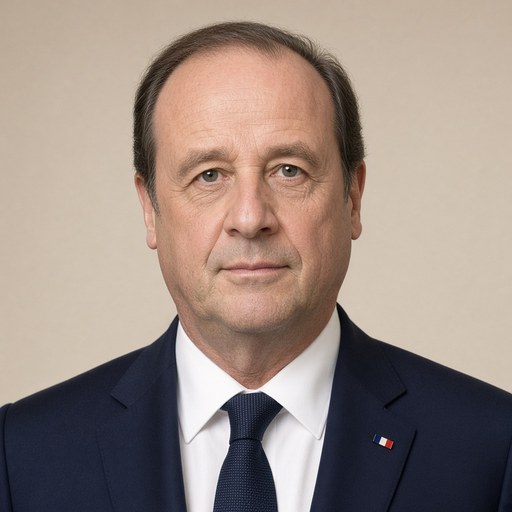
Statement by Mr. François Hollande, President of the Republic, on the challenges and priorities of health and social protection policy, in Nice on October 20, 2012.
 François Hollande · President of France
- Context
- Hollande addressed the French Mutuality Congress in Nice on October 20, 2012, outlining his government's priorities on health, social protection, and solidarity.
- Main themes
- Health and social protection policy, French Mutuality, social solidarity, healthcare inequalities, social security reform, health insurance coverage, mutualist values, territorial disparities in health, healthcare expenditure, universal health coverage, social protection history
- Duration
- ~38 min
- Words
- 4,508
- Sentences
- 230
- Readability
- 43
- Grade
- 12.0
- Syntax
- 2.86
- Vocabulary
- 2.13
Translated from French
The broad sphere of national life a sentence belongs to. Every sentence has an Arena, so it is the denominator the other indices are read against.
Other230 sentences in 79 paragraphs
Mr. President of the French Mutuality, dear Etienne CANIARD,
Ladies and gentlemen ministers,
Mr. Deputy Mayor,
Ladies and gentlemen parliamentarians and elected officials,
Ladies and gentlemen representatives of major trade union organizations,
Ladies and gentlemen mutualists from all over France,
The president of the Mutuality reminded us that every head of state comes, at the beginning of their term - because your congress comes at the right time - to express their recognition of your great institution. I come in turn - François MITTERRAND was the initiator and I will not be the last - to convey the message of the Nation regarding the Mutuality. I do this not out of tradition, rite, habit, and even less out of obligation.
I do this because my presence among you demonstrates the will to make my mandate one of solidarity: a solidarity in relation to the trials of life that our fellow citizens may encounter; a solidarity in the choices we will have to make to restore our country; a solidarity also to unite the Nation. It needs it, as the risk of dispersion, fragmentation, and division is great.
Social protection is the heritage of those who do not have it. Access to care is a conquest, and this conquest you want to preserve - this is the theme of your congress - because health is undeniably one of the greatest concerns of our compatriots. Therefore, beyond the words I wish to address to the Mutuality, I want to align myself with the general theme of your congress.
First, a word about the Mutuality. I want to salute its elected officials - more than 100,000; its staff - 80,000; its organizations; and above all, to tell all the French people - 38 million - who, in one way or another, participate in mutualist activity, how right they are to do so and how obliged they are to do so if they want to receive proper care.
I salute the presidents who have marked the history of your organization. René TEULADE, to whom I am linked by a Corrézienne loyalty; Jean-Pierre DAVANT, who presided over the Mutuality for 20 years; and I extend to you, dear Etienne CANIARD, all my best wishes for success in your presidency.
You are a valuable interlocutor for public authorities, but a demanding partner. Demanding because you carry values, values that lead successive governments to take into account not only your demands but also the principles you set forth.
The Mutuality is indeed part of the very history of the Republic. From mutual aid societies in the 19th century, to the major social laws of the 20th century, to the establishment of Social Security at the Liberation, to Universal Health Coverage at the end of the 90s, it is always the same idea that has been carried forward, from generation to generation: to guarantee the equality of all citizens in the face of the main risk of life, namely illness.
Through all these stages, major progress has been made. You have recalled them: life expectancy at birth - over 85 years for women, 78 years for men - which places us at the forefront of European countries; results also in terms of infant mortality, which is among the lowest in the world in France; pride also regarding the quality, even excellence, of care. I want to congratulate all those who contribute to this, all the health professionals, to whom I pay tribute.
But these good results, as we know, actually hide deep inequalities. Social inequalities, territorial inequalities, inequalities sometimes related to age or simply to the degree of knowledge of our healthcare system. These inequalities reflect a paradox, the French paradox: very satisfactory health indicators on average but with serious disparities.
I want to cite a few: a 35-year-old worker has a life expectancy 6 years lower than that of a manager; obesity is 10 times more common among children from working-class backgrounds than among the most privileged children; the avoidable mortality of men before the age of 65 is 60% higher in Nord-Pas-de-Calais than in the Midi-Pyrénées region.
The result is there, it is undeniable: our health expenditures are among the highest in the world - we indeed devote 12% of national wealth to healthcare, with only the United States and the Netherlands spending more than we do - these expenditures increase each year by six billion euros; and at the same time, the levels of coverage by health insurance have regressed. This reflects an obvious problem of organization in our healthcare system, which has itself been accompanied, or rather paid for, by a retreat of solidarity.
During the last decade, social security contributors have been heavily burdened: co-payments in 2004, their extension to medications in 2008, the creation of a co-payment of 18% on heavy hospital procedures, the introduction of 15% co-payments in 2010; in short, the reduction of reimbursements as a mode of regulation.
The mode of regulation can be tax, but the reduction of reimbursements is ultimately a tax on the poorest, the most vulnerable, the sickest. All these measures lead to patients being charged considerable amounts.
I will give, once again, three examples: the out-of-pocket expenses for medications have increased by 25% over the last 10 years; the expenses for outpatient care are now reimbursed at an average of only 55%; and finally, 15% - yes, 15%! - of our compatriots forgo care for financial reasons. They were only 3% 30 years ago.
I say this here before your congress: I do not resign myself to this situation. I call for a policy of solidarity and public health. We must act on the mechanisms of coverage of expenses but also on the very organization of our healthcare system.
My first priority is access to care for all. This requires first strengthening mandatory health insurance, which must be the pillar and not the floor of our system; but also - and you have invited me to do so, Mr. President - to look at the role and place of complementary insurance, particularly mutuals. For a long time, they only improved the reimbursements of health insurance. But now, for certain care - I think of dental expenses, optics, and many medications - mutuals cover the majority of the costs incurred by patients.
However, at the same time, complementary health coverage does not concern the entire French population. Despite the CMU and the complementary CMU, which have been significant advances in health insurance in recent years, 4 million people are currently excluded from it.
The risk has a name, it is the market. The free market to select between the sick and the healthy, free to increase the costs of coverage without limit based on age, free to offer insurance policies that can turn out to be uncontrolled price spirals. This freedom also has a name, it is privatization. The time has come to put a stop to this drift.
I therefore propose to generalize, by 2017, access to quality complementary coverage. Several formulas are possible. The first is the obligation of insurance. It has its logic, it has its defenders, but it is difficult to implement and it clashes with the reality of our organization, with the weight of our history.
I prefer another solution, which is that of incentive. The policy pursued in recent years has excessively increased the special tax on insurance contracts. It has raised the cost of complementary health for all French people. It has made access to care more difficult. By applying these tax increases indiscriminately to all contracts, regardless of their nature, this policy has stripped responsible contracts of all their appeal.
As for the aid granted to the most modest French people to subscribe to complementary health insurance, it is so complicated, it is so burdensome, that only 650,000 of them receive it, while 4 million could benefit from it.
At the same time, the Court of Auditors reveals these figures: the State has allocated more than 4 billion in tax and social aid for the acquisition of complementary health insurance. Those who benefit from it - and good for these insured individuals - are mostly executives from large companies rather than part-time employees. As for the unemployed and retirees, they have the greatest difficulties in affording complementary health insurance.
I therefore consider that this is both a financial waste - 4 billion euros - and an unacceptable social injustice. I have therefore asked the government to redirect this aid to broaden the number of beneficiaries.
In the same spirit, the taxation of complementary insurance will be reviewed. I propose a much stronger modulation of the applicable tax so that so-called "responsible" contracts, whether individual or collective, become truly attractive. It is still necessary that all contracts are genuinely responsible, meaning that they guarantee, without discrimination based on age or health status, patients or future patients; that they allow for a wide level of coverage and, at the same time, that they control expenses as much as possible.
I therefore wish that, in this revision of the taxation on contracts, the content be improved to promote care pathways and allow for better reimbursement for the French for optical and dental care. This is the project I propose to the Mutuality to open: complementary health coverage with this revision of taxation. This project could be completed as early as next year and be included in the next Social Security financing bill, meaning applicable as of January 2014.
The objective is equal access to care for all, and that is why the issue of excess fees deserves to be raised and, above all, resolved.
Today, more than half of specialists practice them. These excess fees can reach exorbitant rates: twice the Social Security rate - which, no doubt, could have been adjusted in the past to avoid such excesses. Nevertheless, we cannot accept that a number of our compatriots are affected by these excess fees and cannot access quality care.
Negotiations are underway, and you are participating. They are difficult because they involve the remuneration of highly qualified professionals but also significant sums: 2.5 billion, of which 800 million are covered by mutuals. Therefore, there are inevitably what we believe to be conflicting interests. And yet, we must all rediscover the very spirit of Social Security through these discussions.
I say this plainly: the conclusion of an agreement will be conditioned on the gradual but real reduction of out-of-pocket expenses for patients. Three principles must be respected:
- The first is the protection of patients through the capping of excess fees;
- The second is the improvement of the social protection of sector 2 doctors as long as they are willing to adopt new practices;
- And finally, the last principle is support for general practitioners in sector 1, whose role and place must be further recognized, particularly the treating physician who must have an appropriate remuneration model.
I hope that this discussion will lead to a conclusion. It is in the interest, as I said, of all: doctors, Social Security, complementary insurance, including the Mutuality, and patients - that is the essential point. If this negotiation does not reach a conclusion, it would be unfortunate for the actors themselves: it is always better to have a good agreement than an uncertain law. But I repeat here, after Minister Marisol TOURAINE, there will be a law if there is no agreement.
Beyond the issue of excess fees, the inflation of healthcare costs must also be contained. Mutuals must be able to negotiate the best rates for their members. This is the challenge of conventioning, a facility currently open without restriction to insurance companies and provident institutions, and which is, for now, prohibited to you. I commit to correcting this anomaly.
Inequalities in access to care are not simply financial - and that is already painful - they are also territorial. This is what is commonly referred to as "medical deserts."
In certain rural areas, in certain disadvantaged neighborhoods, it has become very difficult and sometimes even impossible to access certain specialists within a reasonable time, to find a general practitioner, or even to access care structures in a timely manner. The tragedy that occurred yesterday, where a woman lost the child she was carrying, calls us once again to the utmost vigilance. I have asked the Minister of Social Affairs to conduct an administrative inquiry to learn all about the conditions of this tragedy.
At the same time, I make the commitment, one that I had already stated before the presidential election and that I reiterate here as head of state: no French person should be more than 30 minutes away from emergency care.
There is what pertains to city medicine and there is what pertains to the hospital, its organization, its financing, which must once again be centered around the mission of the hospital, which is that of a public service and not a business. The hospital, with its particular obligations, social, territorial, scientific, but also its complementarity with city medicine.
Activity-based pricing is just a tool. It has partially achieved its objectives but has also shown its limits. No financial instrument, however ingenious it may be - and the administration is capable of this - can replace a health strategy.
The setting of hospital tariffs will be done in the future with transparency. The goal is to fully enable the hospital to play its role in the health system. It must be a place of excellence where acute conditions and serious pathologies are treated under the best conditions with the best techniques. And I also share your warning: let us avoid unnecessary hospitalizations and ensure that professionals work together because we must rely on this considerable wealth, these thousands of women, men, millions of professionals who work in hospitals and serve patients daily.
But proximity medicine must also be structured. Again, in this area, I tell you plainly, I do not believe in coercion, in obligations that would only create endless conflicts. On the contrary, I think of the beautiful idea of a general mobilization to combat these medical deserts, to fight for everyone’s access to care. The social security financing bill for 2013 created 200 "territorial general practitioners" in the most affected areas. Financial assistance, what is called a "structural flat rate," will cover the costs of a common organization among health professionals in these territories.
The government will also continue to encourage medical homes, a now established model, allowing young professionals to work together with multidisciplinary practices in a framework adapted to patients' expectations.
But I want to go further and ensure the full recognition of the primary care physician, who operates within a collective framework and must have a fair level of remuneration. To this end, a generalization of the flat rate system and its modulation according to the medical density of the territories will meet this objective. Physicians who settle in the most difficult areas, the most fragile territories, will see their activity valued by this flat rate system.
That is what I wanted to tell you about access to care.
Fighting against financial inequalities, ensuring the generalization of complementary coverage, reducing medical deserts, ensuring that hospitals and city medicine work together, because we must also - and this is my second priority - modernize our health organization. We now know the stakes, an increasingly personalized medicine with professionals working in networks, patients who demand to be involved in decisions that concern them, an ever-stronger, sometimes even impatient demand for therapeutic advances, the issue of end-of-life care that must be addressed with responsibility and moderation, and also the challenge of financial resources that are not unlimited and must call for a different distribution than today regarding everyone's place. But also a reform of the financing method of social security because it cannot be accepted that the financing of our social protection rests solely on work, that is to say, on employees alone. Other resources must be solicited, and we will again have to engage in a broad consultation, both to improve the competitiveness of our companies, surely those that are exporting, but also to redistribute contributions differently to have a fairer and at the same time more effective system.
That is what awaits us, great challenges, challenges for medicine, challenges for care, challenges for financing, which requires a public health policy.
A public health policy is primarily about prevention. Informing the French, better training doctors. France, despite recent efforts, continues to show a clear delay in this area. Health education would allow us to improve the health of the entire population while spending less. I am particularly thinking of medication consumption. A form of sobriety would be useful from this point of view. Fewer medications, cheaper, with generics, better evaluated, better known, better prescribed, and better controlled: that is a beautiful public health requirement.
But our prevention policy is also too general. In trying to prevent everything, we prevent nothing. We especially neglect the most exposed populations - I am thinking particularly of children and young people - the means of prevention are limited and precarious. And when there is an economy to be made in an administration, it is especially on prevention that it is made. There is also insufficient consideration of the risks related to work, precariousness, the environment, and nutrition. I therefore suggest greater clarity and coherence in the targets we have to choose. For me, the essential thing is to reach out to young people to prevent certain behaviors, both in terms of a public health requirement and also of responsibility in society. I think of obesity. I think of addictions. The fight against this scourge must be waged, both through repression, deterrence, but also through information, information for families, information for young people. Prevention is also about combating psychological fragility. And because we do not want to face this reality as it hurts us so much, the suicides of young people must also be a major cause for mobilization in our country so that parents do not have to live with such suffering. As for the rest of the population, we must also concentrate prevention efforts on cardiovascular risks and cancers.
An effective health law must prioritize prevention. The last public health law dates back to 2004. It was planned to update it five years later. We are therefore already behind. I propose to revisit it, and the government will present a public health law with objectives, means, and budgets, and notably a major obligation for prevention next year.
Organizing our health system differently means ending compartmentalization, particularly in the care of patients and fluidifying the pathway, ensuring that a patient is not sent back and forth between a specialist and a care structure.
New therapies, new practices, are disrupting the very exercise of medical practice. Thus, outpatient surgery profoundly changes the functioning of hospitals: patients only stay for the day. New treatments transform some diseases that were once fatal into chronic diseases with which the patient will live for many years, and that is a good thing. From there, let us draw the conclusions: the medicine of tomorrow will be that of the person and no longer of the disease.
This lifelong pathway medicine must rely on new modes of organization, more cooperative between doctors, between health professionals, with the hospital, involving more disciplines, with a more open mode of organization.
That is why I call on hospitals to also develop new ways of working and to establish a true continuity of care with city doctors, preventing people who should not normally go to the emergency room from being forced to do so, sometimes for cost reasons, sometimes also because our system has not been organized for them to be directed to city medicine.
This new approach also calls for new tools, first of all our financial tools.
In France, there has been for several years the national objective for health insurance expenditures, known to all stakeholders, which both scares and reassures, the ONDAM. If it is at 2.7, we are saved. At 2.5, the risk would be serious as if everything had to be summed up in a number with a unique organization and a strict distribution between "city care," "hospital," and "medico-social," which actually prevents collaborative work. These distinctions, which still make sense, do not allow for a good overall care of patients. I therefore ask the government to consider a new architecture of expenditure that must also be controlled and better evaluated. We also need to share health data among the various stakeholders.
Finally, the other tool that is both a duty and a right is information.
The French expect from the health system what they demand from all their public services even more so since health is their own life. What do they ask for? Always more information, always more transparency. And we know the questions. Where is the best place to get treated? How much will it cost? Will the care be of quality? These are questions that everyone is asking, and whose answers should not be reserved for a few privileged individuals.
There is therefore a duty: to provide all the information, to avoid it appearing in books or articles of which we are not sure, not even of the quality. But rather to ensure that the system itself provides all French people with the essential data, the necessary information. We must therefore gather all available information into a single service, in order to offer the population and professionals a reliable and comprehensive public information site on health, on establishments, on their qualities, on their costs, in short, on everything that can enable a choice. It is also the freedom of the patient.
Patients themselves must be actors in their own health. This is a moral requirement that must be imposed everywhere. It responds to the new doctor/patient relationship. It illustrates the beautiful idea of "health democracy." The presence of users in the boards of directors of all public health institutions must become systematic, and their representatives must have the means to carry out their missions. And with mutuality, we also have representatives of social insured and mutualists, because you can translate not only a requirement for cost control, for monitoring establishments but also a demand from patients to be treated under the best conditions and equally.
It is in this same spirit that I want to evolve our major health agencies. Since the creation of the drug agency twenty years ago, they have multiplied. They authorize, they control, they alert. However, the health crisis related to the MEDIATOR affair has shown that there is a need to rethink their missions, their organizations, and the articulation between these different agencies, that regroupings are now necessary. Furthermore, I believe that their decisions are too important to be made without once again involving citizens and their representatives, patient associations, and you mutualist organizations.
I finally want to address the issue of medical research, which the Academy of Sciences has recently highlighted for its cumbersome organization.
Once again, let us simplify and clarify. Based on the model established for AIDS and cancer, research must be structured around major themes such as cardiovascular diseases and metabolic diseases and psychiatry. This organization must allow for better coordination of fundamental research, clinical research, and care structures. Ensuring that research is as effective and useful as it is sought after by many families, many patients. The idea that a new drug, a new treatment can finally be found has become a constant demand.
That is what I came here to present to you: a new health policy. We must carry it together. I have heard the President's word, so you will also be its actors.
This strategy is based on several requirements. The first is quality, quality of care, quality of practices. We must at all times seek this quality and never yield on this obligation.
The second principle is solidarity. In the coverage of care, in the modes of financing.
The third principle is responsibility. Individual responsibility because everyone is also accountable for the health system. Everyone must do their part. Everyone must be aware of the cost they can impose on social security or mutualist organizations. Responsibility is also collective; each of the actors, those who finance, those who prescribe, those who care, all these actors must also be responsible.
This policy embodies values that are yours: technical progress, social progress, human progress that underpins a commitment, equality which is not simply a principle of the Republic, but also a will of the entire Nation to ensure that no one is more privileged than others; democracy, finally, because we must involve, engage, and allow the country to decide, not just at election time.
This policy is part of the challenge of recovery, which I have addressed to our country. Recovery of public finances because we cannot live with a debt, a social debt of 145 billion euros that has not been financed by contributions or contributions. 145 billion euros that we have thus passed on to future generations.
Can we still accept that there is a recurring deficit in health insurance or pensions? Therefore, we have this obligation to restore our accounts as well as to restore our economy, its production, its industry, its competitiveness.
And once again, you participate in this because health is an investment—in the future, first and foremost, in women and men, our human resources, our know-how, our skills, our youth. It happens that France is one of the youngest countries in Europe. What a chance! We do not say it enough. Others are not in the same situation. So, let us value this asset, make it a lever, and uphold this obligation to ensure that this human investment can be as effective as possible.
Health is also a sector of innovation—I mentioned it for research but also for new industries that are emerging, related to health. I am thinking particularly of biotechnology.
Health is also a creator of jobs through the products it involves, not just health products, but also all the technologies, through the services they mobilize, especially personal services.
Health thus sits at the intersection of the two imperatives of recovery: competitiveness and solidarity. Our society will only regain confidence in itself if it chooses justice and excellence, quality and responsibility. This choice is yours, for decades, in service of the French people. Solidarity is not just an idea. You have shown that it can be creative. Solidarity is the very condition of your commitment, of mine, at the head of the country. It is the condition of effort: for it to be made, it must be shared. It is the condition of civic spirit, of patriotism. Solidarity is what we can do together to ensure our cohesion. Solidarity is the strength of France, and in this sense—I tell you this while participating in your congress—you are a force of France through solidarity. Mutuality is more than a strength; it is an institution of the Republic. Thank you.
The original French. The tags above are read on the English translation's sentences.
Monsieur le Président de la Mutualité française, cher Etienne CANIARD,
Mesdames et Messieurs les ministres,
Monsieur le député-maire,
Mesdames et Messieurs les parlementaires et les élus,
Mesdames, Messieurs les représentants de grandes organisations syndicales,
Mesdames, Messieurs mutualistes de toute la France,
Le président de la Mutualité l'a rappelé, chaque chef de l'Etat vient, en début de mandat - parce que votre congrès arrive à point nommé - dire toute la reconnaissance qu'il porte à votre grande institution. Je viens à mon tour - François MITTERRAND a été l'initiateur et je ne serai pas le dernier - porter le message de la Nation à l'égard de la Mutualité. Je le fais non pas par tradition, par rite, par habitude et encore moins par obligation.
Je le fais parce que ma présence témoigne, au milieu de vous, de la volonté de faire de mon mandat une solidarité : une solidarité par rapport aux épreuves de la vie que nos concitoyens peuvent rencontrer £ une solidarité dans les choix que nous aurons à faire pour redresser notre pays £ une solidarité aussi pour unir la Nation. Elle en a besoin, tant le risque de la dispersion, de l'éclatement et de la division est grand.
La protection sociale, c'est le patrimoine de ceux qui n'en n'ont pas. L'accès aux soins, c'est une conquête et cette conquête vous voulez la préserver - c'est le thème de votre congrès - car la santé est incontestablement l'une des plus grandes préoccupations de nos compatriotes. Je veux donc, au-delà des mots que je tiens à adresser à la Mutualité, m'inscrire dans la thématique générale de votre congrès.
D'abord, un mot sur la Mutualité. Je veux saluer ses élus - plus de 100 000 £ ses personnels - 80 000 £ ses organisme et surtout dire à tous les Français - 38 millions - qui, d'une façon ou d'une autre, participent à l'activité mutualiste, combien ils ont raison de le faire et combien ils sont obligés de le faire s'ils veulent se soigner correctement.
Je salue les présidents qui ont marqué l'histoire de votre organisation. René TEULADE auquel je suis lié par une fidélité corrézienne £ Jean-Pierre DAVANT qui a présidé la Mutualité 20 ans £ et je vous adresse à vous, cher Etienne CANIARD, tous mes vux de succès pour votre présidence.
Vous êtes un interlocuteur précieux des pouvoirs publics, mais un partenaire exigeant. Exigeant parce que vous portez des valeurs, des valeurs qui conduisent les gouvernements successifs à prendre en compte, non seulement vos revendications, mais les principes que vous posez.
La Mutualité s'inscrit en effet dans l'histoire même de la République. Des sociétés de secours mutuel au XIXème siècle, aux grandes lois sociales du XXème siècle, à l'institution de la Sécurité sociale à la Libération, à la Couverture maladie universelle à la fin des années 90, c'est toujours la même idée qui est portée, de génération en génération : garantir l'égalité de tous les citoyens face au principal risque de la vie, c'est-à-dire la maladie.
A travers toutes ces étapes, des progrès majeurs ont été accomplis. Vous les avez rappelés : l'espérance de vie à la naissance - plus de 85 ans pour les femmes, 78 ans pour les hommes - qui nous met au premier rang des pays européens £ des résultats aussi en matière de mortalité infantile qui est en France parmi les plus basses du monde £ fierté également par rapport à la qualité, l'excellence même des soins. Je veux féliciter tous ceux qui y contribuent, tous les professionnels de santé, auxquels je rends hommage.
Mais ces bons résultats, nous les connaissons, cachent en réalité de profondes inégalités. Inégalités sociales, inégalités territoriales, inégalités quelquefois liées à l'âge ou, tout simplement, au degré de connaissance de notre système de soins. Ces inégalités témoignent d'un paradoxe, le paradoxe français : des indicateurs sanitaires très satisfaisants en moyenne mais avec de graves disparités.
Je veux en citer quelques-unes : un ouvrier de 35 ans a une espérance de vie de 6 ans inférieure à celle d'un cadre £ l'obésité est 10 fois plus fréquente parmi les enfants des classes populaires que parmi les enfants les plus favorisés £ la mortalité des hommes évitable avant 65 ans est supérieure de 60% dans le Nord-Pas-de-Calais que dans la région Midi-Pyrénées.
Le résultat est là, il est incontestable : nos dépenses de santé sont parmi les plus élevées du monde - nous consacrons en effet 12% de la richesse nationale pour nous soigner, seuls les Etats-Unis et les Pays-Bas faisant davantage que nous - ces dépenses progressent chaque année de six milliards d'euros £ et dans le même temps, les niveaux de prise en charge par l'assurance maladie ont régressé. Ce qui témoigne d'un évident problème d'organisation de notre système de santé et qui s'est accompagné lui-même, ou plutôt a été payé, par un recul de la solidarité.
Durant la dernière décennie, les assurés sociaux ont été largement mis à contribution : les franchises en 2004, leur extension aux médicaments en 2008, la création d'un ticket modérateur de 18 sur les actes lourds à l'hôpital, l'instauration de vignettes à 15% en 2010 £ bref, le déremboursement comme mode régulation.
Le mode de régulation peut être l'impôt mais le déremboursement, c'est en définitive l'impôt sur les plus pauvres, les plus fragiles, les plus malades. Toutes ces mesures conduisent à renvoyer sur les patients des sommes désormais devenues considérables.
Je donnerai, là encore, trois exemples : le reste à charge a augmenté de 25% pour les médicaments sur les 10 dernières années £ les dépenses de soins de ville ne sont plus aujourd'hui remboursées qu'à hauteur de 55% en moyenne£ et enfin 15% - oui 15% ! - de nos compatriotes renoncent à se soigner pour des raisons financières. Ils n'étaient que 3% il y a 30 ans.
Je le dis ici devant votre congrès : je ne me résigne pas à cette situation. J'en appelle à une politique de solidarité et de santé publique. Il faut agir sur les mécanismes de couverture de la dépense mais aussi sur l'organisation même de notre système de santé.
Ma première priorité, c'est l'accès de tous aux soins. Elle exige d'abord de conforter l'assurance maladie obligatoire qui doit être le pilier et non pas le plancher de notre système £ mais aussi - et vous m'y avez invité, Monsieur le président - de regarder le rôle et la place des complémentaires et notamment des mutuelles. Longtemps, elles n'ont fait qu'améliorer les remboursements de l'assurance maladie. Mais à présent, pour certains soins - je pense aux frais dentaires, à l'optique, à beaucoup de médicaments - les mutuelles assurent la plus grande partie des frais engagés par les patients.
Or, dans le même temps, la couverture complémentaire maladie ne concerne pas toute la population française. Malgré la CMU et la CMU complémentaire qui auront été de grandes avancées en matière d'assurance maladie ces dernières années, 4 millions de personnes en sont aujourd'hui exclues.
Le risque, il a un nom, c'est le marché. Le marché libre de sélectionner entre malades et bien-portants, libre d'augmenter sans limite les coûts de la couverture en fonction de l'âge, libre de proposer aux assurances des formules qui peuvent se révéler être des spirales tarifaires sans contrôle. Cette liberté, elle a aussi un nom, c'est la privatisation. Le temps est venu de porter un coup d'arrêt à cette dérive.
Je propose donc de généraliser, à l'horizon 2017, l'accès à une couverture complémentaire de qualité. Plusieurs formules sont possibles. La première, c'est l'obligation d'assurance. Elle a sa logique, elle a ses défenseurs, mais elle est difficile à mettre en uvre et elle se heurte à la réalité de notre organisation, au poids de notre histoire.
Je préfère une autre solution qui est celle de l'incitation. La politique menée ces dernières années a alourdi, sans mesure, la taxe spéciale sur les conventions d'assurance. Elle a renchéri le coût de la complémentaire santé pour tous les Français. Elle a rendu l'accès aux soins plus difficile. En appliquant, en plus, ces hausses de fiscalité de manière indistincte à tous les contrats quels qu'ils soient, cette politique a fait perdre aux contrats responsables tout leur attrait.
Quant à l'aide accordée aux Français les plus modestes pour souscrire une complémentaire santé, elle est si compliquée, elle est si lourde, que seuls 650 000 d'entre eux la perçoivent, alors que 4 millions pourraient en bénéficier.
Dans le même temps, la Cour des comptes nous révèlent ces chiffres : l'Etat a consacré plus de 4 milliards d'aides fiscales et sociales à l'acquisition d'une complémentaire santé. Ceux qui en profitent - et tant mieux pour ces assurés - sont plutôt des cadres de grandes entreprises que des salariés à temps partiel. Quant aux chômeurs et aux retraités, ils ont les plus grandes difficultés à s'offrir une complémentaire santé.
Je considère donc que c'est à la fois un gâchis financier - 4 milliards d'euros - et une injustice sociale inacceptable. J'ai donc demandé au gouvernement de réorienter ces aides pour en élargir le nombre des bénéficiaires.
Dans le même esprit, la fiscalité des assurances complémentaires sera revue. Je propose une modulation beaucoup plus forte de la taxe applicable afin que les contrats dits « responsables », qu'ils soient individuels ou collectifs, deviennent véritablement attractifs. Faut-il encore que les contrats soient tous véritablement responsables, c'est-à-dire qu'ils garantissent, sans discrimination d'âge ou de situation de santé, les patients ou les futurs patients £ qu'ils permettent un large niveau de couverture et, dans le même temps, qu'ils maîtrisent autant qu'il est possible les dépenses.
Je souhaite donc que, dans cette révision de la fiscalité sur les contrats, le contenu soit amélioré pour favoriser les parcours de soins et permettre un meilleur remboursement pour les Français des soins optiques et des soins dentaires. C'est le chantier que je propose, à la Mutualité, d'ouvrir : la couverture maladie complémentaire avec cette révision de la fiscalité. Ce chantier-là pourrait aboutir, dès l'année prochaine, et se trouver traduit dans le prochain projet de loi de financement de la sécurité sociale, c'est-à-dire applicable dès janvier 2014.
L'objectif, c'est l'égal accès aux soins de tous et c'est pourquoi la question des dépassements d'honoraires mérite d'être posée et surtout réglée.
Aujourd'hui, plus de la moitié des spécialistes les pratiquent. Ces dépassements peuvent atteindre des taux exorbitants : deux fois le tarif de la Sécurité sociale - lesquels, sans doute, auraient pu être réajustés dans le passé pour éviter de tels excès. Il n'empêche. Nous ne pouvons pas admettre qu'un certain nombre de nos compatriotes soient frappés par ces dépassements et ne puissent pas aller vers des soins de qualité.
Des négociations sont engagées, vous y participez. Elles sont difficiles parce qu'il s'agit de la rémunération de professionnels de grande qualité mais aussi de sommes importantes : 2,5 milliards dont 800 millions pris en charge par les mutuelles. Alors, il y a forcément ce que l'on croit être des intérêts contradictoires. Et pourtant, nous devons tous retrouver l'esprit même de la Sécurité sociale à travers ces discussions.
Je le dis sans détour : la conclusion d'un accord sera conditionnée à la diminution, progressive mais réelle, du reste à charges pour les patients. Trois principes doivent être respectés :
- Le premier, c'est la protection des patients par le plafonnement des dépassements £
- Le second, c'est l'amélioration de la protection sociale des médecins de secteur 2 dès lors qu'ils sont prêts à adopter de nouvelles pratiques £
- Et enfin, le dernier principe, c'est le soutien à la médecine générale de secteur 1 dont le rôle et la place doivent être davantage reconnus et notamment le médecin traitant qui doit avoir un mode de rémunération approprié.
Je souhaite que cette discussion aboutisse. C'est l'intérêt, je l'ai dit, de tous : des médecins, de la Sécurité sociale, des complémentaires, dont la Mutualité, et des patients - c'est là l'essentiel. Si cette négociation ne trouvait pas sa conclusion, ce serait dommage pour les acteurs eux-mêmes : il vaut toujours mieux un bon accord qu'une loi incertaine. Mais je le répète ici, après la ministre Marisol TOURAINE, il y aura une loi s'il n'y a pas un accord.
Au-delà de la question des dépassements, l'inflation des coûts de santé doit être également contenue. Les mutuelles doivent pouvoir négocier les meilleurs tarifs pour leurs adhérents. C'est l'enjeu du conventionnement, faculté aujourd'hui ouverte sans restriction aux compagnies d'assurance et aux institutions de prévoyance, et qui vous est, pour l'heure, interdite. Je m'engage à corriger cette anomalie.
Les inégalités dans l'accès aux soins ne sont pas simplement financières - et c'est déjà douloureux - elles sont aussi territoriales. C'est ce que l'on appelle communément les « déserts médicaux ».
Dans certaines zones rurales, dans certains quartiers défavorisés, il est devenu très difficile et parfois même impossible d'avoir recours à certains spécialistes dans une durée raisonnable, de trouver un généraliste, voire même d'accéder en temps utile à des structures soins. Le drame qui s'est produit hier, où une femme a perdu l'enfant qu'elle portait, nous appelle une nouvelle fois, à la plus grande vigilance. J'ai demandé à la ministre des Affaires sociales de diligenter une enquête administrative pour tout connaître des conditions de ce drame.
En même temps, je prends l'engagement, celui que j'avais déjà énoncé avant l'élection présidentielle et que je rappelle ici comme chef de l'Etat : aucun Français ne doit se trouver à plus de 30 minutes de soins d'urgence.
Il y a ce qui relève de la médecine de ville et il y a ce qui relève de l'hôpital, de son organisation, de son financement qui doivent, une nouvelle fois, être tournés autour de la mission de l'hôpital, qui est celle d'un service public et non pas d'une entreprise. L'hôpital avec ses obligations particulières, sociales, territoriales, scientifiques mais aussi sa complémentarité avec la médecine de ville.
La tarification à l'activité n'est qu'un outil. Elle a d'ailleurs partiellement atteint ses objectifs mais elle a aussi montré ses limites. Aucun instrument financier, si ingénieux soit-il - et l'administration en est capable - ne saurait remplacer une stratégie sanitaire.
La fixation des tarifs hospitaliers se fera à l'avenir dans la transparence. L'objectif, c'est de faire jouer pleinement à l'hôpital son rôle dans le système de santé. Cela doit être un lieu d'excellence où sont soignées dans les meilleures conditions avec les meilleures techniques les affections aiguës et les pathologies lourdes. Et je partage aussi votre avertissement : évitons des hospitalisations non pertinentes et faisons en sorte de faire travailler ensemble les professionnels parce que nous devons nous appuyer sur cette richesse considérable, ces milliers de femmes, d'hommes, millions de professionnels qui travaillent à l'hôpital et uvrent quotidiennement au service des malades.
Mais la médecine de proximité doit également se structurer. Là encore, dans ce domaine, je vous le dis tout net, je ne crois pas à la coercition, à l'obligation qui ne créerait que des conflits sans fin. Je pense au contraire à la belle idée de la mobilisation générale pour lutter contre ces déserts médicaux, pour lutter pour l'accès de tous aux soins. Le projet de loi de financement de la sécurité sociale pour 2013 a créé 200 « praticiens territoriaux de médecine générale » dans les zones les plus concernées. Une aide financière, ce qu'on appelle « forfait structure » permettra de couvrir les frais d'une organisation commune entre professionnels de santé sur ces territoires.
Le gouvernement continuera aussi à encourager les maisons médicales, formule maintenant aboutie, permettant à des jeunes professionnels d'exercer ensemble avec une pluridisciplinarité leur activité et dans un cadre adapté aux attentes des patients.
Mais je veux aller plus loin et assurer la pleine reconnaissance du médecin traitant, celui qui évolue dans un cadre collectif et qui doit avoir un juste niveau de rémunération. A cette fin, une généralisation du système des forfaits et sa modulation en fonction de la densité médicale des territoires permettra de répondre à l'objectif. Les médecins qui s'installent dans les lieux les plus difficiles, les territoires les plus fragiles verront leur activité valorisée par ce système de forfait.
Voilà ce que je voulais vous dire sur l'accès aux soins.
Lutter contre les inégalités financières, assurer la généralisation de la couverture complémentaire, réduire les déserts médicaux, faire en sorte de faire travailler l'hôpital et la médecine de ville, parce que nous devons aussi - et c'est ma seconde priorité - moderniser notre organisation de santé. Nous connaissons aujourd'hui les enjeux, une médecine de plus en plus personnalisée avec des professionnels travaillant en réseau, des patients qui demandent à être associés aux décisions qui les concernent, une attente toujours plus forte parfois même impatiente pour les avancés thérapeutiques, le sujet de la fin de vie qui devra être traité avec responsabilité et mesure et également l'enjeu des ressources financières qui ne sont pas illimitées et qui doivent appeler à une répartition différente d'aujourd'hui par rapport à la place de chacun. Mais aussi à une réforme du mode de financement de la sécurité sociale car il ne peut pas être accepté que ce soit sur le seul travail, c'est-à-dire sur les seuls salariés que repose le financement de notre protection sociale. D'autres ressources doivent être sollicitées et nous aurons à faire, là encore, une concertation d'ampleur, à la fois pour améliorer la compétitivité de nos entreprises, sûrement, celles qui sont à l'exportation, mais aussi à répartir différemment les contributions pour avoir un système plus juste et en même temps plus efficace.
Voilà ce qui nous attend, de grands enjeux, enjeux pour la médecine, enjeux pour les soins, enjeux pour les financements, ce qui exige une politique de santé publique.
Une politique de santé publique, c'est d'abord la prévention. Informer les Français, mieux former les médecins. La France, malgré des efforts récents, continue d'accuser un retard évident dans ce domaine. L'éducation à la santé nous permettrait pourtant d'améliorer la santé de toute la population tout en dépensant moins. Je pense particulièrement à la consommation de médicaments. Une forme de sobriété serait de ce point de vue utile. Moins de médicaments, moins chers, avec des génériques, mieux évalués, mieux connus, mieux prescrits et mieux contrôlés : voilà une belle exigence de santé publique.
Mais notre politique de prévention est aussi trop générale. A force de vouloir tout prévenir on n'empêche rien. On néglige surtout les publics les plus exposés - je pense notamment aux enfants et aux jeunes - les moyens de la prévention sont limités et précaires. Et quand il y a une économie à faire dans une administration, c'est surtout sur la prévention qu'elle est faite. Il n'y a pas non plus de prise en compte suffisante des risques liés au travail, à la précarité, à l'environnement, à l'alimentation. Je suggère donc une plus grande clarté et une plus grande cohérence dans les cibles que nous avons à choisir. Pour moi l'essentiel, c'est d'aller vers les jeunes pour éviter certains comportements, à la fois par rapport à une exigence de santé publique mais aussi de responsabilité dans une société. Je pense à l'obésité. Je pense aux addictions. La lutte contre ce fléau doit être menée, à la fois par la répression, par la dissuasion mais aussi par l'information, information des familles, informations des jeunes. La prévention, c'est aussi lutter contre les fragilités psychologiques. Et parce que nous ne voulons pas regarder cette réalité en face tant elle nous fait mal, les suicides des jeunes qui doivent être une grande cause aussi de mobilisation de notre pays pour ne pas laisser les parents vivre avec ces souffrances-là. Quant au reste de la population, nous devons là-aussi concentrer les efforts de prévention par rapport aux risques cardio-vasculaires et par rapport aux cancers.
Une loi de santé efficace doit inscrire cette priorité de la prévention. La dernière loi de santé publique remonte à 2004. Il avait été prévu de l'actualiser cinq ans plus tard. Nous sommes donc déjà en retard. Je propose d'y revenir et le gouvernement présentera une loi de santé publique avec des objectifs, des moyens et des budgets et notamment une grande obligation de la prévention l'année prochaine.
Organiser différemment notre système de santé c'est mettre fin aux cloisonnements et notamment au compartiment dans la prise en charge des malades et de fluidifier le parcours, de faire qu'un malade ne soit pas renvoyé tantôt vers le spécialiste, tantôt vers une structure de soin.
De nouvelles thérapeutiques, de nouvelles pratiques, bouleversent l'exercice même de la pratique médicale. Ainsi, la chirurgie ambulatoire modifie profondément le mode de fonctionnement des hôpitaux : les patients n'y restent que la journée. De nouveaux traitements transforment certaines maladies jadis mortelles en maladies chroniques avec lesquelles le patient vivra pendant de longues années et tant mieux. A partir de là, tirons-en les conclusions : la médecine de demain sera celle de la personne et non plus de la maladie.
Cette médecine de parcours tout au long de la vie doit reposer sur de nouveaux modes d'organisation, plus coopératifs entre médecins, entre professionnels de santé, avec l'hôpital, davantage de disciplines qui seront mobilisées, avec un mode d'organisation plus ouvert.
C'est pourquoi j'appelle les hôpitaux à développer aussi de nouvelles manières de travailler et à mettre en place avec les médecins de ville une véritable permanence de soins, évitant que se trouvent aux urgences des personnes qui normalement ne devraient pas y venir et qui sont à la fois obligées de le faire, parfois pour des raisons de coûts, parfois aussi parce que notre système n'a pas été organisé pour qu'elles soient orientées vers la médecine de ville.
Cette nouvelle approche appelle également de nouveaux outils, d'abord nos outils financiers.
En France existe depuis déjà plusieurs années l'objectif national de dépenses d'assurance maladie, connu de tous les acteurs, qui fait à la fois peur mais en même temps rassure, l'ONDAM. S'il est à 2,7, nous sommes sauvés. A 2,5, le risque serait sérieux comme si tout devait se résumer à un chiffre avec une organisation unique et avec une répartition stricte entre « soins de ville », « hôpital » et « médico-social », empêchant d'ailleurs le travail en commun. Ces distinctions qui gardent encore leur sens ne permettent pas d'assurer une bonne prise en charge globale des patients. Je demande donc au gouvernement de réfléchir à une nouvelle architecture de la dépense qui devra être aussi maîtrisée et mieux évaluée. Il nous faut aussi partager les données de santé entre les différents acteurs.
Enfin, l'autre outil qui est à la fois un devoir et un droit, c'est l'information.
Les Français attendent du système de santé ce qu'ils exigent de tous leurs services publics encore davantage puisque la santé c'est leur propre vie. Que demandent-ils ? Toujours plus d'information, toujours plus de transparence. Et les questions nous les connaissons. Où se soigner le mieux ? Combien cela va-t-il coûter ? La prise en charge sera-t-elle de qualité ? Ce sont là des questions que tout le monde se pose, et dont les réponses ne sauraient être réservées à quelques privilégiés.
Il y a donc un devoir : donner toutes les informations, éviter que cela apparaisse dans des livres ou des articles dont nous ne sommes sûrs de rien pas même de la qualité. Mais au contraire faire que le système donne lui-même à tous les Français les données indispensables, les informations nécessaires. Il faut donc rassembler dans un service unique l'ensemble des informations disponibles, afin d'offrir à la population et aux professionnels un site public, fiable et exhaustif d'information sur la santé, sur les établissements, sur leurs qualités, sur leurs coûts, bref sur tout ce qui peut permettre de faire un choix. C'est aussi la liberté du patient.
Les patients eux-mêmes doivent être des acteurs de leur propre santé. C'est une exigence morale, qui doit s'imposer partout. Elle répond à la nouvelle relation médecin/malade. Elle illustre la belle idée de « démocratie sanitaire ». La présence des usagers dans les conseils d'administration de toutes les institutions publiques de santé doit devenir systématique et leurs représentants doivent disposer des moyens d'exercer leurs missions. Et avec la mutualité, nous disposons aussi de représentants des assurés sociaux et des mutualistes, parce vous, vous pouvez traduire non seulement une exigence de maîtrise de coûts, de surveillance d'établissements mais également une demande des patients à être soignés dans les meilleures conditions et à égalité.
C'est dans ce même esprit que je veux faire évoluer nos grandes agences sanitaires. Depuis la création de l'agence du médicament il y a vingt ans, elles se sont multipliées. Elles autorisent, elles contrôlent, elles alertent. La crise sanitaire liée à l'affaire du MEDIATOR a montré néanmoins qu'il y avait lieu de repenser leurs missions, leurs organisations et l'articulation entre ces différentes agences, que des regroupements étaient désormais nécessaires. Par ailleurs, je pense que leurs décisions sont trop importantes pour être prises sans que soient associés une nouvelle fois les citoyens et leurs représentants, associations de patients et vous aussi organismes mutualistes.
Je veux enfin aborder la question de la recherche médicale, dont l'Académie des sciences a récemment souligné la lourdeur de l'organisation.
Là encore simplifions et clarifions. Sur le modèle de ce qui a été mis en place pour le Sida et le cancer, la recherche doit se structurer autour de grands thèmes par exemple les maladies cardio-vasculaires et maladies métaboliques et la psychiatrie. Cette organisation devra permettre de mieux coordonner recherche fondamentale, recherche clinique et structures de soins. Faire en sorte que la recherche soit la plus efficace, la plus utile tant elle est sollicitée par beaucoup de familles, beaucoup de patients. L'idée qu'il puisse enfin être trouvé un nouveau médicament, un nouveau traitement est devenue une exigence de tous les instants.
Voilà chers amis, ce que j'étais venu vous présenté ici : une nouvelle politique de santé. Nous devrons la porter ensemble. J'ai entendu le mot du Président donc vous en serez aussi les acteurs.
Cette stratégie repose sur plusieurs exigences. La première c'est la qualité, qualité des soins, qualité des pratiques. Nous devons à tous moment rechercher cette qualité et ne jamais rien cédé par rapport à cette obligation.
Le second principe c'est la solidarité. Dans la couverture des soins, dans les modes de financement.
Le troisième principe, c'est la responsabilité. Responsabilité individuelle parce que chacun est aussi comptable du système de santé. Chacun doit prendre sa part. Chacun doit être conscient du coût qu'il peut infliger à la sécurité sociale ou aux organismes mutualistes. La responsabilité est aussi collective, chacun des acteurs, ceux qui financent, ceux qui prescrivent, ceux qui soignent, tous ces acteurs doivent être également responsables.
Cette politique, elle porte des valeurs qui sont les vôtres, le progrès technique, le progrès social, le progrès humain qui fonde un engagement, l'égalité qui n'est simplement un principe de la République, qui est aussi une volonté de la Nation toute entière de faire en sorte qu'il n'y ait pas les uns plus privilégiés que les autres £ la démocratie enfin, parce que nous devons associer, faire participer, faire décider le pays, pas simplement au moment des élections.
Cette politique, elle participe de l'enjeu du redressement, celui que j'ai adressé à notre pays. Redressement des comptes publics parce que nous ne pouvons pas vivre avec une dette, une dette sociale 145 milliards d'euros qui n'ont pas été financés par des cotisations ou contributions. 145 milliards d'euros que nous avons ainsi renvoyés sur les générations futures.
Peut-on encore accepter qu'il y ait un déficit récurrent de l'assurance maladie ou des retraites ? Donc, nous avons cette obligation de redresser nos comptes comme d'ailleurs de redresser notre économie, sa production, son industrie, sa compétitivité.
Et là encore, vous y participez parce que la santé c'est un investissement -dans l'avenir, d'abord, dans les femmes et les hommes, nos ressources hum aines, nos savoir-faire, nos compétences, notre jeunesse. Il se trouve que la France est un des pays les plus jeunes d'Europe. Quelle chance ! Nous ne le disons pas suffisamment. D'autres ne sont pas dans la même situation. Donc, valorisons cet atout, faisons en un levier et portons cette obligation de faire que cet investissement humain puisse être le plus efficace possible.
La santé c'est aussi un secteur d'innovation -je l'ai évoqué pour la recherche mais également pour de nouvelles industries qui apparaissent, liées à la santé. Je pense notamment à la biotechnologie.
La santé est également créatrice d'emplois par les produits auxquels elle fait appel, pas simplement les produits de santé, mais aussi toutes les technologies, par les services qu'elles mobilisent et notamment les services à la personne.
La santé se situe donc au croisement des deux impératifs du redressement : la compétitivité et la solidarité. Notre société ne retrouvera confiance en elle-même que si elle fait le choix de la justice et de l'excellence, de la qualité et de la responsabilité. Ce choix, c'est le vôtre, depuis des décennies, au service des Français. La solidarité ce n'est pas simplement une idée. Vous avez montré qu'elle pouvait être créatrice. La solidarité c'est la condition même de l'engagement du vôtre, du mien, à la tête du pays. C'est la condition de l'effort : pour qu'il soit consenti, il doit être partagé. C'est la condition de l'esprit civique, du patriotisme. La solidarité c'est ce que nous pouvons faire ensemble pour assurer notre cohésion. La solidarité c'est la force de la France et en ce sens -je vous le dis en participant à votre congrès -vous êtes une force de la France à travers la solidarité. La mutualité est plus encore qu'une force, c'est une institution de la République. Merci.