




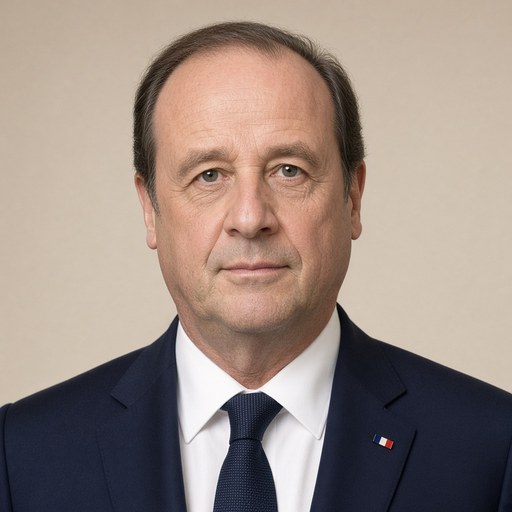
Press conference by Mr. François Hollande, President of the Republic, notably on the European banking union, in Brussels on October 18, 2012.
 François Hollande · President of France
- Context
- Hollande addressed a press conference at the European Council in Brussels on October 18, 2012, following discussions on the banking union and Greece.
- Main themes
- European banking union, banking supervision, European Central Bank, Greece and eurozone stability, legislative framework, bank recapitalization, ECOFIN role, European Council decisions, market confidence, single market rules
- Duration
- ~37 min
- Words
- 4,403
- Sentences
- 183
- Readability
- 53
- Grade
- 11.6
- Syntax
- 3.16
- Vocabulary
- 2.09
Translated from French
This is an interview, press conference or exchange with other speakers. It is split into sentences and counted in the corpus, but its sentences are not tagged on the twelve indices.
183 sentences in 60 paragraphs
Ladies and gentlemen,
I congratulate you on your patience, but the European Council has taken the time it deemed appropriate to address what will be the Banking Union.
It was our intention, as expressed during the Council on June 29, to implement the first step, namely supervision, by the end of the year.
We have therefore, during this Council, confirmed and clarified what we decided last June.
Confirmed: it is indeed banking supervision.
Clarified: it will be implemented starting January 1, once the legislative framework has been adopted.
As of January 1, it will be up to the Central Bank to create the bodies, mobilize the personnel that will be dedicated to supervision, and then, once these resources have been allocated, to proceed not only with supervision but also with what is related to it, namely the recapitalization of banks.
I believe that the strength of the European Council of June 29 has had effects that we can measure today, namely not only the growth pact but also a stability that has returned to the markets, which has also been complemented by rules for intervention by the Central Bank. This European Council is once again reflected today through the Banking Union.
There was another topic that was discussed. This is the case of Greece, and the actors of the European Council, heads of state and government, considered that there had been substantial progress and that the Troika was close to an agreement, even if it has not yet been reached and there are still points to clarify. If these conditions are met, then Greece will be able to remain in the eurozone, which is our intention.
These are the two main topics on which we debated extensively. I would say on the first, Greece, the debate was short because we were all convinced that there had been progress, that there was a willingness on the part of the Greek government, that there were still a few points to settle, which will indeed be handled by the Eurogroup in the coming weeks.
I return to the Banking Union. What do we have left to do by the end of the year since there is a legislative framework to adopt? It will be up to the ECOFIN, that is to say, all the ministers of Economy and Finance of the member countries of the Union, to specify as much as possible the legislative framework and to get into all the details.
The legislative framework will be submitted for opinion to the European Parliament and can therefore be adopted during the December Council. Then, the date has been clearly specified, it is a very important point, it is on January 1, 2013, that the modalities will have been clarified and that the European Central Bank will therefore be the supervisor of the countries of the eurozone, once an agreement has been reached with the countries that are not members of the eurozone, in order to respect the rules of the single market. As of January 1, it is the European Central Bank that will put in place all the means allowing this supervision to become effective.
I consider that this Council has been consistent with that of June, has been able to translate it, and has been an important step towards the Banking Union. I had said, moreover, that the only agenda of this Council, apart from the case of Greece which was mentioned in the context of the eurozone, was the Banking Union, and this Banking Union is being established in an even faster timeframe than was anticipated in June. I remind you that in June, it was simply envisaged for the end of the year. This time, it is no longer envisaged for the end of the year; it is scheduled to come into effect within the legislative framework on January 1. This does not mean that the mechanism itself will come into effect on January 1; that will be during the year 2013, but the legislative framework, with the supervisor, will be in place on January 1.
QUESTION -- You clearly stated that the legislative framework would be in place on January 1, 2013, but effectively, banking supervision will not be in place until later in the year. So, my first question is, are you not afraid that, for example, the markets will think that Europe is still falling behind and is unable to implement the measures it has announced? And secondly, clearly, regarding Spain, particularly Spanish banks, will they be able to be recapitalized as early as January 1?
THE PRESIDENT -- So, let’s be clear. Europe is not falling behind; it is getting ahead of what it had set as its own agenda. It was not possible to go faster, in fact. How to adopt a legislative framework before the end of the year? It is very important that Europe has translated the commitment made during the Council in June and ensured that by January 1, 2013, the legislative framework is effective. But, you are right, the legislative framework in 2013 is not yet the mechanism itself in its effective translation. There, it will take several weeks, several months, and we have said during the year 2013, and the sooner the Central Bank implements these means, the sooner the recapitalization of banks will occur if necessary.
Your second question concerns Spain. Another procedure has been found for Spain, since it is through the EFSF that resources have been made available to Spanish banks but via the State. Regarding Spain, the question must be posed differently, no longer for the banking sector, but for the State itself. Is Spain planning to submit a plan? This topic was not discussed at all this evening.
QUESTION -- Do you consider that this evening represents a compromise? Were there concessions on both sides to reach this agreement? I think, for example, of Germany accepting oversight over all these banks, including regional banks? And, has there perhaps been a compromise or concessions from France or other countries regarding the timeline?
THE PRESIDENT -- A European agreement is always a compromise, and that is how I wanted to position France. Not as an ultimatum, not as a demand, but as a willingness to move forward together. I met with Mrs. MERKEL before the European Council, and we quickly agreed on what we could accept and wish for this European Council. We were on the same approach. I recall, this approach is as follows: to ensure that the legislative framework can be adopted by the end of the year, and secondly regarding banks, to take all banks, but to ensure that the national supervisor can have the capacity to do this work on behalf of the central supervisor, which has been reflected in the text we adopted this evening. I think Germany wanted there to be supervision that could be coherent, that is to say direct, it is the European Central Bank that ensures responsibility, but which could for a number of banks be initially carried out by a national supervisor, in coherence with the central supervisor.
Regarding the timeline, there was no compromise; we found ourselves on the same approach and the same position, that is to say to ensure that the legislative framework can be adopted by the end of the year. It was not a question for France to think that we could obtain the recapitalization of banks without a legislative framework. Supervision was the prerequisite for the recapitalization of banks; if there was no supervision, if there was no legislative framework, there would be no possibility to recapitalize the banks. That is why we established this timeline in perfect agreement with our German friends who understood that the Banking Union must involve steps, as did we, and that we could move as quickly as possible while also establishing quality supervision.
You remember when I met Mrs. MERKEL in Ludwigsburg, there was a debate about whether the French preferred speed while others preferred quality. We found the right compromise, to move as quickly as possible while ensuring the highest level of supervisory quality. From this point of view, a good agreement was reached this evening.
QUESTION -- At the end of the June Council, Spain hoped to recapitalize its banks directly without burdening the State's debt. Is this not ultimately a defeat for Spain today?
THE PRESIDENT -- No, Spain had agreed in June that banks could find support through the procedure that existed until then, namely the EFSF. Spain can still think that later, if necessary, a recapitalization of banks may be possible, but the prerequisite is supervision. There was no desire on the part of Spain in this discussion tonight to obtain a recapitalization of banks through a mechanism other than the one we were implementing.
However, I return to the Spanish case, because it is often raised with me. I am asked what France's position is. France's position regarding Spain is that as soon as Spain considers that it must request a plan, there is no reason to impose conditions that would add further austerity to austerity, while Spain is making all necessary efforts. But it is up to Spain alone to decide the appropriateness of requesting a plan and, of course, the timing of when it would consider doing so. For now, it has not made this request, and that would only apply to the State in this case.
QUESTION -- The German Chancellor has shown herself to be rather reluctant in recent hours regarding recapitalization and supervision. How do you explain that ultimately the compromise, according to what you just said, was relatively easy to reach?
THE PRESIDENT -- Listen, I cannot comment on a position, that of Mrs. MERKEL, but I found that as soon as I met her, she was in a mindset to be very precise, as she always is, that is to say to have steps, not to skip these steps, to respect a number of deadlines, but to move towards the Banking Union, and we easily found ourselves on the timeline as I presented it, that is to say January 1, 2013, the legislative framework adopted.
Mrs. MERKEL had made a speech about a commissioner who could have special powers. I know that this is a position that has also been put forward by Mr. SCHAUBLE; it is a German thesis that is quite respectable, but which was not discussed this evening.
In terms of budgetary union, this evening, this question was simply mentioned, through the report that Mr. VAN ROMPUY and the four presidents, plus the president of the European Parliament, must present in December. There will be a dimension on budgetary union that has been outlined; you will see it in the final communiqué, possibly through budget supplements, but which would not be a budget for the eurozone. And explorations that, for now, remain extremely general.
This evening, there was a very long debate, as you can easily understand, regarding the question of member countries of the eurozone, compared to those that are not. This was indeed the whole difficulty of the exercise. The problem was not between France and Germany; we had agreed from the start, but it was how to ensure that, as twenty-seven, we accept banking supervision with the European Central Bank for the eurozone, without the countries that are not members of the eurozone feeling either monitored by an authority they would not accept or excluded from the system. So, it was regarding the banking regulatory authority that the debates took place, the voting rights, the British being very sensitive to the preservation of their own decision, it took quite a while to reach that.
Then, regarding the question of what happens to countries that are not members of the eurozone in the deepening of the Economic and Monetary Union, there too, guarantees had to be given. And I come to this point which was very lengthy, which was to know whether the countries of the eurozone wanted to give themselves additional budgetary capacities. Would this undermine the process that will be discussed next month regarding the European budget itself?
It was very clearly established that any potential budgetary capacity that would be introduced in the deepening of the Economic and Monetary Union for the eurozone would be without effect, without impact, without link to the discussion on the budget of the twenty-seven. In other words, there is no question of having a budget for the eurozone that would be deducted from or subtracted from the European budget itself.
QUESTION -- Mr. President, you said that if Spain were to request assistance, additional austerity conditions should not be added. Not all countries seemed to be on the same page. Was this reaffirmed this evening?
THE PRESIDENT -- No, I will be clear. This is the position that France has defended since this idea has been circulating. The Spanish case, if I may say so, has not been mentioned at all. This means that Spain has not, at any point in the discussion, and I do not see why it would have, requested anything, neither as additional information nor as additional conditions. There has been no debate on Spain. Perhaps this will be discussed in the Eurogroup, I do not know, but Spain has made no request and nothing has been demanded of Spain in any way.
QUESTION -- Mr. President, you mentioned earlier that Mrs. MERKEL had given a speech about the commissioner with special powers, which is a respectable German thesis but which was not discussed this evening. Notwithstanding that, what do you think about this possibility that seems to be dear to Germany? Could it be something that will be discussed soon, in the future, and under what conditions? Thank you.
THE PRESIDENT -- There are already sufficient procedures in what is called the fiscal treaty. We just ratified this text a few days ago, and there are still countries in the eurozone that have not voted for it. There is also the "six-pack," and soon there will be the "two-pack," which means that in terms of fiscal procedure, there is a whole arsenal, a whole set of procedures, mechanisms, and controls. As far as I am concerned, France's position is that there is no need to add more.
It would be different if we were to go further in budgetary union, which is outlined in the report of the four Presidents, that is to say, if additional resources were pooled or if eurobonds were created. Then, quite legitimately, there would be stricter controls to introduce, but we are not there yet. This is the constant position I have presented to you of solidarity integration; if there is even greater budgetary solidarity, there will be integration at a higher level as well. But that would require a treaty change because creating a super commissioner who would intervene in the preparation of budgets, or even correct those budgets, would require, as with eurobonds, a treaty change, so this perspective may exist but it is not currently on the agenda. I imagine that when Mrs. MERKEL made this presentation, it was for the future, but for now, the future has not been addressed except for banking union. This Council, as I said, was dedicated, and it was already very important, it had to be an essential step, only to banking union.
I return to the European Council of June, and we all agreed to acknowledge that it was a very important moment in European life, certainly one of the most decisive Councils in a long time. It had undoubtedly been preceded by others that had prepared mechanisms, notably the ESM, but there, the fact that we agreed on the growth pact, on stability, on the establishment of the ESM as quickly as possible, and that the central bank, which had already affirmed this during that council and confirmed it afterward, completed the system, all of this means that we are now in a position to act. But it was necessary for this system to be complemented by banking union since this crisis is both a crisis of banking behavior and excessive sovereign debts.
Excessive sovereign debts can find their solution through budgetary mechanisms, the fiscal treaty, so that states have behaviors that can lead to a reduction in deficits, which we are doing in France. But it is also necessary that sovereign debts do not have different interest rates depending on the countries. Hence the importance of having stability mechanisms. This is what could happen if the markets have the certainty that we are now robust enough to allow for the harmonization of interest rates, as interest rates have been able to decrease in Spain and Italy, and we must go even further in this direction. This is what pertains to the treatment of sovereign debts, to avoid worsening debts, to further burden deficits, it is the fiscal treaty.
For interest rates to decrease, there are the intervention mechanisms of the ESM and the central bank. But we also need to address the problem of banks to prevent banking failures from having consequences on states, and this is what is now underway with banking union. The direct recapitalization of banks is precisely what prevents states from being affected by the virus of a banking failure. We are in the process of resolving the problems that have paralyzed the eurozone for too long and made it vulnerable.
If the European Council in December confirms the decisions that have been made and, at the same time, Greece finally finds its answer and Spain has financing mechanisms that are restored to it, then we will have finished with what has weighed on the markets and on confidence in the eurozone to which banking union provides an additional element of credibility. That is why, as I said, I believe that the worst is over, but we are not finished since we have to rebuild confidence and regain growth.
This evening, I have further confirmation that the worst is over since we are in the introduction of all the regulatory mechanisms that were expected.
QUESTION -- You have partly answered in your last intervention, but to what extent will this future banking union, since European opinions are questioning the results of this Council, allow, in your view, to definitively distance the specter of the European crisis?
THE PRESIDENT -- First of all, the markets want predictability. It was very important that today's Council sent them a message that was not simply an expression of intention, of will, but the commitment to establish this banking supervision as of January 1 of next year.
What matters for a monetary zone is stability, speed in decision-making, and trust. All the procedures exist. In June, one could wonder whether the ESM would be able to come into force; there was uncertainty from the Karlsruhe court, there may have also been uncertainties regarding one ratification or another. That is over. The ESM has come into force. There was another doubt that could also have seized us, which was, "Is Greece going to exit the eurozone?" Today, we are still waiting for a definitive answer to this question, but we can see that there is a process that allows us to think that the answer will rather be Greece's maintenance in the eurozone, even if, let us be cautious, nothing is yet done.
There are no longer uncertainties on that side, neither on the mechanism nor on the failure of a country. But we also lacked this banking union, which is alongside budgetary union, alongside economic union, the indispensable pillar for the markets to regain confidence in the eurozone.
QUESTION -- Have you mentioned the social situation, the social crisis that seems to be becoming increasingly serious in Southern Europe, in Spain, Portugal, and Greece?
Has the debate on an additional deadline for the 3% been raised to relaunch growth in Europe?
THE PRESIDENT -- Yes, the social situation has been mentioned. First of all, by the countries concerned. It is not for me to speak on behalf of the President of the Spanish government or the Greek Prime Minister, but they described what the situation was in their countries, notably the Greek Prime Minister regarding the protests that took place today and which were mourned by the death of one of those protesting against the measures that are currently being imposed on the population.
Secondly, many intervened, not just the heads of government of the countries most affected by the social crisis, but we are all affected by the economic crisis since we are all interconnected. There is no division; there should not be a division within Europe. I fight for there to be no barriers, no borders, no walls between countries that supposedly are doing well or less badly than others and those that are in recession. We are all concerned. Several heads of government, beyond my own interventions, insisted on the risk of recession but also on political and social difficulties, and what lessons to draw from this regarding growth and deficit perspectives? Should we give up on achieving our objectives? No, but at the same time, we have rules within the European Union, which are to consider that it is in relation to the structural deficit that it is appropriate to reason. But, to answer your question very precisely, this issue of deficits, growth and its consequences, recession and its impacts, was not addressed as such during our discussions. Everything was focused on banking union. That will come later if necessary; the objective is first to restore confidence because that is the prerequisite for growth. It is also to ensure that countries that are affected by very high interest rates can be relieved of this burden as soon as possible, which will allow them to regain maneuvering room. Because what is absurd is that countries that are required to respect deficit reduction bear, moreover, higher interest rates than others. This means that there is almost a rent for the countries deemed the most virtuous, a rent since those countries have very low or even negative interest rates while the countries making the most efforts and already affected by recession bear very high interest rates. With banking union, with the rules of the ESM, with the mechanisms provided by the European Central Bank, we will be able to reduce interest rate differentials.
QUESTION -- Mr. President, do you plan to go to Oslo next December to receive the Nobel Peace Prize as Herman VAN ROMPUY invited you to do today?
THE PRESIDENT -- Those who will receive the Nobel Peace Prize are the three presidents, that is to say, the President of the European Parliament, the President of the European Council, and the President of the European Commission. The heads of state and government have been invited. I spoke about it with Mrs. MERKEL in our meeting, and if all the heads of state and government have the same intention, then yes, we will go.
But it is not us who will receive this prize.
I would say that this prize rewards those who made Europe: the heads of government, the heads of state of the 1950s, 1960s, 1970s, and even 1980s, those who led the community institutions, presidents of the European Parliament, presidents of the European Commission. The heads of state today, the heads of government who are in office, have only one duty: to pull Europe out of the crisis, to give confidence to the people, to open up hope. That is the prize they must seek, and that prize requires surely efforts but also a great sense of European interest.
What has been demonstrated by our predecessors is a capacity at a moment to prioritize Europe over a national issue or a history that may have been painful, or an interest.
Do we still have that will, that capacity, that sense of the European ideal? That is the whole question.
I find that, for several months, there has been an acknowledgment of this European interest; it is difficult, it is tough, it is long, but it is happening. I believe that this Nobel Prize, which has been awarded for the past, obliges the heads of state and government of the present to be aware of their responsibility for the future. It is a prize that honors, it is a prize that obliges.
QUESTION -- Mr. President, less than a month ago, here in Brussels, the Chinese Prime Minister spoke of two regrets with Europe before retiring: first, recognizing the status of a market economy and second, lifting the arms sales embargo. These two regrets of this Prime Minister have often been discussed, but there has never really been any progress within the European Union. What are your views and what is France's attitude? Thank you.
THE PRESIDENT -- France's attitude is that Europe should speak with one voice with China on a number of issues, those you mentioned, and others in the commercial and monetary fields, with the utmost respect for China, and with the greatest sense of interest for Europe. Avoiding dispersion, Europe is a great power that must speak with as much coherence as possible to a great country like China. This is what we will agree on tomorrow.
QUESTION -- This is a topic that I think has not necessarily been addressed at the European Council, but your Minister for Productive Recovery is featured today, since it is the 19th, on the cover of Parisien Magazine wearing a "made in France" striped shirt while showcasing a "made in France" blender and a "made in France" watch. Does this prompt any comments from you? Is this the new dress code for the Council of Ministers next week? Thank you.
THE PRESIDENT -- I see that he is ready to wear all the necessary clothing to promote French products. I think it's good, not just to be in a patriotic assertion, but to promote French production as it has appeared in the presidential campaign, and not just through my own expression; I remember that Nicolas SARKOZY, François BAYROU, and others had spoken about it.
What needs to be done? Improve our competitiveness, ensure the preservation of a number of industrial tools, create the public investment bank... I find it very good that Arnaud MONTEBOURG is fully committed to the accomplishment of this mission.
The original French. The tags above are read on the English translation's sentences.
Mesdames, et Messieurs,
Je vous félicite de votre patience, mais le Conseil européen a pris le temps qu'il convenait de réserver à ce que sera l'Union bancaire.
C'était notre volonté, celle qui s'était exprimée lors du conseil du 29 juin, de pouvoir mettre en uvre d'ici la fin de l'année la première étape, c'est-à-dire la supervision.
Nous avons donc, au cours de ce Conseil, confirmé et précisé ce que nous avions décidé au mois de juin dernier.
Confirmé : c'est donc la supervision bancaire.
Précisé : elle se mettra en uvre à partir du 1er janvier, dès lors que le cadre législatif aura été adopté.
A partir du 1er janvier, il reviendra à la Banque centrale de créer les organismes, mobiliser les personnels qui seront dédiés à la supervision, et ensuite, une fois que ces moyens auront été dégagés, de pouvoir procéder, non seulement à la supervision, mais aussi à ce qui lui est lié, c'est-à-dire la recapitalisation des banques.
Je considère que la force du Conseil européen du 29 juin, a eu des effets que nous pouvons mesurer aujourd'hui, c'est-à-dire non seulement le pacte de croissance, mais aussi une stabilité qui est revenue sur les marchés, qui en plus a été complétée par des règles d'intervention de la Banque centrale. Ce Conseil européen se trouve de nouveau traduit aujourd'hui à travers l'Union bancaire.
Il y a eu un autre sujet qui a été discuté. C'est le cas de la Grèce et les acteurs du Conseil européen, chefs d'Etat et de gouvernement, ont considéré qu'il y avait eu des progrès substantiels et que la Troïka était proche d'un accord, même s'il n'est pas encore trouvé et qu'il reste encore des points à préciser. Si ces conditions sont réunies, alors la Grèce pourra rester dans la zone euro, ce qui est notre volonté.
Voilà les deux grands sujets sur lesquels nous avons longuement débattu. Je dirais sur le premier, la Grèce, le débat a été court parce que nous étions tous convaincus qu'il y avait eu des progrès, qu'il y avait une volonté du côté du gouvernement grec, qu'il y avait encore quelques points à régler, que ce sera d'ailleurs l'Eurogroupe qui le fera dans les prochaines semaines.
Je reviens sur l'Union bancaire. Qu'est-ce qu'il nous reste à faire d'ici la fin de l'année puisqu'il y a un cadre législatif à adopter. Ce sera à l'ECOFIN, c'est-à-dire l'ensemble des ministres de l'Economie et des Finances des pays membres de l'Union, , de préciser autant qu'il est possible, le cadre législatif et rentrer dans tous les détails.
Cadre législatif, qui sera soumis pour avis au Parlement européen et qui pourra donc être adopté au cours du Conseil de décembre. Ensuite, la date a été bien précisée, c'est un point très important, c'est au 1er janvier 2013, que les modalités auront été précisées et que la banque centrale européenne sera donc superviseur des pays de la zone euro, dès lors qu'un accord a été trouvé avec les pays qui ne sont pas membres de la zone euro, pour pouvoir respecter les règles du marché unique. A partir du 1er janvier, c'est la banque centrale européenne qui mettra en place l'ensemble des moyens permettant à cette supervision de devenir effective.
Je considère que ce Conseil a été en cohérence avec celui du mois de juin, a été en capacité de le traduire et a été une étape importante pour permettre d'aller vers l'Union bancaire. Je l'avais dit d'ailleurs, le seul ordre du jour de ce Conseil, hors le cas de la Grèce qui a été évoqué dans le cadre de la zone euro, c'était l'Union bancaire, et cette Union bancaire se fait dans un délai plus rapide encore qu'il avait été prévu au mois de juin. Je rappelle qu'au mois de juin, c'était simplement envisagé pour la fin de l'année. Cette fois-ci, ce n'est plus envisagé pour la fin de l'année, c'est prévu pour entrer en vigueur dans le cadre législatif au 1er janvier. Cela ne veut pas dire que le mécanisme lui-même va entrer en vigueur dès le 1er janvier, cela sera au cours de l'année 2013, mais le cadre législatif, lui, avec le superviseur, sera en place au 1er janvier.
QUESTION -- Vous avez bien dit que le cadre législatif serait en place au 1er janvier 2013, mais de manière effective, la supervision bancaire ne sera pas en place avant le courant de l'année. Donc, ma première question c'est, est-ce que vous n'avez pas peur que, par exemple £ les marchés estiment que l'Europe prend encore du retard et qu'elle n'arrive pas à mettre en place les mesures qu'elle a annoncées ? Et deuxièmement, clairement, en ce qui concerne l'Espagne, en particulier les banques espagnoles, vont-elles pouvoir être recapitalisées et ce dès le 1er janvier prochain. ?
LE PRESIDENT -- Alors, soyons bien clair. L'Europe ne prend pas de retard, elle prend de l'avance par rapport à ce qu'elle avait elle-même fixé comme agenda. Il n'était pas possible d'aller plus vite d'ailleurs. Comment adopter un cadre législatif avant la fin de l'année. C'est très important que l'Europe ait traduit l'engagement qui avait été pris lors du Conseil du mois de juin et faire en sorte qu'au 1er janvier 2013, le cadre législatif soit effectif. Mais, vous avez raison, le cadre législatif en 2013, ce n'est pas encore le mécanisme lui-même dans sa traduction effective. Là, il faudra plusieurs semaines, plusieurs mois et nous avons dit au cours de l'année 2013, et plus vite la Banque centrale mettra en uvre ces moyens, plus tôt la recapitalisation des banques interviendra si cela est nécessaire.
Votre deuxième question concerne l'Espagne. Une autre procédure a été trouvée pour l'Espagne, puisque c'est à travers le FESF qu'il y a eu des moyens qui ont été mis à la disposition des banques espagnoles mais via l'Etat. S'agissant de l'Espagne, la question doit être posée différemment, non plus pour le secteur bancaire, mais pour l'Etat lui-même. Est-ce que l'Espagne entend déposer un plan ? Il n'a pas été du tout question de ce sujet ce soir.
QUESTION -- Considérez-vous qu'il s'agisse ce soir d'un compromis, y-a-t-il eu des concessions de part et d'autres pour aboutir à cet accord ? Je pense par exemple de la part de l'Allemagne au fait qu'elle accepte un contrôle sur l'ensemble de ces banques, y compris, les banques régionales ? Et, y-a-t-il eu peut-être de la part de la France ou d'autres pays, un compromis ou des concessions sur le calendrier ?
LE PRESIDENT -- Un accord européen, c'est toujours un compromis, et c'est ainsi que j'ai voulu placer la position de la France. Pas comme un ultimatum, pas comme une exigence, mais comme une volonté d'avancer ensemble. J'ai rencontré Madame MERKEL avant le Conseil européen, et nous avons très vite convenu de ce que nous pouvions nous-même accepter et souhaiter pour ce Conseil européen. Nous étions sur la même démarche. Je la rappelle, cette démarche est la suivante : faire en sorte que le cadre législatif puisse être adopté d'ici la fin de l'année, et deuxièmement sur les banques, prendre toutes les banques, mais faire en sorte que le superviseur national puisse sur les banques régionales avoir capacité à faire ce travail au nom du superviseur central, ce qui a été traduit dans le texte que nous avons adopté ce soir. Je pense que l'Allemagne souhaitait qu'il y ait une supervision qui puisse être cohérente, c'est-à-dire directe, c'est la banque centrale européenne qui en assure la responsabilité, mais qui pouvait pour un certain nombre de banques être dans un premier ressort effectuée par un superviseur national, en cohérence avec le superviseur central.
Sur le calendrier, il n'y a pas eu de compromis, nous nous sommes trouvés dans la même démarche et sur la même position, c'est-à-dire faire en sorte que le cadre législatif puisse être adopté à la fin de l'année. Il n'était pas question pour la France de penser que nous pourrions obtenir la recapitalisation des banques sans cadre législatif. La supervision était le préalable pour la recapitalisation des banques, s'il n'y avait pas la supervision, s'il n'y avait pas le cadre législatif, pas de possibilité de recapitaliser les banques. C'est pourquoi nous avons fait ce calendrier en parfait accord avec nos amis allemands qui ont compris que l'Union bancaire devait comporter des étapes, nous aussi, et qu'on pouvait faire aussi vite que possible et en même temps établir une supervision de qualité.
Vous vous souvenez quand j'avais rencontré Madame MERKEL à Ludwigsburg, il y avait eu un débat de savoir si les uns, les Français, préféraient la rapidité, les autres la qualité. Nous avons trouvé le bon compromis, faire aussi vite que possible et avec le plus haut niveau de qualité de supervision. De ce point de vue, c'est un bon accord qui a été trouvé ce soir.
QUESTION -- A la fin du Conseil de juin, l'Espagne espérait pouvoir recapitaliser ses banques directement sans alourdir la dette de l'Etat. Est-ce que finalement ce n'est pas une défaite pour l'Espagne aujourd'hui ?
LE PRESIDENT -- Non, l'Espagne avait convenu au mois de juin que les banques pouvaient trouver un soutien à travers la procédure qui jusque-là existait c'est-à-dire le FESF. L'Espagne peut toujours penser qu'après, si c'est nécessaire,une recapitalisation des banques peut être possible, mais le préalable c'est la supervision. Il n'y a pas eu du tout de la part de l'Espagne la volonté, dans cette discussion de cette nuit, d'obtenir une recapitalisation des banques par un autre mécanisme que celui que nous mettions en uvre.
En revanche, je reviens sur le cas espagnol, parce qu'il m'est souvent posé. On me demande quelle est la position de la France. La position de la France par rapport à l'Espagne, c'est que dès que l'Espagne considère qu'elle doit demander un plan, il n'y a pas de raison de lui imposer des conditions qui ajouteraient encore de l'austérité à l'austérité, alors que l'Espagne fait tous les efforts nécessaires. Mais, c'est à l'Espagne et à elle seule, de décider de l'opportunité de demander un plan et bien sûr, du moment où elle envisagerait de le faire. Pour l'instant, elle n'a pas fait cette demande et cela ne vaudrait, dans ce cas de figure, que pour l'Etat.
QUESTION -- La Chancelière allemande s'était montrée ces dernières heures plutôt réticentes quant à la recapitalisation et la supervision. Comment expliquez-vous que finalement le compromis, d'après ce que vous venez de dire, ait été relativement facile ?
LE PRESIDENT -- Ecoutez, je ne peux pas vous donner des commentaires sur une position, celle de Madame MERKEL, mais j'ai trouvé dès que je l'ai rencontrée, qu'elle était dans une disposition d'esprit, d'être très précise, comme elle l'est toujours, c'est-à-dire d'avoir des étapes, de ne pas les brûler ces étapes, de respecter un certain nombre d'échéances, mais d'aller vers l'Union bancaire, et nous nous sommes trouvés facilement sur le calendrier tel que je l'ai présenté, c'est-à-dire le 1er janvier 2013, le cadre législatif adopté.
Madame MERKEL avait fait un discours sur un commissaire qui aurait pu avoir des pouvoirs spéciaux. Je sais que c'est une position qui a été également avancée par Monsieur SCHAUBLE, c'est une thèse allemande qui est tout à fait respectable, mais qui n'a pas été discutée ce soir.
En matière d'Union budgétaire, ce soir, cette question a été simplement évoquée, à travers le rapport que M. VAN ROMPUY et les quatre présidents, plus le président du Parlement européens doivent présenter en décembre. Il y aura une dimension sur l'Union budgétaire qui a été esquissée, vous le verrez dans le communiqué final, à travers éventuellement, des compléments de budget, mais qui ne serait pas un budget de la zone euro. Et des explorations qui, pour l'instant, restent extrêmement générales.
Ce soir, il y a eu un très long débat, vous le comprendrez aisément par rapport justement à la question des pays membres de la zone euro, par rapport à ceux qui ne le sont pas. Cela a été d'ailleurs toute la difficulté de l'exercice. Le problème n'a pas été entre la France et l'Allemagne, nous nous étions trouvés d'accord dès le départ, mais c'était comment faire qu'à vingt-sept nous acceptions une supervision bancaire avec la banque centrale européenne, pour la zone euro, sans que les pays qui ne sont pas membres de la zone euro se sentent où surveillés par une autorité qu'ils n'accepteraient pas où écartés du dispositif. Donc, c'est par rapport à l'autorité de régulation bancaire que les débats ont eu lieu, les droits de vote, les Britanniques étant très sensibles à la préservation de leur propre décision, cela a été assez long d'y parvenir.
Ensuite, sur la question sur ce que deviennent les pays qui ne sont pas membres de la zone euro dans l'approfondissement de l'Union économique et monétaire, là-aussi, il a fallu donner des garanties. Et j'en viens à ce point qui a été très long, qui a été de savoir si les pays de la zone euro. voulaient se donner des capacités budgétaires supplémentaires. Est-ce que cela mettrait en cause le processus qui va être discuté le mois prochain sur le budget européen lui-même?
Il a été très clairement établi que toute éventuelle capacité budgétaire qui serait introduite dans l'approfondissement de l'union économique et monétaire pour la zone euro serait sans effet, sans impact, sans lien par rapport à la discussion sur le budget des vingt-sept. Autrement dit, il n'est pas question d'avoir un budget de la zone euro qui viendrait se défalquer, se soustraire du budget européen lui-même.
QUESTION -- Monsieur le Président, vous avez dit que si l'Espagne venait à demander l'aide il ne faudrait pas ajouter des conditions d'austérité supplémentaires. Tous les pays n'avaient pas l'air d'être sur la même ligne. Est-ce que ça a été réaffirmé ce soir ?
LE PRESIDENT -- Non, je vais être clair. C'est la position que la France défend depuis que cette idée circule. Le cas espagnol, si je puis dire, n'a pas du tout été évoqué. Ça veut dire que l'Espagne n'a pas, à quelques moments que ce soit dans la discussion, d'ailleurs je ne vois pas pourquoi elle l'aurait fait, demandé quoi que ce soit, ni comme informations supplémentaires, ni comme conditions supplémentaires. Il n'y a eu aucun débat sur l'Espagne. Sans doute cela sera peut-être dans l'Eurogroupe je n'en sais rien mais l'Espagne n'a fait aucune demande et il n'a été rien exigé de l'Espagne de quelque manière que ce soit.
QUESTION -- Monsieur le Président, vous avez dit tout à l'heure Madame MERKEL avait fait un discours sur le commissaire avec des pouvoirs spéciaux, c'est une thèse allemande respectable mais qui n'a pas été discutée ce soir. Nonobstant cela, vous-même que pensez-vous de cette éventualité qui semble tenir à cur à l'Allemagne ? Est-ce que ça peut être quelque chose de discutable bientôt, dans le futur, et à quelles conditions ? Merci
LE PRESIDENT -- Il y a déjà dans ce qu'on appelle le traité budgétaire suffisamment de procédures. Nous venons de ratifier ce texte, il y a quelques jours et il y a encore des pays dans la zone euro qui ne l'ont pas voté. Il y a également le « six-pack », il va y avoir bientôt le « two-pack », ce qui veut dire qu'en matière de procédure budgétaire il y a tout un arsenal, tout un ensemble de procédures, de dispositifs, de contrôles. Pour ce qui me concerne, la position de la France, c'est qu'il n'y a pas besoin d'en rajouter.
Autre chose serait si nous allions plus loin dans l'Union budgétaire, ce qui est esquissé dans le rapport des quatre Présidents, c'est-à-dire s'il était mis en commun des ressources supplémentaires ou s'il était créé des euros-bonds. Alors, assez légitimement £ il y aurait des contrôles plus stricts à introduire mais nous n'en sommes pas là. C'est la position constante que j'ai présentée devant vous d'intégration solidaire, s'il y a une solidarité budgétaire encore plus importante, il y aura une intégration, également de niveau plus élevé. Mais ça supposerait un changement de traité car créer un super commissaire qui viendrait s'introduire sur la préparation des budgets, voire même corriger ces budgets, supposerait, comme pour les eurobonds, un changement de traité, donc cette perspective peut exister mais elle n'est pas aujourd'hui d'actualité. J'imagine que lorsque Madame MERKEL a fait cette présentation c'était pour l'avenir, mais de l'avenir pour l'instant il n'a pas été traité sauf pour l'Union bancaire. Ce Conseil comme je l'avais dit, n'a été consacré, et c'était déjà très important, ça devait être une étape essentielle, qu'à l'Union bancaire.
Je reviens sur le Conseil européen du mois de juin, et nous avons tous été d'accord pour en faire le constat, ça a été un moment très important de la vie européenne, en tout cas l'un des Conseils les plus décisifs depuis longtemps. Sans doute avait-il été précédé d'autres qui avaient préparé des mécanismes, notamment le MES, mais là, le fait que nous nous soyons trouvés d'accord pour le pacte de croissance, pour la stabilité, pour la mise en place aussi vite que possible du MES et que la banque centrale, qui l'avait déjà affirmé lors de ce conseil et qui l'a confirmé après, ait complété le dispositif, tout cela fait que nous sommes aujourd'hui en capacité d'agir. Mais il fallait que ce dispositif puisse être complété par l'Union bancaire puisque cette crise, c'est une crise à la fois des comportements bancaires et des dettes souveraines excessives.
Les dettes souveraines excessives peuvent trouver leur solution par des mécanismes budgétaires, le traité budgétaire, pour que les Etats aient des comportements qui puissent aboutir à une réduction des déficits, ce que nous faisons en France. Mais faut-il aussi que les dettes souveraines ne soient pas avec des taux d'intérêts différents selon les pays. D'où l'importance d'avoir des mécanismes de stabilité. C'est ce qui pourra se produire, si les marchés ont la certitude que maintenant nous sommes suffisamment robustes pour permettre justement qu'il y ait une harmonisation des taux d'intérêt, dès lors que les taux d'intérêt ont pu baisser en Espagne et en Italie et que nous devons aller encore plus loin dans cette direction. Ça c'est ce qui relève du traitement des dettes souveraines, pour ne pas aggraver les dettes, alourdir encore les déficits, c'est le traité budgétaire.
Pour que les taux d'intérêt baissent Il y a les mécanismes d'intervention du MES et de la banque centrale. Mais nous avons aussi à régler le problème des banques pour éviter qu'il puisse y avoir par des défaillances bancaires des conséquences sur les Etats et c'est ce qui est maintenant en marche avec l'Union bancaire. La recapitalisation directe des banques, c'est précisément ce qui évite aux Etats d'être touchés par le virus d'une défaillance bancaire. Nous sommes en train de régler les problèmes qui depuis trop longtemps paralysaient la zone euro et la rendait vulnérable.
Si le Conseil européen du mois de décembre vient confirmer les décisions qui ont été prises et que, parallèlement, la Grèce trouve enfin sa réponse et que l'Espagne a des mécanismes de financement qui lui sont de nouveau rétablis, alors nous en aurons terminé avec ce qui a pesé sur les marchés et sur la confiance dans la zone euro à laquelle l'Union bancaire vient donner un élément de crédibilité supplémentaire. C'est la raison pour laquelle, je l'ai dit, je pense que le pire est passé mais que nous n'en n'avons pas terminé puisque nous avons à recréer la confiance et à retrouver la croissance.
Ce soir, j'ai encore confirmation que le pire est passé puisque nous sommes dans l'introduction de tous les mécanismes de régulation qui étaient attendus.
QUESTION -- Vous avez en partie répondu sur votre dernière intervention mais dans quelle mesure cette future Union bancaire, puisque les opinions européennes s'interrogent sur les résultats de ce Conseil, permettra t-elle, selon vous, d'éloigner définitivement le spectre de la crise européenne ?
LE PRESIDENT -- D'abord, les marchés veulent de la prévisibilité. Il était très important que le Conseil d'aujourd'hui leur renvoie un message qui n'était pas simplement l'expression d'une intention, d'une volonté mais l'engagement de mettre sur pieds cette supervision bancaire dès le 1er janvier de l'année prochaine.
Ce qui compte pour une zone monétaire, c'est la stabilité, la rapidité dans la décision et la confiance. Toutes les procédures existent. Au mois de juin, on pouvait s'interroger, est ce que le MES va pouvoir entrer en vigueur, il y avait l'incertitude du tribunal de Karlsruhe, il y avait peut-être aussi des incertitudes par rapport à telle ou telle ratification. C'est fini. Le MES est entré en vigueur. Il y avait un autre doute qui pouvait également nous saisir, c'était « est-ce que la Grèce va sortir de la zone euro ? » Aujourd'hui, on attend encore la réponse définitive à cette question mais nous voyons bien qu'il y a un processus qui nous permet de penser que la réponse sera plutôt le maintien de la Grèce dans la zone euro même si, soyons prudents, rien n'est encore fait.
Il n'y a plus de ce côté-là d'incertitudes, ni sur le mécanisme, ni sur la défaillance d'un pays. Mais il nous manquait aussi cette Union bancaire, qui est à côté de l'Union budgétaire, à côté de l'Union économique, le pilier indispensable pour que les marchés retrouvent confiance dans la zone euro.
QUESTION -- Est-ce que vous avez évoqué la situation sociale, la crise sociale qui semble devenir de plus en plus grave en Europe du Sud, en Espagne, au Portugal et en Grèce ?
Est-ce que le débat sur une échéance supplémentaire pour les 3% a été évoqué pour relancer la croissance en Europe ?
LE PRESIDENT -- Oui la situation sociale a été évoquée. D'abord par les pays concernés. Il ne m'appartient pas de parler à la place du Président du gouvernement espagnol ou du Premier ministre grec, mais ils ont décrit ce qu'était la situation dans leur pays, notamment le Premier ministre grec par rapport aux manifestations qui ont eu lieu ou aujourd'hui et qui ont été endeuillées, ces manifestations, par la mort d'un de ceux qui protestaient contre les mesures qui sont pour le moment infligées à la population.
Deuxièmement, beaucoup sont intervenus, pas simplement les chefs de gouvernement des pays les plus frappés par la crise sociale, mais nous sommes tous frappés par la crise économique, puisque nous sommes tous liés les uns aux autres. Il n'y a pas de coupure, il ne doit pas y avoir de coupure au sein de l'Europe. Je me bats pour qu'il n'y ait pas de barrières, il n'y ait pas de frontières, il n'y ait pas de murs entre des pays qui soi-disant iraient bien ou moins mal que d'autres et ceux qui seraient dans la récession. Nous sommes tous concernés. Plusieurs chefs de gouvernement, au-delà des mes propres interventions, ont insisté sur le risque de récession mais aussi de difficultés politiques, sociales et quelles leçons en tirer sur les perspectives de croissance et de déficit ? Est-ce qu'il faudrait renoncer à atteindre nos objectifs ? Non, mais en même temps nous avons des règles au sein de l'Union européenne, qui sont de considérer que c'est par rapport au déficit structurel qu'il convient de raisonner. Mais, pour répondre très précisément à votre question, ce sujet des déficits, de la croissance et de ses conséquences, de la récession et de ses impacts, ce sujet-là n'a pas été abordé en tant que tel lors de nos échanges. Tout a été concentré sur l'Union bancaire. Ça viendra plus tard si c'est nécessaire, l'objectif c'est d'abord de rétablir la confiance, parce que c'est le préalable pour la croissance. C'est aussi de faire en sorte que les pays qui sont frappés par des taux d'intérêt très élevés puissent être allégés de ce fardeau dans les meilleurs délais, ce qui leur permettra de retrouver des marges de manuvre. Parce que ce qui est un comble, c'est que les pays à qui l'on fait obligation de respecter la réduction des déficits supportent par ailleurs des taux d'intérêts plus élevés que les autres. Ce qui fait qu'il y a presque une rente des pays supposés les plus vertueux, une rente puisque ces pays-là ont des taux d'intérêt très faibles voire même négatifs quand les pays qui font le plus d'efforts et qui sont déjà affectés par la récession, supportent des taux d'intérêt très élevés. Avec l'union bancaire, avec les règles du MES, avec les mécanismes prévus par la banque centrale européenne, nous pourrons réduire les écarts de taux d'intérêt.
QUESTION -- Monsieur le Président, comptez-vous vous rendre à Oslo en décembre prochain, pour recevoir le prix Nobel de la paix comme vous y a invité Herman VAN ROMPUY aujourd'hui ?
LE PRESIDENT -- Ceux qui recevront le prix Nobel de la paix sont les trois présidents, c'est-à-dire le Président du Parlement européen, le Président du Conseil européen et le Président de la Commission européenne. Les chefs d'Etats et de gouvernement ont été invités. J'en ai parlé avec Madame MERKEL dans notre entretien et si tous les chefs d'Etat et de gouvernement ont la même intention, oui nous irons.
Mais ce n'est pas nous qui recevrons ce prix.
J'allais dire, ce prix récompense ceux qui ont fait l'Europe : les chefs de gouvernement, les chefs d'Etats des années 50, 60, 70 et même 80, ceux qui ont été à la tête des institutions communautaires, présidents du Parlement européen, présidents de la Commission européenne. Les chefs d'Etat d'aujourd'hui, les chefs de gouvernement qui sont en responsabilité, ils n'ont qu'un devoir : sortir l'Europe de la crise, donner confiance au peuple, ouvrir une espérance. Ça c'est le prix qu'ils doivent aller chercher et ce prix-là suppose des efforts sûrement mais également un grand sens de l'intérêt européen.
Ce qui a été démontré par nos prédécesseurs, c'est une capacité à un moment de faire prévaloir l'Europe par rapport à un enjeu national ou à une histoire qui avait pu être douloureuse, ou un intérêt.
Est-ce que nous avons encore cette volonté, cette capacité, ce sens de l'idéal européen ? C'est toute la question.
Je trouve que, depuis plusieurs mois, il y a la prise en compte de cet intérêt européen, c'est difficile, c'est âpre, c'est long mais ça se fait. Je pense que ce prix Nobel qui a été attribué pour le passé oblige les chefs d'Etat et de gouvernement du présent à être conscients de leur responsabilité pour l'avenir. C'est un prix qui honore, c'est un prix qui oblige.
QUESTION -- Monsieur le Président, il y a moins d'un mois, ici à Bruxelles, le Premier ministre chinois avait parlé de deux regrets avec l'Europe, avant de prendre sa retraite : premièrement, c'est de reconnaître le statut d'économie du marché et deuxièmement l'enlèvement d'embargo de ventes d'armes. Ces deux regrets de ce Premier ministre ont été souvent discutés mais il n'y a jamais eu vraiment de progrès au sein de l'Union européenne. Quelles sont vos points de vue et quelle est l'attitude de la France ? Merci
LE PRESIDENT -- L'attitude de la France, c'est que l'Europe puisse parler d'une seule voix avec la Chine sur un certain nombre de dossiers, ceux que vous avez cités, d'autres encore sur le plan commercial, sur le plan monétaire, dans le plus grand respect pour la Chine, et dans le plus grand sens de l'intérêt pour l'Europe. Eviter la dispersion, l'Europe c'est une grande puissance qui doit parler avec autant de cohérence que possible à un grand pays comme la Chine. C'est ce dont nous allons convenir demain.
QUESTION -- C'est un sujet qui je pense n'a pas été forcément abordé au Conseil européen, mais votre ministre du Redressement productif se produit aujourd'hui, puisqu'on est le 19, en couverture du Parisien Magazine avec une marinière « made in France » en exhibant un blender « made in France » et une montre « made in France ». Est-ce que ça vous suscite un commentaire ? Est-ce que c'est le nouveau dress-code pour le Conseil des ministres de la semaine prochaine ? Merci
LE PRESIDENT -- Je vois qu'il est prêt à revêtir tous les vêtements nécessaires pour promouvoir les produits français. Je pense que c'est bien, non pas d'être simplement dans l'affirmation cocardière, mais le produire français tel qu'il est d'ailleurs apparu dans la campagne présidentielle, et pas simplement à travers ma propre expression, je me souviens que Nicolas SARKOZY, François BAYROU ou d'autres encore en avaient parlé.
Que faut-il faire ? Améliorer notre compétitivité, faire en sorte de préserver un certain nombre d'outils industriels, créer la banque publique d'investissement... Je trouve très bien que Arnaud MONTEBOURG s' engage pleinement dans l'accomplissement de cette mission