




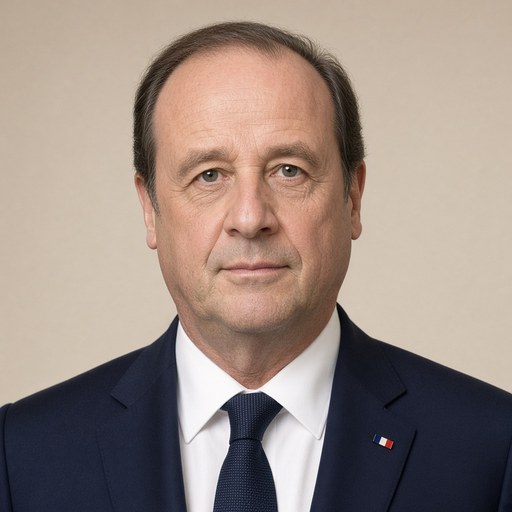
Statement by Mr. François Hollande, President of the Republic, on the fight against cancer, in Paris on February 4, 2014.
 François Hollande · President of France
- Context
- Hollande addressed health officials and cancer organizations in Paris on February 4, 2014, to present the orientations of France's third Cancer Plan.
- Main themes
- Fight against cancer, cancer screening, health inequalities, Cancer Plan III, cancer research and treatment, vaccination against cervical cancer, colorectal and breast cancer screening, social and territorial disparities, cancer mortality reduction, public health policy, patient access to care
- Duration
- ~40 min
- Words
- 4,744
- Sentences
- 261
- Readability
- 52
- Grade
- 10.6
- Syntax
- 2.85
- Vocabulary
- 2.12
Translated from French
The broad sphere of national life a sentence belongs to. Every sentence has an Arena, so it is the denominator the other indices are read against.
Other261 sentences in 77 paragraphs
Ladies and gentlemen ministers,
Madam President of the National Cancer Institute,
Ladies and gentlemen directors of organizations,
Ladies and gentlemen,
The fight against cancer is one of the great causes that unites us, that brings us together, beyond sensitivities, divisions, and alternations. And how could it be otherwise? Every year, 150,000 people die from cancer, and 350,000 learn that they have it. Five million families in France are affected, or have been affected, by the disease. And cancer remains the leading cause of mortality.
Behind the dryness of these figures, the anonymity of these statistics, there are lives that suddenly change, perhaps ours one day, that of a parent, a friend, a loved one, and that is why the fight against cancer is a reality now experienced by all. It is therefore quite legitimately that it has also become, for a decade, a shared policy by all.
And the illustration that can be given is precisely the Cancer Plan. The first of these plans, in 2003, laid the foundations of a comprehensive policy by creating the INCa. I want to acknowledge its president, Agnès BUZYN, and beyond her, all the teams that have succeeded one another since the creation of the institute. This first plan generalized the screening of two cancers. It has already raised awareness about the risks of tobacco and has given an impetus to research. The second plan, in 2009, integrated quality criteria into the certification of establishments. It supported innovations and developed clinical trials.
It has been decided to create a third plan. This is the one we will today, not debate the conclusions, but present the orientations. The merit of this work, of these successive plans, has been to create a community - yours - of professionals, activists, volunteers, united around patients and their loved ones, who work every day to alleviate suffering, pain, and to heal.
I would like to thank this entire community here, and more particularly the League Against Cancer and the ARC Foundation, for the remarkable work that these associations accomplish. After ten years of efforts, the results are here. Thanks to research, thanks to medicine, it has been proven that it is possible to cure cancer, as now, this is the case for one in two patients, and this is a considerable factor of hope. But these undeniable advances must not hide the harsh reality: the number of people affected by cancer continues to rise, and inequalities among the French are worsening. Thus, the risk of dying from cancer between the ages of 30 and 65 is twice as high among workers as among executives.
These inequalities concern screening, access to treatments, life during and after cancer, and exposure to risks. These inequalities are social, generational, and also territorial. That is why this third plan for the fight against cancer has set itself the objective and ambition of giving the same chances to everyone, everywhere in France, to heal from cancer.
I want to thank Professor Jean-Paul VERNANT, who coordinated the preparation of this plan, and all the teams that surrounded him. The presentation today of this plan commits us, commits the public authorities, commits all actors in the fight against cancer.
The first objective we set for ourselves is to cure more patients.
Everything starts with screening. It currently concerns breast cancer and colorectal cancer. But the campaigns launched in recent years struggle to reach those who are most vulnerable. Less than two-thirds of women are screened for breast cancer. And this proportion falls below one-third for those concerned with colorectal cancer. This situation increases inequalities, and correcting it will be a priority of the third Cancer Plan by giving it a new dimension. Thus, we will help the most modest to access screening and the complementary examinations that follow by ensuring them complete coverage without upfront costs.
In the same way, specific follow-up for individuals with personal or family histories of cancer will be established.
Cervical cancer will also, and this is one of the announcements of the Cancer Plan, be subject to systematic screening. This cancer currently affects 3,000 women and causes more than 1,000 deaths each year. Therefore, the generalization of the smear test every three years for 80% of women, compared to 60% today, will reduce mortality by 30% in ten years.
Cervical cancer is the only one, I say the only one, for which there is a vaccine, and yet, in France, this vaccine is administered to only 30% of young girls. This is a new source of inequalities. Of course, I am aware of the reservations raised by poorly designed vaccination campaigns, but this vaccine has proven its effectiveness. Therefore, within five years, we will double the vaccination coverage against cervical cancer, which will allow for its eventual eradication.
After screening, there is diagnosis. Here too, any delay is a risk, any lost time can be fatal. In France, the average waiting time for an MRI examination is 27 days. This figure alone could satisfy us, but in fact, it varies from one to two depending on the place of residence. How can we accept that? The third Cancer Plan will set as an obligation that the waiting time does not exceed twenty days, regardless of where one resides. And we will provide the means for this, as fifteen million euros will be allocated to regions that are currently under-equipped.
Finally, some cancers are all the more difficult to identify because they are rare, and therefore require expertise that not all practitioners have necessarily acquired. This is particularly the case for rare adult cancers and solid tumors in children. In these situations, a second opinion, a second expertise will be required, and here too, this is an inequality that will fall.
After screening, after diagnosis, there is treatment. The first requirement is the information of patients who must be able to know and compare the performance of the establishments and services to which they turn.
That is why new quality indicators will be established; they will be made public by the Ministry of Health, on the national health information website, which our country has been waiting for a long time. This will be a major advance for the rights of patients, for health democracy, and it goes well beyond the fight against cancer.
Reducing inequalities in treatment also means ensuring that technological and therapeutic advances spread at the same pace across the territory.
Because cancer treatment is no longer just chemotherapy or major surgery; it is also, increasingly, oral chemotherapy, which can be administered at home; it is interventional radiology; it is especially outpatient surgery, which will concern one in two patients operated on for breast cancer within ten years. This technical revolution, because it is one, also requires a profound change in the very organization of our healthcare system, that is to say, the introduction of a pathway medicine that will be based on the personalization of the response.
How to achieve this? First, by sharing information among all healthcare professionals, whether they work in hospitals or in the community. A communicable cancer dossier will therefore be created. It will contain all data related to the patient's history and treatments throughout the care pathway. By the end of 2015, all patients will have access to it - this is also an advance of the third Cancer Plan.
The personalization of the response also calls for better coordination between the hospital, which has a central role today, and the attending physician, who must occupy an increasingly prominent place in the individual follow-up of the patient, as the latter will increasingly be treated outside major healthcare establishments.
This new organization also requires recognizing new professions to support patients, to create new functions. That is why a Master's level clinical nurse diploma will be created starting from the 2016 academic year. Similarly, radiophysicists and dosimetrists, who both perform essential missions, will be fully recognized as health professions.
In short, it is clear that cancer treatment will profoundly change the organization of our healthcare system. This is the first objective of the Cancer Plan: to cure more patients.
The second objective, still with this perspective of fighting against inequalities, but also of fighting against the disease, is to bring innovations to patients even more quickly.
Research must first focus on the essentials. This is fundamental research, and it will be preserved: the State will guarantee a funding level of at least 50% of the credits for project calls from INCa and Aviesan. This is a necessary condition to ensure that teams have the independence they need to carry out their work over the long term.
Alongside this fundamental research, there is clinical research, which must be deployed for the benefit of all patients. Clinical trials currently involve 25,000 patients. The challenge of the Cancer Plan is to double the number of clinical trials in five years so that they concern all cancers - and notably the 1,700 pediatric cancers, and all regions, especially those that are currently the least involved, I am thinking of overseas territories.
The ambition of the Cancer Plan will be to implement a major innovation, one that can indeed revolutionize cancer treatment, I am talking about the contribution of genetics. It will particularly help to cure cancers that are currently the most resistant.
The analysis of genetic factors has indeed become a determining element of diagnosis, but also the basis for targeted therapies specific to each type of tumor. These practices, however, are still too limited. The Cancer Plan will allow these analyses to be offered to several tens of thousands of patients each year. We are going to launch a unique program in the world due to its scale. It involves high-throughput sequencing of all cancers. What is the challenge? To provide a complete view of the genome of each tumor. And thanks to this, to offer patients personalized care.
It is always the same approach, to individualize cancer treatment as much as possible. From 10,000 tumors analyzed in 2015, the goal is to reach 60,000 in 2018. We will again allocate the necessary means, as this program is exceptional: 60 million euros will be allocated over the duration of the plan.
But if I want to take a more general consideration, and even beyond these techniques, we are entering a period where therapeutic advances will multiply - and that is good, it is a sign of hope. What is the problem we encounter? It is that these advances can benefit patients without delay. However, we know that there are particularly cumbersome procedures - evaluations, authorizations, pricing - which risk delaying patients' access to the care they demand, and to the therapeutic advances that are possible.
Therefore, everything will be done to accelerate procedures and prescribe innovative drugs without waiting for market authorization. Similarly, the possibilities for extending the indications for use of a product will be relaxed when it proves effective for treating other types of tumors. Why wait, why open a new procedure, since this can allow for immediate healing?
The other challenge of these advances and innovations, we all have it in mind, is the price. The arrival of new products leads to a surge in treatment costs, which I remind you are borne by Health Insurance. This is still a guarantee that we must provide to all our fellow citizens. It is out of the question to deprive patients of the progress of science because it would be too expensive.
But this ambition - to treat, to treat regardless of the cost - assumes that we are particularly vigilant in setting the price of medications at a level that corresponds to the reality of their therapeutic contribution, and then periodically regulating them, based on their use and the quality of life they provide. In other words, why should we continue to pay a high price for a product whose medical interest has become lesser due to other innovations that have been announced? Yes, if we want to meet the challenge of both access to therapeutic innovations for all and controlling costs and prices, then we must fight against excesses, we must combat situations of rent-seeking, and accompany therapeutic advances at controlled prices. This is also the challenge of the Cancer Plan.
The third priority is to improve the lives of patients.
Three million people have cancer in France, or have recovered from it. They have rights and want to be fully considered and recognized. Respect, evidently, applies to the announcement of the disease, which now meets strict conditions. But this requirement must spread to all stages of treatment, up to recovery, especially when the primary care physician takes over from the hospital. However, this moment is often overlooked, even though it does not mark the end of the journey. That is why a personalized post-cancer program will be introduced, which will specify any follow-up care, the frequency of check-ups, and the modalities of support.
But there is another issue, which is to allow the patient to maintain their place, their full place, in society.
I will start with children. There are 1,700 in France who are affected by cancer each year. They must be able to continue their studies, despite the treatments. When schooling becomes impossible, access to correspondence courses must be guaranteed. But it must also be free. It will be, as the free enrollment in CNED will be extended to all students over 16 years old who have cancer. It is the right to be able to learn, regardless of the illness.
And then there are adults, who must also continue their professional activity. However, we know very well that one-third of working people, at the time their diagnosis is delivered, lose their jobs after 2 years. This is unacceptable. Therefore, we must promote flexible working hours for people with cancer, establish enhanced rights in terms of professional training, raise awareness among companies about the risks of discrimination, and the conditions for returning to work. These are all avenues we are opening with the Cancer Plan. And I have tasked the Minister of Labor with implementing these guidelines with social partners.
But there are also situations where it is no longer possible to continue a professional activity due to the illness. Thus, the pain of cancer is compounded by job insecurity. For people who have worked less than 200 hours in a quarter, there are no daily allowances. That is why the government has decided to lower this threshold to 150 hours starting January 1, 2015, particularly for people with cancer. Always the same idea: reduce inequalities.
It is this same will that must also lead us to make it possible, for all patients, or those who have been, to have breast or dental reconstruction procedures. However, today the "out-of-pocket expenses," as they say, that is to say what must be paid by patients, remain too high. We will ensure that the application of amendment number 8 of the medical convention on excess fees is strictly respected for cancer patients.
I will go further. At the end of the Plan, a reconstructive surgery offer will be created in each region, accessible to all, at no cost to patients. The Regional Health Agencies will have to organize this right, to be able to be fully, not only treated, but cared for until the end, so that no trace of the disease remains on the body.
Finally, there is life after cancer. I happily remind you, with hope: the majority of cancer patients are cured or will be cured. But, at the same time, another fatality falls upon them: they are cured, science demonstrates it. But they remain suspect, and they discover this when, wanting to apply for credit, they are asked for more guarantees, or to bear more costs. So, they are cured, but they can no longer be homeowners, or only at exorbitant costs.
I know that for the past 10 years what is called the AERAS convention concluded between the State, insurers, and patient associations has improved access to credit for people who have been affected, particularly by cancer. But, here too, let us face the facts: the system has not evolved while many former patients have a life expectancy exactly comparable to those who have not been ill.
The time has come to establish a true right to be forgotten. It will apply to all those who, as children or adolescents, have overcome cancer, as well as to all other patients whose scientific data tell us they are definitively cured. The convention will be renegotiated on these bases, and if it is not possible to conclude it this way, the law will intervene.
The last ambition, I would even say the strongest, that we must carry through this Cancer Plan, is quite simple: to prevent cancer.
Because cancer is an avoidable disease, in a large part of cases. The report that was given to me suggests that 80,000 cancers could be avoided if everything were done. Every year, in France, there are 44,000 deaths from cancers related to tobacco, 15,000 related to alcohol, more than 2,000 cancers related to obesity, and 1,000 to sun exposure. In total, 40% of cancer-related mortality is due to risk factors that are themselves avoidable, linked to the environment or behaviors. These cancers are not only too numerous, but they continue to increase.
If we look at countries comparable to ours: in England, the number of lung cancers has been declining for 30 years; in the United States, since 1990, the figures are going in the same direction. This is part of the failure of what has been done for years; this is also the main source of inequality; this is where all our actions must converge. Prevention is the best investment. This applies not only to cancer but to all public health issues. It will therefore be the essential element of the health strategy that will be presented by the Minister of Social Affairs and Health.
But without waiting, the third Plan will include measures on each of the main risks. And particularly on the first. Tobacco is responsible for 30% of cancer deaths. It is the leading cause of mortality for both women and men - but in this regard, equality is progressing, and it is not the best! The second Cancer Plan set a goal of reducing the prevalence of tobacco, that is to say, the number of smokers, from 30% to 20% in the population. The current rate is 33%; there are more smokers than there were 5 years ago.
I have therefore asked Marisol Touraine to present, before the summer, a national program for reducing tobacco use, which will be precisely integrated into the national health strategy. It will be developed by all concerned actors, to act on consumption, which is becoming an addiction. We must use all levers.
The first is price. What does experience reveal to us? It teaches us that the only significant decreases in tobacco consumption have been rare and occurred after strong increases in cigarette prices. This was the case in France in 2003, but only for a few years. What is the situation today? From 2005 to 2012, there were continuous increases, which raised the average price of tobacco by 1.20 euros. 1.20 euros is not negligible, but these increases have been gradual and sometimes designed more to increase state revenues, without being accompanied by the necessary measures to encourage smokers to quit.
Today, the price of tobacco in France has become the highest in continental Europe. And more and more smokers are buying their cigarettes abroad, on the black market, or online. Such is the French paradox: we have some of the highest tobacco prices in Europe, and the highest tobacco consumption in Europe. Therefore, we need to build a strategy in relation to this reality.
Price increases must regain their public health purpose. For the past 18 months, the price of a pack has increased on average by 80 cents, or more than 12%. This movement will continue, but it will be guided by a single imperative: the additional revenues will not benefit the state, but will fund a dedicated fund, that is to say, intended for cancer research, prevention, and improvement of care.
Any action on prices, especially when they are already, as is the case with us, high, can only be conceived within a global strategy that offers smokers real solutions to quit and discourages young people from entering this process. Thus, the second lever is to help smokers quit smoking.
How to do this? First, mobilize health professionals even more, so that they can systematically offer smokers to engage in quitting. Primary care physicians will be encouraged to do so within the framework of public health objectives that contribute, I remind you, to their remuneration. Pharmacists will see their advisory role better defined and recognized within the framework of a negotiation that must be concluded by 2015. Occupational physicians, school nurses, will be authorized to offer nicotine substitutes.
Smokers who want to quit also need specialized and personalized information. Thus, starting next year, there will be a single number to call to be directed to the nearest professional, who will define a personalized smoking cessation program.
Support for the purchase of nicotine substitutes will be increased; the current package is 50 euros, and it has already been raised this year to 150 euros for those under 25. We will extend this measure in 2015 to those aged 25 to 30, to beneficiaries of the Universal Health Coverage, and to all cancer patients. Overcoming cancer is already an objective we must pursue. Quitting tobacco is the condition for not entering cancer. Therefore, quitting tobacco must become increasingly free. This is the challenge of the plan we are presenting. We will involve complementary organizations, which are essential. Support for quitting will be included in the minimum care basket of responsible contracts. In short, the incentive will be particularly strong.
Finally, tobacconists will be encouraged to adapt to what is our goal: the reduction of the number of smokers and to participate more in the development of tobacco substitution means. The national program for reducing tobacco use will contain, and it is legitimate, measures in favor of diversifying their activities.
The third lever to quit tobacco, or more precisely to not start, is deterrence. Starting with providing information, which is as terrible as it is undeniable: a young person who starts smoking, who becomes addicted to tobacco, has, if I may say, a "chance" of 1 in 2 - the word chance is in quotes - of dying before the age of 60. Smoking at 17 means taking the risk of dying before 60!
This sentence must be repeated everywhere and to everyone. This message will therefore be disseminated throughout the country. An information campaign on television will be launched, images will be shown, no matter how harsh, about the ravages of cancer related to tobacco, during prime time, with the largest audience. I remind you that tobacco kills in 15 days what the road, alas, decimates in a year. We will therefore make the same effort, and even more efforts, for these information campaigns on television and on the radio.
We will also exploit the possibilities offered by the recent tobacco directive to strengthen information on packages; we will ensure the effectiveness of the ban on selling tobacco to minors. Minors means under 18 years old. However, we know that there are too many under 18s who are already smokers. We will strengthen the sanctions related to the sale of tobacco products online and we will fight even more effectively against these purchases from abroad, against these traffics, which increasingly concern packs of cigarettes. This is what we will do.
But it is not just tobacco. There is also alcohol, whose consumption among young minors again calls for a doubling of prevention actions. There are cancers related to work, which affect at least 14,000 people each year. Two million are regularly exposed to carcinogenic chemical products. The State will ensure compliance with regulations, and substitution policies will be encouraged with the help of social partners.
Finally, I want to emphasize sun exposure, whose links to skin cancer are evident, as are the risks of ultraviolet radiation. Thus, the use of tanning devices will be more strictly regulated. Everything must be done to inform, to deter, and to also control.
Prevention is the best investment, and this is therefore the ambition of the third Cancer Plan.
I often say when I talk about the future of France, what it must do, what it must be, how it must look to the future: a country only moves forward if it is driven by great causes, its destiny, its influence, its values, its principles, its capacity to have a strong economy, its solidarity, its social model, its rules of life.
A country can only have prospects if the entire national community recognizes itself in what is, at a given moment, the ambition that must unite us. I mentioned it for the economy, for business, because it is the condition for us to remain a strong nation. But I affirm this will also in relation to the fight against cancer, because we have seen that it will determine a new health system, a different organization of care, a different way of living. Overcoming cancer is therefore one of those great objectives to which a nation like ours must dedicate its efforts. Thus, we will conduct research, always striving for excellence, to enable progress.
There is no greater value than progress. We must not simply believe in progress; progress is not a belief. It is the capacity we must have to set it in motion. We must be a nation of progress, and research is an essential part of that.
A country is rightly proud, and we demonstrate this, to guarantee that every patient, regardless of their social condition, age, income, or place of residence, will be treated in the same way, that they will benefit from therapeutic advances like others, that there will be no barriers. Because we are France, and the fight against cancer is part of the embodiment of our values of equality.
The Plan I am presenting will also accelerate personalized medicine and will partially move cancer treatment out of the hospital. We are therefore in the process of inventing this pathway medicine that will likely become the norm tomorrow. The cancer plan also allows for more resources to be allocated to prevention policies, which will be at the heart of the national health strategy.
The Plan I have just presented will mobilize 1.5 billion euros over 5 years, half of which will be dedicated to funding new measures. 1.5 billion, some will say it is too little, surely. Others, who are not ill, may say it is too much. I do not believe so, because everyone can feel concerned.
Overcoming cancer, through this financial mobilization, is making the choice of life, enabling life, gaining life, but it is also about reducing the burdens that weigh on the nation due to cancer. As we evaluate everything, as we calculate everything, it has been indicated that the total cost of cancer burdens for French society, for the health system, amounts to 14 billion euros. And I am not talking about the harm to the lives of patients and their families. 14 billion euros! Overcoming cancer, preventing cancer, is also investing in the future.
This is the challenge we face, as every time we confront a scourge that we must combat. But at the same time, hope is present. Because we have a research system, an organization of care, health professionals, associations. Yes, we can also have hope, because we have the will.
This third Plan engages the State, but it will only have real significance if the professionals you are, the associations you represent, the social organizations you may lead, and more broadly what you represent on behalf of patients, are involved in what we are going to do.
The success of the third Cancer Plan, that is, the reduction of cancer, will depend on this collective mobilization. We are all committed to achieving this objective, which will matter after us. Because we have not finished, even if we must accelerate, go faster, and enable more patients to be cured and prevent others from becoming ill.
Such is our ambition.
The original French. The tags above are read on the English translation's sentences.
Mesdames les ministres,
Madame la présidente de l'Institut national contre le cancer,
Mesdames, Messieurs les Directeurs d'organismes,
Mesdames, Messieurs,
La lutte contre le cancer est l'une des grandes causes qui fédère, qui rassemble, au-delà des sensibilités, des clivages, des alternances. Et comment pourrait-il en être autrement ? Chaque année, 150 000 personnes meurent du cancer, 350 000 apprennent qu'elles en sont atteintes. Cinq millions de familles en France sont concernées, ou l'ont été, par la maladie. Et le cancer reste encore la première cause de mortalité.
Derrière la sécheresse de ces chiffres, l'anonymat de ces statistiques, ce sont des vies qui tout à coup basculent, la nôtre peut-être un jour, celle d'un parent, d'un ami, d'un proche, et c'est pourquoi la lutte contre le cancer est une réalité désormais vécue par tous. C'est donc assez légitimement qu'elle est devenue aussi, depuis une décennie, une politique partagée par tous.
Et l'illustration qui peut en être donnée, c'est justement le Plan Cancer. Le premier de ces plans, en 2003, a posé les fondations d'une politique globale, en créant l'INCa. Je veux ici saluer sa présidente, Agnès BUZYN, et au-delà d'elle, toutes les équipes qui se sont succédées depuis la création de l'institut. Ce plan, le premier, a généralisé le dépistage de deux cancers. Il a déjà alerté sur le risque du tabac et il a donné une impulsion à la recherche. Le deuxième plan, en 2009, a intégré les critères de qualité dans la certification des établissements. Il a soutenu les innovations et développé les essais thérapeutiques.
Il a été décidé de créer un troisième plan. C'est celui dont nous allons aujourd'hui, non pas débattre des conclusions, mais présenter les orientations. Le mérite de ces travaux, de ces plans successifs, a été de créer une communauté la vôtre -, de professionnels, de militants, de bénévoles, réunie autour des malades et de leurs proches et qui uvre chaque jour pour apaiser les souffrances, les douleurs, et guérir.
Je remercie ici toute cette communauté, et plus particulièrement la Ligue contre le cancer et la Fondation ARC, pour le travail remarquable que ces associations accomplissent. Après dix ans d'efforts, les résultats sont là. Grâce à la recherche, grâce à la médecine, la preuve a été faite qu'il était possible de guérir du cancer, puisque désormais, c'est le cas d'un malade sur deux, et c'est un facteur considérable d'espoir. Mais ces progrès, incontestables, ne doivent pas dissimuler la dure réalité : le nombre des personnes atteintes de cancers continue d'augmenter et les inégalités entre les Français s'aggravent. Ainsi le risque de mourir d'un cancer entre 30 et 65 ans est deux fois plus élevé chez les ouvriers que chez les cadres.
Ces inégalités concernent aussi bien le dépistage, l'accès aux traitements, la vie pendant et après le cancer et l'exposition aux risques. Ces inégalités sont sociales, elles sont générationnelles, elles sont aussi territoriales. C'est pourquoi ce troisième plan sur la lutte contre le cancer s'est fixé comme objectif et comme ambition de donner les mêmes chances à tous, partout en France, pour guérir du cancer.
Je veux remercier le professeur Jean-Paul VERNANT, qui a coordonné la préparation de ce plan, et toutes les équipes qui l'ont entouré. La présentation aujourd'hui de ce plan nous engage, engage les pouvoirs publics, engage tous les acteurs de l'action contre le cancer.
Le premier objectif que nous nous fixons, c'est de guérir plus de malades.
Tout commence par le dépistage. Il concerne aujourd'hui, le cancer du sein et le cancer colorectal. Mais les campagnes qui ont été lancées ces dernières années peinent à toucher celles et ceux qui sont les plus vulnérables. Moins des deux tiers des femmes se font dépister du cancer du sein. Et cette proportion tombe en dessous du tiers des personnes concernées pour le cancer colorectal. Cette situation accroit les inégalités et la corriger sera une priorité du troisième Plan Cancer en lui donnant une nouvelle dimension. Ainsi nous aiderons les plus modestes à accéder au dépistage et aux examens complémentaires qui le suivent en leur assurant une prise en charge complète sans avance de frais.
De la même manière, un suivi spécifique pour les personnes ayant des antécédents personnels ou familiaux de cancers sera mis en place.
Le cancer du col de l'utérus fera également et c'est l'une des annonces du Plan Cancer l'objet d'un dépistage systématique. Ce cancer atteint aujourd'hui 3 000 femmes et provoque plus de 1 000 décès chaque année. Dès lors, la généralisation du frottis tous les trois ans pour 80% des femmes, contre 60% aujourd'hui, réduira la mortalité de 30% en dix ans.
Le cancer du col de l'utérus est le seul je dis bien le seul pour lequel il existe un vaccin, et pourtant, en France, ce vaccin n'est administré qu'à 30% des jeunes filles. C'est une source nouvelle d'inégalités. Certes, je connais les réserves que suscitent des campagnes mal conçues de vaccination mais, ce vaccin a fait la preuve de son efficacité. Aussi, d'ici cinq ans, nous doublerons la couverture vaccinale contre le cancer du col de l'utérus, ce qui permettra son éradication à terme.
Après le dépistage, il y a le diagnostic. Là aussi, tout retard est un risque, tout temps perdu peut être fatal. En France, les délais moyens d'accès à un examen par IRM sont de 27 jours. Ce chiffre à lui seul pourrait nous satisfaire, mais en fait, il varie du simple au double selon les lieux d'habitation. Comment l'accepter ? Le troisième Plan Cancer fixera comme obligation que le délai ne dépasse pas vingt jours où que l'on réside. Et nous y mettrons les moyens puisque quinze millions d'euros seront affectés aux régions qui sont aujourd'hui sous-équipées.
Enfin, certains cancers sont d'autant plus difficiles à identifier qu'ils sont peu fréquents, et nécessitent donc de la part du praticien une expertise que tous n'ont pas pu nécessairement acquérir. C'est le cas notamment des cancers rares de l'adulte, et des tumeurs solides de l'enfant. Dans ces situations, un double avis, une double expertise sera requise, et là aussi, c'est une inégalité qui tombera.
Après le dépistage, après le diagnostic, il y a le traitement. La première des exigences, c'est l'information des patients qui doivent pouvoir connaître, comparer les performances des établissements et des services auxquels ils s'adressent.
C'est pourquoi de nouveaux indicateurs de qualité seront établis £ ils seront rendus publics par le ministère de la Santé, sur le site national d'information en santé, que notre pays attend depuis de longues années. Cela sera une avancée majeure, pour le droit des malades, pour la démocratie sanitaire, et cela va bien au-delà de la lutte contre le cancer.
Réduire les inégalités en matière de traitement, c'est également s'assurer que les avancées technologiques et thérapeutiques se diffusent au même rythme partout sur le territoire.
Car le traitement du cancer, ce n'est plus seulement la chimiothérapie ou la chirurgie lourde, c'est aussi, et de plus en plus, la chimiothérapie orale, celle qui peut être administrée au domicile £ c'est la radiologie interventionnelle £ c'est surtout la chirurgie ambulatoire qui concernera d'ici dix ans une patiente sur deux opérées d'un cancer du sein. Cette révolution technique, car c'en est une, exige également un changement profond dans l'organisation même de notre offre de soins, c'est-à-dire l'introduction d'une médecine de parcours qui sera fondée sur la personnalisation de la réponse.
Comment y parvenir ? D'abord, en partageant les informations entre tous les professionnels de santé, qu'ils exercent à l'hôpital ou en ville. Un dossier communicant de cancérologie sera donc créé. Il contiendra toutes les données relatives à l'histoire et aux traitements du malade tout au long du parcours de soins. A la fin de l'année 2015, tous les patients en disposeront - c'est aussi une avancée du troisième Plan Cancer.
La personnalisation de la réponse appelle également une meilleure liaison entre l'hôpital, qui a un rôle aujourd'hui central, et le médecin traitant, qui devra occuper une place de plus en plus éminente dans le suivi individuel du malade, dans la mesure où celui-ci sera de plus en plus traité hors des grands établissements de santé.
Cette nouvelle organisation exige aussi de reconnaître de nouveaux métiers pour accompagner les patients, de faire apparaître de nouvelles fonctions. C'est pourquoi un diplôme de niveau Master d'infirmier clinicien sera créé à compter de la rentrée universitaire 2016. De la même manière, les radio-physiciens et les dosimétristes, qui exercent, les uns comme les autres, des missions essentielles, seront pleinement reconnus en tant que professions de santé.
Bref, on le voit bien, le traitement du cancer va changer profondément l'organisation de notre système de santé. Tel est le premier objectif du Plan Cancer : guérir plus de malades.
Le second objectif, toujours avec cette perspective de lutter contre les inégalités, mais aussi de lutter contre la maladie, c'est de mettre plus rapidement encore les innovations au service des patients.
La recherche doit d'abord être sur l'essentiel. C'est la recherche fondamentale, elle sera préservée : l'Etat garantira un niveau de financement d'au moins 50% des crédits sur appel à projets de l'INCa et d'Aviesan. C'est une condition nécessaire pour assurer aux équipes l'indépendance dont elles ont besoin pour mener leurs travaux, et dans la longue durée.
Parallèlement à cette recherche fondamentale, il y a la recherche clinique, qui devra se déployer au bénéfice de tous les malades. Les essais cliniques concernent aujourd'hui 25 000 patients. L'enjeu du Plan Cancer, c'est de doubler en cinq ans le nombre des essais cliniques pour qu'ils concernent tous les cancers - et notamment les 1 700 cancers pédiatriques, et toutes les régions et notamment celles qui sont aujourd'hui les moins concernées, je pense à l'Outre-mer.
L'ambition du Plan Cancer sera de mettre en uvre une innovation majeure, celle qui peut d'ailleurs bouleverser le traitement du cancer, je veux parler de l'apport de la génétique. Elle contribuera notamment à guérir les cancers qui pour l'instant sont les plus résistants.
L'analyse des facteurs génétiques est en effet devenue un élément déterminant du diagnostic, mais aussi à la base des thérapies ciblées spécifiques à chaque type de tumeur. Ces pratiques, néanmoins, sont encore trop limitées. Le Plan Cancer permettra de proposer ces analyses à plusieurs dizaines de milliers de malades, chaque année. Nous allons lancer un programme unique au monde par son ampleur. Il s'agit du séquençage à haut débit de l'ensemble des cancers. Quel est l'enjeu ? De donner une vision complète du génome de chaque tumeur. Et grâce à cela, d'offrir aux patients des soins personnalisés.
C'est toujours la même démarche, individualiser le plus possible le traitement du cancer. De 10 000 tumeurs analysées en 2015, l'objectif est d'atteindre 60 000 en 2018. Nous y consacrerons, là encore, les moyens nécessaires, puisque ce programme est exceptionnel : 60 millions d'euros seront dégagés sur la durée du plan.
Mais si je veux prendre une considération plus générale, et au-delà même de ces techniques, nous entrons dans une période où les avancées thérapeutiques vont se multiplier - et c'est bien, c'est un signe d'espoir. Quel est le problème que nous rencontrons ? C'est que ces progrès puissent bénéficier aux patients, sans délai. Or, nous savons bien qu'il y a des procédures qui sont particulièrement lourdes - évaluations, autorisations, tarifications - et qui risquent donc de retarder encore l'accès des malades aux soins qu'ils réclament, et aux avancées thérapeutiques qui sont possibles.
Aussi, tout sera fait pour accélérer les procédures, et prescrire les médicaments innovants sans attendre les autorisations de mise sur le marché. De même, seront assouplies les possibilités d'extension des indications d'utilisation d'un produit, lorsqu'il s'avère efficace pour soigner d'autres types de tumeurs. Pourquoi attendre, pourquoi ouvrir une nouvelle procédure, puisque cela peut permettre de guérir tout de suite ?
L'autre défi de ces avancées et de ces innovations, nous l'avons tous à l'esprit, c'est le prix. L'arrivée de nouveaux produits conduit à une envolée des coûts des traitements qui je le rappelle sont supportés par l'Assurance-maladie. C'est quand même une garantie que nous devons donner à tous nos concitoyens. Il est hors de question de priver les malades des progrès de la science parce que ce serait trop cher.
Mais cette ambition - soigner, soigner quel qu'en soit le prix - suppose que nous soyons particulièrement vigilants pour fixer le prix des médicaments à un niveau qui corresponde à la réalité de leur apport thérapeutique, et ensuite de les réguler périodiquement, en fonction de l'usage qui en est fait et de la qualité de vie qu'ils procurent. En d'autres termes, pourquoi faudrait-il continuer de payer au prix fort un produit, dont l'intérêt médical serait devenu moindre, en raison d'autres innovations qui seraient annoncées ? Oui, si nous voulons relever le défi, à la fois, de l'accès de tous aux innovations thérapeutiques et de la maîtrise des coûts et des prix, alors il faut lutter contre les excès, il faut combattre les situations de rentes, et accompagner les avancées thérapeutiques à des tarifs maîtrisés. C'est cela aussi, l'enjeu, du Plan cancer.
La troisième priorité c'est d'améliorer la vie des malades.
Trois millions de personnes ont un cancer en France, ou en ont guéri. Elles ont des droits et veulent être pleinement considérées et reconnues. Le respect vaut, à l'évidence, pour l'annonce de la maladie, qui maintenant répond à des conditions strictes. Mais cette exigence doit se diffuser à toutes les étapes du traitement, jusqu'à la guérison, en particulier lorsque le médecin traitant prend le relais de l'hôpital. Or ce moment est souvent négligé, alors même qu'il ne constitue nullement le terme du parcours. C'est pourquoi il sera introduit un programme personnalisé de l'après-cancer, où seront précisés les éventuels soins de suite, le rythme des contrôles ou encore les modalités d'accompagnement.
Mais il y a un autre enjeu, qui est de permettre au malade de conserver sa place, toute sa place, dans la société.
Je vais commencer par les enfants. Ils sont 1 700 en France à être touchés chaque année par le cancer. Ils doivent pouvoir continuer leurs études, malgré les traitements. Lorsque la scolarisation est rendue impossible, l'accès à des cours par correspondance doit leur être garanti. Mais faut-il encore que ce soit gratuit. Cela le sera, puisque la gratuité de l'inscription au CNED sera étendue à tous les élèves, de plus de 16 ans, atteints d'un cancer. C'est le droit à pouvoir apprendre, quelle que soit la maladie.
Et puis il y a les adultes, qui doivent poursuivre aussi leur activité professionnelle. Or, nous le savons très bien, un tiers des personnes en activité, au moment où le diagnostic leur est délivré, perdent leur emploi au bout de 2 ans. C'est inadmissible. Nous devons donc favoriser l'aménagement du temps de travail pour les personnes atteintes d'un cancer, mettre en place des droits renforcés, en termes de formation professionnelle, sensibiliser les entreprises sur les risques de discrimination, sur les conditions d'un retour à l'emploi Autant de pistes que nous ouvrons avec le Plan cancer. Et j'ai chargé le ministre du Travail de mettre en uvre, avec les partenaires sociaux, ces orientations.
Mais il y a aussi des situations où il n'est plus possible de poursuivre, à cause de la maladie, une activité professionnelle. Alors, à la douleur du cancer, s'ajoute la précarité du travail. Pour les personnes qui ont travaillé moins de 200 heures dans un trimestre, il n'y a plus d'indemnités journalières. C'est pourquoi le gouvernement a décidé d'abaisser ce seuil à 150 heures dès le 1er janvier 2015, notamment pour les personnes atteintes d'un cancer. Toujours la même idée : réduire les inégalités.
C'est cette même volonté qui doit aussi nous conduire à rendre possible, pour tous les malades, ou qui l'ont été, les actes de reconstitutions mammaires ou dentaires. Or, aujourd'hui les « restes à charge », comme l'on dit, c'est-à-dire ce qui doit être payé par les malades, demeurent trop importants. Nous veillerons à ce que l'application de l'avenant numéro 8 de la convention médicale sur les dépassements d'honoraires soit strictement respectée pour les patients atteints de cancer.
Je vais plus loin. À l'échéance du Plan, il sera créé dans chaque région une offre de chirurgie réparatrice, accessible à tous, sans aucun frais pour les patients. Les Agences Régionales de Santé auront à organiser ce droit, à pouvoir être pleinement, non seulement soigné, mais traité jusqu'au bout, pour qu'il ne reste aucune trace, sur le corps, de la maladie.
Enfin, il y a la vie après le cancer. Je le rappelais avec bonheur, avec espoir : la majorité des malades du cancer sont guéris ou seront guéris. Mais, en même temps, une autre fatalité tombe sur eux : ils sont guéris, la science le démontre. Mais ils restent suspects, et ils le découvrent lorsque, voulant recourir à un crédit, il leur est demandé davantage de garanties, ou de supporter davantage de frais. Alors, ils sont guéris, mais ils ne peuvent plus être propriétaires, ou alors à des coûts exorbitants.
Je sais que depuis 10 ans ce qu'on appelle la convention AERAS conclue entre l'Etat, les assureurs, et les associations de malades a amélioré le recours au crédit des personnes, qui ont été atteintes notamment d'un cancer. Mais, là aussi, regardons les choses en face : le dispositif n'a pas évolué alors que beaucoup d'anciens malades ont une espérance de vie exactement comparable à ceux qui n'ont pas été malades.
Le temps est donc venu d'instituer un véritable droit à l'oubli. Il s'appliquera à tous ceux qui enfant ou adolescent ont vaincu le cancer, ainsi qu'à tous les autres malades dont les données de la science nous disent qu'ils sont définitivement guéris. La convention sera renégociée, sur ces bases, et s'il n'est pas possible de la conclure ainsi, c'est la loi qui interviendra.
La dernière ambition, j'allais dire même la plus forte, que nous devons porter à travers ce Plan Cancer, elle est toute simple, c'est d'éviter le cancer.
Car le cancer est une maladie évitable, pour une grande partie des cas. Le rapport qui m'a été remis laisse penser que 80 000 cancers pourraient être évités si tout était fait. Chaque année, en France, il y a 44 000 décès par cancers liés au tabac, 15 000 liés à l'alcool, plus de 2 000 cancers liés à l'obésité, 1 000 à l'exposition solaire. Au total 40% de la mortalité due au cancer tient à des facteurs de risque qui sont eux-mêmes évitables, liés à l'environnement, ou aux comportements. Ces cancers non seulement sont trop nombreux, mais ils continuent d'augmenter.
Si on regarde les pays comparables au nôtre : en Angleterre le nombre de cancers du poumon recule depuis 30 ans £ aux Etats-Unis depuis 1990 les chiffres vont dans le même sens. Là se situe une part de l'échec de ce qui a été fait depuis des années £ là réside aussi la principale source d'inégalité £ là doivent converger toutes nos actions. La prévention est le meilleur investissement. Cela ne vaut pas d'ailleurs que pour le cancer, mais pour l'ensemble des questions de santé publique. Elle sera donc l'élément essentiel de la stratégie de santé qui sera présentée par la ministre des Affaires sociales et de la Santé.
Mais sans attendre, le troisième Plan comprendra des mesures sur chacun des principaux risques. Et notamment sur le premier. Le tabac, est responsable de 30% des décès par cancer. C'est la première cause de mortalité pour les femmes, comme pour les hommes - mais de ce point de vue l'égalité est en marche, et ce n'est pas la meilleure ! Le second Plan Cancer avait fixé comme objectif une baisse de la prévalence du tabac, c'est-à-dire du nombre de fumeurs, de 30% à 20% dans la population. Le taux aujourd'hui est de 33%, il y a plus de fumeurs qu'il n'y en avait il y a 5 ans.
J'ai donc demandé à Marisol TOURAINE de présenter, avant l'été, un programme national de réduction du tabagisme, s'intégrant précisément dans la stratégie nationale de santé. Il sera élaboré par tous les acteurs concernés, pour agir sur la consommation, qui devient une addiction. Nous devons utiliser tous les leviers.
Le premier, c'est le prix. Que nous révèle l'expérience ? Elle nous enseigne que les seules baisses significatives elles ont été rares de la consommation de tabac, se sont produites après des augmentations fortes du prix des cigarettes. Ce fut le cas en France en 2003, seulement pour quelques années. Quelle est la situation aujourd'hui ? De 2005 à 2012, il y a eu des hausses continues, qui ont relevé en moyenne le prix du tabac d'1,20 euro. 1,20 euro, ce n'est pas négligeable, mais ces hausses ont été progressives et parfois conçues davantage pour accroître les recettes de l'Etat, sans être accompagnées des mesures indispensables pour inciter les fumeurs à ne plus l'être.
Aujourd'hui le prix du tabac, en France, est devenu le plus élevé d'Europe continentale. Et de plus en plus de fumeurs achètent leurs cigarettes à l'étranger, au marché noir ou sur Internet. Tel est le paradoxe français : nous avons le niveau de prix de tabac parmi les plus hauts d'Europe, et la consommation de tabac la plus forte d'Europe. Alors il faut bâtir une stratégie par rapport à cette réalité.
Les hausses de tarifs doivent retrouver leur finalité de santé publique. Depuis 18 mois, le prix du paquet a augmenté en moyenne de 80 centimes, soit plus de 12%. Ce mouvement se poursuivra, mais il sera guidé par un seul impératif : les recettes supplémentaires ne bénéficieront pas à l'Etat, mais abonderont un fonds dédié, c'est-à-dire destiné à la recherche sur le cancer, à sa prévention et à l'amélioration de sa prise en charge.
Toute action sur les prix a fortiori quand ils sont déjà, comme c'est le cas chez nous, élevés ne peut néanmoins se concevoir que dans une stratégie globale, qui propose aux fumeurs de véritables solutions pour s'arrêter, et qui dissuade les jeunes d'entrer dans ce processus. Si bien que le second levier, c'est d'aider les fumeurs à en finir avec la cigarette.
Comment faire ? D'abord mobiliser les professionnels de santé encore davantage, pour qu'ils puissent proposer systématiquement aux fumeurs de s'engager dans le sevrage. Les médecins traitants y seront incités dans le cadre des objectifs de santé publique qui contribuent, je le rappelle, à leur rémunération. Les pharmaciens verront leur rôle de conseil mieux défini, et reconnu dans le cadre d'une négociation qui devra être conclue d'ici 2015. Les médecins du travail, les infirmières scolaires, seront habilités à proposer des substituts nicotiniques.
Les fumeurs qui veulent s'arrêter ont également besoin d'une information spécialisée et personnalisée. Ainsi, dès l'année prochaine, il existera un numéro unique qu'il suffira d'appeler pour être orienté vers le professionnel le plus proche, qui définira un programme personnalisé d'arrêt du tabac.
Le soutien à l'achat de substituts nicotiniques sera relevé, le forfait actuel est de 50 euros, il a déjà été porté cette année à 150 euros pour les moins de 25 ans. Nous étendrons cette mesure en 2015 aux 25 à 30 ans, aux bénéficiaires de la Couverture Maladie Universelle, et à tous les malades du cancer. Sortir du cancer, c'est déjà un objectif que nous devons porter. Sortir du tabac, c'est la condition pour ne pas entrer dans le cancer. Sortir du tabac doit donc être de plus en plus gratuit. C'est l'enjeu du plan que nous présentons. Nous associerons à cet effort les organismes complémentaires, qui sont indispensables. L'aide au sevrage sera inscrite dans le panier de soins minimal des contrats responsables. Bref, l'incitation sera particulièrement forte.
Enfin les buralistes seront encouragés à s'adapter à ce qui est notre objectif la diminution du nombre de fumeurs et à participer eux-mêmes davantage au développement des moyens de substitution tabagique. Le programme national de réduction du tabagisme contiendra, et c'est légitime, des mesures en faveur de la diversification de leurs activités.
Le troisième levier pour sortir du tabac, ou plus exactement pour ne pas y entrer, c'est la dissuasion. En commençant par donner une information, qui est aussi terrible qu'incontestable : un jeune qui entre dans le tabac, dans l'addiction au tabac, a, si je puis dire, 1 « chance » sur 2 le mot chance est entre guillemets de mourir avant 60 ans. Fumer à 17 ans, c'est prendre le risque de mourir avant 60 ans !
Cette phrase doit être répétée partout et à tous. Ce message sera donc diffusé dans l'ensemble du pays. Une campagne d'information à la télévision sera lancée, les images seront montrées, aussi dures soient-elles, sur les ravages du cancer lié au tabac, aux heures de plus grande écoute, avec la plus grande audience. Je rappelle que le tabac tue en 15 jours ce que la route, hélas, décime en une année. Nous ferons donc le même effort, et plus d'efforts encore, pour ces campagnes d'information à la télévision et sur les radios.
Nous exploiterons aussi les possibilités que nous offre la récente directive sur le tabac pour renforcer les informations sur les paquets, nous garantirons l'effectivité de l'interdiction de vente du tabac aux mineurs. Mineurs cela veut dire moins de 18 ans. Or nous savons qu'il y a trop de moins de 18 ans qui sont déjà des fumeurs. Nous renforcerons les sanctions liées aux ventes de produits de tabac sur Internet et nous lutterons encore plus efficacement par rapport à ces achats hors de nos frontières, à ces trafics, qui concernent de plus en plus les paquets de cigarettes. Voilà ce que nous ferons.
Mais il n'y a pas que le tabac. Il y a aussi l'alcool, dont la consommation chez les jeunes mineurs appelle, là encore, le redoublement des actions de prévention. Il y a les cancers liés au travail, qui frappent au moins 14 000 personnes chaque année. 2 millions sont exposées régulièrement à des produits chimiques cancérigènes. L'Etat veillera au respect de la réglementation, les politiques de substitution seront encouragées avec le concours des partenaires sociaux.
Enfin, je veux insister sur l'exposition au soleil, dont les liens avec le cancer de la peau sont évidents, et les risques, aussi, des rayonnements ultraviolets. Ainsi, l'usage des appareils de bronzage sera-t-il davantage encadré. Tout doit être fait pour informer, pour dissuader, et pour également contrôler.
La prévention c'est le meilleur investissement, et c'est donc l'ambition du troisième Plan Cancer.
Je le dis souvent lorsque j'évoque l'avenir de la France, ce qu'elle doit faire, ce qu'elle doit être, comment elle doit regarder l'avenir : un pays n'avance que s'il est mû par de grandes causes, son destin, son influence, ses valeurs, ses principes, sa capacité à avoir une économie forte, sa solidarité, son modèle social, ses règles de vie.
Un pays ne peut avoir de perspectives que si l'ensemble de la communauté nationale se reconnaît dans ce qui est, à un moment indiqué, comme l'ambition qui doit nous fédérer. Je l'ai évoqué pour l'économie, pour l'entreprise, parce que c'est la condition pour que nous soyons encore une nation forte. Mais cette volonté, je l'affirme également par rapport à la lutte contre le cancer, parce que nous l'avons vu, elle va déterminer un nouveau système de santé, une autre organisation de soins, une autre façon de vivre. Vaincre le cancer est donc un de ces grands objectifs auquel une nation comme la nôtre doit consacrer ses forces. Ainsi, nous ferons de la recherche, toujours une excellence, pour permettre le progrès.
Il n'y a pas plus belle valeur que le progrès. Il ne faut pas simplement croire au progrès, le progrès n'est pas une croyance. C'est la capacité que nous devons avoir de le mettre en mouvement. Nous devons être une nation de progrès, et la recherche en fait forcément partie.
Un pays est légitimement aussi fier, et nous le montrons, de garantir à chaque malade quelle que soit sa condition sociale, quel que soit son âge, quel que soit son revenu, son lieu d'habitation qu'il sera soigné de la même manière, qu'il pourra bénéficier des avancées thérapeutiques comme les autres, qu'il n'y aura pas de barrière. Parce que nous sommes la France et que la lutte contre le cancer fait partie de la traduction de nos valeurs d'égalité.
Le Plan que je présente accélèrera aussi la médecine personnalisée et fera sortir en partie, de l'hôpital, le traitement du cancer. Nous sommes donc en train d'inventer cette médecine de parcours qui demain sera sans doute la règle. Le Plan contre le cancer permet également de mettre plus de moyens dans les politiques de prévention qui seront au cur de la stratégie nationale de santé.
Le Plan que je viens de présenter mobilisera 1,5 milliard d'euros sur 5 ans, dont la moitié sera consacrée au financement de nouvelles mesures. 1,5 milliard, certains diront que c'est trop peu, sûrement. D'autres, qui ne sont pas malades, pourront dire que c'est trop. Je ne le crois pas, car chacun, chacune, peut se sentir concerné.
Vaincre le cancer, à travers cette mobilisation financière, c'est faire le choix de la vie, c'est permettre la vie, de gagner de la vie, mais c'est aussi réduire les charges qui pèsent sur la nation, avec le cancer. Comme on évalue tout, comme on calcule tout, il a été indiqué que la somme de ce que représentent les charges du cancer pour la société française, pour le système de santé, est égale à 14 milliards d'euros. Et je ne parle pas des préjudices sur la vie des malades et leur famille. 14 milliards d'euros ! Vaincre le cancer, prévenir le cancer, c'est aussi investir dans l'avenir.
Voilà le défi qui nous est lancé, comme à chaque fois que nous avons, en face de nous, un fléau que nous devons combattre. Mais en même temps l'espoir est là. Parce que nous avons un système de recherche, une organisation de soins, des professionnels de santé, des associations. Oui, nous pouvons avoir aussi de l'espoir, parce que nous avons la volonté.
Ce troisième Plan engage l'Etat, mais il n'aura de portée réelle que si les professionnels que vous êtes, les associations que vous représentez, les organismes sociaux que vous pouvez diriger, et plus largement ce que vous représentez au nom des malades, sont parties prenantes de ce que nous allons faire.
C'est de cette mobilisation collective que dépendra la réussite du troisième Plan Cancer, c'est-à-dire le recul du cancer. Nous sommes tous engagés dans la réalisation de cet objectif, qui vaudra après nous. Parce que nous n'en n'avons pas terminé, même si nous devons accélérer, aller plus vite et permettre de guérir plus de malades et d'empêcher d'autres de le devenir.
Telle est notre ambition.