




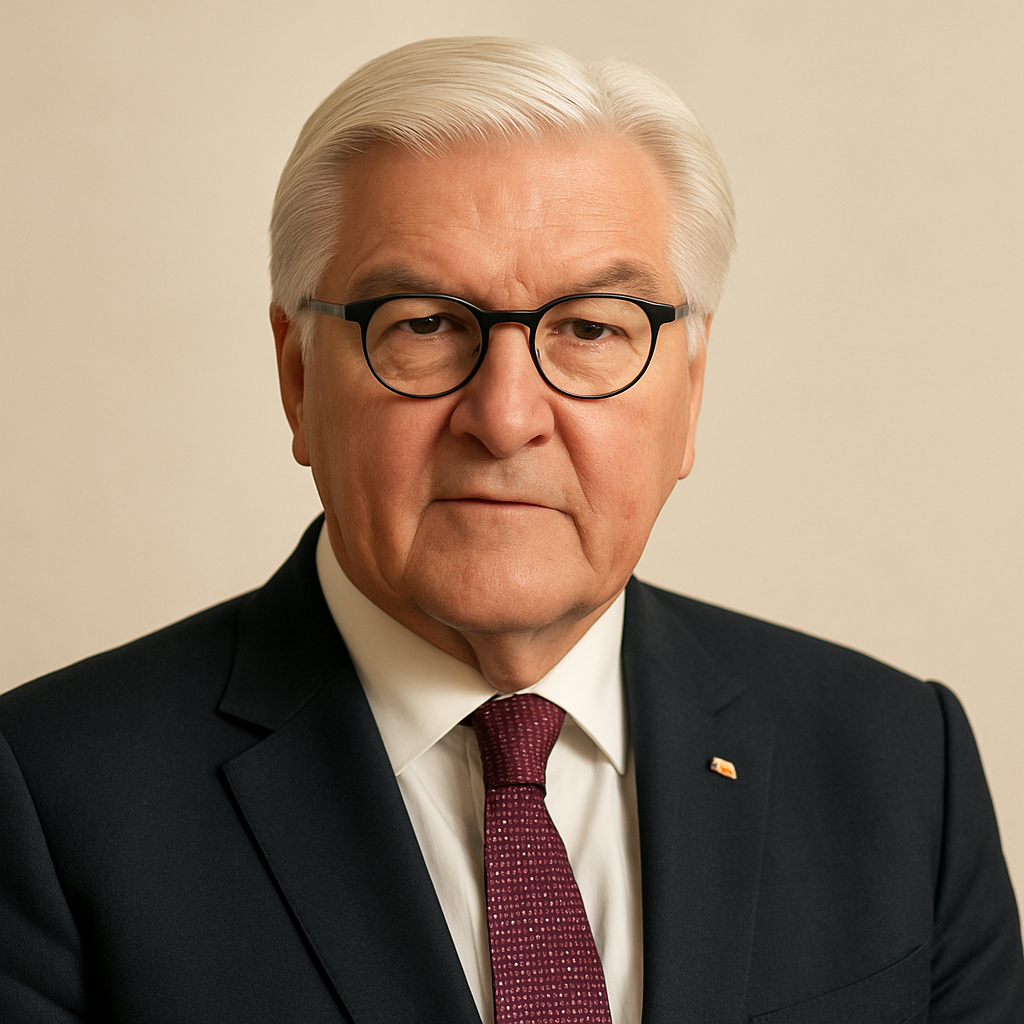
Speech by Federal President Dr. Frank-Walter Steinmeier at the celebratory event for the 100th anniversary of DekaBank Deutsche Girozentrale on February 1, 2018, in Frankfurt am Main:
 Frank-Walter Steinmeier · Federal President of Germany
- Context
- Steinmeier addressed the celebratory event marking DekaBank Deutsche Girozentrale's 100th anniversary on February 1, 2018, in Frankfurt am Main.
- Main themes
- Centenary celebration of DekaBank, German economic history, three-pillar banking system, social market economy, savings banks and public-law banking, financial responsibility to real economy, lessons of the 2008 financial crisis, German reunification and reconstruction, Nazi-era institutional complicity, Anglo-Saxon capitalism critique, long-term sustainable investment
- Duration
- ~20 min
- Words
- 2,360
- Sentences
- 130
- Readability
- 50
- Grade
- 10.6
- Syntax
- 2.93
- Vocabulary
- 2.14
Translated from German
The broad sphere of national life a sentence belongs to. Every sentence has an Arena, so it is the denominator the other indices are read against.
Other130 sentences in 30 paragraphs
A 100th birthday – as is good tradition in Germany – is honored by the Federal President with his congratulations. Last year, there were 3,347 hundredth birthdays in Germany. For all of them, I must ask for your understanding that I cannot personally visit each one to offer my congratulations. I come to Deka, and I am happy to do so, after all, we are celebrating a venerable institution in the Savings Banks Association. Age in itself is not an achievement – but reaching 100 years in your industry and remaining successful is! Therefore, my heartfelt congratulations in advance!
I am pleased to be here because, looking back on 100 years of Deka, we also reflect on many very different chapters of German history: from the Empire to Weimar, from the Nazi dictatorship to the new beginning of democracy, to the founding of the European Union, from division to reunification and up to today. Deka is an important part of German economic history:
Its history includes the global economic crisis and hyperinflation in 1923.
It also deals with the financing of the Nazi war machine, with million-dollar loans to the Reichswerke "Hermann Göring," for example, or the dismissal of employees for racist and ideological reasons.
The company history tells of new beginnings: of reconstruction and economic miracles; it knows oil price crises, recessions, and recoveries.
It speaks of the transition of East Germany to the social market economy, when the Girozentrale helped the savings banks of the GDR to integrate into the Federal Republic's system.
But it also extends to stock market fever, the "dot-com" bubble, and the global financial crisis. This history knows bulls, and it knows bears.
And it speaks several languages: formerly Reichsmark, Rentenmark, D-Mark; today Euro and of course also US Dollar, Japanese Yen, and Chinese Yuan.
The history of DekaBank exemplifies the change and growth of our location Germany. And in my view, it expresses a central principle of our social market economy in its highs and lows. Of course, economic success: returns are a must. But also responsibility for society and above all: The financial sector must serve the real economy – not the other way around! The bank has always been sustainably strong when these principles were strong. This is particularly evident during the time of the economic miracle. And whenever these principles fell out of focus, it moved closer to the brink of crises. Long-term investments in real value creation and not the quick Euro, but sustainable, healthy economic structures and social responsibility – that is what our economic model stands for. And that is the basis of its success. Let us never lose sight of this – even here in the financial center of Frankfurt!
However, this economic model has specific prerequisites and characteristics in Germany: Central to this is the three-pillar banking system! And this, alongside private commercial banks and cooperative banks, is the public-law pillar. It is savings banks that are there for small and medium-sized enterprises without them having to go directly to the capital market; savings banks that are there for municipalities, especially in rural areas, and that particularly there – I want to emphasize this as Federal President – promote clubs and civil society life from the football club to the integration initiative and provide an invaluable service to social cohesion. We are no longer the same country if that is lost.
This may seem like a truism. However, when I say this, I do not forget that for many years all of this was not taken for granted and unchallenged. I remember very well the times when the Anglo-Saxon model dominated economic thinking throughout Europe. It was a battle against manufacturing industry and the real economy, fought under the banner of "Old Economy" versus "New Economy." Just over 15 years ago, industrial production was declared dead, and those who wanted to preserve it were ridiculed. But it was also a battle against different forms of public-law or cooperative traditions in the financial sector. At the center of the attack: the savings bank system in Germany. I remember – at that time I was still serving as head of the Chancellery – the defensive battles we had to fight in Brussels to defend our three-pillar system. Last week, I opened the Wall Street Journal, usually more of a cheerleader for Anglo-Saxon capitalism, and there I could read: "The three-pillar banking system is […] a factor for Germany's economic success." It took some time. But it is nice that it is now understood elsewhere as well. You have known for a long time: We need the three-pillar banking system. And as far as I am concerned, it should remain that way!
Ten years ago, Deka published a first chronicle of its own history. It ends in 2007 with the sentence: "The bank achieved [in 2007] its best result in the history of the group." We all know what happened next. 2007 marked the beginning of the global financial and economic crisis. From this arose the crisis in the Eurozone, which brought our currency to the brink of the abyss. Only today, ten years later, have we in Europe recovered from the most severe upheavals.
At that time, the world economy was on the verge of collapse because banks had taken irresponsible risks and had to be rescued by taxpayers to prevent even worse. The relationship between finance and the real economy had gone awry. Even with bonuses and salaries, measure and moderation had been lost – and both not only burdened the actors in the economy and companies. The political costs were also significant, as trust in democracy suffered – with long-term consequences. And we should not simply move on from this at the location of Germany. Too many live with the dangerous illusion that the acceptance of the political system is not so important for a successful economy. That is an illusion.
In the crisis, Deka managed without state support, and yet not every transaction – Cum-Ex will still cause headaches for some of you – always met the high standards of corporate responsibility that we expect from an institution of the savings bank group. This also belongs to the retrospective.
Today I believe: Correct lessons have indeed been drawn from the crisis. The new European banking supervision in Frankfurt monitors higher capital buffers, and a common resolution authority is to ensure that banks no longer drag states into the abyss in the future. Fewer risks in bank balance sheets and at the same time better joint supervision and cushioning of crises – we have begun this, but we must continue to work together on this in Europe.
2007 was not the first crisis that this bank has experienced in 100 years. I think back to the very beginning: The hyperinflation in 1923 devoured the savings of a lifetime for many citizens in just a few days. Subsequently, the Girozentrale hired 200 new employees – not because business was good. On the contrary: The employees could no longer manage to count the almost worthless piles of paper money. A few years later, during the banking crisis of 1931, it was not inflation that showed its ugly face, but its dangerous counterpart: deflation. A vicious cycle of falling prices and falling wages led to an economic collapse and mass unemployment.
These examples show: We can be glad that the Bundesbank and now the European Central Bank (ECB) have reliably ensured stable prices for decades. Beyond all debates about the right instruments for ensuring growth and limiting debt, which exist between the Bundesbank and the ECB, I say: In the tradition of the Bundesbank, the ECB fulfills exactly the mandate regarding price stability that we Europeans have given it in the treaties. We should not forget this in some of the criticism in Germany regarding monetary policy – because the ECB acts for the Eurozone as a whole.
When a central bank has been operating in crisis mode for years, it shows that our European house is still not built on a solid foundation. Therefore, we should use the current economic boom to make the currency union weatherproof for the next downturn and the next storm that will come someday. And I believe: We Germans should – and I am sure we will – take up the momentum for renewal that is finally blowing over from our French neighbors. And we can hopefully respond to that soon.
Since the founding of your bank, the financial markets have fundamentally changed – the dimensions alone are completely different. In the reconstruction year of 1956, the transactions were relatively manageable: The DekaFonds I had a volume of 8.6 million Deutsche Marks – today the fund assets amount to 270 billion Euros. I want to illustrate this with a very concrete example: Compare today's Deka headquarters with the office equipment from 1956. Where today a sea of screens flickers, there were then – we consulted the archives – two desks for 535 Marks, four armchairs for 304 Marks, and an Olympia typewriter for 548 Marks. That was all the four employees needed.
In the trading rooms, the clocks ticked more slowly. Thus, the management met with the competition for the quarterly "investment gathering." The Deka fund managers only changed the holdings in twelve companies in the early years. You see, we were light-years away from high-frequency trading. And risk management was practiced by the supervisory board at that time by setting a maximum limit of ten percent in brewery stocks.
The emerging investment savings were initially viewed skeptically by the savings banks. The reservations sound familiar: customers might lose their trust in case of losses. Not without reason, the saying persists to this day: "How do you make a small fortune on the stock market? By bringing a large one." But the proponents ultimately prevailed, as they saw investment funds as a good capital investment, especially in times of low interest rates and rising inflation. Insiders may also draw parallels to the present in this dispute; I would rather leave that conversation to you and your colleagues at this point.
Who was right in retrospect? Yes, some small investors burned their fingers in the stock markets. This may partly be due to a lack of financial knowledge. Every second German still says: I understand nothing about capital markets. Therefore, it is good that we already impart basic knowledge in schools. Here, too, the savings banks are doing important work, for example, with the "Stock Market Simulation." But even for stock market professionals, nothing works without good, personal, and objective advice. That is and remains your central mission and that of the savings banks. And I am well aware: With increasingly complex, harder-to-understand financial products, the need for advice is already high, and it will grow.
When I speak of changes in the financial sector, the greatest upheaval has only just begun. Few other industries are affected by the disruption of digitalization to the same extent.
Undoubtedly: New business models in the fintech sector, even if they do not come from the industry giants but from small start-up innovators, offer great opportunities. And yes, there is a need to catch up. Even the once so analog real economy is in some areas – keyword Industry 4.0 – already further along than some venerable banks.
But despite all admiration for the so-called "unicorns" of the industry, I do not believe that every innovation does justice to the serving role of the financial sector. I do not have to decide at Schloss Bellevue which innovation has a future and which does not, but we need this debate in Germany, also here in Frankfurt. Which new financial technologies really bring benefits because they increase efficiency or reduce transaction costs or – through blockchain, for example – advance the German economy in Industry 4.0? And where does pure financial magic begin, which ultimately dissipates and harms small investors? Where do cryptocurrencies escape any oversight and control by central banks, where do they enable money laundering, tax evasion, and illegal transactions?
When I look at the price trends of cryptocurrencies, I currently see less a currency in them, but rather digital gambling with consequences that are very real. Preventing new speculative acrobatics and bubble formations is primarily the responsibility of the financial sector. Because we have just left behind the last major crisis and the last rescue by taxpayer money. And it cannot be repeated in that way.
In the end, I want to say a word about what remains. Not everything changes in 100 years. The financial markets may look radically different: borderless and barrier-free, more complex, faster-paced. But the demand for corporate responsibility, which is deeply part of the self-understanding of our social market economy, does not change in its ethical core. And it is important – ultimately also for trust in the savings banks.
Balances, valuations, and benchmarks may be repairable, but one thing has suffered lasting damage during the financial crisis: the image of banks, which you regret the most. If current surveys are to be believed, less than half of Germans currently trust the profession of banker. Lost trust must be regained. This is in your interest, but it is also in the interest of the credibility of our social market economy, which relies on a functioning and accepted financial sector. And I am convinced: This can succeed. And you can succeed with a special, society-oriented understanding of the Sparkasse Group. I believe you, as a member of the group, are rightly proud of this self-image and the high standards that come with it.
I am sure that even in advanced age – beyond 100 – you will do everything to live up to this high standard. We count on you as a responsible part of the German financial sector. You will also be needed in the next 100 years – by small businesses and medium-sized enterprises, by established companies and start-ups. Municipalities also count on you, and not least the savers.
I congratulate you on 100 years of company history and wish you happiness and success for the next 100 years. Congratulations!
The original German. The tags above are read on the English translation's sentences.
Einen 100. Geburtstag – so ist es in Deutschland gute Tradition – ehrt der Bundespräsident durch seinen Glückwunsch. Im vergangenen Jahr gab es in Deutschland 3.347 hundertste Geburtstage. Bei all denen muss ich von hier aus um Verständnis bitten, dass ich nicht bei allen persönlich zum Gratulieren vorbeikommen kann. Zur Deka komme ich, und ich komme gern, schließlich feiern wir eine altehrwürdige Größe im Sparkassenverband. Alter ist für sich genommen kein Verdienst – in Ihrer Branche 100 Jahre alt zu werden und erfolgreich zu bleiben schon! Deshalb vorneweg meinen ganz herzlichen Glückwunsch!
Ich bin gerne gekommen, weil wir im Blick auf 100 Jahre Deka zugleich zurückschauen auf viele, sehr unterschiedliche Kapitel deutscher Geschichte: vom Kaiserreich nach Weimar, von der Nazi-Diktatur zum Neubeginn der Demokratie, zur Gründung der Europäischen Union, von Teilung über Wiedervereinigung bis heute. Die Deka ist ein wichtiger Teil deutscher Wirtschaftsgeschichte:
Ihre Geschichte umfasst Weltwirtschaftskrise und Hyperinflation im Jahr 1923.
Sie handelt auch von der Finanzierung der nationalsozialistischen Kriegsmaschinerie, von Millionenkrediten an die Reichswerke "Hermann Göring" etwa oder der Entlassung von Mitarbeitern aus rassistischen und ideologischen Gründen.
Die Firmengeschichte berichtet vom Neubeginn: von Wiederaufbau und Wirtschaftswunder; sie kennt Ölpreiskrisen, Rezession und Aufschwung.
Sie erzählt vom Übergang Ostdeutschlands in die Soziale Marktwirtschaft, als die Girozentrale den DDR-Sparkassen bei der Aufnahme ins bundesdeutsche System half.
Sie reicht aber auch zum Börsenfieber, zur "Dot-com"-Blase und der globalen Finanzkrise. Diese Geschichte kennt Bullen, und sie kennt Bären.
Und sie spricht mehrere Sprachen: früher Reichsmark, Rentenmark, D-Mark; heute Euro und natürlich auch US-Dollar, japanischer Yen und chinesischer Yuan.
Die Geschichte der DekaBank steht beispielhaft für den Wandel und das Wachstum unseres Standorts Deutschland. Und in meinen Augen bringt sie in ihren Höhen und Tiefen ein zentrales Prinzip unserer Sozialen Marktwirtschaft zum Ausdruck. Natürlich der wirtschaftliche Erfolg: Rendite muss sein. Aber auch Verantwortung für Gesellschaft und vor allem: Die Finanzbranche muss der Realwirtschaft dienen – nicht andersherum! Die Bank war immer dann nachhaltig stark, wenn diese Prinzipien stark waren. Ganz besonders deutlich wird das in der Zeit des Wirtschaftswunders. Und immer, wenn diese Prinzipien aus dem Blick gerieten, rückte sie näher an den Rand von Krisen. Langfristige Investitionen in reale Wertschöpfung und nicht der schnelle Euro, sondern nachhaltige, gesunde wirtschaftliche Strukturen und soziale Verantwortung – dafür steht unser Wirtschaftsmodell. Und darauf beruht sein Erfolg. Lassen Sie uns das – auch hier am Finanzplatz Frankfurt – nie mehr aus dem Blick verlieren!
Doch dieses Wirtschaftsmodell hat bei uns in Deutschland auch spezifische Voraussetzungen und Eigenheiten: Ganz zentral gehört dazu das dreisäulige Bankensystem! Und das ist neben den privaten Geschäftsbanken und den Genossenschaftsbanken die öffentlich-rechtliche Säule. Es sind Sparkassen, die für Mittelständler da sind, ohne dass diese direkt an den Kapitalmarkt müssen; Sparkassen, die für Kommunen da sind, insbesondere in ländlichen Regionen, und die gerade dort – das will ich als Bundespräsident ausdrücklich hervorheben – Vereine und zivilgesellschaftliches Leben vom Fußballclub bis zur Integrationsinitiative fördern und einen unschätzbaren Dienst am gesellschaftlichen Zusammenhalt leisten. Wir sind nicht mehr dasselbe Land, wenn das verloren geht.
Das scheint eine Binsenweisheit. Nur, wenn ich das sage, vergesse ich nicht, dass all das viele Jahre lang eben nicht selbstverständlich und unangefochten war. Ich erinnere mich sehr gut an die Zeiten, in denen das angelsächsische Modell das wirtschaftliche Denken in ganz Europa dominierte. Das war ein Kampf gegen produzierende Industrie und Realwirtschaft, der da unter der Überschrift "Old Economy" gegen "New Economy" geführt wurde. Vor gut 15 Jahren wurde die industrielle Produktion totgesagt und die, die sie erhalten wollten, wurden verlacht. Aber es war auch ein Kampf gegen unterschiedliche Formen öffentlich-rechtlicher oder genossenschaftlicher Traditionen im Finanzsektor. Im Zentrum des Angriffs: das Sparkassenwesen in Deutschland. Ich erinnere mich – damals war ich noch als Chef des Kanzleramts tätig – an die Abwehrkämpfe, die wir in Brüssel führen mussten, um unser dreisäuliges System zu verteidigen. Vergangene Woche nun habe ich das Wall Street Journal aufgeschlagen, üblicherweise ja eher ein Cheerleader des angelsächsischen Kapitalismus, und da konnte man lesen: "Das dreisäulige Bankwesen ist […] ein Faktor für den wirtschaftlichen Erfolg Deutschlands." Das hat etwas gedauert. Aber schön, dass es mittlerweile auch anderswo verstanden wird. Sie wissen es schon länger: Wir brauchen das dreisäulige Bankensystem. Und wenn es nach mir geht, soll das auch so bleiben!
Vor zehn Jahren hat die Deka eine erste Chronik ihrer eigenen Geschichte herausgegeben. Sie endet im Jahr 2007 mit dem Satz: "Die Bank erreichte [2007] ihr bestes Ergebnis der Konzerngeschichte." Wir alle wissen, was danach geschah. 2007, das war der Beginn der globalen Finanz- und Wirtschaftskrise. Daraus erwuchs die Krise im Euroraum, die unsere Währung an den Rand des Abgrunds brachte. Erst heute, zehn Jahre später, haben wir uns in Europa von den schwersten Verwerfungen erholt.
Damals stand die Weltwirtschaft vor dem Kollaps, weil Banken unverantwortliche Risiken eingegangen waren und vom Steuerzahler gerettet werden mussten, um noch Schlimmeres zu verhindern. Das Verhältnis von Finanz- zu Realwirtschaft war aus dem Ruder gelaufen. Auch bei Boni und Gehältern waren Maß und Mitte verloren gegangen – und beides ging nicht nur zu Lasten der Akteure in Wirtschaft und Unternehmen. Auch die politischen Kosten waren erheblich, weil auch das Vertrauen in die Demokratie gelitten hat – mit langfristigen Folgen. Und darüber sollten wir am Standort Deutschland nicht ohne weiteres zur Tagesordnung übergehen. Zu viele leben mit der gefährlichen Illusion, dass es für eine erfolgreiche Wirtschaft auf die Akzeptanz des politischen Systems nicht so sehr ankommt. Das ist eine Illusion.
In der Krise kam die Deka ohne staatliche Stützung aus und dennoch entsprach nicht jedes Geschäft – Cum-Ex werden bei manchen von Ihnen noch Kopfschmerzen hervorrufen – immer dem hohen Anspruch unternehmerischer Verantwortung, den wir an ein Institut der Sparkassengruppe legen. Auch das gehört zum Rückblick.
Heute glaube ich: Es wurden durchaus richtige Lehren aus der Krise gezogen. Die neue europäische Bankenaufsicht in Frankfurt überwacht höhere Kapitalpuffer, und eine gemeinsame Abwicklungsbehörde soll dafür sorgen, dass Banken zukünftig keine Staaten mehr in den Abgrund reißen. Weniger Risiken in den Bankbilanzen und zugleich eine bessere gemeinsame Überwachung und Abfederung von Krisen – damit haben wir begonnen, aber daran müssen wir in Europa weiter gemeinsam arbeiten.
2007 war nicht die erste Krise, die diese Bank in 100 Jahren miterlebt hat. Ich denke zurück, ganz an den Anfang: Die Hyperinflation im Jahr 1923 fraß die Ersparnisse eines ganzen Lebens vieler Bürger in wenigen Tagen auf. Daraufhin stellte die Girozentrale 200 neue Mitarbeiter ein – nicht weil das Geschäft gut lief. Im Gegenteil: Die Beschäftigten schafften es nicht mehr, die fast wertlosen Papiergeldberge zu zählen. Wenige Jahre später, in der Bankenkrise 1931, zeigte nicht die Inflation ihr böses Gesicht, sondern ihr gefährliches Gegenstück: die Deflation. Ein Teufelskreis aus sinkenden Preisen und sinkenden Löhnen führte zu einem Kollaps der Wirtschaft und zu Massenarbeitslosigkeit.
Diese Beispiele zeigen: Wir können froh sein, dass die Bundesbank und mittlerweile die Europäische Zentralbank (EZB) seit Jahrzehnten verlässlich für stabile Preise sorgen. Jenseits aller Debatten über die richtigen Instrumente zur Gewährleistung von Wachstum und Schuldenbegrenzung, die es gibt zwischen Bundesbank und EZB, sage ich: Ganz in der Tradition der Bundesbank erfüllt die EZB in Sachen Preisstabilität genau den Auftrag, den wir Europäer ihr in den Verträgen gegeben haben. Das sollten wir bei mancher Kritik in Deutschland an der Geldpolitik nicht vergessen – denn die EZB handelt für den Euroraum als Ganzes.
Wenn eine Notenbank seit Jahren im Krisenmodus arbeitet, dann zeigt das, dass unser europäisches Haus noch nicht auf einem grundsoliden Fundament steht. Deshalb sollten wir das gegenwärtige wirtschaftliche Hoch nutzen, um die Währungsunion wetterfest zu machen für das nächste Tief und den nächsten Sturm, der irgendwann kommt. Und ich finde: Wir Deutschen sollten – und ich bin sicher, wir werden – dafür den Schwung zur Erneuerung aufnehmen, der derzeit endlich von unseren französischen Nachbarn herüberweht. Und wir können hoffentlich bald darauf antworten.
Seit der Gründung Ihrer Bank haben sich die Finanzmärkte grundlegend verändert – allein die Dimensionen sind völlig andere. Im Wiederaufbau-Jahr 1956 waren die Geschäfte vergleichsweise überschaubar: Der DekaFonds I hatte ein Volumen von 8,6 Millionen D-Mark – heute liegt das Fondsvermögen bei 270 Milliarden Euro. Ich will das an einem Beispiel ganz plastisch machen: Vergleichen Sie die heutige Deka-Zentrale mit der Büro-Erstausstattung von 1956. Wo heute ein Meer von Bildschirmen flimmert, standen damals – wir haben die Archive bemüht – zwei Schreibtische für 535 Mark, vier Sessel für 304 Mark und eine Olympia-Schreibmaschine für 548 Mark. Mehr brauchten die vier Mitarbeiter nicht.
In den Handelsräumen tickten die Uhren langsamer. So traf sich die Geschäftsführung mit der Konkurrenz zum vierteljährlichen "Investmentkränzchen". Die Deka-Fondsmanager änderten in den Anfangsjahren nur bei zwölf Unternehmen die Bestände. Sie sehen, wir waren noch Lichtjahre vom Hochfrequenzhandel entfernt. Und Risikomanagement betrieb der Aufsichtsrat damals, indem er etwa eine Höchstgrenze von zehn Prozent in Brauereiaktien vorgab.
Das aufkommende Investmentsparen beäugten die Sparkassen zunächst skeptisch. Die Vorbehalte klingen vertraut: Kunden könnten bei Verlusten ihr Vertrauen verlieren. Nicht ganz umsonst hält sich bis heute das Bonmot: "Wie macht man an der Börse ein kleines Vermögen? Indem man ein großes mitbringt." Aber die Befürworter setzten sich letztlich durch, denn sie sahen in Investmentfonds eine gute Kapitalanlage, insbesondere in Zeiten niedriger Zinsen und steigender Inflation. Eingeweihte mögen auch in dieser Auseinandersetzung Parallelen zur Gegenwart ziehen, ich überlasse das Gespräch an dieser Stelle lieber Ihnen und Ihren Kollegen.
Wer hatte im Rückblick Recht? Ja, einige Kleinanleger haben sich an den Aktienmärkten die Finger verbrannt. Das mag teilweise auch an mangelhaften Finanzkenntnissen liegen. Jeder zweite Deutsche sagt bis heute: Von Kapitalmärkten verstehe ich nichts. Deshalb ist es gut, wenn wir schon an Schulen ein Grundwissen vermitteln. Auch hier leisten die Sparkassen etwa mit dem "Planspiel Börse" wichtige Arbeit. Doch auch für Börsenprofis gilt: Nichts geht ohne eine gute, persönliche und objektive Beratung. Das ist und bleibt Ihr zentraler Auftrag und der der Sparkassen. Und mir ist wohl bewusst: Bei immer komplexeren, schwieriger zu durchschauenden Finanzprodukten ist der Beratungsbedarf jetzt schon hoch, und er wird größer werden.
Wenn ich von Veränderungen der Finanzbranche spreche, dann hat die größte Umwälzung gerade erst begonnen. Wenige andere Branchen sind in gleichem Maß von der Disruption der Digitalisierung betroffen.
Zweifellos: Neue Geschäftsmodelle im Fintech-Bereich, auch wenn sie nicht von den Branchenriesen, sondern kleinen Start-up-Tüftlern stammen, bieten große Chancen. Und ja, da gibt es Nachholbedarf. Selbst die einst so analoge Realwirtschaft ist in manchen Bereichen – Stichwort Industrie 4.0 – schon weiter als manches altehrwürdige Bankhaus.
Aber bei aller Bewunderung für die sogenannten "Einhörner" der Branche glaube ich nicht, dass jede Neuerung der dienenden Rolle der Finanzbranche gerecht wird. Ich habe in Schloss Bellevue nicht darüber zu entscheiden, welche Innovation eine Zukunft hat und welche nicht, aber wir brauchen diese Debatte in Deutschland, auch hier in Frankfurt. Welche neuen Finanztechnologien bringen wirklich Nutzen, weil sie Effizienz steigern oder Transaktionskosten senken oder – durch blockchain etwa – die deutsche Wirtschaft voranbringen in der Industrie 4.0? Und wo beginnt reine Finanzmagie, die am Ende verpufft und Kleinanlegern schadet? Wo entziehen sich Kryptowährungen jeglicher Aufsicht und Steuerung durch Zentralbanken, wo ermöglichen sie Geldwäsche, Steuerhinterziehung und rechtswidrige Geschäfte?
Wenn ich mir den Kursverlauf von Kryptowährungen anschaue, sehe ich zurzeit darin weniger eine Währung, vielmehr digitale Wettspiele mit Folgen, die höchst real sind. Neue Spekulationsakrobatik und Blasenbildungen zu verhindern, ist zuvörderst Verantwortung der Finanzbranche. Denn die letzte große Krise und die letzte Rettung durch Steuergelder haben wir gerade erst hinter uns. Und sie wird so nicht wiederholbar sein.
Am Ende will ich ein Wort setzen über das, was bleibt. Nicht alles verändert sich in 100 Jahren. Die Finanzmärkte mögen radikal anders aussehen: grenzen- und schrankenloser, komplexer, schnelllebiger. Aber der Anspruch von unternehmerischer Verantwortung, der zutiefst zum Selbstverständnis unserer Sozialen Marktwirtschaft gehört, der verändert sich in seinem ethischen Kern eben nicht. Und er ist wichtig – am Ende auch für das Vertrauen in die Sparkassen.
Bilanzen, Bewertungen und Benchmarks lassen sich womöglich reparieren, aber eines hat in der Finanzkrise nachhaltig gelitten: das Bild der Banken, was Sie am meisten bedauern. Wenn aktuelle Umfragen stimmen, dann vertraut zurzeit weniger als die Hälfte der Deutschen dem Beruf des Bankers. Verlorenes Vertrauen muss wiedergewonnen werden. Das ist in Ihrem Interesse, aber es liegt auch im Interesse der Glaubwürdigkeit unserer Sozialen Marktwirtschaft, die auf eine funktionierende und akzeptierte Finanzwirtschaft angewiesen ist. Und ich bin überzeugt: Das kann gelingen. Und es kann Ihnen gelingen mit einem besonderen, der Gesellschaft verpflichteten Selbstverständnis der Sparkassengruppe. Ich glaube, Sie als Mitglied der Gruppe sind zu Recht stolz auf dieses Selbstbild und auf den hohen Anspruch, der damit verbunden ist.
Ich bin mir sicher, auch im fortgeschrittenen Alter – jenseits der 100 – werden Sie alles tun, um diesem hohen Anspruch gerecht zu werden. Wir zählen auf Sie als verantwortungsvoller Teil einer deutschen Finanzwirtschaft. Sie werden auch die nächsten 100 Jahre gebraucht – von Kleinunternehmen und Mittelständlern, von am Markt etablierten Unternehmen und Start-ups. Auch die Kommunen zählen auf Sie und nicht zuletzt die Sparerinnen und Sparer.
Ich gratuliere Ihnen zu 100 Jahren Firmengeschichte und wünsche für die nächsten 100 Jahre Glück und Erfolg. Herzlichen Glückwunsch!