




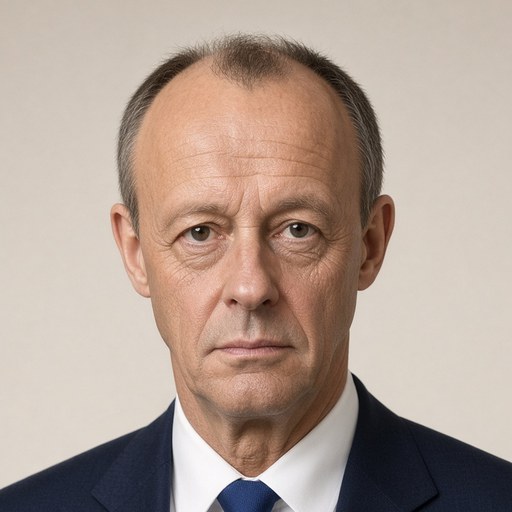
Chancellor's speech at Family Business Days Germany must become more competitive.
 Friedrich Merz · Chancellor of Germany
- Context
- Merz addressed the Family Business Days annual conference in Berlin on June 6, 2025, calling for economic reform and a German leadership renewal.
- Main themes
- German economic competitiveness, family businesses, economic policy reform, European leadership, transatlantic relations, NATO and defense policy, German reunification legacy, coalition government agenda, business climate improvement, international partnerships
- Duration
- ~30 min
- Words
- 3,615
- Sentences
- 232
- Readability
- 57
- Grade
- 9.4
- Syntax
- 2.74
- Vocabulary
- 1.97
Translated from German
The broad sphere of national life a sentence belongs to. Every sentence has an Arena, so it is the denominator the other indices are read against.
Other232 sentences in 68 paragraphs
Dear Ms. Ostermann,
dear Mr. von der Hagen,
dear Patrick Adenauer,
ladies and gentlemen,
thank you very much for the warm welcome this morning at the BOLLE Festsaal! I am pleased that you have come to your annual conference in Berlin in such good spirits. First of all, I would like to congratulate you, dear Ms. Ostermann, on your re-election. All the best to you, congratulations, and here’s to continued good cooperation with this association! Because, ladies and gentlemen, we need this cooperation, we seek it, and I seek it. That is why it was clear to me that, if time permitted, I would come to you this morning immediately after my return from
Washington
. For I am firmly determined to bring about a change in course not only in foreign policy, defense policy, and European policy, but also in economic policy and in many related issues. So thank you very much for your kind welcome!
I undertook these trips right at the beginning of my term because I want to make an effort to seek a new path of cooperation, first with our European partners and neighbors. Because this Federal Republic of Germany, ladies and gentlemen, is not alone in the world. We are a member of the European Union. We are a member of
NATO
. We are ‑ let us not downplay ourselves ‑ by far the largest, most populous, and economically strongest country in Europe, and something is expected of us. We are expected to take on leadership responsibility in the European Union and beyond, and we are expected to seek cooperation with our international partners on an equal footing, which must be better than it has been in recent years.
I can tell you from my encounters in the larger and smaller member states as well as from my meetings in the
USA
yesterday: There is a great responsibility resting on us. I say this deliberately: not only on us in the government, but on all of us, including you. What we are now planning is not just a government task. It is a broad societal task to get this country back on course. That is why I am grateful that you have chosen the conference motto "Dare to Restart!" We are also daring to restart. Let us embark on this restart together, ladies and gentlemen! Then something will come of it.
Perhaps I may also say this at the beginning: I have been received with great warmth and kindness among the member states of the European Union because many have missed a German leadership role in recent years. This has not only been the case for the last three years.
Ladies and gentlemen, I will not tire of saying it again and again: I was first a young member of parliament in the European Parliament. During that time, I witnessed the entire internal market legislation and the first steps towards monetary union, and I experienced German reunification during that time. I was fortunate ‑ it was a great privilege ‑ to observe the development in Germany from both the outside and the inside simultaneously. German reunification would not have been possible if we had not had the unconditional trust of our European neighbors and partners, as well as the Americans and the then Soviet Union, at that time. This trust must be earned internationally. When such decisions are made, one can look to the future on a secure foundation of mutual trust.
Why do I say this? We need this trust in Europe. Because we are facing fundamental political decisions in Europe. But we also need this trust in the transatlantic relationship. Whether we like it or not, we will remain dependent on the United States of America for a long time to come.
However, I told
Donald Trump
last night: You also need partners in the world. Europeans are, like no other, the Germans in particular, the best-suited partners in the world when it comes to facing the common challenges now. That is the difference between authoritarian systems and democracies. Authoritarian systems have subordinates; democracies have partners, and we want to be those partners, in Europe and with America.
Ladies and gentlemen, we are daring this new beginning. We are taking this step into the future. We can rely on a great deal of trust from the population – I caught a bit of what Dr. Köcher presented here – as evidenced even by the capital markets in recent weeks. There is great confidence that a new federal government will do things better now. Doing better means not only pursuing new paths in foreign policy, security policy, and European policy, but above all also in economic policy and social policy.
The main problem we have in our economy is the lack of price competitiveness of our economy. We want to change that. We want companies in Germany to become profitable again. We want them to become more competitive. We want to achieve this in Europe, and we want to achieve it worldwide. The external view of Germany is often much more positive than the internal view of ourselves. That is why I take this optimism with me on the path that is now outlined for us by the coalition agreement we concluded with the Social Democrats. By the way, we concluded this coalition agreement within a very short time after the federal elections, and we also formed the government in a very short time and then made the first decisions in the new federal government, which are now being gradually brought through the discussions in the German Bundestag and then through the Bundesrat. If you look at the composition of the cabinet, you will see: Except for the Minister of Defense, all are new faces. If you look more closely, you will see that we have never had such a ‑ how should one say? – diverse cabinet as we currently have, with the most varied backgrounds, the most varied professional experiences, almost half women. Many newcomers are sitting at the cabinet table, some of whom even come from the private sector. It was particularly important to me that I also win personalities for the cabinet ‑ this has succeeded not only on the Union side but also on the
SPD
side ‑ so that we bring a broad spectrum of experience into this federal government, which is truly embarking on the path to renew our country.
I want to start with a topic that you may also mention repeatedly and discuss, but on which we have never really made progress. That is the topic of digitization and modernization of the state. We now have an independent ministry for this. Yes, we had that once before. But we now have an independent ministry with comprehensive competencies. At least five departments of the former federal government have transferred entire departments to this ministry, to this ministry for digitization and modernization of the state. We have deliberately placed digitization and modernization of the state in one hand. This ministry now has the broadest competencies, will receive its own large budgets in the 2025 and 2026 budgets, and will ensure that no decision on digitization and modernization of the state is diffused anywhere in the multitude of ministries, but that it is now concentrated in one house. With this, we are now serious about digitization and modernization of the state in our country. Look at the appointments. I was able to win Karsten Wildberger, one of the most prominent entrepreneurs in Germany, who has transformation experience, who knows how to lead large apparatuses, and who knows how to set something new in motion. That is exactly what he will now do for the federal administration and then also for our entire economy.
However, we will still have a few more difficult tasks to solve. When I talk about price competitiveness, ladies and gentlemen, I am primarily referring to the high bureaucratic burdens, but also to the tax burdens and the burdens from the social security systems, which threaten to get out of control.
I want to start with bureaucracy. The reduction of bureaucracy has been discussed in Germany for decades. I know that such assemblies and conferences often become quite alarming when a politician talks about reducing bureaucracy, because the experience is: The next day it will be even worse. We really want to turn this around now. We are no longer even talking about reducing bureaucracy, but about dismantling bureaucracy. We are not only starting with ourselves, but we are also talking very seriously with the European Commission. Because if you look more closely, you will see that a large part of the bureaucratic burdens no longer comes from national legislation, but from Brussels. I already conducted the European election campaign with Ursula von der Leyen under this heading last year, and we are now seriously working together to really start focusing on competitiveness in the European Union.
The first three major projects of the Commission have now been initiated, with a real reduction of the bureaucratic burdens coming from the European Union. Some things will initially be postponed. But postponement is not the answer; abolition is the right answer, and we are now doing this together step by step. I am very grateful that I have also reached an agreement with French President
Emmanuel Macron
and others in the European Union that the European Council, that the heads of state and government must now be the drivers who push this Commission to take it seriously, and that we are also fighting for majorities in the European Parliament to ensure that this now proceeds together.
But it also has something to do with us, for example, with the implementation of
EU
-directives. We are now implementing only one-to-one and no longer one-to-one point five. I am also systematically reviewing where we can revert already implemented directives to a one-to-one implementation if these directives are to remain. The so-called “
gold-plating
” in Germany, saying: “Everything that comes from Brussels is nice and good, but still not good enough for Germany, so we will add something on top,” must now stop. What is good enough in terms of regulation for all of Europe is also good enough for Germany and does not need to be more and better.
I want to address a topic that has occupied me for a long time. It has also occupied me professionally in the past. That is the topic of the capital market union. Ladies and gentlemen, I believe we have conducted this discussion too intensively in the wrong place. We have discussed too much about liability regimes and deposit insurance and far too little about how we can create a truly broad and deep capital market, for example, for companies that want to finance and refinance themselves on the European capital market. I will now also take initiatives with the French government to do this differently and better.
I want to put it in very simple terms. Some of you may know this example because I mention it often. I do not want to see two companies like
CureVac
and
BioNTech
, which were founded in Germany, having sensational success and being really good. You will have noticed what happened with
BioNTech
again last week, but due to the lack of a European capital market, they have to go to the
Nasdaq
, to the
New York Stock Exchange in
New York
because they cannot find a capital market here in Europe. Please do not say that this is somehow beyond family businesses. No, ladies and gentlemen, there are many from your sector, many family businesses that are looking for corresponding expansion or growth and then also go to the capital market. I want such a capital market to exist in Germany, in Europe, so that such things can be possible in Frankfurt, in London, which is also part of it, in Paris, in Amsterdam, in Madrid, in Rome in the future. With 450 million consumers in Europe, we are larger than the United States of America and Canada combined. What they can do, we can do too, and we are now showing that we can achieve this in Europe.
The second point: We need more investments in Germany. If I observe correctly, the mood has changed significantly in recent days and weeks. After all, when the CEO of the Kreditanstalt für Wiederaufbau says in a remarkable interview at the beginning of this week that he has never experienced such a rapid improvement in mood in his professional life, that is a hopeful sign. But it is also nothing more than that. I know how to assess such things. These are values of hope, these are expectations. They are not yet conclusions drawn from decisions made. We still have to make those decisions.
That is why, in the federal cabinet this week, we made the first decisions regarding the tax burden on companies using a rather ambitious procedural timeline. We will allow high depreciation on new investments for the year 2025 and then for three consecutive years, each at 30 percent, degressive, three times in a row. Starting January 1, 2028, we will gradually reduce the corporate tax from the current 15 percent to ten percent.
Now you might say: That’s all well and good, but still not enough. I would agree with you if you said that. But I would add: We must also ensure that the public budgets remain reasonably balanced. "Reasonably" is already quite a euphemism. Because with the investment program, we will be able to incur relatively high new debts with the special fund. But if we do so, they must truly serve the substance of our economy; they must not be mere shifts from the budget into debt, so that all consumption expenditures can remain as they are; they must really be new investments. What we have created in terms of opportunities has not alleviated the pressure for consolidation on public budgets in any way. The opposite is true. We already have interest burdens of well over 30 billion euros in the federal budget. We cannot continue to increase that indefinitely. We must also comply with the rules of the European Fiscal Compact; that is part of it. We must handle the additional money we have now very, very carefully, at the expense of the next generation, and ensure that real investments are possible.
Investments, ladies and gentlemen, are not just public investments from public budgets. These funds are best utilized when we achieve a leverage effect for private investments in Germany, at least in a ratio of one to five, better in a ratio of one to ten. That is why we are not just talking about expenditures here; we are talking about new structures, new financing options, and new support opportunities for companies, so that private investments in Germany can truly be possible.
This also concerns partnerships; I want to emphasize this especially for family businesses. I would have liked us to do something about income tax. However, due to various circumstances, that was not possible at this time. But we have at least ensured that the legislation now shows ways for a simpler transition from income tax to corporate tax for partnerships. It is already possible today. We want to simplify that further. We also want to ensure that partnerships that remain under income tax can at least indirectly participate in these relief opportunities. In the longer term, we also want to try to lower income tax.
We must decide on the solidarity surcharge at the latest by the end of the legislative period. I could have imagined and even wished that the Federal Constitutional Court would have decided differently. But be that as it may. We now have another four years with the solidarity surcharge. But by then, the solidarity surcharge must be abolished. This alone would be a significant relief, especially for partnerships in Germany.
With that, ladies and gentlemen, I come to the third point that concerns us. We need to talk about energy policy and energy and electricity prices. We are doing that. We want to discuss the first relief measures today. I have an appointment immediately after this meeting with the Federal Minister of Finance to discuss how we can reflect these issues in the federal budget for 2025. We do not yet have a federal budget for 2025. We want to approve it in the cabinet in three weeks and pass it in the German Bundestag directly after the summer break.
We want to talk about the gas storage levy. We want to discuss an immediate program to stabilize and reduce the electricity tax to a European minimum level. We want to enable some relief in electricity tax and network fees, especially for companies. These are very high costs that particularly burden the energy-intensive industry in Germany. We want to see that we can quickly come down to at least a European minimum or an average level in Europe. The triad must be: It must be affordable; it must be secure, and we must remain technology-open in energy generation. We are also clearing away a piece of ideology from the past. I am very grateful that we were able to agree on this with the Social Democrats. We will enable new gas power plants. We will not build them ourselves; we will enable them. However, we will do this free from stipulations that everything must now happen immediately on new ground and with new networks. It can take place at old sites. It can happen with existing networks. Yes, these will be gas power plants that will eventually also be hydrogen-capable. But for now, it is primarily about building base-load capable energy sources for the energy supply of the Federal Republic of Germany.
I promised this before the election and want to repeat it here: We will not shut anything down in Germany until we know what we have turned on beforehand. It is about getting out of this mode.
Ladies and gentlemen, with that, I am essentially at the fundamental tone or the basic melody of our coalition. We discussed this very intensively in the coalition negotiations. It may not have become immediately visible in every part of the coalition agreement, but we want to bring about a change in mentality in this country. We want to inspire courage again. We want to provide entrepreneurs with a reasonable perspective in Germany once more.
In this context, I want to return to the
USA
. One can criticize the politics there vehemently. I will not participate in that. But the results of this policy are that many companies are now asking whether perhaps Europe, and within Europe, perhaps Germany could be a good investment location. We see that scientists from the
USA
are asking, given the mood at universities, whether perhaps Europe, and within Europe, perhaps the Federal Republic of Germany could be an interesting location for science and research. For all those who want to come to us now, for all those who are here and want to invest, we want to create a different climate in this country. If I may mention the word bureaucracy again: We are guided by the idea that we want to be a country that is not characterized by distrust of the state towards its citizens, towards entrepreneurs, but we want to be a country, a state, that fundamentally has trust in people, trust in entrepreneurs. We are guided by that in regulation and not by profound distrust.
In this sense, we have set to work. We want to bring the tax relief measures I described on the way before the parliamentary summer break by July 11 – that is the last Friday of this session week and the last Bundesrat before the summer – so that they can already be passed and included in the Federal Law Gazette. We will work intensively during the summer break on the next major part of this reform agenda. As I said, we are determined to get this country back on track, to improve the mood, and to show what we can do.
That is my concluding remark. There are many things that weigh on us and burden us, and that we do not have solely in our hands. I have not even mentioned the war in Ukraine. We do not have the sole power to end this war. There are many things, for example in trade policy – I have not talked about that for long – that we do not have the sole power to resolve. But, ladies and gentlemen, the vast majority of the tasks we face are solely in our hands.
I have quoted this elsewhere – some of you may have been there – and I repeat it: Last November, we had a large meeting with representatives of the German financial industry and explored the possibilities regarding private capital, capital-backed pension systems, etc. After several hours of discussion – the most important people from us, from the
CDU
, and from the banks were present – the head of Deutsche Bank said: If I look at this discussion we have had and summarize it, I find that the problems we have in Germany are solvable by our own efforts. I went home with that sentence, ladies and gentlemen, and I repeat it here again because I liked it so much. It gives me a great deal of confidence. The problems we have in Germany are solvable by our own efforts. Let us bring this strength together!
Thank you very much.
The original German. The tags above are read on the English translation's sentences.
Sehr geehrte Frau Ostermann,
sehr geehrter, lieber Herr von der Hagen,
lieber Patrick Adenauer,
meine Damen und Herren,
herzlichen Dank für die freundliche Begrüßung heute Morgen bei Ihnen in den BOLLE-Festsälen! Ich freue mich, dass Sie in so guter Stimmung zu Ihrer diesjährigen Tagung nach Berlin gekommen sind. Zunächst einmal gratuliere ich Ihnen, liebe Frau Ostermann, zu Ihrer Wiederwahl. Alles Gute für Sie, herzlichen Glückwunsch, und auf weiterhin gute Zusammenarbeit mit diesem Verband! Denn, meine Damen und Herren, diese Zusammenarbeit brauchen wir, sie suchen wir, und sie suche ich. Deshalb war es für mich klar, dass ich, wenn es zeitlich möglich ist, heute Morgen unmittelbar nach meiner Rückkehr aus
Washington
zu Ihnen komme. Denn ich bin fest entschlossen, nicht nur in der Außenpolitik, in der Verteidigungspolitik und in der Europapolitik einen Kurswechsel herbeizuführen, sondern auch in der Wirtschaftspolitik und in vielen Fragen, die damit zusammenhängen. Herzlichen Dank also für Ihr freundliches Willkommen!
Ich habe diese Reisen gleich zu Beginn meiner Amtszeit unternommen, weil ich darum bemüht sein möchte, zunächst mit unseren europäischen Partnern und Nachbarn einen neuen Weg der Zusammenarbeit zu suchen. Denn diese Bundesrepublik Deutschland, meine Damen und Herren, ist nicht allein auf der Welt. Wir sind Mitglied der Europäischen Union. Wir sind Mitglied der
NATO
. Wir sind ‑ da dürfen wir uns nicht kleiner machen, als wir sind ‑ das mit Abstand größte, bevölkerungsreichste und wirtschaftlich stärkste Land in Europa, und von uns wird etwas erwartet. Von uns wird erwartet, dass wir Führungsverantwortung in der Europäischen Union und darüber hinaus übernehmen, und von uns wird erwartet, dass wir auch mit unseren internationalen Partnern eine Zusammenarbeit auf Augenhöhe suchen, die besser werden muss, als sie es in den vergangenen Jahren gewesen ist.
Ich kann Ihnen aus meinen Begegnungen in den größeren und in den kleineren Mitgliedstaaten sowie aus meinen Begegnungen in den
USA
gestern sagen: Hier liegt eine große Verantwortung bei uns. Ich sage bewusst: nicht nur bei uns in der Regierung, sondern bei uns allen, auch bei Ihnen. Das, was wir jetzt vorhaben, ist nicht allein eine Regierungsaufgabe. Es ist eine breite gesellschaftspolitische Aufgabe, dieses Land wieder auf Kurs zu bringen. Deshalb bin ich Ihnen dankbar, dass Sie das Tagungsmotto „Neustart wagen!“ gewählt haben. Den Neustart wagen auch wir. Lassen Sie uns diesen Neustart zusammen auf den Weg bringen, meine Damen und Herren! Dann wird etwas daraus.
Vielleicht darf ich auch das noch zu Beginn sagen: Ich bin in der Europäischen Union unter den Mitgliedstaaten mit großer Herzlichkeit und großer Wärme aufgenommen worden, weil viele in den letzten Jahren eine deutsche Führungsrolle vermisst haben. Das war nicht nur die letzten drei Jahre so.
Meine Damen und Herren, ich werde nicht müde, es immer wieder zu sagen: Ich bin als junger Abgeordneter zuerst im Europäischen Parlament gewesen. Ich habe in dieser Zeit die gesamte Binnenmarktgesetzgebung und die ersten Schritte hin zur Währungsunion miterlebt, und ich habe in dieser Zeit die deutsche Einheit miterlebt. Mir war es vergönnt ‑ das war ein großes Privileg ‑, die Entwicklung in Deutschland von außen und von innen gleichzeitig zu betrachten. Die deutsche Einheit wäre nicht möglich gewesen, wenn wir zum damaligen Zeitpunkt nicht das unbedingte Vertrauen unserer europäischen Nachbarn und Partner sowie der Amerikaner und der damaligen Sowjetunion gehabt hätten. Dieses Vertrauen muss man sich international erarbeiten. Wenn es dann zu solchen Entscheidungen kommt, dann kann man auf einem sicheren Fundament eines gegenseitigen Vertrauens miteinander in die Zukunft blicken.
Warum sage ich das? Dieses Vertrauen brauchen wir in Europa. Denn wir stehen in Europa vor grundlegenden politischen Entscheidungen. Dieses Vertrauen brauchen wir aber auch im transatlantischen Verhältnis. Wir werden, ob wir es wollen oder nicht, noch auf längere Zeit von den Vereinigten Staaten von Amerika abhängig bleiben.
Ich habe
Donald Trump
allerdings gestern Abend gesagt: Auch ihr braucht Partner in der Welt. Die Europäer sind wie kein Zweiter, die Deutschen ganz besonders, die am besten geeigneten Partner in der Welt, wenn es darum geht, die gemeinsamen Herausforderungen jetzt zu bestehen. Das ist der Unterschied zwischen autoritären Systemen und Demokratien. Autoritäre Systeme haben Untergebene; Demokratien haben Partner, und diese Partner wollen wir sein, in Europa und mit Amerika.
Meine Damen und Herren, wir wagen diesen Aufbruch. Wir wagen diesen Schritt in die Zukunft. Wir können uns damit – ich habe noch etwas davon mitbekommen, was Frau Dr. Köcher hier vorgetragen hat – auf einen großen Vertrauensvorschuss in der Bevölkerung stützen. Das zeigen sogar die Kapitalmärkte in den letzten Wochen. Es gibt ein großes Vertrauen, dass eine neue Bundesregierung die Dinge jetzt besser macht. Es besser zu machen, heißt, nicht nur in der Außenpolitik, in der Sicherheitspolitik und in der Europapolitik, sondern vor allem auch in der Wirtschaftspolitik und auch in der Sozialpolitik neue Wege zu gehen.
Das Hauptproblem, das wir in unserer Volkswirtschaft haben, ist die mangelnde preisliche Wettbewerbsfähigkeit unserer Wirtschaft. Daran wollen wir etwas ändern. Wir wollen, dass die Unternehmen in Deutschland wieder profitabler werden. Wir wollen, dass sie wettbewerbsfähiger werden. Wir wollen das in Europa schaffen, und wir wollen das auch auf der ganzen Welt schaffen. Der Blick von außen auf Deutschland fällt oftmals viel positiver aus als der Blick von innen auf uns selbst. Deswegen nehme ich diesen Optimismus mit auf den Weg, der uns durch den Koalitionsvertrag jetzt vorgezeichnet ist, den wir mit den Sozialdemokraten abgeschlossen haben. Diesen Koalitionsvertrag haben wir übrigens innerhalb kürzester Zeit nach der Bundestagswahl abgeschlossen, und wir haben auch innerhalb kürzester Zeit die Regierungsbildung angeschlossen und dann innerhalb kürzester Zeit die ersten Entscheidungen in der neuen Bundesregierung getroffen, die jetzt Schritt für Schritt durch die Beratungen im Deutschen Bundestag und dann durch den Bundesrat gebracht werden. Wenn Sie sich die Zusammensetzung des Kabinetts anschauen, dann sehen Sie: Außer dem Verteidigungsminister sind es alles neue Gesichter. Wenn Sie genauer hinschauen, dann sehen Sie, dass wir noch nie ein so ‑ wie würde man sagen? – diverses Kabinett gehabt haben wie gegenwärtig, mit unterschiedlichster Herkunft, unterschiedlichsten beruflichen Erfahrungen, fast zur Hälfte Frauen. Viele Neue sitzen am Kabinettstisch, einige davon sogar aus der Privatwirtschaft. Es war mir besonders wichtig, dass ich für das Kabinett auch Persönlichkeiten gewinne ‑ das ist übrigens nicht nur auf der Unionsseite, sondern auch auf der
SPD
-Seite gelungen ‑, sodass wir ein breites Erfahrungsspektrum in diese Bundesregierung mitbringen, die sich wirklich auf den Weg macht, unser Land zu erneuern.
Ich will mit einem Thema beginnen, das auch Sie vielleicht immer wieder nennen und über das Sie diskutieren, aber bei dem wir nie so richtig weitergekommen sind. Das ist das Thema der Digitalisierung und der Staatsmodernisierung. Wir haben dazu jetzt ein eigenständiges Ministerium. Ja, das hatten wir schon einmal. Aber wir haben jetzt ein eigenständiges Ministerium mit umfassenden Kompetenzen. Mindestens fünf Häuser der früheren Bundesregierung haben zum Teil ganze Abteilungen an dieses Ministerium abgegeben, an dieses Ministerium zur Digitalisierung und Staatsmodernisierung. Wir haben Digitalisierung und Staatsmodernisierung bewusst in eine Hand gelegt. Dieses Ministerium verfügt jetzt über breiteste Kompetenzen, bekommt im Haushalt 2025 und im Haushalt 2026 eigene große
Budgets
und wird dafür sorgen, dass keine Entscheidung zur Digitalisierung und Staatsmodernisierung mehr irgendwo in der Vielzahl der Ministerien diffundiert, sondern dass das jetzt konzentriert in einem Haus geführt wird. Damit machen wir jetzt ernst mit der Digitalisierung und der Staatsmodernisierung in unserem Land. Schauen Sie sich die Besetzung an. Ich konnte mit Karsten Wildberger einen der profiliertesten Unternehmer in Deutschland gewinnen, der Transformationserfahrung hat, der weiß, wie man große Apparate führt, und der weiß, wie man so etwas neu auf den Weg bringt. Genau das wird er jetzt auch für die Bundesverwaltung und dann auch für unsere ganze Volkswirtschaft tun.
Wir werden aber noch ein paar weitere schwere Aufgaben zu lösen haben. Wenn ich über die preisliche Wettbewerbsfähigkeit spreche, meine Damen und Herren, dann sind das vor allem die hohen bürokratischen Lasten, dann sind das aber auch die steuerlichen Lasten und die Lasten durch die sozialen Sicherungssysteme, die uns außer Kontrolle zu geraten drohen.
Ich will mit der Bürokratie beginnen. Über den Abbau von Bürokratie wird in Deutschland seit Jahrzehnten gesprochen. Ich weiß, dass solche Versammlungen und Tagungen häufig geradezu erschrecken, wenn ein Politiker über Bürokratieabbau spricht, weil die Erfahrung lautet: Am nächsten Tag wird es noch viel schlimmer. Wir wollen das jetzt wirklich umdrehen. Wir sprechen auch gar nicht mehr über Bürokratieabbau, sondern über Bürokratierückbau. Wir fangen damit nicht nur bei uns an, sondern wir sprechen auch sehr ernsthaft mit der Europäischen Kommission. Denn wenn Sie genauer hinschauen, dann sehen Sie, dass ein ganz großer Teil der bürokratischen Lasten nicht mehr aus der nationalen Gesetzgebung kommt, sondern aus Brüssel. Ich habe mit Ursula von der Leyen schon im letzten Jahr den Europawahlkampf unter dieser Überschrift geführt, und wir machen jetzt gemeinsam ernst damit, dass wir wirklich anfangen, in der Europäischen Union auf Wettbewerbsfähigkeit zu setzen.
Die ersten drei großen Vorhaben der Kommission sind jetzt auf den Weg gebracht worden, mit einem wirklichen Rückbau der bürokratischen Lasten, die aus der Europäischen Union kommen. Einiges wird zunächst einmal vertagt. Aber Vertagung ist nicht die Antwort, sondern Aufhebung ist die richtige Antwort, und das tun wir jetzt gemeinsam Schritt für Schritt. Ich bin sehr dankbar dafür, dass ich mir auch mit dem französischen Staatspräsidenten
EmmanuelMacron
und anderen in der Europäischen Union darüber einig bin, dass der Europäische Rat, dass die Staats- und Regierungschefs jetzt die Treiber sein müssen, die diese Kommission dazu bringen, wirklich ernst damit zu machen, und dass wir auch im Europäischen Parlament um Mehrheiten dafür ringen, dass dies jetzt gemeinsam geht.
Es hat aber auch etwas mit uns zu tun, zum Beispiel mit der Umsetzung von
EU
-Richtlinien. Wir setzen jetzt nur noch eins zu eins um und nicht mehr eins zu eins Komma fünf. Ich lasse auch systematisch überprüfen, wo wir bereits umgesetzte Richtlinien auf eine Eins-zu-eins-Umsetzung zurückbauen können, wenn diese Richtlinien denn erhalten bleiben. Das sogenannte „
gold-plating
“ in Deutschland, zu sagen: „Alles, was aus Brüssel kommt, ist schön und gut, aber immer noch nicht gut genug für Deutschland, also legen wir oben immer noch etwas drauf“, muss jetzt aufhören. Was an Regulierung für ganz Europa gut genug ist, ist auch für Deutschland gut genug und muss nicht noch mehr und nicht noch besser werden.
Ich will in diesem Zusammenhang ein Thema ansprechen, das mich seit langer Zeit beschäftigt. Es hat mich früher auch beruflich beschäftigt. Das ist das Thema der Kapitalmarktunion. Meine Damen und Herren, ich finde, wir haben diese Diskussion an der falschen Stelle zu intensiv geführt. Wir haben zu viel über Haftungs
regime
und über Einlagensicherung diskutiert und viel zu wenig über die Frage, wie wir denn einen wirklichen, ausreichend breiten und tiefen Kapitalmarkt schaffen, zum Beispiel für Unternehmen, die sich am europäischen Kapitalmarkt finanzieren und refinanzieren wollen. Auch dazu werde ich jetzt mit der französischen Regierung Initiativen ergreifen, um dies anders und besser zu machen.
Ich will es auf einen ganz einfachen Nenner bringen. Der eine oder andere von Ihnen kennt dieses Beispiel, weil ich es häufig nenne. Ich möchte nicht mehr sehen, dass zwei Unternehmen wie zum Beispiel
CureVac
und
BioNTech
, die in Deutschland gegründet worden sind, zwar sensationellen Erfolg haben und richtig gut sind. Sie werden mitbekommen haben, was bei
BioNTech
in der vergangenen Woche noch einmal geschehen ist, aber mangels eines europäischen Kapitalmarkts an die
Nasdaq
, an die
New York Stock Exchange
nach
New York
gehen müssen, weil sie hier in Europa keinen Kapitalmarkt vorfinden. Sagen Sie bitte nicht, das sei sozusagen doch etwas jenseits der Familienunternehmen. Nein, meine Damen und Herren, es gibt viele aus Ihrem Bereich, viele Familienunternehmen, die eine entsprechende Erweiterung oder Vergrößerung suchen und dann auch an den Kapitalmarkt gehen. Ich möchte, dass ein solcher Kapitalmarkt in Deutschland, in Europa vorhanden ist, dass solche Dinge in Frankfurt, in London, das auch dazugehört, in Paris, in Amsterdam, in Madrid, in Rom in Zukunft möglich sind. Wir sind mit 450 Millionen Konsumenten in Europa größer als die Vereinigten Staaten von Amerika und Kanada zusammen. Was sie können, können wir auch, und wir zeigen jetzt, dass wir das in Europa schaffen.
Das Zweite: Wir brauchen mehr Investitionen in Deutschland. Wenn ich es richtig beobachte, hat sich die Stimmung in den letzten Tagen und Wochen schon deutlich verändert. Immerhin, wenn der Vorstandsvorsitzende der Kreditanstalt für Wiederaufbau in einem bemerkenswerten Interview zu Beginn dieser Woche sagt, er habe in seinem beruflichen Leben noch nie erlebt, wie sich innerhalb so kurzer Zeit die Stimmung so sehr zum Besseren verändert habe, dann ist das ein hoffnungsvolles Zeichen. Aber es ist auch nicht mehr. Ich weiß, wie so etwas einzuschätzen ist. Das sind Hoffnungswerte, das sind Erwartungen. Das sind noch keine Schlussfolgerungen aus getroffenen Entscheidungen. Die Entscheidungen müssen wir jetzt erst noch treffen.
Deswegen haben wir im Bundeskabinett in dieser Woche sogar mit einem in der zeitlichen Abfolge ziemlich anspruchsvollen Verfahren die ersten Entscheidungen zum Beispiel im Hinblick auf die steuerliche Belastung der Unternehmen getroffen. Wir werden noch für das Jahr 2025 und dann für drei Jahre hintereinander hohe Abschreibungen auf neue Investitionen ermöglichen, jeweils 30 Prozent, degressiv, dreimal hintereinander. Ab dem 1. Januar 2028 werden wir Stück für Stück die Körperschaftssteuer senken, von heute 15 Prozent auf dann zehn Prozent.
Jetzt können Sie sagen: Das ist gut und schön, aber immer noch nicht genug. Ich würde Ihnen zustimmen, wenn Sie das sagten. Ich sage aber dazu: Wir müssen gleichzeitig aufpassen, dass die öffentlichen Haushalte einigermaßen ausgeglichen bleiben. „Einigermaßen“, das ist schon ein ziemlicher Euphemismus. Denn wir werden mit dem Investitionsprogramm, mit dem Sondervermögen jetzt relativ hohe neue Schulden machen können. Aber wenn wir sie machen, dann müssen sie wirklich der Substanz unserer Volkswirtschaft dienen, dann dürfen das keine Verschiebungen aus dem Haushalt sozusagen in die Verschuldung sein, damit alle konsumtiven Ausgaben weiter so bleiben können, dann müssen das wirklich neue Investitionen sein. Das, was wir an Möglichkeiten geschaffen haben, hat an keiner Stelle zu einer Abmilderung des Konsolidierungsdrucks für die öffentlichen Haushalte geführt. Das Gegenteil ist richtig. Wir haben jetzt schon Zinslasten in Höhe von weit über 30 Milliarden Euro im Bundeshaushalt. Das dürfen wir nicht unbegrenzt nach oben fortsetzen. Wir müssen auch die Regeln des Europäischen Fiskalpakts einhalten; auch das gehört dazu. Wir müssen mit dem Geld, das wir jetzt zusätzlich haben, auf Kosten der nächsten Generation, sehr, sehr sorgfältig umgehen und dafür sorgen, dass wirklich Investitionen möglich sind.
Investitionen, meine Damen und Herren, sind nicht nur öffentliche Investitionen, Investitionen aus den öffentlichen Haushalten. Am besten sind diese Mittel eingesetzt, wenn wir damit eine Hebelwirkung für private Investitionen in Deutschland erzielen, mindestens im Verhältnis eins zu fünf, besser im Verhältnis eins zu zehn. Deswegen sprechen wir hierbei nicht nur über Ausgaben, sondern wir sprechen über neue Strukturen, über neue Finanzierungsmöglichkeiten und über neue Hilfsmöglichkeiten für die Unternehmen, damit wirklich private Investitionen in Deutschland möglich sein können.
Das betrifft auch Personengesellschaften; das will ich gerade hier bei den Familienunternehmen ausdrücklich sagen. Ich hätte mir gewünscht, dass wir bei der Einkommensteuer etwas machen. Das war aber aufgrund verschiedenster Umstände jedenfalls zum jetzigen Zeitpunkt nicht möglich. Wir haben aber immerhin dafür gesorgt, dass in der Gesetzgebung jetzt auch Wege aufgezeigt werden, wie der einfachere Weg aus der Einkommensteuer in die Körperschaftsteuer auch für Personengesellschaften geht. Er geht heute schon. Wir wollen das weiter vereinfachen. Wir wollen auch dafür sorgen, dass die Personengesellschaften, die weiterhin in der Einkommensteuer bleiben, an diesen Entlastungsmöglichkeiten jedenfalls mittelbar partizipieren können. Wir wollen in der längeren Perspektive auch versuchen, die Einkommensteuer zu senken.
Wir müssen ohnehin spätestens zum Ende der Wahlperiode noch einmal über den Soli entscheiden. Ich hätte mir vorstellen können und sogar gewünscht, dass das Bundesverfassungsgericht das anders entschieden hätte. Aber sei es drum. Wir haben jetzt noch einmal vier Jahre mit dem Soli. Aber spätestens dann muss der Soli beseitigt werden. Schon allein dies wäre eine erhebliche Entlastung gerade auch für die Personengesellschaften in Deutschland.
Damit, meine Damen und Herren, bin ich beim dritten Punkt, der uns beschäftigt. Wir müssen miteinander über die Energiepolitik und über die Energie- und Strompreise sprechen. Das tun wir. Wir wollen die ersten Entlastungen schon heute besprechen. Ich bin unmittelbar nach dieser Begegnung mit dem Bundesfinanzminister verabredet, um darüber zu sprechen, wie wir genau diese Themen im Bundeshaushalt 2025 noch abbilden können. Wir haben ja noch keinen Bundeshaushalt 2025. Wir wollen ihn in drei Wochen im Kabinett beschließen und direkt nach den Sommerferien im Deutschen Bundestag verabschieden.
Wir wollen über die Gasspeicherumlage sprechen. Wir wollen über ein Sofortprogramm zur Verstetigung und Absenkung der Stromsteuer auf ein europäisches Mindestmaß sprechen. Wir wollen also einige Entlastungen bei der Stromsteuer und bei den Netzentgelten insbesondere für Unternehmen ermöglichen. Das sind sehr hohe Kosten, die insbesondere die energieintensive Industrie in Deutschland belasten. Wir wollen sehen, dass wir so schnell wie möglich wenigstens auf ein europäisches Mindestmaß oder ein mittleres Maß in Europa herunterkommen. Der Dreiklang muss lauten: Es muss bezahlbar sein; es muss sicher sein, und wir müssen vor allen Dingen in der Energieerzeugung technologieoffen bleiben. Auch da räumen wir ein Stück Ideologie der Vergangenheit weg. Ich bin sehr dankbar dafür, dass wir das mit den Sozialdemokraten so beschließen konnten. Wir werden neue Gaskraftwerke ermöglichen. Wir bauen sie nicht selbst, wir ermöglichen sie. Wir werden das aber frei von Festlegungen tun, wonach das alles jetzt sofort auf neuem Grund und Boden und mit neuen Leitungsnetzen stattfinden müsste. Das kann auf alten Standorten stattfinden. Das kann mit vorhandenen Leitungsnetzen stattfinden. Ja, das werden Gaskraftwerke sein, die irgendwann auch wasserstofffähig sind. Aber jetzt kommt es zunächst einmal darauf an, grundlastfähige Energieträger für die Energieversorgung der Bundesrepublik Deutschland zu bauen.
Ich habe es vor der Wahl zugesagt und will es hier wiederholen: Wir schalten in Deutschland nichts mehr ab, bevor wir nicht wissen, was wir vorher eingeschaltet haben. Es geht darum, dass wir aus diesem Modus herauskommen.
Meine Damen und Herren, damit bin ich sozusagen bei dem Grundtenor oder der Grundmelodie unserer Koalition. Wir haben das in den Koalitionsverhandlungen sehr intensiv diskutiert. Es ist im Koalitionsvertrag vielleicht nicht an jeder Stelle sofort sichtbar geworden, aber wir wollen in diesem Land einen Mentalitätswandel herbeiführen. Wir wollen wieder Mut machen. Wir wollen den Unternehmerinnen und Unternehmern wieder eine vernünftige Perspektive in Deutschland eröffnen.
Ich komme in dem Zusammenhang noch einmal auf die
USA
zurück. Man kann die Politik dort heftigst kritisieren. Ich werde mich daran nicht beteiligen. Aber die Ergebnisse dieser Politik sind, dass jetzt sehr viele Unternehmen die Frage stellen, ob nicht vielleicht doch Europa und ob in Europa nicht vielleicht doch Deutschland ein guter Investitionsstandort sein könnte. Wir sehen, dass Wissenschaftler aus den
USA
angesichts der Stimmung an den Universitäten die Frage stellen, ob nicht vielleicht doch Europa und innerhalb Europas nicht vielleicht doch die Bundesrepublik Deutschland ein interessanter Wissenschafts- und Forschungsstandort sein können. Für all diejenigen, die jetzt zu uns kommen wollen, für all diejenigen, die da sind und investieren wollen, wollen wir in diesem Land ein anderes Klima schaffen. Wenn ich noch einmal das Wort Bürokratie in den Mund nehmen darf: Wir lassen uns von dem Gedanken leiten, dass wir ein Land sein wollen, das nicht von Misstrauen des Staates gegenüber seinen Bürgerinnen und Bürgern, gegenüber den Unternehmerinnen und Unternehmen geprägt ist, sondern wir wollen ein Land, ein Staat sein, der grundsätzlich Vertrauen in die Menschen, Vertrauen in die Unternehmer hat. Davon lassen wir uns in der Regulierung leiten und nicht von abgrundtiefem Misstrauen.
In diesem Sinne haben wir uns an die Arbeit gemacht. Wir wollen noch vor der parlamentarischen Sommerpause bis zum 11. Juli – das ist der letzte Freitag dieser Sitzungswoche und der letzte Bundesrat vor dem Sommer – diese von mir beschriebenen steuerlichen Erleichterungen auf den Weg bringen. Sie sollen dann schon beschlossen werden und bereits in das Bundesgesetzblatt Eingang finden. Wir werden über die Sommerpause intensiv am nächsten großen Teil dieser Reformagenda arbeiten. Wir sind, wie gesagt, entschlossen, dieses Land wieder auf Kurs zu bringen, die Stimmung zu verbessern und zu zeigen, was wir können.
Das ist meine Schlussbemerkung. Es gibt viele Dinge, die uns beschweren und belasten und die wir gar nicht allein in der Hand haben. Ich habe den Krieg in der Ukraine gar nicht angesprochen. Wir haben es bei Weitem nicht allein in der Hand, diesen Krieg zu beenden. Es gibt viele Dinge etwa in der Handelspolitik – ich habe gar nicht lange darüber gesprochen –, die zu lösen wir nicht allein in der Hand haben. Aber, meine Damen und Herren, den ganz großen Teil der Aufgaben, die wir vor uns haben, haben wir allein in unserer Hand.
Ich habe es an anderer Stelle schon einmal zitiert – der eine oder andere von Ihnen wird dabei gewesen sein –, und ich wiederhole es: Wir hatten im November des vergangenen Jahres eine große Runde mit Vertretern der deutschen Finanzwirtschaft und haben die Möglichkeiten ausgelotet, was privates Kapital, kapitalunterlegte Altersversorgungssysteme usw. betrifft. Nach mehreren Stunden der Beratung – es waren die wichtigsten Personen von uns, der
CDU
, und von den Banken dabei – hat der Chef der Deutschen Bank gesagt: Wenn ich mir diese Diskussion, die wir hier geführt haben, anschaue und sie einmal zusammenfasse, dann stelle ich fest: Die Probleme, die wir in Deutschland haben, sind aus eigener Kraft lösbar. Ich bin mit diesem Satz nach Hause gefahren, meine Damen und Herren, und ich wiederhole ihn hier noch einmal, weil er mir so gut gefallen hat. Er gibt mir ein großes Maß an Zuversicht. Die Probleme, die wir in Deutschland haben, sind aus eigener Kraft lösbar. Lassen Sie uns diese Kraft gemeinsam auf den Weg bringen!
Herzlichen Dank.