




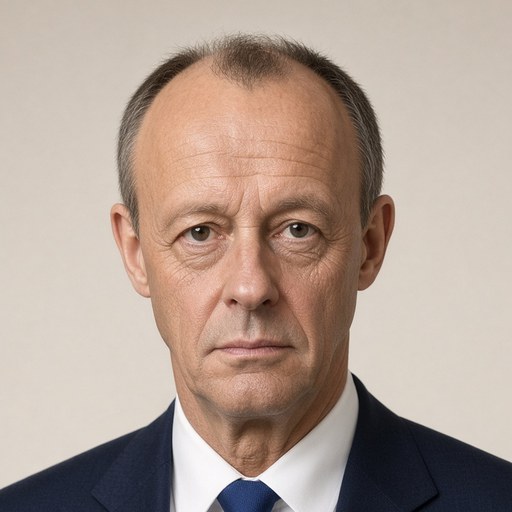
Awarding of the German National Prize 2025 BioNTech co-founder honored with the German National Prize
 Friedrich Merz · Chancellor of Germany
- Context
- Merz addressed the German National Foundation ceremony on June 10, 2025, honoring BioNTech co-founders Özlem Türeci and Uğur Şahin with the German National Prize.
- Main themes
- MRNA technology and innovation, BioNTech and COVID-19 vaccine development, cancer research and immunotherapy, scientific courage and entrepreneurship, history of medical progress, German scientific legacy, Project Lightspeed, pioneers of modern medicine
- Duration
- ~22 min
- Words
- 2,670
- Sentences
- 183
- Readability
- 58
- Grade
- 9.0
- Syntax
- 2.64
- Vocabulary
- 2.68
Translated from German
The broad sphere of national life a sentence belongs to. Every sentence has an Arena, so it is the denominator the other indices are read against.
Other183 sentences in 88 paragraphs
Dear Mr. Chairman, dear Dr. Mirow,
esteemed members of the Board, the Senate, and the Board of Trustees of the German National Foundation,
Madam Federal Minister,
dear colleagues from the parliaments,
but above all, esteemed, dear Professor
Türeci
,
esteemed, dear Professor
Şahin
,
if you should decide this evening to take a little walk from here towards the Brandenburg Gate, and just before it turn right, heading north, you will eventually pass by the Rahel Hirsch
Center for Translational Medicine and shortly thereafter arrive at Robert-Koch-Platz. If you then continue walking a bit further northwest, you will eventually pass by the
Charité
-Virchow-Klinikum campus. From there, a little further east, you will quickly find yourself on Behringstraße. Throughout Berlin, and likely similarly in most German cities, squares and streets bear the names of great pioneers of medicine. There is a reason for these names. The face of the modern world we live in today is shaped by the discoveries and achievements of modern medicine. We live, at least in Europe, largely free from plague, smallpox, polio, rubella, and even measles. We have antibiotics. We have vaccines. As a result, in just the last 150 years, the average life expectancy in Europe has nearly doubled.
The history of modernity is thus also, and above all, the history of medical progress. That is why we know the names so well that are associated with it, namely Robert Koch, Rudolf Virchow, Emil von Behring, Alexander Fleming, Gerty Cori, Rachel Hirsch. Many German names are among them.
Dear
Özlem Türeci
, dear
Uğur Şahin
, in this line of great German names, great German researchers, you both stand as well. Today, we honor two pioneers, two trailblazers of our modern medicine with you. We honor your extraordinary courage to repeatedly make decisions and take paths into the unknown for which there is no map yet.
You chose to pursue the opportunities of the new mRNA technology for immunotherapeutic cancer treatment at a time when many others saw the risks. You decided to found two companies to bring your promising research results to patients more quickly. First
Ganymed Pharmaceuticals
, and in 2008, the founding of BioNTech followed.
Then, in 2020, another decision with which you both – one can say without any exaggeration – made history. It is a Friday evening at the end of January. The outbreak of a new respiratory disease in Wuhan, China, has been known for three weeks.
Uğur Şahin
reads about the virus SARS-CoV-2 in a scientific journal. Over the weekend, you both discuss. You see the danger of a pandemic while others still consider it a limited outbreak. At the same time, you see that based on your mRNA research, it might be possible to develop an effective vaccine against this virus. You decide to try, even though a failure would almost certainly have brought BioNTech to an end. You immediately begin work, starting on Monday. Project
Lightspeed
is launched.
Eight years, that is how long the development of a new vaccine usually takes on average. You both and your team developed the COVID-19 vaccine, which the whole world is now waiting for, in less than a year. It is a record, and it is a medical revolution, a revolution that saves millions of lives.
Where do you both find the courage for such decisions? Surely, your scientific ethos has something to do with it. You are both scientists with body and soul.
Uğur Şahin
said in an interview in 2022 that science means venturing into the unknown. Yes, ladies and gentlemen, thinking ahead, not settling for what is seemingly a necessity, yes, fate, perhaps unchangeable, but rather getting to work, seeking solutions, has always been the driving force of scientific work. It is the driving force of progress and modernity.
I imagine that as a cancer researcher, one must be particularly equipped with this resilience, with this unwavering will to find solutions. Cancer stands like no other disease for a largely insurmountable stroke of fate. The name of the disease alone is so full of horror that it was common until well into the second half of the 20th century for doctors to withhold the diagnosis from their patients. Even today, cancer is often spoken of in hushed tones. Statistically, every second German will be diagnosed with cancer in their lifetime, and each of us here today knows people in our family, among friends, and acquaintances who have suffered from cancer and passed away. Chemotherapy, too, is a term that frightens many people.
However, the research and entrepreneurial work of
Özlem Türeci
and
Uğur Şahin
have made a future conceivable in which these images could belong to the past, and in which cancer could lose its terror. According to many experts, we are facing another true medical revolution with mRNA vaccines – possibly at the beginning of successful cancer treatment. And all of this is only because you both,
Özlem Türeci
and
Uğur Şahin
, have repeatedly chosen to venture into the unknown.
From this courage and this scientific ethos, ladies and gentlemen, we can and should all learn – especially we in politics. Pragmatism may be a political virtue, but under the guise of pragmatism, it often happens in politics that we simply give up the will to truly shape something fundamental.
Yes, good politics acknowledges reality, and good politics also recognizes that social change takes time, that societies have their own pace, which is not always “
light speed
,” because innovations – no matter how beneficial they may be for the common good – must be communicated. This is also a lesson we can draw from the COVID-19 pandemic.
But acknowledging reality must not mean simply settling for the status quo – especially not when it leaves much to be desired – or merely asserting supposed necessities. Under such premises, politics will always only be playing catch-up with events instead of moving forward and making the world better for people.
It was the overly optimistic premise of the end of history that gave us a comparable image of the supposedly unstoppable development of our societies towards freedom, peace, the rule of law, and democracy – a premise that lulled us into a false sense of security for two decades.
However, from this disillusioned illusion of security, a new fatalism must not arise. War, upheavals in our social orders are spoken of as once about plagues – and as sometimes still today about cancer: as inevitability, as inescapable fate, as a historical law.
In the political realm, in our societies overall, ladies and gentlemen, the optimism of progress that once drove modernity seems to be exhausted. We seem to be losing the joy of shaping our future. This is how many observers describe it. And it seems almost paradoxical: The progress being made today in modern technologies, especially in medicine, is overwhelming. It is advancing in quantum leaps. But the enthusiasm for it remains rather limited in our societies, which are sometimes already labeled as “postmodern.”
Esteemed, dear
Özlem Türeci
, esteemed, dear
Uğur Şahin
, ladies and gentlemen, it is my firm conviction that in this situation, it is our task, in politics and as a society overall, to think forward, to open our horizons in our minds, in our thinking – so that confidence can once again become possible throughout our country.
Perhaps I may share with you what enables me to continually remember this task: It is indeed the visit to great research institutions – whether at universities or in companies – where future research is conducted. But these are also training companies where young people joyfully and passionately learn a profession, create a first piece of work. And it is the conversation with scientists, with leading researchers, with pioneers like
Uğur Şahin
and
Özlem Türeci
.
We honor you both today for your great contributions to virological research. But we also honor you because we want to be inspired by your courage, your diligence, your passion for the cause, your unwavering curiosity, because we want to be inspired as a society by you. You both embody the future strength of a free society – as scientists seeking solutions, but also as entrepreneurs for whom responsibility is at the center of their work.
You have become entrepreneurs to bring your research to patients as quickly as possible. You invest profits in the development of new ideas and technologies. You both provide daily proof that entrepreneurship, when properly understood, is also work for the common good.
The speed at which BioNTech developed the COVID vaccine would not have been possible in a state apparatus. We know from experience: Innovation and thus progress only arise where there is room for researchers and developers, for people with visions, willpower, courage, and foresight.
Özlem Türeci
and
Uğur Şahin
embody this future strength of a free society, and they show what citizens of our country with a migration background are capable of. You are both children of Turkish immigrants. Your father, dear Ms.
Özlem Türeci
, worked as a surgeon in a small Catholic hospital. Your father, dear Mr.
Uğur Şahin
, worked at the Ford plant in Cologne as one of the more than 14 million “guest workers,” as they used to say, who came to Germany in the 1960s and 1970s and who significantly contributed to the prosperity of our country.
This first generation of immigrants has received little recognition for this to this day.
Uğur Şahin
once referred to this first generation of Turkish immigrants in an interview as an “ignored generation.” That is a sentence one does not forget.
Today we know better. We must do much better, especially with regard to the younger generation.
“How can we support children? How can we enable children to utilize their abilities and develop further and then contribute to society?”
Ladies and gentlemen, this is also a quote from
Uğur Şahin
. He graduated from high school in 1984 at a gymnasium in Cologne as the first Turkish guest worker child, and he was also the best in his class.
Let me connect exactly to that: I want, we want to live in a Germany where talents and abilities are promoted to the fullest, regardless of social or ethnic background, and not only because this could be a growth driver for our economy, but above all because it is about the central promise from which the radiance of a free society can develop, namely the promise that everyone can develop freely with their talents and abilities. Today, more than 80 nations are represented at BioNTech. This is also part of your success. It shows once again: As a national economy, we need qualified immigration. We need skilled labor immigration as a motor of progress. Ideologies and ideologists that question this not only endanger the prosperity of our country, but much worse, they jeopardize the future of our free order with their narrow-mindedness.
Ladies and gentlemen, therefore, in the coming years, it will be a central task for the federal government to create conditions in Germany and Europe for science, research, and development that can keep pace with all – I emphasize: with all – research-intensive locations in the world. We were once the most successful pharmaceutical location in the world. Germany called itself the pharmacy of the world. We could reconnect with these successes of the past today if we all remove our blinders and allow research and development, especially in the field of biotechnology, as has been achieved by BioNTech in recent years.
Germany is a science nation. We have a highly innovative scientific landscape. But we must improve as a country, translating our top research more quickly into patents and into products, medications, treatment methods, and medical technology from interdisciplinary research and development. You, dear
Özlem Türeci
You once said in an interview that the technological revolution of the present requires fast processes to bring innovative therapies to patients sooner, and you both have been calling for years: We need to modernize our drug development routines in Germany, in Europe, so that they do not become a bottleneck for medical innovation. – I would like to respond: We in politics hear you. We will focus our efforts on eliminating this bottleneck, and we will also need to discuss the financing of this medical and technological progress together. Our system must become overall more efficient and equitable in terms of performance, and indeed all people should be able to participate in this progress.
But, ladies and gentlemen, our health policy is far too often under the heading of a cost burden. This heading certainly has some justification. However, the health sector as a whole, with all its services, is also the fastest-growing sector of our economy. Therefore, understanding the health sector not just as a cost factor, but as a growth engine and a driver of prosperity is at least equally important, especially when we look at the great opportunities of a global market, where the competition for these innovations is taking place more than ever.
With that, I return to you, dear award winners. A few days ago, you concluded an agreement with a large American company for the further development of one of your most promising drug candidates for cancer treatment. You can invest several billion US dollars in research over the next few years. With this, your company has finally arrived in the top league of research-based pharmaceutical companies in the world. May I say it this way? May I say it this way, ladies and gentlemen, and also on behalf of all of you? We are truly proud of you! We are happy. We are happy with you.
Now let me address one last issue that concerns me, but which also describes another task that we can only solve politically. You probably all know: BioNTech is a publicly traded corporation. But not all of you may know that the IPO took place just over six years ago, despite the founding and location of the company in Germany, in the USA, more precisely in New York on the NASDAQ technology exchange. Not many companies from Germany achieve this, and it is a great honor for BioNTech to this day. However, this IPO also shows that we need to improve in shaping a European capital market that must enable such IPOs in the future in Germany or, better said, in Europe; because this would keep important parts of the value creation of such companies in Europe and, above all, increase the prosperity of our societies through the capital market. This task must be taken on by us in politics, and rest assured that I am firmly determined to do so; because only then will the success story of these companies be truly complete, to put it casually, when research, innovation, patents, and products come from Germany and Europe just as the accompanying prosperity remains primarily in Germany and Europe through the capital market. But you two, esteemed award winners, do not need to worry about that. We will take care of it.
All that remains for us today is to congratulate you from the bottom of our hearts and to award you the German National Prize 2025. In our society, we award prizes, ladies and gentlemen, to remind ourselves of what is important to us, what values we stand for, what goals we have, what is exemplary for us. Today, we honor two outstanding researchers and entrepreneurs, two pioneers who set global standards in their field of research and who show us as a society in Germany what is possible when people decide to make things better. You both remind us that Germany can be a country from which solutions for humanity's challenges come, thus progress, and the future. It is a special honor for me personally to present you with this award today on behalf of the German National Foundation. We all congratulate you, and we are truly grateful to you.
The original German. The tags above are read on the English translation's sentences.
Sehr geehrter Herr Vorsitzender, lieber Herr Dr. Mirow,
sehr geehrte Damen und Herren Mitglieder des Vorstandes, des Senats und des Kuratoriums der Deutschen Nationalstiftung,
Frau Bundesministerin,
liebe Kolleginnen und Kollegen aus den Parlamenten,
vor allem aber sehr verehrte, liebe Frau Professor
Türeci
,
sehr geehrter, lieber Herr Professor
Şahin
,
wenn Sie sich heute Abend entschließen sollten, noch einen kleinen Spaziergang zu machen, von hier aus in Richtung des Brandenburger Tores, und kurz davor nach rechts, nach Norden, abbiegen, dann kommen Sie irgendwann am Rahel Hirsch
Center for Translational Medicine
vorbei und kurz darauf zum Robert-Koch-Platz. Wenn Sie dann noch etwas weiter nach Nordwesten laufen, dann kommen Sie irgendwann am
Charité
-Campus Virchow-Klinikum vorbei. Von dort aus etwas weiter östlich sind Sie schnell auf der Behringstraße. Überall in Berlin und vermutlich ähnlich in den meisten deutschen Städten tragen Plätze und Straßen die Namen großer Pioniere der Medizin. Diese Namensgebungen haben einen Grund. Denn das Gesicht der modernen Welt, in der wir heute leben, ist von den Entdeckungen und Errungenschaften der modernen Medizin geprägt. Wir leben, jedenfalls in Europa, weitestgehend frei von Pest, Pocken, Polio, Röteln und selbst Masern. Wir haben Antibiotika. Wir haben Impfstoffe. Damit hat sich allein in den letzten 150 Jahren die durchschnittliche Lebenserwartung bei uns in Europa nahezu verdoppelt.
Die Geschichte der Moderne ist also auch und vor allem die Geschichte des medizinischen Fortschritts. Darum kennen wir die Namen so gut, die damit verbunden sind, eben Robert Koch, Rudolf Virchow, Emil von Behring, Alexander Fleming, Gerty Cori, Rachel Hirsch. Viele deutsche Namen sind darunter.
Liebe
Özlem Türec
i, lieber
Uğur Şahin
, in dieser Reihe großer deutscher Namen, großer deutscher Forscherinnen und Forscher stehen auch Sie beide. Wir ehren mit Ihnen heute zwei Pioniere, zwei Wegbereiter unserer heutigen, modernen Medizin. Wir ehren Ihren außergewöhnlichen Mut, immer wieder neu ins Ungewisse hinein Entscheidungen zu treffen und Wege einzuschlagen, für die es noch keine Landkarte gibt.
Sie haben sich entschieden, den Chancen der neuen mRNA-Technologie für immuntherapeutische Krebsbehandlung nachzugehen, zu einem Zeitpunkt, zu dem viele andere die Risiken sahen. Sie haben sich entschieden, zwei Unternehmen zu gründen, um Ihre vielversprechenden Forschungsergebnisse schneller zu den Patienten bringen zu können. Erst
Ganymed Pharmaceuticals
,
2008 schließlich folgte die Gründung von BioNTech.
Dann, 2020, noch eine Entscheidung, mit der Sie beide – das kann man wohl ohne jede Übertreibung sagen – Geschichte geschrieben haben. Es ist ein Freitagabend Ende Januar. Seit drei Wochen ist der Ausbruch einer neuen Atemwegserkrankung im chinesischen Wuhan bekannt.
Uğur Şahin
liest in einer Fachzeitschrift über das Virus SARS-CoV-2. Am Wochenende diskutieren Sie beide. Sie sehen die Gefahr einer Pandemie, während andere noch von einem begrenzten Ausbruch ausgehen. Sie sehen gleichzeitig, dass es auf Basis Ihrer mRNA-Forschung möglich sein könnte, einen effektiven Impfstoff gegen dieses Virus zu entwickeln. Sie entscheiden sich, es zu versuchen, obwohl ein Misserfolg das Unternehmen BioNTech ziemlich sicher zum Ende gebracht hätte. Sie beginnen umgehend, schon am Montag, mit der Arbeit. Projekt
Lightspeed
läuft an.
Acht Jahre, so lange nimmt die Entwicklung eines neuen Impfstoffes durchschnittlich normalerweise in Anspruch. Sie beide und Ihr Team entwickeln in weniger als einem Jahr den COVID-19-Impfstoff, auf den inzwischen die ganze Welt wartet. Es ist ein Rekord, und es ist eine medizinische Revolution, eine Revolution, die Millionen von Menschen das Leben rettet.
Woher nehmen Sie beide den Mut zu solchen Entscheidungen? Mit Sicherheit hat Ihr wissenschaftliches Ethos etwas damit zu tun. Sie beide sind eben Wissenschaftler mit Leib und Seele.
Uğur Şahin
hat 2022 in einem Interview gesagt, Wissenschaft bedeute, ins Unbekannte aufzubrechen. Ja, meine Damen und Herren, nach vorn zu denken, sich nicht mit dem abzufinden, was vermeintlich eine Notwendigkeit, ja, Schicksal, vielleicht unveränderlich ist, sondern sich an die Arbeit zu machen, nach Lösungen zu suchen, das ist immer schon die Triebfeder wissenschaftlicher Arbeit gewesen. Es ist die Triebfeder des Fortschritts und der Moderne.
Ich stelle mir vor, dass man als Krebsforscherin, als Krebsforscher in besonderer Weise mit dieser Widerständigkeit, mit diesem unbedingten Lösungswillen ausgestattet sein muss. Krebs steht wie keine andere Krankheit für einen jedenfalls bisher weitgehend unüberwindbaren Schicksalsschlag. Der Name der Krankheit allein ist so voller Schrecken, dass es bis weit in die zweite Hälfte des 20. Jahrhunderts hinein üblich war, dass Ärztinnen und Ärzte ihren Patienten die Diagnose verschwiegen haben. Noch immer wird Krebs oft beschwiegen. Dabei wird jeder zweite Deutsche, statistisch gesehen, in seinem Leben an Krebs erkranken, und jeder auch von uns heute hier, jeder kennt in der Familie, im Freundes- und Bekanntenkreis Menschen, die an Krebs erkrankt und verstorben sind. Chemotherapie, auch das ist ein Begriff, der vielen Menschen Angst macht.
Die Forschung und die unternehmerische Arbeit von
Özlem Türeci
und
Uğur Şahin
aber haben eine Zukunft denkbar gemacht, in der diese Bilder der Vergangenheit angehören könnten, und in der der der Krebs seinen Schrecken verlieren könnte. Vielen Expertinnen und Experten zufolge stehen wir mit den mRNA-Impfstoffen jedenfalls vor einer weiteren echten medizinischen Revolution – möglicherweise am Beginn einer erfolgreichen Krebsbehandlung. Und das alles nur, weil Sie beide,
Özlem Türeci
und
Uğur Şahin
, sich immer wieder entschieden haben, ins Unbekannte aufzubrechen.
Von diesem Mut und von diesem wissenschaftlichen Ethos, meine Damen und Herren, können und sollten wir alle lernen – gerade auch wir in der Politik. Pragmatismus mag eine politische Tugend sein, aber unter dem Deckmantel des Pragmatismus geschieht es in der Politik eben nicht selten, dass wir den Willen einfach aufgeben, politisch etwas wirklich Grundlegendes zu gestalten.
Ja, gute Politik erkennt die Wirklichkeit an, und gute Politik erkennt auch an, dass gesellschaftlicher Wandel seine Zeit braucht, dass Gesellschaften ein Eigentempo haben, das eben nicht immer „
light speed
“ ist, weil Neuerungen – und seien sie noch so gut für das Gemeinwohl – eben vermittelt werden müssen. Das ist übrigens auch eine Lehre, die wir aus der Coronapandemie ziehen können.
Aber die Wirklichkeit anzuerkennen darf nicht heißen, sich einfach mit dem Status Quo abzufinden – vor allem dann nicht, wenn er zu wünschen übriglässt – oder vermeintliche Notwendigkeiten einfach zu behaupten. Unter solchen Prämissen wird Politik den Geschehnissen immer nur hinterherlaufen, statt voranzugehen und die Welt für die Menschen besser zu machen.
Es war die allzu optimistische Prämisse vom Ende der Geschichte, die uns ein vergleichbares Bild von der vermeintlich unaufhaltsamen Entwicklung unserer Gesellschaften hin zu Freiheit, Frieden, Rechtsstaat und Demokratie vermittelt hat – eine Prämisse, die uns zwei Jahrzehnte lang in einer falschen Sicherheit gewogen hat.
Aus dieser enttäuschten Sicherheitsillusion darf jetzt aber nicht ein neuer Fatalismus entstehen. Über Krieg, über Umbrüche in unseren Gesellschaftsordnungen wird gesprochen wie früher über Seuchen – und wie heute noch manchmal eben über Krebs: als Unvermeidlichkeit, als unentrinnbares Schicksal, als historisches Gesetz.
Im Raum des Politischen, in unseren Gesellschaften insgesamt, meine Damen und Herren, scheint der Fortschrittsoptimismus, der die Moderne einst angetrieben hat, erschöpft zu sein. Uns scheint die Freude an der Gestaltung unserer Zukunft abhanden zu kommen. So beschreiben es jedenfalls viele Beobachter. Und da erscheint es fast schon wie ein Paradoxon: Der Fortschritt, der heute in modernen Technologien gemacht wird, auch und gerade in der Medizin, ist überwältigend. Er geht in Quantensprüngen voran. Aber die Begeisterung darüber hält sich in unseren hin und wieder schon als „postmodern“ apostrophierten Gesellschaften doch allzu sehr in Grenzen.
Sehr geehrte, liebe Frau
Özlem Türeci
, sehr geehrter, lieber Herr
Uğur Şahin
, meine Damen und Herren, es ist meine feste Überzeugung, dass es in dieser Lage unsere Aufgabe ist, in der Politik und als Gesellschaft insgesamt nach vorne zu denken, ins Offene, den Horizont zu öffnen in unseren Köpfen, in unserem Denken – damit in unserem ganzen Land wieder Zuversicht möglich wird.
Vielleicht darf ich Ihnen aus meiner Sicht sagen, was es mir ermöglicht, mich immer wieder an diese Aufgabe zu erinnern: Das ist eben der Besuch von großen Forschungseinrichtungen – ob an Universitäten oder in Unternehmen –, in denen Zukunftsforschung betrieben wird. Das sind aber auch Ausbildungsbetriebe, in denen junge Menschen mit Freude und Leidenschaft einen Beruf erlernen, ein erstes Werkstück fertigen. Und das ist das Gespräch mit Wissenschaftlern, mit Spitzenforscherinnen und Spitzenforschern, mit Pionierinnen und Pionieren wie
Uğur Şahin
und
Özlem Türec
i.
Sie beide zeichnen wir heute aus für Ihre großen Verdienste um die virologische Forschung. Wir zeichnen Sie aber auch aus, weil wir uns selbst von Ihrem Mut, von Ihrem Fleiß, von Ihrer Leidenschaft für die Sache, von Ihrer unbedingten Neugier, weil wir uns als Gesellschaft von Ihnen inspirieren lassen wollen. Sie beide verkörpern die Zukunftskraft einer freiheitlichen Gesellschaft – als Wissenschaftler, die Lösungen suchen, aber auch als Unternehmer, für die Verantwortung im Zentrum ihrer Arbeit steht.
Sie sind Unternehmer geworden, um Ihre Forschung schnellstmöglich zum Patienten zu bringen. Gewinne investieren Sie in die Entwicklung neuer Ideen und Technologien. Sie beide liefern täglich den Beweis, dass Unternehmertum, richtig verstanden, auch Arbeit am Gemeinwohl ist.
Die Lichtgeschwindigkeit, mit der BioNTech den Covidimpfstoff entwickelt hat, wäre in einem Staatsapparat nicht möglich gewesen. Wir wissen aus der Erfahrung: Innovation und damit Fortschritt entstehen nur dort, wo es Freiraum gibt für Forscher und Entwickler, für Menschen mit Visionen, mit Willenskraft, mit Mut, mit Weitsicht.
Özlem Türeci
und
Uğur Şahin
verkörpern diese Zukunftskraft einer freiheitlichen Gesellschaft, und sie zeigen, zu welchen Leistungen Bürgerinnen und Bürger unseres Landes mit Migrationshintergrund befähigt sind. Sie sind beide Kinder türkischer Einwanderer. Ihr Vater, liebe Frau
ÖzlemTüreci
, arbeitete als Chirurg in einem kleinen katholischen Krankenhaus. Ihr Vater, lieber Herr
Uğur Şahin
, arbeitete bei den Ford-Werken in Köln als einer der gut 14 Millionen „Gastarbeiter“, wie man früher zu sagen pflegte, die in den Sechziger- und Siebzigerjahren nach Deutschland kamen und die den Wohlstand unseres Landes so maßgeblich mit erarbeitet haben.
Diese erste Einwanderergeneration hat dafür bis heute wenig Anerkennung bekommen.
Uğur Şahin
hat diese erste Generation türkischer Einwanderer in einem Interview einmal eine „ignorierte Generation“ genannt. Das ist ein Satz, den man nicht vergisst.
Heute wissen wir das besser. Wir müssen vieles gerade mit dem Blick auf die junge Generation aber auch besser machen.
„Wie können wir Kinder fördern? Wie können wir es Kindern ermöglichen, ihre Fähigkeiten zu nutzen und sich weiterzuentwickeln und dann wiederum für die Gesellschaft tätig zu werden?“
Meine Damen und Herren, auch das ist ein Zitat von
Uğur Şahin
. Er hat sein Abitur 1984 an einem Gymnasium in Köln als erstes türkisches Gastarbeiterkind abgelegt, und er war zugleich der Jahrgangsbeste.
Lassen Sie mich genau daran anschließen: Ich will, wir wollen in einem Deutschland leben, in dem Begabungen und Fähigkeiten ohne Ansehung der sozialen oder ethnischen Herkunft nach Kräften gefördert werden, und das nicht nur, weil das ein Wachstumstreiber für unsere Volkswirtschaft sein könnte, sondern vor allem, weil es hier um das zentrale Versprechen geht, aus dem sich die Strahlkraft einer freiheitlichen Gesellschaft erst entwickeln kann, das Versprechen nämlich, dass sich jede und jeder mit seinen Talenten und seinen Fähigkeiten frei entwickeln kann. Bei BioNTech arbeiten heute Menschen aus mehr als 80 Nationen. Auch das ist Teil Ihres Erfolges. Es zeigt sich hier einmal mehr: Wir brauchen als Volkswirtschaft qualifizierte Zuwanderung. Wir brauchen Fachkräftezuwanderung als Fortschrittsmotor. Ideologien und Ideologen, die das infrage stellen, gefährden nicht nur den Wohlstand unseres Landes, viel schlimmer noch, sie gefährden in ihrer Engstirnigkeit die Zukunft unserer freiheitlichen Ordnung.
Meine Damen und Herren, es wird daher in den nächsten Jahren eine zentrale Aufgabe für die Bundesregierung sein, in Deutschland und in Europa Rahmenbedingungen für Wissenschaft, Forschung und Entwicklung zu schaffen, die Schritt halten können mit allen – ich betone: mit allen – forschungsintensiven Standorten auf der Welt. Wir waren einmal der erfolgreichste Pharmastandort weltweit. Deutschland nannte sich selbst die Apotheke der Welt. Wir könnten an diese Erfolge der Vergangenheit heute wieder anschließen, wenn wir alle Scheuklappen ablegen und Forschung und Entwicklung zulassen, vor allem im Bereich der Biotechnologien, so wie dies unter anderem BioNTech in den letzten Jahren gelungen ist.
Deutschland ist eine Wissenschaftsnation. Wir haben eine hochinnovative Wissenschaftslandschaft. Aber wir müssen als Land besser werden, unsere Spitzenforschung auch schneller in Patente und in Produkte, Medikamente, Behandlungsmethoden, Medizintechnik aus der interdisziplinären Forschung und Entwicklung zu übersetzen. Sie, liebe
Özlem Türeci
, haben einmal in einem Interview gesagt, die technologische Revolution der Gegenwart brauche schnelle Prozesse, um innovative Therapien früher zu Patienten zu bringen, und Sie beide fordern seit Jahren: Wir müssen in Deutschland, in Europa, unsere Arzneimittelentwicklungsroutinen modernisieren, damit sie nicht zum Flaschenhals für medizinische Innovation werden. – Ich möchte darauf erwidern: Wir in der Politik hören Sie. Wir werden unsere Kraft darauf ausrichten, diesen Flaschenhals zu beseitigen, und wir werden auch über die Finanzierung dieses medizinisch-technischen Fortschritts miteinander sprechen müssen. Unser System muss insgesamt effizienter und leistungsgerechter werden, und es sollen in der Tat alle Menschen an diesem Fortschritt teilnehmen können.
Aber, meine Damen und Herren, unsere Gesundheitspolitik steht mir viel zu oft unter der Überschrift einer Kostenlast. Diese Überschrift hat natürlich eine gewisse Berechtigung. Aber der Gesundheitssektor insgesamt ist mit all seinen Leistungen auch zugleich der am schnellsten wachsende Sektor unserer Volkswirtschaft. Den Gesundheitssektor daher nicht nur als Kostenfaktor, sondern als Wachstumsmotor und als Wohlstandstreiber zu verstehen, ist dabei mindestens ebenso wichtig, vor allem, wenn wir auf die großen Chancen eines globalen Marktes schauen, in dem der Wettbewerb um diese Innovationen heute mehr denn je stattfindet.
Damit bin ich wieder bei Ihnen, liebe Preisträger. Sie haben vor einigen Tagen eine Vereinbarung mit einem großen amerikanischen Unternehmen zur weiteren Entwicklung eines Ihrer vielversprechendsten Wirkstoffkandidaten zur Krebsbehandlung abgeschlossen. Sie können in den nächsten Jahren mehrere Milliarden
US
-Dollar in die Forschung investieren. Sie sind damit mit Ihrem Unternehmen endgültig in der ersten Liga der forschenden Pharmaunternehmen der Welt angekommen. Darf ich das so sagen? Darf ich das so sagen, meine Damen und Herren, und auch in Ihrer aller Namen? Wir sind richtig stolz auf Sie! Wir freuen uns. Wir freuen uns mit Ihnen.
Nun lassen Sie mich zum Schluss noch einen Sachverhalt ansprechen, der mich beschwert, der aber zugleich eine weitere Aufgabe beschreibt, die wir nur politisch lösen können. Sie wissen vermutlich alle: BioNTech ist eine börsennotierte Aktiengesellschaft. Aber es werden nicht alle von Ihnen wissen, dass der Börsengang vor gut sechs Jahren trotz der Gründung und des Sitzes des Unternehmens in Deutschland in den
USA
stattgefunden hat, genauer in
New York
an der Technologiebörse NASDAQ. Das schaffen nicht viele Unternehmen aus Deutschland, und das ist für BioNTech bis heute aller Ehren wert. Dieser Börsengang zeigt aber auch, dass wir besser werden müssen in der Ausgestaltung eines europäischen Kapitalmarkts, der solche Börsengänge in Zukunft in Deutschland oder, sagen wir besser, in Europa möglich machen muss; denn damit würden wichtige Teile der Wertentwicklung solcher Unternehmen in Europa verbleiben und vor allem den Wohlstand unserer Gesellschaften auch über den Kapitalmarkt mehren. Diese Aufgabe müssen wir in der Politik in die Hand nehmen, und gehen Sie davon aus, dass ich fest dazu entschlossen bin, das zu tun; denn erst dann wird die Erfolgsgeschichte dieser Unternehmen richtig rund, um es einmal salopp zu sagen, wenn nämlich Forschung, Innovation, Patente und Produkte genauso aus Deutschland und Europa kommen, wie der damit einhergehende Wohlstand über den Kapitalmarkt im Wesentlichen in Deutschland und in Europa verbleibt. Aber darum müssen Sie beide, sehr geehrte Preisträger, sich nicht auch noch kümmern. Das machen wir.
Uns allen bleibt heute nur, Ihnen von ganzem Herzen zu gratulieren und Sie mit dem Deutschen Nationalpreis 2025 auszuzeichnen. In unserer Gesellschaft verleihen wir Preise, meine Damen und Herren, um uns zu erinnern, was uns wichtig ist, für welche Werte wir stehen, welche Ziele wir haben, was für uns vorbildhaft ist. Wir ehren heute zwei herausragende Forscherpersönlichkeiten und Unternehmer, zwei Pioniere, die auf ihrem Forschungsgebiet Weltmaßstäbe setzen und die uns dabei als Gesellschaft in Deutschland zeigen, was möglich ist, wenn Menschen sich entscheiden, die Dinge besser zu machen. Sie beide erinnern uns daran, dass Deutschland ein Land sein kann, aus dem Lösungen für Menschheitsaufgaben kommen, Fortschritt also, Zukunft. Mir persönlich ist es eine besondere Ehre, Ihnen heute im Namen der Deutschen Nationalstiftung diese Auszeichnung mit verleihen zu dürfen. Wir alle gratulieren Ihnen, und wir sind Ihnen von ganzem Herzen dankbar.