




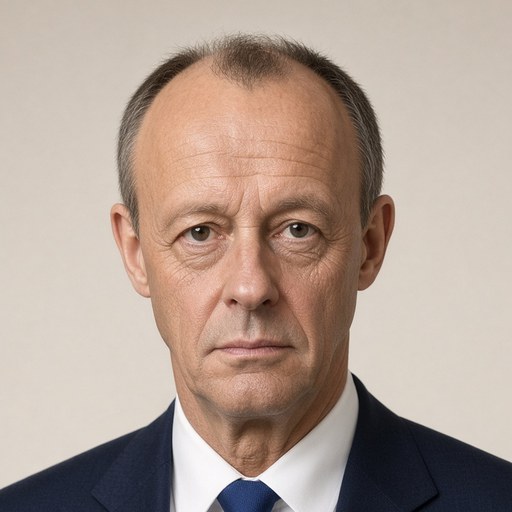
Government statement by Chancellor Friedrich Merz on the NATO summit on June 24 and 25 in The Hague and the European Council on June 26 and 27, 2025, in Brussels before the German Bundestag on ...
 Friedrich Merz · Chancellor of Germany
- Context
- Merz addressed the German Bundestag on June 24, 2025, ahead of the NATO summit in The Hague and European Council in Brussels, outlining Germany's priorities.
- Main themes
- NATO summit preparation, European Council preview, Russia-Ukraine war, Iran nuclear program, Israel-Hamas conflict, European security, German defense investment, G7 consensus, transatlantic alliances, German foreign policy, geopolitical upheaval, migration policy
- Duration
- ~26 min
- Words
- 3,120
- Sentences
- 158
- Readability
- 46
- Grade
- 11.7
- Syntax
- 2.98
- Vocabulary
- 2.11
Translated from German
The broad sphere of national life a sentence belongs to. Every sentence has an Arena, so it is the denominator the other indices are read against.
Other158 sentences in 48 paragraphs
Madam President!
Dear colleagues!
"You never get used to atrocities," as the French war photographer Christine Spengler put it a few years ago. We can, yes we must understand this sentence as a mandate: We must never get used to the horrors of war.
This mandate has largely become a reality for us Europeans with the founding of the European Union. The war of aggression by Russia against Ukraine, the barbaric attack by Hamas on Israel, and not least the Iranian terror regime and its nuclear weapons program primarily directed against Israel seem to us to be from another time.
But these events are now the new reality in the world in which we live. We must look closely. We must learn from these crimes and challenges. We must confront them. We must draw the right conclusions from this new reality. For only in this way can we preserve freedom and peace at least in Germany and in Europe.
The geopolitical upheavals of the present affect us in Germany not only indirectly. We are dealing with a new reality that directly touches and questions our freedom, our security, and our prosperity. And we, as the Federal Republic of Germany, face the task of actively and directly representing our interests in this new reality and shaping the geopolitical environment in which we live to the best of our ability.
We have all the possibilities for this because we have entered into alliances and maintained them over the past decades, because we have strengthened formats of European and international cooperation. Germany is not standing alone. We are part of and an actor in a dense network of partnerships and alliances.
In this context, I first and foremost speak of the European Union, but also of NATO and the G7. The fact that we have come together in all three formats for extraordinarily important meetings within just two weeks is a reflection of the great global challenges and at the same time a reflection of the opportunities for Germany and for Europe to change the new reality for the better together with our partners.
From these alliances, we as the Federal Republic of Germany can help shape how the world develops in the coming years. However, there is a double prerequisite for this. We need both strength and reliability – internally and externally.
Strength and reliability are exactly the objectives with which we, as the new German federal government, have set to work in recent weeks. Since then, we have shown: We are capable of shaping things internally. We have launched an investment package for defense and infrastructure. We have set up an immediate program for the German economy in record time. We have initiated a turnaround in migration. And we have shown our international partners: They can rely on us. Germany is back on the European and international stage. This new determination is being recognized in the world and is very much welcomed by our partners and friends.
The G7 summit was a first welcome opportunity to exchange views on the big questions: about the state of the world economy, about raw material partnerships, about the wars in the Middle East and Eastern Europe, about migration, and finally about the resilience of our democracies. The meeting made it clear: We, as seven major industrial nations of the world, continue to stand together. There was consensus in this circle on all essential issues.
This year's G7 summit was particularly marked by the current escalation of the conflict between Israel and Iran. The position of the federal government on this is clear: Israel has the right to defend its existence and the safety of its citizens. For years, part of the raison d'être of the Mullah regime has been the annihilation of the state of Israel. Our raison d'être is the defense of the state of Israel in its existence. That is the difference. And I will continue to clearly and unequivocally name this difference in the future. On the first day of the G7 summit, we agreed on a joint statement to that effect. That was and is an extraordinarily encouraging sign and signal of this summit.
Without Iran, October 7, 2023, would not have been possible in Israel. Hamas, Hezbollah, and Houthi rebels are the terrorist organizations that are financed and equipped by Iran. The Iranian leadership has been destabilizing the entire Near and Middle East for decades.
The independent International Atomic Energy Agency has just recently pointed out again in an alarming report the dangers of the nuclear program. For Germany and the international community of these organizations, it remains guiding: Iran must not possess nuclear weapons.
In contrast, the Iranian leadership has just announced again in recent days that it will continue uranium enrichment beyond 60 percent. This announcement, the deep entrenchment of the centrifuges, the restriction of access for the representatives of the International Atomic Energy Agency, and the persistent deception of the public show how serious Iran is about its nuclear weapons program.
That is why I want to say once again from this platform: We hope today that the actions of Israel and the United States in recent days will permanently deter Iran from getting closer to its destructive goal.
Not only Israel, but also Europe and the world as a whole are threatened by this Iranian nuclear program. At the same time, it is also true: The conflict with Iran must not plunge the entire region into war. That is why we, as the federal government, are making every diplomatic effort within our means to prevent exactly that.
We therefore welcome the call of the American president for a ceasefire. If this ceasefire succeeds after the decisive military strikes by the USA and the Israeli army against the Iranian nuclear facilities in Fordo, Natanz, and Isfahan, then a very good development is possible that could make the Middle East and the world safer.
We now call on both Iran and Israel to follow this call from the American president. We thank Qatar and other states in the region for their restraint in the dramatic last days and hours. Together with our American and European partners, we will discuss how the situation can be stabilized further on the sidelines of today's NATO summit in The Hague.
We do not lose sight of the bigger picture amid the escalation surrounding the Iranian nuclear program. We allow ourselves to critically ask what goal Israel wants to achieve in the Gaza Strip, and we urge for a humane treatment of the people in the Gaza Strip, especially the women, children, and the elderly. Now, especially today and in these days, is also the moment to conclude a ceasefire for Gaza.
Allow me in this context to express a particularly heartfelt word of thanks to the Federal Foreign Minister for his intensive diplomatic efforts in recent days and weeks, especially together and repeatedly with the foreign ministers of France and the United Kingdom. Here, Europe has shown unity and diplomatic capability in coordination with the United States. I would also like to thank our Foreign Minister for his clear stance on the association agreement with Israel. Suspending or even terminating this agreement is out of the question for the federal government.
The violent annexation of Crimea in 2014 was the reason why Russia was excluded from the G7 format. Putin continues to show daily with his war crimes in Ukraine that he is indifferent to common rules – also by intensifying airstrikes on Ukrainian cities in the wake of events in the Near and Middle East and despite all diplomatic efforts in recent days.
There is consensus among the G7 that this war must end as soon as possible. Ukraine has agreed to an immediate ceasefire without any preconditions. Russia has refused this, even though we, together with our international partners, have done everything in recent weeks to bring Russia to the negotiating table.
Let me say once again at this point – directed also at all those who repeatedly claim that diplomatic means are not being exhausted in this matter –: A real, lasting peace requires a willingness to make peace from all sides.
In contrast, Russia has barbarically made it clear with its new wave of attacks on the Ukrainian civilian population that it currently does not have this willingness to make peace. On the contrary: The Russian president stated a few days ago in a speech at the annual economic forum in St. Petersburg that Russians and Ukrainians are one people and – literally –: "All of Ukraine belongs to us."
In this situation, yielding to aggression and giving up one's own country is not the peace-promoting solution. That is not the peace we want. And that is not the peace that Ukraine wants.
Real peace work means continuing the arduous work on the conditions for a real peace now. And that is exactly what we are doing in the European Union in close cooperation with Ukraine. Putin only understands the language of strength; and that is why peace work means speaking in this language now as well. In this spirit, the 18th sanctions package against Russia, which we want to bring forward at the upcoming European Council in Brussels, is being prepared. It will particularly target the shadow fleet with which Putin is currently financing his war machine and which is becoming increasingly aggressive in the Baltic Sea.
At the G7 summit and during my previous visit to Washington, I explicitly advocated that the USA also strengthen their sanctions against Russia once again. This would promote the end of killing called for by US President Donald Trump, which we all strive for. I remain optimistic that the American government will also follow this path.
Securing peace in Europe for the coming decades and for future generations: That is what we are here for as we come together for the NATO summit in The Hague this evening and tomorrow. One can call this summit historic without exaggeration. We will decide to invest significantly more in our security in the future. We do this not, as has been claimed in some quarters, to do a favor to the USA and its president. We do this from our own observation and conviction, because above all Russia is actively and aggressively threatening the security and freedom of the entire Euro-Atlantic area, because we must fear that Russia will continue the war beyond Ukraine. That is why we do this. We do this in the shared conviction: We must be strong together so that no one dares to attack us. That is why we are in a historic situation.
In this situation, Germany must also take responsibility, and we are doing so. We will contribute a fair share to the alliance's work and take it on. This means we will meet the capability targets we have agreed upon with our alliance partners. That is also why we changed our Basic Law here in the House a few months ago. We will make the Bundeswehr the strongest conventional army in Europe, as our partners rightly expect from us given our size, our performance capability, and our geographical location.
We will directly support our allies on NATO's eastern flank. In this sense, the Federal Minister of Defense and I put the first parts of the new Brigade 45 into service in Lithuania at the beginning of April. I said at the establishment ceremony in Vilnius, and I say it again from this platform today: For far too long, we in Germany have not wanted to heed the warnings of our Baltic neighbors about Russia's imperialist policies. We have recognized this error. There is no way back from this realization. Therefore, I repeat once again: The security of Lithuania is also the security of Germany.
I will travel from the NATO summit to the European Council in Brussels on Wednesday. There, we will discuss with our European partners how we can quickly, best, and efficiently deploy the new resources for defense together. European strength and shaping power also depend on our economic strength. That is the really good news for us; because we have a growth market of further great potential with the European internal market. This European internal market is our global insurance against shocks and against external uncertainty.
A central task for us in Europe in the coming years will be to deepen this internal market further while simultaneously advancing an ambitious common European trade policy. This will be – alongside the common goal of a pan-European migration turnaround – the third central topic we will discuss in the European Council: How do we ensure the competitiveness of the European economy? Let me say this very fundamentally: With this federal government, Germany will be a voice in Brussels for a future-oriented and competitive economy.
For us, it is clear: We need progress in Europe on the so-called Stability and Investment Union; we need a more integrated energy infrastructure. But we also need a comprehensive reduction of bureaucracy to free the economy and innovations from state shackles. I want to be even clearer: We need significantly less regulation in Europe.
The European Commission has taken a step towards simplification and acceleration of existing regulations and procedures with the presentation of its so-called omnibus packages. This is a first step, followed by many more that must come. I will advocate for this in the European Council. Above all, however, I will insist that future legislation is already characterized by this change in mentality. We need a new culture of restraint in European regulation.
By the way, this is also a prerequisite for us to jointly pursue a successful trade policy. Because we cannot expect the whole world to align itself with our complex European standards and rules. It is a question of competitiveness that we broaden our approach regarding our trade partnerships; it is also a key question of strategic resilience. It will be crucial for the future that we answer them well and in a timely manner. This means, in plain terms, concluding as many new trade agreements as possible – and preferably as pure trade contracts that only require the approval of European institutions, no longer the years of exhausting processes – as has unfortunately happened repeatedly in Germany – in national parliaments.
In this context: You know that the EU Commission is currently negotiating with the American government over a solution to the tariff conflict. The federal government is very much in agreement with all European partners: Tariffs benefit no one; they harm everyone. It is therefore in all our interests that the trade conflict with the USA does not escalate further. I know that the European Commission is negotiating with great caution in this regard, and it has our full support. I personally hope that we can reach a solution with the USA by early July. However, if that is not possible, we are also prepared – namely with a range of options. The EU can and will defend its interests. My impression from discussions with the American president is that the USA also has an interest in further cooperation with us, with Europe, and especially with us in Germany in economic matters.
The same applies to the national level: Our economic strength first creates us the power to shape and negotiating strength. It provides us with the means we need to finance the security – including and especially social security – that enables our lives in freedom. In this respect, it follows for responsible policy and for this federal government that ensuring the competitiveness of the German economy must be a priority. Therefore, for our federal government, for this federal government: We want Germany to remain a modern industrial nation where it is a joy for all people and generations to work.
We will therefore now implement our immediate program very quickly and consistently, which we have already agreed upon in the cabinet. We are on the way to an agreement with the state premiers. We will improve the framework conditions for private and public investments so that companies, in particular, invest more in Germany again.
At the same time, we will quickly and ambitiously resolve the structural growth brakes that hinder our country. These are the excessively high energy prices and, above all, the burden of bureaucracy. Our energy policy will follow the demand: affordable, secure, and technology-open.
We are initiating a fundamental change in mentality regarding regulation, also at the national level. We will stop the culture of distrust, which does nothing to help the black sheep but only puts obstacles in the way of everyone else. In this context, it is a very good sign that the economic forecasts for the German economy have recently been significantly revised upwards. It must continue in this direction.
The next major priority for the federal government will be to ensure that people in Germany can once again experience that their efforts pay off, that the principle of performance equity applies again. In this sense, we are planning relief for employees, and in this sense, the Federal Ministry of Labor is working in the federal government, for example, on replacing the citizen's income with a new basic security.
Let me conclude by saying: The past weeks have once again been weeks of crisis, upheaval, and also violence in large parts of the world: in Ukraine, in Iran, in Israel, in Gaza. The past weeks have once again shown: We cannot expect that the world around us will soon return to permanently calmer times.
But we can certainly influence how this new normality looks in our daily lives. We can ensure that it at least comes with freedom, prosperity, and peace for us. The entire federal government is dedicating itself with full force to this goal.
In this regard, the past weeks have even made me a little optimistic overall, as they have shown: We have risen to this challenge as a country, and we can tackle the problems on our own.
The prerequisite for this is – I want to emphasize this once again in conclusion – that we are strong: from within and outward as a society that stands together and knows what is at stake, and as a business location that enables investments, creates innovation, growth, and added value.
I can promise for the federal government: We will continue to work very hard in the coming weeks, months, and years to ensure that Germany regains its strength, both internally and externally. With this guiding principle, I will represent Germany at the upcoming NATO summit in The Hague and at the European Council in Brussels.
Thank you for your attention.
The original German. The tags above are read on the English translation's sentences.
Frau Präsidentin!
Liebe Kolleginnen und Kollegen!
„Man gewöhnt sich nie an Gräuel“, so hat es vor einigen Jahren die französische Kriegsfotografin Christine Spengler formuliert. Wir können, ja wir müssen diesen Satz als Auftrag verstehen: Wir dürfen uns nie an Kriegsgräuel gewöhnen.
Dieser Auftrag ist mit der Gründung der Europäischen Union für uns Europäer weitgehend Wirklichkeit geworden. Wie aus einer anderen Zeit erscheinen uns daher der Angriffskrieg Russlands gegen die Ukraine, der barbarische Angriff der Hamas auf Israel und nicht zuletzt das iranische Terrorregime und sein vor allem gegen Israel gerichtetes Nuklearwaffenprogramm.
Doch diese Ereignisse sind nun die neue Wirklichkeit in der Welt, in der wir leben. Wir müssen hinschauen. Wir müssen aus diesen Verbrechen und Herausforderungen lernen. Wir müssen uns ihnen stellen. Wir müssen aus dieser neuen Wirklichkeit die richtigen Schlussfolgerungen ziehen. Denn nur so können wir Freiheit und Frieden wenigstens in Deutschland und in Europa bewahren.
Denn die geopolitischen Erschütterungen der Gegenwart betreffen uns in Deutschland nicht nur indirekt. Wir haben es mit einer neuen Realität zu tun, die unsere Freiheit, unsere Sicherheit und unseren Wohlstand direkt berührt und infrage stellt. Und wir stehen als Bundesrepublik Deutschland vor der Aufgabe, unsere Interessen in dieser neuen Realität aktiv und unmittelbar zu vertreten und die geopolitische Umgebung, in der wir leben, nach Kräften selbst mitzugestalten.
Wir haben dazu alle Möglichkeiten, weil wir in den vergangenen Jahrzehnten Bündnisse eingegangen sind und sie gepflegt haben, weil wir Formate der europäischen und der internationalen Zusammenarbeit gestärkt haben. Deutschland steht nicht allein da. Wir sind Teil und Akteur in einem dichten Netz von Partnerschaften und Allianzen.
Ich spreche in diesem Zusammenhang zuerst und vor allem von der Europäischen Union, aber auch von der Nato und den G7. Dass wir in allen drei Formaten innerhalb von nur zwei Wochen zu außergewöhnlich wichtigen Treffen zusammengekommen sind, das ist Ausdruck der großen globalen Herausforderungen und zugleich Ausdruck der Chancen für Deutschland und für Europa, gemeinsam mit unseren Partnern die neue Realität zum Besseren zu verändern.
Aus diesen Bündnissen heraus können wir als Bundesrepublik Deutschland mitgestalten, wie sich die Welt in den nächsten Jahren entwickelt. Es gibt dafür aber eine doppelte Voraussetzung. Wir brauchen zugleich Stärke und Verlässlichkeit – nach innen und nach außen.
Stärke und Verlässlichkeit, das sind genau die Zielvorgaben, mit denen wir uns als neue deutsche Bundesregierung in den vergangenen Wochen an die Arbeit gemacht haben. Wir haben seitdem gezeigt: Wir sind gestaltungsfähig im Inneren. Wir haben ein Investitionspaket für Verteidigung und Infrastruktur auf den Weg gebracht. Wir haben in Rekordzeit ein Sofortprogramm für die deutsche Wirtschaft aufgesetzt. Wir haben die Migrationswende eingeleitet. Und wir haben unseren internationalen Partnern gezeigt: Sie können sich auf uns verlassen. Deutschland ist wieder zurück auf der europäischen und der internationalen Bühne. Diese neue Entschlossenheit wird in der Welt registriert und von unseren Partnern und Freunden sehr begrüßt.
Der G7-Gipfel war eine erste willkommene Gelegenheit zum Austausch über die großen Fragen: über die Lage der Weltwirtschaft, über Rohstoffpartnerschaften, über die Kriege im Nahen Osten und in Osteuropa, über Migration und schließlich über die Resilienz unserer Demokratien. Das Zusammentreffen hat verdeutlicht: Wir stehen als sieben große Industrienationen der Welt weiterhin zusammen. In allen wesentlichen Fragen bestand in diesem Kreis Konsens.
Das Gipfeltreffen der G7 stand in diesem Jahr ganz besonders im Zeichen der aktuellen Eskalation des Konfliktes zwischen Israel und dem Iran. Die Position der Bundesregierung dazu ist klar: Israel hat ein Recht darauf, seine Existenz und die Sicherheit seiner Bürgerinnen und Bürger zu verteidigen. Teil der Staatsräson des Mullah-Regimes ist seit Jahren die Auslöschung des Staates Israel. Unsere Staatsräson ist die Verteidigung des Staates Israel in seiner Existenz. Das ist der Unterschied. Und diesen Unterschied werde ich auch in Zukunft klar und eindeutig beim Wort benennen. Am ersten Tag des G7-Gipfels haben wir uns auf eine genau dahin gehende gemeinsame Erklärung verständigt. Das war und das ist ein außerordentlich ermutigendes Zeichen und Signal dieses Gipfels.
Ohne den Iran wäre der 7. Oktober 2023 in Israel nicht möglich gewesen. Hamas, Hisbollah und Huthi-Rebellen sind die Terrororganisationen, die vom Iran finanziert und ausgestattet werden. Die iranische Staatsführung destabilisiert den gesamten Nahen und Mittleren Osten seit Jahrzehnten.
Auf die Gefährlichkeit des Nuklearprogramms hat die unabhängige Internationale Atomenergie-Organisation in einem alarmierenden Bericht gerade erst vor wenigen Tagen erneut hingewiesen. Für Deutschland und die internationale Staatengemeinschaft dieser Organisationen bleibt daher handlungsleitend: Iran darf keine Nuklearwaffen besitzen.
Dagegen hat die iranische Staatsführung erst in den letzten Tagen erneut selbst angekündigt, die Urananreicherung auch über 60 Prozent hinaus fortzusetzen. Diese Ankündigung, die tiefe Verbunkerung der Zentrifugen, die Beschränkung von Zugängen für die Beauftragten der Internationalen Atomenergie-Agentur und die beständige Täuschung der Öffentlichkeit zeigen, wie ernst es dem Iran mit dem Atomwaffenprogramm tatsächlich war und offensichtlich ist.
Deswegen will ich es auch von dieser Stelle aus noch einmal sagen: Wir hoffen heute, dass das Vorgehen Israels und der Vereinigten Staaten von Amerika in den letzten Tagen den Iran dauerhaft davon abbringt, seinem zerstörerischen Ziel noch näher zu kommen.
Nicht nur Israel, auch Europa und die Welt insgesamt sind von diesem iranischen Nuklearprogramm bedroht. Gleichzeitig gilt aber auch: Der Konflikt mit dem Iran darf nicht die gesamte Region in einen Krieg stürzen. Deshalb unternehmen wir als Bundesregierung mit unseren Möglichkeiten auch alle diplomatischen Anstrengungen, um genau dies zu verhindern.
Den Aufruf des amerikanischen Präsidenten zu einem Waffenstillstand begrüßen wir daher. Gelingt dieser Waffenstillstand nach den entscheidenden Militärschlägen der USA und der israelischen Armee gegen die iranischen Nuklearanlagen in Fordo, Natans und Isfahan, dann ist eine sehr gute Entwicklung, die den Nahen Osten und die Welt sicherer machen kann, möglich.
Wir rufen nun sowohl Iran als auch Israel dazu auf, diesem Aufruf des amerikanischen Präsidenten zu folgen. Katar und anderen Staaten der Region danken wir für ihre Besonnenheit in den dramatischen letzten Tagen und Stunden. Mit den amerikanischen und europäischen Partnern werden wir am Rand des heutigen Nato-Gipfels in Den Haag beraten, wie die Lage nun weiter stabilisiert werden kann.
Über die Zuspitzung um das iranische Nuklearprogramm verlieren wir nicht das größere Bild aus dem Blick. Wir erlauben uns, kritisch nachzufragen, welches Ziel Israel im Gazastreifen erreichen will, und wir mahnen einen menschenwürdigen Umgang mit den Menschen im Gazastreifen an, vor allem mit den Frauen, den Kindern und den Älteren. Jetzt, gerade heute und in diesen Tagen, ist auch der Moment gekommen, einen Waffenstillstand für Gaza abzuschließen.
Erlauben Sie mir in diesem Zusammenhang dem Bundesaußenminister ein besonders herzliches Wort des Dankes zu sagen für seine intensiven diplomatischen Bemühungen in den letzten Tagen und Wochen, zusammen vor allem und immer wieder mit den Außenministern Frankreichs und des Vereinigten Königreichs. Hier hat Europa in Abstimmung mit den Vereinigten Staaten von Amerika Geschlossenheit und diplomatische Fähigkeit gezeigt. Ich möchte unserem Außenminister auch danken für seine klare Haltung in Sachen Assoziierungsabkommen mit Israel. Ein Außer-Kraft-Setzen oder gar eine Kündigung dieses Abkommens kommt mit der Bundesregierung nicht infrage.
Die gewaltsame Annexion der Krim im Jahr 2014 war der Grund dafür, dass Russland aus dem Format der G7 ausgeschlossen worden ist. Putin zeigt bis heute täglich mit seinen Kriegsverbrechen in der Ukraine, dass ihm gemeinsame Regeln gleichgültig sind – auch dadurch, dass er im Windschatten der Ereignisse im Nahen und Mittleren Osten und trotz aller diplomatischen Anstrengungen in den vergangenen Tagen die Luftangriffe auf ukrainische Städte noch einmal verschärft hat.
Es gibt im Kreis der G7 den Konsens, dass dieser Krieg schnellstmöglich enden muss. Die Ukraine hat sich zu einem sofortigen Waffenstillstand ohne jede Vorbedingung bereit erklärt. Russland hat sich dem verweigert, obwohl wir mit unseren internationalen Partnern in den vergangenen Wochen alles versucht haben, um Russland an den Verhandlungstisch zu bewegen.
Lassen Sie mich an dieser Stelle noch einmal sagen – gerichtet auch an alle, die immer wieder behaupten, die diplomatischen Mittel würden in dieser Sache nicht ausgeschöpft –: Ein echter, ein dauerhafter Frieden setzt Friedensbereitschaft von allen Seiten voraus.
Russland hat dagegen mit seiner neuen Welle der Angriffe auf die ukrainische Zivilbevölkerung auf barbarische Weise zu verstehen gegeben, dass es diese Friedensbereitschaft derzeit nicht hat. Im Gegenteil: Der russische Präsident hat vor einigen Tagen in einer Rede auf dem jährlichen Wirtschaftsforum in Sankt Petersburg noch einmal erklärt, Russen und Ukrainer seien ein Volk und – wörtlich –: „Die gesamte Ukraine gehört uns.“
In dieser Situation ist es nicht die friedensschaffende Lösung, der Aggression nachzugeben und das eigene Land aufzugeben. Das ist nicht der Frieden, den wir wollen. Und das ist nicht der Frieden, den die Ukraine will.
Echte Friedensarbeit bedeutet, jetzt die mühsame Arbeit an den Bedingungen für einen echten Frieden fortzusetzen. Und genau das tun wir in der Europäischen Union im Schulterschluss mit der Ukraine. Putin versteht nur die Sprache der Stärke; und darum heißt Friedensarbeit, jetzt auch in dieser Sprache zu sprechen. In diesem Zeichen steht das 18. Sanktionspaket gegen Russland, das wir beim anstehenden Europäischen Rat in Brüssel auf den Weg bringen wollen. Es wird insbesondere die Schattenflotte treffen, mit der Putin seine Kriegsmaschinerie im Augenblick finanziert und die in der Ostsee immer aggressiver ihr Unwesen treibt.
Ich habe beim G7-Gipfel und bei meinem vorangegangenen Besuch in Washington ausdrücklich dafür geworben, dass auch die USA ihre Sanktionen gegen Russland noch einmal verstärken. Das würde das von US-Präsident Donald Trump geforderte Ende des Tötens befördern, das wir alle anstreben. Ich bleibe zuversichtlich, dass die amerikanische Regierung diesen Weg auch mitgeht.
Den Frieden in Europa für die kommenden Jahrzehnte und für kommende Generationen zu sichern: Darum geht es, wenn wir heute Abend und morgen in Den Haag zum Nato-Gipfel zusammenkommen. Man darf diesen Gipfel ohne Übertreibung historisch nennen. Wir werden beschließen, künftig deutlich mehr in unsere Sicherheit zu investieren. Wir tun das nicht, wie vereinzelt behauptet wird, um den USA und ihrem Präsidenten einen Gefallen zu tun. Wir tun das aus eigener Anschauung und Überzeugung, weil vor allem Russland die Sicherheit und die Freiheit des gesamten euroatlantischen Raums aktiv und aggressiv bedroht, weil wir befürchten müssen, dass Russland den Krieg über die Ukraine hinaus fortsetzen wird. Deshalb tun wir das. Wir tun das in der geteilten Überzeugung: Wir müssen gemeinsam so stark sein, dass es niemand wagen kann, uns anzugreifen. Deshalb ist es eine historische Situation, in der wir uns befinden.
In dieser Situation muss auch Deutschland Verantwortung übernehmen, und das tun wir. Wir werden einen gerechten Anteil der Bündnisarbeit leisten und übernehmen. Das heißt, wir erfüllen die Fähigkeitsziele, auf die wir uns mit unseren Bündnispartnern verständigen. Auch deshalb haben wir vor wenigen Monaten hier im Haus unser Grundgesetz geändert. Wir werden die Bundeswehr zur stärksten konventionellen Armee Europas machen, wie es unsere Partner von uns zu Recht erwarten angesichts unserer Größe, unserer Leistungskraft, unserer geografischen Lage.
Wir werden an der Ostflanke der Nato unsere Verbündeten unmittelbar unterstützen. In diesem Sinne haben der Bundesverteidigungsminister und ich Anfang April die ersten Teile der neuen Brigade 45 in Litauen in den Dienst gestellt. Ich habe bei dem Aufstellungsappell in Vilnius gesagt, und ich sage es von dieser Stelle aus heute noch einmal: Viel zu lange haben wir in Deutschland die Warnungen unserer baltischen Nachbarn vor Russlands imperialistischer Politik nicht hören wollen. Wir haben diesen Irrtum erkannt. Hinter diese Erkenntnis gibt es keinen Weg zurück. Deshalb wiederhole ich hier noch einmal: Die Sicherheit von Litauen ist auch die Sicherheit von Deutschland.
Ich werde am Mittwoch vom Nato-Gipfel zum Europäischen Rat in Brüssel weiterreisen. Wir werden dort mit unseren europäischen Partnern zum einen darüber sprechen, wie wir die neuen Mittel für Verteidigung schnellstmöglich, bestmöglich und effizient gemeinsam einsetzen. Die europäische Stärke und Gestaltungskraft hängen aber auch an unserer Wirtschaftskraft. Das ist die eigentlich gute Nachricht für uns; denn wir haben mit dem europäischen Binnenmarkt einen Wachstumsmarkt von weiterem großen Potenzial. Dieser europäische Binnenmarkt ist unsere globale Versicherung gegen Schocks und gegen externe Unsicherheit.
Eine zentrale Aufgabe für uns in Europa in den nächsten Jahren wird es darum sein, diesen Binnenmarkt weiter zu vertiefen und gleichzeitig eine ambitionierte gemeinsame europäische Handelspolitik voranzutreiben. Das wird – neben dem gemeinsamen Ziel einer gesamteuropäischen Migrationswende – das dritte zentrale Thema sein, zu dem wir im Europäischen Rat diskutieren: Wie stellen wir die Wettbewerbsfähigkeit der europäischen Wirtschaft sicher? Lassen Sie mich gleich ganz grundsätzlich dazu sagen: Mit dieser Bundesregierung wird Deutschland in Brüssel zu einer Stimme für eine zukunftsfähige und wettbewerbsfähige Wirtschaft.
Für uns ist klar: Wir brauchen in Europa Fortschritte bei der sogenannten Spar- und Investitionsunion; wir brauchen eine stärker integrierte Energieinfrastruktur. Wir brauchen aber auch einen umfassenden Bürokratierückbau, um die Wirtschaft und um Innovationen von staatlichen Fesseln zu befreien. Ich will es noch deutlicher sagen: Wir brauchen in Europa deutlich weniger Regulierung.
Die Europäische Kommission hat mit der Vorlage ihrer sogenannten Omnibuspakete nun einen Schritt in Richtung Vereinfachung und Beschleunigung von bestehenden Regelungen und Verfahren geleistet. Das ist ein erster Schritt, dem noch viele weitere folgen müssen. Dafür werde ich mich beim Europäischen Rat einsetzen. Vor allem aber werde ich darauf drängen, dass die Gesetzgebung der Zukunft schon im Zeichen dieses Mentalitätswechsels steht. Wir brauchen eine neue Kultur der Zurückhaltung bei europäischer Regulierung.
Das ist übrigens auch eine Voraussetzung dafür, dass wir gemeinsam eine erfolgreiche Handelspolitik bestreiten können. Denn wir können nicht erwarten, dass sich die ganze Welt nach unseren komplexen und europäischen Standards und Regeln ausrichtet. Es ist eine Frage der Wettbewerbsfähigkeit, dass wir uns noch breiter aufstellen im Hinblick auf unsere Handelspartnerschaften; es ist aber auch eine Schlüsselfrage strategischer Resilienz. Es wird zukunftsentscheidend sein, dass wir sie gut und dass wir sie zeitnah beantworten. Das heißt im Klartext, so viele neue Handelsabkommen wie möglich abzuschließen – und zwar möglichst als reine Handelsverträge, die nur der Zustimmung der europäischen Institutionen bedürfen, nicht mehr der jahrelangen zermürbenden Prozesse – wie leider auch in Deutschland immer wieder geschehen – in den nationalen Parlamenten.
Vor diesem Hintergrund: Sie wissen, dass die EU-Kommission im Augenblick mit der amerikanischen Regierung über eine Lösung des Zollkonflikts verhandelt. Die Bundesregierung ist mit allen europäischen Partnern darin sehr einig: Zölle nutzen niemandem, sie schaden allen. Es liegt daher in unser aller Interesse, dass der Handelskonflikt mit den USA nicht weiter eskaliert. Ich weiß, dass die Europäische Kommission in diesem Sinne mit großer Umsicht verhandelt, und sie hat dabei unsere volle Unterstützung. Ich persönlich hoffe, dass wir bis Anfang Juli mit den USA zu einer Lösung kommen. Sollte das allerdings nicht möglich sein, sind wir auch darauf vorbereitet – nämlich mit einer Reihe von Optionen. Die EU kann und sie wird ihre Interessen verteidigen. Mein Eindruck aus den Gesprächen mit dem amerikanischen Präsidenten ist aber: Die USA haben auch in wirtschaftlichen Fragen ein Interesse an einer weiteren Zusammenarbeit mit uns, mit Europa und vor allem mit uns in Deutschland.
Auch für die nationale Ebene gilt: Unsere Wirtschaftskraft schafft uns erst Gestaltungskraft und Verhandlungsstärke. Sie verschafft uns erst die Mittel, die wir brauchen, um die Sicherheit – auch und gerade die soziale Sicherheit – zu finanzieren, die unser Leben in Freiheit ermöglicht. Schon insofern folgt für verantwortungsvolle Politik und folgt für diese Bundesregierung, dass die Sicherung der Wettbewerbsfähigkeit der deutschen Wirtschaft eine Priorität sein muss. Darum gilt für unsere Bundesregierung, für diese Bundesregierung: Wir wollen, dass Deutschland ein modernes Industrieland bleibt, in dem es allen Menschen und Generationen Freude macht, zu arbeiten.
Wir werden daher jetzt sehr schnell und konsequent unser Sofortprogramm umsetzen, das wir im Kabinett bereits vereinbart haben. Mit den Ministerpräsidenten der Länder sind wir auf dem Weg zu einer Einigung. Wir werden die Rahmenbedingungen für private und staatliche Investitionen verbessern, damit vor allem die Unternehmen wieder mehr in Deutschland investieren.
Wir werden parallel schnellstmöglich und ambitioniert die strukturellen Wachstumsbremsen lösen, die unser Land hemmen. Das sind die zu hohen Energiepreise und vor allem die Bürokratielast. Unsere Energiepolitik wird dem Anspruch folgen: bezahlbar, sicher, technologieoffen.
Wir leiten einen grundlegenden Mentalitätswechsel bei der Regulierung ein, auch auf nationaler Ebene. Wir hören auf mit der Kultur des Misstrauens, die gegenüber den schwarzen Schafen nichts hilft, aber allen anderen nur Steine in den Weg legt. Vor diesem Hintergrund ist es ein sehr gutes Zeichen, dass die Konjunkturprognosen für die deutsche Wirtschaft zuletzt deutlich nach oben korrigiert worden sind. In diese Richtung muss es jetzt aber weitergehen.
Die nächste große Priorität für die Bundesregierung wird es sein, dafür zu sorgen, dass die Menschen in Deutschland insgesamt wieder erfahren können, dass sich ihr Einsatz auszahlt, dass das Prinzip der Leistungsgerechtigkeit wieder gilt. In diesem Sinne planen wir Entlastungen für Arbeitnehmerinnen und Arbeitnehmer, und in diesem Sinne arbeitet das Bundesarbeitsministerium in der Bundesregierung zum Beispiel am Ersatz des Bürgergeldes durch eine neue Grundsicherung.
Lassen Sie mich abschließend sagen: Die vergangenen Wochen waren in großen Teilen der Welt erneut Wochen der Krise, des Umbruchs, auch der Gewalt: in der Ukraine, im Iran, in Israel, in Gaza. Die vergangenen Wochen haben einmal mehr gezeigt: Wir können nicht damit rechnen, dass die Welt um uns herum alsbald wieder dauerhaft zu ruhigeren Zeiten zurückkehrt.
Aber wir können sehr wohl Einfluss darauf nehmen, wie diese neue Normalität in unserem Alltag aussieht. Wir können dafür sorgen, dass sie wenigstens für uns einhergeht mit Freiheit, mit Wohlstand und mit Frieden. Die gesamte Bundesregierung widmet sich mit ganzer Kraft genau diesem Ziel.
In dieser Hinsicht haben die vergangenen Wochen mich insgesamt sogar ein wenig zuversichtlich gestimmt, weil sie gezeigt haben: Wir sind als Land dieser Aufgabe gewachsen, und wir können die Probleme aus eigener Kraft heraus bewältigen.
Die Voraussetzung dafür ist – dies will ich zum Abschluss noch einmal betonen –, dass wir stark sind: von innen heraus und nach außen als Gesellschaft, die zusammenhält und die weiß, was auf dem Spiel steht, und als Wirtschaftsstandort, der Investitionen ermöglicht, der Innovation, Wachstum und Mehrwert schafft.
Ich kann für die Bundesregierung versprechen: Wir arbeiten in den nächsten Wochen, Monaten und Jahren weiter sehr hart dafür, dass Deutschland zu seiner Stärke zurückfindet, eben nach innen wie nach außen. Genau mit diesem Leitmotiv werde ich Deutschland beim anstehenden Nato-Gipfel in Den Haag und beim Europäischen Rat in Brüssel vertreten.
Ich danke Ihnen für Ihre Aufmerksamkeit.