




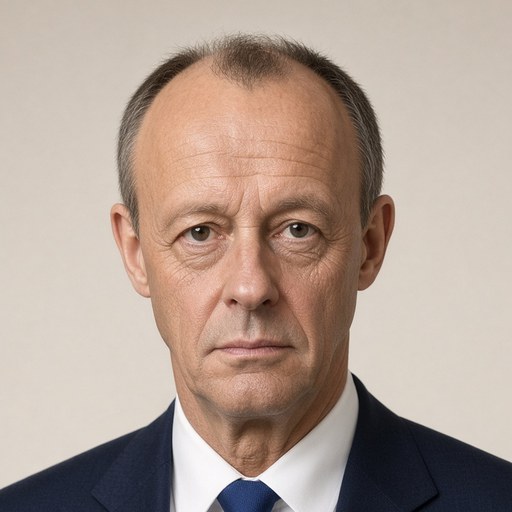
Chancellor's Speech at Industry Day Quick Decisions for a Strong Industry
 Friedrich Merz · Chancellor of Germany
- Context
- Merz addressed the German Federation of Industries (BDI) Industry Day on June 23, 2025, outlining economic reforms and security priorities seven weeks into his chancellorship.
- Main themes
- Germany's economic competitiveness, industrial policy reform, investment and growth, bureaucracy reduction and digitalization, German industry leadership, European Union cooperation, defense capability and Bundeswehr, Ukraine war and European security, transatlantic relations, democracy and open society protection, conscription and reserve forces, trust between politics and business
- Duration
- ~26 min
- Words
- 3,096
- Sentences
- 143
- Readability
- 51
- Grade
- 11.2
- Syntax
- 2.97
- Vocabulary
- 2.02
Translated from German
The broad sphere of national life a sentence belongs to. Every sentence has an Arena, so it is the denominator the other indices are read against.
Other143 sentences in 33 paragraphs
Chancellor Friedrich Merz emphasized in his speech at Industry Day that the federal government will "significantly improve Germany's price competitiveness through tough political decisions." The first resolutions, such as the Investment Booster, have already been made. A comprehensive reform program to revitalize the economy will follow quickly – within the first year of government.
This year's Industry Day is themed "new times.new answers." Together with business, politics, science, and society, the BDI aims to find answers to important future questions.
The key points in brief:
More trust: Chancellor Merz advocated for less distrust and more trust between politics and business. This new attitude presents a great opportunity for reducing bureaucracy and increasing digitalization.
Germany must show what it can do: Chancellor Merz stressed that while Germany is lagging in some areas, it is a world leader in others, such as mechanical engineering. It is essential to demonstrate what Germany can achieve – together with the European Union. The federal government, in turn, will show that it is serious about modernizing the country.
Securing defense capability: For the defense of democracy and freedom, the Bundeswehr faces the challenge of finding qualified personnel. Support from industry is necessary, the Chancellor stated. Companies must provide their employees with the opportunity to participate in reserve exercises. Additionally, further elements of conscription will become necessary.
Read the transcript of the speech here.
Dear Mr. President, dear Mr. Leibinger,
dear Ms. Gönner,
dear colleagues,
ladies and gentlemen,
thank you very much for the very warm welcome, and to you, Mr. Leibinger, thank you for this strong inaugural speech! Let me take the result right away: We accept the offer for close cooperation. You have described the challenges, I believe, very accurately. Not only our country, but all of Europe, open societies, and democracies face challenges that we could not have imagined some time ago.
I am pleased to be here today, in this house, in this gasometer. Some of you may know: Exactly seven weeks ago today, we signed the coalition agreement here, at this place, between the CDU/CSU and the SPD. Seven weeks ago tomorrow, we took office. And, ladies and gentlemen, a lot has already happened in these seven weeks.
I deemed it right to visit Paris and Warsaw on the very first day after my inauguration – on the same day – to send a clear signal that this federal government, perhaps more than some before it, will take its responsibility towards the European Union seriously: Paris and Warsaw, the West and the East, all of Europe, the big and the small. Because, ladies and gentlemen, that has always been Germany's strength – if I have done it right – not only to be alliance-capable, to keep agreements, but also to take into account the small and medium-sized, the strong of Europe. And if we do this right again in the coming years, then I am, just like you, Mr. Leibinger, firmly convinced that we all have opportunities, not only to protect our democracy, to protect our open society, but also to move forward economically together.
And the challenges you described are exactly what we see: since last weekend, for a little over a week, an openly erupted war in the Middle East. I want to make this very clear and very explicit here: There is no reason for us, and also for me personally, to criticize what Israel began a week ago, nor is there any reason to criticize what America did last weekend.
It is not without risk, but leaving it as it was is not an option either. And, ladies and gentlemen, the same applies to the Russian war of aggression against Ukraine, which is now in its fourth year. I stand by my personal and our collective assessment: Ukraine is defending not only its own territory – that alone would be reason enough to help it – but it is also defending our freedom, our sovereignty, our independence, our democracy, and our open society. And let us prepare for this: Given the very rigid stance of the Russian regime, this may take some time. Our endurance – not only militarily but especially politically – is required: to hold out with the firm intention of defending our freedom against sabotage, against cyberattacks, against fake news, against attempts to destabilize our country, and against all attempts to divide Europe. Because that is exactly what it is about, ladies and gentlemen, that is exactly what it is about: This is a war of aggression against the entire political order as it was agreed upon after 1990 together with the then Soviet Union – and later with Russia. If we are serious about our freedom, if we are serious about our open society, if we are serious about democracy and a market economy, then we must be serious about defense.
And to make matters worse: Doubts about the partnership in the transatlantic relationship. Last week, we had the meeting of the G7 states in Canada. We deliberated for hours on the major issues of our time, and we adopted joint final documents on all the topics we had prepared. Ukraine and Russia were left open, as planned from the beginning. But here too, it shows that there is indeed movement in the United States of America, a willingness to change, a willingness to act even in this administration towards Russia.
It is a laborious path. We will only succeed if we stand together on the European side, work together, and have a clear opinion. And I am therefore very glad that it has been possible – and this is not solely my achievement – in recent weeks in the so-called E3 format – the United Kingdom, France, Germany – among the European G7 states – France, Germany, Italy – and also in a larger group of European states to reach common political convictions on how we will jointly address the crises and challenges of the present.
But let us prepare for this: The United States of America is no longer the United States of America that we may have known 20, 30, or 40 years ago. The country is changing. Politics is changing, independent of the current administration. And it is true and right that the reservations against us must now finally be dispelled, especially against our security policy free-riding. The Americans have accepted this for many years and decades – no longer now. And they will not return to old thinking even after another change of government. That will remain so. And we Europeans must strengthen ourselves to stand on our own. We must become stronger. We must be able and ready to take on these challenges and strengthen our strengths on this side of the Atlantic while soberly addressing our weaknesses and eliminating them step by step. In this spirit, we have formed the new federal government.
And, ladies and gentlemen, with the exception of the Federal Minister of Defense, everyone at the cabinet table is new – just as you, Mr. Leibinger, are new in office. And that is why I can tell you once again: Yes, we are making a fresh start now. We are entering this work with a new spirit. And we know what we have to do. Above all, we must significantly improve the competitiveness of our German location – I will go one step further – significantly improve the price competitiveness of our location. And for this, we are taking the first steps; we have made the first decisions in the federal government. On July 11, the Bundesrat will approve the first major investment program: 3 times 30 percent depreciation over three consecutive years, starting this year, 2025, 2026, 2027, and from January 1, 2028, five times in a row, each time one percentage point lower corporate tax. Relief, yes, ladies and gentlemen, for partnerships, to make the transition that corporate tax has made easier than before. We have not had tax cuts in Germany for 20 years. We are doing it in a coalition together with the Social Democrats. We are doing it!
We are aware that this can only be a first step. We have a comprehensive reform program planned for the second half of the year. In part, we will take steps before the parliamentary summer break. We have made decisions regarding immigration and migration, and we have initiated first cabinet decisions in the area of internal security as well as in external security.
We have funds available, investment resources available through a so-called special fund. But, ladies and gentlemen, this special fund is debt, additional debt for our country, debt that we can only impose on the next generation with a reasonably good conscience if we truly invest this money in the future viability of our location and not in current consumption.
It will be a hard struggle for the budgets of the years 2026, 2027, 2028. But it will be just as you said, Mr. Leibinger: We cannot do this alone. We can only achieve this through a joint economic policy effort, and I also want to say, through a joint social policy effort, because we are not only facing the challenge of improving price competitiveness. We are facing the challenge of changing the mindset of our entire society. And this mindset, ladies and gentlemen, must once again be: We achieve something, we dare something, we also take risks, and there is not a comprehensive insurance for every economic decision and not for every political decision. Mistakes may happen. We will also make mistakes in this government. But mistakes are allowed if the correction of those mistakes in business as well as in politics is the right one: once yes, twice please not.
We must make a joint effort regarding our confidence in ourselves. And perhaps let me draw a parallel that you mentioned, I will elaborate on it a bit: Many, many years ago in this country, we decided – unlike, for example, the Anglo-Saxon countries – starting with environmental policy, continuing through practically all areas of economic policy, to introduce the so-called precautionary principle. The United States of America, partly also the United Kingdom, have been much stronger on the liability principle: One may do a lot, try a lot, if it goes wrong, the affected party is liable. – In our case, many things are regulated from the outset so that nothing can happen – we call this the precautionary principle. But, ladies and gentlemen, just as Peter Leibinger has just said: This precautionary principle has led to such a jungle, such a thicket of regulations that we are threatening to become incapable of action, also an expression – not only, but also – of a certain distrust of state institutions towards private households and private enterprises. We must change that.
And, ladies and gentlemen, this thought does not come solely from me. We discussed this extensively in the coalition negotiations. And it has been particularly gratifying to me that it has also been presented by representatives of the Social Democratic Party of Germany: a little less precautionary principle, a little more liability principle, and then a little more freedom again. It can also be translated differently: Away from distrust towards trust that people, that companies, that entrepreneurs behave lawfully; that should be the mutual assumption that we lay down between politics and business in our society. If we do that, we have a great opportunity to finally take the word that we call reducing bureaucracy seriously and to connect this whole thing with a comprehensive digitalization strategy.
I want to express a word of thanks to someone who is not here this morning, but whom we discussed this morning in the federal board of the CDU.
We have had the pleasure of hosting, and we continue to host, a cabinet member like all the others who are now permanent guests, namely Karsten Wildberger. That someone is willing to leave a well-paid position in the private sector to enter politics and offer their experience for digitalization and modernization, ladies and gentlemen, is an experiment that will pay off. We have given him the necessary competencies and responsibilities, and he will prove with this house that modernization and digitalization in our country are possible in a short time. We are embarking on this journey together with him.
Let me add: It is exactly as your president has said: it cannot be done with politics alone. We will also need your involvement. We need your help and support. We need your expertise in the committees and institutions of our state so that we can get on the right track here. And my firm conviction is that while we are behind in many areas, in many areas we can not only catch up but are already at the forefront. Let me give you an example: Ten days ago, I had the chairman of Nvidia, a cult figure on the internet and social media, Jen-Hsun Huang, as a guest. He told me something in our conversation at the Chancellery that I had not realized. He said to me: You Germans, you cannot really do software well. Software is a chaotic system, constantly full of errors, never perfect, you Germans cannot do that! – I suspect he is right. But Gigafactory is not software.
Gigafactory, he says, is mechanical engineering, and there is no one in the world who can do that better than the Germans. As perfect as you are, you can do that. – Ladies and gentlemen, this brings us to a crucial point: to bring one of our great capabilities from the old era of mechanical engineering into the new era of digitalization, software, and new hardware. So let us embark on the path to make Germany a location for at least one, perhaps two, perhaps even three larger Gigafactories that have their headquarters in our country and that we will expand with the skills we possess. And with that, we make a leap into the modernity of an industrial nation that once again shows what it can do and what it is capable of. It cannot do this alone, but together with many in the European Union who are on the same path.
If we tackle this in this way and approach the issues with this spirit and this fundamental attitude, then I am quite sure that what we are currently seeing will continue: namely, a significant change in mood. The chairman of the Kreditanstalt für Wiederaufbau said two weeks ago in an interview with the "Handelsblatt" that he had never seen such a rapid change in mood for the better in his entire professional career as in the last four weeks. Ladies and gentlemen, this pleases us, and it pleases me personally as well. But: This is nothing more and nothing less than a value of hope – like stock prices that rise because there is an expectation, an expectation that things will really improve significantly now. We must meet this expectation. We must not disappoint this expectation. We must now underpin these expectations, these hopes, with hard political decisions and show that we are serious about the issues we have agreed upon in the coalition agreement. And then I hope that we will meet again next year at the latest on the Day of German Industry and be able to take a first interim assessment. However, this must be more than just the first assessment of the first year.
By the end of next year at the latest, ladies and gentlemen, the essential decisions of this magnitude must have been made here. Because what you do not decide in the first half of a legislative period, at least in principle, you can rarely make up for in the second half of a legislative period. And in this sense, Mr. Leibinger, I would like to gladly accept your offer for close, trusting, and partnership-based cooperation. And what I am saying here, I am saying word for word at a union congress also to the German trade unions: We are exactly facing this test of a great social cohesion, of cooperation – each in their responsibility, each in their role, for God's sake, nothing gets mixed up, but already together and aimed at a common goal.
And may I conclude by saying, ladies and gentlemen: This applies not only to competitiveness, jobs, and successful companies, but also in the narrower and broader sense to defense capability. I mean this as I say it, in the broader sense of course: I hope we all agree that it is worth defending this democracy, this freedom together. But this has, in the narrower sense of defense capability, also consequences for your companies: Money is not the decisive problem we will have with the Bundeswehr in the coming years. The decisive problem is qualified personnel. We will have to build a reserve. We will probably not manage with the current conscription alone – with the current volunteerism alone – but will need additional elements of conscription. But, ladies and gentlemen, these are employees who also work in your companies. And you must and should be willing to give these employees the opportunity to train with the armed forces and make us collectively defensible.
The Bundeswehr must return to the center of our society. It was a mistake, as we know today, to suspend conscription. Simply reintroducing it as it was will not work for various reasons. But what we need in terms of the growth capability of the armed forces cannot be done without your support and help, and it cannot be done without your willingness to give employees the necessary freedom to serve in the armed forces for a week or two. If we share this basic understanding, then I am sure that we are actually doing what – you said it – one should do in a crisis: namely, seize opportunities. And I would not be standing here, and I would not have been willing to take on this task, if I were not firmly convinced that in our society, in our country, there is exactly the strength to tackle things, to do better, to achieve more, to improve, to be competitive, and to meet the challenges of our time in every respect. And if we do it for ourselves, it is good. And if we do it with an eye on our children and grandchildren, then it is necessary and unavoidable, and we will face this challenge together in Germany. – Thank you very much.
The original German. The tags above are read on the English translation's sentences.
Bundeskanzler Friedrich Merz unterstrich in seiner Rede beim Tag der Industrie, die Bundesregierung werde „mit harten politischen Entscheidungen” die preisliche Wettbewerbsfähigkeit Deutschlands durchgreifend verbessern. Dazu seien bereits die ersten Beschlüsse wie etwa der
Investitionsbooster
getroffen worden. Ein umfangreiches Reformprogramm, um die Wirtschaft zu beleben, werde schnell – noch im ersten Regierungsjahr – folgen.
Der
Tag der Industrie
steht in diesem Jahr unter dem Motto „
neuezeiten.neueantworten”.
Gemeinsam mit Wirtschaft, Politik, Wissenschaft und Gesellschaft möchte der
BDI
Antworten auf wichtige Zukunftsfragen finden.
Das Wichtigste in Kürze:
Mehr Vertrauen:
Bundeskanzler Merz sprach sich für weniger Misstrauen und mehr Vertrauen zwischen Politik und Wirtschaft aus. In dieser neuen Einstellung läge eine g
roße Chance für Bürokratierückbau und mehr Digitalisierung.
Deutschland muss zeigen, was es kann:
Bundeskanzler Merz betonte, dass Deutschland zwar in manchen Bereichen im Rückstand sei, in anderen aber Weltspitze, etwa im Maschinenbau. Hier gelte es zu zeigen, was Deutschland kann – gemeinsam mit der Europäischen Union. Die Bundesregierung wiederum werde zeigen, dass sie es ernst meint mit der Modernisierung des Landes.
Verteidigungsfähigkeit sichern:
Für die Verteidigung von Demokratie und Freiheit, stehe die Bundeswehr vor der Herausforderung qualifiziertes Personal zu finden. Dafür sei die Unterstützung der Industrie notwendig, so der Kanzler. Die Unternehmen müssten
ihren Mitarbeiterinnen und Mitarbeitern die Möglichkeit geben, an Reserveübungen teilzunehmen.
Außerdem würden zusätzliche Elemente einer Wehrpflicht notwendig werden.
Lesen Sie hier die Mitschrift der Rede.
Sehr geehrter Herr Präsident, lieber Herr Leibinger,
liebe Frau Gönner,
liebe Kolleginnen und Kollegen,
meine sehr geehrten Damen und Herren,
vielen Dank für die sehr freundliche Begrüßung, und Ihnen, Herr Leibinger, herzlichen Dank für diese starke erste Rede! Lassen Sie mich das Ergebnis gleich vorwegnehmen: Wir nehmen das Angebot zur engen Zusammenarbeit an. Sie haben die Herausforderungen, wie ich finde, sehr zutreffend beschrieben. Nicht nur unser Land, ganz Europa, die offenen Gesellschaften, die Demokratien stehen vor Herausforderungen, die wir alle vor einiger Zeit noch gar nicht geahnt haben.
Ich freue mich, dass ich heute hier sein kann, in diesem Haus, in diesem Gasometer. Der ein oder andere von Ihnen wird es wissen: Genau auf den Tag vor sieben Wochen haben wir hier, an diesem Platz, den Koalitionsvertrag zwischen
CDU
/
CSU
und
SPD
unterzeichnet. Morgen vor sieben Wochen sind wir ins Amt gekommen. Und, meine Damen und Herren, in diesen sieben Wochen ist schon ziemlich viel geschehen.
Ich habe es für richtig gehalten, gleich am ersten Tag nach meiner Vereidigung – am selben Tag –, Paris und Warschau zu besuchen, ein klares Zeichen zu geben, dass diese Bundesregierung, vielleicht stärker als manche zuvor, ihre Verantwortung um die Europäische Union wahrnehmen wird: Paris und Warschau, der Westen und der Osten, ganz Europa, die Großen und die Kleinen. Denn, meine Damen und Herren, das ist Deutschlands Stärke – wenn ich es richtig gemacht habe – immer gewesen, nicht nur bündnisfähig zu sein, Verabredungen einzuhalten, sondern auch Rücksicht zu nehmen auf die Kleinen und die Mittleren, die Starken Europas. Und wenn wir dies in den nächsten Jahren wieder richtig machen, dann bin ich genau wie Sie auch, Herr Leibinger, der festen Überzeugung, dass wir alle
Chancen
haben, nicht nur unsere Demokratie zu schützen, unsere offene Gesellschaft zu schützen, sondern auch wirtschaftlich gemeinsam wieder nach vorn zu kommen.
Und die Herausforderungen, die Sie beschrieben haben, sind genau die, die wir sehen: seit dem letzten Wochenende, seit gut einer Woche, ein offen ausgebrochener Krieg im Mittleren Osten. Ich will das an dieser Stelle hier noch einmal sehr klar und sehr deutlich sagen: Es gibt für uns und auch für mich persönlich keinen Grund, das zu kritisieren, was Israel vor einer Woche begonnen hat, und auch keinen Grund, das zu kritisieren, was Amerika am letzten Wochenende getan hat.
Es ist nicht ohne Risiko, aber es so zu belassen, wie es war, war auch keine Option. Und, meine Damen und Herren, das Gleiche gilt für den russischen Angriffskrieg gegen die Ukraine, der mittlerweile im vierten Jahr stattfindet. Ich bleibe bei meiner persönlichen und unserer gemeinsamen Einschätzung: Die Ukraine verteidigt nicht nur das eigene Territorium – das allein wäre Grund genug, ihr zu helfen –, sondern sie verteidigt auch unsere Freiheit, auch unsere Souveränität, auch unsere Unabhängigkeit, auch unsere Demokratie und unsere offene Gesellschaft. Und stellen wir uns darauf ein: Das kann angesichts der sehr starren Haltung des russischen Regimes noch einige Zeit dauern. Da ist unsere Durchhaltefähigkeit– nicht nur militärisch, sondern vor allem politisch – gefragt: durchzuhalten in der festen Absicht, unsere Freiheit gegen Sabotage, gegen
Cyber
angriffe, gegen
Fake News
, gegen die Versuche der – Destabilisierung unseres Landes und gegen alle Versuche der Spaltung Europas zu verteidigen. Denn genau darum geht es, meine Damen und Herren, genau darum geht es: Dies ist ein Angriffskrieg gegen die gesamte politische Ordnung, wie sie nach 1990 zusammen mit der damaligen Sowjetunion – und später mit Russland – verabredet worden ist. Wenn wir es ernst meinen mit unserer Freiheit, wenn wir es ernst meinen mit unserer offenen Gesellschaft, wenn wir es ernst meinen mit Demokratie und Marktwirtschaft, dann müssen wir es ernst meinen mit der Verteidigung.
Und zu allem Überfluss: Zweifel an der Partnerschaft im transatlantischen Verhältnis. Wir hatten in der letzten Woche das Treffen der
G7
-Staaten in Kanada. Wir haben stundenlang miteinander beraten über die großen Themen unserer Zeit, und wir haben zu allen Themen, die wir vorbereitet hatten, gemeinsame Schlussdokumente verabschiedet. Ukraine und Russland ist offengeblieben, wie von Anfang an geplant. Aber auch hier zeigt sich, dass es in den Vereinigten Staaten von Amerika durchaus Bewegung, Bereitschaft zu Veränderung, Bereitschaft zum Handeln auch in dieser Administration gibt gegenüber Russland.
Das ist ein mühsamer Weg. Erfolg werden wir nur haben, wenn wir auf der europäischen Seite zusammenstehen, zusammenarbeiten und eine klare Meinung haben. Und ich bin deshalb sehr froh, dass es gelungen ist – und das ist nicht allein mein Verdienst –, in den letzten Wochen im sogenannten E3-Format – Großbritannien, Frankreich, Deutschland –, unter den europäischen
G7
-Staaten – Frankreich, Deutschland, Italien – und auch in einer größeren Gruppe von europäischen Staaten hier zu gemeinsamen politischen Überzeugungen zu gelangen, wie wir mit den Krisen und den Herausforderungen der Gegenwart gemeinsam umgehen.
Aber stellen wir uns darauf ein: Die Vereinigten Staaten von Amerika sind nicht mehr die Vereinigten Staaten von Amerika, die wir vielleicht vor 20, 30, 40 Jahren kennengelernt haben. Das Land verändert sich. Die Politik verändert sich, auch unabhängig von der gegenwärtigen Administration. Und es ist wahr und richtig, dass die Vorbehalte gegen uns jetzt endgültig ausgeräumt werden müssen, insbesondere gegen unsere sicherheitspolitische Trittbrettfahrerei. Das haben die Amerikaner über viele Jahre und Jahrzehnte akzeptiert – jetzt nicht mehr. Und sie werden auch nach einem erneuten Regierungswechsel nicht zum alten Denken zurückkehren. Das wird so bleiben. Und wir Europäer müssen uns auf uns selbst gestellt stärker machen. Wir müssen stärker werden. Wir müssen in der Lage sein, bereit sein, diese Herausforderungen anzunehmen und auf dieser Seite des Atlantiks unsere Stärken zu stärken und unsere Schwächen nüchtern in den Blick zu nehmen und Schritt für Schritt zu beseitigen. In diesem Geist haben wir die neue Bundesregierung gebildet.
Und, meine Damen und Herren, bis auf den Bundesverteidigungsminister sind alle neu am Kabinettstisch – so wie Sie, Herr Leibinger, im Amt neu sind. Und deswegen kann ich Ihnen noch einmal sagen: Ja, wir machen jetzt einen neuen Start. Wir gehen mit einem neuen Geist in diese Arbeit hinein. Und wir wissen, was wir zu tun haben. Wir müssen vor allem die Wettbewerbsfähigkeit unseres deutschen Standortes durchgreifend verbessern – ich gehe noch einen Schritt weiter –, die preisliche Wettbewerbsfähigkeit unseres Standorts durchgreifend verbessern. Und dazu unternehmen wir die ersten Schritte, dazu haben wir die ersten Entscheidungen in der Bundesregierung getroffen. Am 11. Juli wird der Bundesrat das erste große Investitionsprogramm beschließen: 3 mal 30 Prozent Abschreibungen in drei Jahren hintereinander, bereits beginnend in diesem Jahr, 2025, 2026, 2027, und ab dem 01.01.2028 fünf Mal in Folge jeweils einen Prozentpunkt niedrigere Körperschaftssteuer. Erleichterungen, ja, meine Damen und Herren, für die Personengesellschaften dazu, den Wechsel, den die Körperschaftssteuer einfacher gemacht hat als bisher. Wir haben seit 20 Jahren in Deutschland keine Steuersenkungen mehr gehabt. Wir machen sie in einer Koalition zusammen mit den Sozialdemokraten. Wir machen sie!
Wir sind uns darüber im Klaren, dass dies nur ein erster Schritt sein kann. Wir haben ein umfangreiches Reformprogramm für die zweite Jahreshälfte geplant. Zum Teil werden wir in der Zeit vor der parlamentarischen Sommerpause noch Schritte auf den Weg bringen. Wir haben Entscheidungen getroffen, was das Thema Einwanderung und Migration betrifft, haben im Bereich der inneren Sicherheit genauso wie im Bereich der äußeren Sicherheit erste Kabinettsentscheidungen auf den Weg gebracht.
Wir haben Geld zur Verfügung, Investitionsmittel zur Verfügung durch ein sogenanntes Sondervermögen. Aber, meine Damen und Herren, dieses Sondervermögen sind Schulden, zusätzliche Schulden für unser Land, Schulden, die wir der nächsten Generation nur dann mit einigermaßen gutem Gewissen auferlegen können, wenn wir dieses Geld wirklich in die Zukunftsfähigkeit unseres Standortes investieren und nicht in den Gegenwartskonsum.
Es wird ein hartes Ringen werden um die Haushalte der Jahre 26, 27, 28. Aber es wird genau so sein, wie Sie es gesagt haben, Herr Leibinger: Allein werden wir das nicht schaffen. Das können wir nur in einer gemeinsamen wirtschaftspolitischen, ich will aber auch sagen, in einer gemeinsamen gesellschaftspolitischen Anstrengung schaffen, denn wir stehen nicht nur vor der Herausforderung, die preisliche Wettbewerbsfähigkeit zu verbessern. Wir stehen vor der Herausforderung, den
Mindset
unserer ganzen Gesellschaft zu verändern. Und dieser
Mindset
, meine Damen und Herren, der muss wieder lauten: Wir leisten etwas, wir trauen uns etwas zu, wir gehen auch mal ins Risiko, und es gibt nicht für jede ökonomische Entscheidung und auch nicht für jede politische Entscheidung eine Kaskoversicherung. Es kann sein, dass Fehler passieren. Uns werden in dieser Regierung auch Fehler passieren. Aber Fehler dürfen passieren, wenn die Fehlerkorrektur im Unternehmen wie in der Politik die richtige ist: einmal ja, zweimal bitte nicht.
Wir müssen eine gemeinsame Kraftanstrengung unternehmen, was unser Zutrauen zu uns selbst betrifft. Und vielleicht lassen Sie mich eine Parallele nehmen, die Sie angesprochen haben, ich vertiefe sie etwas: Wir haben uns vor vielen, vielen Jahren in diesem Lande entschlossen – anders als zum Beispiel die angelsächsischen Länder –, angefangen mit der Umweltpolitik, fortgesetzt über praktisch alle Bereiche der Wirtschaftspolitik, das sogenannte Vorsorgeprinzip einzuführen. Die Vereinigten Staaten von Amerika, Großbritannien zum Teil auch, sind sehr viel stärker beim Haftungsprinzip gewesen: Man darf vieles tun, vieles versuchen, wenn es schiefgeht, haftet der Betroffene. – Bei uns wird vieles von vornherein so geregelt, dass möglichst gar nichts passieren kann – Vorsorgeprinzip nennen wir das. Aber, meine Damen und Herren, genauso wie Peter Leibinger das hier gerade gesagt hat: Dieses Vorsorgeprinzip hat dazu geführt, dass wir mittlerweile einen solchen Dschungel, ein solches Dickicht an Regulierungen haben, Vorsorge – um Gottes Willen, nichts darf passieren, jedes Risiko antizipiert und von vornherein ausgeschlossen –, dass wir damit handlungsunfähig zu drohen werden, Ausdruck auch – nicht nur, aber auch – eines gewissen Misstrauens staatlicher Institutionen gegen private Haushalte und privatwirtschaftliche Unternehmen. Das müssen wir ändern.
Und, meine Damen und Herren, dieser Gedanke kommt nicht allein von mir. Wir haben darüber in den Koalitionsverhandlungen ausführlich gesprochen. Und er ist insbesondere zu meiner Freude auch von Vertretern der Sozialdemokratischen Partei Deutschlands vorgetragen worden: etwas weniger Vorsorgeprinzip, etwas mehr Haftungsprinzip und dann etwas mehr Freiheit wieder. Man kann es auch anders übersetzen: Weg vom Misstrauen hin zum Vertrauen, dass Menschen, dass Unternehmen, dass Unternehmer und Unternehmerinnen sich grundsätzlich rechtstreu verhalten; das sollte doch die gegenseitige Annahme sein, die wir zwischen Politik und Wirtschaft in unserer Gesellschaft gemeinsam zugrunde legen. Wenn wir das tun, haben wir eine große Chance, mit dem Wort, das wir Bürokratierückbau nennen, jetzt endlich ernst zu machen und dies Ganze mit einer umfassenden Digitalisierungsstrategie zu verbinden.
Ich will ein Wort des Dankes sagen an jemanden, der heute Morgen gar nicht da ist, den wir aber heute Morgen im Bundesvorstand der
CDU
zu Gast gehabt haben und jetzt immer zu Gast haben, nämlich ein Kabinettsmitglied wie alle anderen auch, die jetzt ständige Gäste sind, nämlich Karsten Wildberger. Dass jemand bereit ist, aus einer gut dotierten Position in der Privatwirtschaft in die Politik zu gehen und seine Erfahrungen zur Verfügung zu stellen für Digitalisierung und Modernisierung, meine Damen und Herren, das ist ein Experiment, das geht auf. Wir haben ihm die notwendigen Kompetenzen, die notwendigen Zuständigkeiten gegeben, und er wird mit diesem Haus beweisen, dass Modernisierung und Digitalisierung in unserem Land in kurzer Zeit möglich sind. Wir gehen mit ihm gemeinsam auf den Weg.
Lassen Sie mich hinzufügen: Es ist genau so, wie Ihr Präsident das gesagt hat: Es geht nicht mit der Politik allein. Wir werden auch Sie in Anspruch nehmen. Wir brauchen Ihre Hilfe und Unterstützung. Wir brauchen Ihre Expertise in den Gremien und den Institutionen unseres Staates, damit wir hier auf einen guten Weg kommen. Und meine feste Überzeugung ist, dass wir zwar in vielen Bereichen im Rückstand sind, aber in vielen Bereichen nicht nur aufholen können, sondern sogar jetzt schon an der Spitze stehen. Ich will Ihnen ein Beispiel sagen: Ich hatte vor genau zehn Tagen den Vorstandsvorsitzenden von Nvidia zu Besuch, im Internet, in den Social-Media-Kanälen mittlerweile eine Kultfigur, Jen-Hsun Huang. Er hat mir etwas gesagt in dem Gespräch im Kanzleramt, was mir so nicht klar war. Er hat mir gesagt: Ihr Deutschen, ihr könnt Software nicht wirklich gut. Software ist ein chaotisches System, ständig voller Fehler, nie perfekt, das könnt ihr Deutschen nicht! – Ich vermute, er hat recht. Aber
Gigafactory
ist nicht
Software
.
Gigafactory
, sagt er, ist Maschinenbau, und da gibt es niemanden auf der Welt, der das besser kann als die Deutschen. So perfekt, wie ihr seid, das könnt ihr. – Meine Damen und Herren, damit sind wir doch bei einem entscheidenden Punkt: eine unserer großen Fähigkeiten aus der alten Zeit des Maschinenbaus herüberholen in die neue Zeit von Digitalisierung, Software und neuer Hardware. Also machen wir uns auf den Weg, in Deutschland ein Standort zu sein für mindestens eine, vielleicht zwei, vielleicht sogar drei größere
Gigafactorys
, die in unserem Land ihren Sitz, ihren Standort haben und die wir ausbauen mit den Fähigkeiten, die wir haben. Und da machen wir einen Sprung in die Moderne einer Industrienation, die wieder einmal zeigt, was sie kann und wozu sie in der Lage ist. Das kann sie nicht allein, sondern zusammen mit vielen in der Europäischen Union, die im gleichen Geiste unterwegs sind.
Wenn wir das so anpacken und mit diesem Geist, mit dieser Grundhaltung an die Themen herangehen, dann bin ich mir ziemlich sicher, dass das anhält, was wir gegenwärtig sehen: nämlich ein deutlicher Stimmungsumschwung. Der Vorstandsvorsitzende der Kreditanstalt für Wiederaufbau hat vor zwei Wochen in einem Interview im „Handelsblatt“ gesagt, er habe in seiner gesamten beruflichen Karriere noch nie in so kurzer Zeit einen solchen Stimmungsumschwung zum Guten gesehen wie in den letzten vier Wochen. Meine Damen und Herren, das freut uns, das freut mich persönlich auch. Aber: Das ist nicht mehr und nicht weniger als ein Hoffnungswert – wie Aktienkurse, die nach oben gehen, weil eine Erwartung besteht, eine Erwartung, dass es jetzt wirklich durchgreifend besser wird. Dieser Erwartung müssen wir entsprechen. Diese Erwartung dürfen wir nicht enttäuschen. Wir müssen jetzt mit harten politischen Entscheidungen diese Erwartungen, diese Hoffnungen unterlegen und zeigen, dass wir es ernst meinen mit den Themen, die wir im Koalitionsvertrag miteinander verabredet haben. Und dann hoffe ich, dass wir uns im nächsten Jahr spätestens wieder zum Tag der Deutschen Industrie sehen und eine erste Zwischenbilanz ziehen können. Die muss allerdings mehr sein als nur die erste Bilanz eines ersten Jahres.
Spätestens zum Ende des nächsten Jahres, meine Damen und Herren, müssen die wesentlichen Entscheidungen in dieser Größe hier getroffen worden sein. Denn was Sie in der ersten Hälfte einer Wahlperiode nicht entscheiden, jedenfalls im Grundsätzlichen, können Sie selten in der zweiten Hälfte einer Wahlperiode nachholen. Und in diesem Sinne, Herr Leibinger, möchte ich das Angebot von Ihnen gern annehmen einer engen, vertrauensvollen, partnerschaftlichen Zusammenarbeit. Und das, was ich hier sage, sage ich wortgleich auf einem Gewerkschaftskongress auch an die Adresse der deutschen Gewerkschaften: Wir stehen genau vor dieser Bewährungsprobe eines großen gesellschaftlichen Zusammenhalts, einer Zusammenarbeit – jeder in seiner Verantwortung, jeder in seiner Rolle, um Gottes Willen, da geht nichts durcheinander, aber schon gemeinsam und auf ein gemeinsames Ziel ausgerichtet.
Und darf ich zum Abschluss sagen, meine Damen und Herren: Das gilt nicht nur für Wettbewerbsfähigkeit, Arbeitsplätze, erfolgreiche Unternehmen, das gilt auch im engeren und im weiteren Sinne für Verteidigungsfähigkeit. Ich meine das so, wie ich es sage, im weiteren Sinne natürlich: Wir sind uns alle darüber einig, so hoffe ich es jedenfalls, dass es sich lohnt, diese Demokratie, diese Freiheit gemeinsam zu verteidigen. Aber das hat im engeren Sinne der Verteidigungsfähigkeit auch Konsequenzen für Ihre Unternehmen: Geld ist nicht das entscheidende Problem, das wir bei der Bundeswehr in den nächsten Jahren haben. Das entscheidende Problem ist qualifiziertes Personal. Wir werden eine Reserve aufbauen müssen. Wir werden wahrscheinlich mit der gegenwärtigen Wehrpflicht allein – mit der gegenwärtigen Freiwilligkeit allein – nicht hinkommen, sondern zusätzliche Elemente einer Wehrpflicht brauchen. Aber, meine Damen und Herren, das sind Mitarbeiterinnen und Mitarbeiter, die auch in Ihren Unternehmen tätig sind. Und Sie müssen und sollten bereit sein, diesen Mitarbeiterinnen und Mitarbeitern auch hin und wieder mal die Gelegenheit zu geben, mit den Streitkräften zu üben und uns gemeinsam verteidigungsfähig zu machen.
Die Bundeswehr muss zurück in die Mitte unserer Gesellschaft. Es war ein Fehler, wie wir spätestens heute wissen, die Wehrpflicht auszusetzen. Sie einfach wieder so einzuführen, wie sie mal war, wird aus verschiedenen Gründen nicht gehen. Aber das, was wir an Aufwuchsfähigkeit der Streitkräfte brauchen, das geht nicht ohne Ihre Unterstützung und ohne Ihre Hilfe, und das geht nicht ohne Ihre Bereitschaft, auch Mitarbeiterinnen und Mitarbeitern die notwendige Freiheit zu geben, auch mal für eine Woche oder zwei Wochen in den Streitkräften zu dienen. Wenn wir dieses Grundverständnis miteinander teilen, dann bin ich mir sicher, dass wir eigentlich das tun, was – Sie haben es gesagt – man in einer Krise tun sollte: nämlich
Chancen
nutzen. Und ich stünde nicht hier und ich wäre nicht bereit gewesen, diese Aufgabe zu übernehmen, wenn ich nicht der festen Überzeugung wäre, dass in unserer Gesellschaft, in unserem Land genau die Kraft steckt, anzupacken, es besser zu machen, mehr zu leisten, besser zu werden, wettbewerbsfähig zu sein und die Herausforderungen unserer Zeit in jeder Hinsicht anzunehmen. Und wenn wir es für uns tun, ist es gut. Und wenn wir es mit Blick auf unsere Kinder und Enkelkinder tun, dann ist es notwendig und unabweisbar, und dieser Herausforderung, der stellen wir uns gemeinsam in Deutschland. – Herzlichen Dank.