




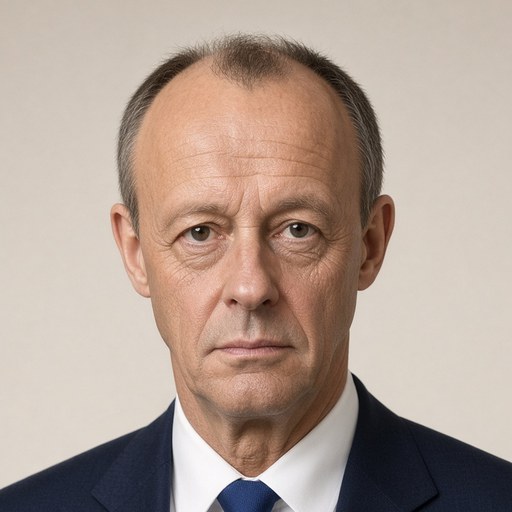
Chancellor's Speech on the Occasion of the Opening of IAA Mobility 2025 Shaping the Transformation of the Automotive Industry
 Friedrich Merz · Chancellor of Germany
- Context
- Merz addressed the opening ceremony of IAA Mobility 2025 in Munich on 9 September 2025, outlining government policy to support Germany's automotive industry transformation.
- Main themes
- Automotive industry transformation, mobility as freedom, Germany as industrial location, electric vehicle policy, autonomous driving, export competitiveness, political framework conditions, corporate tax reform, employment in automotive sector, IAA Mobility 2025
- Duration
- ~20 min
- Words
- 2,355
- Sentences
- 123
- Readability
- 38
- Grade
- 12.5
- Syntax
- 2.96
- Vocabulary
- 2.17
Translated from German
The broad sphere of national life a sentence belongs to. Every sentence has an Arena, so it is the denominator the other indices are read against.
Other123 sentences in 28 paragraphs
Dear Madam President, dear Hildegard Müller,
dear Ministers-President, dear Markus Söder and Winfried Kretschmann,
dear colleagues from the Cabinet, dear Katherina Reiche, dear Patrick Schnieder,
Mr. Mayor, dear Mr. Reiter,
ladies and gentlemen,
thank you very much for the warm welcome and the heartfelt greeting here in Munich for the opening of this year's IAA Mobility! Congratulations, Ms. Müller, Markus Söder, and Mr. Reiter, on the extension of the cooperation here in Munich! Allow me to also contribute to the continuity in Munich and the IAA. I assure you today that I will be with you at the next three International Motor Shows in 2027, 2029, and 2031, ladies and gentlemen. With these words, even Markus Söder is applauding. I am very pleased that we are seeing each other today.
Ladies and gentlemen, what was once merely an exhibition of new cars has now become a showcase for connected, sustainable, and forward-looking mobility. Anyone walking around the exhibition grounds can see in real-time how technological change is progressing in one of the key industries of our country. I am quite sure that in the coming days many visitors will be inspired by what they see here, and that the enthusiasm you have also expressed, dear Ms. Müller, will be transmitted to the many hundreds of thousands of visitors who will visit the exhibition grounds as well as the public spaces in Munich in the coming days.
The car, the personal car, ladies and gentlemen, is and remains a piece of freedom. Many people in Germany will still agree with this, and it is not only those who live in rural areas and need the car for private and professional purposes. Mobility is freedom, independent of where one lives and works. It is a result of the innovative power of a free society. We now have a whole variety of mobility offerings that were unknown in previous decades: alongside the personal car, a differentiated range of public transport, car sharing, and many other services that are particularly evident in urban areas and large cities.
This innovative power also makes cars better and better. It makes them safer and also more autonomous. A few weeks ago, I had the opportunity in Hanover to experience autonomous, safe driving for the first time on German soil, and to see the safety and reliability that is being developed there.
It is therefore clear and remains clear: The car is a pillar of individual mobility. This will remain the case in the future. For Germany, this means: The automotive industry is and remains a key industry, a key sector for the prosperity of our country.
Measured by revenue – as you all know – the automotive industry is still by far the most significant industrial sector in Germany. The automotive industry rightly claims to have enabled growth, prosperity, and employment in Germany for generations. There are still over 770,000 jobs in Germany. More than 770,000 people currently work in the automotive industry, not only in the major brands, in the large OEMs, as you call them, but also in numerous medium-sized, larger, and smaller suppliers and family businesses across the breadth and depth of our country. The automotive industry is hardly conceivable without any part of our country. If it were to disappear, the whole country would be poorer.
Three-quarters of what is produced in Germany – over four million cars – is exported. No other country in the world has such a high export volume for cars as Germany, and hardly any other industry – I say, no other industry – is as closely linked to the image and reputation of Germany as an industrial location, as a technology location, as the automotive industry. Nevertheless – Ms. Müller, you mentioned it – this sector is currently facing greater challenges. In order for the automotive industry in Germany to remain successful in the long term – and you know this among the manufacturers and suppliers in the automotive industry as well as in the commercial vehicle sector – you must undergo fundamental changes and adaptations.
However, you also need the right political framework conditions for this. Creating these framework conditions has been a priority for the federal government I lead from day one for the entire German economy. We want to become a competitive, internationally recognized business location again, one that the world looks at not with astonishment, but with admiration, ladies and gentlemen, just as we will experience here in Munich in the coming days.
We have already made the first decisions – they have been adopted; they are published in the Federal Law Gazette – such as the special depreciation for operational E-mobility of 75 percent in the investment year, broadly applied to all electric vehicles, whether passenger cars, vans, trucks, or buses. We have decided on a declining depreciation in Germany, of three times 30 percent for investments in machinery and equipment, and starting in 2028, corporate tax in Germany will decrease five times in a row by one percentage point each time to just ten percent.
Ladies and gentlemen, these are tax policy decisions of a magnitude that we have not seen in Germany in recent years. With this so-called immediate program, we are supporting the modernization of companies. We have accompanied this with a high-tech agenda already approved in the Cabinet, which also includes parts of your industry, such as battery technology.
I announced it last week – you recorded it, Ms. Müller – that I will invite the automotive industry and the supplier industry, together with the involved federal states and trade unions, to an industrial policy dialogue on the "Future of the Automotive Industry in Germany." Our goal is for Germany to continue to be one of the leading automotive and production locations in the world.
I will say it even more clearly: We want to shape the transformation of the automotive industry and not just follow it, and we want to seize the great opportunities that lie in this transformation for the German automotive industry and for Germany as a whole. We will discuss how we can achieve this together.
Ladies and gentlemen, dear Ms. Müller, you have already referred to it as the great task, namely to create a modern, as climate-neutral as possible automotive industry in Germany. This German automotive industry has been investing heavily in innovation, research, and development for years, and it is inventing new models. Manufacturers and suppliers are on a good technological path, and this is central to jobs and value creation in Germany. The engineers in the companies connect mobility, quality of life, digitalization, and climate protection. Their ideas are also the key to achieving climate goals. These are enormous efforts for the companies, for the employees, and in part for entire regions. Our principle remains – as we have written in the coalition agreement – technological openness. We do not want to narrow it down to a single solution, but we want the competition of the best ideas and the best technologies, ladies and gentlemen. We want to combine competitiveness and effective climate protection through technological openness. To avoid any misunderstandings at this point: We are fundamentally committed to the transition to E-mobility. However, we need more flexibility in regulation. We need smart, reliable, flexible, European regulation. It is more necessary than ever. We want to achieve climate protection through technological openness as cost-effectively as possible. One-sided political commitments to specific technologies are fundamentally the wrong economic policy path for this industry. They are not the way to reliably achieve our common goals, ladies and gentlemen.
You also pointed out, Ms. Müller: Global competition in vehicles, not just in E-vehicles, is increasing, particularly with China and the USA. Our response cannot be market protectionism and regulation. Our response can only be the ambition for technological leadership, for technological leadership "made in Germany." Our response to global competition is therefore innovation, quality, and sustainable production in Germany. In this sense, the federal government stands by the automotive industry. We promote innovation and competitiveness. We support research and development from batteries to fuel cells. We want innovative production of batteries to also take place in Germany.
By the way, I informed myself last week in Münster at the site where the research production for battery cells is being established about exactly this technological standard and was impressed by what is being achieved and put in place there. Our goal remains that battery production also takes place and is expanded in industrial scale in Germany. We are investing together with the industry in a comprehensive charging infrastructure, through private and public investments; and we are advocating for fair competitive conditions in Europe and worldwide.
You mentioned the topics of autonomous driving and digital networking. The potentials here are great: better-utilized roads, fewer traffic jams, fewer accidents, and opportunities for individual mobility even for those who may not be able or want to drive themselves, including elderly and sick people. Ladies and gentlemen, even in this area, in automated driving, in driving functions, you, the German manufacturers and suppliers, are world leaders. Our goal is to become a lead market for autonomous driving in Germany for the whole world together with you. We are committed to ensuring that autonomous vehicles also come onto the roads in Germany in daily operation. Yes, the legal prerequisites for this must be created. We are on the way to doing this. We support the EU Commission in this area just as we do with the action plan for the automotive industry and with a smart framework to create more space for AI innovations. It remains important that the trust of people in safe autonomous driving is built through high safety standards rather than excessive regulation and a zero-risk strategy. This does not exist in our lives, ladies and gentlemen. Opportunities and risks must therefore be in a good balance overall, even in autonomous driving.
Another major task that you are facing and that we must face together is the increasingly challenging international competition. Ladies and gentlemen, I have already said it, Germany as an export nation and particularly in the automotive industry as a central player, we depend on open markets and good international trade relations. Protectionism and tariffs are fundamentally the path we do not want to take. Protectionism and tariffs harm us all.
It is therefore all the more important that we make progress in the European Union with an ambitious agenda in trade policy and with the diversification of our trade partnerships. I want us to further de-escalate the conflict with the United States of America and ultimately avert it permanently with robust contractual agreements. I admit: I would have wished for a different, a better outcome for us, for the Europeans, in the agreement with the United States. But we are not yet strong enough to decide such questions autonomously in Europe on an equal footing. We want to get there, and that is why we need a strong industry, but we also need competitiveness worldwide.
The EU Commission last week, and you have read this, approved the EU-MERCOSUR free trade agreement and has now initiated the decisions for the Council and Parliament. We support this effort for a swift adoption and a quick entry into force of the MERCOSUR agreement with the South American countries. Because this agreement creates a free trade zone with more than 700 million people and tariff savings for European companies amounting to several billion euros. An agreement with Mexico is also on the horizon. We are on a good path here.
China challenges us. We are working on concrete steps towards fair competition, reducing dependencies, and strengthening our resilience. You have also mentioned this: our industry needs critical raw materials. Ensuring the supply of critical raw materials for industry is a shared concern of politics and business, which we must address together. We view the Chinese export restrictions on rare earths and, for example, permanent magnets with significant concern. These raw materials play a key role for Germany as a technology location. It is also a question of the competitiveness of our economy. The German industry, together with us, must engage more strongly in securing raw materials. Securing raw materials must not create new dependencies on individual regions or even countries in the world.
Now, ladies and gentlemen, we stand, and you will see this during your visit to this fair, at the beginning of a new era of mobility. We have every opportunity to shape this new era significantly and to set new standards here. It is about approaching it with courage and determination, with courage and innovation, and not with regulation and ideology, when we focus on competition and technological openness instead of excessive regulation and legal prohibitions. The federal government stands by all those who want to move forward in this sense, who understand the future as an invitation to do things better. I would like to express this here as well.
Researching, developing, producing, exporting, these must be our guiding principles. Many of you have experienced in recent years that obstacles have often been placed in your way, that you and your industry have been met with distrust and rejection instead of curiosity and enthusiasm for new ideas. We are currently changing this, ladies and gentlemen, in the federal government and hopefully for all of Germany! When the framework conditions are right, Germany has the potential to set global standards in the future as an industrial nation, as an innovation location, and as a car production site. Anyone who has doubts about this should take a look around the fairgrounds. The future is already being created. It is being created here, ladies and gentlemen, in Germany.
In this spirit, I wish all exhibitors and all visitors successful, inspiring, and enlightening days at the fair in the coming days. I look forward to the tour and will certainly be inspired by the enthusiasm for technology, for automobiles, for the performance of people, of engineers, of well-managed companies, ladies and gentlemen. In this sense: The IAA Mobility 2025 is now open!
The original German. The tags above are read on the English translation's sentences.
Sehr geehrte Frau Präsidentin, liebe Hildegard Müller,
sehr geehrte Herren Ministerpräsidenten, lieber Markus Söder und Winfried Kretschmann,
liebe Kolleginnen und Kollegen aus dem Kabinett, liebe Katherina Reiche, lieber Patrick Schnieder,
Herr Oberbürgermeister, lieber Herr Reiter,
meine Damen und Herren,
herzlichen Dank für das freundliche Willkommen und die herzliche Begrüßung hier in München zur Eröffnung der diesjährigen
IAA
Mobility
! Herzlichen Glückwunsch, Frau Müller, Markus Söder und Herr Reiter, zur Verlängerung der Kooperation hier in München! Erlauben Sie mir, dass auch ich einen Beitrag zur Kontinuität in München und der
IAA
leiste. Ich sage Ihnen schon heute zu, dass ich auch bei den nächsten drei Internationalen Automobilausstellungen 2027, 2029 und 2031 bei Ihnen bin, meine Damen und Herren. Bei diesen Worten klatscht sogar Markus Söder. Ich freue mich sehr, dass wir uns heute sehen.
Meine Damen und Herren, was einst eine Ausstellung schlicht neuer Autos war, ist inzwischen ein Anschauungslabor für vernetzte, nachhaltige und zukunftsweisende Mobilität. Wer hier auf dem Messegelände umhergeht, kann in Echtzeit sehen, wie der technologische Wandel in einer der Schlüsselindustrien unseres Landes voranschreitet. Ich bin mir ziemlich sicher, dass sich in den nächsten Tagen viele Besucherinnen und Besucher von dem anstecken lassen, was sie hier sehen, und dass diese Begeisterung, die auch Sie zum Ausdruck gebracht haben, liebe Frau Müller, sich auf die vielen Hunderttausend Besucherinnen und Besucher überträgt, die in den nächsten Tagen das Messegelände, aber auch die öffentlichen Plätze in München besuchen.
Das Auto, das eigene Auto, meine Damen und Herren, ist und bleibt ein Stück Freiheit. Das werden nach wie vor viele Menschen in Deutschland so unterschreiben, und es sind nicht nur diejenigen, die in den ländlichen Räumen leben und das Auto dort privat und für ihren Beruf brauchen. Mobilität ist Freiheit, auch ganz unabhängig vom Wohn- und Arbeitsort. Es ist ein Ergebnis der Innovationskraft einer freiheitlichen Gesellschaft. Wir haben inzwischen eine ganze Vielfalt von in früheren Jahrzehnten nicht gekannten Mobilitätsangeboten: neben dem eigenen Auto ein ausdifferenziertes Angebot an öffentlichem Personennah- und ‑fernverkehr,
Carsharing
und viele andere Angebote, die gerade in den Ballungsräumen und in den großen Städten ihren Niederschlag finden.
Diese Innovationskraft macht auch Autos immer besser. Sie macht sie immer sicherer, und sie macht sie auch selbstständiger. Ich habe vor einigen Wochen in Hannover die Gelegenheit gehabt, das erste Mal auf deutschem Boden autonomes, sicheres Fahren zu erleben, und die Sicherheit und die Zuverlässigkeit gesehen, die dort entstehen.
Es ist also klar und bleibt klar: Das Auto ist eine Säule individueller Mobilität. Das wird auch in Zukunft so bleiben. Für Deutschland heißt das: Die Automobilindustrie ist und bleibt eine Schlüsselindustrie, eine Schlüsselbranche für den Wohlstand unseres Landes.
Gemessen am Umsatz – das wissen Sie alle – ist die Automobilindustrie immer noch der mit Abstand bedeutendste Industriesektor in Deutschland. Zu Recht nimmt die Automobilindustrie für sich selbst in Anspruch, in Deutschland seit Generationen Wachstum, Wohlstand und Beschäftigung zu ermöglichen. Es sind immer noch über 770.000 Arbeitsplätze in Deutschland. Über 770.000 Menschen arbeiten derzeit in der Automobilindustrie, und zwar nicht nur in den großen Marken, in den großen
OEMs
, wie Sie es nennen, sondern auch in zahlreichen mittleren, größeren und kleineren Zulieferbetrieben und Familienunternehmen in der ganzen Breite und Tiefe der Fläche unseres Landes. Die Automobilindustrie ist kaum in einem Teil unseres Landes hinwegzudenken. Würde sie fehlen, wäre das ganze Land ärmer.
Drei Viertel dessen, was in Deutschland produziert wird – über vier Millionen Autos –, wird exportiert. Kein anderes Land der Welt hat bei Autos ein so hohes Exportvolumen wie Deutschland, und kaum eine andere Branche – ich sage, keine andere Branche – ist so eng mit dem Bild und dem Ruf Deutschlands als Industriestandort, als Technologiestandort, verbunden wie die Automobilindustrie. Dennoch – Frau Müller, Sie haben es angesprochen – steht diese Branche heute vor größeren Herausforderungen. Damit die Automobilindustrie in Deutschland auf Dauer erfolgreich bleiben kann – und das wissen Sie bei den Herstellern und den Zulieferern in der Automobilindustrie wie in der Nutzfahrzeugsparte –, müssen Sie sich durchgreifend verändern und anpassen.
Sie brauchen dafür aber auch die richtigen politischen Rahmenbedingungen. Diese Rahmenbedingungen zu schaffen, das hat die von mir geführte Bundesregierung vom ersten Tag an für die gesamte deutsche Wirtschaft zur Priorität erklärt. Wir wollen wieder ein wettbewerbsfähiger, international anerkannter Wirtschaftsstandort werden, auf den die Welt nicht mit Verwunderung, sondern mit Bewunderung schaut, meine Damen und Herren, so wie wir es in diesen Tagen auch hier in München erleben werden.
Wir haben die ersten Entscheidungen bereits getroffen – sie sind verabschiedet; sie stehen im Bundesgesetzblatt –, etwa die Sonderabschreibung für betriebliche
E
-Mobilität von 75 Prozent im Investitionsjahr, breit aufgesetzt für alle Elektrofahrzeuge, egal ob
Pkw
, Transporter,
Lkw
oder Bus. Wir haben eine degressive Abschreibung in Deutschland beschlossen, von dreimal 30 Prozent für Investitionen in Maschinen und Anlagen, und ab dem Jahr 2028 sinkt in Deutschland die Körperschaftssteuer fünfmal hintereinander jeweils um einen Prozentpunkt dann auf nur noch zehn Prozent.
Meine Damen und Herren, das sind steuerpolitische Entscheidungen in einem Umfang, wie wir sie in den letzten Jahren in Deutschland nicht gesehen haben. Wir unterstützen damit, mit diesem von uns so genannten Sofortprogramm, die Modernisierung der Unternehmen. Wir haben das Gleiche durch eine bereits im Kabinett beschlossene
Hightech
Agenda begleitet, zu der auch Teile Ihrer Industrie gehören, wie etwa die Batterietechnologie.
Ich habe es bereits in der vergangenen Woche angekündigt – Sie haben es aufgenommen, Frau Müller –, dass ich die Automobilindustrie und die Zulieferindustrie zusammen mit den beteiligten Bundesländern und den Gewerkschaften zu einem industriepolitischen Dialog „Zukunft der Automobilindustrie in Deutschland“ einladen werde. Unser Ziel ist, dass Deutschland auch zukünftig zu den führenden Automobilstandorten und Produktionsstandorten auf der Welt gehört.
Ich sage es noch etwas deutlicher: Wir wollen den Wandel der Autoindustrie gestalten und ihm nicht hinterherlaufen, und wir wollen die großen Chancen, die in dieser Gestaltung liegen, für die deutsche Automobilindustrie und für Deutschland insgesamt nutzen. Wie uns das gemeinsam gelingt, darüber werden wir sprechen.
Meine Damen und Herren, liebe Frau Müller, Sie haben es bereits als die große Aufgabe bezeichnet, nämlich eine moderne, möglichst klimaneutrale Automobilindustrie in Deutschland zu schaffen. Diese deutsche Automobilindustrie investiert seit Jahren sehr stark in Innovation, Forschung und Entwicklung, und sie erfindet neue Modelle. Hersteller und Zulieferer sind auf einem guten technologischen Weg, und das ist zentral für Arbeitsplätze und Wertschöpfung in Deutschland. Die Ingenieurinnen und Ingenieure in den Unternehmen verbinden Mobilität, Lebensqualität, Digitalisierung und Klimaschutz. Ihre Ideen sind damit auch der Schlüssel zum Erreichen der Klimaziele. Das sind enorme Kraftanstrengungen für die Unternehmen, für die Beschäftigten und zum Teil für ganze Regionen. Unser Grundsatz dabei bleibt – so haben wir es im Koalitionsvertrag aufgeschrieben – Technologieoffenheit. Wir wollen keine Einengung auf eine einzige Lösung, sondern wir wollen den Wettbewerb der besten Ideen und der besten Technologien, meine Damen und Herren. Wir wollen Wettbewerbsfähigkeit und effektiven Klimaschutz durch Technologieoffenheit miteinander verbinden. Auch damit an dieser Stelle keine Missverständnisse entstehen: Wir halten am Umstieg auf
E
-Mobilität natürlich grundsätzlich fest. Aber wir brauchen mehr Flexibilität in der Regulierung. Wir brauchen kluge, verlässliche, flexible, europäische Regulierung. Sie ist notwendiger denn je. Wir wollen Klimaschutz durch Technologieoffenheit möglichst kosteneffizient erreichen. Einseitige politische Festlegungen auf bestimmte Technologien sind nicht nur für diese Branche grundsätzlich der falsche wirtschaftspolitische Weg. Sie sind nicht der Weg, der uns gemeinsame Ziele zuverlässig erreichen lässt, meine Damen und Herren.
Auch auf Folgendes haben Sie hingewiesen, Frau Müller: Der globale Wettbewerb bei Fahrzeugen, nicht nur bei den
E
-Fahrzeugen, nimmt zu, ein Wettbewerb besonders auch mit China und den
USA
. Unsere Antwort darauf kann nicht Marktabschottung und Regulierung sein. Unsere Antwort kann nur der Anspruch auf technologische Führung sein, auf technologische Führung „
made in Germany
“. Unsere Antwort auf den globalen Wettbewerb sind also Innovation, Qualität und nachhaltige Produktion in Deutschland. In diesem Sinne steht die Bundesregierung an der Seite der Automobilindustrie. Wir fördern Innovation und Wettbewerbsfähigkeit. Wir unterstützen Forschung und Entwicklung von der Batterie bis zur Brennstoffstelle. Wir wollen innovative Produktion auch von Batterien am Standort Deutschland.
Ich habe mich übrigens in der letzten Woche in Münster an dem Standort, an dem die Forschungsfertigung für Batteriezellen eingerichtet wird, über genau diesen technologischen Standard informiert und bin beeindruckt, was dort geleistet und auf den Weg gebracht wird. Unser Ziel ist und bleibt, dass auch Batterieproduktion im industriellen Maßstab in Deutschland stattfindet und ausgebaut wird. Wir investieren zusammen mit der Industrie in eine flächendeckende Ladeinfrastruktur, eben durch private und öffentliche Investitionen; und wir setzen uns in Europa und weltweit für faire Wettbewerbsbedingungen ein.
Sie haben die Themen autonomen Fahrens und digitaler Vernetzung angesprochen. Die Potenziale dabei sind groß: besser ausgelastete Straßen, weniger Staus, weniger Unfälle und Möglichkeiten der individuellen Mobilität auch für diejenigen, die vielleicht nicht selbst fahren können oder wollen, auch für alte und kranke Menschen. Meine Damen und Herren, auch in diesem Bereich, beim automatisierten Fahren, bei den Fahrfunktionen, sind Sie, die deutschen Hersteller und Zulieferer, Weltspitze. Unser Ziel ist, dass wir zusammen mit Ihnen in Deutschland beim autonomen Fahren Leitmarkt für die ganze Welt werden. Wir setzen uns dafür ein, dass autonome Fahrzeuge auch in Deutschland im täglichen Betrieb auf die Straßen kommen. Ja, die gesetzlichen Voraussetzungen dafür müssen geschaffen werden. Wir sind auf dem Weg, dies zu tun. Wir unterstützen die
EU
-Kommission in diesem Bereich genauso wie beim Aktionsplan für die Automobilindustrie und bei einem klugen Rahmen dafür, mehr Raum für
KI
-Innovationen zu schaffen. Wichtig bei alledem ist und bleibt: Das Vertrauen der Menschen in sicheres autonomes Fahren entsteht durch hohe Sicherheitsstandards statt übermäßiger Regulierung und eine Nullrisikostrategie. Diese gibt es in unserem Leben nicht, meine Damen und Herren. Chancen und Risiken müssen also insgesamt in einem guten Verhältnis stehen, auch beim autonomen Fahren.
Eine weitere große Aufgabe, der Sie sich stellen und wir uns gemeinsam stellen müssen, ist der anspruchsvoller werdende internationale Wettbewerb. Meine Damen und Herren, ich habe es bereits gesagt, Deutschland als Exportnation und insbesondere in der Automobilindustrie als zentraler Akteur, wir sind angewiesen auf offene Märkte und gute internationale Handelsbeziehungen. Protektionismus und Zölle sind dabei grundsätzlich der Weg, den wir nicht gehen wollen. Protektionismus und Zölle schaden uns allen.
Umso wichtiger ist es deshalb, dass wir gerade in der Europäischen Union mit einer ambitionierten Agenda in der Handelspolitik und mit der Diversifizierung unserer Handelspartnerschaften vorankommen. Ich möchte, dass wir den Konflikt mit den Vereinigten Staaten von Amerika weiter deeskalieren und am Ende mit belastbaren vertraglichen Vereinbarungen dauerhaft abwenden. Ich gebe zu: Ich hätte mir ein anderes, ein besseres Ergebnis auch für uns, für die Europäer, im Abkommen mit den Vereinigten Staaten gewünscht. Aber noch sind wir nicht so stark. dass wir in Europa autonom auch solche Fragen auf Augenhöhe entscheiden können. Wir wollen dorthin, und deswegen brauchen wir eine starke Industrie, aber wir brauchen eben auch Wettbewerbsfähigkeit auf der ganzen Welt.
Die
EU
-Kommission hat in der letzten Woche, und Sie haben das gelesen, dem
EU
-
MERCOSUR
-Freihandelsabkommen zugestimmt und die Entscheidungen jetzt für Rat und Parlament auf den Weg gebracht. Wir unterstützen dieses Bemühen um eine schnelle Verabschiedung und ein schnelles Inkrafttreten des
MERCOSUR
-Abkommens mit den südamerikanischen Staaten. Denn dieses Abkommen schafft eine Freihandelszone mit mehr als 700 Millionen Menschen und Zolleinsparungen für europäische Unternehmen in der Höhe von mehreren Milliarden Euro. Es kommt ein Abschluss eines Abkommens mit Mexiko hinzu. Wir sind hier auf einem guten Weg.
China fordert uns heraus. Wir arbeiten an konkreten Schritten zu fairen Wettbewerbsbedingungen, der Reduzierung von Abhängigkeiten und der Stärkung unserer Resilienz. Auch das haben Sie angesprochen: Kritische Rohstoffe braucht unsere Industrie. Die Versorgung der Industrie mit kritischen Rohstoffen ist ein gemeinsames Anliegen von Politik und Wirtschaft, dem wir uns gemeinsam stellen. Wir sehen die chinesischen Exportbeschränkungen für seltene Erden und etwa den Permanentmagneten mit erheblicher Sorge. Diesen Rohstoffen kommt für den Technologiestandort Deutschland eine Schlüsselrolle zu. Es ist auch eine Frage der Wettbewerbsfähigkeit unserer Volkswirtschaft. Die deutsche Industrie mit uns zusammen, wir müssen uns gemeinsam stärker in der Rohstoffsicherung engagieren. Rohstoffsicherung darf nicht neue Abhängigkeiten von einzelnen Regionen oder gar Ländern in der Welt auslösen.
Nun, meine Damen und Herren, wir stehen, und Sie werden das beim Besuch dieser Messe sehen, am Beginn eines neuen Mobilitätszeitalters. Wir haben alle Chancen, dass auch dieses neue Zeitalter von uns maßgeblich mitgeprägt wird und dass wir hier neue Maßstäbe setzen. Es geht, wenn wir es mit Mut und Entschlossenheit anfassen, mit Mut und Innovation und nicht mit Regulierung und Ideologie, wenn wir auf Wettbewerb und Technologieoffenheit setzen statt auf übermäßige Regulierung und gesetzliche Verbote. Die Bundesregierung steht an der Seite von allen, die in diesem Sinne vorangehen wollen, die Zukunft als Einladung zu verstehen, die Dinge besser zu machen. Das möchte ich auch hier zum Ausdruck bringen.
Forschen, entwickeln, produzieren, exportieren, das müssen unsere Leitbilder sein. Viele von Ihnen haben in den letzten Jahren die Erfahrung gemacht, dass Ihnen dabei oft Steine in den Weg gelegt worden sind, dass Ihnen und Ihrer Industrie mit Misstrauen und Ablehnung begegnet worden ist statt mit Neugier und Begeisterung für neue Ideen. Das ändern wir jetzt gerade, meine Damen und Herren, in der Bundesregierung und hoffentlich für ganz Deutschland! Wenn die Rahmenbedingungen stimmen, dann hat Deutschland das Potenzial, auch in Zukunft weltweit Maßstäbe zu setzen, als Industrienation, als Innovationsstandort und als Automobilproduktionsstandort. Wer daran Zweifel haben sollte, der sollte sich auf dem Messegelände umsehen. Die Zukunft entsteht bereits. Sie entsteht hier, meine Damen und Herren, in Deutschland.
In diesem Sinne wünsche ich allen Ausstellerinnen und Ausstellern und allen Besucherinnen und Besuchern in den nächsten Tagen erfolgreiche, inspirierende und erkenntnisreiche Messetage. Ich freue mich auf den Rundgang und werde mich ganz sicher auch anstecken lassen von der Begeisterung für Technik, für Automobile, für die Leistung von Menschen, von Ingenieurinnen und von Ingenieuren, von gut geführten Unternehmen, meine Damen und Herren. In diesem Sinne: Die
IAA
Mobility 2025, sie ist eröffnet!