




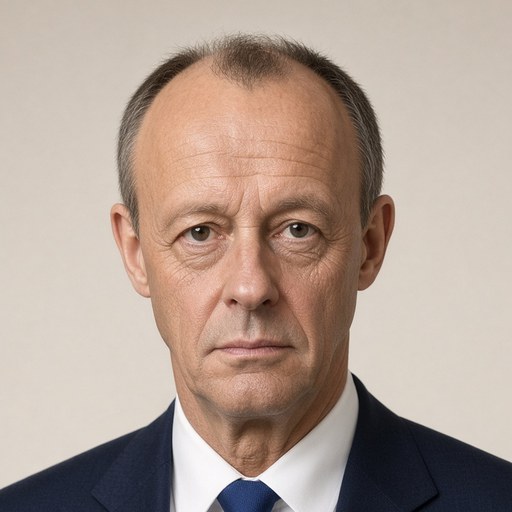
Speech by Chancellor Merz on the occasion of the handover to the new President of the BND Strong security authorities for a secure, sovereign Germany
 Friedrich Merz · Chancellor of Germany
- Context
- Merz addressed the official handover ceremony for new BND President Martin Jäger, honoring outgoing President Bruno Kahl and outlining Germany's security challenges on 11 September 2025.
- Main themes
- BND leadership transition, German security policy, hybrid threats and espionage, intelligence service reform, foreign intelligence capabilities, tribute to Bruno Kahl, Martin Jäger appointment, European security architecture, Russia-Ukraine war impact, intelligence funding and legal frameworks
- Duration
- ~11 min
- Words
- 1,357
- Sentences
- 63
- Readability
- 34
- Grade
- 13.8
- Syntax
- 3.26
- Vocabulary
- 2.25
Translated from German
The broad sphere of national life a sentence belongs to. Every sentence has an Arena, so it is the denominator the other indices are read against.
Other63 sentences in 25 paragraphs
The Federal Intelligence Service (BND) is getting a new president in Martin Jäger. At the official ceremony, Chancellor Friedrich Merz honored the new BND President Martin Jäger as a diplomatically experienced individual who is well-equipped to lead this agency. "You are taking over this baton in turbulent times," emphasized Merz.
The Chancellor spoke, among other things, about:
The security policy situation: "Never before in the history of post-war Germany has the security policy situation of our country and our continent been so serious," said Chancellor Merz in his speech. Germany is now fending off hybrid attacks against its infrastructure, acts of sabotage, espionage, and disinformation campaigns almost daily, and it has again system rivals and adversaries – "and they are becoming increasingly aggressive," said the Chancellor. Germany must act more proactively. For this, a knowledge advantage is needed, which can only be reliably provided by a well-structured civilian, military, and technical foreign intelligence service.
Thanks to outgoing BND President: The Chancellor also acknowledged the contributions of the outgoing BND President Bruno Kahl, who has held this position since 2016. "During this time, you have structurally reformed this agency, made it more accessible to the public, and given the presence of the Federal Intelligence Service a new reputation in German public life," said the Chancellor. Kahl led the BND into a new security policy era following the turning point of the Russian invasion of Ukraine in February 2022.
Equipping the BND for the future: To optimally prepare the BND for the future, additional financial resources for better equipping the intelligence services will be made available, and improved legal frameworks will be established, according to Chancellor Merz. "We want the BND to operate at the highest level of intelligence. We want cooperation domestically with other security authorities and the Bundeswehr, as well as with international intelligence partners, to function excellently," said the Chancellor.
The Federal Intelligence Service (BND) was founded on April 1, 1956, and is the civilian, military, and technical foreign intelligence service of the Federal Republic of Germany. The BND is based in Berlin. The BND is tasked with collecting, evaluating, and providing information about foreign matters of foreign and security policy significance to the federal government in the form of reports and analyses. Alongside the Federal Office for the Protection of the Constitution (BfV) and the Military Counterintelligence Service (MAD), the BND is one of the three German federal intelligence services.
Read here the transcript of the Chancellor's speech:
Chancellor Friedrich Merz:
Dear Mr. President, dear Bruno Kahl,
dear Mr. President, dear Martin Jäger,
dear Federal Minister, dear Thorsten Frei,
dear colleagues from the German Bundestag,
esteemed Ministers-President,
ladies and gentlemen!
In relay races, as we all know, good athletes can achieve times that are more than two seconds below the sum of the individual times of the respective runners. The prerequisite is technical perfection in the baton exchange. We are experiencing something like that today here: technical, but also personal perfection in the handover of the baton as President of the Federal Intelligence Service.
A man with great experience is stepping down, and above all, a man with record times. You have led the BND for nine years, dear Bruno Kahl, longer than anyone has in a very long time before you. During this time, you have structurally reformed this agency, made it more accessible to the public, and given the presence of the Federal Intelligence Service a new reputation in German public life. You quickly led the BND into a new security policy era after the turning point of the Russian invasion of Ukraine in February 2022, in which we live today.
Yes, today, ladies and gentlemen, is September 11. It is a date-related coincidence that we find ourselves here today on this day. But you all will remember what is associated with September 11, 2001, the date of those monstrous attacks on the World Trade Center in New York and the Pentagon in Washington. That was actually already the turning point of the era that we are experiencing in our time.
That is why it is particularly important for me to say this to you today: With today’s date, the responsibility of Bruno Kahl is being transferred to Martin Jäger, who will continue what Bruno Kahl has begun. You both and the employees of this house know that, to stay in the image of the relay race for a moment, seconds and minutes count.
Rarely, never before in the history of post-war Germany, has the security policy situation of our country and our continent been so serious. The foundations of the European security architecture, which have allowed us to live in freedom, peace, and constantly increasing prosperity for decades, have become fragile. We are now fending off hybrid attacks against our infrastructure in Germany daily, acts of sabotage, espionage, and disinformation campaigns. We have again system rivals and adversaries, externally, but also internally, and they are becoming increasingly aggressive.
Thus, the most important task of this federal government is to create new foundations for a secure, sovereign Germany, foundations that, I hope, will be sustainable for decades. This requires a paradigm shift in foreign and security policy, for which we have set the course in multiple ways over the past months. We have set them institutionally with the establishment of a National Security Council, which will begin its work in the coming weeks and will enable us to respond more quickly, creatively, proactively, and collectively to threats in Germany: communicatively, by naming the foreign and security policy dimension of almost all policy areas much more strongly, and finally financially with the so-called area exception in the debt brake of our Basic Law for expenditures in the area of security policy and defense.
We will also use these funds for better equipping our intelligence services. We will create better legal frameworks for the intelligence services by initiating the long-overdue amendment of the law on intelligence services. The MAD law has already been passed in the Cabinet.
These are course settings with which we want to better exploit the potential we have with the BND in the coming years. We have very, very good security authorities in Germany, and I allow myself to say this here today. But our sovereignty in Germany and in Europe depends, among other things, on our ability to maintain this level and, wherever possible, to improve even further.
We are acting, and as I already told the employees of the house during the official handover a few minutes ago, in many ways in a space of great uncertainty at the moment. Old certainties have been devalued, established rules no longer apply, and that means we must act increasingly proactively. For this, we need the knowledge advantage that only a well-structured civilian, military, and technical foreign intelligence service can reliably provide for us. Also, measured against the responsibility we bear in light of our size and economic strength in Europe, it is our claim that we want the BND to operate at the highest level of intelligence. We want cooperation domestically with other security authorities and the Bundeswehr, as well as with international intelligence partners, to function excellently.
The BND, ladies and gentlemen, is well positioned for this, with excellent employees who serve under great pressure and for little public recognition, and a service that, with Martin Jäger and his extensive foreign policy and diplomatic experience, is excellently equipped to lead the agency. Dear Mr. Jäger, you are taking over this baton in turbulent times on a date that is symbolically significant for intelligence services worldwide. I wish you much success in this endeavor on behalf of the entire federal government and also very personally, and I look forward to working with you.
Dear Bruno Kahl, you will now continue your service elsewhere for the Federal Republic of Germany. I wish you success as the German ambassador to the Holy See, representing our country well, and I extend my heartfelt thanks for the work done here in this house on behalf of the federal government and, if I may, on behalf of the entire Federal Republic of Germany. All the best!
The original German. The tags above are read on the English translation's sentences.
Der Bundesnachrichtendienst (
BND
) bekommt mit Martin Jäger einen neuen Präsidenten. Beim offiziellen Festakt würdigte Bundeskanzler Friedrich Merz den neuen
BND
-Präsidenten Martin Jäger als
außenpolitisch erfahrenen Diplomaten, der für die Leitung dieser Behörde bestens gerüstet sei. „Sie übernehmen diesen Staffelstab in unruhigen Zeiten”, betonte Merz.
Der Kanzler sprach unter anderem über:
Die sicherheitspolitische Lage
: „Noch nie in der deutschen Nachkriegsgeschichte, war die sicherheitspolitische Lage unseres Landes und unseres Kontinents so ernst”, sagte Kanzler Merz in seiner Rede. Deutschland wehre inzwischen fast täglich hybride Angriffe gegen die Infrastruktur, Sabotageakte, Spionage und Desinformationskampagnen ab und habe wieder Systemrivalen und Gegner – „und sie gehen immer aggressiver vor”, so der Kanzler. Deutschland müsse stärker proaktiv handeln. Dafür brauche es einen Wissensvorsprung, den nur ein gut aufgestellter ziviler, militärischer und technischer Auslandsnachrichtendienst verlässlich schaffen könne.
Dank an scheidenden
BND
-Präsidenten
:
Der Bundeskanzler würdigte auch die Verdienste des scheidenden
BND
-Präsidenten Bruno Kahl, der dieses Amt seit 2016 innehatte. „
Sie haben in dieser Zeit diese Behörde strukturell reformiert, Sie haben sie für die Öffentlichkeit zugänglicher gestaltet, und Sie haben der Präsenz des Bundesnachrichtendienstes neues Ansehen in der deutschen Öffentlichkeit gegeben”, so der Bundeskanzler. Kahl habe nach der Zäsur der russischen Invasion der Ukraine im Februar 2022 den
BND
in die neue sicherheitspolitische Epoche geführt.
BND
für die Zukunft rüsten
: Um den
BND
bestens für die Zukunft zu rüsten, sollen laut Bundeskanzler Merz zusätzliche finanzielle Mittel zur besseren Ausrüstung der Nachrichtendienste zur Verfügung gestellt sowie verbesserte rechtliche Rahmenbedingungen geschaffen werden. „Wir wollen, dass der
BND
nachrichtendienstlich auf dem allerhöchsten Niveau mitspielt. Wir wollen, dass die Zusammenarbeit im Inland mit den anderen Sicherheitsbehörden und der Bundeswehr sowie mit den nachrichtendienstlichen Partnern auf internationaler Ebene exzellent funktioniert”, so der Bundeskanzler.
Der
Bundesnachrichtendienst
(
BND
) wurde am 1. April 1956 gegründet und ist der zivile, militärische und technische Auslandsnachrichtendienst der Bundesrepublik Deutschland. Sitz des
BND
ist Berlin. Der
BND
hat den Auftrag, Informationen über das Ausland von außen- und sicherheitspolitischer Bedeutung zu sammeln, auszuwerten und der Bundesregierung in Form von Meldungen und Analysen zur Verfügung zu stellen. Neben dem Bundesamt für Verfassungsschutz (BfV) und dem Militärischen Abschirmdienst (MAD) ist der
BND
einer der drei deutschen Nachrichtendienste des Bundes.
Lesen Sie hier die Mitschrift der Rede des Kanzlers:
Bundeskanzler Friedrich Merz
:
Sehr geehrter Herr Präsident, lieber Bruno Kahl,
sehr geehrter Herr Präsident, lieber Martin Jäger,
sehr geehrter Herr Bundesminister, lieber Thorsten Frei,
liebe Kolleginnen und Kollegen aus dem Deutschen Bundestag,
sehr geehrte Herren Ministerpräsidenten,
meine sehr geehrten Damen und Herren!
Bei Sprintstaffeln, so wissen wir es alle, können gute Athleten Werte erzielen, die mehr als zwei Sekunden unter der Summe der Einzelzeiten der jeweiligen Läufer liegen. Voraussetzung ist technische Perfektion bei der Staffelübergabe. So etwas erleben wir heute hier: technische, aber auch persönliche Perfektion bei der Übergabe des Staffelstabs als Präsident des Bundesnachrichtendienstes.
Es geht ein Mann mit großer Erfahrung und vor allem ein Mann mit Rekordzeiten. Neun Jahre haben Sie, lieber Bruno Kahl, den
BND
geleitet, so lange wie schon sehr, sehr lange keiner mehr vor Ihnen. Sie haben in dieser Zeit diese Behörde strukturell reformiert, Sie haben sie für die Öffentlichkeit zugänglicher gestaltet, und Sie haben der Präsenz des Bundesnachrichtendienstes neues Ansehen in der deutschen Öffentlichkeit gegeben. Sie haben rasch nach der Zäsur der russischen Invasion in der Ukraine im Februar 2022 den
BND
in eine neue sicherheitspolitische Epoche geführt, in der wir heute leben.
Ja, heute, meine Damen und Herren, ist der 11. September. Es ist ein datumsmäßiger Zufall, dass wir uns an diesem Tag heute hier sehen. Aber Sie alle werden noch wissen, was sich mit dem 11. September verbindet, dem 11. September 2001, dem Datum dieser monströsen Anschläge auf das
World Trade Center
in
New York
und das Pentagon in
Washingto
n. Eigentlich war das damals schon der Epochenbruch, den wir in unserer Zeit erleben.
Deswegen ist es mir ein besonderes Anliegen, Ihnen dies heute zu sagen: Mit dem heutigen Tag geht die Verantwortung von Bruno Kahl auf Martin Jäger über, der fortsetzen wird, was Bruno Kahl begonnen hat. Sie beide und die Mitarbeiterinnen und Mitarbeiter dieses Hauses wissen, dass dabei, um für einen Moment im Bild des Staffellaufs zu bleiben, Sekunden und Minuten zählen.
Selten, noch nie in der deutschen Nachkriegsgeschichte, war die sicherheitspolitische Lage unseres Landes und unseres Kontinents so ernst. Die Fundamente der europäischen Sicherheitsarchitektur, die uns über Jahrzehnte ein Leben in Freiheit, in Frieden und in ständig steigendem Wohlstand ermöglicht haben, sind brüchig geworden. Wir wehren in Deutschland inzwischen täglich hybride Angriffe gegen unsere Infrastruktur ab, Sabotageakte, Spionage, Desinformationskampagnen. Wir haben wieder Systemrivalen und Gegner, im Äußeren, aber auch im Inneren, und sie gehen immer aggressiver vor.
Es ist damit die wichtigste Aufgabe dieser Bundesregierung, neue Grundlagen für ein sicheres, souveränes Deutschland zu schaffen, Grundlagen, die, so hoffe ich es jedenfalls, für Jahrzehnte tragfähig sein werden. Das setzt einen außen- und sicherheitspolitischen Paradigmenwechsel voraus, für den wir in den vergangenen Monaten gleich in mehrfacher Hinsicht die Weichen gestellt haben. Wir haben sie institutionell gestellt mit der Einrichtung eines Nationalen Sicherheitsrats, der in den nächsten Wochen seine Arbeit aufnehmen wird und der es uns ermöglicht, schneller, kreativer, vorausschauender und gemeinsamer in Deutschland auf Gefahrenlagen zu reagieren: kommunikativ, indem wir die außen- und sicherheitspolitische Dimension nahezu aller Politikfelder viel stärker benennen, und schließlich finanziell mit der sogenannten Bereichsausnahme bei der Schuldenbremse unseres Grundgesetzes für Ausgaben im Bereich der Sicherheitspolitik und der Verteidigung.
Wir werden diese Mittel auch für die bessere Ausrüstung unserer Nachrichtendienste einsetzen. Wir werden zusätzlich bessere rechtliche Rahmenbedingungen für die Nachrichtendienste schaffen, indem wir die lange überfällige Novelle des Rechts der Nachrichtendienste auf den Weg bringen. Das MAD-Gesetz haben wir im Kabinett bereits verabschiedet.
Das sind Weichenstellungen, mit denen wir das Potenzial, das wir mit dem
BND
haben, in den nächsten Jahren noch einmal besser ausschöpfen wollen. Wir haben in Deutschland, und dies erlaube ich mir heute an dieser Stelle auch zu sagen, sehr, sehr gute Sicherheitsbehörden. Aber unsere Souveränität in Deutschland und in Europa hängt nicht zuletzt davon ab, dass wir dieses Niveau halten und, wo immer möglich, sogar noch besser werden.
Wir handeln, und so habe ich es den Mitarbeiterinnen und Mitarbeitern des Hauses bei der offiziellen Amtsübergabe vor einigen Minuten schon gesagt, im Augenblick in vielerlei Hinsicht in einem Raum der größten Ungewissheit. Alte Gewissheiten sind entwertet, bewährte Spielregeln gelten nicht mehr, und das heißt, wir müssen immer stärker proaktiv handeln. Dafür brauchen wir den Wissensvorsprung, den nur ein gut aufgestellter ziviler, militärischer und technischer Auslandsnachrichtendienst für uns verlässlich schaffen kann. Auch gemessen an der Verantwortung, die wir mit Blick auf unsere Größe und auf unsere wirtschaftliche Stärke in Europa tragen, ist es darum unser Anspruch, dass wir wollen, dass der
BND
nachrichtendienstlich auf dem allerhöchsten Niveau mitspielt. Wir wollen, dass die Zusammenarbeit im Inland mit den anderen Sicherheitsbehörden und der Bundeswehr sowie mit den nachrichtendienstlichen Partnern auf internationaler Ebene exzellent funktioniert.
Der
BND
, meine Damen und Herren, ist dafür gut aufgestellt, mit hervorragenden Mitarbeiterinnen und Mitarbeitern, die unter größten Belastungen und für wenig öffentliche Anerkennung ihren Dienst tun, und ein Dienst, der mit Martin Jäger mit seiner umfassenden außenpolitischen und diplomatischen Erfahrung für die Leitung der Behörde allerbestens gerüstet ist. Lieber Herr Jäger, Sie übernehmen diesen Staffelstab in unruhigen Zeiten an einem für die Nachrichtendienste weltweit symbolträchtigen Datum. Ich wünsche Ihnen hierfür im Namen der gesamten Bundesregierung und auch sehr persönlich viel Erfolg, und ich freue mich auf die Zusammenarbeit mit Ihnen.
Lieber Bruno Kahl, Sie werden Ihren Dienst nun an anderer Stelle für die Bundesrepublik Deutschland weiter leisten. Ich wünsche Ihnen, dass Sie dort als deutscher Botschafter am Heiligen Stuhl auch Erfolg haben, unser Land gut vertreten, und ich verbinde das mit einem herzlichen Dank für die geleistete Arbeit hier in diesem Haus im Namen der Bundesregierung und, wenn ich das tun darf, im Namen der ganzen Bundesrepublik Deutschland. Alles Gute!