




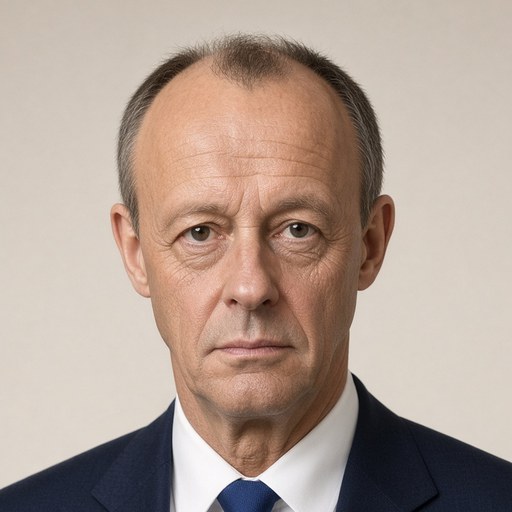
Speech by the Chancellor at the Energy Conference of the Corporate Works Councils For Affordable, Secure, and Clean Energy
 Friedrich Merz · Chancellor of Germany
- Context
- Merz addressed an energy conference of corporate works councils in Germany in September 2025, outlining government energy policy priorities and the status of the energy transition.
- Main themes
- Energy security, affordable energy supply, energy transition monitoring, renewable energy expansion, climate neutrality by 2045, CO2 pricing, grid expansion, hydrogen ramp-up, technological openness, reduction of energy levies, geothermal and wind energy, coalition energy policy
- Duration
- ~20 min
- Words
- 2,436
- Sentences
- 113
- Readability
- 45
- Grade
- 12.2
- Syntax
- 3.08
- Vocabulary
- 1.99
Translated from German
The broad sphere of national life a sentence belongs to. Every sentence has an Arena, so it is the denominator the other indices are read against.
Other113 sentences in 31 paragraphs
Ladies and gentlemen,
thank you very much for your patience with me for a few minutes! I ask for your understanding that I am a few minutes late, but I had to have some discussions due to the events last night in Poland. I would like to take this opportunity to greet all of you on behalf of Mr. Werneke and Mr. Vassiliadis and thus all of you. Thank you very much for inviting me! I had already committed some time ago to meet you today at your energy conference of the works councils from the energy sector in Germany, an industry that we need like hardly any other. Because this country relies on a secure energy supply like hardly any other. In this respect, it is a good opportunity for us to talk together, and I would like to share a few thoughts on where I believe we stand and where we should be heading.
We have a changed global situation in energy policy. At the latest since February 24, 2022, we know that we have made some mistakes in the past and have become too dependent. We are trying to correct this together, even in the previous coalition. We have also tried to initiate many things together. Some things have succeeded. But we are, of course, still facing further crossroads and further political decisions.
You know that we have titled our coalition agreement with the three words "Responsibility for Germany." That is exactly what we mean. Responsibility for Germany means in energy policy to set the right course in this area now, so that we can ensure a secure, affordable, and clean energy supply for our country, and also that we accompany the whole thing with sufficient technological openness. This is perhaps the crucial difference from the previous government, which we also want and must implement.
As a basis for this, we have agreed in the coalition agreement to conduct a kind of inventory, a monitoring report on the status of the energy transition. This monitoring report is, as you probably know, largely completed. We want to evaluate it now. This will be done next week by the responsible Federal Minister for Economic Affairs, who not only bears the name of energy policy but also is responsible for it. We want to place the issue of supply security in the context of grid expansion, the expansion of renewable energies, digitalization, and the hydrogen ramp-up. These are the framework conditions we are facing. We must answer the question of how the energy demand of the coming years for our country will develop and how the electricity demand will be adjusted accordingly. This report will provide the basis for the energy supply and energy policy of the coming weeks, months, and hopefully years, with the conclusions derived from it. We will take measures that will also directly affect you as representatives of the energy generation industry. This concerns the locations, the generation infrastructures, and last but not least, the financing of the energy transition.
I want to make it clear at this point, ladies and gentlemen: The federal government is committed to the climate goals, both those we have set nationally and those we have agreed upon at the European level, as well as those we have agreed upon internationally in a whole series of agreements. This means we want to achieve climate neutrality by the year 2045.
Therefore, the energy supply should be designed to be as clean and resource-efficient as possible. We rely on the potentials of renewable energies, but also on new technologies such as wastewater heat and high-altitude wind power with interesting projects that we see, for example, in the chemical triangle in Brandenburg, where there is still much to catch up on regarding energy generation.
We have already initiated some legislative measures. We have already accelerated the approvals for wind energy plants and the expansion of geothermal energy, heat pumps, heat storage, and heating lines. The laws have been passed in the cabinet and are on the legislative path in Parliament.
I want to emphasize once again: Here, too, technological openness applies. The best clean solutions for our energy supply do not arise in the minds of politicians, but they arise in companies, where research and development take place, where ideas from engineers, of whom we have a large number in Germany, are born. Those are your companies. That is where this expertise lies.
For politics, the CO2 price should be the central steering instrument. We know that we still have some questions to answer that have not yet been conclusively resolved, such as regarding the transition from the German to the European emissions trading system and the corresponding costs, as well as the question of how long free certificates will be issued.
On the one hand, ladies and gentlemen, we want to reduce state levies and surcharges on the electricity price. We have already decided on measures for this. You know that we will abolish the gas storage levy for everyone starting January 1, 2026, meaning we will take it into the federal budget. We will lower the electricity tax for the manufacturing industry and agriculture and forestry after January 1, 2026. We want to lower electricity costs for everyone as soon as we have the financial leeway in the federal budget. The subsidy for transmission network fees for companies and consumers will also increase starting January 1, 2026. We are relieving here again by an amount of about 6.5 billion euros; in total, that amounts to over 10 billion euros for the year 2026.
We are still working on an industrial electricity price. This is a difficult task, the delineation: What are energy-intensive companies, and what are not? Personally, I would honestly prefer that we did not have to do this administratively. It may not be possible at all because we have some industrial companies that consume energy so intensively that we would need to come to a solution, at least a temporary one.
Cost efficiency in energy supply will be one of the most important aspects for us. We will also try to address this with the monitoring report.
Yes, ladies and gentlemen, and yet it remains true: An affordable and secure energy supply in our country will not be possible solely through renewable energies, at least for the time being, not even in the best mix, in the best composition. We have fluctuating energy input. We have a grid that is not yet designed to meet these demands.
However, if we want to remain an industrial nation – I want to say this explicitly: We must remain a country of manufacturing industry. I expressed this yesterday at the IAA in Munich: The automotive industry is a key industry for our country, and the upstream steel industry is a key industry for our country. If we want to remain an industrial country, then we must have a secure energy supply, and we cannot, at least for the time being, ensure that solely with renewable energies. Therefore, we want to have flexible and controllable electricity generation in our own country for a secure and stable energy supply, and that will be gas power plants with a system service technology mix, including all other forms of energy generation.
The federal government's power plant strategy is largely completed. We are currently in coordination with the EU Commission because what we are planning with the capacity markets – which differs in degree from what the previous federal government did; but this model is not new either – is a state aid issue and must be approved by the EU Commission. However, we assume that we will receive this approval. We have the first reliable indications of that.
Finally, regarding the hydrogen network: The hydrogen core network is an important future project for the federal government I lead. We see hydrogen as an important storage and transport medium, especially for renewable energies. We must now pragmatically advance the ramp-up and realize the hydrogen projects step by step.
Let me summarize: These two topics, the hydrogen ramp-up and the power plant strategy, are of particular relevance for all the companies represented here; I know that. In particular, we are having intensive discussions with the Commission regarding this power plant strategy so that we can initiate the next steps as quickly as possible.
I want to truly keep this whole topic – I repeat it once again – technology-open. We mean it seriously, even if it may not be so easy in this country. But we want to ensure technological openness in a broad context also within the European Union. For example, I do not want to block research funding for new nuclear technologies in Germany. That is not our issue. But if it is the issue of other member states of the European Union, then Germany should not prevent that. That is at least my understanding of a market economy order.
We in politics do not know what the better technologies of tomorrow are. August von Hayek – I quote him repeatedly – once called it "the pretentious knowledge of politics" that we presume to know technologically what may become reality in ten or fifteen years. We must create conditions, but we must also set goals, and conditions and goals are, of course, also under the sign of an environmentally friendly energy supply system in these days, weeks, and months. These are the framework conditions we want to create, and then technologies can emerge within these frameworks. Perhaps technologies will emerge that we do not even know today, that we may underestimate today, and others that we may overestimate.
In this sense: There is much to be done. Energy policy is, in my view, one of the strategic policy fields of our country. If we do not succeed in this, then entirely different questions arise, such as the future of the industrial location Germany – and I do not mean only large industry, but I mean especially the manufacturing medium-sized businesses. The automotive industry – I take it as an example once again – is an industry that is not only represented in the large plants of the OEMs, but it is an industry that has significance down to practically every district, in every city, because value creation in Germany occurs throughout the entire supply chain. I want that to be preserved.
I want us to be at the forefront of technological development at the same time. This means research and development. I want to say this in this context: It was my wish that we separate education policy from the research ministry in the coalition talks and make the research ministry again a research and development ministry, from which the entire work of research and development is also politically accompanied. Space travel has been added because we also see this as one of the strategic topics of our future industry. In conclusion: Affordable, secure, clean energy should be our common goal.
I also came here today to tell you: You are employees and the works councils in responsible positions in your companies. I am a truly convinced representative of social partnership in Germany. I am not saying this here because I am with you today, but I have said it in the IG Metall board just as I have in the DGB federal board, and I also say it at the BDI and the BDA. Look to France: There you see an ideologically entrenched confrontation between employees and employers, and this confrontation does not do the country any good.
In our companies – and I now deliberately mention this industry, but also the entire chemical industry – we have had a proven partnership for years and decades, which is committed to the same goal, namely to advance the companies, to advance the country, to maintain prosperity in our country.
Allow me this final remark: This prosperity, this freedom, the peace in our country and on our continent is as threatened as it has not been in recent decades. That is why I am not only working intensively on economic policy issues and energy policy issues, but I am also working just as intensively on issues of European policy, foreign policy, and security policy. These can no longer be separated today.
When I travel a lot in Europe today, it also serves the functionality of the European internal market and the competitiveness of our industry. We cannot shape that alone in the world; rather, we can only do that together with our key European partners.
If you take a look at Europe, you will see that Germany is still regarded as a bastion of stability, including political stability, despite all the turbulence we are experiencing. I would like us to maintain that. Regardless of our respective party political preferences, the goal should unite us – and I hope I can say this here as well – that we remain a prosperous country, that we can provide jobs for the younger generation in this country, that we can preserve prosperity in our country, and that we can thereby contribute to the political stability of our country.
I would not have believed a year and a day ago that I would have to say this today in this form, but the challenges to our society, our democracy from within and from outside have taken on a scale that we have not known until now. The date February 24, 2022, also stands as a symbol for many things that we have experienced up until last night, arising from the threats to our freedom and our security. That is why, for me, everything is interconnected.
It is important that we collectively take on these tasks in this country – you, who are active as works council members in the companies, we, who bear responsibility in politics, as well as those who lead the companies.
One last word: Please consider, despite all the criticism you may have, the international comparison. We have excellently managed companies in Germany and very responsible managers and entrepreneurs. If we understand this as a joint task – each in our respective roles: you in your role, I in my role, and those who lead companies in their role – and if we all commit ourselves to this goal together, then I believe we have a great chance of emerging well from these difficult times and ensuring that this country remains economically and politically stable and that we can, above all, provide our children with a good future in this country.
Thank you very much.
The original German. The tags above are read on the English translation's sentences.
Meine Damen und Herren,
herzlichen Dank, dass Sie ein paar Minuten Geduld mit mir gehabt haben! Ich bitte um Nachsicht, dass ich einige wenige Minuten zu spät bin, aber ich hatte wegen der Vorkommnisse heute Nacht in Polen noch einige Rücksprachen. Ich erlaube mir, stellvertretend für Sie alle, Herrn Werneke und Herrn Vassiliadis und damit Sie alle zu begrüßen. Herzlichen Dank, dass Sie mich eingeladen haben! Ich habe schon vor längerer Zeit zugesagt, dass wir uns heute auf Ihrer Energiekonferenz der Betriebsräte aus der Energiewirtschaft in Deutschland sehen, einer Branche, die wir brauchen wie kaum eine zweite. Denn dieses Land ist auf eine sichere Energieversorgung angewiesen wie kaum ein zweites. Insofern ist es eine gute Gelegenheit, dass wir einmal miteinander sprechen und ich Ihnen ein paar Gedanken zur Kenntnis gebe, wo wir nach meiner Auffassung stehen und wohin wir sollten.
Wir haben eine veränderte globale Lage in der Energiepolitik. Spätestens seit dem 24. Februar 2022 wissen wir, dass wir in der Vergangenheit manchen Fehler und uns zu abhängig gemacht haben. Wir versuchen, das gemeinsam zu korrigieren, auch in der vergangenen Koalition. Wir haben auch versucht, viele Dinge gemeinsam auf den Weg zu bringen. Das eine oder andere ist uns gelungen. Aber wir stehen natürlich trotzdem vor weiteren Weichenstellungen und vor weiteren politischen Entscheidungen.
Sie wissen, dass wir unseren Koalitionsvertrag mit den drei Worten „Verantwortung für Deutschland“ überschrieben haben. Das ist auch genau das, was wir meinen. Verantwortung für Deutschland heißt in der Energiepolitik, die Weichen auch in diesem Bereich jetzt richtig zu stellen, damit wir eine sichere, bezahlbare und saubere Energieversorgung unseres Landes gewährleisten können, und auch, dass wir das Ganze mit einer hinreichenden Technologieoffenheit begleiten. Das ist vielleicht der entscheidende Unterschied zur Vorgängerregierung, den wir allerdings auch in die Tat umsetzen wollen und müssen.
Als Grundlage dafür haben wir im Koalitionsvertrag sozusagen eine Bestandsaufnahme vereinbart, einen Monitoringbericht zum Stand der Energiewende. Dieser Monitoringbericht ist, wie Sie vermutlich wissen, weitgehend fertiggestellt. Wir wollen ihn jetzt auswerten. Das wird in der nächsten Woche von der zuständigen Bundeswirtschaftsministerin, die die Energiepolitik nicht nur im Namen trägt, sondern auch verantwortet, vorgenommen werden. Wir wollen das Thema der Versorgungssicherheit in den Zusammenhang des Netzausbaus stellen, des Ausbaus der erneuerbaren Energien, der Digitalisierung und des Wasserstoffhochlaufs. Das sind die Rahmenbedingungen, vor denen wir stehen. Wir müssen die Frage beantworten, wie sich der Energiebedarf der nächsten Jahre für unser Land entwickeln wird und wie der Strombedarf dahingehend angepasst wird. Dieser Bericht wird mit der daraus abgeleiteten Schlussfolgerung die Grundlage für die Energieversorgung und die Energiepolitik der nächsten Wochen, Monate und hoffentlich Jahre sein. Wir werden Maßnahmen treffen, die auch Sie als Vertreterinnen und Vertreter der Energieerzeugungswirtschaft unmittelbar betreffen. Das betrifft die Standorte, das betrifft die Erzeugungsinfrastrukturen, und das betrifft nicht zuletzt die Finanzierbarkeit der Energiewende.
Ich will an dieser Stelle keinen Zweifel aufkommen lassen, meine Damen und Herren: Die Bundesregierung steht zu den Klimazielen, und zwar sowohl zu denen, die wir uns national gesetzt haben, als auch zu denen, die wir europäisch verabredet haben, wie auch zu denen, die wir international in einer ganzen Reihe von Abkommen vereinbart haben. Das heißt, die Klimaneutralität bis zum Jahr 2045 wollen wir erreichen.
Deswegen soll die Energieversorgung so sauber und so ressourcenschonend wie möglich gestaltet werden. Wir setzen dabei auf die Potenziale der erneuerbaren Energien, aber auch auf neue Technologien wie zum Beispiel Abwasserwärme und Höhenwindkraft mit interessanten Projekten, die wir zum Beispiel im Chemiedreieck in Brandenburg sehen, wo ja gerade im Hinblick auf die Energieerzeugung einiges nachzuholen ist.
Wir haben bereits einige gesetzliche Maßnahmen auf den Weg gebracht. Wir haben die Genehmigungen von Windenergieanlagen und den Ausbau der Geothermie, von Wärmepumpen, Wärmespeichern und Wärmeleitungen bereits jetzt beschleunigt. Die Gesetze sind im Kabinett beschlossen worden und auf dem gesetzgeberischen Weg im Parlament.
Ich will es noch einmal betonen: Auch hier gilt Technologieoffenheit. Die besten sauberen Lösungen für unsere Energieversorgung entstehen nicht in den Köpfen der Politik, sondern sie entstehen in den Unternehmen, sie entstehen dort, wo geforscht und entwickelt wird, wo Ideen von Ingenieurinnen und Ingenieuren, die wir in Deutschland in großer Zahl haben, entstehen. Das sind Ihre Unternehmen. Dort ist diese Expertise.
Für die Politik gilt: Der
CO
2
-Preis soll das zentrale Steuerungsinstrument sein. Wir wissen, dass wir noch einige Fragen beantworten müssen, die noch nicht abschließend beantwortet sind, etwa mit Blick auf den Übergang vom deutschen auf den europäischen Zertifikatehandel und die entsprechenden Kosten bis hin zu der Frage, bis zu welchem Zeitpunkt kostenfreie Zertifikate vergeben werden.
Wir wollen einerseits, meine Damen und Herren, die staatlichen Abgaben und Umlagen auf den Strompreis reduzieren. Auch dazu haben wir bereits Maßnahmen beschlossen. Sie wissen, dass wir die Gasspeicherumlage für alle ab dem 1. Januar 2026 streichen, dass wir sie also in den Bundeshaushalt übernehmen. Wir werden die Stromsteuer für das produzierende Gewerbe und die Land- und Forstwirtschaft nach dem 1. Januar 2026 senken. Wir wollen die Stromkosten für alle senken, sobald wir dazu den finanziellen Spielraum im Bundeshaushalt haben. Der Zuschuss zu den Übertragungsnetzentgelten für Unternehmen und Verbraucherinnen und Verbraucher wird ab dem 1. Januar 2026 ebenfalls größer. Wir entlasten auch hier noch einmal in einer Größenordnung von etwa 6,5 Milliarden Euro; insgesamt sind das also gut 10 Milliarden Euro für das Jahr 2026.
Wir sind insgesamt immer noch mit der Arbeit an einem Industriestrompreis beschäftigt. Das ist eine schwierige Aufgabe, die Abgrenzung: Was sind energieintensive Unternehmen, und was sind es nicht? Mir wäre es persönlich, ehrlich gesagt, am liebsten, wir müssten das nicht administrativ vornehmen. Möglicherweise wird das gar nicht gehen, weil wir einige Industrieunternehmen haben, die so intensiv Energie verbrauchen, dass wir hier zu einer Lösung, wenigstens zu einer Zwischenlösung, kommen müssten.
Kosteneffizienz in der Energieversorgung wird für uns einer der wichtigsten Aspekte sein. Auch das werden wir versuchen, mit dem
Monitoring
bericht auf den Weg zu bringen.
Ja, meine Damen und Herren, und trotzdem bleibt richtig: Eine bezahlbare und sichere Energieversorgung in unserem Land wird allein durch erneuerbare Energien, jedenfalls vorläufig, nicht gehen, auch nicht im besten Mix, in der besten Zusammensetzung. Wir haben schwankende Energieeinspeisung. Wir haben ein Netz, das noch nicht so ausgelegt ist, dass es diesen Ansprüchen genügt.
Wenn wir aber eine Industrienation sind und bleiben wollen – ich will das ausdrücklich sagen: Wir müssen ein Land produzierender Industrie bleiben. Ich habe das gestern auf der
IAA
in München auch so zum Ausdruck gebracht: Die Automobilindustrie ist eine Schlüsselindustrie für unser Land, die vorgelagerte Stahlindustrie ist eine Schlüsselindustrie für unser Land. Wenn wir Industrieland bleiben wollen, dann müssen wir eine sichere Energieversorgung haben, und die können wir, jedenfalls vorläufig, eben nicht allein mit erneuerbaren Energien sicherstellen. Deswegen wollen wir für eine sichere und stabile Energieversorgung ergänzend flexible und steuerbare Stromerzeugung im eigenen Land haben, und das werden Gaskraftwerke sein mit einem systemdienstlichen Technologiemix, eben auch mit allen anderen Energieerzeugungsarten.
Die Kraftwerkstrategie der Bundesregierung ist weitgehend abgeschlossen. Wir befinden uns im Augenblick in der Abstimmung mit der
EU
-Kommission, weil das, was wir mit den Kapazitätsmärkten vorhaben – das unterscheidet sich natürlich graduell von dem, was die frühere Bundesregierung getan hat; aber auch dieses Modell ist nicht neu –, ist ein Beihilfetatbestand und muss in der
EU
-Kommission genehmigt werden. Wir gehen aber davon aus, dass wir diese Genehmigung bekommen. Die ersten Hinweise darauf, die belastbar sind, haben wir.
Schließlich zum Wasserstoffnetz: Das Wasserstoffkernnetz ist ein wichtiges Zukunftsprojekt auch für die von mir geführte Bundesregierung. Wir sehen Wasserstoff als ein wichtiges Speicher- und Transportmedium, gerade für erneuerbare Energien. Wir müssen jetzt pragmatisch den Hochlauf weiter vorantreiben und die Wasserstoffprojekte dann Schritt für Schritt realisieren.
Lassen Sie mich zusammenfassen: Diese beiden Themen, Wasserstoffhochlauf und Kraftwerkstrategie, sind für alle hier vertretenen Unternehmen von besonderer Relevanz; ich weiß das. Insbesondere zu dieser Kraftwerkstrategie führen wir auch deshalb die intensiven Gespräche mit der Kommission, damit wir so schnell wie möglich die nächsten Schritte einleiten können.
Ich möchte dieses ganze Thema – ich wiederhole es noch einmal – wirklich technologieoffen gestalten. Wir meinen das ernst, auch wenn das in diesem Land vielleicht nicht ganz so einfach ist. Aber wir wollen Technologieoffenheit wirklich im breiten Umfeld auch in der Europäischen Union gewährleistet sehen. Ich will beispielsweise die Forschungsfinanzierung zu neuen Nukleartechnologien in Deutschland nicht blockieren. Das ist nicht unser Thema. Aber wenn es das Thema anderer Mitgliedstaaten der Europäischen Union ist, dann sollte Deutschland das nicht verhindern. Das ist jedenfalls mein Verständnis von einer marktwirtschaftlichen Ordnung.
Wir in der Politik wissen nicht, was die besseren Technologien von morgen sind. August von Hayek – ich zitiere ihn immer wieder – hat es ja einmal „das angemaßte Wissen der Politik“ genannt, dass wir uns anmaßen, technologisch zu wissen, was in zehn oder 15 Jahren vielleicht Realität werden kann. Wir müssen Bedingungen schaffen, wir müssen aber auch Ziele setzen, und Bedingungen und Ziele stehen in diesen Tagen, Wochen und Monaten natürlich auch unter dem Vorzeichen eines umweltverträglichen Energieversorgungssystems. Das sind die Rahmenbedingungen, die wir schaffen wollen, und dann können in diesen Rahmenbedingungen Technologien entstehen. Vielleicht entstehen Technologien, die wir heute noch gar nicht kennen, die wir heute vielleicht unterschätzen, und andere, die wir möglicherweise überschätzen.
In diesem Sinne: Es ist einiges zu tun. Die Energiepolitik ist aus meiner Sicht eines der strategischen Politikfelder unseres Landes. Wenn uns das nicht gelingt, dann stehen ganz andere Fragen im Raum, etwa die Zukunft des Industriestandortes Deutschland – und damit meine ich gar nicht einmal nur die Großindustrie, sondern damit meine ich vor allen Dingen auch den produzierenden Mittelstand. Die Automobilindustrie – ich nehme sie noch einmal als Beispiel – ist eine Industrie, die sich nicht nur in den großen Werken der
OEMs
zeigt, sondern sie ist eine Industrie, die bis praktisch hinunter in jeden Kreis, in jede Stadt ihre Bedeutung hat, weil hier eben über die gesamte Zulieferkette Wertschöpfung in Deutschland entsteht. Ich möchte, dass das erhalten bleibt.
Ich möchte, dass wir gleichzeitig technologisch wirklich an der Spitze der Entwicklung stehen. Das bedeutet Forschung und Entwicklung. Ich will das auch in diesem Zusammenhang einmal sagen: Es war mein Wunsch, dass wir in den Koalitionsgesprächen die Bildungspolitik wieder aus dem Forschungsministerium herausnehmen und das trennen und das Forschungsministerium wieder zu einem Forschungs- und Entwicklungsministerium machen, von dem die gesamte Arbeit der Forschung und der Entwicklung auch politisch begleitet wird. Die Raumfahrt ist hinzugekommen, weil wir auch das als eines der strategischen Themen unserer zukünftigen Industrie sehen. Abschließend: Bezahlbare, sichere, saubere Energie sollte unser gemeinsames Ziel sein.
Ich bin heute auch hierhergekommen, um Ihnen zu sagen: Sie sind als Arbeitnehmerinnen und Arbeitnehmer und als die Betriebsräte in verantwortungsvoller Position in Ihren Unternehmen. Ich bin ein wirklich überzeugter Vertreter der Sozialpartnerschaft in Deutschland. Ich sage das hier nicht, weil ich bei Ihnen heute bin, sondern ich habe es im
IG
-Metall-Vorstand genauso gesagt wie im
DGB
-Bundesvorstand, ich sage es aber auch beim
BDI
und bei der
BDA
. Schauen Sie nach Frankreich: Dort sehen Sie eine ideologisch verfestigte Konfrontation zwischen Arbeitnehmern und Arbeitgebern, und diese Konfrontation tut dem Land nicht gut.
Wir haben in unseren Unternehmen – und ich nenne jetzt einmal ganz bewusst diese Branche, aber auch die gesamte chemische Industrie – bereits über Jahre und Jahrzehnte eine erprobte Partnerschaft, die alle gemeinsam demselben Ziel verpflichtet, nämlich die Unternehmen nach vorne zu bringen, das Land nach vorne zu bringen, den Wohlstand in unserem Lande zu erhalten.
Erlauben Sie mir diese abschließende Bemerkung: Dieser Wohlstand, diese Freiheit, der Friede in unserem Land und auf unserem Kontinent ist so gefährdet wie in den letzten Jahrzehnten nicht. Deswegen arbeite ich nicht nur intensiv an den wirtschaftspolitischen Fragen und den energiepolitischen Fragen, sondern ich arbeite genauso intensiv an den Fragen der Europapolitik, der Außenpolitik, der Sicherheitspolitik. Das kann man heute nicht mehr voneinander trennen.
Wenn ich heute in Europa viel unterwegs bin, dann dient das auch der Funktionsfähigkeit des europäischen Binnenmarktes und der Wettbewerbsfähigkeit unserer Industrie. Die können wir auf der Welt nicht allein gestalten; vielmehr können wir das nur, wenn wir das zusammen mit unseren wichtigsten europäischen Partnern tun.
Wenn Sie einen Blick in das europäische Ausland werfen, dann sehen Sie, dass Deutschland dort trotz aller Turbulenzen, die wir haben, immer noch als ein Hort der Stabilität, auch der politischen Stabilität, gilt. Ich möchte gerne, dass wir das erhalten. Ganz unabhängig von unseren jeweiligen parteipolitischen Präferenzen sollte uns das Ziel einen – und ich hoffe, dass ich das auch hier sagen darf –, dass wir ein prosperierendes Land bleiben, dass wir Arbeitsplätze auch für die junge Generation in diesem Lande bereitstellen können, dass wir den Wohlstand in unserem Lande erhalten können und dass wir damit auch einen Beitrag zur politischen Stabilität unseres Landes leisten können.
Ich hätte vor Jahr und Tag nicht geglaubt, dass ich das heute in dieser Form so sagen muss, aber die Anfechtungen unserer Gesellschaft, unserer Demokratie von innen und von außen haben einen Umfang angenommen, den wir bis dato nicht gekannt haben. Auch da steht das Datum 24. Februar 2022 stellvertretend für viele Dinge, die wir bis in die letzte Nacht hinein erlebt haben, durch die Bedrohungen unserer Freiheit und unserer Sicherheit entstanden sind. Deswegen hängt das für mich alles miteinander zusammen.
Wichtig ist, dass wir in diesem Lande gemeinsam diese Aufgaben annehmen – Sie, die Sie in den Betrieben als Betriebsräte tätig sind, wir, die wir in der Politik Verantwortung tragen, genauso wie diejenigen, die die Unternehmen führen.
Ein letztes Wort: Berücksichtigen Sie bei aller Kritik, die Sie haben mögen, bitte auch den internationalen Vergleich. Wir haben in Deutschland hervorragend geführte Unternehmen und sehr verantwortungsvolle Manager und Unternehmer. Wenn wir das gemeinsam als Aufgabe verstehen – jeweils in der jeweiligen Rolle: Sie in Ihrer Rolle, ich in meiner Rolle, und diejenigen, die Unternehmen führen, in ihrer Rolle – und uns alle gemeinsam diesem Ziel verschreiben, dann haben wir, glaube ich, eine große Chance, aus diesen schwierigen Zeiten gut herauszukommen und dafür zu sorgen, dass dieses Land wirtschaftlich und politisch stabil bleibt und dass wir vor allen Dingen unseren Kindern eine gute Zukunft in diesem Lande geben können.
Vielen Dank.