




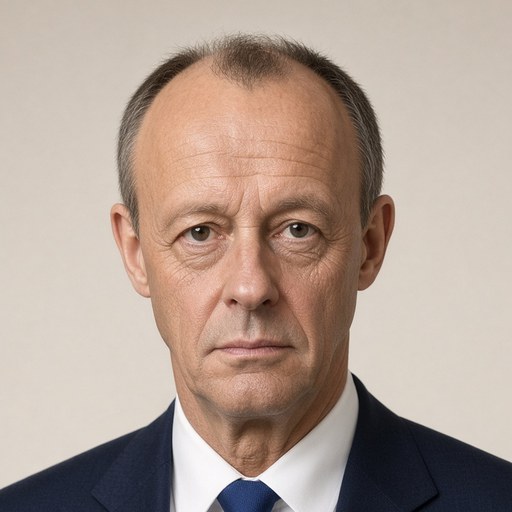
Speech by Chancellor Merz at the Conference of Heads of German Foreign Missions "Working for Germany, Every Day, with Allies and Partners Around the World"
 Friedrich Merz · Chancellor of Germany
- Context
- Merz addressed the Conference of Heads of German Foreign Missions in Berlin in September 2025, speaking on Germany's foreign and security policy amid ongoing Russian aggression in Ukraine.
- Main themes
- Rules-based international order, Russian aggression against Ukraine, German foreign policy, European security architecture, liberal democracy vs autocracy, domestic-foreign policy integration, diplomatic missions, geopolitical power shifts, European Union, transatlantic alliances, new security architecture
- Duration
- ~27 min
- Words
- 3,275
- Sentences
- 152
- Readability
- 42
- Grade
- 12.6
- Syntax
- 3.01
- Vocabulary
- 2.13
Translated from German
The broad sphere of national life a sentence belongs to. Every sentence has an Arena, so it is the denominator the other indices are read against.
Other152 sentences in 37 paragraphs
Dear Minister of Foreign Affairs,
esteemed ladies and gentlemen, state ministers and state secretaries,
dear colleagues from the German Bundestag,
Excellencies,
but above all, my esteemed ladies and gentlemen, representatives of the German diplomatic missions, dear employees of the Federal Foreign Office, the envoys are inviolable – this rule likely marks the beginning of the development of international law in Europe. This rule forms, to this day, the core of modern international law. We all here know that reality has never fully corresponded to the norms of international law. But there have been times when we could rely more on a common set of rules in international politics. It has been ten days since the Russian attack on Kyiv, during which the building of the EU delegation was damaged. You have seen the images of the devastated offices: fallen ceiling panels, shattered windows. Fortunately, no staff member was injured. Unlike the many brutal attacks by Russia on Ukrainian civilians, this time we are only talking about property damage.
However, the photos of the destroyed offices and also the burning government building in Kyiv in recent days carry a symbolic weight that affects us all. They literally show that violence is uprooting what has underpinned our freedom, our security, and our prosperity here in Europe for decades: namely, the rules-based order, the European peace architecture.
Ladies and gentlemen, these photos show: It is the employees of the diplomatic missions, the ambassadors, the envoys, who stand at the forefront of this violent upheaval. Precisely for this reason, it was particularly important for me to accept the invitation of your superior to speak here today at the ambassadors' conference in Berlin with all of you. You know that the so-called turning point was not just any arbitrary date in our calendar and will not remain a singular point in our history. We are dealing with a long-term process of almost global dimensions that has already massively shifted the balance of power in the world and the frameworks of rules.
What we have called the liberal world order is now under pressure from many sides, even within the political West. A new systemic conflict has already broken out between liberal democracies and an axis of autocracies that seeks to challenge and undermine our democracy through open systemic competition. New revisionist alliances are emerging. We have been able to follow this on television in recent days. Crises and conflicts are overlapping. War has returned to Europe.
Ladies and gentlemen, we are thus faced with a very fundamental, indeed historical task: to create a new security architecture that, if all goes well, should be sustainable for several decades. The foreign policy of our country and the security policy of the Federal Republic of Germany have long been a political field that the vast majority of the population did not really care about during the times of the so-called peace dividend. But now, in these times, we can no longer separate domestic policy, economic policy, trade policy, defense policy, and foreign policy. We can no longer think of them separately; not without placing everything in an external and security policy dimension. We can no longer speak of domestic policy and foreign policy as if they were two neatly separated political spheres.
Therefore – allow me this personal remark – I am sometimes surprised by the occasionally audible accusation that I am too focused on foreign policy. Ladies and gentlemen, the engagement of the Federal Government in general, and of the Chancellor and the Federal Minister of Foreign Affairs in particular, in external affairs serves to preserve freedom, peace, and prosperity within our country in the long term. This is also the guiding principle that I ask you to make the foundation of your work in our diplomatic missions around the world. We here in Berlin, in this Federal Government, work just like you every day tirelessly with our allies and partners around the world for Germany. The separation of domestic from foreign political worlds offers nothing less and nothing more than a deceptive security. It suggests that one does not need to care about the wars out there, the aggressors, those who break the rules. It caters to an almost isolationist need in our population. But Germany is not an island, even if we and our country are surrounded by friends, as we like to say.
The close connection to our European friends and neighbors shows how intertwined our internal and external decisions are. The European Union, our security policy, and our economic policy are a living testament to the close interlinking of the living conditions of our country with those of our neighbors. The European Union – you know from which parliament I have taken the greatest influence in my political life – is the prototype of a political order based on rules and agreements. This order has ensured peace, freedom, and prosperity for the peoples of Europe for more than seven decades, precisely because it balances interests, resolves conflicts, and makes war and violence impossible through the power of law. Yes, the European Union can sometimes be very cumbersome. But when we look at the wars in the neighborhood and the new passion for the power of the stronger around the world, we can rightly say: We can do better. We have the European Union.
Thus, today, German foreign policy, also with a view beyond our European borders, holds: If we want to be able to act and remain so, if we want to shape and be reliable for our international partners, then we must think strategically and networked. Then we need – Federal Minister Johann Wadephul has said it – a pragmatic foreign and security policy that is interested in our interests, in Europe's interests.
At the executive level, this has been made more difficult than facilitated in recent years – allow me to say this openly. In European policy, we have therefore restructured the internal EU coordination immediately after the reconstitution of the Federal Government. At the same time, we have – you have all followed this – established a National Security Council in the Chancellery, which is beginning its work these days. For 30 years, there has been discussion in Germany about the establishment of a National Security Council; we decided on it in four months. We have set it in motion because this National Security Council is intended to create a framework in which you can also improve your work in our interest, as we want to eliminate friction losses within the Federal Government and create synergies between the ministries.
How excellent this work is – allow me this personal word – I have been able to experience directly in the first 125 days of my term. The cooperation between the Chancellery and the Federal Foreign Office has functioned smoothly from the very beginning. I would like to first thank my colleague and friend Johann Wadephul sincerely for taking on this very responsible task. I want to thank you – if I may say so – dear Jo, for having taken on this office in rough seas. You have quickly proven that you are the right person to lead this house in these times with your strong compass. Thank you very much for that!
Ladies and gentlemen, all of you have achieved extraordinary things in these first months of the new Federal Government: My, if I may say so, sporty travel program of the past weeks, which the Federal Minister of Foreign Affairs has already mentioned, has not only been excellently supported by all of you, but it has also been excellently followed up, so that the trips can have concrete effects.
This long-awaited signal has been well received by our European neighbors: Germany is taking responsibility. It is a responsibility that, as the economically strongest country on this continent, is not only due to us or falls to us by chance, which we do not take on out of hubris or arrogance, but a responsibility that arises from the geostrategic position of our country and that we must fulfill, in our own interest, but also in the interest of our European neighbors and the entire European Union.
Towards our transatlantic partners and the global community as a whole, we have shown: Germany is a global actor. We want to help shape the process of world reordering that is taking place at this moment in line with our interests and our values.
The goals are defined: Our engagement abroad serves to preserve freedom, peace, and prosperity at home. Our foreign policy is guided by the claim to represent German interests and values. We want to make Germany and Europe secure and competitive for the future. We want to work as part of a strong Europe towards an order in which norms and rules prevail over arbitrariness and the law of the stronger, and in which free peoples live together peacefully and democratically.
Ladies and gentlemen, this Federal Government stands for a reliable and responsible Germany in Europe. We have some homework to catch up on in Europe and also in our own country, particularly regarding competitiveness and defense capability. For me, the German-French partnership is particularly important as a driving force, as it once was. We discussed and held this at the German-French Ministerial Council in Toulon, and I am grateful and also a little proud that this – let me put it this way – heart chamber of Europe is beating powerfully again.
Things are already moving in the right direction: In just a few weeks, we have succeeded, together with our European partners and also with Great Britain – I want to emphasize this explicitly: also with Great Britain. It is outside the European Union, but still firmly connected to the European continent, and I am truly very grateful for that. We have succeeded in finding common positions on a number of important issues and representing them united and confidently externally.
I am particularly referring to our joint effort to support Ukraine on the path to a just peace. Nowhere is it clearer that we must first take care of Europe's security, and everything indicates that Putin's imperialist plan will not end with the conquest of Ukraine, but will only begin with it.
We are experiencing daily, with increasing intensity and aggression, hybrid attacks from Russia on our infrastructure. We are observing provocations in the North and Baltic Seas. We see that Russia and China are trying to secure spheres of influence in Southeast Europe. That Ukraine is also defending our freedom in Europe, ladies and gentlemen, that we are defending it together with Ukraine, is therefore not political prose: it is a fact from which we must draw consequences and have drawn consequences, namely to support Ukraine in its fight for peace in Europe, to stand by it – and this may take a very long time.
Ladies and gentlemen, we stand by the transatlantic promise to stand by each other. NATO remains for us the backbone of a new security architecture for Europe. We will do everything in our power to ensure that this alliance can be led into a good future. We, the Federal Government, have created the important prerequisites for this in a very short time: In the spring, we amended the Basic Law in the German Bundestag to provide the necessary means for our defense spending in this historical situation, in the face of this historical challenge. Because we want to and we will take the lead in strengthening the European pillar of NATO in the coming years.
This is long overdue and strategically more necessary than ever. We should not and cannot expect the USA to continue to bear the main burden for our security in Europe. In doing so, we must face a fact: Our relationship with the USA is changing – the USA is also reassessing its interests, and not just since a few days ago – and so we too must adjust our interests in Europe, without false nostalgia. The USA remains our most important partner. We seek cooperation. We are ready for close coordination and cooperation. But it is becoming apparent that this partnership will be less taken for granted. It will also be formulated more in terms of themes and interests.
That means our position towards the USA will depend on our strength as Europeans. This is new, and it also means: We must engage in new partnerships around the world even more and more offensively than we have done so far, and expand and strengthen existing partnerships.
We are looking at the whole world in this regard. Here too, it holds true: Internal and external cannot be separated. Our dual goal remains to guarantee Germany's security and, above all, Germany's competitiveness in the long term. This new world order is developing simultaneously in many areas; it is evident in the race for raw materials and in the competition for markets. As a resource-poor country, as an export nation, as an industrial nation in the truest sense, we simply cannot afford to remain spectators, and we must not risk becoming dependent again in terms of our security. Dependencies make us vulnerable to coercion.
In particular, China has recently shown that it is willing to exploit trade vulnerabilities for political gain. This means for our China policy: We seek cooperation wherever possible, for example, on climate policy issues, in global crises, and many other challenges. But we also recognize: Systemic rivalry is increasing.
For our security and our competitiveness, it must therefore be a priority to diversify our raw material and trade chains in the interest of strategic sovereignty. For this, we need more European trade agreements like the one with the MERCOSUR countries, and I want to explicitly tell the EU Commission: I am grateful that it has now brought this to the agenda for a final decision with its decision last week.
But we also need more and closer partnerships, particularly, as I will mention only as examples, with India, Indonesia, Brazil, Mexico, Argentina, but also beyond the G20 countries with countries in Latin America, Africa, and Asia. Our development cooperation should also serve as a gateway for this.
I will mention just one more example: Central Asia is rich in resources and seeks proximity to us. On the African continent, the fastest-growing continent in our world, highly promising future markets are currently developing. Let us not leave them to others.
In Germany, ladies and gentlemen, we have long indulged in a certain arrogance regarding the world, a moral arrogance as much as the arrogance that stems from our economic strength. That, for example, innovations, technological revolutions, and economic breakthroughs occur beyond the transatlantic space was, for a long time, not really conceivable for us. However, it has long been the new normal in our world. Therefore, in the coming weeks, I will embark on a series of trips to our partners beyond the transatlantic space. This should also send a signal in the spirit of the guiding principle of strategic partnerships.
To actually bring these partnerships to life, we, ladies and gentlemen, are fundamentally dependent on you, on the ambassadors of Germany around the world, on you in our foreign representations. You can convincingly speak about what Germany has to offer its partners: reliable partnership at eye level, foreign policy that is oriented towards the goal of preserving Germany's peace, freedom, and prosperity, and towards pursuing this goal together with others. – But we also want to leave our children a world that is peaceful and just, where the individual counts with all their dignity.
Ladies and gentlemen, I spoke at the beginning about the rules-based order. We continue to advocate for rules to apply: between states, within international alliances, in trade. Together with our European partners, we will promote a system of rule-based free trade, even towards the USA. In doing so, we must acknowledge that, for example, the World Trade Organization has become dysfunctional and can no longer fulfill its original role. Now our creativity and commitment are required to develop a new system of trade rules and partnerships.
We are experiencing a loss of significance of international organizations overall. So far, the commentary on events sounds as if the return of arbitrariness and violence, of arbitrariness and rule-breaking in international politics is an unavoidable historical necessity that we must simply accept. I want to explicitly disagree with that. It is up to us to restore the necessary weight to the normative power of rules. It is up to us to revive the multilateral structures by bringing them up to date with the new era. We will also have to move forward on this in the coming years. That is why we support the UN 80 initiative; that is why we advocate for a reform of the UN Security Council, and that is why Germany is running for a non-permanent seat on the Security Council in the years 2027 and 2028.
Ladies and gentlemen, esteemed ambassadors, these are the outlines – more cannot be today – of an interest-driven German foreign and security policy, with which we, I believe, have very good chances of securing freedom, peace, and prosperity in our own country and beyond, especially in Europe. Making practical policy from this program, from these few sentences, is our common task. Times of upheaval – and we are experiencing them; they are times of deep upheaval – are times for politics and diplomacy. To put it perhaps a bit more concretely: Never has the Federal Republic of Germany needed your experience, ladies and gentlemen, as much as it does now, your foresight, your willingness to engage, your experiences, your knowledge, and also – forgive me for the word! – your willingness to make sacrifices. The word may have fallen out of fashion, but you all know that the diplomatic service often comes with high personal burdens and personal risks, which demand much not only from you but also, and especially, from your families. Therefore, let me also express my sincere gratitude to them at this point. It is not a given that you and your families carry out your work often for decades in some of the most challenging postings. It demands great respect, and this respect is expressed by the entire Federal Government.
Finally, I would like to ask you: Approach your tasks with all courage and creativity! We are indeed living in an era of unparalleled dynamism. We, who are in responsible positions, also have the opportunity to set the course in a short time or at least to halt negative developments. We speak of a turning point in history, or as the Federal President puts it, a break in epochs. Sometimes we speak of it as if it were a calamity that has befallen us. There is some truth to this in that we have closed our eyes to the threats of the world for too long. In the meantime, we see with quite clear vision. As it appears, we must expect in Germany and Europe in the coming years and perhaps decades to face many adversities and challenges that we do not yet know today.
But as with every turning point in history, opportunities also arise. We must seize these opportunities, boldly and with a watchful eye. For we can write the future. That must be the fundamental conviction of any society that lives in freedom. It contains a promise as well as a mandate, a mandate to you, a promise from us. Let us work together on this! Thank you for your commitment!
The original German. The tags above are read on the English translation's sentences.
Sehr geehrter Herr Bundesaußenminister,
sehr geehrte Damen und Herren Staatsminister und Staatssekretäre,
liebe Kolleginnen und Kollegen aus dem Deutschen Bundestag,
Exzellenzen,
vor allem aber meine sehr geehrten Damen und Herren Vertreterinnen und Vertreter der deutschen Auslandsvertretungen,
liebe Mitarbeiterinnen und Mitarbeiter des Auswärtigen Amtes,
unverletzlich sind die Gesandten – mit dieser Regel beginnt wohl die Entwicklung des Völkerrechts in Europa. Diese Regel bildet bis heute sozusagen den Kern des modernen Völkerrechts. Wir alle hier wissen, dass die Wirklichkeit den Normen des Völkerrechts nie ganz entsprochen hat. Aber es hat Zeiten gegeben, zu denen wir uns in der internationalen Politik auf ein gemeinsames Regelwerk besser verlassen konnte. Zehn Tage liegt der russische Angriff auf
Kyjiw
, bei dem das Gebäude der
EU
-Delegation beschädigt wurde, nun zurück. Sie haben die Bilder der verwüsteten Büroräume gesehen: herabgebrochene Deckenpaneele, zerstörte Fenster. Zum großen Glück wurde kein Mitarbeiter verletzt. Anders als bei den vielen brutalen Angriffen Russlands auf ukrainische Zivilisten sprechen wir diesmal nur von einem Gebäudeschaden.
Aber die Fotos der zerstörten Büros und auch das brennende Regierungsgebäude in
Kyjiw
in den letzten Tagen haben doch eine Symbolkraft, die uns alle nicht unberührt lässt. Sie zeigen im wahrsten Sinne des Wortes, dass mit Gewalt aus den Angeln gehoben wird, was für Jahrzehnte unsere Freiheit, unsere Sicherheit und unseren Wohlstand auch und gerade hier in Europa begründet hat: eben die regelbasierte Ordnung, die europäische Friedensarchitektur.
Meine Damen und Herren, diese Fotos zeigen: Es sind die Mitarbeiterinnen und Mitarbeiter der diplomatischen Missionen, die Botschafterinnen und Botschafter, die Gesandten, die in der ersten Reihe dieses gewaltsamen Umbruchs stehen. Genau aus diesem Grund war es mir ein besonderes Anliegen, der Einladung Ihres Dienstherrn zu folgen, an diesem Tag der Botschafterkonferenz hier in Berlin zu und mit Ihnen allen zu sprechen. Sie wissen, dass die sogenannte Zeitenwende nicht irgendein beliebiges Datum in unserem Kalender war und kein singulärer Punkt in unserer Geschichte bleibt. Wir haben es mit einem längerfristigen Prozess geradezu globalen Ausmaßes zu tun, der bereits jetzt die Kräfteverhältnisse auf der Welt und die Regelwerke massiv verschoben hat.
Das, was wir liberale Weltordnung genannt haben, steht nun von vielen Seiten unter Druck, auch im Inneren des politischen Westens. Ein neuer Systemkonflikt ist bereits aufgebrochen zwischen liberalen Demokratien und einer Achse der Autokratien, die sich stützt und den offenen Systemwettbewerb zu unserer Demokratie geradezu sucht. Es entstehen neue revisionistische Allianzen. Wir konnten es in den letzten Tagen im Fernsehen mitverfolgen. Krisen und Konflikte überlagern sich. Der Krieg ist nach Europa zurückgekehrt.
Meine Damen und Herren, wir stehen damit vor der sehr grundsätzlichen, vor der geradezu historischen Aufgabe, eine neue Sicherheitsarchitektur zu schaffen, die, wenn es gut geht, für mehrere Jahrzehnte tragfähig sein sollte. Die Außenpolitik unseres Landes und die Sicherheitspolitik der Bundesrepublik Deutschland waren in Zeiten der sogenannten Friedensdividende über lange Zeit ein Politikfeld, für das sich die ganz große Mehrheit der Bevölkerung nicht wirklich interessiert hat. Aber jetzt, in diesen Zeiten, können wir Innenpolitik, Wirtschaftspolitik, Handelspolitik, Verteidigungspolitik und Außenpolitik nicht mehr voneinander trennen. Wir können sie nicht mehr getrennt denken; nicht, ohne alles auch in eine außen- und sicherheitspolitische Dimension zu rücken. Wir können nicht mehr von Innenpolitik und von Außenpolitik wie von zwei fein säuberlich getrennten politischen Sphären sprechen.
Deshalb – erlauben Sie mir diese persönliche Bemerkung – überrascht mich auch hin und wieder der gelegentlich vernehmbare Vorwurf, ich würde mich zu stark mit der Außenpolitik beschäftigen. Meine Damen und Herren, das Engagement der Bundesregierung im Allgemeinen sowie des Bundeskanzlers und des Bundesministers des Auswärtigen im Besonderen im Äußeren dient dazu, Freiheit, Frieden und Wohlstand im Inneren unseres Landes auf Dauer zu bewahren. Das ist auch das Leitmotiv, das ich Sie zur Grundlage Ihrer Arbeit in unseren Auslandsvertretungen auf der Welt zu machen bitte. Wir hier in Berlin, in dieser Bundesregierung arbeiten so wie Sie jeden Tag unermüdlich mit unseren Verbündeten und Partnern auf der ganzen Welt für Deutschland. Die Trennung der innenpolitischen von der außenpolitischen Welt bietet nicht weniger und nicht mehr als eine trügerische Sicherheit. Sie suggeriert, dass man sich nicht um die Kriege da draußen, die Aggressoren, diejenigen, die die Regeln brechen, kümmern müsste. Sie bedient ein geradezu isolationistisches Bedürfnis in unserer Bevölkerung. Aber Deutschland ist keine Insel, auch wenn wir und unser Land von Freunden umgeben sind, wie wir es so schön sagen.
Gerade die enge Verbundenheit zu unseren europäischen Freunden und Nachbarn zeigt doch, wie sehr die inneren und die äußeren Entscheidungen miteinander verwoben sind. Die Europäische Union, unsere Sicherheitspolitik und unsere Wirtschaftspolitik sind ein lebendiger Beleg für die enge Verzahnung der Lebensumstände unseres Landes mit denen unserer Nachbarn. Die Europäische Union – Sie wissen, aus welchem Parlament ich die bisher größte Prägung meines politischen Lebens mitgenommen habe – ist der Prototyp einer auf Regeln und Absprachen basierenden politischen Ordnung. Diese Ordnung hat immerhin für mehr als sieben Jahrzehnte Frieden, Freiheit und Wohlstand für die Völker Europas gewährleistet, eben weil sie Interessen ausgleicht, Konflikte schlichtet und mit der Kraft des Rechts Krieg und Gewalt unmöglich macht. Ja, die Europäische Union ist manchmal sehr sperrig. Aber wenn wir die Kriege in der Nachbarschaft und die neue Leidenschaft für die Macht des Stärkeren überall auf der Welt betrachten, dann können wir mit Fug und Recht sagen: Wir können das besser. Wir haben die Europäische Union.
So gilt gerade heute für die deutsche Außenpolitik, auch mit Blick über unsere europäischen Grenzen hinaus: Wenn wir handlungsfähig sein und bleiben wollen, wenn wir mitgestalten und für unsere internationalen Partner verlässlich sein wollen, dann müssen wir strategisch und vernetzt denken. Dann brauchen wir – Bundesminister Johann Wadephul hat es gesagt – eine pragmatische Außen- und Sicherheitspolitik, die an unseren Interessen, an Europas Interessen, interessiert ist.
Auf exekutiver Ebene ist das in den vergangenen Jahren – erlauben Sie mir das offen auszusprechen – durch Entscheidungsstrukturen eher erschwert als erleichtert worden. In der Europapolitik haben wir darum unmittelbar nach der Neukonstituierung der Bundesregierung die interne
EU
-Koordinierung neu aufgestellt. Gleichzeitig haben wir – Sie haben es alle verfolgt – einen Nationalen Sicherheitsrat im Bundeskanzleramt eingerichtet, der in diesen Tagen seine Arbeit aufnimmt. Seit 30 Jahren wird in Deutschland über die Einrichtung eines Nationalen Sicherheitsrats diskutiert; wir haben es in vier Monaten entschieden. Wir haben ihn auf den Weg gebracht, weil dieser Nationale Sicherheitsrat einen Rahmen schaffen soll, in dem auch Sie Ihre Arbeit in unserem Interesse bessermachen können sollen, weil wir Reibungsverluste innerhalb der Bundesregierung beseitigen und Synergien zwischen den Häusern schaffen wollen.
Wie exzellent diese Arbeit ist – dieses persönliche Wort erlauben Sie mir –, habe ich in den ersten 125 Tagen meiner Amtszeit ganz unmittelbar erfahren dürfen. Die Zusammenarbeit zwischen Bundeskanzleramt und Auswärtigem Amt hat von Anfang an reibungslos funktioniert. Ich möchte zuallererst meinem Kollegen und Freund Johann Wadephul herzlich für die Übernahme dieser sehr verantwortungsvollen Aufgabe danken. Ich möchte Dir – wenn ich es so sagen darf –, lieber Jo, dafür danken, bei hohem Wellengang dieses Amt übernommen zu haben. Du hast in kürzester Zeit unter Beweis gestellt, dass Du mit Deinem starken Kompass der Richtige bist, dieses Haus in diesen Zeiten zu führen. Herzlichen Dank dafür!
Meine Damen und Herren, Sie alle haben in diesen ersten Monaten der neuen Bundesregierung Außergewöhnliches geleistet: Mein, wenn ich so sagen darf, sportliches Reiseprogramm der vergangenen Wochen, das der Bundesaußenminister bereits genannt hat, ist nicht nur exzellent von Ihnen allen unterstützt worden, es ist vor allem auch exzellent nachbereitet worden, sodass die Reisen konkrete Wirkungen entfalten.
Bei unseren europäischen Nachbarn ist dieses lang erwartete Signal gut angekommen: Deutschland übernimmt Verantwortung. Es ist eine Verantwortung, die uns als wirtschaftlich stärkstes Land auf diesem Kontinent nicht nur zukommt oder gar zufällt, die wir nicht aus Hybris oder Überheblichkeit übernehmen, sondern eine Verantwortung, die uns aus der geostrategischen Lage unseres Landes zukommt und die wir wahrnehmen müssen, im eigenen Interesse, aber auch im Interesse unserer europäischen Nachbarn und der gesamten Europäischen Union.
Gegenüber unseren transatlantischen Partnern und der Weltgemeinschaft im Ganzen haben wir gezeigt: Deutschland ist ein globaler Akteur. Wir wollen den Prozess der Weltneuordnung, der in diesem Augenblick stattfindet, im Sinne unserer Interessen und unserer Werte mitgestalten.
Die Ziele sind definiert: Unser Engagement im Äußeren dient der Bewahrung von Freiheit, Frieden und Wohlstand im Inneren. Unsere Außenpolitik ist von dem Anspruch geleitet, deutsche Interessen und Werte zu vertreten. Wir wollen Deutschland und Europa für die Zukunft sicher und wettbewerbsfähig gestalten. Wir wollen als Teil eines starken Europas an einer Ordnung mitarbeiten, in der Normen und Regeln statt Willkür und das Recht des Stärkeren gelten und in der freie Völker friedlich und demokratisch zusammenleben.
Meine Damen und Herren, diese Bundesregierung steht in Europa für ein verlässliches und verantwortungsbewusstes Deutschland. Wir haben dabei einige Hausaufgaben in Europa und auch im eigenen Land nachzuholen, etwa in Sachen Wettbewerbsfähigkeit und Verteidigungsfähigkeit. Dabei kommt für mich vor allem die deutsch-französische Partnerschaft als Taktgeber in Frage, der sie schon einmal war. So haben wir es gerade beim deutsch-französischen Ministerrat in
Toulon
besprochen und gehalten, und ich bin dankbar und auch ein wenig stolz darauf, dass diese – lassen Sie es mich so sagen – Herzkammer Europas wieder kraftvoll schlägt.
Die Dinge bewegen sich bereits in die richtige Richtung: Es ist uns in wenigen Wochen gelungen, gemeinsam mit unseren europäischen Partnern und auch mit Großbritannien ‑ ‑ ‑ Ich will das ausdrücklich unterstreichen: auch mit Großbritannien. Es ist zwar außerhalb der Europäischen Union, ist aber immer noch fest verbunden mit dem europäischen Kontinent, und ich bin dafür wirklich sehr dankbar. Uns ist es also gelungen, in einer ganzen Reihe von wichtigen Fragen gemeinsame Positionen zu finden und sie geschlossen und selbstbewusst nach außen zu vertreten.
Ich spreche insbesondere von unserer gemeinsamen Anstrengung, die Ukraine auf dem Weg zu einem gerechten Frieden zu unterstützen. Nirgendwo wird deutlicher, dass wir uns zuallererst um Europas Sicherheit kümmern müssen, und es deutet alles darauf hin, dass Putins imperialistischer Plan nicht mit der Eroberung der Ukraine enden, sondern damit erst beginnen würde.
Wir erleben täglich in wachsender Intensität und Aggressivität hybride Angriffe Russlands auch auf unsere Infrastruktur. Wir beobachten die Provokationen in der Nord- und Ostsee. Wir sehen, dass Russland und China sich in Südosteuropa Einflusssphären zu sichern versuchen. Dass die Ukraine damit auch unsere Freiheit in Europa verteidigt, meine Damen und Herren, dass wir sie gemeinsam mit der Ukraine verteidigen, ist insofern keine politische Prosa: Es ist eine Tatsache, aus der wir Konsequenz ziehen müssen und gezogen haben, nämlich die Ukraine in ihrem Kampf für einen Frieden in Europa zu unterstützen, ihr beizustehen – und dies kann noch eine sehr lange Zeit dauern.
Meine Damen und Herren, wir stehen zum transatlantischen Versprechen, füreinander einzustehen. Die
NATO
bleibt für uns das Rückgrat einer neuen Sicherheitsarchitektur für Europa. Wir werden uns mit aller Kraft dafür einsetzen, dass dieses Bündnis in eine gute Zukunft geführt werden kann. Wir, die Bundesregierung, haben in kürzester Zeit die wichtigen Voraussetzungen dafür geschaffen: Wir haben im Frühjahr im Deutschen Bundestag das Grundgesetz geändert, um in dieser historischen Situation, gegenüber dieser historischen Herausforderung, die notwendigen Mittel für unsere Verteidigungsausgaben aufzubringen. Denn wir wollen und wir werden in den nächsten Jahren mit der Aufgabe vorangehen, den europäischen Pfeiler der
NATO
zu stärken.
Das ist überfällig und strategisch notwendiger denn je. Weder sollten noch können wir von den
USA
erwarten, dass sie für unsere Sicherheit in Europa weiterhin die Hauptlast tragen. Dabei müssen wir einer Tatsache ins Auge sehen: Unser Verhältnis zu den
USA
wandelt sich – auch die
USA
bewerten ihre Interessen neu, und das nicht erst seit einigen Tagen –, und so müssen auch wir in Europa unsere Interessen justieren, ohne falsche Nostalgie. Die
USA
bleiben unser wichtigster Partner. Wir suchen die Zusammenarbeit. Wir stehen zur engen Abstimmung und Kooperation bereit. Aber es zeichnet sich ab, dass diese Partnerschaft weniger selbstverständlich sein wird. Sie wird auch dort stärker themen- und interessenbezogen formuliert werden.
Das heißt, unsere Position gegenüber den
USA
wird von unserer Stärke als Europäer abhängen. Das ist neu, und das heißt außerdem: Wir müssen noch mehr und noch offensiver, als wir es bislang getan haben, neue Partnerschaften auf der Welt eingehen und bestehende Partnerschaften ausbauen und verstärken.
Wir nehmen dabei die ganze Welt in den Blick. Auch hier gilt: Innen und Außen lassen sich nicht trennen. Unser doppeltes Ziel bleibt es, Deutschlands Sicherheit und vor allem Deutschlands Wettbewerbsfähigkeit auf Dauer zu garantieren. Diese neue Weltordnung entwickelt sich auf vielen Gebieten gleichzeitig, sie zeigt sich im Wettlauf um Rohstoffe und im Wettbewerb um Märkte. Wir können es uns als rohstoffarmes Land, als Exportland, als Industrieland im Wortsinn schlicht nicht leisten, dabei Zuschauer zu bleiben, und wir dürfen es auch im Sinne unserer Sicherheit nicht riskieren, wieder abhängig zu werden. Abhängigkeiten machen uns erpressbar.
Insbesondere China hat zuletzt gezeigt, dass es handelspolitische Vulnerabilitäten machtpolitisch auszunutzen bereit ist. Das heißt für unsere Chinapolitik: Wir suchen, wo immer es möglich ist, die Zusammenarbeit, etwa in Fragen der Klimapolitik, bei globalen Krisen und vielen anderen Herausforderungen mehr. Aber wir erkennen gleichzeitig: Die Systemrivalität nimmt zu.
Für unsere Sicherheit und für unsere Wettbewerbsfähigkeit muss es also eine Priorität sein, dass wir unsere Rohstoff- und Handelsketten im Sinne der strategischen Souveränität diversifizieren. Dafür brauchen wir mehr europäische Handelsabkommen wie etwa das mit den MERCOSUR-Staaten, und ich will der
EU
-Kommission ausdrücklich sagen: Ich bin dankbar, dass sie das nun mit ihrer Entscheidung in der letzten Woche auf die Tagesordnung der endgültigen Entscheidung gebracht hat.
Wir brauchen aber auch mehr und engere Partnerschaften, insbesondere, wie ich hier nur beispielhaft nennen will, mit Indien, mit Indonesien, mit Brasilien, Mexiko, Argentinien, aber auch jenseits der
G20
-Länder mit Ländern in Lateinamerika, in Afrika, in Asien. Dafür sollte unsere Entwicklungszusammenarbeit auch ein Türöffner sein.
Ich nenne nur ein weiteres Beispiel: Zentralasien ist rohstoffreich und sucht die Nähe zu uns. Auf dem afrikanischen Kontinent, dem am schnellsten wachsenden Kontinent unserer Welt, entwickeln sich im Augenblick höchst chancenreiche Zukunftsmärkte. Überlassen wir sie nicht anderen.
Wir haben uns in Deutschland, meine Damen und Herren, mit Blick auf die Welt lange einem gewissen Hochmut hingegeben, einem moralischen Hochmut mindestens so sehr wie dem Hochmut, der aus unserer wirtschaftlichen Stärke erwächst. Dass etwa Innovationen, technologische Revolutionen, wirtschaftlicher Aufbruch jenseits des transatlantischen Raumes entstehen, war für uns lange Zeit eigentlich nicht so richtig vorstellbar. Es ist aber längst die neue Normalität auf unserer Welt. Ich werde deshalb in den kommenden Wochen zu einer Reihe von Reisen zu unseren Partnern jenseits des transatlantischen Raumes aufbrechen. Auch das soll ein Signal im Sinne des Leitprinzips strategischer Partnerschaften setzen.
Um diese Partnerschaften dann tatsächlich mit Leben zu erfüllen, sind wir, meine Damen und Herren, ganz wesentlich auf Sie angewiesen, auf die Botschafterinnen und Botschafter Deutschlands in der Welt, auf Sie in unseren Auslandsvertretungen. Sie können überzeugend davon sprechen, was Deutschland seinen Partnern zu bieten hat: verlässliche Partnerschaft auf Augenhöhe, Außenpolitik, die an dem Ziel orientiert ist, Deutschlands Frieden, Freiheit und Wohlstand zu bewahren, und daran, dieses Ziel gemeinsam mit anderen zu verfolgen. – Aber wir wollen auch insgesamt unseren Kindern diese Welt als einen Ort hinterlassen, der friedlich und gerecht ist und in der der Einzelne mit seiner ganzen Würde zählt.
Meine Damen und Herren, ich habe zu Beginn von der regelbasierten Ordnung gesprochen. Wir setzen uns weiterhin dafür ein, dass Regeln gelten: zwischen Staaten, innerhalb von internationalen Bündnissen, im Handel. Wir werden gemeinsam mit unseren europäischen Partnern für ein System des regelgebundenen Freihandels werben, auch gegenüber den
USA
. Dabei müssen wir uns eingestehen, dass etwa die Welthandelsorganisation mittlerweile dysfunktional ist und ihre ursprüngliche Rolle nicht mehr erfüllen kann. Jetzt sind unsere Kreativität und unser Engagement gefragt, ein neues System handelspolitischer Regeln und Partnerschaften zu entwickeln.
Wir erleben einen Bedeutungsverlust der internationalen Organisationen insgesamt. Bislang klingt es in der Kommentierung des Geschehens so, als wäre die Rückkehr von Willkür und Gewalt, von Willkür und Regelbruch in die internationale Politik eine unabweisliche historische Gesetzlichkeit, der wir uns eben fügen müssten. Ich will dem ausdrücklich widersprechen. Es liegt an uns, der normativen Kraft von Regeln wieder das notwendige Gewicht zu verleihen. Es liegt an uns, die multilateralen Strukturen wiederzubeleben, indem wir sie auf die Höhe der neuen Zeit bringen. Wir werden auch dabei in den nächsten Jahren vorangehen müssen. Deshalb unterstützen wir die
UN
80-Initiative; deshalb setzen wir uns für eine Reform des
UN
-Sicherheitsrates ein, und deshalb kandidiert Deutschland für einen nicht-ständigen Sitz im Sicherheitsrat in den Jahren 2027 und 2028.
Meine Damen und Herren, sehr geehrte Botschafterinnen und Botschafter, das sind die Konturen – mehr kann es heute gar nicht sein – einer interessengeleiteten deutschen Außen- und Sicherheitspolitik, mit der wir, wie ich finde, sehr gute Chancen haben, die Freiheit, den Frieden und den Wohlstand in unserem eigenen Land und darüber hinaus vor allem in Europa zu sichern. Aus diesem Programm, aus diesen wenigen Sätzen praktische Politik zu machen, das ist unsere gemeinsame Aufgabe. Zeiten des Umbruchs – und wir erleben sie; es sind Zeiten eines tiefen Umbruchs ‑ sind Zeiten der Politik und der Diplomatie. Um es vielleicht noch etwas konkreter zu sagen: Nie hat die Bundesrepublik Deutschland in den vergangenen Jahrzehnten Ihre Erfahrung, meine Damen und Herren, so sehr gebraucht, Ihre Weitsicht, Ihre Einsatzbereitschaft, Ihre Erfahrungen, Ihre Kenntnisse und auch – verzeihen Sie mir das Wort! – Ihre Opferbereitschaft. Das Wort ist vielleicht etwas aus der Mode gekommen, aber Sie alle wissen, dass der diplomatische Dienst immer wieder mit hoher persönlicher Belastung und mit persönlicher Gefährdung einhergeht, die nicht nur Ihnen viel abverlangt, sondern auch und gerade Ihren Familien. Lassen Sie mich an dieser Stelle daher auch ihnen sehr ausdrücklich meinen Dank sagen. Es ist nicht selbstverständlich, wie Sie und Ihre Familien Ihre Arbeit oft über Jahrzehnte zum Teil an schwierigsten Dienstorten leisten. Es verlangt hohen Respekt, und diesen Respekt bringt Ihnen die gesamte Bundesregierung zum Ausdruck.
Ich möchte Sie schließlich bitten: Gehen Sie mit allem Mut und jeder Kreativität an Ihre Aufgaben! Wir leben eben in einer Epoche unvergleichbarer Dynamik. Wir, die wir in den verantwortlichen Positionen sind, haben aber auch die Chance, in kurzer Zeit Weichen zu stellen oder zumindest Fehlentwicklungen aufzuhalten. Wir sprechen von der Zeitenwende oder wie der Bundespräsident vom Epochenbruch. Wir sprechen davon manchmal so wie von einem Schicksalsschlag, der auf uns herabgekommen ist. Daran ist insofern etwas Wahres, als wir für zu lange Zeit die Augen vor den Bedrohungen der Welt verschlossen haben. Inzwischen sehen wir mit ziemlich klarem Blick. So wie es aussieht, müssen wir in Deutschland und in Europa in den nächsten Jahren und vielleicht Jahrzehnten noch mit manchen Widrigkeiten und mit manchen Zumutungen, die wir heute noch gar nicht kennen, rechnen.
Aber wie bei jedem Epochenbruch eröffnen sich damit auch Chancen. Diese Chancen müssen wir ergreifen, beherzt und mit wachem Blick. Denn wir können Zukunft schreiben. Das muss die Grundüberzeugung einer jeden Gesellschaft sein, die in Freiheit lebt. Darin steckt ein Versprechen genauso wie ein Auftrag, ein Auftrag an Sie, ein Versprechen von uns. Lassen Sie uns gemeinsam daran arbeiten! Vielen Dank für Ihr Engagement!