




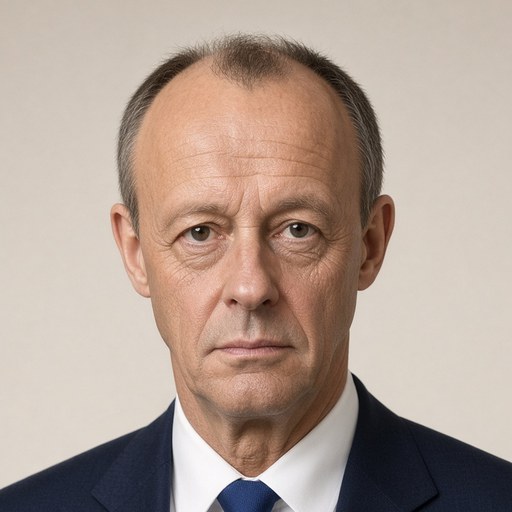
Speech by Federal Chancellor Friedrich Merz at the Association Day of the Central Association of the German Construction Industry on November 5, 2025, in Berlin:
 Friedrich Merz · Chancellor of Germany
- Context
- Merz addressed the Central Association of the German Construction Industry's annual association day in Berlin on November 5, 2025, outlining Germany's infrastructure and defense investments.
- Main themes
- German construction industry, infrastructure investment program, European Union cohesion, economic stagnation and reform, geopolitical challenges, NATO and defense, authoritarian political systems, rules-based international order, debt and fiscal policy, euro stability, open markets and free trade
- Duration
- ~27 min
- Words
- 3,202
- Sentences
- 178
- Readability
- 55
- Grade
- 10.0
- Syntax
- 2.90
- Vocabulary
- 1.95
Translated from German
The broad sphere of national life a sentence belongs to. Every sentence has an Arena, so it is the denominator the other indices are read against.
Other178 sentences in 40 paragraphs
Dear Mr. President, Mr. Schubert-Raab,
Mr. Pakleppa,
ladies and gentlemen,
thank you very much for the warm welcome! I am a bit late because the journey here was filled with too many detours. But I am here. And I am pleased to see you. I see some colleagues from the Parliament. And I am glad that you have come in large numbers to your annual association meeting in Berlin!
You come to Berlin at an extraordinarily exciting and challenging time, not only in national politics but also in European and international politics. I want to say right at the beginning: These are not normal times in which we meet; rather, we are currently experiencing changes in the world that we probably would not have thought possible together a year ago.
I will not tire of saying again and again: We will probably only understand what we are currently experiencing after several years have passed. It is not just the war in Ukraine. It is not just China with newfound confidence. It is not just Russia's aggression and at the same time an American president who hardly adheres to rules anymore. Authoritarian political systems are becoming increasingly attractive around the world. And we – what we once called "the West" – stand there insisting on a rules-based order that fewer and fewer governments in this world are willing to adhere to.
Because this is the case – and I want to say this right at the beginning as well – I will not relent in my efforts to keep this European Union together, despite some criticism. Because if there is something that strengthens us in Germany in the long run, it is cohesion in Europe. That has made us strong, that has made Germany strong, that has enabled reunification. And that is also the only chance we have to remain strong and successful with a country of about 80 million inhabitants in the middle of Europe in the long run. In any case, I will not cease in my commitment to try and show that what we have achieved in Europe, what we once called enlightenment – with open, free societies, with liberal democracies, with a social rule of law – is superior to any effort to slide into authoritarian political systems.
In this respect, we in this federal government, which will have been in office for exactly six months tomorrow, are faced with challenges that perhaps no federal government has had to cope with in recent years and decades. I say this without any self-pity, without any lamentation. But all of this is a framework that we are faced with, which is extraordinary.
At the same time, we are in the third year of economic stagnation. Our economy is no longer growing. This has a lot to do with the described international situation, with geopolitical crises, with a regression into protectionism. But it also has something to do with the lack of reforms in our own country. We are trying to correct this step by step now. We want open markets, we want free trade. But we know that we must prove ourselves anew and that all the prerequisites for a successful economic policy lie in creating better framework conditions than those we have encountered in recent years.
Let me say a few things about what we have already tried to initiate in recent months. Even before we took over governmental responsibility, we made decisions regarding our Basic Law with the 21st German Bundestag. We amended the Basic Law with the necessary two-thirds majorities in the Bundestag and Bundesrat to enable a large investment program for our infrastructure and at the same time to equip the Bundeswehr so that we can become defensible again – in Germany, in Europe, and in NATO. This latter decision has been groundbreaking for all of NATO – not because the Americans wanted it that way, but because we wanted it for ourselves. If we had not made this decision in Germany, NATO would have almost certainly collapsed in early June in The Hague. It would have been the last NATO meeting of this kind and possibly the definitively last one with American participation.
This goes hand in hand with an infrastructure investment program in the order of 500 billion euros for the next twelve years. We have never provided investment funds in Germany on such a scale as with this program. Yes, I admit: These are high debts that we are incurring now. But if there is a country in Europe that has the capacity to bear such debt, it is the Federal Republic of Germany. This is due to the fact that we have largely handled our budgets carefully in recent years and decades and that what we are doing today is still within the framework of European debt rules.
We are keeping an eye on the stability of the euro, which depends significantly on us. This is a fact that we must always keep in mind. This euro, from which we benefit the most, must remain stable. We also need a stable currency in the long run.
With what we have started in the first six months, we can certainly hold our heads high – despite some criticism, some of which is even justified. But the first steps have been taken. We have now created space with these investment opportunities. And we have also improved tax framework conditions. Just before the parliamentary summer break, on July 11, a large package with declining depreciation was passed in the Bundesrat, as we have never had in Germany before: three times 30 percent on all new investments in the fixed assets of your companies. This means in plain terms: After three years, two-thirds of the investments are already depreciated.
But you have to earn depreciation. You know that – not everyone here in Berlin, but you know that. Therefore, we must continue to work on the framework conditions and improve them further. We know that we must really implement a large part of the reforms in our social security systems. We have agreed on this in the coalition. And the first steps have already been taken.
We will introduce the so-called active pension on January 1, 2026. And this directly affects your companies. You will be able to employ employees in your companies longer than until the statutory retirement age, which is currently around 66 years and a few months. These employees will be able to earn an additional 2,000 euros tax-free every month starting January 1, 2026. We will pass this still this year. And if all goes well, it will be passed in the Bundesrat on December 19, so that it will come into effect on January 1, 2026.
This is a small contribution. But it is a contribution that also serves a significant regulatory purpose. The message to the population is: We want those who are the performance drivers in the companies, the employees, the shift leaders, those who work in your companies, to be able to work longer if they want to and to find good framework conditions for that. We must promote the willingness in our country to work longer again. Whether we can achieve this on the basis of voluntariness and good incentives will be seen in time. I am personally optimistic that this offer will be accepted by many in your companies starting next year.
We will launch a comprehensive modernization agenda. And that is why it is good that we are meeting today. Because this morning, the federal cabinet approved the most comprehensive digitalization and modernization agenda that has been adopted in Germany in recent decades.
We are abolishing entire laws. We are modernizing our state. We are digitalizing processes and procedures that extend into your areas, the construction industry. You will also see this with the transfer of buildings at notaries and much more. We are really stepping on the gas with the digitalization of our country.
Perhaps the biggest project in this context will be a purely digital platform that we will call the Work-and-Stay Agency, where in the future those who want to work in Germany and come from abroad, regardless of which country they come from, will find everything from a single source – the work permit, the residence permit, and the recognition of their professional qualifications – so that they can work in Germany.
I may say this: This has been a concern of my faction and our two parties, which we brought into the coalition negotiations, namely to separate the procedures: on the one hand, the asylum procedures, which inevitably go into the social systems, and on the other hand, the procedures that are supposed to go into the labor market and not into the asylum procedure. We are now separating these procedures right at the top, right at the beginning. Those who want to work in Germany – and there are many around the world – no longer need to go into the asylum procedure. As soon as this agency is established – agency sounds like a new authority; it will not be a new authority, it will be a purely digital platform – as soon as this platform exists, no one will need to go into the asylum procedure to eventually enter the German labor market, but it will now be strictly separated.
With this, we are creating something that we want to be and must be. I am one of those who have been saying for many years: We want to be an attractive immigration country, but not for those who come into the social systems, but for those we need in the labor market in Germany.
If all signs are not misleading – we have received some news about this today as well – then there are first tentative silver linings on the horizon – it is nothing more than that, but they are there – that, for example, order intake from the main construction industry is slowly recovering. Not from yours, but from the main construction industry, we know that order intake compared to the previous year in the summer of 2025 has already increased by nine percent. These are initial signs that we are returning to a path of growth.
We still know: That is not enough; we must do more. That is why we are also working to implement this concretely now. We will enable fundamental simplifications in the area of building permits, in all processes up to the approvals. We will invest the money we have primarily in transport infrastructure. The principle applies: preservation before new construction. It is always great for a politician to cut ribbons, but if the infrastructure next to it is rotting, which was put into operation 30 years ago, then the most beautiful ribbon is of no use if the roads around it are no longer in order. That will now improve. Therefore, we have provided an additional three billion euros for the new construction of road infrastructure for this legislative period.
With this, everything that is ready for construction can be built in this election period – I suspect even beyond that. Where there are permits, where planning approval procedures have been completed, where building readiness has been granted, construction can take place. And this will trigger a significant order boom this year and in the next two years.
Your president mentioned this to me as I entered, and that is why I want to address it as well. We are in the process of modernizing European and German procurement law. We will ensure that this is designed to be friendly to small and medium-sized enterprises, so that the medium-sized sector will not be left empty-handed in the future when larger contracts are awarded. We have the medium-sized sector in mind.
The goal remains, however, that we achieve more digitalization and less bureaucracy. These procedures will also be digitalized.
In the area of defense and defense infrastructure, significant investments are now being made. By 2040, the Ministry of Defense expects investments in military infrastructure of over 67 billion euros. These are around 8,000 construction projects for the Bundeswehr that are currently pending and will be in the coming years. This will only succeed in a joint effort by the federal government, the states, and the construction industry.
We will create the necessary legislative conditions for this, for example, with a special planning and acceleration law for procurement, with further exceptions for the Bundeswehr in procurement law. You see, we are doing very well down to the details.
The next point is housing construction. We are doing a lot here as well. We flank, and we show that. You can see that we are truly taking advantage of the opportunities we have right now. The federal government is providing a record sum of 23.5 billion euros for social housing construction until 2029. This will be co-financed by the states, so based on experience, about twice that amount can flow into social housing construction. Federal funds for urban development promotion will also be gradually doubled by 2029 – new efforts for a livable public space. And all of this is financially well-supported.
Finally: The Federal Ministry of Construction is working on a long-term restructuring of the funding programs of the Kreditanstalt für Wiederaufbau. The introduction of the efficiency house 55 funding, which you have repeatedly called for, to activate the construction backlog will come. Furthermore, we decided this morning in the cabinet: The type E will also be introduced.
In addition, we will significantly improve the interest rates and funding conditions for home ownership promotion for families. These are also important impulses that we are providing for housing construction.
The 100 billion euros that are going from the special fund for infrastructure into the climate and transformation fund will also help you, for example, in the areas of climate-friendly housing construction and energy-efficient building renovation.
Now there is a but. All of this is economic stimulus programs, all of this is funding programs, these are special funds in the form of new debts. We must ensure that our market economy allows for construction, housing, and road construction again without us incurring additional debts to this extent. That is why we will continue to work very consistently to improve the political and legislative framework conditions. We will accompany this with a major amendment to the Building Code as well as the expansion and modernization of technical regulations. All of this sounds very technical, but not in this room. You know what I am talking about: for example, about building regulations, but also about many other issues that we are now addressing very consistently.
All of this together has the potential to significantly alleviate the housing problem in Germany. This is not just a question for the construction industry, the main construction or the ancillary construction trades. This is a matter of the greatest social importance. I know, and we or you know: This issue will also determine whether the people in Germany retain their trust in our state, in our democracy, and not least in the market economy, or whether it continues to erode.
With that, I come to my last, perhaps most important point. We must show – the federal government is primarily responsible for this, but not alone – that good governance can emerge from the political center in our country, that things can be put in order, and that we can demonstrate from the political center that our state functions. This is external and internal security. This is the guarantee of our freedom. But it is also good infrastructure and the opportunity for young people to find training or a job and ultimately to live well.
Let me perhaps make an additional remark on the topic of training. I say it again and again: A person does not start with the high school diploma and does not only find fulfillment as an academic. You represent professions, for an industry where particularly dual education, vocational training plays a significant role.
I see over there the participants of the European Championships in vocational skills. Yes, I have already seen the awards: twice gold, once silver, once bronze, once honorary prize. We will come to that shortly. But these are examples of how we should leverage one of our greatest strengths, vocational education, more strongly on a European and international level. You will find in me a convinced supporter of vocational education for decades. I would like to warmly invite you to continue on this path with us. We want to further improve the conditions. But above all, we must inspire and motivate young people in Germany to pursue skilled trades. If we do not succeed together in this, ladies and gentlemen, then we can make efforts as much as we want, we can reduce bureaucracy as far as we can, but we would not succeed in returning to a sustainable economic upturn in Germany. And we would not succeed in providing attractive jobs, especially for young people. Therefore, let us make a joint effort here, especially in the area of vocational education, and strengthen the attractiveness of vocational education together. If we do that, we have every chance.
Now I ask this room: In which country would you, would we want to live if not in Germany? We are one of the most beautiful and best countries in the world. It is not without reason that many people around the world want to come to Germany. Only we, all present excepted, are often among those who frequently complain, grumble, and are dissatisfied with what we have. Yes, there is still a lot of work to be done for you and for us in the government. But I would not be standing here, I would not be doing this if I did not have the firm confidence that we can achieve this, that we have the potential in Germany to emerge from stagnation, to enable economic growth again, and to become a country in the heart of Europe that our neighbors look at not with astonishment, but with increasing admiration.
This is also my experience from the first six months. I thus close the circle to what I said at the beginning. From the European Union, almost all countries look to Germany. They expect from us not only political leadership but also take us as a model in many respects. They would like to have the industrial structures that we have. They would like to have this strong middle class that we have. They often wish for a construction industry like yours: medium-sized companies, craft-oriented companies. Many envy us for that. Let us not make it worse together than it is. Let us make it better together than it already is today. I am sure that in a year or two, we will look at the future very differently if we approach our work with this optimism. Then a new confidence and a new optimism will also spread in our country. I wish you much success in your work! I am pleased to be here with you today.
Thank you very much.
The original German. The tags above are read on the English translation's sentences.
Sehr geehrter Herr Präsident, Herr Schubert-Raab,
Herr Pakleppa,
meine sehr geehrten Damen und Herren,
herzlichen Dank für die freundliche Begrüßung! Ich bin etwas zu spät, weil die Wege hierher mit zu vielen Umwegen verbunden waren. Aber ich bin da. Und ich freue mich, dass ich Sie sehe. Ich sehe einige Kolleginnen und Kollegen aus dem Parlament. Und ich freue mich, dass Sie in großer Zahl zu Ihrer diesjährigen Verbandstagung nach Berlin gekommen sind!
Sie kommen nach Berlin in einer außergewöhnlich spannenden und herausfordernden Zeit, nicht nur in der nationalen Politik, auch in der europäischen und in der internationalen Politik. Ich will es gleich zu Beginn sagen: Es sind keine normalen Zeiten, in denen wir uns treffen, sondern wir erleben zurzeit auf der Welt Veränderungen, die wir vor Jahr und Tag wahrscheinlich alle zusammen nicht für möglich gehalten hätten.
Ich werde nicht müde, immer wieder zu sagen: Wir werden wahrscheinlich erst im Abstand von einigen Jahren richtig verstehen, was wir zurzeit erleben. Da ist nicht nur der Krieg in der Ukraine. Da ist nicht nur China mit neuem Selbstbewusstsein. Da ist nicht nur Russlands Aggression und gleichzeitig ein amerikanischer Präsident, der sich kaum noch an Regeln hält. Auf der Welt werden autoritäre politische Systeme immer attraktiver. Und wir – das, was wir einmal „den Westen“ genannt haben – stehen da und bestehen auf einer regelbasierten Ordnung, die immer weniger Regierungen auf dieser Welt einzuhalten bereit sind.
Weil das so ist – und auch das will ich gleich zu Beginn sagen –, werde ich trotz mancher Kritik nicht in meinem Bemühen nachlassen, diese Europäische Union zusammenzuhalten. Denn wenn uns etwas in Deutschland auf Dauer starkmacht, dann ist es der Zusammenhalt in Europa. Das hat uns starkgemacht, das hat Deutschland starkgemacht, das hat die Wiedervereinigung ermöglicht. Und das ist auch die einzige Chance, wie wir mit einem Land mit gut 80 Millionen Einwohnern in der Mitte Europas auf Dauer stark und erfolgreich sein können. Ich werde jedenfalls in meinem Engagement nicht nachlassen, das zu versuchen und zu zeigen, dass das, was wir in Europa erreicht haben, was wir einmal Aufklärung genannt haben – mit offenen, freien Gesellschaften, mit liberalen Demokratien, mit sozialem Rechtsstaat –, jedem Bemühen überlegen ist, in autoritäre politische Systeme hinüberzugleiten.
Insofern sind wir mit dieser Bundesregierung, die am morgigen Tag genau sechs Monate im Amt sein wird, vor Herausforderungen gestellt, die in den letzten Jahren und Jahrzehnten vielleicht keine Bundesregierung zu bewältigen hatte. Ich sage das ohne jede Wehleidigkeit, ohne jede Larmoyanz. Aber dies alles sind Rahmenbedingungen, vor die wir gestellt sind, die außergewöhnlich sind.
Zum gleichen Zeitpunkt sind wir im dritten Jahr einer wirtschaftlichen Stagnation. Unsere Volkswirtschaft wächst nicht mehr. Das hat viel mit dieser beschriebenen internationalen Lage zu tun, mit den geopolitischen Krisen, mit dem Rückfall in Protektionismus. Aber das hat natürlich auch etwas mit unterbliebenen Reformen im eigenen Land zu tun. Wir versuchen, das jetzt Stück für Stück zu korrigieren. Wir wollen offene Märkte, wir wollen freien Handel. Aber wir wissen, dass wir uns neu bewähren müssen und dass alle Voraussetzungen für eine erfolgreiche Wirtschaftspolitik darin liegen, dass wir jetzt Rahmenbedingungen schaffen, die besser sind als diejenigen, die wir in den letzten Jahren vorgefunden haben.
Lassen Sie mich einiges dazu sagen, was wir in den letzten Monaten auch bereits auf den Weg zu bringen versucht haben. Schon bevor wir die Regierungsverantwortung übernommen haben, haben wir mit dem 21. Deutschen Bundestag noch Entscheidungen im Hinblick auf unser Grundgesetz getroffen. Wir haben mit den notwendigen Zweidrittelmehrheiten im Bundestag und im Bundesrat das Grundgesetz geändert, um ein großes Investitionsprogramm für unsere Infrastruktur zu ermöglichen und gleichzeitig die Bundeswehr so auszustatten, dass wir wieder verteidigungsfähig werden – in Deutschland, in Europa und in der Nato. Diese letztgenannte Entscheidung ist wegweisend für die ganze Nato gewesen – nicht, weil die Amerikaner das so gewollt haben, sondern, weil wir es für uns so gewollt haben. Wenn wir diese Entscheidung in Deutschland nicht getroffen hätten, dann wäre ziemlich sicher Anfang Juni in Den Haag die Nato auseinandergebrochen. Es wäre jedenfalls das letzte Nato-Treffen dieser Art gewesen und möglicherweise das definitiv letzte unter amerikanischer Beteiligung.
Das geht einher mit einem Infrastrukturinvestitionsprogramm in der Größenordnung von 500 Milliarden Euro für die nächsten zwölf Jahre. Wir haben noch nie in Deutschland in einem solchen Umfang Investitionsmittel bereitgestellt wie mit diesem Programm. Ja, ich gebe zu: Das sind hohe Schulden, die wir jetzt damit machen. Aber wenn es ein Land in Europa gibt, das die Schuldentragfähigkeit in einem solchen Umfang hat, dann ist es die Bundesrepublik Deutschland. Das ist dem Umstand geschuldet, dass wir in den letzten Jahren und Jahrzehnten weitgehend sorgfältig mit unseren Haushalten umgegangen sind und dass wir uns mit dem, was wir heute tun, immer noch im Rahmen der europäischen Verschuldungsregeln bewegen.
Wir haben dabei die Stabilität des Euro im Blick, die ganz wesentlich von uns abhängt. Das ist ein Sachverhalt, den wir uns immer wieder vor Augen führen müssen. Dieser Euro, von dem wir mit am meisten profitieren, muss stabil bleiben. Wir brauchen auch auf Dauer eine stabile Währung.
Mit dem, was wir in den ersten sechs Monaten begonnen haben, können wir uns durchaus sehen lassen – trotz mancher Kritik, manche davon sogar berechtigt. Aber die ersten Weichen sind gestellt. Wir haben mit diesen Investitionsmöglichkeiten jetzt Platz geschaffen. Und wir haben damit auch steuerliche Rahmenbedingungen verbessert. Noch vor der parlamentarischen Sommerpause, genau am 11. Juli, ist im Bundesrat ein großes Paket mit degressiver Abschreibung verabschiedet worden, wie wir sie in Deutschland in diesem Umfang noch nie hatten: dreimal 30 Prozent auf alle neuen Investitionen in das Anlagevermögen Ihrer Unternehmen. Das heißt im Klartext: Nach drei Jahren sind zwei Drittel der Investitionen bereits abgeschrieben.
Aber Abschreibungen muss man verdienen. Das wissen Sie – nicht alle hier in Berlin, aber Sie wissen das. Deswegen müssen wir weiterarbeiten an den Rahmenbedingungen und müssen diese Rahmenbedingungen weiter verbessern. Wir wissen, dass wir einen ganz großen Teil der Reformen in unseren sozialen Sicherungssystemen wirklich umsetzen müssen. Wir haben das in der Koalition verabredet. Und die ersten Schritte sind bereits getan.
Wir werden zum 1. Januar 2026 die sogenannte Aktivrente einführen. Und das betrifft sehr unmittelbar Ihre Unternehmen. Sie können in Ihren Unternehmen ab dem 1. Januar 2026 Mitarbeiterinnen und Mitarbeiter länger als bis zum gesetzlichen Renteneintrittsalter beschäftigen, das zurzeit bei ungefähr 66 Jahren und ein paar Monaten liegt. Diese Mitarbeiterinnen und Mitarbeiter können ab dem 1. Januar 2026 jeden Monat zusätzlich 2.000 Euro steuerfrei verdienen. Das werden wir noch in diesem Jahr verabschieden. Und wenn alles gutgeht, wird das am 19. Dezember im Bundesrat verabschiedet sein, sodass es am 1. Januar 2026 in Kraft treten wird.
Das ist ein kleiner Beitrag. Aber das ist ein Beitrag, der auch ordnungspolitisch durchaus einen großen Zweck erfüllt. Die Botschaft an die Bevölkerung ist: Wir wollen, dass insbesondere diejenigen, die in den Unternehmen die Leistungsträger sind, die Arbeitnehmerinnen und Arbeitnehmer, die Schichtführer, diejenigen, die in Ihren Unternehmen tätig sind, wenn sie wollen, länger arbeiten können und dafür gute Rahmenbedingungen finden. Wir müssen in unserem Land die Bereitschaft fördern, wieder länger zu arbeiten. Ob wir damit auf der Basis der Freiwilligkeit und der guten Anreize auskommen, wird die Zeit zeigen. Ich persönlich bin zuversichtlich, dass dieses Angebot von vielen in Ihren Betrieben ab dem nächsten Jahr angenommen werden wird.
Wir werden eine umfangreiche Modernisierungsagenda auf den Weg bringen. Und deswegen ist es gut, dass wir uns heute treffen. Denn wir haben heute Morgen im Bundeskabinett die umfassendste Digitalisierungs- und Modernisierungsagenda beschlossen, die in den letzten Jahrzehnten in Deutschland beschlossen worden ist.
Wir schaffen ganze Gesetze ab. Wir modernisieren unseren Staat. Wir digitalisieren Prozesse und Verfahren, die bis hin in Ihre Bereiche, das Baugewerbe, gehen. Sie werden das auch sehen bei den Gebäudeübertragungen bei den Notaren und bei vielem anderen mehr. Wir geben jetzt wirklich Gas mit der Digitalisierung unseres Landes.
Das vielleicht größte Projekt in diesem Zusammenhang wird eine rein digitale Plattform sein, die wir Work-and-Stay-Agentur nennen, auf der in Zukunft diejenigen, die in Deutschland arbeiten wollen und aus dem Ausland kommen, ganz gleich, aus welchem Land sie kommen, alles aus einer Hand finden – die Arbeitserlaubnis, die Aufenthaltserlaubnis und die Anerkennung ihres Berufsabschlusses –, damit sie in Deutschland arbeiten können.
Ich darf das so sagen: Das ist ein Anliegen gerade meiner Fraktion und unserer beiden Parteien gewesen, das wir in die Koalitionsverhandlungen eingebracht haben, nämlich die Verfahren voneinander zu trennen: zum einen die Asylverfahren, die zwangsläufig in die Sozialsysteme gehen, zum anderen die Verfahren, die in den Arbeitsmarkt gehen sollen und nicht ins Asylverfahren. Diese Verfahren trennen wir jetzt ganz oben, ganz am Anfang. Diejenigen, die in Deutschland arbeiten wollen – und davon gibt es viele auf der Welt –, brauchen jetzt nicht mehr ins Asylverfahren. Sobald diese Agentur steht – Agentur klingt nach neuer Behörde; das wird keine neue Behörde sein, das wird eine reine digitale Plattform sein –, sobald es diese Plattform gibt, braucht niemand mehr ins Asylverfahren, um aus dem Asylverfahren irgendwann in den deutschen Arbeitsmarkt einzutreten, sondern es wird jetzt strikt getrennt.
Damit schaffen wir etwas, was wir sein wollen und sein müssen. Ich bin einer derjenigen, der das schon seit vielen Jahren sagt: Wir wollen ein attraktives Einwanderungsland sein, aber nicht für diejenigen, die in die Sozialsysteme kommen, sondern für diejenigen, die wir auf dem Arbeitsmarkt in Deutschland brauchen.
Wenn nicht alle Zeichen trügen – einige Nachrichten haben wir auch heute dazu bekommen –, dann gibt es erste zaghafte Silberstreifen am Horizont – mehr ist es nicht, aber die sind es –, dass sich zum Beispiel die Auftragseingänge aus dem Bauhauptgewerbe langsam erholen. Nicht aus Ihrem, sondern aus dem Bauhauptgewerbe wissen wir, dass die Auftragseingänge gegenüber dem Vorjahr im Sommer 2025 schon wieder um neun Prozent gestiegen sind. Das sind erste Anzeichen dafür, dass wir auf einen Pfad des Wachstums zurückkehren.
Wir wissen trotzdem: Das reicht alles noch nicht, wir müssen mehr tun. Deswegen sind wir auch an der Arbeit, dies jetzt konkret umzusetzen. Wir werden im Bereich der Baugenehmigungen, der gesamten Prozesse bis hin zu den Genehmigungen, grundlegende Vereinfachungen ermöglichen. Wir werden mit dem Geld, das wir haben, vor allem in die Verkehrsinfrastruktur investieren. Dabei gilt der Grundsatz: Erhalt vor Neubau. Es ist für einen Politiker immer prima, Bänder durchzuschneiden, aber wenn nebendran die Infrastruktur verrottet, die einmal vor 30 Jahren in Betrieb genommen worden ist, dann nützt das schönste Band nichts, wenn die Straßen drumherum nicht mehr in Ordnung sind. Das wird jetzt besser. Wir haben deswegen allein für diese Legislaturperiode noch einmal drei Milliarden Euro zusätzlich für den Neubau von Straßeninfrastruktur zur Verfügung gestellt.
Damit kann in dieser Wahlperiode – ich vermute, auch darüber hinaus – alles gebaut werden, das baureif ist. Da, wo es Genehmigungen gibt, wo Planfeststellungsverfahren abgeschlossen sind, wo Baureife erteilt ist, kann gebaut werden. Und das wird in diesem Jahr und in den beiden folgenden Jahren einen erheblichen Auftragsboom auslösen.
Ihr Präsident hat mich im Hereingehen darauf angesprochen, und deswegen will ich es auch aufgreifen. Wir sind dabei, das europäische und das deutsche Vergaberecht zu modernisieren. Wir werden darauf achten, dass dies mittelstandsfreundlich ausgestaltet wird, sodass auch der Mittelstand in Zukunft nicht leer ausgeht, wenn größere Aufträge zu vergeben sind. Wir haben den Mittelstand dabei im Blick.
Ziel bleibt aber auch, dass wir zu mehr Digitalisierung und weniger Bürokratie kommen. Auch diese Verfahren werden digitalisiert.
Auch im Bereich der Verteidigung und der Verteidigungsinfrastruktur werden jetzt erhebliche Investitionen vorgenommen. Bis zum Jahr 2040 rechnet das Verteidigungsministerium mit Investitionen in die militärische Infrastruktur von über 67 Milliarden Euro. Das sind rund 8.000 Bauvorhaben allein für die Bundeswehr, die gegenwärtig und in den nächsten Jahren anstehen. Auch das wird nur in einem gemeinsamen Kraftakt von Bund, Ländern und eben der Bauwirtschaft gelingen.
Wir werden gesetzgeberisch die nötigen Voraussetzungen dafür schaffen, zum Beispiel mit einem speziellen Planungs- und Beschleunigungsgesetz für die Beschaffung, mit weitergehenden Ausnahmeregeln für die Bundeswehr im Vergaberecht. Sie sehen, wir sind bis in die Details hinein sehr gut unterwegs.
Der nächste Punkt ist der Wohnungsbau. Auch hier tun wir viel. Wir flanken, und wir zeigen das. Sie sehen, dass wir die Chancen, die wir jetzt haben, wirklich nutzen. Der Bund stellt für den sozialen Wohnungsbau bis 2029 die Rekordsumme von 23,5 Milliarden Euro zur Verfügung. Das wird durch die Länder kofinanziert, sodass erfahrungsgemäß eine etwa doppelt so hohe Summe in den sozialen Wohnungsbau fließen kann. Die Bundesmittel für die Städtebauförderung werden ebenfalls schrittweise bis zum Jahr 2029 verdoppelt – neue Anstrengungen also für einen lebenswerten öffentlichen Raum. Und das alles ist finanziell gut unterlegt.
Schließlich: Das Bundesbauministerium arbeitet an einer langfristigen Neuaufstellung der Förderprogramme der Kreditanstalt für Wiederaufbau. Die Einführung der von Ihnen ja auch immer wieder geforderten, zeitlich befristeten Effizienzhaus-55-Förderung zur Aktivierung des Bauüberhangs wird kommen. Im Übrigen haben wir heute Morgen im Kabinett beschlossen: Auch der Typ E wird kommen.
Wir werden darüber hinaus auch die Zinsbedingungen und die Förderkonditionen der Wohnungseigentumsförderung für Familien deutlich verbessern. Auch das sind wichtige Impulse, die wir für den Wohnungsbau geben.
Auch die 100 Milliarden Euro, die aus dem Sondervermögen Infrastruktur in den Klima- und Transformationsfonds gehen, werden Ihnen helfen, zum Beispiel in den Bereichen klimagerechter Wohnungsbau und energetische Gebäudesanierung.
Nun gibt es ein Aber. Dies alles sind Konjunkturprogramme, dies alles sind Förderprogramme, dies sind Sondervermögen in Form von neuen Schulden. Wir müssen dafür sorgen, dass unsere marktwirtschaftliche Ordnung Bauen, Wohnen, Straßenbau wieder ermöglicht, ohne dass wir in diesem Umfang zusätzliche Schulden machen. Deswegen werden wir weiterhin ganz konsequent daran arbeiten, die politischen und gesetzgeberischen Rahmenbedingungen zu verbessern. Wir werden das unter anderem mit einer großen Novelle des Baugesetzbuchs sowie der Erweiterung und Modernisierung der technischen Regelwerke einhergehen lassen. Das klingt alles sehr technisch, aber nicht in diesem Raum. Sie wissen, worüber ich spreche: zum Beispiel über das Bauordnungsrecht, aber auch über viele andere Fragen, die wir jetzt ganz konsequent angehen.
Alles das zusammen hat das Potenzial, das Wohnungsproblem in Deutschland deutlich zu entschärfen. Das ist nicht nur eine Frage für die Bauwirtschaft, das Bauhaupt- oder das Baunebengewerbe. Das ist eine Frage von größter sozialer Bedeutung. Ich weiß und wir beziehungsweise Sie wissen: Auch an dieser Frage wird sich entscheiden, ob die Menschen in Deutschland das Vertrauen in unseren Staat, in unsere Demokratie und nicht zuletzt in die marktwirtschaftliche Ordnung behalten oder ob es weiter erodiert.
Damit bin ich bei meinem letzten, vielleicht wichtigsten Punkt. Wir müssen zeigen – da steht die Bundesregierung zuallererst, aber nicht allein in der Verantwortung –, dass aus der politischen Mitte heraus in unserem Land gut regiert werden kann, dass die Dinge in Ordnung gebracht werden können und dass wir aus der politischen Mitte heraus zeigen können, dass unser Staat funktioniert. Das ist äußere und innere Sicherheit. Das ist die Gewährleistung unserer Freiheit. Das ist aber eben auch eine gute Infrastruktur und die Möglichkeit für junge Menschen, eine Ausbildung oder einen Arbeitsplatz zu finden und schließlich auch gut zu wohnen.
Lassen Sie mich vielleicht eine zusätzliche Bemerkung zum Thema Ausbildung machen. Ich sage es immer wieder: Der Mensch fängt nicht erst beim Abiturienten an und erfährt auch nicht erst als Akademiker seine Vollendung. Sie stehen für Berufe, für eine Branche, in der insbesondere die duale Ausbildung, die berufliche Bildung eine große Rolle spielt.
Ich sehe dort drüben gerade die Teilnehmer der Europameisterschaften der Berufe. Ja, ich habe die Auszeichnungen schon gesehen: zweimal Gold, einmal Silber, einmal Bronze, einmal Ehrenpreis. Dazu werden wir gleich noch kommen. Aber das sind Beispiele dafür, wie wir gerade mit der beruflichen Bildung eine unserer größten Stärken, die wir haben, europäisch und international stärker ausspielen sollten. Sie finden in mir einen seit Jahrzehnten überzeugten großen Anhänger der beruflichen Bildung. Ich möchte Sie herzlich bitten, auf diesem Weg mit uns weiterzugehen. Wir wollen die Bedingungen weiter verbessern. Aber wir müssen vor allen Dingen die jungen Menschen in Deutschland begeistern und dazu motivieren, in die Handwerksberufe zu gehen. Wenn uns das, meine Damen und Herren, nicht gemeinsam gut gelingt, dann können wir Anstrengungen unternehmen, wie wir wollen, dann können wir Bürokratieabbau und -rückbau so weit treiben, wie wir können, doch es würde uns nicht gelingen, wieder zu einem tragfähigen wirtschaftlichen Aufschwung in Deutschland zurückzukehren. Und es würde uns nicht gelingen, auch gerade im Bereich der jungen Menschen attraktive Arbeitsplätze zur Verfügung zu stellen. Lassen Sie uns hier deswegen gerade im Bereich der beruflichen Bildung eine gemeinsame Anstrengung unternehmen und die Attraktivität der beruflichen Bildung gemeinsam stärken. Wenn wir das tun, haben wir alle Chancen.
Jetzt frage ich einmal in diesen Saal: In welchem Land wollten Sie, wollten wir denn leben, wenn nicht in Deutschland? Wir sind eines der schönsten und besten Länder auf der Welt. Es ist nicht ohne Grund so, dass viele Menschen auf der Welt gerne nach Deutschland kommen wollen. Nur wir, alle Anwesenden ausgenommen, gehören immer wieder zu denen, die häufig genug meckern, nölen und mit dem, was wir haben, unzufrieden sind. Ja, es ist für Sie und auch für uns in der Regierung noch eine Menge Arbeit zu leisten. Aber ich stände nicht hier, ich würde das nicht machen, wenn ich nicht die feste Zuversicht hätte, dass wir das schaffen können, dass wir in Deutschland das Potenzial haben, dass wir aus der Stagnation herauskommen, dass wir wieder wirtschaftliches Wachstum ermöglichen und dass wir in der Mitte Europas wieder ein Land werden, auf das unsere Nachbarn nicht mit Verwunderung, sondern wieder mit zunehmender Bewunderung schauen.
Das ist auch meine Erfahrung aus den ersten sechs Monaten. Ich schließe damit sozusagen den Kreis zu dem, was ich zu Beginn gesagt habe. Aus der Europäischen Union schauen fast alle Länder auf Deutschland. Sie erwarten von uns nicht nur politische Führung, sondern sie nehmen uns in vielerlei Hinsicht auch zum Vorbild. Sie hätten gerne die Industriestrukturen, wie wir sie haben. Sie hätten gerne diesen starken Mittelstand, wie wir ihn haben. Sie hätten häufig genug gerne ein solches Baugewerbe, wie Sie es sind: mittelständische Unternehmen, handwerklich geprägte Unternehmen. Darum beneiden uns viele. Machen wir es gemeinsam nicht schlechter, als es ist. Machen wir es gemeinsam besser, als es heute schon ist. Ich bin mir sicher, dass wir schon in einem Jahr oder in zwei Jahren ganz anders in die Zukunft schauen werden, wenn wir mit diesem Optimismus an die Arbeit gehen. Dann wird sich auch eine neue Zuversicht und ein neuer Optimismus in unserem Land breitmachen. Viel Erfolg bei Ihrer Arbeit! Ich freue mich darüber, heute bei Ihnen zu sein.
Herzlichen Dank.