




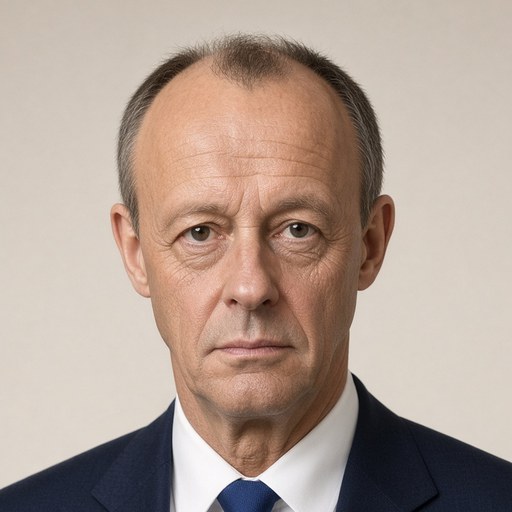
Speech by Chancellor Merz at the Trade Congress Germany Strengthening Trade
 Friedrich Merz · Chancellor of Germany
- Context
- Merz addressed the Trade Congress Germany Strengthening Trade on November 13, 2025, outlining government policies on vocational training, labor immigration, and retail sector challenges.
- Main themes
- Dual vocational training, skilled labor immigration, Work-and-Stay Agency, retail trade vitality, digital transformation of immigration procedures, workforce shortages, open economy and free trade, EU internal market, global protectionism, geopolitical upheavals, coalition policy agenda, urban retail presence
- Duration
- ~35 min
- Words
- 4,174
- Sentences
- 212
- Readability
- 52
- Grade
- 10.9
- Syntax
- 2.89
- Vocabulary
- 1.94
Translated from German
The broad sphere of national life a sentence belongs to. Every sentence has an Arena, so it is the denominator the other indices are read against.
Other212 sentences in 42 paragraphs
Dear Mr. President, dear Mr. von Preen,
Mr. Chief Executive Officer, dear Mr. Genth,
Ms. Rakers,
my esteemed ladies and gentlemen,
dear colleagues from the German Bundestag – assuming that some of you are here –,
I am very pleased to be here today, as promised last year. I am glad that I had the opportunity right at the beginning to meet with some young, successful employees from your companies who have completed or are still completing dual vocational training. Ladies and gentlemen, I want to say right from the start: I am truly pleased that there are young people in Germany who are entering dual vocational training. Dual vocational training is not the second-best option; it is, for many young people and many companies, the best that we have in Germany, precisely this dual vocational training. Therefore, thank you very much for the opportunity to do so! There are representatives of over 150,000 young people [each year] who you have in training in your companies. That is a pleasantly large number. Because you and we in Germany, in our economy, need employees. We need well-trained employees.
Nevertheless, it is true that we cannot get by with what we have. We also need qualified immigration. I want to say that right here. If I remember correctly, I presented it last year. What we have set out to achieve for this coalition is not only written down in the coalition agreement but has already been concretely decided with a very significant milestone just last week, namely the so-called Work-and-Stay Agency. We are also administratively separating asylum procedures from immigration procedures into the labor market. This Work-and-Stay Agency is probably the largest digital project that we have set for the current legislative period. Because behind it lies the complete reorganization of immigration into our labor market. You are coming out of the asylum procedures. You will no longer divert into the labor market at some point during the procedure, but will be integrated from day one into a completely different, digital process regarding work permits, residence permits, and recognition of professional qualifications. All administrative procedures that we operate lie behind this. There will also be pilot projects with individual federal states. We will now quickly test how this works.
But the important thing is that we send the signal: The Federal Republic of Germany is an open, free, liberal, and tolerant country, and we want to attract people from all over the world who come to Germany and are willing to work here. We are reducing irregular migration, but we are promoting good immigration and migration and integration in the Federal Republic of Germany through two now truly completely separate procedures.
It will take some time, but we have initiated the decision-making process in the Cabinet last week. As I said, it will probably be the largest digital project of the current legislative period for us, for the federal government, but above all for you in the companies of the Federal Republic of Germany.
I am here at the large trade association of the Federal Republic of Germany. You generate about 15 percent of the gross domestic product of our economy. This means that you are a very significant driver of our prosperity. You employ around three million people, three-quarters of whom are subject to social security contributions. I would be happy to talk about the topic of marginal employment later. But first, I want to thank all those who keep the businesses running despite the most difficult times, continue to employ staff, and above all, are present in our cities in retail. We had an intense debate on this topic. Thank you once again, Mr. von Preen, for your commentary this morning in an interview that I, of course, read in preparation.
We need, ladies and gentlemen, functional retail in our cities. I would like to encourage and urge you to persevere and do this. We want to create the conditions for you to be able to do so. I encourage you to stay committed and to be the face of retail in our cities.
The framework conditions are difficult. Above all, global issues are currently occupying us in the coalition. The war in Ukraine continues. It challenges us not only in terms of security policy but also financially. We are dealing with geopolitical upheavals in international trade. We see a tariff dispute with the USA that is only partially resolved. We see a regression into protectionism worldwide. It is precisely for this reason that it is important for us, for the Federal Republic of Germany, and also for me personally in my work, to ensure that we remain an open European Union, that we have a functioning internal market in the European Union, and that this internal market continues to be a driver of prosperity for many of us, despite the war in Europe, despite new protectionism in the world, and despite many structural reforms that have been long overdue in Germany.
We have set to work on this. We have begun. We made the first decisions even before the summer break. On July 11, we passed laws in the Bundesrat that encompassed the first major part of the reform agenda for the year 2025. We have implemented the largest tax reform in the last 15 years. We have ensured that you can now invest very well in your businesses, with three times 30 percent declining depreciation. This allows you to write off two-thirds of the investment amount for investments in your businesses within two and a half years.
But you have to earn depreciation. You know that. Not everyone in Berlin knows that, but you know that you have to earn depreciation. That is why revenue and profit come before depreciation. On this path, ladies and gentlemen, we want and must improve. I say it again and again, and today here as well: Germany does not have a cyclical problem; rather, our economy has a persistent structural problem of lack of competitiveness. I add one more attribute: lack of price competitiveness in the world. We must solve this together. This concerns social security costs, social costs, taxes, but it also concerns bureaucratic costs.
Exactly on this issue, we are focusing. We have also set the first course in this area and initiated reforms. Contrary to all assumptions and speculations, I have today a Federal Minister for Digitalization and State Modernization in the Cabinet who has full responsibilities – he also has the competence – to advance digitalization and state modernization. We have done this for the first time in the history of the Federal Republic of Germany. No federal state in Germany has equipped its digital minister – there are some in the states – with as many responsibilities as we have done at the federal level. Karsten Wildberger, who also comes from the private sector – many of you know him; he has probably been here often and was also a member of your association with his former company – I deliberately brought in from the private sector into the Cabinet as someone who has experience in such processes and also in project-based work. We have established a project group that advances the topic of digitalization and state modernization across departments and organizes the Work-and-Stay Agency in the responsibility between different ministries. We are now also working in the Cabinet with structures that are more commonly known in the private sector and that have not been so common in previously delineated departmental responsibilities. You may recognize from this structure of our work that we are driven by a firm will to do better and that we want to do it right for our economy above all. This is possible with us; it is possible in Germany.
I want to mention in passing: It is not only about the large project that we already passed with the tax reform in July. We are currently in the final discussions of the federal budget for 2026. We will almost double the urban development funding during this legislative period, so that much can happen in urban development and urban funding that significantly improves the working environment and the environment for your companies in the city centers of our country.
We know that we need to do a lot in energy policy. The first decisions have already been made and passed. They will come into effect on January 1, 2026. We will significantly reduce energy costs. We will lower the electricity price. We will abolish the gas storage levy. We will relieve the grid fees by a total of 6.5 billion euros. This applies to private households but also to companies.
Ladies and gentlemen, we will discuss this evening in the coalition committee what the Federal Minister of Economics achieved yesterday in Brussels. We will be able to introduce an industrial electricity price in Germany for three years. We will also adopt a power plant strategy that we can implement, with tenders already next year, so that we can gradually also put energy policy – I say it in my words; not everyone will like to hear it – on its feet and ensure that not only the question of how we become climate-neutral – that question remains important, and we want to answer it well – but above all the question of how we can become competitive again with our economy is now really well answered. It does us no good if we are climate-neutral and companies in Germany are collapsing one after the other. We will not take that path; rather, we will take a path that ensures that both are possible.
I also said this at the World Climate Conference in Brazil last week. Germany is committed to the climate goals, but Germany is now pursuing climate policy not against the economy but with the economy. We are all contributors. We have all contributed to the fact that we have this problem. We can only solve it together, not with a raised finger, not preachily dragging through the world, but by ensuring with industry and the economy that we achieve these goals together. Only then will the acceptance of the population on this issue remain.
We are facing major reforms in pension insurance, long-term care insurance, and health insurance. There have already been initial decisions on this as well. Yes, we will still work on some things in commissions and then implement them. But we have made the first precise decisions for the year 2026.
Ladies and gentlemen, the contributions for pension insurance, long-term care insurance, and health insurance will not increase on January 1, 2026. That is a first, small success. I know that we all want them to decrease. But if it had continued without our interventions, we would have had at least 0.3 percentage points higher long-term care insurance and health insurance contributions on January 1, 2026. 0.3 percentage points may sound somewhat harmless. But, ladies and gentlemen, 0.1 percentage points of the social security contribution is a burden of two billion euros for employees and companies. 0.3 percentage points would have meant a smooth six billion euros higher social security contributions for employees and companies. We avert this by implementing initial hard savings measures, especially in health insurance – this has been discussed and initiated with the coalition – knowing that we will have to do much more fundamentally next year.
I hope that we will succeed in setting the right course in two areas this year. This concerns pension insurance. In pension insurance, we will implement the so-called active pension. The active pension is nothing more than an additional exemption amount of 24,000 euros per year for every employee beyond the standard retirement age who is willing to continue working. All employees you have in your companies who have reached the standard retirement age – it varies but is somewhere between 64 and 67 years – can continue to work and receive an incentive of 2,000 euros per month, 24,000 euros per year in additional tax-free income.
Ladies and gentlemen, I also want to tell you why we are doing this. We want to retain employees who can and want to work longer, of course. But there is also something else at stake, and I want to address it very clearly here. If we want to put our pension systems on solid, future-proof foundations, we need to change fundamental things. It cannot remain as it is now. But if we want to change something, we need to discuss the levers we have. One of the levers is: with ever-increasing life expectancy – and life expectancy has continuously risen in recent years – we also need to find ways to encourage people to work longer than in the past.
One of these methods is to say, on a voluntary basis: We want you to stay in the labor market longer, and we are giving you a good incentive to do so with this tax allowance. My personal conviction is: Many people in Germany will probably take advantage of this, especially in your companies – people who are still young enough, who still want to work, who enjoy working. By the way, this offer does not apply to civil servants, it does not apply to members of parliament, and it does not apply to members of the federal government – just so you know. It does not concern me, I am not speaking pro domo; it rather concerns the employees who are subject to social security contributions, to whom an incentive is given to stay longer in the labor market.
I am curious to see how this will work and whether it will be based on voluntariness. If it does not work on the basis of voluntariness, then we will have to discuss other measures. In any case, we need to change the ratio between active employment time and retirement in favor of longer active employment time. There are various instruments for this, but we will have to discuss and decide on this topic as well.
Ladies and gentlemen, we will also make corrections in the area of social transfer systems. I will mention two examples here.
First. We will introduce basic security and abolish the so-called citizen's money. This has now been agreed upon after many long, intensive discussions in the coalition. The texts are largely written. We will now go into departmental coordination and have the first reading of the new basic security, which will replace the old system of citizen's money, in the German Bundestag later this year. Here too, this is done with the right incentives to return to or remain in the labor market. In any case, the message will no longer be given that those who do not work and receive social transfer benefits have more than those who work and pay social security contributions and taxes. We will change that, and this has also been decided in the coalition.
In this context, a second topic – which may only interest you on the sidelines, but is important to us – is that we will also decide on the so-called change of legal status for refugees from Ukraine. This means that Ukrainian refugees will no longer be under Social Code II, that is, in what is still called citizen's money today, but they will come under the Asylum Seekers Benefits Act – a benefits law that provides significantly lower transfer benefits and thus also offers higher incentives to enter the labor market. I want to add, to complete the picture: I spoke today in a longer phone call with the Ukrainian president, asking him to ensure that especially young men from Ukraine do not come back in large numbers, in increasing numbers, to Germany, but that they serve in their country. They are needed there, and in Germany, the transfer benefits for these refugees will be structured in such a way that the work incentives are greater than the incentive to remain in the transfer system. So we are also planning concrete changes here.
Ladies and gentlemen, you have named the motto of your trade congress this year: “Simplify Retail: Simple. Successful. Trade!” The motto of the federal government is, if you will: “Simplify your business.” We want to make it easier for you, we want to simplify it, we do not want to disturb you at work, but we want to enable your engagement and allow you to work successfully in your companies. That is why we are pursuing digitalization and modernization of the state.
Another aspect comes into play: We cannot do this alone – we cannot do this alone in Germany. We also need appropriate political support through decisions in the European Union. In the European Union – ladies and gentlemen, I speak here truly as a deeply convinced European – it cannot continue as it has in recent years. This massive over-bureaucratization of almost all areas of life must really be reversed now. We need competitiveness in European politics as the most important guiding principle and orientation for our work there.
I am sometimes accused of being the foreign chancellor and too little present domestically. This accusation has not been repeated in recent days and weeks for good reasons, but it was also wrong before. If I engage in this European Union as closely as I have done since my first day in office, it serves the purpose of maintaining this European Union as a community of free peoples that is capable of peace and freedom, but at the same time ensuring that legislation in the European Union is accompanied by a strong voice from Germany. I do not want to see “German Vote” – that is, an abstention in Brussels because we are not united in the coalition in Berlin – anymore. Those who abstain give up opportunities for participation and leave it to others to make decisions.
This also concerns difficult topics such as the so-called deforestation regulation. We do not need European regulation to protect our forests in Germany. We can do that ourselves, and we do not need European regulation for that. Even if the European Union may consider regulating this with regard to other countries in Europe, we either want a zero-risk class for Germany or we want it to be so de-bureaucratized that our companies are not burdened with unnecessary bureaucracy on this issue. That is exactly what we are advocating for at the European level and in the coalition. We also have a common position of the federal government on this, and if the Commission does not see itself able to postpone the entry into force of this regulation for another year – and it obviously does not see itself able to do so – then we must exert as much influence as possible on what will come into force on January 1, 2026. I assure you: We will exhaust our possibilities, also with other member states in the European Union, to design this regulation as bureaucratically lean as possible, so that no new bureaucratic burdens from the European Union come upon our businesses, upon your businesses.
With that, I come to an important topic of a very general and overarching consideration. Ladies and gentlemen, what are we actually doing in trade policy in Europe? This also has two aspects.
The first aspect is an external political aspect: Where are our partners in the world? I am strongly advocating that we can conclude the MERCOSUR agreement with the South American countries by the end of the year. This is an important agreement that will offer us significant advantages in mutual trade between South America – there are four countries – and the European Union, similar to the free trade agreement with Canada. I am also advocating that we conclude agreements with other countries – with Mexico, with Indonesia, with Japan – and that they come into force.
But just as I do this, I am very keen to avoid unfair trade practices in the European Union. In this context, I want to address what we are currently observing in terms of systematic abuse of the customs exemption limit of 150 euros per package in Germany through massive shipments, particularly from China. Ladies and gentlemen, to clarify the dimensions involved: It is not hundreds or thousands or a few more, but it is over four billion packages per year that come into the European Union, predominantly from China. And in the last meeting of the European Council, I called on the Commission to propose how we can lower this exemption limit of 150 euros – preferably to zero, because there is no other way – and that we also connect this with a so-called “handling fee,” so that this massive abuse of the customs exemption, which was actually intended for private goods traffic, stops; because this not only weakens your competitive position, but it also undermines consumer protection rules, it undermines product safety regulations, and it constitutes massive abuse. This must be stopped. You can rely on me to do everything possible to achieve this as quickly as possible for all of Europe.
So you see, we are in the midst of working on the modernization of our economy. I want to say it very clearly again: This is not about minor corrections, but it is about very fundamental realignments of our economic policy, our social policy, our competition policy, and many other issues – always embedded in the European Union and in what we do together in Europe.
Let me conclude by broadening the picture a bit. We are not only talking about our economy here, we are not only talking about the competition of your companies. In truth, we are talking about the future viability of open, liberal, free societies. And we are not only under pressure from the outside. We are also under massive pressure from within. We have a discussion in Germany and in many countries in Europe that seriously endangers our democracy. We must all do something about this together, if they are of good will.
The most important thing is: we must show that our market economy still works. We must show that our infrastructure keeps pace with the demand we see today and that you also see every day right at your doorstep in your cities. But we must also ensure that the culture of debate in our country does not completely derail. Yes, this federal government deserves criticism, no question, and I am the one who expresses it most clearly and distinctly behind closed doors. But we also want to maintain measure and moderation in our interactions with each other.
Ladies and gentlemen, we live in one of the most beautiful countries in the world. I asked some journalists who were with me in Brazil last week: Who among you would like to stay here? No one raised their hand. They were all glad that we returned to Germany from that place we were at on the night from Friday to Saturday.
We live in one of the freest countries in the world, and it is worth defending our country, our democracy, our economic order. I told you this from this podium last year when I was not yet in office, and I want to say it again today, this year, while I am in office: What drives me and what moves me is that we ensure the opportunities we have had – We celebrated not only my birthday the day before yesterday, but also 70 years of the Bundeswehr in the Federal Republic of Germany yesterday. We are an open, free country. We have been living in peace and freedom for over eight decades – yes, for more than eight decades now. We have been living in reunified Germany for over 35 years. Ladies and gentlemen, this is a task we all must face: to defend this country, to defend our democracy, to defend our open society against its enemies from within and from outside, and to defend our market economy. Let us do this together.
Believe me when I say that I mean it seriously when I say I will do everything to ensure that future generations, our children and our grandchildren, have the same opportunities to live in an open, free, democratic country that has achieved a high level of prosperity, that can ensure a high level of social justice, in a country that is economically capable. That is what drives me. If we all walk this path together – beyond all party-political preferences that you have and that I naturally have – if we do this together, then in such a difficult time there is always a great opportunity to do it well, to do it better than in the past, and to make this effort for our country together. I would like to invite you to do so and I would like to ask you to do so.
Thank you very much!
The original German. The tags above are read on the English translation's sentences.
Sehr geehrter Herr Präsident, lieber Herr von Preen,
Herr Hauptgeschäftsführer, lieber Herr Genth,
Frau Rakers,
meine sehr geehrten Damen und Herren,
liebe Kolleginnen und Kollegen aus dem Deutschen Bundestag – in der Vermutung, dass einige von Ihnen hier sind –,
ich freue mich sehr, dass ich heute hier sein darf, so wie im vergangenen Jahr versprochen. Ich freue mich, dass ich gleich zu Beginn die Gelegenheit hatte, mit einigen jungen, erfolgreichen Mitarbeiterinnen und Mitarbeitern aus Ihren Unternehmen zusammenzutreffen, die die duale Ausbildung absolviert haben oder noch absolvieren. Meine Damen und Herren, ich will es gleich zu Beginn sagen: Ich freue mich wirklich darüber, dass es junge Menschen gibt, die in Deutschland in die duale Ausbildung gehen. Die duale Ausbildung ist nicht das Zweitbeste, sondern sie ist für viele junge Menschen und für viele Betriebe das Beste, das wir in Deutschland haben, genau diese duale Ausbildung. Deswegen herzlichen Dank, dass ich die Gelegenheit dazu hatte! Es sind Vertreter von über 150
.
000 jungen Menschen [jedes Jahr], die Sie in der Ausbildung in Ihren Betrieben haben. Das ist eine erfreulich große Zahl. Denn Sie und wir in Deutschland in unserer Volkswirtschaft, wir brauchen Mitarbeiterinnen und Mitarbeiter. Wir brauchen gut ausgebildete Mitarbeiterinnen und Mitarbeiter.
Trotzdem ist es richtig, dass wir mit dem, was wir haben, nicht auskommen. Wir brauchen auch qualifizierte Zuwanderung. Ich will es gleich an dieser Stelle sagen. Ich habe es, wenn ich mich richtig erinnere, im vergangenen Jahr dargestellt. Das, was wir uns für diese Koalition vorgenommen haben, haben wir nicht nur im Koalitionsvertrag aufgeschrieben, sondern mit einem ganz wesentlichen Meilenstein schon in der vergangenen Woche konkret beschlossen, nämlich die sogenannte
Work-and-Stay
-Agentur. Wir trennen also auch administrativ die Asylverfahren von den Verfahren der Einwanderung in den Arbeitsmarkt. Diese
Work-and-Stay
-Agentur ist das wahrscheinlich größte Digitalprojekt, das wir uns für die laufende Wahlperiode vorgenommen haben. Denn dahinter steht die komplette Neuordnung der Einwanderung in unseren Arbeitsmarkt. Sie gehen aus den Asylverfahren heraus. Sie biegen nicht mehr irgendwann im Laufe des Verfahrens in den Arbeitsmarkt ab, sondern werden vom ersten Tag an in ein hinsichtlich Arbeitserlaubnis, Aufenthaltserlaubnis und Anerkennung der Berufsqualifikation völlig anderes, digitales Verfahren aufgenommen. Dahinter liegen sämtliche administrative Verfahren, die wir betreiben. Mit einzelnen Bundesländern wird es auch Pilotprojekte geben. Wir werden jetzt sehr schnell erproben, wie das funktioniert.
Aber das Wichtige ist, dass wir das Signal geben: Die Bundesrepublik Deutschland ist ein offenes, freiheitliches, liberales und tolerantes Land, und wir wollen Menschen aus aller Herren Länder gewinnen, die nach Deutschland kommen und bereit sind, hier zu arbeiten. Wir reduzieren die irreguläre Migration, aber wir fördern die gute Einwanderung und Migration und Integration in der Bundesrepublik Deutschland durch zwei jetzt wirklich vollkommen voneinander getrennte Verfahren.
Es wird noch etwas dauern, aber wir haben die Beschlussfassung im Kabinett in der vergangenen Woche auf den Weg gebracht. Wie gesagt, wird es wahrscheinlich das größte Digitalprojekt der laufenden Wahlperiode für uns, für die Bundesregierung, aber vor allem für Sie in den Betrieben der Bundesrepublik Deutschland.
Ich bin hier bei dem großen Handelsverband der Bundesrepublik Deutschland. Sie erwirtschaften rund 15 Prozent des Bruttoinlandsproduktes unserer Volkswirtschaft. Das heißt, dass Sie ein ganz wesentlicher Treiber unseres Wohlstandes sind. Sie beschäftigen rund drei Millionen Menschen, drei Viertel davon sozialversicherungspflichtig. Auf das Thema der geringfügigen Beschäftigung komme ich gern noch zu sprechen. Aber ich will zunächst einmal all denjenigen Dank sagen, die die Betriebe trotz schwierigsten Zeiten aufrechterhalten, auch weiterhin Mitarbeiterinnen und Mitarbeiter beschäftigen und vor allen Dingen im Einzelhandel auch in unseren Städten präsent sind. Wir hatten eine intensive Debatte über dieses Thema. Vielen Dank noch einmal, Herr von Preen, für Ihre Kommentierung heute Morgen in einem
Interview
, das ich zur Vorbereitung natürlich auch gelesen habe.
Wir brauchen, meine Damen und Herren, in unseren Städten funktionsfähigen Einzelhandel. Ich möchte Sie dazu ermutigen und ermuntern, es durchzuhalten, das zu tun. Wir wollen die Voraussetzungen dafür schaffen, dass Sie es tun können. Ich ermutige Sie dazu, dabeizubleiben und mit dem Einzelhandel das Gesicht in unseren Städten zu sein.
Die Rahmenbedingungen sind schwierig. Vor allem globale Themen beschäftigen uns in der Koalition im Augenblick stark. Der Krieg in der Ukraine dauert an. Er fordert uns nicht nur sicherheitspolitisch, sondern auch finanzpolitisch. Wir haben es mit geopolitischen Verwerfungen im internationalen Handel zu tun. Wir sehen einen Zollstreit mit den
USA
, der nur zum Teil gelöst ist. Wir sehen einen Rückfall in den Protektionismus auf der ganzen Welt. Gerade deshalb ist es für uns, für die Bundesrepublik Deutschland und auch für mich persönlich in meiner Arbeit, wichtig, nicht nur in Deutschland, sondern vor allem auch in der Europäischen Union dafür zu sorgen, dass wir eine offene Europäische Union bleiben, dass wir einen funktionsfähigen Binnenmarkt in der Europäischen Union haben und dass dieser Binnenmarkt auch weiterhin der Wohlstandstreiber für viele von uns bleibt, trotz Krieg in Europa, trotz neuem Protektionismus auf der Welt und trotz vielen Strukturreformen, die in Deutschland viel zu lange Zeit liegen geblieben sind.
An diese Arbeit haben wir uns gemacht. Wir haben begonnen. Wir haben die ersten Entscheidungen getroffen, schon vor der Sommerpause. Wir haben am 11. Juli im Bundesrat Gesetze verabschiedet, die den ersten großen Teil der Reformagenda für das Jahr 2025 umfassten. Wir haben die größte Steuerreform der letzten 15 Jahren gemacht. Wir haben dafür gesorgt, dass Sie in Ihren Betrieben jetzt sehr gut investieren können, mit dreimal 30 Prozent degressiver Abschreibung. Dadurch können Sie innerhalb von zweieinhalb Jahren zwei Drittel der Investitionssumme für Investitionen in Ihren Betrieben abschreiben.
Aber Abschreibungen muss man verdienen. Das wissen Sie. Das wissen nicht alle in Berlin, aber Sie wissen, dass man Abschreibungen verdienen muss. Deswegen kommen vor der Abschreibung der Umsatz und der Ertrag. Auf diesem Weg, meine Damen und Herren, wollen und müssen wir besser werden. Ich sage es immer wieder und heute auch hier: Deutschland hat nicht ein konjunkturelles Problem, sondern unsere Volkswirtschaft hat ein anhaltendes strukturelles Problem mangelnder Wettbewerbsfähigkeit. Ich füge noch ein Attribut hinzu: mangelnde preisliche Wettbewerbsfähigkeit auf der Welt. Das müssen wir zusammen lösen. Das betrifft Sozialversicherungskosten, Sozialkosten, Steuern, aber das betrifft natürlich auch Bürokratiekosten.
Genau an diesem Thema setzen wir an. Wir haben auch in diesem Bereich die ersten Weichen gestellt und die Reformen auf den Weg gebracht. Entgegen allen Vermutungen und allen Spekulationen habe ich heute einen Bundesminister für Digitalisierung und Staatsmodernisierung im Kabinett, der die vollumfänglichen Zuständigkeiten hat – er hat auch die Kompetenz –, um Digitalisierung und Staatsmodernisierung voranzubringen. Das haben wir zum ersten Mal in der Geschichte der Bundesrepublik Deutschland. Kein Bundesland in Deutschland hat seinen Digitalminister – es gibt einige in den Ländern – mit so vielen Zuständigkeiten ausgestattet, wie wir im Bund es getan haben. Karsten Wildberger, der noch dazu aus der Privatwirtschaft kommt – viele von Ihnen kennen ihn; er ist vermutlich oft hier gewesen und mit seinem früheren Unternehmen auch Mitglied Ihres Verbandes – habe ich bewusst aus der Privatwirtschaft ins Kabinett geholt, und zwar als jemanden, der Erfahrung in solchen Prozessen und auch in projektbezogener Arbeit hat. Wir haben eine Projektgruppe eingerichtet, die das Thema der Digitalisierung und Staatsmodernisierung ressortübergreifend voranbringt und die die
Work-and-Stay
-Agentur in der Zuständigkeit zwischen verschiedenen Ministerien organisiert. Wir arbeiten im Kabinett jetzt also auch mit Strukturen, die eher aus der Privatwirtschaft bekannt sind und bisher in abgegrenzten Ressortzuständigkeiten nicht so an der Tagesordnung, nicht so üblich waren. Sie mögen allein an dieser Struktur unserer Arbeit erkennen, dass wir von dem festen Willen geprägt sind, es besser zu machen, und dass wir es für unsere Volkswirtschaft vor allen Dingen richtig machen wollen. Das geht mit uns, das geht in Deutschland.
Ich will es nebenbei sagen: Es geht nicht nur um das große Projekt, das wir mit der Steuerreform bereits im Juli verabschiedet haben. Wir sind heute und morgen in den Schlussberatungen des Bundeshaushaltes für 2026. Wir werden die Städtebaufördermittel im Laufe dieser Wahlperiode fast verdoppeln, sodass dann auch im Städtebau und in der Städtebauförderung viel geschehen kann, was das Arbeitsumfeld und das Umfeld für Ihre Unternehmen in den Innenstädten unseres Landes deutlich verbessert.
Wir wissen, dass wir bei der Energiepolitik einiges tun müssen. Die ersten Entscheidungen sind bereits getroffen und verabschiedet. Sie treten zum 1. Januar 2026 in Kraft. Wir werden die Energiekosten deutlich senken. Wir werden den Strompreis senken. Wir schaffen die Gasspeicherumlage ab. Wir werden bei den Netzentgelten um insgesamt 6,5 Milliarden Euro entlasten. Das gilt für die privaten Haushalte, aber auch für die Unternehmen.
Meine Damen und Herren, wir werden heute Abend im Koalitionsausschuss darüber sprechen, was die Bundeswirtschaftsministerin gestern in Brüssel erreicht hat. Wir werden in Deutschland für drei Jahre einen Industriestrompreis einführen können. Wir werden auch eine Kraftwerksstrategie beschließen, die wir umsetzen können, mit den Ausschreibungen bereits im nächsten Jahr, sodass wir sukzessive auch die Energiepolitik – ich sage es mit meinen Worten; das wird nicht jeder gern hören – vom Kopf auf die Füße stellen und dafür sorgen, dass nicht nur die Frage, wie wir klimaneutral werden – die Frage bleibt wichtig, und wir wollen sie auch gut beantworten –, sondern vor allem auch die Frage, wie wir mit unserer Volkswirtschaft wieder wettbewerbsfähig werden, jetzt wirklich gut beantwortet wird. Es nützt uns nichts, wenn wir klimaneutral sind und die Unternehmen in Deutschland reihenweise in die Knie gehen. Diesen Weg gehen wir nicht, sondern wir gehen einen Weg, der dafür sorgt, dass beides möglich ist.
Ich habe das auch in der vergangenen Woche auf der Weltklimakonferenz in Brasilien genau so gesagt. Deutschland steht zu den Klimazielen, aber Deutschland macht jetzt Klimapolitik nicht gegen die Wirtschaft, sondern es macht Klimapolitik mit der Wirtschaft. Wir alle sind Verursacher. Wir alle haben dazu beigetragen, dass wir dieses Problem haben. Wir können es nur gemeinsam lösen, nicht mit dem erhobenen Zeigefinger, nicht belehrend durch die ganze Welt ziehend, sondern indem wir mit der Industrie, mit der Wirtschaft dafür sorgen, dass wir diese Ziele gemeinsam erreichen. Nur dann bleibt auch die Akzeptanz der Bevölkerung zu diesem Thema erhalten.
Wir stehen vor großen Reformen in der Rentenversicherung, Pflegeversicherung und Krankenversicherung. Auch dazu hat es bereits erste Entscheidungen gegeben. Ja, wir werden einiges erst noch in Kommissionen erarbeiten und dann umsetzen. Aber wir haben die ersten präzisen Entscheidungen für das Jahr 2026 getroffen.
Meine Damen und Herren, die Beiträge für Rentenversicherung, Pflegeversicherung und Krankenversicherung werden zum 1. Januar 2026 nicht steigen. Das ist ein erster, kleiner Erfolg. Ich weiß, dass wir alle wollen, dass sie sinken. Aber wenn es ohne unsere Eingriffe so weitergegangen wäre, dann hätten wir zum 1. Januar 2026 um mindestens 0,3 Prozentpunkte höhere Pflegeversicherungsbeiträge und Krankenversicherungsbeiträge. 0,3 Prozentpunkte, das mag sich einigermaßen harmlos anhören. Aber, meine Damen und Herren, 0,1 Prozentpunkt vom Sozialversicherungsbeitrag ist eine Belastung in Höhe von zwei Milliarden Euro für Arbeitnehmerinnen, Arbeitnehmer und Betriebe. 0,3 Prozentpunkte wären um glatt sechs Milliarden Euro höhere Sozialversicherungsbeiträge für Arbeitnehmer, Arbeitnehmerinnen und Betriebe gewesen. Das wenden wir ab, indem wir insbesondere in der Krankenversicherung erste harte Sparmaßnahmen umsetzen – das ist mit der Koalition besprochen und auf den Weg gebracht –, wissend, dass wir dazu im nächsten Jahr noch sehr viel grundsätzlicher sehr viel mehr tun müssen.
Ich hoffe, dass es uns gelingt, dazu noch in diesem Jahr an zwei Stellen die Weichen richtig zu stellen. Das betrifft die Rentenversicherung. In der Rentenversicherung werden wir die sogenannte Aktivrente in Kraft setzen. Die Aktivrente ist nichts anderes als ein zusätzlicher Freibetrag von 24
.
000 Euro im Jahr für jeden Arbeitnehmer jenseits der Regelaltersgrenze, der bereit ist, weiterzuarbeiten. Alle Mitarbeiterinnen und Mitarbeiter, die Sie in Ihren Unternehmen haben und die die Regelaltersgrenze erreicht haben – sie ist unterschiedlich, liegt aber irgendwo zwischen 64 Jahren und 67 Jahren –, können weiterarbeiten und erhalten dafür einen Anreiz von 2.000 Euro im Monat, 24
.
000 Euro im Jahr zusätzlichen steuerfreien Einkommens.
Meine Damen und Herren, ich sage Ihnen auch, warum wir das tun. Wir wollen Beschäftigte, die länger arbeiten können und wollen, natürlich länger halten. Aber es steht auch noch etwas anderes im Raum, und ich will es hier sehr deutlich ansprechen. Wenn wir unsere Alterssicherungssysteme auf solide, zukunftsfähige Füße stellen wollen, dann müssen wir grundlegende Dinge ändern. So, wie es jetzt ist, kann es nicht bleiben. Aber wenn wir etwas ändern wollen, dann müssen wir uns über die Stellschrauben unterhalten, die wir haben. Eine der Stellschrauben ist: Bei immer höherer Lebenserwartung – und die Lebenserwartung ist in den letzten Jahren kontinuierlich gestiegen – müssen wir auch Methoden finden, wie wir die Menschen ermutigen, länger zu arbeiten als in der Vergangenheit.
Eine dieser Methoden ist, auf der Basis der Freiwilligkeit zu sagen: Wir wollen euch länger im Arbeitsmarkt haben, und wir geben euch mit diesem Steuerfreibetrag einen guten Anreiz, dies zu tun. Meine persönliche Überzeugung ist: Davon werden in Deutschland vermutlich viele Menschen Gebrauch machen, gerade auch in Ihren Unternehmen – Menschen, die noch jung genug sind, die noch arbeiten wollen, die Freude daran haben, zu arbeiten. Diess Angebot gilt übrigens nicht für Beamte, es gilt nicht für Abgeordnete und es gilt auch nicht für Mitglieder der Bundesregierung – nur damit Sie das wissen. Mich betrifft es also nicht, ich spreche hier nicht pro domo; es betrifft vielmehr die sozialversicherungspflichtig beschäftigten Arbeitnehmerinnen und Arbeitnehmer, denen ein Anreiz gegeben wird, länger im Arbeitsmarkt zu bleiben.
Ich bin gespannt, wie das geht und ob es auf der Basis der Freiwilligkeit geht. Wenn es nicht auf der Basis der Freiwilligkeit geht, dann werden wir uns über andere Maßnahmen unterhalten müssen. Wir müssen jedenfalls die Relation zwischen aktiver Beschäftigungszeit und Ruhestand zugunsten der längeren aktiven Beschäftigungszeit verändern. Da gibt es verschiedenste Instrumente, aber dieses Thema werden wir besprechen und auch entscheiden müssen.
Meine Damen und Herren, wir werden auch im Bereich der sozialen Transfersysteme Korrekturen vornehmen. Ich nenne hier zwei Beispiele.
Erstens. Wir werden die Grundsicherung einführen und das sogenannte Bürgergeld abschaffen. Das ist nach vielen langen intensiven Diskussionen in der Koalition jetzt vereinbart. Die Texte sind weitgehend geschrieben. Wir werden jetzt in die Ressortabstimmung gehen und noch in diesem Jahr die erste Lesung zur neuen Grundsicherung, die das alte System des Bürgergeldes ablöst, im Deutschen Bundestag haben. Auch hier geschieht das mit den richtigen Anreizen, in den Arbeitsmarkt zurückzukehren oder im Arbeitsmarkt zu bleiben. Jedenfalls wird nicht weiter die Botschaft gegeben: Wer nicht arbeitet und soziale Transferleistungen bekommt, hat mehr als diejenigen, die arbeiten und dafür Sozialversicherungsbeiträge und Steuern bezahlen. Das werden wir ändern, und das ist in der Koalition auch so beschlossen.
In diesem Zusammenhang ein zweites Thema – das wird Sie möglicherweise nur am Rande interessieren, aber für uns ist es wichtig –: Wir werden auch den sogenannten Rechtskreiswechsel für die Flüchtlinge aus der Ukraine beschließen. Das heißt, die ukrainischen Flüchtlinge werden in Zukunft nicht mehr im Sozialgesetzbuch II sein, also in dem, was sich heute noch Bürgergeld nennt, sondern sie werden in das Asylbewerberleistungsgesetz kommen – ein Leistungsgesetz, das deutlich niedrigere Transferleistungen vorsieht und damit auch höhere Anreize gibt, im Arbeitsmarkt unterzukommen, in den Arbeitsmarkt zu gehen. Ich will, damit das Bild vollständig ist, auch hinzufügen: Ich habe heute in einem längeren Telefonat den ukrainischen Präsidenten gebeten, dafür zu sorgen, dass insbesondere die jungen Männer aus der Ukraine nicht wieder in großer Zahl, in größer werdender Zahl nach Deutschland kommen, sondern dass sie den Dienst in ihrem Land versehen. Da werden sie gebraucht, und in Deutschland werden die Transferleistungen für diese Flüchtlinge so ausfallen, dass die Arbeitsanreize größer sind als der Anreiz, im Transfersystem zu bleiben. Wir sehen also auch hier konkrete Änderungen vor.
Meine Damen und Herren, Sie haben das Motto Ihres Handelskongresses in diesem Jahr genannt: „
Simplify Retail
: Einfach. Erfolgreich. Handeln!“. Das Motto der Bundesregierung ist, wenn Sie so wollen: „
Simplify your business
“. Wir wollen es leichter machen für Sie, wir wollen es einfacher machen, wir wollen Sie nicht bei der Arbeit stören, sondern wir wollen Ihr
Engagement
ermöglichen und wollen ermöglichen, dass Sie in Ihren Unternehmen erfolgreich arbeiten können. Deshalb machen wir Digitalisierung und Staatsmodernisierung.
Es kommt ein weiterer Aspekt hinzu: Wir können das nicht allein – wir können das in Deutschland nicht allein. Wir brauchen hier auch eine entsprechende politische Begleitung durch Entscheidungen in der Europäischen Union. In der Europäischen Union – meine Damen und Herren, ich spreche hier wirklich als ein zutiefst überzeugter Europäer – kann es so, wie es in den vergangenen Jahren war, nicht mehr weitergehen. Diese massive Überbürokratisierung fast aller Lebensbereiche muss jetzt wirklich umgekehrt werden. Wir brauchen Wettbewerbsfähigkeit auch in der europäischen Politik als die wichtigste Leitschnur und Orientierung unserer Arbeit, die wir dort leisten.
Mir wird hin und wieder zum Vorwurf gemacht, ich sei sozusagen der Außenkanzler und zu wenig im Inland präsent. Dieser Vorwurf ist in den letzten Tagen und Wochen aus guten Gründen nicht wiederholt worden, aber er war auch vorher schon falsch. Wenn ich mich in dieser Europäischen Union so engagiere, wie ich es von meinem ersten Tag im Amt antue, dann dient das auch und vor allem dem Zweck, diese Europäische Union als eine Gemeinschaft freier Völker friedensfähig und freiheitsfähig zu erhalten, aber gleichzeitig dafür zu sorgen, dass auch die Gesetzgebung in der Europäischen Union wieder mit einer starken Stimme aus Deutschland heraus begleitet wird. Ich möchte „
German Vote
“ – also eine Enthaltung in Brüssel, weil wir uns in Berlin in der Koalition nicht einig sind – nicht mehr sehen. Wer sich enthält, gibt Mitwirkungsmöglichkeiten auf und überlässt es anderen, Entscheidungen zu treffen.
Das betrifft auch so schwierige Themen wie die sogenannte Entwaldungsverordnung. Wir brauchen in Deutschland keine europäische Regulierung zum Schutz unserer Wälder. Das machen wir selbst, und da brauchen wir keine europäische Regulierung. Selbst wenn die Europäische Union möglicherweise mit Blick auf andere Länder Europas auf den Gedanken kommt, dies zu regulieren, dann wollen wir entweder eine Null-Risiko-Klasse für Deutschland haben oder aber es so weit entbürokratisiert haben, dass unsere Unternehmen mit überflüssiger Bürokratie zu diesem Thema nicht belastet werden. Genau dafür setzen wir uns auf europäischer Ebene und in der Koalition ein. Wir haben dazu auch eine gemeinsame Haltung der Bundesregierung, und wenn die Kommission sich nicht imstande sieht, das Inkrafttreten dieser Verordnung noch einmal für ein Jahr zu verschieben – und dazu sieht sie sich offensichtlich nicht imstande –, dann müssen wir so viel Einfluss wie möglich auf das, was da zum 1. Januar 2026 in Kraft tritt, nehmen. Ich sage Ihnen zu: Wir schöpfen unsere Möglichkeiten aus, auch mit anderen Mitgliedstaaten in der Europäischen Union, um diese Verordnung so bürokratiearm wie eben möglich auszugestalten, damit hier nicht neue bürokratische Lasten aus der Europäischen Union auf unsere Betriebe, auf Ihre Betriebe zukommen.
Damit bin ich bei einem wichtigen Thema ganz genereller und allgemeiner Betrachtung. Meine Damen und Herren, was machen wir eigentlich in der Handelspolitik in Europa? Auch das hat wiederum zwei Aspekte.
Der erste Aspekt ist ein außenpolitischer Aspekt: Wo sind unsere Partner auf der Welt? Ich setze mich massiv dafür ein, dass wir noch zum Ende des Jahres das
MERCOSUR
-Abkommen mit den südamerikanischen Staaten abschließen können. Das ist ein wichtiges Abkommen, das uns ähnlich wie das Freihandelsabkommen mit Kanada große Vorteile im gegenseitigen Handel zwischen Südamerika – vier Staaten sind es – und der Europäischen Union bieten wird. Ich setze mich dafür ein, dass wir auch mit anderen Staaten – mit Mexiko, mit Indonesien, mit Japan – Abkommen abschließen und sie auch in Kraft treten.
Aber genauso, wie ich das tue, bin ich sehr darum bemüht, in der Europäischen Union zu vermeiden, dass es hierbei unfaire Handelspraktiken gibt. Ich spreche in diesem Zusammenhang das an – wir haben gerade eben schon beim Hereingehen darüber gesprochen –, was wir derzeit an systematischem Missbrauch der Zollfreigrenze von 150
Euro pro P
ä
ckchen in Deutschland durch massenhafte Sendungen insbesondere aus China beobachten. Meine Damen und Herren, um die Dimensionen klarzumachen, um die es hierbei geht: Es sind nicht hundert oder tausend oder ein paar mehr, sondern es sind insgesamt über vier Milliarden Päckchen pro Jahr, die in die Europäische Union kommen, und zwar überwiegend aus China. Und ich habe in der letzten Sitzung des Europäischen Rats die Kommission aufgefordert, uns einen Vorschlag zu machen, wie wir diese Freigrenze von 150
Euro herabsetzen – am besten auf null, weil es nicht anders geht –, und dass wir das Ganze auch mit einer sogenannten „
handling fee
“ verbinden, sodass dieser massenhafte Missbrauch der Zollfreigrenze, die eigentlich für den privaten Warenverkehr gedacht war, stoppt; denn damit wird nicht nur Ihre Wettbewerbsposition geschwächt, sondern damit werden Verbraucherschutzregeln unterlaufen, damit werden Produktsicherheitsrichtlinien unterlaufen, damit wird massenhafter Missbrauch betrieben. Das muss beendet werden. Sie können sich darauf verlassen, dass ich alles tue, um das so schnell wie möglich auch für ganz Europa zu erreichen.
Sie sehen also, wir stehen mitten in der Arbeit an der Modernisierung unserer Volkswirtschaft. Ich will es noch einmal sehr deutlich sagen: Hier geht es nicht um kleinere Korrekturen, sondern hier geht es schon um sehr grundsätzliche Neuausrichtungen unserer Wirtschaftspolitik, unserer Sozialpolitik, unserer Wettbewerbspolitik und vieler anderer Fragen – eingebettet immer auch in die Europäische Union und in das, was wir gemeinsam in Europa machen.
Lassen Sie mich zum Abschluss das Bild noch einmal etwas größer ziehen. Wir sprechen ja hier nicht nur über unsere Volkswirtschaft, wir sprechen hier nicht nur über den Wettbewerb Ihrer Unternehmen. Wir sprechen hier in Wahrheit über die Zukunftsfähigkeit offener, liberaler, freiheitlicher Gesellschaften. Und wir stehen nicht nur von außen unter Druck. Wir stehen auch massiv unter Druck von innen. Wir haben in Deutschland und in vielen Ländern Europas eine Diskussion, die unsere Demokratie ernsthaft gefährdet. Dagegen müssen wir alle zusammen, wenn sie denn guten Willens sind, etwas tun.
Das Wichtigste ist: wir müssen zeigen, dass unsere marktwirtschaftliche Ordnung noch funktioniert. Wir müssen zeigen, dass unsere Infrastruktur Schritt hält mit dem Bedarf, den wir heute sehen und den Sie auch in Ihren Städten hautnah vor Ihrer Haustür jeden Tag sehen. Wir müssen aber auch dafür sorgen, dass die Debattenkultur in unserem Land nicht völlig entgleist. Ja, diese Bundesregierung verdient Kritik, keine Frage, und ich bin derjenige, der sie hinter verschlossenen Türen mit am deutlichsten und klarsten äußert. Aber wir wollen bitte auch im Umgang miteinander gemeinsam Maß und Mitte halten.
Meine Damen und Herren, wir leben in einem der schönsten Länder der Welt. Ich habe einige Journalisten, die mit mir in Brasilien waren, letzte Woche gefragt: Wer von euch würde denn gerne hierbleiben? Da hat keiner die Hand gehoben. Die waren alle froh, dass wir vor allem Dingen von diesem Ort, an dem wir da waren, in der Nacht von Freitag auf Samstag wieder nach Deutschland zurückgekehrt sind.
Wir leben in einem der freiheitlichsten Länder der Welt, und es lohnt sich, unser Land, unsere Demokratie, unsere Wirtschaftsordnung auch zu verteidigen. Ich habe Ihnen das im vergangenen Jahr von dieser Stelle aus gesagt, als ich noch nicht im Amt war, und ich will es auch heute, in diesem Jahr sagen, während ich im Amt bin: Was mich antreibt und was mich bewegt, ist, dass wir die Chancen, die wir gehabt haben ‑ ‑ ‑ Wir haben vorgestern nicht nur meinen Geburtstag, sondern gestern auch 70 Jahre Bundeswehr in der Bundesrepublik Deutschland gefeiert. Wir sind ein offenes, freiheitliches Land. Wir leben jetzt seit acht Jahrzehnten – ja, seit über acht Jahrzehnten schon – in Frieden und in Freiheit. Wir leben seit über 35 Jahren im wiedervereinigten Deutschland. Meine Damen und Herren, das ist eine Aufgabe, der wir uns alle stellen müssen: dieses Land zu verteidigen, unsere Demokratie zu verteidigen, unsere offene Gesellschaft gegen ihre Feinde von innen und von außen zu verteidigen und auch unsere marktwirtschaftliche Ordnung zu verteidigen. Lassen Sie uns das gemeinsam machen.
Glauben Sie mir, dass ich es ernst meine, wenn ich sage, alles dafür zu tun, dass nachfolgende Generationen, unsere Kinder und unsere Enkelkinder, die gleichen Chancen haben, in einem offenen, freiheitlichen, demokratischen Land zu leben, das ein hohes Maß an Wohlstand erreicht hat, das ein hohes Maß an sozialer Gerechtigkeit gewährleisten kann, in einem Land, das wirtschaftlich leistungsfähig ist. Das ist das, was mich antreibt. Wenn wir alle diesen Weg gemeinsam gehen – jenseits aller parteipolitischen Präferenzen, die Sie haben und die ich natürlich auch habe –, wenn wir das gemeinsam tun, dann ist in einer solchen schwierigen Zeit auch immer eine große Chance, es gut zu machen, es besser zu machen als in der Vergangenheit und diese Kraftanstrengung für unser Land gemeinsam zu leisten. Dazu möchte ich Sie herzlich einladen und darum möchte ich Sie herzlich bitten.
Herzlichen Dank!