




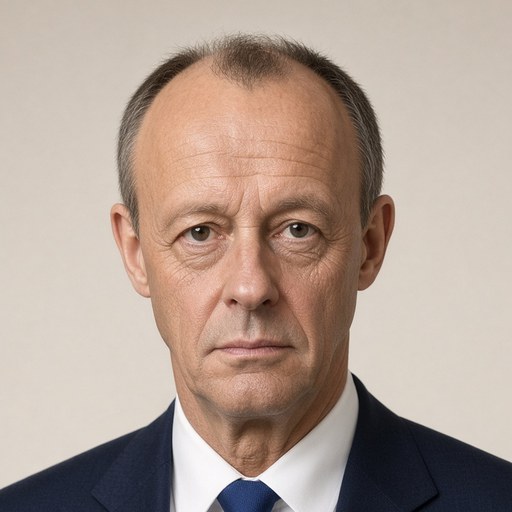
Chancellor's speech at the memorial service for von Metzler "Germany needs people like Friedrich von Metzler"
 Friedrich Merz · Chancellor of Germany
- Context
- Merz delivered a memorial address in Frankfurt honoring Friedrich von Metzler, the prominent banker and civic leader, reflecting on his legacy in finance and community.
- Main themes
- Memorial tribute to Friedrich von Metzler, banking and financial leadership, Frankfurt as a European financial center, equity culture and investment in Germany, family legacy and private banking, civic engagement and community building, personal character and philanthropy, Deutsche Börse and stock exchange development, wealth management and asset management, independence and long-term orientation in banking
- Duration
- ~16 min
- Words
- 1,871
- Sentences
- 96
- Readability
- 55
- Grade
- 10.2
- Syntax
- 2.92
- Vocabulary
- 2.32
Translated from German
The broad sphere of national life a sentence belongs to. Every sentence has an Arena, so it is the denominator the other indices are read against.
Other96 sentences in 42 paragraphs
Dear Minister President and members of the Hessian state government,
dear Lord Mayor and members of the Frankfurt City Council,
dear colleagues from the parliaments,
ladies and gentlemen,
dear guests,
above all: dear Sylvia von Metzler, dear family von Metzler!
Today we remember Friedrich von Metzler. That there was something special about this man is also felt in how present his person still is this year, as if he were sitting here with us today. This applies not only to those who knew him. He shaped this city. He radiated an extraordinary personal charisma.
We, dear Sylvia, got to know each other after the tragic event in your family in September 2002, after the violent death of your son Jakob. My wife and I wrote you a letter at that time. You both replied to us in a very personal way. Since then, we have encountered each other very, very often, even at your home.
Many, including many who are here today, remember the gatherings in this generous house of the Metzler family with the two wonderful hosts, who enjoyed bringing people together, learning something from these people, hearing something new from them, and bringing them together for mutual benefit ‑ for the benefit of each individual guest, but also for the benefit of the community and the institutions of this city. This was one of the many outstanding characteristics of this man, but also of this couple ‑ the friendly curiosity, the stimulating interest in what special people from very different backgrounds are passionate about.
Ladies and gentlemen, this evening I want to share some thoughts with you about this man and say something about the perhaps three most important qualities that defined him.
Talking about the family man is not the right thing for an outsider. Just this much: Here too, where at least something became visible outwardly, the humanitarian, kindness, and wisdom were evident. His children ‑ as he often told it ‑ were free to enter the bank or not. It was of no use to anyone ‑ he said ‑ not even to the bank and the customers, if the children did not feel comfortable there.
I want to mention three character traits: the banker, the citizen, and indeed the human being.
Friedrich von Metzler was an outstanding banker in a bank with a breathtaking history, since 1674, in the eleventh generation in family hands, now in the twelfth. That is unique.
Here in Frankfurt, Friedrich von Metzler actually grew up in the bank. The family’s apartment and the bank’s offices were then in the same building. The preparation for his role in the bank was methodical and extremely thorough ‑ with stations in London, New York, and Paris. This deeply rooted family here in Frankfurt never lacked cosmopolitanism.
He and his cousin Christoph recognized early on that the future of the bank did not lie in traditional lending, in which a private bank is structurally likely always to be at a disadvantage, but elsewhere, in asset management for institutional clients, in corporate finance consulting for mergers and acquisitions, IPOs and privatizations, capital market financing and insolvencies, in wealth management for individual private clients, in bond trading, in foreign exchange consulting and trading, in securities analysis and trading.
Friedrich von Metzler was always concerned with preserving the independence of the bank. “We do not maximize profit, but security” ‑ that was his credo. He was always focused on close personal exchange, on thorough conversations with his clients. He wanted to know and understand them in order to provide good advice.
In the bank’s capital market business, stocks remained at the center. Friedrich von Metzler wanted to develop a reasonable, long-term oriented stock culture in Germany and help contribute to it. Tirelessly, he advocated for stocks as a bond and investment form, especially for retirement provision, as a long-term participation in the substance assets of the economy, as he called it. It was a German innovation when the bank launched the first public fund in 1971 ‑ Friedrich von Metzler had joined the bank in 1969. Even in 2018, he said something that I am inclined to repeat today as a goal of the federal government. Quote:
“I wish that Germans would become investors instead of just savers. That would also be a step towards more social justice.” ‑ End of quote.
Ladies and gentlemen, behind this word also stood the bank’s own experience. The bank has come through the times so well also because the ancestors always invested in stocks. Accordingly, Friedrich von Metzler was Chairman of the Board and Supervisory Board of the Frankfurt Stock Exchange from 1989 to 1993, which he significantly transformed into an internationally competitive exchange during this time. The founding of Deutsche Börse AG in 1992 was crucial for Frankfurt’s rise to a significant, indeed the significant European financial center.
I found it a touching circumstance in the preparation, ladies and gentlemen, that Friedrich von Metzler was always called “FM” in the bank. Some of my employees, for the sake of simplicity, also refer to me this way.
Ladies and gentlemen, when Metzler spoke about his bank and his employees, one could sense how holistically ‑ as one would say today ‑ he viewed them, how important the broad horizon of the people who worked with him in his bank was to him, how much he supported the idea that employees should also bring their social ideas, their social engagement into what the bank then promoted and initiated, how sure he was that both the bank and the customers would ultimately benefit from such employees who know ‑ I quote him ‑ “that other things are more important than work and making money.”
In this respect, Friedrich von Metzler, as much as his profession defined him, was indeed an outstanding citizen in the most beautiful, purest, best sense of the word. He was someone who always asked: What can I do for my community, what can I do for my city? ‑ He wanted to serve the common good in the best sense of the word. Sometimes it almost seemed as if the bank, to which he served, was primarily a means to this very purpose.
In this, he was also true to the spirit of his ancestors, who always played their good and important role for this city and who have been a social power center of this city in every century since their arrival here. Goethe visited the Metzlers frequently during his time in Frankfurt. Bismarck later, as Prussian envoy in Frankfurt, even invented a new verb for the social relationships and networking activities of the family: “metzlern.”
Ladies and gentlemen, from Theodor Mommsen, the great ancient historian and liberal, comes the beautiful saying:
“I wish to be a citizen.”
So he wrote it in a testament clause in 1899. He wanted to consciously and permanently bear his share of responsibility for the community, it meant. There is a responsibility of all, Mommsen said, not just one of political leadership. Friedrich von Metzler would have wholeheartedly agreed with Theodor Mommsen.
What have the Metzlers not initiated, stimulated, and promoted in this city for philanthropic purposes ‑ Mr. Mayor, you have already mentioned some projects and ideas: from Goethe University to the Senckenberg Nature Research Society to the Städel Museum or the Metzler Foundation founded in 1998, which initiates and promotes social, educational, and scientific projects. You quoted the idea of 1 + 1 = 3. The first and the third tranche come from him, the second, raised, from those who lead the institutions.
It certainly does not diminish the merit of Friedrich von Metzler and his family to point out that this city has never been entirely lacking in such people and families. Doing good and initiating it with one’s own means and possibilities for art and science, for social uplift and education: that was also the striving of Frankfurt entrepreneurs, bankers, and patrons like Wilhelm Merton or Simon Moritz von Bethmann in the 19th and early 20th centuries. The memory of these people is held high by this city and by the institutions that owe them much, and it holds them together.
Friedrich von Metzler himself modestly placed himself in the great attempt to make the world a better place, piece by piece. I quote him:
“Every civic engagement is important, regardless of its scale.
Just as a mosaic is made up of individual precious stones, every volunteer engagement of a citizen, every initiative is valuable and necessary.”
By the way, ladies and gentlemen, he said this here 21 years ago when he received the honorary citizenship of his hometown in this Paulskirche in Frankfurt. When the then Lord Mayor Petra Roth proposed this award, the approval in the magistrate and in the city council was not just great; it was unanimous.
This was also because Friedrich von Metzler was an outstanding person who bore a terrible fate with dignity, with his wife, in his family. Many here in Frankfurt, who experienced the family in those days in 2002, have repeatedly testified to this with astonishment and the highest respect. How moving it was that the family, when terrible certainty prevailed, opened their home for employees of the bank and for classmates of their son Jakob, and they mourned together.
He himself said shortly thereafter that he could not live with the thought that the world was fundamentally as cruel as it had appeared to him at that time. It became his conscious struggle to preserve the humanity that characterized him. He wanted to believe in the good in people, and he did. More than that, another quote from him:
“I believe that the world will steadily become better and that I can or even must contribute to it.”
His charm was compelling, and this charm never ran dry. When people had to characterize him, terms like integrity, trustworthiness, integrity, sovereignty paired with human warmth and kindness invariably came to mind. He was perceived as grateful, interested, and approachable, friendly and completely unpretentious, modest and enthusiastic about everything new, stimulating and entertaining. Yes, that was he.
When he was honored, as in September 2004 with the honorary citizenship of this city, he expressed his thanks with sentences like these:
“You have charmingly exaggerated. I promise you that I will do my best to close the gap between my performance and your statements.”
Ladies and gentlemen, I personally orient myself in my responsibility to his unwavering optimism for the future. From the preparation for this speech, I will take with me a sentence from Friedrich von Metzler. This sentence, a true Metzler, reads:
“When shaping the future, knowledge of one’s own strength and a sense of opportunities help.”
This sentence ‑ thus another circle closes ‑ Friedrich von Metzler said here on September 3, 2004, in this very place in the Paulskirche.
Ladies and gentlemen, not only Frankfurt, Germany needs people like Friedrich von Metzler. As long as we have people who think about the whole with their means and in their place at any time, beyond personal worries and needs, this country will have a good future. We thank Friedrich von Metzler, and we remember Friedrich von Metzler.
The original German. The tags above are read on the English translation's sentences.
Sehr geehrter Herr Ministerpräsident und Mitglieder der hessischen Landesregierung,
sehr geehrter Herr Oberbürgermeister und Mitglieder der Frankfurter Stadtverordnetenversammlung,
liebe Kolleginnen und Kollegen aus den Parlamenten,
meine Damen und Herren,
liebe Gäste,
vor allem aber: liebe Sylvia von Metzler, liebe Familie von Metzler!
Wir erinnern uns heute an Friedrich von Metzler. Dass es irgendetwas Besonderes mit diesem Mann war, das spürt man auch daran, wie präsent seine Person auch in diesem Jahr immer noch ist, als ob er heute hier bei uns säße. Das gilt nicht nur für diejenigen, die ihn gekannt haben. Er hat diese Stadt geprägt. Von ihm ging eine ganz außergewöhnliche persönliche Ausstrahlung aus.
Wir, liebe Sylvia, haben uns kennengelernt nach dem tragischen Ereignis eurer Familie im September 2002, nach dem gewaltsamen Tod eures Sohnes Jakob. Meine Frau und ich, wir haben euch damals einen Brief geschrieben. Ihr beide habt uns in einer sehr persönlichen Weise zurückgeschrieben. Seitdem sind wir uns sehr, sehr häufig begegnet, auch bei euch zu Hause.
Viele, auch viele, die heute hier sind, erinnern sich an die Treffen in diesem großzügigen Haus der Familie Metzler mit den beiden großartigen Gastgebern, die es ihrerseits genossen haben, einfach Menschen um sich zu versammeln, von diesen Menschen etwas zu erfahren, von diesen Menschen etwas zu lernen, von ihnen Neues zu hören, sie zu einem gegenseitigen Nutzen zusammenzubringen ‑ zum Nutzen des jeweils einzelnen Gastes, aber auch zum Nutzen des Gemeinwesens und der Institutionen dieser Stadt. Das war einer der vielen hervorstechenden Charakterzüge dieses Mannes, aber auch dieses Ehepaares ‑ die freundliche Neugier, das anspornende Interesse an dem, was besondere Menschen mit ganz verschiedenem Hintergrund umtreibt.
Meine Damen und Herren, ich will heute Abend einige Gedanken mit Ihnen über diesen Mann teilen und etwas zu den vielleicht wichtigsten drei Eigenschaften sagen, die ihn ausmachten.
Über den Familienmenschen zu reden, ist für einen Außenstehenden nicht das Richtige. Nur so viel: Auch hier zeigte sich, wo jedenfalls etwas nach außen sichtbar wurde, der Menschenfreund, zeigten sich Güte und Weisheit. Seine Kinder ‑ so hat er es oft erzählt ‑ waren frei, in die Bank einzutreten oder eben nicht. Es nütze niemandem ‑ so hat er gesagt ‑, auch der Bank und den Kunden nicht, wenn die Kinder sich dort nicht wohlfühlen.
Drei Charaktereigenschaften will ich nennen: der Bankier, der Bürger und eben der Mensch.
Friedrich von Metzler war ein herausragender Bankier in einer Bank mit geradezu atemberaubender Geschichte, seit 1674, mit ihm in elfter Generation in Familienhand, heute in zwölfter. Das ist einzigartig.
Hier in Frankfurt wuchs Friedrich von Metzler tatsächlich in der Bank auf. Die Wohnung der Familie und die Räume der Bank befanden sich damals im selben Haus. Die Vorbereitung auf seine Rolle in der Bank war dabei methodisch und äußerst gründlich ‑ mit Stationen in London, in New York, in Paris. An Weltläufigkeit hat es dieser hier in Frankfurt tief verwurzelten Familie nie gefehlt.
Er hat mit seinem Vetter Christoph früh gesehen, dass die Zukunft der Bank nicht im klassischen Kreditgeschäft, in dem eine Privatbank strukturell wahrscheinlich immer benachteiligt ist, sondern woanders liegt, im Asset-Management für institutionelle Kunden, in der Corporate-Finance-Beratung bei Fusionen und Übernahmen, Börsengängen und Privatisierungen, Kapitalmarktfinanzierungen und Insolvenzen, in der Vermögensverwaltung für individuelle Privatkunden, im Anleihehandel, in der Devisenberatung und im Devisenhandel, in der Wertpapieranalyse und im Wertpapierhandel.
Immer ging es Friedrich von Metzler darum, die Unabhängigkeit der Bank zu wahren. „Wir maximieren nicht den Gewinn, sondern die Sicherheit“ ‑ das war sein Credo. Immer ging es ihm um den engen persönlichen Austausch, um das gründliche Gespräch mit seinen Kunden. Er wollte sie kennen und verstehen, um sie gut beraten zu können.
Im Kapitalmarktgeschäft der Bank standen und blieben Aktien im Mittelpunkt. Friedrich von Metzler wollte in Deutschland eine vernünftige, langfristig orientierte Aktienkultur entwickeln und helfen, dazu beizutragen. Unermüdlich warb er für die Aktie als Anleihe und Anlageform, gerade für die Altersvorsorge, als langfristige Beteiligung am Substanzvermögen der Volkswirtschaft, wie er es genannt hat. Es war eine bundesdeutsche Innovation, als die Bank schon im Jahre 1971 ‑ Friedrich von Metzler war 1969 in die Bank eingetreten ‑ den ersten Publikumsfonds auflegte. Noch 2018 hat er etwas gesagt, das ich heute fast als Ziel der Bundesregierung geneigt bin zu wiederholen. Zitat:
„Ich wünsche mir, dass die Deutschen vom Sparer zum Anleger werden. Das wäre auch ein Schritt in Richtung mehr soziale Gerechtigkeit.“ ‑ Ende des Zitats.
Meine Damen und Herren, hinter diesem Wort stand auch die eigene Erfahrung in der Bank. Das Bankhaus ist auch deshalb so gut durch die Zeiten gekommen, weil die Vorfahren eben auch immer in Aktien investiert haben. Folgerichtig war Friedrich von Metzler von 1989 bis 1993 Vorstands- und Aufsichtsratsvorsitzender der Frankfurter Wertpapierbörse, die ganz wesentlich er in dieser Zeit in eine international konkurrenzfähige Börse umwandelte. Die Gründung der Deutschen Börse AG 1992 war entscheidend für den Aufstieg Frankfurts zu einem bedeutenden, zu dem bedeutenden europäischen Finanzplatz.
Ich fand es in der Vorbereitung einen mich doch berührenden Umstand, meine Damen und Herren, dass man Friedrich von Metzler im Bankhaus immer „FM“ genannt hat. So sprechen, wie ich es jetzt höre, der Einfachheit halber auch einige meiner Mitarbeiter ‑ von mir.
Meine Damen und Herren, wenn Metzler über seine Bank und seine Mitarbeiter sprach, dann spürte man, wie ganzheitlich ‑ so würde man heute sagen ‑ er auf sie blickte, wie wichtig ihm der weite Horizont der Menschen war, die in seiner Bank mit ihm arbeiteten, wie sehr er es etwa unterstützt hat, dass auch die Mitarbeiterinnen und Mitarbeiter ihre sozialen Ideen, ihr soziales Engagement in das einbrachten, was die Bank dann förderte und anschob, wie sicher er sich war, dass auch die Bank und die Kunden am Ende von solchen Mitarbeitern profitieren, die wissen ‑ ich zitiere ihn ‑, „dass andere Dinge wichtiger sind als die Arbeit und das Geldverdienen“.
Insofern war Friedrich von Metzler, was ihn ebenso ausmachte wie sein Beruf, eben ein herausragender Bürger im schönsten, reinsten, besten Sinne des Wortes. Er war jemand, der stets fragte: Was kann ich für mein Gemeinwesen, was kann ich für meine Stadt tun? ‑ Er wollte im besten Sinne des Wortes dem Gemeinwohl dienen. Manchmal schien es fast, als sei ihm das Bankhaus, dem er diente, vor allem auch ein Mittel zu genau diesem Zweck.
Auch darin war er dem Geist seiner Vorfahren treu, die stets ihre gute und wichtige Rolle für diese Stadt spielten und die in jedem Jahrhundert seit ihrer Ankunft hier ein gesellschaftliches Kraftzentrum dieser Stadt waren. Goethe war bei den Metzlers seiner Frankfurter Zeit viel zu Besuch. Bismarck hat später als Gesandter Preußens in Frankfurt mit Blick auf die gesellschaftlichen Beziehungen und netzwerkenden Aktivitäten der Familie tatsächlich sogar ein neues Verb dafür erfunden: „metzlern“.
Meine Damen und Herren, von Theodor Mommsen, dem großen Althistoriker und Liberalen, stammt das schöne Wort:
„Ich wünschte, ein Bürger zu sein“.
So hat er es 1899 in einer Testamentsklausel geschrieben. Er habe seinen Teil der Verantwortung für das Gemeinwesen bewusst und dauernd tragen wollen, hieß das. Es gebe eine Verantwortlichkeit aller, so Mommsen, nicht nur eine der politischen Führung. Friedrich von Metzler hätte Theodor Mommsen von Herzen zugestimmt.
Was haben die Metzlers in dieser Stadt in philanthropischer Absicht nicht alles auf den Weg gebracht, angestoßen und gefördert ‑ Herr Oberbürgermeister, Sie haben einige Projekte und einige Ideen bereits genannt: von der Goethe-Universität über die Senckenbergische Naturforschende Gesellschaft bis zum Städel-Museum oder die 1998 gegründete Metzler-Stiftung, die soziale, pädagogische und wissenschaftliche Projekte auflegt und fördert. Sie haben die Idee des 1 + 1 = 3 zitiert. Die erste und die dritte Tranche kommen von ihm, die zweite, eingeworben, von denen, die die Institutionen leiten.
Es schmälert das Verdienst Friedrich von Metzlers und seiner Familie sicherlich nicht, wenn man auch darauf hinweist, dass diese Stadt nie ganz arm an solchen Menschen und Familien war. Mit den eigenen Mitteln und Möglichkeiten Gutes zu tun und anzustoßen für Kunst und Wissenschaft, für soziale Hebung und Bildung: Das war auch das Streben von Frankfurter Unternehmern, Bankiers und Mäzenen wie Wilhelm Merton oder Simon Moritz von Bethmann im 19. und frühen 20. Jahrhundert. Das Andenken auch an diese Menschen hält diese Stadt und halten die Institutionen, die ihnen viel verdanken, hoch und auch zusammen.
Friedrich von Metzler selbst hat sich in den großen Versuch bescheiden einsortiert, die Welt Stück für Stück zu einem besseren Ort zu machen. Ich zitiere ihn:
„Jedes bürgerliche Engagement ist wichtig, egal in welcher Größenordnung.
So wie sich ein Mosaik aus einzelnen kostbaren Steinen zusammensetzt, ist jedes ehrenamtliche Engagement eines Bürgers, jede Initiative wertvoll und notwendig.“
Das hat er übrigens, meine Damen und Herren, an dieser Stelle vor 21 Jahren gesagt, als er hier in der Paulskirche in Frankfurt die Ehrenbürgerschaft seiner Heimatstadt entgegennahm. Als die damalige Oberbürgermeisterin Petra Roth diese Verleihung vorschlug, war die Zustimmung im Magistrat und in der Stadtverordnetenversammlung nicht einfach nur groß, sie war einstimmig.
Das lag auch daran, dass Friedrich von Metzler ein herausragender Mensch war, der ein fürchterliches Schicksal mit Würde trug, mit seiner Frau, in seiner Familie. Viele hier in Frankfurt, die die Familie in jenen Tagen 2002 erlebt haben, haben dies immer wieder voller Staunen und in höchster Achtung bezeugt. Wie bewegend war es, dass die Familie, als schreckliche Gewissheit herrschte, ihr Haus für Mitarbeiterinnen und Mitarbeiter der Bank und für Mitschülerinnen und Mitschüler des Sohnes Jakob öffnete und man gemeinsam trauerte.
Er selbst hat schon wenig später gesagt, er könne nicht mit dem Gedanken leben, dass die Welt grundsätzlich so grausam sei, wie sie ihm damals begegnet sei. Es wurde sein bewusster Kampf, sich die Menschenfreundlichkeit zu bewahren, die ihn auszeichnete. Er wollte an das Gute im Menschen glauben, und das tat er auch. Mehr noch, wieder ein Zitat von ihm:
„Ich glaube, dass die Welt stetig besser werden wird und dass ich daran mitarbeiten kann oder sogar muss
.“
Sein Charme war bezwingend, und dieser Charme versiegte nie. Wenn Menschen ihn zu charakterisieren hatten, dann fielen unfehlbar Begriffe wie Redlichkeit, Vertrauenswürdigkeit, Integrität, Souveränität gepaart mit menschlicher Wärme und Herzlichkeit. Man empfand ihn dankbar als interessiert und zugewandt, freundlich und ganz unprätentiös, bescheiden und begeisterungsfähig für alles Neue, anregend und unterhaltsam. Ja, so war er.
Wenn er geehrt wurde wie im September 2004 mit der Ehrenbürgerschaft dieser Stadt, dann sagte er mit seinem Dank Sätze wie diesen:
„Sie haben charmant übertrieben. Ich verspreche Ihnen aber, dass ich mir Mühe geben werde, die Lücke zwischen meiner Leistung und Ihren Ausführungen zu schließen.“
Meine Damen und Herren, ich persönlich orientiere mich in meiner Verantwortung an seinem unerschütterlichen Zukunftsoptimismus. Aus der Vorbereitung zu dieser Rede werde ich einen Satz von Friedrich von Metzler neu mitnehmen. Dieser Satz, ein echter Metzler, lautet:
„Bei der Gestaltung der Zukunft hilft das Wissen um die eigene Stärke und ein Gespür für Chancen.“
Auch diesen Satz ‑ so schließt sich ein anderer Kreis ‑ hat Friedrich von Metzler am 3. September 2004 an dieser Stelle hier in der Paulskirche gesagt.
Meine Damen und Herren, nicht nur Frankfurt, Deutschland braucht Menschen wie Friedrich von Metzler. Solange wir Menschen haben, die mit ihren Mitteln und an ihrem Ort jederzeit auch ans Ganze denken, über die persönlichen Sorgen und Nöte hinaus, solange wird dieses Land eine gute Zukunft haben. Wir danken Friedrich von Metzler, und wir denken an Friedrich von Metzler.