




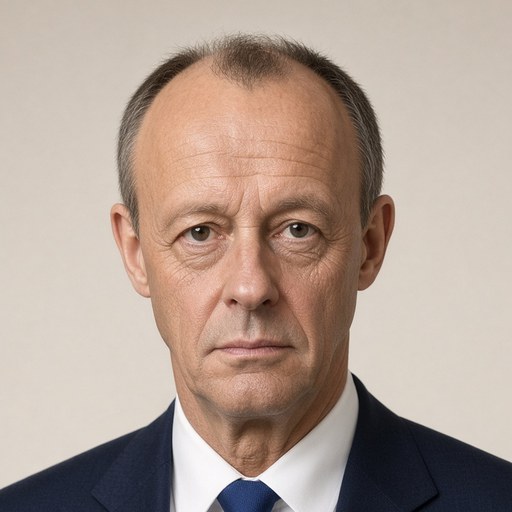
Speech by Federal Chancellor Friedrich Merz on the Restoration of the Reichenbachstraße Synagogue on September 15, 2025, in Munich:
 Friedrich Merz · Chancellor of Germany
- Context
- Merz addressed guests at the third consecration of the Reichenbachstraße Synagogue in Munich on September 15, 2025, marking its restoration to its original Bauhaus splendor.
- Main themes
- Restoration of Reichenbachstraße Synagogue, Jewish life in Germany, Holocaust remembrance, antisemitism, Jewish resilience and survival, postwar Jewish community in Munich, German responsibility and guilt, cultural heritage and Bauhaus architecture, Jewish-German history, displaced persons and survivors
- Duration
- ~16 min
- Words
- 1,891
- Sentences
- 75
- Readability
- 45
- Grade
- 13.0
- Syntax
- 3.44
- Vocabulary
- 2.28
Translated from German
The broad sphere of national life a sentence belongs to. Every sentence has an Arena, so it is the denominator the other indices are read against.
Other75 sentences in 37 paragraphs
Dear esteemed Ms. Salamander,
dear Mr. Jakubowicz,
dear Ambassador, dear Ron Prosor,
Ms. Consul General, Ms. Lador-Fresher,
Mr. Consul General James Miller,
Mr. Chairman of the Central Council of Jews in Germany, dear Josef Schuster, most honored dear Ms. Charlotte Knobloch,
Mr. Minister-President, dear Markus Söder,
Ms. President of the State Parliament, dear Ilse Aigner,
Mr. Lord Mayor,
ladies and gentlemen,
dear colleagues from the parliaments, from the German Bundestag and from the Bavarian State Parliament, it was a celebration of joy when, almost exactly 94 years ago, on September 5, 1931, the Reichenbachstraße Synagogue was consecrated – consecrated for the first time, as we, the descendants, know today. “A solemn act,” – this was read in the newspaper of the Bavarian Israelite Community – “in which the entire Jewish community of Munich participated without distinction of denominations.”
We must assume that it was simultaneously – nevertheless – a day of growing worries and fears for the celebrants, that the assembled community must have asked each other whether and how long Jews in Germany could still live safely. For just a few days later, on September 12, 1931, on the evening of the Jewish New Year, there would be severe anti-Semitic riots on Berlin's Kurfürstendamm, perpetrated by hundreds of SA members. These riots were not an isolated incident. Street violence against Jews, attacks on Jewish businesses increased from 1930 onwards. Anti-Semitism in German society was on the rise.
Thus, “Das Jüdische Echo” described the consecration of the Reichenbachstraße Synagogue in 1931 as “an expression of a Jewish will to live and a Jewish vitality that creates the conditions necessary for Jewish life even under the most adverse circumstances.”
For seven years, seven short years, there was then Jewish life, Jewish worship, Jewish prayer in this synagogue – under increasingly adverse circumstances – until in 1938 the synagogue was desecrated, violated, and devastated by a rampaging mob. It was only not set on fire because there were fears of damage to the surrounding and, as it was said, “non-Jewish” houses.
In hindsight, we know that the November pogroms of 1938 were only the prelude to the crime against humanity of the Shoah, to the attempt at the systematic, almost industrialized extermination of the Jewish people, an act so monstrous, so radically evil that it – to quote the great German-Jewish thinker Hannah Arendt – simply “should not have happened” among us humans.
Dear Ms. Salamander, you grew up as the daughter of survivors of the Shoah in a – as you just mentioned in your speech – Displaced Persons Camp near Munich. You wrote in one of your books that as a child you repeatedly asked the question, “whether no one had helped the Jews.” Without clinging to the hope for a positive answer – as you continue to write – without clinging to the “naive expectation of help of the child, we would be lost as humans.”
Even today, we must allow ourselves to be horrified that the vast majority did not help. For only in this way can we begin to understand what it means that immediately after the war, Jews, survivors, children of survivors nevertheless decided to stay in Germany, in Munich, in other German cities and communities, to return there, to even resettle there: in the country from which the Shoah had originated.
We now like to say that this is a miracle, for it defies our usual standards that this was and is possible: the return of Jewish life to Germany. But of course, it was not a miracle; rather, it was the result of the decisions of people of Jewish descent who spoke a “nevertheless,” who were not willing to give up their country, and even more so, to give up all of us as humans. You, dear Ms. Salamander, and you, Ms. Knobloch, can tell of the effort it took to create places and spaces for Jewish life in Germany again.
In 1945, the Israelite Cultural Community in Munich was re-established. In 1947, this synagogue – as we have heard – was consecrated for the second time. It was again an opening under the most adverse conditions. In the young Federal Republic of Germany, National Socialism and its terrible crimes were largely silenced. For many years, there was no engagement with one’s own guilt. Worse still: There was little empathy for the victims. And there was still anti-Semitism in many minds.
Today, 94 years after the first consecration, we can now celebrate the third opening of the Reichenbachstraße Synagogue. It has once again only been made possible through effort and hard work, for which we owe our greatest thanks primarily to you, Dr. Salamander.
You said it: The Reichenbachstraße Synagogue, as we can truly admire it today – restored to its original splendor, beauty, and modern form language – is one of the very few synagogues in the Bauhaus style that exist in Europe. It is a true monument of art.
It is already a place of art-historical significance, a national heritage, because here we can engage with Judaism in Germany before the time of National Socialism and, by the way, also with the Jewish-Christian roots of cultural life in Germany and throughout Europe. The Bauhaus is simply inconceivable without its Jewish artists – just as German and European art, philosophy, literature, and music with all their richness are inconceivable without Jewish traditions, Jewish thought, Jewish theology. In this respect, it is a cause for joy and also a reason for great optimism for all of us to be gathered here today and to be able to affirm together: This new old synagogue is once again an expression of Jewish vitality in Germany.
At the same time, we must face the fact that you, that Jews throughout Germany must celebrate this day of joy, the third opening of the synagogue, again under the most adverse conditions, under new adverse conditions. Police officers stand in front of the synagogue; we all passed them. The services that will be celebrated here from today on, the cultural events, will take place exclusively under police protection. Police are stationed nationwide in front of Jewish kindergartens, schools, restaurants, and cafés. Anti-Semitism has never disappeared from the Federal Republic; many of you know this from bitter experience.
By the way, the memorial plaque a few meters from this place reminds us of this. The names of the five men and two women are inscribed on it, who lost their lives in 1970 in the arson attack on the old age home of the Israelite Cultural Community, which was located here in the front building. Two of them were survivors of concentration camps. You, Ms. Knobloch, knew many of the residents of this old age home. You can tell of the horror that this attack caused back then – not only, but also and above all in the Jewish communities.
Since then, since 1970, Jewish institutions throughout Germany have been under police protection. This means that there is a whole generation of Jews in Germany who know public Jewish life only this way: only under the strictest security measures.
And yet I wanted to believe, many in Germany wanted to believe, that perhaps one day it would get better. And then came October 7, 2023, the largest mass murder of Jews since the Shoah – an equally monstrous, barbaric act. And – we still look at it in disbelief – on some German streets, there was celebration.
On that day, it became unmistakably clear: We in politics and society have long turned a blind eye to the fact that a significant part of the people who have come to Germany in recent decades – a part, but a significant part – were socialized in countries where anti-Semitism is practically state doctrine, where hatred of Israel is already taught to children in schools.
Since October 7, we are experiencing – you are experiencing since then – a new wave of anti-Semitism in old and new garb – unabashedly and poorly concealed, in words and in actions, in social media, at universities, in public spaces.
I want to tell you how ashamed this makes me – as Chancellor of the Federal Republic of Germany, but also as a German, as a child of the post-war generation, who grew up with the “Never again” as a mandate, as a duty, as a promise.
I want to tell you on behalf of the Federal Government that we will do everything in our power to ensure that Jews throughout Germany can live, celebrate, and study without fear, so that a generation of Jewish children can grow up here, who can proudly tell of their Judaism everywhere and at any time.
I want to say to all citizens of this country: It is up to all of us to once again – more than ever – fill this “Never again” with life as our collective historical duty.
Above all, I want to thank you, Dr. Salamander, the initiators of the “Reichenbachstraße Synagogue Initiative,” and indeed everyone who has contributed to the restoration of this house of worship: Thank you for taking on the work under the new most adverse conditions and for setting a sign for Jewish vitality.
For Hannah Arendt, the freedom that we humans have as humans is realized in our ability to make a new beginning at any time, to take the initiative, to act, to set new things in motion. It is a great fortune for the Federal Republic of Germany and for the city of Munich, esteemed Dr. Salamander, that you have repeatedly taken the initiative, most recently for the restoration of this synagogue. You once said that you see it as your task and the task of your generation to “lay a new foundation for the Jewish culture that was destroyed with the people,” to resettle Jewish intellectual life in Germany. You have succeeded in doing this in a striking way at this place.
I very much hope that the Reichenbachstraße Synagogue will become just that: a place of home for Jewish life, for Jewish religiosity in Germany, that radiates throughout the entire Federal Republic. I very much hope that the Reichenbachstraße Synagogue, that all synagogues in Germany, that Jewish schools and kindergartens, that Jewish life as a whole in Germany will one day be able to exist without police protection. We must not become accustomed to the fact that this has apparently been necessary for decades.
Therefore, from this place, I declare war on every form of old and new anti-Semitism in Germany on behalf of the entire Federal Government of the Federal Republic of Germany – politically anyway, but also legally and in any legislative form that is possible and should be necessary. We will not tolerate anti-Semitism even in the guise of the supposed freedom of art, culture, and science.
Let me conclude by expressing it this way: We owe you – our Jewish fellow citizens throughout Germany and on this day to the Israelite Cultural Community in Munich and the initiators and contributors to the reconstruction of the Reichenbachstraße Synagogue in a very special way – this promise simply as a thank you for the magnificent gift you are giving us all today here in Munich with the reopening of this house of worship.
Thank you very much!
The original German. The tags above are read on the English translation's sentences.
Sehr geehrte liebe Frau Salamander,
sehr geehrter Herr Jakubowicz,
sehr geehrter Herr Botschafter, lieber Ron Prosor,
Frau Generalkonsulin, Frau Lador-Fresher,
Herr Generalkonsul James Miller,
Herr Vorsitzender des Zentralrats der Juden in Deutschland, lieber Josef Schuster,
sehr verehrte liebe Frau Charlotte Knobloch,
Herr Ministerpräsident, lieber Markus Söder,
Frau Landtagspräsidentin, liebe Ilse Aigner,
Herr Oberbürgermeister,
meine Damen und Herren,
liebe Kolleginnen und Kollegen aus den Parlamenten, aus dem Deutschen Bundestag und aus dem Bayerischen Landtag,
es war ein Freudenfest, als vor ziemlich genau 94 Jahren, am 5. September 1931, die Synagoge Reichenbachstraße eingeweiht wurde – zum ersten Mal eingeweiht wurde, wie nur wir Nachgeborenen es heute wissen. „Ein feierlicher Akt,“ – das war in der Zeitung der Bayerischen Israelitischen Gemeinde zu lesen – „an dem die gesamte jüdische Gemeinde München ohne Unterschiede der Richtungen teilnahm.“
Wir müssen annehmen, dass es gleichzeitig – trotzdem – ein Tag wachsender Sorgen und Furcht für die Feiernden war, dass sich die versammelte Festgemeinschaft untereinander gefragt hat, ob und wie lange Jüdinnen und Juden in Deutschland wohl noch sicher leben können. Denn schon wenige Tage später, am 12. September 1931, am Abend des jüdischen Neujahrsfestes, wird es am Berliner Kurfürstendamm schwere antisemitische Ausschreitungen geben, verübt von Hunderten von SA-Mitgliedern. Diese Ausschreitungen waren kein Einzelfall. Straßengewalt gegen Jüdinnen und Juden, Übergriffe auf jüdische Geschäfte häuften sich ab 1930. Der Antisemitismus in der deutschen Gesellschaft nahm zu.
So bezeichnete „Das Jüdische Echo“ die Einweihung der Synagoge Reichenbachstraße 1931 als „Ausdruck eines jüdischen Lebenswillens und einer jüdischen Lebenskraft, die sich selbst unter widrigsten Verhältnissen die Bedingungen schafft, die das jüdische Leben braucht“.
Sieben Jahre, sieben kurze Jahre, gab es dann jüdisches Leben, jüdischen Gottesdienst, jüdisches Gebet in dieser Synagoge – unter immer widrigeren Umständen –, bis 1938 die Synagoge von einem entfesselten Mob entweiht, geschändet, verwüstet wurde. Sie wurde nur deshalb nicht niedergebrannt, weil man Schäden an den umliegenden und, so hieß es, „nicht-jüdischen“ Häusern befürchtete.
Wir wissen im Rückblick, dass die Novemberpogrome von 1938 nur der Auftakt für das Menschheitsverbrechen der Shoa waren, für den Versuch der systematischen, geradezu industrialisierten Auslöschung des jüdischen Volks, eine Tat, die so monströs, die so radikal böse ist, dass sie – um mit der großen deutsch-jüdischen Denkerin Hannah Arendt zu sprechen – einfach „nicht hätte passieren dürfen“ unter uns Menschen.
Liebe Frau Salamander, Sie sind aufgewachsen als Tochter von Überlebenden der Shoa in einem – Sie haben es gerade in Ihrer Rede schon gesagt – Displaced Persons Camp bei München. Sie haben in einem Ihrer Bücher geschrieben, dass Sie als Kind immer wieder diese eine Frage stellten, „ob denn den Juden niemand geholfen habe“. Ohne ein Festhalten an der Hoffnung auf eine positive Antwort – so schreiben Sie weiter –, ohne ein Festhalten an der „naiven Hilfserwartung des Kindes wären wir doch als Menschen verloren“.
Auch heute noch müssen wir das Entsetzen darüber zulassen, dass die Allermeisten eben nicht geholfen haben. Denn nur so können wir beginnen zu verstehen, was es heißt, dass sich unmittelbar nach dem Krieg Jüdinnen und Juden, Überlebende, Kinder der Überlebenden trotz allem entschieden haben, in Deutschland, in München, in anderen deutschen Städten und Gemeinden zu bleiben, dorthin zurückzukehren, sich gar dort wieder zu beheimaten: in dem Land, von dem die Shoa ausgegangen war.
Wir sagen nun heute gern, das sei ein Wunder, denn es sprengt unsere gewohnten Maßstäbe, dass das möglich war und ist: die Rückkehr jüdischen Lebens nach Deutschland. Aber natürlich war es kein Wunder, sondern es war das Ergebnis der Entscheidungen von Menschen jüdischer Abstammung, die ein „dennoch“ gesprochen haben, die nicht bereit waren, ihr Land, mehr noch aber, uns alle als Menschen verloren zu geben. Sie, liebe Frau Salamander, und Sie, Frau Knobloch, können davon erzählen, welchen Einsatz es gefordert hat, wieder Orte und Räume für jüdisches Leben in Deutschland zu schaffen.
1945 schon wurde die Israelitische Kultusgemeinde in München wieder gegründet. 1947 ist diese Synagoge – wir haben es gehört – ein zweites Mal eingeweiht worden. Es war erneut eine Eröffnung unter widrigsten Bedingungen. In der jungen Bundesrepublik Deutschland beschwieg man den Nationalsozialismus und seine furchtbaren Verbrechen weitgehend. Es gab lange Jahre keine Auseinandersetzung mit der eigenen Schuld. Schlimmer noch: Es gab wenig Empathie mit den Opfern. Und es gab weiterhin Antisemitismus in vielen Köpfen.
Heute, 94 Jahre nach der Ersteinweihung, können wir nun die dritte Eröffnung der Synagoge Reichenbachstraße feiern. Sie ist wiederum nur durch Einsatz und harte Arbeit möglich geworden, für die vor allem Ihnen, Frau Dr. Salamander, unser allergrößter Dank gebührt.
Sie haben es gesagt: Die Synagoge Reichenbachstraße, wie wir sie heute wirklich bestaunen können – wiederhergestellt in ihrer ganz ursprünglichen Pracht, Schönheit und modernen Formensprache –, ist eine der ganz wenigen Synagogen im Bauhausstil, die es in Europa gibt. Sie ist ein wahres Kunstdenkmal.
Sie ist jetzt schon ein Ort von kunsthistorischer Bedeutung, ein nationales Erbe, weil wir hier eben in Beziehung treten können mit dem Judentum in Deutschland vor der Zeit des Nationalsozialismus und damit übrigens auch mit dem jüdisch-christlichen Wurzelwerk des kulturellen Lebens in Deutschland und in ganz Europa. Das Bauhaus ist eben nicht denkbar ohne seine jüdischen Künstlerinnen und Künstler – wie überhaupt die deutsche, die europäische Kunst, Philosophie, Literatur, Musik mit ihrem ganzen Reichtum nicht denkbar ist ohne jüdische Traditionen, jüdisches Denken, jüdische Theologie. Auch insofern ist es für uns alle ein Anlass zur Freude und auch ein Anlass zu großer Zuversicht, heute hier versammelt zu sein und gemeinsam feststellen zu können: Diese neue alte Synagoge ist wieder, einmal mehr, Ausdruck jüdischer Lebenskraft in Deutschland.
Gleichzeitig müssen wir uns der Tatsache stellen, dass Sie, dass die Jüdinnen und Juden in ganz Deutschland diesen Freudentag, die dritte Eröffnung der Synagoge, wieder unter widrigsten Bedingungen feiern müssen, unter neuen widrigsten Bedingungen. Polizistinnen und Polizisten stehen vor der Synagoge; wir alle haben sie passiert. Die Gottesdienste, die hier ab heute gefeiert werden, die Kulturveranstaltungen, sie werden ausnahmslos unter Polizeischutz stattfinden. Polizei steht deutschlandweit vor jüdischen Kindergärten, Schulen, Restaurants und Cafés. Antisemitismus war eben nie aus der Bundesrepublik verschwunden; das wissen viele von Ihnen aus bitterer Erfahrung.
Daran erinnert uns übrigens auch die Gedenktafel, die wenige Meter von diesem Platz entfernt steht. Die Namen der fünf Männer und zwei Frauen stehen darauf, die 1970 bei dem Brandanschlag auf das Altenheim der Israelitischen Kultusgemeinde ums Leben gekommen sind, das hier im Vorderhaus gelegen war. Zwei von ihnen waren Überlebende der Konzentrationslager. Sie, Frau Knobloch, kannten viele der Bewohnerinnen und Bewohner dieses Altenheims. Sie können von dem Entsetzen erzählen, das dieser Anschlag damals ausgelöst hat – nicht nur, aber auch und vor allem in den jüdischen Gemeinden.
Seitdem, seit 1970, stehen jüdische Einrichtungen in ganz Deutschland unter Polizeischutz. Das heißt, es gibt eine ganze Generation von Jüdinnen und Juden in Deutschland, die öffentliches jüdisches Leben nur so kennt: nur unter strengsten Sicherheitsvorkehrungen.
Und doch habe ich glauben wollen, haben viele in Deutschland glauben wollen, dass es vielleicht eines Tages besser wird. Und dann kam der 7. Oktober 2023, der größte Massenmord an Jüdinnen und Juden seit der Shoa – eine gleichfalls monströse, eine barbarische Tat. Und – wir blicken immer noch mit Fassungslosigkeit darauf – auf manchen deutschen Straßen wurde gefeiert.
An diesem Tag ist endgültig unübersehbar geworden: Wir haben in Politik und Gesellschaft zu lange die Augen davor verschlossen, dass von den Menschen, die in den letzten Jahrzehnten nach Deutschland gekommen sind, ein beachtlicher Teil – ein Teil, aber ein beachtlicher Teil – in Herkunftsländern sozialisiert wurde, in denen Antisemitismus geradezu Staatsdoktrin ist, Israelhass schon den Kindern in den Schulen vermittelt wird.
Wir erleben seit dem 7. Oktober – Sie erleben seitdem – eine neue Welle des Antisemitismus in altem und in neuem Gewand – unverhohlen und dürftig versteckt, in Worten und in Taten, in den sozialen Medien, an den Universitäten, im öffentlichen Raum.
Ich möchte Ihnen sagen, wie sehr mich das beschämt – als Bundeskanzler der Bundesrepublik Deutschland, aber auch als Deutscher, als Kind der Nachkriegsgeneration, das aufgewachsen ist mit dem „Nie wieder“ als Auftrag, als Pflicht, als Versprechen.
Ich möchte Ihnen im Namen der Bundesregierung sagen, dass wir alles tun werden, was in unserer Macht steht, damit Jüdinnen und Juden in ganz Deutschland ohne Angst leben, feiern und studieren können, damit hier eine Generation jüdischer Kinder aufwachsen kann, die überall und jederzeit stolz von ihrem Judentum erzählen kann.
Ich möchte in Richtung aller Bürgerinnen und Bürger dieses Landes sagen: Es liegt an uns allen, wieder – mehr denn je – dieses „Nie wieder“ als unser aller historische Pflicht mit Leben zu füllen.
Vor allem möchte ich Ihnen, Frau Dr. Salamander, den Initiatorinnen und Initiatoren der „Initiative Synagoge Reichenbachstraße“ und überhaupt allen, die an der Restaurierung dieses Gotteshauses mitgewirkt haben, sagen: Ich danke Ihnen dafür, dass Sie sich unter den neuen widrigsten Bedingungen an die Arbeit gemacht haben und dass Sie ein Zeichen gesetzt haben für die jüdische Lebenskraft.
Für Hannah Arendt realisiert sich die Freiheit, die wir Menschen als Menschen haben, in unserer Fähigkeit, jederzeit einen neuen Anfang machen zu können, die Initiative zu ergreifen, zu handeln, Neues in Bewegung zu setzen. Es ist ein großes Glück für die Bundesrepublik Deutschland und für die Stadt München, sehr geehrte Frau Dr. Salamander, dass Sie immer wieder die Initiative ergriffen haben, zuletzt für die Wiederherstellung dieser Synagoge. Sie haben einmal gesagt, Sie würden es als Ihre Aufgabe und die Aufgabe Ihrer Generation sehen, „der mit den Menschen vernichteten jüdischen Kultur ein neues Fundament zu legen“, das jüdische Geistesleben in Deutschland wieder zu beheimaten. Das ist Ihnen an diesem Ort in geradezu eindrucksvoller Weise gelungen.
Ich wünsche mir sehr, dass die Synagoge Reichenbachstraße genau das wird: ein Ort der Heimat für jüdisches Leben, für jüdische Religiosität in Deutschland, der auf die ganze Bundesrepublik ausstrahlt. Ich wünsche mir sehr, dass die Synagoge Reichenbachstraße, dass alle Synagogen in Deutschland, dass jüdische Schulen und Kindergärten, dass jüdisches Leben insgesamt in Deutschland eines Tages wieder ohne Polizeischutz auskommen. Wir dürfen uns daran nicht gewöhnen, dass dies nun schon seit Jahrzehnten offenbar notwendig ist.
Ich sage deshalb von dieser Stelle aus jeder Form des alten und des neuen Antisemitismus in Deutschland namens der gesamten Bundesregierung der Bundesrepublik Deutschland den Kampf an – politisch ohnehin, aber auch strafrechtlich und in jedweder gesetzgeberischen Form, die uns möglich ist und die notwendig sein sollte. Wir werden Antisemitismus auch im Gewand der vermeintlichen Freiheit der Kunst, der Kultur und der Wissenschaft nicht dulden.
Lassen Sie es mich abschließend so zum Ausdruck bringen: Wir schulden Ihnen –
unseren jüdischen Mitbürgerinnen und Mitbürgern in ganz Deutschland und am heutigen Tag der Israelitischen Kultusgemeinde in München und den Initiatoren und Mitwirkenden am Wiederaufbau der Synagoge Reichenbachstraße in ganz besonderer Weise – dieses Versprechen ganz einfach als Dank für das großartige Geschenk, das Sie uns allen heute hier in München mit der Wiedereröffnung dieses Gotteshauses machen.
Herzlichen Dank!