




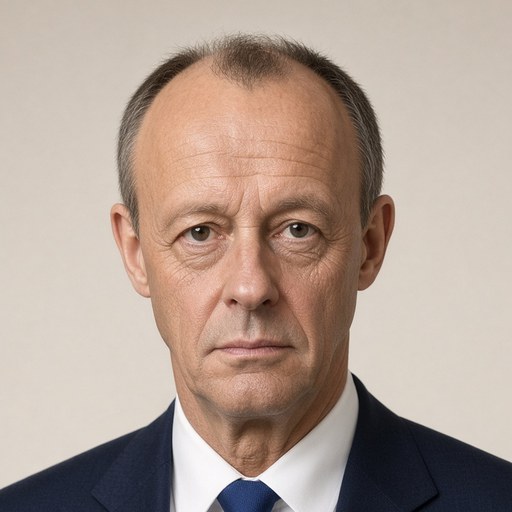
Speech by the Chancellor at the semiconductor manufacturer GlobalFoundries "Germany can innovate"
 Friedrich Merz · Chancellor of Germany
- Context
- Merz spoke at GlobalFoundries in Dresden in October 2025 to celebrate the Sprint project expansion, marking the end of his inaugural visit as Chancellor.
- Main themes
- Semiconductor manufacturing, technological sovereignty, Germany as innovation location, microelectronics as key technology, European competitiveness, industrial investment, critical infrastructure resilience, geopolitical change, innovation policy, economic prosperity
- Duration
- ~13 min
- Words
- 1,531
- Sentences
- 65
- Readability
- 38
- Grade
- 13.5
- Syntax
- 3.20
- Vocabulary
- 2.09
Translated from German
The broad sphere of national life a sentence belongs to. Every sentence has an Arena, so it is the denominator the other indices are read against.
Other65 sentences in 20 paragraphs
Dear Mr. Prime Minister, dear Michael Kretschmer,
dear colleagues from the Federal Government and the State Government,
dear colleagues from the German Bundestag and the Saxon State Parliament, but above all dear Mr. Chairman, dear Tim Breen, esteemed Mr. Horstmann, ladies and gentlemen, dear employees of GlobalFoundries, it is a great pleasure for me to be here today, to be here in Dresden, and to conclude my inaugural visit as Chancellor with a visit to this company. It is an even greater pleasure to be here because I get to celebrate the launch of the Sprint project with you. Because we are not just dealing with an expansion of production here, but we are witnessing a true commitment to Germany as an industrial location, to Germany as an innovation location, and above all to Germany's and Europe's technological sovereignty. Ladies and gentlemen, we are talking about microelectronics as a key technology precisely because it holds the key to a good future for our country, to securing prosperity, and also to safeguarding our freedom. An investment volume of 1.1 billion euros for chip manufacturing here in Dresden is therefore a real investment in the future.
It is also a signal that Germany and Europe not only want to keep pace with technological progress, but that we want to actively shape the development of the global semiconductor market and that we can do so, above all. Because most of you, ladies and gentlemen, know that Germany already plays a leading role in microelectronics in Europe. We are significantly involved in European semiconductor manufacturing with about 30 percent of European wafer capacities. But we can and want to do even better in the future. We want to better exploit the significant growth opportunities that our industrial sector has through innovative microelectronics. At the moment – I want to give you these figures – around four percent of Germany's gross domestic product is directly generated by microelectronics, and another 15 percent indirectly. I know, for example, from the regional medium-sized businesses, from innovative young entrepreneurs, what growth potentials microelectronics really offer.
I would like to start by thanking you, GlobalFoundries, and the employees for also accepting smaller orders. This is a direct contribution to further innovations. Thank you very much for that.
Ladies and gentlemen, you are also making a direct contribution to the security of our country here. Every wafer that is produced here is, if you will, a contribution to the resilience of our infrastructures. You here, just like your neighbors, for example Bosch, Infineon, and soon ESMC, produce the chips that are indispensable for our critical infrastructure, for aerospace, for banking, for secure identities, and for encryption. We live in times when technological sovereignty has become a central security issue.
With that, I come to a political and a societal task that we must tackle very energetically. Ladies and gentlemen, I can say on behalf of the Federal Government that the awareness of the urgency guides our political work, precisely this awareness, this knowledge of the urgency of the task of making our economic location competitive again for the coming decades.
Allow me to point out, because I do not only speak about Germany but also and above all about Europe: Just last week, we had a European Council in Brussels, and we decided that we will use another special summit of the European Council of all 27 heads of state and government of the European Union on February 12 to spend an entire day discussing the competitiveness of European industry with the European Commission.
We are aware of the task and the dimension of this task. Because, ladies and gentlemen, when we one day look back on the time in which we live today, we will probably only then realize the full dimension of the changes of which we are already witnesses today. I will not tire of saying it again: We are witnesses to a tectonic shift in the political and economic centers of power in the world. It is probably the most profound change we have experienced since the time of the Second World War. Whether we Germans and whether we Europeans have a chance to preserve our freedom, protect our security, maintain our prosperity, and not least preserve our democracies in this dramatically changing time of our world, that question remains unanswered. It poses itself with a completely new and, for many of us, probably unanticipated urgency. Providing an answer to this is primarily the task of political leadership. But we cannot do it alone without a societal awareness of the dimension of this task.
I do not say this out of lamentation, but I say it from a spirit of very positive awareness and also of optimism: A lot is at stake for us. But we have much more to gain than we might currently think. Therefore, we in the Federal Government have begun without delay to initiate a new innovation policy. The centerpiece of this innovation policy is the High-Tech Agenda Germany, which we already decided in the Cabinet in July and for which we will hold a kick-off event in Berlin tomorrow, on Wednesday, October 29. We are really comprehensively realigning our economic policy and our research and innovation policy towards innovation and our national interests.
Ladies and gentlemen, we are focusing on seven key technologies that we believe are central to the competitiveness of the European and German locations and thus also to our sovereignty: microelectronics – it is one of them – as well as artificial intelligence – you have already spoken about that – quantum technologies, biotechnology, fusion technology, climate-neutral energy generation, and last but not least, technologies for climate-neutral mobility.
Ladies and gentlemen, in this context, on October 15, just not long ago, we adopted a national microelectronics strategy in the Cabinet that includes a very clear framework for innovations, investments, research, and skills development. This means concretely that we are focusing on skills promotion, specifically for microelectronics, so that we can attract even more well-trained professionals. We are focusing on targeted research funding, specifically with a focus on our capabilities in chip design and on the faster transfer of knowledge into application and innovation. Finally, we are creating incentives to establish and expand semiconductor manufacturing and the production of materials, equipment, and components in Germany.
All of this is closely linked to the European Chips Act. We are working closely and energetically at the federal level with the states to better utilize the opportunities of this European initiative for Germany. We are in very good and constructive communication with the Commission regarding, for example, the aid procedure for GlobalFoundries.
Now, ladies and gentlemen, every semiconductor that is produced here in this house, in this company, is a testament to the future viability of the industrial and technological location of Germany and just as much a testament to the innovative strength of Silicon Saxony.
GlobalFoundries is embedded in a whole ecosystem of companies, suppliers, research institutions, and universities that is already setting standards in Europe. After all, a remarkable number of 3,000 professionals – as you mentioned – from more than 50 countries are already working in this city, at this location for GlobalFoundries. This is an international competence network that probably has no equal in Europe.
I thank you all, ladies and gentlemen, the engineers, the professionals, and the executives, for your commitment, for your innovative strength, for the effort you bring together here in the laboratories and at the machines. You are the ones who make Germany a leading location for high-tech and microelectronics. Thank you very much for your commitment!
Ladies and gentlemen, we all have all the prerequisites – I repeat: all the prerequisites – to shape the technological change in the world that is currently happening and in the midst of which we are already, but also to shape the already mentioned geopolitical change, and again, in the spirit of freedom, peace, and prosperity in Europe. In this context, I am very confident that we will succeed. Technological sovereignty and economic strength go hand in hand, and they empower us precisely for this task.
Next month, on November 18, I will hold a corresponding event in Berlin together with the French President, where we will also address the issue of how we can build technological sovereignty together in Europe. Ladies and gentlemen, the weeks and months, perhaps years, ahead of us will be decisive. If we do the right thing now, we will have every chance of succeeding together. So let us invest, let us research, let us produce! Let us dare to do something.
In this sense, I am very much looking forward to the factory tour and to visiting the laboratories here in the building. Thank you once again for the great invitation and hospitality! I wish this company here in Dresden, but also the company worldwide every conceivable and possible success! We fight and we stand by your side so that a signal goes out from this location in Dresden: Germany is a leading technology nation, Germany can innovate, and Europe takes on this task with confidence and courage.
Thank you very much!
The original German. The tags above are read on the English translation's sentences.
Sehr geehrter Herr Ministerpräsident, lieber Michael Kretschmer,
liebe Kolleginnen und Kollegen aus der Bundesregierung und der Landesregierung,
liebe Kolleginnen und Kollegen aus dem Deutschen Bundestag und dem Sächsischen Landtag,
vor allem aber
dear Mr Chairman, dear Tim Breen
,
sehr geehrter Herr Horstmann,
meine Damen und Herren,
liebe Mitarbeiterinnen und Mitarbeiter von
GlobalFoundries
,
es ist mir eine große Freude, heute hier dabei zu sein, heute hier in Dresden zu sein und meinen Antrittsbesuch als Bundeskanzler bei der sächsischen Staatsregierung mit dem Besuch in diesem Unternehmen abzuschließen. Es ist mir eine noch größere Freude, hier zu sein, weil ich hier mit Ihnen den Start des Projekts Sprint feiern darf. Denn wir haben es hier ja nicht nur mit einer Produktionserweiterung zu tun, sondern wir haben es mit einem echten Bekenntnis zum Industriestandort Deutschland, zum Innovationsstandort Deutschland und vor allem zur technologischen Souveränität Deutschlands und Europas zu tun. Meine Damen und Herren, wir sprechen bei der Mikroelektronik von einer Schlüsseltechnologie, eben weil sie einen Schlüssel für eine gute Zukunft unseres Landes, für die Sicherung des Wohlstandes und auch für die Sicherung unserer Freiheit bereithält. Ein Investitionsvolumen von 1,1 Milliarden Euro für die
Chip
fertigung hier am Standort Dresden ist also eine wirkliche Zukunftsinvestition.
Es ist auch ein Signal dafür, dass Deutschland und Europa mit dem technologischen Fortschritt nicht nur Schritt halten wollen, sondern dass wir die Entwicklung des globalen Halbleitermarktes aktiv mitgestalten wollen und dass wir dies vor allem auch können. Denn die meisten von Ihnen, meine Damen und Herren, wissen, dass Deutschland in Europa bereits heute eine führende Rolle in der Mikroelektronik einnimmt. Wir sind mit etwa 30 Prozent der europäischen
Wafer
kapazitäten maßgeblich an der europäischen Halbleiterfertigung beteiligt. Aber wir können und wollen in Zukunft noch besser werden. Wir wollen die erheblichen Wachstumschancen noch besser ausschöpfen, die unser Industriesektor durch innovative Mikroelektronik hat. Im Augenblick – ich will Ihnen diese Zahlen nennen – werden rund vier Prozent des deutschen Bruttoinlandprodukts direkt durch Mikroelektronik erzeugt und weitere 15 Prozent indirekt. Ich weiß zum Beispiel vom regionalen Mittelstand, von innovativen Jungunternehmerinnen und ‑unternehmern, welche Wachstumspotenziale von Mikroelektronik sich wirklich ergeben.
Ich möchte gleich zu Beginn Ihnen,
GlobalFoundries
, den Mitarbeiterinnen und Mitarbeitern, dafür danken, dass Sie auch kleinere Aufträge annehmen. Das ist ein direkter Beitrag für weitere Innovationen. Herzlichen Dank dafür.
Meine Damen und Herren, einen direkten Beitrag leisten Sie hier auch für die Sicherheit unseres Landes. Jeder
Wafer
, der hier gefertigt wird, ist, wenn man so will, ein Beitrag für die Resilienz unserer Infrastrukturen. Sie hier stellen genauso wie ihre Nachbarn, zum Beispiel Bosch, Infineon und demnächst
ESMC
, die
Chip
s her, die für unsere kritische Infrastruktur, für die Luft- und Raumfahrt, für
Banking
, für sichere Identitäten und für Verschlüsselung unverzichtbar sind. Wir leben in Zeiten, in denen technologische Souveränität zu einer zentralen Sicherheitsfrage geworden ist.
Damit bin ich bei einer politischen und einer gesamtgesellschaftlichen Aufgabe, der wir uns sehr energisch annehmen müssen. Meine Damen und Herren, ich kann für die Bundesregierung sagen, dass uns das Wissen um die Dringlichkeit bei unserer politischen Arbeit leitet, genau dieses Wissen, genau das Wissen um die Dringlichkeit der Aufgabe, unseren Wirtschaftsstandort für die nächsten Jahrzehnte wieder wettbewerbsfähig aufzustellen.
Erlauben Sie mir den Hinweis, weil ich immer wieder nicht nur über Deutschland spreche, sondern auch und vor allem über Europa: Wir haben gerade in der vergangenen Woche einen Europäischen Rat in Brüssel gehabt, und wir haben entschieden, dass wir im nächsten Februar, am 12. Februar, einen weiteren Sondergipfel des Europäischen Rates aller 27 Staats- und Regierungschefs der Europäischen Union nutzen werden, um einen ganzen Tag mit der Europäischen Kommission ausschließlich über die Wettbewerbsfähigkeit der europäischen Industrie zu sprechen.
Wir sind uns der Aufgabe und der Dimension dieser Aufgabe bewusst. Denn, meine Damen und Herren, wenn wir eines Tages auf die Zeit, in der wir heute leben, zurückblicken werden, dann wird uns vermutlich erst dann die ganze Dimension der Veränderungen klar werden, deren Zeitzeuge wir heute schon sind. Ich werde nicht müde, es immer wieder zu sagen: Wir sind Zeitzeugen einer tektonischen Verschiebung der politischen und ökonomischen Machtzentren auf der Welt. Wahrscheinlich ist es die tiefgreifendste Veränderung, die wir nach der Zeit des Zweiten Weltkrieges jemals erlebt haben. Ob wir Deutsche und ob wir Europäer eine Chance haben, in dieser sich so dramatisch verändernden Zeit unserer Welt unsere Freiheit zu bewahren, unsere Sicherheit zu schützen, unseren Wohlstand zu erhalten und nicht zuletzt auch unsere Demokratien zu erhalten, diese Frage ist nicht beantwortet. Sie stellt sich mit einer ganz neuen und von vielen von uns vermutlich nicht geahnten Dringlichkeit. Darauf eine Antwort zu geben, ist zuallererst die Aufgabe der politischen Führung. Aber wir können es nicht allein ohne ein gesellschaftliches Bewusstsein für die Dimension dieser Aufgabe.
Ich sage es nicht aus Larmoyanz, sondern ich sage es aus einem Geist des ganz positiven Bewusstseins und auch des Optimismus: Es steht einiges für uns auf dem Spiel. Aber wir haben viel mehr zu gewinnen, als wir im Augenblick vielleicht selbst meinen. Wir haben darum in der Bundesregierung ohne Zeitverzug begonnen, eine neue Innovationspolitik auf den Weg zu bringen. Das Herzstück dieser Innovationspolitik ist die
Hightech
Agenda Deutschland, die wir bereits im Juli im Kabinett beschlossen haben und anlässlich der wir morgen, am Mittwoch, den 29. Oktober, eine
Kick-off
-Veranstaltung in Berlin durchführen werden. Wir richten unsere Wirtschaftspolitik und unsere Forschungs- und Innovationspolitik damit wirklich umfassend neu aus, und zwar auf Innovation und auf unsere nationalen Interessen.
Meine Damen und Herren, wir fokussieren uns dabei auf sieben Schlüsseltechnologien, die aus unserer Sicht für die Wettbewerbsfähigkeit des europäischen und des deutschen Standortes und damit auch für unsere Souveränität zentral sind: auf Mikroelektronik – sie ist eine davon —, außerdem auf künstliche Intelligenz – Sie haben bereits darüber gesprochen –, auf Quantentechnologien, auf Biotechnologie, auf die Fusionstechnologie, auf klimaneutrale Energieerzeugung und
last, but not least
auf Technologien für klimaneutrale Mobilität.
Meine Damen und Herren, wir haben in diesem Zuge am 15. Oktober, also vor gar nicht langer Zeit, eine nationale Mikroelektronik-Strategie im Kabinett verabschiedet, die einen sehr klaren Orientierungsrahmen für Innovationen, für Investitionen, für Forschung und für Fachkräfteentwicklung umfasst. Das heißt ganz konkret, wir setzen auf Fachkräfteförderung, spezifisch für Mikroelektronik, damit wir noch mehr gut ausgebildete Fachkräfte gewinnen. Wir setzen auf gezielte Forschungsförderung, und zwar mit Fokus auf unsere Fähigkeiten im
Chipdesign
und auf den schnelleren Transfer von Wissen in Anwendung und Innovation. Schließlich schaffen wir Anreize, um Halbleiterfertigung und die Fertigung von Materialien, von Anlagen und Komponenten in Deutschland anzusiedeln und auszubauen.
Das alles ist eng verzahnt mit dem
European Chips Act
. Wir arbeiten im Bund gemeinsam mit den Ländern sehr eng und energisch daran, die Chancen dieser europäischen Initiative für Deutschland noch besser zu nutzen. Wir stehen konkret mit der Kommission in sehr gutem und sehr konstruktivem Austausch, was etwa das Beihilfeverfahren für
GlobalFoundries
angeht.
Nun, meine Damen und Herren, jeder Halbleiter, der hier in diesem Haus, in diesem Unternehmen gefertigt wird, ist ein Ausweis der Zukunftsfähigkeit des Industriestandortes und des Technologiestandortes Deutschland und genauso ein Ausweis der Innovationskraft von
Silicon Saxony
.
GlobalFoundries
ist eingebettet in ein ganzes Ökosystem aus Unternehmen, Zulieferern, Forschungseinrichtungen und Hochschulen, das jetzt schon Maßstäbe in Europa setzt. Immerhin eine beachtliche Anzahl von 3000 Fachkräften – Sie haben es gesagt – aus mehr als 50 Ländern arbeitet heute schon in dieser Stadt, an diesem Standort für
GlobalFoundries
. Das ist ein internationales Kompetenznetzwerk, das vermutlich in Europa seinesgleichen sucht.
Ich danke Ihnen allen, meine Damen und Herren, den Ingenieurinnen und Ingenieuren, den Fachkräften und den Führungskräften, für Ihr Engagement, für Ihre Innovationskraft, für den Einsatz, den Sie hier gemeinsam in den Laboren an den Maschinen bringen. Sie sind es, die Deutschland zu einem führenden Standort für
Hightech
und Mikroelektronik machen. Herzlichen Dank für Ihr Engagement!
Meine Damen und Herren, wir haben alle gemeinsam alle Voraussetzungen dafür – ich wiederhole: alle Voraussetzungen –, den technologischen Wandel auf der Welt mitzugestalten, der gerade geschieht und in dessen Mitte wir schon sind, aber auch den bereits angesprochenen geopolitischen Wandel mitzugestalten, und zwar, noch einmal, im Sinne der Freiheit und des Friedens und des Wohlstands in Europa. Ich bin vor diesem Hintergrund sehr zuversichtlich, dass uns das gelingt. Technologische Souveränität und wirtschaftliche Stärke gehören zusammen, und sie befähigen uns genau für diese Aufgabe.
Ich werde im nächsten Monat, am 18. November, zusammen mit dem französischen Staatspräsidenten in Berlin eine entsprechende Veranstaltung gemeinsam durchführen, bei der wir uns auch um dieses Thema bemühen werden, wie wir es schaffen, technologische Souveränität gemeinsam in Europa aufzubauen. Meine Damen und Herren, das werden entscheidende Wochen und Monate, vielleicht Jahre sein, die jetzt vor uns liegen. Wenn wir jetzt das Richtige tun, dann werden wir alle Chancen haben, gemeinsam Erfolg zu haben. Investieren wir also, forschen wir, produzieren wir! Trauen wir uns einfach einmal etwas zu.
In diesem Sinne freue ich mich sehr auf die Werksbesichtigung und auf die Besichtigung der Labore hier im Haus. Vielen Dank noch einmal für die großartige Einladung und Gastfreundschaft! Diesem Unternehmen hier am Standort Dresden, aber auch dem Unternehmen weltweit jeden denkbaren und möglichen Erfolg! Wir kämpfen und wir stehen Seite an Ihrer Seite, damit von diesem Standort in Dresden ein Signal ausgeht: Deutschland ist eine führende Technologienation, Deutschland kann Innovation, und Europa nimmt diese Aufgabe mit Selbstbewusstsein und Mut an.
Ganz herzlichen Dank!