




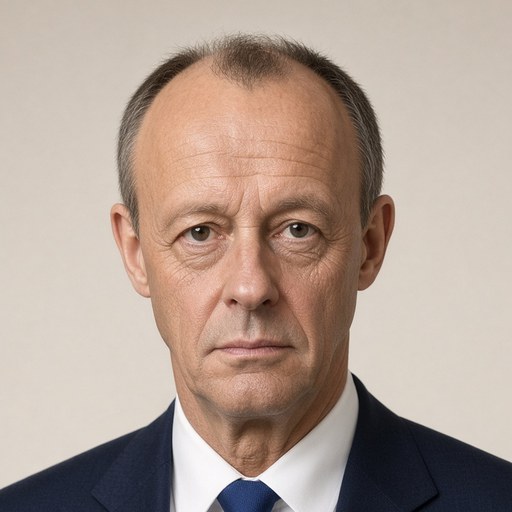
Government statement by Chancellor Friedrich Merz to the European Council on October 23 and 24, 2025, before the German Bundestag on October 16, 2025, in Berlin:
 Friedrich Merz · Chancellor of Germany
- Context
- Merz addressed the Bundestag on October 16, 2025, ahead of the European Council meeting, covering the Hamas hostage release and Germany's European policy agenda.
- Main themes
- Hostage release, Israeli-Hamas conflict, European unity and strength, peace through strength, German economic competitiveness, Germany's European leadership, international cooperation, corporate tax reform, energy prices, bureaucracy reduction, labor market reform
- Duration
- ~30 min
- Words
- 3,601
- Sentences
- 207
- Readability
- 48
- Grade
- 10.9
- Syntax
- 2.81
- Vocabulary
- 2.10
Translated from German
The broad sphere of national life a sentence belongs to. Every sentence has an Arena, so it is the denominator the other indices are read against.
Other207 sentences in 52 paragraphs
Madam President!
Dear colleagues!
This week is marked by a truly historic day, which we had the great fortune to witness closely and from afar on Monday. After 738 days of captivity, on this 13th of October, all 20 surviving hostages have been released from the hands of the terrorist organization Hamas, including four German citizens. They are home, they are with their families; and this fills us, it fills me personally with great joy and relief.
The release of the hostages, the silence of the weapons was made possible because the Israeli government, under the leadership of Prime Minister Netanyahu, together with the American government and President Trump, agreed on a 20-point plan to end this war. I would also like to take this opportunity to thank the American President as well as the Israeli Prime Minister for this initiative, for this great step. And I would like to include in my thanks the heads of state and government who were involved in making it possible, in implementing it. That was the Egyptian President el-Sisi. That was the Emir of Qatar Al Thani. That was the Turkish President Erdoğan.
All of this was possible because states and heads of state and government worked together and because they left no doubt about their determination to end this terrible war. Our gratitude goes to them all.
However, we must not forget: Well over 1,000 Israeli citizens lost their lives on October 7, 2023, and many of the hostages did not survive their captivity in the hands of Hamas. We mourn with these victims, with the relatives who, at the latest since Monday, know that they will not see their family members alive again. On behalf of the Federal Government, I would like to express our heartfelt condolences to all the relatives. We think of you; we feel for you. You are not alone.
Since Monday of this week, there is renewed hope for a genuine, lasting peace in the region. We have witnessed this week what is possible when the international community works together. Political action makes a difference in this world – for better or for worse. That is why this past Monday is for me an occasion to confront our own responsibility to act even more decisively. Europe must use its capabilities more resolutely and unitedly and must deploy its power to shape the world for the better.
Yes, being a peace power in the world is and remains the fundamental idea of the European Union. This is also – as it is written in our Basic Law – a central founding idea of the Federal Republic of Germany. I emphasize the second part of this word: peace power. Peace in freedom can only succeed where it is underpinned by strength – with economic strength, with political strength and determination, and also with military strength. Because in this increasingly harsh and becoming world, it holds true: Only strength preserves peace. And weakness undermines peace. This is one of the historical lessons that Europe has drawn from its own history.
And another lesson is: Each individual European country is too small, economically and politically, to truly influence world events; but in conjunction with all together, we have all the possibilities to shape the development of the world for the better.
These possibilities have been utilized more or less well in the past decades. How we use them now will determine our future, will determine the future of our country in the coming years, perhaps decades. This Federal Government, the Federal Government I lead, therefore works under the guiding principle of "Responsibility for Germany." But this guiding principle is only fully understood when we also take on leadership responsibility in Europe. Because Germany can only thrive if Europe thrives. And Europe can only be strong if the large country in its center is strong.
The good news is that we know how to derive opportunities for Germany from the possibilities of Europe. We know that the strength of our country and the strength of Europe stands and falls with economic power. Even more: We have unity in our country and with our European partners that we must now focus our combined efforts in Germany as well as in Europe on making our economy competitive again.
To this end, we in the Federal Government of the Federal Republic of Germany are making our own contribution. We have already made decisions here in the House: a comprehensive corporate tax reform, extensive tax relief for companies. We are lowering energy prices. We are in the midst of reducing bureaucracy. And we will soon introduce the active pension, linked to labor market reforms.
In Germany, despite everything that is said and written, we have quickly gotten to work, and we have started very concretely. We are putting our decisions into motion in many areas simultaneously to bring momentum to the economy. We know that we have little time for the breakthrough to the new.
In Europe, we need the same drive that this Federal Government has developed for Germany. We do not have a knowledge problem in Europe, ladies and gentlemen; we have an implementation problem. Therefore, at the upcoming European Council in Brussels, I intend to address this implementation problem again together with our European partners. And this primarily concerns the competitiveness of our European economies.
I would like to remind you again of two documents that we have: On the one hand, there is the report by former Italian Prime Minister Enrico Letta on the future of the European internal market. And on the other hand, there is the extensive report by former Italian Prime Minister and President of the European Central Bank Mario Draghi on the competitiveness of the European Union.
We have all the proposals for deepening the internal market and improving the competitiveness of our economies on the table. That is why I say here as well as in Brussels: These two reports must not disappear into the filing cabinets of the European Commission. They belong on the agenda of the European Union now; they belong on the agenda of the European Council now. I will therefore insist that these proposals become the subject of legislation in the European Union very comprehensively and very quickly. Because Mario Draghi's report shows: A large part of the growth gap between the European Union and the USA is due to too low productivity growth in Europe. And productivity is the most important prerequisite for competitiveness. Draghi was very clear on this, and Letta argues in many points in the same direction. Europe will only become more productive if it fundamentally changes.
I want to name the keywords: an end to regulatory frenzy, faster procedures, open markets, more innovation, and more competition. These are the goals we must achieve.
This does not contradict our clear commitment to also achieve the climate goals by 2045 and the interim targets in 2040. I want to explicitly counter all doubts expressed about this. This is not a contradiction, but an organic part of our economic and environmental policy – however, not only with regulation and certainly not with prohibitions, but with open technology, with innovation, with competitiveness, especially in the technologies that make environmental protection possible in the first place.
This is therefore crucial for the future of our country and the countries in Europe because in these weeks, months, and perhaps few years, it will be decided whether Europe remains an independent economic power in the world economy or whether we will become the plaything of large economic centers, for example in Asia or America. My priority is clearly there: We want to remain an active player in global markets. And we want to strengthen the competitiveness of Europe and not contribute to its weakening.
Allow me to address a very fundamental issue at this point, namely: How do we regulate, and what do we actually regulate? We are at a crossroads here. Do we want to continue regulating – as an expression of distrust of public administration, bureaucracy, and also of parliaments and governments towards citizens and companies? Or do we want to reduce regulation because we fundamentally trust citizens and also companies to behave in accordance with the rules, that they must also be able to develop and that they must use freedoms to increase our prosperity? Ladies and gentlemen, my priority, the priority of this Federal Government, clearly lies with the second option and not the first.
Because the European Union must now catch up. A large part of the laws – especially in economic policy, but also in agricultural policy – is the result of decisions that have been made at the European level. It can be assumed that about 80 percent of the regulations also determine our national legislation. I do not say this to absolve us of responsibility or obligation at the national level. I say this to hold us accountable in Brussels. We will jointly reduce existing regulation and jointly prevent future overregulation.
That is why the Commission's proposals for simplifying regulations are an important step in the right direction. The six so-called omnibus packages are also supposed to save more than eight billion euros per year. That is good, but it is not enough; more must come. These packages must be implemented quickly and consistently so that the relief for German and European companies really arrives.
On this occasion, a heartfelt word to the European Parliament, which reached an agreement last week on the first omnibus packages for sustainability reporting and the supply chain directive. These simplifications must now be enacted into law this year. Our companies are urgently waiting for this.
We in the Federal Government have also agreed on a common position on the omnibus package for defense. The defense capability of Europe also needs simpler and faster procedures so that our companies can now produce the necessary goods. However, we must not stop there. We need a systematic review of the regulatory framework of the European Union. And here the European Union must now take further action. I will also advocate this vigorously at the European Council next week. Explicitly, for me, this includes the courage to withdraw unnecessary legal acts and to limit new rules to the bare essentials. We also need this cultural change in Europe. We do not need more rules; we need better rules, and we need fewer rules.
We must and want to become much better at truly exploiting the growth potential of the European internal market. We are dismantling existing barriers and driving genuine deepening forward. I want to give you an example: the so-called capital market union. Our companies need a sufficiently broad and deep capital market so that they can finance themselves better and, above all, faster. We need a kind of European Stock Exchange so that successful companies, like BioNTech from Germany, do not have to go to the New York Stock Exchange. Because only in this way can we retain value creation from German and European research in Europe. Innovation and production arise in Germany through the capital market. This way, value creation and the resulting prosperity can remain in Germany and Europe.
Only in this way can the prosperity of our society also increase through the capital market. We must do better in Europe.
Finally, we want a strong European internal market without restrictions at the internal borders. This requires secure external borders. We have often discussed this in the German Bundestag in recent weeks and months. The external borders require a consistent implementation of the new migration rules and effective cooperation in Europe. There is no other way to protect the external borders.
Yes, we have seen a significant decrease in the number of asylum seekers in Germany compared to the previous year by almost 60 percent. This is the result of political decisions made by this Federal Government. The districts and cities in Germany are already feeling the relief. But we must also improve the returns of those who do not have a permanent residence in Germany. The Federal Minister of the Interior is on a good path here; the Federal Government is on a good path here.
Migration is a national task, but it is also a European task. That is why we will discuss at the European Council how we can better manage migration movements in the European Union and further develop the Common European Asylum System.
We discussed the draft law in Germany to adapt national legislation to the reform of the Common European Asylum System – this is called the GEAS Adaptation Act – last Thursday here in the German Bundestag in its first reading. This is a necessary step, which will now be quickly followed by further actions.
Another topic that will occupy us at the European Council is trade policy. The exchange of goods, services, and capital has once again become an instrument of power in the world. But this is nothing other than self-harm for those affected and involved. For open and free markets increase the prosperity of all participants. Protectionism and tariffs harm those involved.
This fundamental understanding has made Europe one of the most stable and successful trading areas in the world and has enabled our country to achieve great prosperity in recent decades. However, we must truly tap into this potential for the future as well. To do this, Europe must gain new markets today, forge new partnerships, and thereby open up new opportunities for our companies.
In recent months – I want to remind you – important successes have been achieved after long negotiations, such as the Mercosur agreement with the South American countries, with Mexico, and most recently with Indonesia. These agreements are concluded. Mercosur alone creates a free trade area with over 700 million people and tariff savings for European companies amounting to several billion euros. The position of the federal government on this agreement is therefore clear: We must sign the Mercosur agreement this year so that it can come into force.
We want to continue on this path. Because every new agreement strengthens Europe's competitiveness. That is why we must conclude new agreements quickly now, and above all as EU-only, that is, purely European agreements, with purely European implementation in the European Parliament, in the Commission, and in the Council. The negotiations with India are a good example, a step in the right direction that we in the federal government are accompanying and supporting.
Finally, there is broad consensus among us in the country, in the federal government, and in Europe that we must quickly strengthen European defense capabilities.
In recent months, the federal government has made a series of decisions aimed at making the Bundeswehr – as I have also stated from this podium before – the strongest conventional army in the European Union, as is appropriate for a country of our size and responsibility and as our allies in NATO and the European Union rightly expect from us. We are setting the right standards for this.
I cannot say it often enough, especially here: We are guided by a clear principle: We want to be able to defend ourselves so that we do not have to defend ourselves. This will remain the case in the coming years. Because strength, deterrence, and a consistent commitment to our democratic values – that is what it means to be a European peace power.
We are also making good progress in the European Union in strengthening defense readiness. The European Commission will present the Roadmap 2030 today to systematically strengthen our common defense capabilities. We will discuss this roadmap together in the European Council next week. Because it is clear: Europeans must take more responsibility for their defense capabilities. We have been hearing this, and we have been discussing it for some time. But this insight must now be translated into actual decisions regarding strength. Europe must coordinate more closely, must act better, must act more decisively, and must do so quickly.
We want to defend ourselves in a European manner, which is why we must also equip ourselves in a European manner. The role of the European Defence Agency is central to us. It should ensure that we develop, produce, and procure military systems together in Europe in the future, with clear standards, simpler structures, and above all larger quantities. This way, we pool our resources and put an end to the fragmentation in the defense sector.
It is clear that NATO is and remains the backbone of our common Euro-Atlantic security. We want to further strengthen the European pillar of NATO. At the same time, we want to avoid duplicative structures. I am therefore very grateful that NATO and the European Union have built an excellent, mutually reinforcing working relationship that now meets this goal. What is crucial now is speed. Every member state must contribute to making Europe stronger and keeping the European space secure.
The European member states are thus strengthening their defense. But Germany – and this must also be clear – does not threaten anyone. The European Union does not threaten anyone. And NATO does not threaten anyone in the world.
In the last three and a half years, it has been solely Putin who has threatened security on the European continent, who endangers us and conducts a brutal war of aggression against Ukraine, a war that claims senseless lives every day. It is Russia that, with increasing ruthlessness, tries to destabilize us in Germany and in Europe using hybrid means of warfare, with sabotage, cyberattacks, targeted disinformation, espionage – even from within your ranks – and with murder. In recent weeks, drones have increasingly violated European airspace, not least here in Germany.
We are experiencing an offensive of insecurity. Putin relies on the idea that fear paralyzes a free society and undermines our willingness to act decisively. But he is miscalculating. We will not be intimidated. We will not allow our free society to be unsettled by hybrid attacks. We will defend ourselves against this now and in the future. That is why the National Security Council, which we have newly established, is developing a comprehensive action plan to counter hybrid threats, which it will discuss in its constitutive meeting in a few days. Because this is a whole-of-government, cross-departmental task that we will address with determination.
We will discuss at the European Council once again very fundamentally how we can further increase pressure on Russia in addition to the 19th sanctions package, which is currently being negotiated in the Council, to finally enter into negotiations with Ukraine. Putin must recognize that this war will come at a high cost to him and will cost him more than a negotiated peace.
So far, Putin does not want to negotiate; he wants to continue bombing. The Ukrainians are currently experiencing heavy attacks again, in some parts of the country the heaviest attacks since the beginning of the war. Russia is sending cruise missiles, rockets, and swarms of drones night after night and now day after day. They kill innocent people. They destroy power plants and power lines. Before the fourth winter of war, Putin is counting on wearing down the Ukrainians.
We will support the courageous defense struggle of Ukraine for as long as necessary. This decision in Europe stands, and we will reaffirm and underscore it next week.
I have made a concrete proposal in this regard. We want to make better use of the frozen assets of the Russian central bank to provide Ukraine with an additional approximately 140 billion euros in interest-free loans. These additional funds are intended solely to contribute to military equipment. Disbursed in tranches, they would secure Ukraine's military resilience over several years, should this be necessary.
To make this clear here: We do not want to do this to prolong the war; we want to do this to end this war as quickly as possible. At the same time, Putin must recognize that our support for Ukraine does not wane but increases, and that he cannot count on having the longer breath.
By the way, Ukraine will only have to repay the secured loans once Russia makes reparations payments. The assets remain frozen due to European sanctions anyway. Implementing this proposal will not be trivial. However, we will create the legal and practical conditions for it.
Behind the European Union lies a great success story as a peace power – I want to emphasize this word again – a story – quote – “of a successful struggle for peace and reconciliation and for democracy and human rights.” It is a story “of transforming Europe from a continent of wars to one of peace.” What I have quoted here is an excerpt from the official justification with which the European Union was awarded the Nobel Peace Prize twelve years ago. Few anticipated how quickly war would return to Europe. Putin has brought it back to Europe.
Our world today is different, a much more threatening world than it was twelve years ago. A large number of tasks lie ahead of us. We are up to the challenge; I have no doubt about that. But for this, we must work on our strengths in Germany and in Europe and systematically reduce our weaknesses – on our strengths, on our economic strengths, on our political strength, and indeed also on our military strength. The federal government works day by day for this strong Europe. And we do this as we have written down: out of responsibility for Germany.
Thank you.
The original German. The tags above are read on the English translation's sentences.
Frau Präsidentin!
Liebe Kolleginnen und Kollegen!
Diese Woche steht im Zeichen eines wirklich historischen Tages, den wir das große Glück hatten, aus der Nähe und aus der Ferne am Montag mitzuerleben. Nach 738 Tagen Gefangenschaft sind an diesem 13. Oktober alle 20 überlebenden Geiseln aus den Händen der Terrororganisation Hamas freigekommen, darunter vier deutsche Staatsbürger. Sie sind zu Hause, sie sind bei ihren Familien; und das erfüllt uns, das erfüllt mich persönlich mit großer Freude und Erleichterung.
Die Freilassung der Geiseln, das Schweigen der Waffen waren möglich, weil sich die israelische Regierung unter der Führung des Ministerpräsidenten Netanjahu zusammen mit der amerikanischen Regierung und Präsident Trump auf einen 20-Punkte-Plan geeinigt haben zur Beendigung dieses Krieges. Ich möchte auch an dieser Stelle die Gelegenheit nutzen, dem amerikanischen Präsidenten wie dem israelischen Ministerpräsidenten dankzusagen für diese Initiative, für diesen großen Schritt. Und ich möchte einbeziehen in den Dank die Staats- und Regierungschefs, die daran beteiligt waren, es möglich zu machen, es umzusetzen. Das war der ägyptische Staatspräsident el-Sisi. Das war der Emir von Katar Al Thani. Das war der türkische Staatspräsident Erdoğan.
Das alles ist möglich gewesen, weil Staaten und Staats- und Regierungschefs zusammengearbeitet haben und weil sie an ihrer Entschlossenheit keinen Zweifel gelassen haben, diesen schrecklichen Krieg zu beenden. Ihnen gilt unser aller Dank.
Wir dürfen gleichwohl nicht vergessen: Weit über 1.000 israelische Staatsbürgerinnen und Staatsbürger haben schon am 7. Oktober 2023 ihr Leben verloren, und viele der Geiseln haben die Gefangenschaft in den Händen der Hamas nicht überlebt. Wir trauern mit diesen Opfern, mit den Angehörigen, die spätestens seit Montag wissen, dass sie ihre Familienangehörigen lebend nicht wiedersehen werden. Ich möchte für die Bundesregierung allen Angehörigen unser tiefempfundenes Mitleid aussprechen. Wir denken an Sie; wir fühlen mit Ihnen. Sie sind nicht allein.
Seit Montag dieser Woche gibt es wieder Hoffnung auf einen echten, dauerhaften Frieden in der Region. Wir haben in dieser Woche erlebt, was möglich ist, wenn die Völkergemeinschaft zusammenarbeitet. Politisches Handeln macht einen Unterschied in dieser Welt – zum Guten wie zum Schlechten. Deshalb ist dieser vergangene Montag für mich ein Anlass, uns der eigenen Verantwortung zum Handeln noch entschiedener zu stellen. Europa muss seine Möglichkeiten entschlossener und geschlossener nutzen und muss seine Macht zum Einsatz bringen, um die Welt zum Besseren zu gestalten.
Ja, eine Friedensmacht zu sein in der Welt, das ist und bleibt die Grundidee der Europäischen Union. Das ist auch – in unserem Grundgesetz ist es so aufgeschrieben – eine zentrale Gründungsidee der Bundesrepublik Deutschland. Ich lege die Betonung auf den zweiten Teil dieses Wortes: Friedensmacht. Frieden in Freiheit gelingt nur, wo er unterlegt ist mit Stärke – mit wirtschaftlicher Stärke, mit politischer Stärke und Entschlossenheit und auch mit militärischer Stärke. Denn in dieser rauer werdenden und gewordenen Welt gilt: Nur Stärke bewahrt Frieden. Und Schwäche bringt den Frieden ins Wanken. Das ist eine der historischen Lehren, die Europa aus seiner eigenen Geschichte gezogen hat.
Und eine weitere Lehre lautet: Jedes einzelne europäische Land ist auf sich gestellt wirtschaftlich und politisch zu klein, um das Weltgeschehen wirklich mitzubestimmen; aber im Verbund mit allen zusammen haben wir alle Möglichkeiten, die Entwicklung der Welt zum Besseren mitzugestalten.
Diese Möglichkeiten sind in den vergangenen Jahrzehnten einmal mehr und einmal weniger gut genutzt worden. Wie wir sie jetzt nutzen, wird über unsere Zukunft, wird über die Zukunft unseres Landes in den nächsten Jahren, vielleicht Jahrzehnten entscheiden. Diese Bundesregierung, die von mir geführte Bundesregierung, arbeitet daher unter dem Leitgedanken „Verantwortung für Deutschland“. Aber dieser Leitgedanke ist erst dann ganz verstanden, wenn wir auch Führungsverantwortung in Europa übernehmen. Denn Deutschland geht es nur gut, wenn es Europa gut geht. Und Europa kann nur stark sein, wenn das große Land in seiner Mitte stark ist.
Die gute Nachricht ist, dass wir wissen, wie wir aus den Möglichkeiten Europas auch Chancen für Deutschland ableiten können. Wir wissen, dass die Stärke unseres Landes und die Stärke Europas mit der Wirtschaftskraft steht und fällt. Mehr noch: Wir haben Einigkeit in unserem Land und mit unseren europäischen Partnern, dass wir in Deutschland genauso wie in Europa unsere gebündelte Anstrengung jetzt darauf richten müssen, unsere Wirtschaft wieder wettbewerbsfähig zu machen.
Dazu leisten wir in der Bundesregierung der Bundesrepublik Deutschland einen eigenen Beitrag. Wir haben bereits Entscheidungen getroffen hier im Haus: eine umfassende Unternehmensteuerreform, eine umfangreiche steuerliche Entlastung für die Unternehmen. Wir senken die Energiepreise. Wir sind mitten dabei, die Bürokratie zurückzubauen. Und wir werden auch bald die Aktivrente einführen, mit Arbeitsmarktreformen verbunden.
Wir sind in Deutschland trotz allem, was da gesagt und geschrieben wird, zügig ans Werk gegangen, und wir haben damit sehr konkret begonnen. Wir setzen unsere Entscheidungen in vielen Bereichen gleichzeitig in Bewegung, um Schwung in die Wirtschaft zu bringen. Wir wissen, dass wir wenig Zeit haben für den Aufbruch zum Neuen.
In Europa brauchen wir den gleichen Antrieb, wie ihn diese Bundesregierung für Deutschland entwickelt hat. Wir haben in Europa kein Erkenntnisproblem, meine Damen und Herren; wir haben ein Umsetzungsproblem. Beim anstehenden Europäischen Rat in Brüssel beabsichtige ich daher, dieses Umsetzungsproblem gemeinsam mit unseren europäischen Partnern erneut anzusprechen. Und das betrifft erneut in erster Linie die Wettbewerbsfähigkeit unserer europäischen Volkswirtschaft.
Ich erlaube mir in diesem Zusammenhang, erneut an zwei Dokumente zu erinnern, die uns vorliegen: Das ist zum einen der Bericht des früheren italienischen Ministerpräsidenten Enrico Letta über die Zukunft des europäischen Binnenmarktes. Und das ist zum Zweiten der umfangreiche Bericht des früheren italienischen Ministerpräsidenten und Präsidenten der Europäischen Zentralbank Mario Draghi über die Wettbewerbsfähigkeit der Europäischen Union.
Wir haben alle Vorschläge zur Vertiefung des Binnenmarktes und zur Verbesserung der Wettbewerbsfähigkeit unserer Volkswirtschaft auf dem Tisch liegen. Deswegen sage ich hier wie auch in Brüssel: Diese beiden Berichte dürfen nicht in den Aktenschränken der Europäischen Kommission verschwinden. Sie gehören jetzt auf die Tagesordnung der Europäischen Union; sie gehören jetzt auf die Tagesordnung des Europäischen Rates. Ich werde deshalb darauf dringen, dass diese Vorschläge sehr umfassend und sehr schnell auch Gegenstand der Gesetzgebung in der Europäischen Union werden. Denn Mario Draghis Bericht zeigt: Ein Großteil der Wachstumslücke zwischen der Europäischen Union und den USA ist zurückzuführen auf ein zu geringes Produktivitätswachstum in Europa. Und Produktivität ist die wichtigste Voraussetzung für Wettbewerbsfähigkeit. Draghi war da sehr deutlich, und Letta argumentiert in vielen Punkten in die gleiche Richtung. Europa wird nur produktiver werden, wenn es sich grundlegend ändert.
Ich will die Stichworte nennen: Schluss mit der Regulierungswut, schnellere Verfahren, offene Märkte, mehr Innovation und mehr Wettbewerb. Das sind die Ziele, die wir erreichen müssen.
Dies steht nicht im Widerspruch zu unserem klaren Bekenntnis, auch die Klimaziele bis 2045 zu erreichen und auch die Zwischenziele im Jahr 2040. Ich will allen Zweifeln, die daran geäußert werden, hier ausdrücklich entgegentreten. Das ist kein Widerspruch, sondern es ist organischer Teil unserer Wirtschafts- und Umweltpolitik – allerdings nicht nur mit Regulierung und schon gar nicht mit Verboten, sondern mit offener Technologie, mit Innovation, mit Wettbewerbsfähigkeit, gerade auch in den Technologien, die Umweltschutz überhaupt erst möglich machen.
Dies ist deshalb so entscheidend für die Zukunft unseres Landes und der Länder in Europa, weil in diesen Wochen, Monaten und vielleicht wenigen Jahren entschieden wird, ob Europa eine eigenständige Wirtschaftsmacht in der Weltwirtschaft bleibt oder ob wir zum Spielball von großen Wirtschaftszentren etwa in Asien oder in Amerika werden. Meine Priorität liegt ganz eindeutig da: Wir wollen handelnder Akteur auf globalen Märkten bleiben. Und wir wollen die Wettbewerbsfähigkeit Europas stärken und nicht dazu beitragen, dass sie schwächer wird.
Erlauben Sie mir, dass ich an dieser Stelle auch noch einmal auf ein sehr grundsätzliches Thema eingehe, nämlich: Wie regulieren wir, und was regulieren wir eigentlich? Wir stehen hier an einer Wegmarke. Wollen wir weiter regulieren – als Ausdruck des Misstrauens der öffentlichen Verwaltung, der Bürokratie, auch der Parlamente und der Regierungen gegenüber Bürgern und Unternehmen? Oder wollen wir Regulierung abbauen, weil wir grundsätzlich das Vertrauen in die Bürger und auch in die Unternehmen haben, dass sie sich regelkonform verhalten, dass sie sich aber auch entfalten müssen und dass sie Freiheiten nutzen müssen, um unseren Wohlstand zu mehren? Meine Damen und Herren, meine Priorität, die Priorität dieser Bundesregierung liegt eindeutig auf der zweiten Variante und nicht auf der ersten.
Denn die Europäische Union muss jetzt nachziehen. Ein Großteil der Gesetze – gerade in der Wirtschaftspolitik, aber auch in der Agrarpolitik – ist das Ergebnis von Beschlüssen, die eben auf europäischer Ebene gefasst worden sind. Man kann davon ausgehen, dass es ungefähr 80 Prozent der Regulierungen sind, die auch unsere nationale Gesetzgebung bestimmen. Ich sage das nicht, um uns auf der nationalen Ebene aus der Verantwortung oder aus der Pflicht zu nehmen. Ich sage das, um uns in Brüssel in die Pflicht zu bringen. Wir werden bestehende Regulierung gemeinsam zurückbauen und künftige Überregulierung gemeinsam verhindern.
Deshalb sind die Vorschläge der Kommission zur Vereinfachung von Vorschriften ein wichtiger Schritt in die richtige Richtung. Die sechs sogenannten Omnibuspakete sollen ja auch mehr als acht Milliarden Euro pro Jahr einsparen. Das ist gut, aber das reicht noch nicht; da muss mehr kommen. Diese Pakete müssen zügig und konsequent umgesetzt werden, damit die Entlastungen bei den deutschen und den europäischen Unternehmen auch wirklich ankommen.
Bei dieser Gelegenheit ein herzliches Wort an das Europäische Parlament, das sich in der letzten Woche bei den ersten Omnibuspaketen zur Nachhaltigkeitsberichterstattung und zur Lieferkettenrichtlinie geeinigt hat. Diese Vereinfachungen müssen jetzt noch in diesem Jahr ins Gesetzblatt. Unsere Unternehmen warten dringend darauf.
Wir haben uns in der Bundesregierung auch auf eine gemeinsame Haltung zum Omnibuspaket zur Verteidigung verständigt. Die Verteidigungsfähigkeit Europas braucht ebenfalls einfachere und schnellere Verfahren, damit unsere Unternehmen jetzt die notwendigen Güter auch herstellen können. Dabei dürfen wir aber auch nicht stehen bleiben. Wir brauchen eine systematische Überprüfung des Regelwerks der Europäischen Union. Und hier muss die Europäische Union jetzt weiter tätig werden. Ich werde beim Europäischen Rat in der nächsten Woche auch dafür mit Nachdruck werben. Ausdrücklich gehört für mich dazu der Mut, überflüssige Rechtsakte zurückzuziehen und sich bei neuen Regeln auf das Allernötigste zu beschränken. Auch in Europa brauchen wir diesen Kulturwandel. Wir brauchen nicht mehr Regeln, wir brauchen bessere Regeln, und wir brauchen weniger Regeln.
Wir müssen und wollen gleichzeitig viel besser darin werden, die Wachstumskraft des europäischen Binnenmarktes auch wirklich auszuschöpfen. Wir bauen bestehende Barrieren ab und treiben eine echte Vertiefung voran. Ich will Ihnen ein Beispiel nennen: die sogenannte Kapitalmarktunion. Unsere Unternehmen brauchen einen ausreichend breiten und tiefen Kapitalmarkt, damit sie sich besser und vor allem schneller finanzieren können. Wir brauchen eine Art European Stock Exchange, damit erfolgreiche Unternehmen, wie zum Beispiel BioNTech aus Deutschland, nicht an die New Yorker Börse gehen müssen. Denn nur so bleibt uns Wertschöpfung aus deutscher und europäischer Forschung in Europa bestehen. Innovation und Produktion entsteht in Deutschland über den Kapitalmarkt. So kann auch die Wertschöpfung und der daraus entstehende Wohlstand in Deutschland und Europa bleiben.
Nur so kann sich der Wohlstand unserer Gesellschaft bei uns auch über den Kapitalmarkt mehren. Wir müssen das in Europa besser machen.
Wir wollen schließlich einen starken europäischen Binnenmarkt ohne Einschränkungen an den Binnengrenzen. Dazu braucht es sichere Außengrenzen. Wir haben hier im Deutschen Bundestag in den letzten Wochen und Monaten häufig darüber diskutiert. Die Außengrenzen setzen eine konsequente Umsetzung der neuen Migrationsregeln und eine effektive Zusammenarbeit in Europa voraus. Anders geht der Schutz der Außengrenzen nicht.
Ja, wir haben in Deutschland einen deutlichen Rückgang der Zahl der Asylbewerber im Jahresvergleich um fast 60 Prozent. Das ist das Ergebnis politischer Entscheidungen dieser Bundesregierung. Die Landkreise und die Städte in Deutschland spüren bereits die Entlastung. Aber wir müssen auch bei den Rückführungen derer, die keinen dauerhaften Aufenthalt in Deutschland haben, verbessern. Der Bundesinnenminister ist hier auf einem guten Weg; die Bundesregierung ist hier auf einem guten Weg.
Migration ist eine nationale Aufgabe, aber eben auch eine europäische Aufgabe. Deswegen werden wir beim Europäischen Rat darüber sprechen, wie wir die Migrationsbewegungen in der Europäischen Union besser steuern und das Gemeinsame Europäische Asylsystem weiterentwickeln können.
Wir haben in Deutschland den Gesetzentwurf zur Anpassung des nationalen Rechts an die Reform des Gemeinsamen Europäischen Asylsystems – so heißt es, das GEAS-Anpassungsgesetz – vergangenen Donnerstag hier im Deutschen Bundestag in erster Lesung beraten. Das ist ein notwendiger Schritt, dem nun rasch weitere folgen werden.
Ein weiteres Thema wird uns beim Europäischen Rat beschäftigen, nämlich die Handelspolitik. Der Austausch von Waren, Dienstleistungen und Kapital ist auf der Welt wieder zu einem Machtinstrument geworden. Aber das ist nichts anderes als Selbstschädigung der Betroffenen und Beteiligten. Denn offene und freie Märkte mehren den Wohlstand aller Beteiligten. Protektionismus und Zölle schaden den Beteiligten.
Dieses Grundverständnis hat Europa zu einem der stabilsten und erfolgreichsten Handelsräume der Welt gemacht und unserem Land in den letzten Jahrzehnten großen Wohlstand ermöglicht. Doch wir müssen das Potenzial nun wirklich auch in Zukunft ausschöpfen. Dazu muss Europa heute neue Märkte gewinnen, neue Partnerschaften knüpfen und damit unseren Unternehmen neue Chancen eröffnen.
In den vergangenen Monaten – ich will daran erinnern – wurden nach langen Verhandlungen wichtige Erfolge erzielt, etwa das Abkommen Mercosur mit den südamerikanischen Staaten, mit Mexiko und zuletzt Indonesien. Diese Abkommen sind abgeschlossen. Allein Mercosur schafft eine Freihandelszone mit über 700 Millionen Menschen und Zolleinsparungen für europäische Unternehmen in der Höhe von mehreren Milliarden Euro. Die Haltung der Bundesregierung zu diesem Abkommen ist deshalb klar: Wir müssen das Mercosur-Abkommen noch in diesem Jahr unterzeichnen, damit es in Kraft treten kann.
Wir wollen diesen Weg fortsetzen. Denn jedes neue Abkommen stärkt Europas Wettbewerbsfähigkeit. Darum müssen wir neue Abkommen jetzt zügig und vor allem als EU-only, also nur als rein europäische Abkommen, abschließen, also mit rein europäischer Umsetzung dann auch im Europäischen Parlament, in Kommission und im Rat. Die Verhandlungen mit Indien sind ein gutes Beispiel, sind ein Schritt in die richtige Richtung, den wir aus der Bundesregierung heraus begleiten und unterstützen.
Schließlich weitgehende Einigkeit bei uns im Land, in der Bundesregierung allemal und in Europa haben wir inzwischen auch darin: Wir müssen die europäische Verteidigungsfähigkeit schnell stärken.
In den vergangenen Monaten hat die Bundesregierung dazu eine Reihe von Entscheidungen getroffen, mit denen wir die Bundeswehr – so habe ich es auch von dieser Stelle schon einmal formuliert – zur stärksten konventionellen Armee in der Europäischen Union machen wollen, wie es in einem Land unserer Größe und Verantwortung eben angemessen ist und wie es unsere Verbündeten in der Nato und in der Europä-ischen Union zu Recht von uns erwarten. Wir setzen dazu die richtigen Maßstäbe.
Ich kann es nicht oft genug sagen, gerade hier: Uns leitet dabei ein klarer Grundsatz: Wir wollen uns verteidigen können, damit wir uns nicht verteidigen müssen. Dabei wird es auch in den nächsten Jahren bleiben. Denn Stärke, Abschreckung und ein konsequenter Einsatz für unsere demokratischen Werte – das heißt es, europäische Friedensmacht zu sein.
Auch in der Europäischen Union erzielen wir bei der Stärkung der Verteidigungsbereitschaft gute Fortschritte. Die Europäische Kommission wird genau heute die Roadmap 2030 vorlegen, um unsere gemeinsame Verteidigungsfähigkeit strukturiert zu stärken. Diesen Fahrplan werden wir in der kommenden Woche gemeinsam im Europäischen Rat diskutieren. Denn klar ist: Die Europäer müssen in der Verteidigungsfähigkeit mehr eigene Verantwortung übernehmen. Das hören wir, und das besprechen wir schon länger. Aber die Einsicht muss jetzt in tatsächliche Entscheidungen zur Stärke auch umgesetzt werden. Europa muss sich enger abstimmen, muss besser koordinieren, entschlossener handeln, und zwar schnell.
Wir wollen uns europäisch verteidigen, deswegen müssen wir uns auch europäisch ausrüsten. Zentral ist für uns die Rolle der Europäischen Verteidigungsagentur. Sie soll dafür sorgen, dass wir in Europa militärische Systeme künftig gemeinsam entwickeln, produzieren und beschaffen, mit klaren Standards, einfacheren Strukturen und vor allem größeren Stückzahlen. So bündeln wir unsere Kräfte und beenden die Kleinstaaterei im Verteidigungssektor.
Klar ist dabei: Die Nato ist und bleibt das Rückgrat der gemeinsamen euroatlantischen Sicherheit. Wir wollen den europäischen Pfeiler der Nato weiter stärken. Gleichzeitig wollen wir Doppelstrukturen vermeiden. Ich bin deswegen sehr dankbar, dass Nato und Europäische Union eine exzellente, sich wechselseitig verstärkende Arbeitsbeziehung miteinander aufgebaut haben, die genau diesem Ziel jetzt gerecht wird. Entscheidend ist jetzt Tempo. Jedes Mitgliedsland muss seinen Beitrag leisten, damit Europa stärker wird und der europäische Raum sicher bleibt.
Die europäischen Mitgliedstaaten stärken also ihre Verteidigung. Aber Deutschland – und auch das muss klar sein – bedroht niemanden. Die Europäische Union bedroht niemanden. Und auch die Nato bedroht niemanden auf der Welt.
Es ist in den letzten dreieinhalb Jahren ausschließlich Putin, der die Sicherheit auf dem europäischen Kontinent bedroht, der uns gefährdet und mit seinem brutalen Angriffskrieg gegen die Ukraine einen Krieg führt, der jeden Tag sinnlos Menschenleben fordert. Es ist Russland, das mit immer größer werdender Skrupellosigkeit uns in Deutschland und in Europa versucht mit hybriden Mitteln der Kriegsführung zu destabilisieren, mit Sabotage, Cyberangriffen, gezielter Desinformation, mit Spionage – auch aus Ihren Reihen – und mit Mord. In den vergangenen Wochen haben Drohnen verstärkt den Luftraum Europas verletzt, nicht zuletzt auch bei uns hier in Deutschland.
Es ist eine Offensive der Verunsicherung, die wir erleben. Putin setzt darauf, dass Angst eine freiheitliche Gesellschaft lähmt und unsere Bereitschaft zu entschlossenem Handeln untergräbt. Doch er verkalkuliert sich. Wir lassen uns nicht verängstigen. Wir lassen nicht zu, dass unsere freiheitliche Gesellschaft mit hybriden Angriffen verunsichert wird. Wir werden uns jetzt und in Zukunft dagegen wehren. Deshalb erarbeitet der Nationale Sicherheitsrat, den wir neu gegründet haben, einen umfassenden Aktionsplan zur Abwehr hybrider Gefahren, den er in seiner konstituierenden Sitzung in wenigen Tagen beraten wird. Denn dies ist eine gesamtstaatliche, ressortübergreifende Aufgabe, der wir uns mit Entschlossenheit zuwenden.
Wir werden beim Europäischen Rat noch einmal sehr grundsätzlich darüber beraten, wie wir zusätzlich zum 19. Sanktionspaket, das zurzeit im Rat verhandelt wird, den Druck auf Russland noch weiter erhöhen können, mit der Ukraine jetzt endlich in Verhandlungen zu treten. Putin muss erkennen, dass ihn dieser Krieg teuer zu stehen kommt und teurer zu stehen kommt als ein verhandelter Frieden.
Bis jetzt will Putin nicht verhandeln, sondern er will weiter bombardieren. Die Ukrainerinnen und Ukrainer erleben derzeit wieder schwere Angriffe, in manchen Landesteilen die schwersten Angriffe seit Kriegsbeginn. Russland schickt Nacht für Nacht und mittlerweile Tag für Tag Marschflugkörper, Raketen, Drohnenschwärme. Sie töten unschuldige Menschen. Sie zerstören Kraftwerke und Stromleitungen. Vor dem vierten Kriegswinter setzt Putin auf die Zermürbung der Ukrainerinnen und Ukrainer.
Wir unterstützen den mutigen Abwehrkampf der Ukraine so lange wie nötig. Diese Entscheidung in Europa steht, und wir werden sie in der nächsten Woche noch einmal untermauern und unterstreichen.
Ich habe dazu einen konkreten Vorschlag gemacht. Wir wollen die eingefrorenen Vermögenswerte der russischen Zentralbank noch besser nutzen, um der Ukraine insgesamt rund 140 Milliarden Euro zusätzlich an zinsfreien Krediten zu gewähren. Diese zusätzlichen Mittel sollen ausschließlich zur militärischen Ausrüstung beitragen. In Tranchen ausgezahlt würden sie die militärische Widerstandsfähigkeit der Ukraine über mehrere Jahre hinweg sichern, wenn dies denn notwendig sein sollte.
Um das auch hier deutlich zu sagen: Wir wollen das nicht tun, um den Krieg zu verlängern; wir wollen das tun, um diesen Krieg so schnell wie möglich zu beenden. Putin muss gleichzeitig erkennen, dass unsere Unterstützung der Ukraine nicht nachlässt, sondern zunimmt und dass er nicht damit rechnen kann, dass er den längeren Atem hat.
Die Ukraine soll die abgesicherten Kredite übrigens erst zurückzahlen müssen, wenn Russland Reparationszahlungen leistet. Die Vermögenswerte bleiben durch die europäischen Sanktionen ohnehin eingefroren. Diesen Vorschlag umzusetzen, wird nicht ganz trivial sein. Wir werden aber die rechtlichen und die tatsächlichen Voraussetzungen dafür schaffen.
Hinter der Europäischen Union liegt eine große Erfolgsgeschichte als Friedensmacht – ich will dieses Wort noch einmal aufgreifen –, eine Geschichte – Zitat – „erfolgreichen Kampf[es] für Frieden und Versöhnung und für Demokratie sowie die Menschenrechte“. Es ist eine Geschichte „der Verwandlung Europas von einem Kontinent der Kriege zu einem des Friedens.“ Was ich hier zitiert habe, ist ein Auszug aus der offiziellen Begründung, mit der die Europäische Union vor zwölf Jahren mit dem Friedensnobelpreis ausgezeichnet wurde. Wenige haben damals geahnt, wie schnell der Krieg nach Europa zurückkehren würde. Putin hat ihn zurück nach Europa gebracht.
Unsere Welt ist heute eine andere, eine viel bedrohlichere Welt, als sie es vor zwölf Jahren noch war. Vor uns liegt eine große Zahl an Aufgaben. Wir sind dem gewachsen; daran habe ich keinen Zweifel. Aber dafür müssen wir in Deutschland und in Europa an unseren Stärken arbeiten und unsere Schwächen systematisch reduzieren – an unseren Stärken, an unseren wirtschaftlichen Stärken, an unserer politischen Stärke und eben auch an unserer militärischen Stärke. Für dieses starke Europa arbeitet die Bundesregierung Tag für Tag. Und wir tun das so, wie wir es aufgeschrieben haben: aus Verantwortung für Deutschland.
Ich danke Ihnen.