




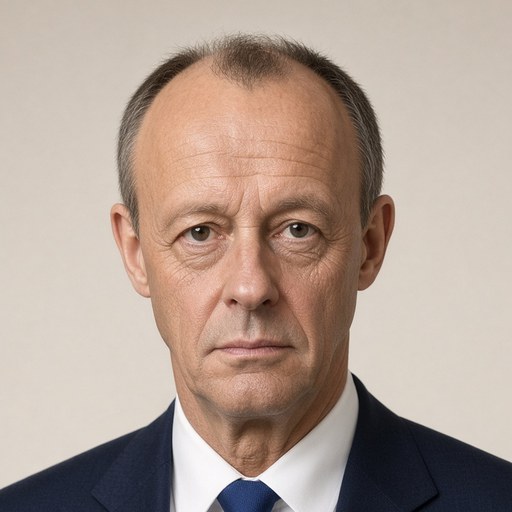
Speech by the Federal Chancellor at the IPAI Groundbreaking Ceremony "Germany Shall Become a Technology Leader"
 Friedrich Merz · Chancellor of Germany
- Context
- Merz addressed the groundbreaking ceremony of the IPAI innovation campus in Heilbronn on 21 October 2025, calling for Germany to lead in AI and technology.
- Main themes
- Artificial intelligence innovation, technological sovereignty, IPAI innovation campus, public-private partnership, fourth industrial revolution, Germany as AI hub in Europe, translation of research into economic value, freedom and prosperity under geopolitical pressure, systemic conflict between authoritarianism and democracy, German industrial and research strengths
- Duration
- ~18 min
- Words
- 2,202
- Sentences
- 132
- Readability
- 45
- Grade
- 11.4
- Syntax
- 2.86
- Vocabulary
- 2.10
Translated from German
The broad sphere of national life a sentence belongs to. Every sentence has an Arena, so it is the denominator the other indices are read against.
Other132 sentences in 81 paragraphs
Dear Minister President, dear Winfried Kretschmann,
dear Mayor, dear Mr. Mergel,
dear colleagues from the federal cabinet and from the state government, esteemed colleagues from the German Bundestag and from the Baden-Württemberg state parliament, but above all, esteemed Professor Geilsdörfer, dear Gerd Chrzanowski, esteemed Mr. Gräter, ladies and gentlemen,
October 21, 1879 is recorded in history books as the day the electric light bulb was invented.
Now you may ask: What does the light bulb and its invention have to do with today? – The answer is quite simple: Nothing at all. But the place where the light bulb was invented and the place of our meeting today have quite a lot to do with each other.
For the light bulb was developed by, as we all know,
Thomas Alva Edison at the
Menlo Park Laboratory near
New York
in the state of
New Jersey
. From today’s perspective, we know that this was the first innovation park in the history of industry, a laboratory with an attached machine shop, designed for the collaborative work of scientists, engineers, and craftsmen, founded by Edison.
From there, the electrification of the world began, and a whole series of significant innovations originated.
Edison
had registered well over 100 patents by the end of his scientific career.
Ladies and gentlemen, what is to be created here from today is an innovation park of an entirely new dimension, an innovation park for the new, for the fourth industrial revolution, which we are experiencing in these years and in the midst of which we already find ourselves.
Here at this site, around 80 partners are already gathered, including
DAX
companies, but also many small and medium-sized enterprises, innovative companies from the middle class. They will work here on around 30 hectares of infrastructure for the future of our country: In
AI
real laboratories, data centers, research and workspaces for 5,000 people from all sectors and disciplines. All of them will contribute to the
AI
transformation of our economy and shape it significantly.
Ladies and gentlemen, with this, the
IPAI
is a commitment to the innovation location Germany, a great, yes, a magnificent bet on the potential of our country to become the
AI
location in Europe.
I would therefore like to begin by sincerely thanking the initiators of this forward-looking project: the Dieter Schwarz Foundation and the Schwarz Group, but also the state of Baden-Württemberg and the city of Heilbronn. We are dealing here with a public-private partnership of the highest order, which will ideally have a broad signaling effect, extending far beyond the borders of the country.
The collaboration of forward-looking politics and forward-looking companies is the fundamental prerequisite for Germany and Europe to overcome the historical challenges we all face together. Above all, this is the challenge of securing our freedom and our prosperity for the coming decades.
Both are currently under great pressure. We are witnesses, ladies and gentlemen, to what is probably the greatest – I always express it this way – global political and economic power shift of the last 100 years. The changes are not only marked by such a power shift. They are marked by a newly emerging systemic conflict between authoritarian regimes and democratic, free orders.
This means that we all together bear the responsibility to act today. We are responsible for securing our freedom and for securing our prosperity now and today, also and especially by shaping the technological revolution that is currently taking place not only here but all over the world.
We face the task of quickly becoming more technologically sovereign – in Germany and in Europe. We face the task of quickly improving our ability to translate our research strength, which we undoubtedly have, into innovative power and value creation.
For at the moment, it is indeed the case: We have excellent basic research in Germany and a research landscape that sets global standards.
At the same time, we have an industrial base, an economic substance in our country that is literally renowned worldwide for its outstanding quality. But what we have not yet succeeded in doing to a sufficient extent is connecting these two strengths.
The
IPAI
addresses exactly this critical point: the transformation of
AI
into innovation, the translation of technological progress into growth potentials for the entire German economy.
We have the chance, better yet, you have the chance, with today’s groundbreaking ceremony to establish the application-oriented
AI
innovation platform for Europe. In this campus, a number of impressive companies have come together. This already shows the entire application breadth of
AI
. We can already see the pull of this project that is emerging here. Many companies are already establishing locations in the vicinity that are to become the
AI
hub.
Ladies and gentlemen, I just said: It takes forward-looking companies and forward-looking politics if we want to successfully tackle the transformation task together.
Even the most innovative entrepreneurs, even the best researchers need an innovation-friendly environment. They need economic and scientific policy frameworks that reward courage and commitment.
That is why I want to say for myself, for us: The federal government I lead has already written in the coalition agreement: Germany should become a leading
AI
nation. I add from my perspective: Germany should become a technology leader in as many future technologies as possible. Because Germany should and must remain a leading industrial nation in the 21st century.
This is the vision we are working towards – in light of the historical responsibility we bear. I believe it is an ambitious but realistic vision. We will not get there without effort; it will not come by itself. It will not fall into our laps, but we can get there because the prerequisites for it are present in our country.
We, as the federal government, have set the goal that the economy and the state should spend at least 3.5 percent of GDP on research and development annually by 2030. Ladies and gentlemen, Baden-Württemberg is already far ahead of us in this regard. In this federal state, 5.7 percent of GDP is already being spent on research and development by the economy, the state, and municipalities. You can see from this discrepancy how much we have to catch up, especially in other parts of the Federal Republic of Germany.
That is why we have adopted a high-tech agenda with which we want to realign research and innovation policy: towards value creation, competitiveness, and sovereignty – with a clear focus on six key technologies, foremost among them artificial intelligence. We will implement it decisively under the leadership of the Federal Ministry of Research, Technology, and Space – I look at my colleague Doro Bär – in collaboration with the states.
As the first major measure, we adopted a microelectronics strategy in the federal cabinet last week to make Germany an even better location for microelectronics.
Germany is already the largest microelectronics location in the EU, with 30 percent of the wafer capacities. We are now expanding these strengths, also in terms of the resilience and autonomy of our economy.
At the same time, we are working on a number of measures to remove the obstacles that currently prevent new products and technologies from being economically implemented in Germany. I mention the obstacles: lengthy approval processes, overly complex regulations, insufficient venture capital, and high levies. We all know the problems. We are now addressing them very specifically where we need to, namely at the national and European levels.
With the tax reform that was passed in the Bundesrat on July 11, we have enacted the largest tax reform in the last 15 years.
We are working to reduce bureaucracy. We have even created a separate ministry for this purpose – I look at Karsten Wildberger –: the Ministry of Digitalization and State Modernization. It is the first time in the history of the Federal Republic of Germany that it is equipped with all the necessary competencies that such a ministry needs; with central functions for the digitalization and modernization of our state.
Through a federal experimental law, with which we want to enable real laboratories and legal opening and experimental clauses, we are now taking this step further.
We want to clear the way for the scaling of German and European companies, specifically scaling in Germany and the European Union.
You all know, ladies and gentlemen – in the Schwarz Group, you know it particularly well –: The way there also goes through good framework conditions for start-ups. We are improving these framework conditions, for example, through our cross-departmental start-up strategy that the Federal Ministry of Economics is currently developing.
By the way, the way there also goes through strengthening the so-called venture capital market. We need to improve in this area in Germany. This is not solely a government task, but it is also a task for the financial sector of our country. Ladies and gentlemen, the European and German capital markets must be better utilized for the financing of our companies. We have the capital for it, but we do not yet have the right market structures. We are working to advance this at the European level with the Capital Markets Union so that we also have a functioning capital market in Germany and Europe, both in breadth and depth.
Thus, this federal government is addressing issues in Europe much more decisively, such as competitiveness and innovation capability, technological leadership, and technological sovereignty.
We are also coordinating at the European level with other European partners. In mid-November, we will jointly host a German-French summit on digital sovereignty in Berlin with our French colleagues and the French President, which is intended to be a starting point for more cooperative projects of this kind in Europe.
Let me also say something about the AI gigafactories planned by the European Commission in this context. I have emphasized several times and repeat it here once again: We want and must bring at least one of these gigafactories to Germany, ladies and gentlemen.
Because these AI gigafactories go hand in hand with the vision of this innovation park. They contribute to the infrastructure, to computing capacities, and these are precisely the prerequisites for the development and application of advanced AI models.
I therefore want to once again explicitly thank the Schwarz Group for their expression of interest in Brussels and for their exemplary commitment to this key task of strategic sovereignty.
Ladies and gentlemen, in conclusion, I would like to return once more to the invention of the electric light bulb. It did not happen in a vacuum, but in a time of tremendous upheaval.
The last decades of the 19th century were founding years, not only in the USA but also in Germany. About 50 kilometers from here, Robert Bosch opened his first factory. He had previously traveled to the USA for research purposes, looked at Edison’s laboratory, and then opened his factory in 1901 at the Stuttgart site.
The number of stock corporations in Germany rose exponentially. Almost half of the publicly listed stock corporations in our country today were established during that time. Our key German industries, the industrial foundation of our country, were built during this time.
Ladies and gentlemen, we sometimes look back on this with a bit of nostalgia, and we speak nostalgically of the so-called economic miracle of our 1950s and 1960s. This nostalgia, in my view, is sometimes also an expression of a certain timidity that we, in light of the facts, actually do not need at all.
Mr. Gräter, you said some time ago: “We have the middle class, we have family businesses, we have the data, we have the customers, we have the knowledge.”
Let me quote from a meeting I had on the sidelines of the last World Economic Forum in Davos with the head of Microsoft, who told me: “You Germans do not even realize what a treasure you have, especially in your medium-sized companies and with their data. You have the interesting data – you just need to finally use them better together.”
Yes, ladies and gentlemen, and we have basic research, and we have above all AI research at a global top level.
We live in a free country and in a society where there continues to be a high level of social peace, a spirit of community, and a willingness to work together for a good future for Europe.
So we have all the prerequisites – I repeat: all the prerequisites – to become winners of this fourth great industrial revolution, the AI revolution. We have everything to "dare the future," to quote a word from Dieter Schwarz here at the end. You are doing exactly that at this location and on this day today – with this unprecedented innovation project.
I will, we will all follow with great curiosity and excitement what will be possible from this location in the coming years: in innovations, in cutting-edge research, in successful models for transformation.
In this sense, I wish you all much success in what you have set out to do. I am grateful and happy to be able to participate in this to some extent today.
Thank you very much.
The original German. The tags above are read on the English translation's sentences.
Sehr geehrter Herr Ministerpräsident, lieber Winfried Kretschmann,
sehr geehrter Herr Oberbürgermeister, lieber Herr Mergel,
liebe Kolleginnen und Kollegen aus dem Bundeskabinett und aus der Landesregierung,
sehr geehrte Kolleginnen und Kollegen aus dem Deutschen Bundestag und aus dem baden-württembergischen Landtag,
vor allem aber sehr geehrter Herr Professor Geilsdörfer,
lieber Gerd Chrzanowski,
sehr geehrter Herr Gräter,
meine sehr geehrten Damen und Herren,
der 21. Oktober 1879 steht in den Geschichtsbüchern als Tag der Erfindung der elektrischen Glühbirne.
Nun werden Sie möglicherweise die Frage stellen: Was hat denn die Glühbirne und ihre Erfindung mit dem heutigen Tag zu tun? – Die Antwort ist ganz einfach: Gar nichts. Aber der Ort, an dem die Glühbirne erfunden wurde, und der Ort unserer heutigen Begegnung haben ziemlich viel miteinander zu tun.
Denn die Glühbirne wurde entwickelt von, wie wir alle wissen,
Thomas Alva Edison
im
Menlo Park Laboratory
in der Nähe von
New York
im Staat
New Jersey
. Aus heutiger Sicht wissen wir, dass dies der erste Innovationspark in der Geschichte der Industrie gewesen ist, ein Labor mit angeschlossener Maschinenwerkstatt, angelegt auf die kollaborative Zusammenarbeit von Wissenschaftlern, Ingenieuren, Handwerkern, gegründet von Edison.
Von dort aus begann die Elektrifizierung der Welt, und eine ganze Reihe maßgeblicher Innovationen nahm dort ihren Ausgang.
Edison
hatte am Ende seines wissenschaftlichen Lebens weit über 100 Patente angemeldet.
Meine Damen und Herren, was hier ab heute entstehen soll, das ist ein Innovationspark in ganz neuer Dimension, ein Innovationspark für die neue, für die vierte industrielle Revolution, die wir in diesen Jahren erleben und in deren Mitte wir jetzt schon sind.
Hier an diesem Platz sind bereits jetzt rund 80 Partner versammelt, darunter
DAX
-Unternehmen, aber auch sehr viele kleine und mittlere Mittelständler, innovative Unternehmen des Mittelstandes. Sie werden hier auf rund 30 Hektar an Infrastruktur für die Zukunft unseres Landes arbeiten: In
KI
-Reallaboren, Rechenzentren, Forschungs- und Arbeitsräumen für 5000 Menschen aller Branchen und Disziplinen. Sie alle werden an der
KI
-Transformation unserer Wirtschaft mitarbeiten und sie maßgeblich gestalten.
Meine Damen und Herren, damit ist der
IPAI
ein Bekenntnis zum Innovationsstandort Deutschland, eine große, ja eine großartige Wette auf das Potenzial unseres Landes, zu
dem
KI
-Standort in Europa zu werden.
Ich möchte daher gleich zu Beginn den Initiatoren dieses zukunftsweisenden Projektes ganz herzlich danken: der Dieter Schwarz Stiftung und der Schwarz Gruppe, aber auch dem Land Baden-Württemberg und der Stadt Heilbronn. Wir haben es hier mit einer
Public-private-Partnership
der Extraklasse zu tun, die im besten Fall breite Signalwirkung entfalten wird, und zwar weit über die Grenzen des Landes hinaus.
Der Schulterschluss von vorausschauender Politik und vorausschauenden Unternehmen ist die Grundvoraussetzung dafür, dass Deutschland und Europa die historischen Herausforderungen bewältigen, vor denen wir alle zusammen stehen. Das ist allen voran die Herausforderung, unsere Freiheit und unseren Wohlstand für die nächsten Jahrzehnte zu sichern.
Beides steht im Augenblick unter großem Druck. Wir sind Zeitzeugen, meine Damen und Herren, der vermutlich größten – ich drücke es immer wieder so aus – globalen politischen und ökonomischen Machtverschiebung der letzten 100 Jahre. Die Veränderungen stehen nicht nur im Zeichen einer solchen Machtverschiebung. Sie stehen im Zeichen eines neu aufbrechenden Systemkonflikts zwischen autoritären Regimen und demokratischen, freiheitlichen Ordnungen.
Das heißt, wir alle zusammen stehen heute in der Verantwortung zu handeln. Wir sind in der Verantwortung, für die Sicherung unserer Freiheit und für die Sicherung unseres Wohlstands jetzt und heute zu arbeiten, auch und gerade, indem wir die technologische Revolution mitgestalten, die in diesem Augenblick nicht nur hier, sondern auf der ganzen Welt geschieht.
Wir stehen vor der Aufgabe, schnell technologisch souveräner zu werden – in Deutschland und in Europa. Wir stehen vor der Aufgabe, schnell besser zu werden darin, unsere Forschungsstärke, die wir ohne Zweifel haben, in Innovationskraft und Wertschöpfung zu übersetzen.
Denn im Augenblick verhält es sich ja wohl so: Wir haben
in Deutschland exzellente Grundlagenforschung und eine Forschungslandschaft, die weltweit Maßstäbe setzt.
Wir haben gleichzeitig eine industrielle Basis, eine wirtschaftliche Substanz in unserem Land, die weltweit geradezu sprichwörtlich ist für ihre herausragende Qualität. Aber was uns noch nicht in ausreichendem Maße gelingt, das ist die Verbindung dieser beiden Stärken.
Der
IPAI
setzt genau an diesem kritischen Punkt an: der Umwandlung von
KI
in Innovation, der Übersetzung des technischen Fortschritts in Wachstumspotenziale für die gesamte deutsche Wirtschaft.
Wir haben die Chance, besser: Sie haben die Chance, mit dem Spatenstich heute hier die anwendungsorientierte
KI
-Innovationsplattform für Europa zu begründen. In diesem Campus hat sich eine Reihe von beeindruckenden Unternehmen zusammengefunden. Das zeigt ja schon die ganze Anwendungsbreite der
KI
. Wir sehen jetzt schon die Zugkraft dieses Projektes, das hier entsteht. Viele Unternehmen bauen in der näheren Umgebung bereits Standorte auf, die zum
KI
-
Hub
werden sollen.
Meine Damen und Herren, n
un habe ich eben aber gesagt: Es braucht vorausschauende Unternehmen und vorausschauende Politik, wenn wir die Transformationsaufgabe gemeinsam gut lösen wollen.
Auch die innovationsfreudigsten Unternehmerinnen und Unternehmer, auch die besten Forscherinnen und Forscher brauchen ein innovationsfreundliches Umfeld. Sie brauchen wirtschafts- und wissenschaftspolitische Rahmenbedingungen, die Mut und Einsatz belohnen.
Deshalb will ich es für mich sagen, für uns sagen: Die von mir geführte Bundesregierung hat bereits in den Koalitionsvertrag geschrieben: Deutschland soll führende
KI
-Nation werden. Ich füge aus meiner Sicht hinzu: Deutschland soll Technologieführer werden im Bereich möglichst aller Zukunftstechnologien. Denn Deutschland soll und muss auch im 21. Jahrhundert ein führendes Industrieland bleiben.
Das ist das Zielbild, mit dem wir arbeiten
–
im Sinne der historischen Verantwortung, die wir tragen. Ich finde, es ist ein ambitioniertes, aber es ist ein realistisches Zielbild. Wir werden nicht ohne Anstrengung dahin kommen; das kommt nicht von selbst. Das fällt uns nicht in den Schoß, aber wir können dahin kommen, denn die Voraussetzungen dafür sind in unserem Land vorhanden.
Wir haben als Bundesregierung das Ziel gesetzt, dass Wirtschaft und Staat bis 2030 jährlich mindestens 3,5 Prozent des
BIP
für Forschung und Entwicklung ausgeben. Meine Damen und Herren, Baden-Württemberg ist uns an dieser Stelle schon weit vorausgeilt. In diesem Bundesland werden bereits 5,7 Prozent des
BIP
aus Wirtschaft, Land und Kommunen für Forschung und Entwicklung ausgegeben. Sie sehen an dieser Diskrepanz, wie viel wir nachzuholen haben, vor allem in anderen Teilen der Bundesrepublik Deutschland.
Wir haben deswegen eine
Hightech
Agenda beschlossen, mit der wir die Forschungs- und Innovationspolitik neu ausrichten wollen: auf Wertschöpfung, auf Wettbewerbsfähigkeit und auf Souveränität – mit einem klaren Fokus auf sechs Schlüsseltechnologien, allen voran künstliche Intelligenz. Wir werden sie unter Federführung des Bundesministeriums für Forschung, Technologie und Raumfahrt – ich schaue auf Kollegin Doro Bär – im Zusammenschluss mit den Ländern jetzt sehr entschieden umsetzen.
Als erste große Maßnahme haben wir vergangene Woche im Bundeskabinett eine Mikroelektronik-Strategie beschlossen, um Deutschland zu einem noch besseren Standort für Mikroelektronik zu machen.
Deutschland ist heute mit 30 Prozent der
Wafer
kapazitäten bereits größter Mikroelektronikstandort der
EU
. Wir bauen diese Stärken jetzt aus, auch im Sinne der Resilienz und Autonomie unserer Volkswirtschaft.
Wir arbeiten gleichzeitig mit einer Reihe von Maßnahmen daran, die Hindernisse aus dem Weg zu räumen, die gerade dazu führen, dass neue Produkte und Technologien in Deutschland wirtschaftlich nicht umgesetzt werden können. Ich nenne die Hindernisse: langwierige Genehmigungsverfahren, überkomplexe Regulierung, zu wenig Wagniskapital, zu hohe Abgaben. Wir kennen alle die Probleme. Wir gehen sie jetzt sehr gezielt dort an, wo wir sie angehen müssen, nämlich auf nationaler und auf europäischer Ebene.
Wir haben mit der Steuerreform, die am 11. Juli im Bundesrat verabschiedet wurde, die größte Steuerreform der letzten 15 Jahre in Kraft gesetzt.
Wir sind an der Arbeit, die Bürokratie zurückzubauen. Wir haben dazu sogar ein eigenständiges Ministerium geschaffen – ich schaue auf Karsten Wildberger –: das Ministerium für Digitalisierung und Staatsmodernisierung. Es ist erstmalig in der Geschichte der Bundesrepublik Deutschland mit allen notwendigen Kompetenzen ausgestattet, die ein solches Ministerium braucht; mit zentralen Funktionen für die Digitalisierung und die Staatsmodernisierung unseres Landes.
Durch ein Bundesexperimentiergesetz, mit dem wir Reallabore und fachgesetzliche Öffnungs- und Experimentierklauseln ermöglichen wollen, gehen wir diesen Schritt jetzt konsequent weiter.
Wir wollen den Weg frei machen für die Skalierung deutscher und europäischer Unternehmen, und zwar eine Skalierung in Deutschland und der Europäischen Union.
Sie alle wissen, meine Damen und Herren – in der Schwarz Gruppe wissen Sie es ganz besonders –: Der Weg dorthin geht auch über gute Rahmenbedingungen für
Start-ups
. Diese Rahmenbedingungen verbessern wir, beispielsweise durch unsere ressortübergreifende
Start-up
-Strategie, die das Bundeswirtschaftsministerium derzeit erarbeitet.
Der Weg dorthin geht übrigens auch über die Stärkung des sogenannten Wagniskapitalmarkts. Darin müssen wir in Deutschland besser werden. Das ist keine staatliche Aufgabe allein, sondern es ist auch eine Aufgabe des Finanzsektors unseres Landes. Meine Damen und Herren, der europäische und der deutsche Kapitalmarkt müssen für die Finanzierung unserer Unternehmen besser genutzt werden. Wir haben das Kapital dazu, aber wir haben noch nicht die richtigen Marktstrukturen. Wir arbeiten daran, auch dies auf europäischer Ebene mit der Kapitalmarktunion so voranzubringen, dass wir auch in Deutschland, in Europa einen funktionsfähigen Kapitalmarkt in der Breite und in der Tiefe haben.
So geht diese Bundesregierung in Europa insgesamt sehr viel entschiedener Themen an wie Wettbewerbs- und Innovationsfähigkeit, Technologieführerschaft und technologische Souveränität.
Wir koordinieren uns auf der europäischen Ebene auch mit anderen europäischen Partnern. Wir richten
Mitte November in Berlin gemeinsam mit den französischen Kolleginnen und Kollegen und mit dem französischen Staatspräsidenten einen deutsch-französischen Gipfel zur digitalen Souveränität aus, der ein Auftakt für mehr Kooperationsprojekte dieser Art in Europa sein soll.
Lassen Sie mich in diesem Zusammenhang auch noch etwas zu den
AI
-
Gigafactorys
sagen, die von der Europäischen Kommission geplant sind. Ich habe schon mehrfach betont und wiederhole es an dieser Stelle noch einmal: Mindestens eine dieser
Gigafactorys
wollen wir und müssen wir nach Deutschland holen, meine Damen und Herren.
Denn diese
AI
-
Gigafactorys
gehen Hand in Hand mit der Vision dieses Innovationsparks. Denn sie leisten einen Beitrag zur Infrastruktur, zu Rechenkapazitäten, und genau das sind die Voraussetzungen für Entwicklung und Anwendung von fortschrittlichen
KI
-Modellen.
Ich will deshalb der Schwarz Gruppe noch einmal ganz ausdrücklich danken für ihre Interessenbekundung in Brüssel und für ihr vorbildliches Engagement bei dieser Schlüsselaufgabe der strategischen Souveränität.
Meine
Damen und Herren, zum Abschluss komme ich noch einmal zurück auf die Erfindung der elektrischen Glühbirne. Sie ist ja nicht im luftleeren Raum geschehen, sondern in einer Zeit eines ungeheuren Aufbruchs.
Die letzten Jahrzehnte des 19. Jahrhunderts waren Gründerjahre, nicht nur in den
USA
, sondern auch in Deutschland. Etwa 50 Kilometer von hier entfernt eröffnete Robert Bosch seine erste Fabrik. Er war vorher zu Forschungszwecken in die
USA
gereist, hat sich das Labor von
Edison
angeschaut und eröffnete seine Fabrik dann 1901 am Standort Stuttgart.
Exponentiell stieg die Zahl der Aktiengesellschaften in Deutschland. Fast die Hälfte der börsennotierten Aktiengesellschaften unseres Landes von heute ist in dieser Zeit damals aufgebaut worden. Unsere deutschen Schlüsselindustrien, das industrielle Fundament unseres Landes, sind in dieser Zeit aufgebaut worden.
Meine Damen und Herren, wir blicken darauf hin und wieder mit ein bisschen Nostalgie, und wir sprechen mit Nostalgie vom sogenannten Wirtschaftswunder unserer 50er- und 60er-Jahre. Diese Nostalgie ist in meinen Augen hin und wieder auch Ausdruck einer gewissen Verzagtheit, die wir, bei Licht betrachtet, eigentlich gar nicht nötig haben.
Herr Gräter, Sie haben vor einiger Zeit gesagt: „Wir haben den Mittelstand, wir haben die Familienunternehmen, wir haben die Daten, wir haben die Kunden, wir haben das Wissen.“
Lassen Sie mich aus einer Begegnung zitieren, die ich am Rande des letzten Weltwirtschaftsforums in Davos mit dem Chef von
Microsoft
hatte, der mir gesagt hat: Ihr Deutschen wisst gar nicht, welchen Schatz ihr habt, insbesondere in euren mittelständischen Unternehmen und mit ihren Daten. Ihr habt die interessanten Daten – ihr müsst sie nur endlich gemeinsam besser nutzen.“
Ja, meine Damen und Herren, und wir haben Grundlagenforschung, und wir haben vor allem
KI
-Forschung auf globalem Spitzenniveau.
Wir leben in einem freien Land und in einer Gesellschaft, in der es weiterhin ein hohes Maß an sozialem Frieden gibt, an Gemeinschaftsgeist, an der Bereitschaft, mitzuarbeiten an einer guten Zukunft für Europa.
Wir haben also alle Voraussetzungen – ich wiederhole: alle Voraussetzungen –, Gewinner dieser vierten großen industriellen Revolution, der
KI
-Revolution, zu werden. Wir haben alles, um „Zukunft zu wagen“, um hier zum Abschluss ein Wort von Dieter Schwarz zu zitieren. Sie tun an diesem Standort und an diesem Tag hier heute genau das ‑ mit diesem beispiellosen Innovationsprojekt.
Ich werde, wir werden alle mit großer Neugier und mit Spannung verfolgen, was von diesem Standort aus in den nächsten Jahren alles möglich wird: an Innovationen, an Spitzenforschung, an Erfolgsmodellen für die Transformation.
In diesem Sinne wünsche ich Ihnen allen viel Erfolg bei dem, was Sie sich vorgenommen haben. Ich bin dankbar und froh, dass ich ein Stück weit heute an diesem Tag daran teilnehmen kann.
Herzlichen Dank.