




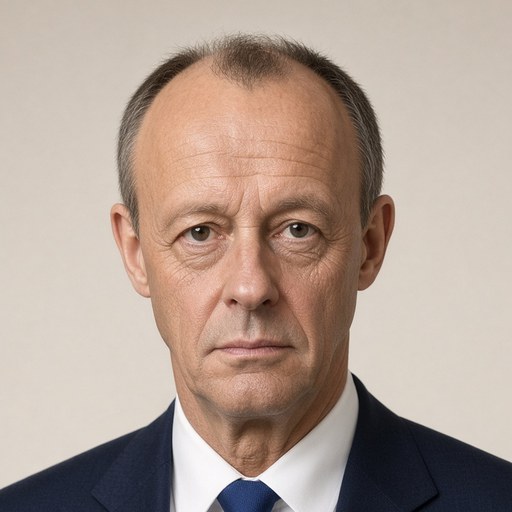
Speech by Chancellor Merz on the 75th anniversary of the Central Council of Jews in Germany Jewish life is a part of us
 Friedrich Merz · Chancellor of Germany
- Context
- Merz addressed guests at the 75th anniversary celebration of the Central Council of Jews in Germany in September 2025, honoring Jewish life and community in Germany.
- Main themes
- 75th anniversary of the Central Council of Jews in Germany, Jewish life in Germany, memory and history of the Shoah, German-Jewish relations, antisemitism, Walter Benjamin and Angelus Novus, Jewish community rebuilding, German-Israeli friendship, restitution and reconciliation, democracy and open society, Jewish culture and institutions
- Duration
- ~15 min
- Words
- 1,855
- Sentences
- 71
- Readability
- 37
- Grade
- 14.2
- Syntax
- 3.19
- Vocabulary
- 2.38
Translated from German
The broad sphere of national life a sentence belongs to. Every sentence has an Arena, so it is the denominator the other indices are read against.
Other71 sentences in 29 paragraphs
Dear Mr. President, dear Josef Schuster,
esteemed and dear Charlotte Knobloch,
Mr. Ambassador, dear Ron Prosor,
Mr. Governing Mayor,
Mr. Minister-President,
dear colleagues from the Federal Cabinet,
Excellencies,
esteemed members of the Executive Board and the Presidium of the Central Council, esteemed rabbis, esteemed representatives of the churches and religious communities, dear colleagues from the German Bundestag, ladies and gentlemen!
Not far from here, in the Bode Museum, a small, world-famous painting hung this summer for two months. It was a loan from the Israel Museum in Jerusalem, depicting a strange figure with wings and a human face with wide-open eyes and an open mouth. Many of you probably know what I am talking about. It is the painting "Angelus Novus" by Paul Klee, painted in 1920, shortly thereafter acquired by the German-Jewish philosopher Walter Benjamin. Despair, horror, and grief are what Walter Benjamin sees in this face, and he refers to it in one of his last texts ‑ by then he has long been fleeing from National Socialism ‑ as the "Angel of History." Where we see the "chain of events" of the past, this "Angel of History" sees, in Benjamin's words: "[...] a single catastrophe that incessantly piles wreckage upon wreckage and hurls it at his feet. He would like to linger, awaken the dead, and piece together the shattered."
In these words, ladies and gentlemen, something of the horror becomes tangible for me that the surviving Jews in Germany must have faced daily even after the years following 1945. They were surrounded by non-Jewish Germans who preferred to continue as if the civilizational break of the Shoah had not occurred, who wanted to let the past simply be "the past." It seems unfathomable to us today, but it was so: In the post-war period, in the early years of the Federal Republic of Germany, the Jews were left alone with the ruins of the crime against humanity that had taken place on German soil, with their horror, with their grief for the murdered, for their mothers, fathers, children, grandparents, friends, and colleagues.
How extraordinarily remarkable it is that in this situation, Jews found the strength to come together in Germany, to organize themselves in Germany. And so it happened: On July 19, 1950, just five years after the liberation of Auschwitz, the Central Council of Jews in Frankfurt am Main was founded. It is almost unbelievable that this Central Council quickly became a lifeline of democratic culture in Germany, an irreplaceable partner of the federal government and the parliaments, and, as you said, dear Mr. Schuster, "a part of the history of democracy in this country."
Initially, it was thought differently. The Central Council was to be a transitional institution. It was to represent the interests of the survivors, the returnees, the Jews who had fled or emigrated mainly from Eastern Europe in the process of final emigration to Israel.
The Federal Republic would have been forever uprooted without Jewish life, without Jewish culture in our country. Therefore, when we celebrate 75 years of the Central Council of Jews in Germany today, we also celebrate the gift that Jews have found a home here again – despite all adversities and although anti-Semitism has never left Germany.
Many people are here today who have made this incredible achievement possible and continue to make it possible, who with their courage and determination have contributed to the fact that Jewish life in Germany could find a home again, that communities have emerged, Jewish kindergartens, schools, cultural venues, restaurants. New synagogues. You reminded us: Just two days ago, we were able to celebrate the rededication of the breathtakingly beautiful synagogue on Reichenbachstraße in Munich.
The Central Council of Jews in Germany has, for these many efforts over the past 75 years, essentially provided the framework by advocating for legal adjustments for the restitution of the injustices of National Socialism; by taking on the responsibility since 1990 to assist Jews from the states of the former Soviet Union upon their arrival in Germany; by accompanying the rapprochement between the Federal Republic and the State of Israel and, ultimately, the German-Israeli friendship, and continuing to do so; by supporting local communities in building infrastructure; but also by taking on the task early on of contributing to the free world, to the open society in Germany.
Dear Mr. Schuster, I would like to quote you once again:
"We Jews do not see ourselves only as bearers of memory or as advocates of a culture of remembrance, but also as an active part of this world that we want to change for the better today, not only for ourselves, not only within the Jewish community or in Israel, but also together with the environment in which we live here in Germany and in Europe."
Ladies and gentlemen, this spirit of responsibility for the community as a whole, for the open, free, and diverse society, this spirit has significantly shaped the work of the Central Council and the work of all eight of its previous chairpersons. They create spaces for interreligious dialogue, for intergenerational dialogue, for encounters that break down prejudices and foster togetherness.
Ladies and gentlemen, this work remains invaluable to all of us today. It is especially so because we are experiencing once again in these days, weeks, and months that the idea of an open society is coming under attack and with it the normative foundation of our country, Israel, and the free world as a whole: human dignity, universalism, democracy, the mandate of tolerance. This foundation is fundamentally nourished by the Judeo-Christian traditions. We as a society often do not even realize how much and how deeply we are supported by it.
I would also like to look ahead to the year 2026 at this point, to the already mentioned planned opening of the Jewish Academy in Frankfurt am Main, in the city where the Central Council was founded 75 years ago. The Academy will be a place of education, debate, dialogue, Jewish thought, and knowledge, and it will thus – I am sure of this, and I wish for it very much – set impulses for our coexistence in Germany as a whole.
However, we also know today: The Academy, its events, will have to take place under police protection, just like our event here today. All of you, ladies and gentlemen, who are engaged in the Central Council or in cooperation with the Central Council for our country, for freedom, peace, human dignity, are doing so under increasingly difficult conditions.
I would therefore like to repeat: Anti-Semitism has never left Germany. But since the barbaric attack by Hamas on Israel on October 7, 2023, it has become louder, more open, more shameless, and more violent almost day by day. I want to tell you how appalled I and all of us are by this and how deeply it shames us. Israeli restaurants, places of Jewish life and memory are being defaced and threatened. Yes, in the German Bundestag and in the German state parliaments, voices of the forgetful of history are being raised. Anti-Semitic rhetoric is being normalized, especially at universities, especially in our cultural spaces, where we are now witnessing that Jewish and Israeli artists are subjected to loyalty tests and ostracized solely because of their origin, solely because of their faith. You all know: Tomorrow ‑ many of you would have gone ‑ the Israeli conductor Lahav Shani was supposed to perform with the Munich Philharmonic in Ghent. He has been disinvited with reference to questions of stance regarding his home country Israel. We invited him to Berlin. He came, and we thank him for that!
Criticism of Israel and the crudest victim-perpetrator reversal is increasingly being used as a pretext under which the poison of anti-Semitism is spread. Yes, ladies and gentlemen, criticism of the policies of the Israeli government must be possible; it may even be necessary, and you know that I have also expressed criticism recently. But our country suffers damage to its own soul when such criticism becomes a pretext for hatred of Jews or even leads to demands that the Federal Republic should turn away from Israel.
That is why I want to make it clear once again today: The German commitment to the existence and security of the State of Israel is an non-negotiable part of the normative foundations of our country. Even and perhaps especially when governments hold different views, we in Germany are obliged to tirelessly seek a common language and to find common ground. Therefore, I would like to give you, ladies and gentlemen, on behalf of my government, the personal promise that we will tirelessly work for the unique, precious friendship with Israel - today, tomorrow, and the day after tomorrow!
In doing so, we must not forget: Dissent on the matter is not disloyalty to our friendship. I have listened attentively to you, dear Mr. Dr. Schuster, as you carefully distinguished between the terms "state reason" and "government reason."
At the same time, I want to say to our society: The fight against anti-Semitism and hatred of humanity, as well as the remembrance of the Shoah, lies in the unceasing responsibility of all citizens of this country. We are all called to stand up for coexistence in freedom. We are all called to remain in conversation and to be open to other perspectives. We are all called to have civil courage when we witness anti-Semitism, racism, and discrimination. We are all called to continually ask ourselves: What does our German historical responsibility mean today? What is our duty towards the "dead and the shattered" today, to quote Walter Benjamin once again? – We can take an example from how the Central Council itself provides answers to exactly these questions: as a work of remembrance that is committed to the future, a better and more just future for the children and grandchildren of the victims of the Shoah, but also for the relatives of all religious and ethnic groups.
In light of this, it is actually quite fitting that we celebrate 75 years of the Central Council on Rosh Hashanah, a festival of transition, a festival that connects the look back at the past year with the anticipation of what is to come, of what is possible and can come. I want to say to the Jews in Germany today: Without you, there can be no good future for the Federal Republic of Germany.
I want to say to all the employees of the Central Council of Jews in Germany: I thank you from the bottom of my heart for your tireless commitment, for your willingness to continually engage in the work for the future of Jewish life in Germany, for the preservation of Jewish traditions.
On behalf of the Federal Republic of Germany, on behalf of the federal government, and also personally: I warmly congratulate you on 75 years of the Central Council of Jews in Germany, and I also wish you, dear Mr. Dr. Schuster, your fellow campaigners, and all of us a peaceful and healthy new year. Shana tova!
The original German. The tags above are read on the English translation's sentences.
Sehr geehrter Herr Präsident, lieber Josef Schuster,
sehr verehrte, liebe Charlotte Knobloch,
Herr Botschafter, lieber Ron Prosor,
Herr Regierender Bürgermeister,
Herr Ministerpräsident,
liebe Kolleginnen und Kollegen aus dem Bundeskabinett,
Exzellenzen,
sehr geehrte Mitglieder des Direktoriums- und des Präsidiums des Zentralrats,
sehr geehrte Rabbinerinnen und Rabbiner,
sehr geehrte Vertreterinnen und Vertreter der Kirchen und der Religionsgemeinschaften,
liebe Kolleginnen und Kollegen aus dem Deutschen Bundestag,
meine sehr geehrten Damen und Herren!
Gar nicht weit von hier, im Bode-Museum, hing in diesem Sommer für zwei Monate ein kleines, weltberühmtes Bild. Es war eine Leihgabe des Israel Museums aus Jerusalem, darauf eine merkwürdige Figur mit Flügeln und einem Menschengesicht mit weit aufgerissenen Augen und offenem Mund. Viele von Ihnen wissen wahrscheinlich, wovon ich spreche. Es ist das Bild „Angelus Novus“ von Paul Klee, gemalt 1920, wenig später erworben durch den deutsch-jüdischen Philosophen Walter Benjamin. Verzweiflung, Entsetzen und Trauer sieht Walter Benjamin in diesem Gesicht, und er nennt es in einem seiner letzten Texte ‑ da ist er schon lange auf der Flucht vor dem Nationalsozialismus ‑ den „Engel der Geschichte“. Wo wir sozusagen die „Kette von Begebenheiten“ der Vergangenheit sehen, da sieht dieser „Engel der Geschichte“ in Benjamins Worten: „[...] eine einzige Katastrophe, die unablässig Trümmer auf Trümmer häuft und sie ihm vor die Füße schleudert. Er möchte wohl verweilen, die Toten wecken und das Zerschlagene zusammenfügen“.
In diesen Worten, meine Damen und Herren, wird für mich etwas von dem Grauen greifbar, das die überlebenden Jüdinnen und Juden in Deutschland auch nach den Jahren ab 1945 täglich begleitet haben muss. Umgeben waren sie von nichtjüdischen Deutschen, die am liebsten weitermachen wollten, als hätte es den Zivilisationsbruch der Schoa nicht gegeben, die Vergangenheit eben „Vergangenheit“ sein lassen wollten. Es scheint uns unfassbar heute, aber es war so: In der Nachkriegszeit, in den ersten Jahren der Bundesrepublik Deutschland, wurden die Jüdinnen und Juden alleingelassen mit den Trümmern des Menschheitsverbrechens, das auf deutschem Boden geschehen ist, mit ihrem Entsetzen, mit ihrer Trauer um die Ermordeten, um ihre Mütter, Väter, Kinder, Großeltern, Freundinnen und Freunde, Kolleginnen und Kollegen.
Wie ungeheuer bemerkenswert ist es, dass in dieser Situation Jüdinnen und Juden die Kraft gefunden haben, sich in Deutschland zusammenzutun, sich in Deutschland zu organisieren. Aber so kam es: Am 19. Juli 1950, gerade einmal fünf Jahre nach der Befreiung von Auschwitz also, wurde dieser Zentralrat der Juden in Frankfurt am Main gegründet. Es ist schier unglaublich, dass dieser Zentralrat schnell zu einer Lebensader der demokratischen Kultur in Deutschland geworden ist, zu einem unersetzbaren Partner der Bundesregierung und der Parlamente, zu, wie Sie es gesagt haben, lieber Herr Schuster, „einem Teil der Demokratiegeschichte dieses Landes“.
Es war ja erst anfangs anders gedacht. Der Zentralrat sollte eine Institution des Übergangs sein. Er sollte die Interessen der überlebenden, der zurückgekehrten, der vor allem aus Osteuropa geflohenen oder ausgewanderten Jüdinnen und Juden in dem Prozess der endgültigen Auswanderung nach Israel vertreten.
Die Bundesrepublik wäre für immer entwurzelt gewesen ohne jüdisches Leben, ohne jüdische Kultur in unserem Land. Wenn wir darum heute 75 Jahre Zentralrat der Juden in Deutschland feiern, dann feiern wir auch das Geschenk, dass Jüdinnen und Juden hier wieder Heimat gefunden haben – trotz aller Widrigkeit und obwohl der Antisemitismus nie fort war aus Deutschland.
Es sitzen heute viele Menschen hier, die dieses Unglaubliche möglich gemacht haben und immer weiter bis heute möglich machen, die mit ihrem Mut und ihrer Tatkraft dazu beigetragen haben, dass jüdisches Leben in Deutschland sich wieder beheimaten konnte, dass Gemeinden entstanden sind, jüdische Kindergärten, Schulen, Kulturstätten, Restaurants. Neue Synagogen. Sie haben daran erinnert: Erst vor zwei Tagen haben wir in München die Wiedereinweihung der atemberaubend schönen Synagoge Reichenbachstraße feiern können.
Der Zentralrat der Juden in Deutschland stellt für diese vielen Kraftanstrengungen seit nun 75 Jahren gewissermaßen den Rahmen, indem er sich für rechtliche Weichenstellungen zur Wiedergutmachung des nationalsozialistischen Unrechts einsetzt; indem er sich ab 1990 der Verantwortung angenommen hat, den Jüdinnen und Juden aus den Staaten der ehemaligen Sowjetunion bei der Ankunft in Deutschland zu helfen; indem er die Annäherung zwischen der Bundesrepublik und dem Staat Israel und schließlich die deutsch-israelische Freundschaft begleitet hat und bis heute begleitet; indem er Gemeinden vor Ort beim Aufbau von Infrastruktur unterstützt,; indem er aber auch früh die Aufgabe übernommen hat, mitzubauen an der freiheitlichen Welt, eben an der offenen Gesellschaft in Deutschland.
Lieber Herr Schuster, ich darf Sie noch einmal zitieren:
„Wir Juden verstehen uns nicht nur als Träger der Erinnerung oder als Anwälte einer Gedenkkultur, sondern auch als aktiver Teil dieser Welt, die wir heute zum Besseren verändern wollen, nicht nur für uns selbst, nicht nur innerhalb der jüdischen Gemeinschaft oder in Israel, sondern auch gemeinsam mit der Umgebung, in der wir hier in Deutschland und in Europa leben.“
Meine Damen und Herren, dieser Geist der Verantwortung für das Gemeinwesen insgesamt, für die offene, freie und vielfältige Gesellschaft, dieser Geist prägt und prägte ganz wesentlich die Arbeit des Zentralrats und die Arbeit aller acht Ihrer bisherigen Vorsitzenden. Sie schaffen Räume für interreligiösen Dialog, für intergenerationalen Dialog, für Begegnungen, die Vorurteile abbauen, die ein Miteinander entstehen lassen.
Meine Damen und Herren, diese Arbeit ist bis heute für uns alle von unschätzbarem Wert. Sie ist es vor allem, weil wir in diesen Tagen und Wochen und Monaten wieder erleben, dass die Idee der offenen Gesellschaft erneut unter Beschuss gerät und mit ihr das normative Fundament unseres Landes, Israels, der freiheitlichen Welt insgesamt: Menschenwürde, Universalismus, Demokratie, das Gebot der Toleranz. Dieses Fundament speist sich eben ganz wesentlich aus den jüdisch-christlichen Traditionen. Wir als Gesellschaft im Ganzen machen uns oft gar nicht mehr bewusst, wie sehr und wie tief wir davon getragen sind.
Auch ich möchte darum an dieser Stelle schon einmal auf das Jahr 2026 vorausblicken, auf die schon zitierte geplante Eröffnung der Jüdischen Akademie in Frankfurt am Main, in der Stadt, in der der Zentralrat vor 75 Jahren gegründet wurde. Die Akademie wird ein Ort der Bildung sein, der Debatte, des Dialogs, des jüdischen Denkens und Wissens, und sie wird damit – dessen bin ich mir sicher, und das wünsche ich mir auch sehr – Impulse für unser Zusammenleben in Deutschland insgesamt setzen.
Wir wissen aber auch heute schon: Die Akademie, ihre Veranstaltungen, sie werden unter Polizeischutz stattfinden müssen, genau wie unsere Veranstaltung hier heute. Sie alle, meine Damen und Herren, die Sie sich im Zentralrat oder in Kooperation mit dem Zentralrat einsetzen und einbringen für unser Land, für Freiheit, Frieden, Menschenwürde, Sie tun das eben unter wieder schwierigeren Bedingungen.
Ich möchte es daher wiederholen: Antisemitismus war nie weg aus Deutschland. Aber seit dem barbarischen Angriff der Hamas auf Israel am 7. Oktober 2023 wird er fast Tag für Tag wieder lauter, offener, unverschämter, gewaltsamer. Ich möchte Ihnen sagen, wie mich und wie uns alle das entsetzt und wie sehr uns das beschämt. Israelische Restaurants, Orte jüdischen Lebens und jüdischer Erinnerung werden beschmiert und bedroht. Ja, im Deutschen Bundestag und in den deutschen Landtagen werden Stimmen von Geschichtsvergessenen laut. Antisemitische Rhetorik wird normalisiert, ausgerechnet an den Universitäten, ausgerechnet in unseren Kulturräumen, wo wir inzwischen erleben müssen, dass jüdische und israelische Künstler allein aufgrund ihrer Herkunft, allein aufgrund ihres Glaubens Gesinnungstests unterzogen und ausgegrenzt werden. Sie wissen es alle: Am morgigen Tag ‑ viele von Ihnen wären hingegangen ‑ hätte der israelische Dirigent Lahav Shani mit den Münchner Philharmonikern in Gent auftreten sollen. Er ist ausgeladen worden mit dem Verweis auf Haltungsfragen zu seinem Heimatland Israel. Wir haben ihn nach Berlin eingeladen. Er ist gekommen, und wir danken ihm dafür!
Israelkritik und krudeste Täter-Opfer-Umkehr ist immer öfter ein Vorwand, unter dem das Gift des Antisemitismus verbreitet wird. Ja, meine Damen und Herren, eine Kritik an der Politik der israelischen Regierung muss möglich, sie kann sogar nötig sein, und Sie wissen, dass auch ich zuletzt Kritik geübt habe. Aber unser Land nimmt an der eigenen Seele Schaden, wenn solche Kritik zum Vorwand für Judenhass wird oder wenn sie gar zur Forderung führt, dass die Bundesrepublik sich von Israel abwenden solle.
Deswegen will ich es auch heute noch einmal deutlich und klar sagen: Das deutsche Bekenntnis zur Existenz und zur Sicherheit des Staates Israel ist ein unverhandelbarer Bestandteil der normativen Fundamente unseres Landes. Auch und vielleicht gerade dann, wenn Regierungen unterschiedliche Auffassungen vertreten, sind wir in Deutschland in der Pflicht, ohne Unterlass um eine gemeinsame Sprache zu ringen und Gemeinsames zu suchen. Ich möchte Ihnen deshalb, meine Damen und Herren, hier für meine Regierung das persönliche Versprechen geben, dass wir unermüdlich für die einzigartige, so kostbare Freundschaft mit Israel arbeiten - heute, morgen und übermorgen!
Dabei dürfen wir nicht vergessen: Dissens in der Sache ist keine Illoyalität an unserer Freundschaft. Ich habe Ihnen, lieber Herr
Dr.
Schuster, aufmerksam zugehört, wie Sie die Begriffe „Staatsraison“ und „Regierungsraison“ sorgfältig voneinander unterschieden haben.
Ich möchte zugleich in unsere Gesellschaft hinein sagen: Der Kampf gegen Antisemitismus und Menschenhass und genauso die Erinnerung an die Schoa liegt in der unausgesetzten Verantwortung aller Bürgerinnen und Bürgern dieses Landes. Wir alle sind aufgerufen, einzustehen für ein Miteinander in Freiheit. Wir alle sind aufgerufen, im Gespräch zu bleiben und uns auch auf andere Sichtweisen einzulassen. Wir alle sind aufgerufen zur Zivilcourage, wo wir Zeugen werden von Antisemitismus, Rassismus, Diskriminierung. Wir alle sind aufgerufen, uns immer wieder zu fragen: Was heißt unsere deutsche historische Verantwortung heute? Was ist unsere Pflicht gegenüber den „Toten und Zerschlagenen“ heute, um hier noch einmal Walter Benjamin zu zitieren? – Wir können uns ein Beispiel daran nehmen, wie der Zentralrat selbst Antworten auf genau diese Fragen gibt: als Erinnerungsarbeit, die der Zukunft verpflichtet ist, einer besseren und gerechteren Zukunft für die Kinder und Enkel der Opfer der Schoa, aber genauso für die Angehörigen aller religiösen und ethnischen Gruppen.
Es ist doch vor diesem Hintergrund eigentlich ganz passend, dass wir 75 Jahre Zentralrat an Rosch ha-Schana feiern, einem Fest der Schwelle, einem Fest, das sich zugleich verbindet mit dem Blick zurück auf das vergangene Jahr und mit der Vorfreude auf das Anbrechende, auf das, was möglich ist und kommen kann. Ich möchte den Jüdinnen und Juden in Deutschland heute sagen: Ohne Sie kann es keine gute Zukunft für die Bundesrepublik Deutschland geben.
Ich möchte allen Mitarbeiterinnen und Mitarbeitern des Zentralrats der Juden in Deutschland sagen: Ich danke Ihnen aus ganzem Herzen für Ihren unermüdlichen Einsatz, für Ihre Bereitschaft, sich immer wieder und gerade in diesen Tagen immer wieder an die Arbeit für die Zukunft jüdischen Lebens in Deutschland zu machen, für die Pflege der jüdischen Traditionen.
Im Namen der Bundesrepublik Deutschland, im Namen der Bundesregierung und auch ganz persönlich: Ich gratuliere Ihnen herzlich zu 75 Jahren Zentralrat der Juden in Deutschland, und auch ich wünsche Ihnen, lieber Herr
Dr.
Schuster, ihren Mitstreitern und uns allen ein friedliches und gesundes neues Jahr. Schana tova!