




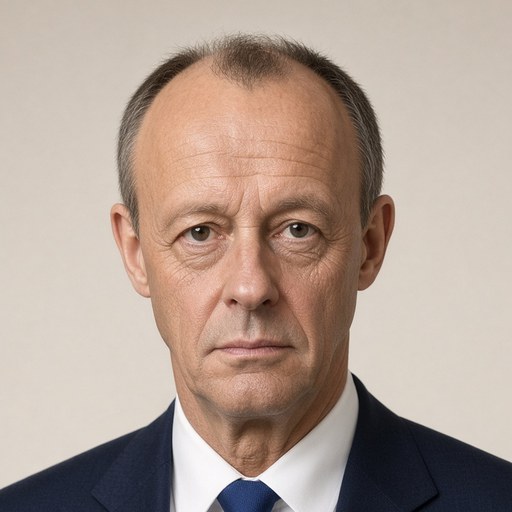
Speech by Federal Chancellor Friedrich Merz on the Budget Law 2025 before the German Bundestag on September 17, 2025, in Berlin:
 Friedrich Merz · Chancellor of Germany
- Context
- Merz addressed the German Bundestag on September 17, 2025, presenting the federal government's Budget Law 2025 and outlining priorities on defense, economy, and cohesion.
- Main themes
- Federal budget 2025, defense and security, freedom under threat, war in Ukraine, NATO and transatlantic alliance, Bundeswehr strengthening, economic model and prosperity, social cohesion, German-European leadership, Russia and hybrid threats, CDU/CSU-SPD coalition agenda, constitutional defense spending reform
- Duration
- ~23 min
- Words
- 2,812
- Sentences
- 178
- Readability
- 49
- Grade
- 10.3
- Syntax
- 2.67
- Vocabulary
- 2.08
Translated from German
The broad sphere of national life a sentence belongs to. Every sentence has an Arena, so it is the denominator the other indices are read against.
Other178 sentences in 45 paragraphs
Madam President!
Dear colleagues!
This autumn, our country faces important decisions. We all feel it: The decisions ahead of us are not about details, but about very fundamental issues. It is about nothing more and nothing less than the future of our country, how we live, how we coexist, how we work, how we do business, and whether our values will continue to endure.
We must look at the realities soberly in order to choose the right path for our country at this crossroads. From my perspective, these realities include three fundamental observations.
First:
Our freedom is under threat, and very concretely, not just abstractly. The citizens in our country feel a growing insecurity. They notice: New rules are being imposed on us through military violence, through hybrid threats, through attacks on our democratic order.
Second:
Our economic model is under pressure from a new protectionism that is directed against free trade and open markets, from high energy prices and excessive bureaucracy, and from a wave of technological innovations that we must not only manage but lead, so that we can preserve our prosperity in the long term.
Finally, third:
Our cohesion is being openly questioned. This is happening through political forces both domestically and abroad. They make our democracy contemptible. They sow discord. They want to divide our society and this government.
The federal government I lead has the firm and collective will to confront these realities. I want to say it very clearly and distinctly: We will preserve our freedom, secure prosperity, and enable new cohesion in our society. We, the coalition of CDU/CSU and SPD, do this – as we have titled our coalition agreement – out of responsibility for Germany. We do it together and with equal determination to choose the right path at this very crossroads of our country.
Let me begin with the defense of our freedom, for freedom is the foundation of our coexistence. Without freedom, everything is nothing in our country. The war in Ukraine, which is being waged by Russia – and only by Russia! – is already being felt in the member states of the European Union and NATO. It affects our lives very concretely. We want this war to end.
At the same time, it is to be feared that it will last for a longer time. But ending it at the expense of Ukraine's political sovereignty and territorial integrity is out of the question for us as advisors and supporters of Ukraine. A dictated peace, a peace in unfreedom, a capitulation – and nothing else have we heard here this morning – would only encourage Putin to seek his next target. How concrete this can become, we have experienced with the violation of Polish and Romanian airspace in recent days.
These events fit into a trend in Germany and Europe. Putin is already testing the limits. He sabotages. He spies. He murders. He tries to create insecurity. Russia wants to destabilize our societies. But we will not allow that – neither externally nor internally.
In this situation, we must strengthen our resilience and our defense capability. We must deter our adversaries from further aggression while bringing allies and partners closer together, as we are consistently doing in this federal government, for example, with the very successful German-French ministerial council in Toulon.
The federal government has been working on all of this since it took office. We have quickly achieved a new depth of cooperation and coordination with our partners and friends. Germany is shaping Europe again and is no longer holding back. We are acting decisively and united so that no doubts arise. Germany is aware of its responsibility for freedom and peace in Europe.
We must also be clear about the means we have to defend peace and freedom today. This includes a strong Bundeswehr for deterrence and defense, a newly structured procurement system, the political will for deterrence, and the constant pursuit of a closely coordinated stance within the European Union and within the European part of NATO.
That is why we have created the possibility through a constitutional amendment to significantly increase defense spending. This decision, this strong signal has significantly contributed to NATO not breaking apart at the summit at the end of June in The Hague, but rather that it is, on the contrary, stronger than ever today. Today, we can speak of a new NATO.
In the Transatlantic Alliance with the United States of America and Canada, the burdens are now being distributed more fairly. And rightly, the European members of NATO are taking on more responsibility. That is why we have already initiated important laws for this strengthening of our defense capability. We are making voluntary military service so attractive that we can recruit soldiers for this service. And we are setting the course for faster procurement so that the equipment is ready.
I want to make it a bit clearer. We stand for a credible, strong Bundeswehr so that we do not have to use military means, so that we can credibly deter. And you know my saying – I repeat it again this morning –: We want to be able to defend ourselves so that we do not have to defend ourselves.
For these reasons, we have established the National Security Council in the Federal Chancellery, which is starting its work these days. With the National Security Council, we will avoid friction losses within the federal government in the future. We seek cooperation with the states and the municipal top associations. And we will involve the so-called blue light organizations in the important work of this national coordination body. We are also strengthening the federal intelligence services. They will be significantly better funded. And their powers will be adapted to the new times. We are strengthening civil protection. Civil protection is the civilian response to the threats of our time. We are enabling the largest modernization push in decades for protection against disasters, crises, and conflicts.
And finally: We are orienting our trade policy in the European Union according to our interests. New trade agreements with global partners are central to our export-oriented economy. For these reasons, I will travel to partners outside the transatlantic space in the coming weeks and months to open up concrete opportunities for us here, also in our national interest.
All in all: We should dare a little more in our country. It has become somewhat fashionable to attribute powerlessness to politics in an increasingly complex world. I do not subscribe to this finding.
I cite as a very concrete counterexample the migration policy of this federal government. The course correction in migration policy that we have announced has been successfully initiated. In comparing the months of August 2024 to August 2025, we have seen a 60 percent decrease in the number of asylum seekers. This is the largest decline in the number of asylum seekers since we last had in Germany in 2013.
All of this I have spoken about so far is, by the way, reform policy. The new foreign and security policy since the formation of this federal government is reform policy. This foreign and security policy is also domestic policy. The separation into "internal" and "external" is simply outdated, as the engagement of the federal government abroad serves to preserve freedom, peace, and prosperity at home.
In this world, which is becoming rougher again, we do not just want to assert ourselves; we want to remain exactly what we were and what we still are, namely a democratic, a rule-of-law, a economically successful, and a social country.
And that we are a democratic country means concretely: Here, no one dictates the direction. Here, not several in the federal government alone dictate the direction. Here, we all set the direction for ourselves. It is all of us who must agree on where our country stands and where it wants to go in the coming years. And this "all" is the sum of all constructive forces in our country that want to preserve what defines us and what we want to remain, namely democratic, rule-of-law, economically successful, and social.
For all this to succeed, we must push forward with courageous reforms. We must change structures. We must reorganize things so that they can continue to serve their purpose in the future. And we have already begun to do so. This so-called autumn of reforms has already been initiated. This concerns our social state. It is about nothing less than justice, about a new consensus on what justice actually means in our time today. Regarding pensions, this means: The generational contract must be rethought. This reform of our social state is ahead of us. We have promised – and we will keep this promise – to tackle these reforms with determination.
I want to particularly say to the younger generation in our country: The young people in our country must not be burdened further just because they are in the minority. At the same time, the older generation must be able to enjoy their well-deserved retirement in economic security for the work they have done throughout their lives. This so-called Boomer generation owes its name to a phase in our history when the country was on the rise, when growth prevailed, and the burdens of war were left behind.
Since then, however, our society has changed significantly. Our working world has been reinvented multiple times. The image of the family and the distribution of roles between men and women, old and young, have been constantly and are constantly being renegotiated. This means: We must also restructure our pension system. Because when society changes, politics must change. We have already launched a whole bundle of measures – I will only mention the so-called active pension and the early starter pension – to increase the incentives to work voluntarily longer.
When commissions work here and in other areas and make proposals, this does not serve to delay or even postpone, but rather to prepare those reforms thoughtfully, which must also find broad support if they are to endure in the long term. This is how democracy works. And this is how our democracy will negotiate a solution that is supported by a broad majority in our society.
As a coalition, we have the will to establish a new consensus in Germany on all these issues. I personally want to seize this opportunity for our country and for its economic and social strength. It is about distributing the burdens so that our social state continues to function in the future. We must all be aware that reforms – as the Federal President has also made very clear in recent days – are unavoidable.
If we can agree on this foundation, we will also agree on the goal. We want to be able to fulfill the social promises we want to make to ourselves in the future. This also concerns the unfortunately increasingly necessary security in case of unemployment. No one in our country falls into poverty because they become unemployed. This is a great achievement of our social state. And precisely because we want to preserve the core of the social state, we will have to fundamentally change the previous citizen's income into a new basic security.
I want to perhaps say it a bit more clearly. It is not about making life even harder for people who cannot work. But we want everyone who can work to actually work. This is also a question of social justice. Because those who work and thereby help the weak with their social security contributions and taxes must not have the impression that they are financing the abuse of the system. Therefore, we must change the structures and allocate the money in such a way that it truly helps those who need the assistance of our social state.
We will also address health insurance and long-term care insurance with this perspective. We must also better allocate the money we invest here. There are also opportunities to change structures so that the social promises we make for these life situations can be fulfilled without continually increasing costs for individuals and for companies. Because we can preserve and strengthen the core of our social state if we primarily return to more economic growth.
A new economic dynamic is the prerequisite for the future financing of social services. This connection is inseparable, and it must be clear to all of us. We cannot fulfill social promises by taking as much as possible from a few – no matter how wealthy they may be – of what they have. We can only keep social promises if we can all unleash our labor and be creative, and in this self-realization, generate the resources that we actually need for our solidarity. This, for me, is part of a new consensus on justice in our country.
We must shape the circumstances so that taxes are kept within a reasonable framework. We have decided on the first major reform of corporate taxation – the first significant one in 15 years. This is an important relief for investments in companies. And we must invest. By the way, the state will also invest in this country on a considerable scale. But we also need private investors. That is why I want to take this opportunity to thank the over 60 initiators who have committed to invest over 600 billion euros in Germany over the next three years. This is a strong signal from large companies, large investors with confidence in Germany, confidence in this location, and confidence in the growth and innovation potential of our country.
We are lowering energy prices. We need a realistic energy policy that does not overwhelm us as an economy. This is also sensible from a climate policy perspective, because the necessary climate policy does not arise from orders, regulations, or bureaucracy. It only emerges through the right incentives in a market-based system. Therefore, I would like to sincerely thank the Federal Minister for Economic Affairs and Energy for the proposals she presented this week: to place our energy policy on a new foundation, to adopt realistic planning figures, and thereby also contribute to keeping the costs of the energy transition to renewable energies in Germany manageable. Thank you very much for these proposals that point in the right direction!
Finally – yes, we are told this every day – the economic reform agenda of this autumn also includes the reduction of bureaucracy, digitization, and the modernization of the state. We have established a new ministry specifically for this purpose, which has taken on its work very ambitiously. For the first time in the history of our country, we are consolidating digital responsibilities in one ministry. These topics will be at the forefront during the cabinet retreat at the end of the month. We will present concrete proposals for digitization and the modernization of our community.
In all these areas, the federal government is working with great concentration. After a relatively short summer break, we have taken on a very dense work agenda. The cabinet meeting two weeks ago has once again initiated further important proposals in many areas.
And before the summer break, overshadowed by a personnel discussion, we passed all our projects without exception not only here in the German Bundestag but also brought them into the Federal Law Gazette with the approval of the Bundesrat. We are moving forward, we are on schedule, and we will present further concrete proposals in the coming weeks.
We are setting this pace because we know: There is no time to lose now. Our country must now feel that it is getting better, that the long-known problems are truly being addressed. And this federal government will achieve that. I ask you, and I ask the citizens, to support our federal government, this federal government in this endeavor.
The autumn of reforms will not be the last season in which we change the country for the better. A winter, a spring, a summer, and another autumn of reforms will follow. I will certainly advocate for that. Finally, I ask all those who observe us closely and critically, and all those who are impatiently waiting for changes, for the necessary patience.
We have only just begun. Much is still being discussed here in the parliamentary space before it can be decided and take effect. But we have begun. And once things take effect, many more positive impulses will arise. Then the framework conditions for our country will noticeably improve. And then the strength that lies within this country will come to bear again.
Let me conclude by saying this: We do all this to move the country forward again. And we do all this – as we have said – out of responsibility for Germany. Thank you very much.
The original German. The tags above are read on the English translation's sentences.
Sehr geehrte Frau Präsidentin!
Liebe Kolleginnen und Kollegen!
Unser Land steht in diesem Herbst vor wichtigen Entscheidungen. Wir alle spüren: Die Entscheidungen, die vor uns liegen, gehen nicht um Details, sondern sie gehen um sehr Grundsätzliches. Es geht um nicht mehr und um nicht weniger als um die Zukunft unseres Landes, wie wir leben, wie wir zusammenleben, wie wir arbeiten, wie wir wirtschaften und ob unsere Werte weiterhin Bestand haben.
Wir müssen die Realitäten nüchtern betrachten, um an dieser Wegmarke den richtigen Pfad einzuschlagen für unser Land. Zu diesen Realitäten zählen aus meiner Sicht
drei
ganz grundsätzliche Beobachtungen.
Erstens:
Unsere Freiheit ist bedroht, und zwar sehr konkret und nicht nur abstrakt. Die Bürgerinnen und Bürger in unserem Land spüren eine wachsende Unsicherheit. Sie merken: Uns werden neue Spielregeln aufgezwungen durch militärische Gewalt, durch hybride Bedrohungen, durch Angriffe auf unsere demokratische Ordnung.
Zum
Zweiten:
Unser Wirtschaftsmodell steht unter Druck durch einen neuen Protektionismus, der sich gegen Freihandel und offene Märkte richtet, durch hohe Energiepreise und überbordende Bürokratie und durch eine Welle technologischer Innovationen, die wir nicht nur bewältigen, sondern die wir anführen müssen, damit wir unseren Wohlstand auf Dauer bewahren können.
Schließlich
drittens:
Unser Zusammenhalt wird offen infrage gestellt. Das geschieht durch politische Kräfte im Inland und im Ausland. Sie machen unsere Demokratie verächtlich. Sie säen Zwietracht. Sie wollen unsere Gesellschaft und auch diese Regierung auseinanderdividieren.
Die von mir geführte Bundesregierung hat den festen und den gemeinsamen Willen, sich diesen Realitäten zu stellen. Ich will es sehr klar und sehr deutlich sagen: Wir werden unsere Freiheit bewahren, den Wohlstand sichern und neuen Zusammenhalt in unserer Gesellschaft ermöglichen. Wir, die Koalition aus CDU/CSU und SPD, tun das – so haben wir unseren Koalitionsvertrag überschrieben – aus Verantwortung für Deutschland. Wir tun es in Gemeinsamkeit und mit einer ebenso großen Entschlossenheit, den richtigen Pfad an ebendieser Wegmarke unseres Landes einzuschlagen.
Lassen Sie mich mit der Verteidigung unserer Freiheit beginnen, denn die Freiheit ist die Grundlage unseres Zusammenlebens. Ohne Freiheit ist alles nichts in unserem Land. Der von Russland – und nur von Russland! – ausgehende Krieg in der Ukraine ist längst auch in den Mitgliedstaaten der Europäischen Union und der Nato zu spüren. Er beeinflusst unser Leben ganz konkret. Wir wollen, dass dieser Krieg endet.
Es ist zugleich zu befürchten, dass er noch längere Zeit dauert. Aber ihn zu beenden auf Kosten der politischen Souveränität und der territorialen Integrität der Ukraine, kommt für uns als Ratgeber und als Unterstützer der Ukraine nicht infrage. Ein Diktatfrieden, ein Frieden in Unfreiheit, eine Kapitulation – und nichts anderes haben wir heute Morgen hier gehört – würde Putin nur dazu ermutigen, sich sein nächstes Ziel zu suchen. Wie konkret das werden kann, haben wir mit der Verletzung des polnischen und rumänischen Luftraums in den letzten Tagen erlebt.
Diese Ereignisse fügen sich ein in einen Trend in Deutschland und in Europa. Putin testet längst die Grenzen. Er sabotiert. Er spioniert. Er mordet. Er versucht zu verunsichern. Russland will unsere Gesellschaften destabilisieren. Aber wir werden das nicht zulassen – nach außen nicht und nach innen auch nicht.
In dieser Lage gilt es, unsere Widerstandsfähigkeit und unsere Verteidigungsfähigkeit zu stärken. Es gilt, unsere Gegner von weiteren Aggressionen abzuschrecken und zugleich Verbündete und Partner enger zusammenzuführen, so wie wir es in dieser Bundesregierung konsequent tun, etwa mit dem sehr erfolgreich verlaufenen deutsch-französischen Ministerrat in Toulon.
Für all dies arbeitet die Bundesregierung, seit sie im Amt ist. Wir haben sehr schnell eine neue Tiefe der Zusammenarbeit, der Abstimmung mit unseren Partnern und unseren Freunden erreicht. Deutschland gestaltet wieder in Europa und enthält sich nicht länger. Wir treten entschlossen und geschlossen auf, damit keine Zweifel entstehen. Deutschland weiß um seine Verantwortung für Freiheit und Frieden in Europa.
Wir müssen uns dabei auch klar darüber werden, mit welchen Mitteln wir Frieden und Freiheit heute zu verteidigen haben. Dazu zählen eine starke Bundeswehr zur Abschreckung und Verteidigung, ein neu aufgestelltes Beschaffungswesen, der politische Wille zur Abschreckung und das stetige Streben nach einer engstens abgestimmten Haltung innerhalb der Europäischen Union und innerhalb des europäischen Teils der Nato.
Deshalb haben wir durch eine Grundgesetzänderung die Möglichkeit geschaffen, die Verteidigungsausgaben wesentlich zu erhöhen. Dieser Beschluss, dieses starke Signal hat maßgeblich dazu beigetragen, dass die Nato auf dem Gipfel Ende Juni in Den Haag eben nicht auseinandergebrochen ist, sondern dass sie im Gegenteil heute stärker ist denn je. Heute können wir von einer neuen Nato sprechen.
In der Transatlantischen Allianz mit den Vereinigten Staaten von Amerika und mit Kanada werden die Lasten nun fairer verteilt. Und gerade die europäischen Mitglieder in der Nato übernehmen richtigerweise mehr Verantwortung. Deshalb haben wir für diese Stärkung unserer Verteidigungsfähigkeit schon wichtige Gesetze auf den Weg gebracht. Wir machen den zunächst freiwilligen Wehrdienst so attraktiv, dass wir Soldatinnen und Soldaten für diesen Dienst gewinnen können. Und wir stellen die Weichen für schnellere Beschaffung, damit die Ausrüstung auch bereitsteht.
Ich will es noch etwas deutlicher sagen. Wir stehen für eine glaubhafte, starke Bundeswehr, damit wir militärische Mittel eben nicht einsetzen müssen, damit wir glaubwürdig abschrecken können. Und Sie kennen den Satz von mir – ich wiederhole ihn auch heute Morgen –: Wir wollen uns verteidigen können, damit wir uns nicht verteidigen müssen.
Genau aus diesen Gründen haben wir den Nationalen Sicherheitsrat im Bundeskanzleramt eingerichtet, der in diesen Tagen seine Arbeit aufnimmt. Wir werden mit dem Nationalen Sicherheitsrat Reibungsverluste innerhalb der Bundesregierung in Zukunft vermeiden. Wir suchen die Zusammenarbeit mit den Ländern und den kommunalen Spitzenverbänden. Und wir werden die sogenannten Blaulichtorganisationen einbeziehen in die wichtige Arbeit dieses nationalen Koordinierungsgremiums. Wir stärken auch die Nachrichtendienste des Bundes. Sie werden deutlich besser finanziert. Und ihre Befugnisse werden an die neuen Zeiten angepasst. Wir stärken den Bevölkerungsschutz. Bevölkerungsschutz, das ist die zivile Antwort auf die Bedrohungen unserer Zeit. Wir ermöglichen den größten Modernisierungsschub der letzten Jahrzehnte beim Schutz vor Katastrophen, Krisen und Konflikten.
Und schließlich: Wir orientieren unsere Handelspolitik in der Europäischen Union eben an unseren Interessen. Neue Handelsverträge mit globalen Partnern sind zentral für unsere exportorientierte Volkswirtschaft. Ich werde genau aus diesen Gründen in den nächsten Wochen und Monaten zu Partnern außerhalb des transatlantischen Raumes reisen, um genau hier konkrete Chancen für uns zu eröffnen, auch in unserem nationalen Interesse.
Alles in allem: Wir dürfen uns in unserem Land ruhig ein bisschen mehr zutrauen. Es ist ja eine gewisse Mode geworden, der Politik eine Machtlosigkeit zu unterstellen in einer zunehmend komplexer werdenden Welt. Ich mache mir diesen Befund ausdrücklich nicht zu eigen.
Ich nenne als ein sehr konkretes Gegenbeispiel die Migrationspolitik dieser Bundesregierung. Die Kurskorrektur in der Migrationspolitik, die wir angekündigt haben, ist erfolgreich eingeleitet. Im Vergleich der Monate August 2024 zum August 2025 haben wir einen Rückgang der Asylbewerberzahlen um 60 Prozent. Das ist der größte Rückgang bei der Zahl der Asylbewerber, wie wir sie letztmalig im Jahre 2013 in Deutschland hatten.
Schon all dies, worüber ich hier bisher gesprochen habe, ist übrigens Reformpolitik. Die neue Außen- und Sicherheitspolitik seit Antritt dieser Bundesregierung ist Reformpolitik. Diese Außen- und Sicherheitspolitik, sie ist zugleich Innenpolitik. Die Trennung in „innen“ und „außen“ ist einfach überholt, denn das Engagement der Bundesregierung im Äußeren dient der Bewahrung von Freiheit und Frieden und Wohlstand im Innern.
Wir wollen uns in dieser Welt, die wieder rauer wird, nicht einfach nur behaupten, sondern wir wollen genau das bleiben, was wir waren und was wir bis heute sind, nämlich ein demokratisches, ein rechtsstaatliches, ein wirtschaftlich erfolgreiches und ein soziales Land.
Und dass wir ein demokratisches Land sind, das heißt ganz konkret: Hier gibt nicht einer die Richtung vor. Hier geben nicht mehrere in der Bundesregierung allein die Richtung vor. Hier geben wir alle uns selbst die Richtung vor. Es sind wir alle, die wir uns darauf einigen müssen, wo unser Land steht und wo unser Land in den nächsten Jahren hinwill. Und dieses „alle“, das ist die Summe aller konstruktiven Kräfte in unserem Land, die das bewahren wollen, was uns ausmacht und was wir bleiben wollen, nämlich eben demokratisch, rechtsstaatlich, wirtschaftlich erfolgreich und sozial.
Damit das alles gelingt, müssen wir mutige Reformen vorantreiben. Wir müssen Strukturen verändern. Wir müssen Dinge neu ordnen, damit sie auch künftig ihren Zweck erfüllen. Und damit haben wir längst begonnen. Dieser sogenannte Herbst der Reformen ist längst eingeleitet. Das betrifft unseren Sozialstaat. Es geht dabei um nicht weniger als um Gerechtigkeit, um einen neuen Konsens darüber, was Gerechtigkeit in unserer Zeit heute eigentlich heißt. Bei der Rente heißt das: Der Generationenvertrag muss neu gedacht werden. Diese Reform unseres Sozialstaates steht uns bevor. Wir haben versprochen – und wir werden dieses Versprechen einhalten –, diese Reformen beherzt anzugehen.
Ich will insbesondere der jungen Generation in unserem Land sagen: Die jungen Menschen in unserem Land dürfen nicht zusätzlich belastet werden, nur weil sie in der Unterzahl sind. Zugleich muss die ältere Generation für ihre Arbeit, die sie ihr Leben lang geleistet hat, ihren verdienten Ruhestand in wirtschaftlicher Sicherheit auch genießen können. Diese sogenannte Boomer-Generation verdankt ihren Namen einer Phase in unserer Geschichte, in der das Land im Aufbruch war, in der Wachstum herrschte und die Lasten des Krieges zurückgelassen wurden.
Seitdem hat sich aber unsere Gesellschaft erheblich verändert. Unsere Arbeitswelt wurde mehrfach neu erfunden. Das Familienbild und die Rollenverteilung zwischen Männern und Frauen, Alten und Jungen wurden beständig und werden beständig neu verhandelt. Das bedeutet: Wir müssen auch unser Rentensystem neu aufstellen. Denn wenn die Gesellschaft sich ändert, dann muss sich die Politik ändern. Wir haben dazu bereits ein ganzes Bündel aus Maßnahmen – ich nenne hier nur stellvertretend die sogenannte Aktivrente und die Frühstartrente – ganz konkret auf den Weg gebracht, um die Anreize zu erhöhen, freiwillig länger zu arbeiten.
Wenn hier und in anderen Bereichen Kommissionen arbeiten und Vorschläge unterbreiten, dann dient das nicht dem Zeitverzug oder gar der Verschleppung, sondern dann dient das der wohlbedachten Vorbereitung ebenjener Reformen, die auch breite Zustimmung finden müssen, wenn sie auf Dauer tragen sollen. So funktioniert Demokratie. Und so wird auch unsere Demokratie eine Lösung aushandeln, die von einer breiten Mehrheit in unserer Gesellschaft getragen wird.
Wir haben als Koalition den Willen, einen neuen Konsens in Deutschland zu all diesen Fragen zu begründen. Ich persönlich will diese Chance ergreifen für unser Land und für seine wirtschaftliche und zugleich seine soziale Stärke. Es geht darum, dass wir die Lasten so verteilen, dass unser Sozialstaat auch zukünftig funktioniert. Dazu müssen wir uns alle vergegenwärtigen, dass Reformen – der Bundespräsident hat es in diesen Tagen ja auch sehr deutlich gesagt – unumgänglich sind.
Wenn wir uns auf diese Grundlage verständigen können, dann verständigen wir uns auch auf das Ziel. Wir wollen die sozialen Versprechen, die wir uns ja geben wollen, künftig auch erfüllen können. Das betrifft schließlich auch die leider wieder notwendiger werdende Absicherung bei Arbeitslosigkeit. Niemand fällt in unserem Land in die Armut, weil er arbeitslos wird. Das ist eine große Errungenschaft unseres Sozialstaates. Und gerade weil wir den Kern des Sozialstaates erhalten wollen, werden wir das bisherige Bürgergeld hin zu einer neuen Grundsicherung grundlegend ändern müssen.
Ich will es vielleicht noch etwas deutlicher sagen. Es geht hier nicht darum, Menschen, die nicht arbeiten können, das Leben noch schwerer zu machen. Aber wir wollen, dass alle, die arbeiten können, auch tatsächlich arbeiten. Auch das ist eine Frage der sozialen Gerechtigkeit. Denn wer arbeitet und dadurch mit seinen Sozialversicherungsbeiträgen und seinen Steuern auch den Schwachen hilft, darf nicht den Eindruck haben, dass er den Missbrauch des Systems finanziert. Deshalb müssen wir die Strukturen so verändern und das Geld so einsetzen, dass es wirklich denen hilft, die die Hilfe unseres Sozialstaates brauchen.
Wir werden uns auch der Krankenversicherung und der Pflegeversicherung unter genau diesem Gesichtspunkt zuwenden. Wir müssen auch hier das Geld, das wir einsetzen, besser einsetzen. Auch hier gibt es Möglichkeiten, Strukturen so zu verändern, dass die sozialen Versprechen, die wir uns für diese Lebenslagen geben, erfüllt werden können, ohne die Kosten für den Einzelnen und ohne die Kosten für die Unternehmen immer weiter zu erhöhen. Denn den Kern unseres Sozialstaates können wir erhalten und stärken, wenn wir vor allem wieder zu mehr wirtschaftlichem Wachstum kommen.
Eine neue wirtschaftliche Dynamik ist die Voraussetzung für die zukünftige Finanzierung von sozialen Leistungen. Dieser Zusammenhang ist unauflösbar, und er muss uns allen klar sein. Wir können die sozialen Versprechen nicht halten, indem wir wenigen – und seien sie auch noch so vermögend – möglichst viel nehmen von dem, was sie haben. Wir können die sozialen Versprechen nur halten, wenn wir alle unsere Arbeitskraft entfalten und kreativ sein können und in dieser Selbstverwirklichung die Mittel erarbeiten, die wir für unsere Solidarität auch tatsächlich brauchen. Genau das gehört für mich zu einem neuen Konsens der Gerechtigkeit in unserem Land.
Wir müssen die Umstände so gestalten, dass Steuern in einem vernünftigen Rahmen gehalten werden. Wir haben die erste große Reform der Unternehmensbesteuerung beschlossen – seit 15 Jahren die erste größere. Das ist eine wichtige Erleichterung für Investitionen in den Unternehmen. Und wir müssen investieren. Auch der Staat wird übrigens in einer beachtlichen Größenordnung in dieses Land investieren. Aber wir brauchen auch private Investoren. Deswegen will ich von dieser Stelle aus Dank sagen den über 60 Initiatoren, die zugesagt haben, in den nächsten drei Jahren über 600 Milliarden Euro in Deutschland zu investieren. Das ist ein starkes Zeichen großer Unternehmen, großer Investoren mit Vertrauen in Deutschland, Vertrauen in diesen Standort und Vertrauen in die Wachstums- und Innovationskräfte unseres Landes.
Wir senken die Energiepreise. Wir brauchen eine realistische Energiepolitik, die uns als Volkswirtschaft nicht überfordert. Das ist übrigens auch klimapolitisch sinnvoll, denn die notwendige Klimapolitik entsteht nicht durch Anordnungen, durch Verordnungen, durch Bürokratie. Sie entsteht nur durch die richtigen Anreize in einem marktwirtschaftlichen System. Ich möchte deshalb an dieser Stelle der Bundesministerin für Wirtschaft und Energie sehr herzlich danken für die Vorschläge, die sie in dieser Woche unterbreitet hat: unsere Energiepolitik auf ein neues Fundament zu stellen, realistische Planungsgrößen anzunehmen und damit auch einen Beitrag dazu zu leisten, die Kosten der Energiewende hin zu regenerativen Energien in Deutschland beherrschbar bleiben zu lassen. Herzlichen Dank für diese Vorschläge, die in die richtige Richtung zeigen!
Schließlich – ja, es wird uns an jedem Tag gesagt –: Zur wirtschaftlichen Reformagenda dieses Herbstes gehören auch der Rückbau von Bürokratie, die Digitalisierung und die Staatsmodernisierung. Wir haben dazu extra ein neues Ministerium eingerichtet, das sehr ehrgeizig seine Arbeit aufgenommen hat. Wir bündeln jetzt erstmalig in der Geschichte unseres Landes die digitalen Zuständigkeiten in einem Ministerium. Diese Themen werden bei der Kabinettsklausur Ende des Monats im Vordergrund stehen. Wir werden konkrete Vorschläge zur Digitalisierung und zur Modernisierung unseres Gemeinwesens unterbreiten.
In allen diesen Bereichen arbeitet die Bundesregierung mit großer Konzentration. Wir haben uns nach einer relativ kurzen Sommerpause direkt eine sehr dichte Arbeitsagenda vorgenommen. Die Kabinettssitzung vor zwei Wochen hat in vielen Bereichen erneut weitere wichtige Vorschläge auf den Weg gebracht.
Und wir haben vor der Sommerpause, überschattet durch eine Personaldiskussion, alle unsere Vorhaben ausnahmslos nicht nur hier im Deutschen Bundestag verabschiedet, sondern auch mit der Zustimmung des Bundesrates in das Bundesgesetzblatt gebracht. Wir gehen voran, wir sind im Zeitplan, und wir werden weitere konkrete Vorschläge in den nächsten Wochen unterbreiten.
Wir legen diese Geschwindigkeit vor, weil wir wissen: Es gibt jetzt keine Zeit mehr zu verlieren. Unser Land muss jetzt spüren, dass es besser wird, dass die lange bekannten Probleme wirklich angegangen werden. Und das wird diese Bundesregierung auch erreichen. Ich bitte Sie und ich bitte die Bürgerinnen und Bürger, unsere Bundesregierung, diese Bundesregierung dabei zu unterstützen.
Der Herbst der Reformen wird auch nicht die letzte Jahreszeit sein, in der wir das Land zum Besseren verändern. Es wird sich ein Winter, ein Frühling, ein Sommer, ein nächster Herbst mit Reformen anschließen. Ich werde jedenfalls genau dafür werben. Ich bitte schließlich alle die, die uns genau und auch kritisch beobachten, und alle die, die ungeduldig auf die Veränderungen warten, auch um die notwendige Ausdauer.
Wir haben erst begonnen. Vieles wird hier im parlamentarischen Raum zurzeit noch beraten, bevor es dann beschlossen wird und wirken kann. Aber wir haben begonnen. Und wenn die Dinge erst wirken, dann werden sich viele weitere positive Impulse ergeben. Dann werden die Rahmenbedingungen für unser Land spürbar besser werden. Und dann wird die Kraft, die in diesem Land steckt, wieder zum Tragen kommen.
Lassen Sie mich das abschließend sagen: All das tun wir, um das Land wieder nach vorn zu bringen. Und all das tun wir – so haben wir es gesagt – aus Verantwortung für Deutschland. Ich danke Ihnen herzlich.