




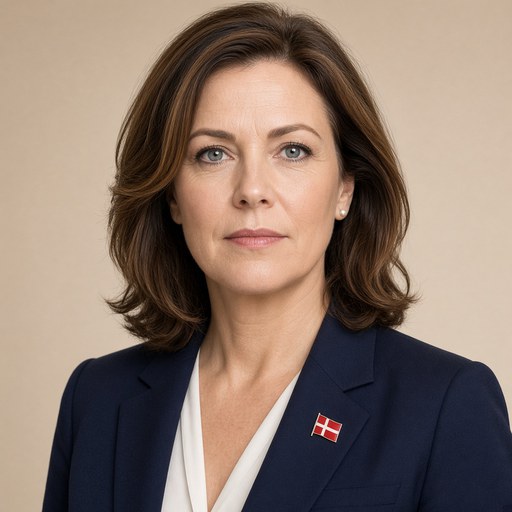
Prime Minister Helle Thorning-Schmidt's Constitution Day Speech June 5, 2014
 Helle Thorning-Schmidt · Prime Minister of Denmark
- Context
- Thorning-Schmidt addressed a Constitution Day audience on June 5, 2014, commemorating Denmark's 1849 constitution and the 70th anniversary of the D-Day landings.
- Main themes
- Danish Constitution Day, D-Day 70th anniversary, Danish wartime sailors, democracy and freedom, Normandy landings, World War II resistance, European unity, Danish democratic history, voter participation, constitutional origins, sacrifice and remembrance
- Duration
- ~18 min
- Words
- 2,212
- Sentences
- 167
- Readability
- 68
- Grade
- 7.1
- Syntax
- 2.55
- Vocabulary
- 2.04
Translated from Danish
The broad sphere of national life a sentence belongs to. Every sentence has an Arena, so it is the denominator the other indices are read against.
Other167 sentences in 85 paragraphs
Seventy years ago today, the Allied Supreme Commander, Dwight D. Eisenhower, faced a fateful decision.
Should he postpone the landing in Normandy for another day and perhaps completely lose the element of surprise? Or should he trust the weather forecasts that promised a brief clearing?
Eisenhower chose the latter.
And during the night of June 6, 1944, the largest invasion force the world has ever seen was sent off.
Among them were about 800 Danish sailors.
Knud Jensen was one of them.
He served in the American Navy, and his task was to guide an old steamer loaded with sand as close to Omaha Beach as possible. There, it was to be sunk and used in the artificial harbor facilities that were crucial for landing troops and equipment.
What he encountered on the beach he never forgot. Thousands of young people died that day. Families lost sons, spouses, brothers, and fathers. People lost their faith that there is a higher meaning. By the end of the day, the beach was stained red.
As he later said:
"You cannot explain it – it is something that is not worth looking at, it is terrible."
It could hardly be said more precisely.
But the victims that day were not in vain. The invasion marked the beginning of the end for Nazism in Europe. The struggle between right and wrong found the only rightful victor: democracy.
The efforts of the wartime sailors added to the resistance movement at home and helped ensure that Denmark joined the ranks of the Allies.
When the war hit us, there were about 6,500 Danish sailors in either neutral or allied ports.
Nine out of ten of them chose to enlist in British service. At that time, it was the shortest route for them to fight for Denmark to become free again.
Or as the first mate, Anders Hansen, wrote: "I have placed myself on the side of the Allies when I signed on board in Hong Kong. The Allies' cause is my cause, and I am fully engaged in the fight against Germany."
The Danish sailors waited a long time before they could sail under the Dannebrog again. But on Christmas Day 1943, Danish ships in allied service could raise the Danish flag. A significant day in our shared history.
Over 1,000 of the Danes who volunteered for the battles at sea never came home.
We owe them, the resistance movement, and our allies the greatest respect and humility.
And we owe it to them that we never take our freedom and democracy for granted.
I would like to use this Constitution Day to send a greeting and thanks to the Danish wartime sailors. I know that several of them will participate in the large joint memorial ceremony in Normandy tomorrow.
It says a lot about Europe, and what we learned from the war, that it is not only representatives from the Allies who will commemorate the day. Germany will stand side by side with its former enemies. Veterans from both sides will remember their fallen.
We have, through joint efforts, overcome the divides created by the great wars of the past centuries. The continent is whole. And never before have the roots of democracy been as strong as they are today.
Denmark is one of the countries in the world that has had the best and most peaceful experiences with the introduction of popular government. And we should be grateful for that. One of the greatest strengths of our constitution is that we agree on that across political divides.
There is much we disagree on, but we recognize the common rules of the game. When the votes are counted, they are counted. There is only the Prime Minister that a majority in the Folketing points to. We can fight over free and equal access to healthcare. We can oppose unfunded tax cuts. But we agree that the most basic freedoms for citizens are inalienable.
And even though there are always some who believe that democracy is in crisis, I, as Prime Minister, would like to take joy in the fact that we experienced an increase in voter turnout in the municipal elections. And I am pleased that in Denmark we are one of the countries with the highest participation in the European Parliament elections.
Danish democracy is doing well. It is primarily because the Danish people cherish it. And that is why Constitution Day is a day of joy.
Many of us associate the constitution from June 5, 1849, with something particularly Danish. That is only partially true. Indeed, it does not exist in other versions in the world. It was not written after our neighbors. It grew out of long debates, struggles, and conflicts. And it has changed significantly along the way.
Nevertheless, one cannot understand the spirit of the constitution without knowing its origins and the world in which it was created.
In 1848, Europe experienced a wave of revolutions.
The world of absolute monarchy and aristocracy fell under the pressure of a strong and self-aware bourgeoisie, well supported by a burgeoning but impoverished working class. From Sicily to Zealand, the demands for equality before the law, for the right to speak freely, for the right to participate in decision-making, and for a reckoning with class privileges were heard.
In several of Europe's capitals, citizens openly rebelled in the streets. But in most places, they were suppressed by a reactionary state power. In Paris, the epicenter of social unrest in Europe, it was subsequently decided to tear down the old city and build a new one with wide and straight streets.
In this way, the regime's cannons could most quickly and effectively suppress a rebellious crowd.
One can say a lot about modern Copenhagen. But the city is not designed to defend itself against its own citizens. Although many commuters may think so in the morning.
Denmark was one of the few countries where the great European revolutionary year of 1848 actually paved the way for a peaceful transition to democracy. The bourgeoisie, the monarchy, the peasants, and the nobility found a political compromise. The will to reach an agreement was greater than the will to win at any cost.
We have benefited from that ever since.
Oh yes: Along the way, the broad population also gained the right to vote. Even we women got on board 99 years ago. But from every conceivable dimension, Denmark is an old and rooted democracy.
That is why we also belong in European cooperation. Denmark belongs in the European Union.
We have now been members for just over 40 years. Much has happened since. When we became members, the community grew from six to nine countries. Today there are 28. And more wish to follow suit.
It was not an easy decision. It had to mature through many years of analysis and debate. And it was wise. For the framework of our political life is influenced by entering into such close cooperation with the countries around us.
In my worldview, it will always be an advantage for Denmark that we are involved in making decisions that affect ourselves.
When looking at Europe's history, there is nothing new about the big players having much to say. What is new is that the small countries also have a strong voice. That we vote on things instead of fighting. And that the decisions we make bind us all. Both big and small.
We are helping to solve cross-border problems.
Without the EU, the fight against pollution would be almost hopeless. Without the EU, the fight to avoid a climate catastrophe would be even more difficult than it already is. And without the EU, the fight against cross-border crime would stop – precisely at the border – and not as it is now, where we work together to give criminals a run for their money.
Through the Single Market, Danish companies have access to the most important neighboring markets. This secures jobs.
Our young people travel abroad to study and work. It gives them skills and opportunities that no generations before them have had.
And fundamentally: Without the EU, peace between the countries in Europe would not be as firmly established as it is today.
Those who believe that Denmark would be better off outside the EU or should seek a looser connection still owe to present a real alternative.
We, who are strong advocates of European cooperation, must never make the mistake of saying that the EU is perfect and without flaws. For it can hardly be, when 28 countries must agree.
There will always be a debate about whether there is too much or too little cooperation? Whether the pace is too fast or too slow? Yes, where will it all end?
The truth is that there is no definitive answer. For that is rarely the case in politics.
The social democratic statesman, Jens Otto Krag, understood this better than anyone else. The day after the referendum in 1972, he also stated that:
"The development of the European Communities is not predetermined once and for all. The future pattern of cooperation and the tasks that will be taken up in the EEC will be determined by the strength of the various social and political forces that are at play in the individual member states."
I agree.
The greatest challenge our generation has faced is undoubtedly the severe economic crisis. The worst since World War II.
In Denmark. As well as in Europe.
Companies have gone bankrupt. People who looked forward to a secure old age saw their savings disappear like dew in the sun. Thousands upon thousands have lost their jobs.
Particularly the young have been hit hard.
We face a real risk that a generation of young people will not find a proper foothold in the labor market.
That must not happen, and we social democrats are fighting with all the strength we have to ensure that young people again have a way into working life.
We invest in education. We invest in people.
And at long last, there are many signs that the wheels of the European economy have begun to turn faster again.
This is also true in Denmark.
We have come out of the intensified economic supervision from the EU that the previous government got us into. Unemployment is the lowest in four years. We are back on track.
Along the way, the EU has been blamed for both this and that.
The European cooperation was first criticized for the demands on member states being too vague and imprecise. Why did they not intervene against the large indebtedness? Why were they not tougher on the financial sector?
When the crisis hit, the EU was then blamed for requiring individual member states to tighten up and save. And now it was said that the demands on the financial sector were too harsh.
So at the same time, critics have claimed that the EU has been too lenient and too strict. At the same time, too little and too much. In that way, one is always right.
But the fact is that it is the member states that are responsible for their economic policies.
If a country has chosen to be a member of the eurozone – then it naturally requires being in harmony with those with whom you share a currency.
When a broad majority in the Folketing holds on to the enormous advantages that the fixed exchange rate gives the Danish economy, it also has consequences.
But the choice is our own. Not others'.
And then we return to popular government.
For we elected representatives fail in our duty if we bow our heads and say that it is nevertheless others who make the decisions.
We shirk our responsibility if we do not make the difficult decisions in time. Even if it is unpopular and gives both blue and red marks in the short term.
That is why I also stand by the direction the government has set.
The crisis has shown that we here in Denmark have managed to find our own solidarity path.
We have brought balance to public finances while at the same time ensuring that we can afford to invest in welfare in the coming years.
We have given tax cuts to ordinary wage earners while at the same time raising the elderly benefits for the pensioners who have the least.
We have provided businesses with better conditions while at the same time having the world's greenest climate goals.
We have never spent so much money on educating our young people as we do now while at the same time finding 1.6 billion kroner to improve treatment for people with mental illness.
Politics is about creating results. We have done that together. In Europe as well as in Denmark.
Now we must completely emerge from the crisis. And with the faith in the future that has always characterized the Danish people, I am confident that we will succeed.
It gives great reassurance to know that in the end, it is us who decide. That is how it should be in a democracy. Those who fought before us and for us have not fought in vain.
That is why we celebrate our constitution today.
The original Danish. The tags above are read on the English translation's sentences.
I dag for 70 år siden stod de allieredes øverstkommanderende, Dwight D. Eisenhower, overfor en skæbnesvanger beslutning.
Skulle han udskyde landgangen i Normandiet endnu en dag og måske helt miste overraskelsesmomentet? Eller skulle han stole på de vejrudsigter, der lovede en kortvarig opklaring?
Eisenhower valgte det sidste.
Og i løbet af natten til den 6. juni 1944 blev den største invasionsstyrke verden nogensinde har set sendt af sted.
Blandt dem var godt 800 danske søfolk.
Knud Jensen var én af dem.
Han sejlede i amerikansk tjeneste og hans opgave var at føre en gammel damper lastet med sand så tæt på Omaha Beach som muligt. Der skulle den så sænkes og bruges i de kunstige havneanlæg, som var afgørende for at landsætte tropper og materiel.
Dét han mødte på stranden glemte han aldrig. Tusindvis af unge mennesker døde den dag. Familier mistede sønner, ægtefæller, brødre og fædre. Mennesker mistede deres tro på, at der gives en højere mening. Da dagen var omme var stranden farvet rød.
Som han senere sagde:
”Man kan ikke forklare det – det er noget, der ikke er værd at se på, det er frygteligt.”
Det kan vel næppe siges mere præcist.
Men ofrene den dag var ikke forgæves. Invasionen blev begyndelsen på enden for nazismen i Europa. Kampen mellem ret og uret fandt den eneste rigtige sejrherre: demokratiet.
Krigssejlernes indsats føjede sig til modstandskampen herhjemme og var med til at sikre, at Danmark indgik i kredsen af allierede.
Da krigen ramte os var godt 6.500 danske søfolk i enten neutrale eller allierede havne.
Ni ud af ti af dem valgte at søge ind i britisk tjeneste. Det var på det tidspunkt den korteste vej for dem til at kæmpe for at Danmark atter kunne blive frit.
Eller som styrmand, Anders Hansen, skrev: »Jeg har stillet mig paa de Allieredes Side, da jeg mønstrede om Bord i Hongkong. De Allieredes sag er min Sag, og jeg er fuldt ud i Kamp med Tyskland.«
De danske søfolk ventede længe før de igen kunne sejle under Dannebrog. Men juledag 1943 kunne danske skibe i allieret tjeneste hejse det danske flag. En mærkedag i vores fælles historie.
Over 1.000 af de danskere som meldte sig til kampene på havene kom aldrig hjem.
Vi skylder dem, modstandsbevægelsen og vores allierede den største respekt og ydmyghed.
Og vi skylder dem, at vi aldrig tager vores frihed og demokrati for givet.
Jeg vil gerne bruge denne grundlovsdag til at sende en hilsen og tak til de danske krigssejlere. Jeg ved flere af dem i morgen deltager i den store fælles mindehøjtidelighed i Normandiet.
Det siger meget om Europa, og det vi lærte af krigen, at det ikke kun er repræsentanter fra de allierede som vil højtideligholde dagen. Tyskland vil stå side om side med sine tidligere fjender. Veteraner fra begge sider vil mindes deres faldne.
Vi har med fælles indsats overkommet de skel, som blev skabt gennem de seneste århundredes store krige. Kontinentet er helt. Og aldrig tidligere har demokratiets rødder været så stærke, som de er i dag.
Danmark er et af de lande i verden, som har haft de bedste og mest fredelige erfaringer med indførelsen af folkestyre. Og det skal vi være taknemmelige over. En af vores grundlovs største styrker er, at vi på tværs af de politiske skillelinjer er enige om netop den.
Der er meget vi er uenige om, men vi anerkender de fælles spilleregler. Når stemmerne er talt op, er de talt op. Der er kun dén statsminister et flertal i Folketinget peger på. Vi kan slås om den frie og lige adgang til sundhed. Vi kan være modstandere af, at der skal gives ufinansierede skattelettelser. Men vi er enige om, at de helt basale frihedsrettigheder for borgerne er umistelige.
Og selv om der altid er nogen, som mener, at demokratiet er i krise, vil jeg som statsminister have lov til at glæde mig over, at vi ved kommunalvalget oplevede en stigning i stemmeprocenten. Og jeg glæder mig over, at vi i Danmark er et af de lande hvor flest deltager til Europa-parlamentsvalget.
Det danske demokrati har det godt. Det skyldes først som sidst, at den danske befolkning værner om det. Og derfor er grundlovsdag en glædens dag.
Vi er mange, som forbinder grundloven fra den 5. juni 1849 med noget særligt dansk. Det er kun delvist rigtigt. Jovist, findes den ikke i andre udgaver i verden. Den er ikke skrevet af efter vores naboer. Den er vokset ud af lange debatter, kampe og konflikter. Og den er ændret markant undervejs.
Alligevel kan man ikke forstå ånden i grundloven uden at kende dens tilblivelse, og den verden den blev skabt i.
I 1848 oplevede Europa en bølge af revolutioner.
Enevældens og aristokratiets verden faldt under presset fra et stærkt og selvbevidst borgerskab godt hjulpet af en spirende men forarmet arbejderklasse. Fra Sicilien til Sjælland hørtes kravene om lighed for loven, om retten til at tale frit, om retten til medbestemmelse og om et opgør med standsprivilegier.
I flere af Europas hovedstæder gik borgerne i åbent oprør på gaden. Men langt, langt de fleste steder blev de slået ned af en reaktionær statsmagt. I Paris, der var Europas epicenter for social uro, besluttede man efterfølgende at rive den gamle by ned og bygge en ny op med brede og lige veje.
På den måde kunne regimets kanoner hurtigst og mest effektivt slå en oprørsk folkemængde ned.
Man kan sige meget om det moderne København. Men byen er ikke anlagt til at forsvare sig mod sine egne borgere. Selv om mange trafikanter sikkert kan få den tanke om morgenen.
Danmark var et af de få lande, hvor det store europæiske revolutionsår, 1848, rent faktisk banede vejen for en fredelig overgang til demokrati. Borgerskabet, kongemagten, bønderne og adelen fandt ind til et politisk kompromis. Viljen til at nå til enighed, var større end viljen til at vinde for enhver pris.
Det har vi nydt godt af lige siden.
Nå ja: Undervejs fik den brede befolkning også stemmeret. Selv vi kvinder kom med på vognen for 99 år siden. Men ud fra en hver tænkelig dimension er Danmark et gammelt og rodfæstet demokrati.
Derfor hører vi også hjemme i det europæiske samarbejde. Danmark hører hjemme i Den Europæiske Union.
Vi har nu været med i lidt over 40 år. Der er sket meget siden. Da vi blev medlemmer gik fællesskabet fra seks til ni lande. I dag er der 28. Og flere ønsker at følge trop.
Det var ikke en let beslutning. Den skulle modnes gennem mange års analyse og debat. Og det var klogt. For rammerne om vores politiske liv bliver påvirket af at indgå i så tæt et samarbejde med landene omkring os.
I mit verdensbillede vil det altid være en fordel for Danmark, at vi er med til at træffe beslutninger, som påvirker os selv.
Når man kigger på Europas historie, er der ikke noget nyt ved, at de store har meget at skulle have sagt. Det nye er, at de små lande også har en stærk stemme. At vi stemmer om tingene i stedet for at slås. Og at de beslutninger vi træffer forpligter os alle sammen. Både store og små.
Vi er med til at løse grænseoverskridende problemer.
Uden EU vil kampen mod forurening være næsten håbløs. Uden EU vil kampen for at undgå en klimakatastrofe være endnu vanskeligere end den er i forvejen. Og uden EU vil kampen mod grænseoverskridende kriminalitet stoppe – netop ved grænsen – og ikke som nu hvor vi arbejder sammen for at give de kriminelle kamp til stregen.
Gennem Det Indre Marked har danske virksomheder adgang til de vigtigste nærmarkeder. Det sikrer arbejdspladser.
Vores unge rejser ud for at studere og arbejde. Det giver dem færdigheder og muligheder ingen generationer før dem har haft.
Og helt grundlæggende: Uden EU ville freden mellem landene i Europa ikke være så grundfæstet, som den er i dag.
Dem, der mener, at Danmark ville være bedre stillet udenfor EU eller skal søge en mere løs tilknytning skylder fortsat at opstille et reelt alternativ.
Vi, der går varmt ind for det europæiske samarbejde, må aldrig begå den fejl at sige, at EU er perfekt og uden mangler. For det kan det dårligt være, når 28 lande skal være enige.
Der vil altid være en debat om der er for meget eller for lidt samarbejde? Om hastigheden er for høj eller for lav? Ja, hvor skal det hele ende?
Sandheden er, at der ikke gives et skråsikkert svar. For det gøres der sjældent i politik.
Det forstod den socialdemokratiske statsmand, Jens Otto Krag, bedre end nogen anden. Dagen efter folkeafstemningen i 1972 slog han da også fast, at:
”De europæiske Fællesskabers udvikling er ikke fastlagt en gang for alle. Det fremtidige samarbejdsmønster og de opgaver, som vil blive taget op i EF, vil være bestemt af styrken af de forskellige sociale og politiske kræfter, der gør sig gældende i de enkelte medlemslande.”
Jeg er enig.
Den største udfordring vores generation har mødt er uden tvivl den voldsomme økonomiske krise. Den værste siden anden verdenskrig.
I Danmark. Såvel som i Europa.
Virksomheder har drejet nøglen om. Mennesker som så frem til en tryg alderdom så deres opsparing forsvinde som dug for solen. Tusinder og atter tusinder har mistet deres arbejde.
Særligt de unge er blevet hårdt ramt.
Vi står med en reel risiko for, at en generation af unge ikke får et rigtigt fodfæste på arbejdsmarkedet.
Det må ikke ske, og vi socialdemokrater kæmper med al den styrke vi har for, at de unge igen får en vej ind i arbejdslivet.
Vi investerer i uddannelse. Vi investerer i mennesker.
Og langt om længe tyder meget på, at hjulene i europæisk økonomi igen er begyndt at dreje hurtigere.
Det gælder også i Danmark.
Vi er kommet ud af det skærpede økonomiske opsyn fra EU, som den tidligere regering fik os ind i. Arbejdsløsheden er den laveste i fire år. Vi er tilbage på sporet.
Undervejs har EU fået skylden for både det ene og det andet.
Det europæiske samarbejde blev først bebrejdet, at kravene til medlemslandene var for vage og upræcise. Hvorfor greb man ikke ind overfor den store gældsætning? Hvorfor var man ikke hårdere ved en finansiel sektor?
Da krisen kradsede, fik EU så ansvaret for, at de enkelte medlemslande skulle stramme op og spare. Og nu hed det sig, at kravene til den finansielle sektor var for barske.
Så på én og samme tid har kritikerne hævdet, at EU har været for slap og for skrap. På én og samme tid bestemt for lidt og for meget. På den måde får man jo altid ret.
Men faktum er, at det er medlemslandene, der har ansvaret for deres økonomiske politik.
Har et land valgt at være medlem af euroen – så stiller det naturligvis krav om at være i samklang med dem, man deler møntfod med.
Når et bredt flertal i Folketinget holder fast i de enorme fordele, som den faste kronekurs giver dansk økonomi, så har det også konsekvenser.
Men valget er vores eget. Ikke andres.
Og så er vi tilbage til folkestyret.
For vi folkevalgte svigter vores opgave, hvis vi bøjer nakken og siger, at det alligevel er nogle andre, som træffer beslutningerne.
Vi fralægger os ansvaret, hvis vi ikke tager de vanskelige beslutninger i tide. Også selv om det er upopulært og giver både blå og røde mærker på den korte bane.
Derfor står jeg også ved den retning regeringen har sat.
Krisen har vist, at vi her i Danmark har evnet at finde vores egen solidariske vej.
Vi har bragt balance på de offentlige finanser samtidig med, at vi i de kommende år får råd til at investere i velfærden.
Vi har givet skattelettelser til helt almindelige lønmodtagere samtidig med, at de pensionister, der har mindst, får hævet deres ældrecheck.
Vi har givet virksomhederne bedre vilkår samtidig med, at vi har verdens grønneste klimamål.
Vi har aldrig brugt så mange penge på at uddanne vores unge som nu samtidig med, at vi har fundet 1,6 milliarder kroner til at forbedre behandlingen for mennesker med en psykisk sygdom.
Politik er at skabe resultater. Det har vi gjort i fællesskab. I Europa såvel som i Danmark.
Nu skal vi helt ud af krisen. Og med den tro på fremtiden, der altid har kendetegnet den danske befolkning, er jeg sikker på, at det vil lykkes.
Det giver en stor tryghed at vide, at det i sidste ende er os selv, som bestemmer. Sådan skal det være i et demokrati. Dem som kæmpede før os og for os har ikke kæmpet forgæves.
Derfor glæder vi os i dag over vores grundlov.