




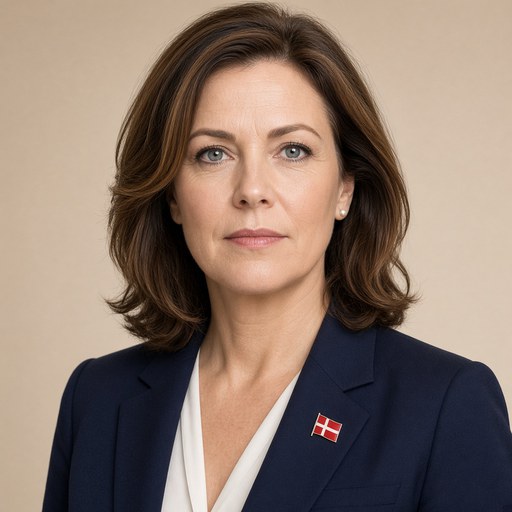
Prime Minister Helle Thorning-Schmidt's speech at the Danish Business Annual Day on May 13, 2014.
 Helle Thorning-Schmidt · Prime Minister of Denmark
- Context
- Thorning-Schmidt addressed the Danish Business Annual Day on May 13, 2014, outlining economic progress and the government's Growth Package 2014 for the service sector.
- Main themes
- Danish service industry, job creation, economic recovery, productivity growth, Growth Package 2014, public-private collaboration, business competitiveness, welfare sector, Danish economy, small and medium enterprises, financing access, energy cost reduction
- Duration
- ~19 min
- Words
- 2,224
- Sentences
- 209
- Readability
- 64
- Grade
- 6.7
- Syntax
- 2.39
- Vocabulary
- 1.97
Translated from Danish
The broad sphere of national life a sentence belongs to. Every sentence has an Arena, so it is the denominator the other indices are read against.
Other209 sentences in 98 paragraphs
Dear everyone.
Thank you for allowing me to be here again this year. I have been looking forward to it.
In service industries, the vast majority of private jobs are created in Denmark. You create jobs for the sales assistant in Føtex. For the waiter at the hotel in Aalborg. For the driver who delivers goods to the store. For the IT expert. For the business consultant.
You create jobs for very different people all over the country. And you engage in collaborations with other industries across the board.
That is why you have a key role in Danish society.
And you also have a role internationally. When I was in Japan two months ago, Dansk Erhverv was there. Of course, you were. Because Danish service companies are not just a domestic market business.
One of the areas where Denmark and Japan collaborate is in the welfare sector. Denmark is a leader in elderly care. Those of you who operate in that field know this.
But that is not the only reason the Japanese are eager to collaborate with Denmark. They have another reason. And it relates more to the special Danish way of doing things.
Danish seniors are simply much better at testing new elderly technology than Japanese seniors. And do you know why?
Because Danes complain.
If things are not right, they speak up. In Denmark, we say what we mean. Throughout our lives. I think that is good.
Constructive criticism is a driving force that develops a society. And it is also a good starting point for collaboration.
I would like to thank Michael Kjær, Jens Klarskov, and Dansk Erhverv for the good dialogue we have. And it is also fine when you constructively complain. We listen to each other.
And it is also very Danish: That the public sector and businesses collaborate. That the government listens to your wishes for better conditions. And that you also recognize the role that the state and the welfare society have for your businesses.
* * *
The government has taken on the task of guiding Denmark safely through the crisis while keeping our community intact.
I want a Denmark with both a strong private sector and a strong public sector. The government pursues a balanced policy.
And let me make it clear: There are clear signs of improvement in the Danish economy. Unemployment is the lowest in four years. Last year, 20,000 more people entered the workforce. And things are improving in large parts of the business sector.
There is also progress in the service industries. Although some sectors – especially retail – have not yet truly felt the upswing. But most expect that the progress will continue. And that it will spread.
Last week, a new forecast from the European Commission was released. The forecast confirms that we are expected to be free from the EU recommendation. That is, the recommendation Denmark received in 2010 to get the public finances under control.
Things are improving in Denmark. There is a budding belief in the future.
There is more optimism.
But we also still have challenges.
Our jobs are exposed to tough competition from other countries. As a nation, we must make an extra effort to compete for the good jobs. Because that is the foundation of our prosperity and welfare – and for families' security.
And there is much to catch up on.
For many years, Denmark has lagged behind, for example, Sweden and Germany when it comes to becoming more productive.
That challenge also lies with you. I will say that straightforwardly. And I am sure you will perceive it as constructive criticism.
The Productivity Commission has pointed out that productivity is growing too slowly in the service industries that are aimed at the domestic market. Therefore, you are central when we need to solve the challenge.
Last week, the government presented a new major growth package. It is aimed at boosting productivity and improving competition across the business sector. To a large extent, also in our important service sector.
With the Growth Package 2014, we are focusing on four areas:
First: We want to make it easier and cheaper for you to create jobs in Denmark.
We will make it easier by reducing the time that the state and municipalities take to process cases for businesses. For example, the approximately 50,000 building cases that municipalities handle each year. Overall, we will reduce processing times by one third in key areas.
We will also make it cheaper to be a business.
Hotels use energy. Stores with refrigeration systems use energy. Many service companies have high energy costs.
We will ease businesses' expenses for heating by a total of 5 billion DKK by 2020. And we will lower PSO fees on energy by 6 billion DKK by 2020.
We will also allow trucks to carry more goods. And stores can try operating without cash.
It should be easier and cheaper to run a business – that is the first area in our new growth package.
Second: We will improve access to financing. Especially for small and medium-sized enterprises. Like many of you.
The crisis has made it harder for some to borrow money from the bank. You know all about that. That is why we introduced a Growth Loan Scheme for smaller businesses two years ago, which cannot provide sufficient collateral to obtain bank loans.
There has been increasing demand for the new growth loans. Therefore, we are extending the scheme. You will have better access to risk-taking loan capital.
Third: Denmark has some of the world's most expensive goods and services.
This is, of course, related to the fact that Danish wages are high. But we cannot ignore that it is also due to the fact that competition is too weak.
Take a very concrete example. Here in the country, we have special Danish regulations in construction, from fire safety requirements in warehouses to electrical installations in bathrooms.
These are special rules that make it difficult for foreign companies to enter the Danish market. And which therefore means less competition.
The government will abolish about 50 Danish special requirements in construction and introduce more international standards. This will make it cheaper to build in Denmark for businesses and families.
We will also make the utility sector more efficient.
These are all the companies that supply electricity, water, gas, and district heating. And that handle wastewater and waste. There is a big difference in how well they are run.
The government will streamline the utility sector. This will lead to lower prices. You will have lower costs.
Lower prices for businesses and consumers is the third area the government is focused on.
Fourth: We will continue our efforts for better education. More people should have the opportunity to become more skilled. The government is very ambitious in this regard.
We have transformed the public school system. We have entered into a broad agreement on better vocational education. This greatly concerns you. You bear a significant responsibility for educating our youth. Retail is our largest vocational education sector.
Two weeks ago, we published an employment proposal. We are shifting the focus from bureaucracy and meaningless activation to real education that should give the unemployed a chance to get a job.
And education is also an important part of the new growth package:
Last week, we reached an agreement with LO and DA on how we will use the one billion DKK we have allocated for further education. Among other things, we will strengthen the access of unskilled workers to more education and skilled workers' opportunities for higher education.
It could be the sales assistant in Magasin, who has many years of experience but wants to learn more. Now she can get an education as a sales assistant. Or she can take courses in marketing and business understanding. All of this, because the education can be organized more flexibly.
180,000 students will benefit from the new agreement. It could also be your employees. I encourage you to take advantage of the opportunities.
And we are making it easier for businesses to recruit international labor. This is also important for you. For example, many IT companies need to bring in qualified labor from outside Europe.
Education is the fourth and final area in the government's large Growth Package 2014.
The growth package contains a total of nearly 90 initiatives – large and small. You can read about them all in our proposal "Denmark completely out of the crisis."
The Growth Package 2014 builds on last year's large growth plan of 90 billion DKK. Here, we significantly lowered the taxes and fees for businesses.
That was important. It makes it attractive to create jobs in Denmark.
I know that Dansk Erhverv wanted more tax and fee reductions in the new growth package. To that, I will say two things:
First, lower taxes and fees are far from the only answer when we need to compete in the global competition for good jobs.
Second, I will make it very clear: The government does not want to spend every available krone on tax cuts. We do not support public zero growth.
We want to increase public spending by 0.6 percent per year.
We do this while the Growth Package 2014 improves competitiveness and boosts growth by 6 billion DKK in 2020. This is roughly the same effect as last year's large growth plan.
We improve your opportunities to create growth and jobs.
* * *
It is also about Danish jobs when we vote on the unified patent court in less than two weeks.
Danish jobs come from good ideas.
Therefore, we must make it as easy and cheap as possible for you to bring good ideas to life.
With the new patent court and the unified patent, a company will only have to apply for and defend its patent in one place.
It is such an obviously good idea that there is very broad support for it.
Have you read the op-ed in Jyllands-Posten today?
Perhaps some of you were surprised by the two authors?
Yes, it is true. The leader of the Liberal Party and I have co-written an op-ed. That does not happen every day. On the contrary, we often spend considerable effort explaining that there are differences in Danish politics.
But we agree that the patent court is not party politics. It is about making it easier and cheaper for a company to patent its idea. It is essentially a purely practical question.
And like many practical solutions, it has great significance. A common European patent fundamentally concerns Danish jobs.
Danish companies that apply for patents account for over a third of our exports. And for 200,000 jobs. In addition, there are all the jobs they create with subcontractors.
Dansk Erhverv has joined forces with a number of organizations from the business community and trade unions to recommend a yes on May 25. You are leading that effort. Thank you for that.
It will be very concrete what we will vote on when employees and companies tell what the patent court means for them. And that is precisely what they are doing in your campaign.
Here we hear Pia, who is a blacksmith in a stove company, say that she is voting yes to secure her job.
And we hear that Ulrik is voting yes to give Danish entrepreneurs the opportunity to succeed abroad. He has invented the Growers Cup, which is a bag with coffee and a filter in one. A solution that allows busy people to brew quality coffee. If you cannot picture it, go to letterepatent.dk and watch Ulrik's video. And all the others.
Thank you to all the companies that are involved.
When I look out over the room, I would guess that there are about 300-400 business leaders here today. A rough estimate, after I have accounted for organizational people, politicians, and others.
You may each have an average of 100 employees. Again, a quick estimate.
Let’s say you spread the message that a common patent means jobs to your employees. Then we are up to 30,000-40,000 potential yes votes. Just as a calculation example.
I encourage you, who are here in the room today, to tell your employees about the significance of the patent reform.
And if the employees pass the story along. Then we are well on our way to making a topic that may seem technical and distant, very relevant for many Danes.
Jobs. That is what is at stake when Danes vote on May 25.
* * *
The government will ensure good and well-paid jobs in Denmark. We will do this in a time when competition is fierce – also the competition on price and low wages.
And we insist on simultaneously developing our welfare, because it provides security in a world that is constantly changing.
Jobs and welfare. That is the balance.
We have presented a new large Growth Package. With nearly 90 proposals. Many of them are aimed at the service industries.
Because the government cannot solve the task alone. It is businesses that create jobs. And it is especially you in the service industries.
The Danish economy shows clear signs of improvement. Many businesses are growing. There is more optimism.
Thank you for your attention. And happy anniversary to you all.
The original Danish. The tags above are read on the English translation's sentences.
Kære alle sammen.
Tak, fordi jeg må være med igen i år. Det har jeg glædet mig til.
I servicevirksomheder skaber langt de fleste private arbejdspladser i Danmark. I skaber job til salgsassistenten i Føtex. Til tjeneren på hotellet i Aalborg. Til chaufføren, der kører varer til butikken. Til it-eksperten. Til virksomhedsrådgiveren.
I skaber arbejdspladser til meget forskellige mennesker over hele landet. Og I indgår i samarbejder med andre erhverv på kryds og tværs.
Derfor har I en nøglerolle i det danske samfund.
Og I har også en rolle internationalt. Da jeg var i Japan for to måneder siden, var Dansk Erhverv med. Selvfølgelig var I det. For danske servicevirksomheder er ikke kun et hjemmemarkedserhverv.
Et af de områder, hvor Danmark og Japan samarbejder, er velfærdsområdet. Danmark er førende inden for ældreomsorg. Det ved de af jer, der driver virksomhed på det område.
Men det er ikke kun derfor, japanerne så gerne vil samarbejde med Danmark. De har også en anden grund. Og den går mere på den særlige danske måde at gøre tingene på.
Danske ældre er simpelthen langt bedre til at teste ny ældreteknologi end japanske ældre. Og ved I hvorfor?
Fordi danskerne brokker sig.
Hvis tingene ikke er i orden, så siger de fra. I Danmark siger vi, hvad vi mener. Gennem hele livet. Det, synes jeg, er godt.
Konstruktiv kritik er en drivkraft, der udvikler et samfund. Og det er også et godt udgangspunkt for samarbejde.
Jeg vil gerne sige tak til Michael Kjær, Jens Klarskov og Dansk Erhverv for den gode dialog, vi har. Og det er også i orden, når I brokker jer konstruktivt. Vi lytter til hinanden.
Og det er også meget dansk: At den offentlige sektor og erhvervslivet samarbejder. At regeringen lytter til jeres ønsker om bedre vilkår. Og at I også anerkender den rolle, staten og velfærdssamfundet har for jeres virksomheder.
* * *
Regeringen har påtaget sig den opgave at bringe Danmark trygt gennem krisen med vores fællesskab i behold.
Jeg ønsker et Danmark med både en stærk privat sektor og en stærk offentlig sektor. Regeringen fører en politik i balance.
Og lad mig gøre det helt klart: Der er tydelige tegn på bedring i dansk økonomi. Ledigheden er den laveste i fire år. Sidste år kom der 20.000 flere i arbejde. Og det går bedre i store dele af erhvervslivet.
Også i serviceerhvervene er der fremgang. Selvom nogle brancher –
især detailhandlen – ikke for alvor mærker opsvinget endnu. Men de fleste forventer, at fremgangen vil fortsætte. Og at den vil brede sig.
I sidste uge kom en ny prognose fra EU-Kommissionen. Prognosen bekræfter, at vi forventes at komme fri af EU-henstillingen. Det vil sige den henstilling, Danmark fik i 2010 om, at man var nødt til at få styr på de offentlige finanser.
Det går bedre i Danmark. Der er en spirende tro på fremtiden.
Der er mere optimisme.
Men vi har også fortsat udfordringer.
Vores arbejdspladser er udsat for hård konkurrence fra andre lande. Vi må som nation gøre en ekstra indsats for at klare os i konkurrencen om de gode job. For det er hele grundlaget for vores velstand og velfærd – og for familiernes tryghed.
Og der er meget at indhente.
Gennem mange år har Danmark haltet efter for eksempel Sverige og Tyskland, når det handler om at blive mere produktive.
Den udfordring ligger også hos jer. Det vil jeg sige ligeud. Og jeg er sikker på, at I vil opfatte det som en konstruktiv kritik.
Produktivitetskommissionen har peget på, at produktiviteten vokser for langsomt i de serviceerhverv, som er rettet mod hjemmemarkedet. Derfor er I helt centrale, når vi skal løse udfordringen.
I sidste uge fremlagde regeringen en ny stor vækstpakke. Den er rettet mod at løfte produktiviteten og forbedre konkurrencen i hele erhvervslivet. I høj grad også i vores vigtige servicesektor.
Med Vækstpakken 2014 sætter vi ind på fire områder:
For det første: Vi vil gøre det nemmere og billigere for jer at skabe arbejdspladser i Danmark.
Vi vil gøre det nemmere ved at nedbringe den tid, som stat og kommuner er om at klare sager for virksomhederne. For eksempel de omkring 50.000 byggesager, som kommunerne behandler hvert år. Samlet vil vi reducere sagsbehandlingstiderne med en tredjedel på centrale områder.
Vi vil også gøre det billigere at være virksomhed.
Hoteller bruger energi. Butikker med køleanlæg bruger energi. Mange servicevirksomheder har store udgifter til energi.
Vi lemper virksomhedernes udgifter til rumvarme med samlet 5 mia. kr. frem mod 2020. Og vi sænker PSO-afgifter på energi med 6 mia. kr. frem mod 2020.
Vi giver også lastbilerne mulighed for at flytte mere gods. Og butikker kan forsøge sig uden kontanter.
Det skal være nemmere og billigere at drive virksomhed – det er det første område i vores nye vækstpakke.
For det andet: Vi vil forbedre adgangen til finansiering. Især for små og mellemstore virksomheder. Som mange af jer.
Krisen har gjort det sværere for nogle at låne pengene i banken. Det ved I alt om. Derfor indførte vi for to år siden en Vækstlåneordning for mindre virksomheder, der ikke kan stille tilstrækkelig sikkerhed til at få banklån.
Der har været stigende efterspørgsel efter de nye vækstlån. Derfor forlænger vi ordningen. I får bedre adgang til risikovillig lånekapital.
For det tredje: Danmark har nogle af verdens dyreste varer og serviceydelser.
Det hænger selvfølgelig sammen med, at danske lønninger er høje. Men vi kommer ikke uden om, at det også skyldes, at konkurrencen er for slap.
Tag et helt konkret eksempel. Her i landet har vi særlige danske regler inden for byggeriet fra brandkrav på lagre til el-installationer på badeværelser.
Det er særregler, som gør det svært for udenlandske virksomheder at komme ind på det danske marked. Og som derfor betyder mindre konkurrence.
Regeringen vil afskaffe omkring 50 danske særkrav inden for byggeriet og indføre flere internationale standarder. Det vil gøre det billigere at bygge i Danmark for virksomheder og familier.
Vi vil også gøre forsyningssektoren mere effektiv.
Det er alle de selskaber, som leverer el, vand, gas og fjernvarme. Og som håndterer spildevand og affald. Der er stor forskel på, hvor godt de er drevet.
Regeringen vil effektivisere forsyningssektoren. Det vil give lavere priser. I får lavere omkostninger.
Lavere priser for virksomheder og forbrugere er det tredje område, regeringen er optaget af.
For det fjerde: Vi vil fortsætte vores indsats for bedre uddannelser. Flere skal have mulighed for at blive dygtigere. Her er regeringen meget ambitiøs.
Vi har forandret folkeskolen. Vi har indgået en bred aftale om bedre erhvervsuddannelser. Det berører i høj grad jer. I løfter et stort ansvar for at uddanne vores unge. Detailhandelen er vores største erhvervsuddannelse.
For to uger siden offentliggjorde vi et beskæftigelsesudspil. Vi flytter indsatsen fra bureaukrati og meningsløs aktivering til reel uddannelse, der skal give den ledige en mulighed for at få et arbejde.
Og uddannelse er også en vigtig del af den nye vækstpakke:
I sidste uge indgik vi en aftale med LO og DA om, hvordan vi skal bruge den milliard kroner, som vi har sat af til efteruddannelse. Vi vil blandt andet styrke ufaglærtes adgang til mere uddannelse og faglærtes mulighed for en videregående uddannelse.
Det kan være ekspedienten i Magasin, der har mange års erfaring, men gerne vil lære mere. Nu kan hun få en uddannelse som salgsassistent. Eller hun kan tage kurser i markedsføring og forretningsforståelse. Alt sammen, fordi uddannelserne kan tilrettelægges mere fleksibelt.
180.000 kursister vil få glæde af den nye aftale. Det kan også blive jeres medarbejdere. Jeg vil opfordre jer til at bruge mulighederne.
Og vi gør det lettere for virksomhederne at rekruttere international arbejdskraft. Det er også vigtigt for jer. For eksempel har mange it-virksomheder brug for at hente kvalificeret arbejdskraft uden for Europa.
Uddannelse er det fjerde og sidste område i regeringens store Vækstpakke 2014.
Vækstpakken indeholder i alt næsten 90 initiativer – store og små. I kan læse om dem alle sammen i vores udspil ”Danmark helt ud af krisen.”
Vækstpakken 2014 bygger ovenpå sidste års store vækstplan til 90 mia. kr. Her sænkede vi erhvervslivets skatter og afgifter markant.
Det var vigtigt. Det gør det attraktivt at skabe arbejdspladser i Danmark.
Jeg ved godt, at Dansk Erhverv ønskede flere skatte- og afgiftslettelser i den nye vækstpakke. Til det vil jeg sige to ting:
For det første er lavere skatter og afgifter langt fra det eneste svar, når vi skal klare os i den globale konkurrence om de gode job.
For det andet vil jeg sige det helt klart: Regeringen ønsker ikke at bruge hver en fri krone på skattelettelser. Vi går ikke ind for offentlig nulvækst.
Vi vil øge det offentlige forbrug med 0,6 pct. om året.
Det gør vi samtidig med, at Vækstpakken 2014 forbedrer konkurrenceevnen og løfter væksten med 6 mia. kr. i 2020. Det er omtrent samme effekt som sidste års store vækstplan.
Vi forbedrer jeres muligheder for at skabe vækst og arbejdspladser.
* * *
Det handler også om danske arbejdspladser, når vi om mindre end to uger skal stemme om den fælles patentdomstol.
Danske arbejdspladser kommer af gode ideer.
Derfor skal vi gøre det så nemt og billigt som muligt for jer at føre gode ideer ud i livet.
Med den nye patentdomstol og det fælles patent vil en virksomhed kun skulle udtage og forsvare sit patent ét sted.
Det er så indlysende en god idé, at der er meget bred opbakning til den.
Har I læst kronikken i Jyllands-Posten i dag?
Måske blev nogle af jer overraskede over de to forfattere?
Jo, der er god nok. Venstres formand og jeg har skrevet en kronik sammen. Det sker ikke hver dag. Tværtimod bruger vi ofte en del kræfter på at fortælle, at der er forskel i dansk politik.
Men vi er enige om, at patentdomstolen ikke er partipolitik. Den handler om, at det skal være lettere og billigere for en virksomhed at tage patent på sin idé. Det er sådan set et rent praktisk spørgsmål.
Og som mange praktiske løsninger har det stor betydning. Et fælles europæisk patent handler grundlæggende om danske arbejdspladser.
De danske virksomheder, der udtager patenter, står for over en tredjedel af vores eksport. Og for 200.000 arbejdspladser. Dertil kommer alle de jobs, som de skaber hos underleverandører.
Dansk Erhverv er gået sammen med en række organisationer fra erhvervslivet og fagbevægelsen om at anbefale et ja den 25. maj. I står i spidsen for det arbejde. Det skal I have tak for.
Det bliver meget konkret, hvad vi skal stemme om, når medarbejdere og virksomheder fortæller, hvad patentdomstolen betyder for dem. Og det er netop, hvad de gør i jeres kampagne.
Her hører vi Pia, der er klejnsmed i en brændeovnsvirksomhed, fortælle, at hun stemmer ja for at sikre sit job.
Og vi hører, at Ulrik stemmer ja for at give danske iværksættere mulighed for at få succes i udlandet. Han har opfundet Growers Cup, som er en pose med kaffe og filter i ét. En løsning, som giver travle mennesker mulighed for at brygge kvalitetskaffe. Hvis I ikke kan se det for jer, så gå ind på letterepatent.dk og se Ulriks video. Og alle de andre.
Tak til alle de virksomheder, der er med.
Når jeg ser ud over salen, så vil jeg tro, at I er omkring 3-400 erhvervsledere her i dag. Et slag på tasken, når jeg har trukket organisationsfolk, politikere og andre fra.
I har måske i snit 100 medarbejdere hver. Igen et hurtigt overslag.
Lad os sige, at I spreder budskabet om, at et fælles patent betyder arbejdspladser til jeres ansatte. Så er vi oppe på 30.-40.000 potentielle ja-stemmer. Bare som et regneeksempel.
Jeg vil opfordre jer, der er her i salen i dag, til at fortælle jeres medarbejdere om patentreformens betydning.
Og hvis medarbejderne fortæller historien videre. Så er vi godt i gang med at gøre et emne, der kan synes teknisk og fjernt, meget nærværende for mange danskere.
Arbejdspladser. Det er det, der er på spil, når danskerne skal stemme den 25. maj.
* * *
Regeringen vil sikre gode og vellønnede job i Danmark. Det vil vi i en tid, hvor konkurrencen er stenhård – også konkurrencen på pris og lave lønninger.
Og vi insisterer på samtidig at udvikle vores velfærd, fordi den giver tryghed i en verden, der forandrer sig konstant.
Arbejdspladser og velfærd. Det er balancen.
Vi har lagt en ny stor Vækstpakke frem. Med næsten 90 forslag. Mange af dem er rettet mod serviceerhvervene.
For regeringen kan ikke løse opgaven alene. Det er virksomheder, der skaber arbejdspladser. Og det er ikke mindst jer i serviceerhvervene.
Dansk økonomi viser klare tegn på bedring. Mange virksomheder er i vækst. Der er mere optimisme.
Tak for ordet. Og fortsat god årsdag til jer alle sammen.