




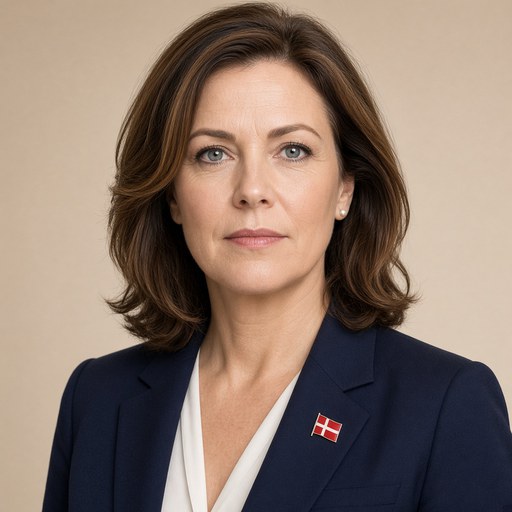
Prime Minister Helle Thorning-Schmidt's speech at DI's Top Meeting on September 24, 2013.
 Helle Thorning-Schmidt · Prime Minister of Denmark
- Context
- Thorning-Schmidt addressed Dansk Industri's annual Top Meeting on September 24, 2013, outlining government efforts to boost Danish competitiveness and business conditions.
- Main themes
- Danish competitiveness and productivity, welfare state sustainability, business framework conditions, industrial policy, growth plan DK, corporate tax reform, third industrial revolution, digitalization and innovation, export and global markets, public-private partnership, job creation, productivity commission
- Duration
- ~19 min
- Words
- 2,254
- Sentences
- 191
- Readability
- 60
- Grade
- 7.4
- Syntax
- 2.39
- Vocabulary
- 2.04
Translated from Danish
The broad sphere of national life a sentence belongs to. Every sentence has an Arena, so it is the denominator the other indices are read against.
Other191 sentences in 111 paragraphs
Thank you for allowing me to be here again this year.
It is always a pleasure to meet with you – with the members of Dansk Industri.
And you are hard to overlook – not only today, not only in the Forum, but also 9,600 kilometers south.
In the spring, I visited the Impala mine in South Africa.
And as I stood there in a yellow jumpsuit, helmet, and headlamp, it struck me how amazing it is that even on the opposite hemisphere of the globe, deep underground – even there, DI’s members were present.
Specifically, it is FL Smidth that has supplied elevators and facilities to the mine.
DI’s members represent Denmark in the world – even 1,200 meters underground.
And you represent Denmark here at home. From the large companies to the entire growth layer of smaller businesses. You account for half a million Danish jobs. Four out of ten employees in private companies work for you.
It is an important part of Denmark that has gathered for a summit today.
* * *
I say this with respect. I acknowledge your role in Danish society.
Conversely, I see the "New Nordic Approach" as an expression that you also recognize that our Nordic welfare society is important to you.
A Denmark with secure welfare, with good education for all, orderly conditions for businesses, and trust between people. That is also my starting point.
That is the Denmark I want to build upon and develop – certainly not dismantle.
We live in a new reality where we must change to maintain what is special about Denmark. We have significant challenges.
Denmark has historically been a wealthy country with high wages and high productivity. Danish companies and Danish employees have been among the most efficient and innovative in the world.
But throughout the 2000s, that position has been eroded.
It has become less attractive to invest in Denmark. Productivity has only grown slowly – much slower than in our neighboring countries. And competitiveness is under pressure.
These are challenges for which there are neither few nor simple solutions.
And it requires long-term and persistent work to reverse that development. We are on it.
When I stood here at the DI Summit a year ago, I had a clear message for you: The government would do its part to improve your conditions.
Since then, we have allocated a total of 90 billion kroner to strengthen competitiveness and Denmark.
I also promised you last year that the government had no plans for new general taxes, business taxes, or income taxes.
Since then, we have lowered corporate tax. We have reduced duties.
And last year, I said that the government has moved beyond block politics.
Since then, we have entered into a broad agreement on Growth Plan DK. That is also an important framework condition. Broad, solid solutions provide you with a stable framework to run your businesses.
* * *
But we will not stop here. In the Growth Plan, we have set concrete goals to continue improving the conditions for businesses. No government has done that before.
We do it because goals are binding. We will always focus on your framework conditions. Even as we follow up on the recommendations of the Productivity Commission.
The crisis was hard on Denmark. After the crisis, Denmark lost well over 100,000 private jobs. And there will also be companies – certainly some of you – that will move jobs to Asia or Eastern Europe because wages are lower there.
But there is no contradiction between production and high technology. On the contrary. Things are interconnected.
Just look at you. DI’s companies both produce, distribute, and transport. And you trade, advise, and provide services. You perform a range of functions that revolve around the manufacturing of goods.
After Britain’s first industrial revolution, and after the second revolution – the American assembly lines – we are now in the midst of a third industrial revolution. Where digitalization, new materials, and design are becoming increasingly important.
Denmark must be part of that development.
That is why the government has earmarked 150 million kroner for production research. We will distribute that money very soon so that it can be invested in new knowledge.
And that is why we are focused on how Denmark can become even better in the areas where we are already skilled. And where there is progress in global markets.
These are precisely areas where there is a close connection between development and production – such as food or energy. We have set up growth teams, where we have reviewed the framework conditions for businesses in close dialogue with – yes, with you: the companies. And we are in the process of following up on the recommendations with concrete decisions.
And out in the world, we are focused on helping you open doors and make contacts in growth markets. Countries like China or Vietnam are societies where politics and trade are intertwined in a different way than we are used to.
Last year, I participated along with both large and small Danish companies in the Maritime Seminar in Shanghai.
Here, we met high-ranking business people and representatives from the Chinese shipping association. Important personal contacts were made at the seminar. It matters that ministers visit these countries.
You must be present in the world to create jobs back home in Denmark. And sometimes the government must be involved.
And at home, you must have competitive conditions.
Is the regulation and the service you receive in the public sector, for example, as it should be?
DI has proposed that companies should be allowed to write annual reports in English. We will now implement that idea.
And we are working to make it faster to obtain a building permit when you want to invest in new buildings. The tools are more digitalization and simpler rules. We need to spread that out.
We are listening to you.
For you create jobs. And production is the concrete foundation from which many new ideas spring.
* * *
In companies, you should also be able to protect your ideas.
We are working to implement the European patent and the unified patent court in Denmark. As you have pointed out in DI, there is a direct line from Danish participation in an effective and well-functioning European patent to growth and jobs in Denmark.
A European patent is an obvious advantage for Danish companies. Both small and large.
Yet it is uphill to get the necessary five-sevenths majority in the Folketing. And that is puzzling.
The Danish People's Party has previously supported the patent agreement. But now they apparently do not want to give you – Denmark's companies – full access to the new, easier, and cheaper patent protection.
I have not heard any serious arguments from the Danish People's Party.
It is indeed difficult to come up with good arguments against the new unitary patent.
It is even entirely voluntary for you companies whether you want to use it.
A Danish company that is only in the Scandinavian and German market can still choose to take national patents in Denmark, Norway, Sweden, and Germany if it assesses that it is the smartest option.
It must be up to you – to the companies themselves – to assess whether you want full access to the new patent.
When we ask you – DI – the answer is a resounding yes. As you reiterated in your speech today, Karsten. Thank you for that.
And the same goes for Dansk Erhverv, CO-industri, Novozymes, Dansk Opfinderforening – just to mention some of the responses we have received from companies, inventors, and you with the good ideas.
I miss a clear answer from Kristian Thulesen Dahl on why he refuses to say yes to the patent agreement in the Folketing when it is both voluntary for companies to apply for the new unitary patent, and it is something that companies themselves are requesting.
I would therefore encourage all of you here in the hall today to continue to speak loudly and clearly about why the new patent is important to you.
It is about securing very concrete benefits for innovative Danish companies. It is about you. It is about Danish jobs.
And that must be clear to everyone.
It is our common cause and interest.
* * *
Good education is also a common cause for the government and businesses.
Everyone should have an education and a job. We must include everyone in our society. And well-educated labor is an important framework condition for you. Education is our shared responsibility.
We have set the goal that our young people should be the best-educated generation in Danish history.
That is why we are the government that invests the most in education.
And in relation to the picture DI painted in the press a couple of weeks ago, I want to clarify that the government is not cutting back on universities. Never before have so many funds been allocated for research and basic grants.
In the spring, we succeeded in reaching a political agreement on a new and better folk school, which will make all children smarter. It was not easy. There was skepticism and resistance. But the result was good.
A very broad majority in the Folketing supports the reform, which will have a significant impact for many years to come.
The next step is vocational education.
The government, schools, and businesses have a common task to make vocational education an attractive choice for young people. I would therefore like to acknowledge that DI is also taking the challenge seriously.
The government will present our comprehensive reform for better and more attractive vocational education within the next few weeks.
For it is important that the quality of teaching improves. We need to restore pride in good craftsmanship and solid production.
Therefore, we need to change the structure of vocational education so that it becomes more comprehensible for the 16-17-year-olds it concerns.
We need to create a better youth environment in vocational schools.
We need to set higher demands for those who start a vocational education. That is one of the things that is necessary to raise the quality.
We need to help young people make the right choices both before and during their education. And we need to ensure that they get an internship.
Over the years, much has been done to secure more internships.
Young people have an education guarantee, which ensures that students who start a vocational education can also complete a vocational education. We have established 50 internship centers that offer school internships but also go out to companies to encourage you to take in more students.
Last year here at DI’s summit, I urged you to take one or two extra young people each.
I will repeat my call this year.
Look at yourselves. Look at your neighbor – for fortunately, there are some of them here today – and ask:
Have you taken in more young people since last year?
Some have. You have actually been a bit better at securing internships than other sectors. DI’s members have collectively taken in nearly 600 more students.
You have taken a step. But the road is longer than that.
And you will need the young people when the upswing comes.
I believe in a Denmark that is built on education. And where not everyone has to be the same.
We need both skilled bricklayers and skilled architects. When smart hands and smart heads work together, the house stands strongest.
* * *
The government has chosen to prioritize education.
It is also a political choice what we will use our common resources in the North Sea for.
A week ago, the government reached an agreement that our common oil money should go to electrifying and modernizing our railways. We will establish the Train Fund DK.
We will invest 28 billion in a more modern railway. In new and more direct railway lines. And in the electrification of train routes.
This has clear benefits for Denmark and the Danes.
Danes will save time when travel times are shorter. A train journey from Odense to Aalborg will be one hour shorter. A train journey from Esbjerg or Holstebro to Odense will be half an hour shorter. This will spread like ripples in water to large parts of the country.
And the electric trains will also benefit the environment and climate.
This is a clear example of how public investments in modern, efficient infrastructure will provide better framework conditions for businesses.
Denmark will be more closely connected. Your employees and partners can get around faster.
One would think that we could agree on this with the entire opposition. But only parts of the opposition wanted to be involved.
* * *
The government is in the process of changing Denmark. A large growth plan. Better education. Modern railways.
We have made many decisions.
And we have come a long way. The results are beginning to show. Consumer confidence is growing. The housing market is thawing.
The shadows of the crisis are long. But there has been a shift in sentiment in the Danish economy.
We also face important decisions in the future. The government and the business community have the common task of pulling Denmark out of the crisis.
I greatly appreciate the collaboration with Dansk Industri both on what unites us and what divides us.
It is a pleasure to be here today. Continued good summit to all of you.
The original Danish. The tags above are read on the English translation's sentences.
Tak, fordi jeg må være med igen i år.
Det er altid dejligt at mødes med jer – med Dansk Industris medlemmer.
Og I er svære at komme udenom – ikke kun i dag, ikke kun i Forum, men også 9.600 kilometer sydpå.
I foråret besøgte jeg Impala-minen i Sydafrika.
Og da jeg stod dér iført gul heldragt, hjelm og pandelampe, så slog det mig, hvor fantastisk det er, at selv på klodens modsatte halvkugle, dybt nede under jorden – selv dér var DI’s medlemmer til stede.
Helt konkret er det FL Smidth, der har leveret elevatorer og anlæg til minen.
DI’s medlemmer tegner Danmark ude i verden – selv 1200 meter under jorden.
Og I tegner Danmark herhjemme. Fra de store selskaber til hele vækstlaget af mindre virksomheder. I står for en halv million danske arbejdspladser. Fire ud af ti ansatte i private virksomheder arbejder hos jer.
Det er en vigtig del af Danmark, der er samlet til topmøde i dag.
* * *
Det siger jeg med respekt. Jeg anerkender jeres rolle i det danske samfund.
Omvendt ser jeg ”New Nordic Approach” som et udtryk for, at I også anerkender, at vores nordiske velfærdssamfund er vigtigt for jer.
Et Danmark med tryg velfærd, med gode uddannelser til alle, ordnede forhold for virksomhederne og tillid mellem mennesker. Det er også mit udgangspunkt.
Det er det Danmark, jeg vil bygge videre på og udvikle – bestemt ikke afvikle.
Vi lever i en ny virkelighed, hvor vi må forandre for at fastholde det særlige ved Danmark. Vi har store udfordringer.
Danmark har historisk været et rigt land med høje lønninger og høj produktivitet. Danske virksomheder og danske lønmodtagere har været nogle af de mest effektive og opfindsomme i hele verden.
Men op gennem 00’erne er den position blevet udhulet.
Det er blevet mindre attraktivt at investere i Danmark. Produktiviteten er kun vokset langsomt – meget langsommere end i vores nabolande. Og konkurrenceevnen er under pres.
Det er udfordringer, som der hverken er få eller enkle løsninger på.
Og det kræver et langsigtet og vedholdende arbejde at vende den udvikling. Vi er i gang.
Da jeg stod her på DI Topmødet for et år siden, havde jeg et klart budskab til jer: Regeringen ville gøre sit for at forbedre jeres forhold.
Siden har vi sat i alt 90 milliarder kroner af til at styrke konkurrenceevnen og Danmark.
Jeg lovede jer også sidste år, at regeringen ikke havde nogen planer om nye generelle afgifter, erhvervsskatter eller indkomstskatter.
Siden har vi sat selskabskatten ned. Vi har sat afgifter ned.
Og sidste år sagde jeg, at regeringen har gjort op med blokpolitikken.
Siden har vi indgået en bred aftale om Vækstplan DK. Det er også et vigtigt rammevilkår. Brede, solide løsninger giver jer en stabil ramme til at drive jeres virksomheder.
* * *
Men vi stopper ikke her. I Vækstplanen har vi sat konkrete mål om fortsat at forbedre virksomhedernes forhold. Det har ingen regering gjort før.
Vi gør det, fordi mål forpligter. Vi vil hele tiden have fokus på jeres rammevilkår. Også når vi følger op på Produktivitetskommissionens anbefalinger.
Krisen var hård ved Danmark. Efter krisen mistede Danmark langt over 100.000 private arbejdspladser. Og der vil også fremover være virksomheder – sikkert også en del af jer – der flytter arbejdspladser til Asien eller Østeuropa, fordi lønnen er lavere dér.
Men der er ikke nogen modsætning mellem produktion og højteknologi. Tværtimod. Tingene hænger sammen.
Se bare på jer. DI’s virksomheder både producerer, distribuerer og transporterer. Og I handler, rådgiver og yder service. I udfører en række funktioner, der kredser omkring fremstilling af varer.
Efter Storbritanniens første industrielle revolution, og efter den anden revolution – de amerikanske samlebånd – er vi nu i gang med en tredje industriel revolution. Hvor digitalisering, nye materialer og design har større betydning.
Den udvikling skal Danmark være en del af.
Derfor har regeringen øremærket 150 millioner kroner til produktionsforskning. De penge fordeler vi meget snart, så de kan blive investeret i ny viden.
Og derfor er vi optagede af, hvordan Danmark kan blive endnu dygtigere på de områder, hvor vi i forvejen er dygtige. Og hvor der er fremgang på verdensmarkederne.
Det er netop områder, hvor der er en tæt kobling mellem udvikling og produktion – som for eksempel fødevarer eller energi. Vi har nedsat vækstteams, hvor vi har gennemgået virksomhedernes rammevilkår i tæt dialog med – ja med jer: virksomhederne. Og vi er i gang med at følge op på anbefalingerne med helt konkrete beslutninger.
Og ude i verden er vi optaget af at hjælpe jer med at åbne døre og få kontakter på vækstmarkederne. Lande som Kina eller Vietnam er samfund, hvor politik og handel er vævet sammen på en anden måde, end vi er vant til.
Sidste år deltog jeg sammen med både store og små danske virksomheder i det Maritime Seminar i Shanghai.
Her mødte vi højtstående forretningsfolk og repræsentanter fra den kinesiske rederiforening. Der blev skabt vigtige personlige kontakter på seminaret. Det betyder noget, at ministre tager på besøg i de lande.
I skal være til stede ude i verden for at skabe arbejdspladser hjemme i Danmark. Og sommetider skal regeringen være med.
Og herhjemme skal I have konkurrencedygtige forhold.
Er reguleringen og den service, I får i det offentlige, for eksempel som den skal være?
DI har foreslået, at virksomhederne skal have lov til at skrive årsrapporter på engelsk. Den idé vil vi nu gennemføre.
Og vi er ved at gøre det hurtigere at få en byggetilladelse, når I vil investere i nye bygninger. Redskaberne er mere digitalisering og mere enkle regler. Det skal vi brede ud.
Vi lytter til jer.
For I skaber arbejdsplader. Og produktion er det konkrete fundament, som mange nye idéer udspringer af.
* * *
I virksomheder skal også kunne beskytte jeres idéer.
Vi arbejder for at få gennemført det europæiske patent og den fælles patentdomstol i Danmark. Som I selv har peget på i DI, går der en lige linje fra dansk deltagelse i et effektivt og velfungerende europæisk patent til vækst og arbejdspladser i Danmark.
Et europæisk patent er en indlysende fordel for de danske virksomheder. Både de små og de store.
Alligevel er det op ad bakke at få det nødvendige fem sjettedeles flertal i Folketinget. Og det kan undre.
Dansk Folkeparti har tidligere støttet patentaftalen. Men nu vil de tilsyneladende ikke give jer - Danmarks virksomheder - fuld adgang til den nye, nemmere og billigere patentbeskyttelse.
Jeg har ikke hørt nogen seriøse argumenter fra Dansk Folkeparti.
Det er da også svært at finde på gode argumenter mod det nye enhedspatent.
Det er endda helt frivilligt for jer virksomheder, om I vil bruge det.
En dansk virksomhed, der kun er på det skandinaviske og tyske marked, kan jo fortsat nøjes med at tage nationale patenter i Danmark, Norge, Sverige og Tyskland, hvis den vurderer, at det er det smarteste.
Det må det da være op til jer – til virksomhederne selv –
at vurdere, om I ønsker at få fuld adgang til det nye patent.
Når vi spørger jer – DI – er svaret et rungende ja. Som du gentog det i din tale i dag, Karsten. Tak for det.
Og det samme gælder Dansk Erhverv, CO-industri, Novozymes, Dansk Opfinderforening – bare for at nævne nogle af de høringssvar, vi har modtaget fra virksomhederne, opfinderne og jer med de gode ideer.
Jeg savner et klart svar fra Kristian Thulesen Dahl på, hvorfor han afviser at sige ja til patentaftalen i Folketingssalen, når nu det både er frivilligt for virksomhederne at søge om det nye enhedspatent, og det er noget som virksomhederne selv efterspørger.
Jeg vil derfor opfordre alle jer, der er her i salen i dag, til at blive ved med at sige højt og tydeligt, hvorfor det nye patent er vigtigt for jer.
Det handler om at sikre helt konkrete gevinster for idérige danske virksomheder. Det handler om jer. Det handler om danske arbejdspladser.
Og det skal stå klart for alle.
Det er vores fælles sag og interesse.
* * *
Gode uddannelser er også en fælles sag for regeringen og virksomhederne.
Alle skal have en uddannelse og et arbejde. Vi skal have alle med i vores samfund. Og veluddannet arbejdskraft er et vigtigt rammevilkår for jer. Uddannelse er vores fælles ansvar.
Vi har sat det mål, at vores unge skal være den bedst uddannede generation i Danmarkshistorien.
Derfor er vi den regering, der investerer mest i uddannelse.
Og i forhold til det billede, DI tegnede i pressen for et par uger siden, vil jeg præcisere, at regeringen ikke sparer på universiteterne. Der er aldrig sat flere penge af til forskning og basisbevillinger.
I foråret lykkedes det at få en politisk aftale om en ny og bedre folkeskole, som skal gøre alle børn dygtigere. Det var ikke nemt. Der var skepsis og modstand. Men resultatet blev godt.
Et meget bredt flertal i Folketinget står bag reformen, som vil få stor betydning mange år frem.
Det næste skridt er erhvervsuddannelserne.
Regeringen, skolerne og virksomhederne har en fælles opgave med at gøre erhvervsuddannelserne til et attraktivt valg for de unge. Jeg vil derfor gerne kvittere for, at også DI tager udfordringen alvorligt.
Regeringen fremlægger vores samlede reform til bedre og mere attraktive erhvervsuddannelser inden for de næste uger.
For det er vigtigt, at der kommer højere kvalitet i undervisningen. Vi skal have stoltheden over godt håndværk og solid produktion tilbage.
Derfor skal vi ændre strukturen i erhvervsuddannelserne, så de bliver mere overskuelige for de 16-17-årige, det drejer sig om.
Vi skal have skabt et bedre ungdomsmiljø på erhvervsskolerne.
Vi skal stille større krav til dem, der starter på en erhvervsuddannelse. Det er en af de ting, der skal til for at hæve kvaliteten.
Vi skal både før og undervejs i uddannelserne hjælpe de unge til at træffe de rigtige valg. Og vi skal sørge for, at de får en praktikplads.
Der er gennem årene gjort meget for at skaffe flere praktikpladser.
De unge har en uddannelsesgaranti, som sikrer, at elever, der starter på en erhvervsuddannelse også kan gøre en erhvervsuddannelse færdig. Vi har oprettet 50 praktikcentre, som tilbyder skolepraktik, men også tager ud på virksomhederne for at få jer til at tage flere elever ind.
Sidste år her på DI’s topmøde opfordrede jeg jer til at tage en eller to ekstra unge ind hver.
Jeg vil gentage min opfordring i år.
Se på jer selv. Se på jeres sidemand eller sidekvinde – for dem er der da heldigvis også nogen af i dag – og spørg:
Har du taget flere unge ind siden sidste år?
Nogen har. I har faktisk været lidt bedre til at skaffe praktikpladser end andre brancher. DI’s medlemmer har tilsammen taget næsten 600 flere elever ind.
I har taget et skridt. Men vejen er længere end som så.
Og I får brug for de unge, når opsvinget kommer.
Jeg tror på et Danmark, som bygger på uddannelse. Og hvor alle ikke skal kunne det samme.
Vi har både brug for dygtige murere og dygtige arkitekter. Når kloge hænder og kloge hoveder arbejder sammen, så står huset stærkest.
* * *
Regeringen har valgt at prioritere uddannelser.
Det er også et politisk valg, hvad vi vil bruge vores fælles ressourcer i Nordsøen til.
For en uge siden indgik regeringen en aftale om, at vores fælles oliepenge skal gå til at elektrificere og modernisere vores jernbaner. Vi vil oprette Togfonden DK.
Vi vil investere 28 milliarder i en mere moderne jernbane. I nye og mere lige jernbanestrækninger. Og i elektrificering af togstrækninger.
Det har klare fordele for Danmark og danskerne.
Danskerne vil spare tid, når rejsetiden bliver kortere. En togtur fra Odense til Aalborg vil blive en time kortere. En togtur fra Esbjerg eller Holstebro til Odense vil blive en halv time kortere. Det vil sprede sig som ringe i vandet til store dele af landet.
Og så vil de el-drevne tog samtidigt gavne miljøet og klimaet.
Det er et klart eksempel på, hvordan offentlige investeringer i moderne effektiv infrastruktur vil give bedre rammevilkår for erhvervslivet.
Danmark bliver bundet tættere sammen. Jeres medarbejdere og samarbejdspartnere kan komme hurtigere frem.
Det skulle man da have troet, at vi kunne blive enige om med hele oppositionen. Men det var kun dele af oppositionen, der ville være med.
* * *
Regeringen er i gang med at forandre Danmark. En stor vækstplan. Bedre uddannelser. Moderne jernbaner.
Vi har truffet mange beslutninger.
Og vi er kommet langt. Resultaterne begynder at vise sig. Forbrugertilliden vokser. Boligmarkedet er ved at tø op.
Krisens skygger er lange. Men der er sket et stemningsskifte i dansk økonomi.
Vi står også over for vigtige beslutninger fremover. Regeringen og erhvervslivet har den fælles opgave at trække Danmark fri af krisen.
Jeg sætter stor pris på samarbejdet med Dansk Industri både om det, der forener os og det, der skiller os.
Det er dejligt at være med i dag. Fortsat godt topmøde til jer alle sammen.