




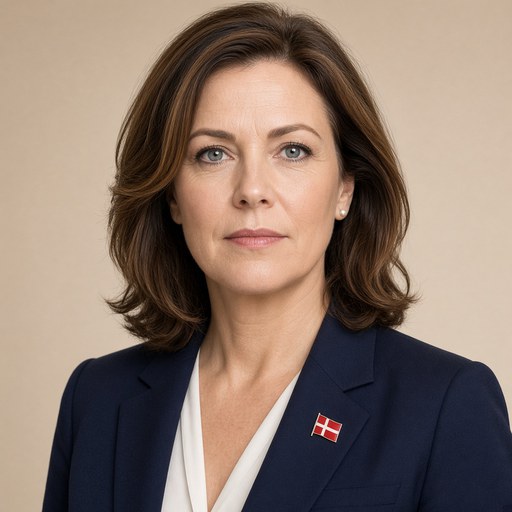
Prime Minister Helle Thorning-Schmidt's Constitution Day Speech 2013
 Helle Thorning-Schmidt · Prime Minister of Denmark
- Context
- Thorning-Schmidt addressed a Constitution Day gathering on 5 June 2013, reflecting on Danish democracy, cross-party cooperation, and major reforms achieved in the past year.
- Main themes
- Danish constitution, democracy and cooperation, political reforms, welfare state, cross-party collaboration, block politics, historical legacy of Stauning, education reform, social rights progress, economic competitiveness
- Duration
- ~21 min
- Words
- 2,538
- Sentences
- 208
- Readability
- 65
- Grade
- 7.2
- Syntax
- 2.52
- Vocabulary
- 1.91
Translated from Danish
The broad sphere of national life a sentence belongs to. Every sentence has an Arena, so it is the denominator the other indices are read against.
Other208 sentences in 116 paragraphs
We are gathered today to celebrate our constitution. The constitution is the framework for how we make decisions in Denmark. How we fill that framework depends on all of us.
It is my firm belief that we make the best use of our constitution when we work together. And it is also my firm belief that we work best together when we talk to each other.
Genuine cooperation requires a willingness to compromise.
A genuine conversation requires a fundamental respect for one’s counterpart.
It sounds easier than it is.
For the more that is at stake, the greater the contradictions will be. There will always be tensions and conflict in politics. That is the nature of democracy.
But it is precisely when we overcome our different starting points, and when we listen to each other, that we are able to do what is best for Denmark. And that is why we celebrate today much more than the words and rules set out in the 89 paragraphs of the constitution.
We celebrate the results we have achieved together.
Our solidarity welfare society. That over time we have ensured that what was once rights for a small group has become everyone’s rights.
Just think, it is not even 100 years since women, servants, and other vulnerable souls gained the right to vote.
Think that it is less than 20 years since it became illegal for parents to hit their children.
And think that it was only a year ago that same-sex couples were allowed to marry in the Church of Denmark.
There is always more to be done. There is always a need to use our democracy.
And since this time last year, we have made quite a few joint decisions.
We have implemented a tax reform.
We have ensured that our early retirement and flexible job scheme is sustainable.
We have modernized the defense.
We have changed our student grant system. Young people must study actively and take their exams to receive grants.
The unemployment benefits have been changed so that young people are not left behind.
With Growth Plan DK, we are giving the Danish economy and competitiveness a crucial push in the right direction.
We have ensured that 20,000 people do not fall out of the unemployment benefit system within a few months. That provides security.
And tomorrow, six out of the eight parties in the Folketing will resume negotiations on the future of the public school system.
These are important negotiations that could mean our children get more time with their teachers. That they receive English from the first grade. That there are more hours in Danish and mathematics. But also that we give our schools a boost with new content and new ways of learning.
We owe it to each other to reach an agreement. And we owe it, not least, to our children to make a good school even better.
I think it is fair to say that we have achieved a lot in a year.
If one did not know better, one might think we had gone reform-crazy in Denmark.
There is no doubt that it has been a remarkably busy year. More remarkable, however, is that all the parties in the Folketing have been involved. Every mandate has been used at one time or another.
Block politics is dead.
And as far as I am concerned, it will not return. We wasted 10 years in the 2000s on block politics. That was a mistake. For block politics does not take the whole into account. It only considers a narrow majority.
Today, 80 years ago, Thorvald Stauning gave a constitutional speech in which he took stock after the famous Kanslergade Agreement, which had been reached earlier that year.
A small decade of increasing division between town and country had preceded it. Between workers and employers. Denmark was politically paralyzed at a time when it was crucial to make choices. Especially the difficult ones.
A relieved Stauning said that summer day in 1933:
“We are strong when small people in town and country stand together – We have resilience when we uphold democracy and ensure order in society. The assembly of the parliament has shown political understanding and contributed to results that stand high above the results of other years.”
Today, he would probably have said in a more contemporary and TV-friendly Danish: “We are strong when we stand together.”
Of course, we should not compare Stauning or the Kanslergade Agreement with today’s politicians or today’s politics. That would not be appropriate.
But I share Stauning’s deep belief in the strength of unity.
That is why I am also a satisfied Prime Minister standing here today.
For the parties in the Folketing have taken on a great and shared responsibility for Denmark over the past year. I would like to thank you for that.
The decisions we make together reach further into the future than those we make alone.
I ran for election on the promise that we would bring back broad cooperation. We have achieved that. And it places demands on all of us.
For cooperation presupposes an acceptance that one does not fully and completely get one’s way. Unless, of course, one has one’s own majority.
No Danish parties have had that yet. Fortunately. Stauning was the one who came closest in 1935. But it is healthy to share power. Also with one’s political opponents.
This means that it can sometimes look a bit colorful at Christiansborg. It means that we, as elected representatives, do not always get things exactly the way we and our voters wanted.
Or as another Danish Prime Minister put it:
“Politics is a strange business. I can certainly say that after some years of spending all my time on it. But what does the voter think? But then I may be allowed to answer that it is the population that has given us such a fragmented parliament. Personally, I actually like a parliament with many parties. It is Danish, it is lush, and it distributes responsibility and places it on many shoulders.
It also helps teach us that there are no clever or brilliant systemic solutions.”
That was Poul Schlüter. The time was the 1980s. And it is the same then as now.
Since none of the eight parties in the Folketing have a majority alone, we must decide for ourselves whether we want to take on the responsibility for Denmark - or whether we sit in the corner.
In the current parliament, all parties have chosen to seek influence.
That is democracy at its best. But it also means that no party gets its way 100 percent or gets everything it campaigned for implemented one-to-one.
When parties tease each other, we call it a breach of promise. When we praise ourselves, we talk about the art of the possible - about seeking influence and getting the most out of one’s mandates.
The bottom line is that the parties in the Folketing today have taken responsibility for decisions they were previously against.
We have done this because reality demanded it. Because we live in a world where the solutions that are good today are not necessarily the right ones, or for that matter the possible ones, a year from now.
Along the way in that process, both opinions and positions change.
Or whatever it is called.
As a good social democrat, I know that one has a position until one takes a new one.
The important thing is that we constantly strive for what is best for Denmark.
With small, determined steps, we achieve improvements where possible. We are building a Denmark where there is room for everyone. Where everyone is needed. Where everyone gets a second chance. And we are doing it at a time when we are hit by the worst economic downturn since World War II.
We do it because we know that if we do not tackle the problems today, they will only grow tomorrow.
It is the same down-to-earth approach to responsibility that underpins cooperation in municipalities and regions.
Here, people know that the political compromises that have the most layers are the strongest. They listen to each other. They know that they need each other.
It is not easy to close a school.
It is not easy to move resources from one group of elderly people to another group of elderly people.
Nevertheless, difficult decisions are made every day by city council members and regional council members. Decisions that ensure that there will be opportunities for good welfare next year and the year after that.
On a day like today, it is important to acknowledge their efforts.
City council members and regional council members help anchor our democracy.
They help create a strong and robust democracy, where it is always the elected representatives who make decisions on behalf of the people.
On November 19, we will mark the municipal and regional council elections.
These are two important elections. And I wish the candidates good luck. But above all, I wish that as many Danes as possible use their right to vote.
I am perhaps a bit old-fashioned in that I think that if you do not vote, you should think twice before raising your voice and saying: “That is too bad.”
It is too easy to sit at home on the couch and leave the responsibility to others.
This applies especially to the young.
It is your future that is at stake. If you do not get involved and use your voice, you can be sure that there are others who will speak for you.
There is always a first time. Also when it comes to voting. It is just a matter of getting started. You should not be afraid.
For even though our democracy is old - the constitution is over 160 years old - it is also young.
Each generation leaves its own mark. Each generation enters democracy in its own way. This also applies to you who are young today.
All of Denmark has embraced what we call the new media or social media. But there is no doubt that they play the biggest role in your lives.
Platforms like Facebook, Twitter, Instagram, Storify, and many others give us new and better opportunities to share opinions and express ourselves than ever before.
With the new media, we can connect with people we would otherwise never meet.
New communities arise as older communities fade away.
The new media make it possible for citizens to quickly, effectively, and cheaply organize around a cause.
Creativity flourishes with quirky and often humorous campaigns.
That it is often against the government is not particularly significant in this context. What matters is that it is good for public engagement.
Never have so many had such good opportunities to participate so much in the public debate as today.
That is good. The new media have taken our democracy to a new level.
But the time has also come for us to set new standards for ourselves regarding how we use the new opportunities.
We do not have to agree, but we owe it to each other to make an effort to understand the arguments and situations of our counterparts.
We do not have to know each other, but we should know who we are talking to.
That is why we should ask ourselves whether we are satisfied with the kind of conversation that exists in many places on the new media.
People are ridiculed for their opinions.
People are threatened with this and that.
The tone can sometimes be so harsh that the very purpose of exchanging opinions disappears. And what remains is merely an attempt to belittle other people.
It is frankly not very cool to insult other people without standing by one’s words.
It is completely unreasonable when a member of the Folketing has to experience that the reaction to a post is anonymous comments like: “There will come a day in the not-so-distant future when you and the rest of the traitors will be taken out back.”
I get angry when young people receive thousands of text messages in a few weeks as part of a bullying campaign on electronic media.
Of course, there have always been places where interactions between people sometimes became too rough and too harsh.
But with the new media, we need to be more careful. A harsh remark reaches thousands of people. And it is not forgotten tomorrow. It lingers out there and can be brought back again. I am concerned that we as a nation are getting used to the idea that the more hateful we speak about each other, the greater impact it has.
I am concerned that we forget the necessary respect for opposing viewpoints. And for other people. The respect for each other that any genuine community is built upon. And which is the root of democratic conversation.
This is not a call for us in Denmark to adopt new common rules for how we use the new opportunities. That cannot be done. And it should not be done.
It is the choice of the individual media and communities. It is the choice of the individual.
But it is a call for all of us to remember that we also have a responsibility to use democracy in a respectful way.
I am convinced that it is possible.
And I am convinced that we in Denmark have all the prerequisites to use the new tools in a way that strengthens our democracy, that brings people closer together, and that creates a lively conversation.
That choice is ours.
Dear everyone.
Constitution Day is a festive day. We celebrate our democracy. Our right to express ourselves. Our individual freedom. Our conviction that everyone is equal before the law. That every vote counts equally.
It has been an eventful year. But much remains to be done.
That is always the case in a time of great challenges for Denmark and the world around us.
My task is to do what I can to hold Denmark together.
That is why we need a better public school system. That is why we have created room to give many pensioners a little more each month. That is why we provide our businesses with better opportunities to create and retain jobs. That is why we take care of our common household budget.
And that is why we work hard to make decisions together.
After a decade of block political desert wandering, we have resumed collaborative democracy. We must take care of it.
Much has been said about me and my government. But no one has yet accused us of going for easy solutions or pandering to voters. Is that a weakness? It is not for me to answer. But that is how it is, and that is how it will continue to be. That is my mindset. And that is how I feel best.
What matters is to do the best for Denmark. To set us on a new course, where our strong community endures, even though times are challenging.
And we can do it.
Because we talk to each other. Because we work together. And because we have our constitution.
The original Danish. The tags above are read on the English translation's sentences.
Vi er samlet i dag for at fejre vores grundlov. Grundloven er rammen for den måde, vi i Danmark træffer beslutninger på. Hvordan vi fylder rammen ud, afhænger af os alle sammen.
Det er min klare overbevisning, at vi bruger vores grundlov bedst, når vi arbejder sammen. Og det er også min klare overbevisning, at vi arbejder bedst sammen, hvis vi taler sammen.
Et ægte samarbejde kræver vilje til kompromis.
En ægte samtale kræver en grundlæggende respekt for sin modpart.
Det lyder lettere, end det er.
For jo mere, der er på spil, jo større vil modsætningerne være. Der vil altid være spændinger og konflikt i politik. Det er demokratiets vilkår.
Men det er netop, når vi overkommer vores forskellige udgangspunkter, og når vi lytter til hinanden, at vi er i stand til at gøre det, som er bedst for Danmark. Og derfor fejrer vi i dag langt mere end de ord og regler, som er opstillet i grundlovens 89 paragraffer.
Vi fejrer de resultater, vi har opnået i fællesskab.
Vores solidariske velfærdssamfund. At vi over tid har sikret, at det, som kun var rettigheder for en lille gruppe, er blevet alles rettigheder.
Tænk blot på, at det endnu ikke er 100 år siden, at vi fruentimmere, tyende og andre svage sjæle fik stemmeret.
Tænk, at det er mindre end 20 år siden, at det blev ulovligt for forældre at slå deres børn.
Og tænk på, at det kun er et år siden, at homoseksuelle fik lov til at blive viet i folkekirken.
Der er hele tiden mere at gøre. Der er hele tiden brug for at bruge vores demokrati.
Og siden sidste år på denne tid har vi truffet ganske mange fælles beslutninger.
Vi har gennemført en skattereform.
Vi har sikret, at vores førtidspension og fleksjobordning er holdbar.
Vi har moderniseret forsvaret.
Vi har ændret vores SU-system. De unge skal læse aktivt og tage deres eksaminer for at få SU.
Kontanthjælpen er forandret, så unge ikke bliver ladt i stikken.
Med Vækstplan DK giver vi dansk økonomi og konkurrenceevne et afgørende skub i den rigtige retning.
Vi har sikret, at 20.000 mennesker ikke i løbet af få måneder falder ud af dagpengesystemet. Det giver tryghed.
Og i morgen genoptager seks ud af Folketingets otte partier forhandlingerne om fremtidens folkeskole.
Det er vigtige forhandlinger, som kan betyde, at vores børn får mere tid sammen med deres lærere. At de får engelsk fra 1. klasse. At der kommer flere timer i dansk og matematik. Men også at vi giver vores skole et løft med et nyt indhold og nye måder at lære på.
Vi skylder hinanden at nå frem til en aftale. Og vi skylder ikke mindst vores børn, at vi gør en god skole bedre.
Jeg tror godt, at man kan sige, at vi har opnået meget på et år.
Hvis man ikke vidste bedre, skulle man jo tro, vi var gået reform-amok i Danmark.
Ingen tvivl om, at det har været et bemærkelsesværdigt travlt år. Mere bemærkelsesværdigt er dog, at alle Folketingets partier har været med. Alle mandater er blevet brugt på det ene eller andet tidspunkt.
Blokpolitikken er død.
Og står det til mig, kommer den ikke tilbage. Vi spildte 10 år i nullerne på at føre blokpolitik. Det var en fejl. For blokpolitikken tager ikke hensyn til helheden. Den tager alene hensyn til et snævert flertal.
I dag for 80 år siden holdt Thorvald Stauning en grundlovstale, hvor han gjorde status efter det berømte Kanslergade-forlig, der var indgået tidligere samme år.
Forud var gået et lille årti med stigende splittelse mellem land og by. Mellem arbejdere og arbejdsgivere. Danmark var politisk handlingslammet på et tidspunkt, hvor det var afgørende at træffe valg. Særligt de svære.
En lettet Stauning sagde den sommerdag i 1933:
”Vi er stærke, naar Smaafolk i By og paa Land staar sammen – Vi har Modstandskraft, naar vi holder paa Demokratiet og sørger for Orden i Samfundet. Rigsdagssamlingen har udvist politisk Forstaaelse og bidraget til Resultater, der rager højt over andre Aars Resultater”.
I dag ville han formentlig på et mere nutidigt og TV-egnet dansk have sagt: ”Vi er stærke, når vi står sammen.”
Vi skal selvfølgelig ikke sammenligne Stauning eller Kanslergade-forliget med vor tids politikere eller vor tids politik. Det ville ikke være passende.
Men jeg deler Staunings dybe tro på styrken i sammenhold.
Derfor er det også en tilfreds statsminister, der står her i dag.
For Folketingets partier har igennem det seneste år løftet et stort og fælles ansvar for Danmark. Det vil jeg gerne takke for.
De beslutninger, vi træffer i fællesskab, rækker længere ud i fremtiden, end dem, vi træffer alene.
Jeg gik til valg på, at vi skulle have det brede samarbejde tilbage. Det har vi fået. Og det stiller krav til os alle.
For samarbejde forudsætter en accept af, at man ikke fuldt og helt får sin vilje. Medmindre man altså har sit eget flertal.
Det har ingen danske partier endnu haft. Heldigvis. Stauning var den, der var tættest på i 1935. Men det er sundt at dele magten. Også med sine politiske modstandere.
Det betyder, at det en gang imellem kan se noget kulørt ud på Christiansborg. Det betyder, at vi som folkevalgte ikke altid får det lige præcis på den måde, som vi og vores vælgere ønskede det.
Eller som en anden dansk statsminister sagde det:
”Politik er nu noget mærkeligt noget. Det tør jeg nok sige efter nogle år, hvor jeg har brugt al min tid derpå. Men, hvad tænker mon da ikke vælgeren? Men så har jeg måske lov at svare, at det jo er befolkningen, som har givet os et så partiopsplittet folketing. Rent personligt kan jeg egentlig godt lide et folketing med mange partier. Det er dansk, det er frodigt, og det fordeler ansvaret og lægger det på mange skuldre.
Det hjælper også med til at lære os, at der ikke findes nogen smarte eller geniale systemløsninger.”
Det var Poul Schlüter. Tiden var 1980’erne. Og det er det samme dengang som nu.
Da ingen af Folketingets 8 partier har flertal alene, skal vi beslutte med os selv, om vi ønsker at være med til at løfte ansvaret for Danmark - eller om vi sætter os over i hjørnet.
I det nuværende folketing har alle partier valgt at søge indflydelse.
Det er folkestyre, når det er bedst. Men det betyder også, at ingen partier får deres vilje 100 procent eller får alt det, de gik til valg på, gennemført én til én.
Når partierne driller hinanden, kalder vi det løftebrud. Når vi roser os selv, taler vi om det muliges kunst - om at søge indflydelse og om at få mest muligt ud af sine mandater.
Bundlinjen er, at partierne i Folketinget i dag har taget ansvar for beslutninger, som de tidligere var imod.
Det har vi gjort, fordi virkeligheden krævede det. Fordi vi lever i en verden, hvor de løsninger, der er gode i dag, ikke nødvendigvis er de rette, eller for den sags skyld de mulige, om et år.
Undervejs i den proces bliver der skiftet både holdninger og standpunkter.
Eller hvad det nu hedder.
Som god socialdemokrat ved jeg, at man har et standpunkt, til man tager et nyt.
Det vigtige er, at vi hele tiden stræber efter, hvad der er bedst for Danmark.
Med seje små skridt opnår vi forbedringer, hvor det er muligt. Vi bygger et Danmark, hvor der er plads til alle. Hvor der er brug for alle. Hvor alle får en chance til. Og vi gør det på et tidspunkt, hvor vi er ramt af det værste økonomiske tilbageslag siden anden verdenskrig.
Vi gør det, fordi vi ved, at hvis ikke vi tager fat på problemerne i dag, så vokser de bare i morgen.
Det er den samme jordnære tilgang til ansvaret, som er grundlaget for samarbejdet i kommuner og regioner.
Her ved man, at de politiske svejsninger, der har de fleste lag, er de stærkeste. Man lytter til hinanden. Man ved, at man har brug for hinanden.
Det er ikke let at lukke en skole.
Det er ikke let at flytte ressourcer fra en gruppe ældre til en anden gruppe ældre.
Ikke desto mindre bliver der hver dag truffet svære beslutninger af byrådsmedlemmer og regionsrådsmedlemmer. Beslutninger, som sikrer, at der også næste år og næste år igen er mulighed for en god velfærd.
En dag som i dag er det vigtigt at anerkende deres indsats.
Byrådsmedlemmer og regionsrådsmedlemmer er med til at forankre vores folkestyre.
De er med til at skabe et stærkt og robust demokrati, hvor det altid er de folkevalgte, der på vegne af folket træffer beslutninger.
Den 19. november skal vi sætte kryds ved kommunal- og regionsrådsvalget.
Det er to vigtige valg. Og jeg ønsker kandidaterne held og lykke. Men først og fremmest ønsker jeg, at flest mulige danskere bruger deres stemmeret.
Jeg er nok lidt gammeldags på den måde, at jeg synes, at hvis ikke man stemmer, skal man tænke sig om en ekstra gang, inden man hæver røsten og siger: ”Det er for dårligt.”
Det er for let at sidde hjemme i sofaen og overlade ansvaret til andre.
Det gælder ikke mindst de unge.
Det er jeres fremtid, det handler om. Hvis ikke I blander jer og bruger jeres stemme, så kan I være sikre på, at der er andre, som taler for jer.
Der er altid en første gang. Også når det handler om at stemme. Det gælder bare om at komme i gang. I skal ikke være bange.
For selv om vores demokrati er gammelt - grundloven har jo mere end 160 år på bagen - så er det også ungt.
Hver generation sætter sit eget særpræg. Hver generation træder ind i demokratiet på sin egen måde. Det gælder også jer, der er unge i dag.
Hele Danmark har omfavnet det, vi kalder de nye medier eller de sociale medier. Men der er ingen tvivl om, at de fylder mest i jeres liv.
Platforme som Facebook, Twitter, Instagram, Storify og mange andre giver os nye og bedre muligheder for at dele holdninger og ytre os end nogensinde før.
Med de nye medier kan vi komme i kontakt med mennesker, som vi ellers aldrig ville møde.
Nye fællesskaber opstår i takt med, at ældre fællesskaber klinger ud.
De nye medier gør det muligt for borgerne hurtigt, effektivt og billigt at organisere sig omkring en sag.
Kreativiteten blomstrer med finurlige og ofte humoristiske kampagner.
At det så oftest er mod regeringen er i denne forbindelse knap så væsentligt. Væsentligt er, at det er godt for det folkelige engagement.
Aldrig har så mange haft så gode muligheder for at deltage så meget i den offentlige debat som i dag.
Det er godt. De nye medier har rykket vores demokrati til et nyt niveau.
Men tiden er også kommet til, at vi stiller nye krav til os selv om, hvordan vi bruger de nye muligheder.
Vi behøver ikke at være enige, men vi skylder hinanden, at vi anstrenger os for at forstå modpartens argumenter og situation.
Vi behøver ikke at kende hinanden, men vi bør vide, hvem vi taler med.
Derfor er der grund til, at vi spørger os selv, om vi er tilfredse med den form for samtale, der findes mange steder på de nye medier.
Mennesker bliver latterliggjort for deres synspunkter.
Mennesker bliver truet med det ene og det andet.
Tonen kan til tider være så hård, at selve formålet med at udveksle holdninger forsvinder. Og det eneste, som står tilbage, er et forsøg på at nedgøre andre mennesker.
Det er rent ud sagt ikke særligt sejt at svine andre mennesker til uden at stå ved sine ord.
Det er helt urimeligt, når et medlem af Folketinget skal opleve, at reaktionen på et indlæg er navnløse kommentarer som: ”Der kommer en dag i en ikke fjern fremtid hvor dig og resten af landsforræderne bliver trukket med ud bag ved.”
Jeg bliver vred, når unge mennesker får tusindvis af sms’er på få uger som led i en mobbekampagne på de elektroniske medier.
Naturligvis har der altid været steder, hvor omgangen mellem mennesker til tider blev for rå og for hård.
Men med de nye medier skal vi passe mere på. En rå bemærkning når ud til tusindvis af mennesker. Og den er ikke glemt i morgen. Den bliver hængende et sted derude og kan findes frem igen. Jeg er bekymret for, at vi som nation vænner os til, at jo mere hadefuldt vi taler om hinanden, jo større gennemslagskraft får det.
Jeg er bekymret for, at vi glemmer den nødvendige respekt for det modsatte synspunkt. Og for andre mennesker. Den respekt for hinanden, som ethvert ægte fællesskab bygger på. Og som er den demokratiske samtales rødder.
Dette er ikke en opfordring til, at vi i Danmark vedtager nye fælles spilleregler for, hvordan vi bruger de nye muligheder. Det kan man ikke. Og det skal man ikke.
Det er de enkelte mediers og fællesskabers valg. Det er den enkeltes valg.
Men det er en opfordring til, at vi alle husker på, at vi også har et ansvar for at bruge demokratiet på en respektfuld måde.
Jeg er overbevist om, at det er muligt.
Og jeg er overbevist om, at vi i Danmark har alle forudsætninger for at bruge de nye redskaber på en måde, som styrker vores demokrati, som knytter mennesker tættere sammen og som skaber en levende samtale.
Det valg er vores.
Kære alle.
Grundlovsdag er en festdag. Vi fejrer vores folkestyre. Vores ret til at ytre os. Vores individuelle frihed. Vores overbevisning om, at alle er lige for loven. At alle stemmer tæller lige meget.
Det har været et begivenhedsrigt år. Men meget skal endnu gøres.
Sådan er det altid i en tid med store udfordringer for Danmark og i verden omkring os.
Min opgave er at gøre, hvad jeg kan, for at holde sammen på Danmark.
Det er derfor, vi skal have en bedre folkeskole. Det er derfor, vi har skabt rum til at give mange folkepensionister lidt mere hver måned. Det er derfor, vi giver vores virksomheder bedre muligheder for at skabe og fastholde arbejdspladser. Det er derfor, vi passer på vores fælles husholdningskasse.
Og det er derfor, vi arbejder hårdt for at træffe beslutninger sammen.
Efter et årti med blokpolitisk ørkenvandring har vi genoptaget det samarbejdende folkestyre. Vi skal passe på det.
Der er sagt meget om mig og min regering. Men der er endnu ingen, der har beskyldt os for at gå efter de nemme løsninger eller at lefle for vælgerne. Er det en svaghed? Det er ikke mig, der skal give svaret. Men det er sådan, det er, og sådan det vil blive ved med at være. Sådan er mit sindelag. Og sådan har jeg det bedst.
Det, som tæller, er at gøre det bedste for Danmark. At få os ind på en ny kurs, hvor vores stærke fællesskab består, selvom tiderne er krævende.
Og vi kan godt.
Fordi vi taler sammen. Fordi vi arbejder sammen. Og fordi vi har vores grundlov.