




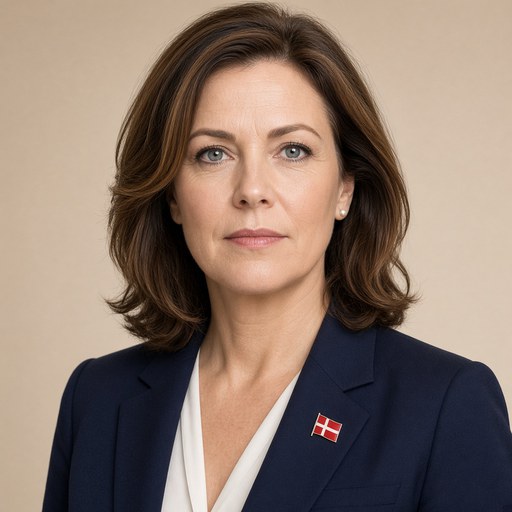
Prime Minister Helle Thorning-Schmidt's speech at the Danish Regions' General Assembly on April 18, 2013.
 Helle Thorning-Schmidt · Prime Minister of Denmark
- Context
- Thorning-Schmidt addressed the Danish Regions' General Assembly in Herning on April 18, 2013, outlining the government's vision for future healthcare reform.
- Main themes
- Healthcare reform, welfare society, patient-centered care, Danish regions, public sector development, health inequality, economic constraints, telemedicine and technology, government-regional cooperation, cancer treatment, healthcare expenditure control
- Duration
- ~22 min
- Words
- 2,615
- Sentences
- 233
- Readability
- 66
- Grade
- 6.5
- Syntax
- 2.40
- Vocabulary
- 1.92
Translated from Danish
The broad sphere of national life a sentence belongs to. Every sentence has an Arena, so it is the denominator the other indices are read against.
Other233 sentences in 115 paragraphs
I have been looking forward to coming to Herning today.
I have, because you in the regions are responsible for one of the most important areas in our Danish welfare society.
It may well be that more Danes know their mayor than their regional chairperson. And it may well be that the regions may seem a bit distant to many people. But your significance is both great and very close.
Over the course of a year, almost all Danes come into contact with areas for which you are responsible. And it often concerns important things in our lives. When we give birth to our children. When we become ill. And when our loved ones need help.
The free and equal access to healthcare is the crown jewel of the welfare society. It is a fundamental security and quality of life for all of us.
It does not get more important than that.
That is why the government also places high demands on you.
We want a healthcare system that is there for the patient. And that collaborates on the patient throughout the entire process: From diagnosis to treatment. And on the way back to everyday life.
This is the focal point of the government's work to improve the health of Danes.
We place high demands on you in the regions. You have previously shown that you can meet high demands and achieve great results. Shorter waiting lists. More outpatient treatments. Control over the finances.
For many years, healthcare expenditures have just risen and risen. You have turned that development around. That is impressive. I would like to acknowledge that.
And I want to thank you for the good cooperation we have between the government and Danish Regions. Thank you to both Bent and Carl for your constructive approach – even in areas where we may sometimes disagree.
And thank you to all of you in Denmark's five regions. You make a great effort – an effort that means something to many of us.
An effort that provides a solid foundation for moving forward in the healthcare sector.
I am happy to be here today and share the government's thoughts on the future of healthcare with you. Because regions with an elected leadership have an important role in the future of healthcare.
* * *
First: What are our fundamental conditions when we are to develop the future of healthcare? I will put some words to that before I move on to the very concrete proposals.
We must all understand that we live in a new reality. The economic crisis is not just a parenthesis in our history. It will not be the case that when the crisis is over, the abundance of the noughties will return. No, our conditions have changed for many years to come.
We must be ready for a new era with new demands for change.
This applies to both the public sector and the private sector. I do not see the two as opposites. But as equal parts of a safe Denmark.
In the recent debate, it has almost been portrayed as if the government has an outstanding issue with the public sector. Nothing could be further from the truth.
The public sector, with all the great effort you put in, is not a problem. On the contrary. You are part of the solution.
We want to spend more money in the public sector. Not less. We want to hire more in the public sector. Not fewer. We do not support zero growth.
The problem in Denmark is not that the public sector is too large. But that the private sector is too small.
Our private companies must compete in a tough market.
That is why the government has presented Growth Plan DK. A large and broad plan where we significantly improve the conditions for our companies. So they can create more jobs.
But we, who care about the public sector, must also always be ready to ask: How can we do things better in the public sector?
How can we develop and renew our welfare in a time when money is tight?
We must be ready to discuss what we can expect and not expect from the public sector. We must be ready to find new solutions. We must use IT and new technology. And we must collaborate in new ways and free from old prejudices.
Nurses, doctors, and social and health care assistants are also faced with great demands. But you have previously shown that you can adapt in your field.
You can use new technology – as in the many telemedicine solutions. You can do things in new ways – as has been achieved with the cancer packages. And you can become more efficient.
All these good things we must spread out and lift into the future of healthcare.
The government is ready to embark on a new phase in the healthcare sector. A long and tough phase, where we must create a healthcare system that is cohesive for the patient. The patient must be at the center.
All patients.
Today, the director and the bus driver have formal equal access to the healthcare system. But in reality, the richest Danish men live ten years longer than the poorest. And the difference has almost doubled over the past 25 years.
It is going in the wrong direction. We must do better.
* * *
The patient must be at the center. What does that mean?
Let me show you what I mean in a concrete and important area:
Right now, one of the biggest challenges in healthcare is how we ensure the best treatment for the many Danes who have a chronic illness. And for the many elderly medical patients.
It is a significant challenge for two reasons.
First, the patients living with a chronic illness and the elderly medical patients comprise more than a million people. And that number is increasing year by year.
Second, many do not feel that they are receiving the right treatment.
This is related to the fact that we have organized the healthcare sector so that it consists of two public authorities – municipalities and regions. And a number of small private companies – the general practitioners.
This way of organizing things works well in many cases where one stays within sector boundaries. If you break a leg, for example, that is a matter for the hospital. It is not that complicated.
But if you are one of the many Danes with diabetes, COPD, or a weak heart, it is likely that you will need both hospital care, municipal nursing, and your own doctor. And then it often goes wrong.
The visible result is that too many chronic patients and elderly people lie in a hospital bed in an overcrowded department.
Some lie out in the hallway. Many lie for too long. They feel like ping-pong balls between systems. This naturally creates insecurity for the individual.
I believe that this is an image that many of us can recognize from our father or mother or someone else we have been close to.
Our hospitals have really skilled doctors, nurses, and social and health care assistants. But healthcare is not just about medical expertise. Logistics, organization, and collaboration are also important – perhaps just as important – for how the patient experiences their illness journey.
It is fundamentally about solving the task both with high quality for the patient and with high efficiency. I know that this is also something you will discuss during the panel debate later today.
We should not build parallel systems that do the same thing. We should work together to solve the tasks close to the citizens. That is what the government is focused on.
* * *
One of the things we will address is the health agreements. They were originally introduced precisely to make things fit better together for the individual patient across municipalities and regions.
But today there are 98 health agreements.
Here, there is simply a case of scattered fighting among 98 municipalities. The hospital must deal with the fact that patients who have the same condition but are from different municipalities receive different offers when they are discharged.
I propose that we instead have one health agreement for each region. Five health agreements instead of 98.
In this way, we can much better utilize the knowledge you have in the regions. You know what works. You base your work on evidence. You can use the health agreements strategically.
The five new health agreements should have a special focus on patients living with a chronic illness and elderly patients.
The government proposes that we reallocate 250 million kroner for better collaboration to benefit, among others, chronic patients. We must move a larger part of treatment and care out of the hospital and close to the individual's everyday life.
The regions have the lead in the healthcare system. You have the expertise. You must ensure that the money is spent where it is most beneficial.
The idea of having only five health agreements is precisely that the money should be used thoughtfully.
And of course, all of this will be discussed this summer in connection with the budget negotiations.
But the line is clear: We must treat fewer in hospitals – and more at home.
How can patients living with a chronic illness be treated at home?
Let me give you an example.
Many people with diabetes have problems with wounds that are slow to heal. If the municipal nurse sends pictures and information about a patient's wound directly from the patient's home to the hospital, then the wound specialist at the hospital can send their assessment back to the nurse.
This provides better and more efficient treatment, so the wounds heal faster. Patients avoid having to go to the hospital. This means better treatment for fewer resources.
We need to spread that type of solution.
To put it bluntly, the task is really to keep patients away from the hospital.
You can get sick from going to the hospital. That is old wisdom. Fortunately, there are also many who recover from it. And that is also good. But quite a few are better off staying at home and benefiting from the hospitals' high professional expertise from a safe distance.
And the responsibility for making that work? That responsibility lies with you in the regions. And it is a responsibility that I know you are willing to take on.
* * *
Municipalities and regions must collaborate. We must also involve the third party. Some may say the most important party:
The patient's own doctor.
On average, Danes are in contact with their general practitioner seven times a year. The doctor is the natural entry point for most of us.
Right now, a lot is happening in the healthcare sector. We are building new hospitals. Municipalities have received new tasks. And we must involve the general practitioners in that development.
Take, for example, an elderly woman with COPD and a weak heart who is admitted to the hospital but could actually have been helped outside the hospital. With the right intervention from her own doctor – in collaboration with municipal nursing and the hospital.
And it also goes the other way: The general practitioner must be able to draw on specialists at the hospitals to a much greater extent.
If we move a little south of here to Herning. To Lillebælt Hospital. They have reached a good solution there.
The general practitioners can send their patients for X-ray examinations and laboratory analyses at the hospital on the same day. X-ray images are described by a radiologist immediately. And the general practitioner has the results by the next morning at the latest.
We need more examples like that.
My goal is that the patient should not even have to think about the fact that we have regions, municipalities, and their own doctor. The patient should not stumble over sector boundaries. She should not feel them at all.
The patient should have the experience that everything is completely under control.
* * *
We want to strengthen health close to the citizen.
At the same time, the hospitals are in the midst of a major restructuring.
As an important part of that restructuring, the government has changed the treatment guarantee. Now the most ill must be treated first, and the less ill can wait a little longer – but never more than two months.
The differentiated guarantee was a major request from you in the regions. Now you have the flexibility you have wanted.
Now you can treat the heart patient first. And then you can send the minor issues a little further down the queue.
But for it to work for the individual patient, the patient must of course have a diagnosis.
That is why we are introducing a completely new patient right. The goal is for everyone to have a diagnosis within 30 days.
Now it is your task to make that work in practice. So we make a real difference for the patients. So the patient quickly gets a diagnosis or a clear plan for the further process. And does not get tossed around between departments and doctors.
I expect you to solve that task.
For you have previously shown that you can solve important tasks. You have made a great effort in the area of cancer.
One in three Danes gets cancer. Almost all of us have had cancer close to us, in family or friends. And experienced how a cancer diagnosis can change life in an instant. Cancer is a common disease and has high priority.
That is why it is good that the package pathways work. Here you show that it is possible to collaborate. Both between the different departments in the hospitals. And with the patient's own doctor.
In the package pathways, you have actually solved the task we need to address between hospitals, municipalities, and doctors.
And it has yielded results. Many thousands of cancer patients live longer. And that means many thousands of families have their loved ones with them for longer.
Good collaboration yields good results.
But there is a need to do even more.
The government will focus on three new areas.
First, we will improve the treatment of children with cancer.
It is particularly tragic when children get cancer. And children should not be treated the same way as adults. Therefore, we will continue the work for gentler treatments with fewer side effects. One such treatment method is particle therapy.
We will continue to work on establishing a Danish center for particle therapy in Aarhus. And that requires that you regions collaborate and contribute.
Second, many cancer patients also have chronic diseases. For example, COPD or diabetes. And that again places special demands on treatment. We will allocate extra money for that.
Third, we will prevent cancer where we can. Therefore, we offer the vaccination against cervical cancer to even more girls.
In total, we are allocating more than 170 million kroner to the new effort against cancer.
* * *
I am about to conclude. If anyone is still in doubt, let me emphasize: The government does not wish to bury the regions. On the contrary.
The government wants Denmark's regions to have an even more important role than you have had before.
The Danes need a healthcare system where all parties pull in the same direction to provide the best possible treatment for the patient.
And it is your responsibility to make that happen.
We need elected regional councils that live up to that responsibility.
Enjoy the rest of the general assembly, everyone.
The original Danish. The tags above are read on the English translation's sentences.
Jeg har glædet mig til at komme til Herning i dag.
Det har jeg, fordi I regioner har ansvaret for et af de vigtigste områder i vores danske velfærdssamfund.
Det kan godt være, at der er flere danskere, som kender deres borgmester end deres regionsformand. Og det kan godt være, at regionerne umiddelbart kan synes som en lidt fjern størrelse for mange mennesker. Men jeres betydning er både stor og helt tæt på.
I løbet af et år er stort set alle danskere i kontakt med områder, som I har ansvaret for. Og det drejer sig ofte om vigtige ting i vores liv. Når vi føder vores børn. Når vi bliver syge. Og når vores nærmeste har brug for hjælp.
Den frie og lige adgang til sundhed er velfærdssamfundets kronjuvel. Det er en grundlæggende tryghed og livskvalitet for os alle sammen.
Det bliver ikke vigtigere.
Derfor stiller regeringen også store krav til jer.
Vi ønsker et sundhedsvæsen, der er til for patienten. Og som samarbejder om patienten gennem hele forløbet: Fra udredning til behandling. Og på vejen tilbage til hverdagen.
Det er omdrejningspunktet i regeringens arbejde for at forbedre danskernes sundhed.
Vi stiller store krav til jer i regionerne. I har før vist, at I kan opfylde store krav og opnå store resultater. Kortere ventelister. Flere ambulante behandlinger. Styr på økonomien.
I mange år har det været sådan, at sundhedsudgifterne bare steg og steg. Den udvikling har I vendt. Det er flot. Det vil jeg gerne anerkende.
Og jeg vil takke for det gode samarbejde, vi har mellem regeringen og Danske Regioner. Tak til både Bent og Carl for jeres konstruktive tilgang – også på områder, hvor vi af og til kan være uenige.
Og tak til jer alle sammen i Danmarks fem regioner. I yder en stor indsats – og en indsats, som betyder noget for mange mange af os.
En indsats, der giver et solidt afsæt for at komme videre på sundhedsområdet.
Jeg er glad for at være her i dag og dele regeringens tanker om fremtidens sundhed med jer. For regioner med en folkevalgt ledelse har en vigtig rolle i fremtidens sundhed.
* * *
Først: Hvad er vores grundvilkår, når vi skal udvikle fremtidens sundhed? Det vil jeg sætte nogle ord på, før jeg går videre til de helt konkrete forslag.
Vi må alle sammen forstå, at vi lever i en ny virkelighed. Den økonomiske krise er ikke bare en parentes i vores historie. Det bliver ikke sådan, at når krisen er slut, så kommer nullernes overflod tilbage. Nej, vores vilkår er ændrede i mange år frem.
Vi skal være klar til en ny tid med nye krav om forandring.
Det gælder både den offentlige sektor og den private sektor. Jeg ser ikke de to som modsætninger. Men som ligeværdige dele af et trygt Danmark.
I den seneste tids debat er det nærmest blevet fremstillet, som om regeringen har et udestående med den offentlige sektor. Intet kunne være mere forkert.
Den offentlige sektor med hele den store indsats, I yder, er ikke et problem. Tværtimod. I er en del af løsningen.
Vi ønsker at bruge flere penge i den offentlige sektor. Ikke færre. Vi ønsker at ansætte flere i den offentlige sektor. Ikke færre. Vi går ikke ind for nul-vækst.
Problemet i Danmark er ikke, at den offentlige sektor er for stor. Men at den private sektor er for lille.
Vores private virksomheder skal klare sig i en hård konkurrence.
Derfor har regeringen fremlagt Vækstplan DK. En stor og bred plan, hvor vi forbedrer vilkårene for vores virksomheder markant. Så de kan skabe flere arbejdspladser.
Men vi, der holder af den offentlige sektor, må også hele tiden være parate til at spørge: Hvordan kan vi gøre tingene bedre i den offentlige sektor?
Hvordan kan vi udvikle og forny vores velfærd i en tid, hvor pengene er små?
Vi må være klar til at diskutere, hvad vi kan forvente og ikke forvente af det offentlige. Vi skal være klar til at finde nye løsninger. Vi skal bruge it og ny teknologi. Og vi skal samarbejde på nye måder og fri af gamle fordomme.
Sygeplejersker, læger og sosu-assistenter bliver også mødt af store krav. Men I har før vist, at I kan omstille jer på jeres område.
I kan bruge ny teknologi – som i de mange telemedicinske løsninger. I kan gøre tingene på nye måder – som det for eksempel er lykkedes med kræftpakkerne. Og I kan effektivisere.
Alle de gode ting skal vi have bredt ud og løftet ind i fremtidens sundhed.
Regeringen er klar til at tage fat på en ny fase på sundhedsområdet. En lang og sej fase, hvor vi skal skabe et sundhedsvæsen, der hænger sammen for patienten. Patienten skal være i centrum.
Alle patienter.
I dag har direktøren og buschaufføren formelt lige adgang til sundhedsvæsenet. Men reelt lever de rigeste danske mænd ti år længere end de fattigste. Og forskellen er næsten fordoblet i løbet af de seneste 25 år.
Det går den forkerte vej. Det skal vi gøre bedre.
* * *
Patienten skal i centrum. Hvad betyder det?
Lad mig vise, hvad jeg mener på et konkret og vigtigt område:
Lige nu er en af de største udfordringer på sundhedsområdet, hvordan vi sikrer den bedste behandling til de mange danskere, der har en kronisk sygdom. Og til de mange ældre medicinske patienter.
Det er en stor udfordring af to grunde.
For det første omfatter de patienter, der lever med en kronisk sygdom, og de ældre medicinske patienter mere end en million mennesker. Og der bliver flere år for år.
For det andet føler mange ikke, at de får den rigtige behandling.
Det hænger sammen med, at vi har organiseret sundhedsområdet, så det består af to offentlige myndigheder – kommuner og regioner. Og en række små private virksomheder – de praktiserende læger.
Den måde at organisere tingene på fungerer fint i de mange tilfælde, hvor man holder sig inden for sektorgrænserne. Hvis man brækker et ben for eksempel, så er det en sag for sygehuset. Det er ikke så kompliceret.
Men hvis man er en af de mange danskere med diabetes, KOL eller dårligt hjerte, så er det sandsynligt, at man har brug for både sygehus, kommunal sygepleje og egen læge. Og så går det alt for ofte galt.
Det synlige resultat er, at for mange kroniske patienter og gamle ligger i en sygehusseng på en overbelagt afdeling.
En del ligger ude på gangen. Mange ligger for længe. De føler sig som kastebolde mellem systemer. Det skaber selvfølgelig utryghed for den enkelte.
Jeg tror, at det er et billede, som mange af os kan genkende fra vores far eller mor eller en anden, vi har været tæt på.
Vores sygehuse har rigtig dygtige læger, sygeplejersker og sosu-assistenter. Men sundhed handler ikke kun om medicinsk faglighed. Logistikken, organisationen og samarbejdet er også vigtigt – måske lige så vigtigt – for, hvordan patienten oplever sit sygdomsforløb.
Det handler dybest set om at løse opgaven både med høj kvalitet for patienten og med høj effektivitet. Jeg ved, at det også er noget, I skal diskutere under paneldebatten senere i dag.
Vi skal ikke opbygge parallelle systemer, der gør det samme. Vi skal arbejde sammen om at løse opgaverne tæt på borgerne. Det er det, regeringen er optaget af.
* * *
En af de ting, vi vil tage fat på, er sundhedsaftalerne. De blev i sin tid indført netop for at få tingene til at hænge bedre sammen for den enkelte patient på tværs af kommune og region.
Men i dag er der 98 sundhedsaftaler.
Her er simpelthen dømt spredt fægtning mellem 98 kommuner. Sygehuset skal forholde sig til, at patienter, der fejler det samme, men er fra forskellige kommuner, får forskellige tilbud, når de bliver udskrevet.
Jeg foreslår, at vi i stedet får én sundhedsaftale for hver region. Fem sundhedsaftaler i stedet for 98.
På den måde kan vi meget bedre bruge den viden, I har i regionerne. I ved, hvad der virker. I tager afsæt i evidens. I kan bruge sundhedsaftalerne strategisk.
De fem nye sundhedsaftaler skal have særligt fokus på de patienter, der lever med en kronisk sygdom, og de ældre patienter.
Regeringen foreslår, at vi omprioriterer 250 millioner kroner til bedre samarbejde til gavn for blandt andet de kroniske patienter. Vi skal flytte en større del af behandling og pleje ud af sygehuset og tæt på den enkeltes hverdag.
Regionerne har førertrøjen i sundhedsvæsenet. I har ekspertisen. I skal være garant for, at pengene bliver brugt, hvor de gør størst nytte.
For tanken med kun at have fem sundhedsaftaler er jo netop, at pengene skal bruges med omtanke.
Og det hele skal naturligvis drøftes til sommer i forbindelse med økonomiforhandlingerne.
Men linjen er klar: Vi skal behandle færre på sygehusene – og flere derhjemme.
Hvordan kan de patienter, der lever med en kronisk sygdom, behandles derhjemme?
Lad mig komme med et eksempel.
Mange mennesker med diabetes har problemer med sår, der har svært ved at hele. Hvis nu den kommunale sygeplejerske sender billeder og oplysninger om en patients sår direkte fra patientens hjem til sygehuset. Så kan sårspecialisten på sygehuset sende sin vurdering tilbage til sygeplejersken.
Det giver bedre og mere effektiv behandling, så sårene heler hurtigere. Patienterne slipper for at skulle hen på sygehuset. Det betyder bedre behandling for færre ressourcer.
Den type løsninger skal vi brede ud.
Sat på spidsen, så er opgaven jo i virkeligheden at holde patienterne væk fra sygehuset.
Man kan godt blive syg af at komme på sygehus. Det er gammel visdom. Heldigvis er der også mange, der bliver raske af det. Og det er også godt. Men en hel del er bedst tjent med at blive derhjemme og nyde godt af sygehusenes høje faglige ekspertise på sikker afstand.
Og ansvaret for, at det kommer til at fungere? Det ansvar ligger hos jer i regionerne. Og det er et ansvar, som jeg ved, I gerne tager på jer.
* * *
Kommuner og regioner skal samarbejde. Vi skal også have den tredje part med. Nogle vil måske sige den vigtigste part:
Patientens egen læge.
Danskerne er i gennemsnit i kontakt med deres praktiserende læge syv gange om året. Lægen er den naturlige indgang for de fleste af os.
Lige nu sker der meget på sundhedsområdet. Vi bygger nye sygehuse. Kommunerne har fået nye opgaver. Og vi skal have de praktiserende læger med i den udvikling.
Tag for eksempel en ældre kvinde med KOL og dårligt hjerte, der bliver indlagt, men som i virkeligheden kunne have været hjulpet uden for sygehuset. Med den rigtige indsats fra sin egen læge – i samarbejde med den kommunale sygepleje og sygehuset.
Og det går også den anden vej: Den praktiserende læge skal i langt højere grad kunne trække på specialisterne på sygehusene.
Hvis vi bevæger os lidt syd her for Herning. Til Sygehus Lillebælt. Så er de dér nået frem til en god løsning.
De praktiserende læger kan sende deres patienter til røntgenundersøgelser og laboratorieanalyser på sygehuset samme dag. Røntgenbilleder bliver beskrevet af en røntgenlæge med det samme. Og den praktiserende læge har resultatet senest næste morgen.
Den slags eksempler skal vi have flere af.
Mit mål er, at patienten slet ikke skal tænke på, at vi både har regioner, kommuner og egen læge. Patienten skal ikke snuble over sektorgrænserne. Hun skal slet ikke mærke dem.
Patienten skal have den oplevelse, at der er fuldstændig styr på det.
* * *
Vi vil styrke sundheden tæt på borgeren.
Samtidig er sygehusene midt i en stor omlægning.
Som en vigtig del af den omlægning har regeringen ændret behandlingsgarantien. Nu skal de mest syge behandles først, og de mindre syge vente lidt længere – men aldrig mere end to måneder.
Den differentierede garanti var et stort ønske fra jer i regionerne. Nu har I fået den fleksibilitet, som I har ønsket jer.
Nu kan I behandle hjertepatienten først. Og så kan I sende stritører og nedgroede negle lidt længere ned i køen.
Men for at det kan virke for den enkelte patient, så skal patienten selvfølgelig have en diagnose.
Derfor indfører vi en helt ny patientret. Målet er, at alle skal have stillet en diagnose inden for 30 dage.
Nu er det jeres opgave at få det til at fungere i praksis. Så vi gør en reel forskel for patienterne. Så patienten hurtigt får en diagnose eller en klar plan for det videre forløb. Og ikke bliver kastet rundt mellem afdelinger og læger.
Den opgave forventer jeg, at I løser.
For I har før vist, at I kan løse vigtige opgaver. I har leveret en stor indsats på kræftområdet.
Hver tredje dansker får kræft. Vi har næsten alle sammen haft kræft tæt inde på livet, hos familie eller venner. Og oplevet, hvordan en kræftsygdom med et slag kan ændre livet. Kræft er en folkesygdom og har høj prioritet.
Derfor er det godt, at pakkeforløbene fungerer. Her viser I jo, at det kan lade sig gøre at samarbejde. Både mellem de forskellige afdelinger på sygehusene. Og med patientens egen læge.
I pakkeforløbende har I faktisk løst den opgave, vi skal tage fat på mellem sygehuse, kommuner og læger.
Og det har givet resultater. Mange tusinde kræftpatienter lever længere. Og det er mange tusinde familier, der har deres kære hos sig i længere tid.
Godt samarbejde giver gode resultater.
Men der er brug for at gøre endnu mere.
Regeringen vil sætte ind på tre nye områder.
For det første vil vi forbedre behandlingen af børn med kræft.
Det er særligt tragisk, når børn får kræft. Og børn skal ikke behandles på samme måde som voksne. Derfor vil vi fortsætte arbejdet for mere skånsomme behandlinger, hvor bivirkningerne er mindre. En sådan behandlingsform er partikelterapi.
Vi skal arbejde videre med at etablere et dansk center for partikelterapi i Aarhus. Og det forudsætter, at I regioner samarbejder og bidrager.
For det andet har mange kræftpatienter også kroniske sygdomme. For eksempel KOL eller diabetes. Og det stiller igen særlige krav til behandlingen. Det sætter vi ekstra penge af til.
For det tredje vil vi forebygge kræft, hvor vi kan. Derfor tilbyder vi vaccinationen mod livmoderhalskræft til endnu flere piger.
Samlet sætter vi mere end 170 millioner kroner af til den nye indsats mod kræft.
* * *
Jeg skal til at slutte af. Hvis nogen stadig skulle være i tvivl, så lad mig understrege: Regeringen ønsker ikke at lægge regionerne i graven. Tværtimod.
Regeringen ønsker, at Danmarks regioner får en endnu vigtigere rolle, end I har haft før.
Danskerne har brug for et sundhedsvæsen, hvor alle parter trækker samme vej for at yde den bedst mulige behandling til patienten.
Og det er jeres ansvar, at det lykkes.
Vi har brug for folkevalgte regionsråd, som lever op til det ansvar.
Fortsat god generalforsamling til jer alle sammen.