




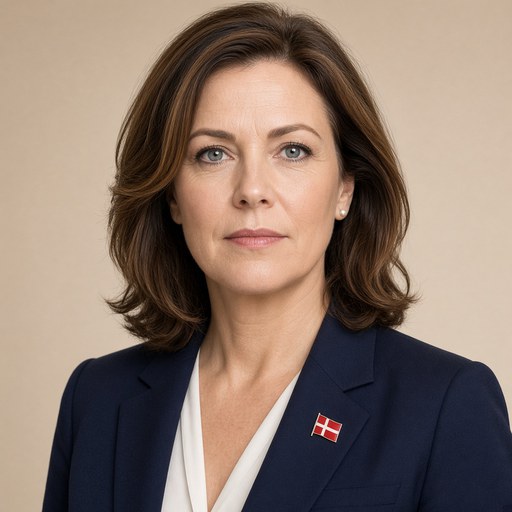
Prime Minister Helle Thorning-Schmidt's speech at the conference "Focus on Future Growth" on April 19, 2013.
 Helle Thorning-Schmidt · Prime Minister of Denmark
- Context
- Thorning-Schmidt addressed the 'Focus on Future Growth' conference on April 19, 2013, outlining Denmark's strategy for competitiveness and expansion into new global growth markets.
- Main themes
- Danish competitiveness, economic growth strategy, Growth Plan DK, international trade and investment, Danish business in emerging markets, corporate tax reform, manufacturing sector, education and workforce development, political consensus, public investment, energy ambition
- Duration
- ~18 min
- Words
- 2,194
- Sentences
- 190
- Readability
- 59
- Grade
- 7.5
- Syntax
- 2.47
- Vocabulary
- 2.00
Translated from Danish
The broad sphere of national life a sentence belongs to. Every sentence has an Arena, so it is the denominator the other indices are read against.
Other190 sentences in 98 paragraphs
At the beginning of March, I visited South Africa. I was down in the Impala Platinum Mine – 1200 meters underground.
As I stood there in a yellow jumpsuit, helmet, and headlamp, it struck me how amazing it is that even on the opposite hemisphere of the globe, deep underground – even here, Danish companies have something to offer.
FL Smidth has supplied important elements to the Impala mine – both elevators and facilities. And the company's commitment to the South African mining industry creates jobs back home in Denmark.
This is one example among many that shows respect for Danish companies around the world. And that the new growth countries are eager to collaborate with Denmark. They need what Danish businesses can provide.
And we must take advantage of that. This has been the government's clear strategy from the day we took office.
That is why we have a Minister for Trade and Investment. That is why we present ambitious strategies for a total of ten growth countries. That is why we travel around the world to open doors for businesses. And that is why we are holding this conference today.
I am pleased that so many companies are willing to engage in the dialogue about how we strengthen Danish businesses in the growth countries.
* * *
When the government is so focused on the new countries, it should be seen in a broader context:
How can we ensure our prosperity, our welfare, and our jobs in a new global reality?
The starting point is unfortunately that competitiveness has deteriorated by almost 20 percent over the past ten years. Many manufacturing companies are experiencing that costs are too high. And many employees are worried about their jobs.
The competitiveness of companies is under pressure. That is how we usually express it – the competitiveness of companies. But it is not just the companies' problem.
It is not your problem and your competitiveness. It is our competitiveness.
It is Denmark in a broad sense that we need to make into a competitive society. And that includes many things.
A strong community where we can feel safe. Good education for all, so that many talents can be utilized. A society where we trust each other. A country where we are ready for change, and where we contribute what we can.
And that is why competitiveness is something that occupies the government a great deal.
We have presented the Growth Plan DK. A large and broad plan where we significantly improve the conditions for Danish companies. So you can create more jobs.
And as you all know, negotiations are currently underway regarding the growth plan.
Last night, the first two major pieces fell into place in the complicated political puzzle that the growth plan also is.
Two very ambitious agreements were reached regarding student grants and unemployment benefits. Both with a very broad coalition of parties in the Folketing behind them. I am, of course, very pleased with that.
I hope that the rest will fall into place very soon. And that we also receive broad support here. Because broad solutions are solid solutions. They provide you with a stable framework to run your businesses.
With the growth plan, we will kickstart your investments and attract investments from other countries. Therefore, we will gradually reduce the corporate tax rate from 25 to 22 percent.
We will improve the conditions for especially our struggling manufacturing companies. Therefore, we will lower a number of taxes.
We will increase activity in society. Therefore, we will initiate public investments.
And we will give skilled employees the opportunity to become even more skilled throughout their lives. Therefore, we will invest one billion kroner in adult and continuing education.
The Growth Plan DK is a significant plan. A plan that will contribute to maintaining jobs in Denmark.
The growth plan builds on other important decisions:
We have made decisions that ensure economic stability. This guarantees you a low interest rate and a stable framework for your investments.
We have reached the broadest tax agreement in 25 years, where we remove a very large number of Danes from the top tax bracket. And we have given you a tax rebate when you purchase new machinery.
We have set the goal that Denmark should be one of the most ambitious countries in the world in the energy sector.
We invest more money in education than any other government before us.
For education opens up opportunities for individuals. And well-educated employees are one of the strongest cards that Danish companies have in hand. Also when it comes to attracting foreign investments.
And we have established growth teams, where we review the framework conditions for companies in close dialogue with – yes, with you: the businesses. And we improve where it is necessary. The Minister for Business and Growth has provided examples of that.
With all our decisions, the government has placed a new and strong focus on private jobs.
It is a focus that we will maintain – even after the proposals in our Growth Plan are hopefully adopted in the Folketing. We will continue the work to ensure good and stable conditions for businesses in Denmark.
* * *
An important part of this is also to prepare Danish companies to be where the growth is.
This leads me to the theme of today's conference: The new growth markets.
Danish companies must be present in the world to create jobs back home in Denmark – all kinds of jobs, both in production and high technology.
Denmark is a manufacturing country. And Denmark must continue to be so.
Take a small innovative company like the West Jutland-based Scan-Speak. They produce technology for speakers. And they have established themselves in the Chinese market – in collaboration with a Chinese partner.
Not to move production to China, but to expand production here at home and create jobs in Denmark.
This is one example among many.
An example of how we must navigate in a new reality. In a global economy that is undergoing a historic shift.
Not since the mid-1700s have countries outside the Western European cultural sphere held as much weight as they do now.
This is not a development that has happened overnight.
It is a development that began about 20 years ago. When China's new economic policy was well underway. When India began to liberalize. And when the Soviet Union dissolved.
Try taking a walk down Strøget and see the affluent Chinese and Russians coming out of Illum with filled bags. Twenty years ago, it was Americans and Japanese.
And I have heard that a Danish cookie factory organizes production according to when it is peak season for cookie consumption in China. A tin of Kelsen's butter cookies has become a hit gift for the Chinese New Year.
The new world map is a reality right here.
In the next five years, it is expected that around 90 percent of global growth will be outside Europe – especially in the large growth economies.
Of course, Germany, Sweden, and the USA still mean a lot to Denmark. Germany is our largest export market.
But growth is shifting. That is our challenge.
It is also our opportunity.
For never have so many people been so wealthy. It is fortunate that millions of people are finding a way out of poverty and hunger.
This is, of course, primarily their opportunity. But it is also our opportunity.
The middle class is the new driving force in the global economy. Today, there are about two billion people in the middle class. The OECD expects that in 15-20 years, there will be around five billion.
And if anyone is an expert on the middle class, it is us here in Denmark. The new middle class will demand everything we can provide: Green energy. Water. Food. Health. Welfare.
I will provide another example from South Africa. This time it is not from the depths of the earth, but from the higher altitudes.
Denmark has helped South Africa develop its wind energy policy.
And this has helped create a platform for Danish companies' entry into the South African market. We are talking about billion-dollar orders in wind energy.
Now South Africa is planning large investments in drinking water and wastewater. Here too, Danish companies have much to offer. And we must understand how to take advantage of that.
South Africa is the largest and most advanced economy on a continent in rapid development. And the relationship between Denmark and South Africa is an example of how we are moving from development aid to business cooperation.
Denmark has much to offer.
The English magazine "The Economist" had a feature a couple of months ago about the Nordic countries. Some of you have probably seen it. On the cover was a picture of a Viking, and the optimistic headline read "The next supermodel." Yes, that is us.
Inside the magazine, the Nordic model was praised for combining a skilled business sector with a secure welfare state. And it received top marks for sound economics and innovative companies.
We can do something special in the Nordics. We can do something special in Denmark. And other countries want to share in what we can do.
Nevertheless, Denmark has lagged behind in growth markets for ten years. Germany and Sweden have performed much better. It is like with competitiveness. We have fallen behind. Now it is our task to regain what we have lost.
And we are well on our way. Last year was a turning point. Exports to growth markets increased by more than 10 percent in 2012.
That is an impressive achievement by you companies.
I can promise you that the government will also continue with our part of the effort.
* * *
We are in the process of elevating our efforts in growth markets to a new level.
We have set ambitious goals. Exports to the ten growth countries that the government has selected must increase by 50 percent over five years. And we must attract twice as many investments from growth countries.
When we aim to achieve these goals, we must realize that countries like China or Vietnam are societies where politics and trade are intertwined in a different way than we are used to.
It is not enough to be a skilled company. You also need to have the right contacts. All of you skilled companies sitting in the audience today know that.
That is why we work together in growth markets – the government and businesses.
We collaborate with the new countries on research and innovation.
The government is establishing three new innovation centers this year. One in Brazil. One in South Korea. And one in India.
They will help Danish companies create growth through international research, development, and business partnerships. And they will support Danish research institutions' collaboration with growth countries.
The government is also trying more directly to help with contacts. In the questionnaires you filled out for today's conference, I noticed that the effort that scores highest with you is ministerial visits to growth countries.
When I was in Vietnam last fall, I met with the Vietnamese Prime Minister Nguyen Tan Dung. We discussed, among other things, Carlsberg's opportunities to acquire additional shares in the Vietnamese brewery Habeco – I also visited the brewery.
This was a deal that had been in the works for several years. But in a country like Vietnam, it matters to have such matters politically turned around.
For smaller companies, it can be even harder to get the right contacts.
In September, I participated along with both large and small Danish companies in the Maritime Seminar in Shanghai.
The seminar was an opportunity for Danish companies to make the right contacts. Because the right people showed up.
High-ranking business people from the Chinese shipbuilding industry. The chairman of the Shanghai port and important people from the Chinese shipping association. Personal contacts were made at the seminar.
And you, who are already in China, know that in China, personal connections mean a lot.
That is why the government will do even more to open doors and help Danish companies get the right contacts in a country that will soon be the world's largest market. And that demands many of the things that Danish companies – like you sitting in the audience today – can provide.
I have said before that I will return to China regularly. Now I will work to ensure that a delegation of Danish ministers – including myself – can travel together to China.
Just as we have several ministers together at today's conference and in the dialogue with you, we will also take a united team to China. You will hear more about that.
* * *
Denmark's future does not lie in China. It does not lie in South Africa.
It lies in Denmark.
But in close interaction with other countries.
You must be where the growth is. So you can create the jobs on which we must base our future.
In this task, you have the government's full support.
Enjoy the rest of the conference, everyone.
The original Danish. The tags above are read on the English translation's sentences.
I starten af marts besøgte jeg Sydafrika. Her var jeg nede i Impala Platinmine – 1200 meter under jorden.
Da jeg stod dér iført gul heldragt, hjelm og pandelygte, så slog det mig, hvor fantastisk det er, at selv på klodens modsatte halvkugle, dybt nede under jorden – selv her har danske virksomheder noget at byde på.
FL Smidth har leveret vigtige elementer til Impala-minen – både elevatorer og anlæg. Og virksomhedens engagement i sydafrikansk mineindustri skaber arbejdspladser hjemme i Danmark.
Det er et eksempel blandt mange på, at der står respekt om danske virksomheder ude i verden. Og at de nye vækstlande gerne vil samarbejde med Danmark. De har brug for det, som dansk erhvervsliv kan.
Og det skal vi udnytte. Det har været regeringens klare strategi fra den dag, vi trådte til.
Derfor har vi en handels- og investeringsminister. Derfor fremlægger vi ambitiøse strategier for i alt ti vækstlande. Derfor rejser vi verden rundt for at åbne døre for erhvervslivet. Og derfor holder vi konferencen i dag.
Jeg er glad for, at I er så mange virksomheder, der vil være med i dialogen om, hvordan vi styrker dansk erhvervsliv i vækstlandene.
* * *
Når regeringen er så optaget af de nye lande, så skal det ses i en bredere sammenhæng:
Hvordan kan vi sikre vores velstand, vores velfærd og vores arbejdspladser i en ny global virkelighed?
Udgangspunktet er desværre, at konkurrenceevnen på ti år er blevet næsten 20 procent ringere. Mange produktionsvirksomheder oplever, at omkostningerne er for høje. Og mange lønmodtagere er bekymrede for deres job.
Virksomhedernes konkurrenceevne er presset. Sådan er det jo, vi plejer at udtrykke det – virksomhedernes konkurrenceevne. Men det er jo ikke bare virksomhedernes problem.
Det er ikke jeres problem og jeres konkurrenceevne. Det er vores konkurrenceevne.
Det er Danmark i bred forstand, vi skal gøre til et konkurrencedygtigt samfund. Og det indbefatter mange ting.
Et stærkt fællesskab, hvor vi kan føle os trygge. Gode uddannelser til alle, så mange talenter kommer i spil. Et samfund, hvor vi har tillid til hinanden. Et land, hvor vi er parate til forandring, og hvor vi yder det, vi kan.
Og derfor er konkurrenceevnen noget, der optager regeringen meget.
Vi har fremlagt Vækstplan DK. En stor og bred plan, hvor vi forbedrer vilkårene for danske virksomheder markant. Så I kan skabe flere arbejdspladser.
Og som I alle sammen ved, så forhandles der lige nu intenst om vækstplanen.
I går aftes faldt de to første store brikker på plads i det komplicerede politiske puslespil, som vækstplanen jo også er.
Der blev indgået to meget ambitiøse aftaler om SU og kontanthjælp. Begge med en meget bred kreds af Folketingets partier bag. Det er jeg selvfølgelig meget tilfreds med.
Jeg håber, at resten falder på plads meget snart. Og at vi også her får bred opbakning. For brede løsninger er solide løsninger. De giver jer en stabil ramme til at drive jeres virksomheder.
Med vækstplanen vil vi sætte gang i jeres investeringer og tiltrække investeringer fra andre lande. Derfor vil vi sætte selskabsskatten gradvist ned fra 25 til 22 procent.
Vi vil forbedre vilkårene for især vores trængte produktionsvirksomheder. Derfor vil vi sænke en række afgifter.
Vi vil øge aktiviteten i samfundet. Derfor vil vi sætte offentlige investeringer i gang.
Og vi vil give dygtige medarbejdere mulighed for at blive dygtigere hele livet. Derfor vil vi investere én milliard kroner i voksen- og efteruddannelse.
Vækstplan DK er en stor plan. En plan, som vil gøre sit til, at vi kan fastholde arbejdspladser i Danmark.
Vækstplanen bygger ovenpå andre vigtige beslutninger:
Vi har truffet beslutninger, som giver styr på økonomien. Det sikrer jer en lav rente og en stabil ramme for jeres investeringer.
Vi har indgået den bredeste skatteaftale i 25 år, hvor vi trækker et meget stort antal danskere ud af topskatten. Og vi har givet jer en skatterabat, når I køber nye maskiner.
Vi har sat det mål, at Danmark skal være et af de mest ambitiøse lande i verden på energiområdet.
Vi investerer flere penge i uddannelse end nogen anden regering før os.
For uddannelse åbner muligheder for den enkelte. Og veluddannede medarbejdere er et af de stærkeste kort, danske virksomheder har på hånden. Også når det handler om at tiltrække udenlandske investeringer.
Og vi har nedsat vækstteams, hvor vi gennemgår virksomhedernes rammevilkår i tæt dialog med – ja med jer: virksomhederne. Og vi forbedrer dér, hvor det er nødvendigt. Det har erhvervs- og vækstministeren givet eksempler på.
Med alle vores beslutninger har regeringen sat et nyt og stærkt fokus på private arbejdspladser.
Det er et fokus, vi vil holde fast i – også efter forslagene i vores Vækstplan forhåbentligt er vedtaget i Folketinget. Vi vil fortsætte arbejdet med at sikre gode og stabile rammer for virksomhederne i Danmark.
* * *
En vigtig del af det er også at gøre danske virksomheder klar til at være dér, hvor væksten er.
Det leder mig videre til temaet for konferencen i dag: De nye vækstmarkeder.
Danske virksomheder skal være til stede ude i verden for at kunne skabe arbejdspladser hjemme i Danmark – alle slags arbejdspladser, både produktion og højteknologi.
Danmark er et produktionsland. Og det skal Danmark blive ved med at være.
Tag en lille innovativ virksomhed som den vestjyske Scan-Speak. De producerer teknologi til højtalere. Og de har etableret sig på det kinesiske marked – i samarbejde med en kinesisk partner.
Ikke for at flytte produktionen til Kina, men for at udvide produktionen herhjemme og skabe arbejdspladser i Danmark.
Det er et eksempel blandt mange.
Et eksempel på, at vi skal navigere i en ny virkelighed. I en verdensøkonomi, som står i et historisk skifte.
Ikke siden midten af 1700-tallet har lande uden for den vesteuropæiske kulturkreds haft så stor en vægt, som de har nu.
Det er ikke en udvikling, der er kommet fra den ene dag til den anden.
Det er en udvikling, som blev indledt for omkring 20 år siden. Hvor Kinas nye økonomiske politik var godt i gang. Hvor Indien begyndte at liberalisere. Og hvor Sovjetunionen gik i opløsning.
Prøv at gå en tur ned ad Strøget og se de købedygtige kinesere og russere på vej ud af Illum med fyldte poser. For tyve år siden var det amerikanere og japanere.
Og jeg har hørt, at en dansk småkagefabrik indretter produktionen efter, hvornår det er højsæson for småkagespisning i Kina. En dåse med Kelsens smørbagte er blevet et gavehit ved det kinesiske nytår.
Det nye verdenskort er virkelighed lige her.
De næste fem år er forventningen, at omkring 90 procent af den globale vækst vil være uden for Europa – især i de store vækstøkonomier.
Selvfølgelig betyder Tyskland, Sverige og USA stadig meget for Danmark. Tyskland er vores største eksportmarked.
Men væksten flytter sig. Det er vores udfordring.
Det er også vores chance.
For aldrig har så mange mennesker været så rige. Det er lykkeligt, at millioner af mennesker får en vej ud af fattigdom og sult.
Det er selvfølgelig først og fremmest deres chance. Men det er også vores chance.
Middelklassen er den nye drivkraft i verdensøkonomien. I dag er der omkring to milliarder mennesker i middelklassen. OECD forventer, at der om 15-20 år vil være omkring fem milliarder.
Og hvis der er nogen, der er eksperter i middelklassen, så er det os her i Danmark. Den nye middelklasse vil efterspørge alt det, vi kan: Grøn energi. Vand. Fødevarer. Sundhed. Velfærd.
Jeg vil komme med endnu et eksempel fra Sydafrika. Denne gang er det ikke fra jordens dyb, men fra de højere luftlag.
Danmark har hjulpet Sydafrika med at udvikle deres politik for vindenergi.
Og det har været med til at skabe en platform for danske virksomheders indtog på det sydafrikanske marked. Vi taler om milliardordrer inden for vindenergi.
Nu planlægger Sydafrika store investeringer i drikkevand og spildevand. Også her har danske virksomheder meget at byde på. Og det skal vi forstå at udnytte.
Sydafrika er den største og mest avancerede økonomi på et kontinent i rivende udvikling. Og forholdet mellem Danmark og Sydafrika er et eksempel på, at vi bevæger os fra udviklingsbistand til erhvervssamarbejde.
Danmark har meget at byde på.
Det engelske magasin ”The Economist” havde for et par måneder siden et tema om de nordiske lande. En del af jer har nok set det. På forsiden var der et billede af en viking, og den optimistiske overskrift lød ”The next supermodel.” Ja, det er os.
Inde i magasinet blev den nordiske model rost for at kombinere et dygtigt erhvervsliv med en tryg velfærdsstat. Og fik topkarakterer i sund økonomi og innovative virksomheder.
Vi kan noget særligt i Norden. Vi kan noget særligt i Danmark. Og andre lande vil gerne have del i det, vi kan.
Alligevel har Danmark i ti år været bagud på vækstmarkederne. Tyskland og Sverige har klaret sig langt bedre. Det er ligesom med konkurrenceevnen. Vi er haltet bagefter. Nu er det vores opgave at vinde det tabte ind igen.
Og det er vi godt på vej til. Sidste år var et vendepunkt. Eksporten til vækstmarkederne steg med mere end 10 procent i 2012.
Det er en flot præstation af jer virksomheder.
Jeg kan love jer, at regeringen også vil fortsætte med vores del af indsatsen.
* * *
Vi er i gang med at flytte indsatsen på vækstmarkederne til et nyt niveau.
Vi har sat ambitiøse mål. Eksporten til de ti vækstlande, som regeringen har valgt ud, skal øges med 50 procent over fem år. Og vi skal tiltrække dobbelt så mange investeringer fra vækstlande.
Når vi skal nå de mål, må vi indse, at lande som for eksempel Kina eller Vietnam er samfund, hvor politik og handel er vævet sammen på en anden måde, end vi er vant til.
Det er ikke nok at være en dygtig virksomhed. Man skal også have de rigtige kontakter. Det ved alle I dygtige virksomheder, der sidder i salen i dag.
Derfor arbejder vi sammen på vækstmarkederne – regering og virksomheder.
Vi samarbejder med de nye lande om forskning og innovation.
Regeringen etablerer tre nye innovationscentre i år. Et i Brasilien. Et i Sydkorea. Og et i Indien.
De skal hjælpe danske virksomheder med at skabe vækst gennem international forskning, udvikling og forretningsmæssige partnerskaber. Og de skal støtte danske forskningsinstitutioners samarbejde med vækstlandene.
Regeringen forsøger også mere direkte at hjælpe med kontakter. I de spørgeskemaer, som I har udfyldt til konferencen i dag, har jeg bidt mærke i, at den indsats, der scorer højest hos jer, er ministerbesøg i vækstlandene.
Da jeg var i Vietnam i efteråret mødtes jeg med den vietnamesiske premierminister Nguyen Tan Dung. Vi drøftede blandt andet Carlsbergs muligheder for at opkøbe yderligere andele i det vietnamesiske bryggeri Habeco – jeg var også ude at se bryggeriet.
Det var en handel, der havde været undervejs i flere år. Men i et land som Vietnam, så har det en betydning at få vendt den slags politisk.
For de mindre virksomheder kan det være endnu sværere at få de rette kontakter.
I september måned deltog jeg sammen med både store og små danske virksomheder i det Maritime Seminar i Shanghai.
Seminaret var en mulighed for danske virksomheder til at få de rigtige kontakter. For her mødte de rigtige folk op.
Højtstående forretningsfolk fra den kinesiske værftsindustri. Bestyrelsesformanden for Shanghai havn og vigtige mennesker fra den kinesiske rederiforening. Der blev skabt personlige kontakter på seminaret.
Og I, der allerede er i Kina, I ved, at i Kina betyder personlige forbindelser en hel del.
Derfor vil regeringen gøre endnu mere for at åbne døre og for at hjælpe danske virksomheder til at få de rigtige kontakter i et land, der snart er verdens største marked. Og som efterspørger mange af de ting, danske virksomheder – som I, der sidder i salen i dag – kan levere.
Jeg har før sagt, at jeg vil vende tilbage til Kina regelmæssigt. Nu vil jeg arbejde på, at en delegation af danske ministre – inklusiv mig selv – kan tage sammen til Kina.
Ligesom vi er flere ministre sammen om konferencen i dag og om dialogen med jer, så vil vi også tage et samlet hold af sted til Kina. Det kommer I til at høre mere om.
* * *
Danmarks fremtid ligger ikke i Kina. Den ligger ikke i Sydafrika.
Den ligger i Danmark.
Men i et tæt samspil med andre lande.
I skal være dér, hvor væksten er. Så I kan skabe de arbejdspladser, som vi skal basere vores fremtid på.
I den opgave har I regeringens fulde opbakning.
Fortsat god konference til jer alle sammen.