




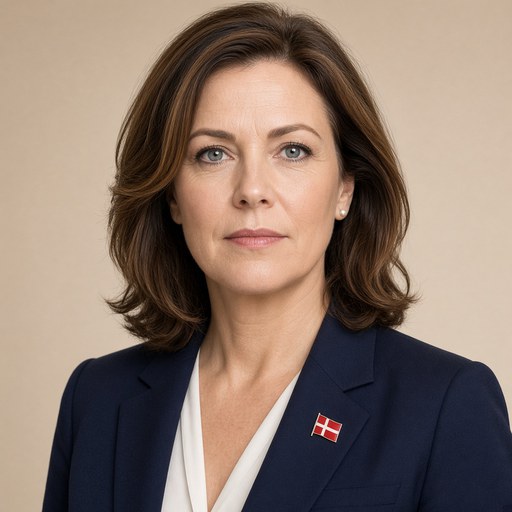
Prime Minister Helle Thorning-Schmidt's speech at the commemoration of Liberation Day on May 4, 2013.
 Helle Thorning-Schmidt · Prime Minister of Denmark
- Context
- Thorning-Schmidt addressed a Liberation Day commemoration on May 4, 2013, honoring Danish resistance fighters and marking the anniversary of Denmark's 1945 liberation from Nazi occupation.
- Main themes
- Liberation Day commemoration, Danish resistance and freedom fighters, World War II occupation, collective memory and remembrance, Freedom Museum, gratitude to veterans, passing history to future generations, democracy and freedom, national unity, personal sacrifice
- Duration
- ~6 min
- Words
- 733
- Sentences
- 66
- Readability
- 67
- Grade
- 6.7
- Syntax
- 2.33
- Vocabulary
- 1.98
Translated from Danish
The broad sphere of national life a sentence belongs to. Every sentence has an Arena, so it is the denominator the other indices are read against.
Other66 sentences in 31 paragraphs
Dear everyone.
Thank you for allowing me to be here this evening.
On May 4, 1945, Danes spontaneously tore down the blackout curtains. Many lit candles and placed them in their windows. People flooded into the streets. The dark times were over.
Lights in the windows. It is a powerful symbol that has grown spontaneously from people's joy. A symbol of unity.
May 4 is the evening when we place candles in the window. Many of us still do this. We commemorate that five cursed years came to an end. That freedom and peace triumphed over unrest and tyranny.
But it is also a day of reflection. It is a celebration where we remember and recall a time when all that we take for granted today was not given.
Our freedom, our security, our democracy.
The occupation was a time when people took a stand. And where it cost to take a stand. Fighting for democracy had great personal costs. Many fell. We honor their memory.
Even more bore scars on body and soul, which have been your companions ever since.
I hope that this evening we are together with some of the veterans of the freedom struggle.
I want to thank you. Your efforts humble me. The words that fully express a nation's gratitude for your efforts have yet to be spoken.
We are indebted to you. And I also want to thank the many relatives of freedom fighters who have come here this evening.
You cherish your loved ones' efforts. You understand their sacrifices. You have lived close to them. You know better than the rest of us that there has been a price to pay.
In the coming years, your memory and your insistence on telling the rest of us about the struggle for freedom will become more and more important.
I belong to a generation that has not experienced the occupation itself. But is still so close, as my parents experienced it as children.
And for my grandparents, it was an important and lived part of their lives. May 4, 1945, is not so far away for me and others of my generation. It was something we talked about at home.
But for my children, it is history. And for my children's children, it will be distant history.
In these years, May 4, 1945, is transitioning from being a living history, told to us by our closest ones, to living through images, text, sound, documentation, research, and a shared will to remember and not forget.
Thus, your efforts at the Freedom Museum become even more important.
It is less than a week since the Freedom Museum was engulfed in flames.
Thanks to a skilled and determined effort from firefighters and from you museum staff, it was fortunately possible to save the collection and secure it for posterity. No people and no objects were harmed.
For that, many of us are very grateful, and I would like to thank all of you who saved what could be saved.
I would also like to thank all the organizations and associations that, I know, support the museum's work.
The Freedom Museum is a living museum. You have many visitors. You collaborate internationally.
And I know that you have recently completed a significant effort to register all those who were involved in the struggle for freedom. That work has created new interest in the occupation period. Also among young people who are seeking information about their own families.
Your work shows that the freedom fighters were thousands of people. And they were all kinds of people. Different Danes who came together for the common goal: To fight for everything they held dear. And to die if necessary.
The struggle for freedom is a very important part of our history. And therefore, we must continue to have a freedom museum. That promise I bring to you this evening.
Our children and also their children must have the opportunity to learn about the struggle for freedom. They must have the chance to understand one of the most decisive chapters in Denmark's history.
When our daughters' and sons' children, in a few years on this evening, ask: Mom and Dad, why do we have lights in the window? Then our daughters and sons must know the answer.
The freedom fighters stand as a beacon for Denmark in a dark time.
This evening, we honor their memory.
The original Danish. The tags above are read on the English translation's sentences.
Kære alle sammen.
Tak, fordi jeg må være med i aften.
Den 4. maj 1945 rev danskere spontant mørkelægningsgardinerne ned. Mange tændte lys og satte dem i vinduerne. Folk strømmede ud på gaderne. Den mørke tid var forbi.
Lys i vinduerne. Det er et stærkt symbol groet frem spontant af menneskers glæde. Et symbol på sammenhold.
Den 4. maj er den aften, hvor vi sætter stearinlys i vinduet. Det er vi stadig mange, der gør. Vi højtideligholder, at fem forbandede år sluttede. At frihed og fred sejrede over ufred og tyranni.
Men det er også en dag med eftertanke. Det er en fest, hvor vi mindes og husker en tid, hvor alt det, vi tager for givet i dag, ikke var givet.
Vores frihed, vores tryghed, vores demokrati.
Besættelsen var en tid, hvor mennesker tog stilling. Og hvor det kostede at tage stilling. At kæmpe for demokratiet havde store personlige omkostninger. Mange faldt. Vi ærer deres minde.
Endnu flere fik ar på krop og sjæl, som har været jeres følgesvende lige siden.
Jeg håber, at vi i aften er sammen med nogle af frihedskampens veteraner.
Jeg vil sige jer tak. Jeres indsats gør mig ydmyg. De ord, der til fulde udtrykker en nations taknemmelighed over jeres indsats, er endnu ikke sagt.
Vi står i gæld til jer. Og jeg vil også sige tak til de mange pårørende til frihedskæmpere, som er mødt frem her i aften.
I værner om jeres kæres indsats. I forstår deres ofre. I har levet tæt på dem. I ved bedre end os andre, at der har været en pris at betale.
I de kommende år bliver jeres minde og jeres insisteren på at fortælle os andre om frihedskampen vigtigere og vigtigere.
Jeg tilhører en generation, som ikke selv har oplevet besættelsen. Men som alligevel er så tæt på, at mine forældre oplevede den som børn.
Og for mine bedsteforældre var det en vigtig og levet del af deres liv. Den 4. maj 1945 er ikke så langt væk for mig og andre af min generation. Det var noget, vi talte om derhjemme.
Men for mine børn er det historie. Og for mine børns børn vil det være fjern historie.
I disse år går den 4. maj 1945 fra at være en levende historie, som vi får fortalt af vores nærmeste, til at leve i kraft af billeder, tekst, lyd, dokumentation, forskning og en fælles vilje til at huske og ikke glemme.
Dermed bliver jeres indsats i Frihedsmuseet endnu vigtigere.
Det er mindre end en uge siden, at Frihedsmuseet blev opslugt af flammer.
Takket være en dygtig og beslutsom indsats fra brandfolk og fra jer museumsfolk, så lykkedes det heldigvis at redde samlingen og sikre den for eftertiden. Ingen mennesker og ingen genstande led overlast.
Det er vi mange, der er meget taknemlige for, og jeg vil gerne sige tak til alle jer, der fik reddet, hvad reddes skulle.
Jeg vil også sige tak til alle de organisationer og foreninger, som, jeg ved, støtter museets arbejde.
Frihedsmuseet er et levende museum. I har mange besøgende. I samarbejder internationalt.
Og jeg ved, at I for nylig har gennemført et stort arbejde med at registrere alle dem, der var med i frihedskampen. Det arbejde har skabt ny interesse for besættelsestiden. Også blandt unge, der søger oplysninger om deres egen familie.
Jeres arbejde viser, at frihedskæmperne var tusindvis af mennesker. Og de var alle slags mennesker. Forskellige danskere, der samledes om det fælles mål: At kæmpe for alt, hvad de havde kært. Og dø om så det gælder.
Frihedskampen er en meget vigtig del af vores historie. Og derfor skal vi fortsat have et frihedsmuseum. Det løfte har jeg med til jer i aften.
Vores børn og også deres børn skal have mulighed for at lære frihedskampen at kende. De skal have muligheden for at forstå et af de mest afgørende kapitler i Danmarks historie.
Når vores døtre og sønners børn om nogle år på denne aften spørger: Mor og far, hvorfor har vi lys i vinduet? Så skal vores døtre og sønner kende svaret.
Frihedskæmperne står som et fyrtårn for Danmark i en mørk tid.
I aften værner vi om deres minde.