




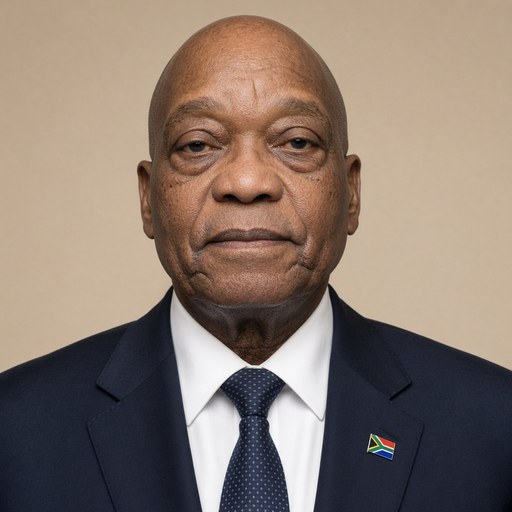
Remarks by President Jacob Zuma, at the G20 Summit, on International Tax, Antalya, Turkey
 Jacob Zuma · President of South Africa
- Context
- Zuma addressed the G20 Summit in Antalya, Turkey on November 15, 2015, speaking on international tax issues and BEPS implementation.
- Main themes
- International tax cooperation, Base Erosion and Profit Shifting (BEPS), domestic resource mobilization, tax evasion, developing countries' capacity building, illicit financial flows, trade mispricing, automatic exchange of information, fiscal sustainability, G20 and OECD collaboration
- Duration
- ~4 min
- Words
- 534
- Sentences
- 25
- Readability
- 36
- Grade
- 13.5
- Syntax
- 2.92
- Vocabulary
- 2.29
The broad sphere of national life a sentence belongs to. Every sentence has an Arena, so it is the denominator the other indices are read against.
Other25 sentences in 6 paragraphs
Your Excellencies, Our discussions on the state of the global economy underlined the well-established fact that low GDP growth implies low tax revenues. Yet we also know that the needs of our citizens have either remained the same or increased. Our fiscal frameworks are under pressure. Tax compliance has become critical for many of our governments to be able to deliver on the needs and expectations of our citizens. Domestic Resource Mobilization requires that we increase our efforts to protect our tax bases. In this regard, tax evasion cannot be tolerated.
South Africa supports and has actively engaged in the G20 and OECD work on Base Erosion and Profit Shifting and we commend the OECD for progress they have achieved in finalizing the BEPS project. Tax must be paid in the country where profit is made. As we shift to the implementation phase of the BEPS project, it is important to ensure that developing countries also benefit from the recommendations. Collectively, we need to ensure that implementation is backed up by the necessary technical support to make this a reality on a country-specific basis. Moreover, the implementation of the Call to Action for Strengthening Tax Capacity in Developing Countries cannot be overemphasized.
South Africa’s financial institutions have informed our tax authorities of the additional compliance burden required by BEPS processes. We take note of this and will endeavour to implement the recommendations flowing from the BEPS reports and at the same time keep compliance costs to a minimum. We also call on continued work on Action 11 of the BEPS project, to measure BEPS globally and by individual countries, including looking at different BEPS channels. This information will guide us in identifying those developing countries that should be prioritized for capacity building assistance. In this regard, I would like to thank the World Bank Group and the IMF for their initiative to assist developing countries in building capacity that will enhance their voice and enable them to discuss international tax issues with developed countries on an equal footing.
Developing countries will face similar challenges with automatic exchange of information. And thus, their views must be heard with the implementation of the Global Forum on Transparency and Exchange of Information Road Map as well as in the implementation of any other initiatives. Additionally, it is important that countries have an option between automatic exchange of information and exchange of information upon request as many developing countries are unable to jump to AEOI.
Finally, an additional area of concern for South Africa and the region is trade mispricing by some of our companies. Illicit financial flows research alludes to the fact that two thirds of the amount lost to developing countries is due to trade mispricing. Such practices have an adverse impact on domestic resource mobilisation and the sustainability of public finances. There is a role to be played by the G20 in this area, to focus attention on these types of challenges which is directly informed by the needs of developing countries. The G20 can provide greater impetus in reducing Illicit Financial Flows, by calling on both the Sherpa and Finance Tracks to address the developmental and financial aspects of this challenge.
I thank you.