




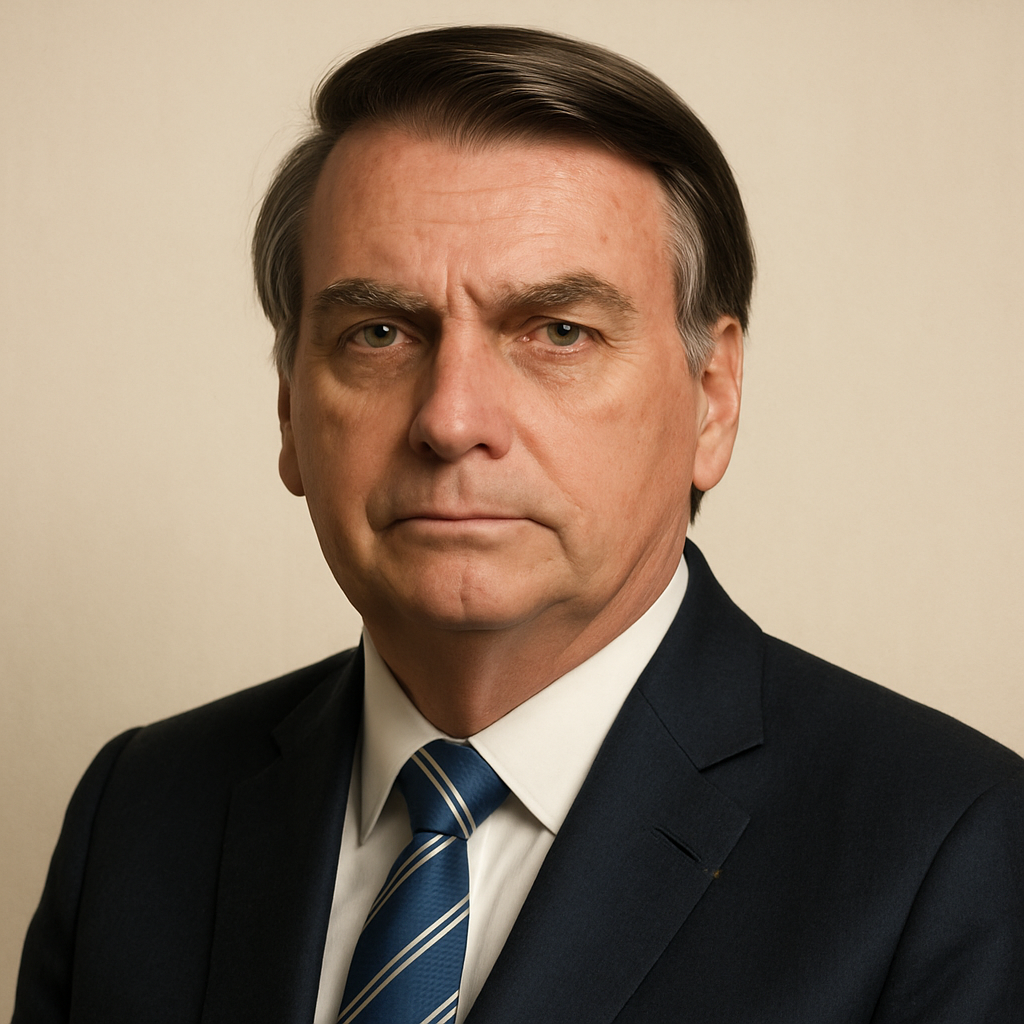
Speech by the President of the Republic, Jair Bolsonaro, at the Launch Ceremony of Inmetro's Regulatory Model.
 Jair Bolsonaro · Former President of Brazil
- Context
- Bolsonaro spoke at the launch ceremony of Inmetro's new regulatory model in Brazil on February 25, 2022, highlighting economic and digital reforms.
- Main themes
- Regulatory reform, Inmetro regulatory model launch, economic modernization, digital government initiatives, national identification card, PIX payment system, pandemic economic response, small business support, job preservation, bureaucracy reduction, social security contribution exemption, informal economy inclusion
- Duration
- ~23 min
- Words
- 2,770
- Sentences
- 151
- Readability
- 67
- Grade
- 8.3
- Syntax
- 2.89
- Vocabulary
- 2.06
Translated from Portuguese
The broad sphere of national life a sentence belongs to. Every sentence has an Arena, so it is the denominator the other indices are read against.
Other151 sentences in 28 paragraphs
Good morning.
Let me take the opportunity to do a bit of advertising. Every week we have something to announce, and these things are either mined by me, or by the respective ministers, or people from society itself. When Paulo Guedes says that I am a digital President, yes, I have WhatsApp, but I am always in the sights of the people; even during the pandemic, I was among the people. It is not fair for me to be at Alvorada having everything at my disposal and seeing the people suffering from the pandemic without knowing their problems.
I am in the risk group, I am over 65 years old, and the way we act, our military training, we want to solve the issue. It is a surprise when we come to the Executive here, sometimes we give the order, it moves a little and dies there. If you don’t demand, the solution doesn’t come. In the barracks, it is different; if the subordinate did not comply, you call the guy and solve the problem right there, although this rarely happens.
This week, for example, two pieces of news: one, the creation of the national identification card, something fantastic that is also digital. Where do these ideas come from? They come from the population. Many times, how many times at least someone has learned, the citizen arrives at the airport and does not have the document, he doesn’t even board the plane; I have already had a problem as a federal deputy, I got a break with a federal police officer because he had that competence and knew who I was and let me board, but the vast majority of the population does not, they go back home.
So this card in our digital world is another action, it was another welcome action. Now this week, something simple, too: we signed this week a binding opinion, which at first I thought did not have all that reach. And what is a binding opinion? It is an opinion made by the Attorney General's Office and after the President signs it to have the force of law. What does this opinion say? It has to do with the industry because it employs people.
We exempted the social security contribution from the deduction on the meal ticket. It seems like a simple thing, but it helps to reduce bureaucracy in our economy. And how difficult it still is to be an employer in Brazil, it is not really easy. Back then, I tried to open a small business after hearing about the possible consequences of failure, I decided not to open it, a very big risk. And we have an obligation to seek to serve the population, even the issue of PIX. What is the idea of PIX, where did it come from? Governors, almost all, "close everything, stay at home." The guy who lives informally, what would he be living on? That person who perhaps has a refrigerator at home, what does he have inside the refrigerator and for how many days?
I went to Ceilândia, Taguatinga, São Sebastião and saw the population and felt that. The idea was not mine; Paulo Guedes has an excellent team with him. Look at the issue of emergency aid: 600 reais a month, is it a lot? Is it little? It is a lot for those who have nothing. Imagine you would be selling, for example, popsicles in the stands of a football game and that livelihood of yours is gone. You sold cookies on the beach, there is no one to buy cookies anymore because they went to hunt surfers. They have to stay at home. Those who sold street barbecue, it’s the same thing.
So, we included around 40 million people in the banking system, people who had never entered a bank, well, they started to have an account. The account is opened at Caixa Econômica Federal and now people are going back to informality; how were we going to take advantage of these accounts, the idea of PIX came. And with that, each of those who entered became a micro-entrepreneur.
Well, last year, four million small, micro, and medium enterprises were created. Brazil would be much better if it weren’t for the pandemic because the pandemic was a blow to us. A lot of what we did in 2019 served to face the pandemic in terms of the economy. If it weren’t for the Economic Freedom law, we would have had much more difficulty. We took measures because the control of the pandemic was no longer mine; it became each governor's and each mayor's responsibility. And I could do nothing but send resources to the people.
But we overcame this phase, how? By creating two programs: Pronampe and BEm, where we prevented 11 million jobs from being destroyed. We ended 2020 practically at zero, just remember that in 2014/2015 we lost 3 million formal jobs without a pandemic, without anything. It is also worth mentioning, before getting into the subject here with Guerson, which is very important, a little bit of the picture of Brazil.
I was recently in Rio de Janeiro, I went there for a meeting with the entire board of Petrobras, only one was missing because he had COVID, and I demanded beforehand: I want at least two directors, and they will do it, of course, to give a picture of what happened between 2003 and 2015, why Petrobras went into debt by 900 billion reais. Whether embarrassed or not, the directors spoke. My weapon is this: a director earns 110 thousand a month, the president more than 200 thousand a month, and at the end of the year, there is still some bonus salary; this guy has to work. He has to present solutions, he has to show what is happening. Gasoline is high, it falls in my lap. I have no way to interfere in Petrobras, but it falls in my lap.
So we also have to show what happened at Petrobras during this time and how this debt is being paid; 900 billion reais. The same thing, some time ago, I did with BNDES. The same issues: mismanagement, diversion, theft, poorly done and unfinished projects, loans for the king's friends to buy jets, money for dictators around the world to do works that we didn’t do in Brazil, even a subway in Caracas, with our money, but there is none in Belo Horizonte. Do we have an energy problem? Yes, but three hydroelectric plants built abroad with our money.
Basic sanitation, which did not exist in Brazil, is now coming with the Sanitation Framework, but basic sanitation was done abroad with BNDES money: 500 billion, adding up to 1 trillion and 400 billion, just talking about Petrobras and BNDES. This, my sirs, is enough to do 100 transpositions of the São Francisco River. What a rich country.
Yesterday I was in the city with the largest number of Northeasterners in Brazil, São Paulo. We settled a matter with Paulo Guedes, which will be published in the coming days, a dispute that has been unresolved for over 50 years in Campo de Marte. It is a settlement that never reached a conclusion; sometimes the Federal Executive thought it was wrong, sometimes the Municipal Executive did. We sat down quickly, no second intentions, zero second intentions, with the mayor of São Paulo, with me, Paulo Guedes, and a few others, we resolved it, I think about two months ago, and we are now going to put it on paper; São Paulo wins. In fact, the fourteenth Military School in Brazil is being built there. I wanted to put one in each capital that didn’t have one, but the pandemic got in the way, but at least we got the 13th off the ground, the 14th Military School that is already functioning in an embryonic way.
Now we come here to our basic matters. First, as I really like the press, to say that this afternoon we have excellent news to give to all of Brazil. The press will be quite curious, but Mr. Sinésio already knows what it is about. And if possible, arrange it with Paulo Guedes. In silence, I know you will be. It is worth it; it is something we wanted to do back then. The pandemic hindered a lot, and now we are showing that we are going to return to industrialize Brazil. And what is the first step? It is not to hinder the businessman. When it comes to creating jobs, it is not me who created 3 million jobs last year; it was the entrepreneurs who created them. We only provide means not to hinder the businessman, not to hinder the entrepreneur. I want to be forgotten because when someone remembers a person a lot, it is a sign that either you are in love with them or you owe them something.
We return to our basic matters. Where does Guerson fit into this? I discovered that they wanted to modernize the tachographs in Brazil. Just for trucks, there are 2 million and 700 thousand, approximately 500 reais for each truck driver. It weighs, folks. And, obviously, when talking about tachographs and modernization, you will also enter vans, buses, and more than 3 million. So I did the math quickly: another three-prong plug. I confess, I knew little about Inmetro, and we started to work in that direction until there came a moment when I said: "Paulo Guedes, the secretary's quota is over. Either solve it now…". My marriage with Paulo Guedes is indissoluble; there is no divorce. But it becomes difficult for us, raising these problems, not to seek a solution. And it was not just the tachographs; they wanted to change the taximeters of all taxi owners in Brazil, and in addition to a chip to put in the fuel pumps, which in the end would not combat fraud, in my understanding.
Soon there will be good news in this regard, too, because many people put fuel in their cars and do not know if they got 20 liters there or 18, 17; I am sure they did not get 21. And we will have a way to resolve this issue as well. Now, how to solve it? You have to put a person who understands the subject and give them freedom. And I was left wondering: "where am I going to find a guy to command Inmetro?", but it cannot be just anyone. And then a guy said: "there is a colonel who is…". My God, when he told me, I was taken aback; I couldn’t believe it. He is in SESAI, the Indigenous Health Secretariat. I said, what does indigenous health have to do with Inmetro? Nothing at all. Is this colonel a doctor? No, he is an engineering graduate from the academy. And I said, "so what?", that my "so what", he is also graduated from IME. It changed the picture.
I invited Guerson to come talk to me; it was a pleasure to meet him. I talked about some challenges, said he would have a free hand, as I gave to all my ministers, and I have the power of veto. At times I said, "not this guy," if a guy wants to put someone, "not him." I have veto power. And Guerson, out of half a dozen directors, changed five, kept one; I do not question him; that decision is his. And Inmetro then began to work on what mattered. And the most important thing today is the regulatory model that matters to everyone. Many times, a requirement is created that is truly creating difficulty in selling ease. Corruption is a maxim; it has always been a maxim in Brazil. If we have been three years and one month without any corruption allegations, something has happened. We not only put our CGU with Wagner, who is at the forefront, to do something preventive, we brought in people from the Federal Police, people from the TCU; it is difficult for a contract, it can happen, to go out without us wanting it. And this way, everyone wins.
I just had the exact numbers counted because I want to put year by year the losses of the State-owned companies of the past and the profits at the moment in our government. What was done? It is the posture. It is to put people, choose people better, not to accept political imposition. When it leaked that we were going to make a change at Inmetro, what did not lack was my former colleagues arriving there: "look, this guy is very good to take this directorship," and we know what the intention of that is.
The bill is paid by us all, consumers without exception. And this new regulatory model then began to serve the consumer, the companies, commerce, and services.
As Ronald Reagan said in the past, who gives the direction of politics to us here is the people, where the people want to go, and that is our intention, it always has been, from the beginning. And it has now come to flow into this new regulatory framework that everyone will benefit from.
I don’t even remember having met Mr. Sinésio Batista before; if I did, we didn’t talk; it was a chance encounter, but I felt his happiness outside, him here in front of Abrac. It is a sign that he really believes that we came to change; it is not just a speech. And when it is said that I am among the people, folks, I apologize for going on a bit here; I learned some time ago, when I became a federal deputy especially, not to forget our past. In the military career, it is common for you, already a Captain, as I arrived, to forget what life was like as a student in the Army chain, cadet at AMAN, aspirant, second lieutenant, that we have something to contribute, and usually, when you rise in position, you tend to forget everything.
You start talking to important people, take a motorcycle ride around here, as I have done a few times, escaping security, let them explode, and we, alone riding a motorcycle. There is no price for this freedom I have to ride alone; even if they find me in an average of an hour, they find me, but it is a fantastic thing to be able to talk to the people. I stop on my motorcycle, take off my helmet. I enter the guy's house, and the guy is like, "who is this guy?", "what is the President doing here?". And this conversation is what gives us ideas, gives us motivation to really try to change for real, and not just in speech, and talk to everyone, from the humblest to the most senior, that has no price. As happened yesterday in Rio Preto, São Paulo, something fantastic. Inaugurating just a piece of 12 km of track, and there were so many people, and they were stopping on the track, and people were waving to us.
A true survey. None of them called me a sexist, homophobic, racist, nothing, okay? Many stopped, took a picture, and exchanged ideas. Some gave some suggestions that I note down there, I always have my aide-de-camp note them down, so we can take the necessary measures, seek solutions for that. In other words, our work is to seek to facilitate the lives of all Brazilians.
And all of you, regardless of the role you occupy, are very important to us. And Guerson just told me, right, that “don’t worry, here the staff, most of them like you.” Of course, I am happy about that; I try to do my best, I have my flaws, we seek to correct them, but our intention is always focused on what can be best for all of us.
So I thank Guerson, the directors, the employees of Inmetro, for this day, significant in the lives of all of us who, since we press the button at home on the circuit breaker or the switch, the key to go back again in almost everything we do in life and use something has your hand in it, and you can be sure, this ultimately influences the lower prices of things and, why not say that it is much more important, the safety of what goes through your analysis for the good of all of us.
Thank you very much.
Until good news, excellent news, another one, this afternoon, about the industrialization of our country.
The original Portuguese. The tags above are read on the English translation's sentences.
Bom dia.
Deixa eu aproveitar e fazer um pouco de propaganda. Toda semana a gente tem algo a anunciar e essas coisas são garimpadas ou por mim, ou pelos respectivos ministros, ou gente da própria sociedade. Quando Paulo Guedes fala que eu sou um Presidente digital, eu sim, tenho zap, mas tô sempre na mira do povo; mesmo durante a pandemia estive no meio do povo. Não é justo eu ficar lá no Alvorada tendo tudo ao meu dispor e vendo o povo aí sofrendo com a pandemia sem saber os seus problemas.
Eu estou no grupo de risco, tenho mais de 65 anos, e a maneira de agir, a formação da gente militar, a gente quer resolver o assunto. É uma surpresa quando a gente vem para o Executivo aqui, a gente às vezes dá a ordem, ela caminha um pouquinho e morre por ali. Se não cobrar não vem a solução. No quartel é diferente, se o subordinado não cumpriu tu chama o cara e resolver o problema ali na hora, se bem que isso raramente acontece.
Essa semana, por exemplo, duas notícias: uma, a criação da carteira nacional de identificação, algo fantástico que também é digital. De onde vem essas ideias? Vem da população. Muitas vezes, quantas vezes pelo menos alguém tomou conhecimento, o cidadão chega no aeroporto e não tem o documento, ele nem entra no avião, eu já tive problema como deputado federal, quebrei o galho com um policial federal porque a ele tinha essa competência e sabia quem eu era e me deixaram embarcar, mas a grande maioria da população não, volta para casa.
Então essa carteira no mundo digital nosso é mais uma ação, foi mais uma ação bem-vinda. Agora nessa semana, uma coisa simples, também: assinamos essa semana um parecer vinculante, que no primeiro momento eu achei que não tinha todo aquele alcance. E o que que é um parecer vinculante? É um parecer feito pela Advocacia-Geral da União e depois que o Presidente assina para ter força de lei. O que diz esse aparecer? Tem a ver com a indústria porque emprega pessoas.
Nós desobrigamos da contribuição previdenciária o desconto em cima do tíquete alimentação. Parece que é uma coisa simples, mas ajuda a desburocratizar a nossa economia. E como é difícil ainda ser patrão no Brasil, não é fácil realmente. Eu, lá atrás, tentei abrir uma pequena empresa depois de ouvir das possíveis consequências do insucesso, resolvi não abrir, um risco muito grande. E nós temos obrigação de buscar atender a população, até a questão do pix. Qual é a ideia do pix , de onde veio? Governadores, quase todos, "fecha tudo, fica em casa". O cara que vive da informalidade, estaria vivendo do quê? Aquele que porventura tem geladeira em casa, tem o que dentro da geladeira e por quantos dias?
Eu fui para Ceilândia, Taguatinga, São Sebastião e vi a população e senti isso. A ideia não foi minha, Paulo Guedes tem uma excelente equipe com ele. Veja a questão do auxílio emergencial: 600 reais por mês, é muito? É pouco? É muito para quem não tem nada. Imagine você que estaria vendendo aí, por exemplo, picolé na arquibancada do jogo de futebol e acabou esse ganha-pão teu. Vendia biscoito na praia, não tem mais quem vai comprar biscoito porque foram caçar surfista. Tem que ficar em casa. Quem vendia churrasquinho de gato na rua, é a mesma coisa.
Então, nós incluímos em torno de 40 milhões de pessoas no sistema bancário, pessoas que nunca haviam entrado num banco, bem, passaram a ter uma conta. Está lá na Caixa Econômica Federal a conta aberta e agora as pessoas estão voltando para informalidade, como a gente ia aproveitar essas contas, veio a ideia do pix. E com isso, cada um desses que entrou passou a ser um microempresário.
Bem, no ano passado foram criadas quatro milhões de pequenas, micros e médias empresas. É o Brasil que estaria muito melhor se não fosse a pandemia, porque a pandemia foi uma paulada na gente. Muita coisa que fizemos em 2019 serviu para enfrentar a pandemia na questão da economia. Se não fosse a lei da Liberdade Econômica, muito mais dificuldade teríamos. Tomamos medidas porque o controle da pandemia não passou a ser mais meu, passou a ser de cada governador e cada Prefeito. E eu não podia fazer mais nada a não ser mandar recurso para o pessoal.
Mas nós vencemos essa fase, como? Criando dois programas: o Pronampe e o BEm, onde evitamos que 11 milhões de empregos fossem destruídos. Terminamos 2020 praticamente no 0 a 0, basta lembrar que 2014/2015 perdemos 3 milhões de empregos de carteira assinada sem pandemia, sem nada. Basta dizer também, antes de entrar no assunto aqui do Guerson, que é muito importante, um pouquinho do retrato do Brasil.
Eu estive há pouco tempo no Rio de Janeiro, fui lá numa reunião com toda a diretoria da Petrobras, só um faltou porque tava com covid, e eu exigi antes: eu quero que dois diretores, no mínimo, e vão fazer, lógico, deem um retrato do que aconteceu entre 2003 e 2015, por que que a Petrobras se endividou em 900 bilhões de reais. Constrangido ou não, os diretores falaram. A minha arma é essa aqui: um diretor ganha 110 mil por mês, o presidente mais de 200 mil por mês e no final do ano ainda tem algum salário de bonificação, esse cara tem que trabalhar. Tem que apresentar solução, tem que mostrar o que está acontecendo. A gasolina está alta, cai no meu colo. Eu não tenho como interferir na Petrobras, mas cai no meu colo.
Então nós temos que mostrar também o que aconteceu na Petrobras esse tempo e como essa dívida está sendo paga; 900 bilhões de reais. A mesma coisa, um tempo atrás, fiz com o BNDES. As mesmas questões: malversação, desvio, roubo, projetos mal feitos e inacabados, empréstimos para amigos do rei comprar jatinho, dinheiro para ditaduras do mundo afora fazerem obras que não fazíamos no Brasil, até metrô em Caracas, com dinheiro nosso, mas não tem em BH. Temos problema de energia? Temos, mas três hidrelétricas feitas lá fora com o nosso dinheiro.
Saneamento básico, que não existia no Brasil, está vindo agora com o Marco do saneamento, mas foi feito o saneamento básico fora do Brasil com dinheiro do BNDES: 500 bilhões somando então 1 trilhão e 400 bilhões, só em falar em Petrobras e BNDES. Isso, meus senhores, dá para fazer 100 transposições do Rio São Francisco. Que país rico.
Ontem estive na cidade que tem o maior número de nordestinos no Brasil, São Paulo. Acertamos uma questão com o Paulo Guedes, que publica nos próximos dias, uma pendenga que tem mais de 50 anos que está para ser resolvido no Campo de Marte. É um acerto de contas que nunca se chegava à conclusão, ora o Executivo Federal achava que estava errado, ora o Executivo Municipal. Sentamos rapidamente, ninguém com segundas intenções, zero segundas intenções, com o prefeito de São Paulo, comigo Paulo Guedes e mais alguns, resolvemos, eu acho que uns dois meses atrás, e vamos agora botar no papel, ganha São Paulo. Inclusive lá está sendo construído o décimo quarto Colégio Militar do Brasil. Eu queria botar um em cada capital que não tivesse, mas a pandemia atrapalhou, mas pelo menos tiramos o 13 do papel, 14.º Colégio Militar que já está funcionando de forma embrionária.
Agora a gente vem aqui para o nosso feijão com arroz. Primeiro, como eu gosto muito da imprensa, dizer que hoje à tarde temos uma excelente notícia para dar para todo o Brasil. A imprensa vai ficar bastante curiosa, mas o senhor Sinésio já sabe do que se trata. E se for possível, acerta com Paulo Guedes. Em silêncio eu sei que o senhor vai ficar. Vale a pena, é uma coisa que queríamos fazer lá atrás. A pandemia atrapalhou muito e agora estamos mostrando que nós vamos voltar a industrializar o Brasil. E qual o primeiro passo? É não atrapalhar o empresário. Quando se fala em criar empregos, não sou eu que criei 3 milhões de empregos ano passado, quem criou foram os empresários. Nós apenas damos meios para não atrapalhar o empresário, não atrapalhar o empreendedor. Eu quero é ser esquecido, porque quando se lembra muito de uma pessoa é sinal que ou você está apaixonado por ela ou você está devendo alguma coisa.
A gente volta para o nosso feijão com arroz. Onde é que entra o Guerson na parada? Eu descobri que queriam modernizar os tacógrafos do Brasil. Só de caminhões, são 2 milhões e 700 mil, aproximadamente 500 reais para cada caminhoneiro. Pesa, pessoal. E, obviamente, se fala em tacógrafos e modernização você vai entrar para vans, para ônibus, para vans, dá mais de 3 milhões. Então fiz as contas rapidamente: outra tomada de 3 pinos. Eu confesso, pouco sabia sobre o Inmetro e começamos, então, a trabalhar nesse sentido, até que chegou um dado momento que eu falei : "Paulo Guedes, acabou a cota do secretário. Ou resolve agora…". O meu casamento com o Paulo Guedes é indissolúvel, não existe divórcio. Mas fica difícil a gente, levantando esses problemas, não buscar a solução. E não eram apenas os tacógrafos, eles queriam trocar os taxímetros de todos os donos de táxis, obviamente, do Brasil e além de um chip para botar nas bombas de combustível, que na ponta da linha não ia combater a fraude, no meu entender.
Brevemente vai ter uma boa notícia nesse sentido, também, porque muita gente bota combustível no carro não sabe se entraram no 20 litros ali ou 18,17 tenho certeza que não entrou 21. E vamos ter como resolver esse assunto também. Agora, como resolver? Tem que botar uma pessoa que entenda do assunto e dar liberdade para ela. E eu fiquei: "onde é que eu vou arranjar um cara para comandar o Inmetro?", mas não pode ser uma pessoa qualquer. E daí um cara falou: "tem um coronel aí que está…". Meu Deus do céu, quando ele falou para mim eu caí para trás, nem acreditei. Ele está na SESAI, Secretaria de Saúde indígena. Falei, o que tem a ver a saúde indígena com Inmetro? Nada a ver. Esse coronel é médico? Não, é de engenharia da academia. E falei "e daí, pô?", aquele meu "e daí", ele é formado pelo IME também. Já mudou de figura, o negócio.
Eu convidei o Guerson pra vir conversar comigo, foi uma satisfação conhecê-lo. Falei de alguns desafios, falei que teria carta-branca, como dei para todos os meus ministros, e eu com o poder de veto. Por vezes eu falei "esse cara não", cara quer botar um cara, "esse, não". Eu tenho poder de veto. E o Guerson, de meia dúzia de diretores, trocou cinco, ficou com um, não o questiono, essa decisão é dele. E o Inmetro começou, então, a trabalhar naquilo que interessava. E o mais importante, hoje aqui, é o modelo regulatório que interessa para todo mundo. Por muitas vezes se cria uma exigência que verdadeiramente está criando dificuldade para vender a facilidade. A corrupção é uma máxima, sempre foi uma máxima no Brasil. Se nós estamos há 3 anos e um mês sem nenhuma denúncia de corrupção, algo aconteceu. Não só botamos a nossa CGU com o Wagner, que está na frente, para fazer algo preventivo, trouxemos gente da Polícia Federal, gente do TCU, dificilmente um contrato, pode acontecer, sai sem que nós não queiramos. E isso daí todo mundo ganha.
Eu mandei agora contar os números exatos, porque eu quero botar ano a ano o prejuízo das Estatais do passado e o lucro, no momento no nosso governo. O que que foi feito? É a postura. É botar as pessoas, escolher melhor as pessoas, não aceitar a imposição política. Quando vazou que a gente ia fazer uma mudança no Inmetro, o que não faltou foi ex-colega meu chegar lá: "olha esse cara é muito bom para pegar essa diretoria" e nós sabemos qual a intenção disso aí.
A conta quem paga, na ponta da linha, somos todos nós consumidores sem exceção. E esse novo modelo regulatório passou, então, a atender o consumidor, as empresas, o comércio e os serviços.
Como disse Ronald Reagan no passado, quem dá o norte da política para nós aqui é o povo, para onde o povo quer ir, e essa é nossa intenção, sempre foi, desde o princípio. E ela veio agora, então, desaguar nesse novo marco regulatório que todos vão ganhar.
Até eu não me lembro ter encontrado o senhor Sinésio Batista antes, se encontrei, não conversamos, foi um encontro fortuito, mas senti a felicidade dele lá fora, ele aqui na frente aqui da Abrac. É sinal que ele tá acreditando, realmente, que viemos para mudar, não é um discurso. E quando se fala que eu estou no meio do povo, pessoal, desculpa aqui eu me alongar um pouquinho aqui, eu aprendi tempo atrás, quando eu cheguei a deputado federal em especial é não esquecer o nosso passado. Na carreira militar, é comum você, já Capitão, como eu cheguei, esquecer como tu era a vida de aluno para a cadeia do Exército, cadete na AMAN, aspirante, segundo-tenente, que temos algo a colaborar, e geralmente, quando você sobe de posição, você tende a esquecer tudo.
Você começa a conversar com pessoas importantes, pegar para dar um passeio de moto por aqui, como já fiz algumas vezes, fugindo da segurança, que se explodam eles, e a gente, sozinho andando de moto. Não tem preço essa liberdade que eu tenho de andar sozinho, nem que eles me achem em média uma hora eles me acham, mas é uma coisa fantástica dá para conversar com o povo. Eu paro de moto, tiro o capacete. Eu entro na casa do cara, o cara fica, “pô, quem é esse cara aí?”, “pô, que que o Presidente está fazendo aqui?”. E essa conversa é que dá ideias para a gente, dá motivação para gente tentar mudar realmente para valer, e não apenas no discurso, e conversar com todo mundo, do mais humilde ao mais graduado, isso não tem preço. Como aconteceu ontem, em Rio Preto, São Paulo, uma coisa fantástica. Inaugurar apenas um pedaço de 12 km de pista, e o que tinha de gente, e parando na pista, e o pessoal acenando para a gente.
Uma verdadeira pesquisa. Nenhuma me xingou ali de machista, homofóbico, racista, nada, tá? Muitos pararam, tiraram uma fotografia e trocavam uma ideia. Alguns deram algumas sugestões que eu anoto ali, mando sempre o ajudante de ordens meu anotar, para gente tomar as devidas providências, buscar solução para aquilo. Ou seja, o nosso trabalho é buscar facilitar a vida de todos os brasileiros.
E todos vocês, independente da função que ocupam, são muito importantes para nós. E o Guerson, agora me disse, né, que “fique tranquilo, que aqui o pessoal, a maioria gosta de você”. Lógico que eu fico feliz com isso, tento fazer o melhor de mim, tenho minhas falhas, a gente procura corrigir, mas a intenção nossa é sempre focada naquilo que pode ser de melhor para todos nós.
Então eu agradeço ao Guerson, aos diretores, aos servidores do Inmetro, por esse dia, marcante na vida de todos nós que, desde quando a gente aperta o botão lá em casa do disjuntor ou do interruptor, a tecla de voltar novamente em quase tudo que a gente faz na vida e usa alguma coisa tem a mão de vocês e pode ter certeza, isso influencia no final no preço mais barato das coisas e, porque não dizer que é muito mais importante, na segurança daquilo que passa pela análise de vocês para o bem de todos nós.
Muito obrigado.
Até uma boa notícia, uma excelente notícia, outra, hoje à tarde, pela industrialização do nosso país.