




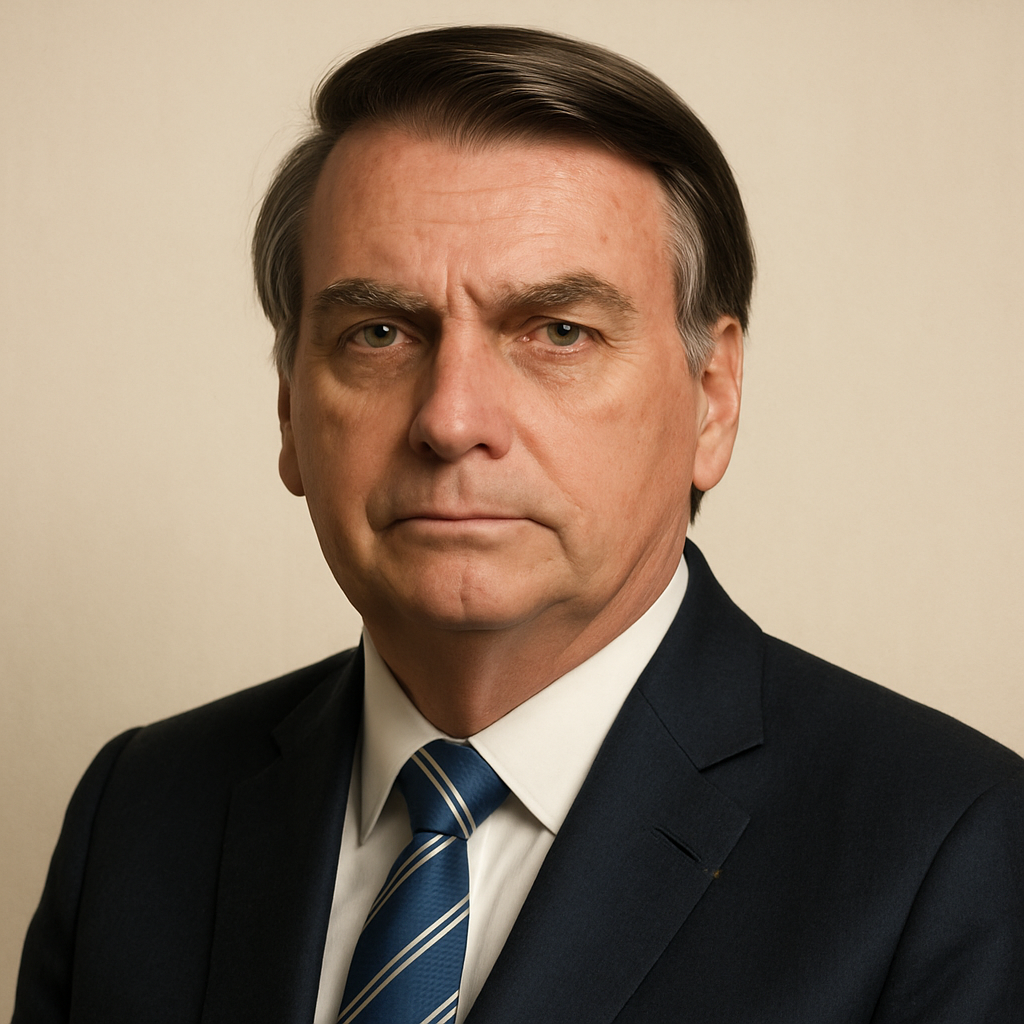
Speech by the President of the Republic, Jair Bolsonaro, during Lunch offered by the President of FIESP - São Paulo/SP
 Jair Bolsonaro · Former President of Brazil
- Context
- Bolsonaro addressed a lunch hosted by FIESP president Paulo Skaf in São Paulo on February 3, 2020, speaking to business leaders about Brazil's economic progress.
- Main themes
- Brazilian economic reforms, business environment and deregulation, trust and Brazil's global standing, Armed Forces and national security, political support for reform agenda, Paulo Guedes and economic policy, tax and administrative reform, state intervention reduction, democracy and freedom
- Duration
- ~9 min
- Words
- 1,076
- Sentences
- 61
- Readability
- 65
- Grade
- 8.5
- Syntax
- 2.94
- Vocabulary
- 2.07
Translated from Portuguese
The broad sphere of national life a sentence belongs to. Every sentence has an Arena, so it is the denominator the other indices are read against.
Other61 sentences in 17 paragraphs
Good afternoon everyone.
It is a pleasure for me to return here to my state of São Paulo, to see friends, some young acquaintances, but all imbued with the same ideal: to help Brazil truly occupy its prominent place in the world.
And, as we are human beings, I must, obviously, owe my life to God and, afterwards, to two people who, leading their respective teams, made it possible for me to survive. One is present here, along with some of his team. I would like a round of applause for Dr. Macedo and Dr. Leandro from Albert Einstein. They are exceptional people who, after the SUS team from Juiz de Fora, saved my life, and I, after God, thank you for being here at this moment, collaborating with the future of our Brazil. Thank you, Dr. Macedo.
Well, Paulo Skaf has already secured a job in your government: spokesperson. He left me without a speech. He touched on all the important points that have made a difference in Brazil.
When I talk about the economy, obviously, there are numbers, and the numbers clearly show that Brazil is on the right track. Who could have imagined, after the Constitution of 1988, when we had a ceiling on the interest rate of 12%, which was brought down by a Constitutional Amendment, because they wanted to move forward and, obviously, at that time, inflation was being fought by raising interest rates. This is the cause of the immense internal debt we have, but it is managed.
And, when I said not long ago that I did not understand economics, I think many people nowadays understand why I said I did not understand economics. I am the president, I am the coach of the team, and those who have to go into the field are the 22 ministers. And, in the economic area, I give my unconditional support to Mr. Paulo Guedes.
Not long ago, we had a president whose economist and their interventions did not work out. So, I handed things over to Paulo Guedes; in some things, I obviously do not agree with him. When he said not long ago that he wanted to raise the price of, or rather wanted to increase the tax on beer, even though I am not a fan of that sport, I opposed it, and he promptly understood the situation.
We have discussed with him the issue of reform, the economic reforms, and, obviously, I speak to him. Because after 28 years in the Chamber and not having approved anything regarding this matter, I tell him that the best reform is the one that will be approved. It is no use having a dream. So, from time to time, we sit down and ally ourselves on this issue. I give him a 10 in the economy and he can give me a 7 in politics. The average is 8.5; we are doing well, thank God.
Yesterday, I spent some long minutes with Rodrigo Maia, the president of the Chamber. We talked a bit more about the tax reform, the administrative reform, which are about to come. He, obviously, as the president of one of the powers, the Chamber in this case, has shown himself to be more than sympathetic. He wants to be a protagonist in this matter.
So, these measures, with the support of the Brazilian parliament, show more than enough, both inside and outside Brazil, that we are on the right path.
After the elections of 2014, I began my pre-campaign across Brazil and traveling to some countries around the world. At that time, only one parliamentarian, and I felt firsthand how it was not good to be received by some second-tier officials, heads of state from other countries, with a mantle of distrust. And that has changed a lot, and, why not say, in a radical way. We are regaining trust in the world. The key word is trust, it is respect, it is seeking to do the best for your country, it is putting Brazil above all.
And, when we say Brazil above all, we have a sector of society that, for a long time, was forgotten: the Armed Forces. Present here, including with their three respective commanders. One, by coincidence, from my class in the Brazilian Army. They are the Armed Forces. They are an institution that has always been at the service of the interest of their respective people, obviously. At all times, they have helped us a lot to seek solutions for the destiny of our Brazil. So, my heartfelt thanks to these Armed Forces, which are no longer forgotten.
And, in the past, they were partly persecuted because? Yes, the Armed Forces were the last obstacle to socialism. We overcame that stage. Nowadays, we speak with great pride of democracy and freedom and respect for all sectors of society.
Thus, my gentlemen, complementing only what Paulo Skaf said regarding numbers, the economy. Brazil is not just doing well; Brazil has already succeeded. Now we are going to take advantage of the success, obviously, seeking to go deeper into the reforms, so that, more and more, you see yourselves free from the weight of the State. The State must be present to mediate something and not to make life difficult for those who really want to produce in our country.
And, I am sure that by deregulating, de-bureaucratizing... When Skaf mentioned an INR, he mentioned an INR, there are, if I am not mistaken, 12. What Rogério Marinho told me is that in these INRs there are a little over 3,000 items to fine you. So, we are going to reduce the quantity of items that can really regulate something in the market by 5%. This is very welcome because, after all, to be an employer in this country, you have to have a lot of willpower and, sometimes, even a dose of madness. Thank you.
Thank you very much once again for the opportunity. I am at your disposal. Whatever comes to our knowledge, we will take action as quickly as possible. After all, today we can say that we have, those who are parliamentarians and those who have been, know, ministers who talk to each other, who attend to political parties to a large extent, but, most importantly, they talk to each other and are really in tune, with an interest in our society.
Thank you very much to all of you.
The original Portuguese. The tags above are read on the English translation's sentences.
Boa tarde a todos.
É uma satisfação eu retornar aqui ao meu estado de São Paulo, rever amigos, alguns jovens conhecidos, mas todos imbuídos do mesmo ideal: ajudar o Brasil a, realmente, ocupar o local de destaque no mundo.
E, como somos seres humanos, eu devo, obviamente, a minha vida a Deus e, depois, a duas pessoas que, estando à frente da sua respectiva equipe, fizeram com que eu sobrevivesse. Um está presente aqui, com alguns da sua equipe. Eu queria uma salva de palmas, dr. Macedo e dr. Leandro também, do Albert Einstein. São pessoas excepcionais, que, realmente, depois da equipe do SUS de Juiz de Fora, salvaram a minha vida e eu, depois de Deus, agradeço a vocês por está aqui, neste momento, colaborando com o futuro do nosso Brasil. Obrigado, dr. Macedo.
Bem, o Paulo Skaf já conseguiu emprego no seu governo: porta-voz. Ele me deixou sem discurso. Tocou em todos os pontos que são importantes e que tem feito a diferença no Brasil.
Quando falo em economia, obviamente, são números e os números bem comprovam que o Brasil está no caminho certo. Quem podia imaginar, depois da Constituição de 88, onde tínhamos o teto da taxa de juros de 12%, que foi derrubado por uma Emenda Constitucional, porque queriam chegar mais avante e, obviamente, se combatia a inflação naquela época aumentando a taxa de juros. Eis a causa de uma imensa dívida interna que nós temos, mas ela é administrada.
E, quando eu falei há pouco tempo que não entendia de economia, eu acho que muita gente hoje em dia está entendendo porque que eu falei que não entendia de economia. Eu sou o presidente, sou o técnico do time e quem tem que entrar em campo são os 22 ministros. E, na área econômica, apoio incondicional ao senhor Paulo Guedes.
Há pouco tínhamos uma presidente que a economista e suas interferências acabaram não dando certo. Então, entreguei nas mãos do Paulo Guedes, em alguma coisa eu, obviamente, não concordo com ele. Quando ele falou há pouco que queria aumentar o preço da, ou melhor queria aumentar o imposto da cerveja, apesar de não ser amante desse esporte, eu me coloquei contra e, prontamente, ele entendeu a situação.
Temos discutido com ele a questão da reforma, as reformas econômicas e, obviamente, falo para ele. Porque depois de 28 anos dentro da Câmara e não termos aprovado nada, no tocante a esse assunto, eu falo para ele que é melhor reforma é aquela que vai ser aprovada. Não adianta termos um sonho. Então, de vez em quando, nós sentamos e nos aliamos nessa questão. 10 para ele na questão da economia e pode me dar 7 na política. A média dá 8,5, estamos indo bem, graças a Deus.
Ontem, estive por alguns longos minutos com Rodrigo Maia, presidente da Câmara. Conversamos mais um pouco sobre a reforma tributária, administrativa, que estão para chegar. Ele, obviamente, como o presidente de um dos poderes, da Câmara, no caso, tem se mostrado mais do que simpático. Ele quer ser protagonista nessa questão.
Então, essas medidas, com apoio do parlamento brasileiro, é que dão mostras, mais que suficientes, para dentro e fora do Brasil, que nós estamos no caminho certo.
Após as eleições de 2014, eu comecei a fazer minha pré-campanha pelo Brasil e andando por alguns países pelo mundo. Naquela época, apenas um parlamentar, e senti na pele como não era bom ser recebido por alguns do segundo escalão, chefes de Estado de outros países, com um manto da desconfiança. E isso mudou e muito e, porque não dizer, de forma radical. Nós estamos recuperando a confiança no mundo. A palavra chave é confiança, é respeito, é buscar fazer o melhor para o seu País, é botar o Brasil acima de tudo.
E, quando fala Brasil acima de tudo, nós temos um o setor da sociedade, que, por um longo tempo, ficou esquecido: são o setor das Forças Armadas. Aqui presentes, inclusive, com seus três respectivos comandantes de Força. Um por coincidência, da minha turma do Exército Brasileiro. São as Forças Armadas. São uma instituição que sempre estiveram à disposição do interesse da sua, do seu respectivo povo, obviamente. Em todos os momentos, tem nos ajudado e muito para buscar a solução para o destino do nosso Brasil. Então, meu muito obrigado por essas Forças Armadas, que agora deixam de ser esquecidas.
E, no passado, eram em parte perseguidas por que? Sim, as Forças Armadas era o último obstáculo para o socialismo. Vencermos essa etapa. Hoje em dia, falamos sim, com muito orgulho, democracia e liberdade e respeito a todos os setores da sociedade.
Assim sendo, meus senhores, complementando apenas o que Paulo Skaf falou, no tocante a números, a economia. O Brasil não está dando certo; o Brasil já deu certo. Nós vamos agora é aproveitar o êxito, obviamente, buscar ir mais fundo nas reformas, de modo que, cada vez mais, os senhores se vejam livres do peso do Estado. O Estado tem que se fazer presente para mediar alguma coisa e para não dificultar a vida de quem queira, realmente, produzir em nosso País.
E, tenho certeza, que desburocratizando, desregulamentando... Quando Skaf falou uma INR, falou uma INR, são, se nao me engano 12. O que o Rogério Marinho me disse, nessas INRs estão um pouco mais de 3.000 itens para multar os senhores. Então, a gente vai reduzir a -5% a quantidade de quesitos que possam, realmente, regular alguma coisa no mercado. Isso é muito bem-vindo, porque afinal de contas, para ser patrão nesse País tem que ter muita força de vontade e, às vezes, até uma dose de loucura. Obrigado aí.
Muito obrigado mais uma vez pela oportunidade. Estou à disposição dos senhores. O que chegar ao nosso conhecimento, nós tomaremos as providências o mais rápido possível. Afinal de contas, hoje nós podemos dizer que temos, quem é parlamentar e quem já foi sabe, ministros que conversam entre si, que atendem os partidos políticos em grande parte, mas, o mais importante, conversam entre si e estão realmente afinados, com interesse na nossa sociedade.
Muito obrigado a todos os senhores.