




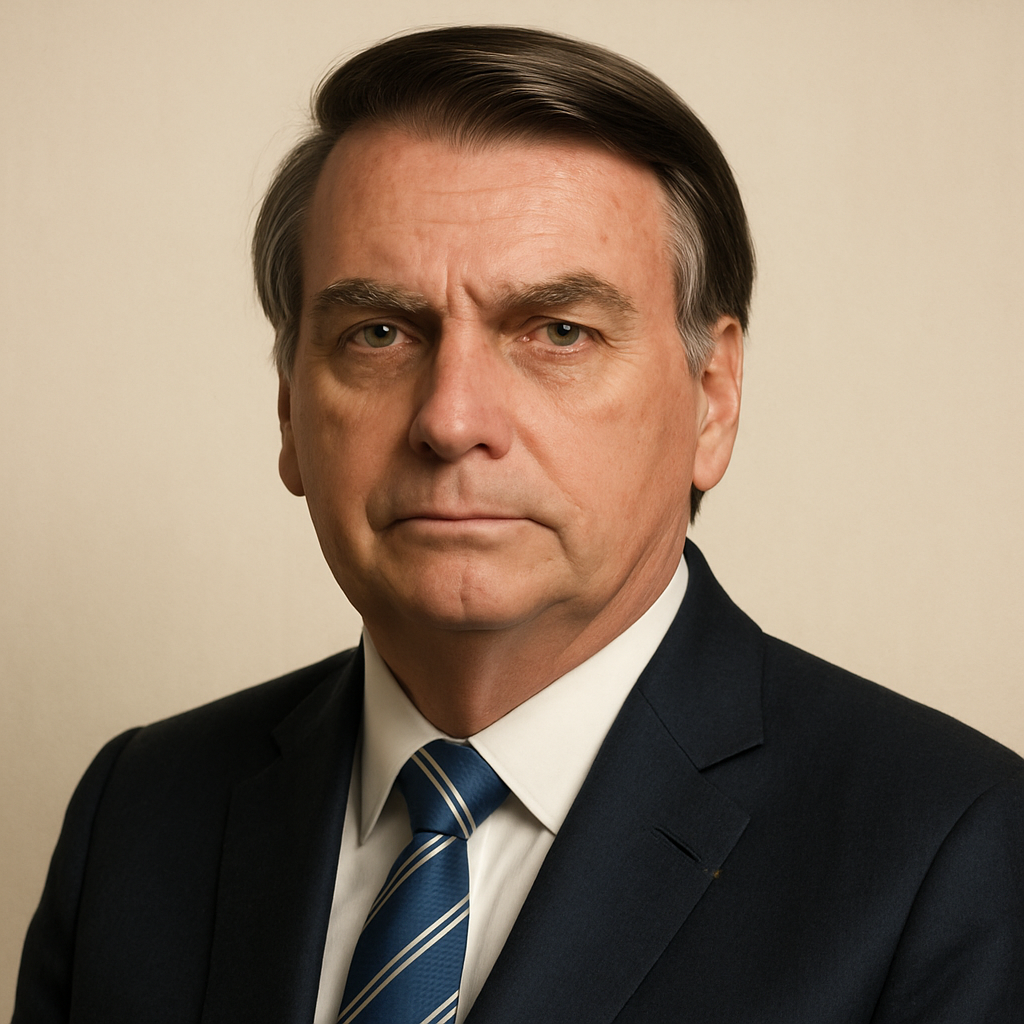
Speech by the President of the Republic, Jair Bolsonaro, during the ceremony for the signing of the Decree on Free Publication in the Official Gazette of the Union for Federal Agencies and Measures for the Modernization of the National Press - Brasília/DF
 Jair Bolsonaro · Former President of Brazil
- Context
- Bolsonaro addressed National Press staff in Brasília on September 30, 2019, at a ceremony signing a decree on free publication in Brazil's Official Gazette.
- Main themes
- Modernization of official gazette, freedom of information, deregulation and economic freedom, simplification of government norms, national press history, personal anecdotes, public transparency, Brazil's governance
- Duration
- ~6 min
- Words
- 750
- Sentences
- 43
- Readability
- 72
- Grade
- 7.5
- Syntax
- 3.19
- Vocabulary
- 1.69
Translated from Portuguese
The broad sphere of national life a sentence belongs to. Every sentence has an Arena, so it is the denominator the other indices are read against.
Other43 sentences in 12 paragraphs
Well, good morning.
First, I want to say that after everything that has been said here, I have nothing more to add. But I could not miss the opportunity to address you, who make up the National Press.
First, when they spoke of Figueiredo, we, after a certain age, have a lot of stories to tell. I met him personally in 1977, when he attended my graduation at the Military Academy of Agulhas Negras. And then I learned, in 1996, the year he passed away, that he published, or someone published for him, his memoirs. He had written the book and the commitment with that writer was that it should only be published after his death.
And I was surprised that the name of then Jair Messias Bolsonaro occupied two pages of his book. One, obviously a bit questionable, considering the grades I received at the Academy and in the courses I took throughout my life. And the other part, which can be discussed, regarding my political actions, which began in 1989, and in politics, everything is questionable. But I was mentioned by him. So, it is a sign that I was not a person who... I was a person who was different from the others, in politics and in military life up to that moment.
And I remember the passage in my life, starting to talk about you, I was a councilman between 1989 and 1990, in Rio de Janeiro. And I had a journalist hired by me, a good journalist, but unemployed because he spoke the truth. So, he had no space in the media, given the positions he wanted to put on paper. And he worked half-time with me in the Chamber, the other half-time was at the Press, it was at the National Library, in Rio de Janeiro, where he would consult the Official Gazette of the Union. And he took advantage of it for two things: one, to provide me with information, as we did not have time to read the Official Gazette of the Union, and the other, that he supplied almost a dozen columnists across Brazil, including Ricardo Boechat, who passed away recently, who had the Swann column in Globo, with news extracted from the Official Gazette of the Union. And he, through this information, which he passed on, largely showed what was really happening in Brazil, the result of the work, at that time, certainly, by some of you.
And when our minister Jorge said: “Why did you pay? It’s because you paid,” I remember my mother. Many times, she would come to her children and say: “I don’t want this.” “Mom, why don’t you want it?” “Because I don’t want to.” And things change, unfortunately in terms of family education, for the worse. Nowadays, parents often let themselves be questioned and led by their children, but that is a personal issue for each couple.
But here, the deregulation, the simplification of norms has helped and will help a lot with the issue of information that comes from you.
On the other side, our part, we have done our best to follow this line. For example, now, the Economic Freedom Law, which has facilitated the lives of those who want to produce and those who want to undertake. And we, all the time, work on that. It is not enough for the minister to do an exceptional job; he must also be concerned with those who do that work so that, in the end, everyone can live better. Even, who knows, produce more and work less. Nothing against that.
So, the work you do, I was just seeing, started in 1808. In 1809, the Military Police of Rio de Janeiro was born, and in 1808, the Marine Corps of Rio de Janeiro was also established. So, a lot of good things happened there, at the beginning of that century, among them, you.
So, thank you very much to all of you. Congratulations on the work you do. And I remind everyone: we are open doors, whoever can collaborate with something more than what you do here, we will listen and seek to assist you.
After all, Brazil belongs to all of us, and the responsibility for its leadership is not just mine; it is also all of ours, good people, of good will. In my case, right? In the case of many of you, who have God above all.
Thank you very much to all of you, and until the next opportunity.
The original Portuguese. The tags above are read on the English translation's sentences.
Bem, bom dia.
Primeiro, dizer-lhes que depois tudo que foi falado aqui eu não tenho mais nada a acrescentar. Mas não poderia deixar de passar oportunidade e me dirigir aos senhores, que fazem a Imprensa Nacional.
Primeiro, quando falaram em Figueiredo, a gente, depois de uma certa idade, tem muita história para contar. Eu o conheci pessoalmente, em [19]77, quando ele foi na minha formatura na Academia Militar das Agulhas Negras. E depois fiquei sabendo, em [19]96, ano que ele faleceu, ele publicou então, alguém publicou por ele, o seu livro de memórias. Ele havia feito o livro e o compromisso com aquele escritor é que só deveria ser publicado depois da morte dele.
E eu fiquei surpreso que o nome do então Jair Messias Bolsonaro ocupou duas páginas do seu livro. Uma, obviamente um pouco questionável, tendo em vista as notas que eu tirei na Academia e nos cursos que fiz ao longo da minha vida. E a outra parte, que pode ser discutida, no tocante a atuação política minha, que começou em [19]89 e na política tudo é questionável. Mas eu fui citado por ele. Então, é sinal que eu não era uma pessoa que... era uma pessoa que era diferente dos demais, na política e na vida militar até aquele momento.
E eu me lembro da passagem também na minha vida, começando a falar de vocês, eu fui vereador entre [19]89 e [19]90, no Rio de Janeiro. E tinha um jornalista contratado por mim, um bom jornalista, mas desempregado porque ele era de falar a verdade. Então, não tinha espaço na mídia, dado as posições que ele queria colocar nos papéis. E ele trabalhava meio expediente comigo dentro da Câmara outro meio expediente era na Imprensa, era na Biblioteca Nacional, no Rio de Janeiro, onde ele ia consultar o Diário Oficial da União. E ele aproveitava para duas coisas: um, para me abastecer de informações, que a gente não tinha tempo para ler o Diário Oficial da União e, a outra, que ele abastecia quase uma dezena de colunistas pelo Brasil, entre eles o Ricardo Boechat, que faleceu há pouco tempo, que tinha a coluna do Swann, no Globo, com notícias extraídas do Diário Oficial da União. E ele, através desta informação, que passava para frente, em grande parte mostrava de verdade o que acontecia no Brasil, fruto do trabalho, naquela época, com toda certeza, por parte de alguns de vocês.
E quando o nosso ministro Jorge falou que: “Por que pagava? É porque pagava”, eu lembro da minha mãe. Muitas vezes, ela chegava para os filhos e falava: “eu não quero isso”. “Mãe, a senhora não quer por quê?” “Porque eu não quero”. E as coisas mudam, infelizmente na questão da educação familiar, para pior. Hoje em dia, os pais muitas vezes deixam-se questionar e se levar pelos filhos, mas isso é uma questão pessoal de cada casal.
Mas aqui a desburocratização, a desregulamentação, a facilitação das normas tem ajudado e vai ajudar, e muito, a questão da informação que parte de vocês.
Do outro lado, nossa parte, temos feito o possível para seguir nessa linha. Como, por exemplo, agora, a Lei da Liberdade Econômica, que tem facilitado a vida de quem quer produzir e quem quer empreender. E nós, o tempo todo, trabalhamos em cima disso. Não basta o ministro fazer um trabalho, excepcional, ele tem que se preocupar também com quem faz aquele trabalho para que, no final da linha, todos possam viver de maneira melhor. Até, quem sabe, produzir mais e trabalhar menos. Nada contra isso.
Então, o trabalho que vocês fazem, estava vendo agora, começou em 1808. Em 1809 nasceu a Polícia Militar do Rio de Janeiro e em 1808 também o Corpo de Fuzileiros Navais do Rio de Janeiro. Então, muita coisa boa aconteceu aí, no início daquele século, entre elas vocês.
Então, meu muito obrigado a todos vocês. Parabéns pelo trabalho que exercem. E lembro a todos: estamos de portas abertas, quem puder colaborar com algo mais do que faz aqui, ouviremos e buscaremos atendê-lo.
Afinal de contas, o Brasil é de todos nós e a responsabilidade da sua condução não é apenas minha, é de todos nós também, pessoas de bem, de boa vontade. No meu caso, não é? No caso de muitos de vocês, que têm Deus acima de tudo.
Meu muito obrigado a todos vocês e até a próxima oportunidade.