




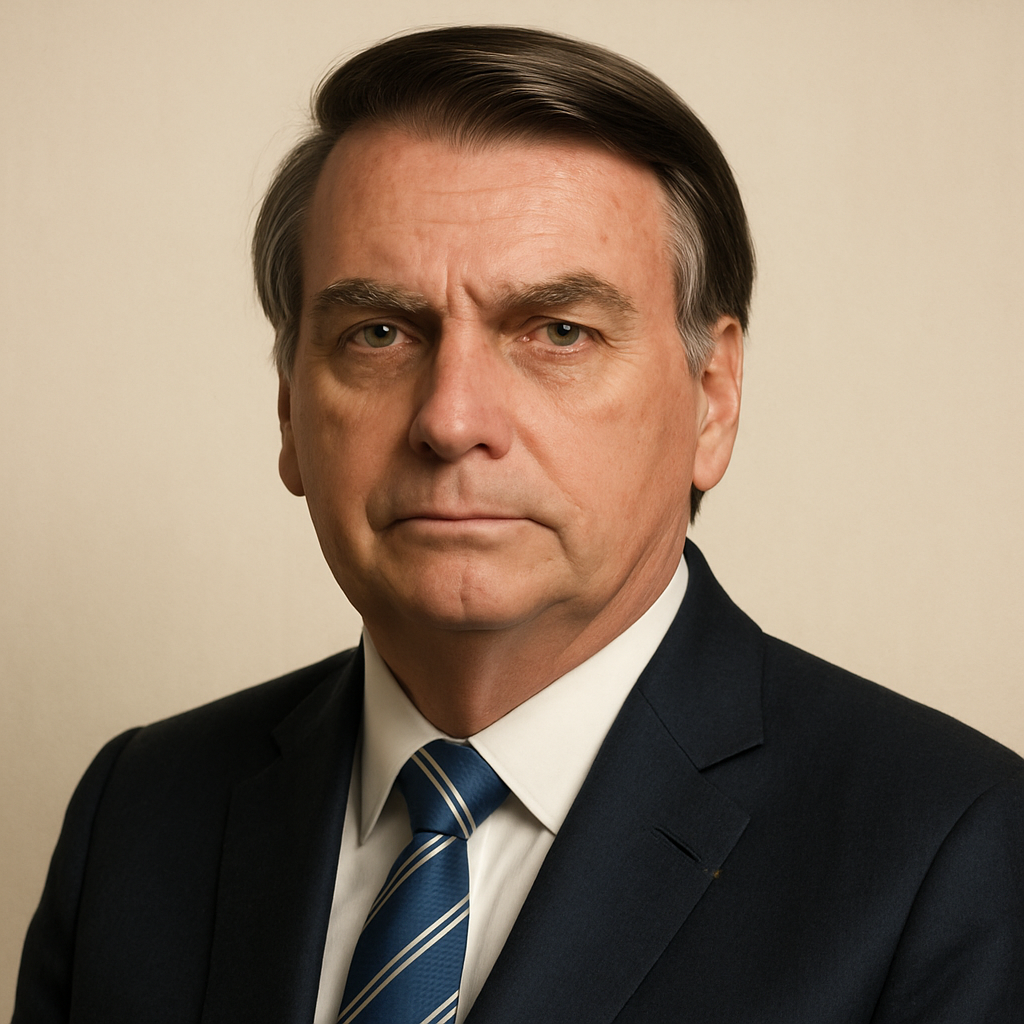
Speech by the President of the Republic, Jair Bolsonaro, during the Launch Ceremony of the Anti-Crime Project Campaign - Palácio do Planalto
 Jair Bolsonaro · Former President of Brazil
- Context
- Bolsonaro spoke at the Palácio do Planalto on October 3, 2019, launching a public campaign in support of Justice Minister Sérgio Moro's Anti-Crime Project.
- Main themes
- Anti-crime legislation, public security reform, police protection and rights, criminal justice system, Sérgio Moro's anti-crime project, legislative change, violence reduction, police use of force, political support for law enforcement, Brazil's security crisis
- Duration
- ~9 min
- Words
- 1,059
- Sentences
- 73
- Readability
- 61
- Grade
- 8.3
- Syntax
- 2.70
- Vocabulary
- 2.04
Translated from Portuguese
The broad sphere of national life a sentence belongs to. Every sentence has an Arena, so it is the denominator the other indices are read against.
Other73 sentences in 15 paragraphs
Ladies and gentlemen. Good morning.
I arrived in Rio de Janeiro in 1974, in Resende. I was away for 3 years and returned to never leave Rio de Janeiro again. I joined the police in 1988, and then I witnessed a newly elected governor completely change the security policy in my state. It goes without saying that it was for the worse.
In politics, I have always encouraged my children and other parliamentarians in my circle of friends to, whenever possible, honor and award diplomas and medals to civil and military police officers who were involved in actions in which they succeeded for the benefit of society.
There were hundreds of moments when my children and I honored these true heroes in the state where crime undoubtedly manifests in a more acute way. And over the last few decades, we have seen that this policy increasingly worsened the issue of Public Security. And I always thought to myself, when I have the opportunity one day, we will seek a way to change.
To the young parliamentarians who are here. Today, many of you here are part of what is called the "bullet bench." A way to belittle your work. Back then, almost in isolation, as far as I remember, inside the Chamber, it was just me and then Colonel Alberto Fraga. Who alone held the line against the police. Including, Sérgio Moro, a project, believe it or not, a bill determining that sniper police officers, the sharpshooters, would be prohibited from using balaclavas. In other words, to expose them, to inhibit them from doing their job in a serious moment. That even a police officer, who is behind a precision rifle, pointing at a criminal, who has an innocent person in front of him, he should think twice or three times before pulling the trigger. This has happened more than once in Rio de Janeiro, and the police officer faced problems. And as time passed, this policy worsened more and more. It is a clear sign, fellow parliamentarians, that what was done until last year was on the wrong path. That violence only rose, only increased.
Upon arriving, I had the satisfaction that then-judge Sérgio Moro accepted to come work with us. The man who gave up 22 years of magistracy and now, in part, we talked a lot, he also felt that we are powerless at times. But we are slowly managing to win the information war, with the support of deputies and senators. We are changing. Now, more than that, it is the posture.
One of the measures, an initiative of Sérgio Moro, was to spread across Brazil how to take dangerous prisoners out of their habitat. By itself, the chain of information was cut, and crime decreased. So, it was one of the first successful measures. I confess to you, we all were worried about that action that was, if I’m not mistaken, at the beginning of February, we were worried, but thank God, no information leaked, and it was covered with success.
But something more had to be done, how many times have I visited the Military Police prison in Benfica, in Rio de Janeiro? Talking to the security men who were in charge of the prison establishment. As well as talking to imprisoned police officers. Military police officers, firefighters, imprisoned. And talking to them, no longer with feeling, but with the certainty that inside there were many innocent people. Were there guilty ones? Yes. But there were also many innocent ones. Basically because of what? Excess. Can a police officer be condemned for excess if, in the middle of a shootout with a criminal, he fires more than two shots? That is absurd.
Even more, the activism in some branches of Justice from the Public Ministry, in politics, seeking more and more to turn resistance actions into executions, it is painful to see a police officer, a family man, imprisoned because of this. Many times, we see that a military police officer who is more well-known is elevated to a position and the press comes to say: he has 20 resistance actions. He should have 50. It is a sign that he works, that he does his part and that he has not died. Or would you want us to provide a job for the widow? This has to stop happening, and how? By changing the legislation.
No one wants to impose anything. We want to change the legislation so that the law, as I told Sérgio Moro here, is feared by criminals and not by good citizens. This is the spirit of the law, this is the objective of launching the propaganda of the Anti-Crime Project, from Minister Sérgio Moro. This is what Brazil needs.
We have suffered some setbacks, yes, but we must understand that we cannot change the course of a transatlantic ship that has been on the wrong path for at least 30 years overnight. We are doing our part, more and more good people are joining us to seek this solution.
Whoever has lived in Rio de Janeiro, has relatives in Rio, what is the great concern? It is the life of our children, our parents, relatives, and friends. More than once, I have been to the Jardim da Saudade cemetery to attend the funerals of military police officers, military personnel from the Armed Forces, civilians, from our circle of friends, victimized by these criminals.
I am sure, if there is and there will be, the consent of the Brazilian parliament, this proposal will be approved, and whoever in the future, after the law is sanctioned, wants to commit a crime, which are premeditated crimes, will think very, very hard before committing it. Because they know that once committed, certain privileges like temporary releases will cease to exist. For me, temporary release can exist, Sérgio Moro, from the cell to the prison yard. I think that is enough. Nothing more than that.
So, dear Sérgio Moro, team, other ministers. And I now address one by one the minister who should be here in front, but is not. What does a happy man, newly married, do on his birthday? He stays a little longer in bed. So, Onyx, you are forgiven for arriving 10 minutes late here. Congratulations, Onyx.
Congratulations to everyone. Thank you, Sérgio Moro. Thank you, my Brazil.
The original Portuguese. The tags above are read on the English translation's sentences.
Meus senhores, minhas senhoras. Bom dia.
Eu cheguei no Rio de Janeiro em 1974, em Resende. Fiquei 3 anos fora e retornei para nunca mais sair do Rio de Janeiro. Entrei na polícia 88, depois assisti um governador recém eleito, mudar completamente a política de segurança em meu estado. Não precisava dizer que era para pior.
Na política, eu sempre estimulei meus filhos e demais parlamentares do meu ciclo de amizade, a sempre que possível prestigiar, conceder diplomas, medalhas para policiais civis e militares, que tivessem envolvido em ações, nas quais eles obtiveram sucesso em benefício da sociedade.
Foram centenas de momentos que eu e meus filhos homenageamos esses verdadeiros heróis, no estado onde o crime com toda a certeza, se faz de forma mais aguda. E ao longo dessas últimas décadas, assistimos que essa política cada vez mais piorava a questão da Segurança Pública. E sempre pensava comigo, quando tiver oportunidade um dia, vamos buscar uma maneira de mudar.
Aos jovens parlamentares que estão aqui. Hoje, muitos de vocês aqui, integram o que se chama, bancada da bala. Uma maneira de depreciar o trabalho de vocês. Lá atrás, quase que de forma isolada, pelo que eu me lembro, lá dentro da Câmara, era eu e o então Coronel Alberto Fraga. Que sozinho segurava uma onda contra os policiais. Inclusive, Sérgio Moro, um projeto, projeto de Lei acredite se quiser, determinando que os policiais sniper, os atiradores de escol, fossem proibidos de usar bala clava. Ou seja, para expô-los, inibi-los a não cumprir com seu trabalho, em um momento grave. Que mesmo policial, que está atrás de um fuzil de precisão, apontando para um marginal, que tem a sua frente um inocente, ele, para ele pensar duas, três vezes antes de puxar o gatilho. Não raras vezes, isso aconteceu no Rio de Janeiro e o policial teve seus problemas. E o tempo passando e essa política cada vez mais piorando. É um sinal claro colegas parlamentares, que o que foi feito até o ano passado, estava no caminho errado. Que a violência só subia, só aumentava.
Chegando, tive a satisfação de que o então o juiz Sérgio Moro, aceitasse vir trabalhar conosco. O homem que abriu mão de 22 anos de magistratura e agora em parte, nós conversamos muito, ele também, senti que somos impotentes em algum momento. Mas estamos vagarosamente, conseguindo ganhar a guerra da informação, tendo apoio de deputados e senadores. Estamos mudando. Agora, mais do que isso, é a postura.
Uma das medidas, iniciativa do Sérgio Moro, foi espalhar pelo Brasil, como tirar do seu habitat, presos perigosos. Por si só, a cadeia de informação foi cortada, ao crime diminuiu. Então, foi uma das primeiras medidas bem-sucedida. Eu confesso aos senhores, todos nós ficamos preocupados com aquela ação que foi, se eu não me engano, início de fevereiro, ficamos preocupados, mas graças a Deus, não vazou nada da informação e ela foi coberta de sucesso.
Mas algo mais tinha que fazer, eu quantas vezes visitei o presídio da Polícia Militar em Benfica, no Rio de Janeiro? Conversando com os homens da segurança, que estavam lá no comando do estabelecimento prisional. Bem como, conversando com policiais presos. Policiais militares, bombeiros, presos. E conversando com eles, não mais com sentimento, a certeza de que lá dentro tinha muito inocente. Tinha culpado? Tinha. Mas também tinha muito inocente. Basicamente por causa de quê? Excesso. Pode de madrugada na troca de tiro com marginal, se o polícial dá mais de dois tiros, ele ser condenado por excesso? Um absurdo isso daí.
Mais ainda, o ativismo em alguns órgãos da Justiça do MP, na política, buscar cada vez mais transformar auto de resistência, em execução, é doloroso você ver um um policial chefe de família, preso por causa disso. Muitas vezes, a gente vê que um policial militar que é mais conhecido, ser alçado para uma função e vem a imprensa dizer: ele tem 20 autos de resistência. Tinha quer ter 50. É sinal que ele trabalha, que ele faz sua parte e que não morreu. Ou queria que nós providenciássemos um emprego para viúva. Isso tem que deixar de acontecer e como? Mudando a legislação.
Ninguém quer impor nada. Nós queremos mudar a legislação, para que a lei conforme eu disse ao Sérgio Moro aqui, seja temida pelos marginais e não pelo cidadão de bem. Esse é o espírito da lei, esse é o objetivo do lançamento da propaganda do Projeto Anticrime, do ministro Sérgio Moro. É isso que o Brasil precisa.
Sofremos alguns reveses sim, mas nós devemos entender que não podemos mudar de uma hora para outra, o rumo de um transatlântico que há no mínimo 30 anos, está no rumo errado. Vamos fazendo a nossa parte, cada vez mais boas pessoas somam-se ao nosso lado, para buscarmos essa solução.
Quem já morou no Rio de Janeiro, tem parente no Rio, qual a grande preocupação? É a vida do nossos filhos, nossos pais, parentes e amigos. Não raras vezes, fui no cemitério Jardim da Saudade, acompanhar enterro de policiais militares, de militar das Forças Armadas, de civis, do nosso círculo de amizade, vitimados por esses criminosos.
Tenho certeza, em havendo e haverá, o consentimento do parlamento brasileiro, essa proposta será aprovada e aquele que porventura no futuro, após a lei sancionada, quiser praticar um crime, que são crimes premeditados, vai pensar muito, muito, antes de cometê-lo. Porque sabe, que uma vez cometendo, certas regalias como saidões, deixaram de existir. Saidão para mim, pode existir, Sérgio Moro, da cela para o pátio da prisão. Eu acho que está bom. Nada a mais além disso.
Então, prezado Sérgio Moro, equipe, demais ministros. E me dirigir agora um a um ministro que devia está aqui na frente, mas não está. O que que um homem feliz, recém-casado, faz no dia do teu aniversário? Fica um pouco mais tarde na cama. Então, Onyx, está perdoado por ter chegado 10 minutos atrasado aqui. Parabéns, Onyx.
Parabéns a todo mundo. Obrigado Sergio Moro. Obrigado meu Brasil.