




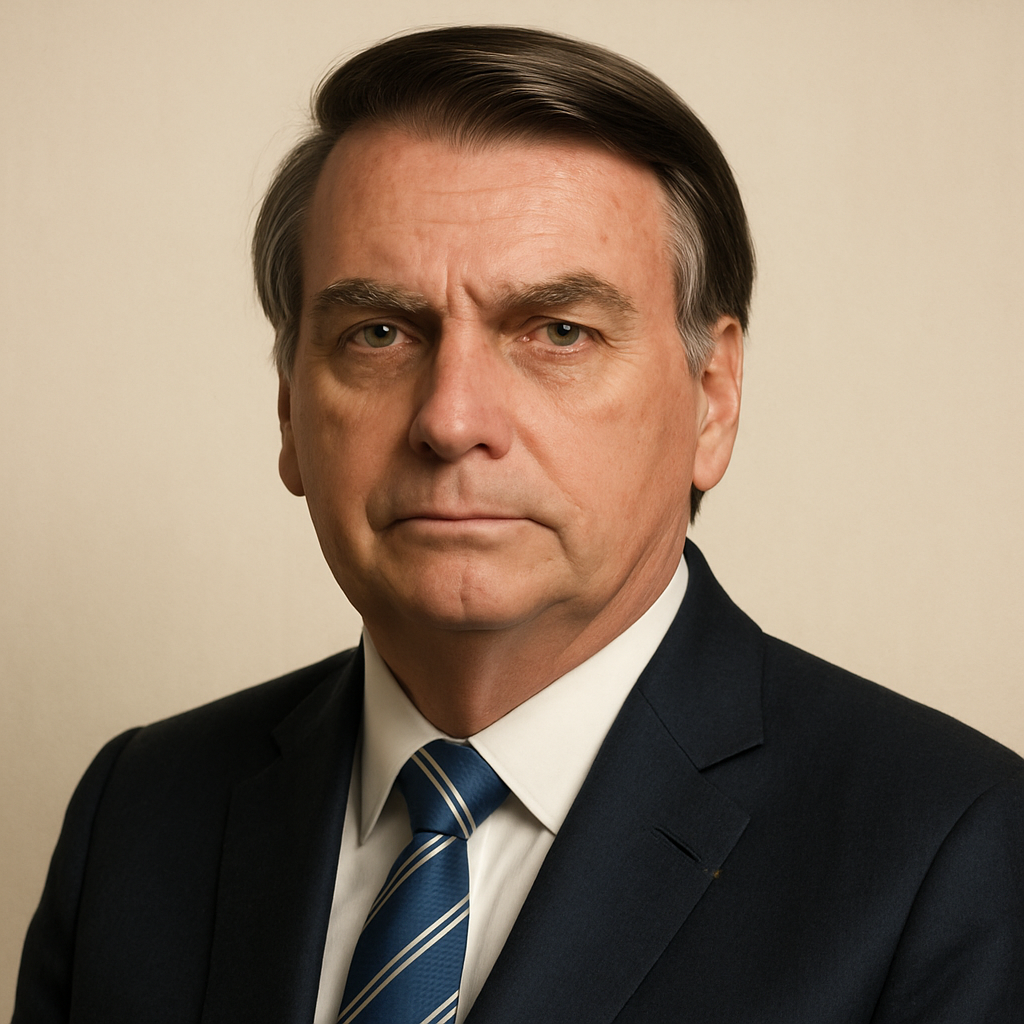
Speech by the President of the Republic, Jair Bolsonaro, during the Launch Ceremony of the National Program of Civic-Military Schools - PECIM - Palácio do Planalto
 Jair Bolsonaro · Former President of Brazil
- Context
- Bolsonaro addressed a ceremony at Palácio do Planalto on September 5, 2019, launching the National Program of Civic-Military Schools (PECIM).
- Main themes
- Civic-military schools program, graphene technology, niobium resources, education reform in Brazil, military discipline in schools, knowledge as path out of poverty, Brazil's technological potential, commodity dependence, human capital development
- Duration
- ~24 min
- Words
- 2,914
- Sentences
- 173
- Readability
- 64
- Grade
- 8.4
- Syntax
- 2.86
- Vocabulary
- 2.08
Translated from Portuguese
The broad sphere of national life a sentence belongs to. Every sentence has an Arena, so it is the denominator the other indices are read against.
Other173 sentences in 35 paragraphs
Good morning.
Since the end of 2014, when I started traveling around Brazil, perhaps giving about a hundred lectures, none of them paid, I spoke about graphene and niobium. And by a tremendous coincidence, this morning, at the Ministry of Mines and Energy, Minister Admiral Bento will be receiving the highest authorities in niobium that exist here and in the world. The world is watching us; only we have this. And this morning, also by coincidence, I received a visit from Mr. Konstantin Novoselov, a Russian scientist, Nobel Prize in Physics for having, along with another colleague of yours, discovered graphene in 2004.
I asked him some questions to find out if it was myth or fiction. I asked about the super graphene battery combined with other materials, about its very fast recharging, so that it could revolutionize the automotive industry in the world. He said it is a reality.
Until recently, I was bullied when I spoke about this. I also asked him - who here is from the Northeast? - about the graphene screen, which could desalinate seawater or remove salt from brackish water from artesian wells. He also said that is a reality.
Now, what is very important: a young woman who took the graphene screen from the drawing board is a graduate of the Military Institute of Engineering, and she is currently outside Brazil.
I asked him other things about graphene because it is the only two-dimensional material. And he said that, given this, the applications of graphene are endless. Every week a new graphene material appears that is not yet at a commercial scale. Why? Because technology is needed for the separation to occur. And it is not just in the separation itself, which at first was done with a piece of tape, and obviously, since it is a nano material, he said it is even below nano, and the technology has to be quite refined. Then, how to handle this micropowder to make materials? That is another question that involves what each of us, regardless of color, race, or religion, has in our heads. And we are, yes, all equal in that regard.
I continued asking him the most varied questions possible, which I will not answer here, as there is a lot. Is it possible to pulverize mulberry trees so that the silkworm, when eating the mulberry leaf, produces a thread with graphene? And, furthermore, to finish, in fact, in the next ten years, the world economy will move around one trillion dollars.
And so it is very important what I will reveal to you by his word, subtitled, in a conversation of almost twenty minutes that is worth watching; I will make it available perhaps tomorrow. At one point, he said something that touched me. He said that Brazil has to stop being a commodity-exporting country. One thing is for someone to want to colonize us, and another is to want to be colonized. And where is the boundary of all this? Where do we achieve a leap so that we can say that we no longer accept or do not want to be colonized? It is through study. And we can only achieve this goal because we have an enormous human capacity in Brazil.
I see here to my left the kids from the State School of the Military Police of Goiás, from Anápolis. Forgive me, when you look at their faces and look at the faces of kids in other schools, you notice a difference; there is no idea of decriminalization here. For God's sake, let’s escape the politically correct and face reality. It is a different expression. What comes to my mind, for sure, and all of you, about the future of these kids? That they will have a future. And each one, fighting for themselves, for their knowledge, which is non-transferable, through the sum of people like these kids who are here, will make a different Brazil. What takes us out of misery and poverty, ignorance, obviously, is knowledge.
And what has happened to education in Brazil over the last few decades? Education has been democratized. It is like a candidate for the Attorney General's Office, of which there are several, and perhaps I will decide this afternoon on their names, not to mention the name because... I saw there that one of their banners was to democratize the Military Police! It doesn’t work! It doesn’t work! We want an efficient Military Police that truly fulfills its purpose, but to talk about democracy for the Military Police? How will he deal with a kidnapper? A drug trafficker? But, okay.
So, as I said, what takes us out of misery, out of ignorance is education. And we all, fathers and mothers, want our children to be, in the future, better than we are.
Some may say it is not difficult in my case. I accept the joke. But I am willing to carry this forward together with our Minister Abraham Weintraub, of Education, now also in partnership with Minister Fernando, of Defense. So, the first university has started, if I’m not mistaken, is it the Naval School? Is that right? Our first university in Brazil? It is military!
And why is the trend in these militarized schools successful? Without wanting to belittle or say that others do not work, they also work, but at a much higher rate in militarized ones. Why? There is discipline.
The other day I saw an action from the Public Ministry, dear João, the Public Ministry deciding that such a militarized school in Brazil, the principal could not talk about haircuts for the boys. This Public Ministry discovered that the educational problem in that school was this. This is unacceptable. We respect the independence of Brazilian institutions, but this is interference.
We have, then, the military schools, much older than the militarized schools; we currently have thirteen, the youngest is from Belém do Pará, and the one that is in a very advanced gestation process is from São Paulo, a work and effort of Commander Villas Bôas, it started with him, now it passes to Commander Pujol, but obviously, our Minister of Defense is the one conducting this process.
We want to create, at Campo de Marte in São Paulo, the largest military school in Brazil. We want to do even more; the big problem is what you know, it is budgetary, but certainly, this one, from São Paulo, due to the state it is in and the business help we will have, which offered me resources during the campaign and I did not accept, and I said I wanted the resources after the campaign, in the form of donations, to create this Military School in São Paulo, where I want to place there, Ibaneis, the children of the rich and the poor. It is not that demagogic talk: only the children of the poor, only the children of a certain color, that is not it; it is for everyone.
We want to integrate, instill in all these kids the importance of civic-military values as we had not long ago, in the military government, about moral and civic education, about respect for the flag, instilling in their minds that they must understand that the Amazon is ours, not to accept provocations. And, on the other hand, also to be concerned with these provocations from another world leader thinking that that green sea further north does not belong to us; it does belong.
I have offered to world leaders, in partnership, I repeat, in partnership, to explore our Amazon, our biodiversity, the discovery there of a living being, whether animal or plant, that can be collected for the cure of diseases or to give a leap in what we are, or the world is seeking. We have enormous potential for this, but we need brains. And the idea of our Minister of Education, of the Civic-Military School, goes through there; brains, forgive me, we have plenty, we just need to work on these brains, like these kids from Anápolis who are here to my right. The left has not worked anywhere in the world; when you point out a place where it has worked, let me know, and I will change, and I will start shouting “LL” around.
So the schools, now, that come from this agreement, which we have as an example of approximately ten years, some dozens of schools in the states of Goiás and Amazonas that are working, schools where often the approval rate for the Enem reaches one hundred percent, and they are poor people, some children of military personnel, middle class, even children of people with better purchasing power, but inside, everyone is equal, everyone has to learn, everyone has responsibility.
I visited, two years ago, one of these schools in Manaus. A place really close to a very violent neighborhood, and it was a vacation period; I went there, and the school principal, with the parents, voluntarily went to this event. And there, talking to the parents, despite the climate of animosity that was in the periphery, no father, no mother, even being actively integrating this climate, wanted their child to leave there, and what I heard inside the school was not just because it was military but also, from some parents who were on the wrong path, they did not want anything wrong inside and wanted for their children a life different from what they had outside.
And today this agreement, this very bold opportunity, I think, huh? Ten percent I think is quite bold, but I hope it works. In the second term? Your speech was that of a candidate there; I noticed. Perhaps with you, starting in [20]23.
And we have here the physical presence of our governor of the Federal District, Ibaneis. Congratulations, governor, for this proposal. I saw that some neighborhoods had voting and did not accept; forgive me, they should not accept; they must impose. If those kids do not know... are in the fifth grade, are in the ninth grade, and in the Pisa test, they do not know a simple rule of three, do not know how to interpret a text, do not answer a basic science question, forgive me, there is no need to ask the irresponsible parent, in this matter, if he wants or does not want a school with a certain degree of militarization; it must be imposed; it must change. Because we do not want these kids to grow up and become, in the future, dependents, even until death, of government social programs.
Finally, going towards the closing here, I tweeted today about the economy, where I said that the ceiling must be preserved. It is being pressured by mandatory expenses; we must not relax the ceiling, as I discussed with Paulo Guedes, because it would be a crack in a transatlantic. We must, Dayana Pimentel, combat down below, to reduce mandatory spending. How to reduce? We spend 200 billion a year basically on the BPC, rural retirement, and Bolsa Família. If you can provide means for these people to leave the program voluntarily, you reduce mandatory spending.
Combat fraud. Look at the seguro-defeso, a shame! Our esteemed Secretary of Fisheries, Jorge Seif, has done an exceptional job combating fraud, but it is not easy. It seems that the more you take out, the more comes in. We are updating the criteria for entry. There are families from certain regions that are spread all over Brazil, living in São Paulo, Rio, and the Federal District, and they are earning, per person, seguro-defeso for four months a year, one minimum wage. It is to combat that, fraud, waste. And, with education, also make this mandatory spending decrease. That, then, allows Brazil to get out of the difficult situation it is in.
We believe in Brazil. Brazil will work. And with these heads we have here in front, forgive the joke from the Japanese colleague there, is he really of Japanese descent, or not? I lived in the Vale do Ribeira for many years. In the city of Registro, there is a large Japanese colony. I have never seen a Japanese person begging. I have not yet seen a Japanese person on Bolsa Família. What is the difference between us and them? Look at the experience of your ancestors, after World War II, a destroyed country. Look at what they are today. Look at the example of Israel. Born at the end, in fact, physically, born at the end of the 1940s. A place where there is nothing: there is no drinking water, there is no... there is no oil, there is no arable land, and there is no biodiversity. Look at what they are.
Look, we, from Brazil, here, have everything, General Girão, we have everything here, everything. We even have what we do not know. And look at the situation - as I am the president, I am educated now, right? - the complicated situation we find ourselves in.
Dear Major Olímpio. There is Major Olímpio, right? I miss him. So, dear Major Vítor, is it possible to get out of this situation we are in or not? Is it possible to get out? It depends on whom, on part of whom? On us, the Executive and Legislative. It is to play together, seeking interests not mine or yours, but ours, of Brazil.
There is no greater satisfaction, as a politician, than being able to walk the streets with your head held high, being recognized by the people. Our life is not inside this Palace, nor inside Congress; our life is out there. And we must work seeking the common good.
This project is exceptional. We want more people with the expression of these kids from Anápolis who are here next to us. For sure, I think that based on what you are experiencing at the moment, you will indeed be better than your parents. We want our children to be better than we are. And it passes, colleagues here from the Legislative, my friends from the Executive, through the measures we take.
Yesterday was a great day for us too. We presented, in Anápolis, by coincidence, the KC-390. All the software of the plane is ours, it is Brazilian. It is unbelievable, the capacity of the Brazilian people. In the afternoon, we attended here, some thousands of families, people who needed our support. The pension for mothers, in fact, whose children had problems with the Zika virus. It was not on the cover of any newspaper. Not a single newspaper.
Again, Brazilian press, you are very important. The campaign is over; it is Brazil now. If this plane crashes or if this boat sinks, we will go together. I only want the best for Brazil.
Today I will present the vetoes; it is the last day of the Abuse of Authority. The spirit of the project will be maintained. But 36 amendments will be presented. We want to combat the abuse of authority, but we cannot apply an excessively strong remedy that may end up killing the patient. We want the authorities of the Judiciary, the Public Ministry, who have often persecuted me, yes, and not just a few times. After all, I am a defendant in the Supreme Federal Court for one of these cases. We want them to be able to work, to combat corruption. And the proposal for the vetoes came from my centrão. I brought together Moro, from Justice; Wagner, from the CGU; André, from the AGU; and Jorge, from the General Secretariat; and the proposals that they, in common agreement, and they were the right people for that, presented to me, I accepted the 36. I am not affronting Parliament, nor do I want to pander to the population, nor yield to the clamor, on the part of many citizens, to “veto everything.” I am not radical. But we must build something that can indeed make Brazil different in the future.
And perhaps today, perhaps, I will present the name of the future Attorney General of the Republic. I will be criticized no matter what. Everyone who spoke with me, when they left my office, took hits: this one is a friend of so-and-so, this one works at such-and-such law firm, this one is a leftist, this one is too right-wing, this and that. But I will present a person who I understand, as I have discussed a few times with her, that she should have in one hand the flag of Brazil and in the other hand our Constitution. We cannot have a radical person on environmental issues, who will simply undermine our agribusiness, given her extremist way of acting, as we know some exist. We cannot have someone who will also hinder our infrastructure, as Captain Tarcísio wants to tear up a road or duplicate it, or just wants to recover it, there are problems that come from the Public Ministry. We do not want a head of the Public Ministry who does nothing, nor who shelves everything, but who has a perfect awareness that it is a power that has superpowers, but that is a power that, above all, must be concerned with the development of our Brazil.
My friends, ministers, Ibaneis, especially Weintraub here, Fernando, from Defense, and you who are present here. Brazil is in our hands.
Thank you very much to all of you, and may God bless Brazil.
The original Portuguese. The tags above are read on the English translation's sentences.
Bom dia.
Desde o final de 2014, quando eu comecei a andar pelo Brasil, talvez umas cem palestras, nenhuma remunerada, eu falava em grafeno e nióbio. E por uma tremenda coincidência, agora pela manhã, no Ministério das Minas e Energia, o ministro almirante Bento estará recebendo as mais altas autoridades em nióbio que existe aqui e no mundo. O mundo está de olho em nós, só nós temos isso. E pela manhã também, coincidência, recebi a visita do senhor Konstantin Novoselov, cientista russo, Nobel de Física por ter, com mais um colega teu, em 2004, descoberto o grafeno.
Fiz-lhe algumas perguntas para saber se era mito ou ficção. Perguntei da super bateria de grafeno combinada com outros materiais, sobre a sua recarga muito rápida, de modo que viesse a revolucionar a indústria automobilística no mundo. Ele disse que é uma realidade.
Até há pouco tempo eu sofria bullying quando falava isso. Perguntei-lhe também - quem é do Nordeste aqui? - sobre a tela de grafeno, que poderia dessalinizar a água do mar ou tirar o sal da água salobra de poços artesianos. Ele também disse que é uma realidade.
Agora, o que é muito importante: uma jovem que tirou da prancheta a tela de grafeno é formada pelo Instituto Militar de Engenharia e ela está fora do Brasil no momento.
Perguntei-lhe outras coisas também sobre o grafeno porque é o único material biplano. E ele falou que, dado a isso, as aplicações do grafeno são infindáveis. Toda semana aparece um material novo de grafeno não ainda em escala comercial. Por quê? Porque precisa de tecnologia para que haja a separação. E não é apenas na separação em si, que num primeiro momento ela foi feita com uma fita durex e, obviamente, como é um material nano, ele disse que é abaixo de nano, inclusive, e a tecnologia tem que ser bastante apurada. Depois, como mexer com essa micropoeira para fazer materiais? É outra questão também que envolve aquilo que cada um de nós, independente de cor, raça ou religião, tem dentro da cabeça. E somos, sim, todos iguais nesse quesito.
Continuei fazendo-lhe perguntas as mais variadas possíveis, que não vou responder aqui, que é muita coisa. É possível pulverizar amoreiras, de modo que o bicho da seda, ao comer a folha de amora, produza um fio com grafeno? E, mais ainda, para terminar, na verdade, nos próximos dez anos a economia mundial movimentará na casa de um trilhão de dólares.
E daí é muito importante o que eu vou revelar aos senhores pela palavra dele, legendado, numa conversa de quase vinte minutos que vale a pena assistir, vou botar à disposição talvez amanhã. Em dado momento ele falou aquilo que me tocou. Ele disse que o Brasil tem que deixar de ser um país exportador de commodities. Uma coisa é alguém querer nos colonizar e outra querer ser colonizado. E onde é que está a divisa disso tudo? Onde é que nós conseguimos um salto para que nós possamos dizer que não aceitamos mais ou não queremos ser colonizados? É o estudo. E nós só poderemos atingir esse objetivo porque temos uma capacidade humana enorme no Brasil.
Eu vejo aqui à minha esquerda a garotada da Escola Estadual da Polícia Militar de Goiás, lá de Anápolis. Me desculpem, quando se olha para o semblante deles e olha para o semblante de garotada em outras escolas a gente nota uma diferença, não há aqui qualquer ideia de descriminalização. Pelo amor de Deus, vamos fugir do politicamente correto e cair na real. É um semblante diferente. O que que vem na cabeça minha, com toda certeza, e todos vocês, do futuro dessa garotada? Que eles terão futuro. E ao cada um ao lutar por si, pelo seu conhecimento que é intransferível, através dos somatórios de pessoas como essa garotada que está aqui, fazer um Brasil diferente. O que nos tira da miséria e da pobreza, da ignorância, obviamente, é o conhecimento.
E o que aconteceu com o ensino no Brasil ao longo das últimas décadas? Democratizou-se o ensino. É igual um candidato à PGR, que tem vários, que talvez eu decida hoje a tarde o nome deles, não citar o nome porque…. Eu vi lá que uma de suas bandeiras era democratizar a Polícia Militar! Não dá! Não dá! Queremos uma Polícia Militar eficiente e que realmente cumpra o seu objetivo, mas falar em democracia para a Polícia Militar? Como é que ele vai tratar um sequestrador? Um narcotraficante? Mas, tudo bem.
Então, como falei, o que nos tira da miséria, da ignorância é o ensino. E nós todos, pais e mães, queremos, sim, que os nossos filhos venham a ser, no futuro, melhor do que nós.
Alguns podem dizer que não é difícil no meu caso. Eu aceito a brincadeira. Mas estou disposto a levar juntamente com o nosso ministro Abraham Weintraub, da Educação, juntamente agora com a parceria também do ministro Fernando, da Defesa, isso avante. Começou então a primeira universidade, se não me engano, é Escola Naval? É isso mesmo? A nossa primeira universidade do Brasil? É militar!
E por que que a tendência nessas escolas militarizadas é dar certo? Sem querer desmerecer ou dizer que as outras não dão certo, também dão certo, mas uma taxa muito maior nas militarizadas. Por quê? Tem disciplina.
Eu vi outro dia uma ação do MP, prezado João, o MP decidindo que tal colégio militarizado no Brasil o diretor não poderia falar em corte de cabelo para os meninos. Descobriu, esse MP que o problema educacional naquela escola era isso. Não tem cabimento isso daí. Respeitamos a independência das instituições brasileiras mas isso é uma ingerência.
Temos, então, os colégios militares logo depois, muito mais antigos que as escolas militarizadas, temos treze no momento, a mais jovem é de Belém do Pará e a que está em processo de gestação bastante avançado é a de São Paulo, um trabalho e empenho do comandante Villas Bôas, começou com ele, passa agora para o comandante Pujol, mas obviamente o nosso ministro da Defesa é que está conduzindo esse processo.
Queremos fazer, no Campo de Marte de São Paulo, o maior colégio militar do Brasil. Queremos fazer mais ainda, o grande problema é o que vocês sabem, é orçamentário, mas com toda certeza esse, de São Paulo, pelo estado em que se encontra e pela ajuda empresarial que teremos, que me ofereceram recursos durante a campanha e eu não aceitei, e eu falei que queria o recurso depois da campanha, em forma de doação, para fazermos esse Colégio Militar em São Paulo, onde eu quero botar lá, Ibaneis, o filho de rico e de pobre. Não é aquele papinho demagogo: só filho de pobre, só filho de tal cor, não é isso, é para todo mundo.
Nós queremos integrar, botar na cabeça de toda essa garotada a importância dos valores cívico-militares como tínhamos há pouco, no governo militar, sobre educação moral e cívica, sobre o respeito à bandeira, botar na cabeça dele que ele tem que entender que a Amazônia é nossa, não aceitar provocações. E, por outro lado, também se preocupar com essas provocações de um outro líder mundial achando que aquele mar verde mais ao norte não pertence a nós, pertence sim.
Tenho oferecido a líderes mundiais, em parceria, repito, em parceria, explorar nossa Amazônia, a nossa biodiversidade, a descoberta lá de um ser vivo, sendo animal ou vegetal, possa coletar para a cura de doenças ou darmos um salto naquilo que estamos, ou o mundo está buscando. Temos um potencial enorme para isso, mas precisamos de cérebros. E a ideia do nosso ministro da Educação, da Escola Cívico-militar, passa por aí, cérebro, me desculpem, nós temos bastante, devemos é trabalhar esses cérebros, como essa garotada de Anápolis que está aqui à minha direita. A esquerda não deu certo em lugar nenhum no mundo, quando me apontar o lugar que deu certo me avisem que eu mudo, e eu começo a gritar “LL” por aí.
Então as escolas, agora, que vêm desse convênio, que temos como exemplo de aproximadamente dez anos, algumas dezenas de escolas no estado de Goiás e Amazonas que estão dando certo, escolas que muitas vezes a aprovação do Enem chega a cem por cento e são gente pobre, alguns filhos de militares, classe média, até filho de gente que tem um melhor poder aquisitivo, mas lá dentro todos são iguais, todos têm que aprender, todos têm responsabilidade.
Estive visitando, há dois anos, uma dessas escolas em Manaus. Um local realmente próximo de um bairro bastante violento e era um período de férias, fui lá e o diretor da escola, com os pais, voluntariamente foram a esse evento. E ali, conversando com os pais, apesar do clima de animosidade que estava na periferia, nenhum pai, nenhuma mãe, mesmo estando integrando esse clima de forma ativa queria que teu filho saísse de lá e o que ouvi, lá dentro da escola, não era apenas por ser militar mas também, por parte de alguns pais que estavam na vida torta, não queriam nada de errado lá dentro e queriam para os seus filhos uma vida diferente do que ele tinha lá fora.
E hoje esse convênio, essa oportunidade bastante ousada, eu acho, heim? Dez por cento eu acho bastante ousada, mas espero que dê certo. No segundo mandato? O seu discurso foi de candidato ali, eu percebi. Talvez contigo, a partir de [20]23.
E temos aqui a presença física do nosso governador do DF, o Ibaneis. Parabéns, governador, por esta proposta. Vi que alguns bairros tiveram votação e não aceitaram, me desculpa, não tem que aceitar não, tem que impor. Se aquela garotada não sabe... está na quinta série, está na nona série e na prova do Pisa ele não sabe uma regra de três simples, não sabe interpretar um texto, não responde uma pergunta básica de ciências, me desculpa, não tem que perguntar para o pai irresponsável, nessa questão, se ele quer ou não uma escola com uma, de certa forma, militarização, tem que impor, tem que mudar. Porque nós não queremos que essa garotada cresça e vá ser, no futuro, um dependente, até morrer, de programas sociais do governo.
Até, indo para o fechamento, aqui, deu uma tuítada hoje, aí, na questão de economia, onde eu falei que o teto tem que ser preservado. Ele está sendo pressionado pelas despesas obrigatórias, nós não devemos flexibilizar o teto, como conversei com o Paulo Guedes, porque seria uma rachadura num transatlântico. Nós devemos, Dayana Pimentel, combater lá embaixo, para diminuir a despesa obrigatória. Como diminuir? Nós gastamos 200 bilhões por ano basicamente no BPC, na aposentadoria rural e Bolsa Família. Se você consegue dar meios para essas pessoas deixar o programa de forma voluntária, você diminui a despesa obrigatória.
Combater a fraude. Olha o seguro-defeso, uma vergonha! O nosso prezado secretário da Pesca, o Jorge Seif, tem feito um trabalho excepcional combatendo a fraude, mas não é fácil. Parece que quanto mais tira, mais entra. Estamos atualizando o critério para entrar. Tem famílias de certas regiões aí, que está espalhada pelo Brasil todo, mora em São Paulo, Rio e DF e estão ganhando, por cabeça, seguro-defeso quatro meses por ano, um salário mínimo. É combater isso daí, a fraude, o desperdício. E, com a educação, fazer também diminuir essa despesa obrigatória. Que, daí sim, dá para o Brasil sair da situação difícil que se encontra.
Nós acreditamos no Brasil. O Brasil vai dar certo. E com essas cabeças que temos aqui à frente, desculpe a brincadeira do colega japonês ali, é descendente de japonês mesmo, ou não? Eu morei no Vale do Ribeira por muitos anos. Na cidade de Registro tem uma grande colônia japonesa. Eu nunca vi um japonês pedindo esmola. Eu não vi ainda um japonês no Bolsa Família. Qual a diferença nossa para eles? Olhe a experiência dos seus antepassados, após a Segunda Guerra Mundial, um país destruído. Olhe o que eles são hoje. Olha o exemplo de Israel. Nascido no final, na verdade, fisicamente, nascido no final da década de 40. Um local onde não tem nada: não tem água potável, não… lá não tem petróleo, não tem terra agricultável e não tem a biodiversidade. Olha o que eles são.
Olha, nós, do Brasil, aqui, temos tudo, general Girão, temos tudo aqui, tudo. Temos até o que nós não sabemos. E olha a situação - como eu sou o presidente, eu sou educado agora, não é? -, a situação complicada que nós nos encontramos.
Prezado Major Olímpio. Está aí o Major Olímpio, não? Estou com saudades dele. Então, prezado Major Vítor, dá para sair dessa situação em que nos encontramos ou não? Dá para sair? Depende de quem, de parte de quem? De nós, Executivo e Legislativo. É jogar casado, buscando interesses não meu ou de vocês, mas nossos, do Brasil.
Não existe maior satisfação, como político, poder andar pelas ruas de cabeça erguida, ser reconhecido pelo povo. A nossa vida não é dentro desse Palácio, nem dentro do Congresso, nossa vida é aí fora. E devemos trabalhar buscando o bem comum.
Esse projeto é excepcional. Queremos mais gente com o semblante dessa garotada de Anápolis que está aqui do lado. Com toda certeza, acho que pelo que vocês estão tendo no momento, vocês serão, sim, melhores que seus pais. Nós queremos que os nossos filhos sejam melhores do que nós. E passa, colegas aqui do Legislativo, meus amigos do Executivo, pelas medidas que nós tomamos.
Ontem foi um grande dia para nós também. Apresentamos, em Anápolis, por coincidência, o KC-390. Todo o software do avião é nosso, é brasileiro. É inacreditável isso daí, a capacidade do povo brasileiro. À tarde atendemos, aqui, algumas milhares de famílias, de pessoas, que precisavam, sim, do nosso apoio. A pensão para as mães, na verdade, cujos filhos tinham problema do zika vírus. Não foi capa de nenhum jornal. Nenhum jornal.
De novo, imprensa brasileira, vocês são importantíssimos. A campanha acabou, é o Brasil agora. Se esse avião cair ou se esse barco afundar, nós vamos juntos. Eu só quero o bem do Brasil.
Hoje apresentarei os vetos, é o último dia, do Abuso de Autoridade. O espírito do projeto vai ser mantido. Mas 36 emendas serão apresentadas. Nós queremos combater o abuso de autoridade, mas não podemos botar um remédio excessivamente forte, de modo que venha a matar o paciente. Queremos que as autoridades do Judiciário, do MP, que muitas vezes me perseguiram, sim, e não foram poucas vezes. Até porque eu sou réu no Supremo Tribunal Federal por um caso desses. Queremos que eles possam trabalhar, que possam combater a corrupção. E quem fez a proposta dos vetos foi o meu centrão. Juntei o Moro, da Justiça; o Wagner, da CGU; o André, da AGU e o Jorge, da Secretaria-Geral; e as propostas que eles, em comum acordo, e eram as pessoas adequadas para aquilo, me apresentaram, acolhi as 36. Não estou afrontando o Parlamento, nem quero fazer média com a população, nem ceder ao clamor, por parte de muitos populares, de “veta tudo”. Não sou radical. Mas devemos construir algo que possa, sim, fazer o Brasil ser diferente na frente.
E talvez hoje, talvez, eu apresente o nome do futuro Procurador-Geral da República. Vou apanhar de qualquer maneira. Todos que conversaram comigo, quando saíram da minha sala levaram tiro: esse é amigo não sei de quem, esse trabalha em tal escritório de advocacia, esse é petista, esse é direita demais, isso e aquilo. Mas vou apresentar uma pessoa que eu entendo, como conversado algumas vezes com ela, que ela tenha numa das mãos a bandeira do Brasil e na outra mão a nossa Constituição. Não podemos ter uma pessoa radical na questão ambiental, que vai, simplesmente, botar o nosso agronegócio para baixo, dado à sua forma xiita de agir, como sabemos que existe alguns. Não podemos ter alguém, também, que atrapalhe a nossa infraestrutura do capitão Tarcísio, quando quer rasgar uma estrada ou duplicá-la, ou quer apenas recuperá-la, tem problema que vem do MP. Não queremos um chefe do MP que não faça nada, nem engavete tudo, mas que tenha perfeita consciência que é um poder que tem superpoderes, mas que é um poder que, acima de tudo, tem que estar preocupado com o desenvolvimento do nosso Brasil.
Meus amigos, ministros, Ibaneis, em especial o Weintraub aqui, o Fernando, da Defesa , e vocês que estão aqui presentes. O Brasil está em, nossas mãos.
Muito obrigado a todos vocês e que Deus abençoe o Brasil.