




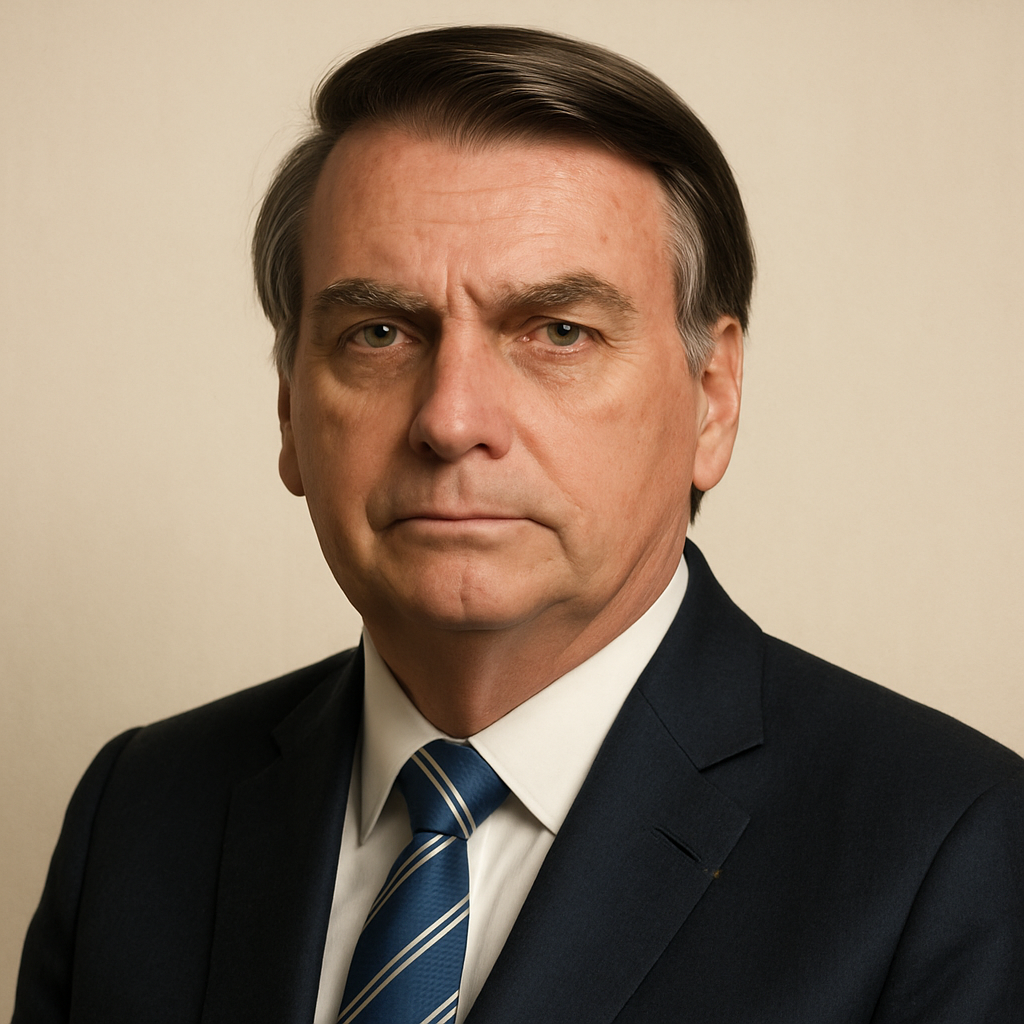
Speech by the President of the Republic, Jair Bolsonaro, during the Swearing-in Ceremony of Mr. Eduardo Pazuello, Minister of State for Health - Palácio do Planalto.
 Jair Bolsonaro · Former President of Brazil
- Context
- Bolsonaro addressed the swearing-in ceremony of Eduardo Pazuello as Minister of Health at Palácio do Planalto on September 16, 2020.
- Main themes
- COVID-19 pandemic response, hydroxychloroquine advocacy, ministry of health leadership transition, economic impact of pandemic, lockdown and school closures, unemployment and job preservation, domestic violence and social consequences, presidential decision-making, vitamin D tax elimination, federalism and gubernatorial authority
- Duration
- ~12 min
- Words
- 1,450
- Sentences
- 87
- Readability
- 58
- Grade
- 9.2
- Syntax
- 2.91
- Vocabulary
- 2.17
Translated from Portuguese
The broad sphere of national life a sentence belongs to. Every sentence has an Arena, so it is the denominator the other indices are read against.
Other87 sentences in 21 paragraphs
I confess that it is less complicated to be President of the Republic than Minister of Health. Your responsibility, Pazuello, is enormous. I want to thank you for accepting this challenge.
We started in 2019, the full ministry, unfortunately, this year, we, along with the world, were surprised by the virus and challenges arose. I am not a guesser; I talk to my ministers, and most of the time, in private, where we try to come to an agreement. With the previous Minister of Health, nothing was resolved in our conversations.
I learned, in the military, and it applies to all of us, that worse than a poorly made decision is indecision. We had to do something to contain the deaths that were approaching people victimized by the virus. The first problem, with the first minister, was the issue of our well-known hydroxychloroquine. I accept, even not being a doctor, any criticism of it, but from people who can present an alternative to it.
Today, studies already show that around 30% of deaths could have been avoided if hydroxychloroquine had been administered early. The decision was not made on a whim; I decided to bet on it as if I were a gambler. With Ernesto Araújo, we talked to some ambassadors from around the world. Because in Africa, when the number of deaths was small at that time, the American FDA was studying this here. If there had not been a minimum indication, they would not have studied it. I believe we were bold.
Personally, I started to defend hydroxychloroquine, also based on the experiences of doctors across Brazil, who believed in it and had a response through their observation. I could not impose or suggest to the then Minister of Health that the protocol for treatment with hydroxychloroquine should only be administered when the patient was in a serious condition.
Nothing is more just, nothing is more sacred, nothing is more legal than a doctor on the front line deciding what to administer to their patient in the absence of a medicine. In the absence of a medicine with scientific proof. The responsibility lies with the doctor. As it often lies with the military, on the front line, deciding whether to attack or retreat in combat.
Also, at the beginning, I spoke with Paulo Guedes, along with the Secretary of the Revenue. Let's eliminate the taxes, among other possible remedies for treating chloroquine, for vitamin D. Paulo Guedes immediately agreed. We talked with Marcos Cintra, and at that moment, the tax on vitamin D was eliminated.
At the time, the press criticized me a lot. Without scientific proof, President Jair Bolsonaro eliminates taxes on vitamin D. I was happy because, this week, you recognized, you did not mention my name, but you recognized that we were right in the past.
From the beginning, I was also heavily criticized for my first statement, the first time I took the stage at night to express our position, our concern, and what we thought about the virus. I said, at that moment, where I was harshly criticized, dear Paulo Guedes, that we had two problems ahead: the virus and unemployment. And that both should be treated with the same responsibility and simultaneously. I want to congratulate the economic team of Minister Paulo Guedes, who took a series of measures to contain jobs in Brazil. Congratulations, Paulo Guedes, congratulations to our team of ministers.
At that time, we could already talk about who, once infected by the virus, could worsen that person's situation. And we said, at that moment, also through some studies around the world, that children, young people, especially those under 40, once affected by the virus, had a near-zero chance of progressing to lethality. It was 0.00 something.
We had no reason to close schools. But the restrictive measures were no longer in the hands of the Presidency of the Republic or our Government as a whole. By judicial decision, they were exclusively the responsibility of governors and mayors, who could only take measures that were more restrictive than those of the governors. I regret that we are a country with the highest number of days in lockdown in schools. This is absurd.
We also talked about closing commerce. It could have been done at that moment, as I said, I did not cower, I did not omit myself. Even being heard under criticism, almost unanimous and massive from the Brazilian press, that commerce could not be closed in the way it happened.
We also talked about the time when the isolation policy, the stay-at-home policy, would lead to an increase in domestic violence, child abuse, violence against women, and also suicide. The numbers are already appearing. I did not play; it was just a reality that I put on the table. After all, all the measures taken in Brazil by governors and mayors did not aim to prevent people from being contaminated. They aimed to prevent people from being contaminated in a very short period of time. So that hospitals could not attend to them. But then came the question: would the hospital attend to them if they did not want to suggest the medicine? What measure is this? I repeat, criticize, but present a solution.
Today we see that this issue could have been treated a little differently, with much more rationality. I understand that some governors were taken by panic; provided by this catastrophic media that we have in Brazil. This is not a criticism of the press; it is a statement, forgive me.
Dear Davi, since you did not seek Dr. Bolsonaro, you did not take chloroquine, but you were certainly worried about the virus. In this building here, approximately 200 people were affected by the virus. I have not received information that any were even hospitalized. Because, for the most part, they took not Bolsonaro's medicine, but the medicine they had.
I want to congratulate here my dear companion, friend, Osmar Terra. An ally from the beginning on this issue, with numbers, with data, with conviction. He was also heavily criticized here in Brazil for his positions, but we have tough skin, Osmar. We know how to resist. And I want to remember a fact here that I have already exposed on some occasions in the past. In the Pacific War, dear General Fernando, dear General Pujol, from my class. Soldiers arrived wounded, needing transfusions; there was no more blood for transfusions. So at that moment, the doctors, always them, decided to administer, to those who lacked blood, doses of coconut water.
Obviously, imagine today if someone did that, without that past observation, it would be a scandal. But it worked, even without scientific proof, and how many diseases would still exist in the world today if it were not for the boldness of doctors at that moment to expose themselves and seek a solution for that brother of theirs, who had only a few days left if nothing was done. So, I congratulate the entire medical class in Brazil, especially those who dared with hydroxychloroquine, as well as with other forms of medication.
As I move towards the conclusion, dear Pazuello, dear fellow paratrooper, you are already invited, not just invited, but summoned, to jump with me in January in the KC-390, in the lake here in Brasília. We are together on this mission. To dare, to dare and to win. You are a winner. I confess that when I invited you, I only believed in my invitation given your past life.
You were a great man during the management of the 2016 Olympics in Rio de Janeiro. Shortly after, at the end of 2018, also as an intervener in the Treasury, Paulo Guedes, there in the state of Roraima. Also in Operation Welcome. We all knew of your enormous capacity to digest whatever was under your guidance. So, you really, in these three months, gained the sympathy, not of the Government, the Government already knew you, but of mayors, of governors, as we have here the governor of Amazonas, we have from Tocantins as well, if I am not mistaken, is that right? You really gained the sympathy and trust of the people. To no one who asked for help from you did you fail to attend. Everything you could do, you did for our Ministry of Health.
And at this moment, I ask God to continue to enlighten you. That you do an excellent job because the consequences of this work, the consequence of this work is to save lives, to alleviate suffering, to give hope to our people.
Congratulations, Pazuello, good luck, happiness. Thank you very much to all of you.
The original Portuguese. The tags above are read on the English translation's sentences.
Eu confesso que é menos complicado ser Presidente da República do que ministro da Saúde. A sua responsabilidade, Pazuello, é enorme. Eu quero agradecer por você ter aceito esse desafio.
Começamos 19, o ministério completo, lamentavelmente, no corrente ano, fomos, juntamente com o mundo, surpreendidos com o vírus e desafios apareceram. Eu não sou palpiteiro, eu converso com meus ministros e, na maioria das vezes, de forma reservada, onde nós procuramos nos acertar. Com o ministro da Saúde anterior, nada foi resolvido nas nossas conversas.
Eu aprendi, no meio militar, e vale para todos nós, que pior que uma decisão mal tomada, é uma indecisão. Nós tínhamos que fazer alguma coisa para conter as mortes que se aproximavam de pessoas vitimadas pelo vírus. O primeiro problema, com o primeiro ministro, foi a questão da nossa conhecida, hidroxicloroquina. Eu aceito, mesmo não sendo médico, qualquer crítica a ela, mas por parte das pessoas que possam apresentar uma alternativa para a mesma.
Hoje, estudos já demonstram que por volta de 30% das mortes, poderiam ser evitadas, caso, de forma precoce, fosse ministrada a hidroxicloroquina. A decisão não foi da minha cabeça, resolvi apostar como se fosse um jogador. Com o Ernesto Araújo, conversamos com alguns embaixadores do mundo todo. Porque na África, quando o número de mortes era pequeno, naquela época, a Anvisa americana, FDA, estudava isso aqui. Se não tivesse um mínimo de indício, não ia estudar. Acredito que nós ousamos.
Particularmente, comecei a defender a hidroxicloroquina, calcado também nas experiências de médicos pelo Brasil, que apostavam nela e tinham uma resposta através da sua observação. Não consegui impor ou propor a sugestão ao então ministro da Saúde, de retirar do protocolo que o tratamento com a hidroxicloroquina, deveria ser ministrada apenas, quando o paciente tivesse em estado grave.
Nada mais justo, nada mais sagrado, nada mais legal, do que um médico na ponta da linha, decidir o que vai aplicar em seu paciente na ausência de um remédio. Na ausência de um remédio com comprovação científica. A responsabilidade é do médico. Como é do militar muitas vezes, na ponta da linha, decidir se vai atacar ou vai recuar na frente de combate.
Também, no início, conversei com Paulo Guedes, juntamente com o secretário da Receita. Vamos zerar os impostos, entre outros possíveis remédios para tratar a cloroquina, da vitamina D. Paulo Guedes de imediato atendeu. Conversamos com Marcos Cintra, no momento foi zerado o imposto da vitamina D.
Na época, a imprensa muito me criticou. Sem comprovação científica, presidente Jair Bolsonaro, zera impostos da vitamina D. Fiquei feliz porque, nessa semana, vocês reconheceram, não falaram o meu nome, mas reconheceram que nós estávamos certos no passado.
Desde o começo também, onde fui muito criticado, na primeira manifestação, na primeira vez que ocupei o espaço à noite, para externar a nossa posição, a nossa preocupação e o que achávamos do vírus. Disse, naquele momento, onde eu fui duramente criticado, prezado Paulo Guedes, que tínhamos dois problemas pela frente: o vírus e o desemprego. E que ambos deveriam ser tratados com a mesma responsabilidade e de forma simultânea. Quero cumprimentar a equipe econômica desse ministro Paulo Guedes, que tomou uma série de medidas para conter os empregos no Brasil. Parabéns, Paulo Guedes, parabéns a nossa equipe de ministros.
Também naquela época, já podíamos falar a quem realmente, uma vez infectado pelo vírus, ele, poderia agravar a situação daquela pessoa. E falamos, naquele momento, também via alguns estudos pelo mundo, que as crianças, os jovens, em especial os abaixos de 40 anos, uma vez acometidos pelo vírus, a chance de partirem para a letalidade era próxima de zero. Era 0,00 alguma coisa.
Não tínhamos porque fechar as escolas. Mas as medidas restritivas não estavam mais nas mãos da Presidência da República ou do nosso Governo como um todo. Por decisão judicial, elas competiam exclusivamente aos governadores e os prefeitos, que só poderiam tomar medidas de modo que fosse, mais restritivas do que os governadores. Lamento, somos um País com o maior número de dias em lookdown nas escolas. Isso é um absurdo.
Também falamos sobre o fechamento do comércio. Poderia ter sido feito, naquele momento, como eu falei, eu não me acovardei, eu não me omiti. Mesmo sendo ouvido sob críticas, quase que unânime e massiva por parte da imprensa brasileira, que o comércio não poderia ser fechado da maneira como aconteceu.
Também falamos da época que a política de isolamento, do fica em casa, a economia, a gente vê, depois levaria ao aumento da violência doméstica, abuso de criança, violência contra a mulher, também suicídio. Os números já estão aparecendo. Não joguei, era apenas uma realidade que botava na mesa. Afinal de contas, todas as medidas tomadas no Brasil, por governadores e prefeitos, não visavam impedir que pessoas fossem contaminadas. Visavam impedir, sim, que as pessoas fossem contaminadas no espaço de tempo muito pequeno. De modo que os hospitais, não pudessem atendê-las. Mas daí veio a pergunta: o hospital atendê-las se não queriam sugerir o remédio? Que medida é essa? Repito, critiquem, mas apresentem uma solução.
Hoje nós vimos que essa questão poderia ter sido tratada de forma um pouco diferente, com muito mais racionalidade. Entendo que alguns governadores foram tomados pelo pânico; proporcionado por essa mídia catastrófica que nós temos no Brasil. Não é uma crítica à imprensa, é uma constatação, me desculpem.
Prezado Davi, como o senhor não procurou o doutor Bolsonaro, você não tomou a cloroquina, mas com toda certeza você ficou preocupado com o vírus. Nesse prédio aqui, aproximadamente 200 pessoas foram acometidas do vírus. Não tive informação de nenhuma que foi sequer hospitalizada. Porque, em grande parte tomaram, não o remédio do Bolsonaro, mas o remédio que tinham.
Quero cumprimentar aqui, o meu prezado companheiro, amigo, Osmar Terra. Um aliado desde o princípio nessa questão, com números, com dados, com convicção. Também foi massacrado aqui no Brasil, por suas posições, mas nós temos couro duro, Osmar. Nós sabemos resistir. E quero lembrar um fato aqui que já expus, em alguns momentos, em algumas oportunidades, no passado. Na guerra do Pacífico, prezado general Fernando, prezado general Pujol, da minha turma. Os soldados chegavam feridos, precisando de transfusão, não tinha mais sangue para transfusão. Então naquele momento, os médicos, sempre eles, resolveram ministrar, nesses que careciam de sangue, doses de água de coco.
Obviamente, imaginem, hoje em dia, se alguém fizesse isso, sem aquela constatação do passado, seria um escândalo. Mas aquilo deu certo mesmo, mesmo sem comprovação científica e quantas e quantas doenças estariam até hoje existindo no mundo, se não fosse a ousadia dos médicos nesse momento de se expor e buscar uma solução para aquele seu irmão, que está com os dias contados se nada fosse realizado. Então, parabenizo toda a classe médica do Brasil, em especial, aqueles que ousaram com a hidroxicloroquina, bem como com outras formas de medicamento.
Indo para o encerramento, prezado Pazuello, prezado colega paraquedista, está convidado já, convidado não, intimado, a saltar comigo em janeiro no KC-390, no lago aqui em Brasília. Estamos junto nessa missão. Ousar, ousar e vencer. Você é um vencedor. Confesso que quando te convidei, eu só acreditei no meu convite dado a sua vida pregressa.
Foi um grande homem por ocasião da gestão das Olimpíadas 2016, no Rio de Janeiro. Logo depois, final 2018, também, como interventor na Fazenda, Paulo Guedes, lá no estado de Roraima. Também na operação Acolhida. Todos nós sabíamos da sua enorme capacidade de digerir aquilo que estivesse aí sob sua orientação. Então, você, realmente, nesses 3 meses, ganhou a simpatia, não do Governo, o Governo já conhecia você, mas de prefeitos, de governadores, como temos aqui o governador do Amazonas, temos do Tocantins também, se não me engano, está certo? Você realmente ganhou a simpatia e a confiança das pessoas. A ninguém que pediu socorro a você, você deixou de atender. Tudo que você podia fazer, você fez pelo nosso Ministério da Saúde.
E, nesse momento, eu peço a Deus que continue te iluminando. Que você faça um excelente trabalho, porque as consequências desse trabalho, a consequência desse trabalho é salvar vidas, é melhorar sofrimentos, é dar esperança ao nosso povo.
Parabéns, Pazuello, boa sorte, felicidades. Muito obrigado a todos vocês.