




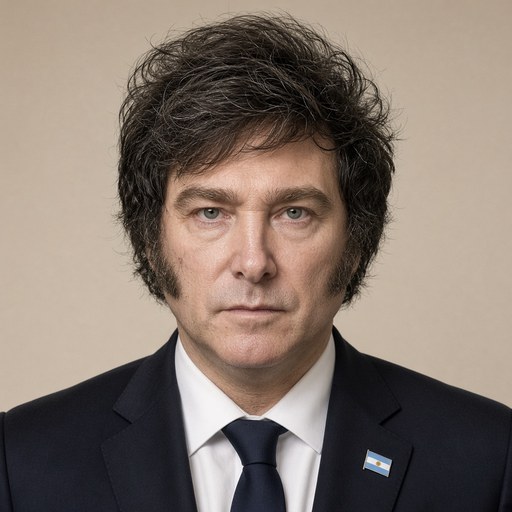
Words of the President of the Nation, Javier Milei, at the 21st Annual Conference of the Council of the Americas, titled "Argentina: Economic and Political Perspectives," at the Alvear Hotel, CABA.
 Javier Milei · President of Argentina
- Context
- Milei addressed the 21st Annual Conference of the Council of the Americas at the Alvear Hotel in Buenos Aires on August 14, 2024, outlining Argentina's economic transformation.
- Main themes
- Fiscal adjustment and economic stabilization, inherited economic crisis, libertarian economic reform, inflation reduction, Argentine economic miracle, government management achievements, Pact of May, Central Bank restructuring, poverty and social indicators, zero deficit, twin deficits, reconstruction of Argentina
- Duration
- ~63 min
- Words
- 7,561
- Sentences
- 271
- Readability
- 51
- Grade
- 12.9
- Syntax
- 3.28
- Vocabulary
- 2.12
Translated from Spanish
The broad sphere of national life a sentence belongs to. Every sentence has an Arena, so it is the denominator the other indices are read against.
Other271 sentences in 53 paragraphs
Good morning everyone. I want to express my gratitude to Susan Segal, Natalio Grinman, and the other members of the Council of the Americas, as well as to the Chamber of Commerce and Services for inviting me to speak today. I am a bit agitated with the back and forth; the thing is that the topic of management, in such tough times as the ones we are facing, generates a very strong team spirit, and the truth is that it is incredible because the rest of the world is talking about the "Argentine miracle," and without the giants I have as ministers, this would be impossible. So, my thanks to all my ministers.
I also take this opportunity to greet the speakers from the various panels that took place today, as well as the members of the National Cabinet who have come to defend our management; and also – why not – to the governors who support and are part of the spirit of the times that has come to change Argentina. I celebrate that we are increasingly those who set aside pettiness and differences to agree on the fundamental pillars of this change, which we institutionalized with the signing of the Pact of May, on July 9, in Tucumán.
I want to start by reviewing the state of the situation we find ourselves in today, nine months after we began our government. The events in the Argentine economy and the world are so dynamic that it is sometimes easy to lose the broad perspective of the processes and underestimate or not fully appreciate all the advances we have made in terms of management. In other words, it is common in economics and politics that sometimes the tree hides the forest. That is why I am here to tell you – firsthand – about the path we have already traveled and the one that still awaits us.
This administration has had to face the worst inherited crisis, both economically and politically, in all of Argentine history. Specifically – at the moment we took office – we combined the worst of the three worst crises in Argentina. We had a monetary imbalance that was – at least – double that of the pre-Rodrigazo period in 1975; we had a broken Central Bank, even worse than what existed in 1989, before the hyperinflation of Alfonsín, and social indicators were worse than those of 2001. In other words, it was the sum of all evils; it was a true hot potato.
In that sense, with a lot of courage and bravery, we faced this challenge because we received a country on the brink of default and hyperinflation; with twin deficits of 17 points of GDP; we had the SIRA debt, of nearly 50 billion dollars; we had debt – in pesos – maturing soon for the equivalent of 90 billion dollars; we had external debt – due – of 25 billion dollars. Additionally, we had – in the Central Bank – the equivalent of 4 monetary bases maturing in one day. We had the issue of the PUTs hidden, among other things.
And in that context, evidently, the outgoing government expected us to resolve it, not as libertarian liberals, but expected us to resolve it as liberal libertarians; so that the combined problems of stocks and flows would lead to a tremendous hyperinflation; and in January be able to return, but already with all the adjustment done by the market in the worst way and with the consequences that I will describe shortly, if we had not implemented the program we did.
In other words, it was – clearly – premeditated for us to blow up in less than a month. On top of that, there were delayed tariffs and other important prices in the economy held down, equivalent to one-fifth of their value. At the same time, the Central Bank had negative net reserves of 11 billion dollars; in other words, we were in a position to go directly to the worst crisis in our history. That would have left us with an annual hyperinflation of around 17,000%; a contraction of GDP of more than 15 points; an unemployment rate that would have reached 30%, and – as has happened in other experiences of this nature – surely the number of poor would have reached 90% and the number of indigents 50%. In other words, we would have faced a true catastrophe. But all this did not prevent us from taking charge of the problem and starting the reconstruction of the country, entrusted by the citizens through the ballot box.
This is how we achieved the largest fiscal adjustment in the history of humanity. To give you an idea of the adjustment: we found a consolidated deficit of 15 points of GDP: 5 in the Treasury and 10 in the Central Bank. Naturally, we were told that making an adjustment in the Treasury of 1 point per year was enormous. Therefore, I believe that the mildest thing they said about wanting to achieve zero deficit in the first year of government would have at least labeled us as crazy. And in this – thanks to the enormous management of Minister Caputo – we achieved a financial surplus, that is, the much-talked-about true zero deficit, in the first month of management.
If you consider that, in the last 123 years of history, we had a deficit in 113, you will realize that the achievement is enormous, and when we did not have a deficit it was because we were not paying the debt. It is the first time in history – from the beginning of the 20th century to today – that we have a positive financial result without being in default.
On the other hand, there was the issue of quasi-fiscal that was 10 points of GDP; naturally, no one talked about that topic, it was too sophisticated for the general public, but it was a bomb that – effectively – had to be resolved. And there – in combination with Minister Caputo, with the president of the Central Bank, Santiago Bausili, and with the enormous work of Pablo Quirno – the Secretary of Financing – in six months, it seems incredible, but – in 6 months – we managed to finish and liquidate the quasi-fiscal deficit consolidating a fiscal adjustment of 15 points of GDP in 6 months, the largest fiscal adjustment in the history of humanity.
We ended the financing of the Treasury via monetary issuance; we lowered the interest rate and – progressively – began to clean up the balance sheet of the Central Bank. Since we started Phase 2 of our program, there is no longer any monetary issuance tap in the Argentine Republic; we have closed them all. And it is thanks to that that the exchange rate situation has stabilized.
Basically, our working hypothesis is that inflation is always – and everywhere – a monetary phenomenon. To end that scourge, we must end the issuance, because that increase in the money supply is what leads to the loss of purchasing power of money, and that causes all prices – expressed in monetary units – to rise.
The exchange rate is just one more; we must understand that; the exchange rate is one more price in the economy, and what the Central Bank does with the money supply is determine the nominal scale of the economy.
There is something ringing, thank you. So, in that context, the first stage was zero deficit to – precisely – cut off the issuance to finance the fiscal deficit. It was achieved in the first month of management. Not only that, but we had to end what was causing the quasi-fiscal deficit and end the remunerated liabilities. Once we finished with the remunerated liabilities, we also ended the issue of the PUTs. And in that sense, we had gone to a Zero Excess Money Supply Program. That is, the only way money would be issued was through the external sector, that is, buying dollars, assimilating the sale of dollars by the private sector as the counterpart of money demand. In other words, with dollars, you buy pesos.
But one of the things we realized is that this was not enough because – in reality – until we resolve the stock problems, we have a capital control. And in that situation, it is not that individuals are buying pesos with dollars, but that they are liquidating dollars because there is capital control. Therefore, it is not true that it is genuine money demand, and from that, we moved to the zero issuance system, while we have capital control as a consequence of not having yet resolved the stock problems. This is interesting because – either maliciously or out of ignorance – they talk about intervention, that we were intervening in the exchange market.
What would a world or equilibrium without intervention look like? In equilibrium without intervention, the interest rate must be free because it is a mechanism of intertemporal coordination and we should not touch it; the exchange rate would be free, and therefore, the variation of reserves would be null and the variation of the money supply would be null. In this case – since we have capital controls due to stock imbalance problems – which is getting smaller, in this sense the only way to replicate the equilibrium in non-intervention is, precisely, to remove the pesos we issued for buying dollars, from the capital control, and obviously, as there was a gap for every 3 dollars traded in the MULC, 2 have to return and 1 stays within the Central Bank, and the variation of the money supply is zero. So, if you look at it, this new equilibrium has less degree of intervention than we had before this. Therefore, it is not that we went to a level of more intervention, but of less intervention.
That is why I – sometimes – do not know if economists, after so many years of living in a dirigiste economy, have muddled their brains or are simply ignorant; and obviously, as the money supply remains fixed, as the nominal scale remains fixed, what started to happen? The exchange rate began to fall; and the convergence between the parallel exchange rates and the official one is occurring from the top down and not as it historically was in Argentina, from the bottom up. In other words, we are not willing to devalue to ruin Argentines; we are going to work on changing their productivity levels so that Argentines do not have to become poorer because of the mismanagement of low-quality economists and governments of the worst kind.
Still, we continue to pay the price for the true blow that was the issuance of 13 points of GDP in the last year. But – thanks to the fiscal and monetary anchor – we managed to avoid hyperinflation, and we are bringing it down. In fact, I always like to work with wholesale inflation because it anticipates the behavior of inflation, and when we arrived, in December, wholesale inflation was 54% monthly. I understand that economists – as they predicted all kinds of calamities – do not want to see it this way because they will be exposed in their errors, but 54% monthly annualized is equivalent to 17,000%. And the reality is that the last wholesale data was 2.7%, which annualized gives 35%. What a tremendous achievement, worthy of historical recognition for Minister Caputo to go from 17,000% to 35%!
But I have more to recognize from Minister Caputo; there is still more to do. Now, 2.7%, but I also have a crawling peg system; that is, in some sense, we are enabling that inflation floor of 2, obviously, because we have to recompose a whole stock problem. And in that context – if we remove that floor of 2 – inflation would then be traveling at less than 0.7 monthly; that is, inflation – truly – has not gone down from 17,000 to 35, but has gone down from 17,000 to 8%. Thank you, “Toto.”
And the truth is that we are doing all this through market mechanisms, and not through the economic shamanism that politicians had accustomed us to. The essential characteristic of this anti-inflationary program, compared to the historical ones that were successful, is that, for example, one of the things that did not happen was hyperinflation before, which would lead to a liquefaction of the financial assets of the economy and that would be very easy to stabilize because – starting from very low levels of monetary aggregates – it becomes very easy to stabilize through the recomposition of money demand, for example. But that equilibrium seemed very painful to us, in case the orcs had allowed us to continue governing with a hyperinflation.
On the other hand, we also did it without expropriations. That is to say, there was no such thing here - as many econochantas predicted - about a Bonex Plan, not to mention the idiots who claimed there was a Bonex Plan when there wasn't. Furthermore, another distinctive element of this: there were no price controls. Not only were there no price controls, but the exchange rate was also not controlled, when - in reality - with an economy that has the instability of money demand that it has and the exercise and flexibility we have to switch portfolios to dollars, fixing the exchange rate makes it much easier to stabilize. And as if all this were not enough, we are carrying out this entire stabilization process with a recomposition of relative prices. It is interesting, everyone sees the miracle, except the Argentines. But we did not only focus on short-term stabilization issues, if you will, with an aggressive design in fiscal matters, aggressive in monetary matters, and adjusting the external sector until stocks are recomposed. We have also taken care of the long term, as we have embarked on a reform plan that is the most ambitious in all of Argentine history. The reform program, the largest in Argentine history, was carried out in the 1990s, during the government of Carlos Menem. The reform that we carried out, with the DNU and the Bases Law, is 8 times larger than what Menem did throughout his government; and we did that in 6 months, with 15% of the Chamber of Deputies and 10% of the Senate. Talk to me about management now.
In addition, our economic program has many facets and fronts of battle, but it is based on three main foundations: an orderly macroeconomy without tricks or shortcuts, to provide a definitive solution to the problem of inflation; a deep cut in public spending to relieve the burden on the private sector; and an obsessive focus on deregulating and restoring freedom to each Argentine, where I have the privilege, the honor, the pride of having a minister of the intellectual stature of a colossus - like Federico Sturzenegger - leading this revolution.
I am a fan of my ministers, you will see. Because some idiot said that I surround myself with mediocrities to shine myself. But what can you expect from the analog red circle? But there they are, let them keep predicting that Massa would win and all those things. In that sense, to achieve the first, we have made a non-negotiable commitment to fiscal balance; the economy has clear rules. The first is that one cannot spend more than one earns. Period, enough, it’s over; there is nothing more to say. In fact, when we turned our backs and started squandering what we did not have, not only did it go terribly for us, but the ones who lost the most were those who had the least, who paid the broken plates with inflationary taxes. From the beginning of the 20th century to today, using the Cerro-Meloni methodology, Argentina has had 22 crises; of those 22, 20 have a fiscal origin. It is all said.
And that is why I also want to give you a preview of what we are going to do regarding the budget: we are going to redesign the way the budget is written. The budget is a set of expenses, an estimate of income is made, and from there the primary result derives, you have the burden of interest, the financial result comes out, and from there the financing comes out. We decided that we are not going to use that methodology; our methodology will be called zero deficit, and zero deficit means that the financial result is zero. Therefore, I do not need to be taking on new debt. That is to say, Argentina stops taking on new debt.
I warn you that rolling over the debt is not new debt because - afterwards - the types who add up with difficulty and who cannot do it even with an abacus say: “there, they took on debt.” Yes, I say, to roll over. I warn you because we live in Argentina. Not only that, once you go to zero deficit, that means that the debt-to-GDP ratio is non-increasing, therefore - looking to the future - we should see the Country Risk collapsing. And this is interesting because while there was a financial shake-up all over the world, what was the only place that rose and fared better? Argentina.
But not only that, because that means that, then, the primary surplus will be equal to the interest. And as it is set, in terms of zero deficit, it can be made so that the budget is neutral, in terms of income. Therefore, there will be a part of public spending that will be adjusted, for example, that follows inflation, and by difference, the rest of public spending will come out, consistent with that rule. Thus, for a base scenario, certain allocations are determined, which will later be weights, and that is what will allow that - as revenues adjust - given the spending with that logic, by difference those allocations will be assigned. In such a way that a rule is designed to not violate - in any way - the zero deficit. We will not have a fiscal deficit.
Moreover, regarding inflation, the truth is that - in the last fifteen years - there have only been 2 countries in the region that presented an annual inflation of 20%, and we all know which ones they are: one, it was us; the other is the bloody dictatorship of the criminal Nicolás Maduro. I want to be very clear about this: inflation nullifies any type of life project, business, or even forming a family. It becomes impossible to calculate expenses or plan a decent future with inflation eating away at the pockets of Argentines. That is why ending it is instrumental to regain the trust of all economic actors, which was squandered by previous governments. It is because of those past experiences that we learned that ordering fiscal and financial matters is a sine qua non condition to grow again.
No matter how good the intentions of a government may be - without a sustainable macro - everything else is ephemeral. Again, it does not go from the micro to the macro. You order the micro and the macro is a disaster, you will end up badly. That is why, first, the macro must be ordered; first, you have to end and exterminate inflation, why? So that the price system begins to transmit information correctly and so that, in that way, resources are allocated efficiently, there is no other mechanism. And that is why we make fiscal balance a mandate, one that transcends any change of management and manages to remain for posterity. Regarding the deregulation plan, which affects each of the sectors of the economy, the empirical evidence is on our side because - as you have heard me say many times - the freest countries are 12 times richer than the repressed; aside from having 50 times fewer poor people in the extreme format and 25, if you take it in the standard.
But this implies fighting, among other things, against the particular interests of the business caste, the interests of the union caste, and especially against the interests of the political caste, which is the one that protects those sectoral interests, something that Minister Sturzenegger ingeniously calls the Bermuda Triangle, because at the vertex, among those elements, the entire country disappears. All this that we are doing is already yielding results. Just - in the month of July - the patenting indices rose by 19%; car production by 48%; retail sales by 40%; construction by 12% and activity in the real estate market by 36%. When you start looking at the activity map or the traffic light, if you will, the green color is advancing more and more and - technically - the recession hit or had its worst moment between the months of April and May. Let’s go back to the statements we made at that time, when we said: “the worst is over” and, naturally, the econochantas said: “the worst is yet to come,” who are the same ones who predicted that inflation - for example - would not be able to break a floor of 7, and now we are seeing if it goes below 4, in retail, but that’s how we are.
A part of these pillars, that they are a reality, is possible thanks to the joint work carried out by the technical teams - led by the Ministers of Economy and Deregulation, ‘Toto’ and Federico - who since they took office have carried out what can only be classified as a heroic feat that will undoubtedly go down in history. We are serious, we want to leave behind the failed model of the present state and re-establish the model of freedom. That is why we are making a profound, root-level change, and every profound change requires time, a scarce resource that must be used with prudence and wisdom if we want this new model to endure over time. People cannot wait any longer, but they understand that this is the only way. Politics must understand the same and support - with its own effort - that of the citizens.
It is of no use to make changes that cannot endure; we have already lived that story, with governments that fail after rushing to provide solutions that they cannot then sustain, causing worse damage than what was initially found. We are not willing to repeat that story. That is why, believe me, I tell you that no one wants to get out of the restrictions more than I do, but - as I have said on another occasion - removing the patches, without first solving the underlying problem, would worsen the crisis we inherited. This reminds me of what Milton Friedman said about inflation and alcoholism: in both cases, when alcoholics start drinking or when countries start printing money, the good effects come first, the bad effects come later. When the cure arrives, it is the opposite: it starts with the bad and then the good comes; and the hangover from stopping drinking, the more one drank, the deeper the hangover.
Imagine with the 20 years of populism that we bring at a cost, it was clear that it was not going to be a bed of roses. That is why I ask you to see the whole movie and not just the picture. We do not care about the pressures, wherever they come from, because we did not come here to do demagogy, we came here to change things - seriously - and forever. As we begin to clean up the Central Bank, we will be able to lift the currency restrictions, and that will generate greater investment and expansion of economic activity which, by the way, there are elements that drive economic growth. It is false that one cannot grow while the restrictions are in place; that is also a fallacy and I will explain why. First, there are elements that are causing the rebound; I do not consider it growth, but many look at the GDP rate and with that they talk about growth, but there are factors that contribute to the rebound, to the recovery, and there are factors that will contribute to long-term growth.
Regarding the rebound, what you will have is the following: there is a recomposition of real wages; there is a recompensation of pensions in real terms. Therefore, that will allow demand to begin to expand, in a context of high idle installed capacity, so that is one part of the rebound and that all the time you can see how wages are outpacing inflation and also pensions. The other issue is the cycle of stocks: towards the end of the previous government, as the crisis was foreseen, many companies what did they do to protect themselves, they stocked up. That meant that activity, during the last part of the previous government, did not fall as much as it should have, and that exacerbated the decline we had during the first part of this year. Therefore, the very recomposition of stocks... that will also generate a rebound. I also want to mention the quantitative issues, because everything with the “Plan Platita” and with the expansions and everything, in the last quarter of last year, the economy fell by 2.5% and we, making the largest adjustment in the history of humanity, 2.6; if you want to take it year-on-year to show the worst, 5.1. When, in 2002, the fiscal adjustment was made, not of these magnitudes, but much smaller, the fall was 16%. Therefore, that also implies that the adjustment was made intelligently and taking into account the protection of the most vulnerable. But not only that, but also, growth is generated by investment and investment must be financed, and it is financed with savings. The fiscal adjustment of 15 points of GDP returns money to the private sector. That is why, while in December we were discussing hyperinflation, today we are discussing mortgage loans for 30 years; that is to say, that burden of the State moving out of the way is returning funds to the private sector so that it can invest and we can grow.
Of course, I am not going to tell you who should invest; I am not a communist, I am not a socialist, I believe in the market, you have to do it, come on, do it. Obviously, as we reduce public spending and make the surplus increasingly sustainable, which took us so much effort to achieve, do you know what we are going to do? We are going to lower taxes, that is, when there are surplus resources, we are going to lower taxes. Something that, in addition, we are already doing. And, basically, a reflection, what is the true burden of the tax burden that a country has? In that, Milton Friedman and Murray Newton Rothbard were very clear; it is the size of the public sector. And if we made an adjustment of 15 points of GDP, we are the government that returned the most resources to all Argentines like never before in history. Therefore, those who say, who start to look at whether some tax, temporarily, went up, and that we are the first case where we are demonstrating that it was temporary because we are lowering them, in addition, we returned to good Argentines 15 points of GDP.
Look at this, how interesting, because today we have zero deficit, but in a context that comes from a recession; that is, that - in terms of structural results - is positive; it means that when the economy rebounds, we will return taxes; and when the economy starts to grow, we will return more taxes. That is to say, I am going to take it upon myself – personally – to take the boot off the neck of the entire private sector so that we can genuinely grow again, because wealth is created by the private sector and not by the parasites of the public sector.
Obviously, if we are not doing it as quickly as we would like, it is because the conditions are not yet in place, and rushing to take the step puts at risk everything we have achieved so far. This is not a minor issue. It is much easier to do it on paper than to implement it, especially when - on the other side - there are the orcs. So, of course, because it seems like a joke. Besides, I am going to tell you something, Pablo always says this brilliantly. He says… he does it with the case of the exchange control: “well, we have to open up, we have to do this, we have to do that.” Now, if we do that and we get run over, we would end up with a brutal crisis, and when the brutal crisis comes, that person who was writing - from a desk - these things comfortably, grabs and says: “one thing is why this should not have been done.” Do you realize? That is to say, all he does is change what he wrote on paper; in the meantime, they can run over a government.
So what we are going to do is respect the times and conditions of our economic program, the same one we proposed to society and the same one that was supported with their vote. If you look, we do not set the goals and timelines; what we do is: we meet goals and - as we meet the goals - we take steps and we move forward. So, what is the anxiety? To lift the exchange control, that is, phase 3? Well, when is that going to happen? When we have definitively cut off monetary issuance, that will happen when the monetary base - in the conventional format - finishes equaling the broad monetary base; which means that all the excess money has been eliminated. The flip side of that, you will see that the inflation rate will be very similar or tending to zero, and it means that - when that happens - there is no excess pesos. If there are no excess pesos, I can clearly open up, because it is like giving a revolver without bullets; no matter how much they want to shoot, they cannot because they will not have bullets, and as we are taking out all the pesos and as - from now on - we are also going to take out about 8 trillion pesos. I can assure you that what this economy will lack is pesos; and when that happens, because then everyone goes on alert and gets desperate, of course, they have never lived in a world with a fixed amount of money.
We talk about currency competition or the term endogenous dollarization; I will present it in dollars because it is easier so that I am not talking about things that may seem very abstract. If you had a fixed exchange rate, the increase in the demand for money will translate into what, that with your dollars you buy pesos, and that is what expands the amount of money. In that case, the supply of money is mapped with the demand for money. But what happens is that you are leaving those dollars inside the balance sheet of the Central Bank. And what is the problem with that? That a government of criminals can always appear and seize the reserves of the Central Bank. They are the same idiots who say: “no, no, the problem with the new monetary rule is that we are not accumulating reserves, so we cannot pay the debt.”
First point: what does it mean, that then countries with a free exchange rate default? The truth is that I find it hard to understand the level of clumsiness of our professionals. But not only that, let’s follow their reasoning, so now we buy the dollars, from the Central Bank, so that the Treasury pays the debt. That is to say, excuse me, I will say it in Latin, I would say Pablo’s professor, that is to say, but are you suggesting that I screw over Argentines with inflationary tax to pay the debt? Are we all crazy!
Dollars are bought with fiscal surplus; the Treasury will buy dollars in the exchange market; not by counterfeiting money and defrauding good Argentines. And in that context, the other great fear that arises is, but if now people will have to bring dollars to make transactions and I have a fixed amount of pesos, I will have a brutal appreciation of the currency, and as I will have a brutal appreciation of the currency - if that occurs faster than the speed at which I modify the structure of the economy - that appreciation can generate a problem in terms of activity and employment. That is why we talk about currency competition or endogenous dollarization, because when we are in that stage, both currencies can coexist and transactions can be made in both currencies. So that the same supply of dollars that you bring will have a counterpart in the demand for dollars, and then the exchange rate remains stable and no one has to cry about appreciation.
That is to say, to gain competitiveness, it will have to be done by investing and not by defrauding people. On the other hand, we have seen again, in recent weeks - I just mentioned it - the fragility of the international financial and monetary system. It has become popular among analysts to read that the world is tending more and more towards fragmentation, instead of integration; more towards discord, instead of peace; more towards closure than openness; more towards retraction than the search for new markets. I imagine that many of you must have wondered, at some point, how can Argentina prosper in such a turbulent world? How can we advance when others are retreating? Well, just as we detached ourselves before when everyone was doing well and we were not doing well, we can reverse that.
At least to do (inaudible). I tell you, do not be afraid, because we have advantages that are often not seen, but that a large part of the world does not have, which are anchors that protect us against potential storms. The first and most important, we are purging the Argentine economic system of a decades-long cancer, which is monetary populism. In Argentina, you can no longer just throw a carpet over crises, taking on debt and printing money. We have learned, once and for all, that it does not work to get out of a crisis with issuance. Unfortunately, the same cannot be said for the rest of the free world, which is getting more and more indebted and diluting the value of its currencies every day. That is why it is no coincidence that, in the world, the purchasing power of ordinary people is increasingly lower, despite the fact that company valuations are getting higher and higher. They are playing with fire, taking a medicine that - in the long run - is nothing but poison. Well, we are not going to be monetary populism; we do not care if others do it.
We have intellectual honesty and a commitment that we have made to society to get out of the crisis, which we inherited by doing our homework and with genuine growth, not by doing economic shamanism that, in the long run, always engenders the poor who are the ones who end up paying for this. By doing things right, Argentina can go against the tide of the world and be an oasis of stability in the desert of global populism. Second: 25 years of economic populism, default, contract violation, and legal unpredictability have left us in a decapitalized country, with its best companies undervalued and with almost 300 billion dollars of Argentines outside the system. Third: that moment of uncertainty in global finances highlights the comparative advantages we enjoy as a nation, we have dynamic primary sectors with inexhaustible sources of resources, resources that the world needs and will continue to need, whether in crisis or not.
We have the second-largest shale oil reserve in the world; we produce food for 500 million people; we have the third-largest lithium reserve in the world; enormous copper reserves, still untapped; solar, wind, and hydropower, the Guarani Aquifer, and - if that were not enough - we have first-class human resources in all professional fields - although I have my doubts about economists - thanks to which today Argentina stops being a footprint in the world, despite the tragic political administration of the last century, of which we do have the worst in the world, otherwise I would not have won. Do you think that can be said of many other countries? No, only of a handful, so there is no doubt that we have been privileged by God in the world lottery. And, fourth, but equally important, we are embarking on a paradigm shift, not only economic but also social, political, and cultural.
And with this change, we are going against the direction that many countries in the world have been taking lately. While other countries propose censorship, we propose freedom of expression. Just look at what is happening in England, since the socialists came to power, they are imprisoning people for posting on social media; well, journalists here would also like that because they do not like having lost the monopoly of the microphone and being able to use that tool to extort and smear, slander without any cost. Social media bills them, and they do not like it. Stop looking for ghosts; they are receiving the same as they did, but only that people do it organically because they realized that many of them are criminals.
At the same time, while others are getting closer to falling into cultural and religious wars, which will end up expelling good people from their countries of origin, we invite the rest of the free world to participate in a country in reconstruction. While others punish those who undertake and produce, we celebrate them, we invite them back into the system. While others sacrifice innovation, creativity, and freedom itself on the altar of false morality, we deregulate the economy and return autonomy to the private sector. Argentines have already realized that all the goodist rhetoric is a scam serving oppression; we have already realized that those who pretend to be the champions of morality and defenders of the downtrodden end up being the authors of the worst atrocities… and boy, the system is creaking.
All of this, combined with how far we are geographically from war and conflict, can mean a destiny of peace and tranquility for men and women around the world who are fighting for a better life, and it can also mean a place of return for so many Argentines who today are trying their luck abroad. As Milton Friedman said: “the first vote, and the most important of all, is made with the feet, choosing where to live.” Before, many said: “the exit is Ezeiza.” We come to propose that Ezeiza be an entry door.
What I want to say with all this is that we have the possibility for Argentina to be a refuge of development, peace, and prosperity for the free world in the coming decades. If the world continues on the path it has taken - since the post-war period onwards - the path towards greater commercial and productive integration will not only go well for us, it will go extraordinarily well for us. But even if the world were to lose its way, even if times of difficulties and confusion were to fall upon us, we have what it takes for Argentina to stay afloat and succeed where others fail; which would also mean the immense responsibility of being a beacon of light, amidst so much darkness, an obligation we will never turn our backs on. It is not a matter of arrogance or declamatory patriotism. No, it is not. It is to analyze the objective conditions we have for greatness in this global context that we have to live in.
Therefore, when we say that the forces of heaven accompany us, it is not just an expression of desire, but the manifestation of a concatenation of facts that suggest that Argentina is facing a change of era. However, turning all this potential energy into action will require a lot of work from all of us who participate in Argentine political life, at all levels: in political life at the national, provincial, and municipal levels, and in the Executive, Legislative, and Judicial branches. We all have the obligation to rise to the occasion of what the Argentine people need, which is to lift the dead weight of the State off their shoulders; to remove the State to make way for a dynamic and thriving society that has, for too long, been tied up.
We are exceeding expectations; we have taken the chainsaw to a level that no one thought possible. We are deregulating economic activity at a breakneck speed. It amuses me because there was an idiot who spoke of it being too much of a blender and that the chainsaw had turned into a little pair of scissors. It seems that Elon Musk, Donald Trump, and many people from abroad see it, but it seems that those from here do not see it. It’s strange; they do not see it. But returning to what I was saying regarding what exceeds the States, the national State, especially the heads of provincial States. We committed ourselves - in Tucumán - to the inviolability of private property, we committed to promoting free and deregulated economies relieved of bureaucratic suffocation. There is no need to fear liberating private initiative; the only effect it will generate is to energize economic activity. I ask you to be informed; take the example of the Rental Law: deregulation strongly increased the supply; the increase in supply lowered prices in real terms; and better real prices improved access to housing for everyone.
The provinces also committed to helping reduce public spending from 40 to 25 points of GDP. I want to be clear: national adjustment alone is not enough. 44% of the State expenditure in our country corresponds to the provinces and municipalities. For every national State employee, there are 3 provincial employees, so if we want to meet that goal, the contribution of the provinces is essential. The same goes for the RIGI; since we enacted it, announcements of investment have been piling up across the country. Society must know that large investments will not reach provinces that do not adhere to the regime, and the politicians who deny reality will have to choose between removing their ideological blinders and supporting change or condemning their own citizens, depriving them of greater activity, more jobs, and more wealth in their districts.
In other words, the path to freedom is - in the long run - a path of reconciliation between politics and citizenship. But ultimately, this requires all of us to engage in an exercise: the exercise of shifting our focus from the short term to the long term, and also of shifting our focus from local interests and particular interests to what we call intertemporal general equilibrium. If all of us, not just some, practice the example we preach, and if not just some of us honor the commitments made in Tucumán, I have no doubt that we will move forward faster than anyone imagines. Finally, as I conclude, I want to thank once again the authorities of the Council of the Americas and the Argentine Chamber of Commerce and Services for the invitation and for the warm welcome; I also want to thank all of you present for listening to me. Today I got a bit dense; I apologize, but spontaneous order is like that: I decided to open many windows in the speech, and sometimes that happens. And I also want to invite you to join me in this endeavor to make Argentina the most prosperous, free, and thriving country it once was, so that we may once again be a land of opportunities for all who - as our Constitution says - decide to inhabit Argentine soil, that place dreamed of by ordinary working people, battered by hunger and misery, who came to an Argentina that was a paradise where they could rebuild their lives.
A refuge of peace and prosperity for those fleeing the constant conflict that gradually envelops the world, just as we did 120 or 150 years ago — put the mark wherever you want, but 120 or 150, but somewhere around there. Believe me, we can do it, and we will do it. I am sure that all of you, who are protagonists of Argentine economic life, will play a fundamental role in this process. May God bless the Argentines, and may the forces of heaven accompany us. Long live freedom, damn it! Thank you very much.
The original Spanish. The tags above are read on the English translation's sentences.
Buenos días a todos. Quiero transmitir mi agradecimiento a Susan Segal, Natalio Grinman y a los demás integrantes del Council de las Américas y también a la Cámara de Comercio y Servicios por haberme invitado a hablar hoy. Estoy medio agitado con la ida y la vuelta, lo que pasa es que el tema de la gestión, en momentos tan duros, como el que nos tocó recibir genera un espíritu de cuerpo muy fuerte con el equipo y la verdad que es increíble porque en el resto del mundo se está hablando del “milagro argentino” y sin los colosos que tengo como ministros, esto sería imposible Así que mi agradecimiento a todos mis ministros.
También aprovecho para saludar a los disertantes, de los distintos paneles. que tuvieron lugar, el día de hoy, así como también a los miembros del Gabinete Nacional que han venido a defender nuestra gestión; y también – por qué no - a los gobernadores que acompañan y son parte del espíritu de época, que vino a cambiar la Argentina. Celebro que cada vez somos más aquellos que dejan de lado las mezquindades y las diferencias para ponernos de acuerdo en los pilares fundamentales de este cambio, el cual hemos institucionalizado con la firma del Pacto de Mayo, el pasado 9 de julio, en Tucumán.
Quiero comenzar haciendo un repaso del estado de la situación en el que nos encontramos hoy, camino a 9 meses de haber iniciado nuestro gobierno. Los acontecimientos de la economía argentina y del mundo son tan dinámicos que a veces es fácil perder la perspectiva amplia de los procesos y subestimar o no dimensionar lo suficiente todos los avances que hemos alcanzado, en materia de gestión. O sea, es habitual que en economía y en política, a veces, el árbol tape el bosque. Por eso, estoy acá para contarles - de primera mano - el camino que ya hemos recorrido y el que aún nos espera por recorrer.
Esta administración ha tenido que enfrentarse a la peor de las crisis heredadas, tanto a nivel económico, como político de toda la historia argentina. Concretamente - al momento de asumir- combinábamos lo peor, de las tres peores crisis, de la Argentina. Teníamos un desequilibrio monetario que era - por lo menos - el doble al de la previa del Rodrigazo, en 1975; teníamos un Banco Central quebrado, aún peor que lo que había en el año ‘89, previo a la hiperinflación, de Alfonsín, y los indicadores sociales eran peores que los del 2001. Es decir, era la suma de todos los males, era una verdadera papa caliente.
En ese sentido, con mucho valor, con mucha valentía enfrentamos este desafío, porque concretamente recibimos un país al borde del default y la hiperinflación; con déficit gemelos por 17 puntos del PBI; teníamos la deuda de la SIRA, por cerca de 50.000 millones de dólares; teníamos deuda - en pesos - venciendo prontamente por el equivalente a 90.000 millones de dólares; teníamos deuda externa - por vencer - por 25.000 millones de dólares. Además, teníamos - en el Banco Central - el equivalente de 4 bases monetarias que vencían en un día. Teníamos escondido el tema de los PUTs, entre otras cosas.
Y en ese contexto, evidentemente, el gobierno, que se fue esperaba que resolviéramos, no como liberales libertarios, sino que esperaba que resolviéramos como liberales libertarados; de modo tal que los problemas de stocks y flujos combinados derivaran en una tremenda hiperinflación; y en enero poder volver, pero ya con todo el ajuste hecho por el mercado de la peor manera y con las consecuencias que ahora - dentro de un rato - voy a describir, si no hubiéramos hecho el programa que hicimos.
Es decir, estaba – claramente - premeditado para que voláramos por los aires, en menos de un mes. A todo esto, además, se le agregaba tarifas atrasadas y otros precios importantes de la economía pisados, equivalentes a un quinto de su valor. A su vez, el Banco Central tenía reservas netas negativas por 11.000 millones de dólares, es decir, estábamos en condición de ir directamente a la peor crisis de nuestra historia. Eso nos hubiera dejado una hiperinflación anual, en torno al 17000%; una contracción del PBI de más de 15 puntos del PBI; un índice de desempleo que hubiera llegado al 30%, y - como ha pasado en otras experiencias de estas características - seguramente la cantidad de pobres hubiera llegado al 90% y la cantidad de indigentes al 50%. Es decir, hubiéramos tenido una verdadera catástrofe. Pero todo esto no resultó un impedimento para que nos hiciéramos cargo del problema e iniciáramos la reconstrucción del país, encomendada por la ciudadanía, a través de las urnas.
Es así como logramos el ajuste fiscal más grande de la historia de la humanidad. Para que tengamos una idea, del ajuste: nosotros encontramos un déficit consolidado, de 15 puntos del PBI: 5, en el Tesoro y 10, en el Banco Central. Naturalmente, nos decían que hacer un ajuste, en el Tesoro, de 1 punto, por año, era una enormidad. Por lo tanto, creo que lo más suave que nos han dicho de querer lograr el déficit cero, en el primer año de gobierno, por lo menos nos habrían tildado de locos. Y en eso - gracias a la enorme gestión, del ministro Caputo - nosotros hemos logrado el superávit financiero, o sea el tan mentado déficit cero, de verdad, en el primer mes de gestión.
Si ustedes consideran que, en los últimos 123 años de historia, tuvimos déficit en 113, ya se van a dar cuenta que el logro es enorme y cuando no tuvimos déficit fue porque no pagábamos la deuda. Es la primera vez en la historia - desde el inicio del siglo XX, hasta hoy - que tenemos resultado financiero positivo sin estar en default.
Por otra parte, estaba la cuestión del cuasi fiscal que eran 10 puntos, del PBI; naturalmente nadie hablaba de ese tema, un tema demasiado sofisticado para el público general, pero que era una bomba que - efectivamente - había que resolver. Y ahí - en combinación el ministro Caputo, con el presidente del Banco Central, Santiago Bausili, y con una labor enorme de Pablo Quirno - la secretaría de Financiamiento - en seis meses, parece increíble, pero - en 6 meses - logramos terminar y liquidar el déficit cuasi fiscal consolidando un ajuste fiscal, de 15 puntos del PBI, en 6 meses. el ajuste fiscal más grande de la historia de la humanidad.
Terminamos con el financiamiento, del Tesoro, vía emisión monetaria; bajamos la tasa de interés y - progresivamente - comenzamos a sanear el balance del Banco Central. Desde que iniciamos la Fase 2, de nuestro programa, ya no existe ninguna canilla de emisión monetaria en la República Argentina, la hemos cerrado todas. Y es, gracias a eso, que la situación del tipo de cambio se ha estabilizado.
Básicamente, nuestra hipótesis de trabajo es que la inflación es siempre - y en todo lugar - un fenómeno monetario. Para terminar con ese flagelo, hay que terminar con la emisión, porque ese aumento de la cantidad de dinero es lo que lleva a la pérdida del poder adquisitivo del dinero y eso hace que todos los precios - expresados en unidades monetarias - suban.
El tipo de cambio es uno más, hay que entender eso; el tipo de cambio es un precio más de la economía, y lo que hace, el Banco Central, con la cantidad de dinero es determinar la escala nominal de la economía.
Hay algo sonando, gracias. Entonces, en ese contexto, la primera etapa era el déficit cero para – justamente - cortar con la emisión para financiar el déficit fiscal. Se logró en el primer mes de gestión. No sólo eso, sino que había que terminar con lo que hacía el déficit cuasi-fiscal y terminar con los pasivos remunerados. Una vez que terminamos con los pasivos remunerados, también terminamos con el tema de los PUTs. Y en ese sentido, habíamos ido a un Programa de Exceso de Oferta de Dinero Cero. Es decir, que la única forma que se iba a emitir dinero era por sector externo, es decir, compra de dólares, asimilando la venta de dólares, por parte del sector privado, como la contraparte de demanda de dinero. Es decir, con dólares, ustedes compran pesos.
Pero una de las cosas que nos dimos cuenta es que no era suficiente eso, porque - en realidad - hasta que no terminemos de resolver los problemas del stock tenemos cepo. Y en esa situación, no es que los individuos están comprando pesos con dólares, sino que liquidan los dólares porque está el cepo. Por lo tanto, no es cierto que sea genuina demanda de dinero y a partir de eso fue que pasamos al sistema de emisión cero, mientras que tenemos cepo como consecuencia de que todavía no terminamos de resolver los problemas en los stocks. Eso es interesante porque - de manera malintencionada y/o por ignorancia - hablan de intervención, de que estábamos interviniendo en el mercado de cambios.
¿Cómo sería un mundo o el equilibrio sin intervención? En el equilibrio sin intervención, la tasa de interés tiene que ser libre, porque es un mecanismo de coordinación intertemporal y no deberíamos tocarlo; el tipo de cambio sería libre y, por lo tanto, la variación de reservas sería nula y la variación de la cantidad de dinero sería nula. En este caso - como nosotros tenemos control de capitales por un problema de desequilibrios de stocks - que cada vez es más pequeño, en este sentido la única forma de replicar el equilibrio en no intervención es, justamente, sacar los pesos que emitimos por compra de dólares, desde el cepo y, obviamente, como había brecha por cada 3 dólares que se tradean, en el MULC, y 2 tienen que volver y 1 queda, dentro del Banco Central y la variación de la cantidad de dinero es cero. Con lo cual - si ustedes se fijan - este nuevo equilibrio tiene menos grado de intervención que el que teníamos antes de esto. Por lo tanto, no es que fuimos a un nivel de más intervención, sino de menos intervención.
Por eso yo - a veces - no sé si los economistas, después de tantos años de vivir en una economía dirigista, se les empastó el cerebro o son directamente burros; y obviamente que al quedar la cantidad de dinero fija, al quedar justamente la escala nominal fija, ¿qué es lo que empezó a pasar? Empezó a caer el tipo de cambio; y la convergencia, entre los tipos de cambio paralelos y el oficial, se está dando desde arriba hacia abajo y no como históricamente, fue en Argentina, desde abajo hacia arriba. Es decir, nosotros no estamos dispuestos a devaluar para arruinar a los argentinos, pues vamos a trabajar en cambiarles los niveles de productividad para que no se tengan que empobrecer los argentinos por culpa de los desaguisados de los economistas de mala calidad y por gobiernos de pésima y peor calaña.
Igual, todavía seguimos pagando los platos rotos del verdadero mazazo que fue la emisión, de 13 puntos del PBI, en el último año. Pero - gracias al ancla fiscal y monetaria - logramos evitar la hiperinflación, y la estamos bajando. De hecho, a mí siempre me gusta trabajar con el tema de la inflación de mayoristas porque es la que se va anticipando al comportamiento de la inflación, y cuando nosotros llegamos, en diciembre, la inflación mayorista era del 54% mensual. Entiendo que los economistas - como presagiaban todo tipo de calamidades - no quieran verlo así porque van a quedar en evidencia en sus errores, pero 54% mensual anualizado es el equivalente a 17000%. Y la realidad es que, el último dato de mayoristas, fue 2,7%, es decir, anualizado eso da 35%. ¡Vaya si no es un tremendo logro, digno de un reconocimiento histórico para el ministro Caputo pasar del 17000% al 35%!
Pero tengo más para reconocerle al ministro Caputo, todavía, falta. Ahora, 2,7%, pero también tengo un sistema de crawling peg; es decir, que - en algún sentido - nosotros estamos habilitando ese piso de inflación de 2, obviamente, porque hay que recomponer todo un problema de stocks. Y en ese contexto - si sacamos ese piso de 2- la inflación entonces estaría viajando, a menos del 0,7 mensual; es decir, que la inflación – verdaderamente - no ha bajado de 17.000 a 35, sino que ha bajado de 17.000 a 8%. Gracias “Toto”.
Y la verdad que todo esto lo estamos haciendo, a través de mecanismos de mercados, y no a través del chamanismo económico, al que nos tenían acostumbrados los políticos. La característica esencial de este programa antiinflacionario, respecto a los históricos que fueron exitosos es que, por ejemplo, una de las cosas que no hubo fue una hiperinflación antes, que llevara a una licuación de los activos financieros de la economía y que fuera muy fácil estabilizar porque - partiendo de niveles de agregados monetarios muy bajos - se vuelve muy fácil estabilizar por la recomposición de la demanda de dinero, por ejemplo. Pero nos parecía muy doloroso ese equilibrio, en caso de que los orcos nos hubieran permitido seguir gobernando con una híper.
Por otro lado, lo hicimos también sin expropiaciones. Es decir, acá no hubo tal cosa - como presagiaron muchos econochantas - acerca de un Plan Bonex, ni que hablar de los imbéciles que hablaron de que hubo un Plan Bonex, cuando no lo hubo. Por otra parte, otro elemento distintivo de esto: no hubo controles de precios. No sólo que no hubo controles de precio, tampoco se controló el tipo de cambio, cuando - en realidad - con una economía con la inestabilidad de la demanda de dinero que tiene y el ejercicio y la ductilidad que tenemos para hacer el switch de portafolios a dólares, fijar el tipo de cambio hace que sea mucho más fácil estabilizar. Y como si todo esto fuera poco, todo este proceso de estabilización lo estamos haciendo con recomposición de precios relativos. Es interesante, todo el mundo ve el milagro, menos los argentinos. Pero no sólo nos quedamos en las cuestiones vinculadas a la estabilización de corto plazo, si ustedes quieren, con un diseño agresivo en materia fiscal, agresiva en materia monetaria y acomodando el sector externo hasta que se recomponga los stocks. También nos hemos ocupado del largo plazo, pues hemos emprendido un plan de reformas que es el más ambicioso de toda la historia argentina. El programa de reformas, más grande de la historia argentina, se hizo de la década de los 90, durante el gobierno, de Carlos Menem. La reforma, que nosotros llevamos a cabo, con el DNU y la Ley Bases es 8 veces más grande, que lo que hizo Menem, en todo su gobierno; y eso lo hicimos en 6 meses, con 15% de la Cámara de Diputados y 10% de la Cámara de Senadores. Háblame de gestión ahora.
Además, nuestro programa económico tiene muchas aristas y frentes de batallas, pero se sostiene sobre tres grandes fundamentos: una macroeconomía ordenada sin trampas, ni atajos, para darle una solución definitiva al problema de la inflación; un profundo recorte del gasto público para aliviar la carga del sector privado, y una atención obsesiva a desregular y devolverle la libertad a cada uno de los argentinos, donde tengo el privilegio, el honor, el orgullo de tener un ministro de la estatura intelectual, de un coloso - como Federico Sturzenegger - haciendo esta revolución.
Soy cholulo de mis ministros verán. Porque algún imbécil dijo que me rodeo de mediocres para lucirme yo. Pero ¿qué se puede esperar del círculo rojo analógico? Pero ahí están, que sigan prediciendo que ganaba Massa y todas esas cosas. En ese sentido, para lograr el primero hemos asumido un compromiso innegociable con el equilibrio fiscal; la economía tiene reglas claras. La primera es que no se puede gastar más de lo que a uno le ingresa. Punto, basta, se terminó; no hay más nada que decir. De hecho, cuando le dimos la espalda y nos pusimos a despilfarrar lo que no había no sólo nos fue pésimo, sino que lo que más perdieron son los que menos tienen, que pagaron los platos rotos con impuesto inflacionario. Desde inicio del siglo XX hasta hoy, en la metodología de Cerro-Meloni, la Argentina tuvo 22 crisis; de esas 22, 20 tienen origen fiscal. Está todo dicho.
Y por eso, también, les quiero adelantar algo de lo que vamos a hacer en materia de presupuesto: vamos a rediseñar la forma en la que se escribe el presupuesto. El presupuesto es un conjunto de gastos, se hace una estimación de ingresos y de ahí deriva el resultado primario, tienen la carga de los intereses, sale el resultado financiero y de ahí sale el financiamiento. Nosotros decidimos que no vamos a usar esa metodología, nuestra metodología se va a llamar déficit cero, y déficit cero implica que el resultado financiero es cero. Por lo tanto, no necesito estar tomando nueva deuda. Es decir, Argentina deja de tomar nueva deuda.
Aviso que rolear la deuda no es nueva deuda porque – después - aparecen los tipos que suman con dificultad y que no lo pueden hacer ni con un ábaco, dicen: “hay tomaron deuda”. Sí, digo, para rolear. Aviso porque vivimos en Argentina. No sólo eso, una vez que ustedes van a déficit cero, eso quiere decir que la relación deuda-producto es no creciente, por lo tanto - de cara al futuro - tendríamos que ver que se vaya desplomando el Riesgo País. Y esto es interesante porque mientras que hubo un sacudón financiero en todo el mundo, ¿cuál fue el único lugar que subió y le fue mejor? Argentina.
Pero no solo eso, pues eso quiere decir que, entonces, el superávit primario va a ser igual a los intereses. Y como está planteado, en términos de déficit cero, se puede hacer que el presupuesto sea neutral, en términos de ingresos. Entonces, va a haber una parte del gasto público que se va a acomodar, por ejemplo, que sigue a la inflación, y por diferencia sale el resto del gasto público, consistente con esa regla. Así, para un escenario base se determinan unas partidas, que van a ser después ponderadores, y eso es lo que va a permitir que - en la medida que se ajusten los ingresos - dado el gasto con esa lógica, por diferencia se van asignando esas partidas. De modo tal que se diseña una regla para no violentar - de ninguna manera - el déficit cero. No vamos a tener déficit fiscal.
Es más, en lo que tiene que ver con la inflación, la verdad, es que - en los últimos quince años - sólo hubo 2 países, en la región, que presentaron una inflación anual al 20%, y todos sabemos cuáles son: uno, fuimos nosotros; la otra es la dictadura sangrienta, del criminal Nicolás Maduro. Quiero ser muy claro con esto: la inflación anula cualquier tipo de proyecto de vida, de negocio o, incluso, de formar una familia. Resulta imposible calcular gastos o planificar un futuro digno con la inflación comiéndole el bolsillo a los argentinos. Por eso, terminar con ella, es instrumental para recuperar la confianza de todos los actores económicos, que fue dilapidada por los gobiernos anteriores. Es por esas experiencias pasadas que aprendimos que ordenar lo fiscal y lo financiero es condición sine qua non para volver a crecer.
Por más buenas que puedan ser las intenciones de un gobierno - sin una macro sustentable - todo lo demás es efímero. De vuelta, no va de la micro a la macro. Ustedes ordenan la micro y la macro es un desastre, van a terminar mal. Por eso, primero, hay que ordenar la macro; primero tienen que terminar y exterminar la inflación, ¿Para qué? Para que el sistema de precios empiece a transmitir la información de manera correcta y para que, de esa manera, se asignen los recursos eficientemente, no hay otro mecanismo. Y por eso hacemos del equilibrio fiscal un mandamiento, uno que trascienda cualquier cambio de gestión y logre quedar para la posteridad. En cuanto al plan de desregulación, que afecta a cada uno de los sectores de la economía, la evidencia empírica está de nuestro lado porque - como ya me han escuchado decir muchas veces - los países más libres son 12 veces más ricos que los reprimidos; al margen que tienen 50 veces menos de pobres en el formato extremo y 25, si lo toman en el estándar.
Pero esto implica luchar, entre otras cosas, contra los intereses particulares de la casta empresarial, los intereses de la casta sindical y, en especial, contra los intereses de la casta política, que es la que protege esos intereses sectoriales, algo que el ministro Sturzenegger llama, ingeniosamente, el Triángulo de las Bermudas, porque en el vértice, entre esos elementos, el país entero desaparece. Todo esto que estamos haciendo ya está rindiendo resultados. Tan sólo - en el mes de julio - subieron los índices de patentamientos en un 19%; la producción de autos un 48%; las ventas minoristas un 40%; la construcción un 12% y la actividad en el mercado inmobiliario un 36%. Cuando empiezan a mirar el mapa de actividad o el semáforo, si ustedes quieren, cada vez avanza más el color verde y – técnicamente - la recesión tocó o tuvo su peor momento, entre los meses de abril y mayo. Vayamos a las declaraciones que hacíamos por ese tiempo, que decíamos: “lo peor ya pasó” y, naturalmente, los econochantas decían: “lo peor está por venir”, que son los mismos que nos presagiaron que la inflación - por ejemplo - no iba a poder romper un piso de 7, y ahora estamos viendo si va por debajo de 4, en minoristas, pero así estamos.
Una parte de estos pilares, que sean una realidad, es posible gracias al trabajo mancomunado que llevan adelante los equipos técnicos - encabezados por los ministros de Economía y Desregulación, ‘Toto’ y Federico - que desde que asumieron han llevado adelante lo que solo puede ser catalogado como una gesta heroica que, sin duda, van a pasar a la historia. Nosotros vamos en serio, queremos dejar atrás el modelo fracasado del Estado presente y volver a instaurar el modelo de la libertad. Por eso estamos haciendo un cambio profundo, de raíz, y todo cambio profundo requiere de tiempo, un bien escaso que debe ser usado con prudencia y sabiduría, si queremos que este nuevo modelo se sostenga en el tiempo. La gente no puede esperar más, pero entiende que este es el único camino. La política debe comprender lo mismo y acompañar - con su propio esfuerzo - el de la ciudadanía.
De nada sirve hacer cambios que no puedan perdurar, esa historia ya la vivimos, con gobiernos que fracasan tras apurarse en dar soluciones que luego no pueden sostenerse, generando un daño peor al que se encontraba inicialmente. Nosotros no estamos dispuestos a repetir esa historia. Por eso, créanme, luego les digo que nadie tiene tantas ganas como yo salir del cepo, pero - como ya he dicho en otra oportunidad - quitar los parches, sin antes solucionar el problema de fondo, sería agravar la crisis que heredamos. Esto me recuerda lo que decía Milton Friedman, sobre la inflación y el alcoholismo: en ambos casos, cuando los alcohólicos comienzan a beber o cuando los países comienzan a darle a la impresora de billetes, los efectos buenos vienen primero, los efectos malos llegan después. Cuando llega la cura es todo lo contrario: empiezan por lo malo y después viene lo bueno; y la resaca de dejar de beber, cuanto más se bebió, más profunda es la resaca.
Imagínense con los 20 años de populismo, que traemos a costa, era claro que no iba a ser un lecho de rosas. Por eso les pido que vean la película completa y no solo la foto. No nos importan las presiones, vengan de donde vengan, porque nosotros no vinimos, aquí, a hacer demagogia, vinimos aquí a cambiar las cosas - en serio - y para siempre. En la medida que vayamos saneando el Banco Central podremos retirar las restricciones cambiarias, y eso generará mayor inversión y expansión de la actividad económica que, dicho sea de paso, hay elementos que impulsan el crecimiento económico. Es falso que no se puede crecer mientras que este el cepo, eso es una falacia también y voy a explicar por qué. Primero hay elementos que están haciendo el rebote, yo no lo considero crecimiento, pero muchos miran la tasa del PBI y ya con eso hablan de crecimiento, pero hay factores que hacen al rebote, a la recuperación, y hay factores que van a hacer a largo plazo, al crecimiento.
En cuanto al rebote, ustedes lo que van a tener es lo siguiente: hay recomposición del salario real; hay recompensación de las jubilaciones en términos reales. Por lo tanto, eso lo que va a permitir es que la demanda se empiece a expandir, en un contexto de alta capacidad instalada ociosa, por lo tanto, eso es una de las partes del rebote y que todo el tiempo pueden estar viendo cómo el salario le está ganando a la inflación y también las jubilaciones. El otro tema es el del ciclo de los stocks: sobre el final del gobierno anterior, como se veía venir la crisis, muchas empresas qué hicieron para cubrirse, se stockeaban. Eso hizo que la actividad, durante la última parte del gobierno anterior, no cayera todo lo que tenía que caer, y eso exacerbó la caída que tuvimos, durante la primera parte de este año. Por lo tanto, la propia recomposición de los stocks…, eso va a también a generar un rebote. A su vez también quiero mencionar sobre las cuestiones cuantitativas, porque todo con el “Plan Platita” y con las expansiones y todo, en el último trimestre la economía, el año pasado, cayó 2,5% y nosotros haciendo el ajuste más grande la historia de la humanidad 2,6; lo quieren tomar interanual para mostrar lo peor, 5,1. Cuando, en el 2002, se hizo el ajuste fiscal, no de estas magnitudes, sino bastante menor, la caída fue del 16%. Por lo tanto, eso también implica que el ajuste se supo hacer de manera inteligente y teniendo en cuenta la protección de los más vulnerables. Pero no solo eso, sino que, además, el crecimiento se genera por inversión y la inversión hay que financiarla, y se financia con ahorro. El ajuste fiscal de 15 puntos del PBI, lo que hace es devolverle el dinero al sector privado. Por eso, mientras que, en diciembre, discutíamos la hiperinflación, hoy discutimos créditos hipotecarios, a 30 años; es decir, esa carga del Estado corriéndolo del medio, está devolviendo los fondos al sector privado para que invierta y podamos crecer.
Eso sí, yo no les voy a decir quién tiene que invertir, yo no soy comunista, no soy socialista, yo creo en el mercado, lo tienen que hacer ustedes, vamos, háganlo. Obviamente, en la medida en que vayamos reduciendo el gasto público y volviendo cada vez más sostenible el superávit, que tanto esfuerzo nos costó conseguir, ¿saben qué vamos a hacer? Vamos a bajar impuestos, es decir, cuando sobren recursos, vamos a bajar impuestos. Algo que, además, ya lo estamos haciendo. Y, básicamente, una reflexión, ¿cuál es la verdadera carga que tiene la carga fiscal que tiene un país? En eso, Milton Friedman, Murray Newton Rothbard, eran bien claros, es el tamaño del sector público. Y si nosotros hicimos un ajuste de 15 puntos del PBI, somos el gobierno que más recursos les devolvió a todos los argentinos como nunca antes en la historia. Por lo tanto, aquellos que dicen, que se ponen a fijarse en si algún impuesto, transitoriamente, subió, y que somos el primer caso donde estamos demostrando que fue transitorio porque los estamos bajando, además, les devolvimos a los argentinos de bien 15 puntos del PBI.
Miren esto que interesante, porque hoy tenemos déficit cero, pero en un contexto que viene de una recesión; o sea, eso - en términos de resultado estructural - es positivo; quiere decir que cuando rebote la economía, vamos a devolver impuestos; y cuando además la economía empieza a crecer, vamos a devolver más impuestos. Es decir, me voy a encargar – personalmente - de quitarle la bota del cuello a todo el sector privado para que podamos volver a crecer genuinamente, porque la riqueza la crea el sector privado y no los parásitos del sector público.
Obviamente, que si no lo estamos haciendo a la velocidad que nos gustaría es porque aún no están dadas las condiciones, y dar el paso a las apuradas es poner en riesgo todo lo que hemos conseguido hasta ahora. Esto no es un tema menor. Es mucho más fácil hacerlo en el papel que instrumentarlo, en especial cuando - del otro lado - están los orcos. Entonces, claro, porque parece un chiste. Aparte, yo les voy a decir algo, esto lo dice siempre, brillantemente, de Pablo. Dice… lo hace con el caso del cepo: “bueno, hay que abrir, hay que hacer esto, hay que hacer lo otro”. Ahora, si nosotros hacemos eso y nos llevaban puesto, terminábamos con una brutal crisis, y cuando viene la brutal crisis, ese que estaba escribiendo - desde un escritorio - estas cosas cómodamente, agarra y dice: “una cosa por qué no se debería haber hecho esto”. ¿Ustedes se dan cuenta? Es decir, lo único que hace es cambiar lo que escribió en el papel, en el medio se pueden llevar puesto a un gobierno.
Entonces lo que nosotros vamos a hacer es respetar los tiempos y condiciones que tiene nuestro programa económico, el mismo que le propusimos a la sociedad y el mismo que acompañó con su voto. Si ustedes se fijan, nosotros no fijamos las metas y tiempo; nosotros lo que hacemos es: vamos cumpliendo metas y - en la medida que vamos cumpliendo las metas - vamos dando los pasos y vamos avanzando. Entonces, ¿cuál es la ansiedad? ¿sacar el cepo, es decir, la fase 3? Bueno, ¿eso cuándo va a ocurrir? Cuando hayamos cortado definitivamente con la emisión monetaria, eso va a ocurrir cuando la base monetaria - en el formato convencional - termine de igualarse a la base monetaria amplia; que quiere decir que todo el sobrante de dinero se eliminó. La contracara de eso, van a ver que la tasa inflación va a estar muy parecida o tendiendo a cero y quiere decir que - cuando eso pase - no existe sobrante de pesos. Si no existen sobrante de pesos claramente puedo abrir, porque es como darle un revólver sin balas; por más que quieran tirar no pueden porque no van a tener balas, y como nosotros estamos sacando todos los pesos y como - de acá en adelante - además, vamos a sacar cerca de 8 billones de pesos. Le puedo asegurar que lo que le va a faltar a esta economía son pesos; y cuando eso pase, porque ahí entran todos en alerta y les agarra ataques de desesperación, claro, nunca en su vida vivieron el mundo con la cantidad de dinero fija.
Nosotros hablamos de competencia de monedas o el término de dolarización endógena, lo voy a plantear en dólares porque es más fácil para que así no estoy hablando de cosas, que les pueden resultar muy abstractas. Si ustedes tuvieran tipo de cambio fijo, el aumento de la demanda de dinero se va a traducir en qué, que con sus dólares compran pesos, y eso es lo que expande la cantidad de dinero. En ese caso, la oferta de dinero está mapeada con la demanda de dinero. Pero qué es lo que pasa, ustedes están dejando esos dólares, adentro del balance del Banco Central. ¿Y cuál es el problema con eso? Que siempre puede aparecer un gobierno de delincuentes y manotear las reservas del Banco Central. Que son los mismos imbéciles que dicen: “no, no, el problema de la nueva regla monetaria es que ahora no acumulamos reservas, entonces no podemos pagar la deuda”.
Primer punto: ¿qué quiere decir, que entonces los países que tienen tipo de cambio libre defaultean? La verdad es que me cuesta entender el nivel de torpeza de nuestros profesionales. Pero no sólo eso, vamos a seguirles el razonamiento, entonces ahora compramos los dólares, desde el Banco Central, para que el Tesoro pague la deuda. Es decir, perdón, lo voy a decir en latín, diría el profesor de Pablo, es decir, pero ¿ustedes me están sugiriendo que les rompa el culo a los argentinos con impuesto inflacionario para pagar la deuda? ¡Pero estamos todos locos!
Los dólares se compran con superávit fiscal, los dólares los va a comprar el Tesoro en el mercado de cambios; no falsificando dinero y estafando a los argentinos de bien. Y en ese contexto, el otro gran temor que aparece es, pero si ahora la gente va a tener que traer los dólares para hacer las transacciones y yo tengo la cantidad de pesos fijos, voy a tener una brutal apreciación de la moneda, y como voy a tener una brutal apreciación de la moneda - si eso ocurre más rápido que la velocidad a la cual modifico la estructura de la economía - esa apreciación me puede generar un problema, en términos de actividad y empleo. Es por eso que nosotros hablamos de competencia de monedas o de dolarización endógena, porque cuando estemos en esa etapa pueden convivir las dos monedas y se pueden hacer las transacciones en las dos monedas. De modo tal que esa misma oferta de dólares que ustedes traen, va a tener una contrapartida en demanda de dólares y entonces el tipo de cambio le queda estable y nadie tiene que ponerse a llorar apreciación.
Es decir, para ganar competitividad se va a tener que hacer invirtiendo y no estafando a la gente. Por otra parte, hemos visto nuevamente, en las últimas semanas - lo mencioné recién - la fragilidad del sistema financiero y monetario internacional. Se ha vuelto popular entre analistas la lectura que el mundo tiende cada vez más a la fragmentación, en vez de la integración; más a la discordia, en vez de la paz; más a la cerrazón que a la apertura; más a la retracción que a la búsqueda de nuevos mercados. Me imagino que muchos de ustedes se deben haber preguntado, en algún momento, ¿Cómo puede prosperar la Argentina en un mundo tan turbulento? ¿Cómo podemos avanzar cuando los demás retroceden? Bueno, de la misma manera que nos descolgamos antes que a todos les iba bien y a nosotros no iba mal, podemos revertir eso.
Al menos para hacer (inaudible). Yo les digo, no teman, porque contamos con ventajas que muchas veces no se ven, pero que gran parte del mundo no tiene, que son anclas que nos protegen frente a eventuales tormentas. La primera y más importante, nosotros estamos purgando al sistema económico argentino de un cáncer de décadas, que es el populismo monetario. En Argentina no vas más tirarle una alfombra encima a las crisis, tomando deuda e imprimiendo dinero. Aprendimos, de una vez y para siempre, que no sirve salir de la crisis con emisión. Lamentablemente, lo mismo no se puede decir del resto del mundo libre, que cada día se endeuda más y cada día licúa más el valor de sus monedas. Por eso no es casualidad que, en el mundo, el poder adquisitivo de la gente de a pie sea cada vez más bajo, a pesar de que las valuaciones de las empresas son cada vez más altas. Ellos están jugando con fuego, tomando de una medicina que - en el largo plazo - no es más que veneno. Bueno, nosotros no vamos a ser populismo monetario, no nos importa que lo hagan los demás.
Tenemos honestidad intelectual y un compromiso que hemos asumido con la sociedad para salir de la crisis, que heredamos haciendo los deberes y con crecimiento genuino, no haciendo chamanismo económico que, a la larga, siempre engendra pobres que son los que terminan pagando esto. Haciendo las cosas bien, Argentina puede ir a contracorriente del mundo y ser un oasis de estabilidad en el desierto del populismo global. Segundo: 25 años de populismo económico, de default, violación de contrato y de imprevisibilidad jurídica nos han dejado, en un país descapitalizado, con sus mejores empresas subvaluadas y con casi 300.000 millones de dólares de los argentinos fuera del sistema. Tercero: ese momento de incertidumbre en las finanzas globales que las ventajas comparativas de los que gozamos como nación destacan por su valor, tenemos sectores primarios dinámicos con fuentes de recursos inagotables, recursos que el mundo necesita y seguirá necesitando. esté en crisis o no.
Tenemos la segunda reserva de shale oil más grande del mundo; producimos alimentos para 500 millones de personas; contamos con la tercera reserva de litio más grande del mundo; reservas enormes de cobre, aún sin explotar; energía solar, eólica, hídrica, el Acuífero Guaraní, y - por si fuera poco - tenemos recurso humano de primera categoría en todos los ámbitos profesionales - aunque tengo mis dudas con los economistas - gracias a los cuales hoy Argentina deja de ser una huella en el mundo, a pesar de la trágica administración política, del último siglo, de eso sí tenemos los peores del mundo, sino no hubiera ganado yo. ¿Creen que eso se puede decir lo mismo de muchos otros países? No, tan solo de un puñado, con lo cual no cabe duda de que hemos sido privilegiados por Dios en la lotería mundial. Y, en cuarto lugar, pero igual de importante, estamos emprendiendo un cambio de paradigma, no sólo económico, sino también social, político y cultural.
Y con este cambio vamos a contramano de la dirección que, en el último tiempo, están emprendiendo muchos países del mundo. Mientras otros países proponen censura, nosotros proponemos libertad de expresión. Miren tan solo lo que pasa, en Inglaterra, desde que los socialistas llegaron al poder, están metiendo presa a la gente por postear en redes sociales; bueno, a los periodistas de acá también le gustaría porque no les gusta que hayan perdido el monopolio del micrófono y poder utilizar esa herramienta para extorsionar y ensuciar, calumniar sin costo alguno. Las redes sociales les pasan facturas y no les gustan. Dejen de buscar fantasmas, están recibiendo lo mismo que hicieron, pero nada más que la gente lo hace orgánicamente porque se dio cuenta que son unos delincuentes, muchos de ellos.
A su vez, mientras otros están cada vez más cerca de caer en guerras culturales y religiosas, que van a terminar por expulsar a gente de bien de sus países de origen, nosotros invitamos al resto del mundo libre a participar de un país en reconstrucción. Mientras otros castigan a quienes emprenden y producen, nosotros los celebramos, los invitamos de nuevo al sistema. Mientras otros sacrifican la innovación, la creatividad y la libertad misma en el altar de una falsa moralina, nosotros desregulamos la economía y le devolvemos la autonomía al sector privado. Los argentinos ya nos dimos cuenta de que toda la perorata buenista es una estafa al servicio de la opresión, ya nos dimos cuenta de que siempre los que se hacen los paladines de la moral y los defensores de los desahuciados terminan siendo los autores de las peores atrocidades… y vaya que el sistema está crujiendo.
Todo esto, sumado a lo lejos que estamos geográficamente de la guerra y del conflicto, puede significar un destino de paz y sosiego para hombres y mujeres a lo largo del mundo que luchan por una vida mejor, y también puede significar un lugar de retorno para tantos argentinos que hoy prueban su suerte en el exterior. Como decía Milton Friedman: “el primer voto, y el más importante de todos, se hace con los pies, eligiendo dónde vivir”. Antes muchos decían: “la salida es Ezeiza”. Nosotros venimos a proponer que Ezeiza sea una puerta de entrada.
Lo que quiero decir con todo esto es que tenemos la posibilidad de que la Argentina sea un refugio de desarrollo, paz y prosperidad para el mundo libre, en las próximas décadas. Si el mundo siguiera por la senda que transitó - desde la posguerra en adelante - la senda que va hacia mayor integración comercial y productiva no solo nos va a ir bien, nos va a ir extraordinariamente bien. Pero inclusive si el mundo terminara de extraviarse, inclusive si sobrecayeran tiempos de dificultades y de desconcierto tenemos lo necesario para que la Argentina salga a flote y tenga éxito donde los demás fracasan; lo cual significaría también la inmensa responsabilidad de ser un faro de luz, entre tanta oscuridad, una obligación a la que nunca le vamos a dar la espalda. Que no es una cuestión de arrogancia o de patriotismo declamatorio. No, no lo es. Es analizar las condiciones objetivas que tenemos para la grandeza en este contexto global, que nos ha tocado vivir.
Con lo cual, cuando decimos que la fuerza del cielo nos acompañan, no es sólo una expresión de deseo, sino la manifestación de una concatenación de hechos que sugieren que, la Argentina, está frente a un cambio de época. Sin embargo, convertir en acto toda esta energía en potencia va a requerir de mucho trabajo, de parte de todos los que participamos de la vida política argentina, a todos los niveles: en la vida política a nivel nacional, provincial y municipal, y en los poderes Ejecutivo, Legislativo y Judicial. Todos tenemos la obligación de estar a la altura de lo que necesita el pueblo argentino, que es quitarle el peso muerto del Estado de encima; retirar al Estado para hacerle lugar a una sociedad dinámica y pujante que, durante demasiado tiempo, ha estado atada de manos.
Nosotros estamos cumpliendo sobremanera, hemos pasado la motosierra a un nivel que nadie concebía posible. Estamos desregulando la actividad económica a una velocidad sideral. Me causa gracia porque había un imbécil que hablaba de que era mucha licuadora y que de la motosierra había quedado una tijerita. Parece que Elon Musk, Donald Trump y mucha gente de afuera la ve, pero parece que los de acá no la ven. Es raro, no la ven. Pero volviendo a lo que estaba diciendo respecto a lo que excede a los Estados, al Estado nacional, especialmente a los jefes de Estados provinciales. Nos comprometimos - en Tucumán - a la inviolabilidad de la propiedad privada, nos comprometimos a promover economías libres y desreguladas aliviadas de la asfixia burocrática. No hay que tenerle miedo a liberar la iniciativa privada, el único efecto que va a generar es dinamizar la actividad económica. Les pido que estén en materia, tomen el ejemplo de la Ley de Alquileres: la desregulación aumentó, fuertemente, la oferta; el aumento de la oferta bajó los precios en términos reales; y mejores precios reales mejoraron el acceso a la vivienda para todos.
Las provincias también se comprometieron a ayudar a bajar el gasto público, de 40 a 25 puntos del PBI. Quiero ser claro: sólo con el ajuste nacional no alcanza. El 44% del gasto del Estado de nuestro país corresponde a las provincias y los municipios. Por cada empleado del Estado nacional hay 3 empleados por provinciales, de modo que si queremos cumplir esa meta es fundamental el aporte de las provincias. Lo mismo con el RIGI, desde que lo sancionamos se acumulan anuncios tras anuncios de inversión, a lo largo y a lo ancho del país. La sociedad tiene que saber que las grandes inversiones no van a llegar a las provincias que no adhieran al régimen y los políticos negadores de la realidad tendrán que elegir entre quitarse sus anteojeras ideológicas y acompañar el cambio o condenar a sus propios ciudadanos, privándolos de mayor actividad, más trabajo y más riqueza en sus distritos.
O sea, el camino de la libertad es - a la larga - un camino de reconciliación de la política con la ciudadanía. Pero, en definitiva, esto requiere que todos hagamos un ejercicio: el ejercicio de sacar la mirada del corto plazo y llevarla al largo plazo, y también de sacar la mirada del pago chico y del interés particular, para poner el foco en lo que llamamos equilibrio general intertemporal. Si todos, no sólo algunos, practicamos el ejemplo que pontificamos, y no sólo algunos honramos los compromisos, firmados en Tucumán, no tengo duda de que saldremos adelante más rápido de lo que cualquiera se imagina. Por último, para despedirme, quiero agradecerles una vez más la invitación a las autoridades del Council de las Américas y de la Cámara Argentina de Comercio y Servicios por la invitación y por la cálida bienvenida; agradecerles también a todos ustedes, los presentes, por escucharme. Hoy me puse un poquito denso, pido perdón, pero el orden espontáneo es así: decidí abrir muchas ventanas en el discurso y, a veces, pasa. Y quiero, además, invitarlos a acompañarme en esta gesta por hacer de la Argentina el país más próspero, libre y pujante que alguna vez fue, para que seamos nuevamente una tierra de oportunidades, para todos los que - como dice nuestra Constitución - decidan habitar el suelo argentino, ese lugar con el que soñaban personas de a pie, de trabajo, castigadas por el hambre y la miseria, que vinieron, a una Argentina, donde era un paraíso en el cual podían reconstruir sus vidas.
Un refugio de paz y prosperidad para quienes huyen del conflicto constante que, paulatinamente, envuelve al mundo, tal como lo hicimos hace 120 ó 150 años —pongan la marca donde quieran, pero 120 ó 150, pero por ahí anda—. Créanme que podemos hacerlo, y vamos a hacerlo. Estoy seguro de que todos ustedes, que son protagonistas de la vida económica argentina, cumplirán un papel fundamental en este proceso. Que Dios bendiga a los argentinos y que las fuerzas del cielo nos acompañen. ¡Viva la libertad, carajo! Muchas gracias.